Ultimate Yosemite National Park Travel Guide

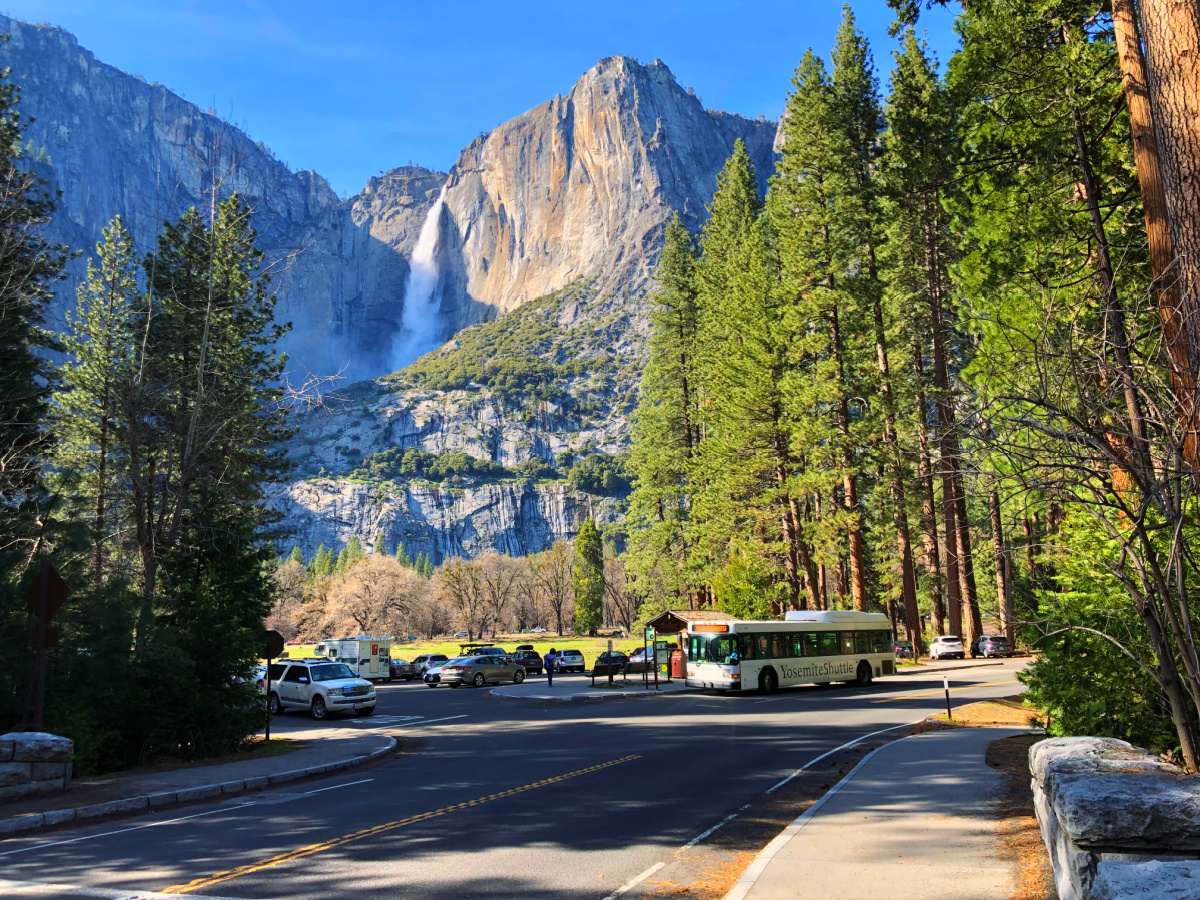
This Yosemite National Park travel guide covers the best things to do, where to stay, when to visit, easy hikes, itineraries, and first-time planning tips.
Estimated reading time: 80 minutes
Yosemite National Park is one of those places that can feel almost intimidating to plan.
You have Yosemite Valley, Glacier Point Road, Tioga Road, Tuolumne Meadows, Mariposa Grove, waterfalls, giant sequoias, scenic overlooks, hiking trails, seasonal road closures, shuttle buses, and lodging that can book months in advance. Then you start researching hikes and suddenly everyone seems to be talking about Half Dome, the Mist Trail, or some other adventure that sounds considerably more ambitious than the vacation you had in mind.
Here is the good news: you do not need to be a hardcore hiker to have an incredible trip to Yosemite.
Some of Yosemite’s most famous scenery is remarkably accessible. You can stand beneath towering waterfalls, walk through a grove of giant sequoias, admire Half Dome from multiple viewpoints, picnic beside the Merced River, and experience some of the best mountain scenery in California without spending your entire vacation on strenuous trails.
That is one of the reasons I love Yosemite so much.
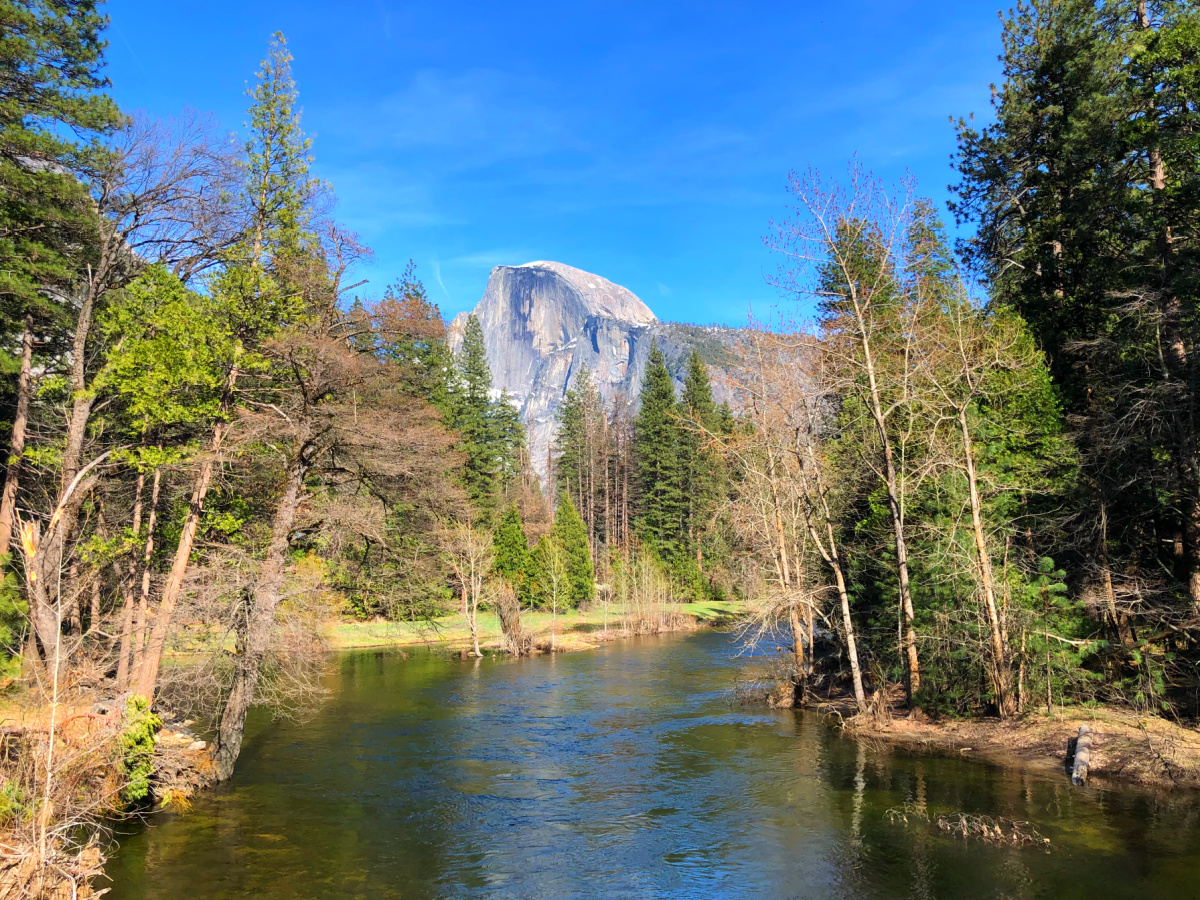
My history with the park goes back decades. I first visited Yosemite in the late 1990s, when I remember Vernal Fall absolutely roaring with spring runoff. A few years later, my husband proposed to me at Sentinel Bridge during an October visit, with Half Dome rising beyond the Merced River. We returned again as a family in April 2019, when spring waterfalls were beginning to come alive but Tioga Road was still buried beneath winter snow.
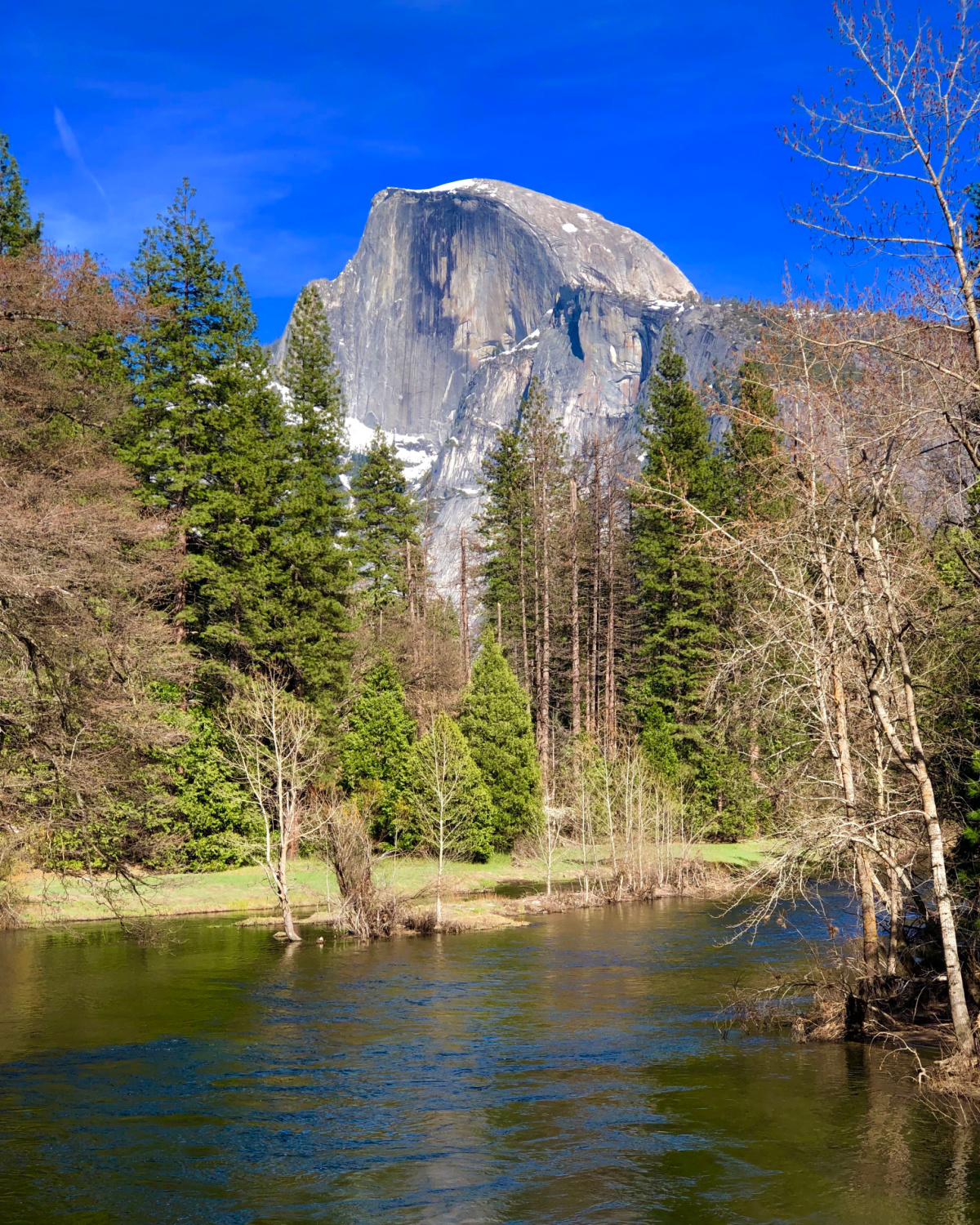
Those trips looked very different from one another, which is also a pretty good illustration of Yosemite itself.
The park you experience in April is not the same park you experience in July or October. Waterfall conditions change. Roads open and close. Crowds shift. Some areas become accessible while others disappear beneath snow for months at a time.
That means planning matters here more than it does at some National Parks.
This Yosemite National Park travel guide will help you figure out when to visit, how many days you need, where to stay, which areas of the park deserve your time, and how to put everything together without making your trip unnecessarily complicated.
And if this is your first visit to Yosemite, you can relax. You do not need to see everything.
You just need to see the right things for your trip.
Yosemite National Park at a Glance
Yosemite National Park sits in California’s Sierra Nevada mountains and protects nearly 1,200 square miles of granite cliffs, alpine wilderness, waterfalls, meadows, forests, and giant sequoia groves.
But here is one of the most important things to understand before planning your trip:
Most first-time visitors are not exploring all 1,200 square miles.
They are primarily visiting a handful of distinct areas, each with a very different feel.
The biggest mistake you can make when planning Yosemite is looking at a map and assuming everything is relatively close together. Yosemite is enormous, mountain roads are slow, and driving between different sections of the park can take considerably longer than you expect.
For most visitors, Yosemite breaks down into four major sightseeing areas:
- Yosemite Valley
- Glacier Point Road
- Tioga Road and Tuolumne Meadows
- Mariposa Grove of Giant Sequoias
There are many other corners of the park, of course, particularly if you are heading into Yosemite’s backcountry.
But for a first Yosemite vacation, those four areas will account for most of the places you are probably hoping to see.
Understanding what each one offers makes planning the rest of your trip much easier.
Yosemite Valley: The Heart of Yosemite National Park
If you have seen photographs of Yosemite, there is a very good chance they were taken in Yosemite Valley.
This is where you will find many of the park’s most recognizable landmarks, including Yosemite Falls, Bridalveil Fall, El Capitan, Half Dome, Sentinel Bridge, Cook’s Meadow, and the Merced River.
It is also the area where Yosemite feels most dramatic.
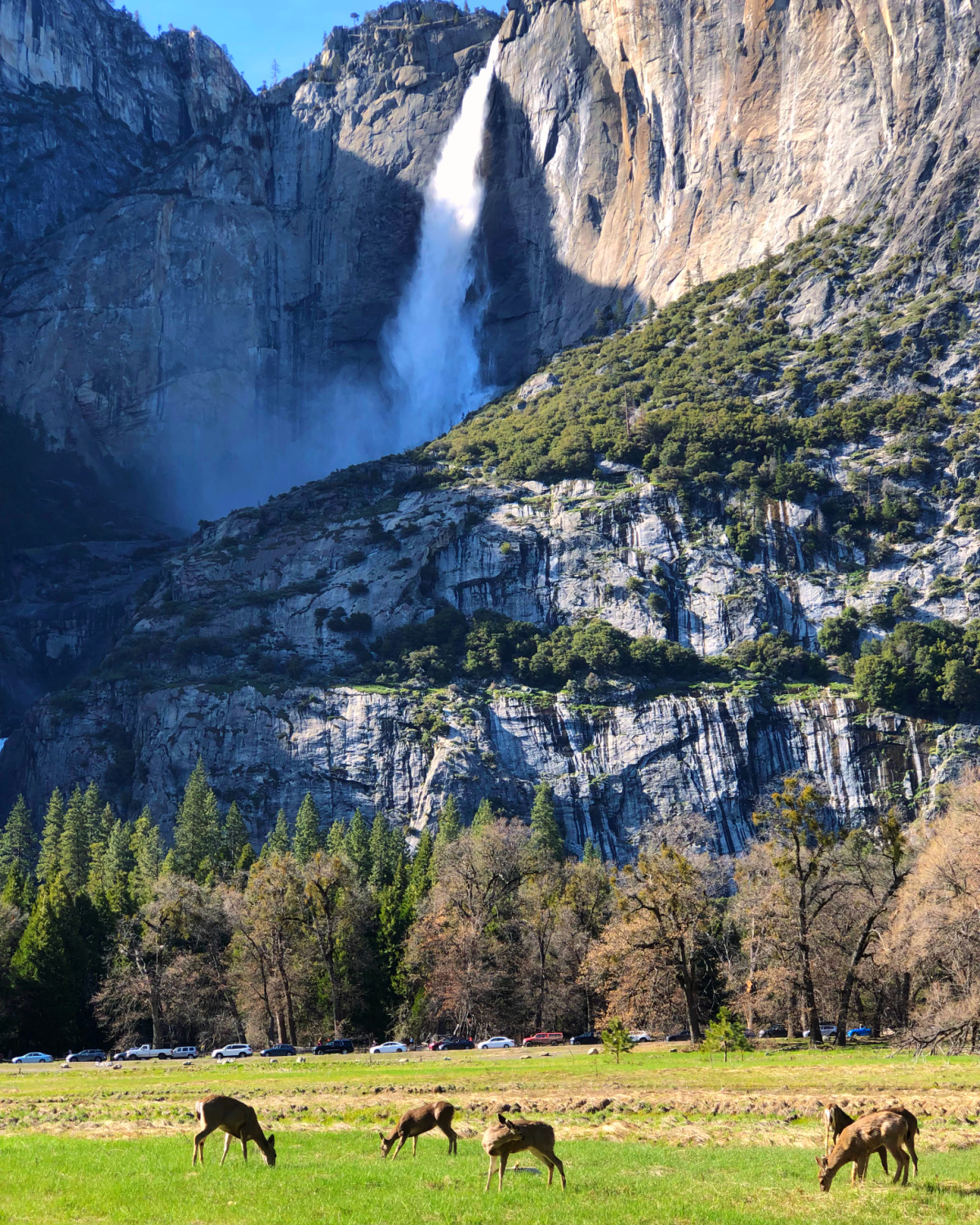
The valley itself is relatively compact, but the granite walls surrounding it rise thousands of feet overhead. Waterfalls drop from cliffs. Half Dome appears at the end of the valley. El Capitan seems impossibly large when you are standing beneath it.
And despite all of that dramatic scenery, Yosemite Valley is surprisingly easy to explore.
You can experience a tremendous amount without strenuous hiking. Several of the valley’s best sights are accessible from short trails, roadside viewpoints, picnic areas, shuttle stops, or relatively flat walking paths.
That makes Yosemite Valley particularly good for families, older travelers, first-time National Park visitors, and anyone who wants spectacular scenery without building the entire trip around difficult hikes.
You could easily spend an entire day here.
In fact, if you only have one day in Yosemite National Park, I would spend the majority of it in Yosemite Valley.
The tradeoff is that this is also the busiest part of the park. Parking can become challenging during peak periods, traffic can crawl, and popular stops may feel very different at 8 AM than they do at noon.
That is why I strongly recommend thinking of Yosemite Valley as a place to explore rather than a checklist of individual attractions.
Park the car when you can. Walk sections of the valley. Use the shuttle when it makes sense. Slow down.
Some of the best moments here happen between the official stops.
Read my complete guide to the best things to do in Yosemite Valley.
Glacier Point Road: Yosemite’s Big Scenic Views
If Yosemite Valley places you beneath the granite cliffs, Glacier Point Road lets you look across them.
This is where you will find some of Yosemite’s most extraordinary panoramic viewpoints.
Glacier Point itself is the star. From here, you can look across Yosemite Valley toward Half Dome and into the High Sierra beyond.
It is the kind of view that makes Yosemite’s scale much easier to understand.
But Glacier Point is not the only reason to drive this road.
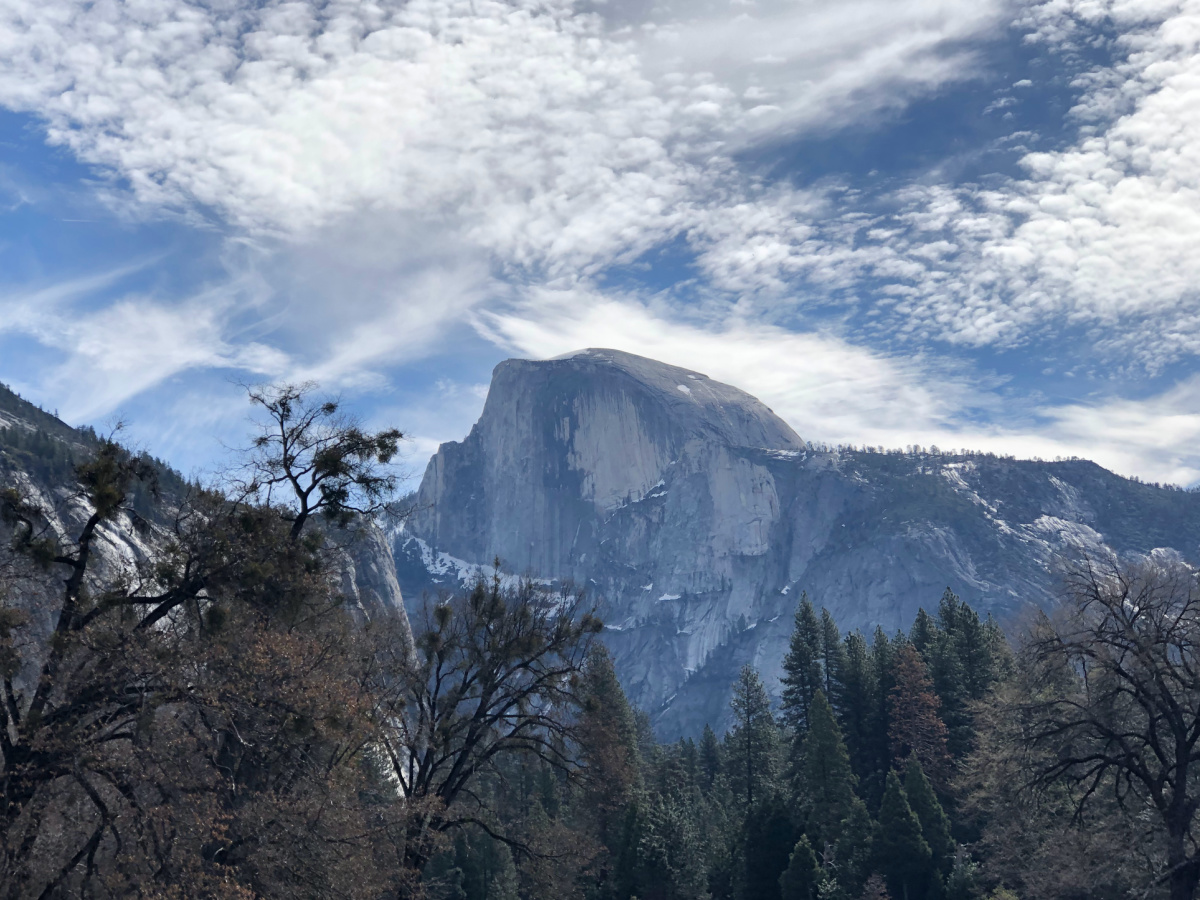
Washburn Point provides another excellent perspective, while several trailheads along Glacier Point Road lead to hikes and viewpoints that overlook the valley from above.
For casual visitors, though, one of the best things about Glacier Point Road is that you do not need to complete a major hike to experience the scenery.
You can drive to Glacier Point, walk a relatively short distance, and see a panorama that would require serious effort in many other National Parks.
There is one major catch: Glacier Point Road is seasonal.
Snow usually closes the road during winter, and opening dates vary from year to year depending on snowpack and road conditions. That means a spring Yosemite trip can look very different from a summer one.
When we visited in April, Glacier Point Road was still closed for the season.
That did not ruin the trip by any stretch of the imagination. Yosemite Valley was beautiful, waterfalls were flowing, and there was more than enough to fill our time.
But it is exactly why I recommend planning Yosemite around the season you are actually visiting rather than starting with a generic list of “must-see” attractions.
Tioga Road and Tuolumne Meadows: Yosemite’s High Country
Tioga Road is where Yosemite begins to feel completely different.
Instead of the steep granite walls and concentrated attractions of Yosemite Valley, this part of the park opens into high-elevation meadows, mountain lakes, granite domes, and broad Sierra Nevada scenery.
Tioga Road crosses the northern section of Yosemite and eventually reaches Tioga Pass on the park’s eastern boundary.
Along the way, you will find places like Tuolumne Meadows, Tenaya Lake, Olmsted Point, and several hiking areas.
If your idea of Yosemite is only waterfalls and Yosemite Valley, this road shows you another side of the park entirely.
It also comes with the biggest seasonal limitation.
Tioga Road is closed by snow for a significant portion of the year. Depending on winter conditions, the road may not open until late spring or even early summer.
During our April trip, Tioga Road was closed, so this was an entire section of Yosemite we simply could not visit.
That is worth emphasizing because travelers sometimes build ambitious Yosemite itineraries without realizing that large parts of the park may be inaccessible during their travel dates.
If Tioga Road is open during your visit, I would absolutely consider including at least part of it, particularly if you have three or more days in Yosemite.
If it is closed, do not feel like you are getting a lesser Yosemite experience.
You are simply seeing a different version of the park.
Mariposa Grove: Yosemite’s Giant Sequoias
Yosemite’s granite cliffs and waterfalls get most of the attention, but the park also protects hundreds of mature giant sequoias.
The largest concentration is in Mariposa Grove near the park’s southern entrance.
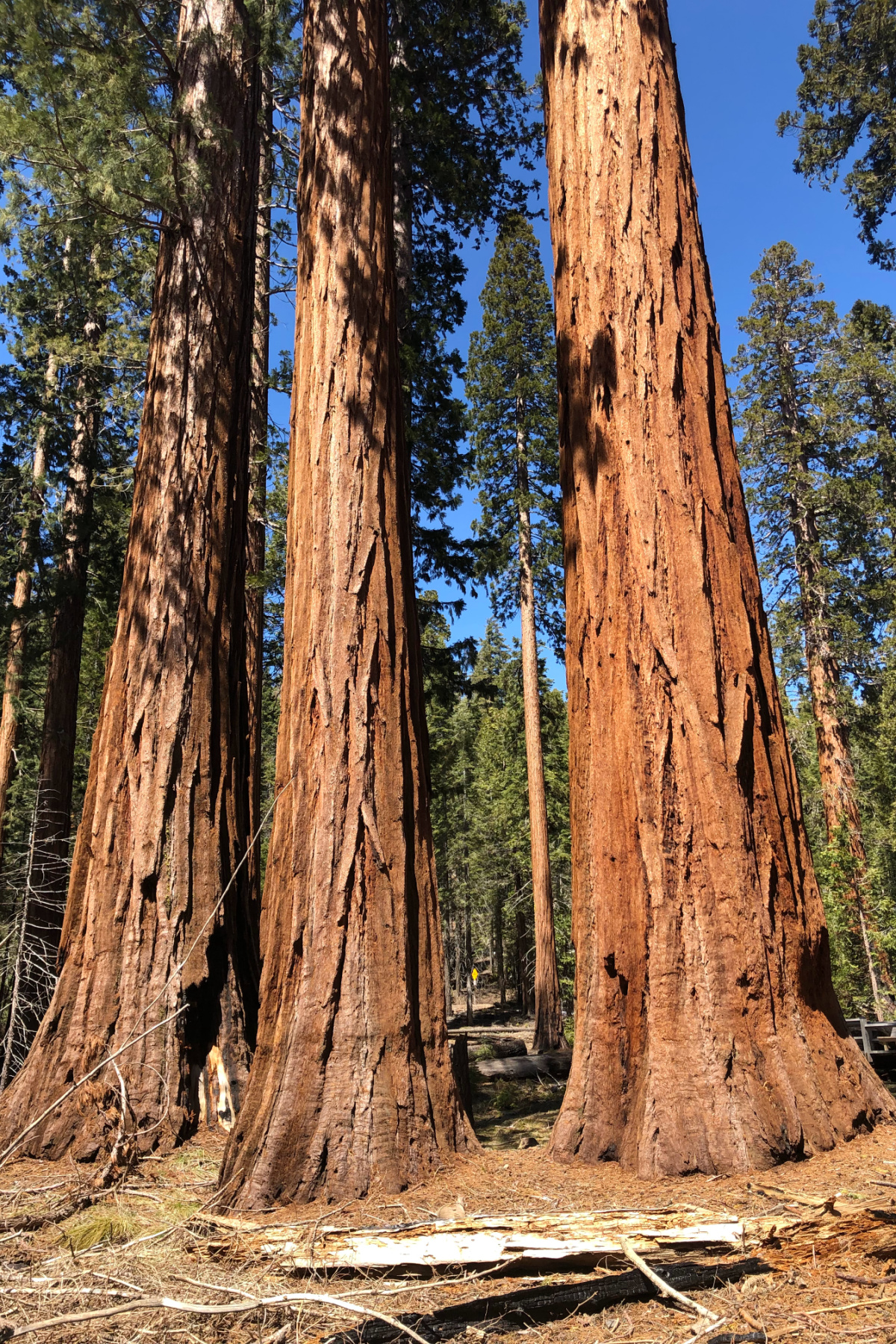
This is where you can see famous trees like the Grizzly Giant and California Tunnel Tree while walking through a forest filled with some of the largest trees on Earth.
Mariposa Grove feels completely different from Yosemite Valley.
The experience is quieter and more forested. Instead of constantly looking upward toward granite cliffs, you are walking beneath enormous trees that have been standing for centuries.
For families and first-time visitors, I think Mariposa Grove is especially worthwhile because it adds another completely different Yosemite landscape to the trip.
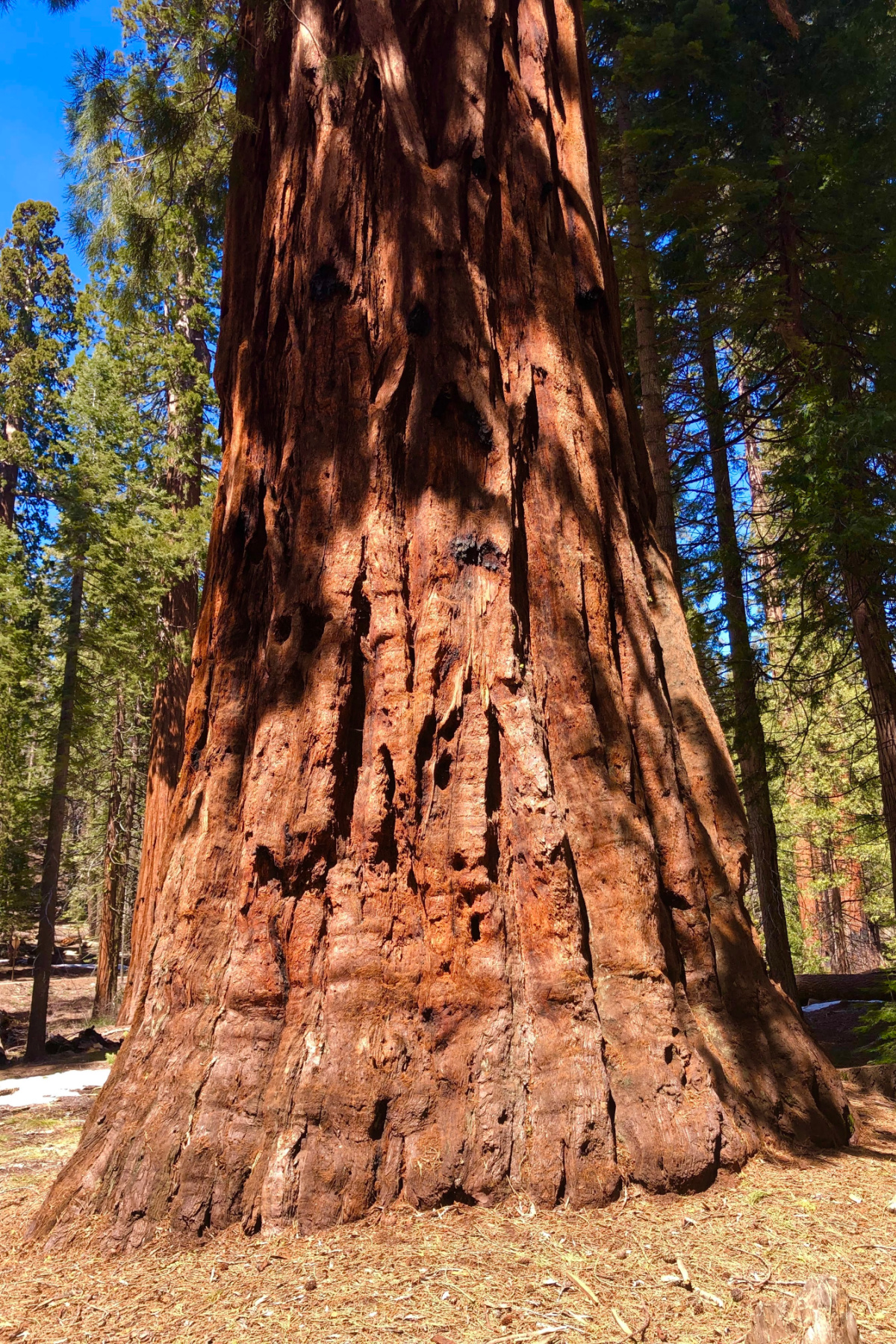
You can see waterfalls and granite walls in Yosemite Valley, expansive mountain views around Glacier Point, and giant sequoias at Mariposa Grove.
That variety is part of what makes Yosemite such an extraordinary National Park.
Access to the grove also changes seasonally. During the main visitor season, most people reach Mariposa Grove using the park’s shuttle system from the welcome plaza. Outside the shuttle operating season, visiting the grove may require additional walking.
That is another detail worth checking when planning a spring, fall, or winter visit.
Read my complete Mariposa Grove guide.
How Much of Yosemite Do You Really Need to See?
This is where I think Yosemite planning can go sideways.
Once people realize how much there is to see, they start trying to fit all of it into one trip.
Yosemite Valley.
Glacier Point.
Mariposa Grove.
Tioga Road.
Every famous waterfall.
Every scenic overlook.
Half a dozen hikes.
Sunrise somewhere.
Sunset somewhere else.
Suddenly the vacation has turned into an endurance event.
You do not need to travel that way.
If you have one day in Yosemite, focus primarily on Yosemite Valley and choose a few of its greatest hits.
With two days, you can explore the valley more thoroughly and add another major area depending on seasonal road access.
Three days gives you considerably more breathing room and is probably the amount of time I would recommend for most first-time visitors.
That lets Yosemite become a place instead of a checklist.
And if you have four or five days, you can slow the pace even further, add longer walks or hikes, spend more time along Tioga Road when it is open, and revisit places when lighting or crowds are better.
I have complete Yosemite itineraries for one-day trips and for longer two- and three-day visits, so we will get much more specific about how to divide your time.
But before building an itinerary, there is one question that matters even more:
When are you going?
Because in Yosemite, the season can change almost everything.
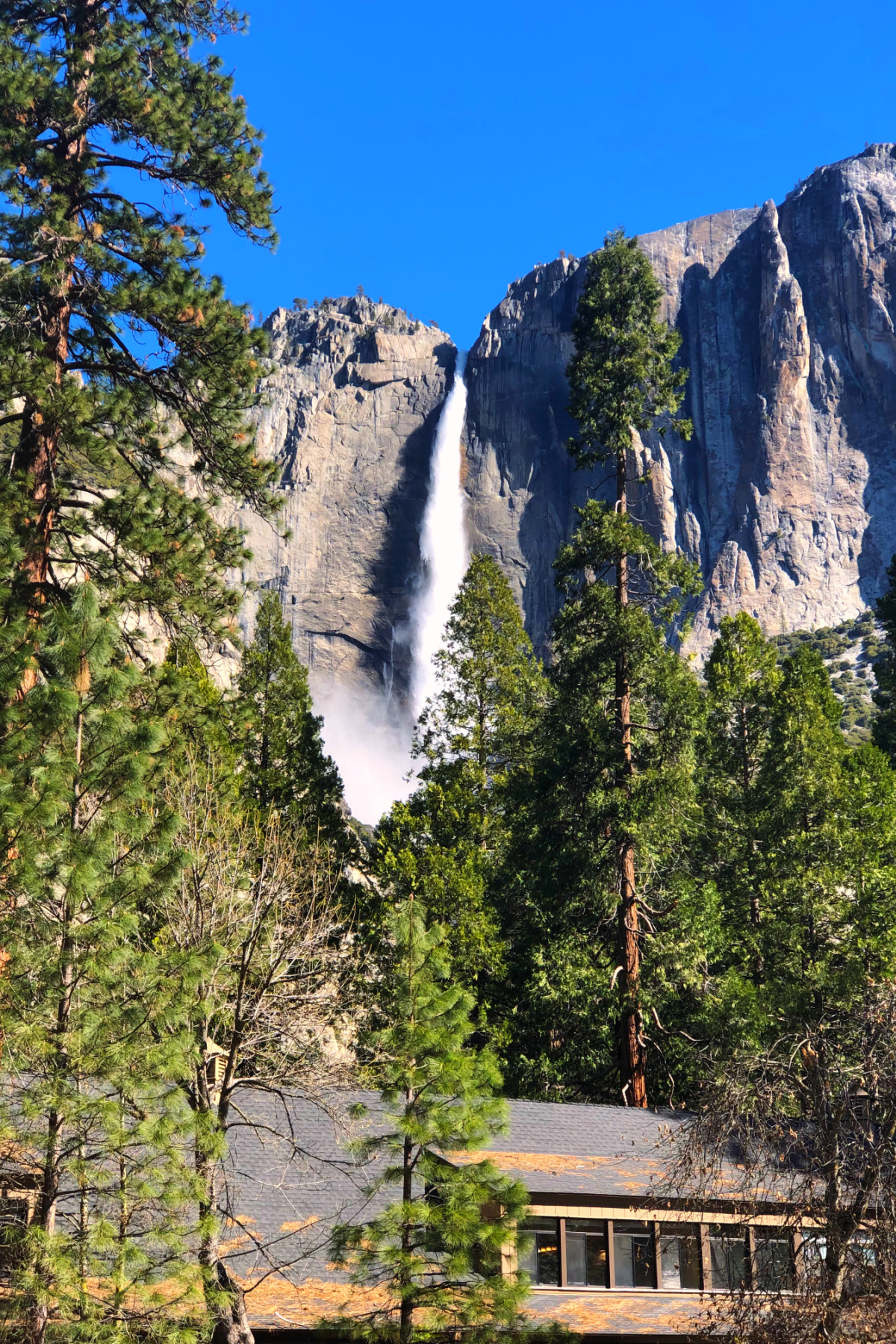
Best Time to Visit Yosemite National Park
There really is no single best time to visit Yosemite National Park.
There is only the best time for the kind of Yosemite trip you want.
Spring is spectacular for waterfalls. Summer gives you access to the greatest amount of the park. Fall brings cooler weather and fewer crowds. Winter transforms Yosemite Valley into something completely different.
But those seasons are not interchangeable.
A trip in April might give you booming waterfalls and snow-covered mountains while completely cutting off Tioga Road and Glacier Point Road. A trip in August gives you access to Yosemite’s high country, but some waterfalls may be dramatically reduced. An October visit can be beautiful and quieter, but you are also getting closer to the point when early snow can begin affecting high-elevation roads.
This is why I would decide when you want to visit Yosemite before getting too attached to a specific itinerary.
The season determines which version of the park you are going to see.
Visiting Yosemite in Spring
If waterfalls are high on your Yosemite wish list, spring is hard to beat.
April and May are particularly beautiful in Yosemite Valley as winter snow begins melting in the Sierra Nevada and feeding the park’s waterfalls.
The National Park Service typically describes spring as Yosemite’s prime waterfall season, with many waterfalls reaching their strongest flows around May.
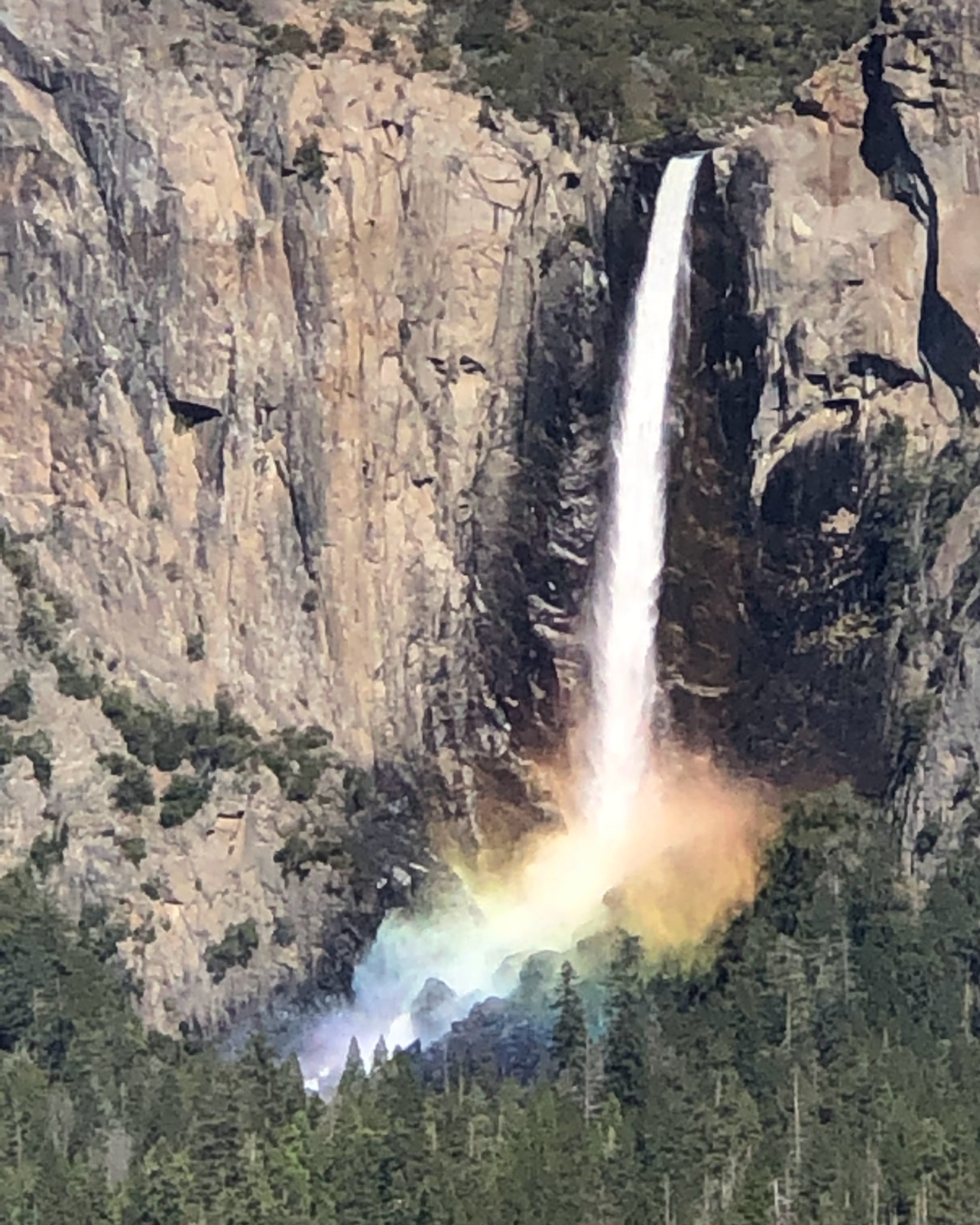
That matches what I remember from visiting Yosemite at different points in my life.
When I first saw Vernal Fall in the late 1990s, it was during spring runoff, and I still remember how powerful it looked. The amount of water was incredible.
When we returned in April 2019, waterfalls were once again one of the highlights.
Spring also tends to bring cooler temperatures than summer, which can make walking around Yosemite Valley much more pleasant.
But there is a huge tradeoff.
A spring trip does not necessarily mean the entire park is open.
Tioga Road and Glacier Point Road are generally closed through winter and often remain closed until sometime in late May or June, depending on snowfall and plowing conditions.
During our April trip, both were closed.
That meant no drive to Glacier Point, Tuolumne Meadows, or Olmsted Point.
And honestly? We still had a fantastic trip.
There is so much concentrated in Yosemite Valley that spring can be an excellent choice even when the high country remains inaccessible.
You just need to know what kind of trip you are booking.
Mariposa Grove can also be more complicated in spring.
The grove shuttle cannot begin operating before April 15 and may start later depending on road and weather conditions. If shuttle service is not running, reaching the grove requires a roughly two-mile walk each way from the welcome plaza, with about 500 feet of elevation gain before you even begin exploring the grove itself.
That changes Mariposa Grove from a relatively accessible sightseeing stop into a much bigger outing.
So if you are planning Yosemite in April or May, I would not assume that anything seasonal will be open.
Check road and shuttle conditions shortly before your trip.
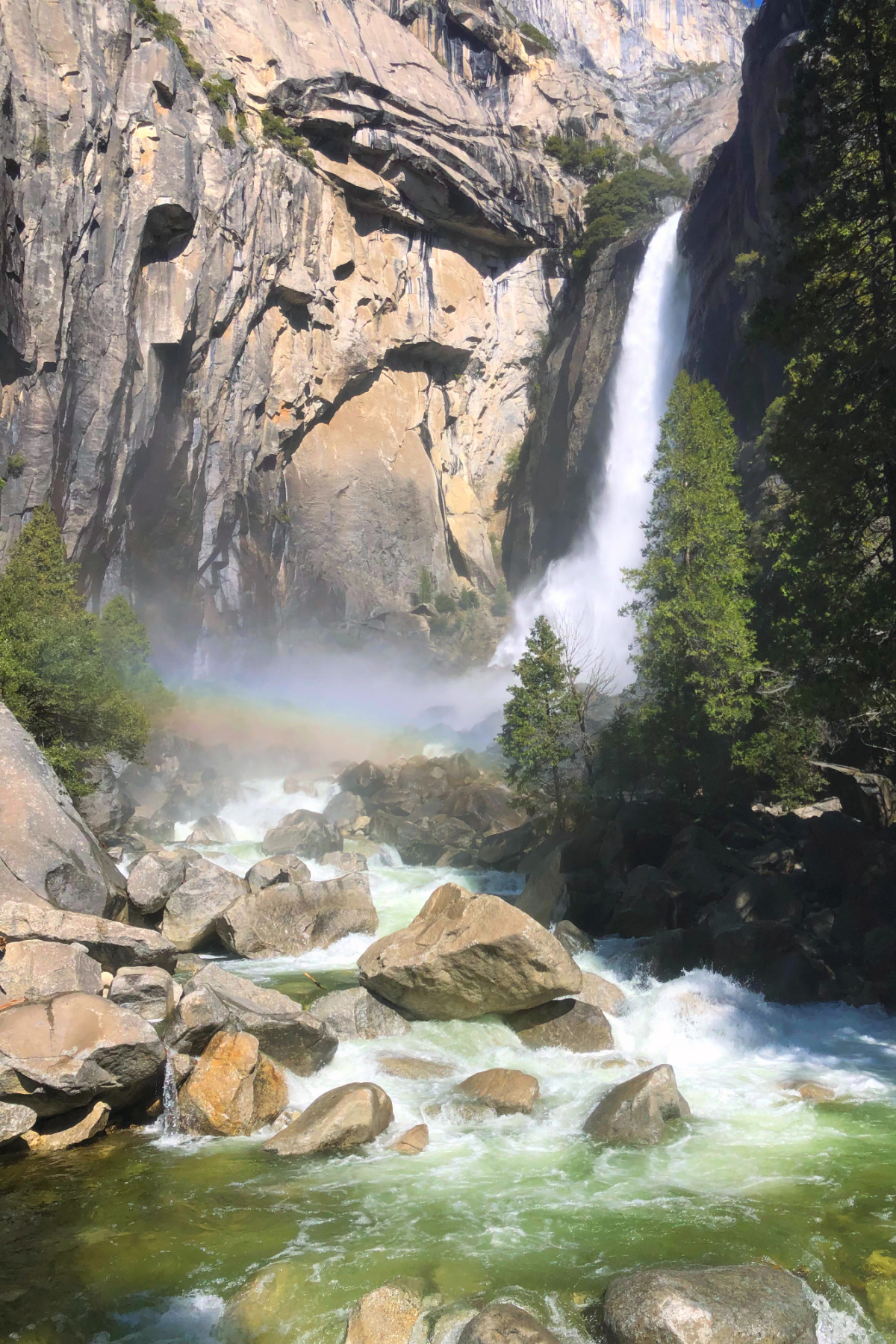
Is April a Good Time to Visit Yosemite?
I would absolutely visit Yosemite in April again.
But I would do it with the right expectations.
April is great if your priorities are Yosemite Valley, waterfalls, cooler weather, and spring scenery.
It is not the month I would choose if your dream Yosemite trip revolves around Glacier Point, Tuolumne Meadows, or Tioga Road.
You may also encounter lingering snow and icy trail conditions, particularly as you gain elevation.
Even if roads are clear in Yosemite Valley, that does not mean every hiking trail will feel like spring.
At higher elevations, it may still feel very much like winter.
Visiting Yosemite in May
May may be one of the most exciting months in Yosemite because the park is changing so quickly.
Waterfalls are often excellent.
Days are getting longer.
Temperatures are warming.
And depending on the year, more seasonal areas may begin opening.
But May is also unpredictable.
This is not a month where I would make a plan that absolutely depends on Tioga Road opening.
Historically, snow-clearing on Tioga Road begins around mid-April and can take one to two months. Weather during April and May can dramatically affect that process, which is why the National Park Service cautions against trying to predict an opening date too far in advance.
The same general issue applies to Glacier Point Road.
You could visit in late May and have more of the park available.
Or you could arrive after a heavy snow year and find those areas still closed.
Think of anything beyond Yosemite Valley and the year-round roads as a bonus until you know for sure.
Visiting Yosemite in Summer
If your priority is seeing the greatest possible amount of Yosemite, summer is the easiest season to plan.
By summer, Tioga Road and Glacier Point Road are normally open, which gives you access to Yosemite’s high country and some of its best viewpoints.
This is when you can realistically combine:
Yosemite Valley.
Glacier Point.
Tenaya Lake.
Olmsted Point.
Tuolumne Meadows.
Mariposa Grove.
And a much larger selection of hiking trails.
That makes summer particularly appealing if you are planning your first and possibly only trip to Yosemite.
If I had three or four days and wanted the widest possible Yosemite experience, I would strongly consider summer.
The obvious downside is crowds.
Yosemite is one of the most famous National Parks in the country, and summer is when many families are traveling.
That means Yosemite Valley can become extremely busy.
Parking fills.
Shuttles fill.
Popular trails get crowded.
Traffic can become frustrating.
This is when starting early matters most.
If you can get into Yosemite Valley before the biggest wave of visitors arrives, park your car, and leave it parked for a while, you will have a much better experience than someone who arrives midday and tries to drive from attraction to attraction.
Summer also changes the waterfalls.
They are generally strongest earlier in the season and begin declining as snowmelt tapers off.
Some smaller waterfalls may become very weak or disappear entirely later in the summer.
So there is a tradeoff:
Spring gives you stronger waterfalls but less road access.
Summer gives you much greater access to the park but potentially weaker waterfalls and heavier crowds.
Neither is inherently better.
They are simply different Yosemite experiences.
June in Yosemite
June can be a fantastic compromise.
Depending on the snow year, seasonal roads may be opening or already open, while waterfalls can still be impressive.
The days are long, temperatures are generally comfortable, and the entire park begins shifting into its summer rhythm.
But once again, high-country access is not guaranteed at the beginning of the month.
After heavy winters, Tioga Road has opened well into June.
So if you are specifically planning a June trip around Tuolumne Meadows or driving across Tioga Pass, check historical opening dates and current conditions rather than assuming everything will be available.
July and August in Yosemite
July and August generally provide the most reliable access to Yosemite’s high country.
If you want to drive Tioga Road, see Tuolumne Meadows, stop at Tenaya Lake, visit Glacier Point, and explore most of the park’s major regions, these are among the safest months to plan around.
They are also busy.
And Yosemite Valley can be hot.
This is where I would structure the day around temperatures and crowds.
Start early.
Do your walking and sightseeing in the morning.
Take advantage of shaded areas, riverside spots, visitor centers, or a slower lunch during the hottest part of the day.
Then head back out later.
The higher elevations along Tioga Road can feel dramatically cooler than Yosemite Valley, so even during summer I would bring layers.
Yosemite is a mountain park.
You should never assume the temperature you experience in one part of the park will match another.
Visiting Yosemite in Fall
Fall is probably Yosemite’s most underrated season.
The weather often becomes more comfortable.
Summer crowds begin thinning.
And much of the park can remain accessible well into autumn.
If Tioga Road and Glacier Point Road are still open, you can get many of the access advantages of summer without quite the same level of congestion.
That makes September especially appealing.
You may still have access to the high country, while mornings and evenings begin feeling cooler.
By October, things become less predictable.
This is when you need to start thinking about snow.
Tioga Road and Glacier Point Road do not close on a fixed calendar date. They remain open until weather conditions force their seasonal closure, which can happen anytime once autumn storms begin moving through the Sierra Nevada.
That means an October trip may give you beautiful fall weather and full access.
Or a storm may temporarily close a road.
Or the first significant snowfall of the season may trigger a closure that eventually becomes permanent for winter.
This is another reason I would keep a fall Yosemite itinerary flexible.
Have a Plan A if everything is open.
And have a very good Plan B centered on Yosemite Valley and the lower elevations.
What Is Yosemite Like in October?
October holds a special place in Yosemite for me because that is when my husband proposed at Sentinel Bridge.
It was a completely different Yosemite from the roaring spring version I remembered.
The waterfalls were much lower.
The atmosphere felt quieter.
And the park had that crisp fall feeling that makes you want to slow down.
If your primary goal is dramatic waterfalls, October would not be my first choice.
If your priorities are scenery, pleasant walking weather, potentially lighter crowds, and a slower Yosemite experience, it can be wonderful.
You just have to accept that weather becomes a bigger variable as the month goes on.
Visiting Yosemite in Winter
Winter Yosemite is almost a separate destination.
Yosemite Valley remains accessible year-round, but large portions of the park close once snow arrives.
Tioga Road is generally closed from approximately November until late May or June.
Glacier Point Road also closes for winter, although the first section of the road may open to Badger Pass Ski Area during ski season.
Mariposa Grove’s shuttle also stops operating for winter, and the grove becomes much more of a hiking, snowshoeing, or skiing destination.
That means winter trips are primarily about Yosemite Valley and lower-elevation areas.
But Yosemite Valley in winter can be beautiful.
Snow on the granite cliffs completely changes the landscape.
The pace is slower.
Crowds are generally much smaller than summer.
And the park can feel surprisingly peaceful.
You do need to be prepared for winter driving.
Chains may be required during snowy or icy conditions, even if you are driving a four-wheel-drive or all-wheel-drive vehicle.
Trail conditions can also become icy.
This is not the season to arrive without checking the forecast and current park conditions.
But if you are comfortable with winter travel and you have already seen Yosemite during warmer months, I can absolutely understand the appeal of seeing it under snow.
So When Is the Best Time to Visit Yosemite?
If this is your first Yosemite trip, I would choose your season based on what matters most to you.
Visit in spring if you want the strongest waterfalls.
If you want the widest access to the park, visit in summer.
But if you want cooler weather and potentially fewer crowds, consider early fall.
If you want snowy scenery and a quieter Yosemite Valley experience, winter can be beautiful.
For most first-time visitors who want to experience Yosemite Valley, Glacier Point, Mariposa Grove, and Tioga Road on one trip, I would probably lean toward late June through September.
That gives you the best odds that the major seasonal roads are open.
But if waterfalls are your number-one priority, I would happily trade some of that access for a spring trip.
I have done Yosemite both ways.
And I do not think one version of the park is better than the other.
They just tell different stories.
Always Check Current Conditions Before Your Yosemite Trip
No matter which month you choose, check the National Park Service website shortly before you leave.
This is particularly important for:
- Tioga Road
- Glacier Point Road
- Mariposa Grove shuttle service
- Chain requirements
- Trail closures
- Fire or smoke impacts
- Weather conditions
- Temporary road closures
Yosemite’s roads and services can change because of snow, wildfire, rockfall, roadwork, and other conditions.
Do not rely entirely on what was open during the same week last year.
Even historical opening dates are only useful as a general guide.
The mountains ultimately decide.
And once you know which parts of Yosemite will be accessible, the next question becomes much easier:
How many days do you actually need?
How Many Days Do You Need in Yosemite National Park?
For most first-time visitors, I think three days is the sweet spot for Yosemite National Park.
One day is enough to see the highlights.
Two days gives you a much better experience.
Three days lets you slow down, add another major area of the park, and stop feeling like you are racing from one viewpoint to the next.
Could you spend longer?
Absolutely.
Yosemite is enormous, and hikers could easily fill a week here. But if you are planning a more casual National Park trip built around scenic views, easy to moderate walks, waterfalls, giant sequoias, and the park’s major highlights, you do not need seven days to feel like you experienced Yosemite well.
For most travelers, I would think about Yosemite in terms of one, two, or three days.
Is One Day Enough for Yosemite?
One day in Yosemite is better than no Yosemite at all.
If that is all the time you have, go.
You can still see some of the most famous scenery in the park, especially if you focus on Yosemite Valley.
The important thing is not trying to do too much.
With one day, I would prioritize the classic valley experience:
Tunnel View.
Bridalveil Fall.
El Capitan.
Yosemite Falls.
Cook’s Meadow.
Sentinel Bridge.
Views of Half Dome.
And perhaps one or two short walks depending on your pace.
That is already a fantastic Yosemite day.
What I would not do is try to combine Yosemite Valley, Mariposa Grove, Glacier Point, and Tioga Road into a single marathon itinerary.
Technically, you might be able to drive past some of those places.
But that is not the same thing as actually experiencing them.
One of Yosemite’s greatest strengths is how much beauty you can see without strenuous hiking, but you still need time to get out of the car.
Walk through a meadow.
Stand beside the Merced River.
Look up at El Capitan.
Stop somewhere because the light suddenly looks incredible.
That is what disappears when you try to cover too much ground.
If you only have one day, make Yosemite Valley the star.
Read my complete one-day Yosemite itinerary.
What Can You See in Two Days at Yosemite?
Two days gives you much more flexibility.
I would still spend a significant amount of time in Yosemite Valley, especially if this is your first visit.
The difference is that now you can add another part of the park without sacrificing the valley itself.
Depending on the season, your second day might include:
Glacier Point Road.
Mariposa Grove.
Part of Tioga Road.
Or additional hiking and sightseeing in Yosemite Valley.
This is where your travel style starts to matter.
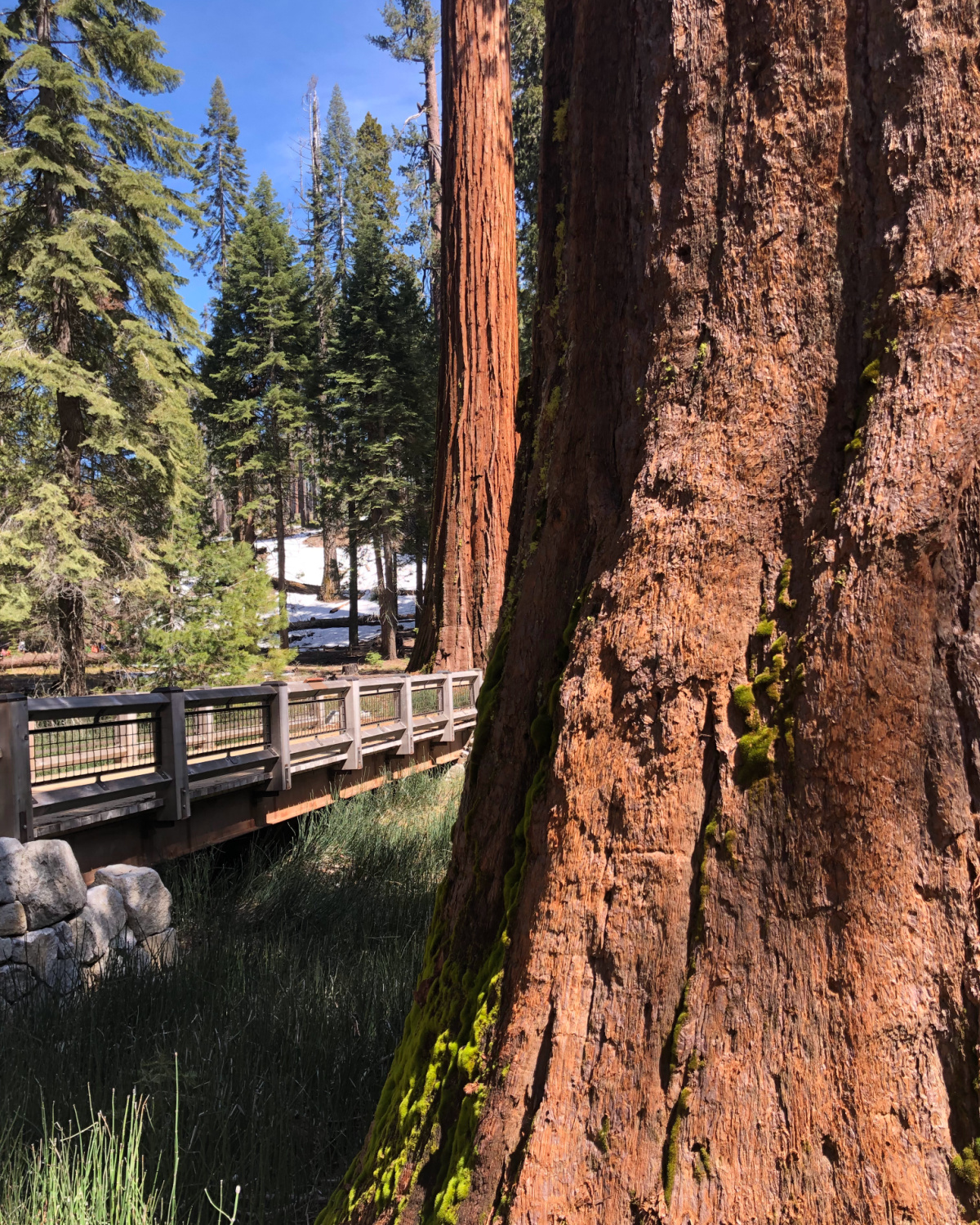
If you love giant trees, Mariposa Grove makes a natural second-day destination.
But if panoramic viewpoints are your priority and Glacier Point Road is open, you might spend part of the day around Glacier Point.
If you are visiting in summer and want to see Yosemite’s high country, Tioga Road can become the focus.
Two days also gives you more room to handle crowds.
Instead of trying to hit every famous Yosemite Valley stop in one day, you can return early the next morning or shift part of your sightseeing to a quieter time.
That alone can make a trip feel much less frantic.
I think two days works particularly well for travelers who are adding Yosemite to a larger California road trip and simply cannot devote three full days to the park.
You will have to make choices, but they can be good choices instead of desperate ones.
Why I Prefer Three Days in Yosemite
If your schedule allows it, I would choose three days for a first Yosemite trip.
Three days is where Yosemite starts feeling like a vacation instead of a sightseeing challenge.
You can give Yosemite Valley the time it deserves.
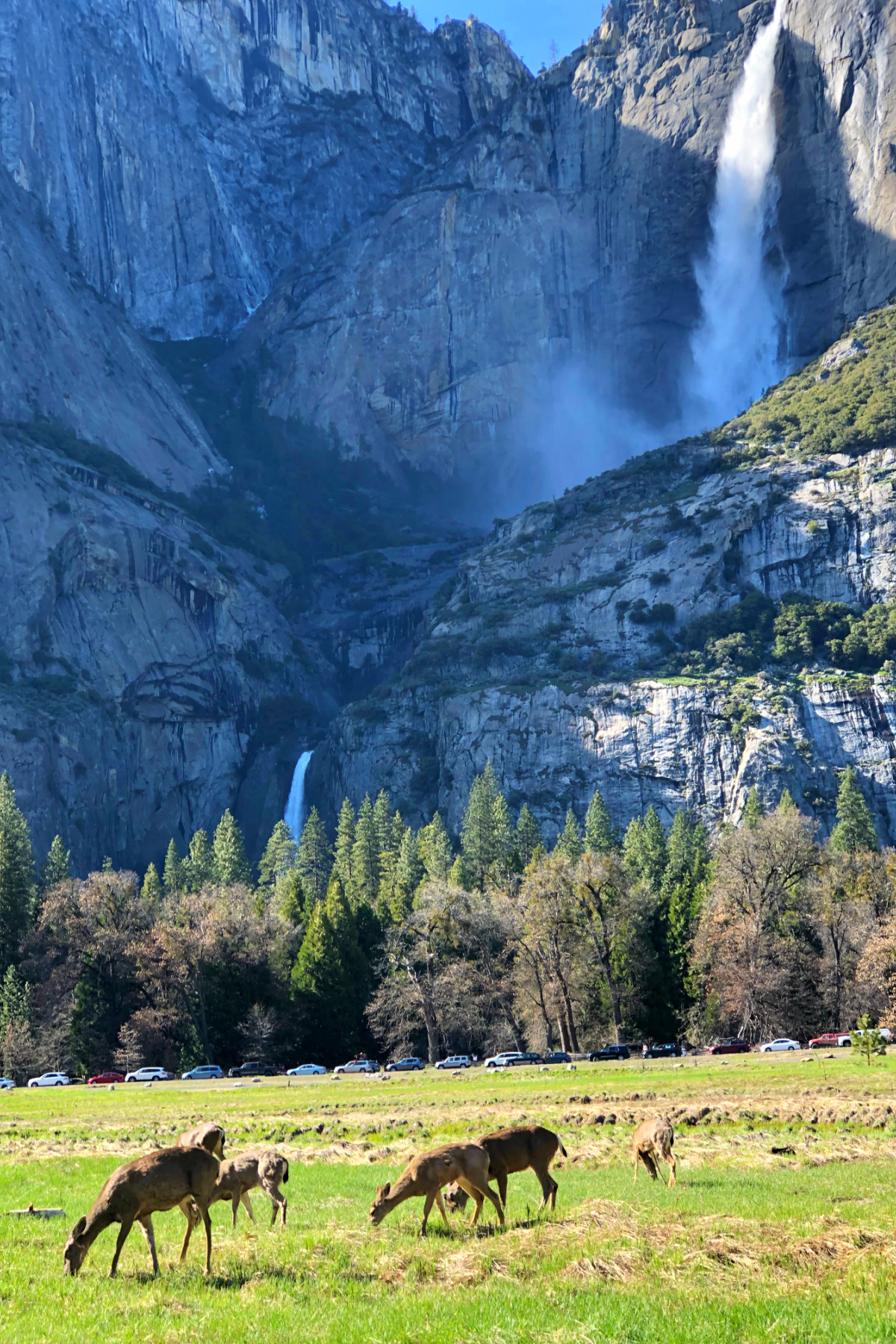
Then add Mariposa Grove, Glacier Point Road, or Tioga Road when they are open.
You can fit in a few easy hikes.
And return to a favorite viewpoint.
And if weather, traffic, or parking disrupts part of your plan, you still have enough time to recover.
That flexibility is especially useful in Yosemite because the park has so many variables.
Road access changes seasonally.
Parking can affect your schedule.
A waterfall viewpoint may be more crowded than expected.
You might discover that your family wants to spend an hour beside the river instead of heading immediately to the next attraction.
Three days gives you room for that.
And I think that matters.
If I were helping a first-time visitor build the most balanced Yosemite trip, I would usually structure three days something like this:
Day One: Yosemite Valley
Start with the iconic scenery.
See Tunnel View, Bridalveil Fall, El Capitan, Yosemite Falls, Cook’s Meadow, Sentinel Bridge, and the Merced River.
Add easy walks and scenic stops depending on your energy level.
Day Two: Another Major Yosemite Area
Choose based on the season and your priorities.
That might be Glacier Point Road, Mariposa Grove, or Tioga Road.
You do not necessarily need to cram two major regions into the same day.
Day Three: Fill in What Matters Most
Return to Yosemite Valley.
Do a longer walk.
Explore whichever major area you did not visit on Day Two.
Or simply slow down.
That final option may sound unambitious, but I think some of the best National Park trips have at least a little breathing room.
Read my complete two- and three-day Yosemite itinerary.
What If You Have Four or Five Days in Yosemite?
Four or five days gives you the luxury of depth.
At that point, I would not simply keep adding attractions.
I would start adding experiences.
Spend more time hiking.
Drive Tioga Road slowly instead of treating it as transportation.
Stop at Tenaya Lake.
Explore Tuolumne Meadows.
Spend a morning in Mariposa Grove.
Return to Glacier Point for different light.
Walk more of Yosemite Valley.
Have a picnic.
Sit beside the Merced River for a while.
This is where you can stop thinking, “What else can we fit in?” and start asking, “Where would we like to spend more time?”
That is a much better question.
Four or five days can also make sense if Yosemite is the primary destination of your trip rather than one stop on a longer California itinerary.
You could easily spend that amount of time here without becoming bored, especially if you enjoy hiking.
But for the style of travel I usually recommend, I do not think most first-time visitors need five days to see Yosemite’s major highlights.
Three very good days will take you surprisingly far.
Should You Take a Yosemite Day Trip?
People absolutely visit Yosemite as a day trip.
But I would be careful about where you are day-tripping from.
The park is not particularly close to California’s biggest tourist cities.
A Yosemite day trip from somewhere nearby can work.
A Yosemite day trip involving several hours of driving each way is much less appealing.
The problem is not simply the distance.
Once you arrive, Yosemite itself still involves driving, parking, walking, and potentially waiting for shuttles.
If you spend most of your day getting to and from the park, you are using up the exact hours when you should be enjoying it.
If Yosemite is important enough to include in your California trip, I think it deserves at least one night nearby.
Two nights is even better.
That allows you to wake up close to the park and get started early, which is especially valuable during busy travel periods.
How to Choose Your Yosemite Itinerary
There is no single perfect Yosemite itinerary because your options depend heavily on the season.
Before deciding exactly where to go, answer these questions:
How many full days do you have?
What month are you visiting?
Is Tioga Road open?
How about Glacier Point Road?
Is the Mariposa Grove shuttle operating?
Do you want to hike, or is sightseeing your main priority?
Are you traveling with children, older adults, or anyone with mobility limitations?
Which Yosemite experiences matter most to you?
Once you know those answers, the itinerary usually becomes much clearer.
If you only have one day, stay focused.
If you have two days, add one major area beyond Yosemite Valley.
But if you have three days, give yourself room to explore two or three different parts of the park without rushing.
And if you have more time, use it to go deeper rather than simply farther.
My Favorite Approach for a First Yosemite Trip
For a first visit, I would build the entire trip around one principle:
See Yosemite Valley first, then expand outward.
That is the easiest way to avoid overcomplicating the park.
Yosemite Valley contains so many of the places people picture when they imagine Yosemite that I would never sacrifice it in an attempt to cover more ground.
Once you have experienced the valley, then add whatever best matches your season and interests.
Glacier Point for sweeping views.
Mariposa Grove for giant sequoias.
Tioga Road for the high country.
More hiking if that is what you love.
There is no prize for visiting the largest number of Yosemite locations in the shortest amount of time.
A good Yosemite itinerary should leave you feeling like you saw something extraordinary.
Not like you completed an obstacle course.
Once you know how many days you have, the next big planning decision is where to stay.
And in Yosemite, that choice can have an enormous impact on how much time you spend enjoying the park versus sitting in the car.
Where to Stay in Yosemite National Park
Where you stay can make a huge difference in your Yosemite trip.
This is one of those National Parks where a hotel that looks “close” on a map may still leave you with a long drive before you reach Yosemite Valley.
And because the park itself is so large, that extra drive does not necessarily end when you reach the entrance gate.
You could still have miles of mountain road ahead of you.
That is why I would not choose Yosemite lodging based only on price.
Location matters.
A lot.
If you can stay inside Yosemite National Park, especially in Yosemite Valley, you are buying yourself something incredibly valuable:
Time.
You can wake up already inside the park.
And you do not have to sit in an entrance line every morning.
You can get an earlier start.
You can return to your room during the day if you want a break.
And at the end of a long sightseeing day, you do not have another hour of driving ahead of you.
That convenience can be worth paying more for, especially on a short trip.
The National Park Service currently offers a range of lodging inside Yosemite, from upscale hotel rooms to rustic tent cabins. Reservations can be made 366 days in advance, and the park strongly recommends booking well ahead for spring through fall and holiday periods.
Staying Inside Yosemite Valley
For a first Yosemite trip, Yosemite Valley is the most convenient place to stay.
You are right in the middle of many of the sights you probably came to see.
Yosemite Falls.
Half Dome views.
El Capitan.
Cook’s Meadow.
Sentinel Bridge.
The Merced River.
Shuttle stops.
Restaurants.
Trailheads.
Instead of beginning every morning with a drive into the valley, you can simply step outside and start exploring.
That is especially valuable in summer and on busy weekends, when parking and traffic become part of the Yosemite equation.
There are several main lodging options in Yosemite Valley.
The Ahwahnee
The Ahwahnee is Yosemite’s historic luxury hotel.
If your idea of National Park lodging involves grand architecture, a beautiful dining room, and a real hotel experience rather than a rustic cabin, this is the upscale option.
It is also located right in Yosemite Valley, which gives you the same enormous location advantage as the other valley lodging.
The Ahwahnee is the kind of property I would consider if the hotel itself is part of the vacation.
You are not simply looking for somewhere to sleep.
You want the classic National Park hotel experience.
That comes at a price, of course.
For many families, I think the money is better spent elsewhere.
But if this is a special trip, anniversary, milestone vacation, or you simply love historic National Park lodges, The Ahwahnee is the obvious splurge.
The National Park Service currently lists it as Yosemite’s only luxury hotel and notes that it operates year-round.
Yosemite Valley Lodge
For many first-time Yosemite visitors, I think Yosemite Valley Lodge may be the most practical hotel choice inside the park.
The location is fantastic.
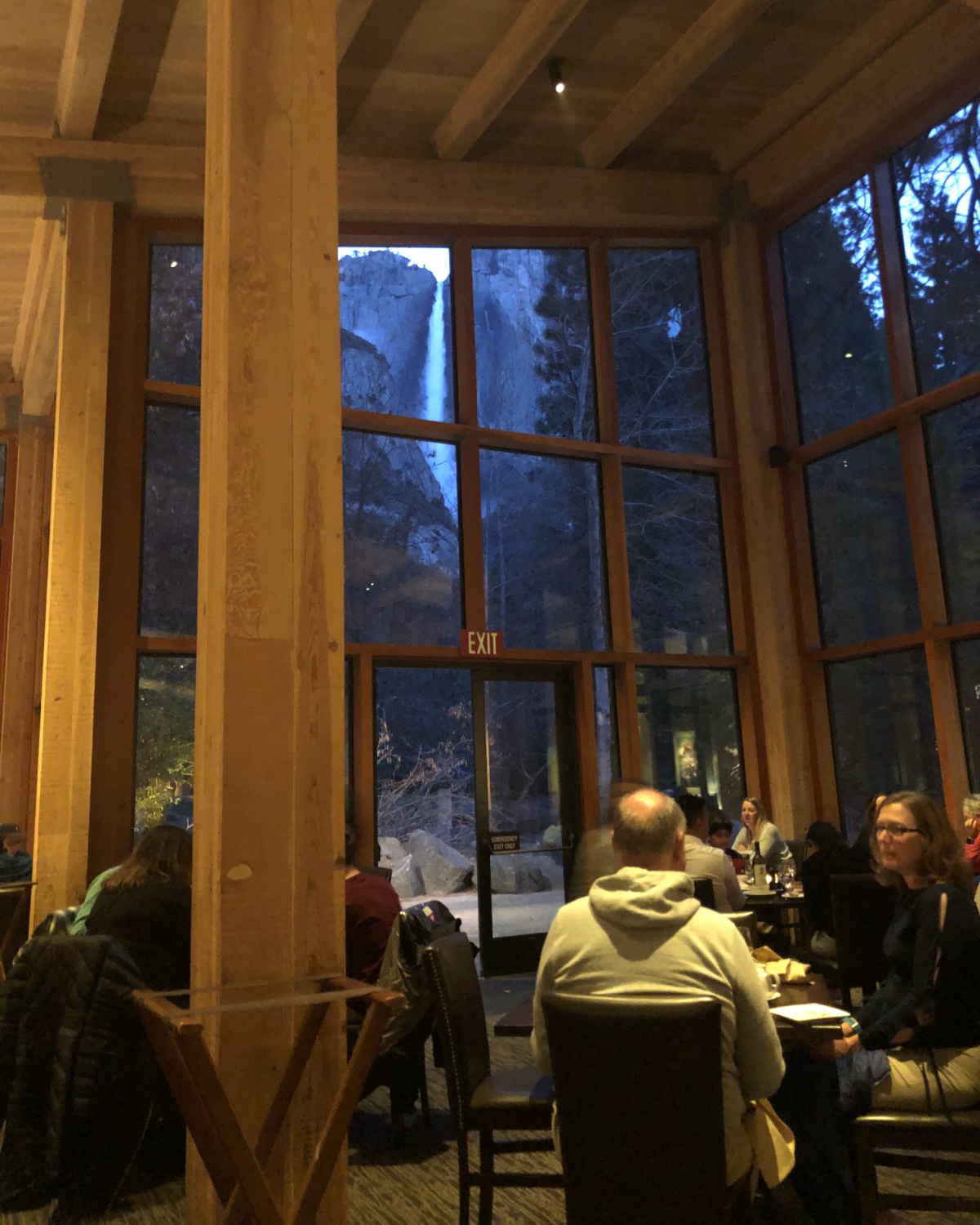
It sits close to Yosemite Falls and gives you easy access to Yosemite Valley sightseeing without requiring you to stay somewhere quite as rustic as Curry Village.
You are still getting an actual lodge room.
You are still in the valley.
And you are positioned extremely well for walking, shuttle use, and exploring.
The National Park Service lists Yosemite Valley Lodge as a year-round property near the base of Yosemite Falls.
If I were prioritizing convenience over luxury, this is the kind of option I would look at first.
Curry Village
Curry Village gives you one of the most iconic Yosemite lodging experiences.
Accommodations include cabins and canvas-sided tent cabins, so this is much more rustic than a traditional hotel.
But you are still staying right in Yosemite Valley.
That is the tradeoff.
You may sacrifice some comfort, but you gain an incredible location.
For travelers who are comfortable with a more basic National Park experience, Curry Village can be a great way to stay in the heart of Yosemite without paying luxury-hotel prices.
I would just make sure everyone in your travel party understands exactly what you are booking.
A canvas tent cabin is not a hotel room.
Some visitors love that.
Others absolutely do not.
Know your people.
Housekeeping Camp
Housekeeping Camp is another very rustic Yosemite Valley option.
The units are open-air structures along the Merced River rather than traditional hotel rooms.
This can work well for travelers who want something between camping and lodging.
But again, I would read the accommodation description carefully before booking.
One person’s “fun rustic Yosemite adventure” is another person’s “why are we sleeping like this on vacation?”
The appeal is the location.
You are in Yosemite Valley.
And if your goal is simply to sleep inside the park so you can maximize your sightseeing time, that convenience is significant.
Staying in Wawona
Wawona is in the southern part of Yosemite National Park, near Mariposa Grove.
It is about 27 miles from Yosemite Valley, and the National Park Service estimates the drive at roughly 45 minutes under normal conditions.
That makes Wawona a very different lodging experience from staying in Yosemite Valley.
You are still inside the National Park.
But you are not close to the valley.
The location makes much more sense if Mariposa Grove is a major part of your trip, if you prefer a quieter setting, or if you are entering Yosemite from the south.
Historically, the main lodging option here has been Wawona Hotel.
However, this is an important current planning note:
As of 2026, Wawona Hotel remains closed while the National Park Service completes a comprehensive condition assessment of the property. There is currently no announced reopening date.
There are also privately owned vacation rentals in the Wawona area.
Those can be worth considering if you want to stay inside the park boundary but prefer a house or cabin instead of traditional hotel lodging.
Staying in Yosemite West
Yosemite West is another interesting option.
This private community sits just outside the official park boundary but is only accessible from inside Yosemite.
That makes it function differently from most gateway towns.
You can find vacation rentals and condos here, and the location can be very convenient for reaching both Yosemite Valley and Glacier Point Road.
For families who want more space, a kitchen, or multiple bedrooms, I would absolutely compare Yosemite West rentals with hotel rooms inside the valley.
You lose the ability to walk directly out of your room and into Yosemite Valley.
But you gain more room and may still be significantly closer than if you stayed in one of the larger gateway towns.
Staying in El Portal
If you cannot find lodging inside Yosemite, El Portal would be one of my first places to look.
El Portal sits along Highway 140 just outside Yosemite’s western boundary.
It is one of the closest communities to Yosemite Valley, which makes it especially practical for travelers who want a traditional hotel but cannot get an in-park reservation.
The biggest advantage is that you are not spending an enormous amount of time just reaching the park every morning.
You will still drive into Yosemite Valley, but you are starting much closer than someone staying farther west.
For a short Yosemite trip, that matters.
If you have only two or three days, I would generally rather pay somewhat more to stay in El Portal than save money farther away and spend several additional hours of the trip in the car.
The National Park Service specifically lists El Portal among the Highway 140 lodging communities outside Yosemite.
Staying in Mariposa
Mariposa is farther from Yosemite than El Portal, but it offers considerably more of a normal small-town experience.
You will find more restaurants, stores, lodging choices, and services.
That makes Mariposa appealing if you want amenities outside the park or if Yosemite is part of a larger California road trip.
The downside is the commute.
You are adding a meaningful drive before you even reach Yosemite Valley.
If you stay here, I would plan on early mornings.
This is not the location where I would wake up leisurely at 9 AM, have a long breakfast, and then expect to glide into Yosemite Valley at the best possible time.
You want to get moving.
For a longer trip, that tradeoff may be perfectly acceptable.
For a one- or two-day Yosemite visit, I would place a higher premium on staying closer.
Staying in Oakhurst
Oakhurst is one of the largest gateway communities south of Yosemite.
It offers plenty of hotels, restaurants, groceries, gas, and other services.
If you like having normal town amenities at the end of the day, Oakhurst has an obvious appeal.
It also works particularly well if you are combining Yosemite with destinations south of the park or entering via Highway 41.
But Oakhurst is not Yosemite Valley.
You still have to drive north through the southern entrance area, past Wawona, and continue into the valley.
That is a substantial amount of driving if you do it repeatedly.
I think Oakhurst makes the most sense when price, lodging availability, or your larger California route makes it the logical choice.
If Yosemite Valley itself is the centerpiece of your trip, I would first see whether something closer works within your budget.
The National Park Service includes Oakhurst and nearby Fish Camp among the main Highway 41 gateway communities.
Staying in Fish Camp
Fish Camp is much closer to Yosemite’s South Entrance than Oakhurst.
That gives you convenient access to Mariposa Grove and shortens the drive into the park compared with staying farther south.
This could be a nice compromise if you want lodging outside Yosemite but do not want to stay all the way down in Oakhurst.
I would especially consider Fish Camp if Mariposa Grove is one of your priorities.
Just remember that getting through the entrance gate does not mean you have reached Yosemite Valley.
There is still a significant drive from the southern part of the park into the valley itself.
Staying Near Highway 120
If you are approaching Yosemite from the west on Highway 120, communities such as Groveland and Buck Meadows can also work as gateway bases.
This corridor may make particular sense depending on where you are coming from before Yosemite or where you are heading afterward.
Again, though, I would calculate the actual drive to Yosemite Valley rather than simply checking the distance to the park boundary.
That distinction matters everywhere around Yosemite.
“Ten minutes from Yosemite” might mean ten minutes from an entrance.
It does not necessarily mean ten minutes from Half Dome.
What About Lee Vining and the Eastern Side of Yosemite?
Lee Vining sits east of Yosemite near the Tioga Pass entrance.
During the period when Tioga Road is open, this can be a useful location for travelers approaching Yosemite from the Eastern Sierra.
It also works well if your road trip includes places like Mono Lake or destinations farther south along Highway 395.
But I would not use Lee Vining as my primary base for exploring Yosemite Valley.
You would have to drive across Tioga Road every time you wanted to reach the valley.
That is a beautiful drive.
It is not a short commute.
And once Tioga Road closes for winter, you cannot enter Yosemite from the east at all.
So this is very much a seasonal lodging strategy.
Should You Stay Inside Yosemite or Outside the Park?
If your budget and availability allow it, I would stay inside Yosemite for at least part of the trip.
The shorter your Yosemite visit, the stronger I feel about that.
If you have one or two days, time is incredibly valuable.
Spending an extra hour driving each direction every day is a much bigger sacrifice when you only have 48 hours.
If you have four or five days, staying farther away becomes easier to justify.
You have more time and you can absorb the commute.
You may also save enough money to make the tradeoff worthwhile.
But when comparing lodging prices, I would mentally add the cost of your time.
A hotel that saves $75 per night but adds two hours of driving every day may not actually feel like a bargain once you are there.
Which Yosemite Lodging Area Is Best for Families?
For most families visiting Yosemite for the first time, I would rank location very highly.
Kids have a limited tolerance for long sightseeing days followed by another long drive.
So do adults, for that matter.
Yosemite Valley Lodge is appealing because you get a traditional lodging setup inside the valley.
Curry Village can work very well for families who enjoy rustic accommodations.
Vacation rentals in Yosemite West can be particularly useful if you want a kitchen, extra space, or separate sleeping areas.
Outside the park, El Portal offers one of the better combinations of convenience and conventional lodging.
The right answer really depends on how your family travels.
I would rather put a hotel-loving family into a comfortable room outside the park than convince them they should stay in a canvas tent cabin because it feels more “authentic.”
Vacations are supposed to be enjoyable.
Choose the lodging style your family will actually appreciate.
How Early Should You Book Yosemite Lodging?
As early as you reasonably can.
Yosemite lodging is not something I would leave until the last minute if your dates are fixed.
Reservations for park lodging are currently available 366 days in advance, and the National Park Service recommends reservations, particularly from spring through fall and around holidays.
If your first choice is sold out, keep checking.
Cancellations happen.
The National Park Service specifically notes that lodging cancellations regularly return to inventory and recommends checking availability again rather than assuming a sold-out date will remain that way forever.
I would also book refundable lodging outside the park as a backup if your trip is important and your dates are not flexible.
Then you can keep checking for something better without risking having nowhere reasonable to stay.
Don’t Judge Yosemite Lodging by the Entrance Gate
This may be my biggest lodging tip.
When comparing accommodations, calculate your travel time to the part of Yosemite you actually plan to visit.
Not the entrance sign.
Not the park boundary.
Your destination.
If you plan to spend two days in Yosemite Valley, calculate the drive to Yosemite Valley.
But if your main priority is Mariposa Grove, calculate the drive there.
And if you want to spend the day on Tioga Road, look at that route.
Yosemite is simply too big for “near the park” to tell you very much.
The best lodging choice is the one that supports the itinerary you actually want to follow.
And once you know where you are sleeping, the next piece of the puzzle is figuring out how you are going to get around.
Because driving to Yosemite is one thing.
Driving around Yosemite is another.
How to Get to Yosemite National Park
Yosemite does not have one main entrance.
That is important to understand before you start plugging things into your GPS.
There are several ways into the park, and the best entrance depends on where you are coming from, what time of year you are visiting, and which part of Yosemite you want to see first.
The three main western entrances are open year-round:
- Highway 41 through the South Entrance
- Highway 140 through the Arch Rock Entrance
- Highway 120 through the Big Oak Flat Entrance
There is also a seasonal eastern entrance at Tioga Pass on Highway 120.
That eastern route is incredibly scenic, but it usually closes sometime in November and does not reopen until late May or June because of snow. When Tioga Road is closed, you cannot drive into Yosemite from the Eastern Sierra.
This is one place where I would be cautious about blindly following GPS directions.
The National Park Service specifically warns that GPS systems do not always give accurate directions in and around Yosemite.
I would know which entrance you are using before you leave.
Entering Yosemite on Highway 41
Highway 41 enters Yosemite from the south near Fish Camp and Oakhurst.
If you are coming from Fresno or much of Southern California, this is often the most logical approach.
This route has one particularly big advantage for first-time Yosemite visitors:
You enter the park near Mariposa Grove.
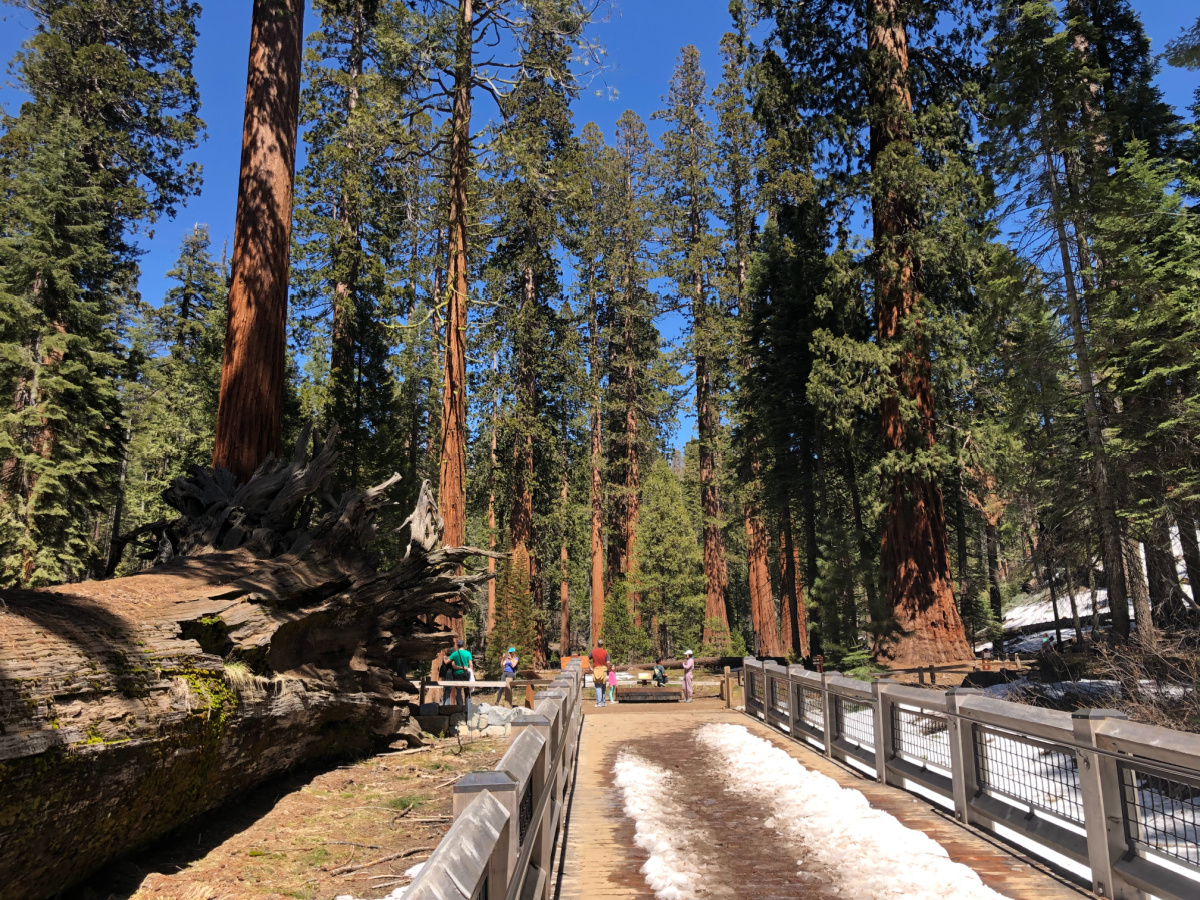
That makes it very easy to build the giant sequoias into either your arrival day or departure day.
Highway 41 also eventually brings you through the Wawona area and toward Yosemite Valley.
And then you get one of the best entrances to Yosemite Valley imaginable.
You come through the Wawona Tunnel.
And suddenly there is Tunnel View.
El Capitan.
Half Dome.
Bridalveil Fall.
The entire valley opening in front of you.
If this is your first Yosemite trip, that is one pretty spectacular way to arrive.
The downside is distance.
From the South Entrance, Yosemite Valley is still roughly an hour and a half away under normal driving conditions.
So when you pass the entrance station, you are not almost at the valley.
You still have a significant drive ahead of you.
Entering Yosemite on Highway 140
Highway 140 approaches Yosemite through Mariposa and El Portal and enters through the Arch Rock Entrance.
For many visitors, this is one of the easiest routes into Yosemite Valley.
The road generally follows the Merced River as you approach the park, and the terrain feels less dramatic than some of the steeper mountain routes.
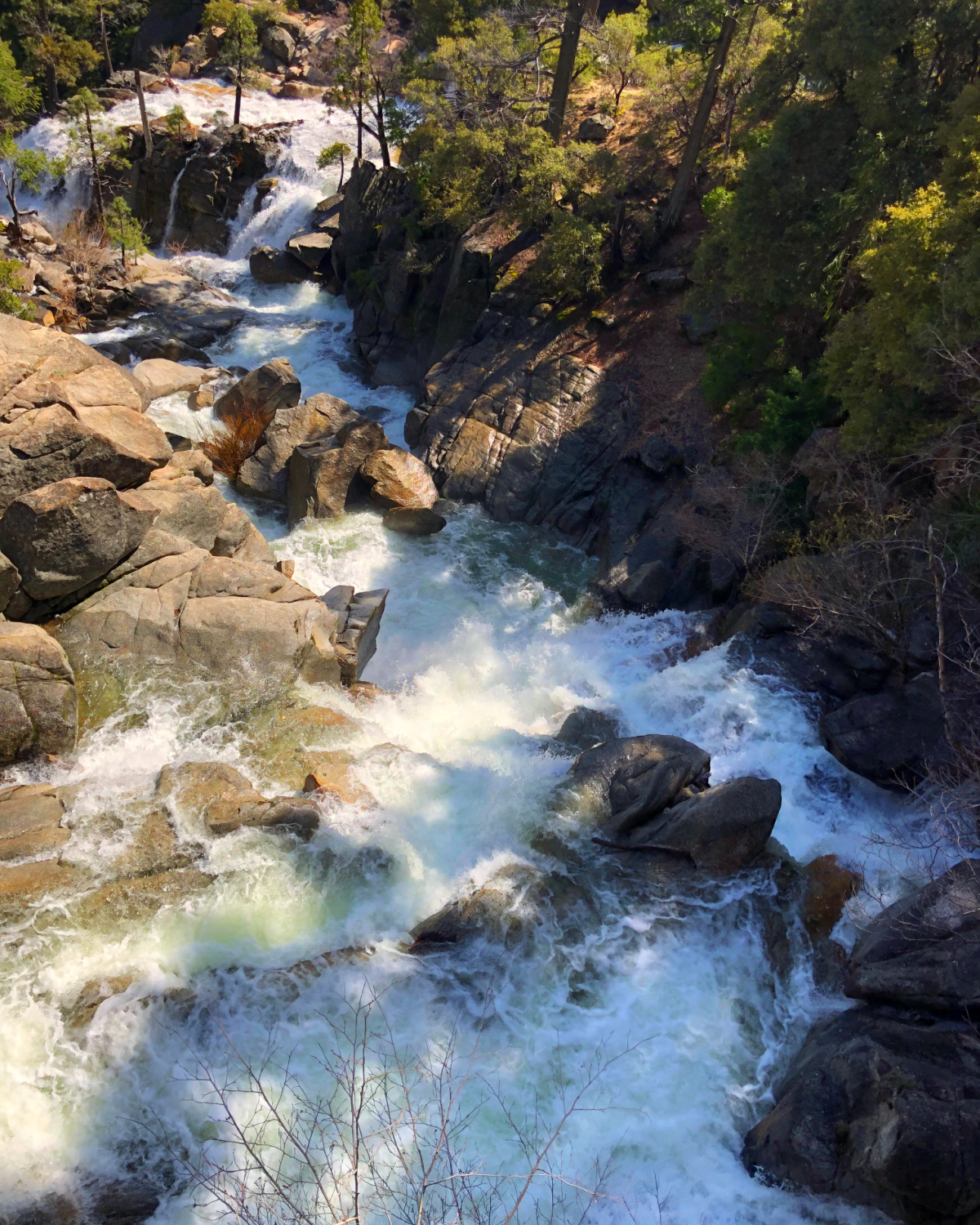
The National Park Service specifically describes Highway 140 as the easiest access to Yosemite Valley from central California.
Once you reach the Arch Rock Entrance, Yosemite Valley is relatively close.
The National Park Service estimates the drive from the entrance to the valley at about 25 minutes under normal conditions.
That is one of the reasons El Portal is such a practical place to stay.
You are already on the most direct road into the valley.
If your trip is primarily focused on Yosemite Valley, Highway 140 is a very straightforward option.
Entering Yosemite on Highway 120 from the West
Highway 120 enters Yosemite from the west through the Big Oak Flat Entrance.
This is often one of the most convenient routes if you are coming from San Francisco, Sacramento, or the northern part of California.
The road approaches Yosemite through places like Groveland and Buck Meadows before entering the park.
From the Big Oak Flat Entrance, Yosemite Valley is about 45 minutes away under normal conditions.
This entrance also places you close to Crane Flat, where the road eventually branches toward Tioga Road.
That makes Highway 120 especially useful if your itinerary includes Yosemite’s high country.
Entering Yosemite Through Tioga Pass
The Tioga Pass Entrance is completely different.
This is the eastern gateway into Yosemite.
You approach from Highway 395 near Lee Vining, climb into the Sierra Nevada, and enter Yosemite at nearly 10,000 feet.
From there, Tioga Road carries you through Yosemite’s high country past places like Tuolumne Meadows, Tenaya Lake, and Olmsted Point before eventually connecting with the roads toward Yosemite Valley.
It is a stunning drive.
It is also seasonal.
Tioga Road usually closes from sometime in November until late May or June.
When it is closed, there is no quick detour around it.
You cannot simply drive over another nearby mountain pass and pop into Yosemite.
The alternate routes around the Sierra can add many hours of driving.
So if your California road trip includes Mammoth Lakes, Mono Lake, the Eastern Sierra, or Death Valley, always verify that Tioga Road is actually open before planning to cross Yosemite this way.
How Far Is Yosemite from San Francisco?
Yosemite is often included in Northern California road trips, but it is not a quick side trip from San Francisco.
The National Park Service estimates the drive from San Francisco to Yosemite Valley at about four hours under normal conditions, depending on the route.
That is before you factor in traffic, stops, entrance delays, or anything else that happens along the way.
So yes, you can technically visit Yosemite from San Francisco.
But I would not think of Yosemite as an easy little day excursion.
If you are going to drive four hours to get there, stay.
Give yourself enough time to enjoy it.
The same basic principle applies to almost every major city around Yosemite.
The distance on the map is only part of the story.
Mountain roads take time.
How Far Is Yosemite from Sequoia National Park?
Yosemite and Sequoia look fairly close together on a California map.
They are not connected by a direct road through the Sierra.
The National Park Service estimates the drive from Yosemite Valley to the Lodgepole and Giant Forest area of Sequoia National Park at around four hours.
That makes Yosemite and Sequoia perfectly reasonable to combine on a longer California National Parks road trip.
But I would not treat them like neighboring parks where you can casually bounce back and forth.
They are separate destinations.
Driving Inside Yosemite National Park
Once you get into Yosemite, driving times can still surprise you.
This is a huge park.
From Yosemite Valley, the National Park Service estimates roughly:
- 45 minutes to Wawona
- A little over an hour to Mariposa Grove
- Just under an hour to Glacier Point
- About 1 hour and 15 minutes to Tenaya Lake
- Around 1 hour and 30 minutes to Tuolumne Meadows
- About 1 hour and 45 minutes to Tioga Pass
Those estimates assume good conditions and no stops.
And honestly, you are probably going to stop.
That is especially true on Tioga Road.
You will see viewpoints.
Take photos.
You may pull over at Tenaya Lake.
Or decide Olmsted Point deserves more time than expected.
So when I say to give Yosemite room to breathe, this is part of what I mean.
Driving around Yosemite is not simply transportation.
Sometimes the drive itself is one of the best parts of the day.
Parking in Yosemite Valley
Parking is one of the biggest logistical issues in Yosemite Valley.
The valley is only about seven miles long and one mile wide, and an enormous percentage of Yosemite visitors eventually funnel into that small area.
During busy periods, parking can fill.
Traffic can back up.
And driving from one attraction to another can become much more frustrating than simply leaving the car alone.
My biggest advice is this:
Once you get a good parking spot in Yosemite Valley, think carefully before giving it up.
If you can walk or use the shuttle instead, do that.
This is especially important during summer, weekends, and other peak periods.
The National Park Service warns that congestion is common from spring through fall and recommends arriving early in the morning or later in the afternoon to improve your chances of finding parking and avoiding the worst traffic.
In practice, I would much rather arrive early, park once, and spend several hours exploring than waste part of the day circling for another parking space.
Yosemite Valley’s One-Way Roads
The road system in Yosemite Valley can feel a little confusing the first time you drive it.
A large portion of the valley operates as a one-way loop.
Southside Drive carries traffic into the valley.
Northside Drive carries much of the traffic back out.
The Merced River runs between them.
This matters because missing a turn may not mean simply turning around at the next intersection.
You may end up continuing around part of the valley loop.
That is another reason I do not recommend constantly jumping in and out of the car.
Pick a logical parking area.
Then explore from there.
Using the Yosemite Valley Shuttle
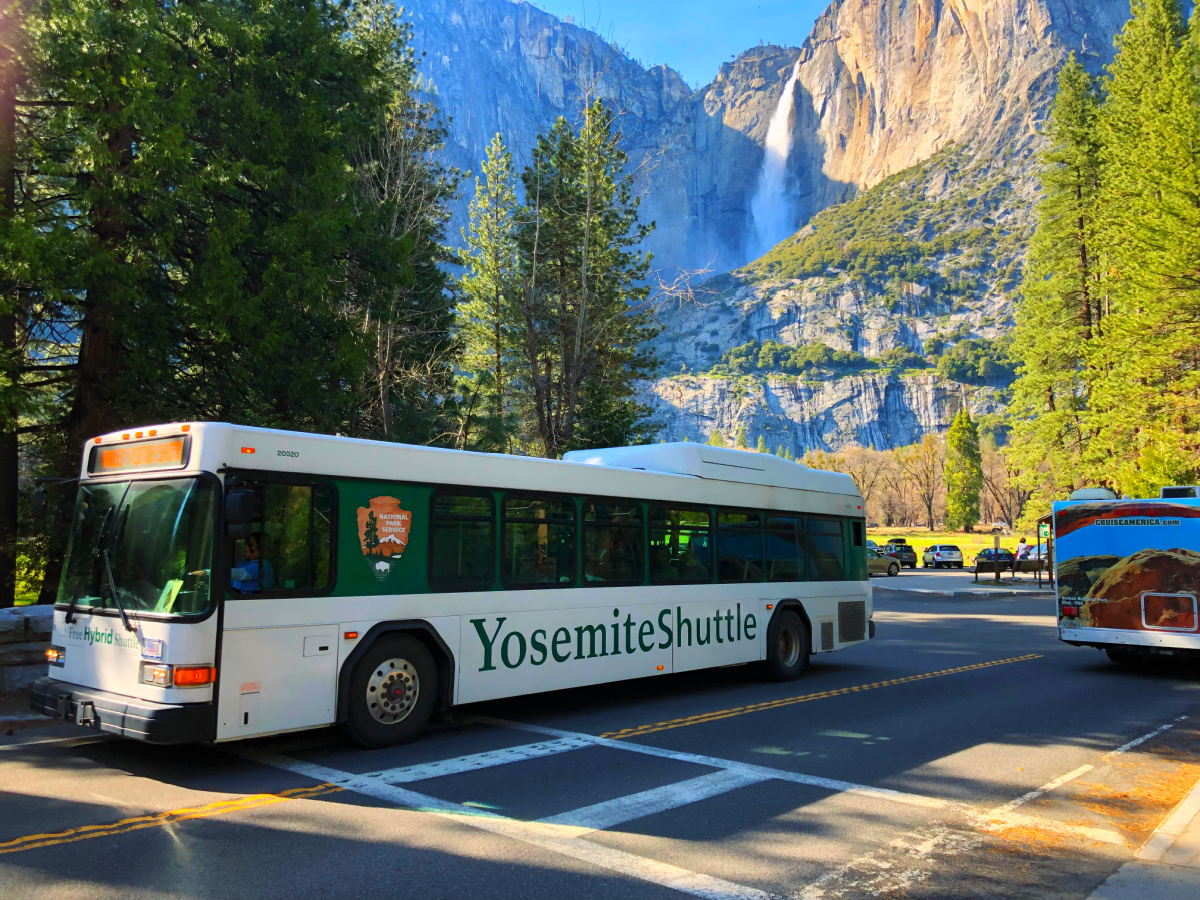
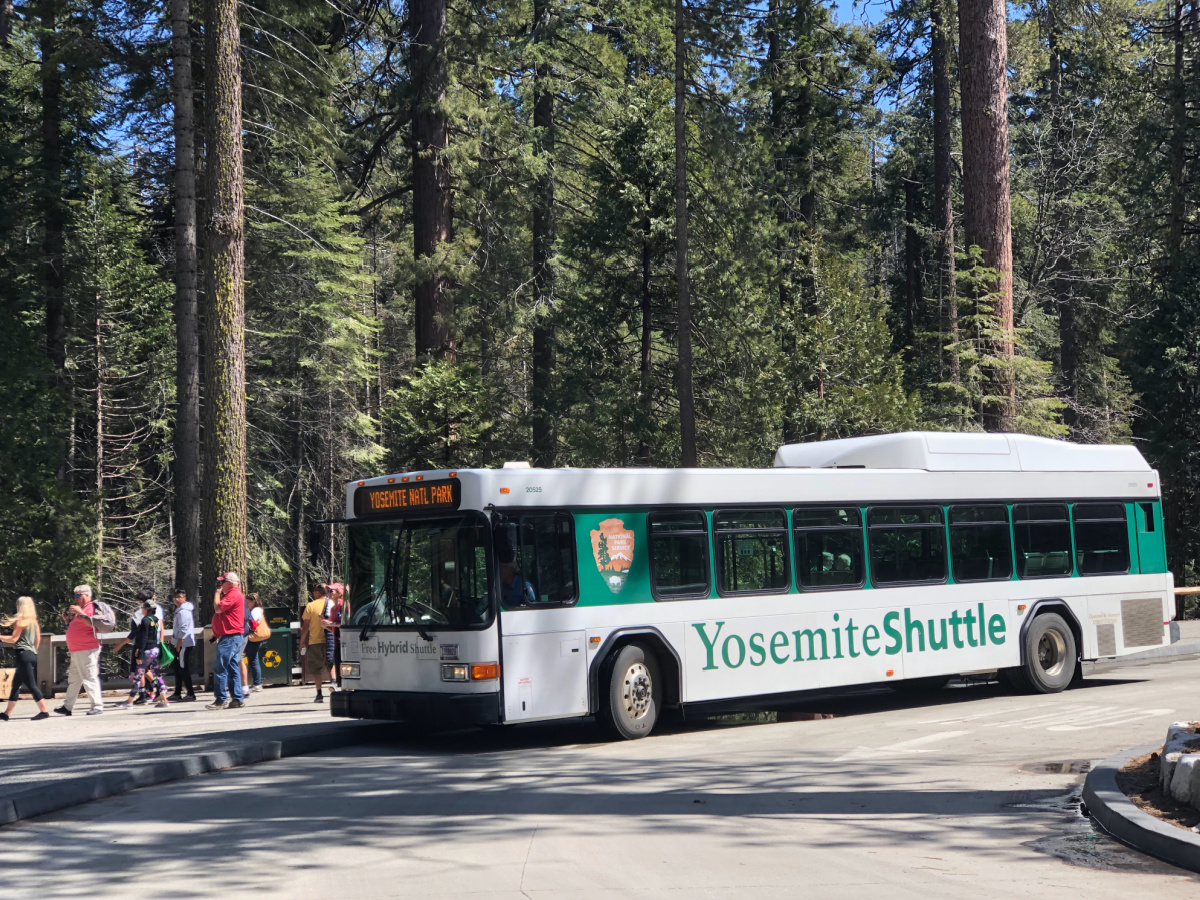
The Yosemite Valley shuttle is free and can make getting around much easier once you have parked.
The valleywide shuttle serves lodging, food locations, campgrounds, trailheads, and major visitor areas throughout Yosemite Valley.
There is also an East Valley route focused on Yosemite Village, Curry Village, the Pines campgrounds, and trailheads in the eastern valley.
Current National Park Service information lists the valleywide shuttle as operating from 7 AM to 10 PM, with buses generally arriving every 12 to 22 minutes. The East Valley route operates during the same hours with more frequent service, generally every 8 to 12 minutes.
You do not have to use the shuttle.
You can drive your own vehicle around Yosemite.
But the National Park Service recommends using the shuttle in Yosemite Valley, and I think that makes a lot of sense when the park is busy.
The shuttle is not magic.
You may still wait.
It may be crowded.
And sometimes walking is faster.
But it can save you from repeatedly hunting for parking.
Don’t Forget That Yosemite Valley Is Walkable
The shuttle gets a lot of attention, but walking is one of the best ways to experience Yosemite Valley.
Some of the valley’s most beautiful scenery is between the major attractions.
You might walk through Cook’s Meadow and watch Half Dome appear between the trees.
Or you might stop because El Capitan looks completely different from one angle than it did ten minutes earlier.
If you only drive from parking lot to parking lot, you miss some of that.
This does not mean you need to walk ten miles.
It just means I would think of Yosemite Valley as an area to explore on foot rather than a string of isolated roadside stops.
The Mariposa Grove Shuttle
Mariposa Grove has its own seasonal shuttle system.
During the main visitor season, the free shuttle carries visitors from the Mariposa Grove Welcome Plaza near the South Entrance to the grove.
Private vehicles generally do not simply drive up to the main grove area during shuttle operations.
This is something you need to account for in your schedule.
You are not parking next to the Grizzly Giant.
You are parking, boarding a shuttle, riding to the grove, and then walking from there.
And as we discussed earlier, when the shuttle is not running, visiting Mariposa Grove can require significantly more walking.
Can You Visit Yosemite Without a Car?
Yes.
You can reach Yosemite using public transportation.
YARTS provides bus service into Yosemite from several surrounding communities, including routes serving the Highway 140, Highway 41, and Highway 120 corridors.
Once you reach Yosemite Valley, the free shuttle and walking can get you to many of the major sights.
So a car is not absolutely required for a Yosemite trip.
But I think having one gives you much more flexibility if you want to explore beyond Yosemite Valley.
Glacier Point Road, Tioga Road, Mariposa Grove, and other areas become easier to incorporate when you control your own schedule.
If your entire trip is centered on Yosemite Valley, going car-free becomes much more realistic.
Should You Drive or Take the Shuttle in Yosemite Valley?
I would use both.
Drive to Yosemite Valley.
Park.
Then stop thinking about the car for a while.
Walk when the next destination is reasonably close.
Use the shuttle when it saves your legs or gets you across the valley efficiently.
Return to the car when you are actually ready to leave that part of the park.
That is a much more relaxed way to visit than trying to drive to every individual attraction.
Check Road Conditions Before You Drive
Even outside winter, road conditions in Yosemite can change.
Snow.
Wildfire.
Rockfall.
Construction.
Storm damage.
Seasonal closures.
All of those can affect how you move around the park.
In fall, winter, and spring, tire chains may also be required depending on conditions. The National Park Service notes that chain requirements cannot be predicted far in advance because they depend on current weather and road conditions.
So before heading into Yosemite, especially outside summer, check the current road status.
Do not assume that because a road is normally open in that month, it will be open on the day you arrive.
My Biggest Yosemite Transportation Tip
Build less driving into your itinerary than you think you need.
Yosemite looks deceptively manageable on a map.
Then you start adding:
An hour to Mariposa Grove.
An hour and a half to Tuolumne Meadows.
Parking.
Shuttle waits.
Photo stops.
Trail time.
Traffic.
Suddenly a day that looked spacious on paper feels packed.
Group your sightseeing geographically.
Do Yosemite Valley together.
And Glacier Point Road together.
Do Mariposa Grove when you are already on the southern side of the park.
That simple strategy will save you a huge amount of unnecessary backtracking.
And once you know how to get around Yosemite, you can finally start answering the fun question:
What should you actually do once you are there?
Best Things to Do in Yosemite National Park
Yosemite is not a park where you need to complete a long list of strenuous hikes to feel like you saw the best of it.
That is one of the things I love most about it.
Some National Parks make you work very hard for the iconic scenery.
Yosemite often puts it right in front of you.
You can see towering waterfalls, granite cliffs, giant sequoias, mountain lakes, and some of the most famous viewpoints in the National Park system without turning every day into an endurance event.
That makes Yosemite especially good for first-time National Park visitors, families, multigenerational groups, and anyone who wants a spectacular trip built around sightseeing and easier walks.
There are obviously far more than ten things to do here.
But if this is your first visit, these are the experiences I would start with.
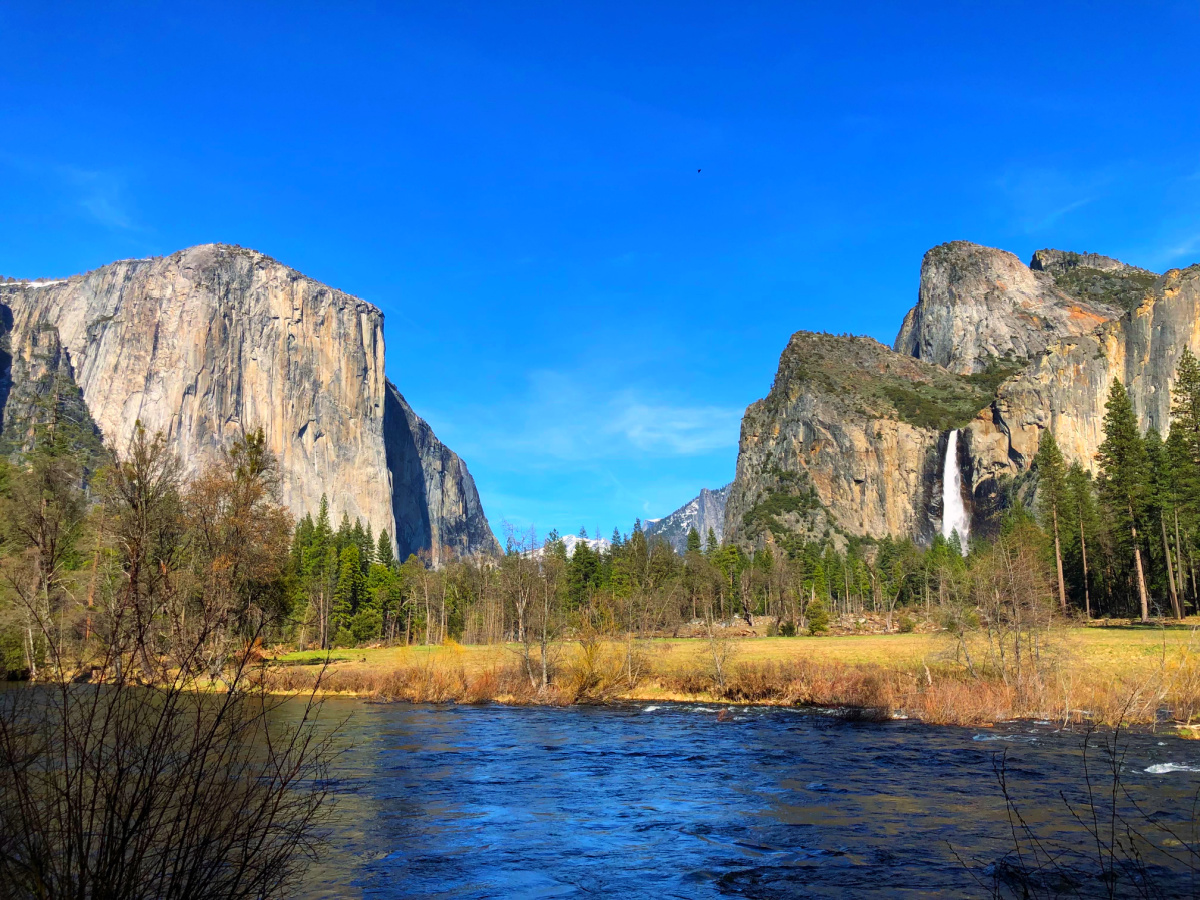
See Tunnel View
Tunnel View is one of the most famous viewpoints in Yosemite National Park for a reason.
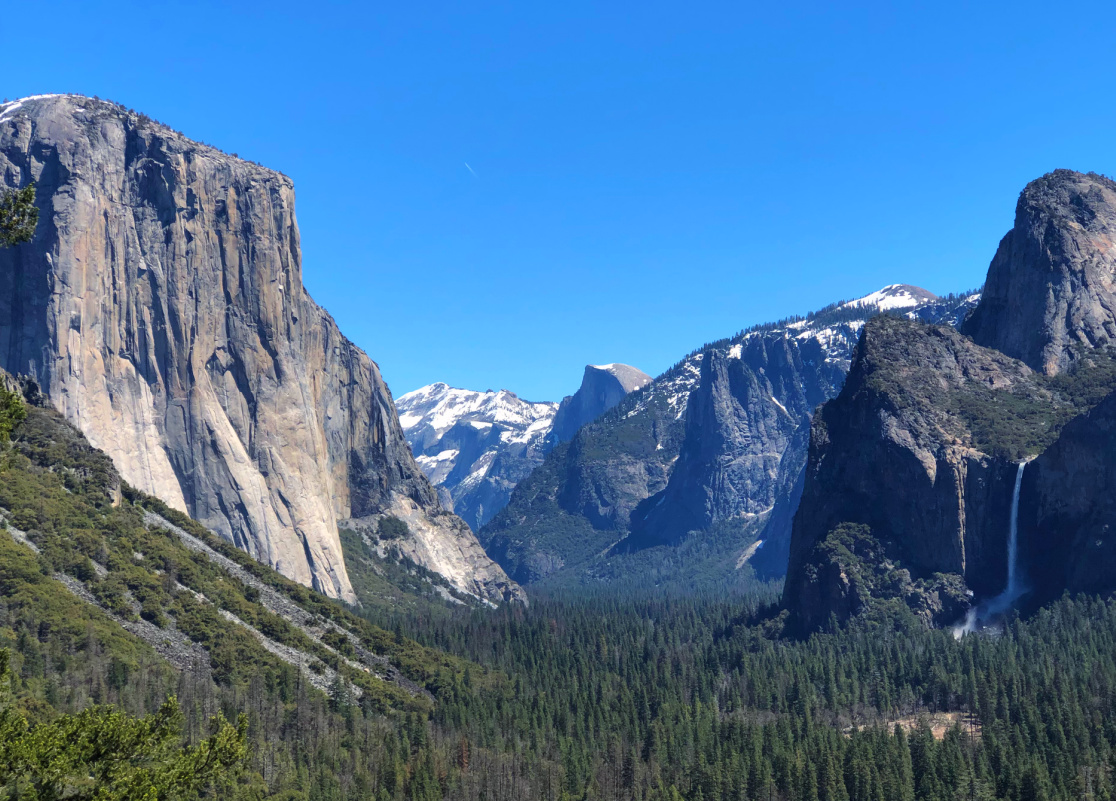
You come through the Wawona Tunnel and suddenly the entire valley opens in front of you.
El Capitan rises on the left.
Bridalveil Fall drops on the right.
Half Dome sits farther in the distance.
And Yosemite Valley stretches between them.
It is one of those views that instantly explains why Yosemite became such an iconic American landscape.
The viewpoint is also incredibly easy to visit.
There is no hike required.
You simply park and walk a very short distance to the overlook.
That makes Tunnel View an obvious stop for almost everyone.
If you enter Yosemite Valley from the south on Highway 41, Tunnel View is also one of the first major Yosemite experiences you encounter.
That is a pretty dramatic introduction to the park.
Even if you enter from another direction, I would still make time for it.
The view changes with the weather, season, and light, so it can be worth stopping more than once if your itinerary naturally brings you past it again.
Stand Beneath Yosemite Falls
Yosemite Falls is one of the defining sights of Yosemite Valley.
At more than 2,400 feet from top to bottom, the entire waterfall system is enormous.
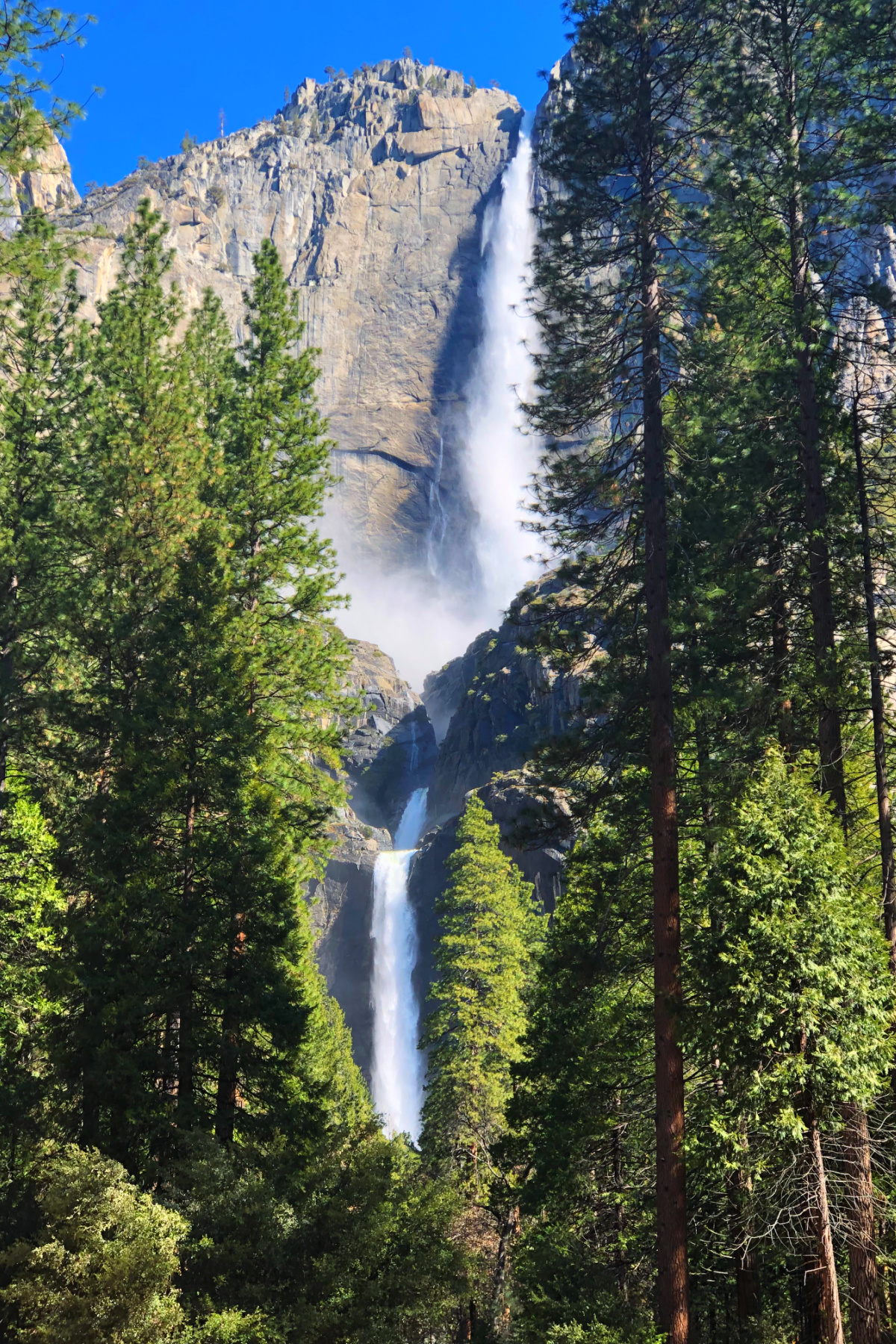
And you do not need to hike to the top to appreciate it.
The Lower Yosemite Fall Trail gives you a much easier way to experience the waterfall from below.
This is one of the reasons Yosemite works so well for casual sightseeing.
You can get a powerful waterfall experience without committing to an all-day climb.
Spring is the most dramatic time to see Yosemite Falls because snowmelt sends significantly more water over the cliffs.
Later in summer and into fall, the flow can drop dramatically.
That seasonal change matters.
If waterfalls are one of the main reasons you are visiting Yosemite, spring should be high on your list.
Even when the flow is lower, though, Yosemite Falls is one of those landmarks that helps define the entire valley.
You will see it from multiple places throughout the day.
Walk Through Cook’s Meadow
Cook’s Meadow is one of my favorite examples of how easy it can be to enjoy Yosemite.
You do not have to climb anything.
Or drive to a remote trailhead.
You can simply walk through the meadow and look around.
The views of Yosemite Falls, Half Dome, and the surrounding granite walls are beautiful.
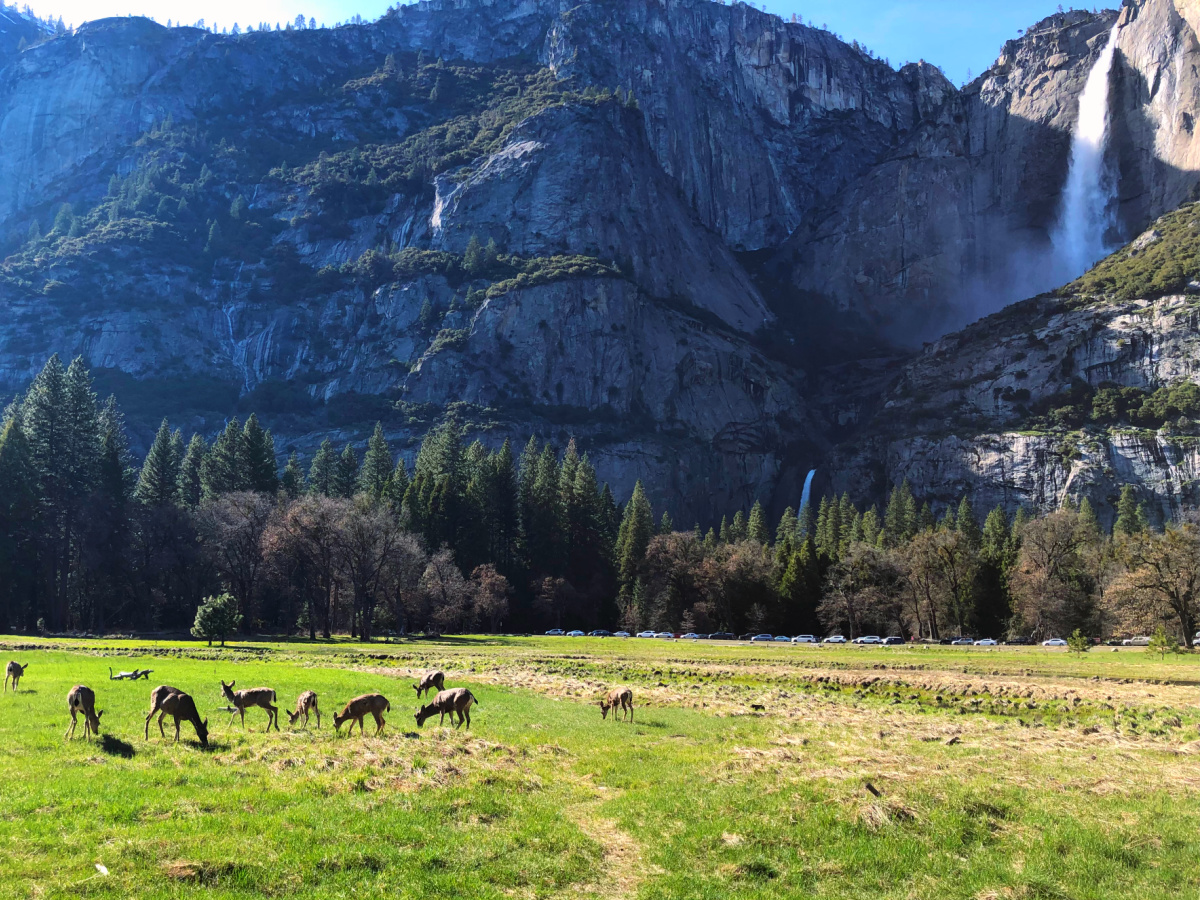
The landscape also feels completely different from the more dramatic viewpoints.
Instead of standing at one overlook, you are moving through the valley itself.
I especially like this kind of stop because it gives you time to actually absorb where you are.
It is easy to rush Yosemite.
You arrive at a famous viewpoint.
Take the photo.
Move to the next stop.
Cook’s Meadow encourages the opposite.
Walk.
Look up.
Take your time.
And let Yosemite feel like a place instead of a checklist.
Visit Sentinel Bridge
Sentinel Bridge is one of the classic Half Dome viewpoints in Yosemite Valley.
It also happens to be personally meaningful to me because this is where my husband proposed during one of our early Yosemite trips.
That memory probably means I will always see this spot a little differently.
But even without the personal connection, it is a beautiful place.
Half Dome rises beyond the Merced River, and depending on the light and water conditions, you may see reflections in the river below.
The viewpoint is easy to access, which makes it another excellent stop for travelers who want iconic Yosemite scenery without a major hike.
This is also a good example of why I would not spend your entire Yosemite trip chasing only dramatic overlooks.
Some of the best views in the park are quiet places along the valley floor.
See El Capitan Up Close
El Capitan looks impressive in photographs.
It looks completely different when you are standing beneath it.
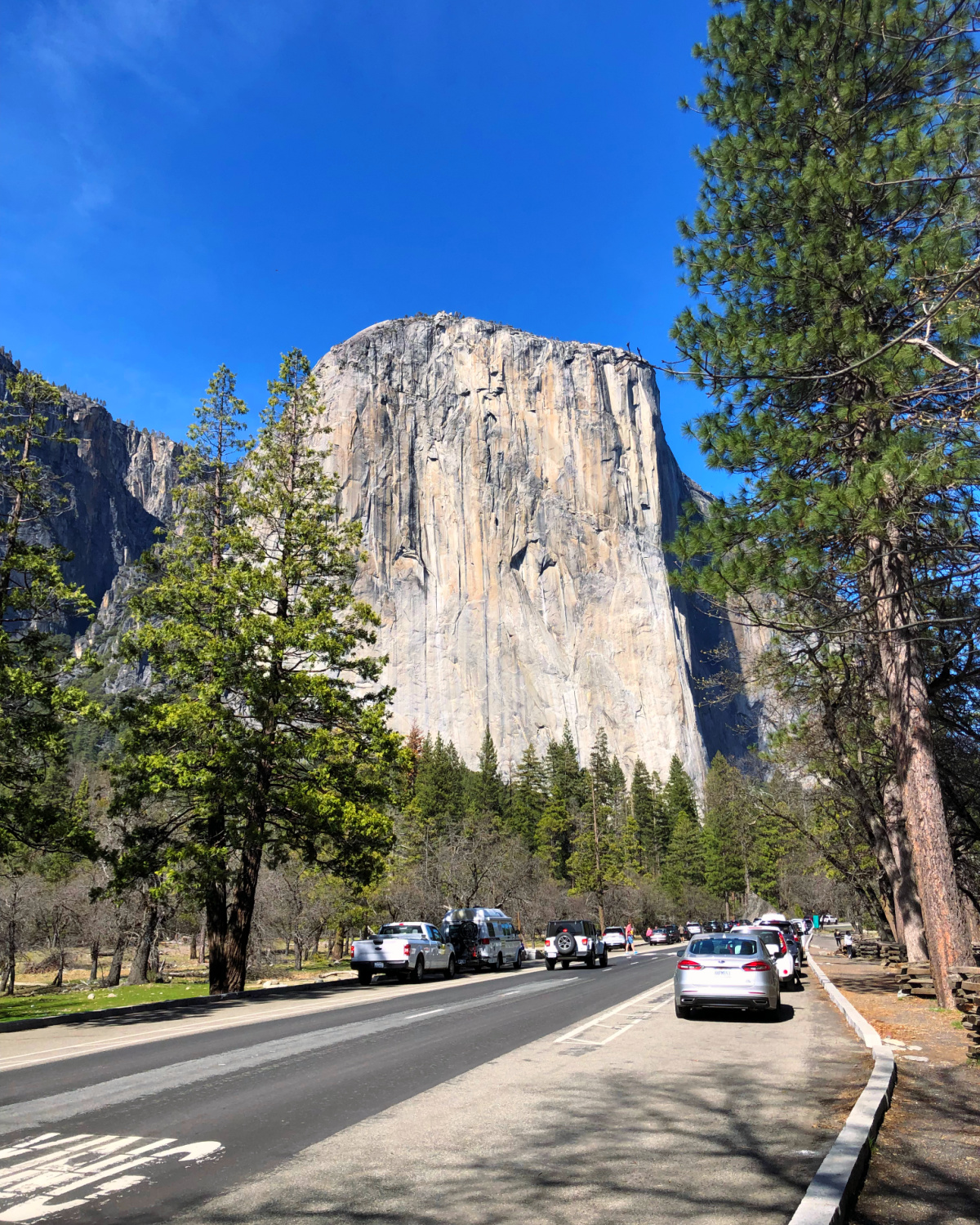
The granite wall rises roughly 3,000 feet above Yosemite Valley, and its scale is difficult to understand until you see it in person.
You may also spot climbers on the wall.
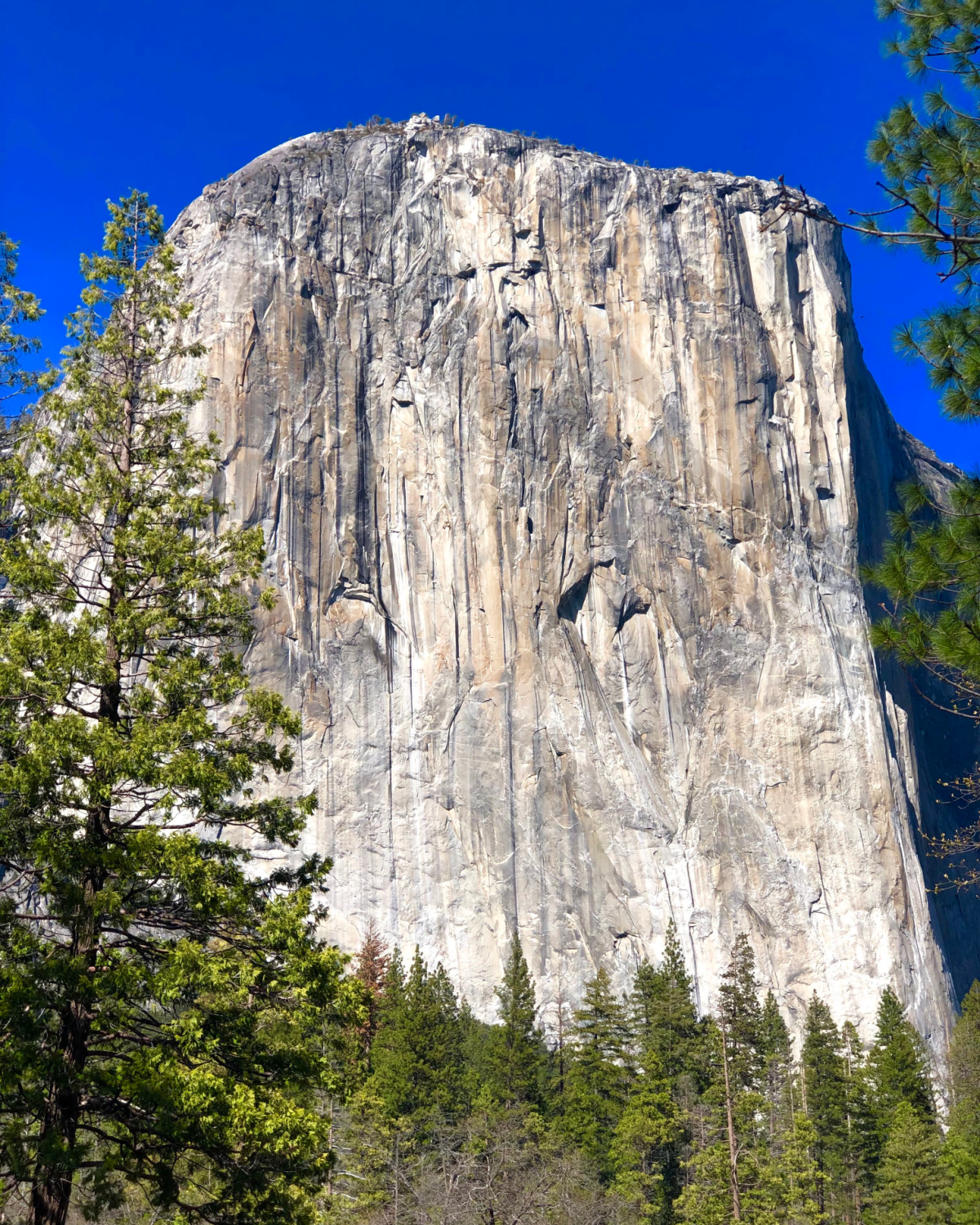
And by “spot,” I mean you may need binoculars or a zoom lens before you realize those tiny dots are actually people.
That gives you a whole new appreciation for how enormous El Capitan really is.
There are several places in Yosemite Valley where you can see the formation well, including roadside pullouts and meadow areas.
You do not need to overcomplicate this stop.
Just find a safe place to pull over or include it as part of your broader Yosemite Valley exploration.
Then stand there for a minute and look up.
Walk to Bridalveil Fall
Bridalveil Fall is one of the first major waterfalls many visitors see when entering Yosemite Valley.
It is also part of the classic Tunnel View landscape.
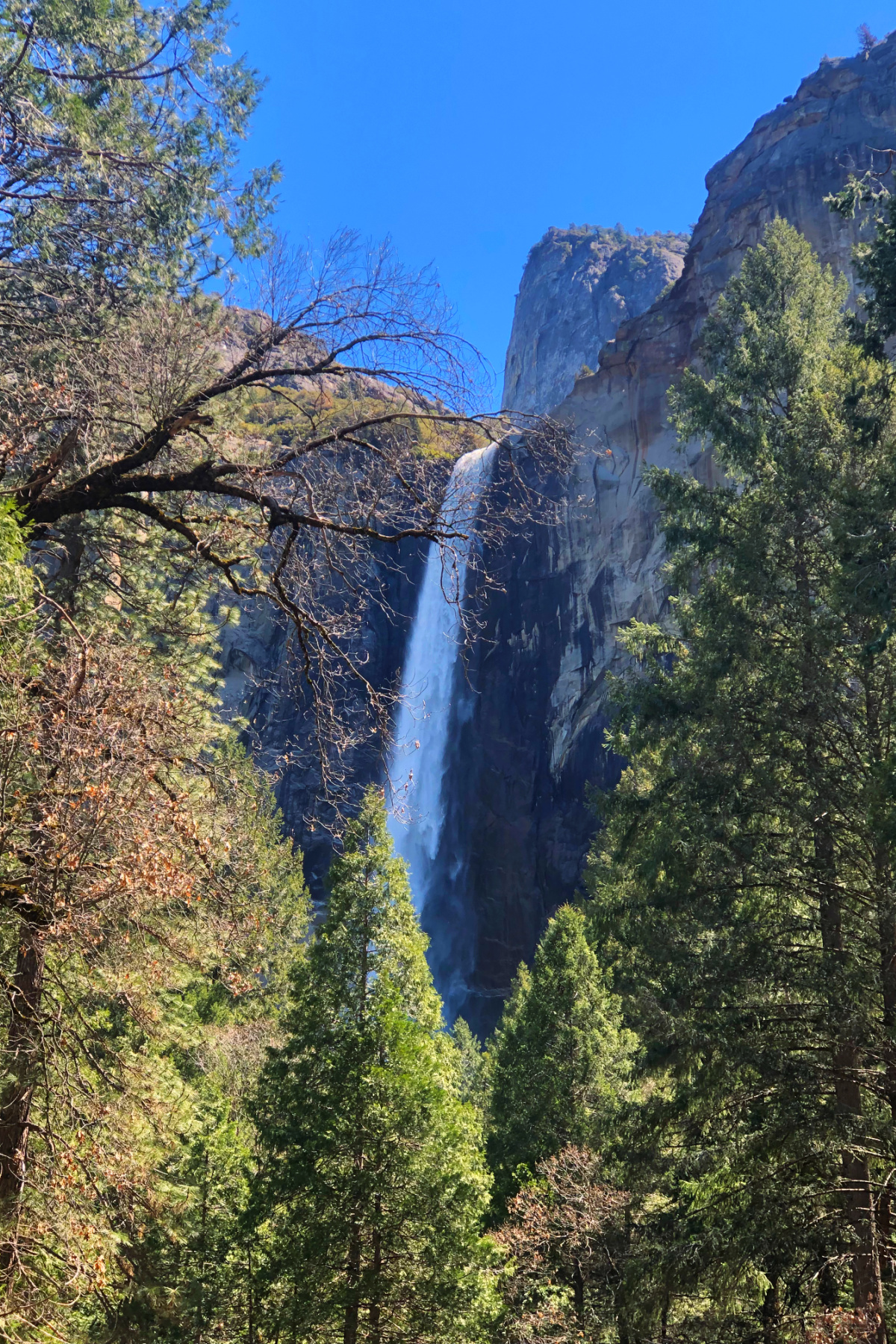
The waterfall drops more than 600 feet from the cliffs above, and during stronger flow it can produce a surprising amount of spray near the base.
That means the experience can be more dramatic than simply looking at it from a distance.
You may get wet.
And depending on the season, the trail can be slick.
This is another Yosemite attraction that changes dramatically with water levels.
Spring usually gives you the most powerful experience.
Later in the year, the flow may be much lighter.
If you are visiting when Bridalveil Fall is running strongly, I would absolutely make time to get closer.
Spend Time Along the Merced River
Some of my favorite Yosemite moments are not necessarily the biggest attractions.
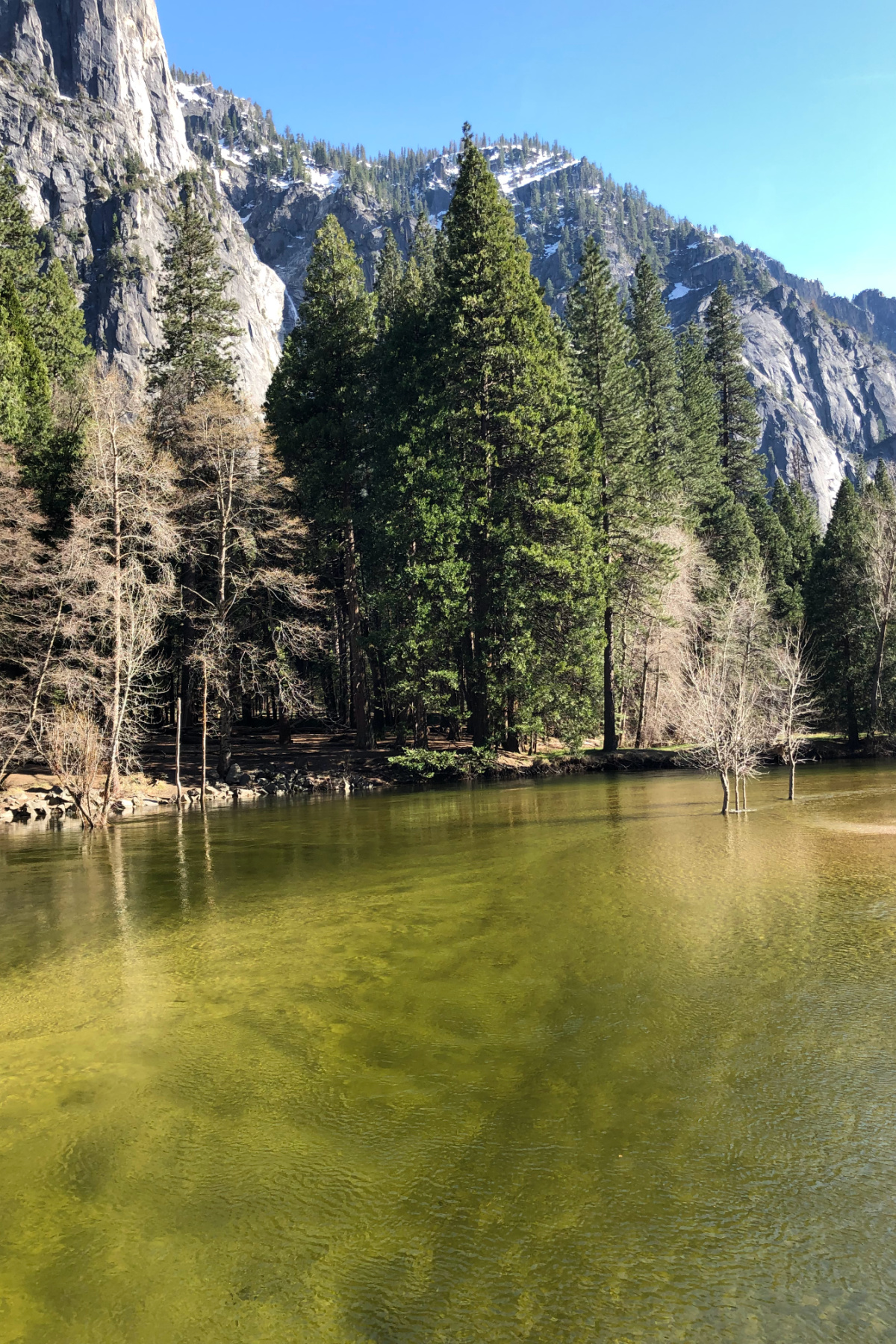
The Merced River runs through Yosemite Valley and gives you a quieter way to experience the landscape.
You can walk beside it.
Stop for a picnic.
Watch the reflections.
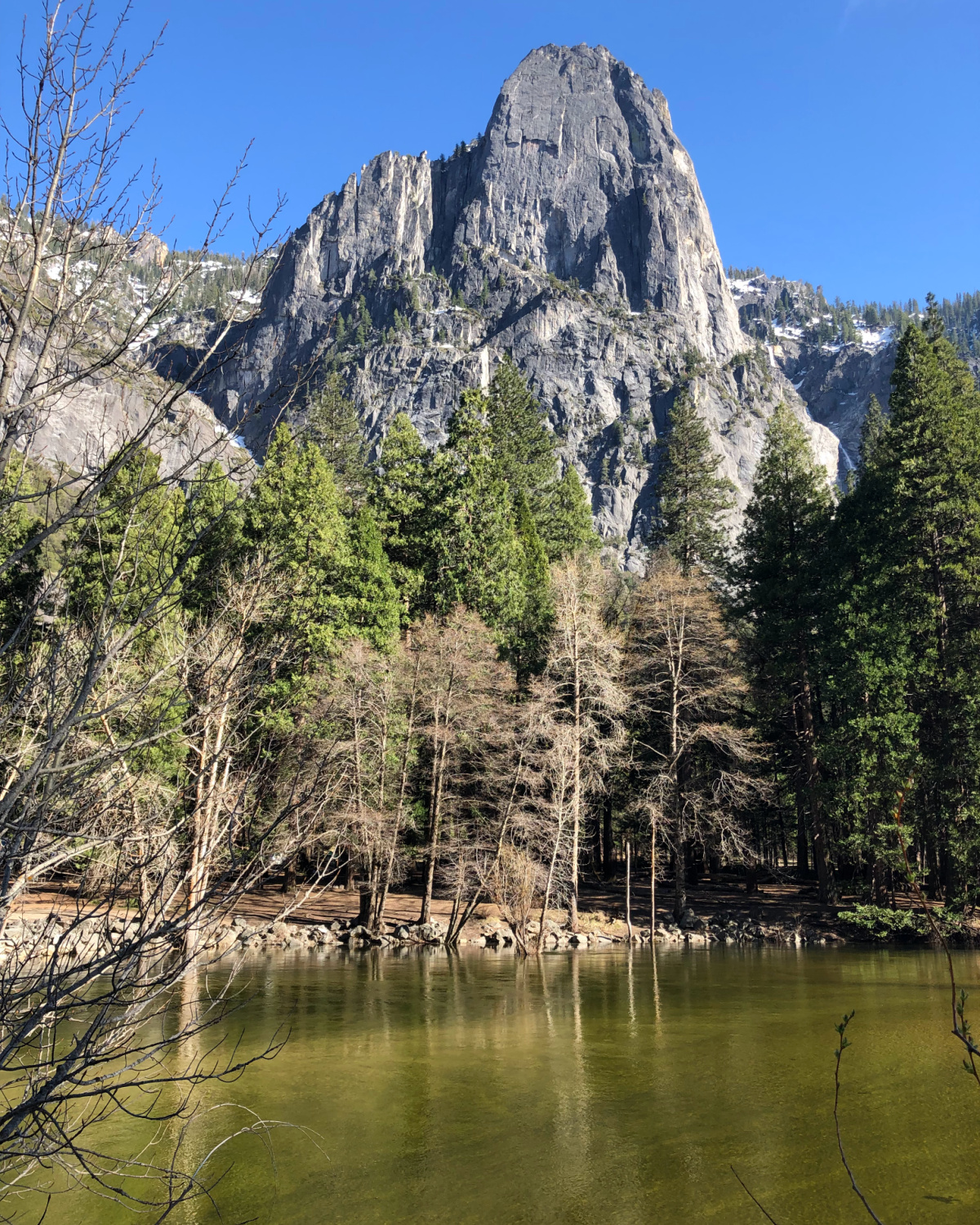
Or just sit for a while with the cliffs around you.
This is especially nice when the rest of the valley feels busy.
National Parks do not always have to be about constantly moving.
Sometimes the best thing you can do is stop.
Yosemite is spectacular enough that you do not need a scheduled attraction every fifteen minutes.
Leave room for this kind of time.
Explore Mariposa Grove
Yosemite is best known for granite and waterfalls, but Mariposa Grove adds another completely different landscape.
This is the largest grove of giant sequoias in Yosemite National Park.
Walking among these trees gives you a sense of scale that is completely different from looking at Half Dome or El Capitan.
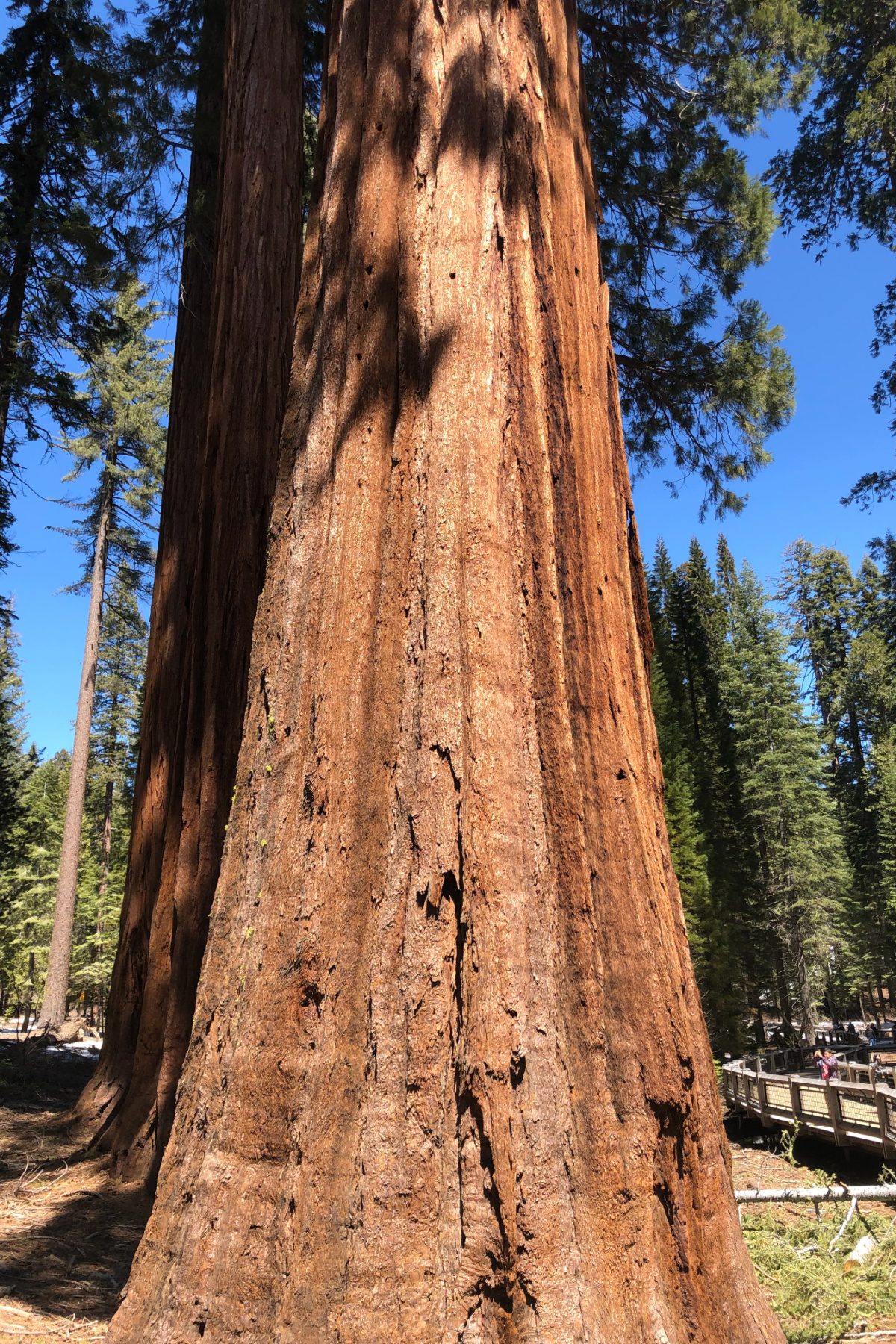
The Grizzly Giant is one of the most famous trees in the grove.
The California Tunnel Tree is another highlight.
And even beyond the named trees, simply walking through a forest of mature giant sequoias is memorable.
I think Mariposa Grove is especially worthwhile if this is your first trip to Yosemite because it adds so much variety.
In one vacation, you can see waterfalls, granite cliffs, alpine scenery, meadows, and giant sequoias.
That is a lot of different National Park experiences in one place.
Just remember that shuttle access is seasonal, and the logistics can change substantially when the shuttle is not operating.
Read my complete Mariposa Grove guide.
Drive Glacier Point Road
If Glacier Point Road is open during your trip, it deserves serious consideration.
This is where you get some of Yosemite’s most dramatic elevated views.
Instead of looking up from Yosemite Valley, you are looking down into it.
Glacier Point is the obvious highlight.
From the overlook, you can see Half Dome, Yosemite Valley, and the surrounding Sierra Nevada landscape.
Washburn Point is also excellent and offers another perspective on the same general area.
One of the things I love about Glacier Point Road is that it gives you huge scenery without requiring a huge hike.
You can drive to the viewpoints.
Walk relatively short distances.
And see landscapes that feel enormous.
This is exactly the kind of experience that fits the way I like to approach National Parks.
You can absolutely hike if you want to.
But you do not have to earn every beautiful view with six hours of climbing.
Drive Tioga Road
Tioga Road is one of the most scenic drives in Yosemite.
And in some ways, it feels like a completely different park.
You leave the concentrated drama of Yosemite Valley and move into higher-elevation terrain filled with granite domes, mountain lakes, forests, and broad alpine scenery.
Some of the best stops include Olmsted Point, Tenaya Lake, and Tuolumne Meadows.
But I would not treat Tioga Road as a race between attractions.
The drive itself is part of the experience.
Pull over.
Take the short walk.
Stop at the lake.
Look around.
This is also one of the areas where you really begin to appreciate how large Yosemite is.
You can spend an entire day exploring the high country and feel very far removed from Yosemite Valley.
Tioga Road is seasonal, so this part of Yosemite is usually only available during the warmer months.
If it is open during your trip and you have at least three days, I would strongly consider adding it.
Stop at Olmsted Point
Olmsted Point is one of Yosemite’s best easy viewpoints.
The landscape here is completely different from Tunnel View or Glacier Point.
You are surrounded by exposed granite, and the view stretches toward the back side of Half Dome and the high Sierra.
There is a short walk that gives you an even better look at the landscape, but you can still see plenty from the main viewing area.
This is the kind of stop that makes Tioga Road worthwhile even if you are not planning any major hikes.
You can experience Yosemite’s high country without spending the entire day on a trail.
[Read my complete guide to Yosemite’s best scenic viewpoints.]
Spend Time at Tenaya Lake
Tenaya Lake is one of those places where I would resist the urge to treat it as just another photo stop.
The lake sits along Tioga Road, surrounded by granite and high-country scenery.
It is beautiful.
And it is the kind of place where you might want to stay longer than expected.
Walk along the shore.
Have a snack.
Sit down.
Enjoy the view.
This is exactly what I mean when I say a three-day Yosemite itinerary gives you more breathing room.
With a rushed schedule, Tenaya Lake becomes ten minutes and a few photographs.
With more time, it becomes part of the day.
There is a difference.
Explore Tuolumne Meadows
Tuolumne Meadows is one of the largest high-elevation meadows in the Sierra Nevada.
It feels open and expansive in a way Yosemite Valley does not.
Instead of granite walls enclosing you, the landscape spreads out around the meadow.
This area is also an excellent jumping-off point for hiking.
But even if you are not planning a long trail, Tuolumne Meadows is worth seeing when Tioga Road is open.
It gives you a completely different perspective on Yosemite.
This is why I would never describe the park as simply Yosemite Valley.
The valley is extraordinary.
But it is only one part of Yosemite.
Take an Easy Hike
You can experience Yosemite without strenuous hiking.
But I would still include at least a few easy walks.
They allow you to slow down and see parts of the park you will miss from the road.
Some of the best easier options include walks around Yosemite Valley, Lower Yosemite Fall, Cook’s Meadow, portions of Mariposa Grove, and short trails to viewpoints or lakes.
The exact trail you choose should depend on the season, conditions, and your group’s abilities.
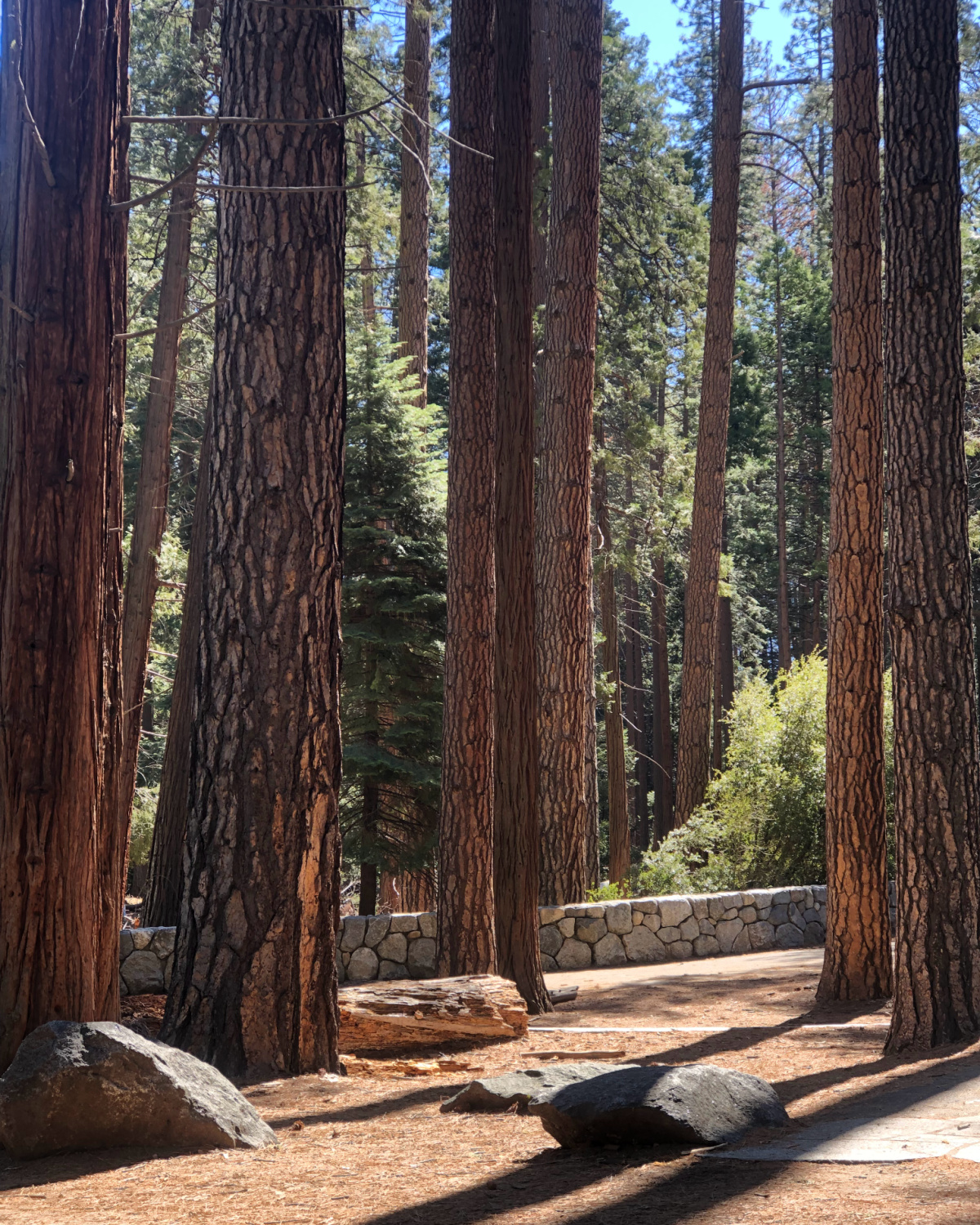
And I think this is important:
Do not feel like you need to choose the hardest hike you are physically capable of doing.
Choose the hike that gives you the experience you actually want.
A beautiful two-mile walk can be a much better vacation memory than a miserable eight-mile slog you chose because someone online said it was a “must-do.”
Read my guide to the best easy hikes in Yosemite National Park.
See Yosemite from Its Best Viewpoints
Yosemite has some of the most famous scenic overlooks in the National Park system.
Tunnel View.
Glacier Point.
Washburn Point.
Olmsted Point.
Valley View.
Sentinel Bridge.
And those are just some of the obvious ones.
One of the things I appreciate most about Yosemite is how many of these views are accessible.
You can build an entire trip around spectacular scenery without needing to complete difficult hikes.
That also makes Yosemite especially good for multigenerational travel.
Not everyone needs to have the same physical ability to enjoy the park.
Read my complete guide to the best Yosemite scenic viewpoints.
Chase Waterfalls
If you visit Yosemite during spring or early summer, waterfalls may become one of the biggest themes of your trip.
Yosemite Falls.
Bridalveil Fall.
Vernal Fall.
Nevada Fall.
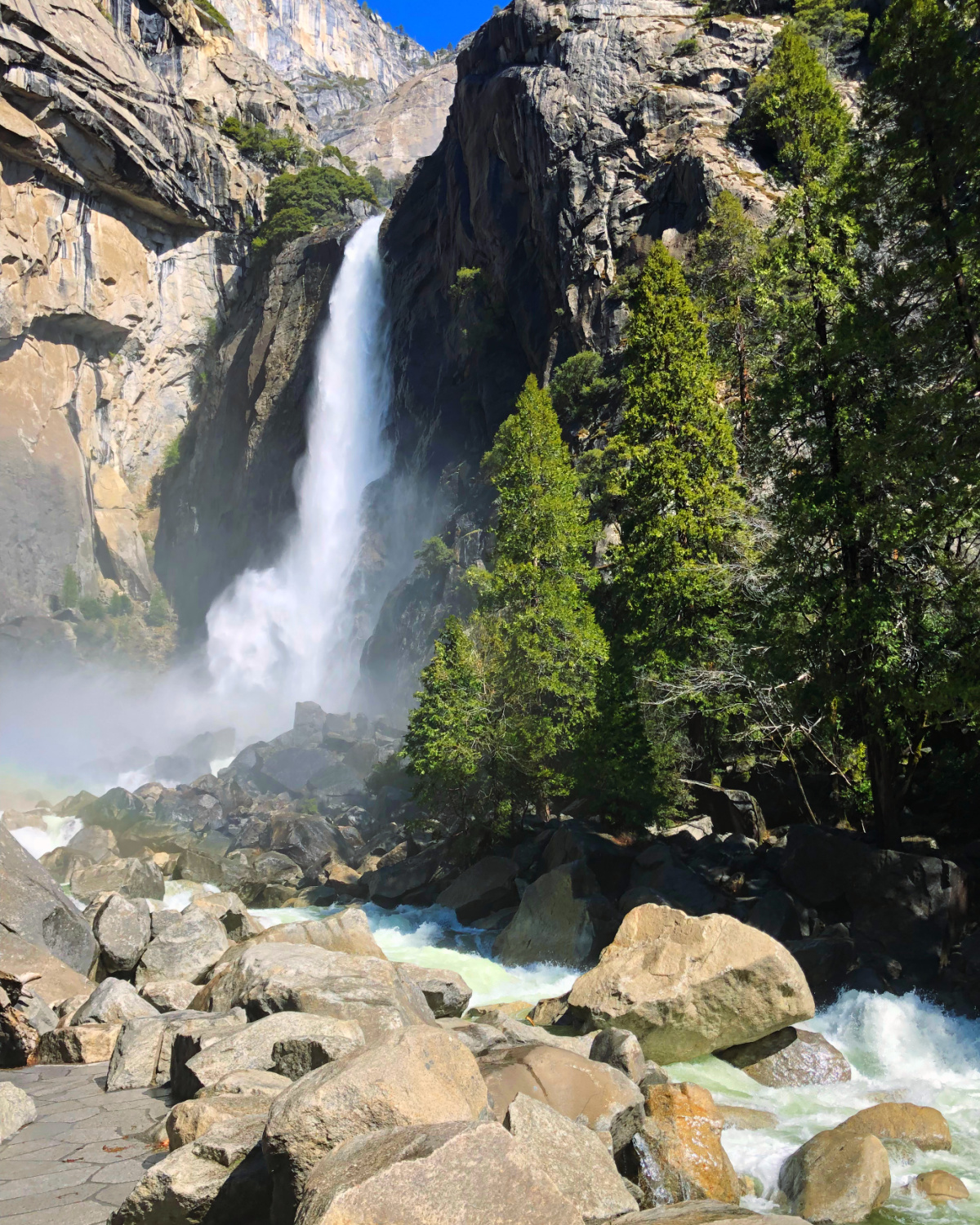
And numerous seasonal waterfalls that appear when snowmelt is strong.
The amount of water can completely change the character of the park.
That is one reason my memories of Yosemite from different seasons feel so different.
The roaring spring waterfalls I remember from my early visits are not the same Yosemite you experience during a dry fall.
If waterfalls matter to you, build your trip around the season rather than simply adding them to a generic itinerary.
Watch for Wildlife
Yosemite is not primarily a wildlife-viewing park in the same way Yellowstone is.
But you should still keep your eyes open.
Black bears live throughout Yosemite.
You may also see deer, coyotes, squirrels, marmots, and a variety of birds depending on where you are exploring.
The important thing is to keep your distance and never feed wildlife.
Food storage rules are taken very seriously in Yosemite because bears have learned to associate people and vehicles with food.
Follow the park’s instructions carefully.
This is not only about protecting your lunch.
It protects the bears too.
Enjoy Yosemite at Sunrise or Sunset
If you are staying inside or close to the park, take advantage of the quieter edges of the day.
Early morning and evening can completely change how Yosemite feels.
The light is softer.
The temperature is cooler.
Crowds may be lighter.
And the granite cliffs can take on completely different colors.
You do not necessarily need a complicated sunrise expedition.
Even returning to a familiar place like Sentinel Bridge, Tunnel View, or the Merced River at a different time of day can feel like a new experience.
This is another reason I like staying close to Yosemite.
You have the flexibility to enjoy these quieter hours without adding a long drive before or afterward.
Don’t Miss the Simple Yosemite Experiences
It is easy to get fixated on Yosemite’s famous sights.
But leave room for the simple things too.
Have a picnic.
Walk beside the river.
Stop at a meadow.
Sit on a bench.
Look for climbers on El Capitan.
Watch the light change on Half Dome.
Let your kids throw rocks into the water for a while.
Take the photo.
Then put the camera down.
Some National Parks reward ambition.
Yosemite certainly can.
But it also rewards attention.
And you can have an unforgettable trip here without doing the hardest hike, seeing every corner of the park, or filling every hour of the day.
You just need enough time to notice where you are.
You Don’t Have to Hike Hard to See Yosemite Well
This is probably the most important thing I want casual National Park travelers to understand about Yosemite.
Yes, Yosemite has legendary hikes.
Yes, you can climb thousands of feet, spend all day on the trail, and tackle some seriously challenging adventures.
But that is not the price of admission.
You can walk through meadows.
Stand beneath waterfalls.
See Half Dome from the Merced River.
Drive to Glacier Point.
Walk among giant sequoias.
Stop beside Tenaya Lake.
And experience an astonishing amount of Yosemite without ever attempting a difficult hike.
If strenuous hiking is your thing, Yosemite can absolutely deliver.
If it isn’t, Yosemite still has plenty for you.
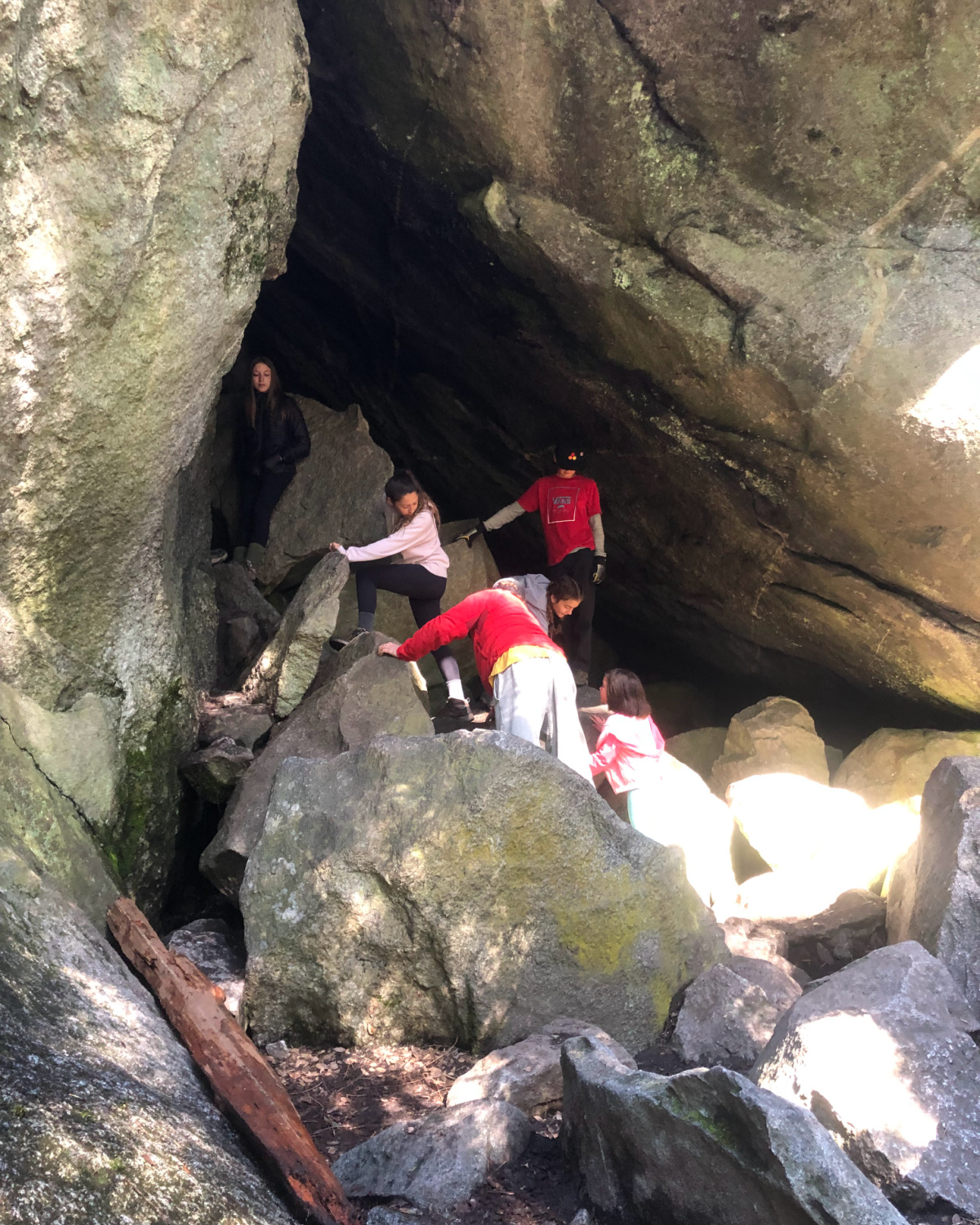
Where to Eat in Yosemite National Park
You do not need to pack every meal into Yosemite.
There are restaurants, casual dining options, markets, and grab-and-go food inside the park, particularly in Yosemite Valley.
That said, I would not build an overly complicated Yosemite itinerary around restaurant reservations either.
Food is important.
But I would rather spend my prime sightseeing hours looking at Half Dome than standing in line for lunch.
For most visitors, the easiest strategy is some combination of eating breakfast before you get started, carrying snacks and water, grabbing a casual lunch, and having a more relaxed dinner once the major sightseeing is finished.
Dining in Yosemite Valley
Yosemite Valley has the largest concentration of food options in the park.
The Ahwahnee Dining Room is the upscale choice and makes sense if you want the historic National Park dining experience.
Yosemite Valley Lodge has Base Camp Eatery for casual breakfast, lunch, and dinner, along with the Mountain Room for a more traditional sit-down dinner.

Yosemite Village has Degnan’s for breakfast and lunch, The Loft at Degnan’s for casual meals, and the Village Store if you need groceries or ready-to-eat food.
Curry Village also has several dining options, including its pavilion and seasonal pizza and grill locations.
Some restaurants and dining locations operate seasonally, so always check current hours during your trip. Reservations are available for several of Yosemite’s sit-down dining rooms and are particularly useful during busy periods.
If you are traveling with kids or picky eaters, I would also keep some familiar snacks and easy meals with you.
Sometimes everybody is tired and hungry at exactly the wrong moment.
National Park vacations are not improved by pretending that situation does not happen.
Grocery Stores and Supplies in Yosemite
You can buy groceries and basic supplies inside Yosemite.
The Village Store in Yosemite Valley carries a fairly substantial selection of groceries, snacks, drinks, and camping supplies.
Smaller markets and stores are available in other areas of the park as well, although selection varies.
I still like arriving with the basics I know we will need.
Water.
Snacks.
Breakfast foods.
Anything your family is particularly attached to.
That way you are not spending vacation time shopping for things you could easily have brought with you.
Yosemite With Kids
Yosemite is an excellent National Park for families.
I think people sometimes see photographs of Half Dome climbers or the Mist Trail and assume Yosemite is primarily a hiking destination.
It absolutely can be.
But it does not have to be.
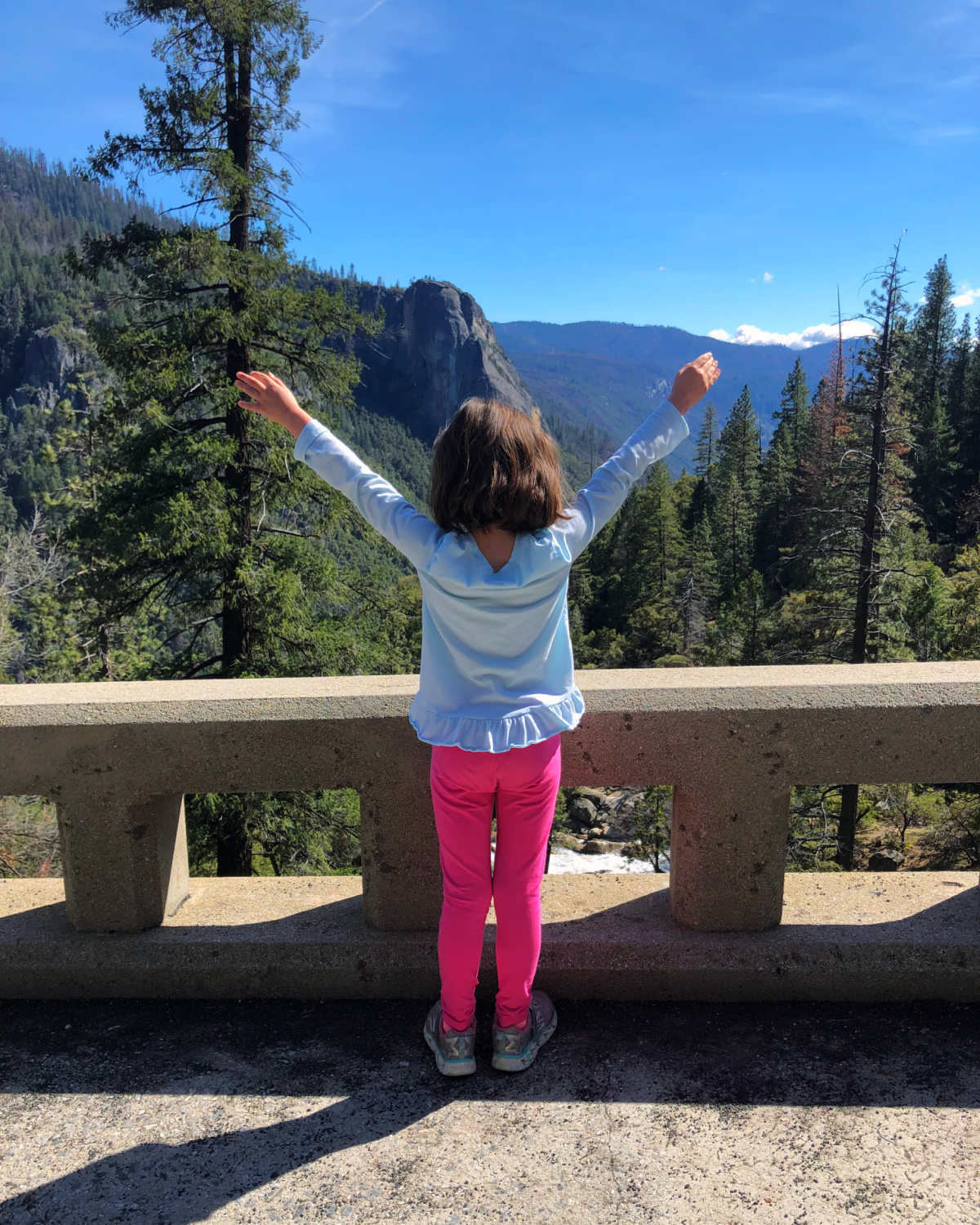
Kids can see huge waterfalls, giant sequoias, granite cliffs, rivers, meadows, wildlife, and mountain lakes without completing difficult hikes.
That makes Yosemite especially good for families with children of different ages and abilities.
A family Yosemite day might include a short walk to a waterfall, a picnic beside the Merced River, time in a meadow, a scenic viewpoint, and plenty of opportunities to simply explore.
That is a pretty great National Park day.
Don’t Overschedule Yosemite With Kids
This is probably my biggest family-travel advice for Yosemite.
Do less.
Kids do not necessarily care that your spreadsheet says you still need to see four viewpoints.
They may care very deeply about throwing rocks into the river for twenty minutes.
Let them.
Build in time for snacks, bathrooms, unexpected stops, and moments where nobody is technically accomplishing anything.
You are still in Yosemite.
The scenery is not going anywhere.
Try the Yosemite Junior Ranger Program
If your children enjoy Junior Ranger programs, Yosemite has one.
Kids can pick up a free Junior Ranger handbook at park visitor centers, complete activities while exploring, and then bring the finished booklet back to a ranger to receive a badge.
Yosemite also offers adapted Junior Ranger activities for children with different communication, learning, motor, or sensory needs.
I love programs like this because they give kids something of their own to do while you are sightseeing.
Instead of simply following adults around, they have a reason to notice the trees, wildlife, geology, and history around them.
Read my complete guide to visiting Yosemite with kids.
What to Pack for Yosemite National Park
What you need to pack depends heavily on the season.
Yosemite is a mountain environment, and conditions can change dramatically between elevations.
Even in summer, I would bring layers.
A warm afternoon in Yosemite Valley does not mean you will encounter the same temperatures in the high country.
For a typical sightseeing-focused Yosemite trip, I would bring:
- Comfortable walking shoes
- Layers
- A light jacket or fleece
- Rain protection when appropriate
- Refillable water bottles
- Sunscreen
- Sunglasses
- A hat
- Daypack
- Snacks
- Portable phone charger
- Basic first-aid supplies
- Binoculars
- Camera
- Downloaded maps and park information
If you are visiting during colder months, you will obviously need substantially warmer clothing.
And if you are visiting from fall through spring, check current road and chain requirements before leaving home.
Download Maps Before You Arrive
Do not assume you will have reliable cell service throughout Yosemite.
You probably will not.
The National Park Service describes cell service as limited and primarily available in parts of Yosemite Valley. Public Wi-Fi exists in a few locations, including some lodging areas and Degnan’s in Yosemite Valley, but this is not a park where I would depend on staying connected all day.
Download what you need before entering the park.
Maps.
Directions.
Reservation information.
Hotel details.
The National Park Service app.
Anything else you might need to access offline.
This is one of those very small planning steps that can prevent a lot of frustration later.
Bear Safety and Food Storage in Yosemite
Yosemite is black bear country.
And Yosemite’s food-storage rules are serious.
Bears have an extraordinary sense of smell and have learned that vehicles, coolers, backpacks, and campsites can contain food.
In Yosemite, “food” includes much more than sandwiches and granola bars.
It also includes drinks, trash, toiletries, cosmetics, soaps, coolers, and other scented items.
During daylight hours, food may generally be stored out of sight inside a fully closed vehicle. After dark, food should not remain in your car or trunk and must be stored properly according to Yosemite’s regulations.
If you are staying in a tent cabin or campground, use the provided food locker.
And if you are picnicking or hiking, keep food within arm’s reach rather than leaving a backpack unattended.
I would read Yosemite’s current food-storage rules before your trip.
Not because bears should make you afraid to visit.
They should not.
But because human food creates serious problems for bears, and Yosemite has spent decades trying to prevent those conflicts.
Follow the rules.
They protect your car, your food, and most importantly, the bears.
Practical Yosemite Tips for First-Time Visitors
By this point, we have covered a lot.
But if I were standing beside you the night before your first Yosemite trip and could give you just a handful of reminders, these are the ones I would emphasize.
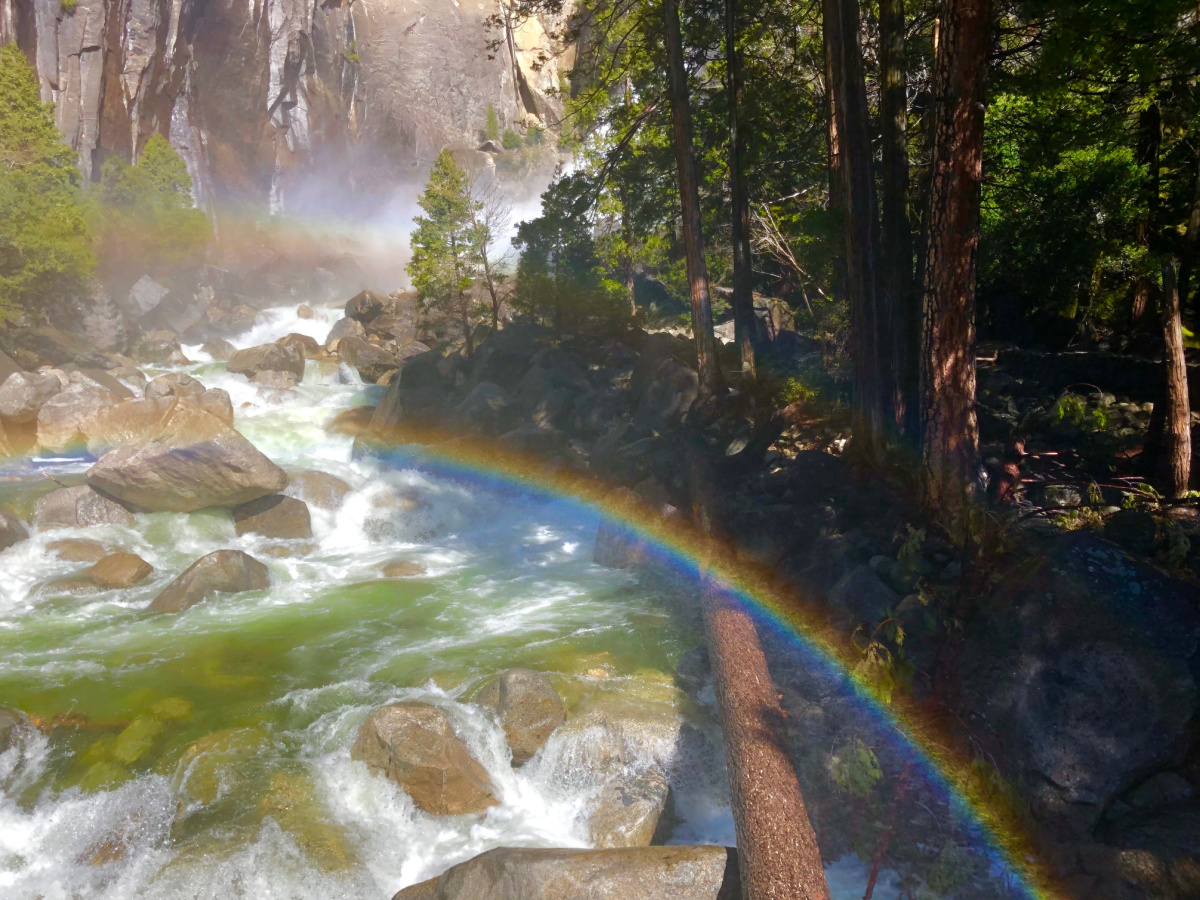
Start Early
Early mornings make Yosemite easier.
You are more likely to find parking.
The trails are quieter.
Temperatures are cooler.
And Yosemite Valley feels completely different before the largest crowds arrive.
The National Park Service currently recommends arriving before 9 AM or after 5 PM during the busy spring-through-fall season to avoid some of the worst congestion.
If you are staying inside the park, take advantage of that location.
Get up.
Get outside.
You can always take a break later.
Don’t Try to Drive Everywhere
Once you find parking in Yosemite Valley, leave the car alone when you can.
Walk.
Use the shuttle.
Explore several nearby attractions together.
Driving ten minutes and then spending twenty minutes looking for another parking space is not an efficient sightseeing strategy.
Group Yosemite by Geography
Do not bounce between Mariposa Grove, Yosemite Valley, Glacier Point, and Tioga Road all day.
Yosemite is too large.
Group attractions together.
Yosemite Valley day.
Tioga Road day.
Glacier Point Road.
Mariposa Grove.
Your trip will immediately become easier.
Keep Your Plans Flexible
Roads close.
Weather changes.
Trails become icy.
Parking lots fill.
Smoke happens.
A child gets tired.
You discover you like one place enough to stay longer.
Do not create such a rigid Yosemite schedule that any small disruption ruins the entire day.
Have priorities.
Not commandments.
Bring Water and Snacks
Even when food is available nearby, having water and snacks in your daypack gives you much more flexibility.
Just remember Yosemite’s food-storage rules.
Use Restrooms When You See Them
This is not profound travel wisdom.
It is practical National Park wisdom.
Especially when traveling with kids.
Give Yosemite More Time Than Google Maps Says
A one-hour drive on paper can become much longer once you add viewpoints, traffic, bathroom stops, construction, and the inevitable moment when somebody says, “Wait! Look at that!”
That is Yosemite.
Allow for it.
Yosemite National Park Frequently Asked Questions
How many days do you need at Yosemite National Park?
I recommend three days for most first-time visitors.
You can absolutely see Yosemite in one day, and two days gives you a much better experience.
But three days lets you explore Yosemite Valley, add another major area or two, do some easy hiking, and enjoy the park without constantly watching the clock.
Is Yosemite worth visiting if you don’t hike?
Absolutely.
This may be one of the best National Parks in the country for travelers who want spectacular scenery without difficult hiking.
Tunnel View, Glacier Point, Sentinel Bridge, Yosemite Falls, El Capitan, Tenaya Lake, and many other highlights require little or no strenuous hiking.
You can have an extraordinary Yosemite vacation without tackling Half Dome.
What is the best month to visit Yosemite?
That depends on what you want to see.
April and May are excellent for waterfalls.
Summer provides the most reliable access to Tioga Road, Glacier Point Road, and the high country.
September can provide a nice combination of broad park access and cooler temperatures.
October can be beautiful and quieter, but seasonal road closures become more likely as snow begins arriving.
There is no universally perfect month.
What should first-time visitors not miss in Yosemite?
For a first trip, I would prioritize Yosemite Valley.
See Tunnel View, Yosemite Falls, Bridalveil Fall, El Capitan, Cook’s Meadow, Sentinel Bridge, and Half Dome.
If seasonal roads are open and you have additional time, add Glacier Point, Mariposa Grove, and Tioga Road.
Can you see Yosemite in one day?
Yes.
If you only have one day, focus primarily on Yosemite Valley.
Trying to see every part of the park in one day will leave you spending far too much time driving.
[Read my complete one-day Yosemite itinerary.]
Is two days enough for Yosemite?
Yes.
Two days gives you enough time for a strong first visit.
Spend significant time in Yosemite Valley and use your second day or part of it to explore another major park area based on seasonal access.
If you can stretch the trip to three days, though, I would.
[Read my complete two- and three-day Yosemite itinerary.]
Do you need a reservation to visit Yosemite?
Yosemite’s entrance reservation requirements have changed at different times and can vary by year and season.
Do not rely on what was required during somebody else’s trip.
Check the National Park Service website for the current reservation and entrance requirements when planning your visit.
Do you need a car in Yosemite?
Not necessarily.
Public transportation can bring visitors into Yosemite, and Yosemite Valley is served by a free shuttle system.
You can also walk between many valley attractions.
But a car gives you considerably more flexibility if you want to explore areas like Glacier Point Road, Tioga Road, and Mariposa Grove.
Is Yosemite good for kids?
Yes.
Yosemite is one of my favorite types of parks for family travel because children can experience extraordinary scenery without spending every day on difficult trails.
Easy walks, waterfalls, giant sequoias, rivers, wildlife, scenic overlooks, and the Junior Ranger program all work well for families.
Read my complete Yosemite with kids guide.
Can you visit Yosemite in winter?
Yes.
Yosemite Valley remains accessible year-round, weather permitting.
However, Tioga Road and Glacier Point Road close seasonally, and winter weather can affect roads throughout the park.
Winter trips require more flexibility and preparation but can give you a beautiful and much quieter Yosemite experience.
Is Yosemite Valley open all year?
Yosemite Valley is generally accessible throughout the year, although storms, rockfall, flooding, or other temporary conditions can occasionally affect access.
Always check current conditions before driving into the park.
When does Tioga Road open?
There is no fixed opening date.
Tioga Road closes due to snow each winter and usually reopens sometime in late spring or early summer after snow removal is complete.
The exact timing depends on the year’s snowpack and spring weather.
Never plan a spring trip around the assumption that Tioga Road will be open.
Is Glacier Point Road open all year?
No.
Glacier Point Road normally closes due to snow during winter and reopens when conditions permit.
Check current road conditions before your trip.
Is Mariposa Grove worth visiting?
I think so, especially on a first Yosemite trip.
The giant sequoias give you a completely different experience from Yosemite Valley.
If you have enough time, seeing Yosemite’s granite cliffs, waterfalls, and giant trees on the same trip really demonstrates how diverse the park is.
Read my complete Mariposa Grove guide.
Can you use your phone in Yosemite?
Sometimes.
Cell service is limited and is strongest in portions of Yosemite Valley. Do not expect dependable service throughout the park.
Download maps and other important information before you arrive.
Are there bears in Yosemite?
Yes.
Yosemite has a significant black bear population.
Follow food-storage regulations, keep your distance from wildlife, and never feed animals.
Can you bring food into Yosemite?
Yes.
You can bring food into the park.
You simply need to follow Yosemite’s strict food-storage regulations.
Remember that the rules apply not only to obvious food but also to trash, toiletries, cosmetics, drinks, and other scented items.
Is Yosemite hard to visit?
I do not think Yosemite is difficult to visit.
I think Yosemite is easy to overplan.
Once you understand the geography, seasonal road closures, parking situation, and how much driving is involved, the park becomes much easier to manage.
The key is accepting that you do not need to see everything.
Final Thoughts on Planning a Yosemite National Park Vacation
Yosemite is one of those places that deserves its reputation.
The waterfalls really are that dramatic.
El Capitan really does feel impossibly large.
Half Dome really does stop you in your tracks.
And standing among Yosemite’s granite cliffs, giant sequoias, meadows, lakes, and waterfalls feels completely different from simply seeing them in photographs.
But I also think Yosemite sometimes gets presented as though you have to conquer it.
You need to hike Half Dome or climb thousands of feet.
But really, you don’t need to start before sunrise and finish after dark.
Or see every famous landmark.
You really don’t.
You can have an extraordinary Yosemite vacation by walking through a meadow.
Standing beneath a waterfall.
Looking up at El Capitan.
Driving to a spectacular viewpoint.
Walking beneath giant sequoias.
Sitting beside the Merced River.
And giving yourself enough time to notice how beautiful the place really is.
That is the kind of Yosemite trip I would plan.
Not a race.
Not an endurance test.
A great National Park vacation.
And whether you have one day or five, whether you love hiking or would rather stick to scenic overlooks and easy walks, Yosemite gives you plenty of ways to make that happen.
More National Park Trip Planning Guides
If you are planning a bigger National Park vacation, these comprehensive guides can help you build the rest of your trip: