Yosemite National Park With Kids: The Best Things to Do for Families

Planning Yosemite National Park with kids? Discover 18 family-friendly things to do, easy hikes, waterfalls, viewpoints, biking, swimming, and practical tips.
Estimated reading time: 31 minutes
Yosemite National Park might look like the kind of place where you need to be a serious hiker to really experience it. Towering granite cliffs, enormous waterfalls, backcountry trails, and people casually talking about hiking Half Dome can make the park seem a little intimidating if you’re planning a trip with kids.
But Yosemite is actually one of the easiest national parks to enjoy as a family.
You don’t have to drag your kids up a mountain to see the good stuff. Some of the most beautiful places in Yosemite are right on the Valley floor, where paved walking paths wind through huge meadows, waterfalls tumble down the cliffs around you, and the Merced River runs alongside picnic areas and beaches.
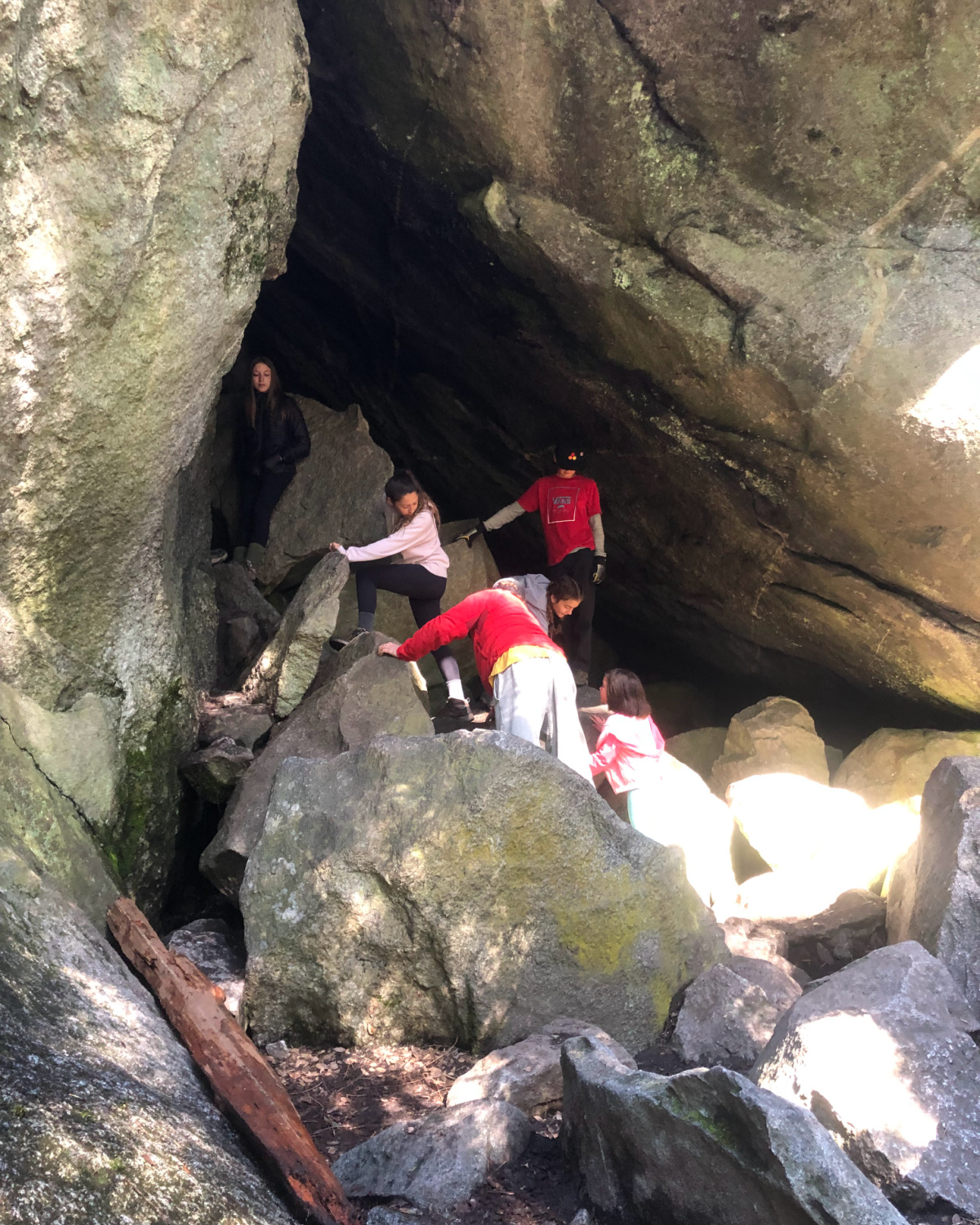
We visited Yosemite in April with our daughter, and one of the things I loved about the park was how easy it was to give her room to just be a kid.
We could walk to a waterfall and then let her scramble over rocks. We could wander through the meadow without worrying about how many miles were left in the hike. We could stop beside the river, look for wildlife, and simply enjoy being surrounded by Yosemite.
And honestly, that is one of the best ways to experience this park with kids.
You don’t need to turn every moment into a hike, a lesson, or an accomplishment. Sometimes the best Yosemite memories are going to come from climbing on a log, spotting a deer, eating a picnic beside the river, or staring up at a waterfall that seems impossibly tall.
Here are some of the best things to do in Yosemite National Park with kids.
1. Explore Yosemite Valley
If you’re visiting Yosemite with kids for the first time, Yosemite Valley is where I would spend most of your time.
The Valley is almost ridiculously family-friendly.
Huge portions of it are relatively flat, and paved walking and biking paths connect many of Yosemite’s most famous sights. You can wander through open meadows with Yosemite Falls towering above you, walk alongside the Merced River, cross bridges, stop for a picnic, and let the kids stretch their legs without committing to an actual hike.
That flexibility matters with kids.
You can walk for ten minutes or an hour. You can stop when someone needs a snack. You can turn around when a toddler decides the expedition is over. And you still get to experience some of the most spectacular scenery in Yosemite.
Cook’s Meadow is particularly good for this. The walking paths take you through the middle of Yosemite Valley with views of Yosemite Falls, Half Dome, and the surrounding granite cliffs.
This isn’t the kind of place where you’re trying to convince your kids that the scenery is worth another two miles uphill.
The scenery is just there.
For younger kids, Yosemite Valley also gives them something that scenic overlooks don’t always provide: space to move.
They can walk, run, look for animals, examine pinecones, watch the river, and generally poke around while the adults enjoy the scenery.
And sometimes that is exactly what you need.
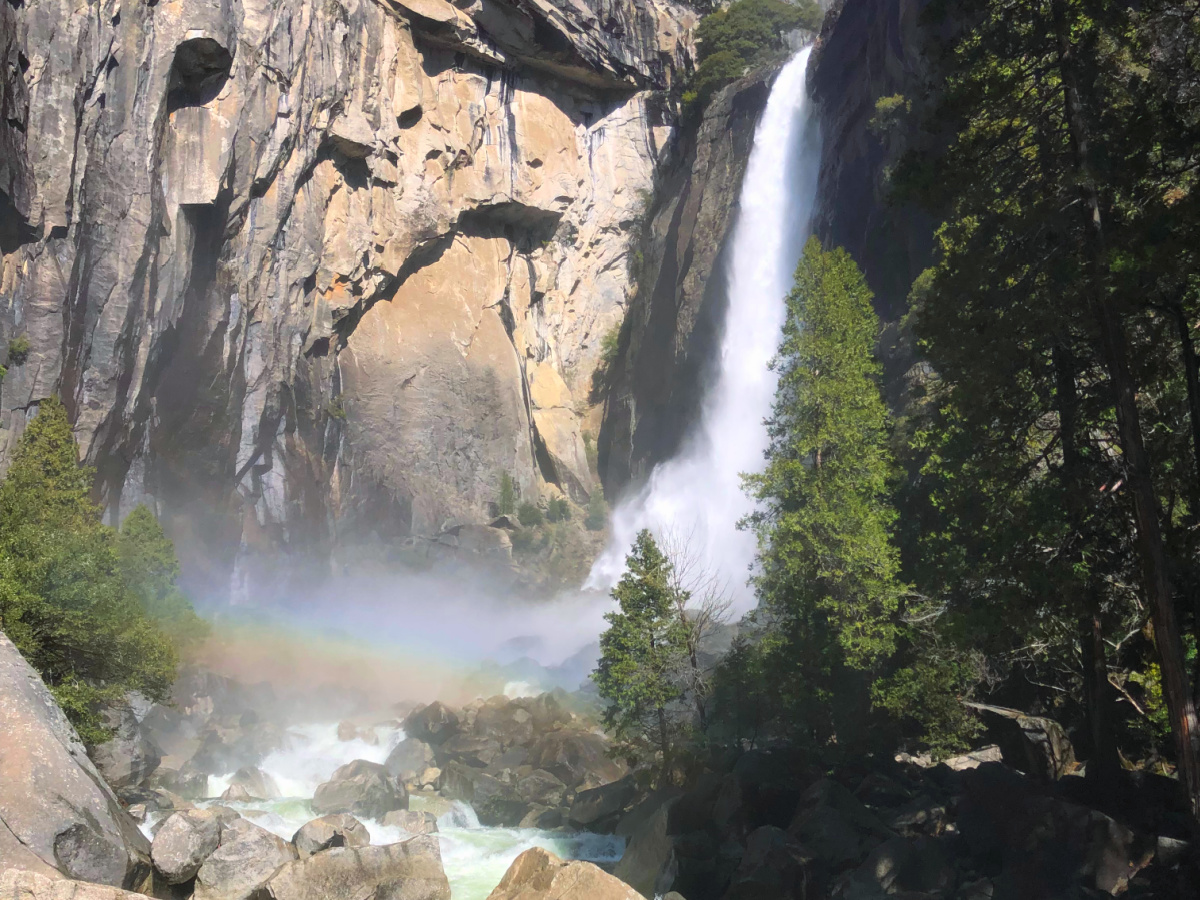
2. Walk to Lower Yosemite Fall
If I could choose only one Yosemite hike for a family with young kids, Lower Yosemite Fall would be very hard to beat.
The trail is short, mostly flat, and easy to reach from Yosemite Valley. But despite how little effort it takes, you end up standing underneath one of the tallest waterfalls in North America.
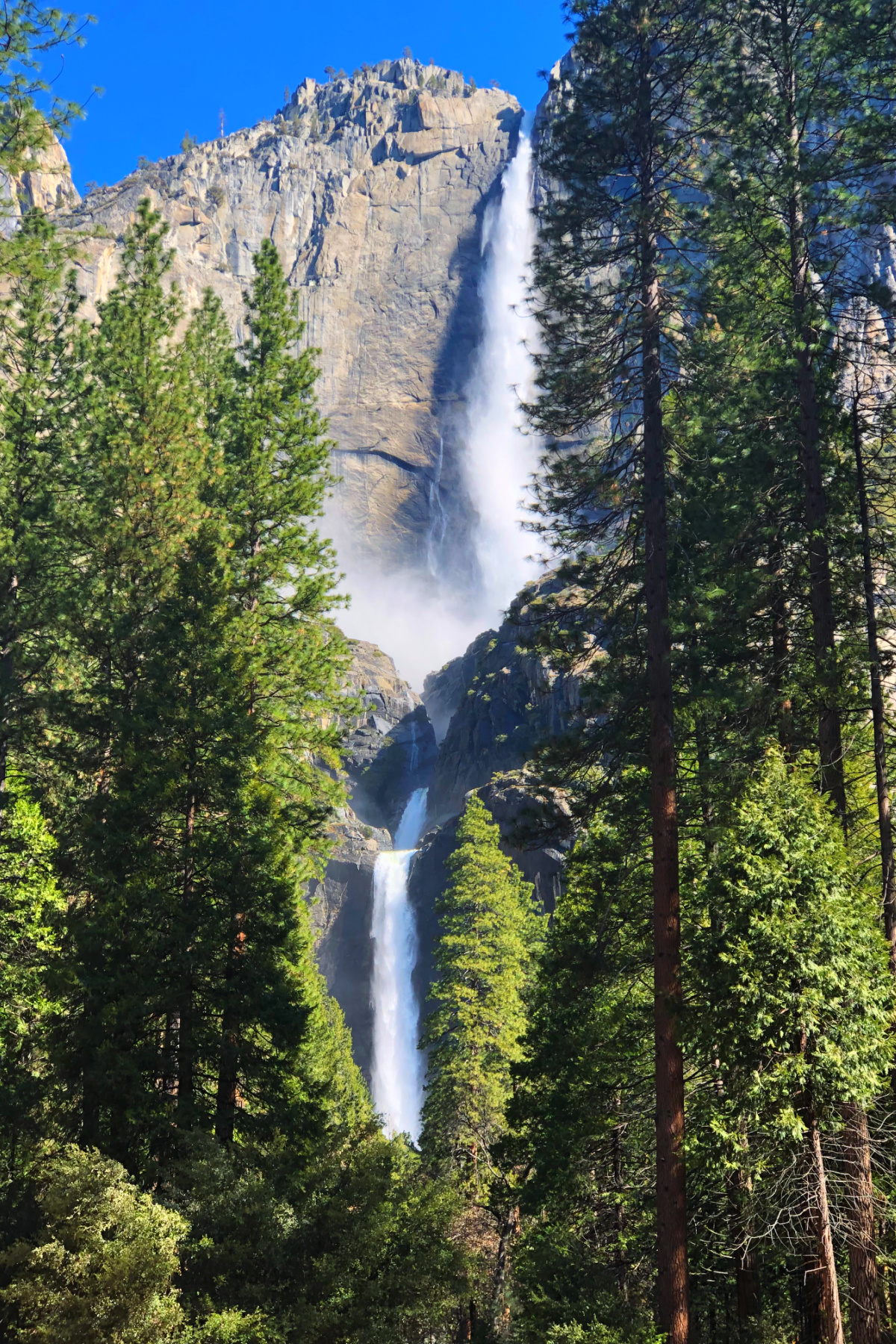
That’s a pretty impressive effort-to-payoff ratio.
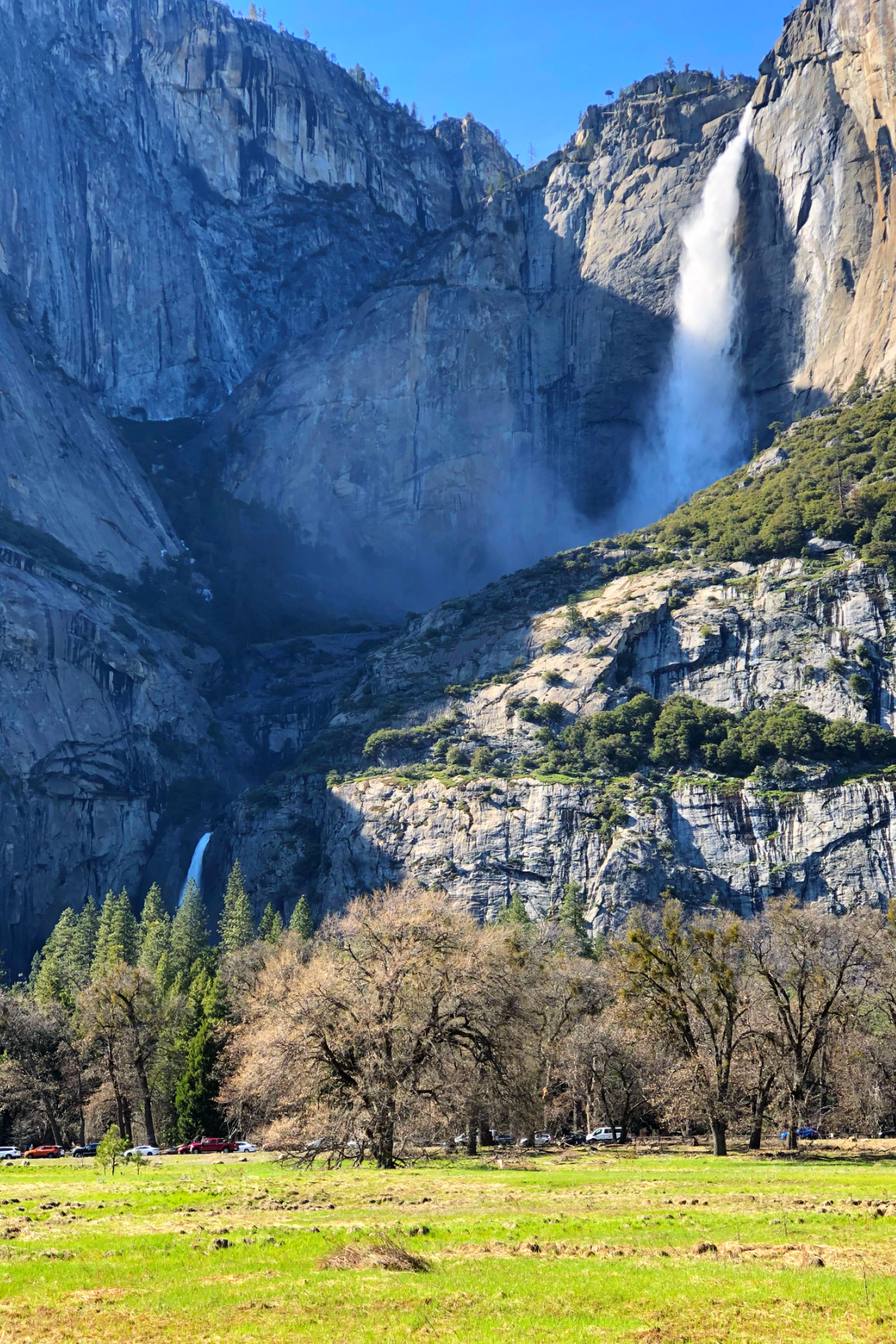
We visited in April, when Yosemite Falls was absolutely roaring with snowmelt. You could hear the waterfall before you reached it, and the closer we got, the more dramatic it became.
But what makes this particularly good with kids is that the waterfall isn’t necessarily the only attraction.
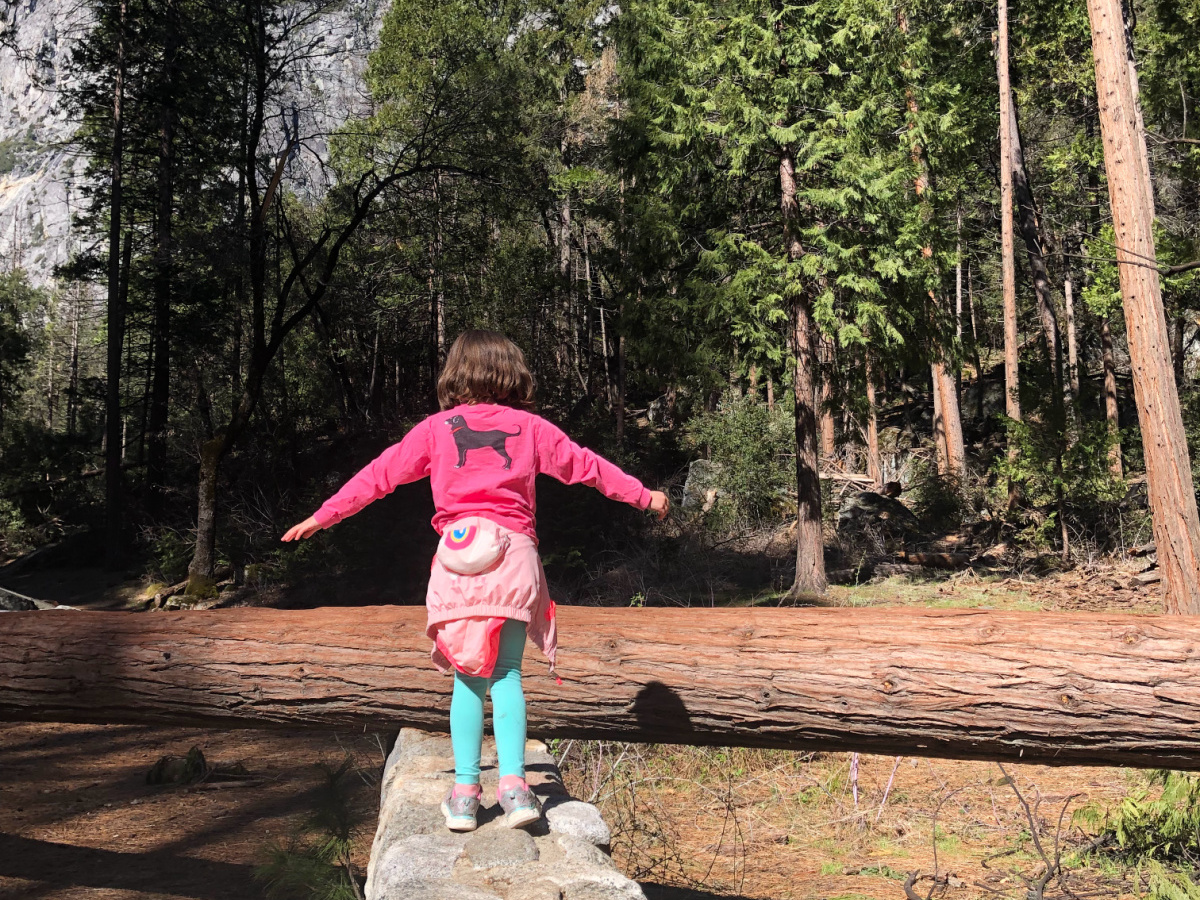
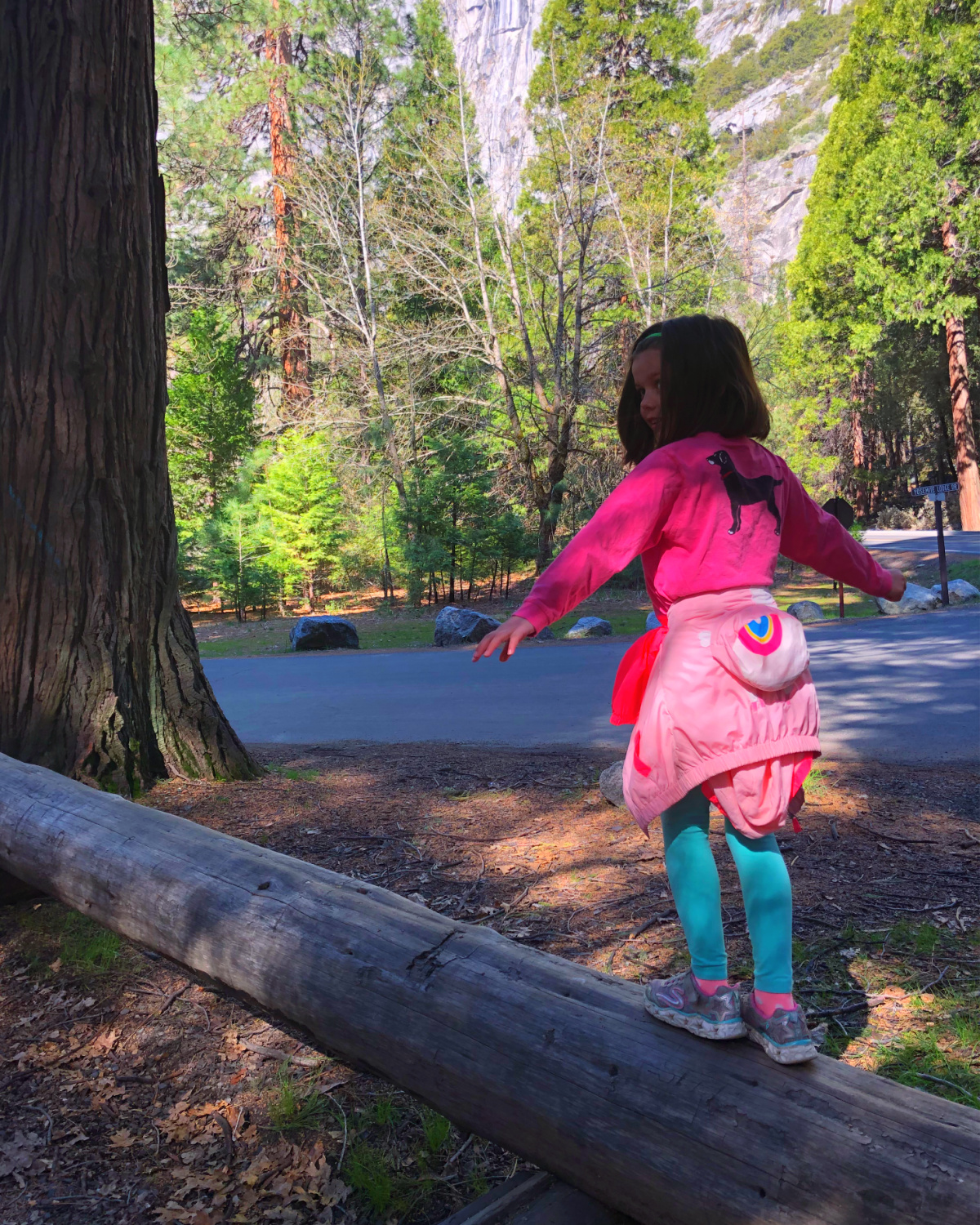
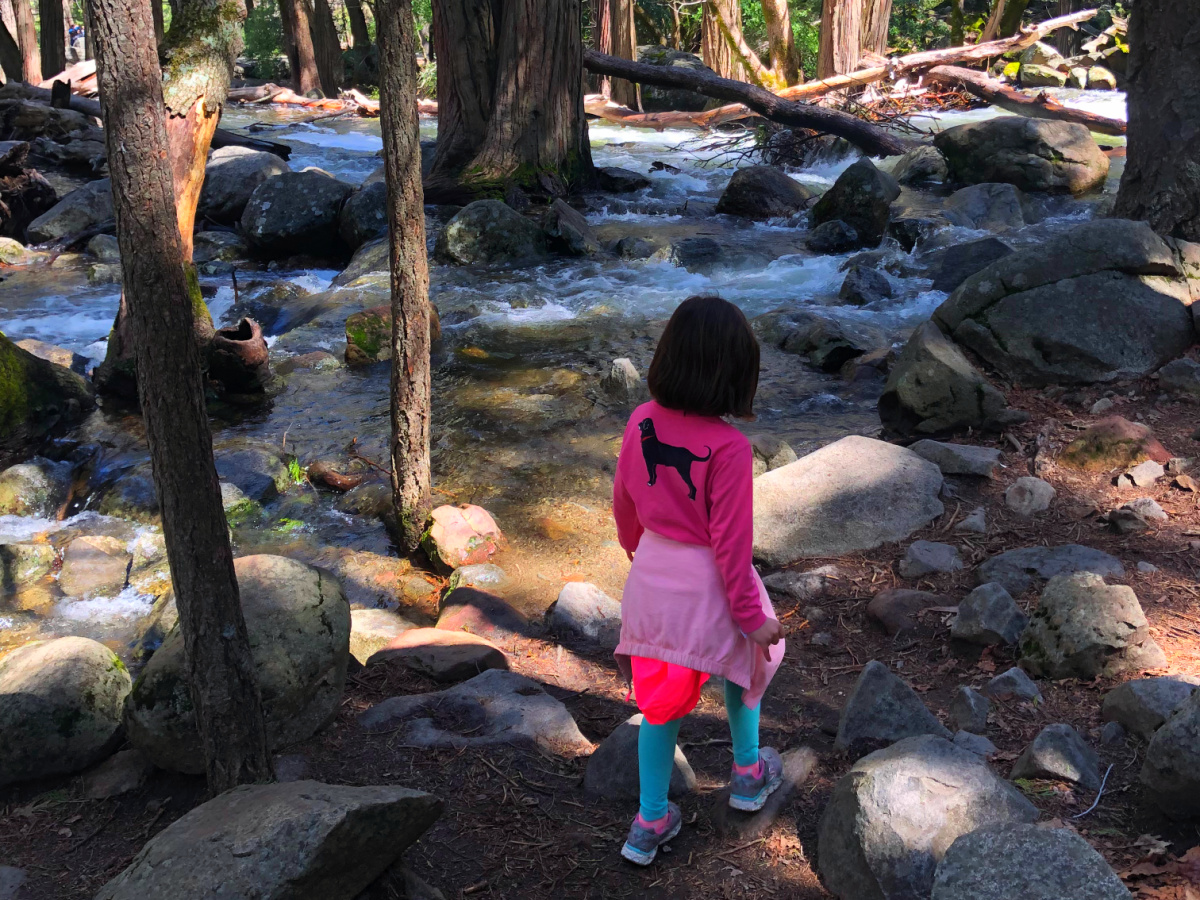
There are rocks. There are logs. There are bridges. There are places where kids can climb around and explore.
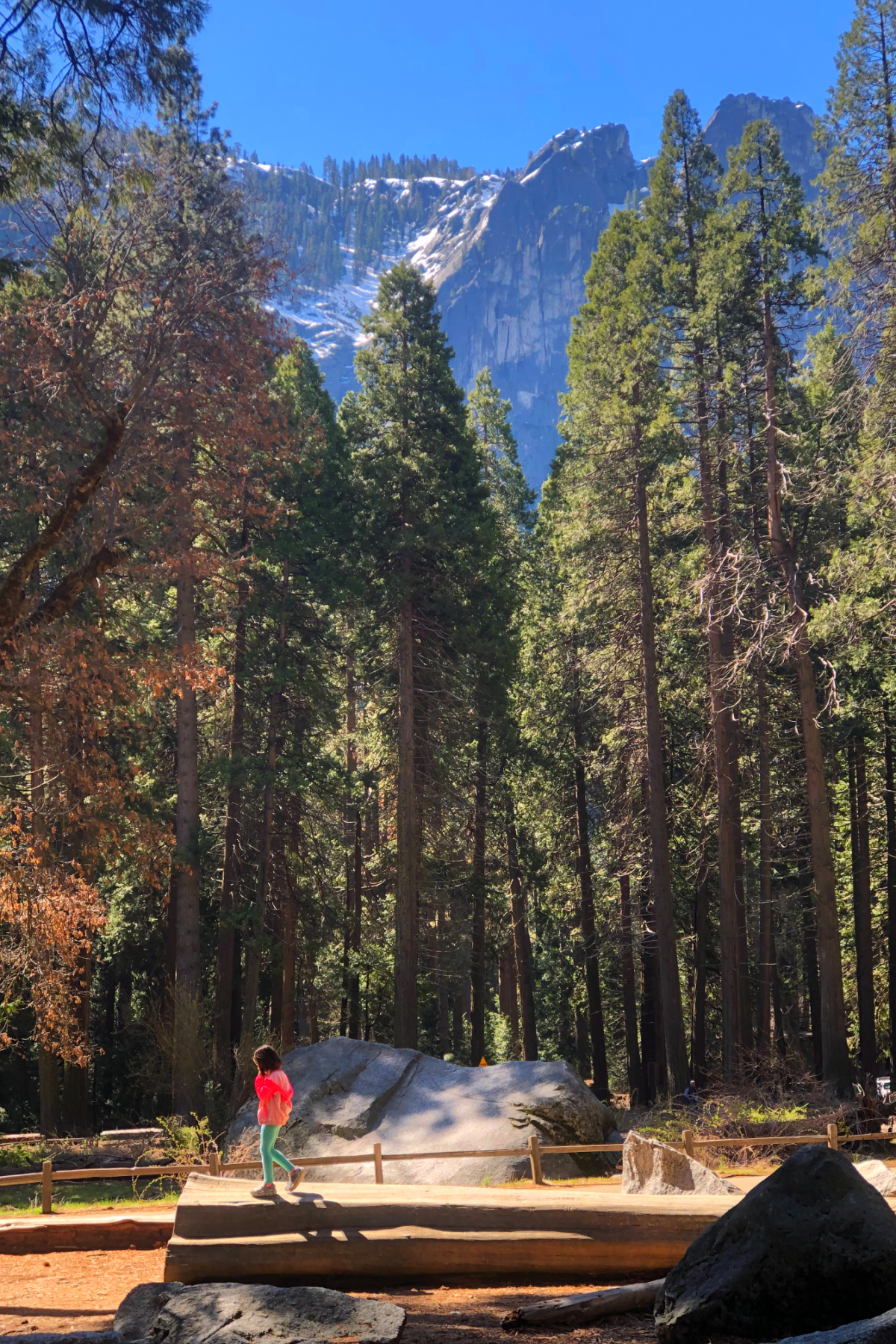
In other words, Lower Yosemite Fall can turn into a giant natural playground.
Obviously, you’ll want to keep an eye on kids around water and slippery rocks, particularly when the waterfall is running strongly in spring and early summer. But this is exactly the kind of Yosemite stop where kids can burn off some energy while the adults are still doing something they genuinely wanted to do.
That’s one of the recurring themes you’ll find throughout Yosemite.
You aren’t constantly choosing between something the kids will enjoy and something the adults will enjoy.
Quite often, everybody gets something out of the same experience.
3. Ride Bikes Around Yosemite Valley
Another fantastic way to explore Yosemite Valley with kids is by bike.
There are miles of paved bike paths running through the Valley, connecting many of the major sights without forcing you to spend your entire day getting in and out of the car.
Families can bring their own bikes or rent them seasonally in Yosemite Valley. Depending on availability, rentals may also include options like child trailers or tag-along bikes.
For families with kids who are comfortable biking, this could easily become one of the highlights of the trip.
You can bike through the meadows, follow the Merced River, stop near waterfalls, and pull over whenever something catches your attention.
And Yosemite Valley is exactly the kind of place where something is constantly catching your attention.
The important thing to remember is that bikes need to stay on designated paved bike paths and roads. They aren’t allowed on hiking trails.
But honestly, there is so much to see from the Valley’s bike paths that you won’t feel like you’re missing much.
If your kids are old enough to bike independently, this is also a great way to give them a little freedom while covering more ground than you could on foot.
4. Visit Bridalveil Fall
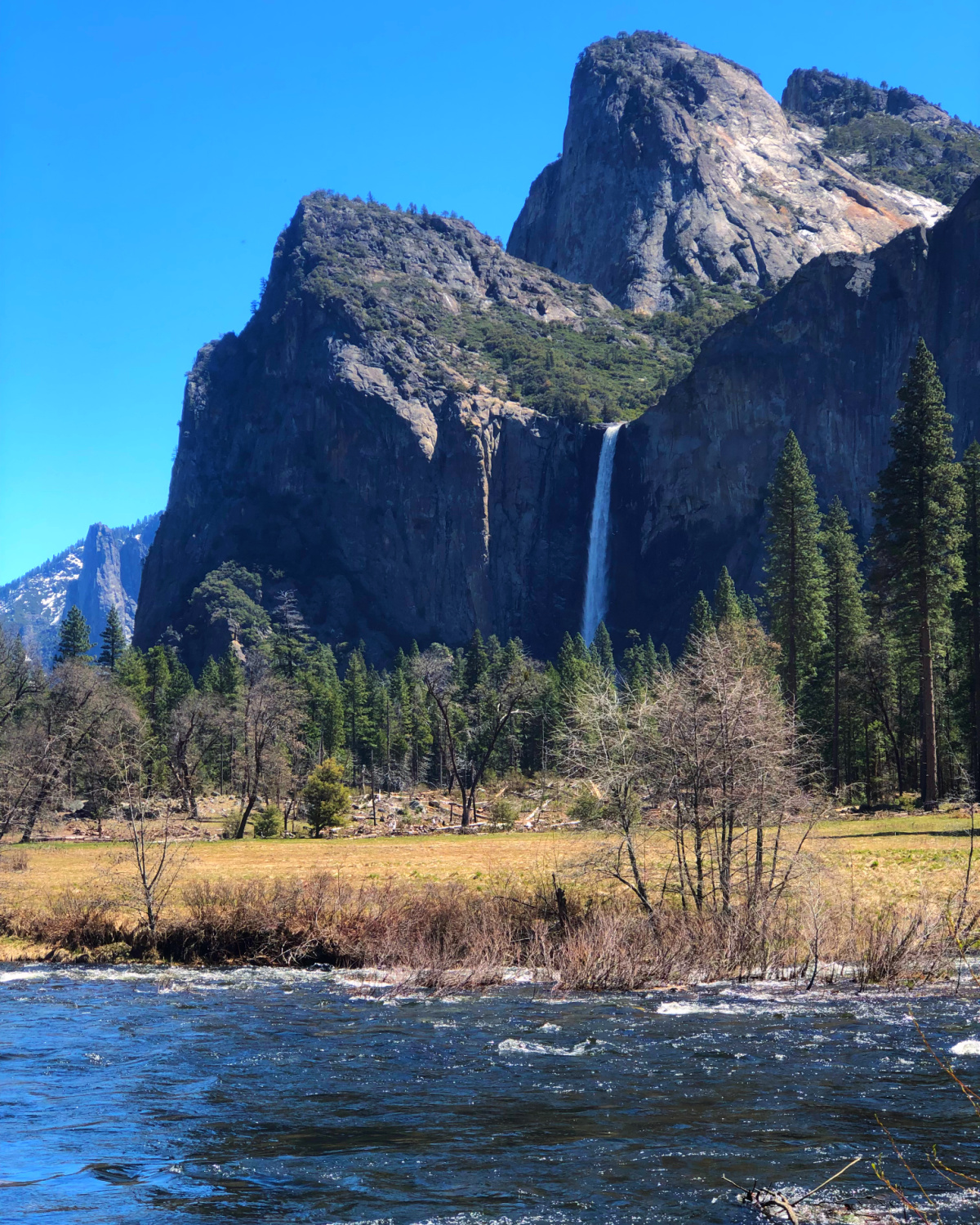
Bridalveil Fall is another easy Yosemite waterfall that works well for families.
This is one of those stops where you get a lot of scenery without needing to dedicate half the day to a hike.
The walk is relatively short, and once you’re near the base of the waterfall, you get that same Yosemite experience of looking almost straight up at water falling from an enormous granite cliff.
Bridalveil Fall is particularly powerful in spring, which is when we visited Yosemite.
And powerful waterfalls are just fun with kids.
They’re loud. They’re wet. They’re dramatic.
You don’t have to explain to a child why this is impressive.
The waterfall pretty much handles that part for you.
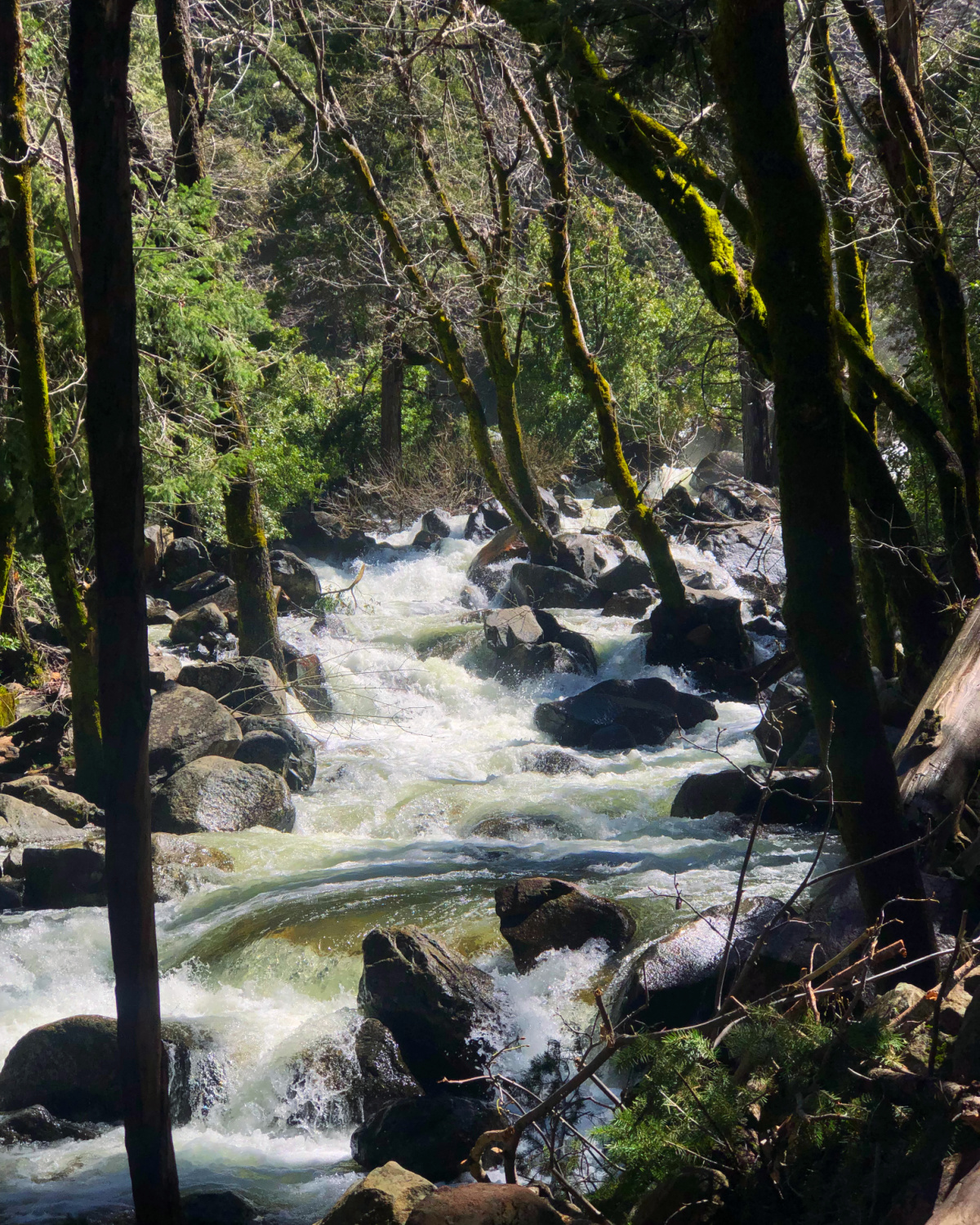
Depending on water levels and weather, expect the area around the waterfall to be wet and potentially slippery. This isn’t somewhere I’d let a young child race ahead without supervision.
But as another short adventure that delivers a very big Yosemite experience, Bridalveil Fall absolutely belongs on a family itinerary.
5. Walk to Mirror Lake
Mirror Lake is another excellent option if you’re looking for an easy Yosemite hike with kids.
The shortest route to the lake is only about two miles round-trip, and the first portion of the trail is paved. That makes this particularly appealing for families who want to do something that feels like a hike without tackling anything especially strenuous.
Mirror Lake is also one of those Yosemite destinations that changes quite a bit depending on when you visit.
In spring and early summer, snowmelt usually fills the lake and creates the reflective water views that give Mirror Lake its name. Later in the season, water levels can drop significantly and parts of the area may look more like a meadow.
Either way, the setting beneath Half Dome is beautiful.
And for kids, the appeal isn’t necessarily going to be standing quietly beside the lake appreciating the reflection.
That’s okay.
They can walk. Explore. Look for wildlife. Investigate rocks and trees. And enjoy being outside without having to conquer an enormous hike.
This is another place where Yosemite makes family travel pretty easy.
You can give your kids an actual outdoor adventure without spending the entire afternoon listening to someone ask how much farther they have to walk.
6. Let the Kids Just Be Kids
This might sound like a strange thing to include on a list of Yosemite activities, but I think it’s important.
You don’t need to schedule every minute of a Yosemite trip.
And you definitely don’t need to turn every beautiful place into something your kids are required to properly appreciate.
Kids experience national parks differently than adults.
You might be staring at Half Dome while your child is fascinated by a squirrel.
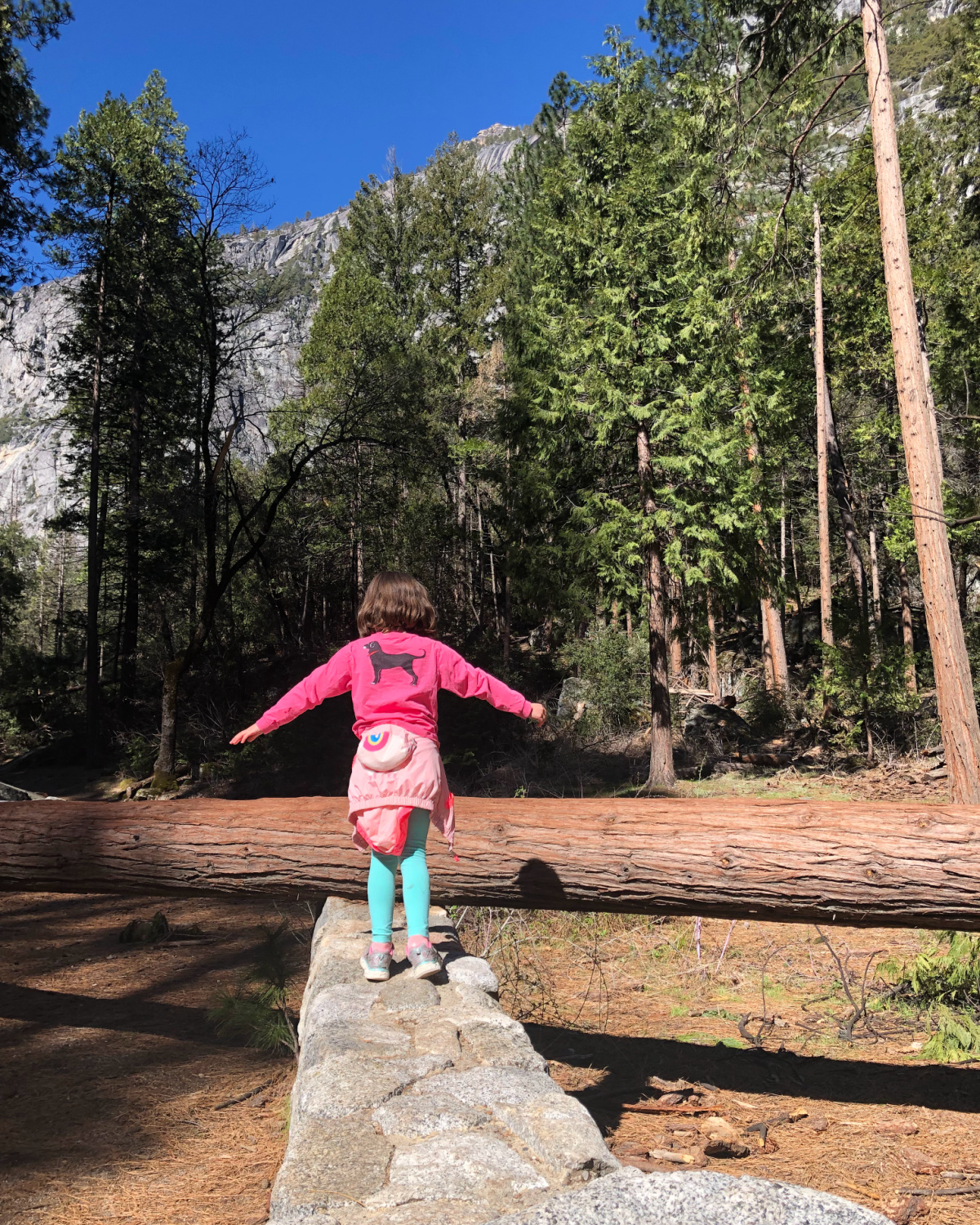
You might want to photograph the reflection in the Merced River while your kid wants to climb on a log.
You might be standing underneath Yosemite Falls thinking about how extraordinary it is while they’re trying to find the best rock.
That’s not a failed national park experience.
That is their national park experience.
One of the reasons Yosemite works so well for families is that there are so many places where kids have room to explore while adults are enjoying the scenery.
Let them climb where climbing is safe and permitted. Let them examine pinecones. Let them look for wildlife. Let them spend fifteen minutes doing something that seems completely insignificant to you.
You don’t have to manufacture wonder in Yosemite.
It’s already everywhere.
7. See the Giant Sequoias at Mariposa Grove
If your kids are even remotely impressed by giant trees, Mariposa Grove belongs on your Yosemite itinerary.
Actually, even if they aren’t usually impressed by trees, they may change their minds here.
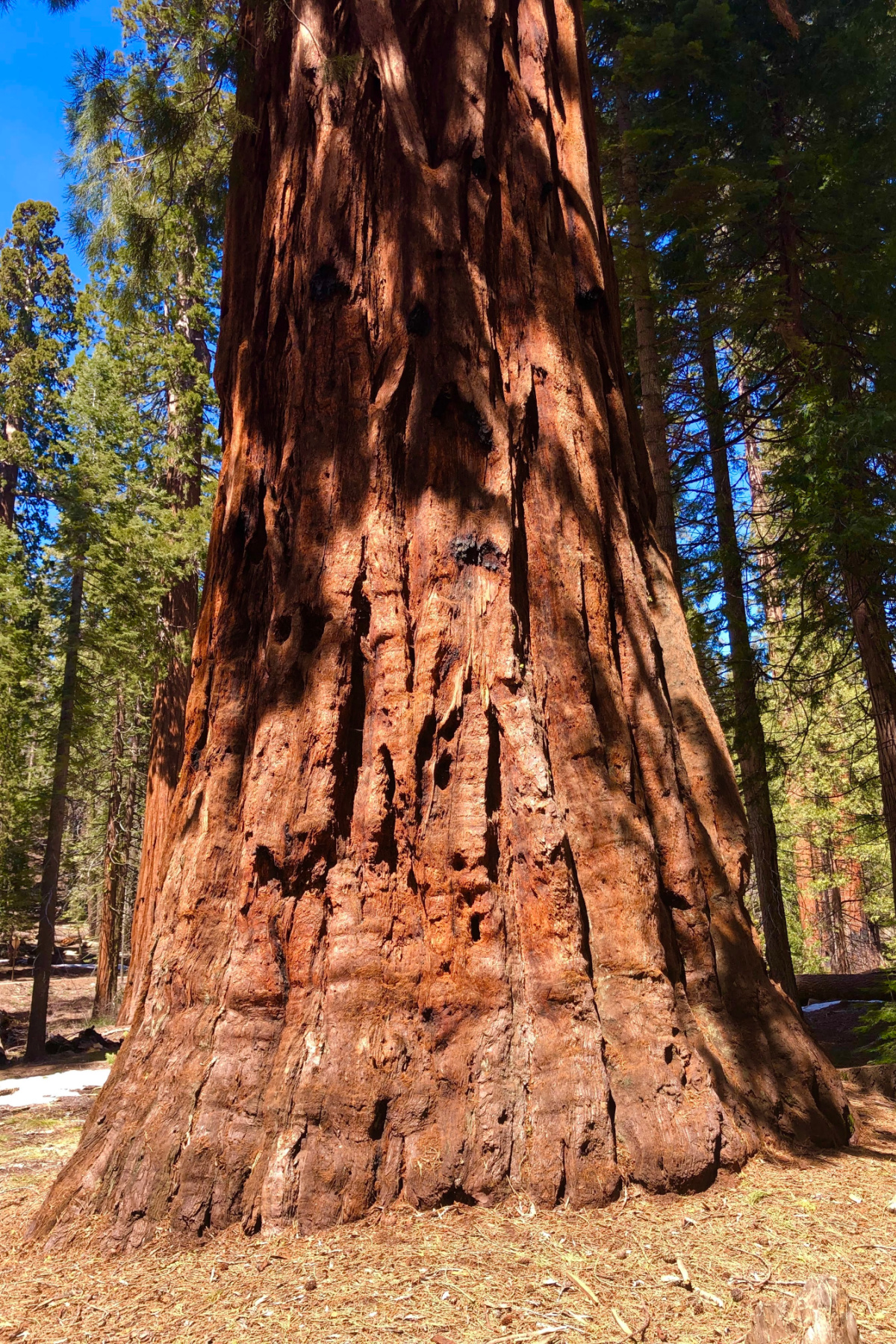
The giant sequoias are enormous in a way that is difficult to appreciate until you’re standing next to one. These are the kinds of trees that make people stop, stare up, and immediately start taking pictures.
Kids tend to understand that kind of scale.
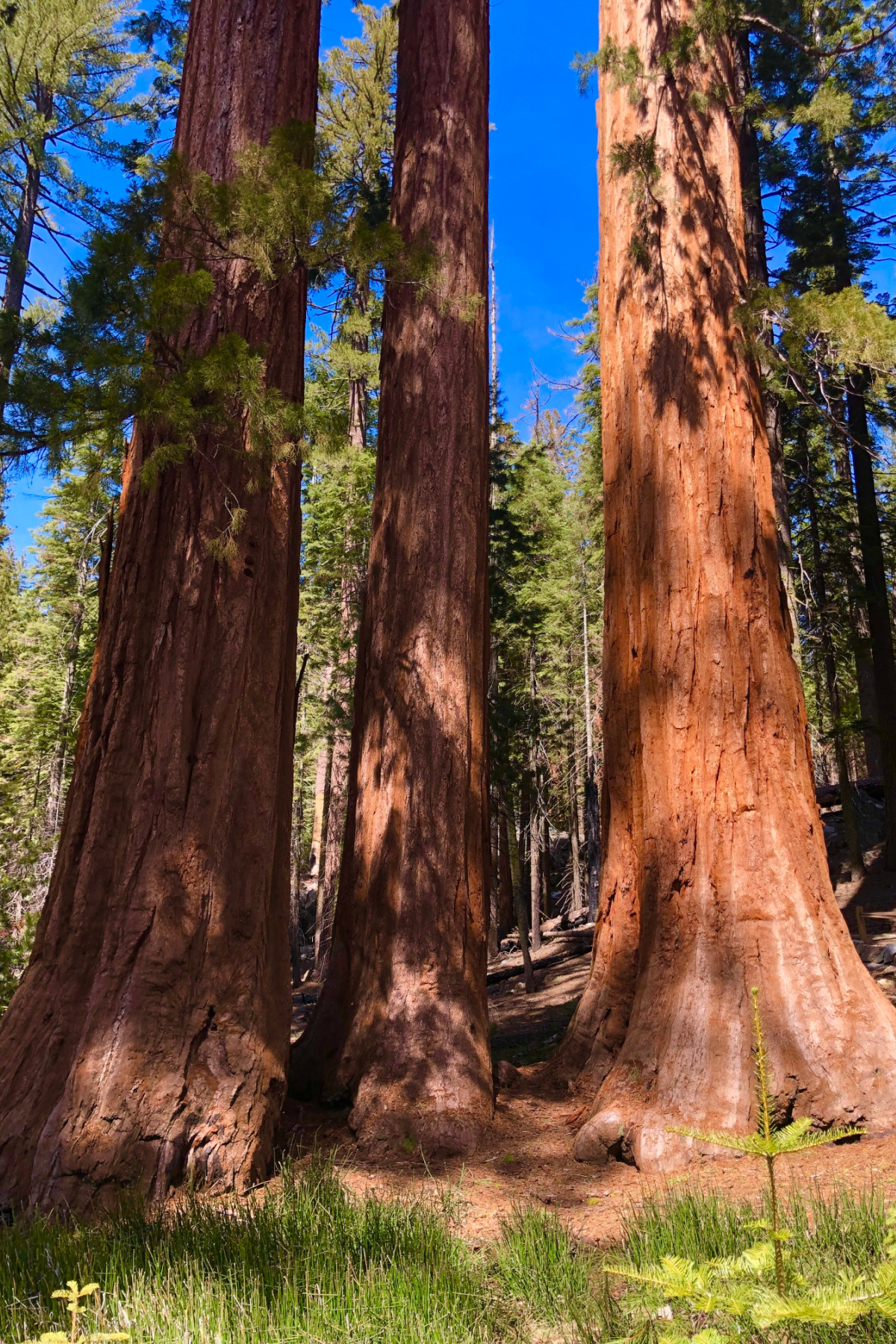
You don’t need to explain why a tree that looks like it belongs in a fairy tale is interesting.
For families who want the easiest possible experience, the Big Trees Loop is a great place to start. It’s short, relatively flat, and gives you a chance to see some impressive sequoias without turning the visit into a major hike.
Mariposa Grove is also a good example of why season matters so much in Yosemite.
During the main visitor season, shuttle service usually makes getting to the grove much easier. Outside of the shuttle season, reaching the grove can require a much longer walk from the parking area.
That difference matters a lot when you’re visiting with kids.
A short loop among giant trees is one thing.
Adding several extra miles before you even reach those trees is something completely different.
So if Mariposa Grove is high on your family’s list, check the current access situation before your trip.
8. Swim or Play Along the Merced River in Summer
We visited Yosemite in April, so swimming was not remotely on our agenda.
But if you’re visiting during the warmer summer months, the Merced River can add an entirely different kind of family experience to Yosemite.
When water levels are low and conditions are safe, there are places in Yosemite Valley where families can relax along the river, wade, or swim.
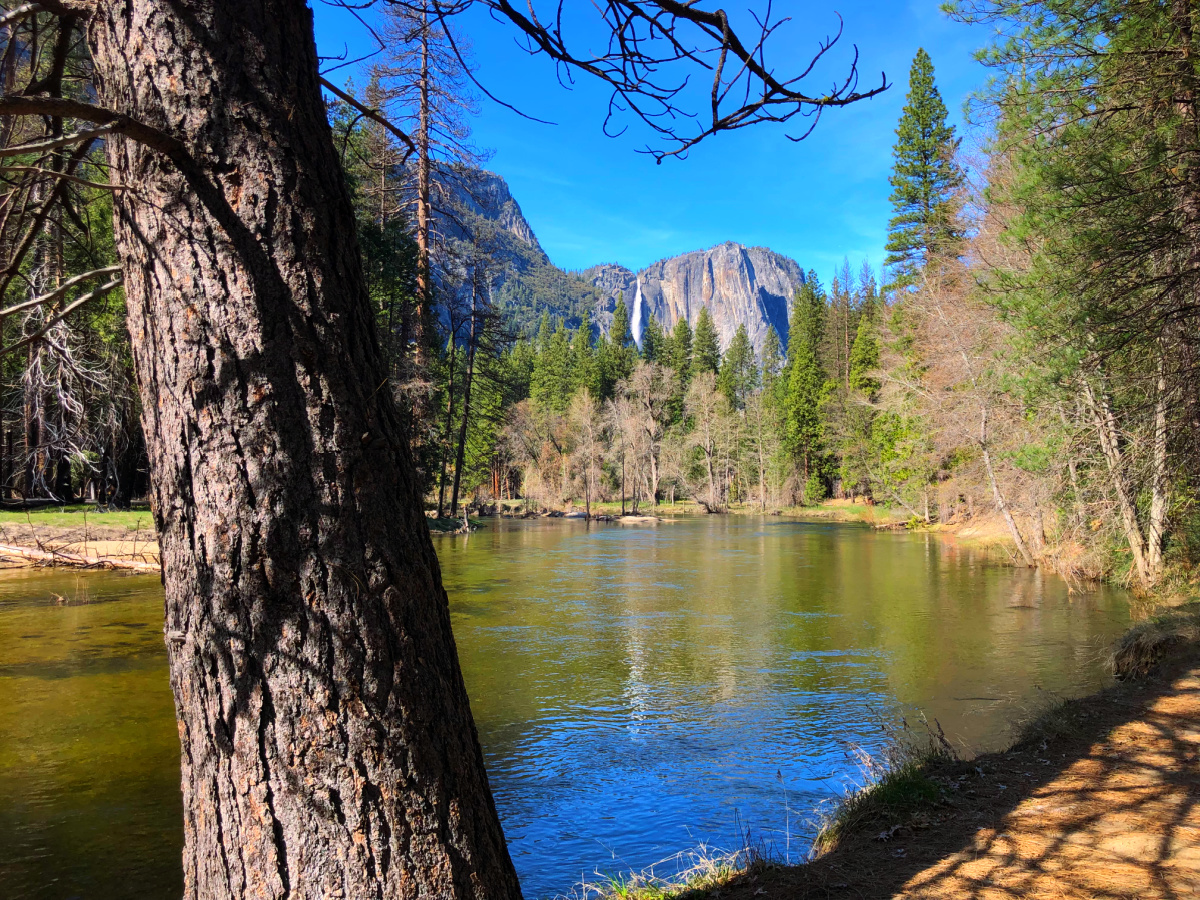
Sentinel Beach, Cathedral Beach, and the area around Swinging Bridge are some of the places families may want to consider.
This is such a nice change of pace if you’ve spent several days hiking and sightseeing.
Instead of asking your kids to admire another viewpoint, you can let them cool off and play by the water while you’re still surrounded by Yosemite’s incredible scenery.
That said, river conditions are extremely important.
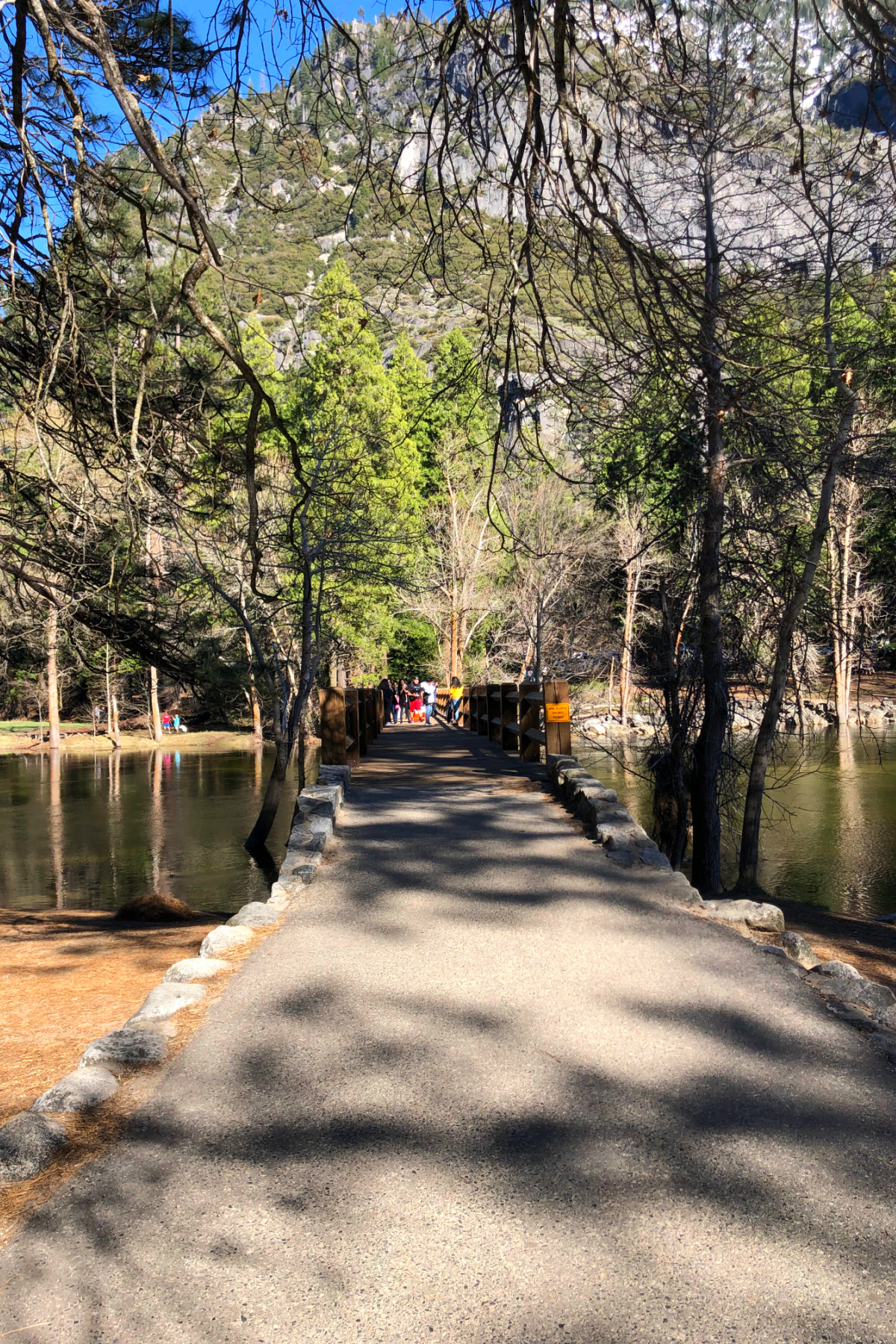
Spring snowmelt can make the Merced cold, swift, and dangerous, even when the weather outside feels warm. Never assume that water is safe just because other people are standing nearby.
If you’re planning river time with kids, check current conditions, choose established recreation areas, and keep children closely supervised.
Yosemite is beautiful.
It is also still wild.
9. Have a Picnic in Yosemite Valley
Sometimes one of the best things you can do with kids in a national park is stop trying to do things.
Yosemite Valley has several picnic areas, and this is one of the easiest ways to slow the day down.
Grab lunch, find a picnic table, and let everyone reset.
Kids can eat. Parents can sit down. Nobody has to walk anywhere for a few minutes.
And because this is Yosemite, your picnic backdrop might include waterfalls, giant granite cliffs, or the Merced River.
This is also one of the reasons I wouldn’t overschedule a Yosemite family trip.
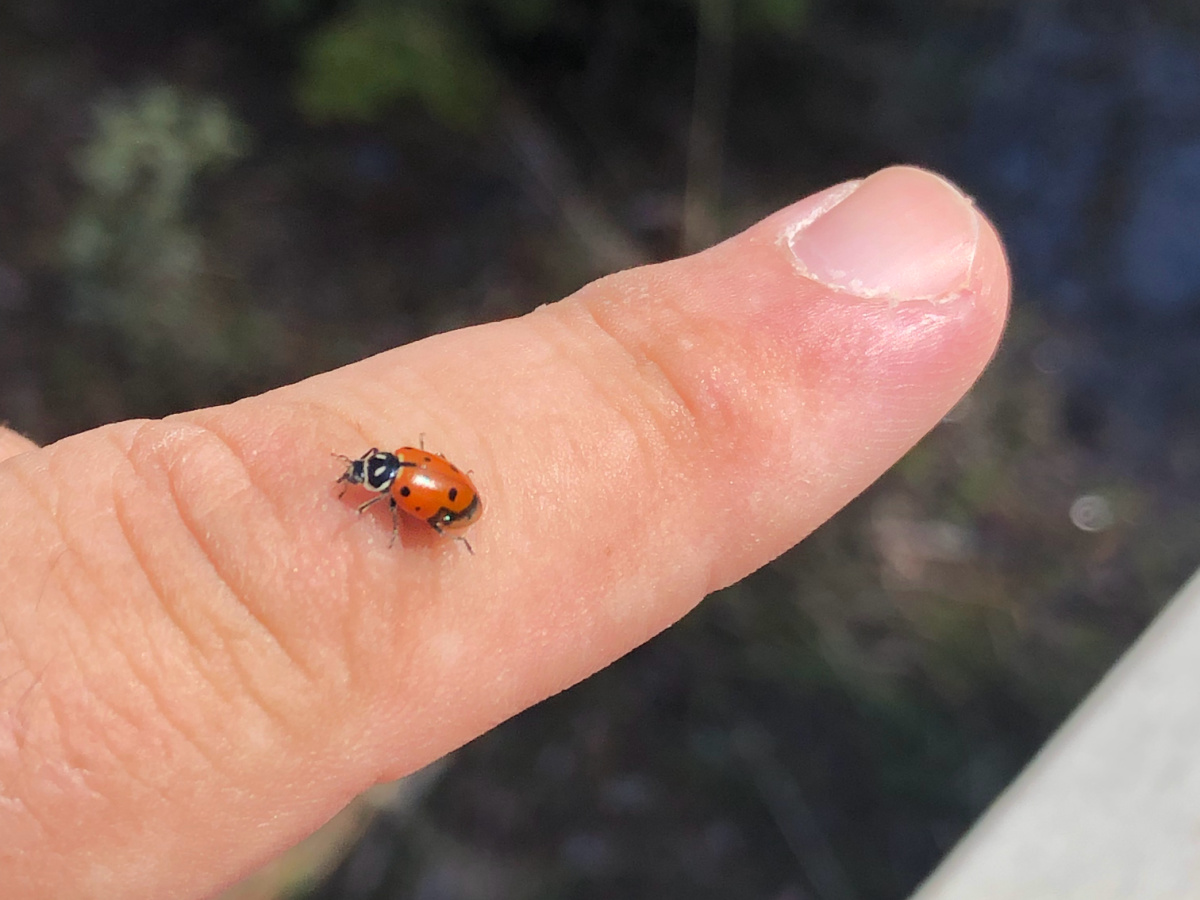
You could easily spend the entire day racing from waterfall to viewpoint to hike.
But children tend to do better when there is some breathing room built into the day.
A picnic gives everybody that breathing room.
Just remember that Yosemite is bear country, so food storage rules are not optional.
Never leave food unattended, and follow the park’s current food storage requirements carefully.
10. Become a Yosemite Junior Ranger
If your kids are in the right age range, the Junior Ranger program is another easy addition to your Yosemite visit.
The program gives kids activities to complete while learning about Yosemite’s plants, animals, geology, history, and conservation.
And at the end, they can earn a Junior Ranger badge.
National park Junior Ranger programs are great because they give kids something that belongs to them.
They’re not just tagging along while the adults see Yosemite.
They have their own mission.
For some kids, that little bit of structure makes them much more engaged in what they’re seeing.
You can usually pick up information about the current Junior Ranger program at one of Yosemite’s visitor centers.
11. Visit the Yosemite Valley Visitor Center
The Yosemite Valley Visitor Center is worth a stop with kids, especially if this is their first visit to the park.
This is a good place to get some context for everything you’re seeing outside.
You can learn more about Yosemite’s geology, wildlife, natural history, and human history, and it’s also a convenient place to ask about current trail conditions, ranger programs, road closures, and anything else that might affect your family plans.
For kids who like museums, animals, rocks, maps, or anything vaguely educational, this can be a nice break from hiking.
And for parents, it’s useful.
Yosemite changes dramatically from season to season, so getting current information once you’re actually in the park can save you from making plans that no longer make sense.
12. Look for Wildlife
You don’t need to plan a formal wildlife-watching expedition in Yosemite.
Just pay attention.
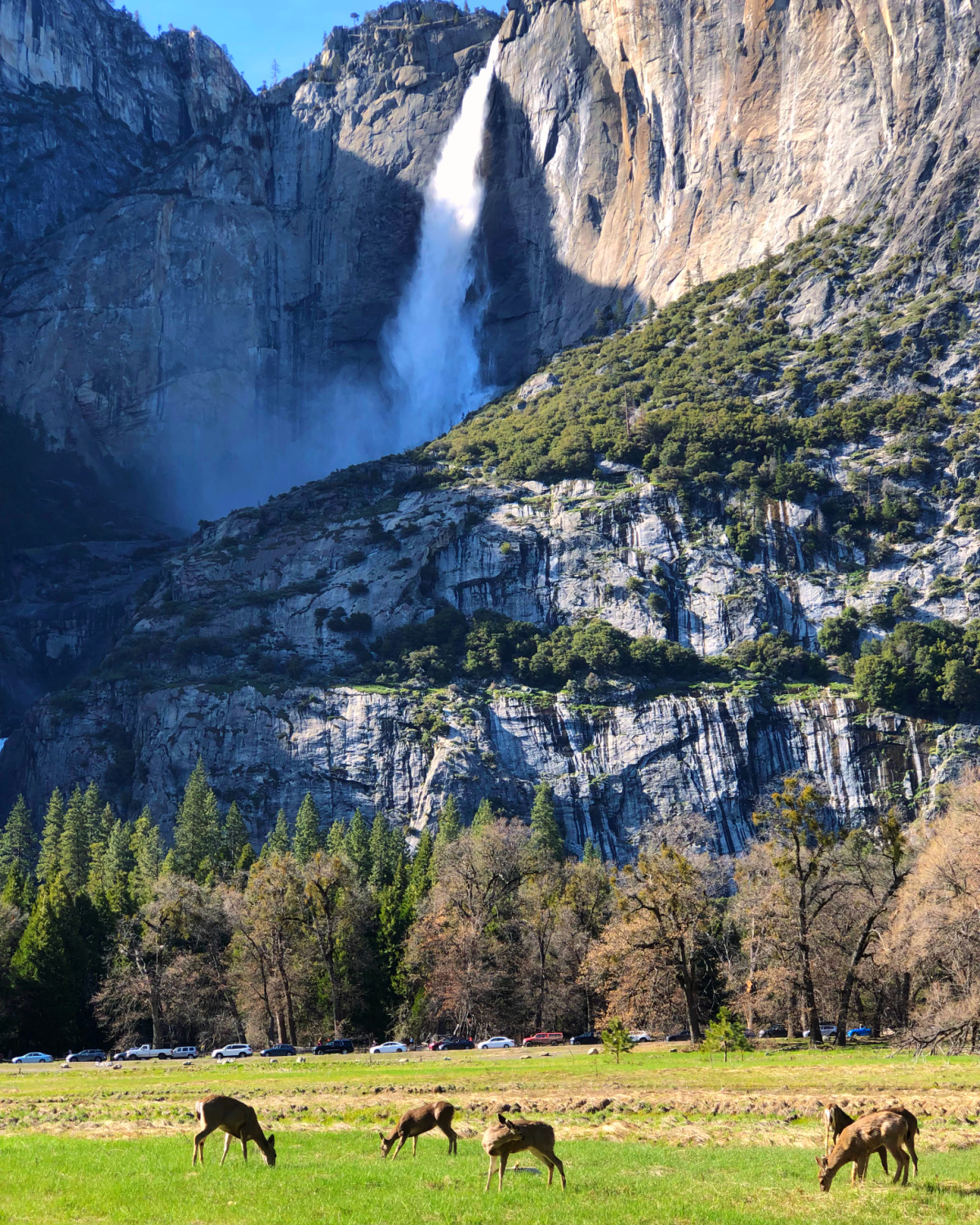
Mule deer are commonly seen in Yosemite Valley, and depending on where you go, you might also spot squirrels, birds, marmots, or other wildlife.
Kids tend to be very good at this because they notice things adults walk right past.
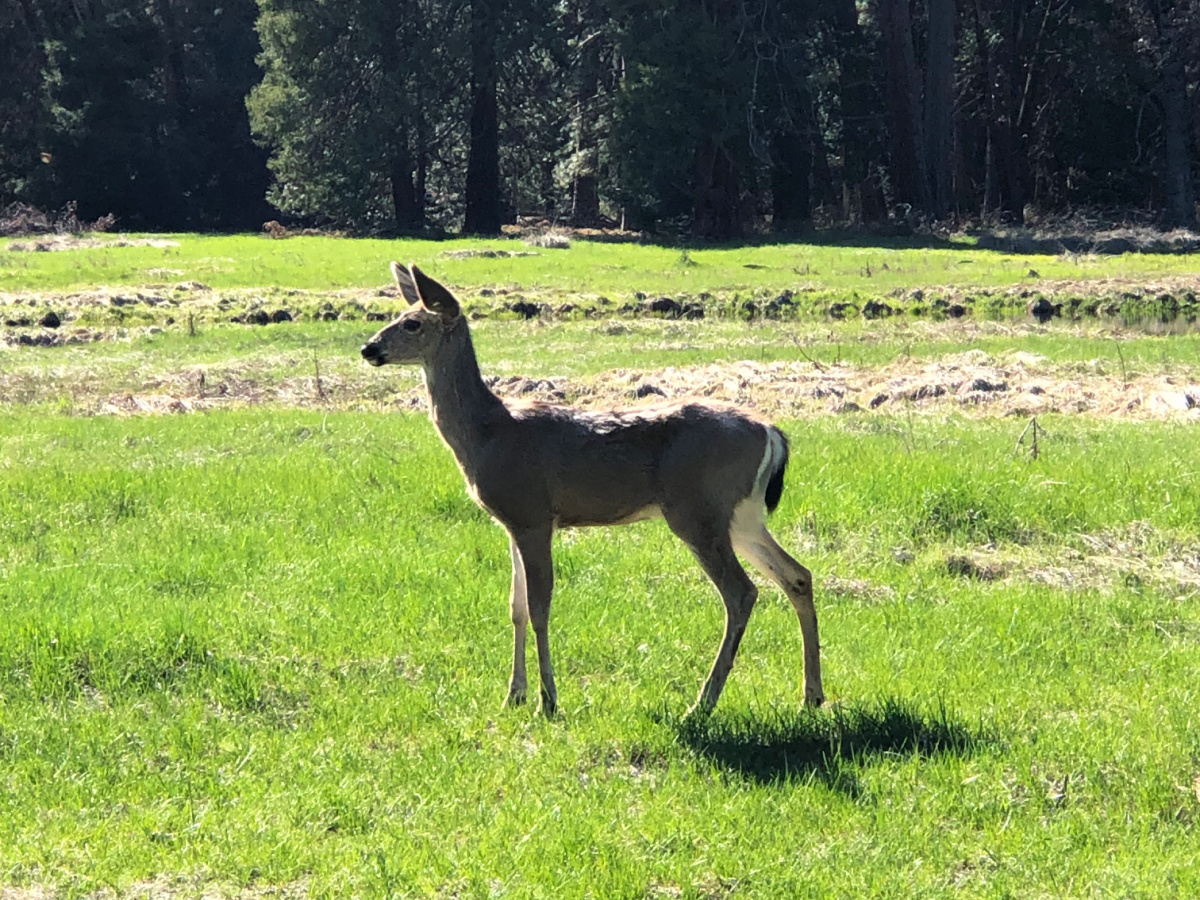
A deer in a meadow can suddenly become the most exciting part of the day.
If you spend time in Tuolumne Meadows, wildlife watching can be especially fun. Marmots and ground squirrels are among the animals you may see in that part of the park.
And yes, Yosemite has black bears.
That doesn’t mean you should spend your entire trip expecting one to appear behind every tree.
But families should understand basic bear safety and food storage rules before visiting.
Never approach wildlife, never feed animals, and give them plenty of space.
Even the cute ones.
Especially the cute ones.
13. Take the Kids to Glacier Point
Scenic viewpoints probably aren’t going to be the main event for most kids.
Adults can happily stand at an overlook for twenty minutes taking pictures and discussing the light.
Kids are often done in about thirty seconds.
But Glacier Point is different.
The view is so enormous that even kids are likely to understand that they’re looking at something pretty spectacular.
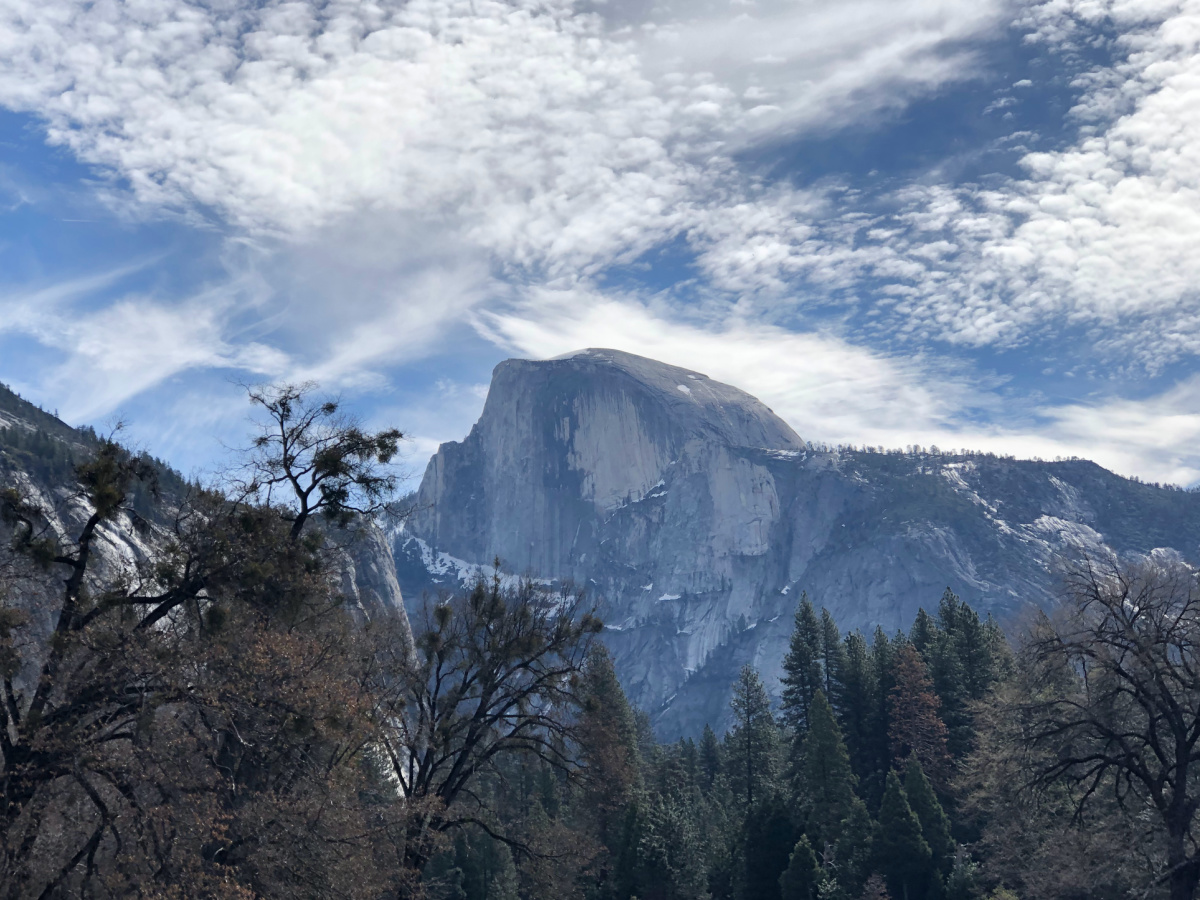
From Glacier Point, you’re looking across Yosemite Valley toward Half Dome and several waterfalls, with huge sections of the Sierra Nevada stretching out around you.
It gives kids a sense of scale that is difficult to get from down on the Valley floor.
And one of the nicest things about Glacier Point is that you don’t need to hike miles uphill to earn that view.
When Glacier Point Road is open, you can drive most of the way there and walk a relatively short distance to the viewpoints.
That makes it an excellent family stop.
Just remember that Glacier Point Road is seasonal and is generally closed during the snowy part of the year.
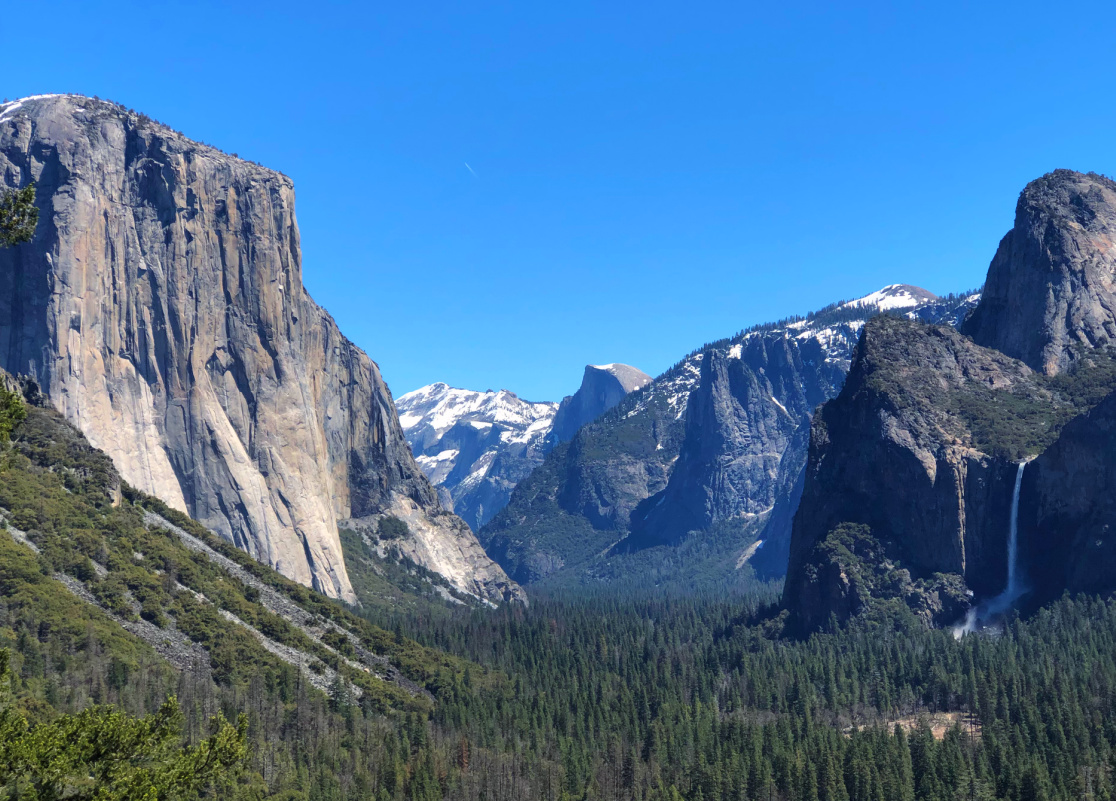
14. Stop at Tunnel View
Tunnel View is one of the easiest scenic stops in Yosemite.
You pull over, walk a short distance, and there it is: El Capitan, Half Dome, Bridalveil Fall, and Yosemite Valley spread out in front of you.
Will your kids stand there contemplating the grandeur of Yosemite for half an hour?
Probably not.
That’s okay.
This is still absolutely worth stopping for.
It takes very little effort, the view is iconic, and it’s one of the easiest places to give kids a sense of just how enormous Yosemite Valley really is.
You don’t need every family activity to occupy an entire afternoon.
Sometimes three impressive minutes is enough.
15. Stop at Valley View
Valley View is another scenic stop that works especially well with families because there’s more going on than just the view.
You get a beautiful perspective looking across the Merced River toward El Capitan and the surrounding cliffs.
But unlike an overlook where everyone is simply standing behind a railing, the river gives kids something else to investigate.
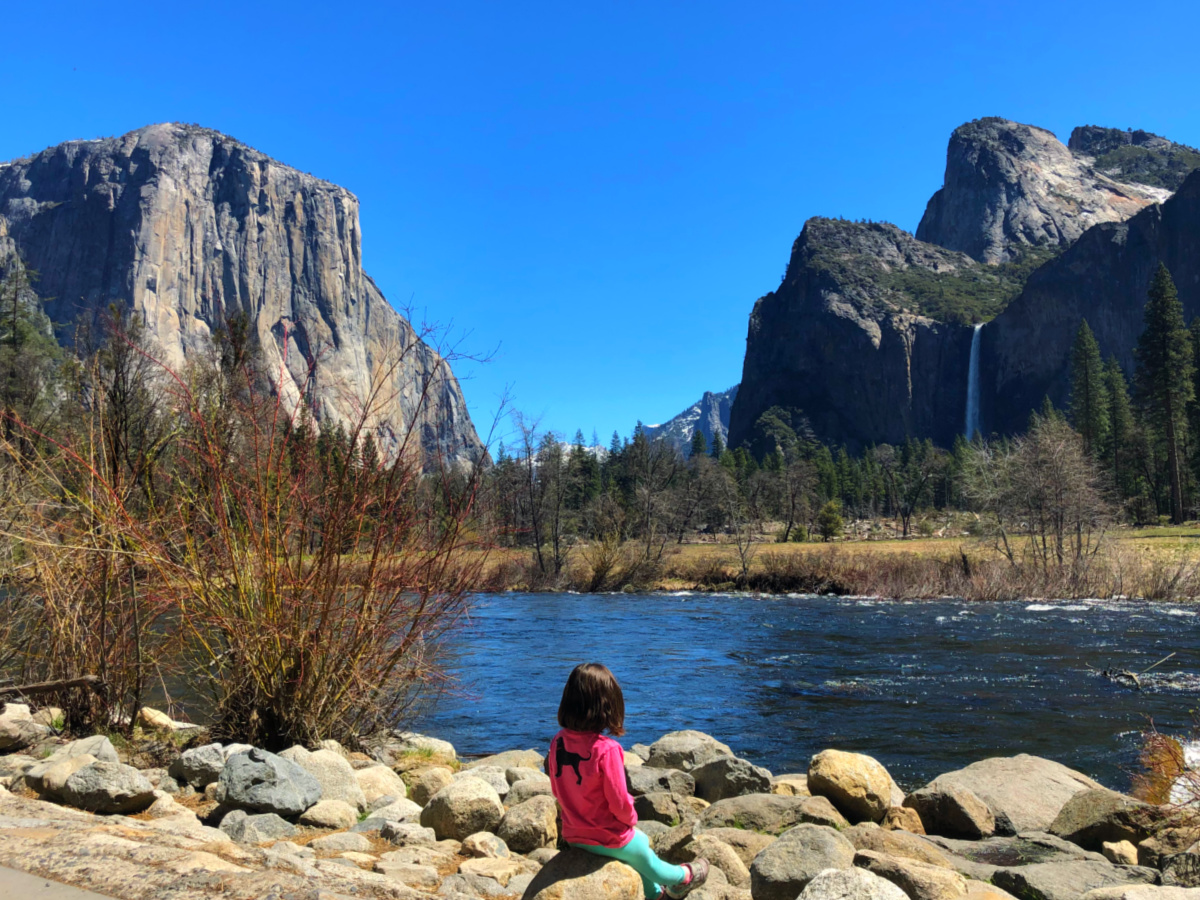
Depending on conditions, they can explore the riverbank, look at rocks, watch the water, and generally poke around while you enjoy the scenery.
This is the kind of viewpoint I particularly like for families.
The adults get the photograph.
The kids get something to do.
Everybody wins.
16. Explore Tuolumne Meadows
If you’re visiting Yosemite in summer and have enough time to venture beyond Yosemite Valley, Tuolumne Meadows is worth adding to your family itinerary.
The scenery here feels completely different.
Instead of being surrounded by the steep granite walls of Yosemite Valley, you’re in a broad high-country landscape filled with meadows, mountains, streams, and granite domes.
There are also several easy walks in the area that work well for families.
Soda Springs and Parsons Memorial Lodge can be combined into a relatively easy outing without requiring a strenuous hike.
And honestly, you don’t necessarily need a specific destination.
Simply walking around Tuolumne Meadows can be enough.
Kids have room to explore, there are wildlife-watching opportunities, and the high-country scenery is beautiful.
The biggest caveat is access.
Tuolumne Meadows sits along Tioga Road, which closes every winter and often doesn’t reopen until late spring or early summer.
If you’re visiting Yosemite in April like we did, you probably won’t be getting anywhere near Tuolumne Meadows.
If you’re visiting in July or August, it’s a completely different story.
17. Hike Toward Vernal Fall With Older Kids
Vernal Fall is where I’d start separating “easy family activities” from “family activities if your kids actually hike.”
This is not Lower Yosemite Fall.
The trail climbs.
There are stairs.
Depending on how far you go, it can become strenuous.
And if your child has reached the stage of a hike where every five minutes they ask, “Are we almost there?” this may not be the adventure you want.
But I also wouldn’t automatically eliminate Vernal Fall just because you’re traveling with kids.
Plenty of families with older children or kids who are accustomed to hiking can handle at least part of this trail.
You also don’t have to go all the way to the top.
The footbridge gives you a good turnaround point for families who want a taste of the trail without committing to the full climb.
If everyone is doing well and conditions are good, stronger hikers can continue farther.
This is one of those Yosemite activities where you need to know your own family.
Some ten-year-olds would absolutely love it.
Some teenagers would complain the entire way.
Age is only part of the equation.
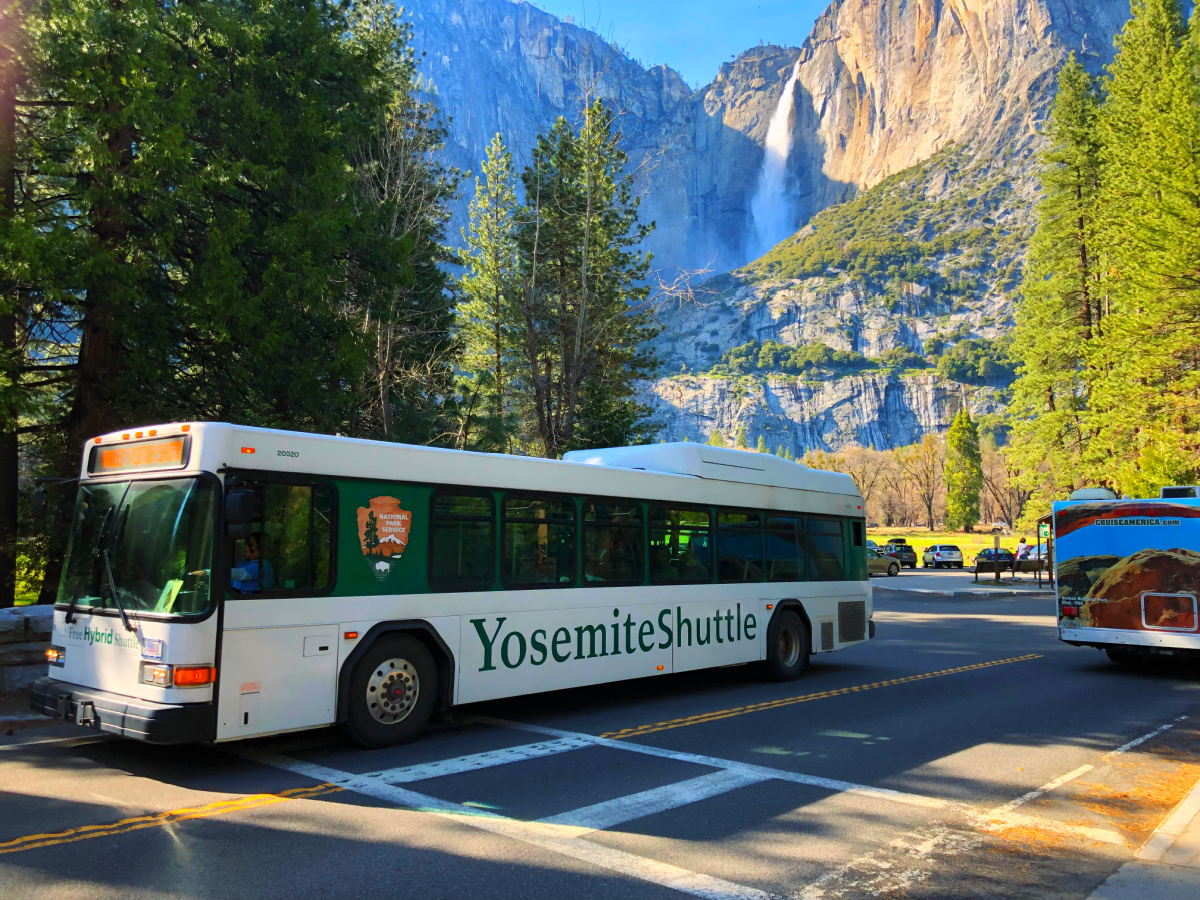
18. Use the Yosemite Valley Shuttle
The shuttle isn’t really an attraction, but with kids, it can become one of your most useful Yosemite tools.
Yosemite Valley is very walkable, but eventually little legs get tired.
Or big legs get tired.
Or everybody is hungry and suddenly the half-mile walk back to wherever you’re going feels like a trek across the Sierra Nevada.
That’s where the shuttle can save the day.
The free Yosemite Valley shuttle connects many of the major areas around the Valley, including trailheads, lodging, visitor services, and popular sightseeing areas.
You can walk while everyone is happy, explore for a while, and then use the shuttle when enthusiasm starts declining.
This is particularly useful if you’re visiting with younger children.
You don’t have to decide in advance exactly how far everyone is capable of walking.
You can adjust as you go.
And flexibility is probably one of the most valuable things you can build into any Yosemite trip with kids.
Is Yosemite Good for Toddlers and Preschoolers?
Yes.
In fact, Yosemite is probably easier with very young kids than many parents expect.
The biggest reason is that you can see so much without doing a serious hike. Yosemite Valley gives you paved paths, open meadows, short waterfall walks, picnic areas, shuttle access, and plenty of places where little kids can move around without spending hours strapped into a stroller or hiking carrier.
Lower Yosemite Fall is a great example.
You can do a short, easy walk and still give your child one of those huge Yosemite experiences.
The same goes for Bridalveil Fall, Cook’s Meadow, the Merced River, and many of the scenic stops around the Valley.
Toddlers and preschoolers also don’t need a packed itinerary.
Honestly, I wouldn’t try to give them one.
Plan one or two anchor activities, leave room for snacks and downtime, and let them spend twenty minutes staring at a stick if that’s what makes them happy.
You are still in Yosemite.
Is Yosemite Good for Older Kids and Teens?
Absolutely.
Older kids and teens give you more flexibility because you can start adding moderate hikes, longer bike rides, and destinations farther outside Yosemite Valley.
This is where places like Vernal Fall become more realistic.
You can also spend more time in Mariposa Grove, explore Tuolumne Meadows when Tioga Road is open, or build a longer hiking day into the trip.
And teenagers may appreciate Yosemite more than you expect.
They may not react to every scenic viewpoint with the enthusiasm you were hoping for, but giant waterfalls, enormous sequoias, wildlife, rivers, bikes, and dramatic granite cliffs are still pretty hard to ignore.
I also think it helps not to oversell every stop.
Not every viewpoint needs to become a family bonding moment.
Sometimes teenagers are going to look at Half Dome, say “cool,” and then ask when you’re eating.
That still counts.
Is Yosemite Stroller-Friendly?
Parts of Yosemite are very stroller-friendly.
Yosemite Valley is where you’ll have the easiest time.
Many of the main walking and biking paths are paved, and areas around Cook’s Meadow, Lower Yosemite Fall, the Visitor Center, and portions of the route toward Mirror Lake can work well with a stroller.
That makes Yosemite Valley especially manageable for families with babies and toddlers.
But stroller-friendly does not mean every Yosemite trail is stroller-friendly.
Once you start getting into rocky trails, stairs, steep grades, or uneven terrain, you’ll probably want a child carrier instead.
This is especially true if you’re considering Vernal Fall or more rugged sections of Mariposa Grove.
If you’re traveling with a baby or toddler, I would bring both a stroller and a carrier if you have room.
They solve two very different problems.
What Is the Best Time of Year to Visit Yosemite With Kids?
There really isn’t one perfect season.
It depends on what kind of Yosemite trip you want.
Spring
We visited Yosemite in April, and spring is incredible if waterfalls are a priority.
This is when Yosemite Falls and Bridalveil Fall can be especially powerful because of snowmelt.
The tradeoff is that higher-elevation areas may still be inaccessible.
Tioga Road is generally still closed, Glacier Point Road may still be closed depending on conditions, and Mariposa Grove shuttle access may not be operating yet.
You also aren’t going to be planning a swimming day in the Merced River.
But if you want waterfalls and fewer summer crowds, spring can be fantastic.
Summer
Summer gives families the most access.
Tioga Road and Glacier Point Road are generally open once the snow is gone, Mariposa Grove shuttle service is usually running, and warmer temperatures make river and picnic days much more appealing.
The downside is crowds.
Yosemite can be extremely busy in summer.
If you’re visiting during peak season, staying inside the park becomes even more valuable because you can start early and avoid some of the traffic coming into Yosemite Valley.
Fall
Fall can be a nice compromise.
Crowds generally begin to drop, temperatures cool, and much of the park may still be accessible early in the season.
But waterfalls usually aren’t as dramatic as they are in spring.
Some may have much lower flow.
Winter
Winter can be beautiful, but I wouldn’t choose it for a family’s first Yosemite trip unless you’re specifically looking for a winter experience.
Road access is more limited, some parts of the park are closed for the season, and snow and ice make logistics more complicated.
How Many Days Do You Need in Yosemite With Kids?
I would give Yosemite at least two full days with kids if you can.
Three is even better.
One day is enough to see Yosemite Valley and hit some of the biggest highlights, but you’re going to feel rushed.
With two days, you can slow down.
You can spend one day exploring Yosemite Valley and another visiting Mariposa Grove, Glacier Point, or another part of the park depending on what’s open.
Three days gives you room for weather, naps, tired kids, traffic, and the completely predictable family-travel event where something takes twice as long as you expected.
And Yosemite is one of those places where slowing down is worth it.
You don’t want to spend the entire trip checking attractions off a list.
Where Should Families Stay in Yosemite?
If your budget allows it, I strongly recommend staying inside Yosemite National Park.
Location matters enormously here.
Yosemite is not the kind of destination where staying thirty or forty minutes away necessarily means you’re only thirty or forty minutes away.
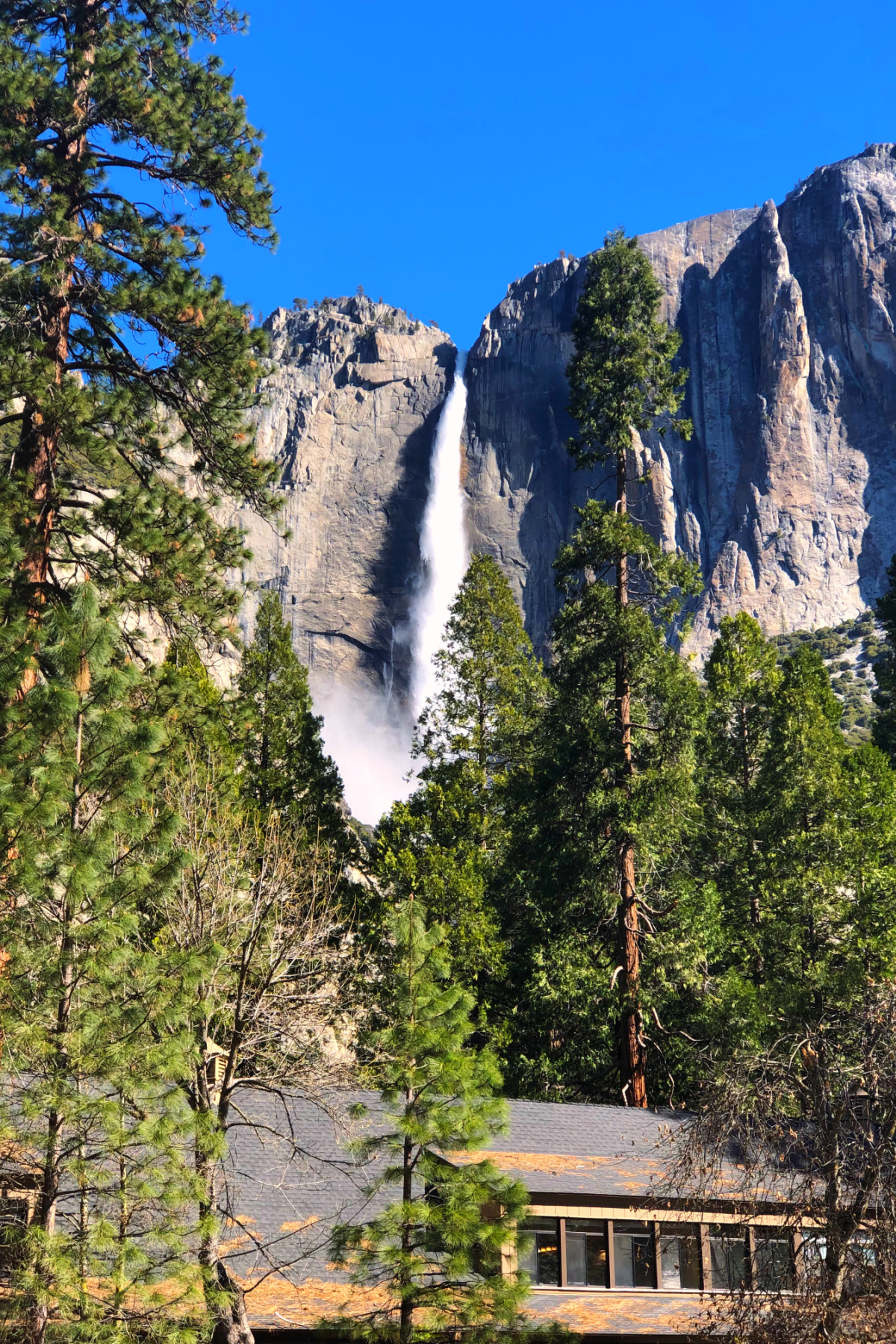
Traffic, entrance lines, road construction, parking, and the sheer size of the park can turn those distances into something much more significant.
That matters even more with kids.
If someone needs a nap, dry clothes, medication, a forgotten stuffed animal, or simply an hour away from everybody, staying close to the things you’re doing is incredibly helpful.
We stayed at Yosemite Valley Lodge, and the location was one of its biggest advantages.
Being right in Yosemite Valley meant we were already where we wanted to be.
We didn’t have to start and end every day with a long commute into the park.
For families, I would put a lot of weight on location when choosing lodging.
The room itself may not be the fanciest place you’ve ever stayed.
But waking up inside Yosemite can be worth far more than luxury.
Food and Picnic Tips for Yosemite With Kids
Bring snacks.
Lots of snacks.
This is probably not groundbreaking family travel advice, but it matters even more in a national park where your plans can suddenly change because of traffic, weather, a closed road, or a trail that takes longer than expected.
I also like the idea of building at least one picnic into your Yosemite itinerary.
It’s cheaper than eating every meal at a restaurant, it’s flexible, and it gives kids a chance to stop moving for a while.
Just remember that Yosemite has very strict food storage rules because of bears.
That applies to snacks too.
Don’t leave food sitting out while you wander away to take pictures.
Don’t leave coolers unattended.
And don’t assume something is fine inside the car just because it’s packaged.
Follow the current park rules carefully.
Safety Tips for Visiting Yosemite With Kids
Yosemite is very family-friendly.
It is also a wild national park.
Those two things can both be true.
Be Careful Around Waterfalls and Rivers
Water is probably the biggest thing I would emphasize with kids.
Spring runoff can make rivers and creeks much faster and stronger than they look.
Rocks around waterfalls can also be extremely slippery.
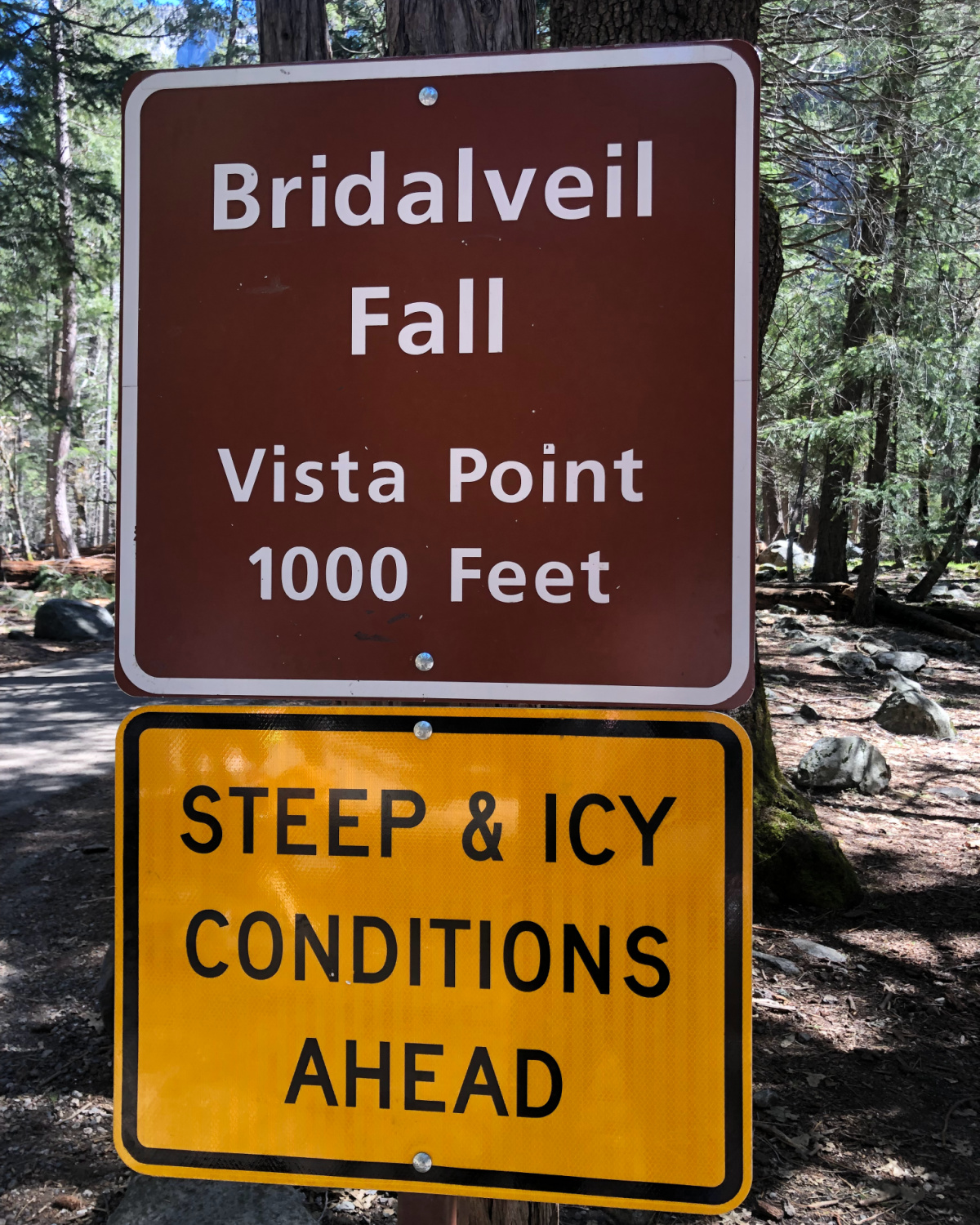
Don’t let children climb onto wet rocks near fast-moving water just because other people are doing it.
And don’t treat the Merced River like a swimming pool.
Conditions change throughout the year.
Stay Back From Cliffs and Drop-Offs
Some scenic viewpoints have barriers.
Others don’t.
If you’re visiting somewhere like Glacier Point with young children, keep them close.
This sounds obvious, but Yosemite has places where the scenery can distract you from how close you are to a significant drop.
Give Wildlife Space
Don’t let kids approach deer, squirrels, or any other wildlife.
And obviously, never approach a bear.
Even animals that look harmless can bite, kick, or become aggressive if they feel threatened.
Keep Food Secured
Bear safety in Yosemite is mostly about food.
Teach kids early that snacks don’t get left in backpacks, strollers, or cars unless they’re stored according to park rules.
This is one of those situations where good habits protect both your family and the bears.
A Realistic One-Day Yosemite Itinerary With Kids
If you only have one day, I would keep it focused on Yosemite Valley.
Start early.
Walk through Cook’s Meadow and visit Lower Yosemite Fall before the busiest part of the day.
Then explore more of the Valley on foot, by bike, or using the shuttle.
Stop for lunch or a picnic.
In the afternoon, visit Bridalveil Fall or Mirror Lake depending on your family’s energy level.
Then finish with Tunnel View or Valley View.
That gives you waterfalls, meadows, the river, giant granite cliffs, and one of Yosemite’s famous viewpoints without spending the entire day in the car.
A Realistic Two-Day Yosemite Itinerary With Kids
With two days, I would spend the first day almost entirely in Yosemite Valley.
Do the meadows, Lower Yosemite Fall, Bridalveil Fall, the river, biking or the shuttle, and one or two viewpoints.
Then use your second day to see another part of Yosemite.
If Mariposa Grove access is easy, go see the giant sequoias.
If Glacier Point Road is open, Glacier Point is an excellent family destination.
If Tioga Road is open and you don’t mind the additional driving, Tuolumne Meadows gives you a completely different Yosemite experience.
Which one you choose will depend heavily on the season.
And I wouldn’t try to do all three.
Yosemite is much more enjoyable when you stop trying to fit the entire park into one trip.
Don’t Overplan Yosemite With Kids
This might be the most useful Yosemite family tip I can give you.
Leave some empty space in your itinerary.
National parks do not behave like theme parks.
You can’t always predict how long something will take.
You may hit traffic.
A parking lot may be full.
Someone may want to spend forty-five minutes playing beside the river.
You may find a beautiful picnic spot and decide you don’t want to leave.
Or your kids may simply be done.
That’s okay.
You don’t need to see everything for a Yosemite trip to be successful.
Pick the experiences that matter most to your family and let the rest be optional.
Final Thoughts on Visiting Yosemite National Park With Kids
Yosemite can look intimidating when you’re planning a family trip.
It has famous backpacking routes, huge mountains, steep trails, and some of the most dramatic wilderness in the United States.
But you don’t have to conquer Yosemite to experience it.
You can walk through a meadow.
Stand underneath a waterfall.
Ride bikes beside the Merced River.
Eat lunch under enormous granite cliffs.
Let your kids climb on rocks and look for deer.
Walk among giant sequoias.
Stop at a viewpoint for five minutes and then move on because somebody is hungry.
That is still Yosemite.
And for families, I think that’s part of what makes this park so special.
The spectacular stuff isn’t hidden at the end of a ten-mile trail.
A lot of it is right there, waiting for you.
More Yosemite National Park Guides
Planning a Yosemite trip? I have plenty more Yosemite National Park guides to help you figure out what to see, where to hike, and how to make the most of your time in the park.
- Yosemite Falls Visitor Guide — Everything you need to know about visiting one of Yosemite’s most famous waterfalls.
- Best Scenic Viewpoints in Yosemite National Park — The best places to see those iconic Yosemite views, including several that require very little walking.
- Best Things to Do in Yosemite Valley — Waterfalls, meadows, scenic views, easy walks, and more of the best things to see in the heart of Yosemite.
- Best Easy Hikes in Yosemite National Park — Family-friendly and relatively easy trails where you can experience Yosemite without tackling an all-day hike.
- Best Waterfalls in Yosemite National Park — A guide to Yosemite’s most beautiful waterfalls and when you’re most likely to see them at their best.
- Yosemite in April — What our spring visit was really like, including weather, waterfalls, road closures, and what was actually accessible.
- Yosemite Valley Lodge Review — Our experience staying right in Yosemite Valley and why location matters so much inside a national park.
- Mariposa Grove Visitor Guide — Everything you need to know about seeing Yosemite’s giant sequoias.
- Bridalveil Fall Visitor Guide — How to visit one of Yosemite Valley’s easiest and most dramatic waterfall stops.
More National Park Adventures With Kids
If Yosemite is part of a bigger family national park bucket list, here are a few more places we’ve explored with kids.
- Best Things to Do in Mount Rainier National Park With Kids — Waterfalls, easy hikes, wildflower meadows, scenic drives, and incredible mountain views.
- Olympic National Park With Kids — Explore beaches, rainforests, waterfalls, lakes, and mountains on one very diverse family national park trip.
- Best Things to Do in Kanab With Kids — An excellent base for family adventures near several national parks and some of southern Utah’s most interesting landscapes.
- Moab With Kids — Family-friendly adventures around Arches, Canyonlands, and the red-rock landscape surrounding Moab.
- Denali National Park With Kids — Wildlife, huge landscapes, and family-friendly ways to experience one of Alaska’s most famous national parks.