Yosemite National Park: A First-Timer’s Guide

Planning your first trip? This Yosemite National Park first timer guide covers where to stay, what to see, easy hikes, crowds, safety tips, and how many days you need.
Estimated reading time: 29 minutes
Yosemite National Park is one of those places that almost doesn’t seem real until you’re standing there.
The granite cliffs are enormous. Waterfalls tumble straight down the sides of the valley. Half Dome seems to appear around every corner. And even after three different trips to Yosemite at three very different points in my life, I still think Yosemite Valley is one of the most beautiful places I have ever been.
But Yosemite can also be intimidating for a first-time visitor.
It is incredibly popular. Parking can be frustrating. Lodging books up early. Some roads close for months because of snow. And when you start researching hikes, you may quickly find yourself reading about Half Dome permits, backcountry routes, and trails with thousands of feet of elevation gain.
That is not what this guide is about.
I have enormous respect for the people who hike Half Dome, backpack deep into the Yosemite wilderness, or climb El Capitan. I even have friends who have hiked Half Dome, and I think they are awesome.
I will never do that.
No thank you.
This Yosemite first-timer’s guide is for the rest of us.
It is for families traveling with kids. It is for couples taking their first national park trip. It is for grandparents, girlfriend trips, people with creaky knees, and anyone who wants to experience Yosemite without turning the vacation into an endurance event.
Because you absolutely do not have to be a hardcore hiker to have an incredible trip to Yosemite National Park.
Why Yosemite Can Feel So Crowded
Yosemite is actually a huge national park, and most of it is wilderness.
But that is not necessarily how the average first-time visitor experiences it.
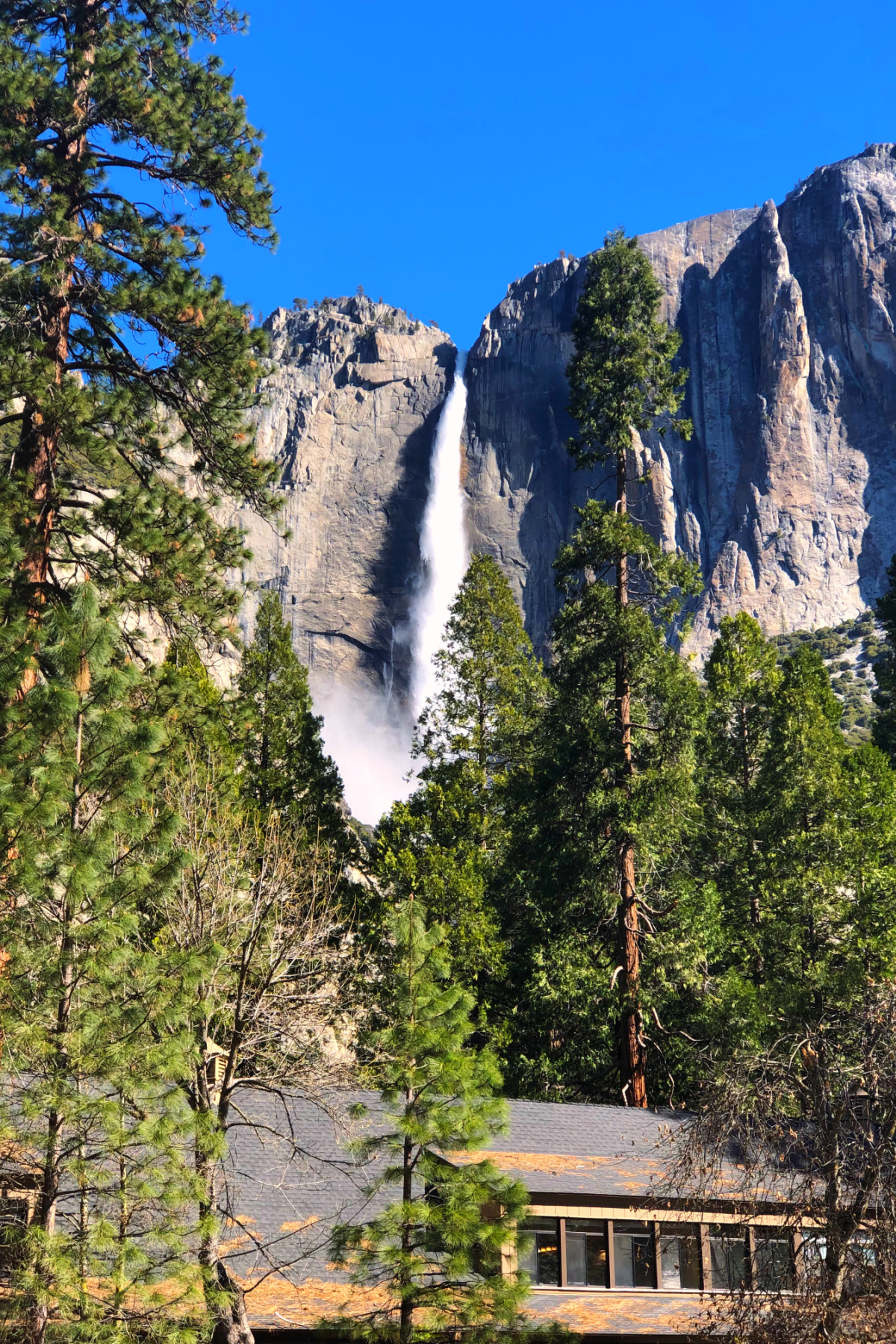
For casual travelers, many of Yosemite’s biggest attractions are concentrated in and around Yosemite Valley. Yosemite Falls, Bridalveil Fall, El Capitan, Half Dome viewpoints, Sentinel Bridge, the Merced River, and many of the easiest walking trails are all relatively close together.
That is fantastic if you want to see a lot without hiking ten miles.
It also means everybody else wants to be there too.
This is one of the biggest differences I notice between Yosemite and some of the other extremely popular national parks.
Yellowstone gets huge crowds, but Yellowstone is massive and spread out. There are multiple gateway towns, multiple developed areas inside the park, and hundreds of miles of roads.
Great Smoky Mountains National Park gets enormous numbers of visitors too, but the surrounding tourism infrastructure in places like Gatlinburg and Pigeon Forge can absorb a tremendous number of people.
Yosemite feels different.
There are quieter parts of Yosemite, of course. If you are backpacking into the wilderness, you can absolutely escape the crowds.
But if you are visiting Yosemite for the first time and want to see the classic sights, chances are good that you are going to be sharing them with a lot of other people.
Especially during summer.
That doesn’t mean you shouldn’t go. It just means a little strategy will make your trip much more enjoyable.
Book Your Yosemite Lodging Early
If there is one thing I would plan first for a Yosemite trip, it is lodging.
Not your hikes.
Not your restaurant reservations.
Not your detailed itinerary.
Your lodging.
I have what I jokingly call my Old Faithful Inn rule for popular national parks: if there is somewhere iconic inside the park where you want to stay, start looking about a year ahead.
Yosemite absolutely qualifies.
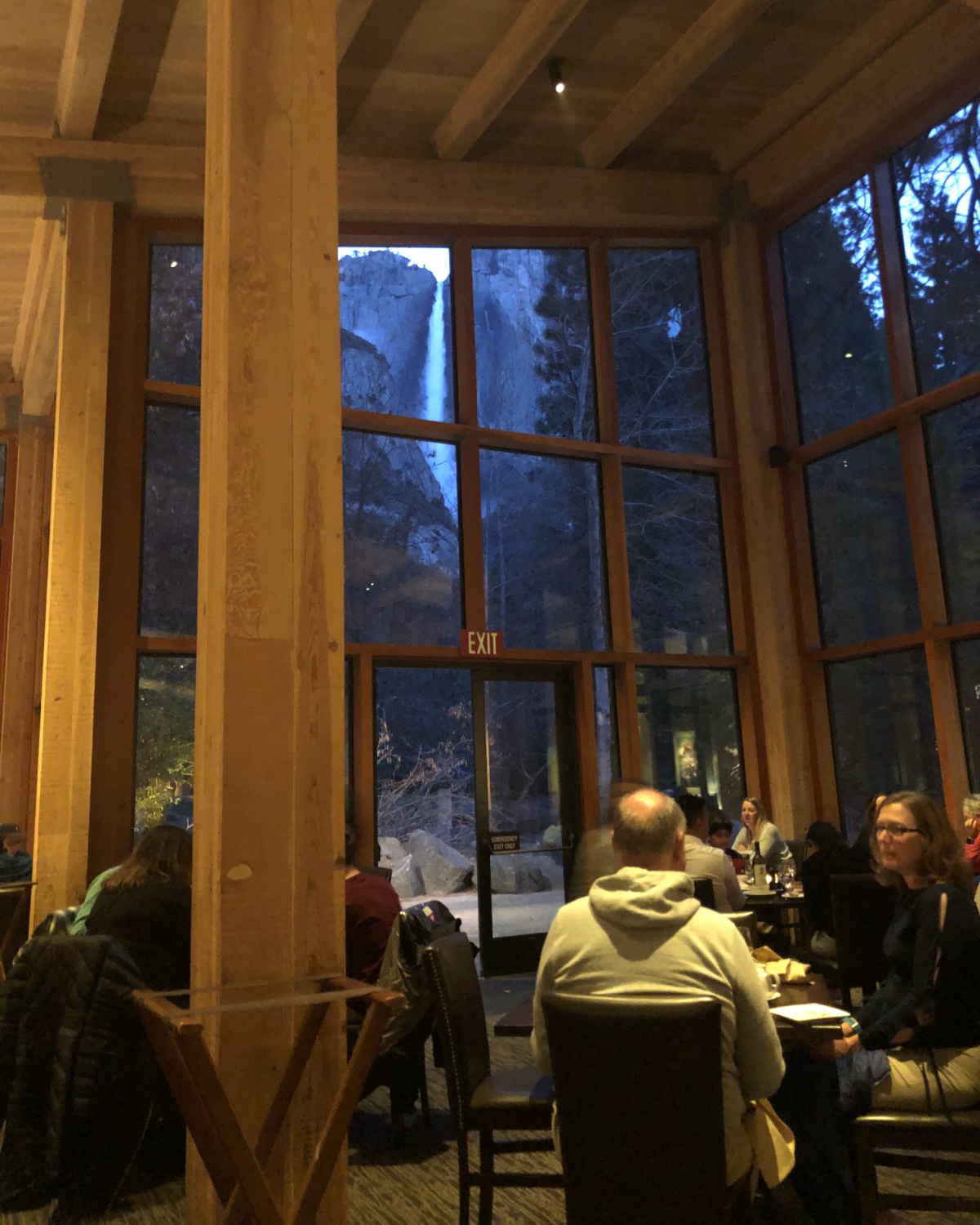
If you want to stay at Yosemite Valley Lodge, The Ahwahnee, Curry Village, Housekeeping Camp, or one of Yosemite’s campgrounds, do not assume you can decide a few months beforehand and still have your choice of accommodations.
Book as early as you reasonably can.
Even if you plan to stay outside Yosemite National Park, I would still start looking early if you are visiting during the busiest part of the year.
Yosemite has several gateway communities, but the hotel inventory around the park does not feel endless. And the farther away you stay, the more time you are going to spend driving into the park every morning.
For Yosemite, location really matters.
If You Can Stay Inside Yosemite, Do It
I am a huge believer in staying inside national parks whenever it makes sense, but Yosemite is one of the places where I think the advantages are especially significant.
The first advantage is obvious: you are already there.
On one trip, my husband and I camped in Yosemite Valley. On another, our family stayed at Yosemite Valley Lodge.
There is something pretty incredible about waking up and already being surrounded by Yosemite.
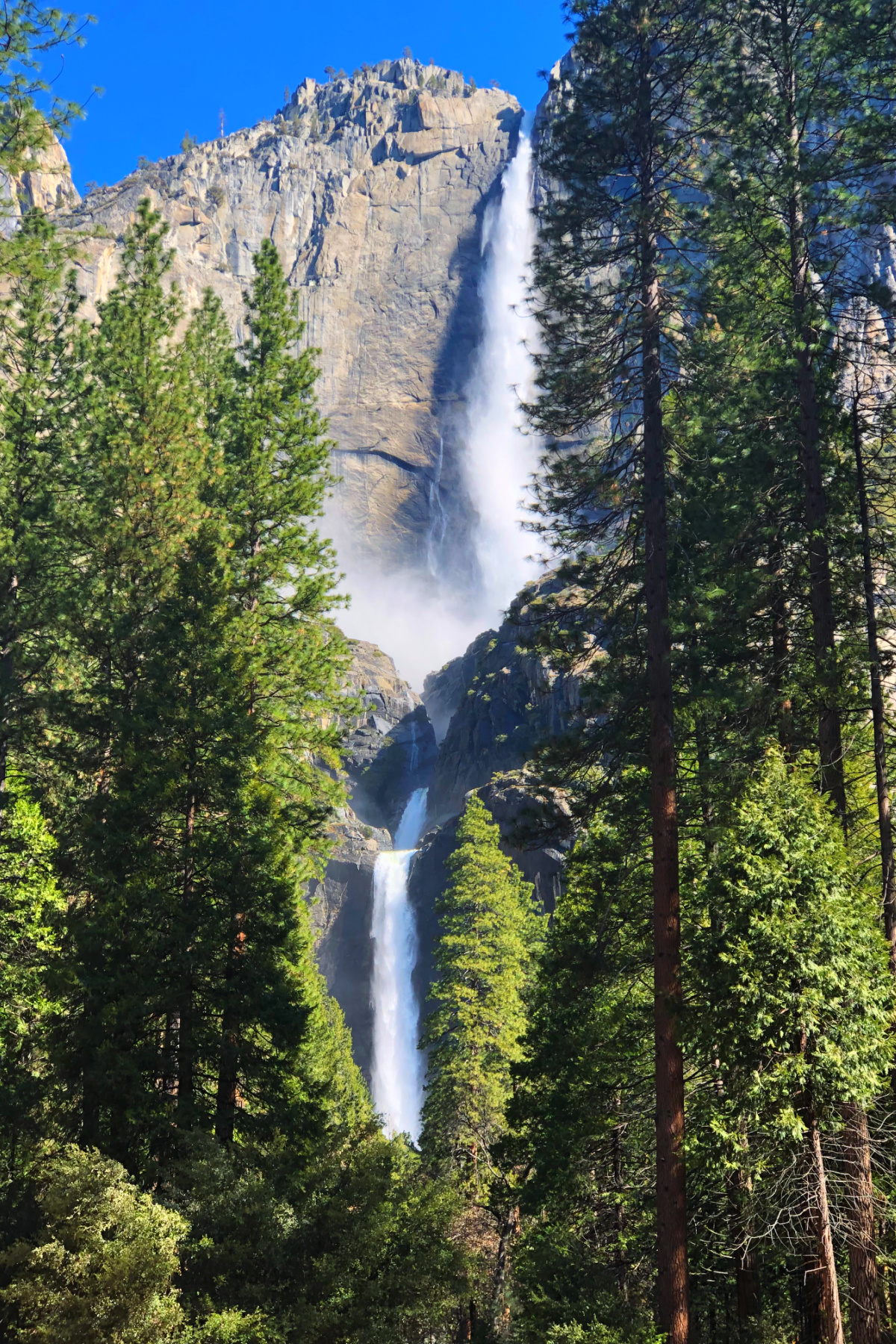
At Yosemite Valley Lodge, you can walk outside and Yosemite Falls is basically right there.
But the second advantage may actually be just as important.
Parking.
Dedicated lodging parking is wildly underrated in a busy national park.
When you are staying inside Yosemite Valley, you don’t have to start every morning wondering whether you are going to spend half an hour circling a parking lot.
You also don’t have to begin your day sitting in the line of cars trying to enter the park.
That matters more than you might think.
While day visitors are still making their way through the entrance stations and into Yosemite Valley, you can already be walking to Yosemite Falls, watching the morning light hit Half Dome, or getting an early start toward Bridalveil Fall.
It buys you time.
And in Yosemite, time without crowds can be incredibly valuable.
If You Stay Outside Yosemite, Go Early
Staying inside Yosemite isn’t always possible.
You may not be able to find a reservation. You may prefer a particular hotel outside the park. Or the cost may simply not make sense for your family.
That’s completely fine.
But if you stay outside the park, I would make one thing a priority:
Get there early.
Do not plan to casually roll into Yosemite Valley at 10:30 or 11 in the morning during a busy summer weekend and expect everything to be easy.
By then, you may already be dealing with entrance traffic, crowded parking lots, packed shuttles, and a lot of people trying to see the exact same places you are.
The earlier you arrive, the better.
And honestly, this is one of my favorite rules for almost every national park.
The shoulder hours of the day are wonderful.
Before roughly 9 or 9:30 in the morning, the crowds are usually lighter. The temperature is cooler. The light is softer.
The same thing starts happening again later in the afternoon and into the evening as day visitors begin leaving.
Those are often some of the best hours to experience Yosemite.
Once You Find Parking, Stop Moving Your Car
This may be one of the most important Yosemite Valley tips for a first-time visitor.
Once the Valley gets busy and you have found a good parking spot, think very carefully before giving it up.
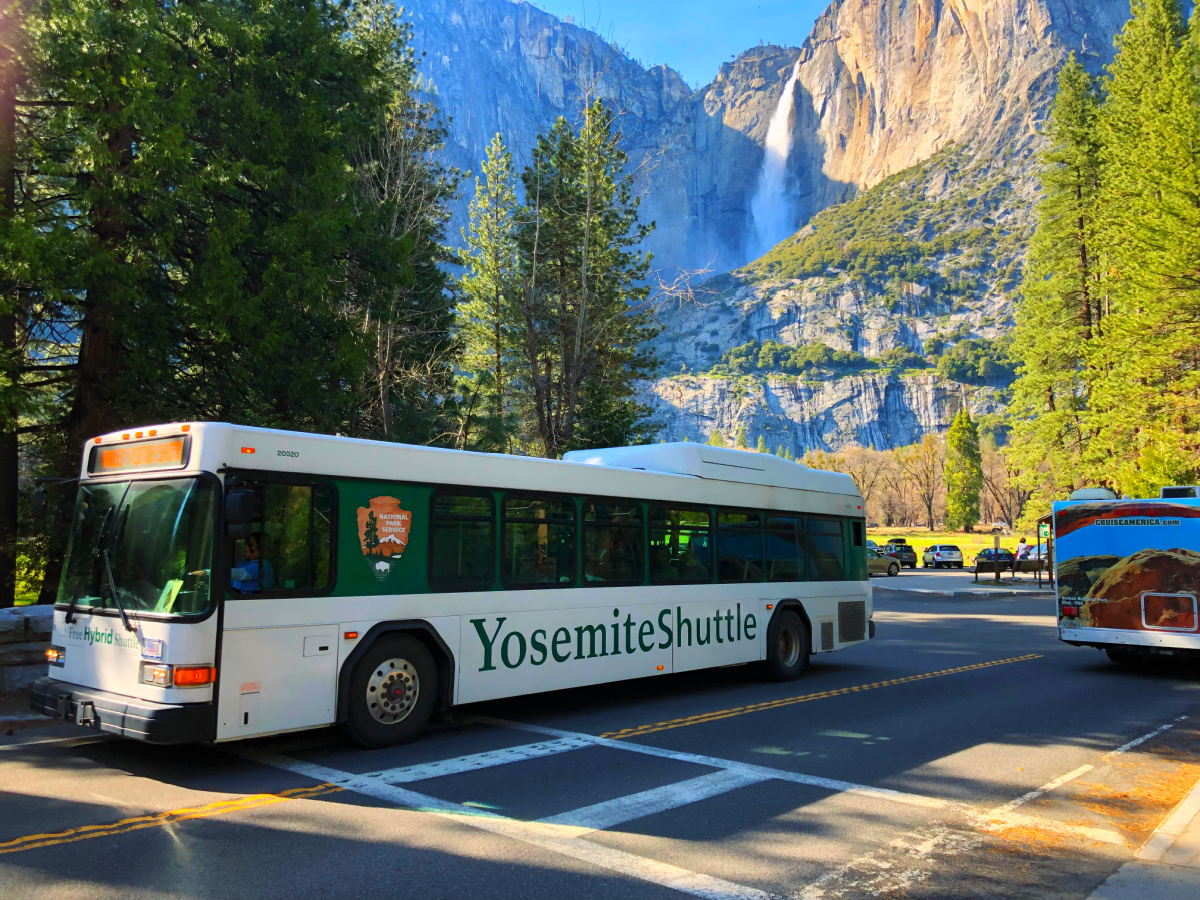
Yosemite Valley has a shuttle system, and many of the major attractions are connected by relatively easy walking paths.
Use them.
There is very little advantage to getting into your car every time you want to move half a mile down the road if you are visiting on a crowded day.
Park once.
Take the shuttle.
Walk.
Enjoy the scenery between attractions.
Yosemite Valley is not just a collection of famous landmarks. The spaces between the landmarks are beautiful too.
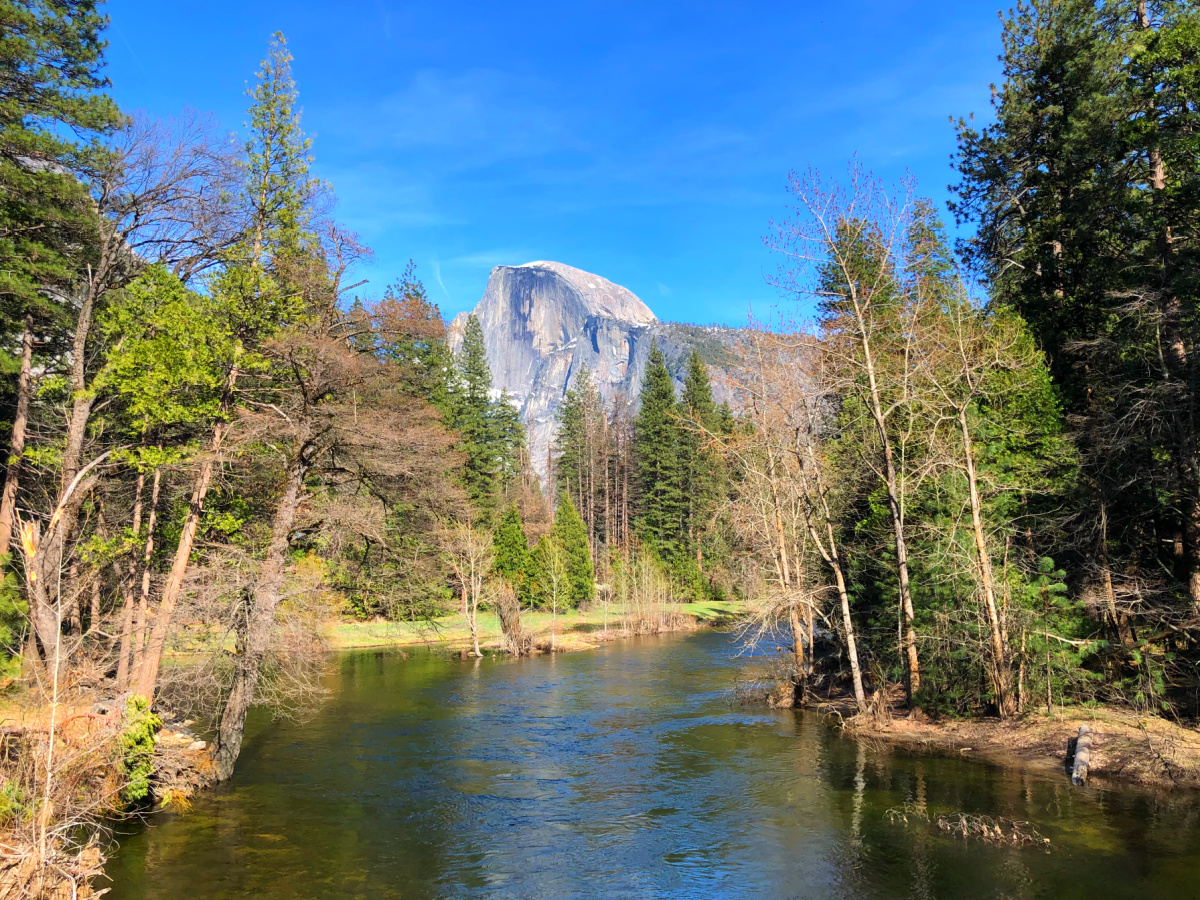
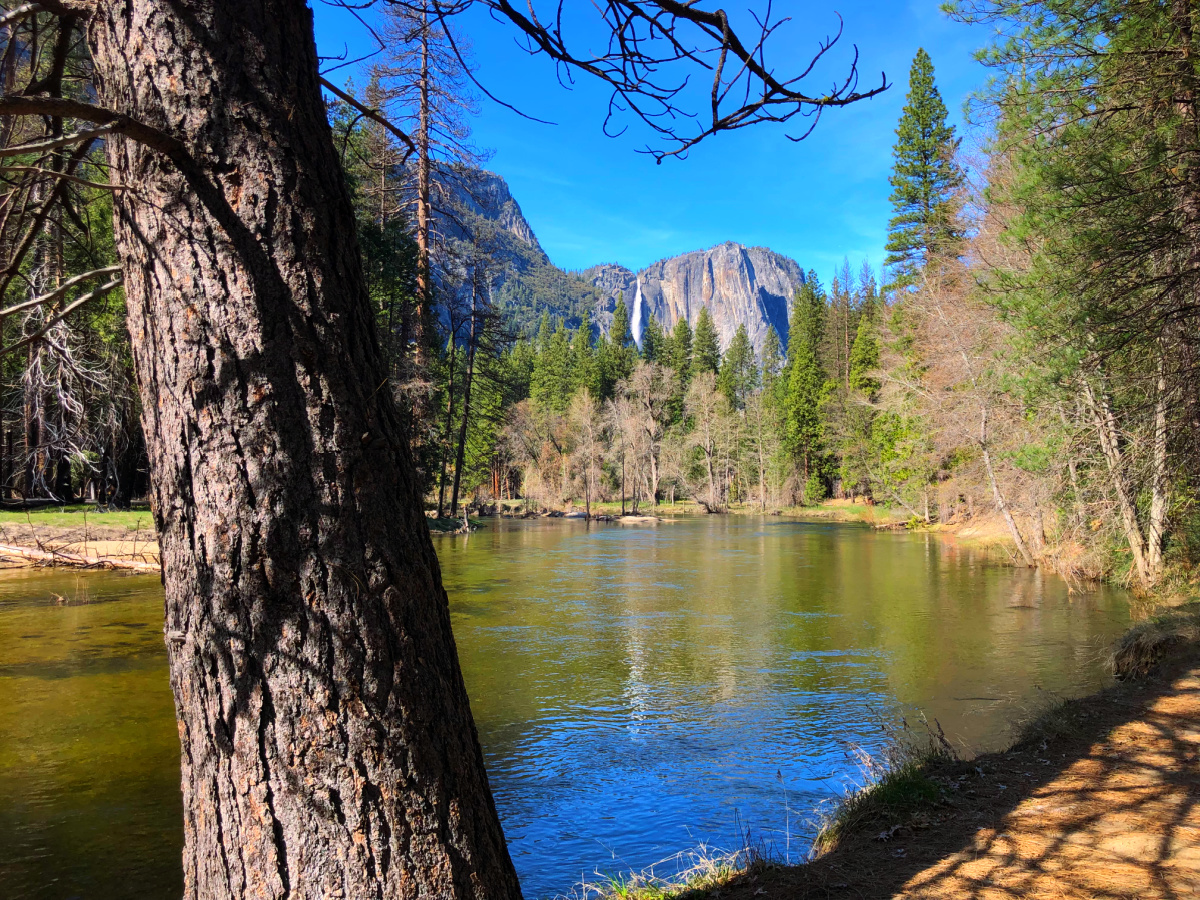
You may find yourself walking beside the Merced River, crossing a meadow, or suddenly looking up and realizing that Half Dome is framed perfectly between the trees.
Those moments are part of Yosemite too.
You Don’t Have to See Everything to Have a Great Yosemite Trip
This may be the most important thing I can tell a first-time Yosemite visitor.
You are not going to ruin your trip if you don’t get the perfect parking space at every famous viewpoint.
You are not going to ruin your trip if one shuttle is full.
You are not going to ruin your trip if your original plan changes.
Yosemite is almost ridiculously beautiful.
Yes, there are famous places you should absolutely try to see.
But if Tunnel View is crowded, there is another beautiful view down the road.
If one section of the Merced River is busy, keep going.
If everybody seems to be walking in one direction, sometimes it is worth walking in the other.
The headliners are famous for a reason.
But Yosemite does not stop being Yosemite when you move away from the headliners.
And sometimes getting a little bit away from the crowd is where the trip finally starts to feel magical.
When Is the Best Time to Visit Yosemite National Park?
There really is no single perfect time to visit Yosemite.
I have been to Yosemite in late spring or early summer, in October, and in April, and every trip felt different. The best time to go really depends on what you most want to see.
Visiting Yosemite in Spring
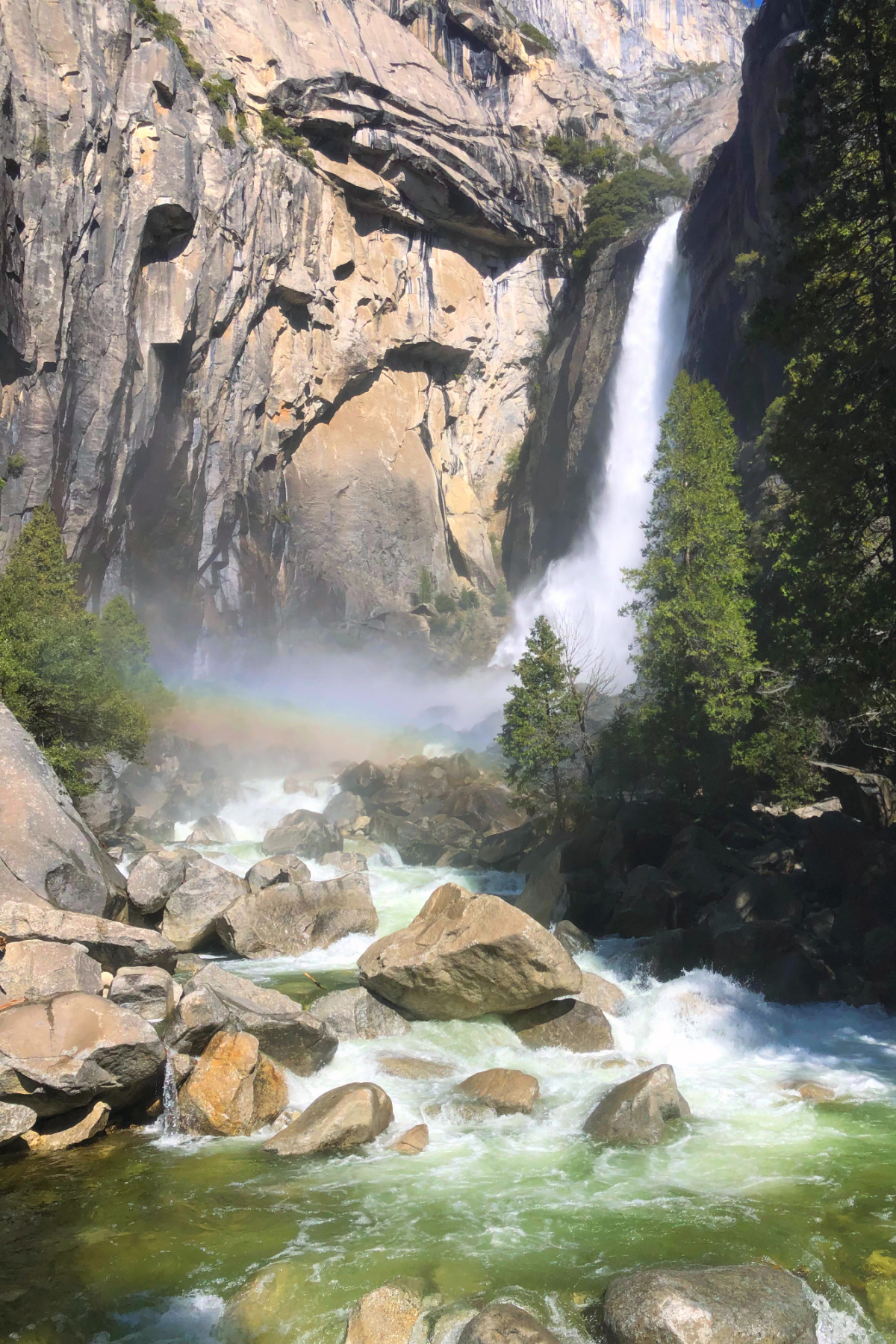
If waterfalls are your priority, spring is hard to beat.
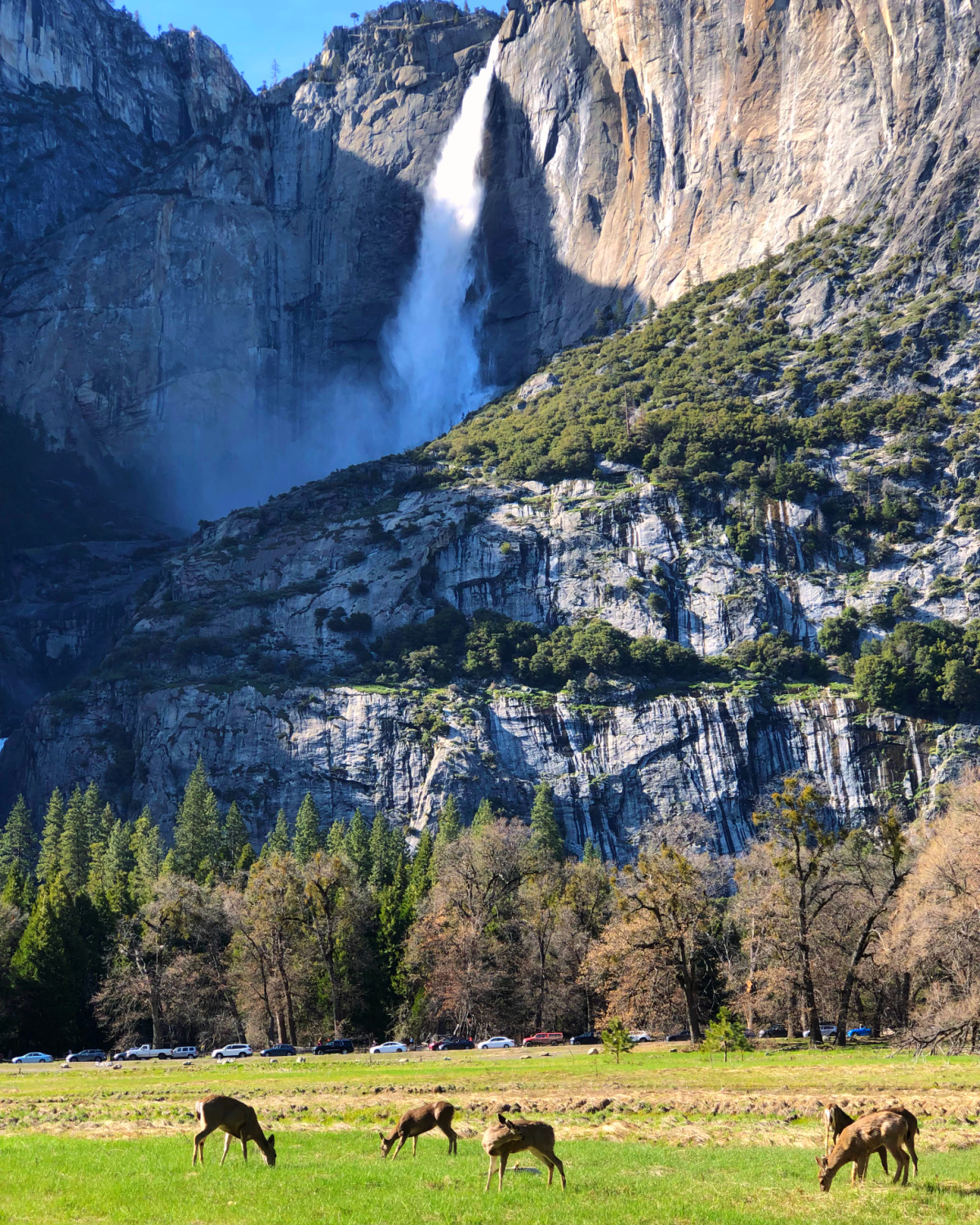
Yosemite Falls, Bridalveil Fall, Vernal Fall, and the other waterfalls throughout the park are generally at their most dramatic when the snowpack is melting. When I visited Yosemite in late spring when I was younger, the waterfalls were incredibly powerful. When we returned in April years later with our daughter, they were once again one of the highlights of the trip.
But spring has a tradeoff.
Just because Yosemite Valley is open does not mean the entire park is accessible.
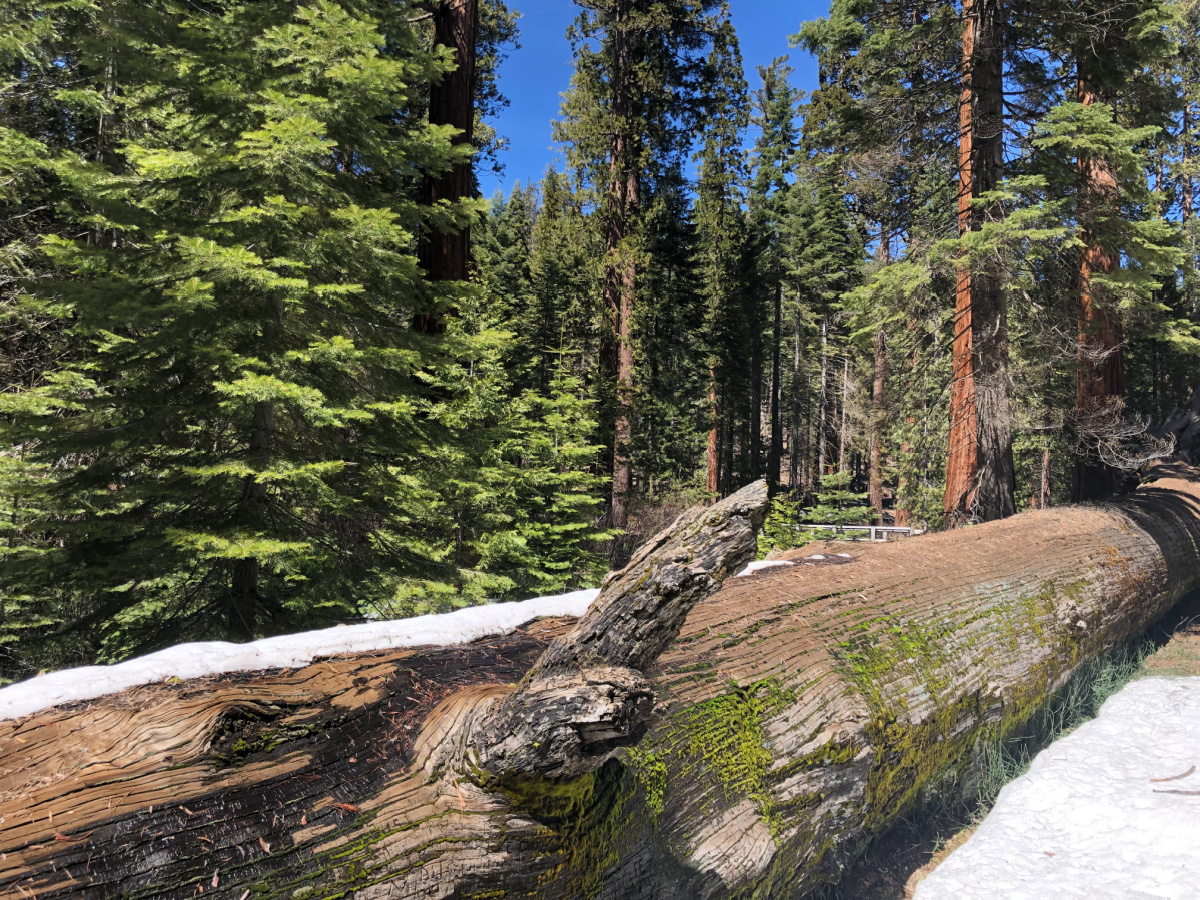
Higher-elevation roads like Tioga Road and Glacier Point Road may still be closed because of snow. Mariposa Grove may be technically open, but if the seasonal shuttle is not running yet, getting to the grove can require significantly more walking.
That is something first-time visitors sometimes underestimate.
You can have beautiful weather in Yosemite Valley while other parts of the park are still covered in snow.
Visiting Yosemite in Summer
Summer gives you the best chance of having access to the most areas of the park.
Once the snow has cleared, Glacier Point becomes much easier to visit. Tioga Road opens access to Yosemite’s high country. Mariposa Grove transportation is typically running. For a first-time visitor who wants the widest variety of options, summer is certainly convenient.
It is also incredibly busy.
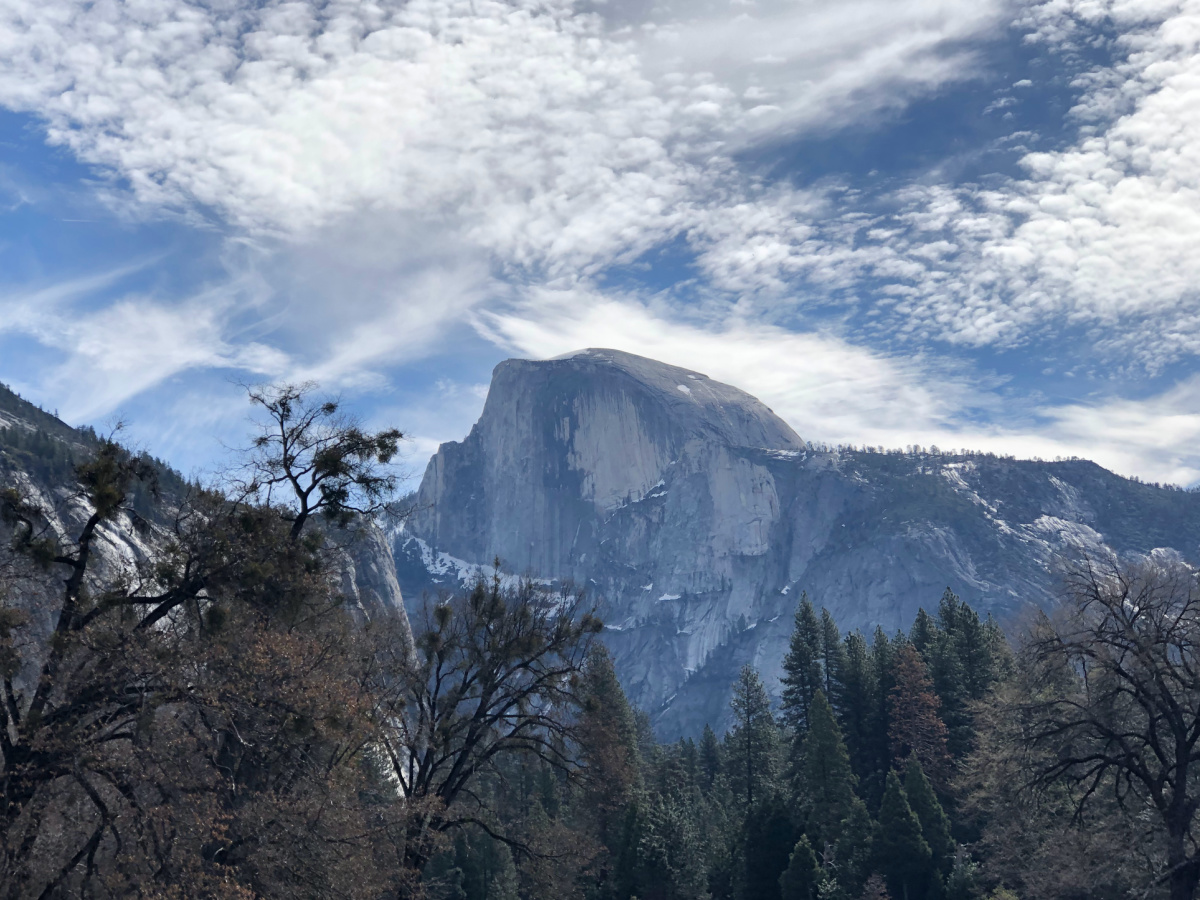
Yosemite Valley can feel packed during the summer, especially in the middle of the day. Parking fills. Shuttles get crowded. Popular trails get crowded.
This is where those early mornings and evenings become even more valuable.
Summer can also be warmer than people expect. Yosemite Valley can get genuinely hot during the afternoon, while higher elevations may still be much cooler.
Dress in layers.
And bring more water than you think you need.
Even if your idea of hiking is walking the paved trail to Lower Yosemite Fall, you still do not want to find yourself wandering around Yosemite Valley on a hot afternoon without water.
Summer also brings an increasing risk of wildfire smoke.
The fire itself does not have to be anywhere near where you are standing for smoke to affect your trip.
I have dealt with wildfire smoke on trips to Yellowstone, Grand Teton, Glacier, Banff, and Jasper. Sometimes the fire is far away, but the smoke still changes the views dramatically.
Yosemite is no different.
That does not automatically mean you should cancel your trip. But it is something worth checking as your travel dates get closer.
Visiting Yosemite in Fall
Fall is beautiful in Yosemite.
But if waterfalls are the main reason you want to visit, this would not be my first choice.
By fall, Yosemite Falls can be dramatically reduced compared with spring. Sometimes it is little more than a thin ribbon of water. In very dry conditions, some waterfalls may stop flowing altogether.
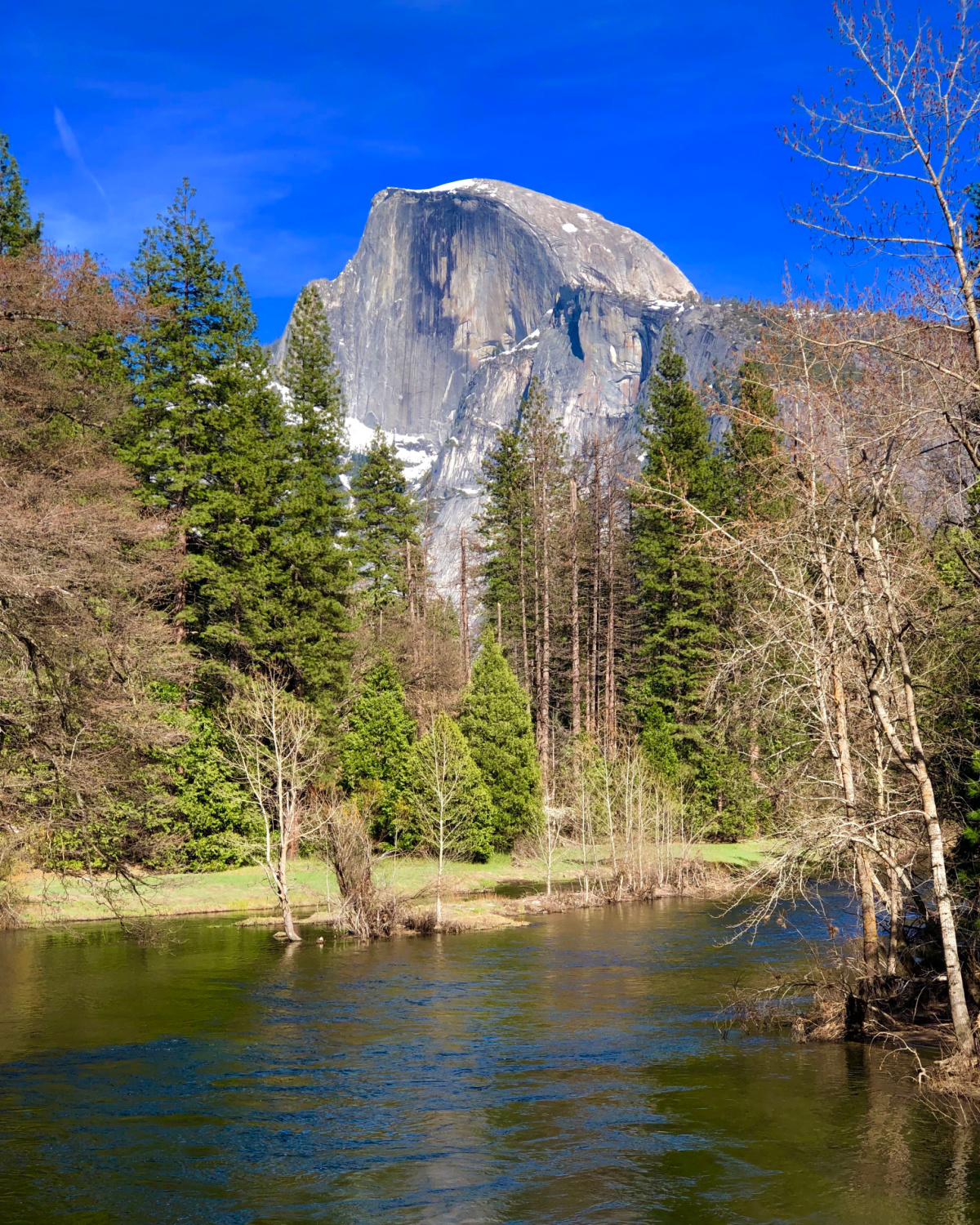
When my husband and I visited Yosemite in October, the park was still gorgeous.
Half Dome was still Half Dome.
El Capitan was still El Capitan.
The Merced River and Yosemite Valley were still beautiful.
But the waterfalls were nothing like what I had seen during my late-spring visit.
That is the tradeoff.
Fall can bring fewer crowds and pleasant temperatures, but you are giving up some of the drama that makes springtime Yosemite so spectacular.
And wildfire smoke can still linger into fall, so I would not assume that cooler temperatures automatically mean smoke will no longer be an issue.
The Five Things I Would Prioritize on a First Yosemite Trip
You can find enormous lists of things to do in Yosemite.
You do not need to do all of them.
For a first trip, especially if you only have two or three days, I would focus on a handful of experiences that give you the classic Yosemite experience without turning your vacation into a race.
1. Walk to Lower Yosemite Fall
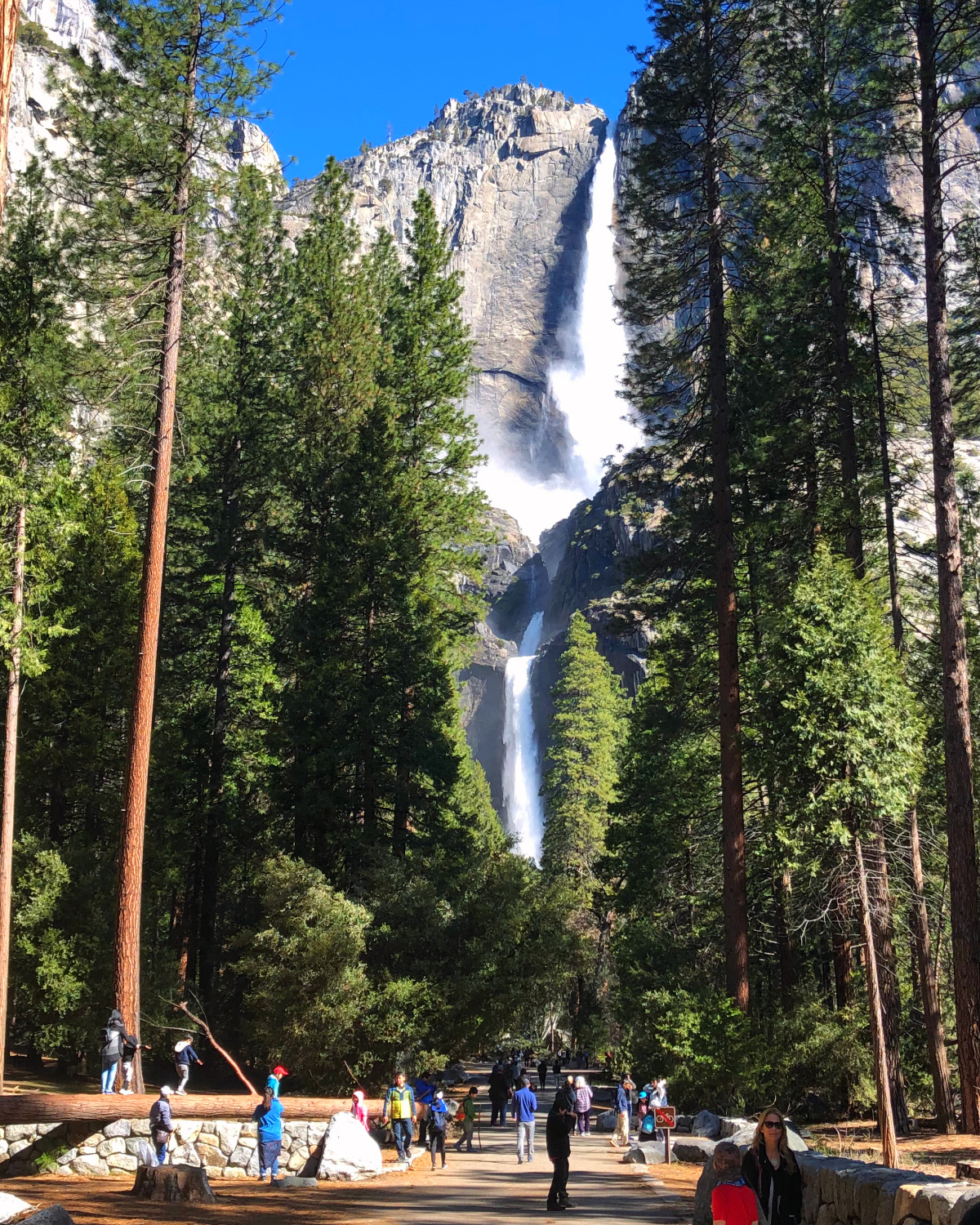
If you only take one easy walk in Yosemite Valley, this would probably be my first choice.
The Lower Yosemite Fall trail is short, easy, and accessible to a huge range of visitors.
This is exactly the kind of Yosemite experience I love recommending to families.
You do not have to climb a mountain.
You do not need specialized hiking gear.
You do not need to block out half your day.
You just walk through the trees toward one of the most famous waterfalls in the world.
And in spring, when Yosemite Falls is roaring, it is spectacular.
2. Visit Bridalveil Fall
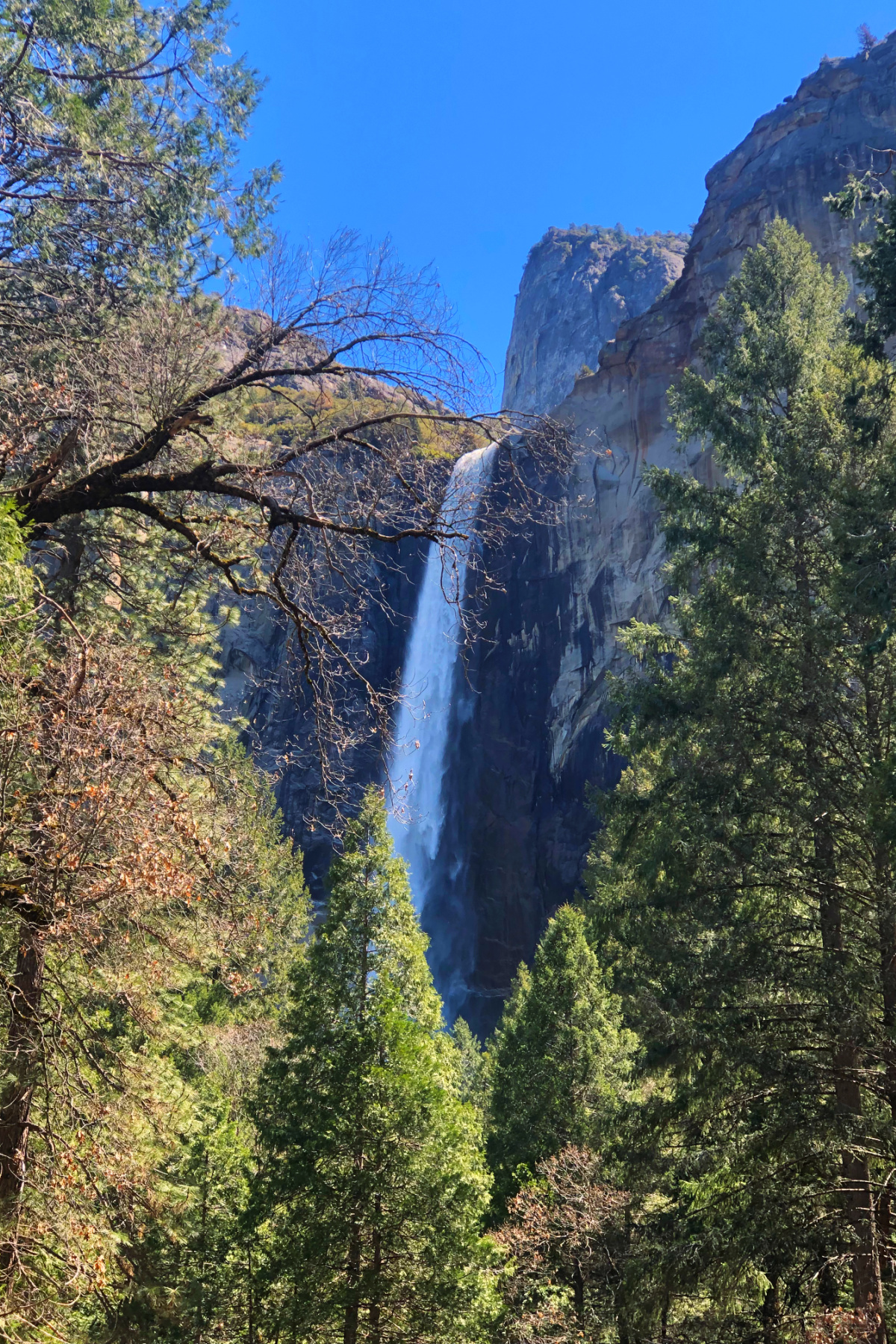
Bridalveil Fall is another classic first-timer stop.
The walk is short, and the payoff is huge.
This is another place where you need to be careful around wet rocks, especially when the waterfall is running strongly. Mist can make the area surprisingly slick.
But you do not need a strenuous hike to get an impressive waterfall experience.
That is one of the great things about Yosemite.
Some of its most iconic scenery is remarkably easy to access.
3. See Half Dome and El Capitan
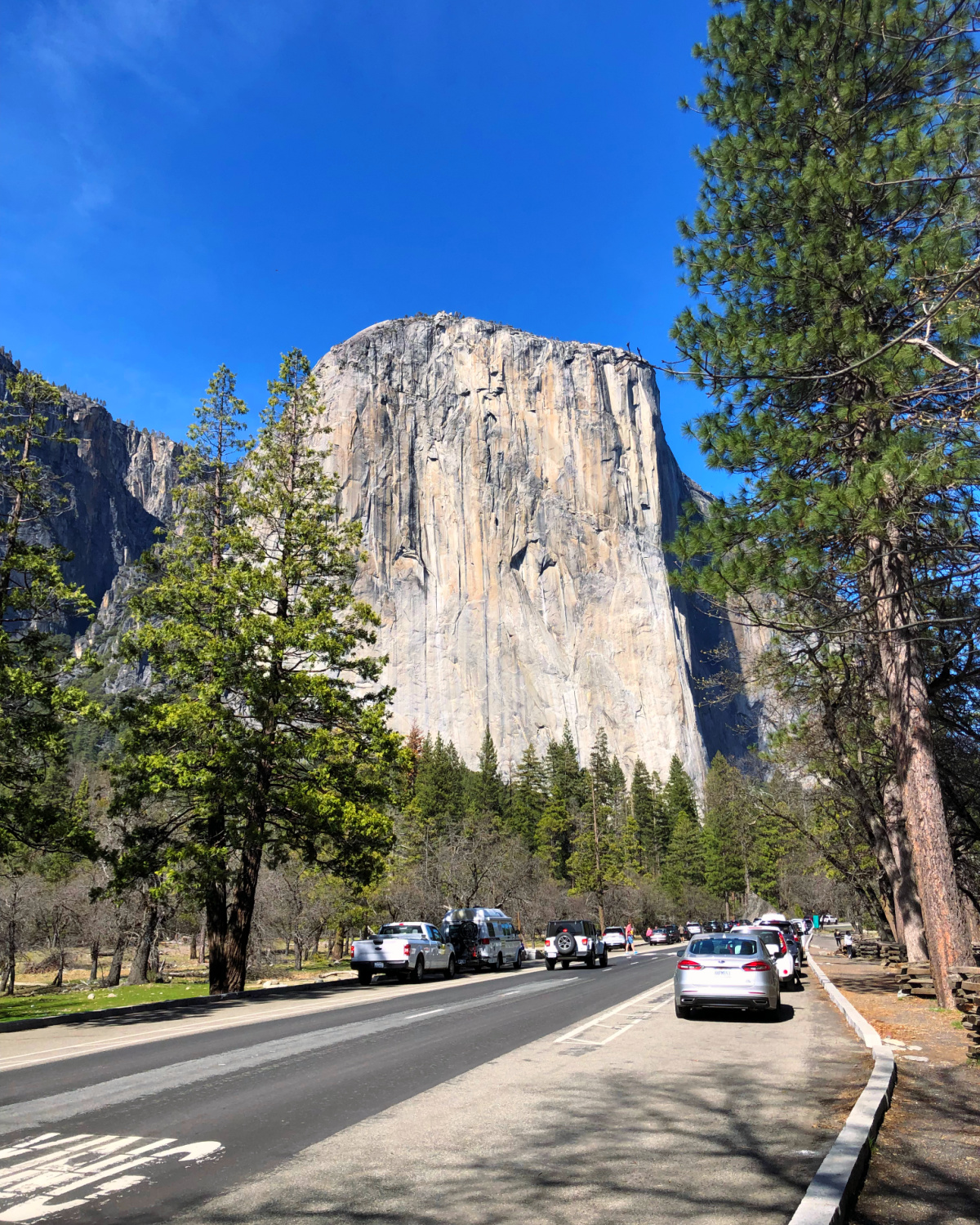
You do not have to hike either one.
You do not have to climb anything.
Just look at them.
Half Dome is one of those landmarks that somehow looks different depending on where you see it from.
One of my favorite places to see it is Sentinel Bridge, where you can look across the Merced River toward Half Dome.
That location also happens to be personally meaningful for me because my husband proposed to me there during our Yosemite trip in 2002.
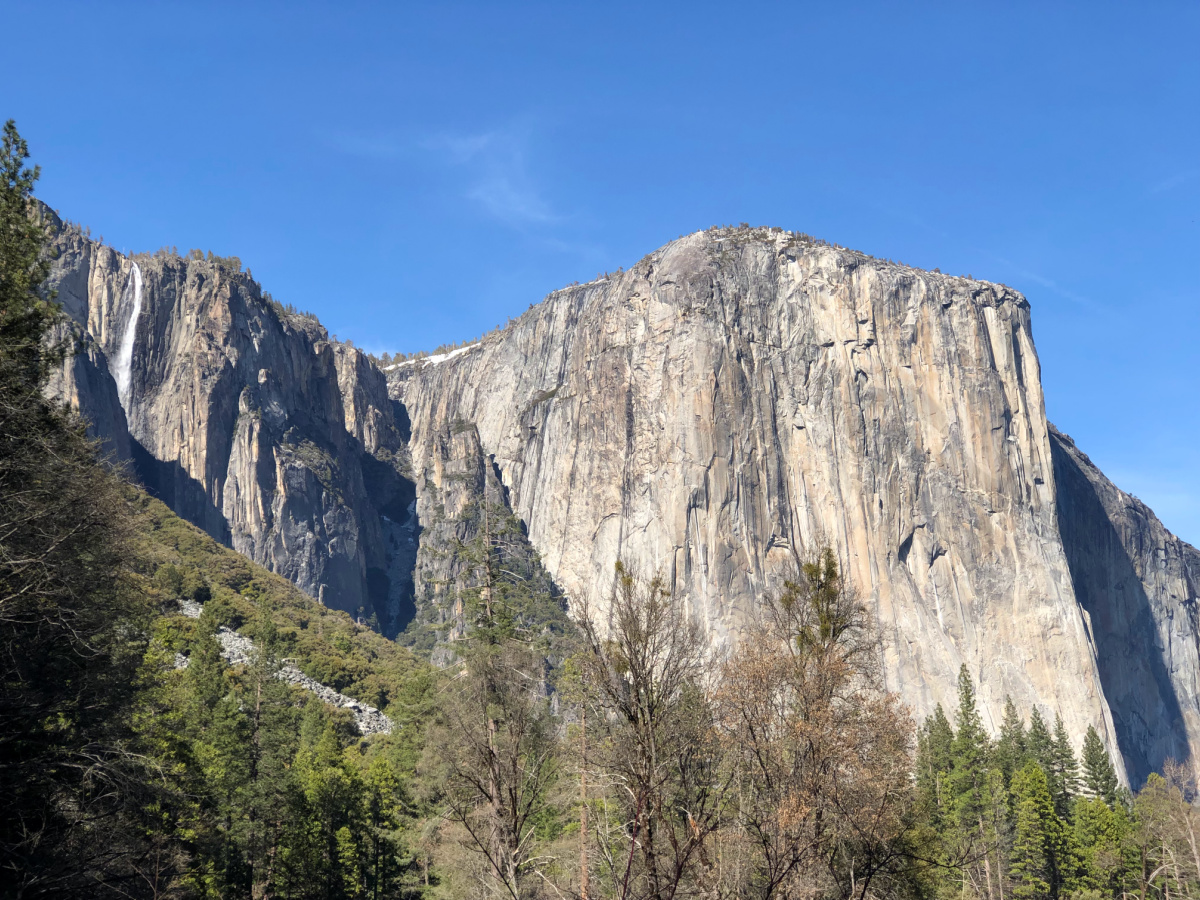
For El Capitan, you will find views throughout Yosemite Valley.
It is enormous.
And even if you have seen it a thousand times in photographs, it is difficult to fully appreciate its scale until you are standing underneath it.
4. See Giant Sequoias
If this is your first trip to Yosemite, I would make time for giant sequoias.
Mariposa Grove is the most famous sequoia grove in Yosemite and the one I would prioritize for most first-time visitors.
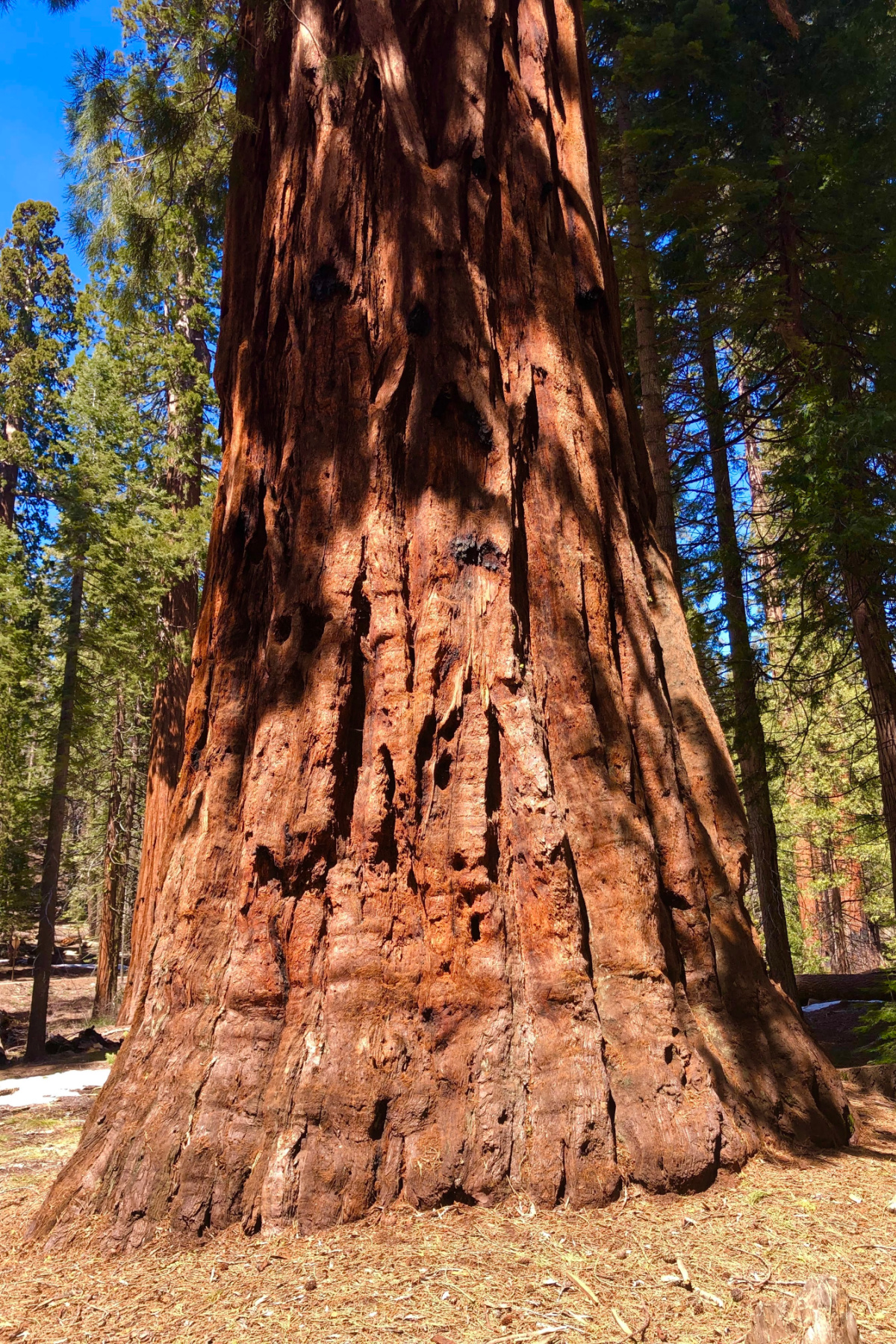
The Big Trees Loop is especially good for casual travelers because you can experience the grove without committing to a long hike.
If you want a little more exercise, continue onto the Grizzly Giant Loop.
There are also giant sequoias in the Tuolumne and Merced groves.
And yes, you could absolutely take a separate trip to Sequoia National Park someday.
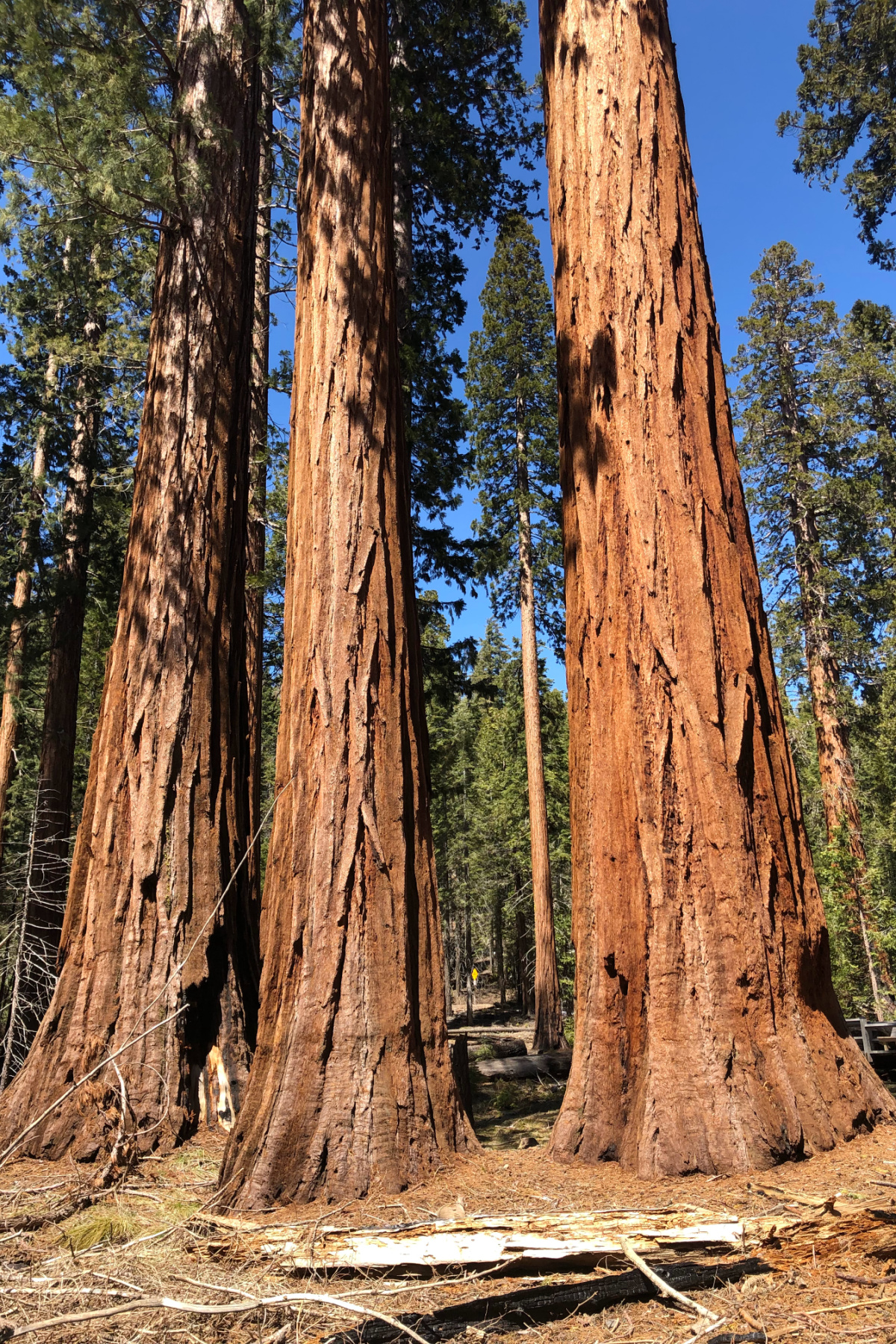
But if you are already in Yosemite and have the opportunity to stand underneath giant sequoias, why wouldn’t you?
It almost feels like getting two national park experiences in one trip.
5. Visit Yosemite’s Classic Viewpoints
There are several Yosemite views I would not want a first-time visitor to miss.
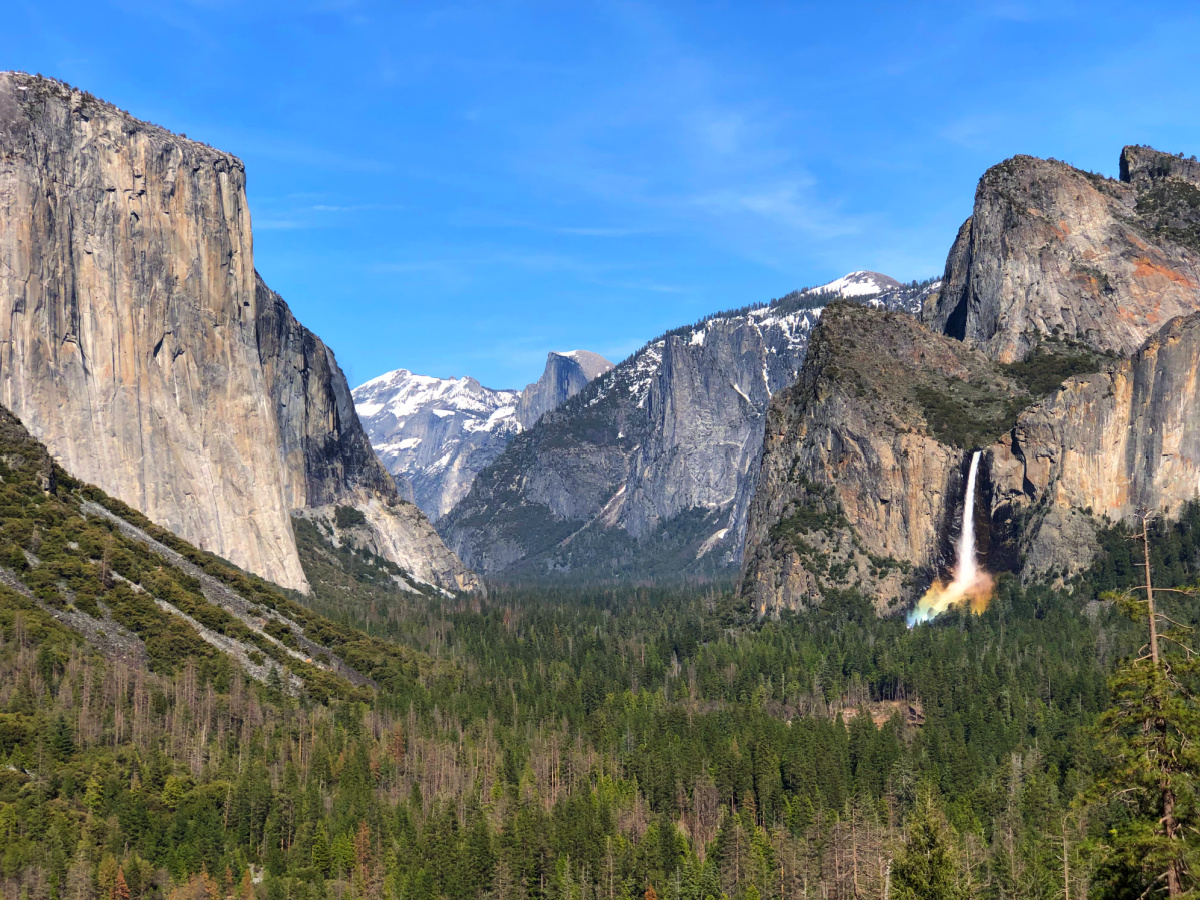
Tunnel View is probably the most famous.
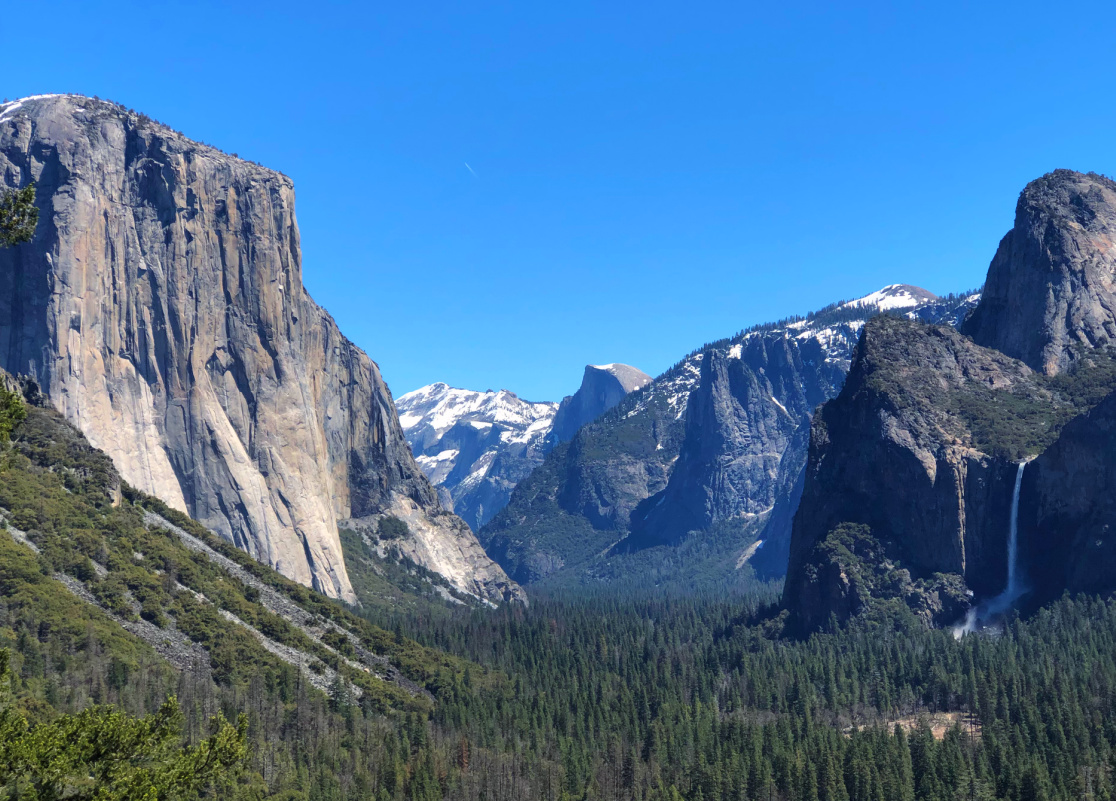
From here you can see El Capitan, Half Dome, Bridalveil Fall, and much of Yosemite Valley in one enormous panorama.
And I would actually stop here more than once if you have the opportunity.
The view changes with the light.
Morning can look completely different from evening.
Clouds can change everything.
After a storm, the entire Valley can feel different again.
Valley View is another favorite.
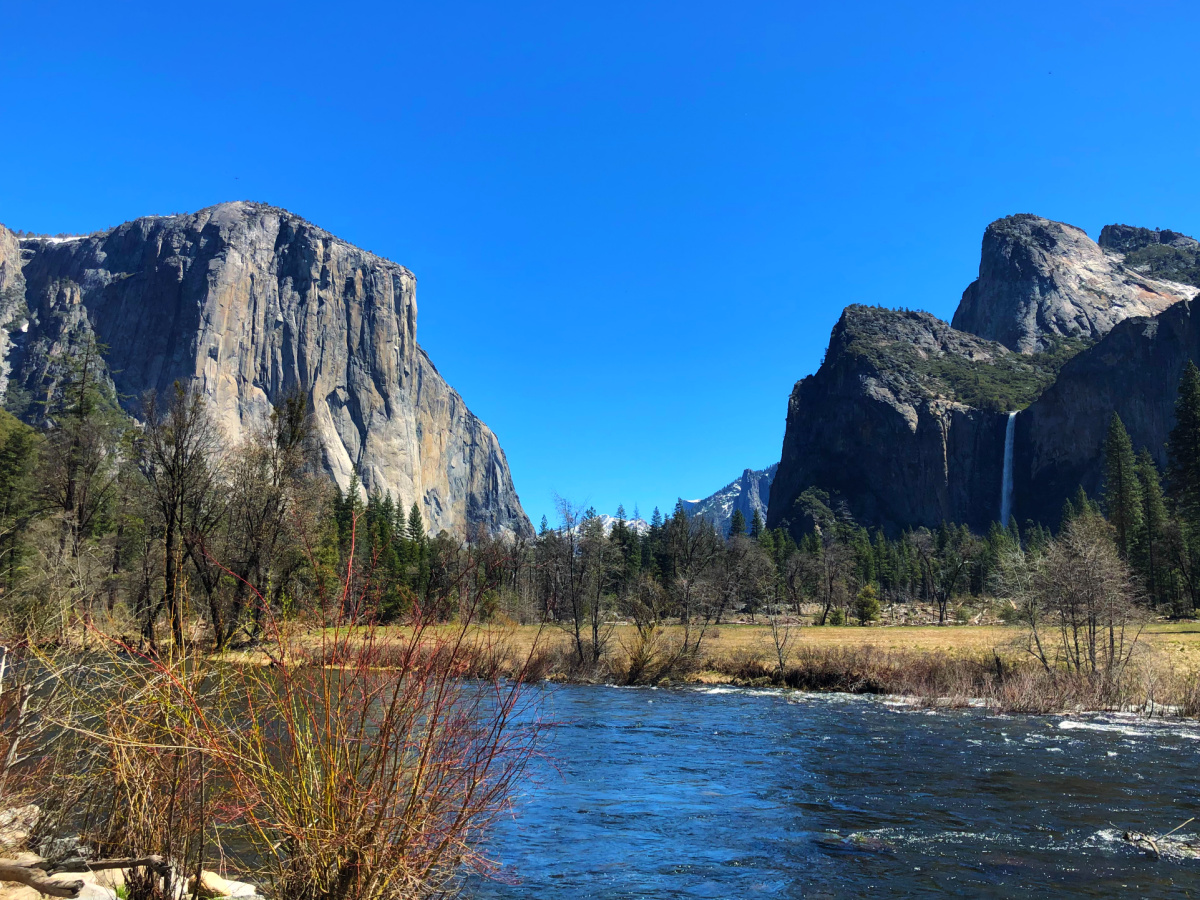
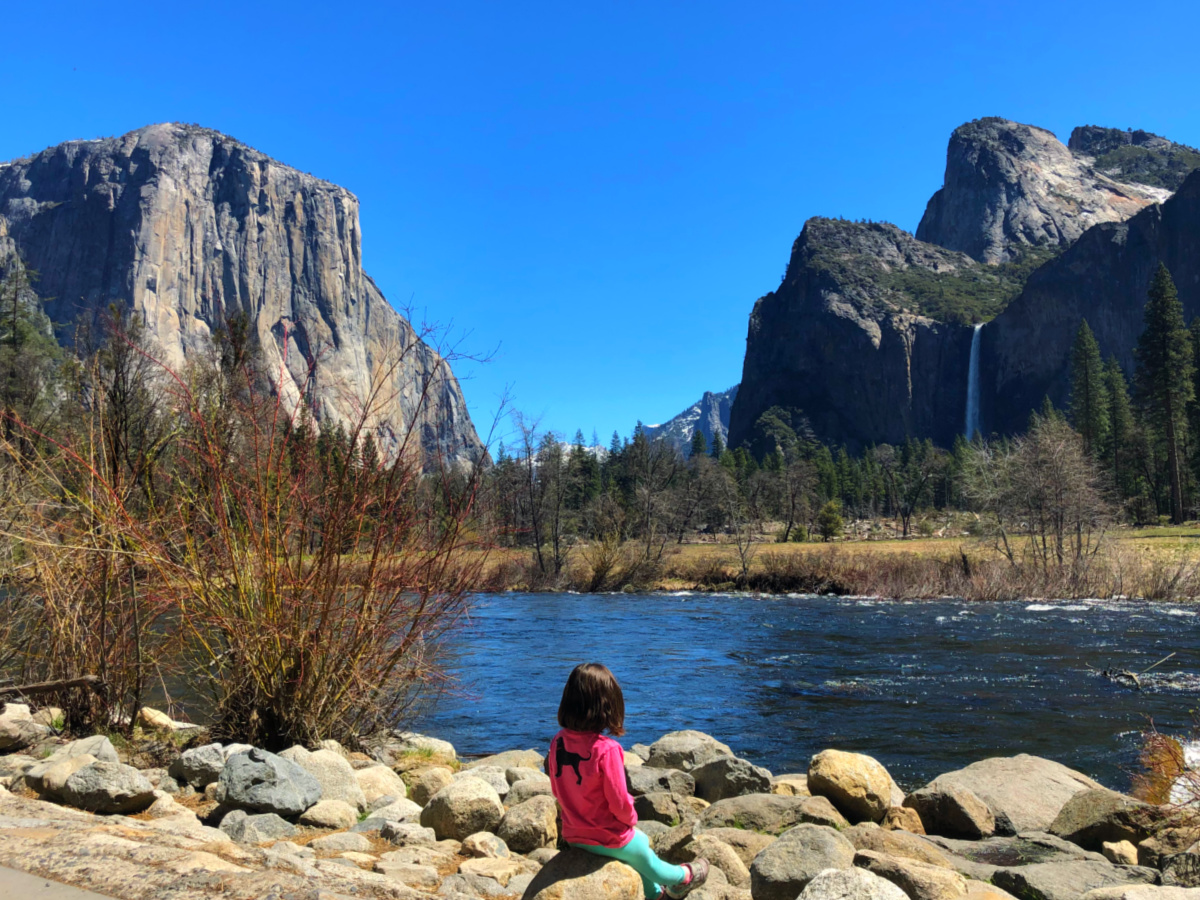
This viewpoint sits along the Merced River and gives you one of those quintessential Yosemite scenes with the river in the foreground and granite cliffs towering above it.
Glacier Point is also extraordinary when the road is open.
You get a completely different perspective from up there, looking down into Yosemite Valley and across toward Half Dome.
And then there is Sentinel Bridge, especially for that classic Half Dome view.
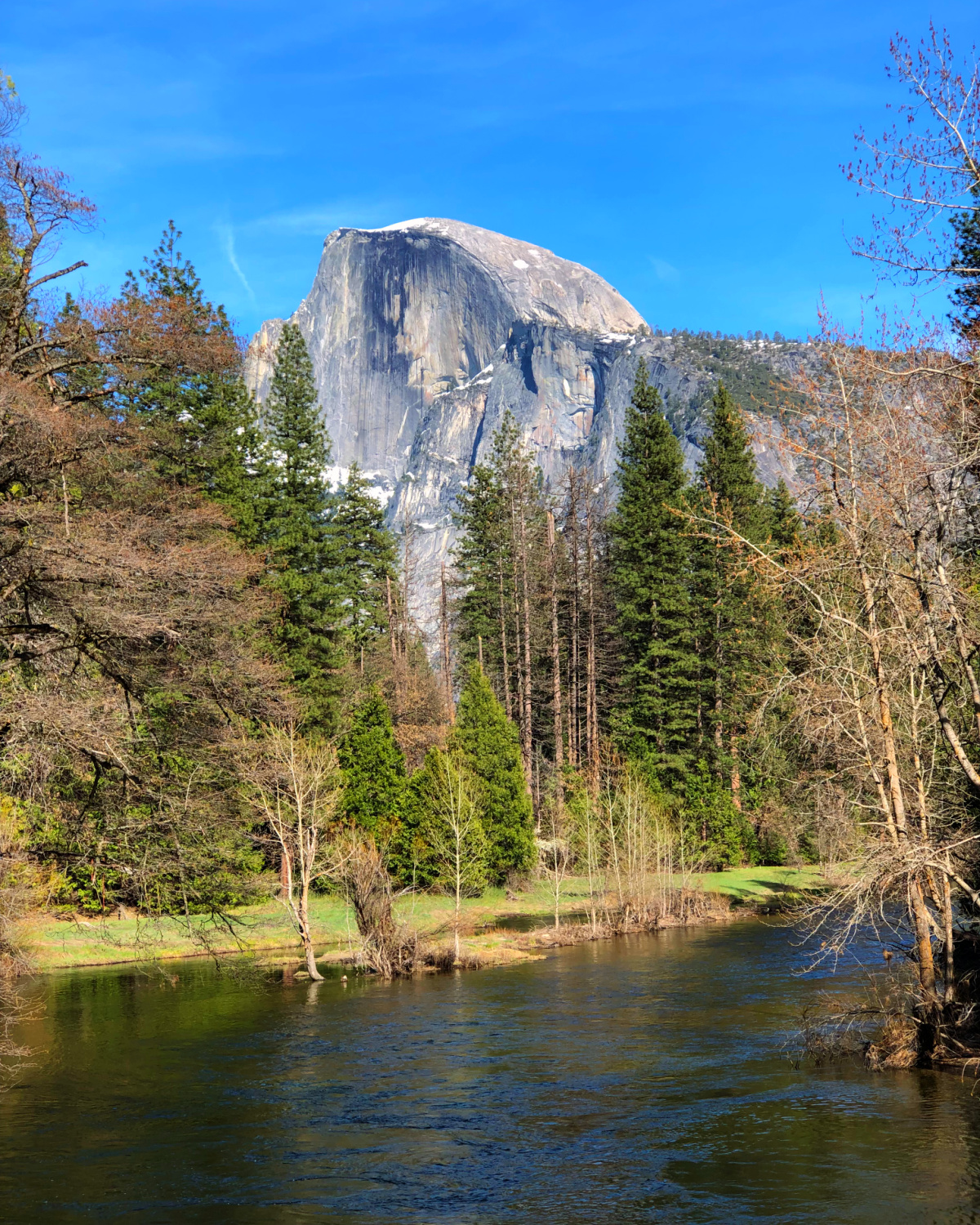
You do not need to hit every scenic overlook marked on a map.
But these are the ones I would make an effort to see on a first trip.
What About Mirror Lake?
Mirror Lake is another popular Yosemite Valley destination and one I would absolutely consider adding if you have time.
I haven’t visited Mirror Lake myself, so I am not going to pretend I can give you firsthand advice about it.
But it is relatively easy to reach from Yosemite Valley, and when water levels are right, the reflections of the surrounding cliffs can be beautiful.
Just keep in mind that the experience changes throughout the year.
Like so many things in Yosemite, water levels matter.
Want a Little More of a Challenge?
Not every first-time Yosemite visitor wants to stick to paved trails.
Maybe you want something that feels like an actual hike without committing to an all-day sufferfest.
There are several good options.
Grizzly Giant Loop
The Grizzly Giant Loop in Mariposa Grove is a great step up from the very easy Big Trees Loop.
You get more time among the sequoias, more elevation, and more of a traditional hiking experience without turning the day into a major expedition.
For a reasonably active family, this would be a very approachable way to add a little more hiking to your Yosemite trip.
Vernal Fall
Vernal Fall would probably be my first choice for someone who wants a more substantial Yosemite hike.
I have done this hike twice.
It is definitely more work than walking to Lower Yosemite Fall, but it is also very rewarding.
The trail starts climbing fairly quickly, and if you continue toward the top of Vernal Fall, there are a lot of granite steps.
When I was younger, I did not think much of it.
Now I would probably have a slightly different conversation with my knees beforehand.
But for someone who is reasonably fit and wants a challenge, Vernal Fall is a fantastic choice.
And you do not necessarily have to continue all the way to Nevada Fall.
There is nothing wrong with deciding that Vernal Fall is enough.
Want an Even Bigger Challenge?
This is where we start leaving my usual casual-traveler comfort zone.
But Yosemite absolutely has options if you want to push yourself.
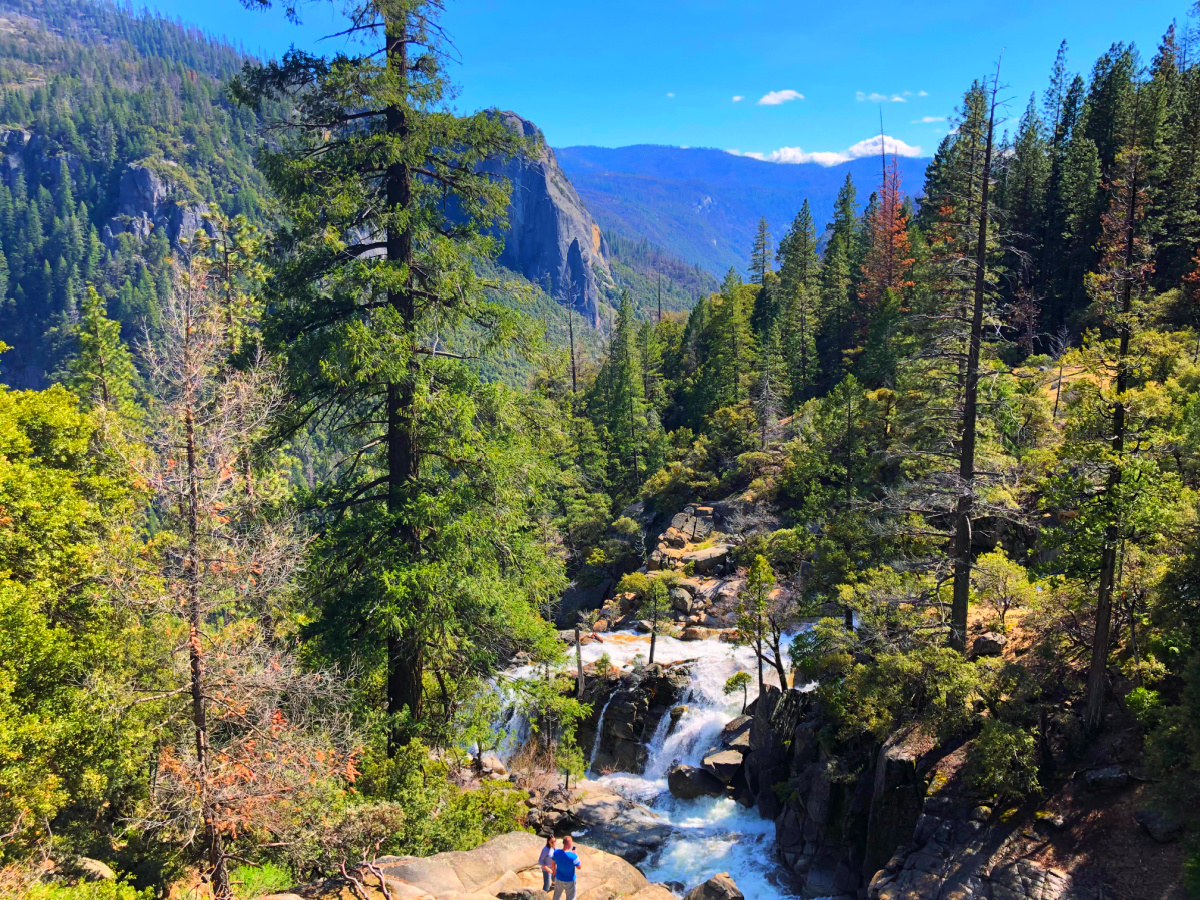
You can continue beyond Vernal Fall toward Nevada Fall.
You can hike toward Upper Yosemite Fall.
You can hike the Four Mile Trail from Yosemite Valley toward Glacier Point.
I actually hiked the Four Mile Trail when I was younger.
At the time, hiking thousands of feet uphill from Yosemite Valley apparently seemed like a perfectly reasonable thing to do.
Today?
I would probably drive to Glacier Point.
And I am completely okay with that.
That is really the point of this entire guide.
There is no Yosemite rule saying you have to take the hardest possible route to something just because the trail exists.
If you want the big hike, do the big hike.
If you want to drive to Glacier Point, get out of the car, look at Half Dome, and eat a snack while enjoying the view, do that instead.
Both people get to experience Yosemite.
What to Know About Food in Yosemite
Yosemite is not the kind of place where I would assume I can grab a convenient meal whenever I happen to get hungry.
There are restaurants, markets, and quick-service options in Yosemite Valley, especially around Yosemite Village, Curry Village, The Ahwahnee, and Yosemite Valley Lodge.
But there are also a lot of hungry people.
If you are visiting during a busy time of year, lunch can mean standing in line when you would rather be outside exploring.
This is one reason I really like packing at least some food for a Yosemite day.
Bring sandwiches.
Bring snacks.
Bring fruit.
Bring enough food that you are not completely dependent on finding lunch at exactly noon.
There are picnic areas throughout the park, and honestly, eating lunch beside the Merced River with Yosemite’s granite cliffs surrounding you is not exactly a hardship.
Just remember that Yosemite is bear country.
Be Bear Aware
I have never personally seen a bear in Yosemite.
That does not mean the bears are not there.
Yosemite has a significant black bear population, and these bears are extremely good at finding human food.
Do not leave food sitting around your campsite.
Do not leave an unsecured cooler in the back of a pickup truck.
Do not assume that because the food is inside your car, a bear somehow does not know it is there.
Follow Yosemite’s current food-storage rules wherever you are staying or parking.
And police your trash.
This is not just about keeping your granola bars safe. Once a bear learns that humans equal food, that can eventually become dangerous for both people and the bear.
Yosemite Water Safety Is No Joke
Water is one of the things that makes Yosemite so beautiful.
It is also one of the things you need to respect.
The Merced River can look peaceful in one location and be much more powerful somewhere else.
In spring especially, snowmelt can make rivers and waterfalls extremely fast and cold.
There are places where people swim and wade when conditions are appropriate, but there are no lifeguards stationed along the river waiting to rescue somebody who gets into trouble.
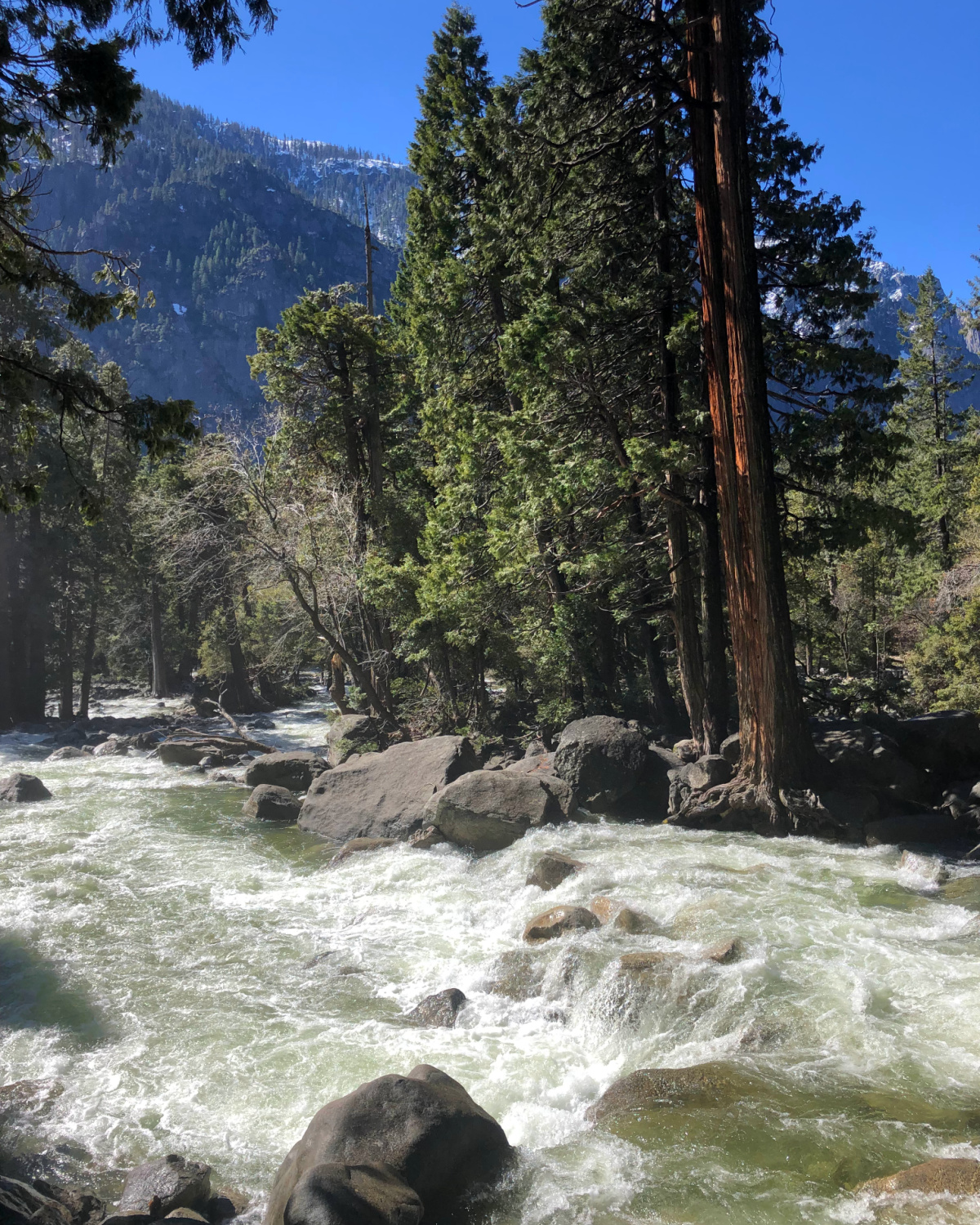
Keep an eye on kids around the water.
Do not assume that shallow-looking water is harmless.
And be particularly careful around waterfalls.
Mist makes granite slippery.
Really slippery.
You do not need to climb onto a wet rock beside Bridalveil Fall or Yosemite Falls to get a better picture.
Stay on established trails and viewing areas.
Yosemite is spectacular enough without risking a broken ankle—or something much worse—for a photograph.
Slow Down on Yosemite’s Mountain Roads
This is another piece of advice that comes from experience.
Some of the roads going into and around Yosemite are much windier than they may appear on a map.
There are steep grades.
There are tight curves.
There are places with significant drop-offs.
Slow down.
Even if you are comfortable driving mountain roads, Yosemite is not the place to test how quickly you can take a curve.
My twenty-something self learned this lesson in a considerably more dramatic way than I would recommend.
So I am passing it along for free.
Drive slower than you think you need to.
Enjoy the scenery.
Arrive alive.
What Should You Pack for Yosemite?
You do not need expedition-level gear for the kind of Yosemite trip I am describing here.
But you do want to be prepared for changing conditions.
My biggest recommendation is layers.
A morning in Yosemite Valley can start out chilly and turn warm by afternoon.
If you drive to a higher elevation, the temperature can drop again.
Bring a light jacket or fleece even if the forecast looks warm.
I would also bring rain protection.
You may never use it, but weather in mountain environments can change quickly.
And if you are visiting waterfalls during peak spring runoff, you may get wet from the spray even when it is not raining.
Bring comfortable walking shoes.
If you plan to do anything beyond the easiest paved walks, I would bring shoes with decent traction.
I also like having an extra pair of socks.
Wet socks are miserable.
Wool socks are especially nice if you are visiting during cooler weather.
And always carry water.
Even if you are “just” spending the day exploring Yosemite Valley, you are probably going to walk more than you think.
Check Current Conditions Before You Go
This is one of the most important Yosemite planning habits you can develop.
Do not assume that the rules you read about last year are still the rules this year.
Yosemite has used entrance reservation systems during some years and not during others.
Road opening dates change every year.
Shuttle schedules change.
Wildfires can close areas.
Construction can affect roads and trails.
Snow can keep high-elevation parts of the park inaccessible long after Yosemite Valley feels like spring.
So before every trip, check the National Park Service website for current conditions.
I would specifically look at:
- Entrance requirements
- Road closures
- Glacier Point Road status
- Tioga Road status
- Mariposa Grove shuttle operations
- Trail closures
- Fire and smoke conditions
- Yosemite Valley shuttle information
That ten minutes of research can save you a tremendous amount of frustration once you arrive.
How Many Days Do You Need in Yosemite?
For most first-time visitors, I think two to three days is ideal.
You can absolutely visit Yosemite in one day.
If that is all the time you have, go.
You can see Yosemite Falls, Bridalveil Fall, Tunnel View, Half Dome, El Capitan, and some of Yosemite Valley in a single day if you plan carefully.
But I think you will leave wanting more.
Two days gives you much more breathing room.
You can spend one day concentrating on Yosemite Valley and use the second day for something like Mariposa Grove or Glacier Point, depending on what is open.
Three days is probably my sweet spot for a first trip.
That gives you enough time to see the major sights without feeling like you are racing between them.
You can revisit a viewpoint when the light is better.
You can take a longer walk.
You can sit beside the Merced River for a while without feeling guilty because your spreadsheet says you should already be at the next attraction.
Could you stay longer?
Absolutely.
If you want to hike extensively, explore Yosemite’s high country, or simply slow down, you could easily spend much more time here.
But you do not need a week to feel like you have experienced Yosemite.
For the kind of traveler this guide is written for, a long weekend can be perfect.
A Simple First-Time Yosemite Itinerary
If I were planning a first Yosemite trip today, I would keep it fairly simple.
On the first day, I would concentrate on Yosemite Valley.
See Lower Yosemite Fall.
Visit Bridalveil Fall.
Find views of Half Dome and El Capitan.
Walk beside the Merced River.
Stop at Tunnel View and Valley View.
Use the shuttle rather than constantly moving your car.
Then I would use the second day to get outside the Valley.
If Glacier Point Road is open, go to Glacier Point.
If Mariposa Grove transportation is operating, spend some time with the giant sequoias.
If you have a third day, that is when I would add a longer hike, explore more of the high country, or simply return to the places you loved most.
You do not have to fill every hour.
In fact, I would argue that you shouldn’t.
Don’t Over-Plan Yosemite
I love planning trips.
Obviously.
But Yosemite is one of those places where over-planning can actually make the experience worse.
You do not need an itinerary that says:
8:02 a.m. Tunnel View.
8:47 a.m. Bridalveil Fall.
9:36 a.m. Yosemite Falls.
10:14 a.m. photograph Half Dome.
That sounds exhausting.
Instead, I would choose a few priorities each day.
Know where you want to start.
Know which areas are open.
Know where you are sleeping.
Then leave some space.
Because sometimes the best moment is going to be something you did not plan.
It might be mist hanging in Yosemite Valley.
It might be the evening light on Half Dome.
It might be finding a quiet place beside the Merced River while everyone else is somewhere else.
It might be realizing that the random view you stopped for is every bit as beautiful as the famous viewpoint you were originally trying to reach.
Final Thoughts on Visiting Yosemite for the First Time
I have visited Yosemite three times at very different stages of my life.
I went when I was younger and traveling on my own.
I came back with the man who would become my husband and got engaged at Sentinel Bridge.
And years later, we returned with our six-year-old daughter.
Those trips did not look the same.
The things I was willing to hike in my twenties are not necessarily the things I am interested in hiking now.
Traveling with a child changed the way we approached the park.
The seasons changed what we could see.
The waterfalls changed.
The crowds changed.
But Yosemite itself still delivered every time.
That is the thing I would most want a first-time visitor to understand.
You do not need to hike Half Dome.
You do not need to backpack into the wilderness.
You do not need to see every waterfall, every viewpoint, and every giant sequoia in one trip.
You don’t even need perfect weather.
Stay as close to the park as you reasonably can.
Get up early.
Use the shuttle when Yosemite Valley gets busy.
See the waterfalls.
Look up at Half Dome and El Capitan.
Stand underneath a giant sequoia.
Stop at Tunnel View.
Spend a little time beside the Merced River.
And then give yourself permission to stop trying so hard to “do Yosemite.”
Just look around.
Because honestly?
You’re already there.
More Yosemite National Park Planning Guides
Planning your first trip to Yosemite? These guides can help you dig deeper into everything from where to stay to the best waterfalls, viewpoints, and easy hikes.
- Yosemite in April: What to Expect for Weather, Waterfalls, and Road Closures
- Best Things to Do in Yosemite Valley
- Best Scenic Viewpoints in Yosemite National Park
- Best Easy Hikes in Yosemite National Park
- Best Waterfalls in Yosemite National Park
- Yosemite Valley Lodge Review: Is It Worth Staying Inside the Park?
- Yosemite Falls Guide: Everything You Need to Know Before You Go
- Bridalveil Fall Guide: One of Yosemite’s Easiest Waterfall Stops
- Mariposa Grove Guide: How to See Yosemite’s Giant Sequoias
More First-Time National Park Guides
If Yosemite is just the beginning of your national park adventures, these first-time visitor guides can help you plan some of the most spectacular parks in the U.S. and Canada.
- Yellowstone National Park Overview: A First-Timer’s Guide
- Jasper for First-Time Visitors: Everything You Need to Know Before You Go
- Banff for First-Time Visitors: 25 Things You Need to Know Before You Go
- Utah Mighty Five for First-Time Visitors: 25 Things I Wish I Knew Before I Went
- North Cascades National Park for First-Time Visitors
- Mount Rainier National Park for First-Time Visitors
- Olympic National Park for First-Time Visitors: What to Know Before You Go
- Glacier National Park for First-Time Visitors: 70 Essential Tips
- Grand Teton National Park: A First-Timer’s Guide