Bridalveil Fall in Yosemite: Trail, Parking, and What to Expect

Plan your visit to Bridalveil Fall in Yosemite, including trail details, parking, restrooms, spring conditions, and the best viewpoints around Yosemite Valley.
Estimated reading time: 18 minutes
Bridalveil Fall is one of those Yosemite landmarks that you start seeing before you ever get close to it.
As you enter Yosemite Valley, the waterfall appears high on the cliffs across the valley. You can see it from Tunnel View. You can see it from the Merced River. You catch glimpses of it from the road. And then, if you want to get much closer, a short paved trail takes you toward the base of the waterfall itself.
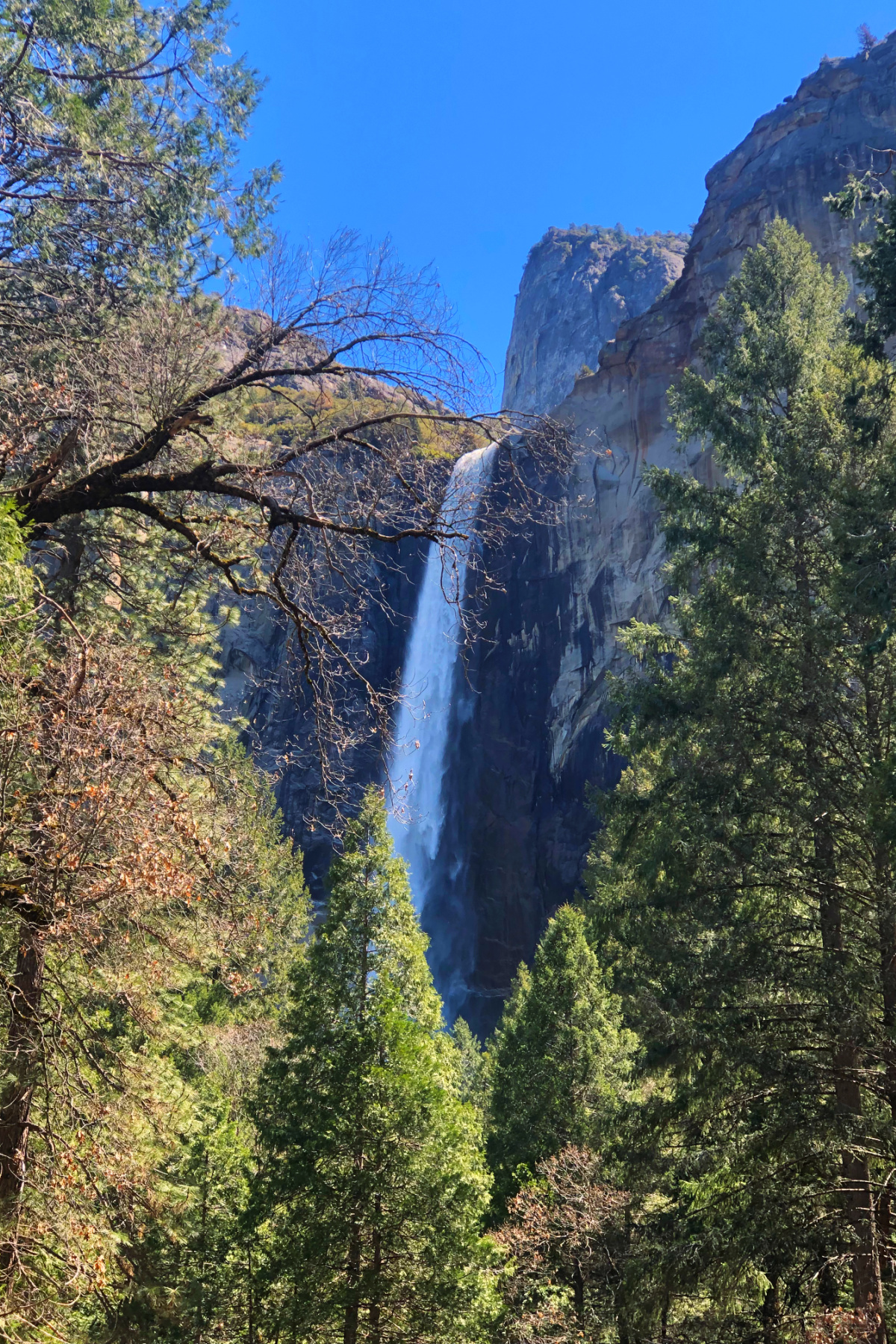
Bridalveil Fall drops 620 feet and flows throughout the year, although what you actually experience depends enormously on the season. In spring, this is a powerful waterfall. Later in the year, the flow becomes lighter and can drift in the wind—the appearance that helped give Bridalveil its name.
We visited Yosemite in April, when snow was still visible high above the valley and Bridalveil Fall was absolutely roaring.
And I mean roaring.
The waterfall itself was impressive, of course, but one of the things I remember most was Bridalveil Creek below it. The water rushing through the trees and around the boulders looked incredibly powerful. This was definitely not a peaceful little stream trickling away from the waterfall.
If you are visiting Bridalveil Fall during the spring runoff, expect the entire experience to feel a little wilder than the easy trail description might suggest.
Quick Facts About Bridalveil Fall
Bridalveil Fall is one of the easiest waterfalls to visit in Yosemite Valley.
The main trail is only about 0.5 mile round trip with roughly 80 feet of elevation gain. It is paved, and the National Park Service estimates about 20 minutes for the walk, although I would give yourself more time if you want to enjoy the views and explore the area around the creek.
A few things are particularly helpful to know before you go:
- Bridalveil Fall is 620 feet tall.
- The main trail is about 0.5 mile round trip.
- The trail gains approximately 80 feet.
- The walk generally takes about 20–30 minutes.
- Restrooms are available at the main parking area.
- Bridalveil Fall is not served by the Yosemite Valley shuttle.
- Leashed pets are allowed on the paved Bridalveil Fall trails.
- The waterfall flows year-round, although the volume varies dramatically by season.
One thing I would not count on is drinking water. Current National Park Service information is inconsistent about whether a bottle-filling station is available, so I would simply bring whatever water you need with you.
How to Get to Bridalveil Fall
Bridalveil Fall is located near the western end of Yosemite Valley, close to where Wawona Road meets Southside Drive.
Unlike many of the major stops farther inside Yosemite Valley, there is no shuttle service to Bridalveil Fall. If you want to do the short walk to the base, the easiest option is to drive and park at the Bridalveil Fall parking area.
You can also reach Bridalveil Fall on foot as part of the much longer Valley Loop Trail, but that is an entirely different experience. For most visitors who simply want to see Bridalveil Fall up close, driving is much more practical.
Parking at Bridalveil Fall
There is a dedicated parking area at the trailhead, but this can be one of the trickier parts of visiting Bridalveil Fall during busy periods.
The National Park Service warns that the parking lot often fills quickly, particularly during the summer. Because cars are constantly entering and leaving a relatively small area, traffic can also back up around the parking lot.
There is another option if the main lot is full.
Continue a few hundred yards farther east along Southside Drive, where there is additional roadside parking. From there, you can take a different paved trail toward Bridalveil Fall. This route is approximately 0.75 mile round trip instead of 0.5 mile and crosses Bridalveil Creek before connecting with the main Bridalveil Fall area.
Honestly, that slightly longer approach may be worth considering even if you aren’t desperate for parking. You get a different perspective of Bridalveil Fall as you walk toward it, and part of the route follows the historic carriage road.
Just be very careful getting in and out of your car along Southside Drive. This is an active roadway, and the National Park Service specifically cautions visitors to watch for traffic when opening car doors or crossing the road.
Hiking the Bridalveil Fall Trail
Calling this a “hike” almost makes it sound harder than it is.
From the main parking area, the Bridalveil Fall Trail is a short paved walk through the forest toward the base of the waterfall.
For most visitors, this is one of the easiest waterfall walks in Yosemite National Park.
But there is a catch.
Easy trail does not necessarily mean easy conditions.
That distinction matters enormously at Bridalveil Fall.
When we visited in April, there was still snow higher in the mountains, and the amount of runoff coming down Bridalveil Creek was impressive. The creek was crashing around enormous boulders and fallen trees, and the entire area around the waterfall felt very alive.
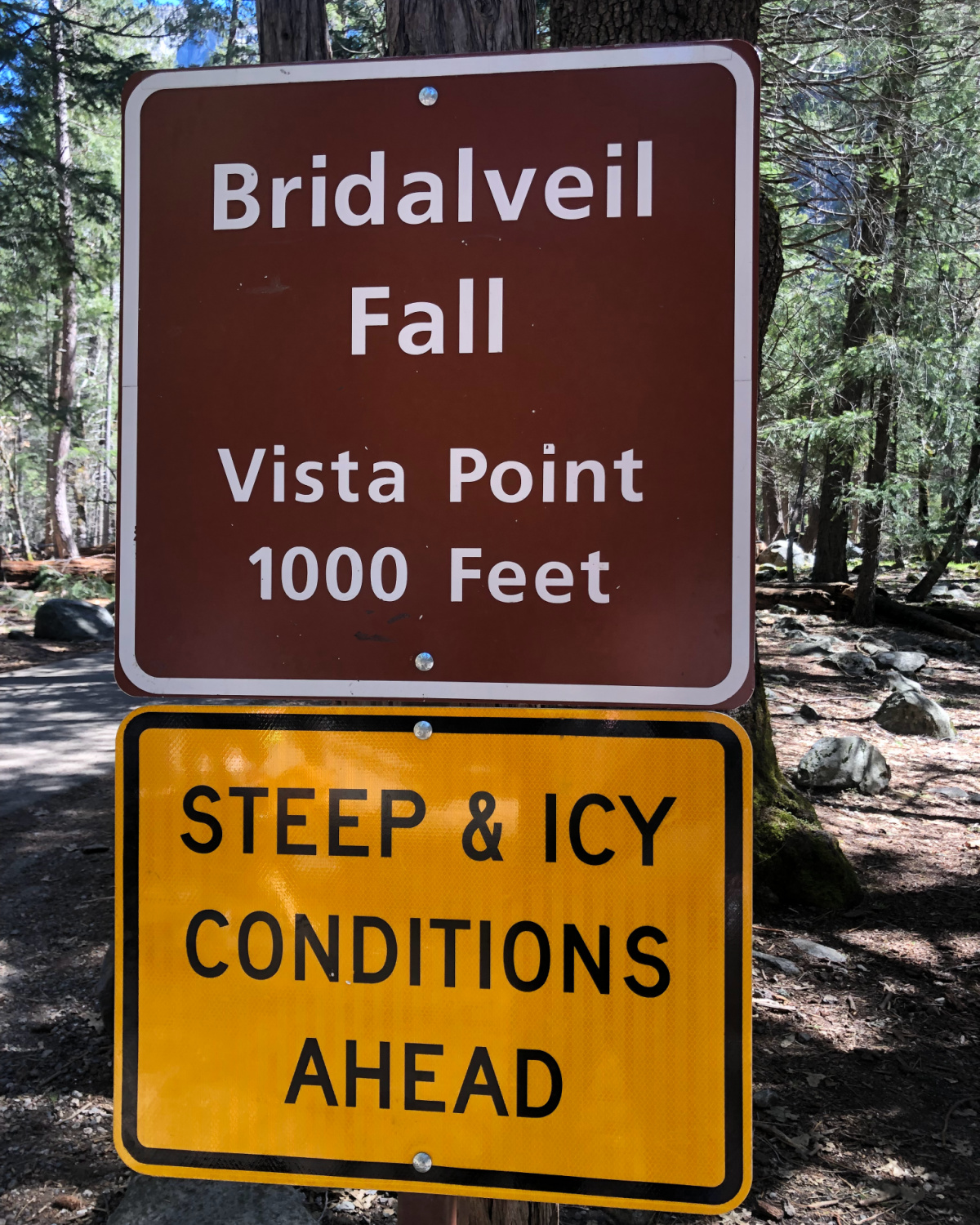
There were also signs warning about steep and icy conditions ahead.
That is one of the reasons I would pay more attention to the conditions on the day you visit than to the word “easy” on a trail description.
During spring and early summer, Bridalveil Fall can produce an enormous amount of spray. The National Park Service notes that during peak flow, the spray can become so intense that reaching the very end of the trail may be difficult.
You may get wet.
Possibly very wet.
And during colder periods, all of that water and spray can create icy, extremely slippery surfaces.
Good shoes are worth having even though the trail itself is short.
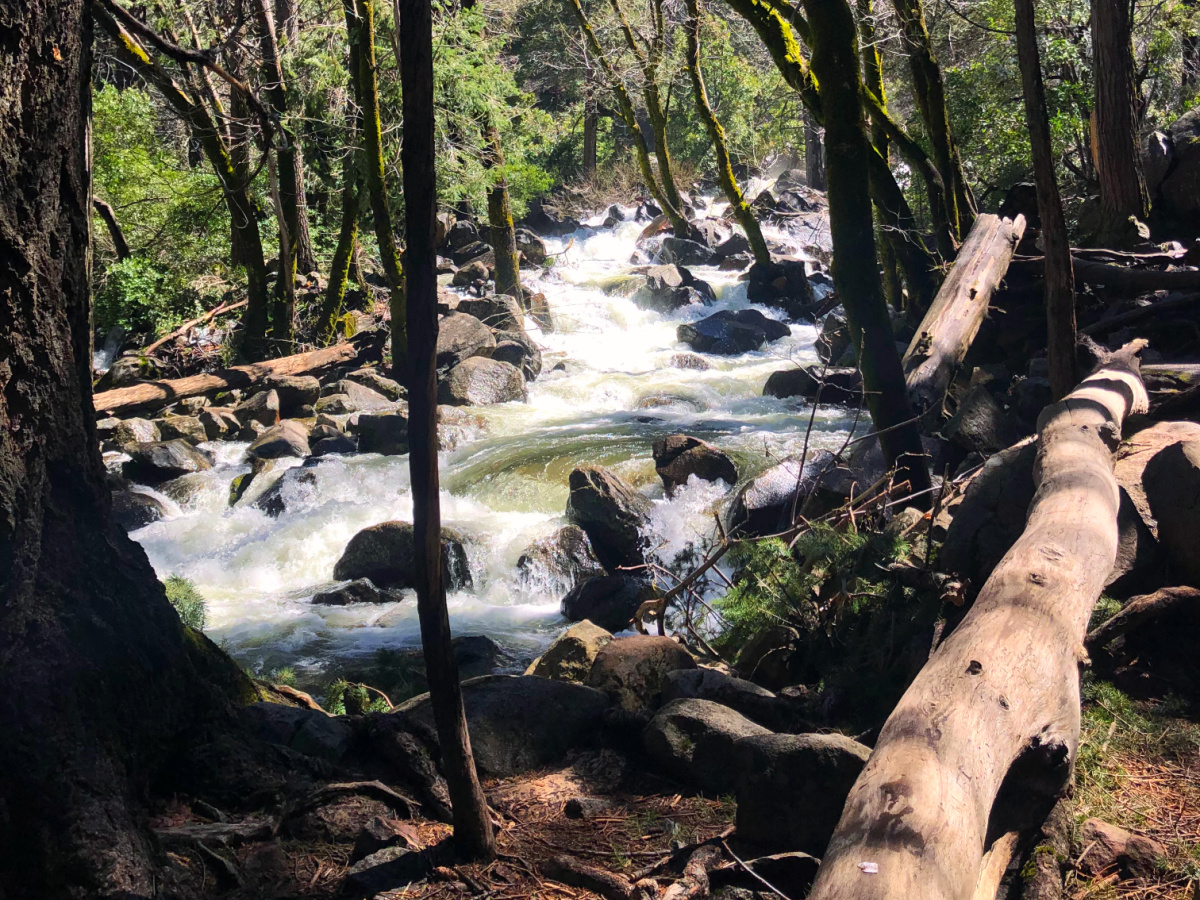
Don’t Climb Around Bridalveil Creek
This is one place where the safety warnings deserve to be taken seriously.
The rocks around Bridalveil Creek look inviting. There are huge boulders everywhere, water rushing between them, and countless places where it might seem tempting to climb closer for a better look.
Don’t.
The National Park Service warns that the boulders around Bridalveil Fall are extremely slippery, even when they appear dry. The water in Bridalveil Creek can also be swift and very cold. Visitors are advised to remain on the paved trail and stay behind fences or barriers rather than scrambling around near the water.
When we were there in April, it was easy to understand why.
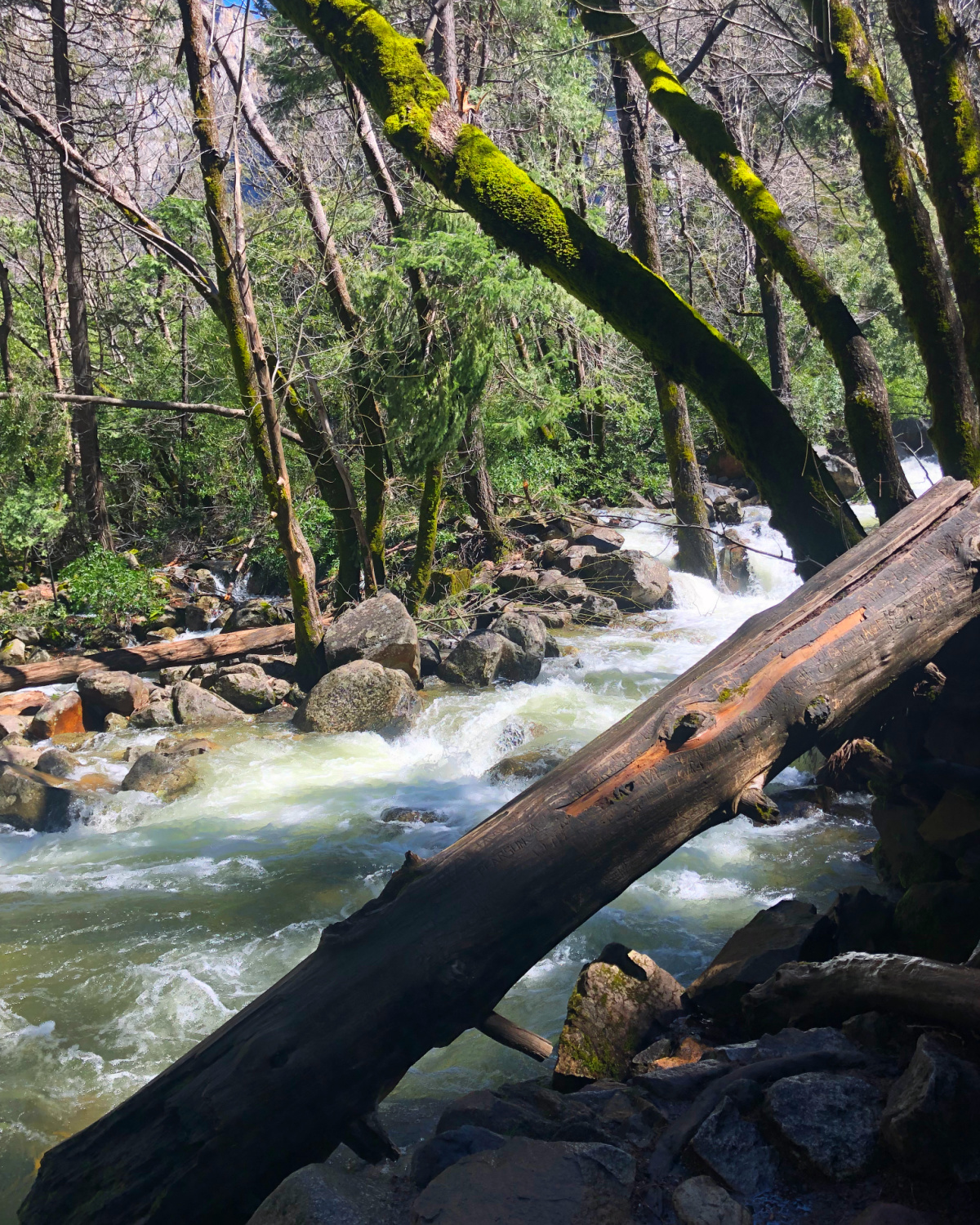
Bridalveil Creek was moving fast enough that I wouldn’t have wanted to be anywhere near those rocks.
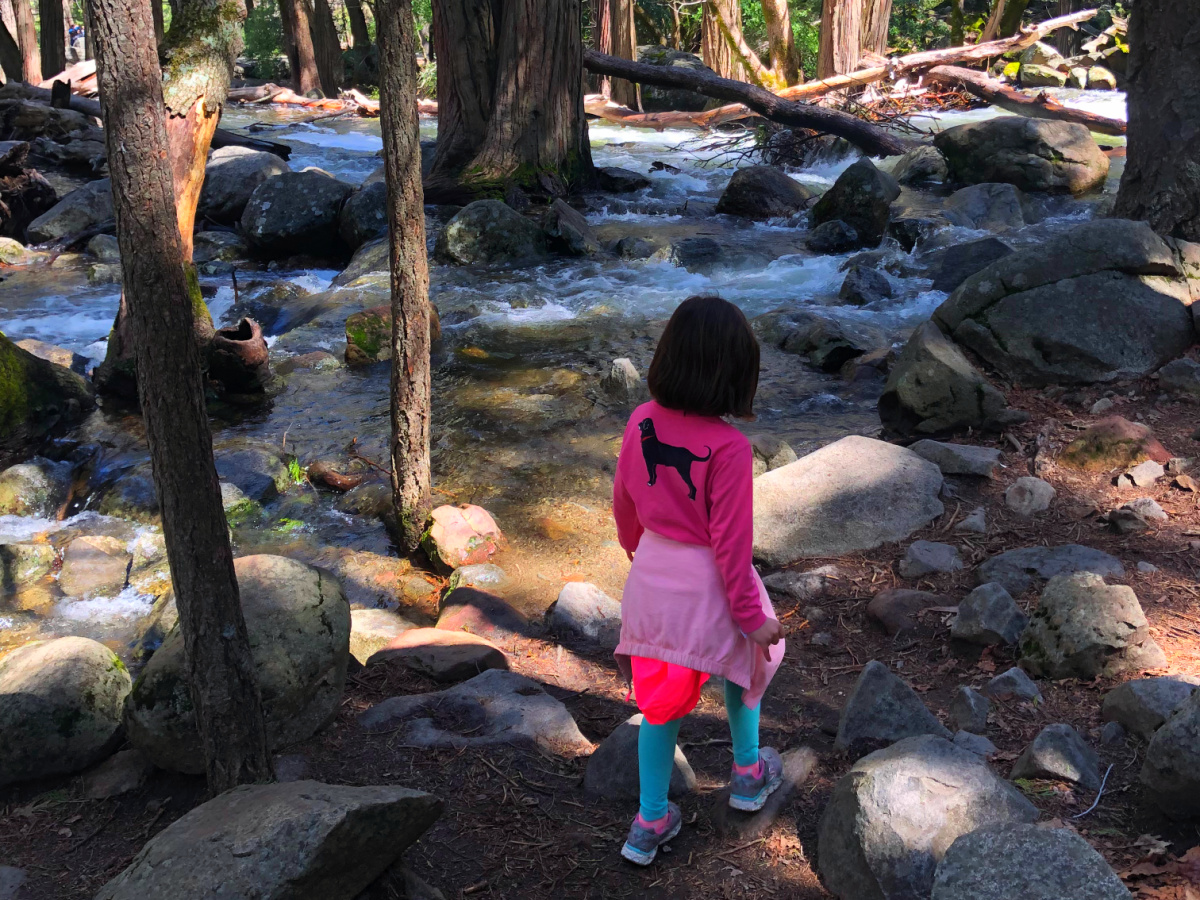
And if you are visiting with kids, this is definitely an area where I would keep them close rather than letting them scramble around the creek.
Is the Bridalveil Fall Trail Wheelchair Accessible?
There is some accessibility at Bridalveil Fall, although not every part of the trail is accessible.
From the main parking area, the paved trail leads to a wheelchair-accessible viewing platform approximately halfway toward the final viewpoint.
Beyond that point, the grade becomes steeper. Although the trail remains paved, the final section to the upper viewing area is not considered wheelchair accessible.
The main parking area also has an accessible family restroom in addition to the other restroom facilities.
This is worth knowing because you absolutely do not have to reach the very end of the trail to experience Bridalveil Fall.
In fact, one of the themes of visiting Bridalveil Fall is that the closest viewpoint is not necessarily the only—or even the best—way to see it.
What Bridalveil Fall Is Like in the Spring
If you want to see Bridalveil Fall at its most powerful, spring is hard to beat.
Our April visit came with that wonderful combination you can get in Yosemite at this time of year: snow still clinging to the higher elevations, a valley floor that had already transitioned into spring, and waterfalls carrying a huge amount of snowmelt.
Bridalveil Fall was spectacular.
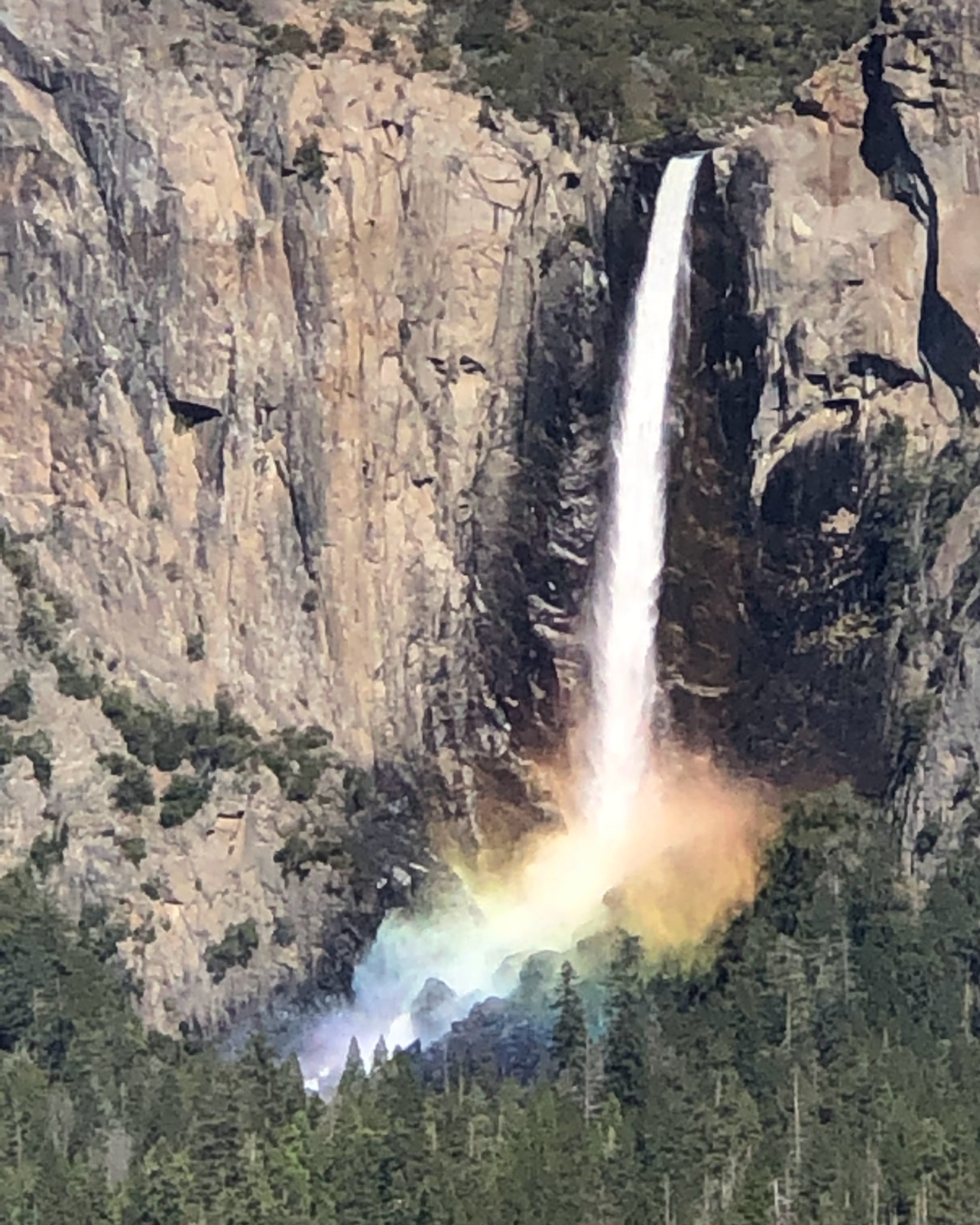
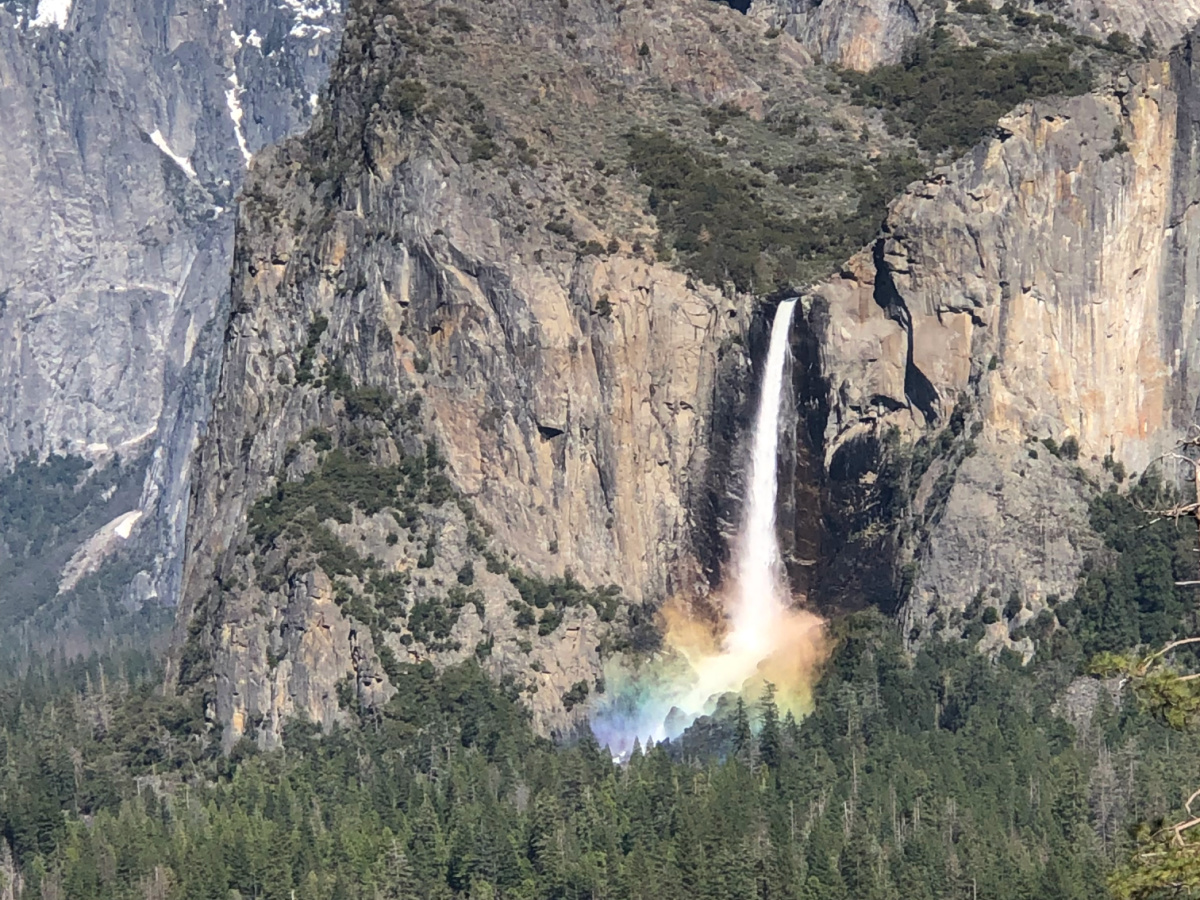
The water didn’t look wispy or delicate. It plunged over the cliff in a solid white column, with so much spray exploding from the bottom that we could see rainbows forming near the base from elsewhere in the valley.
And below the waterfall, Bridalveil Creek was surging through the forest.
This is also why spring conditions deserve a little respect. The same water that makes Bridalveil Fall so dramatic also makes the surrounding area wetter, colder, and potentially slicker.
So yes, come for the waterfall.
But bring shoes that can handle wet pavement, don’t assume the trail will be completely dry just because the weather is sunny, and don’t be surprised if you get sprayed.
Because while walking toward the base is absolutely worth doing, Bridalveil Fall is one of those Yosemite waterfalls that actually gets better when you step back.
And fortunately, there are several places around Yosemite Valley where you can do exactly that.
Best Places to See Bridalveil Fall in Yosemite Valley
Walking toward the base of Bridalveil Fall is absolutely worth doing.
But I don’t think it gives you the best view of Bridalveil Fall.
Up close, you experience the waterfall. You hear the water. You feel the spray. You see Bridalveil Creek rushing through the forest.
But when you step farther away, you finally get to see where Bridalveil Fall actually sits in the landscape.
And that is when it becomes one of the most beautiful waterfalls in Yosemite.
One of my favorite things about Bridalveil Fall is that you don’t have to seek out one single perfect viewpoint. You see it again and again as you move through the western end of Yosemite Valley, sometimes from a formal overlook and sometimes simply through an opening in the trees.
Here are the places I would make sure you stop.
1. Tunnel View
If you only have time for one distant view of Bridalveil Fall, make it Tunnel View.
This is the classic Yosemite Valley panorama: El Capitan dominates the left side of the valley, Half Dome sits far in the distance, and Bridalveil Fall drops from the cliffs on the right. The overlook sits just outside the Wawona Tunnel along Highway 41.
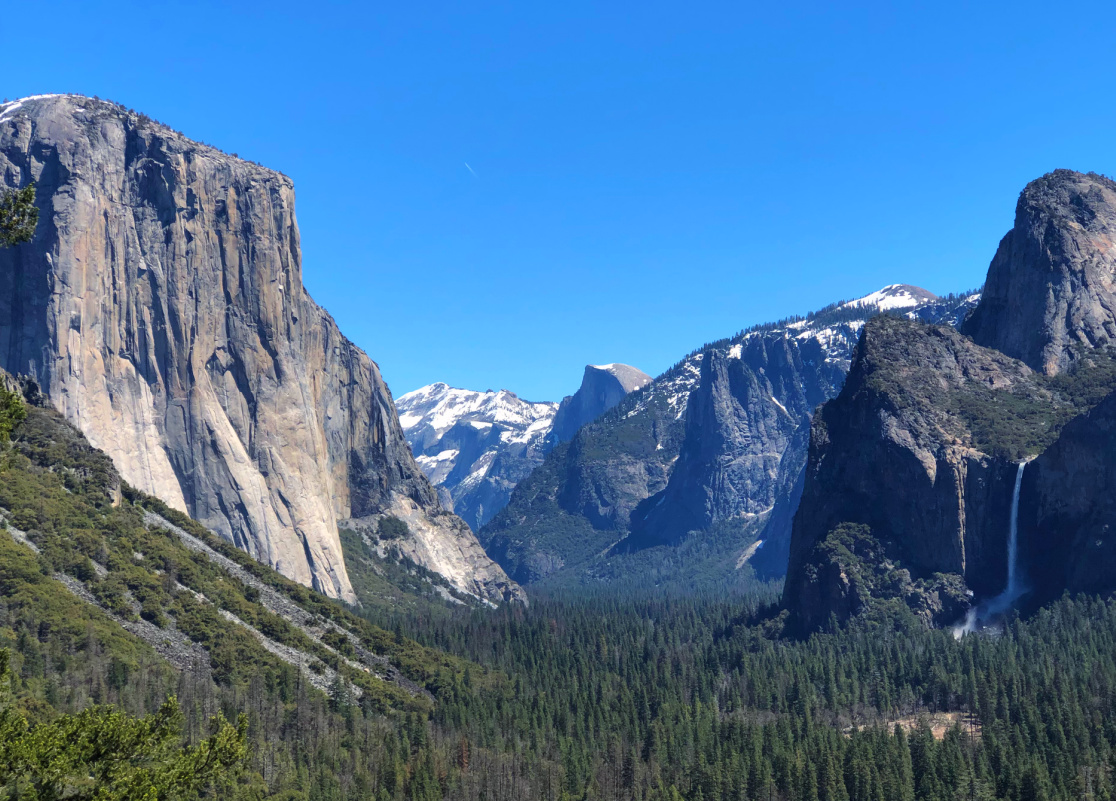
Bridalveil Fall isn’t necessarily the biggest thing in the view here.
That’s actually what makes it so good.
Tunnel View gives you the context that you simply can’t get when you’re standing near the base. You can see how high the waterfall sits above the valley floor and how it fits among the enormous granite walls around it.
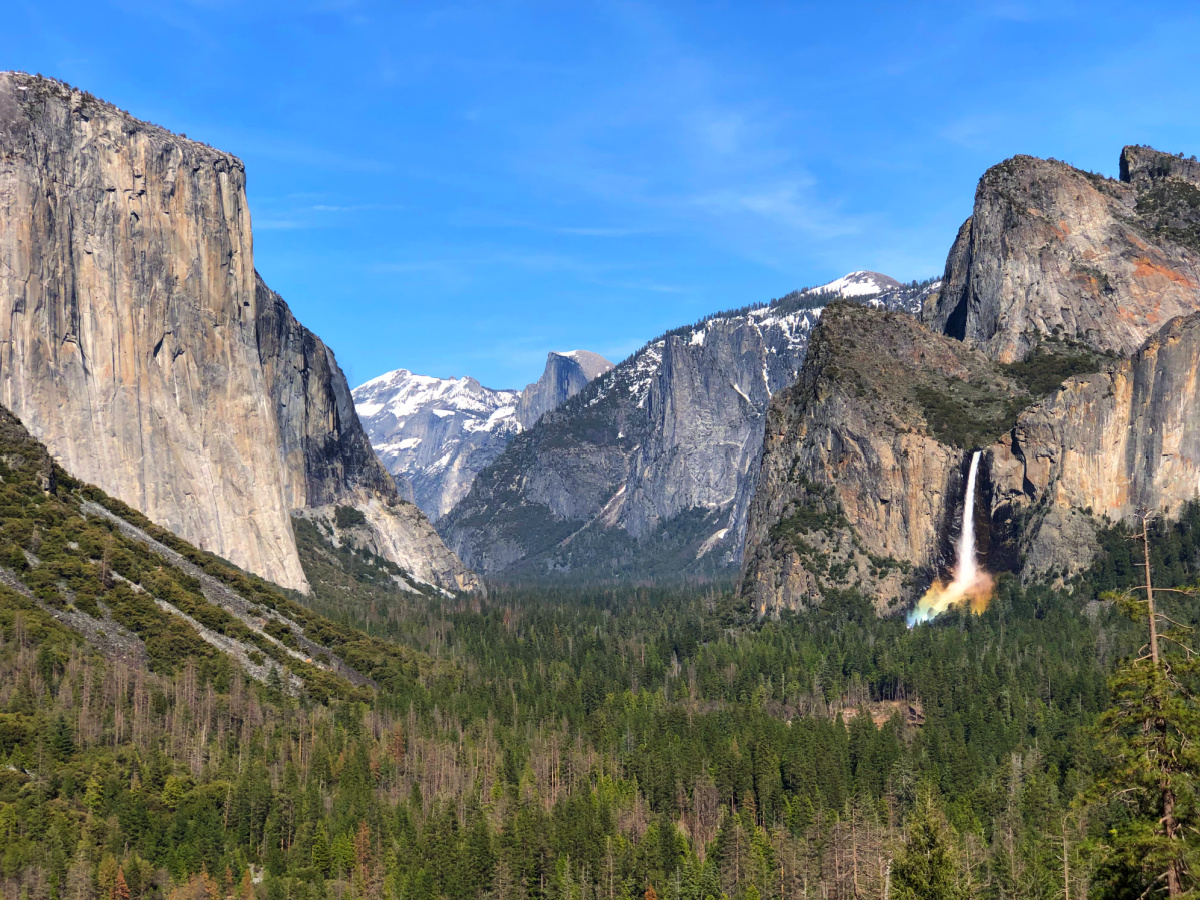
We stopped at Tunnel View more than once during our April trip, and the view changed depending on the light.
At one point, the spray at the bottom of Bridalveil Fall was catching the sunlight and creating a rainbow. From this far away, we could actually see the color spreading through the mist at the base of the waterfall.
It was spectacular.
Of course, I wouldn’t visit Tunnel View expecting a rainbow. That depends on the amount of spray, the sun angle, and probably a little bit of luck.
But during spring runoff, when Bridalveil is carrying a lot of water, it is definitely worth watching the base of the waterfall as the light changes.
Tunnel View also deserves time beyond a quick photograph. Look at the entire valley first. Then start picking out the individual landmarks.
Bridalveil Fall becomes even more impressive once you realize just how enormous everything around it is.
2. Valley View
Valley View may be my favorite place to see Bridalveil Fall from the valley floor.
It is completely different from Tunnel View.
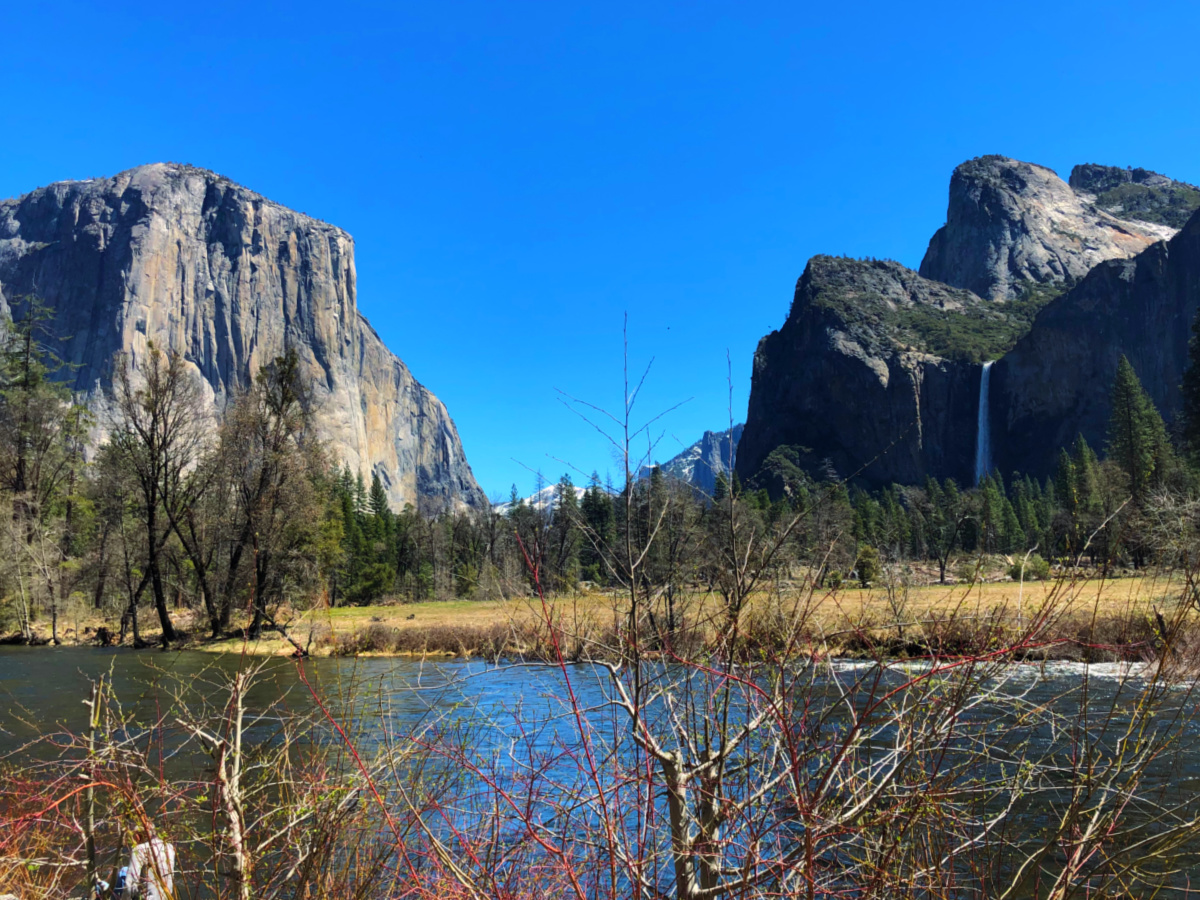
Instead of standing high above Yosemite Valley, you’re right beside the Merced River. El Capitan rises on the left, Cathedral Rocks frame the right side, and Bridalveil Fall drops in the distance beyond the river and meadow.
The National Park Service actually describes Valley View as a more intimate counterpart to Tunnel View, and that’s exactly how it feels.
You aren’t looking down into Yosemite.
You are sitting inside it.
When we visited in April, the Merced River was moving quickly and the mountains were still holding snow. Bridalveil Fall was visible across the valley, but it wasn’t isolated from everything around it. The river, meadow, trees, granite cliffs, and waterfall all became part of one scene.
That is what I love about this viewpoint.
There are prettier close-up views of Bridalveil Fall.
There are places where the waterfall looks bigger.
But Valley View shows you why Yosemite Valley is so extraordinary in the first place.
Parking at Valley View
Valley View is on Northside Drive as you are heading out of Yosemite Valley.
And it is very easy to miss.
Parking is extremely limited, so if you see an available space, take it. The viewpoint itself is right beside the parking area, so you don’t have to hike anywhere to enjoy the view. There are designated accessible parking spaces, and the view can be seen directly from the parking area. A vault toilet is available across Northside Drive.
One important safety note, especially in spring: don’t get too close to the Merced River just because the shoreline looks peaceful.
The river can be swift and extremely cold during periods of high flow. The National Park Service specifically warns visitors to stay back from the water when the river is running strongly. National Park Service
We visited with our daughter when she was younger, and this is one of those places where I would absolutely let kids enjoy the rocks and the view while still keeping a very close eye on the river.
3. Yosemite Valley Floor and Southside Drive
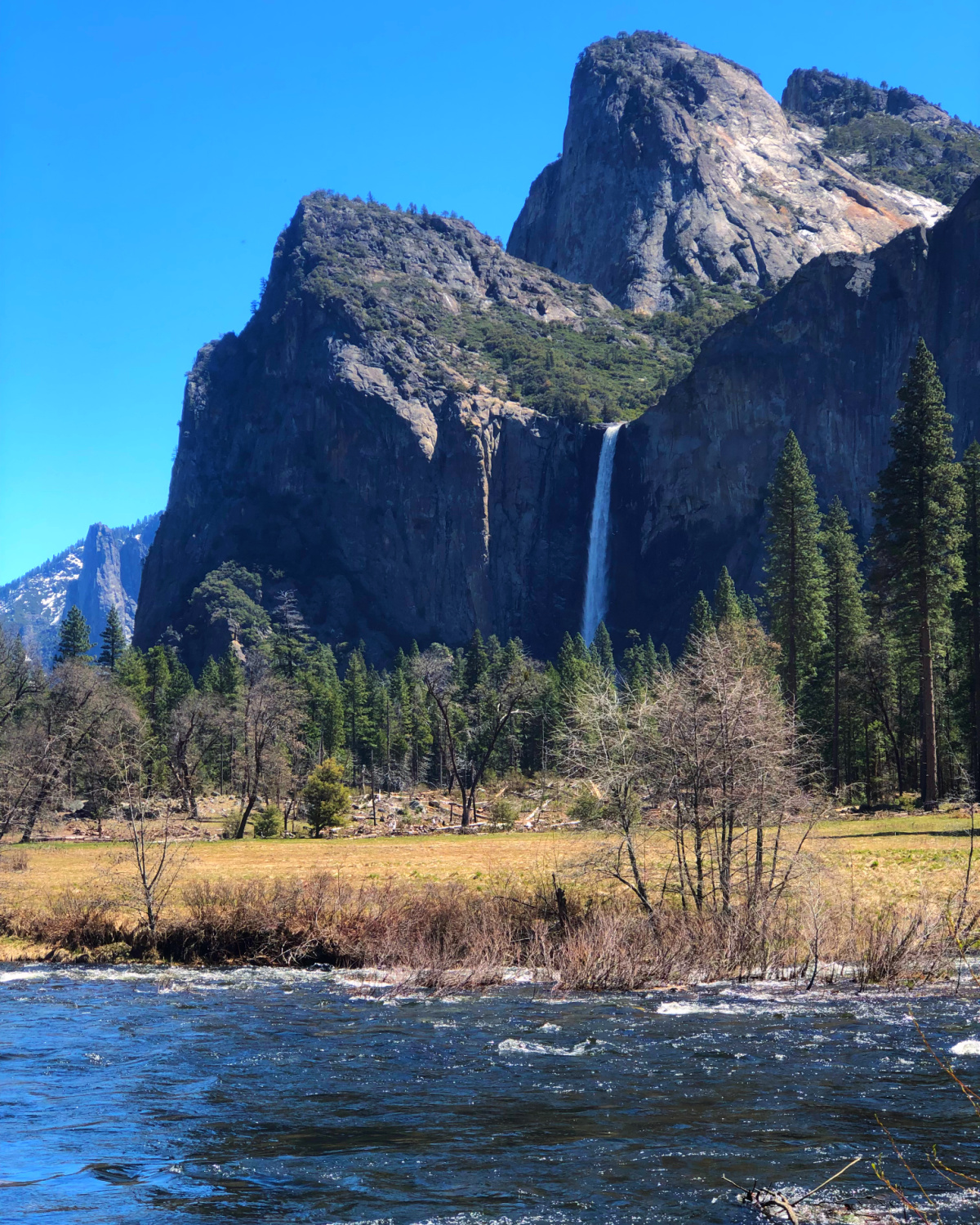
Some of my favorite views of Bridalveil Fall weren’t from a designated overlook at all.
They were simply from the valley floor.
As you drive along Southside Drive toward Yosemite Valley, Bridalveil starts appearing through the trees and across open sections of the valley. The National Park Service even notes that shortly after the Wawona Road intersection, Bridalveil becomes visible through the trees.
This is one of those times when Yosemite rewards you for not rushing.
If you are only focused on getting to the Bridalveil Fall parking lot, Yosemite Village, or your next trailhead, it is easy to drive past some beautiful perspectives.
Instead, keep looking toward the cliffs.
Depending on where you are, you may see Bridalveil towering above a meadow, framed by pine trees, or dropping behind the Merced River.
These aren’t necessarily places where I would tell you to pull over unless there is an obvious legal turnout or parking area.
But they are absolutely places where you should pay attention.
Bridalveil Fall has a way of disappearing behind the trees and then suddenly reappearing from a completely different angle.
That’s part of what makes this waterfall so fun to photograph.
4. Along the Merced River
The Merced River gives you another beautiful way to see Bridalveil Fall.
Some of the views overlap with Valley View, but there are other places around the western valley where you can see the waterfall across the river with meadows and trees in the foreground.
This was one of my favorite perspectives because Bridalveil isn’t the only subject.
You get the river first.
Then the valley.
Then the cliffs.
And finally the waterfall dropping in the distance.
If you’re visiting in spring, the contrast can be especially beautiful. During our April visit, the valley floor already looked like spring while snow was still sitting higher in the mountains.
It gives you this strange and wonderful combination of seasons in one photograph.
Again, I wouldn’t go hunting for random roadside pullouts just to recreate one exact photo. Instead, use the established parking areas and viewpoints as you explore Yosemite Valley and keep looking toward Bridalveil.
There are views everywhere.
5. As You Get Closer to Bridalveil Fall
The closer you get to Bridalveil Fall, the more the experience changes.
From Tunnel View, Bridalveil is part of an enormous landscape.
From Valley View, it becomes part of the river and valley.
And near the trailhead, the surrounding forest begins to close in around it.
You start getting glimpses of the waterfall through the trees rather than one uninterrupted panoramic view.
Then eventually the waterfall itself almost stops being the whole story.
You notice Bridalveil Creek.
The rocks.
The fallen trees.
The moss.
The sound of rushing water.
That is why I think it is worth seeing Bridalveil Fall from several different perspectives instead of just checking the trail off your list.
Every view gives you something different.
When Is the Best Time to See Bridalveil Fall?
Bridalveil Fall flows throughout the year, but spring is when it is typically at its most powerful. The National Park Service lists peak flow around May and describes the waterfall as thundering in spring. During lower-flow periods, the water becomes lighter and more likely to sway in the wind.
That means there really isn’t one universally “best” time to see it.
If you want power, visit during spring runoff.
If you want the softer, windblown look that inspired the Bridalveil name, later in the year may actually give you more of that classic appearance.
And winter brings an entirely different look, although you’ll need to be prepared for potentially icy trail conditions.
Our April visit landed somewhere near the dramatic end of the spectrum.
There was still snow in the mountains. Bridalveil Creek was moving fast. The waterfall was pounding into the rocks below, sending clouds of spray into the air.
It was fantastic.
But it did not look particularly delicate.
Bridal veil? Not so much.
Fire hose off a granite cliff? Maybe a little closer.
And I wouldn’t have changed it.
How Much Time Do You Need at Bridalveil Fall?
If you’re only walking the short trail from the main parking lot, you could technically visit Bridalveil Fall in about 30 minutes.
I would give it longer.
Plan closer to 45 minutes or an hour if you want to walk slowly, enjoy Bridalveil Creek, take pictures, and spend some time near the viewing area.
But I also wouldn’t think of Bridalveil Fall as one isolated stop on your Yosemite itinerary.
You are probably going to see it several times.
You may see it first from Tunnel View.
Then again while driving into Yosemite Valley.
Then up close from the Bridalveil Fall Trail.
Then later from across the Merced River.
And finally from Valley View as you leave.
That progression is actually one of the things I like most about Bridalveil Fall.
You don’t visit it once.
It follows you around the valley.
Is Bridalveil Fall Worth Visiting?
Absolutely.
And because the trail is so short, this is one of the easiest Yosemite waterfalls to work into a day in the valley.
But if you only walk to the base and leave, I think you are missing half the experience.
See Bridalveil Fall up close.
Listen to Bridalveil Creek.
Get sprayed if the waterfall is roaring.
Then step back.
Stop at Tunnel View. Stop at Valley View. Watch for the waterfall through the trees and across the river as you travel through Yosemite Valley.
Because Bridalveil Fall is beautiful when you’re standing underneath it.
But it may be even better when you can see the rest of Yosemite around it.
More Yosemite National Park Travel Guides
Planning more of your Yosemite trip? These guides can help you figure out where to stay, what to see, and which stops are worth adding to your itinerary.
- Yosemite Falls Visitor Guide
- Yosemite Valley Lodge Review
- Best Scenic Viewpoints in Yosemite National Park
- Best Things to Do in Yosemite Valley
- Best Easy Hikes in Yosemite National Park
- Best Waterfalls in Yosemite National Park
- Yosemite in April
More National Park Waterfalls to Add to Your Bucket List
If you love waterfalls, Bridalveil Fall is just the beginning. Here are a few more beautiful waterfall stops from national parks and scenic areas around the country and Canada: