Athabasca Falls Guide: The Easiest “Wow” Stop on the Icefields Parkway

Affiliate Disclosure: This post may contain affiliate links. If you make a purchase or booking through these links, I may earn a commission at no additional cost to you.
Athabasca Falls is one of the easiest and most rewarding stops in Jasper National Park. Here’s what to expect, the best viewpoints, parking tips, and why it’s worth visiting.
Estimated reading time: 17 minutes
I’ll be honest: Athabasca Falls wasn’t one of the stops I was most excited about before our trip.
When I was planning our Canadian Rockies itinerary, places like Moraine Lake, Lake Louise, Peyto Lake, the Columbia Icefield, and Spirit Island got most of my attention. Athabasca Falls felt more like a convenient stop along the route between Jasper and the Icefield.
I was wrong.
Not “this became my favorite attraction in the Canadian Rockies” wrong. But definitely wrong enough that it ended up being one of the most enjoyable stops of the day.
Part of that is because Athabasca Falls delivers exactly what so many travelers are looking for. You don’t need a reservation. This isn’t a hardcore stop where you need hiking poles, bear spray, or a full morning carved out of your itinerary.
You park the car.
Walk for a few minutes.
And suddenly you’re standing next to an enormous amount of glacial water trying to force its way through a narrow canyon.
That’s it.
That’s the magic.
For families, retirees, casual travelers, and anyone who wants incredible scenery without a strenuous hike, Athabasca Falls is one of the best bargains in Jasper National Park.
Quick Snapshot
Location: Jasper National Park
Distance from Jasper: About 20 minutes south
Time Needed: 30-60 minutes
Walking Required: Very little
Difficulty: Easy
Restrooms: Yes
Parking: Large parking lot
Best For: Families, photographers, first-time visitors, and casual travelers
Would I Visit Again? Absolutely.
The Biggest Surprise at Athabasca Falls
The waterfall wasn’t the surprise.
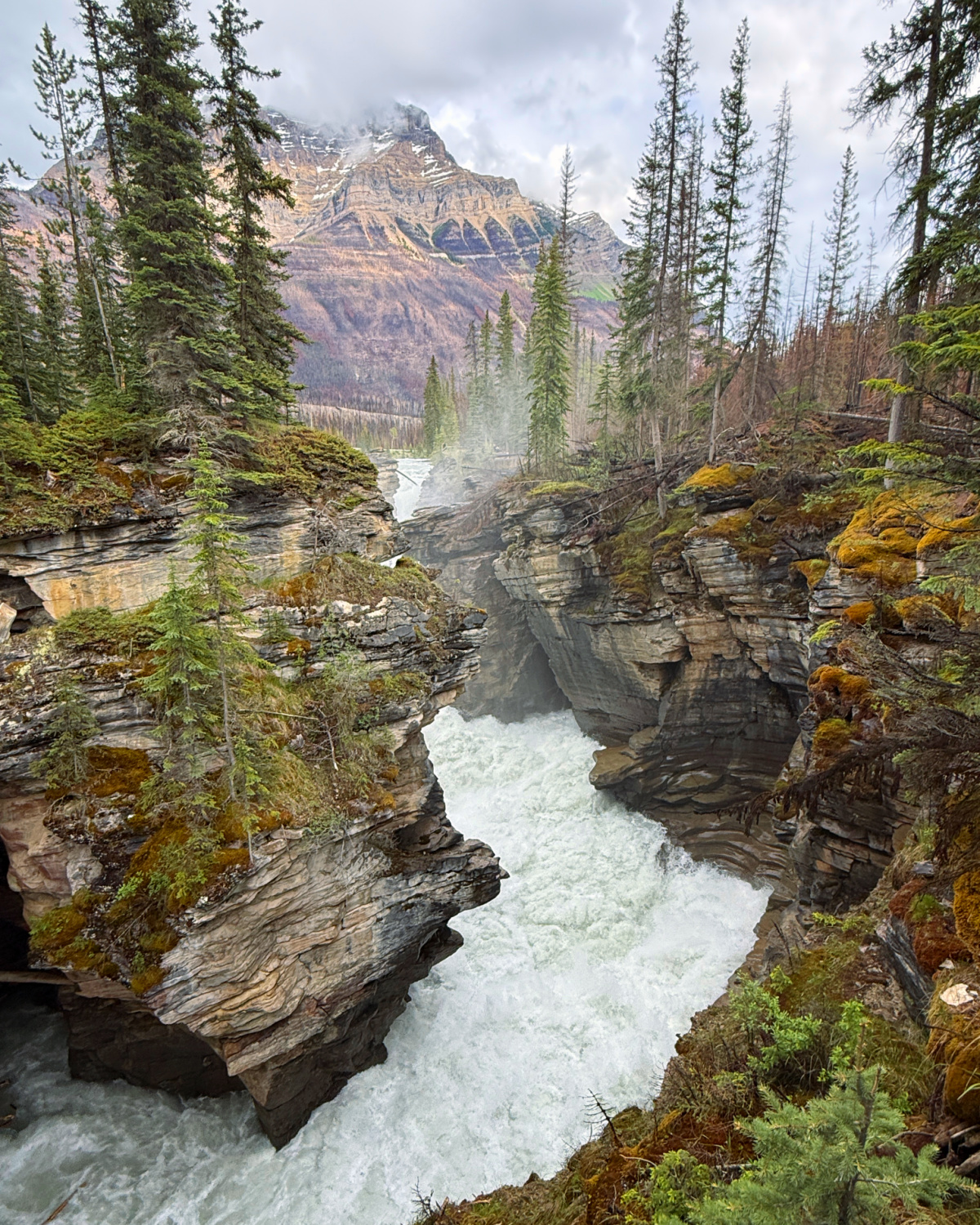
The canyon was.
Before visiting, I assumed Athabasca Falls would be one main viewpoint. We’d walk over, take a few photos, admire the waterfall for a few minutes, and move on to the next stop along the Icefields Parkway.
Instead, we kept finding reasons to stay.
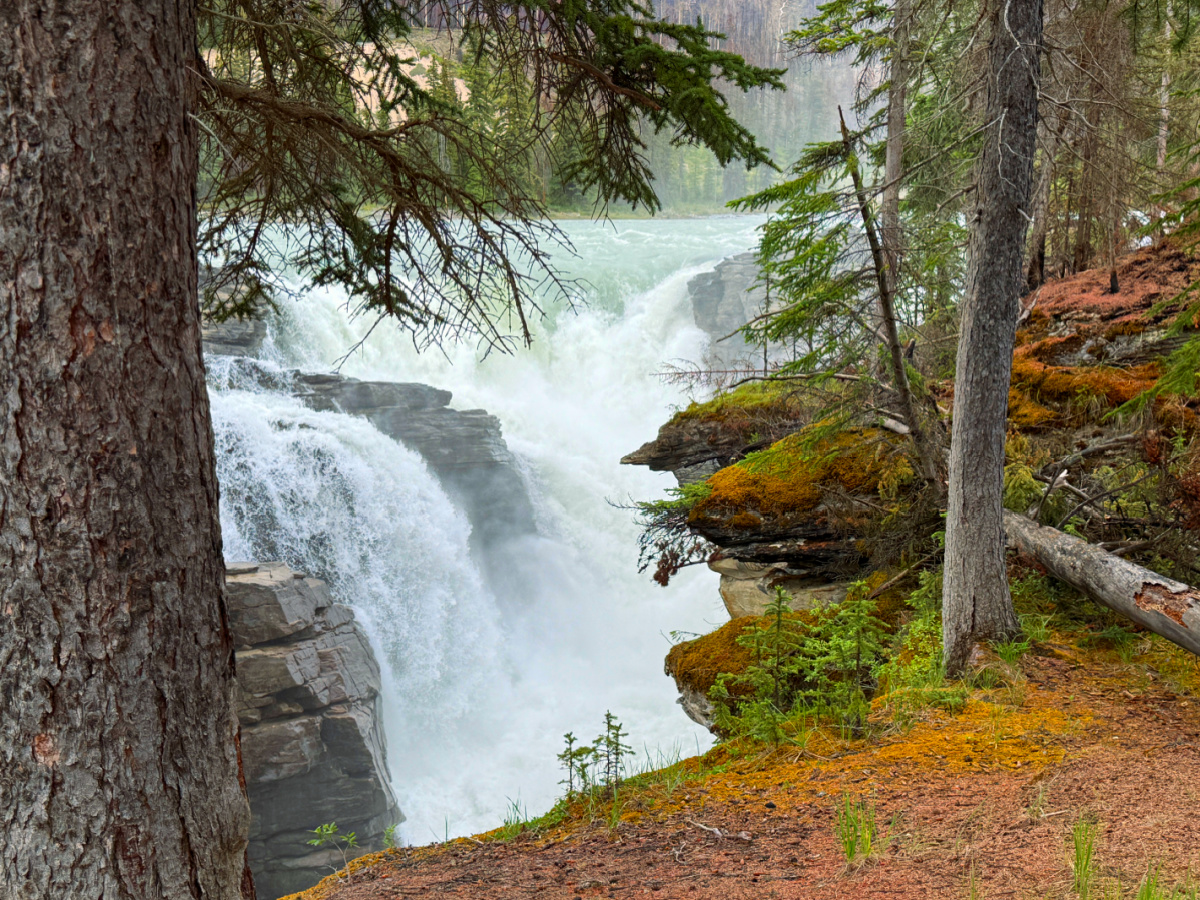
One viewpoint looked directly into the falls.
Another overlooked the canyon downstream.
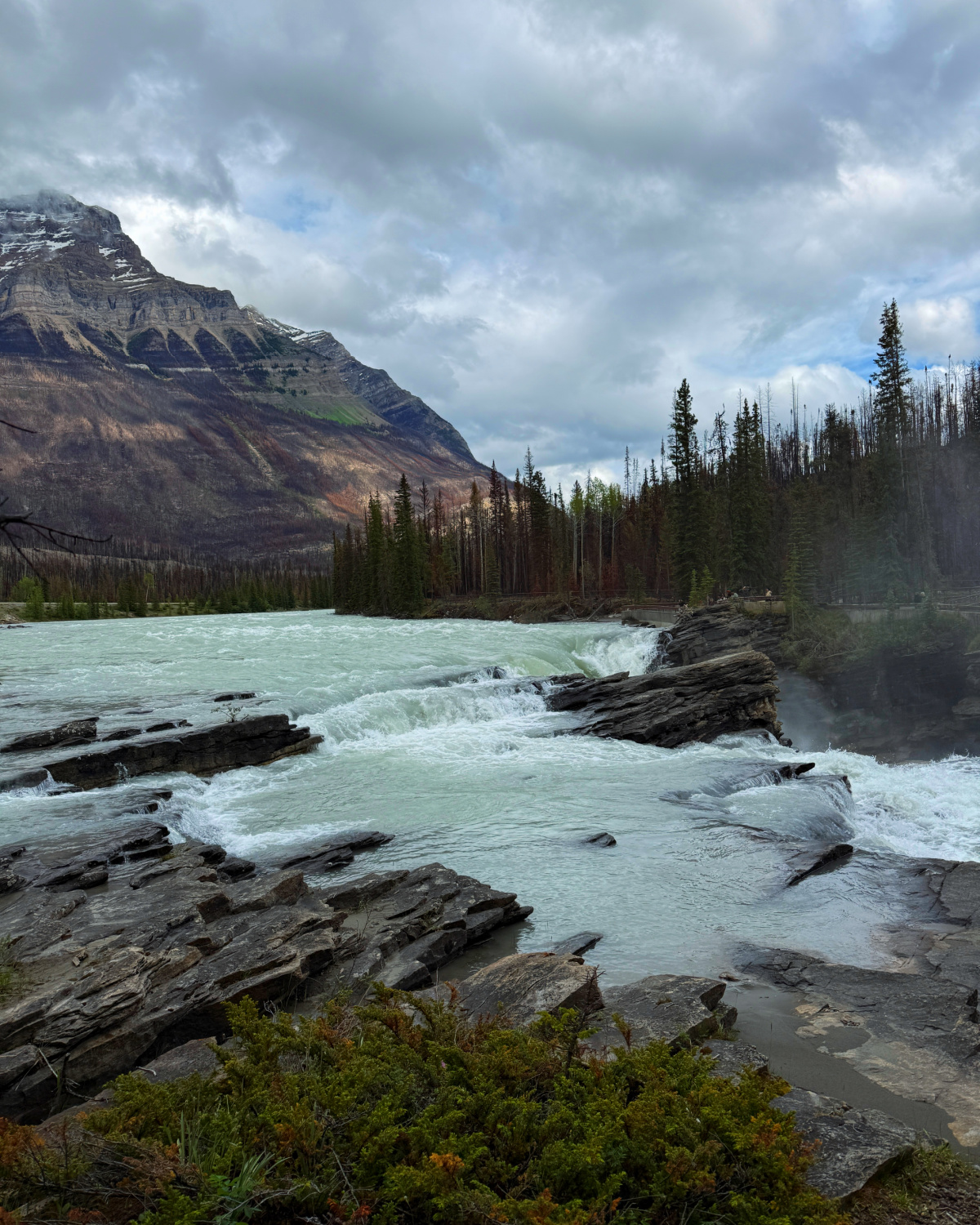
Another framed the river with the mountains in the background.
Then there were the rock formations.
The more I walked around, the more I realized this stop was really two attractions rolled into one. The waterfall gets all the attention, but the canyon carved by thousands of years of rushing water is just as interesting.
Looking back at my photos, I probably took nearly as many pictures of the canyon as I did of the waterfall itself.
That wasn’t something I expected.
Why Athabasca Falls Works So Well for Casual Travelers
I’ve mentioned this throughout my Canadian Rockies series, but I think it’s worth repeating.
Most visitors are not training for Everest.
Most people don’t want every memorable experience to require a five-mile hike.
They want beautiful scenery, unique experiences, and memories they’ll still be talking about after they get home.
Athabasca Falls checks every one of those boxes.
The walk from the parking lot is short.
The viewpoints are easy to reach.
The scenery is spectacular.
And unlike some attractions in the Canadian Rockies, you don’t need to dedicate half a day to it.
In fact, if somebody asked me for the single best effort-versus-reward stop along the Icefields Parkway, Athabasca Falls would be near the top of my list.
Our Visit to Athabasca Falls
The weather probably helped.
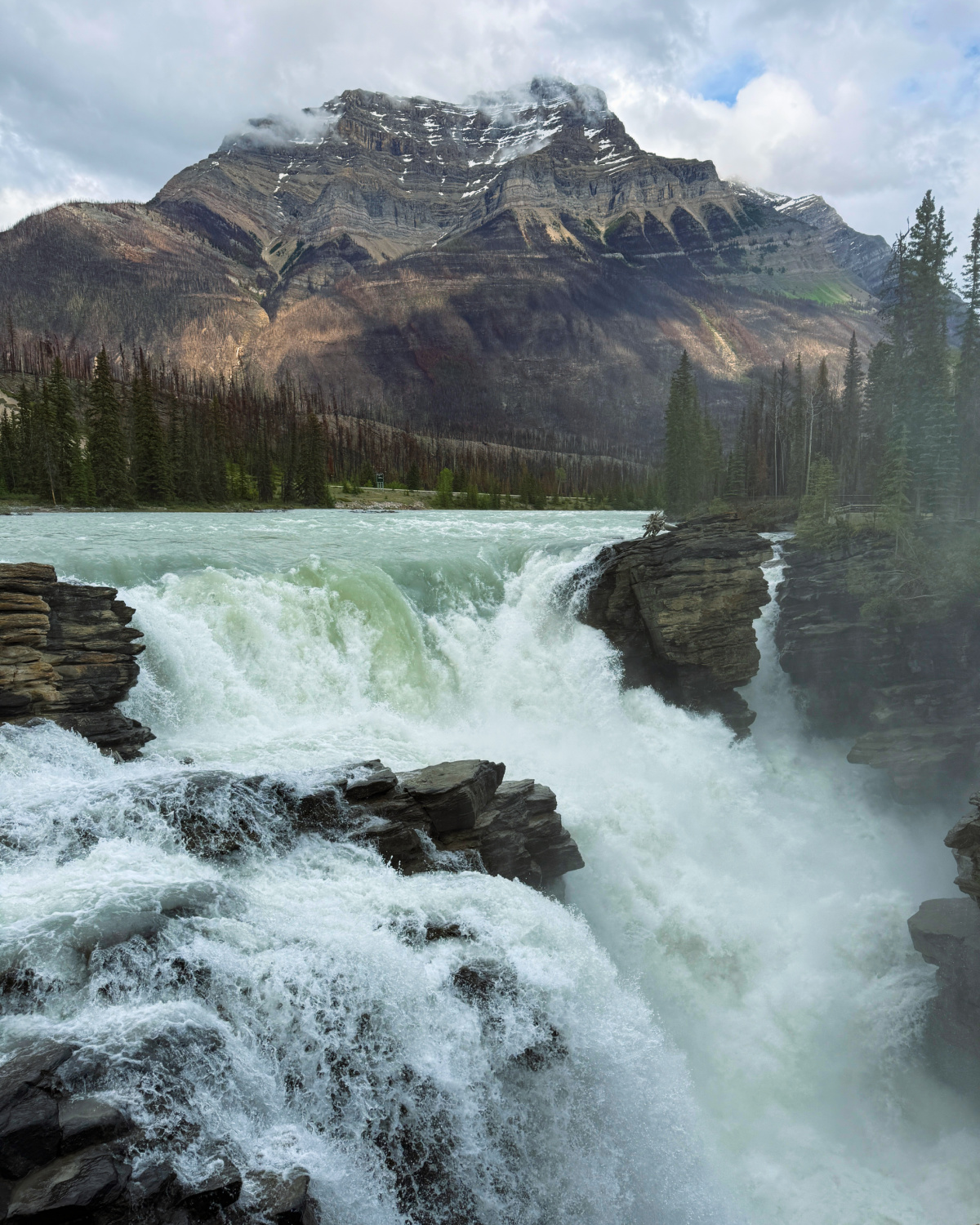
We visited on one of those days when the sky couldn’t quite decide what it wanted to do.
Dark clouds drifted across the mountains.
Occasional sunlight broke through.
The mist from the falls hung over parts of the canyon.
The whole scene felt dramatic.
One thing that stood out immediately was how beautiful the area is even before you reach the waterfall.
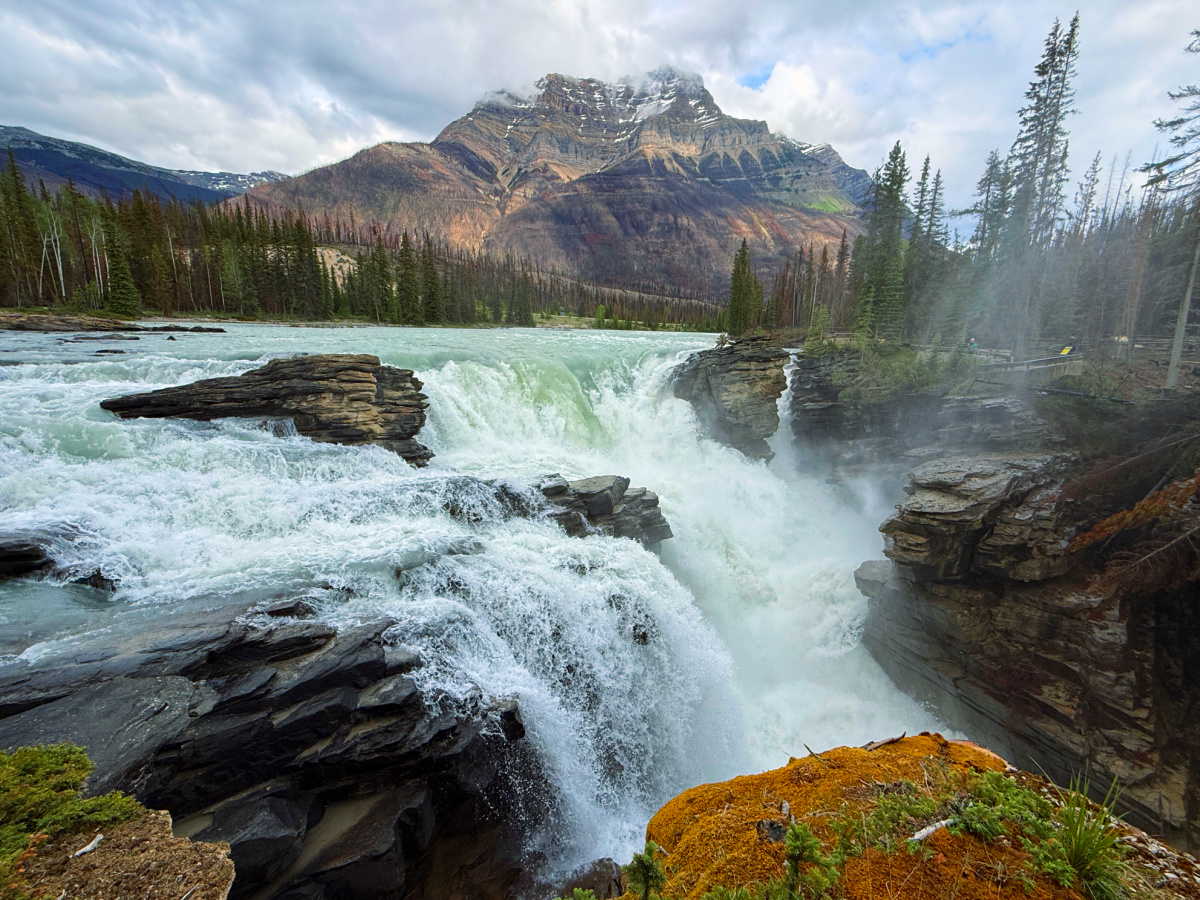
Looking upstream, the Athabasca River winds through a broad valley surrounded by mountains and evergreen forest. It’s easy to get distracted taking photos before you even reach the main attraction.
Then the sound starts getting louder.
And louder.
And louder.
You can hear Athabasca Falls before you really see it.
When the waterfall finally comes into view, the first thing you notice isn’t the height.
It’s the force.
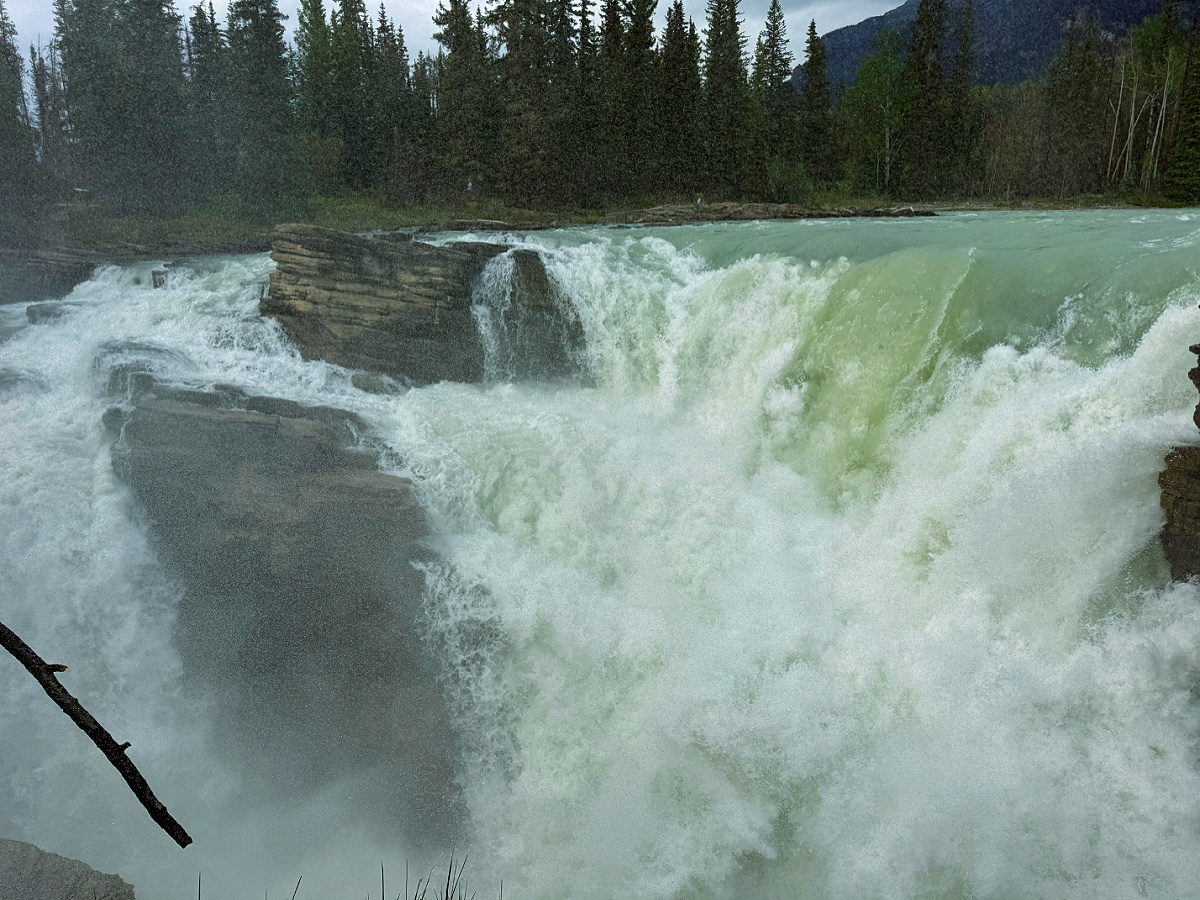
The water seems to explode through the narrow opening in the rock.
Photos capture what it looks like.
They don’t quite capture how loud it is.
Athabasca Falls Isn’t About Height
This is one of those facts that surprised me.
Athabasca Falls is only about 75 feet tall.
That’s certainly respectable, but there are plenty of waterfalls around the world that are much higher.
Height isn’t what makes this place memorable.
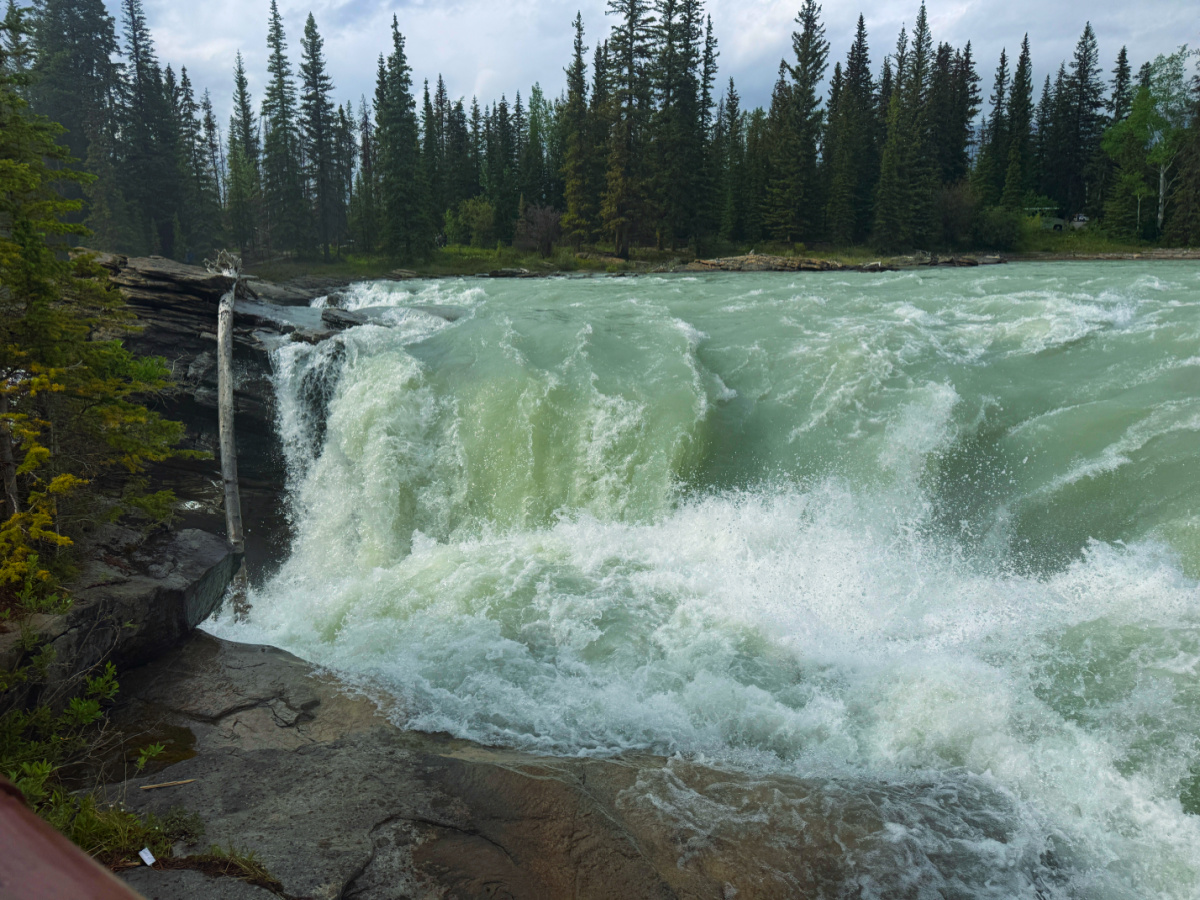
Volume is.
The Athabasca River carries glacial meltwater from the Columbia Icefield. By the time it reaches the falls, an enormous amount of water is being squeezed through a surprisingly narrow channel.
The result feels less like a waterfall and more like a river trying to force itself through a crack in the landscape.
It’s powerful.
It’s noisy.
And it’s impossible to ignore.
Don’t Make This Mistake
If there’s one thing I’d tell visitors, it’s this:
Don’t stop at the first overlook.
I saw several people walk to the main viewpoint, snap a few photos, and head back toward the parking lot.
They’re missing part of the experience.
Keep walking.
The additional viewpoints only require a few extra minutes, but they completely change your perspective.
Some look directly into the canyon.
Others highlight the unusual rock formations created by centuries of erosion.
Several offer excellent photo opportunities that most visitors never see because they turn around too early.
For me, those extra viewpoints are what elevated Athabasca Falls from a quick roadside stop to one of my favorite attractions in Jasper.
Is there a lot of hiking?
This may be the easiest section I’ve ever written for a national park attraction.
Very little.
Honestly, calling Athabasca Falls a hike feels a bit generous.
The main viewpoint is only a short walk from the parking lot, and most of the trail system consists of paved paths and developed overlooks. There are a few stairs and some uneven sections if you continue exploring, but nothing that most visitors would consider difficult.
One of the reasons I liked Athabasca Falls so much is that it felt accessible without feeling overly developed.
You still get the roar of the water, the incredible canyon views…. and you still feel like you’re experiencing a wild place.
But you don’t have to work particularly hard to get there.
After spending several days in the Canadian Rockies, I started appreciating attractions like this more and more. Some days you’re up for a longer trail. Other days it’s nice to step out of the car and immediately find yourself somewhere spectacular.
Athabasca Falls definitely falls into that second category.
The Best Viewpoints at Athabasca Falls
The Main Waterfall Overlook
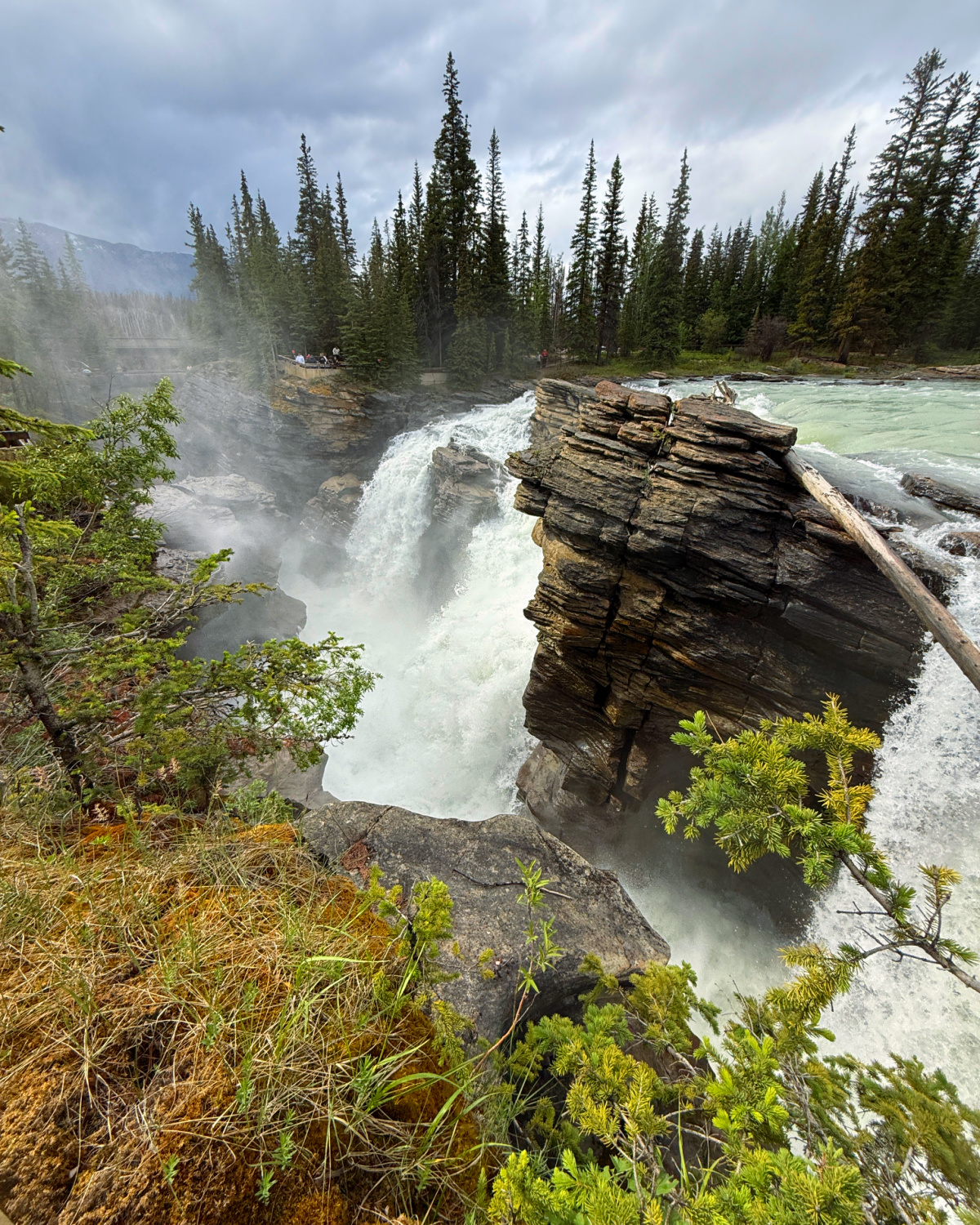
This is the classic view and the one most people come to see.
From here, you get a direct look at the waterfall plunging into the canyon below. The power of the water is immediately obvious, and depending on wind conditions, you’ll probably get a little mist in the process.
It’s impressive.
But don’t stop here.
The Upstream River View
This might actually be one of my favorite perspectives in the entire area.
Looking upstream, the Athabasca River appears calm and almost peaceful. The water flows through a broad valley surrounded by forest and mountains before suddenly reaching the edge of the falls.
There’s something fascinating about seeing both versions of the river within a few minutes of each other.
One moment it’s calm.
A few hundred feet later it’s chaos.
The Canyon Viewpoints
These are the views that surprised me.
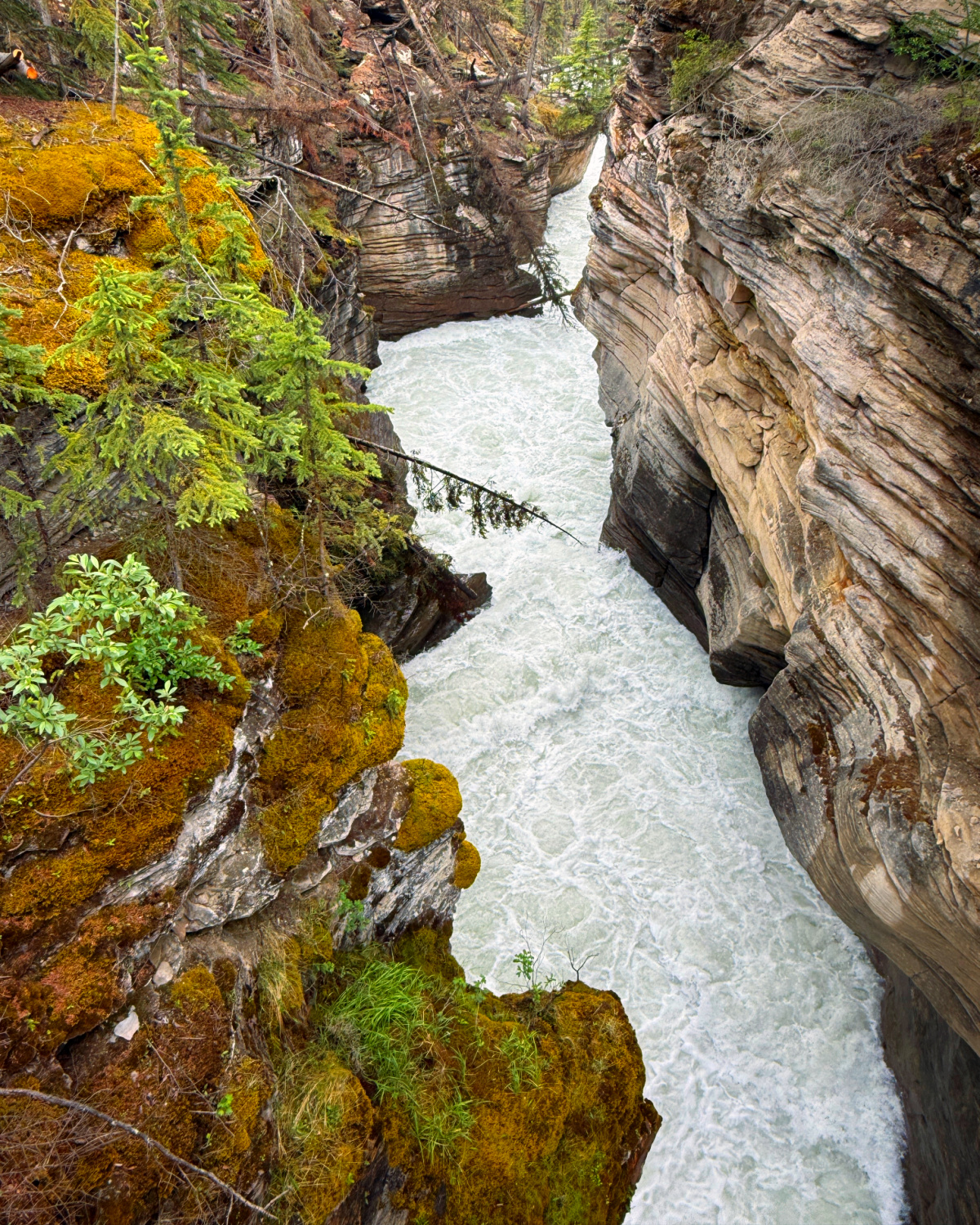
The canyon downstream isn’t just a narrow gorge. It’s a collection of carved rock formations, swirling water, and unusual shapes created over thousands of years.
The farther I walked, the more interested I became in the geology.
Every overlook seemed to reveal another angle or another formation I hadn’t noticed before.
The Lower Canyon Area
If you’re taking photos, don’t rush through this section.
Some of the best compositions are found away from the main waterfall overlook.
The canyon walls, rushing water, and surrounding forest combine to create scenes that feel completely different from the postcard view everybody photographs.
Is Athabasca Falls Worth It?
I know that’s one of the most common questions people ask before adding a stop to their itinerary.
In this case, my answer is easy.
Yes.
But maybe not for the reason you’re expecting.
Athabasca Falls isn’t the most famous attraction in Jasper.
It isn’t the biggest.
It isn’t the most photographed.
What makes it worth visiting is how little effort it requires compared to what you get in return.
You don’t need to reserve anything or bring special equipment.
This is not a half day time commitment.
You simply pull off the Icefields Parkway and spend the next 30 to 60 minutes exploring one of the most powerful waterfalls in the Canadian Rockies.
That’s a pretty good deal.
Looking back at our day, Athabasca Falls delivered far more than I expected.
And honestly, those are often the attractions I remember most.
Athabasca Falls vs Sunwapta Falls
If you’re driving the Icefields Parkway near Jasper, there’s a good chance you’ll visit both Athabasca Falls and Sunwapta Falls.
The good news is that you don’t really need to choose.
They’re close enough together that most visitors can easily see both.
That said, they offer very different experiences.
Athabasca Falls feels dramatic.
The water is loud. The canyon is narrow. The viewpoints bring you right into the action.
Sunwapta Falls feels more scenic and a little more relaxed.
If someone told me I could only visit one, I’d probably choose Athabasca Falls.
Not because Sunwapta isn’t beautiful.
But because Athabasca Falls feels more unique.
The combination of the waterfall, canyon, geology, and easy accessibility creates an experience that’s hard to duplicate elsewhere in Jasper National Park.
Photography Tips
Athabasca Falls is one of those places where you’ll probably take more photos than you planned.
At least that’s what happened to me.
A few things I noticed during our visit:
Bring a Lens Cloth
The mist is real.
Depending on the wind, water droplets can quickly find their way onto your camera lens or phone.
I found myself wiping my lens several times.
Look Beyond the Waterfall
Most visitors focus entirely on the falls.
Some of my favorite images ended up being the canyon, the river upstream, and the surrounding mountains.
Cloudy Weather Can Be Your Friend
Normally people hope for blue skies.
At Athabasca Falls, I actually liked the clouds.
The dark sky made the water stand out and gave many of the photos a more dramatic feel.
Take Your Time
This sounds obvious, but it’s easy to rush.
A lot of people stop for five minutes, take the classic waterfall shot, and leave.
The more interesting photos often come from the viewpoints farther down the trail.
Accessibility, Parking, and Facilities
One of the reasons Athabasca Falls is so popular is that it’s incredibly easy to visit.
Parking
The parking area is fairly large and much more substantial than some of the pullouts you’ll encounter along the Icefields Parkway.
That doesn’t mean it never fills up.
Summer afternoons can still be busy.
If you want a quieter experience, early morning or later in the evening is usually your best bet.
Restrooms
Restrooms are available near the parking area.
Accessibility
While not every viewpoint is fully accessible, visitors with limited mobility can still enjoy excellent views of Athabasca Falls without needing to walk far.
The main overlook is much easier to reach than many attractions in the Canadian Rockies.
When Is the Best Time to Visit?
Summer is generally the most impressive time to see Athabasca Falls.
That’s when glacial meltwater is flowing heavily from the Columbia Icefield, creating the powerful conditions most visitors associate with the falls.
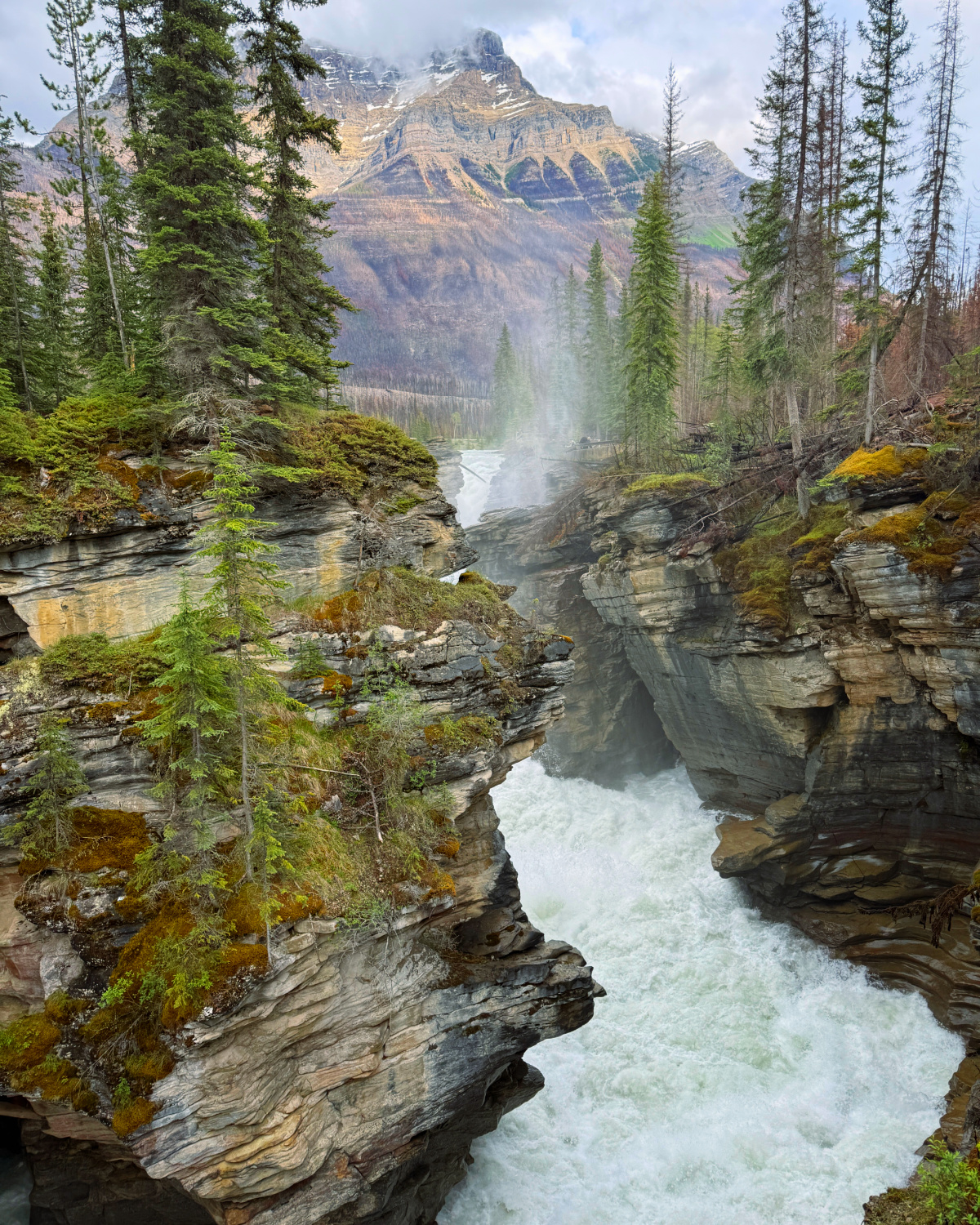
We visited in June, and the volume of water was incredible.
The waterfall already felt massive.
I can only imagine what it looks like during peak summer runoff.
As for time of day, I don’t think there’s a bad option.
Early morning generally means fewer crowds.
Late afternoon often provides softer light.
Cloudy days can create dramatic photography conditions.
Honestly, I’d rather visit Athabasca Falls on a cloudy day than skip it waiting for perfect weather.
Pro Tips for Visiting Athabasca Falls
Don’t Turn Around Too Early
The waterfall is only half the attraction.
Keep walking and explore the canyon viewpoints.
Budget More Time Than You Think
I expected a quick stop.
We stayed longer than planned.
That seems to happen to a lot of people.
Combine It With Other Icefields Parkway Stops
Athabasca Falls fits naturally into a day exploring Jasper and the Icefields Parkway.
Protect Your Camera
Mist and spray are part of the experience.
Bring something to wipe your lens.
Respect the Barriers
The water here is incredibly powerful.
There are warning signs throughout the area for a reason.
Stay behind barriers and designated viewpoints.
Frequently Asked Questions
How far is Athabasca Falls from Jasper?
Athabasca Falls is approximately 20 minutes south of Jasper along the Icefields Parkway.
How long do you need at Athabasca Falls?
Most visitors spend between 30 and 60 minutes exploring the viewpoints and canyon.
Is Athabasca Falls an actual hike?
Not really.
It’s better described as a short scenic walk with multiple viewpoints.
Are there restrooms at Athabasca Falls?
Yes. Restrooms are located near the parking area.
Can kids visit Athabasca Falls?
Absolutely. This is one of the most family-friendly attractions in Jasper National Park.
Is Athabasca Falls worth visiting?
For me, yes.
In fact, it ended up being one of the most pleasant surprises of our time in Jasper.
Final Thoughts
When I think back on our day along the Icefields Parkway, Athabasca Falls stands out for a simple reason.
It completely exceeded my expectations.
Not because it was the biggest attraction we visited.
Not because it was the most famous.
And honestly, not even because it was the most beautiful.
It stands out because it delivered so much with so little effort.
A short walk.
A handful of viewpoints.
Less than an hour of your day.
And yet somehow it feels like a place you’ll remember long after the trip is over.
I expected a waterfall.
What I got was a waterfall, a canyon, mountain views, dramatic weather, and one of the easiest high-reward experiences in the Canadian Rockies.
For casual travelers—the people I write these guides for all the time—that’s about as strong a recommendation as I can give.
If Athabasca Falls is on your route, stop.
Get out of the car.
Walk the extra few minutes beyond the main overlook.
I have a feeling you’ll end up staying longer than you expected too.
Explore More Jasper National Park
If Athabasca Falls is on your itinerary, chances are you’re spending at least a few days in Jasper National Park. These guides will help you make the most of your time in the area, from wildlife viewing and scenic lakes to planning a complete Jasper vacation.
- Jasper for First-Time Visitors – Everything you need to know before your first trip, including where to stay, what to prioritize, and common planning mistakes.
- Best Things to Do in Jasper National Park – My favorite attractions, viewpoints, tours, and experiences throughout the park.
- Jasper in 3 Days – A realistic itinerary for travelers who want to see the highlights without feeling rushed.
- Maligne Lake Cruise Review – One of the most iconic experiences in Jasper and the easiest way to see Spirit Island.
- Pyramid Lake Guide – A beautiful and often quieter alternative to some of Jasper’s more famous attractions.
- Jasper Wildlife Tour Review – One of the highlights of our trip and our best opportunity to see bears, moose, elk, and other wildlife.
Planning a Canadian Rockies Vacation?
Athabasca Falls is one of the most popular stops along the Icefields Parkway, but it’s just one small piece of an incredible Canadian Rockies road trip. These guides will help you plan the bigger picture.
- Ultimate Canadian Rockies Travel Guide – Start here if you’re planning your first trip and want a complete overview.
- Canadian Rockies for First-Time Visitors – My best advice on where to stay, what to see, and how to structure your trip.
- Best Things to Do in the Canadian Rockies – The can’t-miss experiences across Banff, Jasper, and the Icefields Parkway.
- Canadian Rockies Without Hardcore Hiking – Perfect for travelers who want amazing scenery without long or difficult trails.
- 7-10 Day Canadian Rockies Itinerary – A detailed road trip plan covering the major highlights.
More Amazing Waterfalls in National Parks
One thing I love about Athabasca Falls is that it delivers a spectacular waterfall experience without requiring a major hike. If waterfalls are one of your favorite parts of visiting national parks, here are a few more easy-to-reach favorites from across the West.
Sol Duc Falls (Olympic National Park)
One of the most famous waterfalls in Olympic National Park, Sol Duc Falls combines an easy forest hike with a dramatic multi-channel waterfall that crashes into a narrow canyon below. It’s one of the best bang-for-your-buck hikes in Washington.
Grand Canyon of the Yellowstone (Yellowstone National Park)
The Lower Falls and Upper Falls are among the most iconic waterfall views in America. Seeing the Yellowstone River plunge into the colorful canyon is one of those experiences that instantly lives up to the hype.
Easy-to-Access Waterfalls in Yellowstone
Yellowstone is packed with waterfalls that require little effort to enjoy. From the famous Lower Falls overlooks to smaller roadside cascades, it’s one of the best national parks for travelers who love waterfalls but don’t want a strenuous hike.
Marymere Falls (Olympic National Park)
Marymere Falls is one of the classic easy hikes in Olympic National Park. The trail winds through old-growth forest before reaching a beautiful waterfall tucked among moss-covered trees. It’s a completely different experience than Athabasca Falls—quieter, greener, and more intimate—but it’s another excellent example of a waterfall that rewards visitors without requiring a difficult hike.
Mount Rainier’s Best Waterfalls
Mount Rainier National Park has no shortage of waterfalls. Between glacier-fed rivers, steep mountain valleys, and abundant snowmelt, you’ll find impressive cascades throughout the park, many requiring only a short walk from the road.
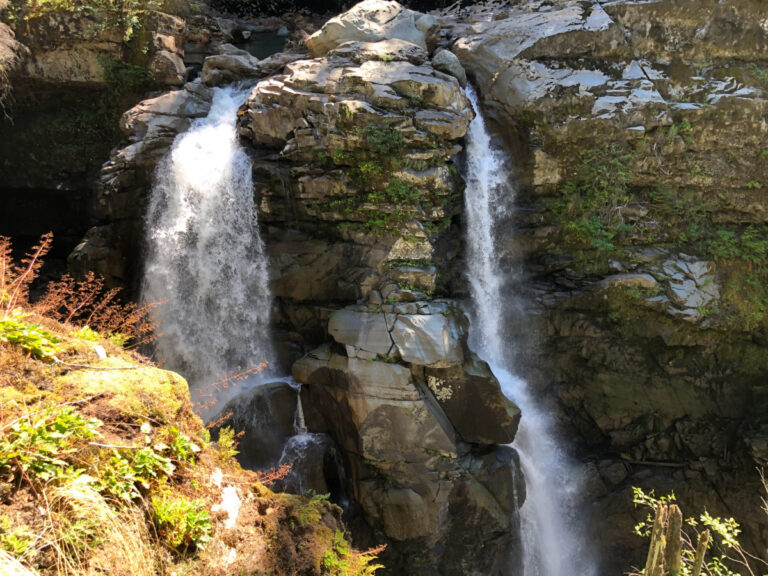
Nooksack Falls (Mount Baker, Washington)
Nooksack Falls is one of the most impressive waterfalls in Washington that requires almost no effort to visit. A short walk from the parking area leads to viewpoints overlooking a powerful waterfall plunging into a narrow rocky gorge. Much like Athabasca Falls, the combination of rushing water, dramatic canyon walls, and easy accessibility makes it a favorite stop for casual travelers and photographers alike.
Myrtle Falls (Mount Rainier National Park)
Few waterfall views can compete with Myrtle Falls framed by Mount Rainier in the background. It’s one of the most photographed spots in the park and requires very little walking to enjoy.
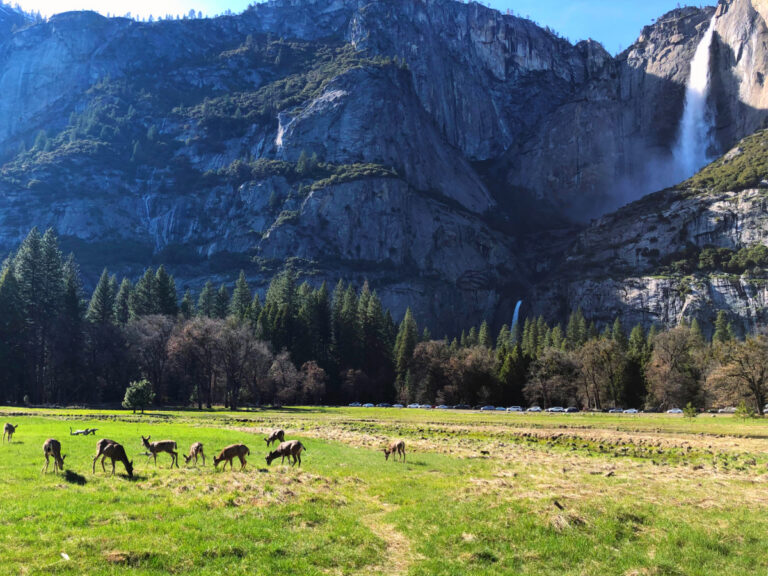
Yosemite in April: Peak Waterfall Season
If waterfalls are your thing, Yosemite in April is hard to beat. Spring snowmelt transforms the park’s famous waterfalls into roaring spectacles, and rainbows often appear in the mist on sunny days. It remains one of my favorite times to visit Yosemite National Park.