
Jasper Wildlife Tour Review: Is It Worth It for First-Time Visitors?

Affiliate Disclosure: This post may contain affiliate links. If you make a purchase or booking through these links, I may earn a commission at no additional cost to you.
See bears, elk, bighorn sheep, and more on this Jasper Wildlife Tour review. Learn what we saw, what to expect, and whether it’s worth booking.
Estimated reading time: 18 minutes
If seeing wildlife is high on your Canadian Rockies bucket list, I have a confession: Jasper completely spoiled me.
Before this trip, I had seen plenty of wildlife in national parks. Bison in Yellowstone. Moose in Alaska. Black bears in the Smokies. But nothing prepared me for what happened during our evening wildlife tour in Jasper National Park.
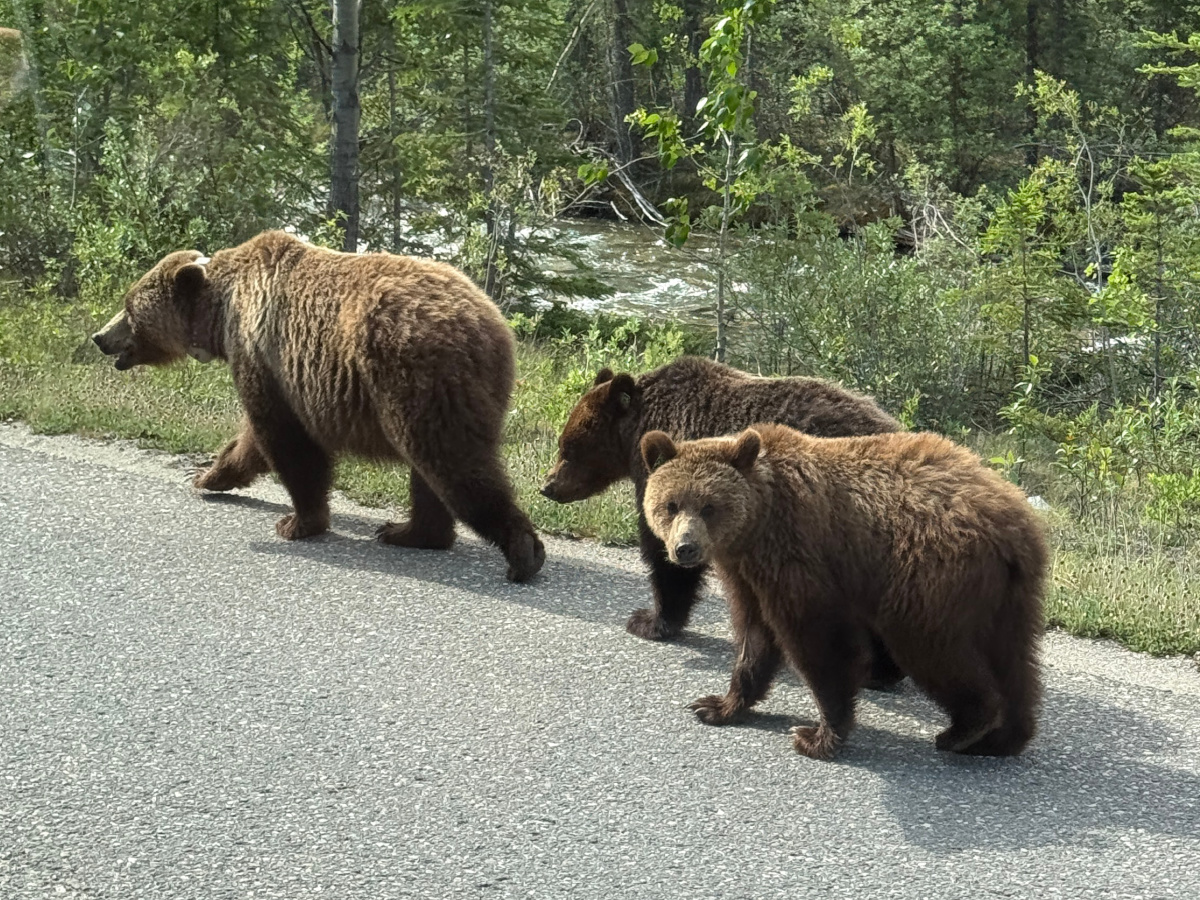
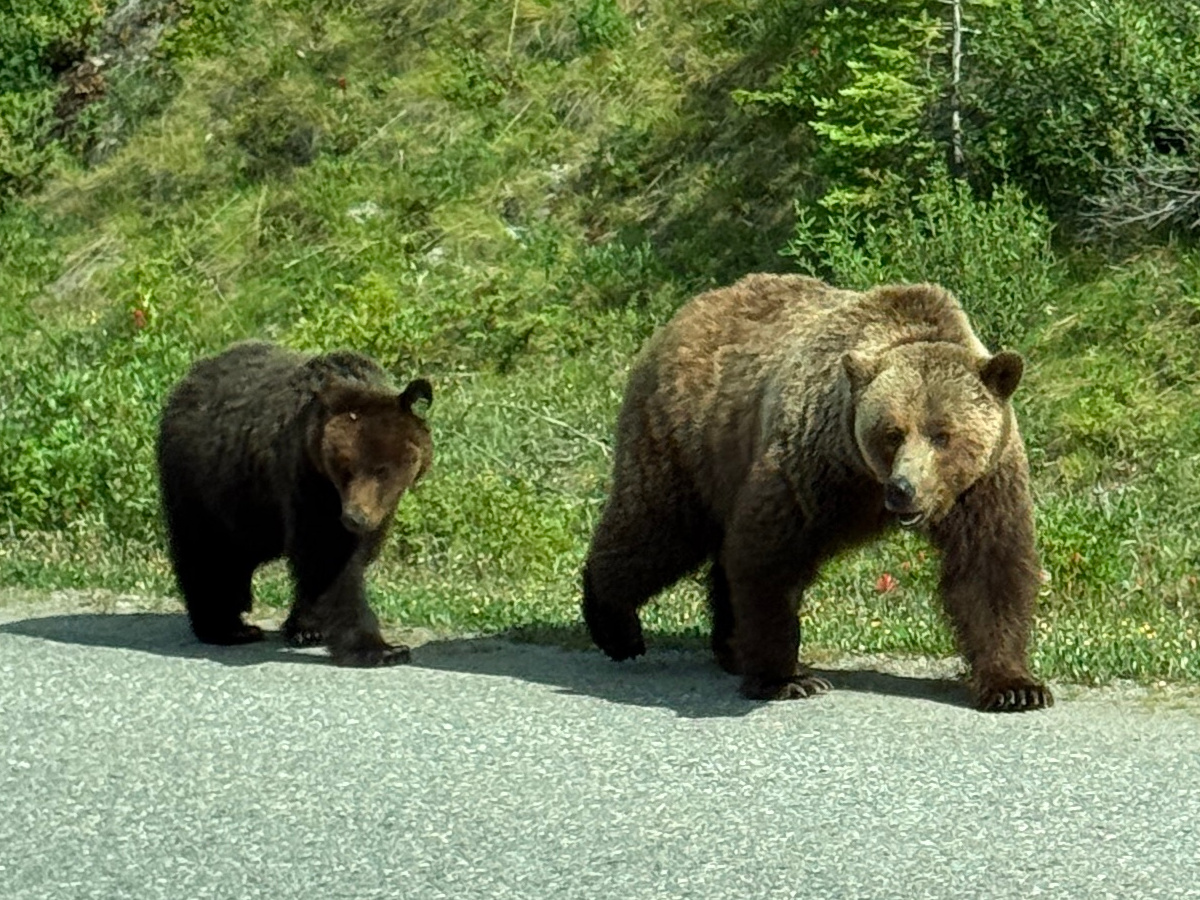
Within a few hours, we saw elk, bighorn sheep, a bald eagle, and not one but multiple bears—including a mother grizzly with two cubs that walked right down the road in front of us.
Even now, weeks later, those bears are one of the strongest memories I brought home from the Canadian Rockies.
The best part? We didn’t hike a single mile to find them.
For casual travelers, families, retirees, photographers, and anyone who loves wildlife but doesn’t necessarily want to spend hours searching for it on their own, this tour ended up being one of the best experiences of our entire Jasper visit.
Want to see wildlife in Jasper National Park? A guided morning wildlife tour is a wonderful way to explore the park while learning about the animals that call the Canadian Rockies home! Traveling with an experienced local guide gives you the opportunity to look for elk, bears, moose, bighorn sheep, and other wildlife in their natural habitat. And because the tour takes place in the morning, you’ll be exploring during a time when many animals are particularly active. Check prices and availability for the Jasper Morning Wildlife Tour on Viator.
Quick Snapshot
Tour: Jasper Wildlife Tour
Company: Maligne Adventures
Location: Jasper National Park
Tour Length: Approximately 3–3.5 hours
Best Time: Early morning or evening departures
Transportation: Comfortable minibus
Wildlife Commonly Seen:
- Elk
- Deer
- Bighorn sheep
- Black bears
- Grizzly bears
- Bald eagles
Occasionally Seen:
- Moose
- Mountain goats
- Coyotes
Good For:
- Families
- Casual national park visitors
- Wildlife lovers
- Photographers
- Visitors without hiking experience
Would I Do It Again?
Absolutely.
Why We Booked a Wildlife Tour Instead of Looking for Animals Ourselves
One thing I learned during our Canadian Rockies trip is that wildlife viewing is very different from simply driving through a national park.
Could you see animals on your own?
Of course.
In fact, we saw elk around Pyramid Lake and wildlife while driving the Icefields Parkway.
But finding wildlife consistently is another matter entirely.
Local guides spend every day in the park. They know where animals have been feeding, where bears have recently been spotted, which valleys are producing sightings, and how seasonal conditions affect wildlife behavior.
That knowledge matters.
When we booked this tour, I expected we might see a few elk and maybe get lucky with a bear.
Instead, it became one of the most wildlife-filled experiences I’ve ever had in a national park.
Tour Logistics
We booked our tour through Maligne Adventures, one of the most established tour operators in Jasper.
The company offers both morning and evening departures. We chose the evening tour because wildlife tends to become more active during the cooler hours before sunset.
After checking in, we boarded a comfortable minibus with large windows that made wildlife viewing easy from either side of the vehicle.
One thing I appreciated immediately was that this wasn’t a rigid sightseeing route.
Our guide adjusted the route throughout the evening based on recent wildlife reports, seasonal animal movements, and conditions in the park.
That flexibility is one of the biggest advantages of joining a guided wildlife tour.
Instead of driving around guessing where animals might be, you’re relying on someone who spends nearly every day tracking wildlife activity.
According to the company, wildlife is seen on approximately 95% of tours, though sightings are never guaranteed because Jasper is a completely wild environment.
After our experience, I can see why their success rate is so high.
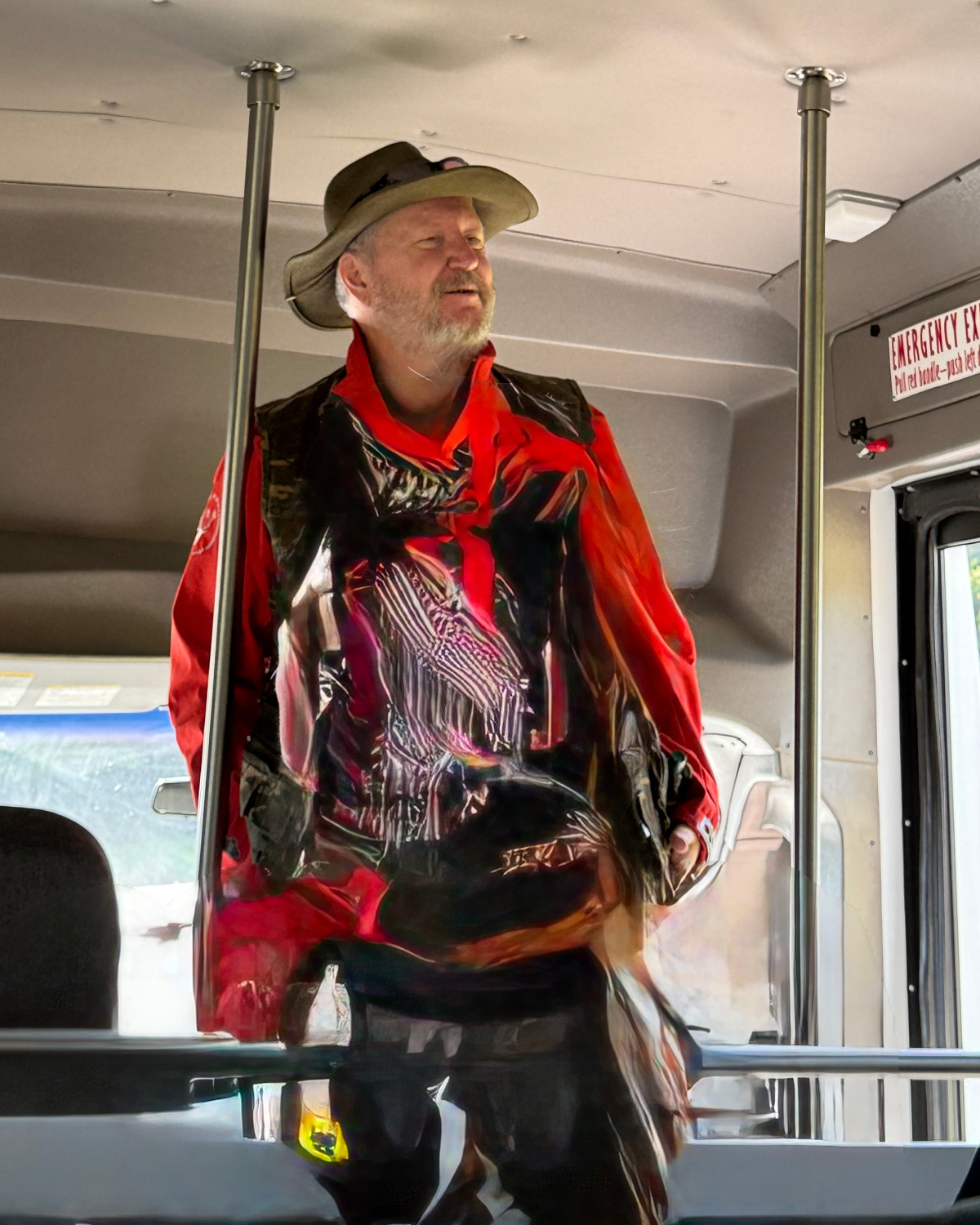
Our Guide Was Outstanding
I don’t normally spend much time talking about tour guides in reviews.
This one deserves it.
Our guide struck exactly the right balance between educational and entertaining.
He clearly knew the park inside and out, but he never sounded like he was reading from a script.
Instead, it felt more like riding around with a knowledgeable local who genuinely loves Jasper.
Throughout the evening he explained:
- Wildlife behavior
- Seasonal migration patterns
- How animals adapt to the Rockies
- Challenges facing wildlife management
- Safety practices in bear country
- Conservation efforts within Jasper National Park
He also did a great job spotting animals that I would have completely missed.
Several times he identified movement hundreds of yards away that initially looked like nothing more than a shadow in the trees.
A few minutes later we were all looking at wildlife through binoculars.
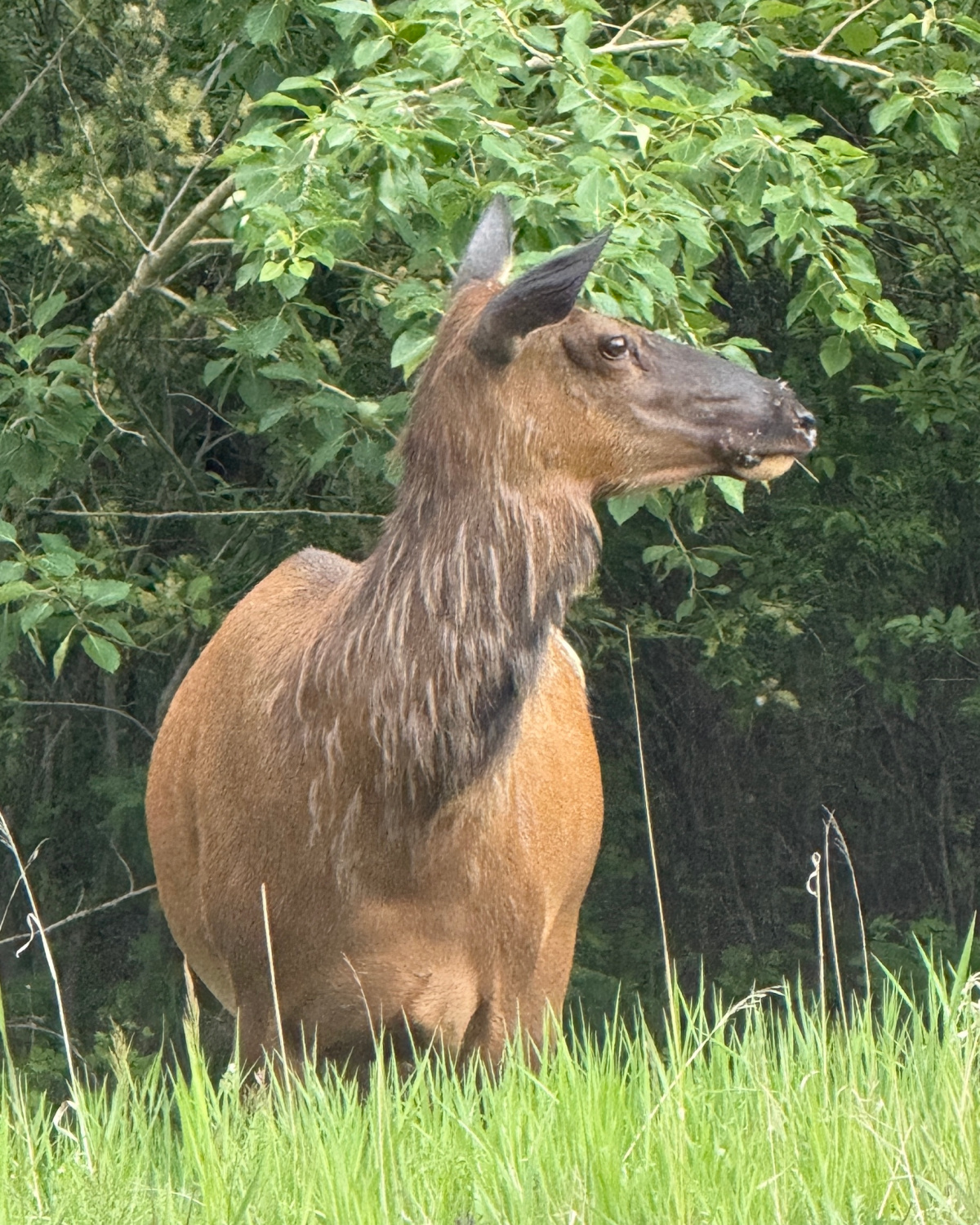
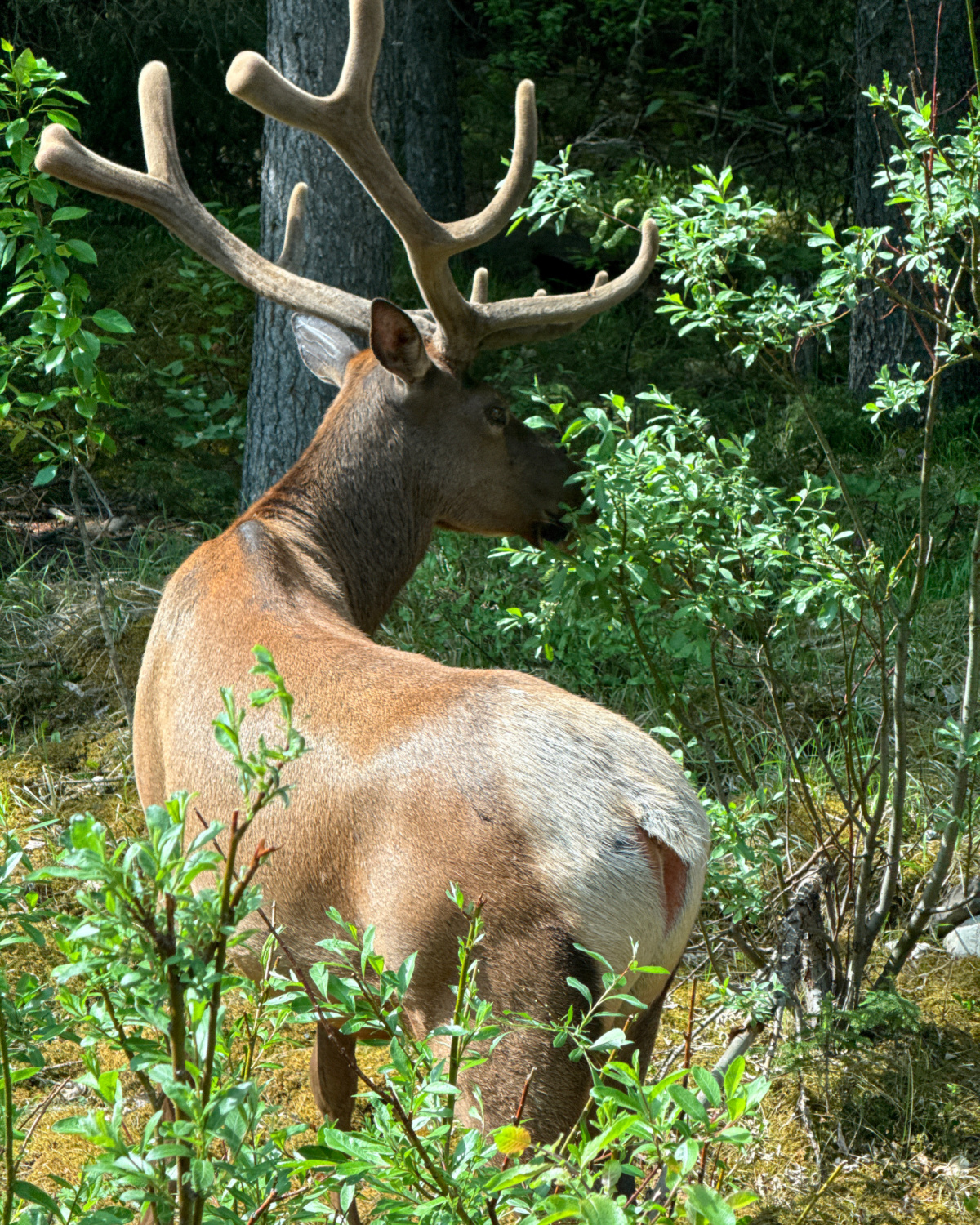
We Also Spotted a Beautiful Female Elk
One of my favorite sightings of the evening wasn’t the biggest or rarest animal we saw.
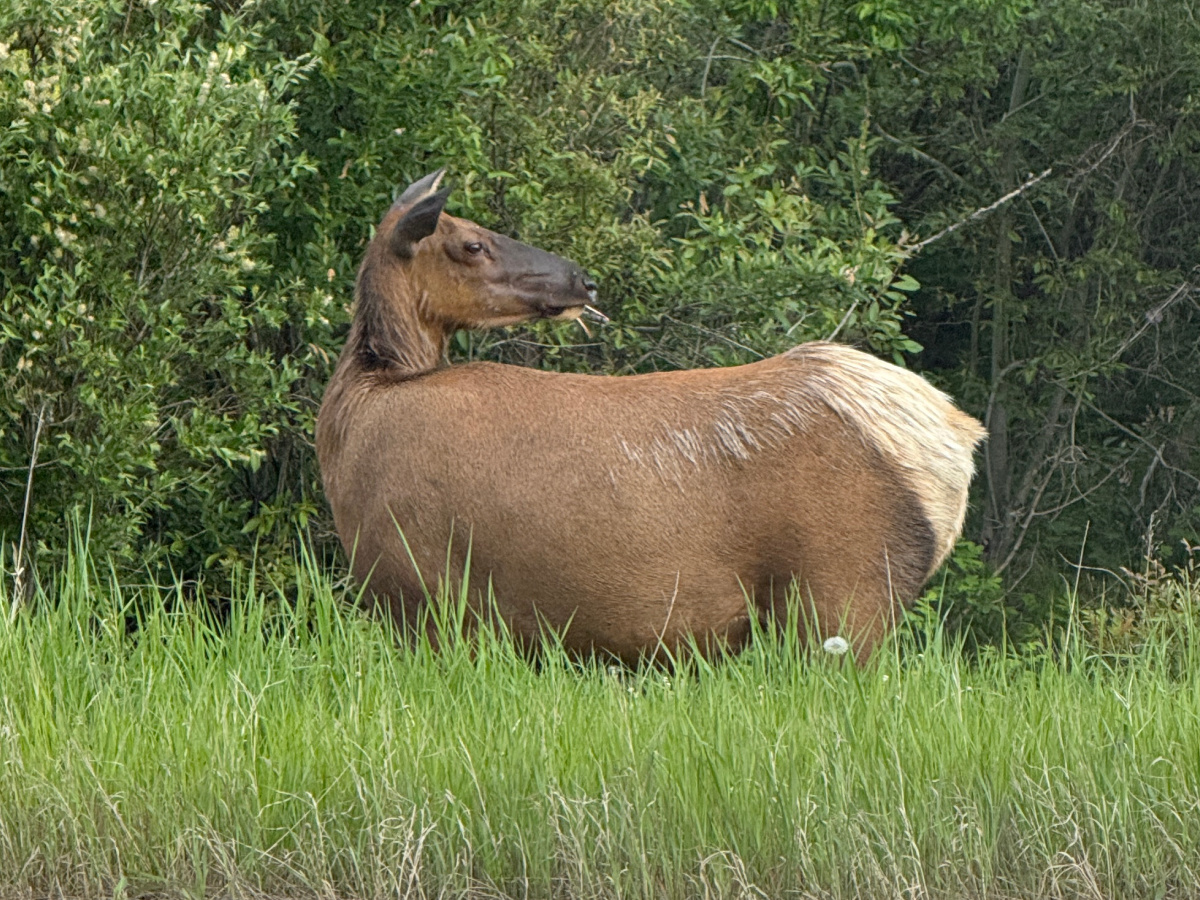
It was a female elk.
That may not sound particularly exciting at first, especially when everyone dreams of seeing bears, but there was something incredibly peaceful about watching her.
She stood quietly near the edge of the forest, occasionally lifting her head to watch her surroundings before returning to feed. Unlike the massive bull elk we encountered later, she blended almost perfectly into the landscape.
What struck me most was how graceful she looked moving through the trees. There wasn’t any dramatic behavior or action. It was simply a chance to observe a wild animal going about its day in one of the most beautiful places in North America.
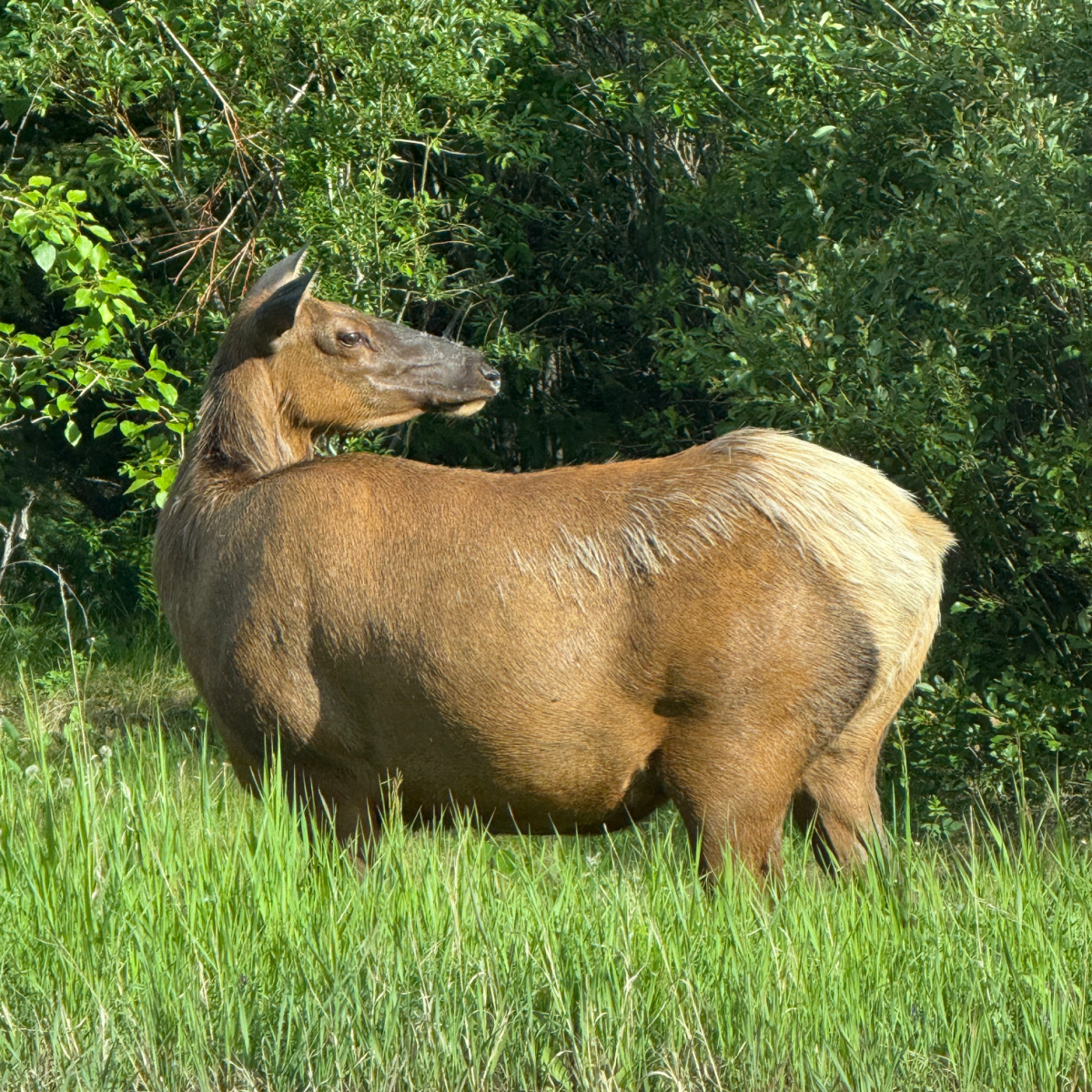
Moments like this are one of the reasons I enjoy wildlife viewing so much. Not every encounter needs to be adrenaline-filled. Sometimes the quiet sightings end up being just as memorable.
If you’re hoping to photograph wildlife in Jasper, elk are often among the most reliable animals to see, and they’re stunning subjects when you get good lighting and a natural setting like this one.
A Surprise Black Bear Sighting
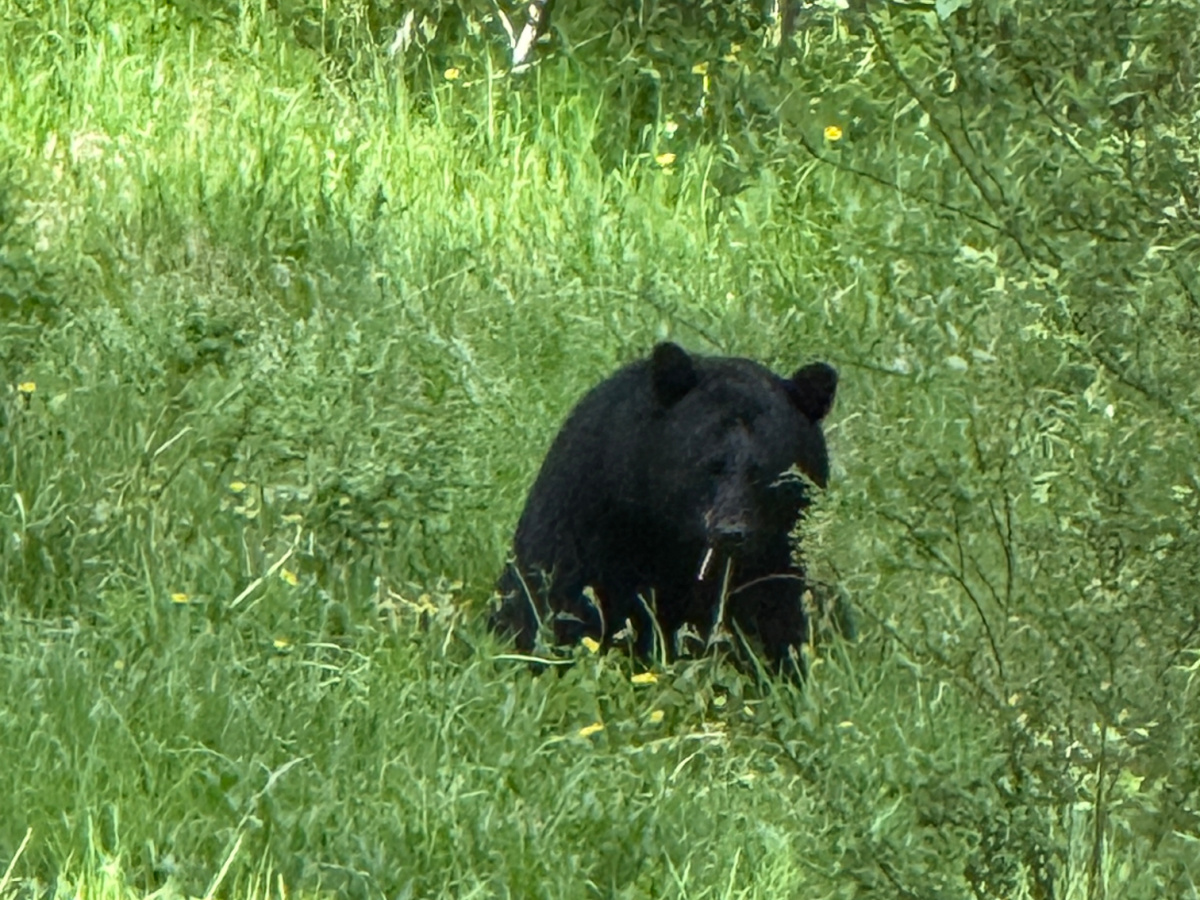
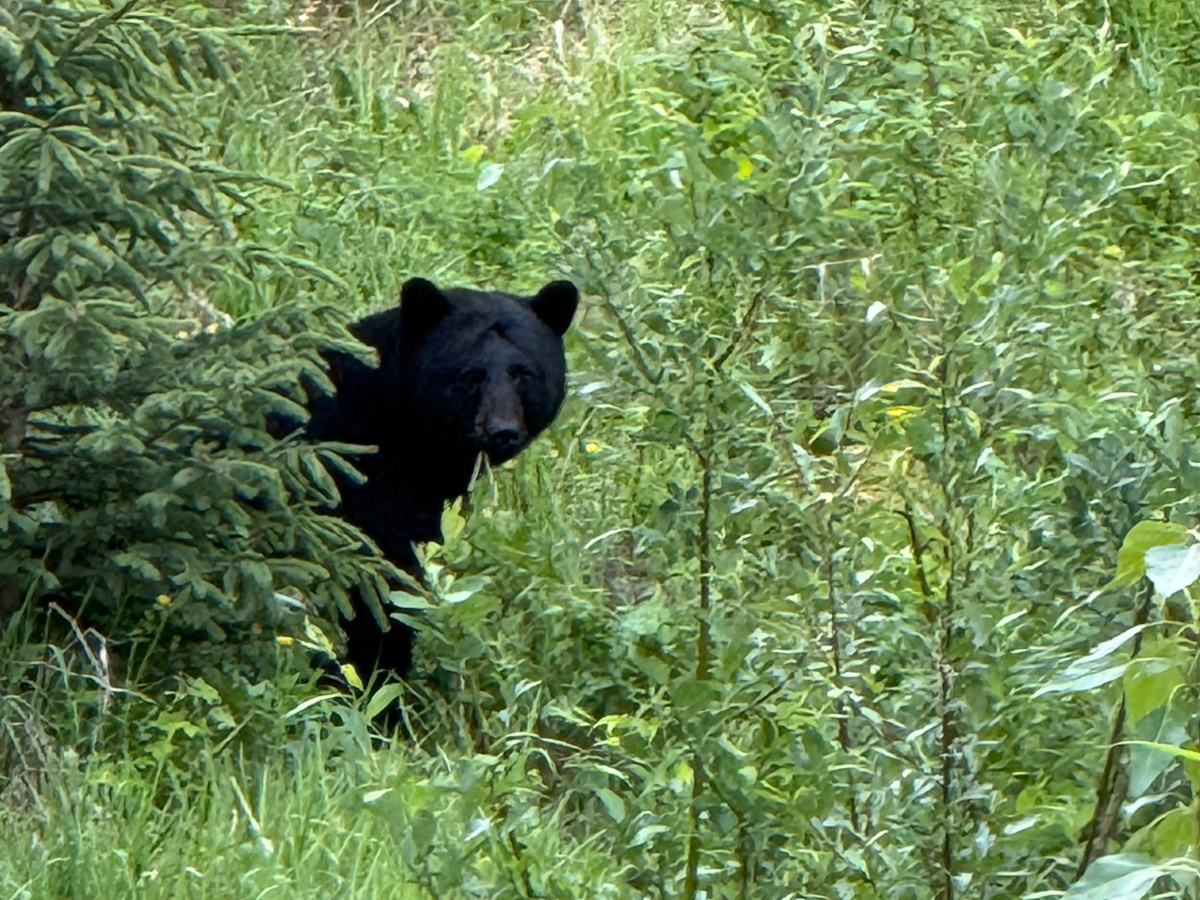
Almost immediately after seeing the elk, we also spotted a black bear.
The bear was feeding near the roadside and seemed completely focused on finding breakfast. Our guide positioned the vehicle so everyone could get a good look while maintaining a safe distance.
One of the interesting things our guide explained is that color alone isn’t always the best way to identify bears.
Many visitors assume black bears are always black and grizzlies are always brown, but that’s not necessarily true. Black bears can range from jet black to cinnamon-colored, while grizzlies can vary significantly in color as well.
The differences in body shape, shoulder structure, facial profile, and overall build are often much more useful for identification.
Watching the black bear forage while learning how to distinguish it from a grizzly was one of the most educational parts of the tour.
And honestly, if the evening had ended there, I would have considered the tour a success.
The fact that we later encountered a mother grizzly and two cubs was simply the icing on the cake.
The Elk Encounter That Turned Into a Photo Session
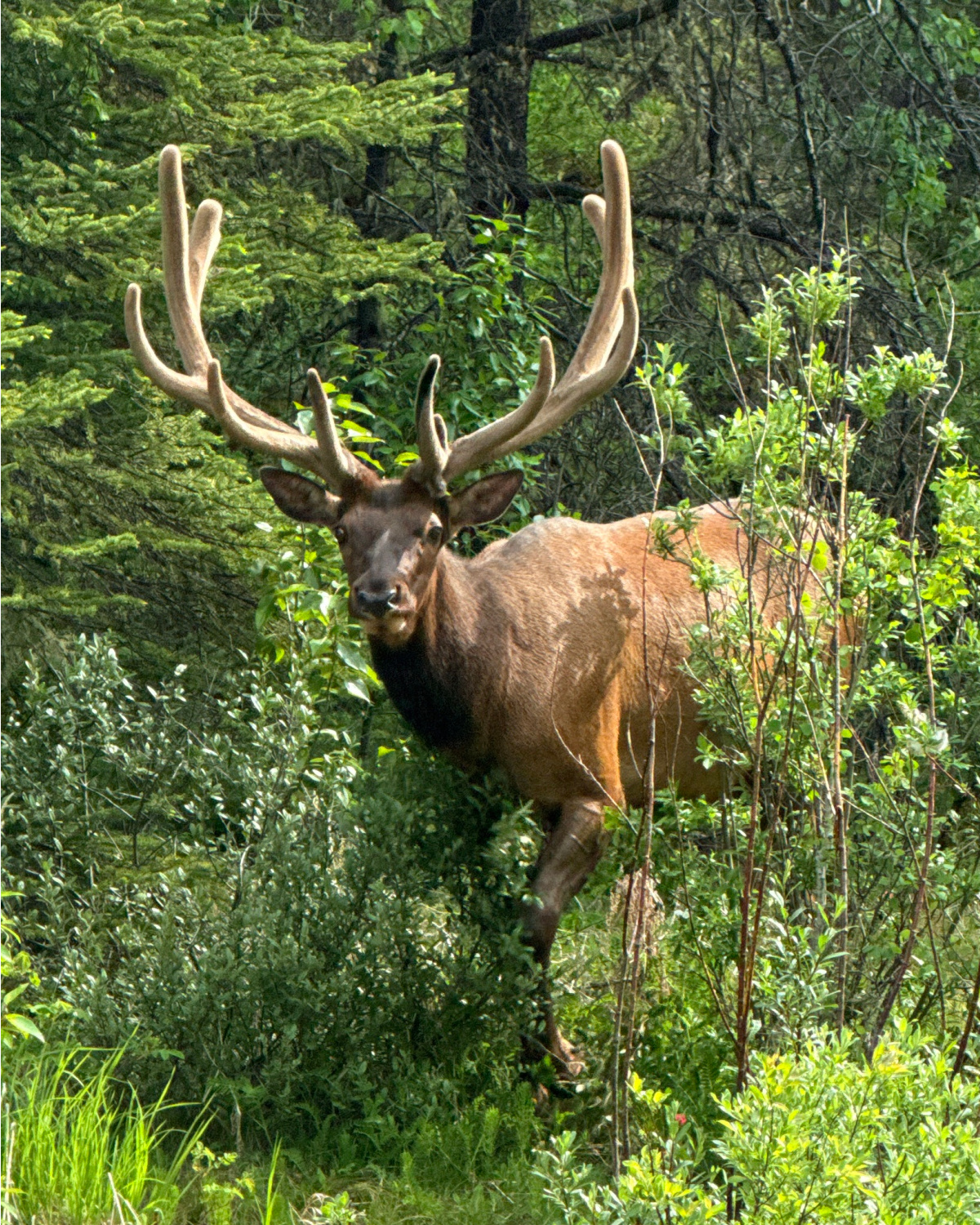
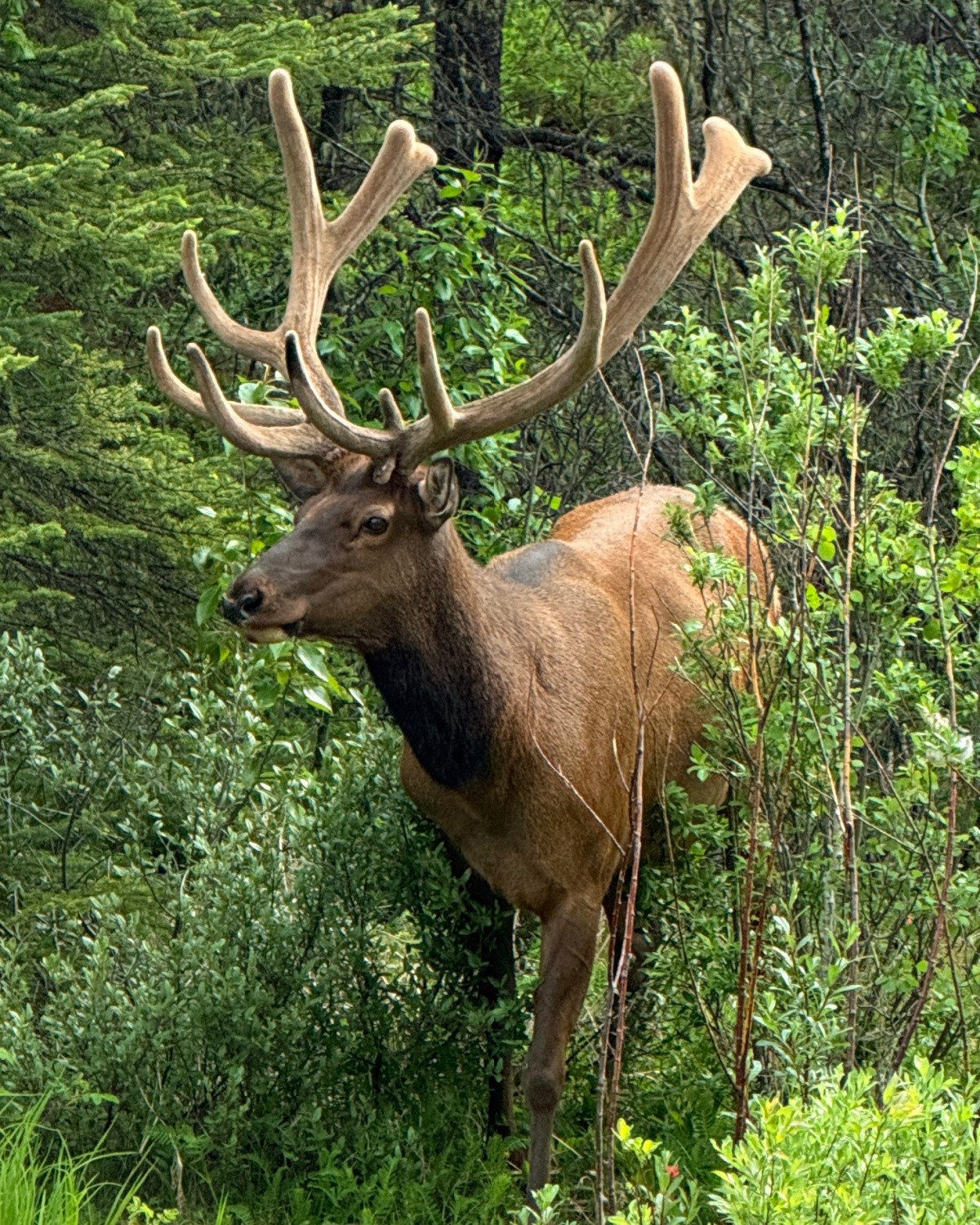
One of our first memorable sightings was a large bull elk.
Not just any elk, either.
This guy looked like he belonged on the cover of a wildlife magazine.
His antlers were enormous and still covered in velvet.
The morning light was perfect, and he seemed completely unconcerned with our presence.
For several minutes he moved through the trees while our guide positioned the vehicle for the best viewing opportunities.
Looking back through my photos, this was probably one of the most photogenic animals we saw all day.
The combination of the massive antlers, velvet texture, and forest backdrop made for some incredible images.
If you’re a photographer, Jasper is hard to beat.
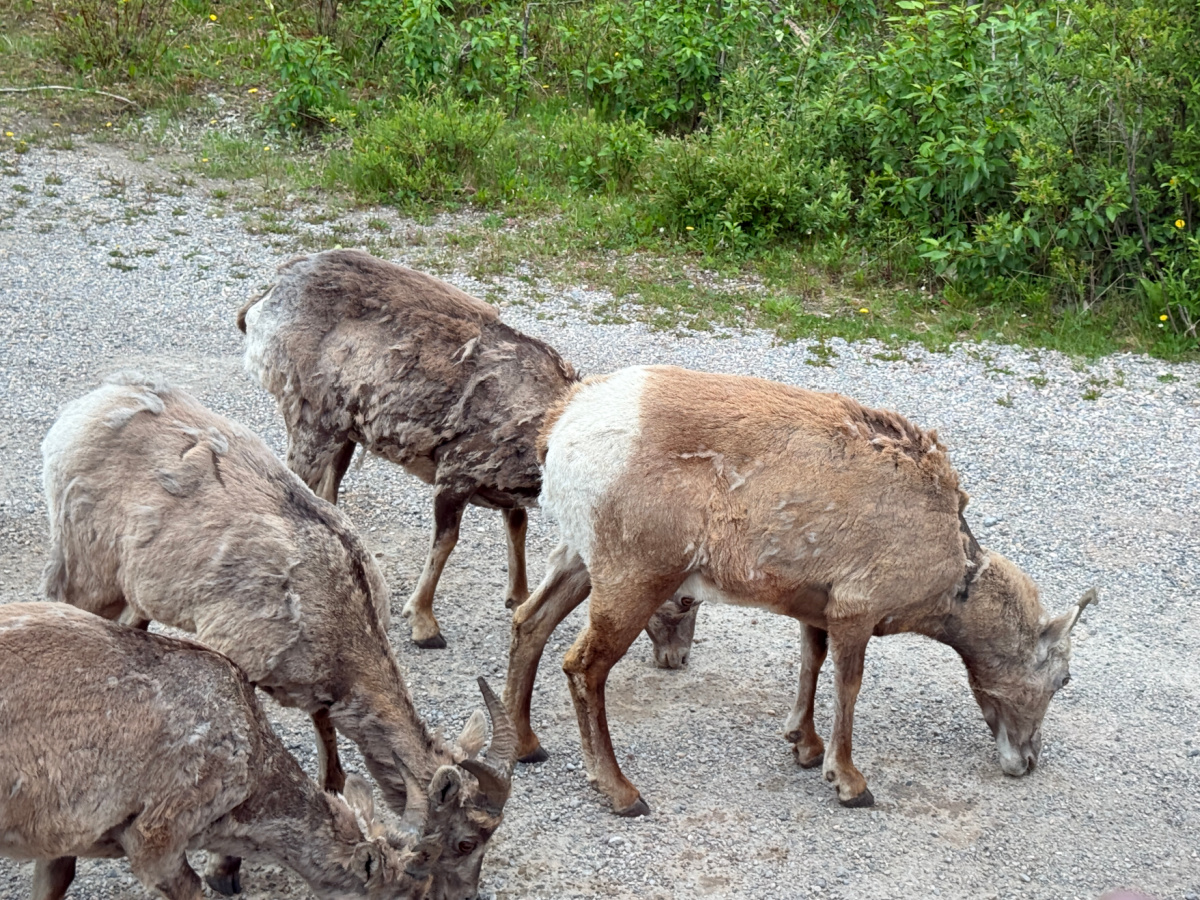
The Bighorn Sheep Were an Unexpected Bonus
When people think about Jasper wildlife, bears usually steal all the attention.
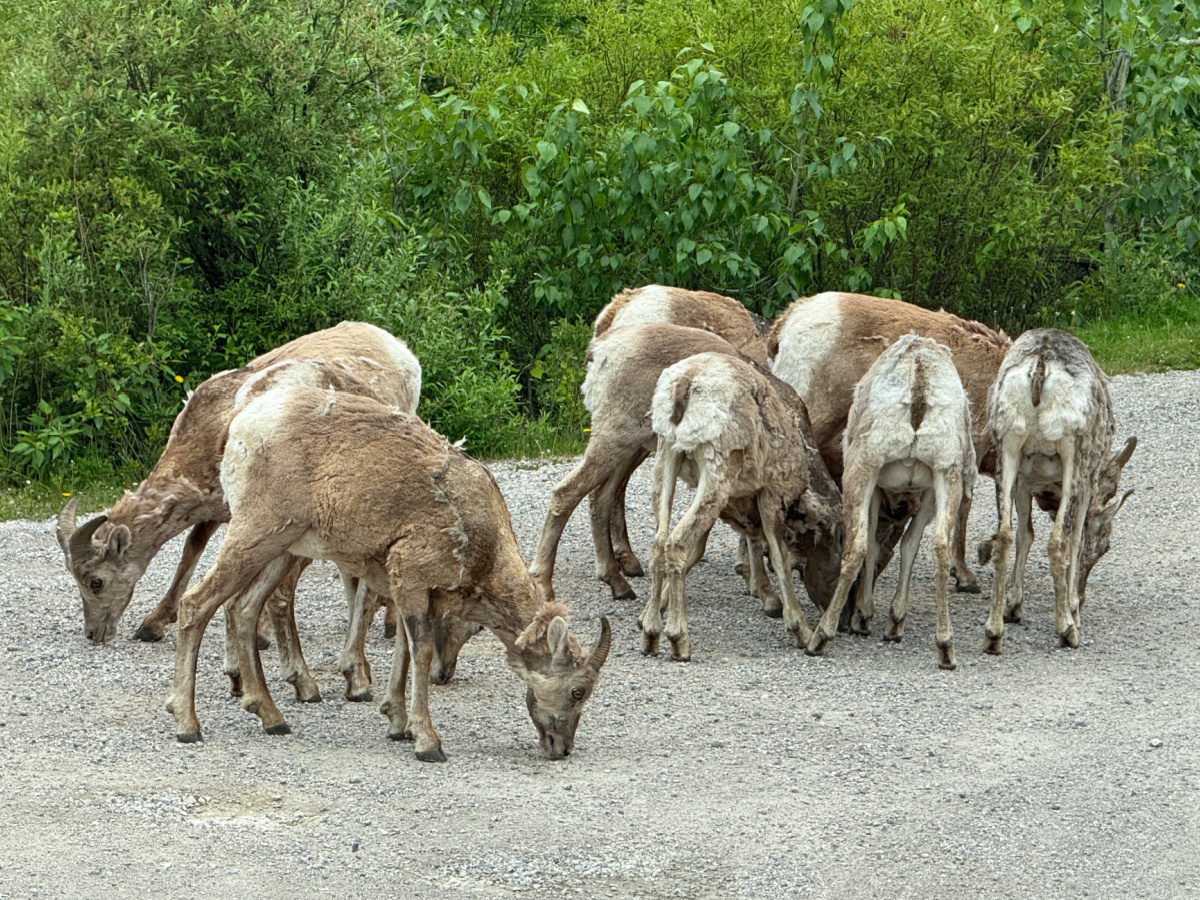
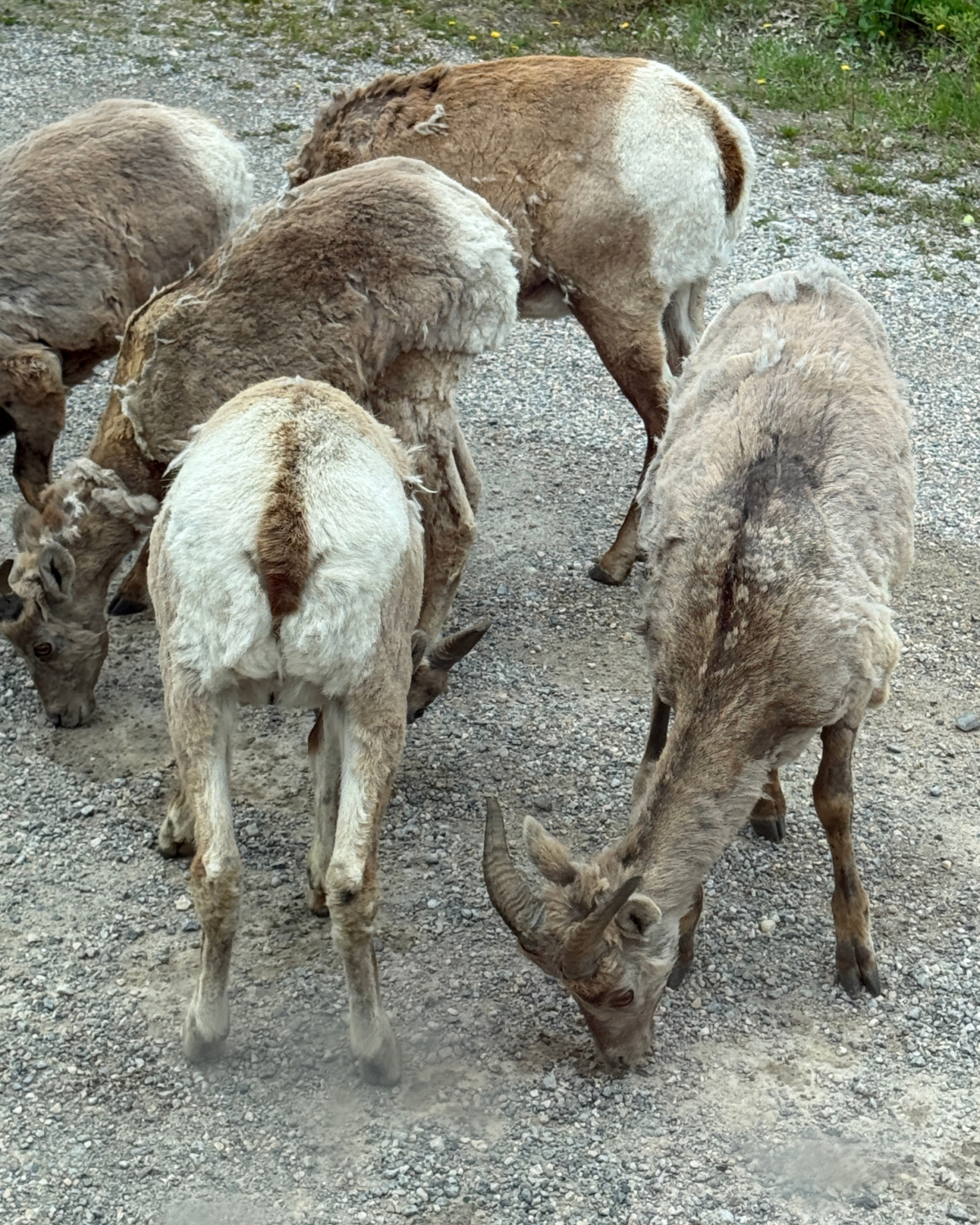
But we also spent time observing a group of bighorn sheep.
What struck me most was how close they were.
The sheep seemed completely focused on grazing and paid little attention to the vehicles nearby.
Their shaggy summer coats were actively shedding, giving them a slightly scruffy appearance that somehow made them even more interesting to watch.
These aren’t necessarily the animals people travel across the continent hoping to see.
Yet moments like this are part of what makes wildlife tours fun.
You never know what you’re going to encounter next.
The Bald Eagle Sighting
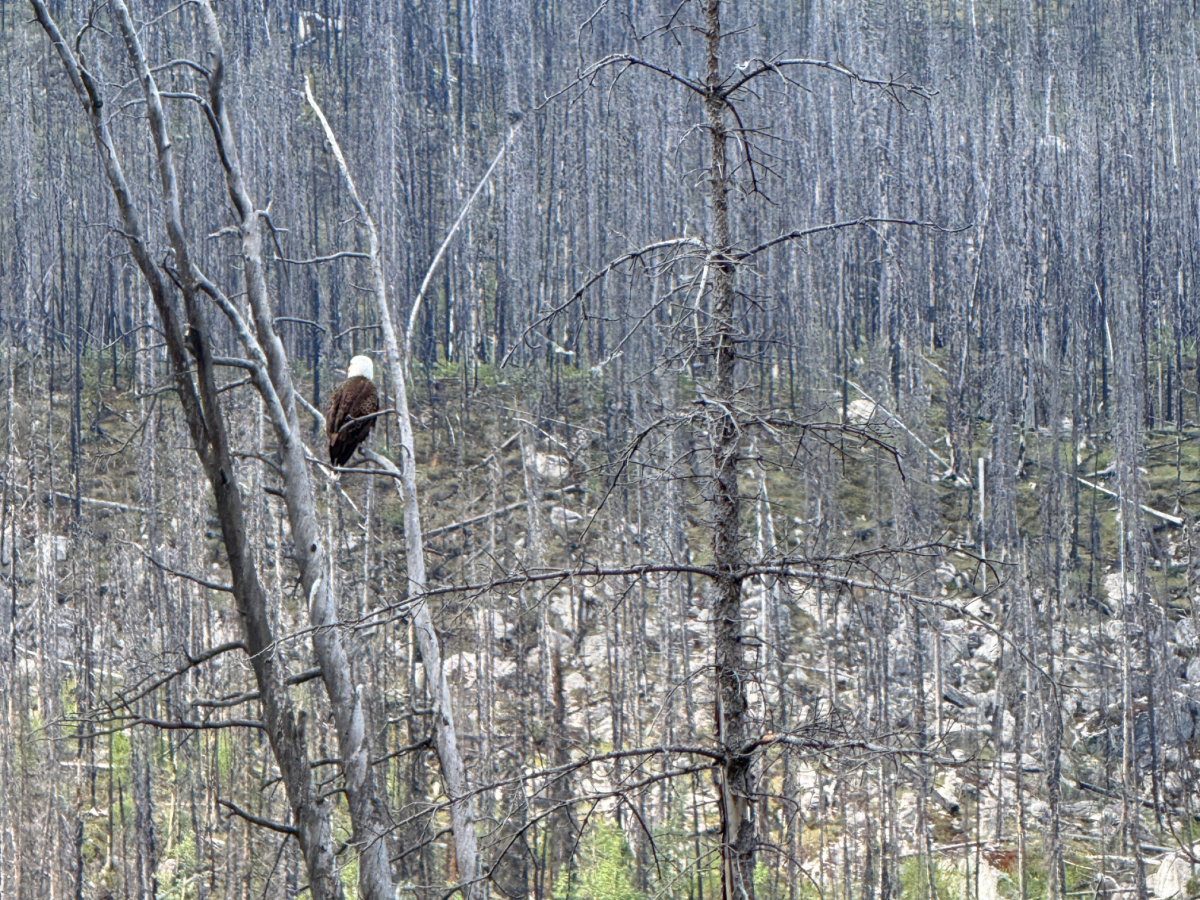
One of the more surprising sightings happened in a burn area.
Our guide spotted a bald eagle perched high in a dead tree.
Without his help, I never would have noticed it.
The eagle looked tiny against the landscape at first, but once binoculars came out, it became obvious.
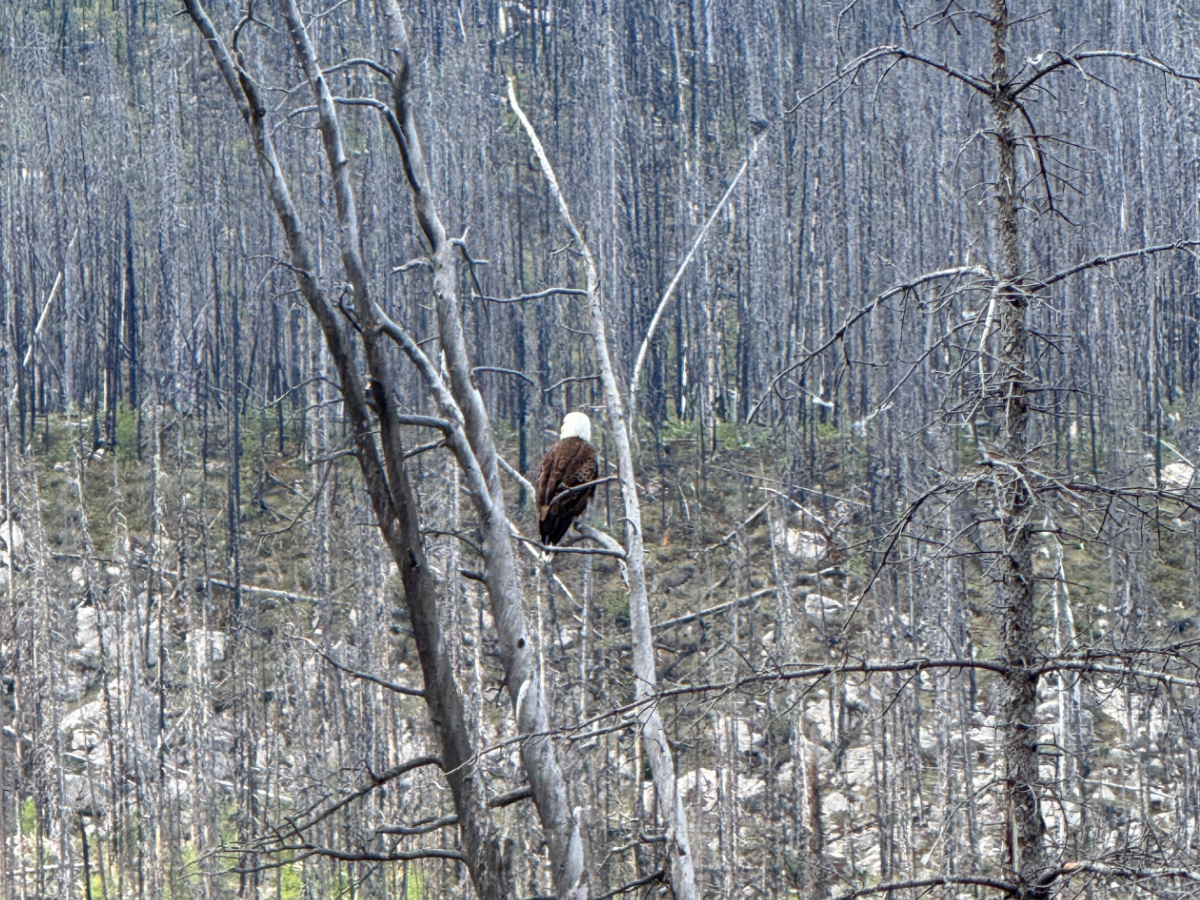
The contrast between the white head and the charred forest created a dramatic scene.
It also served as a reminder that wildlife often thrives in places that initially look devastated.
Burned forests may appear lifeless to us, but they create important habitat for countless species.
Then Everything Changed: The Grizzly Family
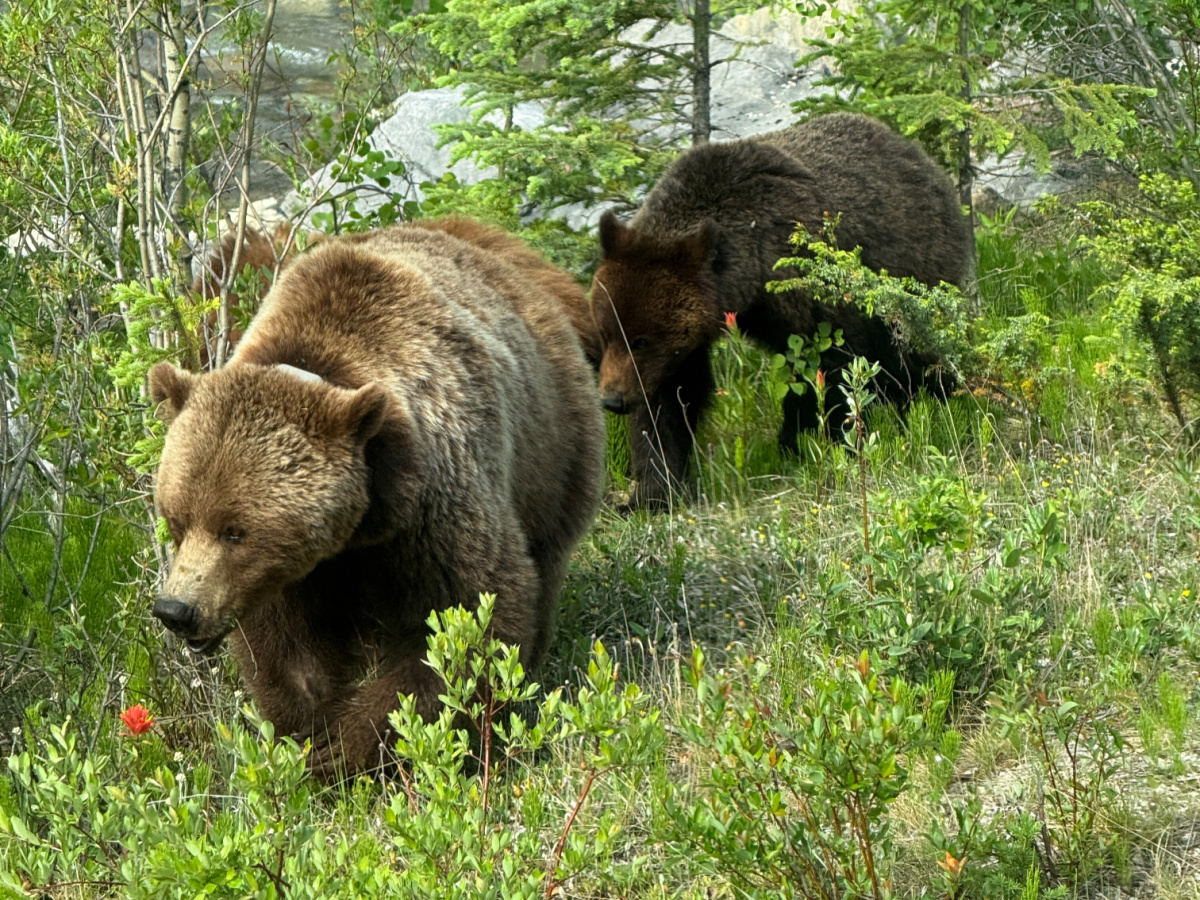
And then came the bears.
Honestly, this is the moment everyone wants to know about.
Near the end of the tour, word came through about a grizzly sow with two cubs.
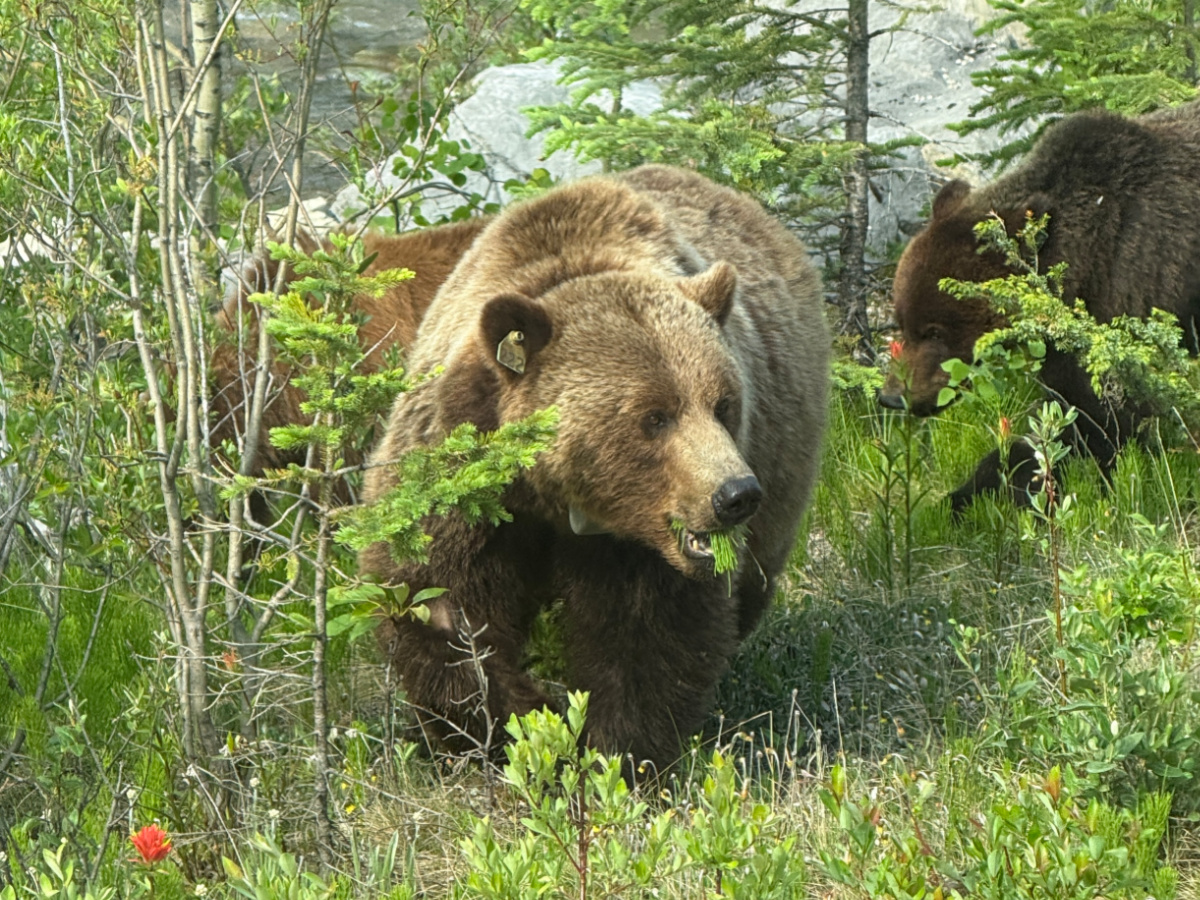
We headed toward the area and joined several other vehicles already watching from a safe distance.
What happened next felt almost unreal.
The mother bear emerged first.
Then one cub.
Then another.
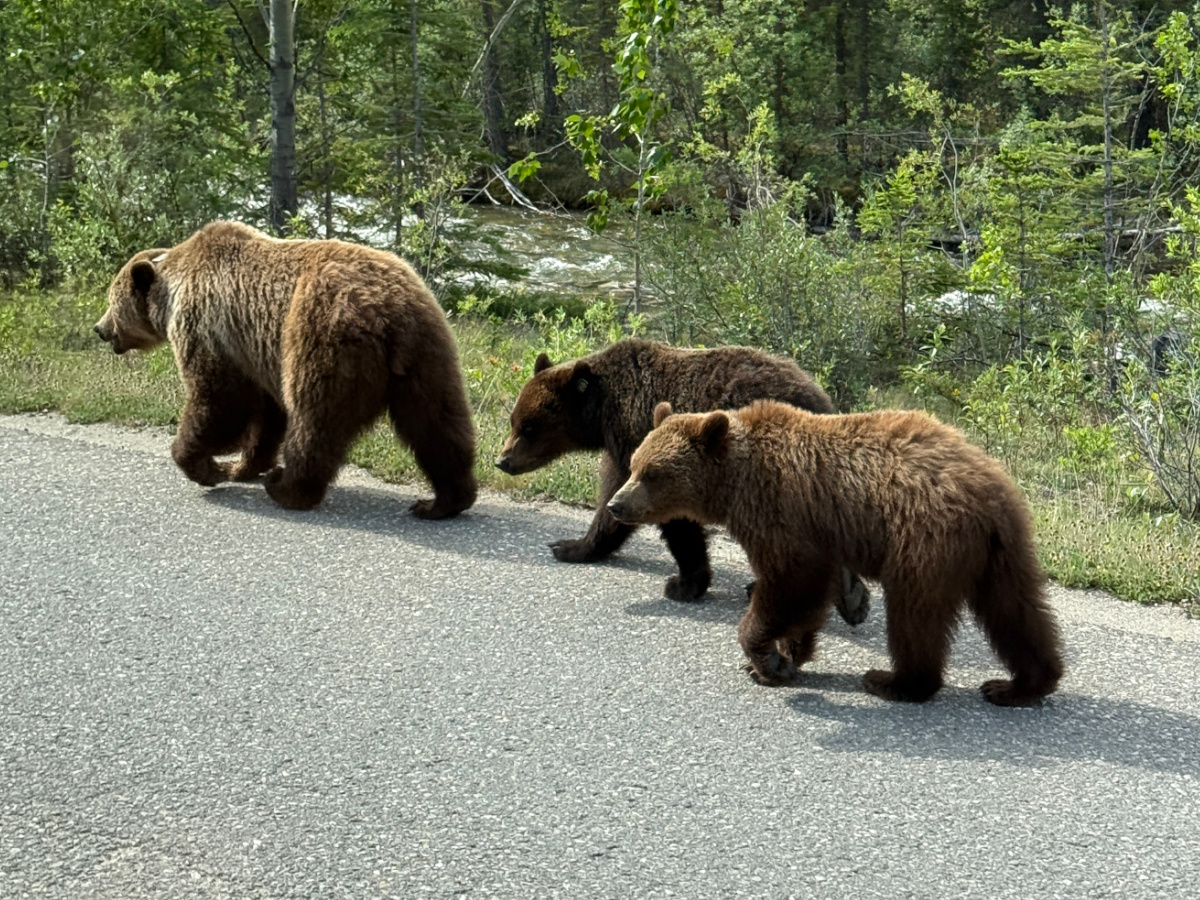
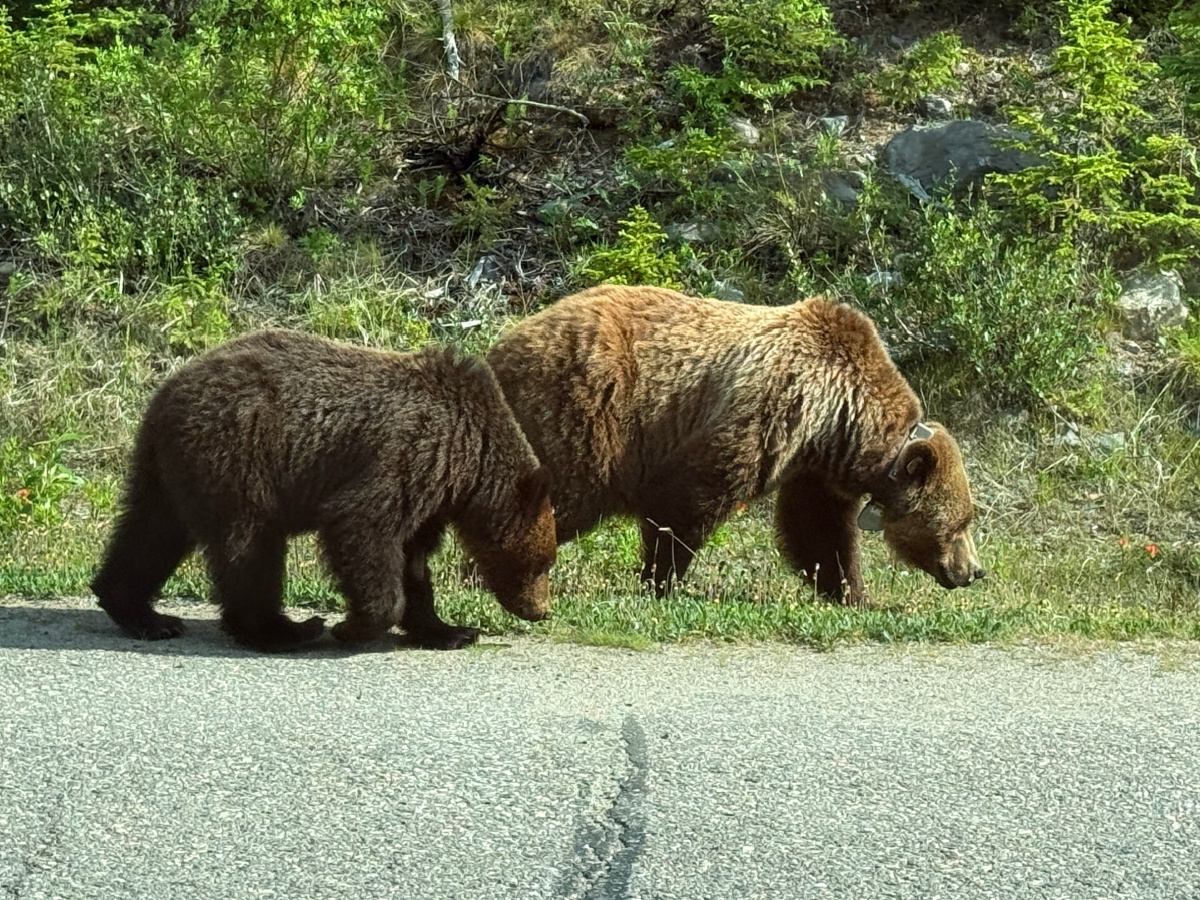
The family began moving together along the roadside.
The sow was huge.
One cub was noticeably lighter in color than the other, which made them easy to distinguish.
For several minutes they walked right in front of us.
Sometimes they grazed.
They would disappear into the brush before reappearing again.
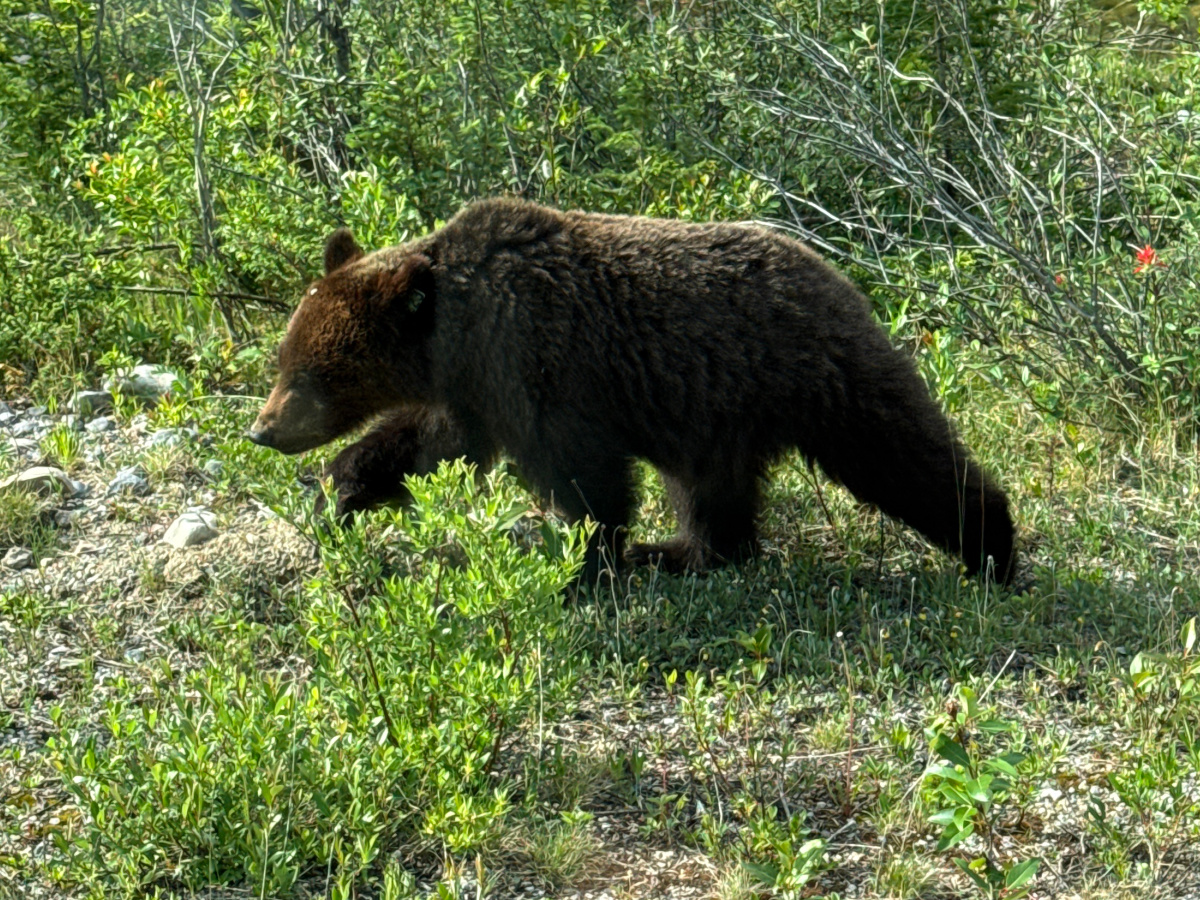
Nobody on the bus was talking much anymore.
We were just watching.
I think that’s one of the things people don’t always understand about wildlife encounters.
It’s not just excitement.
There’s something deeply humbling about being close enough to observe animals behaving naturally in a landscape that still belongs to them.
The bears weren’t performing for tourists.
They weren’t in an enclosure.
They were simply living their lives while we had the privilege of witnessing it.
And yes, I took far too many photos.
No regrets.
Why Seeing Bears With a Guide Felt Better Than Finding Them Alone
This might sound strange, but I actually preferred seeing grizzlies with a guide rather than stumbling across them on my own.
The guide handled everything.
He managed vehicle positioning, monitored distances, communicated with other guides. That’s expected.
But he also explained behavior and answered all of our questions.
Most importantly, he created a calm environment.
Nobody was doing anything foolish, trying to get closer, or stepping out for selfies.
Everyone could simply enjoy the experience.
For visitors who aren’t experienced in bear country, that’s a huge advantage.
What Wildlife Are You Most Likely to See?
Based on both our experience and information from the tour company, the animals most commonly seen include:
- Elk
- Deer
- Bighorn sheep
- Black bears
- Grizzly bears
- Bald eagles
Less common sightings may include:
- Moose
- Mountain goats
- Coyotes
The important thing to remember is that wildlife viewing is seasonal.
Animals move.
Food sources change.
Mating seasons affect behavior.
Weather matters.
The route your guide chooses in June may be completely different from the route used in September.
That’s one reason guided tours often outperform self-guided wildlife searches.
The guides are constantly adapting.
Is the Jasper Wildlife Tour Good for Families?
Absolutely.
In fact, I think this is one of the best family-friendly activities in Jasper.
Kids love the anticipation.
Adults appreciate not having to drive.
Grandparents don’t need to hike.
Everyone gets the same opportunity to experience wildlife.
Our tour involved very little physical exertion.
Most of the experience consisted of riding in the vehicle, stopping for sightings, and observing wildlife from safe viewing locations.
For multi-generational groups, it’s hard to find activities that work equally well for everyone.
This one does.
Is It Worth Doing If You’ve Already Seen Wildlife Elsewhere?
I would still say yes.
Before this trip, I’d already seen:
- Moose in Alaska
- Bears in Yellowstone
- Elk in Rocky Mountain National Park
- Bison throughout the West
Yet this tour remained one of my favorite wildlife experiences.
Part of that was the sheer number of animals we saw.
Part of it was the quality of the sightings.
But a big part was simply Jasper itself.
The scenery surrounding every wildlife encounter was spectacular.
Even when we weren’t looking at animals, we were driving through one of the most beautiful national parks in North America.
Tips for Getting the Most Out of the Tour
Book a Morning or Evening Departure
Our morning tour was fantastic.
The lighting was beautiful, temperatures were cooler, and wildlife activity seemed excellent. It’s always better to see wildlife in the early morning or right at dusk.
Bring a Camera With Zoom
Even though some animals may be relatively close, many sightings happen at a distance.
A zoom lens can make a huge difference.
Dress in Layers
Mountain weather changes quickly.
We experienced warm temperatures, cooler breezes, and changing conditions during the same outing.
Keep Expectations Realistic
Wildlife tours are not zoos.
You might see ten different species.
You might only see a few.
The unpredictability is part of the experience.
Listen to Your Guide
The guides know what they’re doing.
If they ask everyone to remain quiet or stay inside the vehicle, there’s a reason.
Frequently Asked Questions
How long is the Jasper Wildlife Tour?
Most tours last approximately 3 to 3.5 hours.
Do you need hiking experience?
Not at all.
This is a vehicle-based tour with very little walking required.
Are wildlife sightings guaranteed?
No.
Jasper is a wild environment and animals move freely.
That said, the company reports successful wildlife sightings on roughly 95% of tours.
Is it safe?
Yes. Guides are trained in wildlife viewing practices and maintain safe distances from animals.
What animals are most commonly seen?
Elk, deer, bighorn sheep, bears, and bald eagles are among the most frequently observed species.
Is this tour worth it for photographers?
Definitely.
The combination of wildlife and mountain scenery creates outstanding photography opportunities.
Final Thoughts
Of all the tours and excursions we booked during our Canadian Rockies trip, the Jasper Wildlife Tour ended up being one of the biggest surprises.
I expected a pleasant evening drive with a decent chance of seeing a few animals.
Instead, we spent hours learning about Jasper’s wildlife, photographing elk and bighorn sheep, spotting a bald eagle, and watching a grizzly bear family wander through the park.
For casual travelers—the people I typically write for—this is exactly the kind of experience that makes a national park vacation memorable.
No strenuous hiking, special skills, or complicated planning.
Just a comfortable ride through one of Canada’s most beautiful landscapes with an expert guide helping you discover the wildlife that calls it home.
And if you’re lucky enough to see a grizzly sow and two cubs strolling down the road?
That’s the kind of memory that stays with you long after the trip is over.
More Jasper Adventures
If you’re planning a visit to Jasper National Park, these guides can help you make the most of your time in the area:
- Jasper for First-Time Visitors
- Best Things to Do in Jasper
- Jasper in 3 Days Itinerary
- Maligne Lake Cruise Review
- Pyramid Lake Guide
- Athabasca Falls Guide
Plan Your Canadian Rockies Trip
The Jasper Wildlife Tour was one of our favorite experiences in the Canadian Rockies, but it was just one part of an incredible trip. These guides will help you plan the rest of your adventure:
- Ultimate Canadian Rockies Travel Guide
- Canadian Rockies for First-Time Visitors
- Best Things to Do in the Canadian Rockies
- 7-10 Day Canadian Rockies Itinerary
- Canadian Rockies Without Hardcore Hiking
- Icefields Parkway Guide
- Best Stops Along the Icefields Parkway
Explore More Incredible Wildlife Experiences in North America
Wildlife encounters are often the moments people remember most from a national park vacation. Whether it’s spotting grizzly bears in Jasper, watching wolves in Yellowstone, or seeing whales breach off the coast of Alaska, these experiences create stories you’ll talk about for years. If you enjoy seeing animals in their natural habitat, these guides should be next on your reading list.
Yellowstone’s Best Wildlife Viewing Areas
If seeing wildlife is a priority, few places in North America rival Yellowstone National Park. Both Lamar Valley and Hayden Valley are famous for bison, elk, bears, wolves, and other wildlife, especially during the early morning and evening hours when animals are most active.
Kenai Fjords National Park Cruise
One of the highlights of our Alaska travels was taking a Kenai Fjords National Park boat tour. Along with spectacular glaciers and coastal scenery, we saw sea otters, harbor seals, puffins, porpoises, and whales. It’s one of the easiest ways to experience Alaska’s incredible marine wildlife without strenuous hiking.
The Lu-Lu Belle Wildlife Cruise in Valdez
The Lu-Lu Belle Glacier and Wildlife Cruise combines stunning scenery with excellent opportunities to spot wildlife. During our trip, we saw sea otters, harbor seals, sea lions, and numerous seabirds while exploring Prince William Sound and Columbia Glacier.
Olympic National Park Tidepooling
Wildlife viewing isn’t always about large animals. Some of our favorite discoveries in Olympic National Park happened while tidepooling along the coast. Colorful sea stars, anemones, crabs, and other marine creatures turn Olympic’s beaches into a fascinating natural aquarium during low tide.


