Icefields Parkway Guide: Planning the Most Scenic Drive in the Canadian Rockies

Affiliate Disclosure: This post may contain affiliate links. If you make a purchase or booking through these links, I may earn a commission at no additional cost to you.
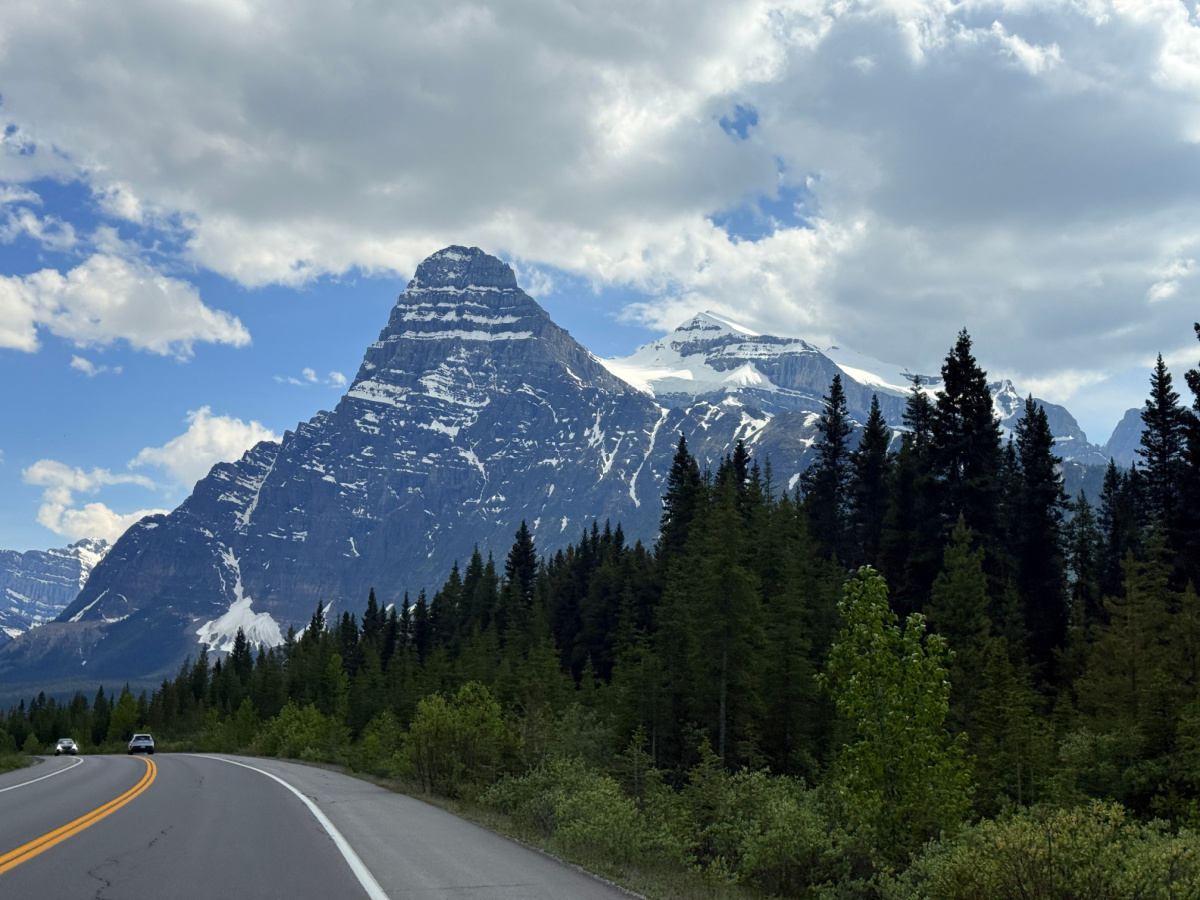
Planning to drive the Icefields Parkway? This complete Icefields Parkway guide covers the best stops, trip planning tips, itineraries, and everything you need to know before driving between Banff and Jasper.
Estimated reading time: 24 minutes
If there is one experience that defines a trip to the Canadian Rockies, it is driving the Icefields Parkway.
I’ve driven scenic roads all over North America. I’ve explored Yellowstone, Glacier, Grand Teton, Mount Rainier, Olympic, North Cascades, Yosemite, the Grand Canyon, and Alaska. Very few places have made me pull over as often as the Icefields Parkway.
The scenery simply never lets up.
One minute you’re driving beside a turquoise river. A few miles later you’re staring at glaciers hanging from impossibly steep mountains. Then you round a corner and discover another jaw-dropping viewpoint that somehow looks completely different from the last one.
The Icefields Parkway isn’t just transportation between Banff and Jasper. It is the attraction.
And for travelers like me—people who love spectacular scenery but don’t necessarily want to spend eight hours hiking into the backcountry—it might be one of the best road trip experiences in the world.
This guide covers everything you need to know to plan your Icefields Parkway adventure, including when to go, how much time you need, what to expect, and the stops that are worth your time.
Planning a Canadian Rockies vacation? Be sure to read my Ultimate Canadian Rockies Travel Guide, which brings together the best lakes, scenic drives, wildlife experiences, itineraries, and travel tips from across the region.
Quick Snapshot
Location: Between Lake Louise and Jasper, Alberta
Length: Approximately 145 miles (232 km)
Driving Time (without stops): About 3 hours
Realistic Time Needed: 6–10 hours minimum
Best For: Scenic drives, waterfalls, glaciers, mountain views, photography, wildlife viewing
Difficulty Level: Easy
Perfect For: Families, retirees, casual travelers, photographers, first-time Canadian Rockies visitors
Can You Drive It in One Day? Yes
Should You? Absolutely—but plan plenty of stops.
What Is the Icefields Parkway?
The Icefields Parkway is the spectacular highway connecting Banff National Park and Jasper National Park.
Officially known as Highway 93 North, the road runs from Lake Louise in the south to Jasper in the north.
Along the way you’ll pass:
- Massive glaciers
- Turquoise rivers
- Waterfalls
- Alpine lakes
- Snow-covered peaks
- Wildlife habitat
- Some of the most famous viewpoints in Canada
The route follows valleys carved by glaciers over thousands of years, which explains why the scenery feels so dramatic. Everywhere you look there are enormous mountains rising directly from the valley floor.
Even after a full week in the Canadian Rockies, I found myself repeatedly saying, “How is this place real?”
Why the Icefields Parkway Is Different Than Other Scenic Drives
Many scenic drives have a handful of great viewpoints separated by long stretches of ordinary road.
The Icefields Parkway is the opposite.
The drive itself is the attraction.
For hours at a time you’re surrounded by mountains that would be considered major destinations almost anywhere else.
One thing that surprised me was how frequently we found ourselves pulling over.
I would tell myself, “Okay, the next stop is Peyto Lake.”
Then five minutes later I’d be asking my husband to slow down because there was another incredible mountain, glacier, river valley, or overlook.
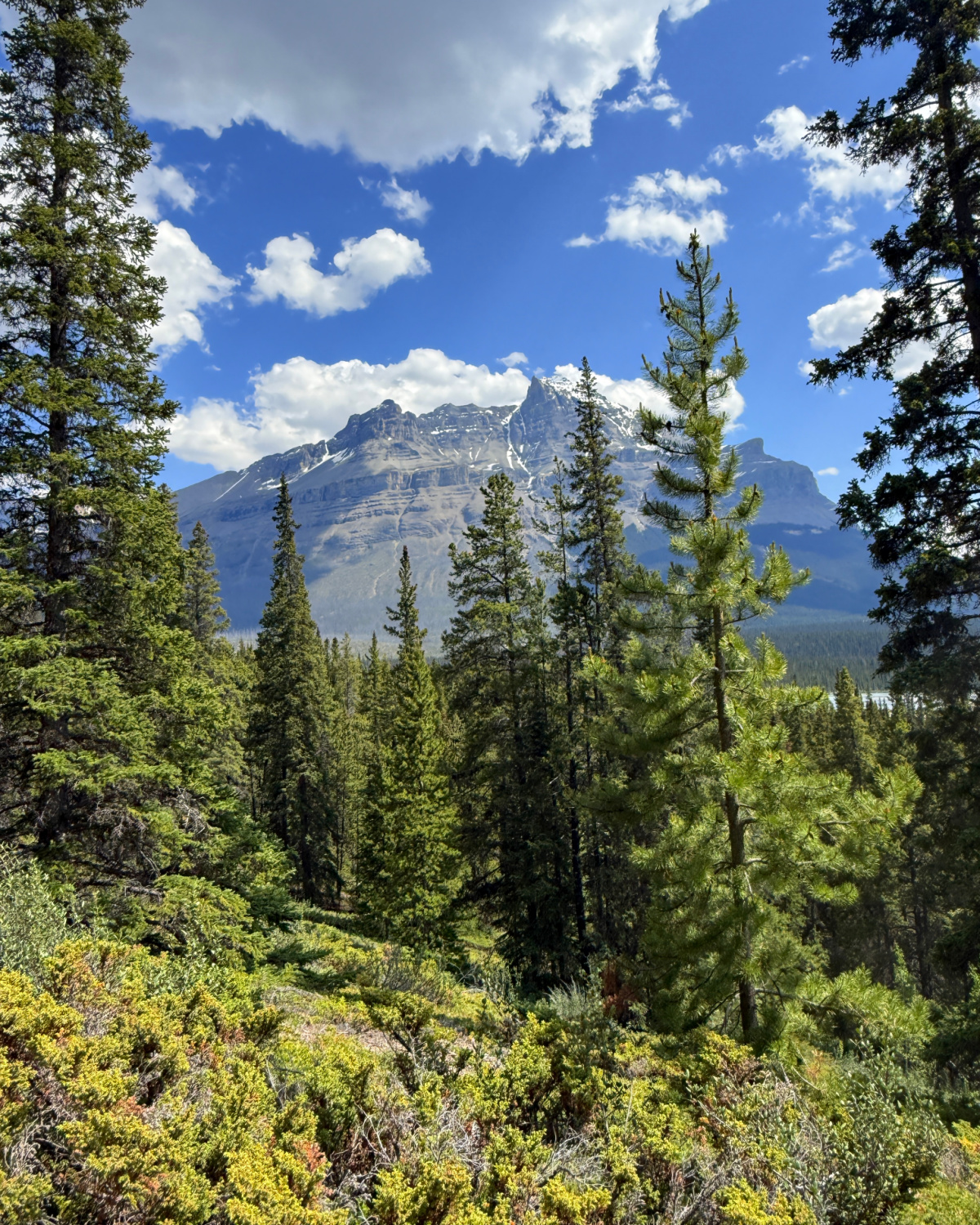
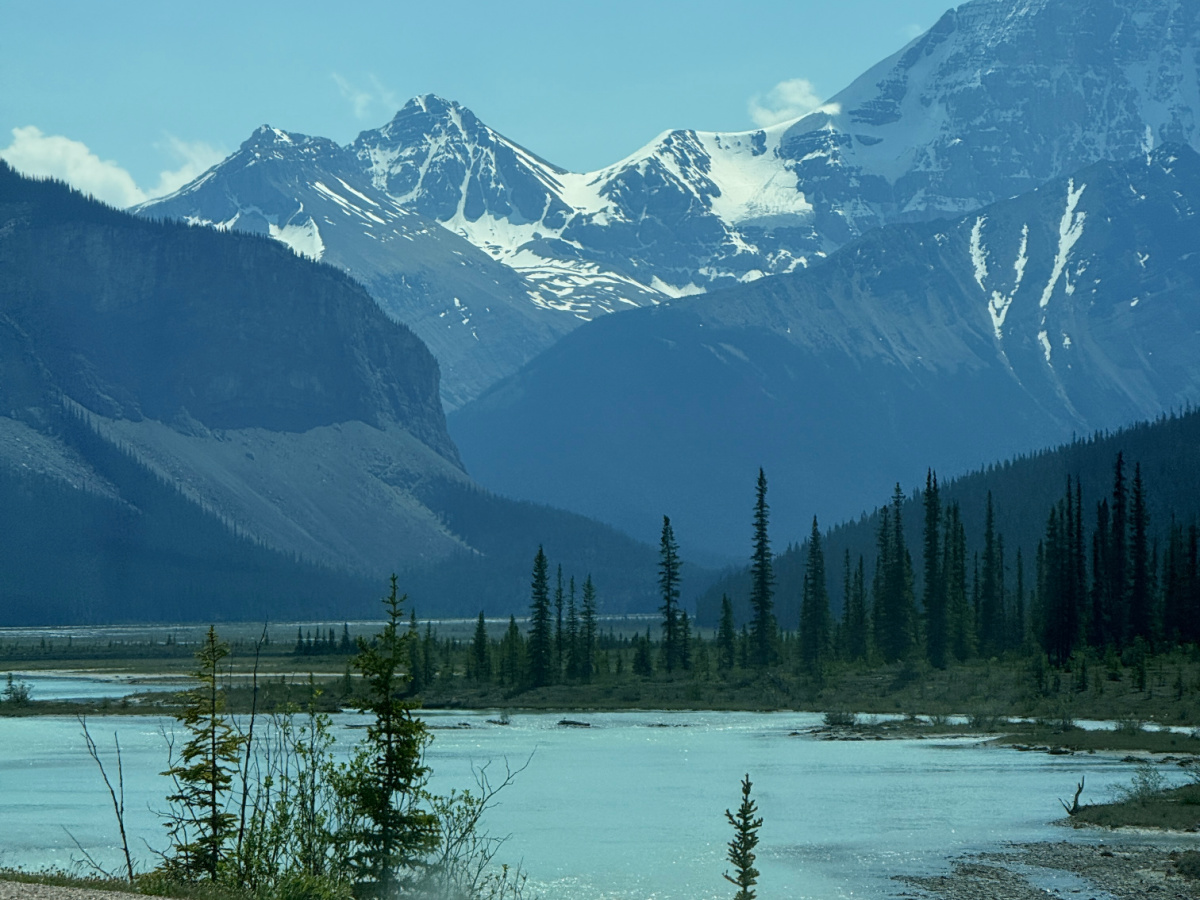
Some of my favorite photos from the entire Canadian Rockies trip weren’t taken at famous attractions. They came from random roadside pullouts where we happened to stop for a few minutes.
That’s what makes this drive special.
How Much Time Do You Need for the Icefields Parkway?
This is probably the biggest planning mistake first-time visitors make.
Google Maps says the drive takes roughly three hours.
That is technically true.
It’s also completely unrealistic.
You could drive the Icefields Parkway in three hours the same way you could visit Yellowstone by driving straight through without stopping.
You’d technically see it.
You just wouldn’t experience it.
For most travelers I recommend:
Minimum
6–8 hours
Better
A full day
Ideal
Split the drive between two days if your itinerary allows.
We drove portions of the Icefields Parkway multiple times during our trip and never got tired of it.
The lighting changes.
The weather changes.
The views change.
A mountain that looked ordinary at noon might look spectacular at sunset.
One of the Best Ways to Experience the Icefields Parkway: Split It Between Two Days
When people first start planning a Canadian Rockies vacation, they often think of the Icefields Parkway as a single day trip.
That’s certainly an option, and if you’re staying exclusively in Banff or Lake Louise, a long day on the Parkway can work very well.
But after experiencing the region myself, I actually think one of the best approaches is to split the Parkway across multiple days.
If you’re planning to visit both Banff and Jasper, there’s no rule that says you need to stop at everything during a single drive.
In fact, I would argue the opposite.
You can stop at Peyto Lake, Bow Lake, and Mistaya Canyon on your way north toward Jasper. Then, after spending a few days exploring Jasper, you can visit Athabasca Falls, the Columbia Icefield, the Skywalk, Sunwapta Falls, or any missed viewpoints on your return trip.
This approach offers several advantages:
- Less pressure to fit everything into one day
- More flexibility if weather changes
- More time at each stop
- Fewer rushed decisions
- Additional opportunities for wildlife sightings
One of the biggest surprises of the Canadian Rockies is how different the scenery can look depending on the weather and time of day. Splitting your Parkway sightseeing between two drives allows you to experience more of that variety.
If your itinerary includes Jasper, I think this is one of the smartest ways to approach the Icefields Parkway.
The Icefields Parkway Is the Link Between Banff and Jasper
One thing that isn’t always obvious when you’re first planning a Canadian Rockies trip is that the Icefields Parkway isn’t just a scenic drive.
It’s the connective tissue that ties the entire region together.
If you’re planning a shorter trip of four or five days, focusing primarily on Banff often makes sense.
But once your trip stretches into the seven-to-ten-day range, I strongly recommend adding Jasper to your itinerary.
The reason is simple: Jasper isn’t merely a destination at the end of the road.
It’s one of the highlights of the entire Canadian Rockies experience.
During our trip, we found that Banff and Jasper felt very different from one another.
Banff has the iconic lakes, famous viewpoints, and energetic tourist-town atmosphere.
Jasper feels quieter, more relaxed, and more connected to the surrounding wilderness.
It’s home to attractions like:
- Maligne Lake and Spirit Island
- Athabasca Falls
- Pyramid Lake
- Jasper wildlife tours
- Scenic drives
- Excellent restaurants and local shops
The drive between the two towns happens to be one of the most spectacular roads in the world.
That’s why I encourage travelers to think of the Icefields Parkway as a bridge rather than a destination.
You’re not simply driving from Banff to Jasper.
You’re connecting two world-class national park experiences while enjoying one of North America’s greatest scenic drives in between.
For many travelers, Jasper ends up being the reward waiting at the end of an already unforgettable journey.
When Is the Best Time to Drive the Icefields Parkway?
June is one of the best times of year to experience the Icefields Parkway, especially if your goal is seeing the Canadian Rockies at their most dramatic.
That was when we visited, and one of the things that stood out immediately was how much snow still covered the mountains. The glaciers looked enormous, waterfalls were roaring from spring snowmelt, and nearly every viewpoint had that classic Canadian Rockies combination of turquoise water and snow-capped peaks.
June
- Snow-covered mountains
- Powerful waterfalls
- Long daylight hours
- Fewer crowds than peak summer
July and August
- Warmest weather
- All attractions operating
- Peak visitation
- Busiest parking lots
This is the best time for travelers who want maximum accessibility and don’t mind sharing viewpoints with more visitors.
September
- Smaller crowds
- Cooler temperatures
- Early fall colors
- Excellent photography conditions
If I were planning a return trip primarily for photography, September would be near the top of my list.
October
- Beautiful mountain scenery
- Much quieter roads
- Potential snow and weather-related closures
October can be incredible, but flexibility becomes important.
Winter
Most visitors experience the Icefields Parkway between late spring and early fall. Winter conditions can be severe, with snow, ice, and limited services.
For first-time visitors, June through September is generally the sweet spot.
Which Direction Is Better?
This is one of the most common questions travelers ask.
The truth is that both directions are incredible.
Banff to Jasper
This is the direction most visitors drive.
Advantages:
- Peyto Lake comes early
- Bow Lake comes early
- Icefields attractions are near the middle
- The scenery seems to build throughout the day
Jasper to Banff
Advantages:
- Athabasca Falls comes early
- Glaciers appear dramatically as you approach them
- Some mountain views feel more dramatic from this direction
We experienced sections in both directions and honestly couldn’t choose a favorite.
The good news is that there really isn’t a wrong answer.
A Sample One-Day Icefields Parkway Itinerary
If you’re driving from Banff or Lake Louise to Jasper and only have one day to experience the Icefields Parkway, here’s the route I would recommend.
Early Morning
- Depart Lake Louise
- Stop at Bow Lake
- Continue to Peyto Lake
These two stops provide some of the most iconic scenery along the entire route and are worth visiting before crowds build.
Late Morning
- Mistaya Canyon
- Scenic pullouts along the North Saskatchewan River
Mistaya Canyon was one of the most pleasant surprises of our trip. The walk is short, and the scenery feels far more dramatic than the effort required.
Lunch
- Saskatchewan River Crossing area
- Picnic lunch from Banff or Lake Louise
Food options are limited and expensive along the Parkway, so many visitors bring their own lunch.
Afternoon
- Columbia Icefield
- Athabasca Glacier
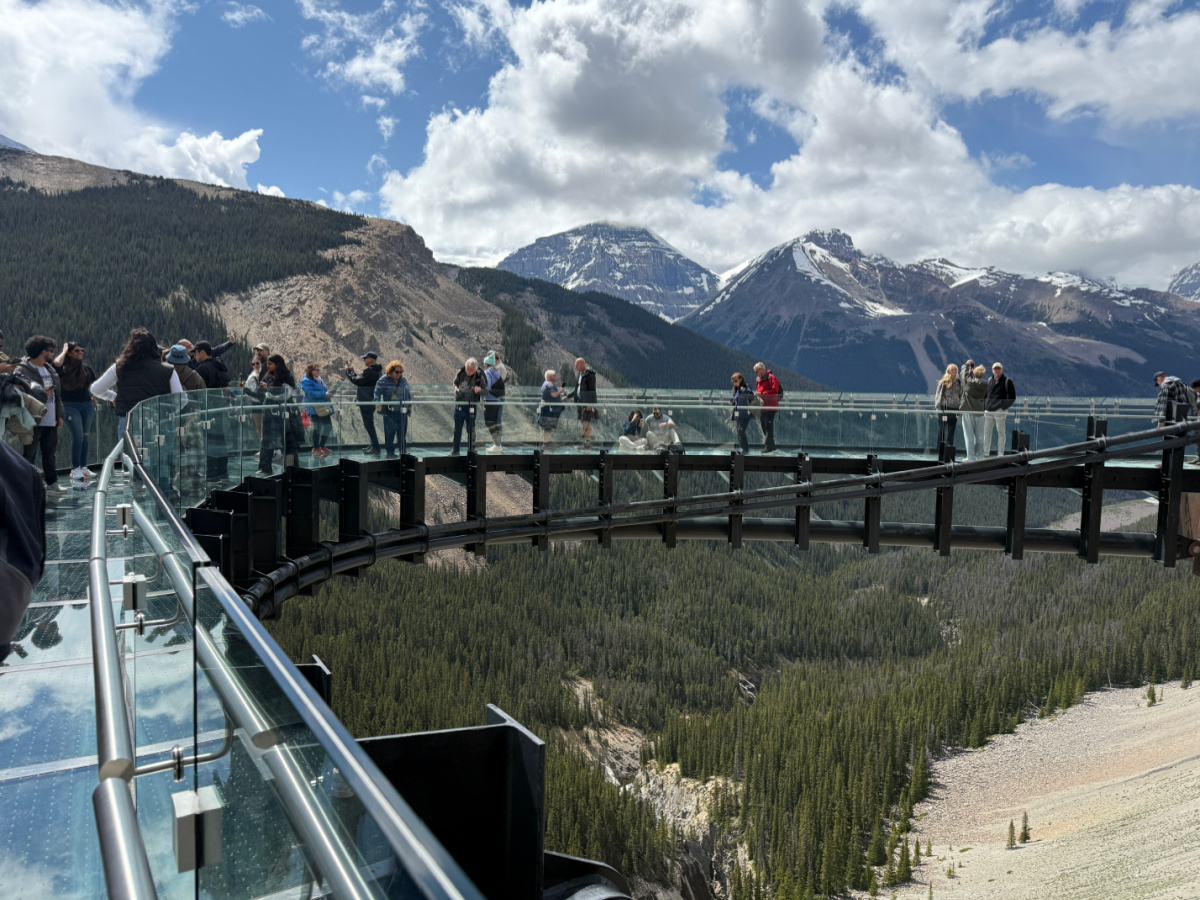
- Columbia Icefield Skywalk (optional)
This is the heart of the Icefields Parkway experience and where you’ll spend the largest portion of your day.
Late Afternoon
- Athabasca Falls
- Continue to Jasper
This schedule creates a full but comfortable sightseeing day without feeling rushed.
The Best Stops Along the Icefields Parkway
One of the reasons the Icefields Parkway is so special is that there isn’t just one destination. The entire drive is packed with lakes, waterfalls, glaciers, canyons, and scenic viewpoints that are worth pulling over for.
If you’re driving between Banff and Jasper, these are the stops I would prioritize.
Peyto Lake
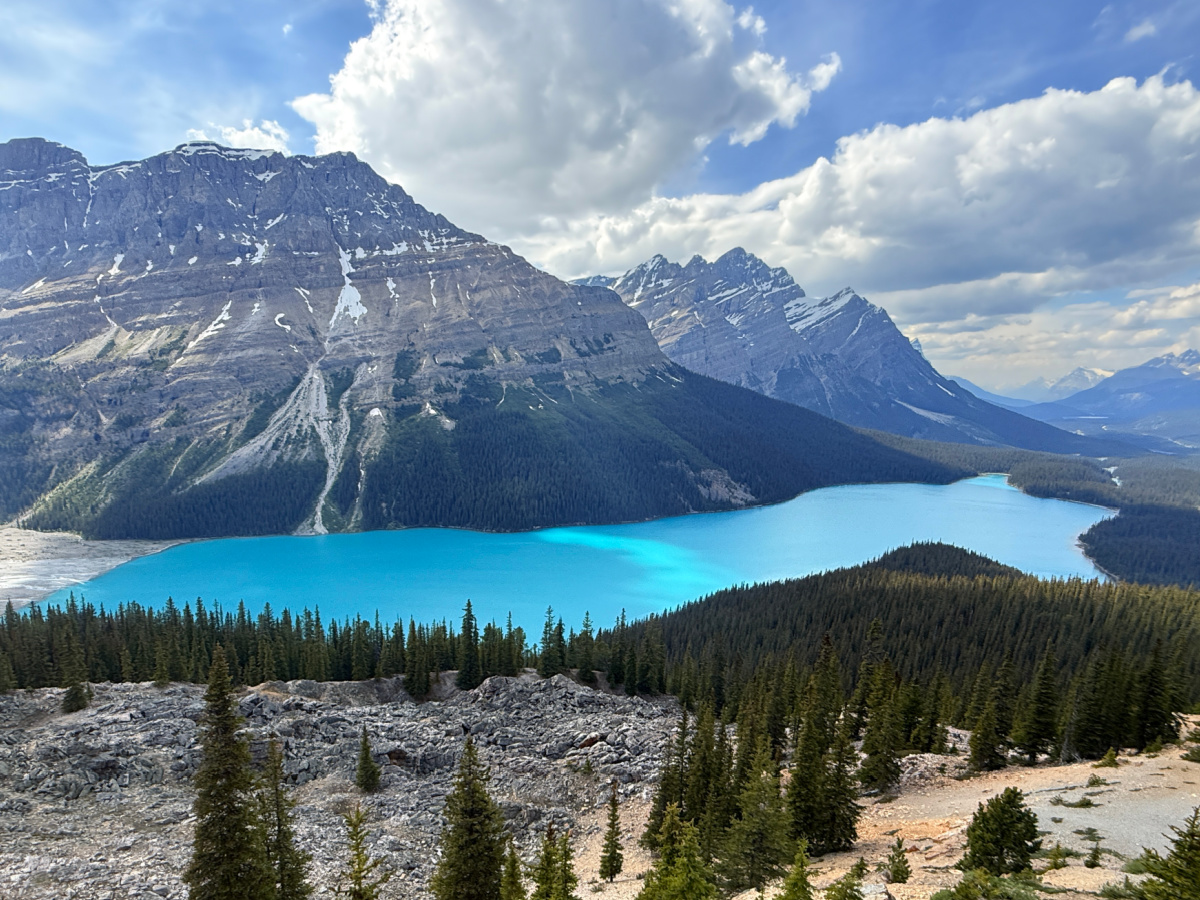
If I had to choose one overlook along the Icefields Parkway, this would be it.
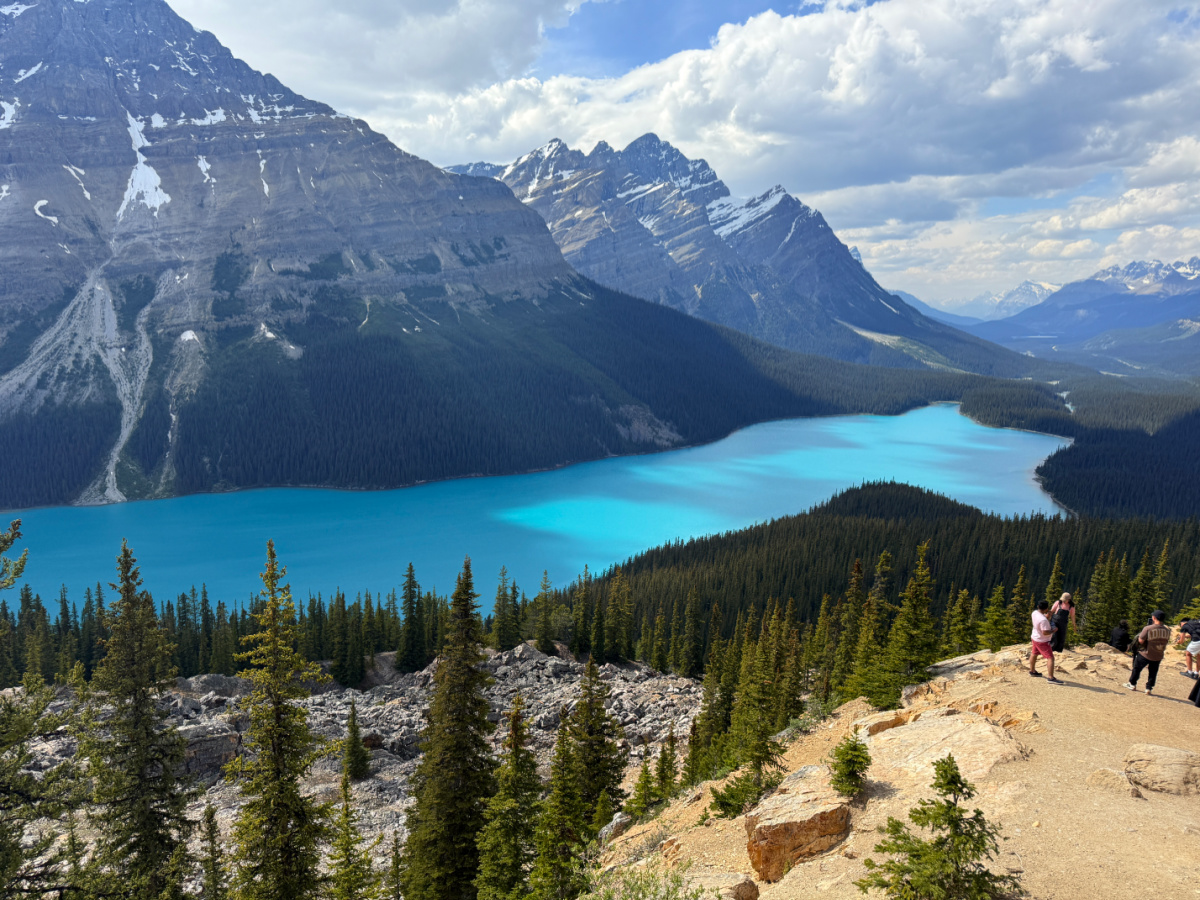
Peyto Lake is the famous wolf-head-shaped lake you’ve probably seen all over social media.
The walk from the parking lot is short and paved, making it accessible for most visitors.
The reward is enormous. The turquoise water almost looks fake.
Even though I had seen countless photos beforehand, the actual view was still better than expected.
This is one stop I would consider mandatory.
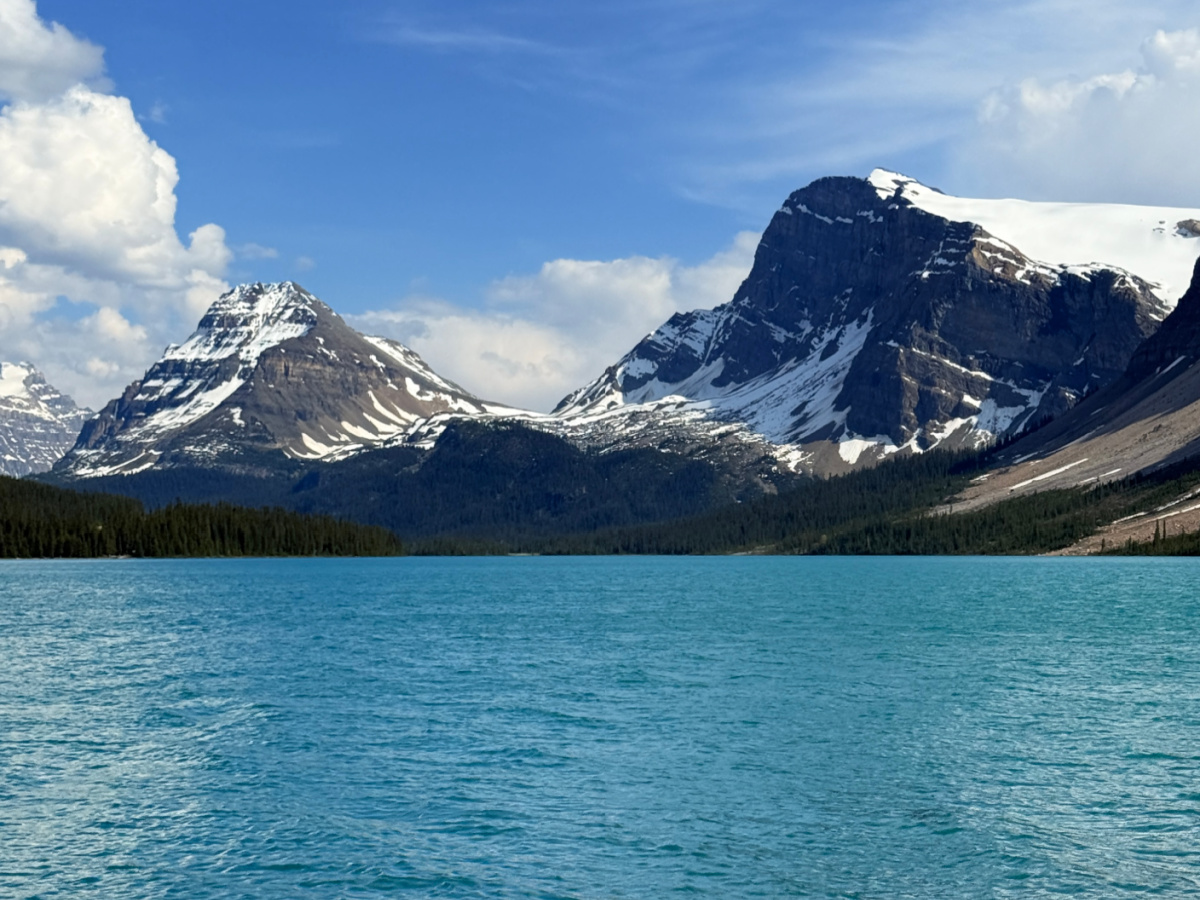
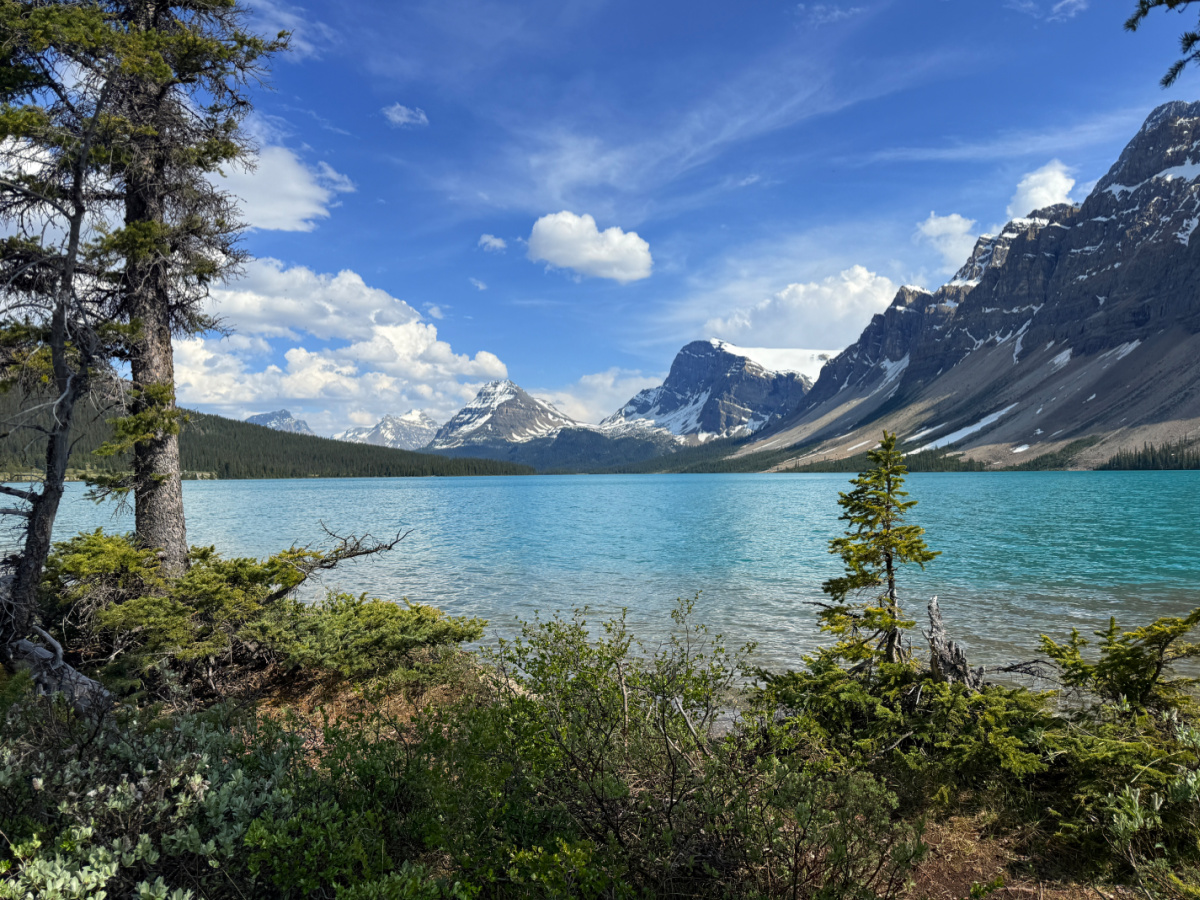
Bow Lake
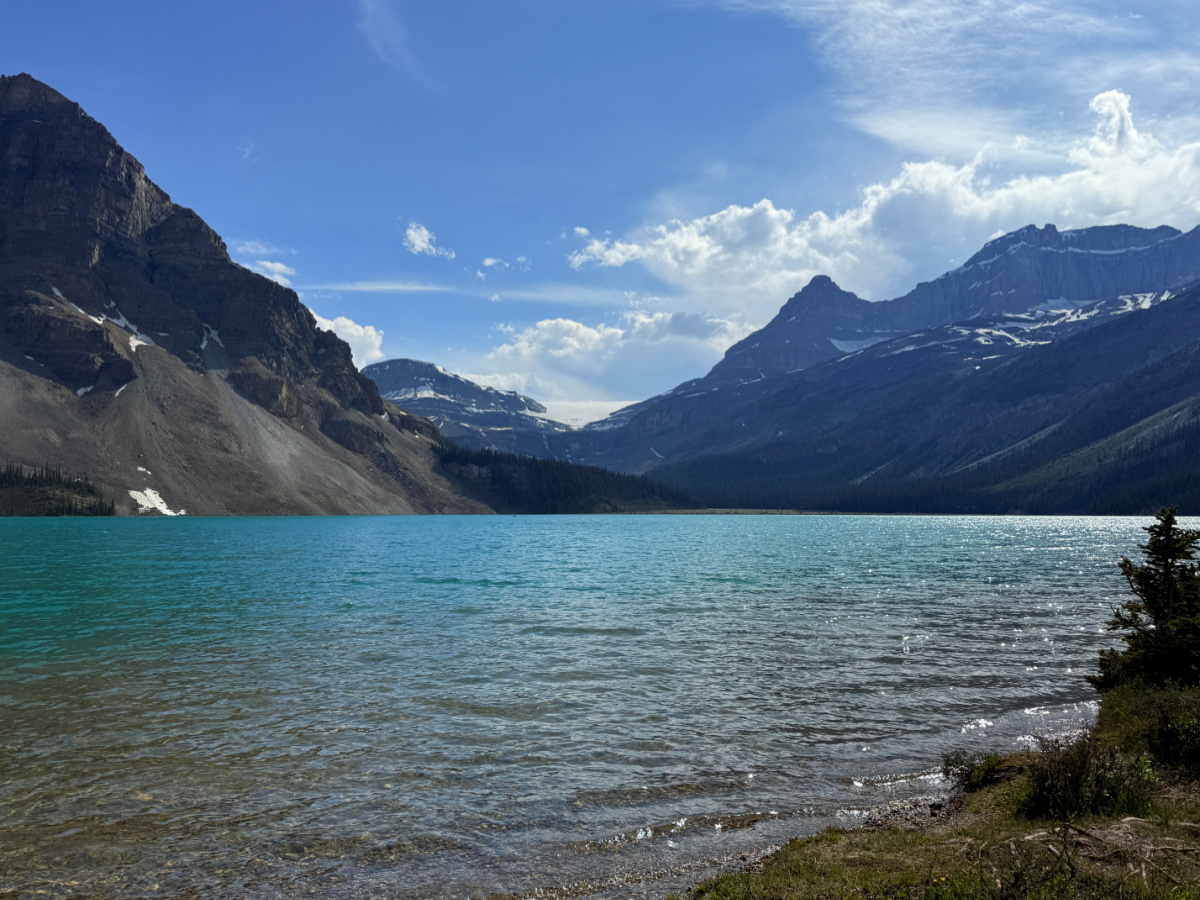
Bow Lake feels completely different from Peyto.
Instead of looking down from above, you’re standing at water level surrounded by mountains.
I especially loved how peaceful it felt. Many visitors stop for only a few minutes before continuing on, but it’s worth spending some time along the shoreline.
The mountain backdrop here is outstanding.
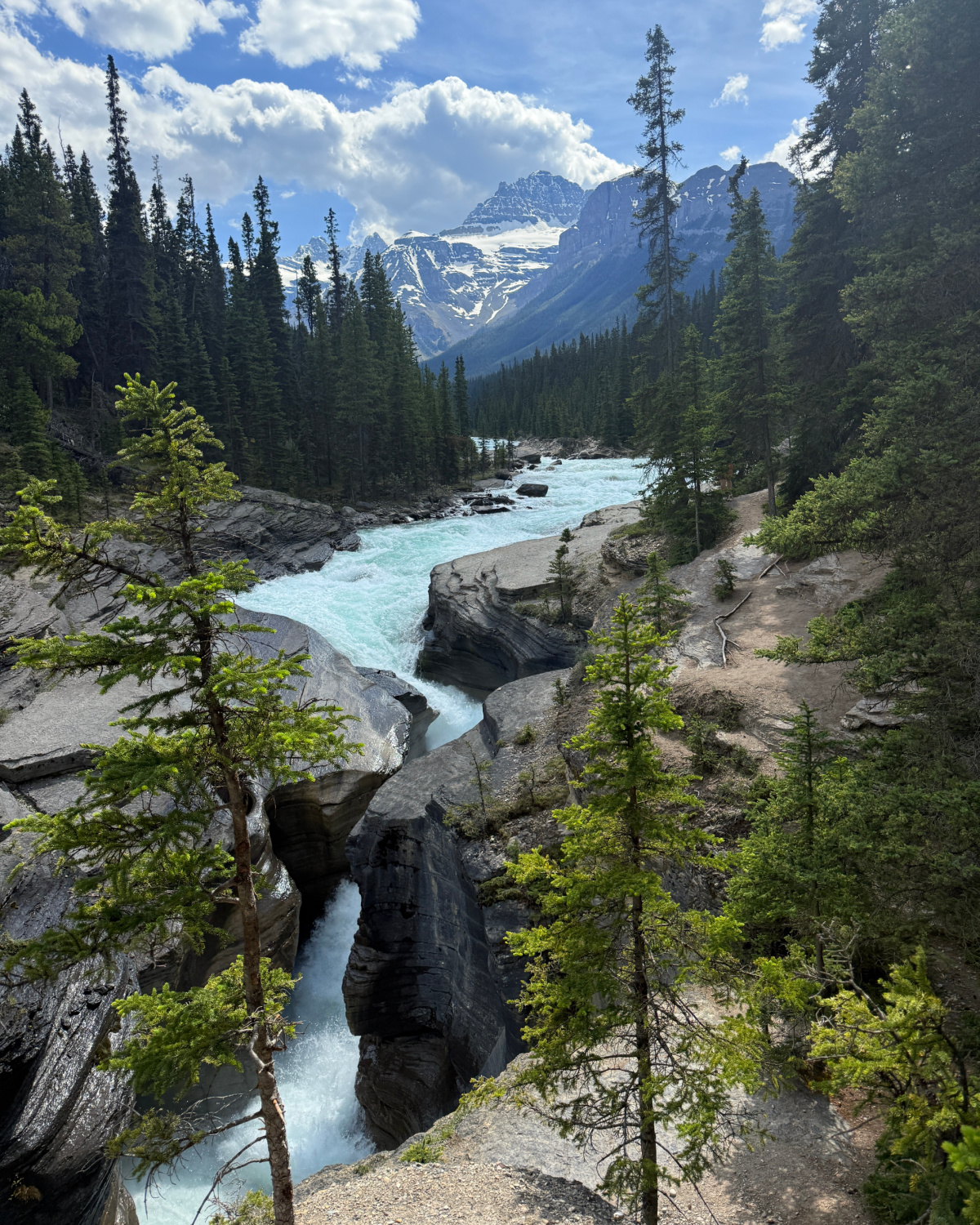
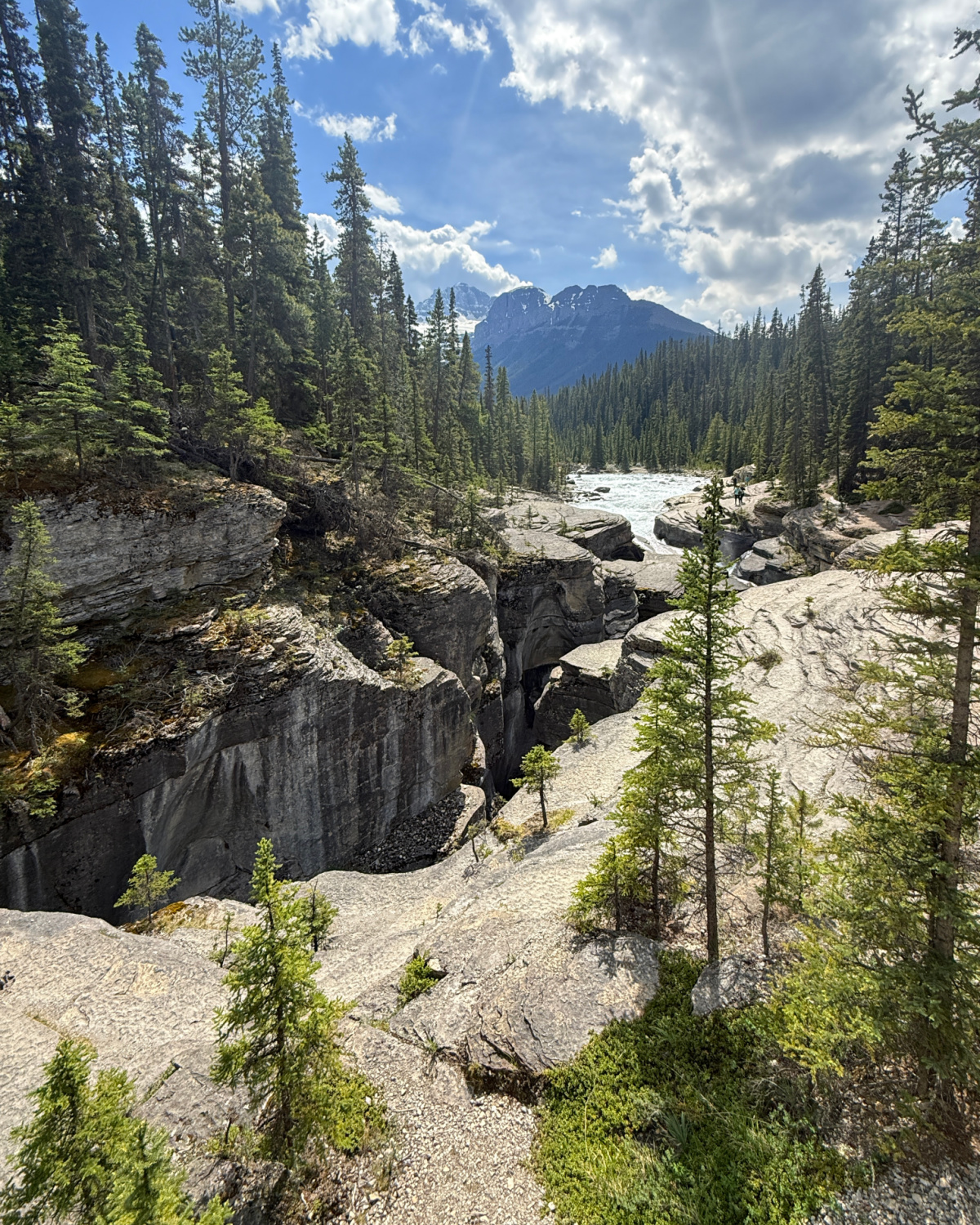
Mistaya Canyon
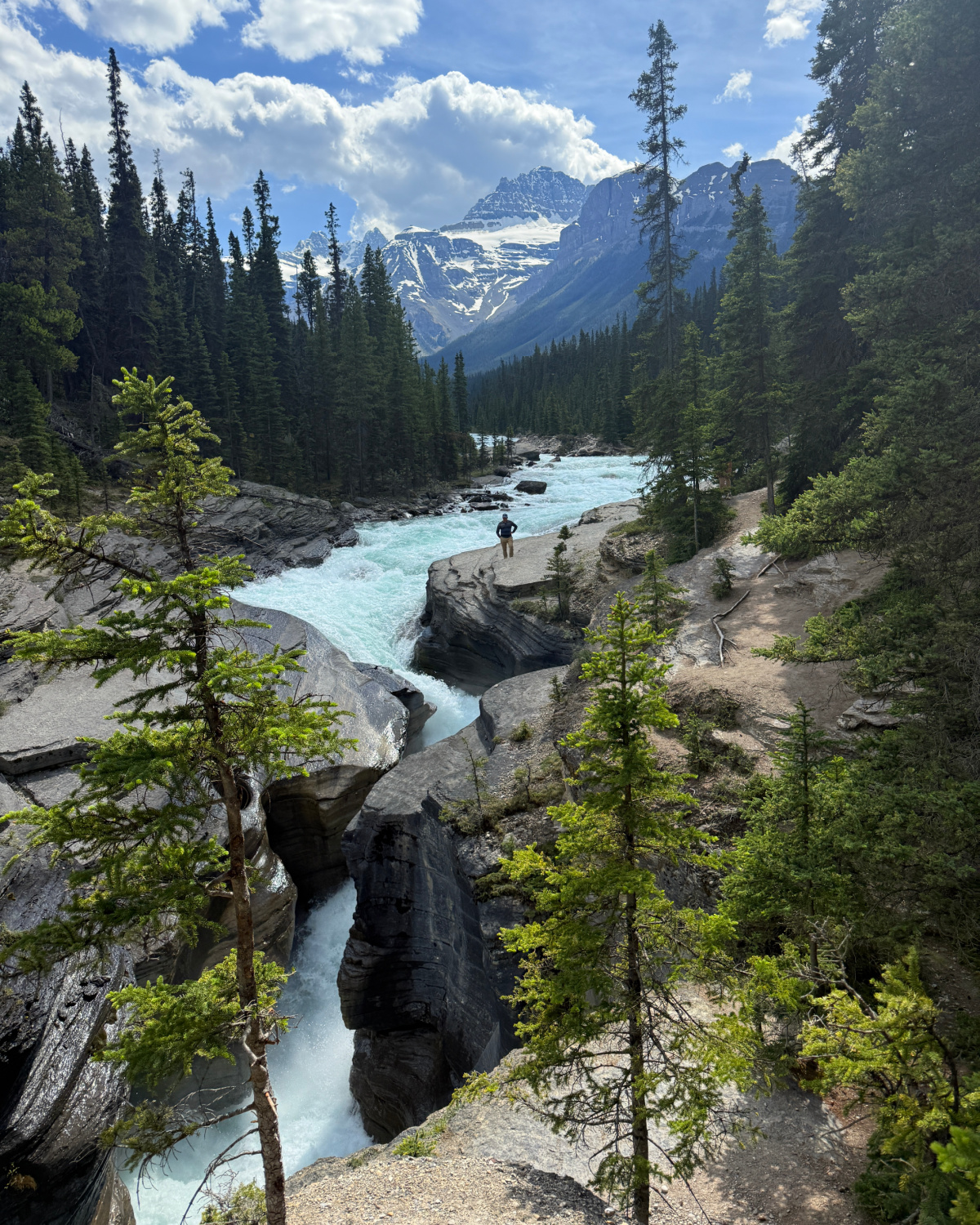
Mistaya Canyon ended up being one of my favorite surprises of the trip.
The walk is short, but the scenery feels dramatic.
The canyon has been carved into smooth limestone by powerful glacial water, creating swirling formations and deep channels that showcase the force of nature.
For casual travelers looking for maximum scenery with minimal effort, this stop deserves a place on the itinerary.
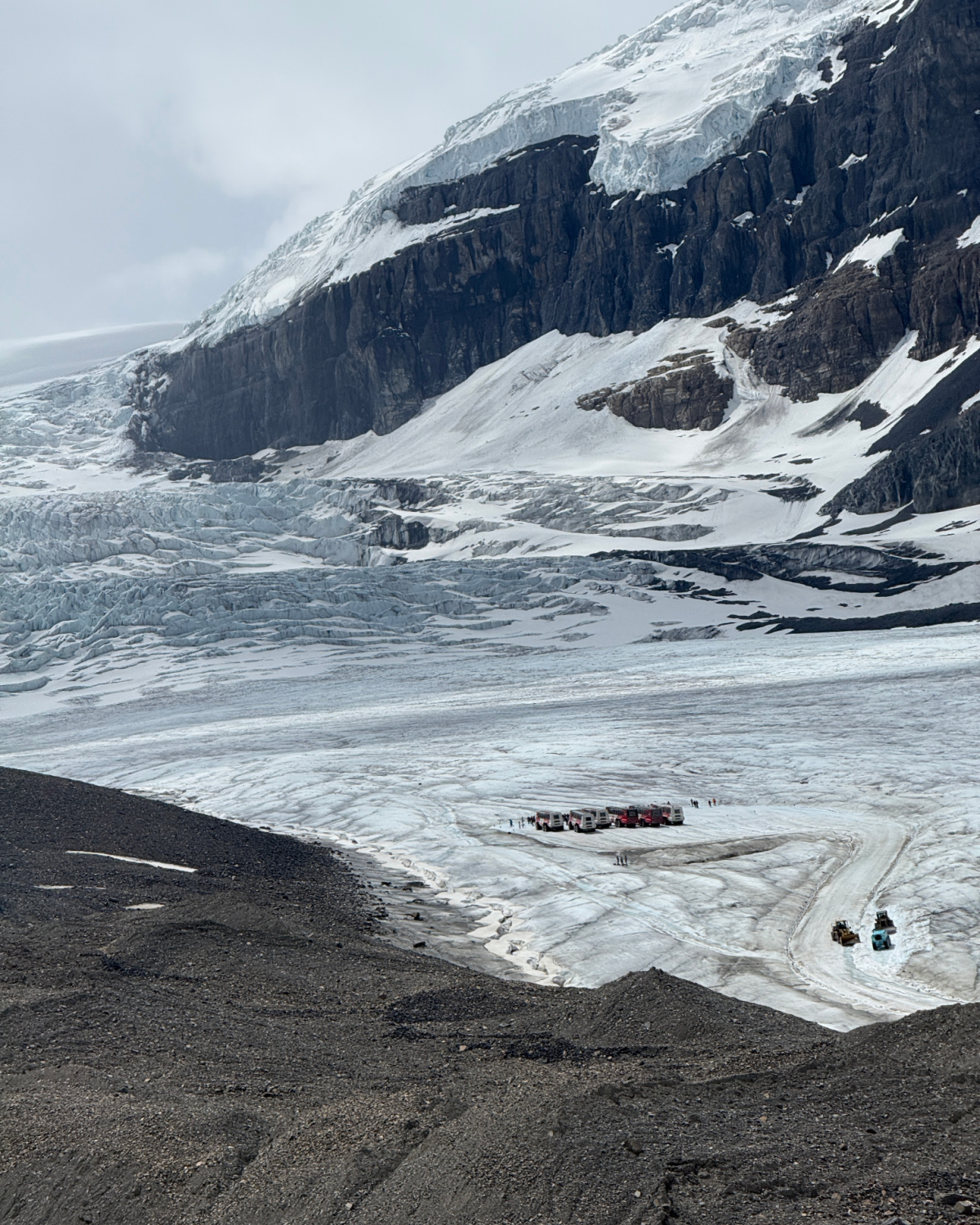
Columbia Icefield
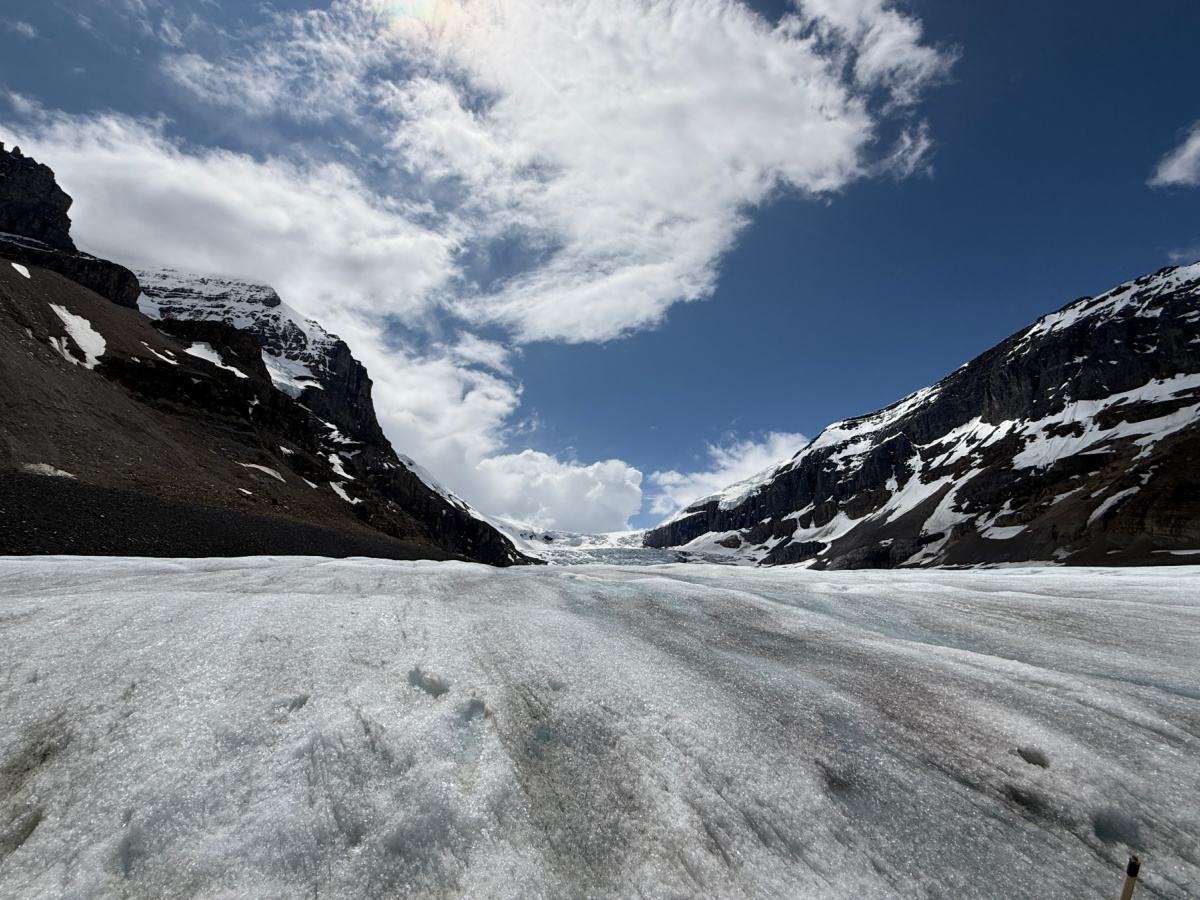
This is the centerpiece attraction of the Icefields Parkway.
Here you’ll find:
- Athabasca Glacier
- Columbia Icefield Adventure
- Glacier Explorer vehicles
- Columbia Icefield Skywalk
- Visitor facilities
Even if you don’t take one of the paid tours, simply seeing the glacier from the road is impressive.
The scale is difficult to appreciate until you’re standing in front of it.
Athabasca Falls
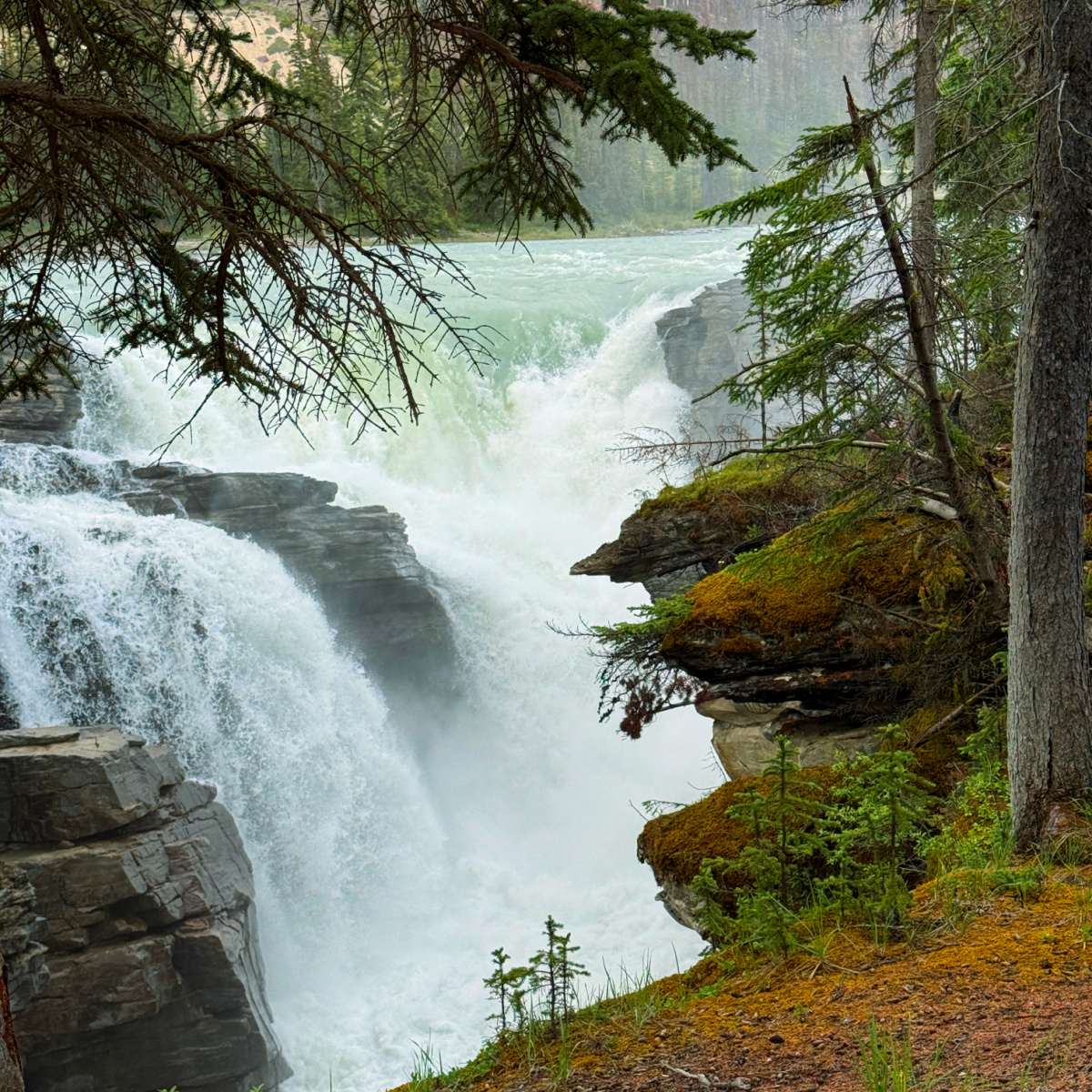
Athabasca Falls may not be the tallest waterfall in the Canadian Rockies.
It doesn’t need to be.
The power of the water is what makes it memorable.
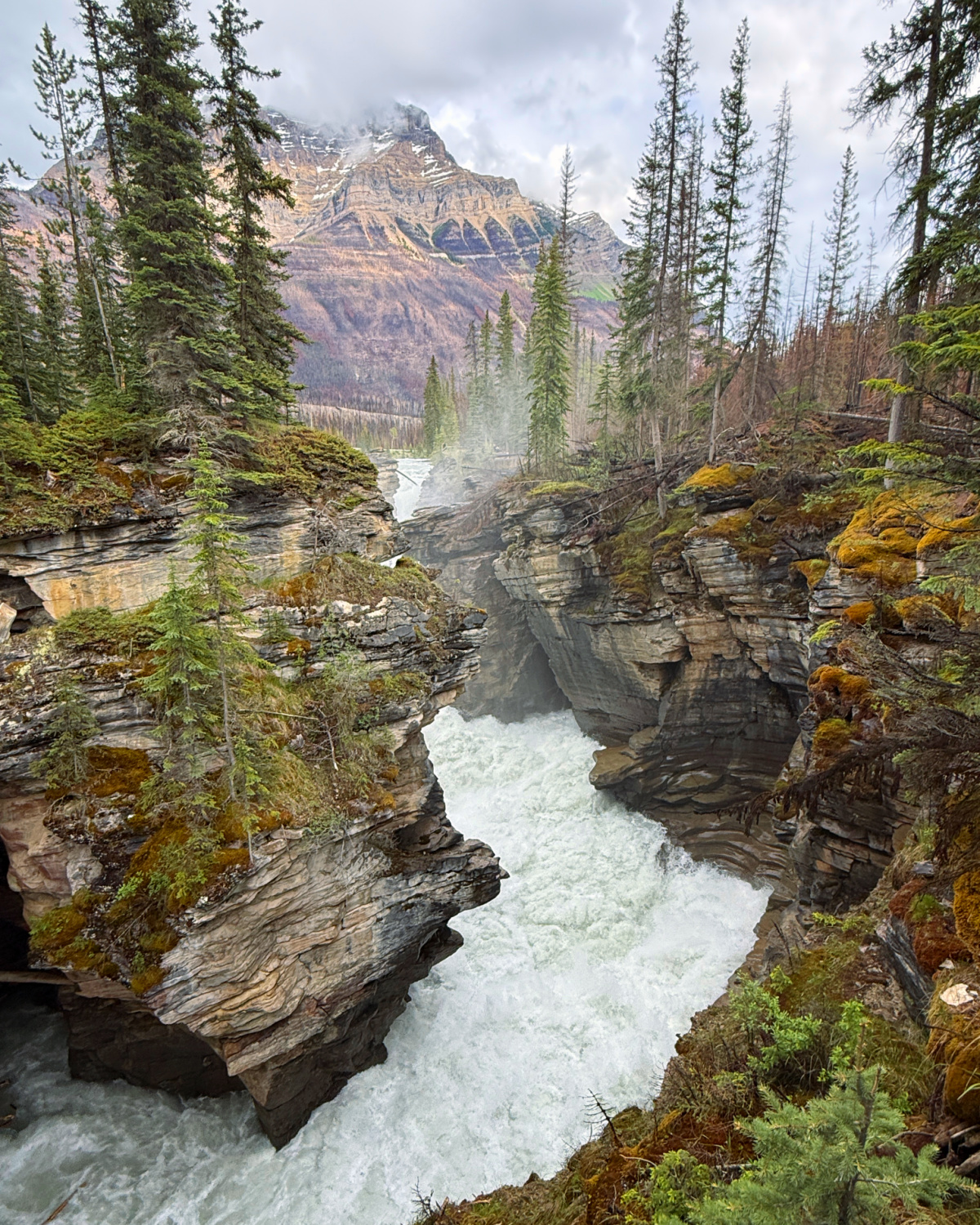
The waterfall crashes through a narrow rock gorge, creating incredible force and noise.
I visited on a cloudy afternoon and actually think the dramatic weather added to the experience.
The contrast between the milky glacial water, dark rock, and surrounding mountains was stunning.
Sunwapta Falls
Sunwapta Falls is another popular stop along the Icefields Parkway, located south of Jasper.
We didn’t end up stopping here during our visit because heavy rain moved through the area around the time we would have reached the falls, and we chose to continue toward Jasper instead.
That said, it remains one of the most frequently recommended waterfall stops along the Parkway and is especially popular with photographers.
Unlike Athabasca Falls, which immediately grabs your attention with its sheer power and accessibility, Sunwapta Falls offers a different perspective on the glacier-fed rivers that shape this landscape.
If you have additional time beyond the major attractions, it’s certainly worth considering.
Additional Stops Worth Considering
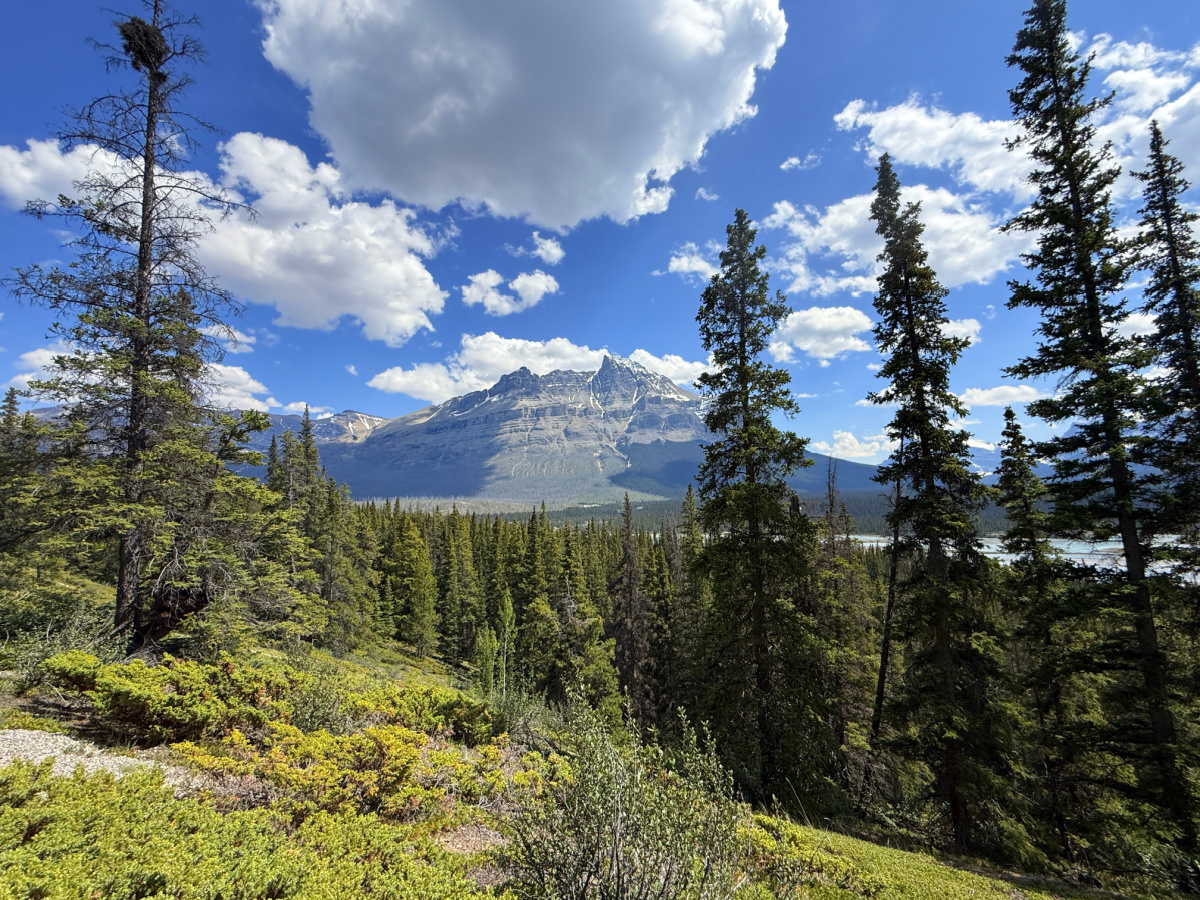
Beyond the headline attractions, you’ll also find:
- Saskatchewan River Crossing
- Big Bend Viewpoint
- Parker Ridge (for hikers)
- Numerous scenic pullouts
- Wildlife viewing opportunities throughout the corridor
One of the best things about the Icefields Parkway is that some of the most memorable views aren’t officially designated attractions at all.
My Ideal One-Day Icefields Parkway Route
If I only had one day to experience the Icefields Parkway, this is how I would structure it.
Early Morning
- Depart Lake Louise
- Bow Lake
- Peyto Lake
These two stops provide some of the most iconic scenery along the entire route and are worth visiting before the largest crowds arrive.
Late Morning
- Mistaya Canyon
- Scenic pullouts along the North Saskatchewan River
Mistaya Canyon was one of the most pleasant surprises of our trip. The walk is relatively short, and the payoff is impressive.
Lunch
- Saskatchewan River Crossing area
- Picnic lunch packed from Banff or Lake Louise
Food options along the Parkway are limited and expensive, so bringing your own lunch can save both time and money.
Afternoon
- Columbia Icefield
- Athabasca Glacier
- Columbia Icefield Skywalk (optional)
This is the heart of the Icefields Parkway experience and where you’ll likely spend the largest block of your day.
Late Afternoon
- Athabasca Falls
- Sunwapta Falls (if time and weather permit)
- Continue to Jasper
This creates a full but comfortable sightseeing day without feeling rushed.
Wildlife Along the Icefields Parkway
One of the things people love about the Icefields Parkway is wildlife viewing.
Animals commonly spotted include:
- Elk
- Bighorn sheep
- Mountain goats
- Black bears
- Grizzly bears
We saw several animals throughout our Canadian Rockies trip, including multiple bears around Jasper.
That said, I always encourage visitors to think of wildlife sightings as a bonus rather than an expectation.
Never stop in unsafe areas.
Never approach animals.
And remember that every bear jam creates traffic problems for everyone else.
The best wildlife encounters happen when you give animals plenty of space.
The Scenic Pullouts Are Part of the Experience
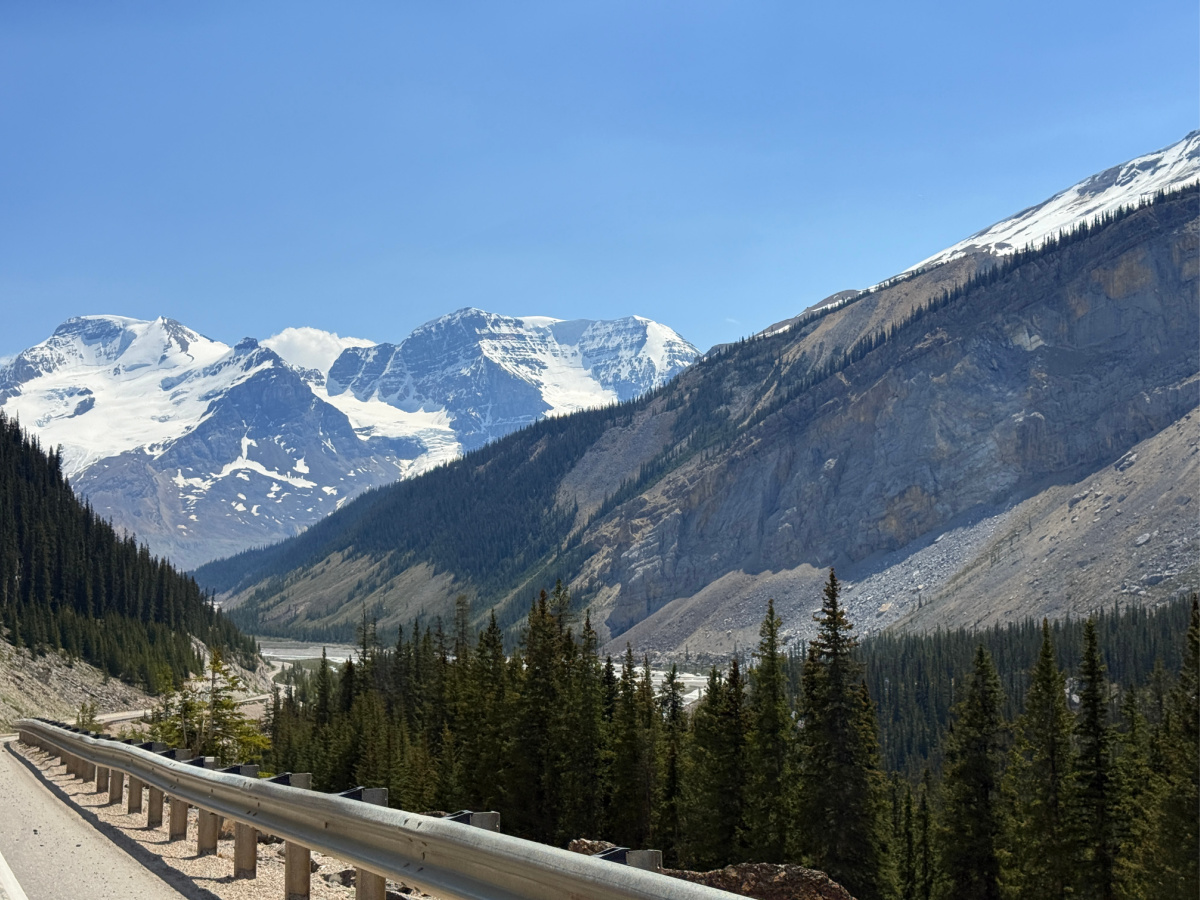
One thing I didn’t fully appreciate before visiting the Icefields Parkway was how many incredible views exist between the famous stops.
Before the trip, I had a checklist of places I wanted to see: Peyto Lake, Mistaya Canyon, the Columbia Icefield, and Athabasca Falls.
What I didn’t expect was how often we’d find ourselves pulling over at completely random viewpoints.
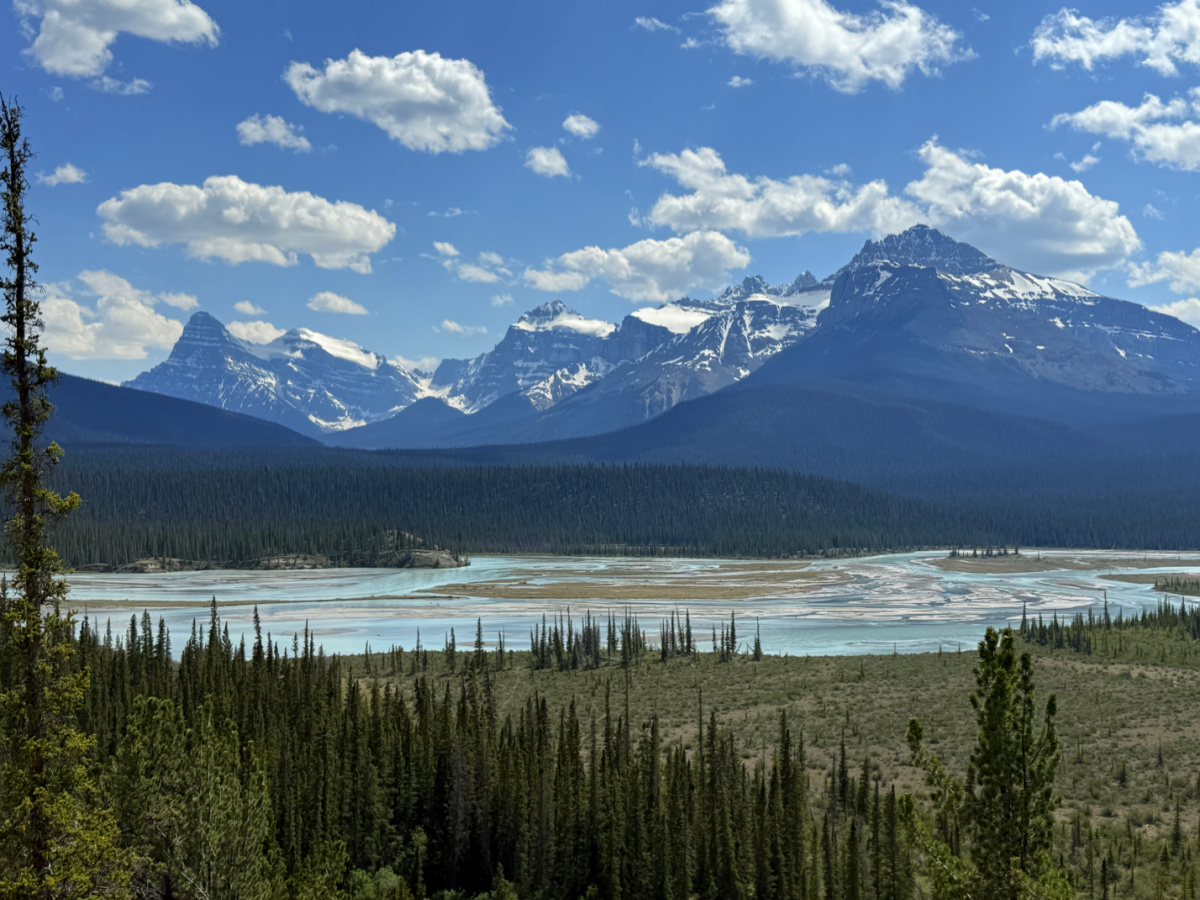
Some of my favorite photos from the entire drive came from unnamed roadside pullouts overlooking glaciers, river valleys, mountain peaks, and burned forest landscapes recovering from past wildfires.
In many national parks, the drive simply connects the attractions.
On the Icefields Parkway, the drive is part of the attraction.
Don’t make the mistake of rushing from one famous stop to the next. Leave room in your schedule for spontaneous pullovers. Some of the most memorable views may be the ones that never appear in a guidebook.
Photography Tips for the Icefields Parkway
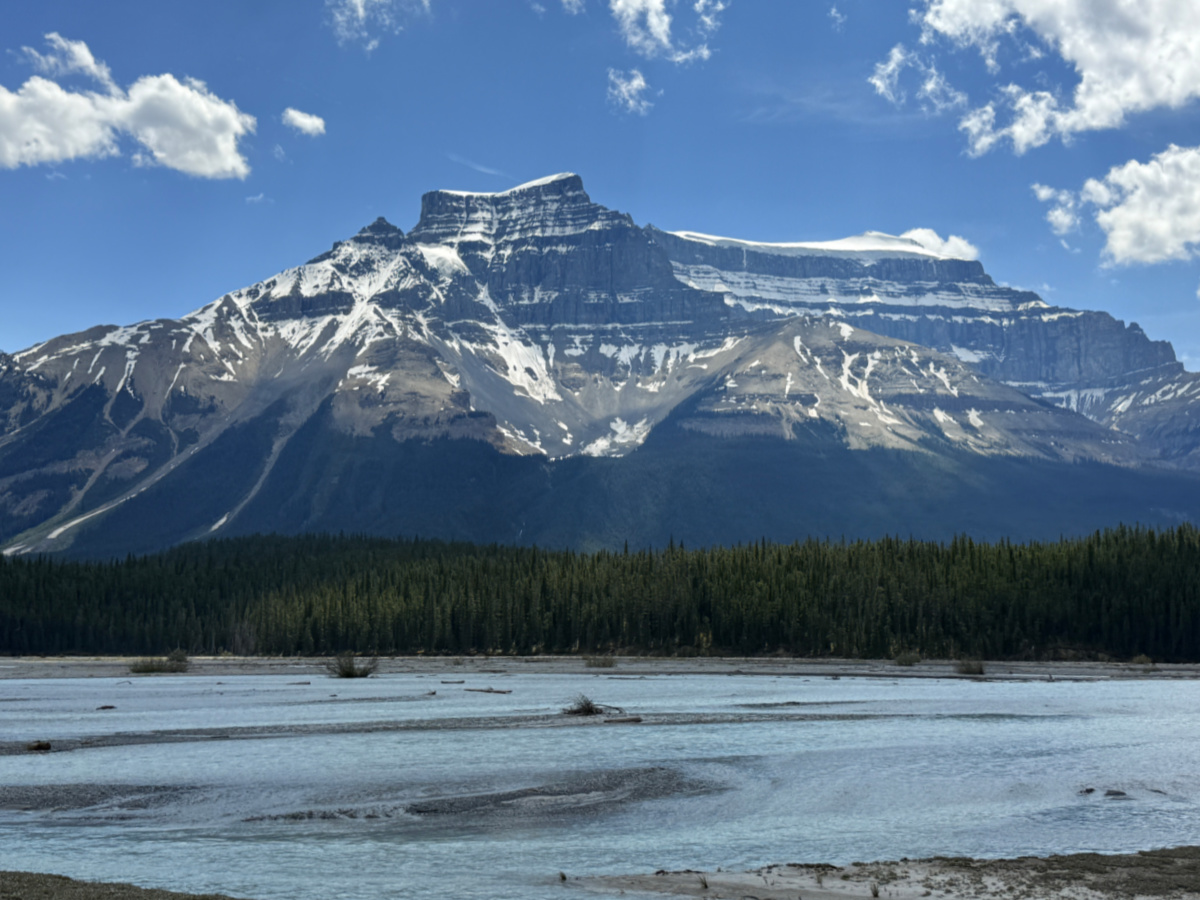
You do not need professional camera equipment to come home with amazing photos from the Icefields Parkway.
Most of my favorite images from the trip were taken with a combination of an iPhone and a travel camera.
A few things I learned:
Don’t Skip the Pullouts
Some of the best views aren’t famous attractions.
Several of my favorite mountain photos came from unnamed roadside pullouts where we stopped for only a few minutes.
Cloudy Days Can Be Fantastic
Many travelers hope for perfect blue skies.
Ironically, some of my favorite images came during cloudy weather near Athabasca Falls.
The clouds added drama and texture that bright sunshine often can’t provide.
Bring a Zoom Lens If You Have One
Glaciers, waterfalls, and wildlife often appear farther away than they seem.
A little extra reach can make a big difference.
Plan for More Stops Than You Expect
You’ll probably stop far more often than your itinerary suggests.
The scenery changes constantly, and new photo opportunities appear around nearly every bend.
What Surprised Me Most About the Icefields Parkway
The Scale
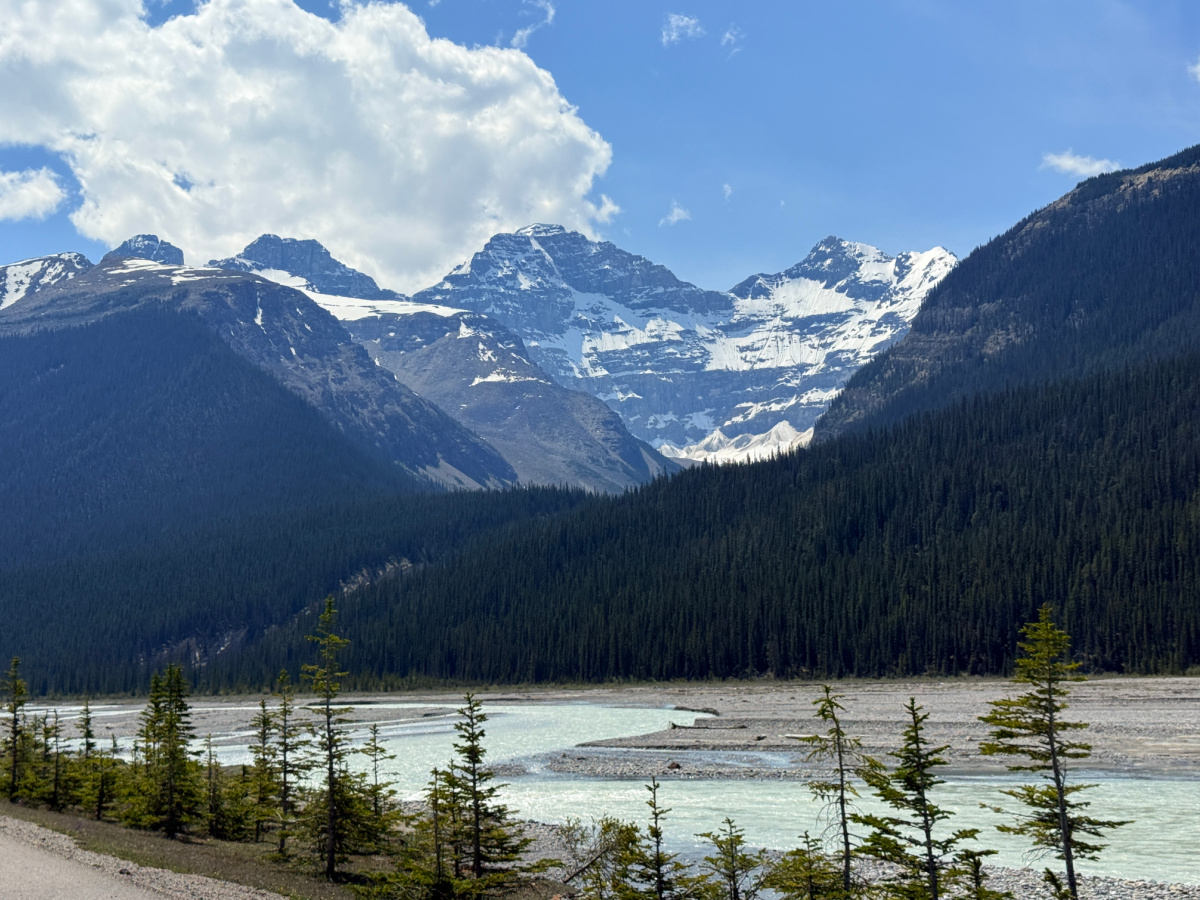
Photos do not prepare you for the scale.
Not even close.
Many mountains rise thousands of feet directly above the road.
The glaciers look enormous.
The valleys seem endless.
You spend much of the drive feeling very, very small.
The Burn Areas
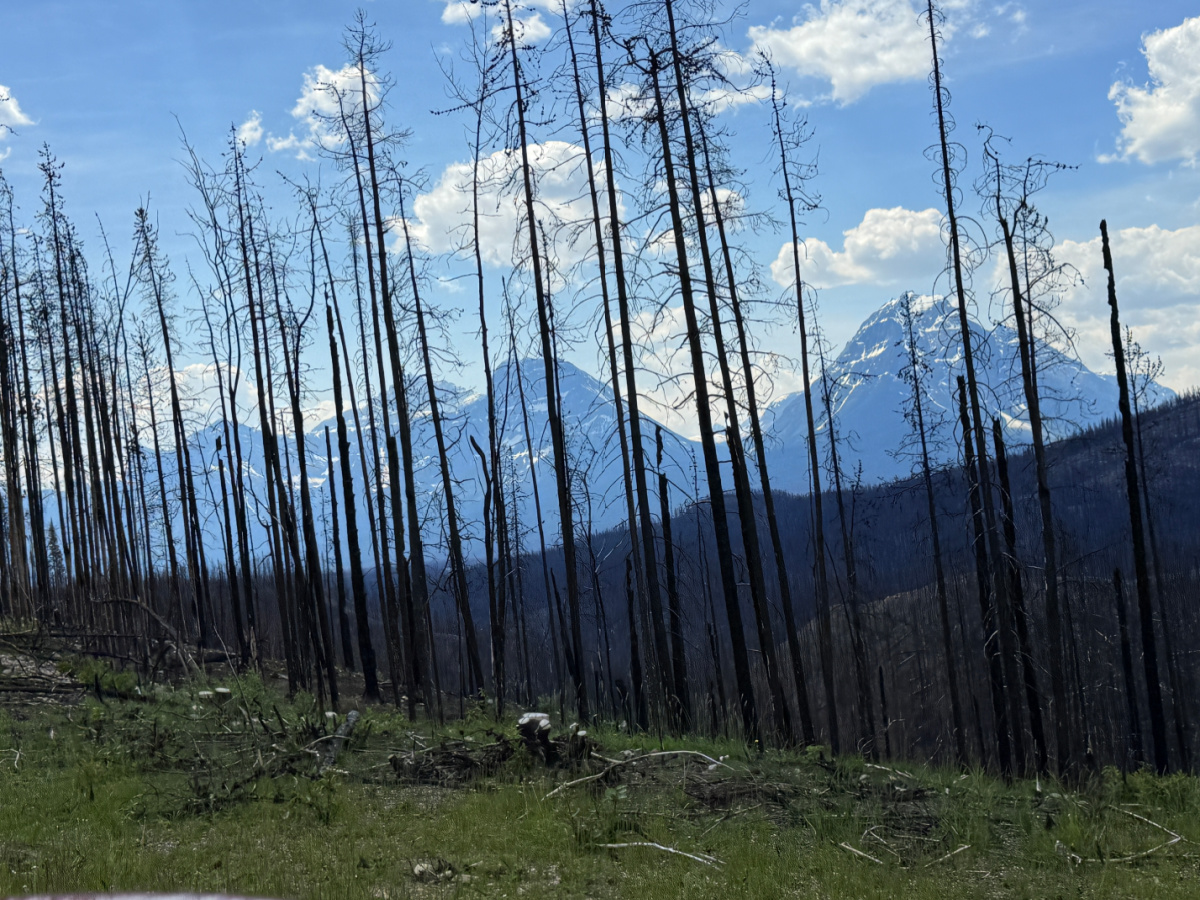
One thing I wasn’t expecting was how much evidence there was of previous wildfire activity.
Large sections of forest show burn scars from past fires.
At first I thought it detracted from the scenery.
Then I realized it actually tells part of the story of the landscape.
The contrast between burned trees, new growth, turquoise rivers, and snow-covered peaks creates a fascinating look at how nature recovers.
How Different Every Section Feels
I assumed the drive would eventually become repetitive.
It never did.
One stretch feels heavily forested.
The next feels dominated by glaciers.
Then you enter broad river valleys…. and waterfalls… and lakes.
The variety is remarkable.
Is the Icefields Parkway Worth It?
Absolutely.
In fact, I think it’s one of the main reasons people should visit the Canadian Rockies.
If someone told me they only had one day in the region and wanted to see the best scenery possible, I would seriously consider recommending a drive on the Icefields Parkway over almost anything else.
That might sound crazy given all the famous attractions in Banff and Jasper.
But the Parkway ties everything together.
It’s the thread connecting the entire Canadian Rockies experience.
Practical Planning Tips
Fill Your Gas Tank
Services are limited.
Don’t assume you’ll find gas every few miles.
Fill up before starting the drive.
Bring Snacks and Water
Options along the route are limited and expensive.
Pack snacks, drinks, and anything else you might want throughout the day.
Start Early
The earlier you begin, the better.
You’ll encounter fewer crowds and have more flexibility to stop wherever you want.
Check Weather Conditions
Mountain weather changes quickly.
A sunny morning can become a rainy afternoon.
Layers are your friend.
Don’t Rush
This is probably the most important tip.
The Icefields Parkway rewards travelers who slow down.
Leave room for spontaneous stops.
Some of my favorite moments happened at viewpoints that weren’t even on my original itinerary.
Common Mistakes First-Time Visitors Make
After driving the Icefields Parkway myself, there are a few mistakes I would try to avoid on a future visit.
Treating It Like a Three-Hour Drive
Technically, that’s the driving time.
Realistically, you’ll want most of the day.
Starting Too Late
The later you begin, the more rushed you’ll feel.
An early start gives you flexibility and helps avoid some of the busiest parking lots.
Not Filling Up on Gas
Services are limited.
Top off your tank before leaving Banff, Lake Louise, or Jasper.
Skipping Smaller Stops
Everyone knows Peyto Lake and Athabasca Falls.
Some of the most memorable moments happen at lesser-known overlooks and pullouts.
Assuming Every Great View Requires a Hike
One of the best things about the Icefields Parkway is how much scenery is accessible to casual travelers.
You can see world-class landscapes without tackling strenuous hikes.
Where to Stay When Exploring the Icefields Parkway
Most visitors use either Banff/Lake Louise or Jasper as their base for exploring the Icefields Parkway.
Staying in Banff
Banff offers:
- More hotels
- More restaurants
- More activities
- Easier access to Lake Louise and Peyto Lake
It’s the best choice for travelers who want a larger town with plenty of amenities.
Staying in Jasper
Jasper feels quieter and more relaxed.
It’s ideal for travelers planning to spend more time exploring:
- Athabasca Falls
- Maligne Lake
- Pyramid Lake
- Jasper wildlife experiences
Staying Along the Parkway
There are limited lodging options directly on the Icefields Parkway itself.
Most travelers stay in either Banff/Lake Louise or Jasper and drive the Parkway as a day trip or transfer day between destinations.
Icefields Parkway FAQ
How long does it take to drive the Icefields Parkway?
Without stopping, about three hours.
For most visitors, expect 6–10 hours with sightseeing.
Can you drive the Icefields Parkway in one day?
Yes.
A full day is actually the most common way to experience it.
Is the Icefields Parkway scary to drive?
No.
The road is well maintained and relatively easy to drive.
The biggest challenge is resisting the urge to stare at the scenery instead of the road.
Are there bathrooms along the route?
Yes, but not everywhere.
Use facilities whenever you see them rather than assuming another stop is right around the corner.
Is it worth driving if it’s cloudy?
Absolutely.
Some of my favorite photos from the trip were taken during cloudy weather.
The mountains often look even more dramatic under changing skies.
What is the best stop on the Icefields Parkway?
For most visitors:
- Peyto Lake
- Athabasca Falls
- Columbia Icefield
- Mistaya Canyon
- Bow Lake
That said, everyone seems to discover a personal favorite.
Plan Your Canadian Rockies Adventure
If you’re planning an Icefields Parkway road trip or a longer Canadian Rockies vacation, these guides will help you build the perfect itinerary.
Start Here
Ultimate Canadian Rockies Travel Guide – A comprehensive overview of the region, including Banff, Jasper, the Icefields Parkway, and practical planning tips for first-time visitors.
Canadian Rockies for First-Time Visitors – Everything you need to know before your first trip, including when to visit, where to stay, how much time you need, and common planning mistakes.
Best Things to Do in the Canadian Rockies – The top attractions, scenic viewpoints, lakes, wildlife experiences, and tours throughout the region.
Canadian Rockies Itinerary (7–10 Days) – A detailed itinerary that shows how to combine Banff, Jasper, the Icefields Parkway, and the surrounding national parks into one unforgettable trip.
Banff Trip Planning
Banff for First-Time Visitors – A practical guide to visiting Banff National Park, including where to stay, what to see, and how to make the most of your time.
Best Things to Do in Banff – The top attractions, viewpoints, lakes, hikes, and experiences in Banff National Park.
Banff in 3 Days – My recommended three-day itinerary for seeing the best of Banff without feeling rushed.
Final Thoughts
The Icefields Parkway exceeded my expectations, and that’s saying something because my expectations were already sky-high.
Before visiting, I assumed it would be a beautiful drive connecting Banff and Jasper.
After experiencing it, I realized the drive itself is one of the premier attractions in the Canadian Rockies.
For casual travelers who love stunning scenery but don’t want to spend every day on challenging hikes, it may be the single best experience in the region.
You’ll see glaciers, waterfalls, and turquoise rivers and towering mountains.
Honestly, you will probably fill your camera roll faster than you thought possible.
And somewhere between Banff and Jasper, you’ll understand why so many travelers consider the Icefields Parkway one of the most beautiful drives in the world.
More Incredible Scenic Road Trips
If you love spectacular drives, mountain scenery, and national park adventures, these road trip guides should be next on your list.
Going-to-the-Sun Road (Glacier National Park)
One of the most famous scenic drives in North America, featuring alpine viewpoints, mountain passes, waterfalls, and some of the best scenery in Glacier National Park.
Washington State National Parks Road Trip
A spectacular road trip connecting Olympic, Mount Rainier, North Cascades, and Mount Baker, with glacier views, waterfalls, rainforests, and mountain scenery throughout.
Utah Mighty 5 Road Trip
Discover Zion, Bryce Canyon, Capitol Reef, Arches, and Canyonlands on one of the most iconic national park road trips in the American Southwest.
Yellowstone Grand Loop Road
The classic Yellowstone road trip featuring Old Faithful, Grand Prismatic Spring, Hayden Valley, Mammoth Hot Springs, Yellowstone Lake, and abundant wildlife viewing opportunities.
Anchorage to Seward Drive
One of Alaska’s most beautiful drives, featuring Turnagain Arm, wildlife viewing, glaciers, mountain scenery, and access to Kenai Fjords National Park.
Anchorage to Valdez Drive
An underrated Alaska road trip showcasing mountain passes, waterfalls, glaciers, and some of the most dramatic scenery in the state.