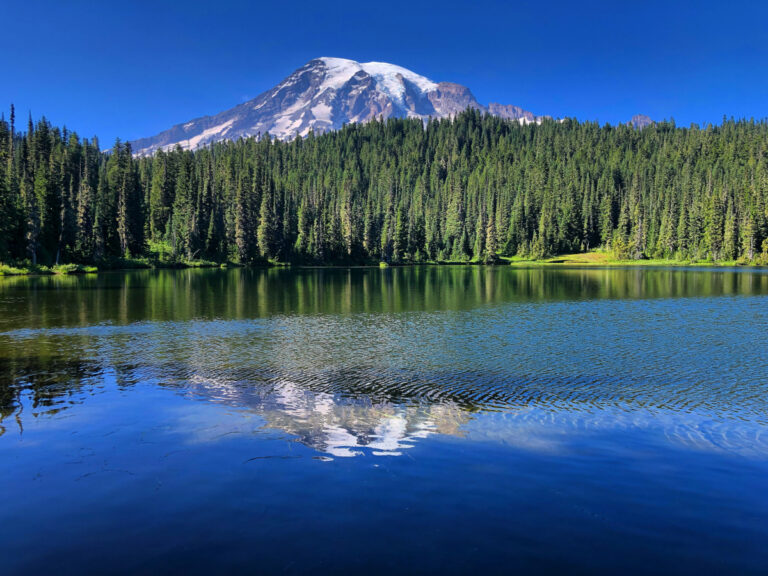
Peyto Lake Guide: Banff’s Most Stunning Icefields Parkway View

Affiliate Disclosure: This post may contain affiliate links. If you make a purchase or booking through these links, I may earn a commission at no additional cost to you.
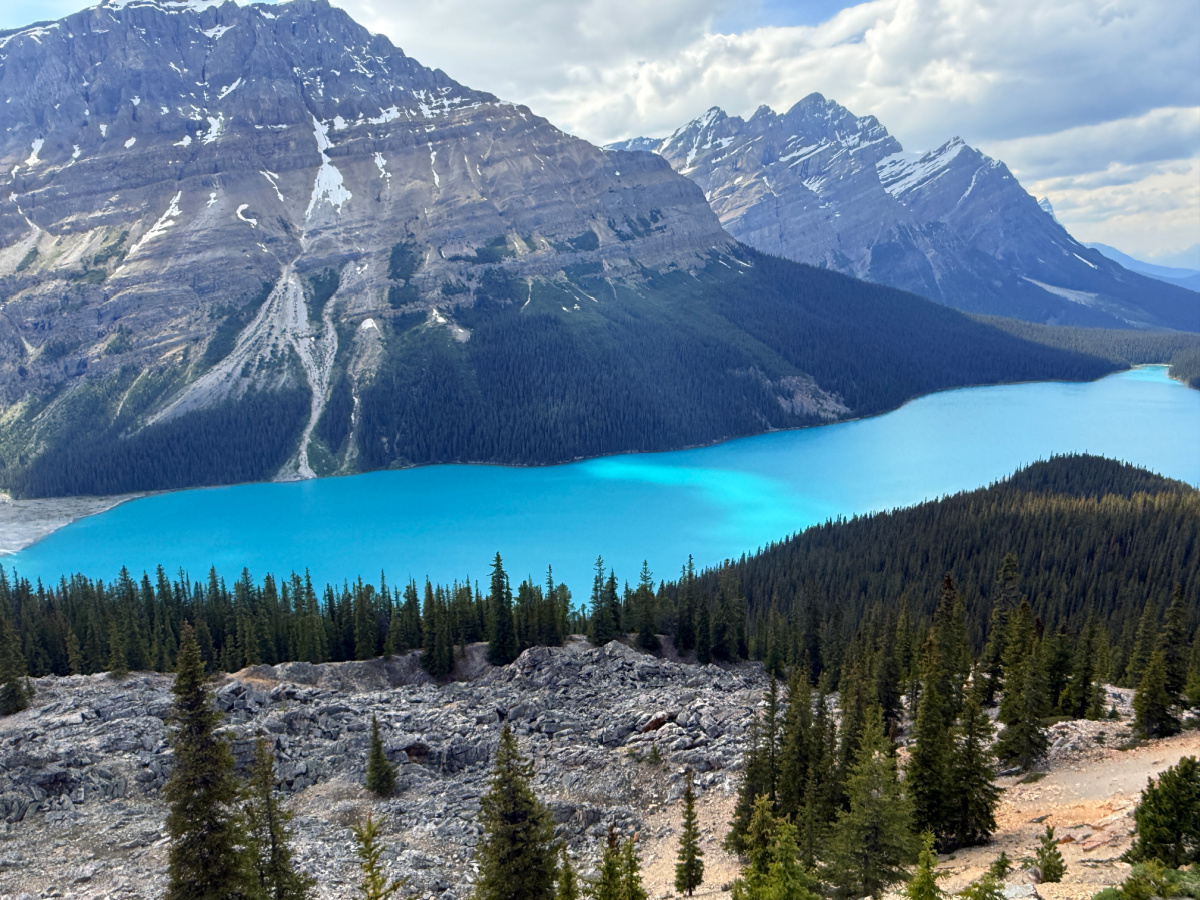
Planning to visit Peyto Lake in Banff National Park? Learn what to expect, parking tips, crowds, accessibility, photography advice, and why it’s one of the best stops on the Icefields Parkway.
Estimated reading time: 15 minutes
If someone asked me to pick just one roadside viewpoint on the Icefields Parkway, Peyto Lake would be at the top of the list.
Not because it’s the biggest lake.
Not because it’s the easiest stop.
And not even because it’s the most famous.
I’d choose Peyto Lake because it delivers one of those rare travel moments where reality somehow looks better than the photos.
You know the pictures. The impossibly turquoise water. The mountains stacked layer after layer into the distance. The dramatic overlook perched high above the lake.
I had seen those photos for years before visiting.
I still wasn’t prepared for how stunning it looked in person.
The best part? You don’t need to be a serious hiker to enjoy it.
Unlike many iconic viewpoints in the Canadian Rockies, Peyto Lake is accessible to almost everyone. Families, retirees, photographers, casual travelers, and anyone driving the Icefields Parkway can experience one of the most spectacular views in Banff National Park with only a short uphill walk.
If you’re planning a Canadian Rockies road trip, Peyto Lake deserves a spot near the very top of your itinerary.
Peyto Lake Quick Snapshot
Location: Banff National Park, Alberta
Along: Icefields Parkway (Highway 93)
Distance from Lake Louise: Approximately 25 miles (40 km)
Distance from Jasper: Approximately 115 miles (185 km)
Time Needed: 30 minutes to 1 hour
Walk to Viewpoint: About 10–15 minutes each way
Difficulty: Easy
Best For: Families, photographers, first-time visitors, casual travelers
Worth It? Absolutely
What Makes Peyto Lake So Special?
The first thing everyone notices is the color.
Peyto Lake almost looks fake.
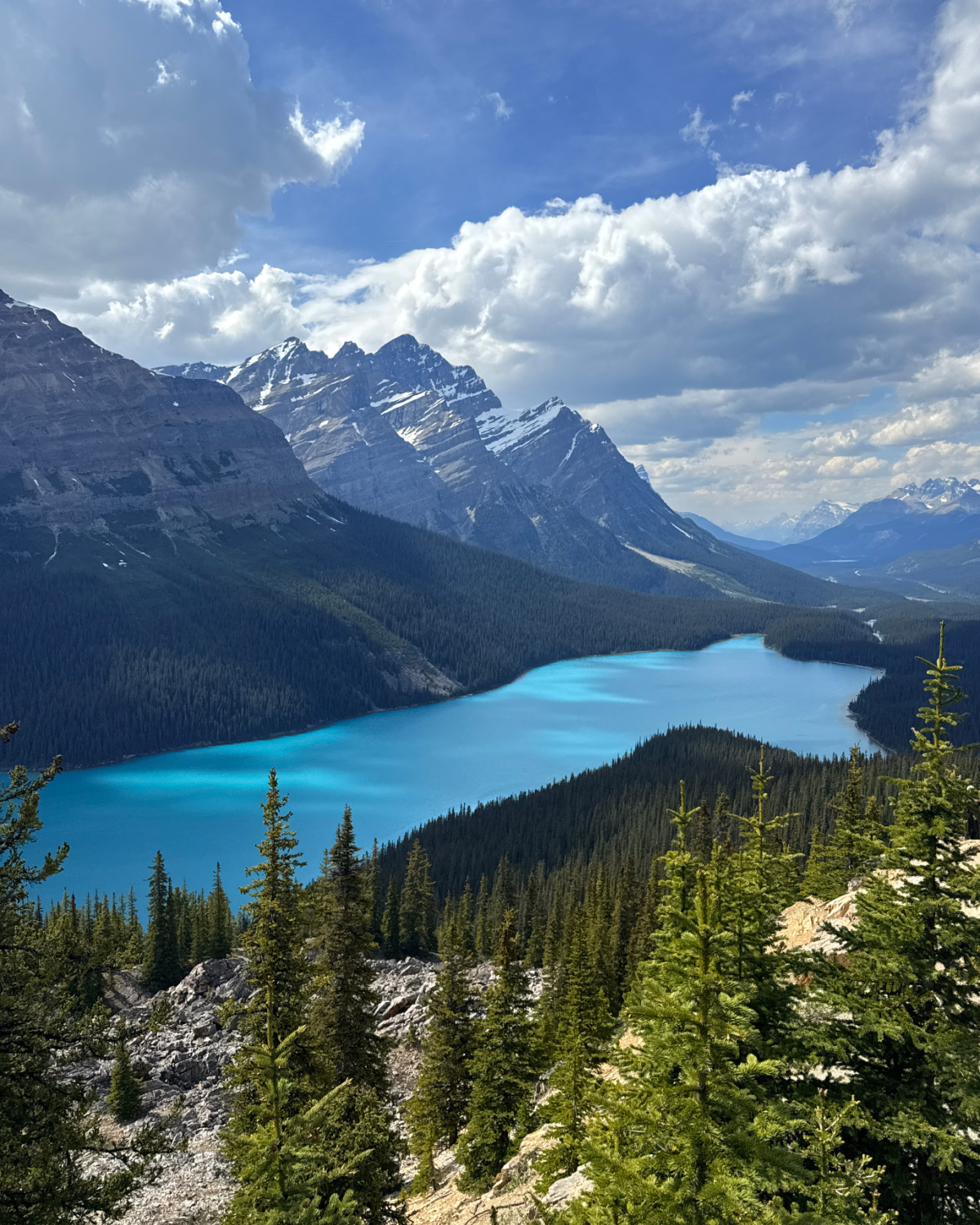
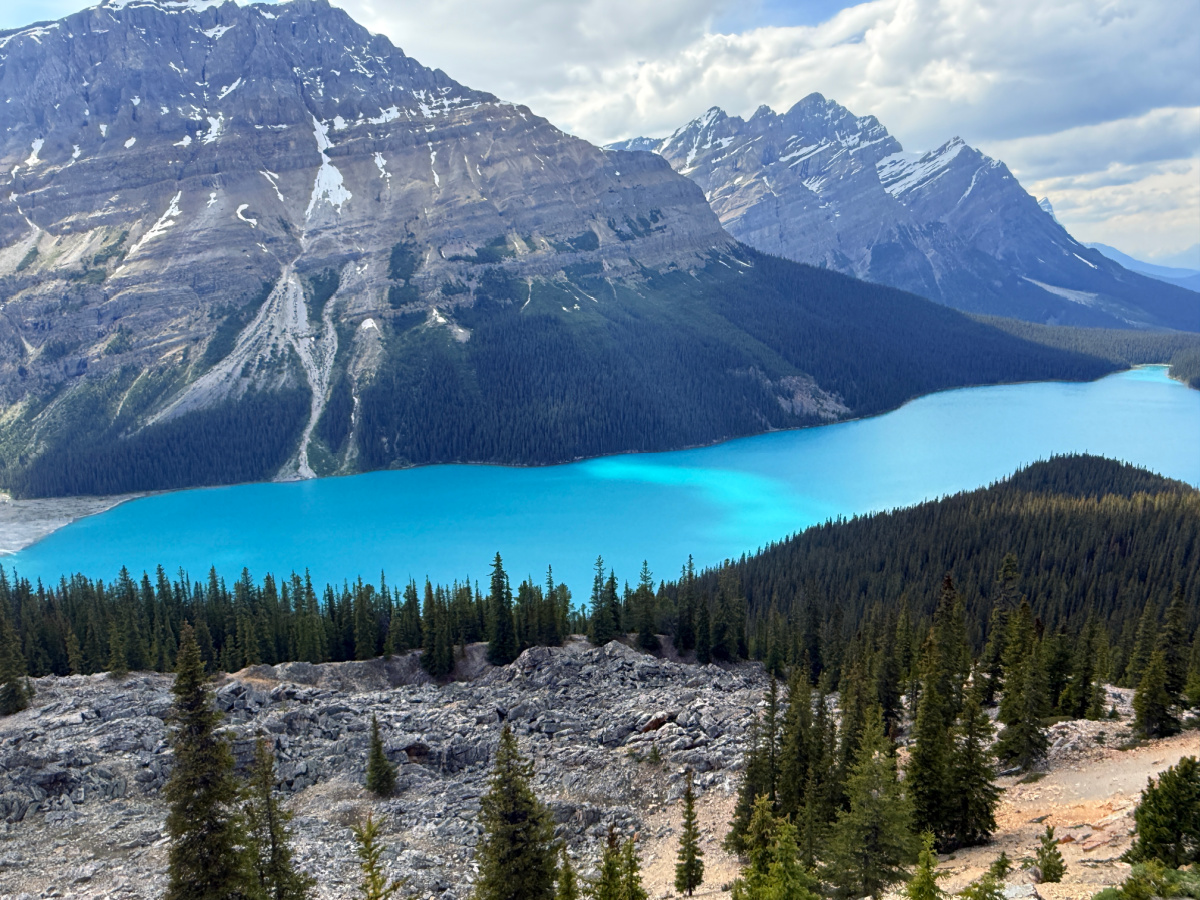
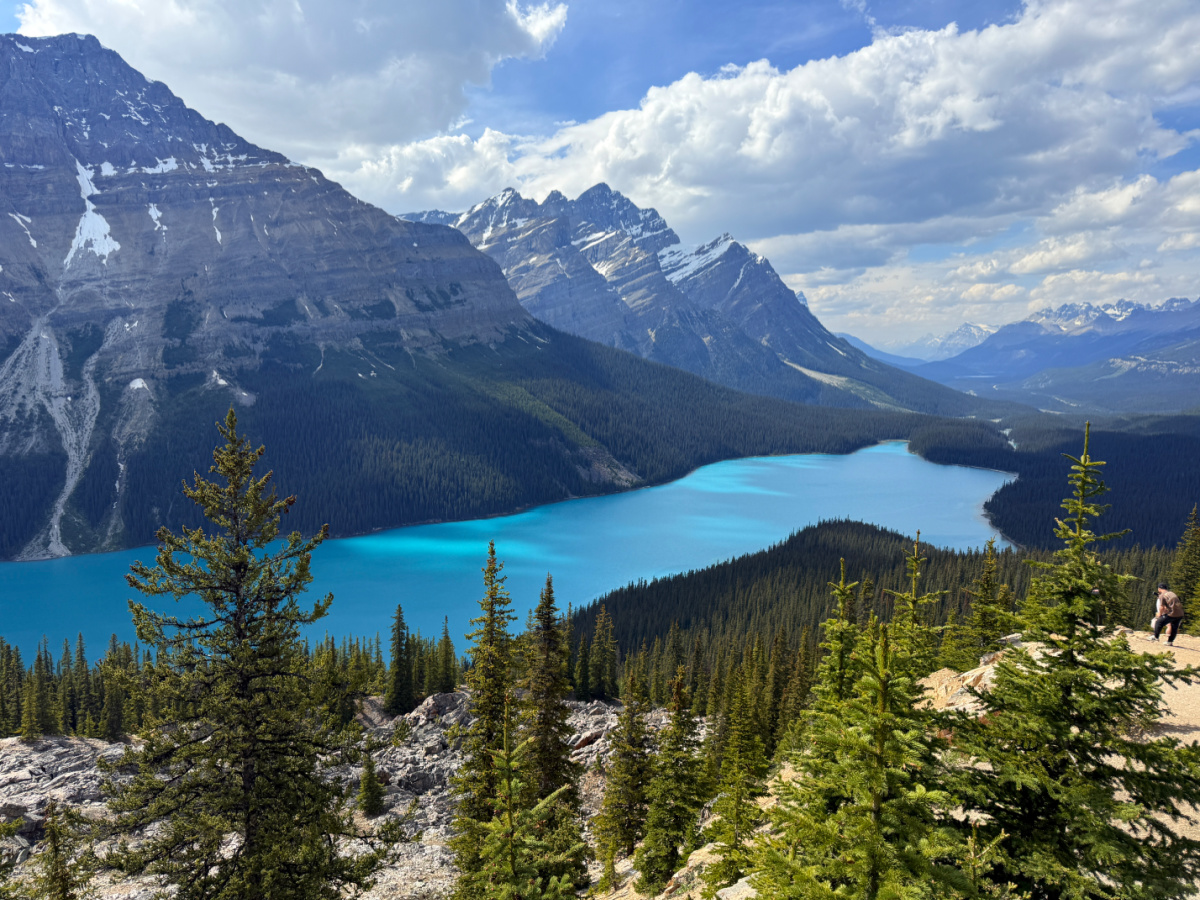
On a sunny day the water glows with an electric turquoise color that looks more like something from the Caribbean than the Canadian Rockies.
The color comes from glacial rock flour—tiny particles of rock ground down by glaciers and suspended in the water. Sunlight reflects off those particles and creates the bright blue-green color that makes so many lakes in the Canadian Rockies famous.
But what really elevates Peyto Lake above many other viewpoints is the perspective.
You’re not standing beside the lake.
You’re standing hundreds of feet above it.
That elevated view lets you see the entire shape of the lake stretching through the valley below.
Many people say the lake resembles a wolf’s head when viewed from above. Once someone points it out, it’s hard to unsee.
Whether you see the wolf or not, the combination of turquoise water, rugged peaks, glaciers, forests, and endless mountain scenery creates one of the most recognizable landscapes in all of Canada.
My Experience Visiting Peyto Lake
One thing that surprised me was how easy the experience actually was.
After spending time at places like Johnston Canyon, the Banff Gondola, and Lake Louise, I expected Peyto Lake to require a bigger commitment.
Instead, it felt like one of the highest reward-to-effort stops of our entire trip.
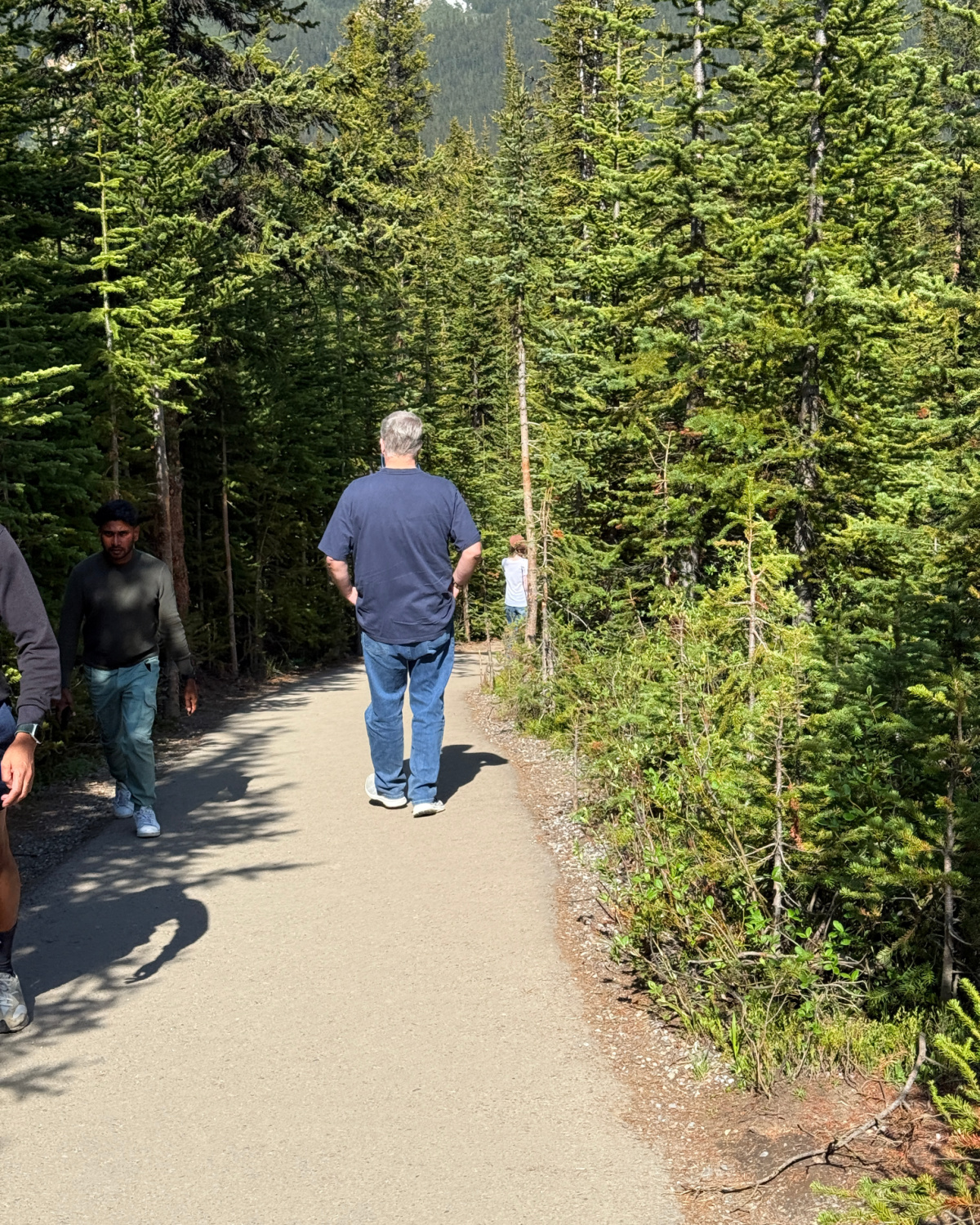
The paved path climbs gradually from the parking area through a forest of evergreens.
You know the view is coming, but you can’t see it yet.
Then suddenly the trees open up.
And there it is.
I honestly stopped walking for a moment.
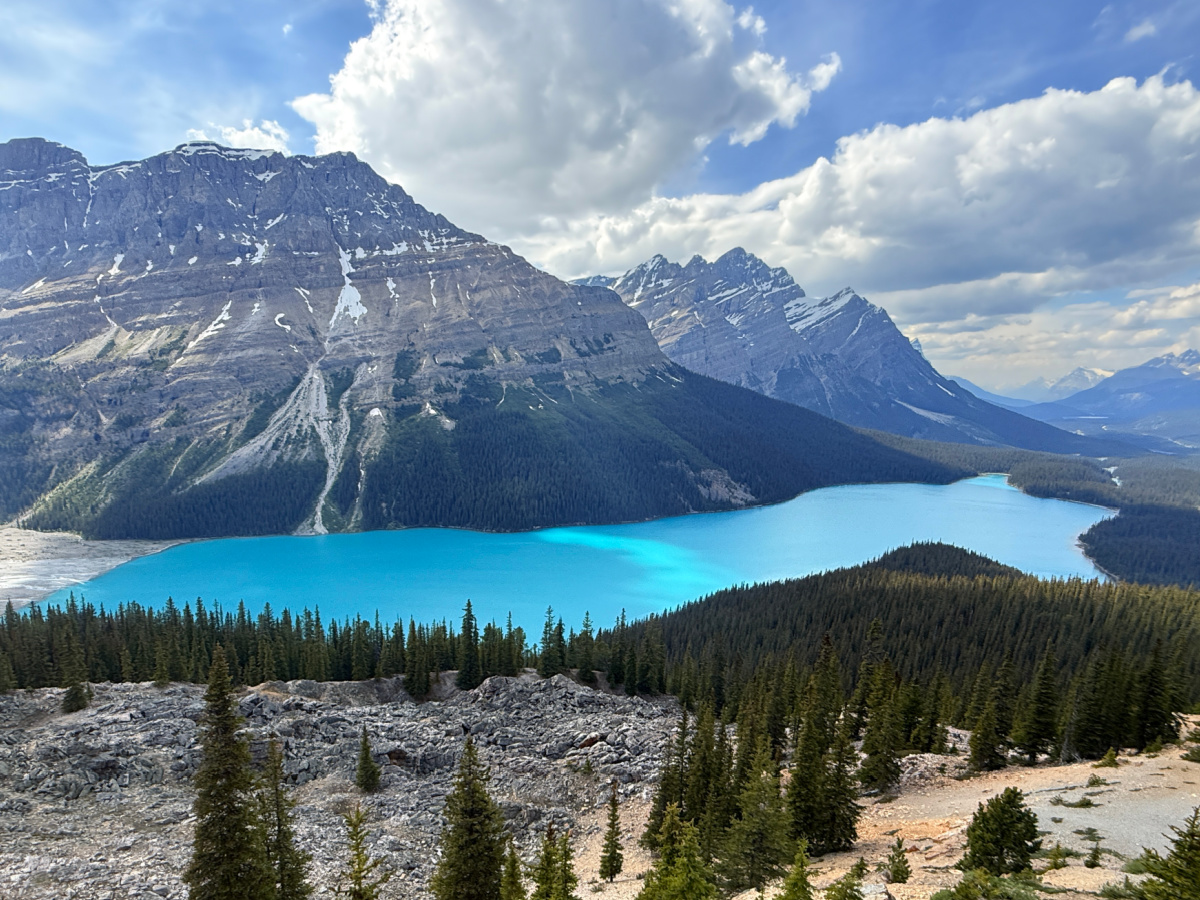
The water looked almost illuminated from within.
The clouds were drifting across the mountains and creating patches of sunlight that moved across the lake. Every few seconds the colors seemed to shift slightly.
Even with plenty of other visitors around, the view was so expansive that it never felt crowded.
I found myself lingering much longer than I expected, simply watching the changing light across the valley.
Some viewpoints are places where you snap a photo and leave.
Peyto Lake is a place where you stand quietly for a few minutes and simply take it all in.
How Hard Is the Walk to Peyto Lake?
This is probably the question I get asked most often about viewpoints in the Canadian Rockies.
The good news is that Peyto Lake is extremely accessible by national park standards.
The trail from the parking lot to the main viewpoint is paved and well maintained.
The walk is uphill, but it’s relatively short.
Most visitors can comfortably reach the viewpoint in about 10 to 15 minutes.
If you’re reasonably mobile and can handle moderate inclines, you should have no problem.
For the audience I write for—families, middle-aged travelers, retirees, and people who love beautiful places but don’t necessarily love hardcore hiking—Peyto Lake is almost the perfect stop.
You get a world-class view without needing a world-class fitness level.
When Is the Best Time to Visit Peyto Lake?
Summer is the most popular season, and for good reason.
July through September typically offers:
- Fully thawed turquoise water
- Easier road conditions
- Longer daylight hours
- Better access to the viewpoint
That said, timing during the day matters too.
I generally recommend arriving either:
- Early morning
- Late afternoon
- Early evening
Midday often brings the largest crowds.
The lighting can also be surprisingly dramatic when clouds move through the area.
During our visit, shifting clouds created alternating bands of sunlight and shadow across the lake. Some of my favorite photos came during those changing conditions rather than under a completely blue sky.
How Much Time Should You Spend at Peyto Lake?
For most visitors, 30 to 60 minutes is perfect.
That gives you time to:
- Walk to the overlook
- Enjoy the scenery
- Take photos
- Explore nearby viewpoints
- Relax and appreciate the view
If you’re a photographer, you could easily spend longer.
If you’re driving the Icefields Parkway in a single day, Peyto Lake works well as one of several major stops between Lake Louise and Jasper.
Accessibility, Parking, and Crowds at Peyto Lake
One of the reasons Peyto Lake has become such a popular stop is that it’s remarkably accessible compared to many famous viewpoints in the Canadian Rockies.
Years ago, reaching the overlook required a steeper and less convenient walk. Today, the redesigned parking area and paved pathway make the experience much easier for most visitors.
After parking, you’ll follow a wide paved trail through the forest toward the main viewpoint.
The path does climb uphill, but it’s relatively short and manageable. Most visitors can comfortably reach the overlook in about 10 to 15 minutes.
For families with children, retirees, and travelers who aren’t looking for a strenuous hike, Peyto Lake is one of the best reward-to-effort stops in Banff National Park.
That said, don’t expect to have the place to yourself.
Peyto Lake has become one of the most photographed locations in the Canadian Rockies, and the crowds reflect that.
During peak summer months, especially July and August, the main viewing platform can become quite busy between late morning and mid-afternoon.
When I visited, there were plenty of people around, but the viewpoint is large enough that it never felt overwhelming. Most visitors spend 10 to 20 minutes taking photos before moving on, so the crowd tends to flow continuously rather than staying packed in one spot.
If avoiding crowds is important to you, consider arriving:
- Before 9:00 AM
- After 4:00 PM
- On weekdays instead of weekends
The parking lot can fill during peak periods, particularly in summer. If you arrive midday and find the lot crowded, patience usually pays off because vehicles are constantly coming and going.
One thing I appreciated was how straightforward the entire experience felt. Unlike Lake Louise or Moraine Lake, there are no shuttle reservations, complicated transportation logistics, or long planning considerations.
You simply pull into the parking lot, walk a few minutes, and enjoy one of the most incredible views in North America.
For casual travelers, that’s a pretty compelling combination.
Photography Tips for Peyto Lake
Peyto Lake is one of the most photogenic locations in the Canadian Rockies.
A few things I noticed while photographing it:
Take Both Wide and Tight Shots
The entire landscape is spectacular.
But some of my favorite images actually focused more tightly on the lake itself and the surrounding peaks.
Don’t Forget Vertical Photos
The overlook is perfect for Pinterest-style vertical compositions.
The dramatic mountains and long lake shape work exceptionally well in portrait orientation.
Include Some Foreground
Trees, rocks, and sections of the overlook trail can add scale and depth to your photos.
Wait for the Light
The scene changes dramatically as clouds move through.
Sometimes waiting five extra minutes can completely transform your photographs.
Is Peyto Lake Worth It?
Without hesitation: yes.
In fact, I’d go a step further.
If you only have time for a handful of stops on the Icefields Parkway, Peyto Lake should be one of them.
The combination of accessibility, scenery, and overall wow factor is hard to beat.
There are certainly lakes in the Canadian Rockies that are more famous.
And there are lakes that require longer hikes or attract larger crowds.
But very few locations deliver this much beauty for so little effort.
Pro Tips for Visiting Peyto Lake
- Arrive early or late in the day for fewer crowds.
- Bring a light jacket even in summer. Weather changes quickly at this elevation.
- Allow extra time if you’re driving the Icefields Parkway. You’ll probably stay longer than you planned.
- Take photos, but don’t spend the entire visit looking through your camera screen.
- Visit on a day with at least some sunshine. The turquoise color is most vibrant when the sun hits the water.
- Combine Peyto Lake with Bow Lake, Mistaya Canyon, and the Columbia Icefield for an incredible Icefields Parkway day.
Peyto Lake vs. Bow Lake: Which One Should You Visit?
One of the most common questions travelers have when driving the Icefields Parkway is whether they should stop at Peyto Lake, Bow Lake, or both.
The short answer?
If you have time, visit both. They offer completely different experiences.
Peyto Lake is all about the overlook.
You park, take a short uphill walk, and are rewarded with one of the most spectacular panoramic views in the Canadian Rockies. The entire experience is built around seeing the lake from above and appreciating the massive scale of the surrounding mountains.
Bow Lake, on the other hand, is a lakeshore experience.
Instead of looking down at the water from hundreds of feet above, you’re standing right beside it. You can walk along the shoreline, skip rocks, photograph reflections, and enjoy a much more immersive experience.
I actually found Bow Lake surprisingly peaceful compared to Peyto Lake. Even though both are popular stops, visitors tend to spread out more around Bow Lake while most people at Peyto gather around the main viewpoint.
The scenery is also different.
Peyto Lake is famous for its wolf-head shape and electric turquoise color viewed from above.
Bow Lake feels more rugged and dramatic, with towering peaks rising directly from the shoreline and glaciers visible in the distance.
If I could only choose one stop for a first-time visitor, I’d pick Peyto Lake because the viewpoint is so iconic and unique.
But if you’re driving the Icefields Parkway, there’s no reason to choose. The two locations are only about 10 minutes apart, making it easy to experience both during the same day.
Frequently Asked Questions
Is Peyto Lake an easy hike?
Yes. The walk to the main viewpoint is short, paved, and manageable for most visitors.
How long does it take to get to Peyto Lake?
Most visitors reach the viewpoint in about 10 to 15 minutes from the parking lot.
Can you see Peyto Lake without hiking?
You’ll still need to walk from the parking area, but it’s one of the easiest iconic viewpoints in Banff National Park to reach.
Is Peyto Lake worth visiting?
Absolutely. It is one of the most spectacular viewpoints in the Canadian Rockies and one of the best stops on the Icefields Parkway.
How much time do you need at Peyto Lake?
Plan for at least 30 minutes, though many visitors spend closer to an hour.
What is the best time of year to visit Peyto Lake?
July through September typically offers the best combination of road access, weather, and vibrant lake color.
Final Thoughts
There are a lot of beautiful places in the Canadian Rockies.
Lake Louise is iconic.
Moraine Lake is world-famous.
Maligne Lake is unforgettable.
But Peyto Lake surprised me more than any of them.
Part of that is because the effort required is so small compared to the reward. A short walk leads to a view that looks like something straight out of a postcard.
Part of it is the color. Photos really don’t do it justice.
And part of it is the setting. Standing high above the lake, watching the mountains disappear into the distance, gives you one of the grandest views anywhere along the Icefields Parkway.
If you’re planning a Canadian Rockies road trip and wondering whether Peyto Lake deserves a stop, the answer is simple:
Don’t skip it.
It’s one of those places you’ll remember long after the trip is over.
Continue Planning Your Canadian Rockies Trip
If you’re driving the Icefields Parkway, Peyto Lake is just one of many unforgettable stops. These guides will help you build the perfect Canadian Rockies itinerary and make the most of your time in Banff and Jasper National Parks.
Icefields Parkway Guides
Icefields Parkway Guide: The Best Stops Along the Most Scenic Drive in Canada
Planning a day on the Icefields Parkway? This guide covers all of the must-see viewpoints, waterfalls, lakes, and scenic stops between Lake Louise and Jasper, including Peyto Lake, Bow Lake, Mistaya Canyon, Athabasca Falls, and more.
Best Stops on the Icefields Parkway
Peyto Lake is one of the most beautiful stops on the entire drive, but it’s definitely not the only one worth building into your day. This guide covers the best Icefields Parkway stops, including lakes, waterfalls, viewpoints, canyons, and glacier experiences between Banff and Jasper.
Banff Travel Guides
Banff for First-Time Visitors
Everything you need to know before visiting Banff National Park, including where to stay, what to see, how to get around, and the biggest mistakes first-time visitors make.
Best Things to Do in Banff
From iconic lakes and scenic drives to wildlife viewing and easy hikes, this guide covers the top experiences in Banff National Park.
Banff in 3 Days Itinerary
Only have a long weekend in Banff? This detailed itinerary shows you how to see the highlights without feeling rushed.
Canadian Rockies Travel Planning Guides
Ultimate Canadian Rockies Travel Guide
Start here if you’re in the early planning stages. This guide covers Banff, Jasper, the Icefields Parkway, transportation, lodging, and trip planning essentials.
Best Things to Do in the Canadian Rockies
A roundup of the most memorable experiences throughout Banff, Jasper, and the surrounding mountain parks.
Canadian Rockies for First-Time Visitors
Learn what to expect, where to stay, how much time you need, and how to plan an unforgettable first trip to the Canadian Rockies.
7-10 Day Itinerary Canadian Rockies
My recommended route for experiencing the highlights of Banff, Jasper, and the Icefields Parkway in one incredible road trip.
Canadian Rockies Without Hardcore Hiking
One of the biggest surprises about the Canadian Rockies is how much beauty you can experience without strenuous hikes. This guide is perfect for families, retirees, and casual travelers.
More Stunning Lakes to Visit in North America
If you love destinations like Peyto Lake, these beautiful lakes offer equally memorable scenery, easy access, and spectacular mountain views.
Picture Lake (Washington)
Located near Mount Baker, Picture Lake is famous for its postcard-perfect reflections of Mount Shuksan. It’s one of the easiest and most rewarding photo stops in the Pacific Northwest.
Diablo Lake (North Cascades National Park)
With its unreal turquoise water and dramatic mountain backdrop, Diablo Lake is often compared to the glacial lakes of the Canadian Rockies. The overlook along North Cascades Highway is one of the most spectacular roadside viewpoints in Washington State and requires virtually no hiking.
Reflection Lakes (Mount Rainier National Park)
These lakes provide some of the best views of Mount Rainier and can produce incredible mirror-like reflections on calm mornings. They’re a must-see stop on the road to Paradise.
Lake McDonald (Glacier National Park)
Known for its colorful shoreline rocks and crystal-clear water, Lake McDonald is one of the most iconic destinations in Glacier National Park and an easy stop along Going-to-the-Sun Road.
Jenny Lake (Grand Teton National Park)
Surrounded by towering Teton peaks, Jenny Lake combines spectacular scenery with boat rides, lakeshore walks, waterfalls, and some of the most accessible mountain views in the park.
String Lake (Grand Teton National Park)
With shallow turquoise water and incredible mountain backdrops, String Lake is one of the best family-friendly lake destinations in Grand Teton National Park.
Taggart Lake (Grand Teton National Park)
For visitors willing to do a short and relatively easy hike, Taggart Lake offers one of the most rewarding mountain lake views in the Tetons and often has beautiful reflections of the surrounding peaks.
Love turquoise lakes and mountain scenery? Don’t stop at Peyto Lake. Some of North America’s most beautiful lake destinations can be found throughout Glacier National Park, Grand Teton National Park, Mount Rainier, and the North Cascades, making them perfect additions to any national parks bucket list.