Taggart Lake Trail Guide: Grand Teton National Park

Affiliate Disclosure: This post may contain affiliate links. If you make a purchase or booking through these links, I may earn a commission at no additional cost to you.

Headed to Grand Teton National Park and want something beautiful but doable? Taggart Lake Trail checks every box without leaving you gasping for air. You’ll pass wildflowers, hear a bubbling creek (with a tiny waterfall you’ll probably photograph five times), and end up at a crystal-clear lake with those jaw-drop Teton Range peaks staring back at you.
This little trail has everything I love about the Tetons packed into one outing: wildflowers, a chatty creek with small waterfalls, shady forest, and then this crystal-clear mountain lake with huge views of the Teton Range. It’s one of those hikes where you keep thinking, “Wait, this was only a few miles?”

Related: Check out these first timer tips for a trip to Yellowstone National Park!
Quick Snapshot
Trail Name: Taggart Lake Trail
Location: Grand Teton National Park, Wyoming, United States
Trailhead: Taggart Lake Trailhead, off Teton Park Road
Distance: About 3 miles out-and-back (4 miles if you do the loop via Beaver Creek Trail)
Elevation Gain: Around 400 feet of elevation gain
Difficulty: Easy to moderate
Time Needed: 1.5–2.5 hours
Restrooms: Yes, at the trailhead
Bear Spray: 100% bring it. Both black bears and grizzly bears live here.

You Don’t Need to Be a Hardcore Hiker
When I first pulled into the Taggart Lake parking area, I had that little “uh oh” moment you get when the mountains ahead look way steeper than you mentally prepared for. You know that feeling?
But a few minutes on the trail and I realized: this isn’t a suffer-fest.
This trail isn’t one of those “did I accidentally sign up for a marathon?” kind of hikes. Take it slow, breathe in the pine scent, and let the Teton Park Road traffic fade behind you. You’ll sweat a little, sure. But you won’t be wheezing into your granola bar at the end.
On the way to the lake you’ll walk through open meadows, then duck into shady forest. You’ll cross Taggart Creek on a wooden bridge, hear water tumbling over rocks, and wander under tall lodgepole pine and aspen groves.
And just when you start thinking, “Is this lake actually close or was that trail sign lying?” the trees open up and- boom, there it is. Taggart Lake is sitting there like a mirror at the base of the Tetons.
It’s honestly the kind of moment that makes you stop, forget about your burning calves, and think, “Oh. This is why people are obsessed with this park.”

Related: Yellowstone is right next to Grand Teton. Check out this ultimate guide to the park!
Finding the Trailhead (And Dealing with Parking)
The Taggart Lake Trailhead is super easy to find. It’s right off Teton Park Road, about three miles north of the Moose Entrance Station. If you’re driving up from Jackson Hole, plan on about 25 minutes, but give yourself extra time because you will absolutely be tempted to pull over for photos of the views of the Tetons.

You’ll see signs for the Taggart Lake parking area on the right side of the road. There’s a parking lot with a restroom, a big trail map, and usually a few families getting kids into backpacks or arguing about who forgot the snacks.
This hike is popular. Not “oh a few people” popular. It’s more like “wow, is everyone in the park here?” popular. By nine o’clock the parking lot can look like Target on a Saturday morning.
A few tips from experience:
- If you want a guaranteed parking spot, go early.
- If you’re not a morning person, try early afternoon once the first wave of hikers clears out.
- If the lot is full, don’t panic. A lot of folks park along the side of the road on Teton Park Road. We ended up doing that. The shoulder is flat and it wasn’t a big deal to walk back to the trailhead.
- If it’s slammed, bail for a bit. Go wander Jenny Lake or grab a snack in Moose. Then come back once the early hikers have cleared out.
Just make sure you pay your park entrance fee at the Moose Entrance Station or use your America the Beautiful pass. This is still a United States national park, so rangers do check.

Trail Overview: What to Expect
The first stretch feels more like a gravel service road than a wilderness trail, but give it five minutes and the dirt path quickly dives into open meadows with wild sage and mountain views that make you forget you’re barely a half mile in.
About a half mile in, you reach one of my favorite spots on the whole hike: the little wooden bridge over Taggart Creek. The creek rushes underneath, and if you glance downstream you’ll see a small waterfall tumbling over rocks. In the morning the light hits the water just right and everything glows.

From there, the trail eases into a mixed forest. You walk under aspen and lodgepole pine, the air gets cooler, and the soundtrack switches from rushing water to birds and wind in the trees. This part of the hike feels cozy, like the trail is gently pulling you along instead of daring you to keep up.

Trail Splits and Choices
Around the one-mile mark, you’ll reach the Bradley Lake Trail junction. This is where the trail splits:
- Straight ahead takes you on the most direct route to Taggart Lake.
- The left fork links up with Beaver Creek Trail and the Valley Trail, making a loop hike with a bit of different scenery on the way back.
If you’re hiking with kids, or you’re still getting used to the high altitude, I’d recommend the simple out-and-back route. You still get all the good stuff without adding extra mileage.
We definitely went for the basic out-and-back and I have zero regrets. As a middle-aged, slightly pudgy mom who loves hiking but does not love feeling like I’m on a stair climber for two hours, this was the perfect combo of effort and reward. I huffed, I puffed, I questioned my life choices halfway up one hill… and then I saw the lake and instantly forgot about all the heavy breathing.
If you’ve got extra energy or older kids, the loop adds some variety and passes through more open fields and views across the valley floor before you reconnect near the main road.

The First Glimpse of Taggart Lake
This is the part I still think about. As you get closer, the trail climbs gently over a glacial moraine. You can’t see the lake yet, but you can feel that something is coming. The air cools, the trees thin…and then suddenly the forest just drops away and you’re standing at the edge of Taggart Lake.
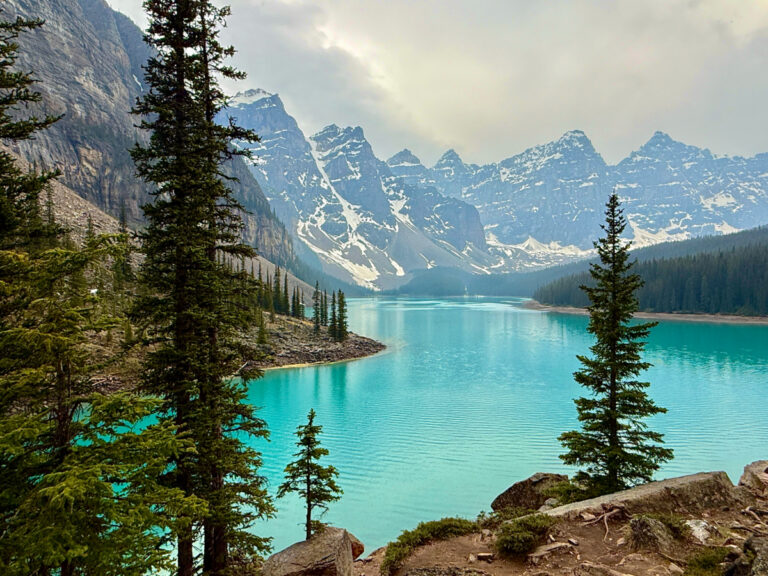
On calm mornings the crystal-clear water turns into a perfect mirror. It can be so perfect it messes with your brain. You can’t tell what’s real and what’s reflection until a breeze ripples through and breaks the illusion.

On a calm day, you can see the rocks under your feet and the reflection of Grand Teton, Mt. Owen, and Teewinot Mountain looking back at you. It’s like someone ordered a perfect glacially-carved lake straight out of a national park brochure.
Most people don’t just snap a photo and leave. Kids start skipping rocks. Grown-ups sit on driftwood or lakeside boulders and unwrap lunch. A few brave souls dab their toes in the water (it’s cold, but in a fun “wow, that’s glacier melt” kind of way).

We stayed for a long time. Honestly, it’s the kind of view that makes you forget what time it is. You look around and think, “This might be one of the most beautiful places I will ever stand.”
If you’re doing the Taggart Lake Loop Trail, you’ll pick up the Beaver Creek Trail on the far side of the lake. That part of the route rolls through meadows and past patches of forest before bringing you back toward Teton Park Road and the Taggart Lake Trailhead.

Safety and Bear Awareness
Now for the part every park parent pays attention to: wildlife. You are very much in bear country here. Both black bears and grizzly bears use this area. That doesn’t mean you’ll see one, but you should hike like you might.
A few simple habits go a long way:
- Toss bear spray on your pack strap. Don’t bury it under snacks.
- Chat, sing, tell bad dad jokes; the point is to let any bears know you’re coming before they see you.
- Keep snacks put away when you’re not actively eating.
- If you do see a bear, stay calm, back away slowly, and give it plenty of space.
For the most current info on closures, recent sightings, or anything safety-related, check the official government organization page before you go. The gov website for the park is nps.gov/grte.

When to Go
The trail usually wakes up around late May, once the snowpack finally gives up, and stays friendly until mid-October.
Here’s how the seasons feel:
- Summer: Meadows are green, wildflowers pop, the lake is full, and the trail is busy but happy-busy.
- Fall: The aspen groves turn bright gold and everything feels crisp and cozy. If you’re into fall colors, this is your time.
- Winter: The route turns into a ski track for cross-country skis and snowshoes. The views of the Teton Range in winter are unbelievable, but it’s a completely different kind of trip.
If you’re visiting early or late in the season, toss a pair of traction devices in your bag. Shaded sections can hold onto ice way longer than you think. Morning is usually the best time for calmer water and fewer people; by early afternoon the Taggart Lake parking area can look like a mall lot on a Saturday.

Little Things That Make This Hike Easier
A few random things I learned the hard way:
- Bring more water than feels necessary. The high altitude dries you out fast and there’s nowhere to refill once you’re moving.
- Dress in layers. It can be warm in the sun and downright chilly by the lake.
- Sunscreen and bug spray are non-negotiable in summer.
- Download your trail map ahead of time. Cell service is spotty to nonexistent.
If you’re traveling with kids, this is a fantastic trail to hand them a simple map or let them “lead” at intersections while you double check behind them. They feel like official explorers and you still know where you’re going.
And one more thing, just to really foot-stamp it: I know the temptation to rush when you’re trying to see “all the things” in a new park. But if there was ever a hike that deserves a slower pace, it’s this one. Taggart is not just a box to check. It’s a “stop, sit, breathe in the pine” kind of experience.
A Little History
Taggart Lake is named after William Taggart, an assistant geologist who worked in this area in the late 1800s. The forest surrounding the lake tells another story too. It’s still recovering from the Beaver Creek Fire, and you can see younger trees mixed in with older trunks, which is actually kind of beautiful in its own way. Nature starting over.
Long before scientists and rangers came on the scene, the Nez Perce people traveled through this valley. Whenever I read that, it makes me pause and think about how long people have been walking through this same landscape, watching the same peaks catch the evening light.
Nearby Trails Worth Checking Out
If you finish Taggart and still have some gas left in the tank, there are some great add-ons close by:
- Bradley Lake Trail Split: Adds another alpine lake and usually fewer people.
- Jenny Lake: Just up the main road, with boat rides, waterfalls, and more hiking trails.
- Garnet Canyon: Much more strenuous, but the views of the Teton Range and Garnet Canyon itself are next-level.
- String Lake: Perfect on a warm afternoon. You can hike around String Lake and Leigh Lake, or just let the kids play in the water. It’s one of the best spots in the park for an easy swim.
You can absolutely build a 2–3 day Grand Teton itinerary around this area. Taggart one day, Jenny Lake or String Lake the next, and maybe a scenic drive or wildlife watching down on the valley floor.

Need-to-Know Details
Entrance Fee: $35 per vehicle (good for 7 days)
America the Beautiful Pass: Works here too and is a great deal if you’re visiting multiple national parks in the same year.
Restrooms: Available at the Taggart Lake Trailhead
Dogs: Not allowed on park hiking trails
Strollers: Not recommended; the trail is way too rocky and uneven
Parking: Limited; go early or plan to park along Teton Park Road if necessary
Final Thoughts
If you only have time for one hike in Grand Teton National Park, I would happily nominate Taggart Lake. It’s short, kid-friendly, and ridiculously pretty. You don’t have to be an elite hiker to earn those “wow” views.
Bring a snack, your bear spray, and whatever camera you’ve got. Honestly, even if you forget the camera, this is one of those places that just imprints on your brain.
Standing at that glacial lake, looking up at Mount Owen and Teewinot Mountain, you suddenly understand why people fly across the United States just to spend a few days here. For a short distance of walking, the payoff is huge.