Myrtle Falls Trail Guide: Easy Paradise Hike in Mount Rainier National Park

Affiliate Disclosure: This post may contain affiliate links. If you make a purchase or booking through these links, I may earn a commission at no additional cost to you.
Planning to hike the Myrtle Falls Trail in Mount Rainier National Park? This easy paved trail in the Paradise area features waterfalls, wildflowers, marmots, and stunning Mount Rainier views.
Estimated reading time: 16 minutes
There are some places in the national parks system that feel almost unfairly beautiful.
Myrtle Falls at Mount Rainier National Park is one of those places.
You walk a short paved trail through wildflower meadows with Mount Rainier towering straight ahead like someone dropped a painted backdrop into real life. Then suddenly there’s a waterfall crashing into a rocky canyon with the mountain perfectly framed behind it. It almost doesn’t look real.
And the crazy thing? You barely have to hike to get there.
For casual travelers, families, older visitors, photographers, or anyone who wants one of the biggest scenic payoffs in the Pacific Northwest without a brutal climb, the Myrtle Falls Trail is honestly close to perfect.
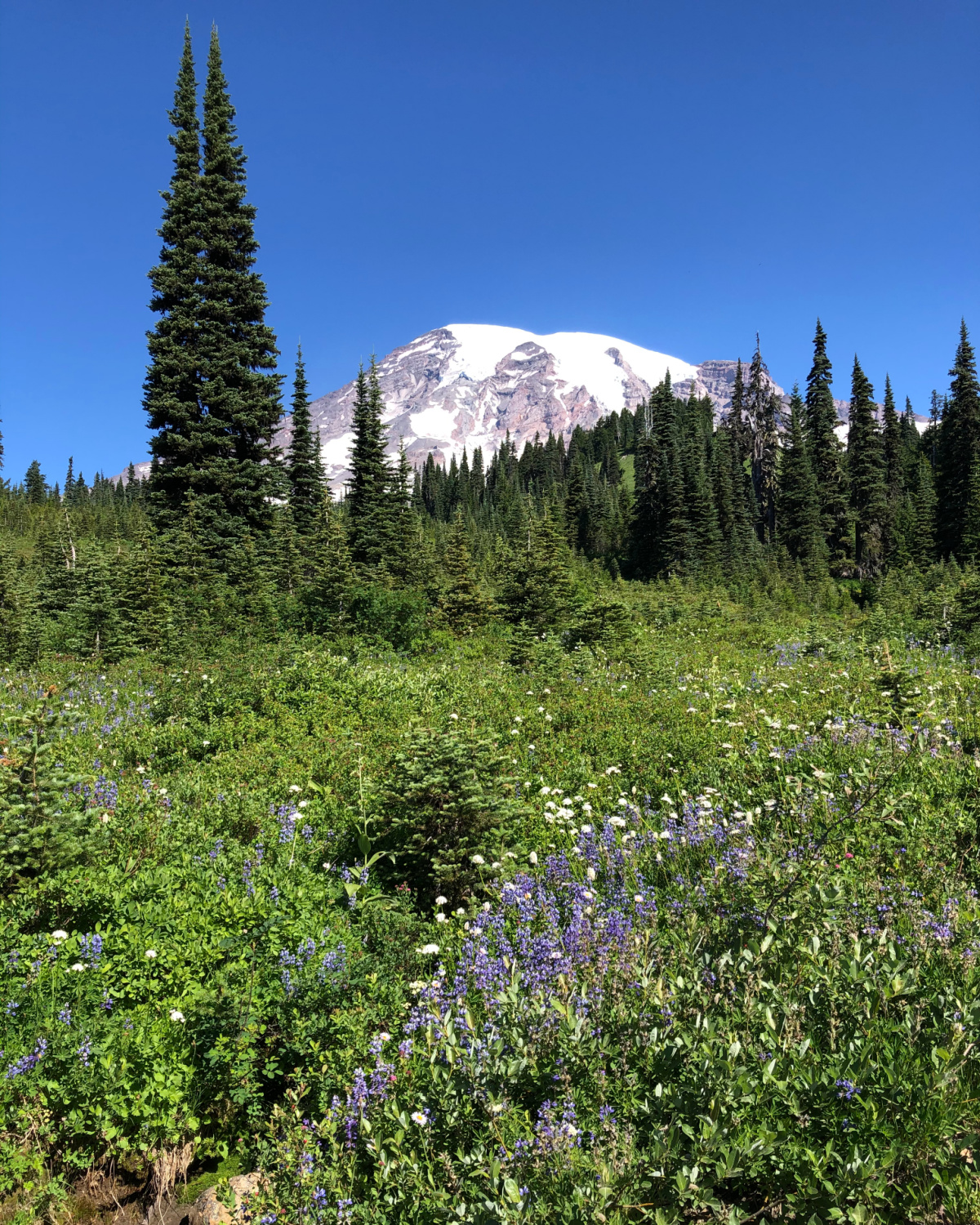
When we visited in August, the entire area was exploding with wildflowers. Purple lupine. Pink mountain heather. Bright green alpine meadows. Snow patches still hanging around higher elevations. Marmots popping up near the trails like furry little park employees assigned to entertain tourists.
I genuinely think this is one of the best easy-access experiences in Mount Rainier National Park.
And even though the paved portion to Myrtle Falls itself is short, this area opens the door to longer Skyline Trail adventures if you want to keep going.
If you love wildflowers, easy scenic walks, and jaw-dropping Mount Rainier views, Tipsoo Lake is another must-visit stop in the park — especially during peak summer bloom season.
Quick Snapshot: Myrtle Falls Trail
Location
Paradise area of Mount Rainier National Park
Trail Length
- About 0.8 miles round trip to Myrtle Falls overlook
- Add a little more if you continue across the bridge and wander nearby viewpoints
Elevation Gain
Roughly 150 feet
Difficulty
Easy to easy-moderate
Trail Surface
Mostly paved path to Myrtle Falls overlook
Time Needed
- 20–45 minutes for Myrtle Falls only
- 1–3+ hours if continuing onto portions of the Skyline Trail
Best For
- Families
- Casual travelers
- First-time Mount Rainier visitors
- Retired travelers
- Wildflower lovers
- Photographers
- Anyone who wants huge scenery without hardcore hiking
Main Highlights
- Massive Mount Rainier views
- Myrtle Falls
- Wildflower meadows
- Marmots
- Skyline Trail access
- Easy paved walking path
For a completely different side of Mount Rainier National Park, head to Grove of the Patriarchs, where giant old-growth trees and mossy forest scenery feel worlds away from the alpine landscapes at Paradise.
Why Myrtle Falls Is One of the Best Stops in Mount Rainier National Park
Some trails are technically “easy,” but the payoff feels small.
This is not one of those trails.
The Myrtle Falls Trail gives you one of the most iconic scenery combinations in the entire park:
- Waterfall
- Glacier-covered volcano
- Alpine meadows
- Wildflowers
- Mountain streams
- Wildlife
…all within a very manageable walk from Paradise.
And Paradise itself is already one of the crown jewels of Mount Rainier National Park.
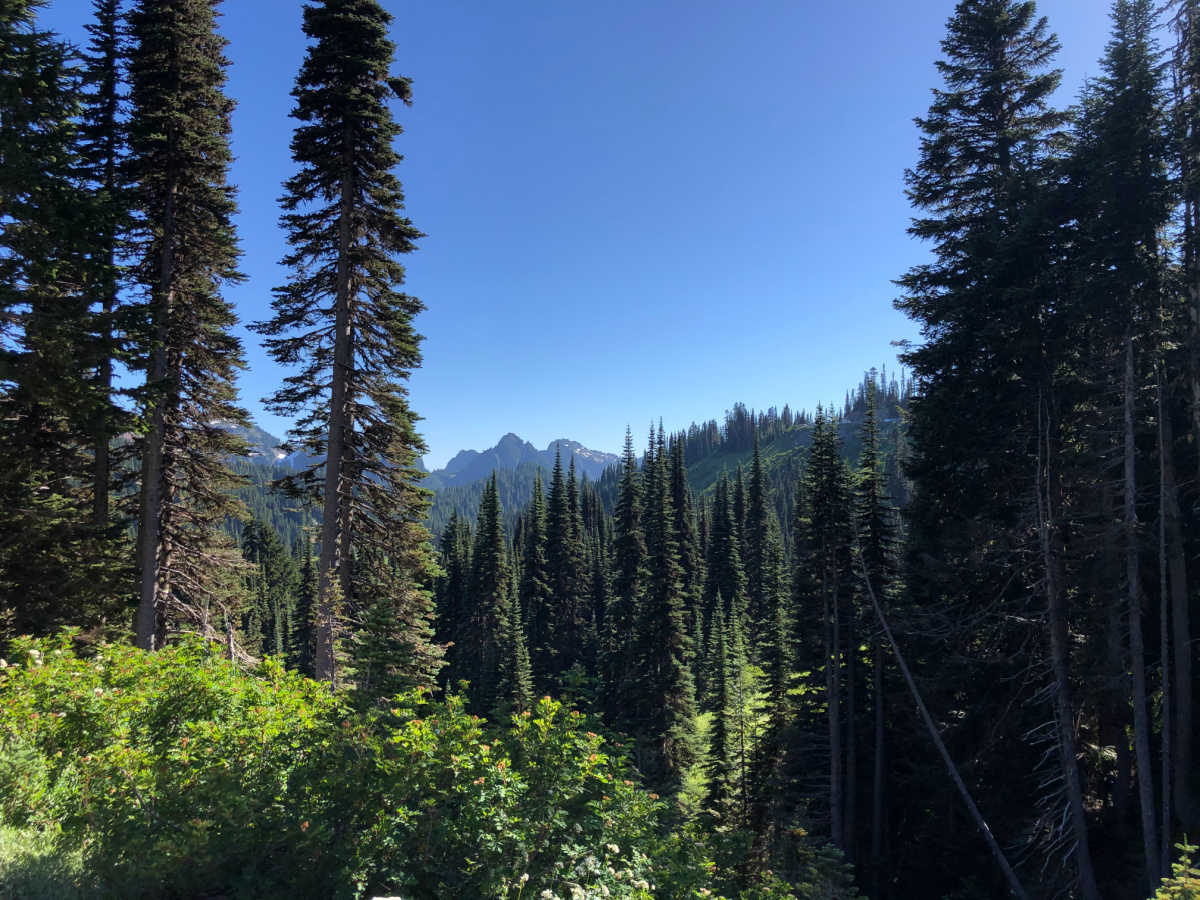
Even the drive up feels dramatic. The trees thin out. The views start opening up. Then suddenly Rainier appears and completely dominates the skyline.
The Myrtle Falls area feels almost tailor-made for people who want to experience alpine beauty without needing trekking poles, technical gear, or an all-day commitment.
That’s probably why this trail is so beloved.
Where Is Myrtle Falls?
Myrtle Falls is located in the Paradise area of Mount Rainier National Park on the south side of the mountain.
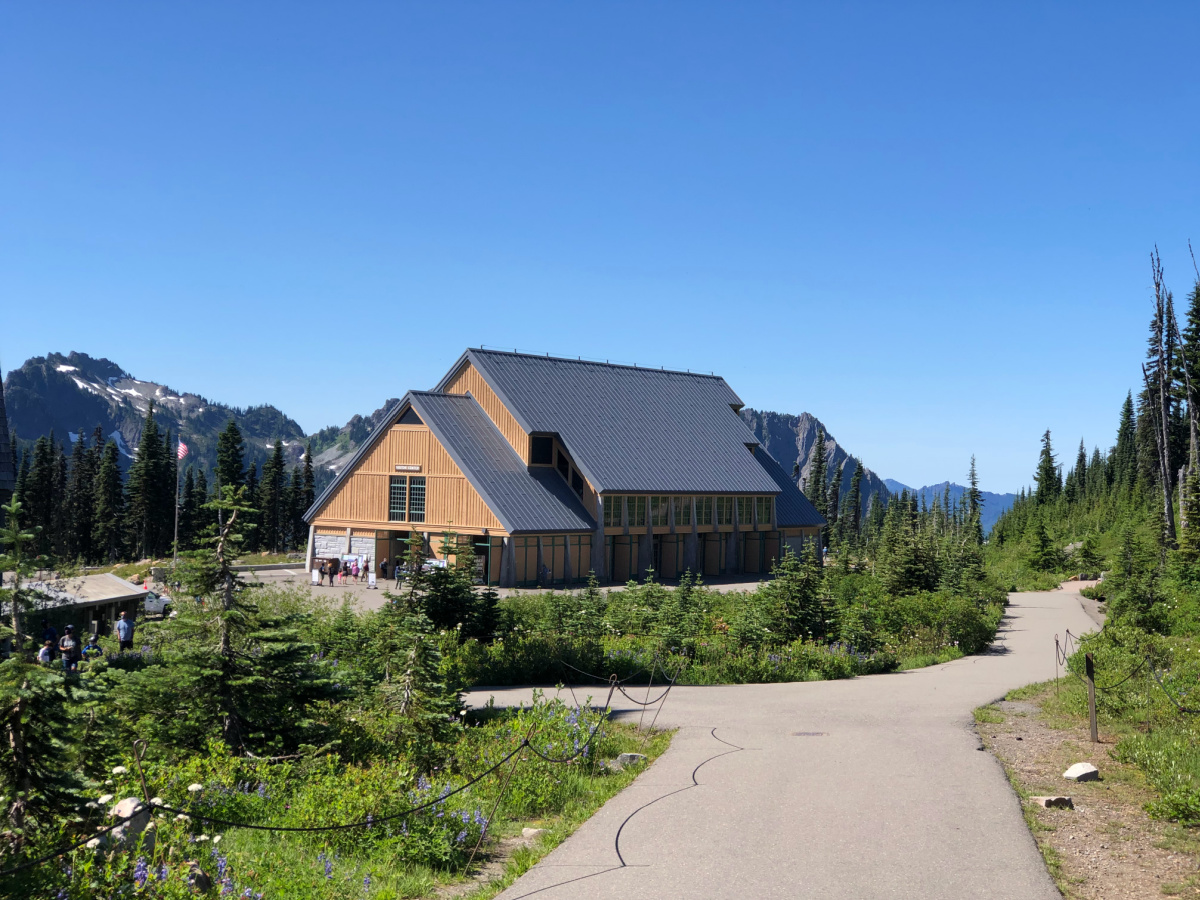
The trail begins near the Paradise Visitor Center and the large parking lots surrounding it.
If you are building a classic first-time Mount Rainier itinerary, Paradise is almost certainly going to be one of your major stops. Myrtle Falls fits naturally into that day.
Approximate driving times:
- Ashford to Paradise: 45–60 minutes
- Longmire to Paradise: 35–40 minutes
- Sunrise to Paradise: about 2.5 hours
- Seattle to Paradise: about 2.5–3 hours
If waterfalls are your thing, Olympic National Park is packed with incredible waterfall hikes ranging from easy roadside stops to lush rainforest trails.
The Paradise Area: What to Expect
Paradise is one of the busiest and most famous areas in Mount Rainier National Park.
And honestly? It deserves the hype.
The scenery here is absurd.
During peak summer season, especially July through early September, you’ll usually find:
- Snow-capped mountain views
- Huge wildflower displays
- Alpine streams
- Marmots
- Waterfalls
- Access to multiple trails ranging from easy walks to strenuous hikes
But Paradise also gets crowded.
Parking can become difficult by mid-morning during summer weekends.
If you want calmer conditions and better photography light, early morning or evening is absolutely the way to go.
Yellowstone National Park also has some spectacular waterfall scenery, especially around the Grand Canyon of the Yellowstone and the park’s geothermal river systems.
The Walk to Myrtle Falls
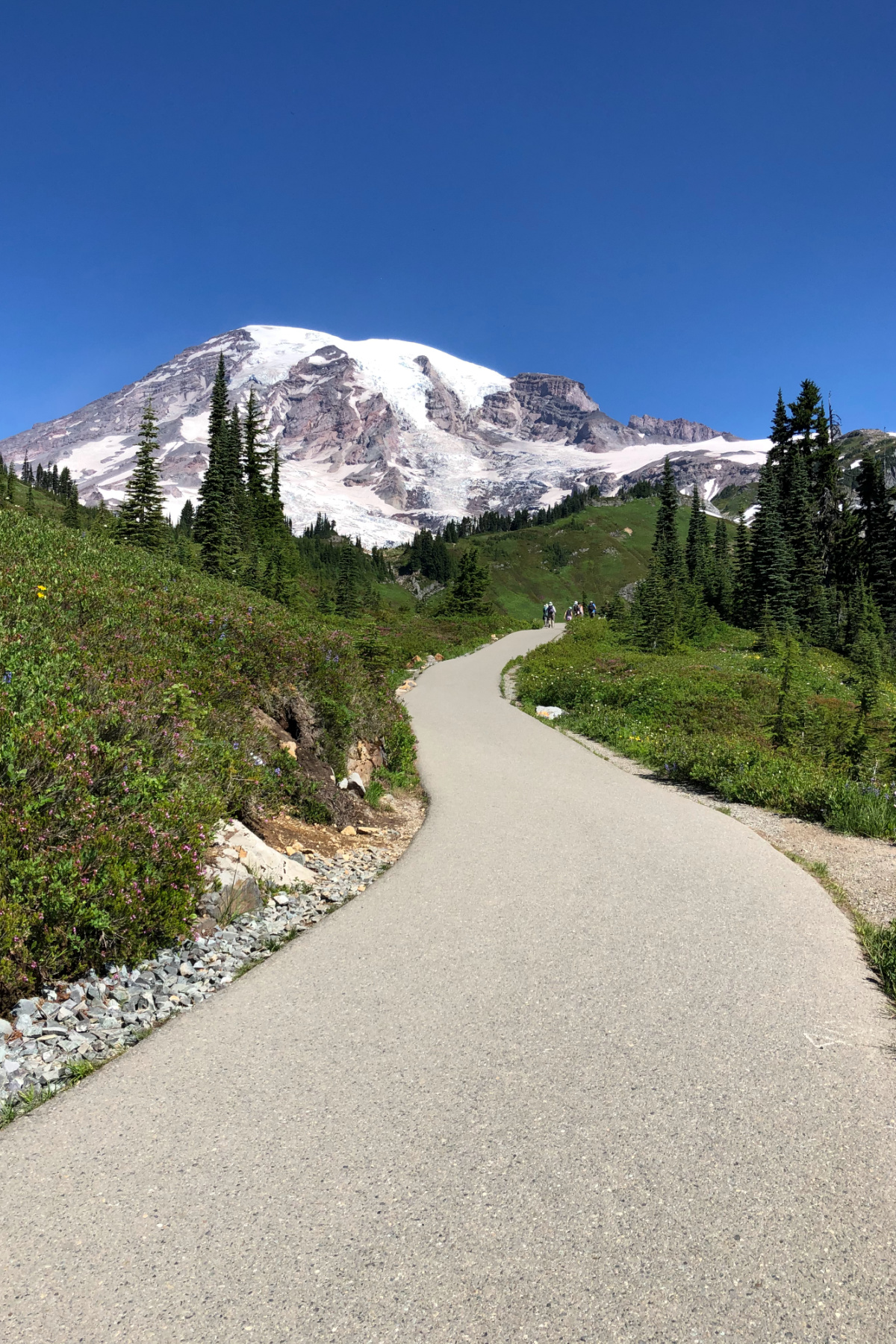
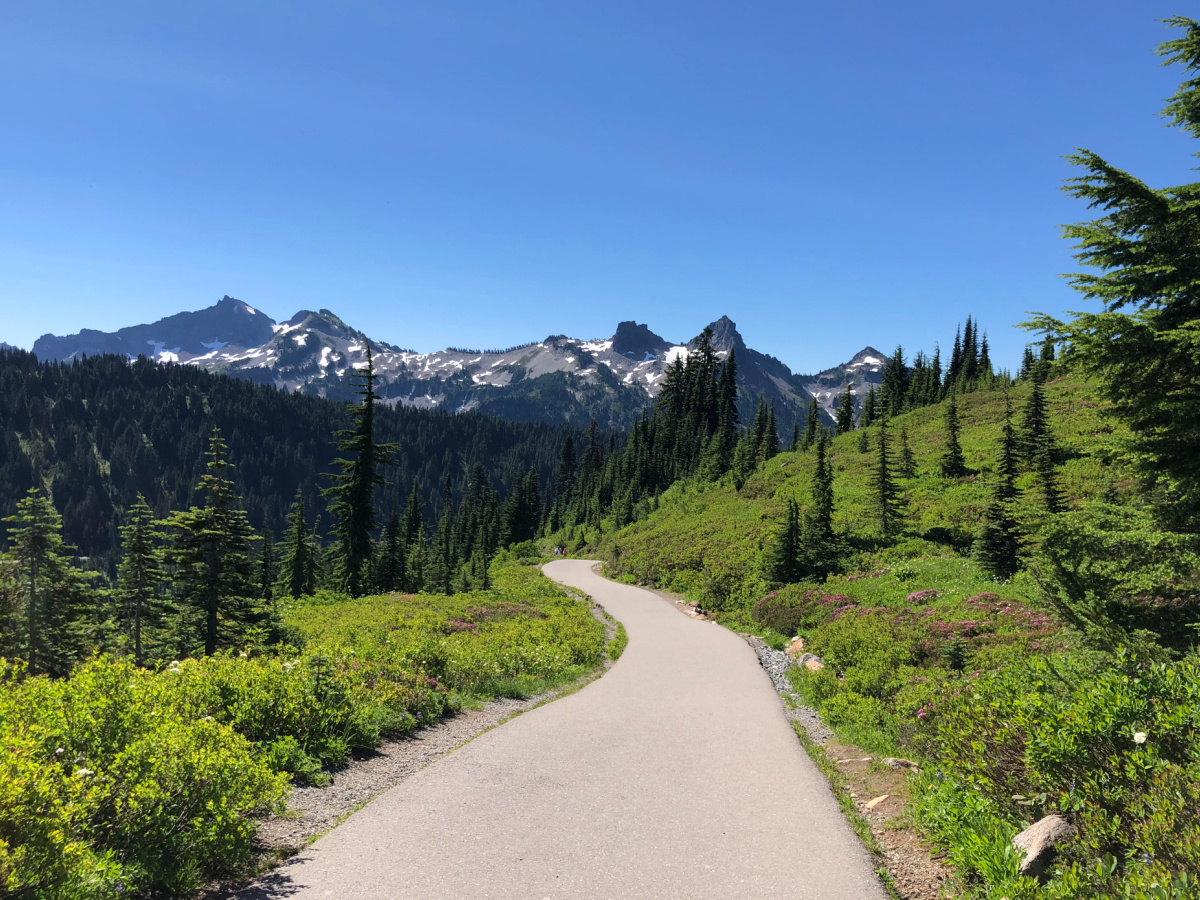
The walk itself starts out gently from Paradise.
Almost immediately, the mountain starts showing off.
This is one of those trails where you stop every thirty seconds because the scenery keeps changing.
In August, the meadows around the trail were packed with wildflowers. Not just a few scattered blooms here and there either. Entire hillsides were layered in color.
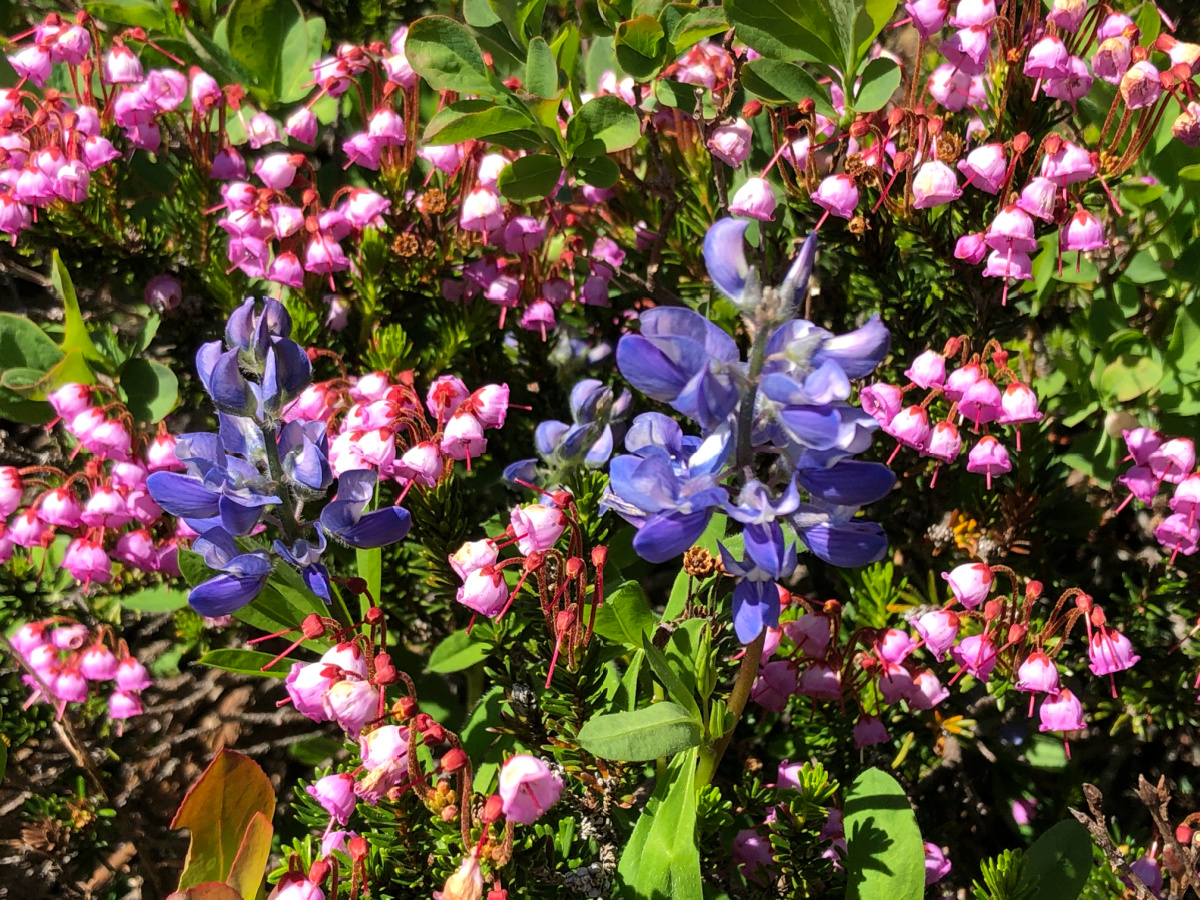
The lupine especially stood out against the deep blue sky and snow-covered mountain.
The paved path gradually descends toward Myrtle Falls, which means the walk out is easier than the return. Still, this is very manageable for most visitors because the elevation gain is modest.
You’ll cross small streams and pass incredible meadow views before reaching the overlook area.
And then the waterfall appears.
Myrtle Falls Overlook
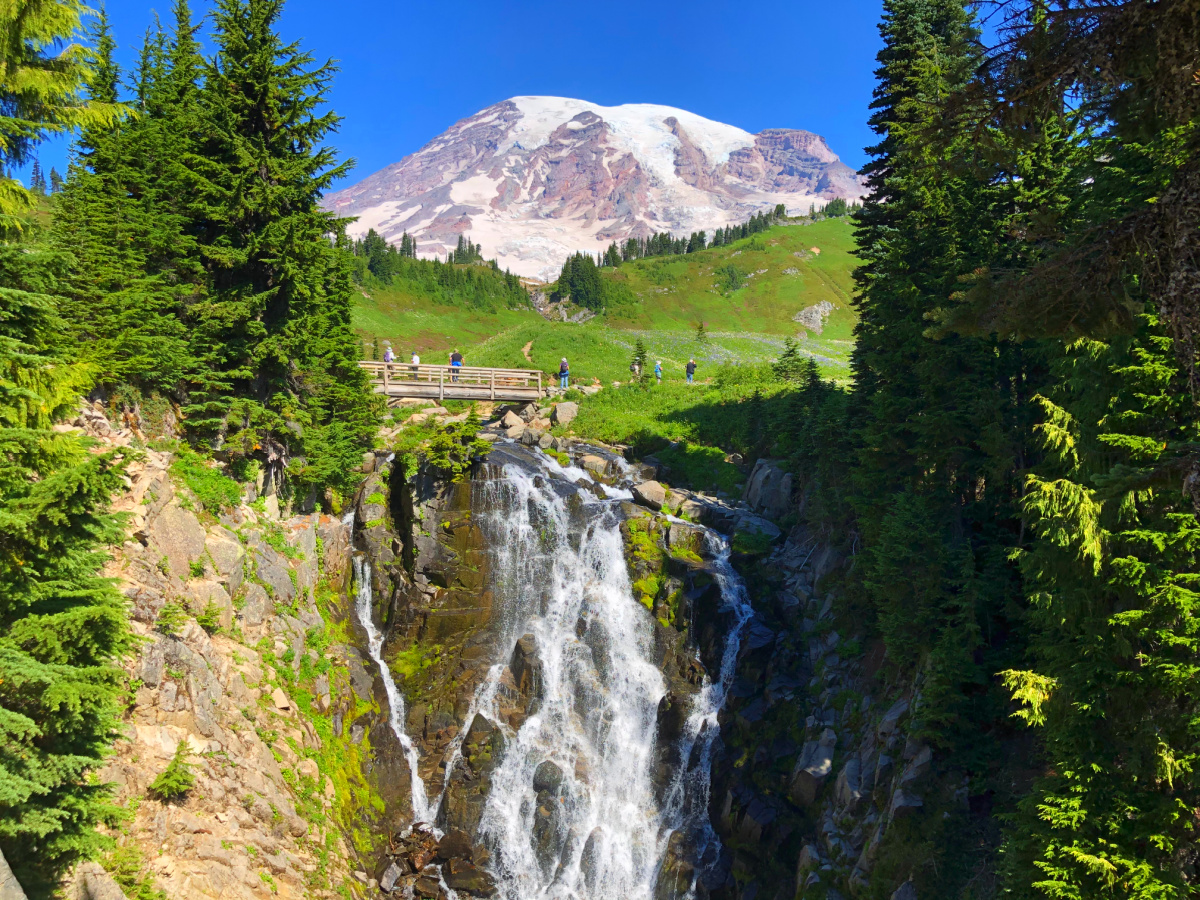
This is the classic view.
And yes, it really does look like the postcards.
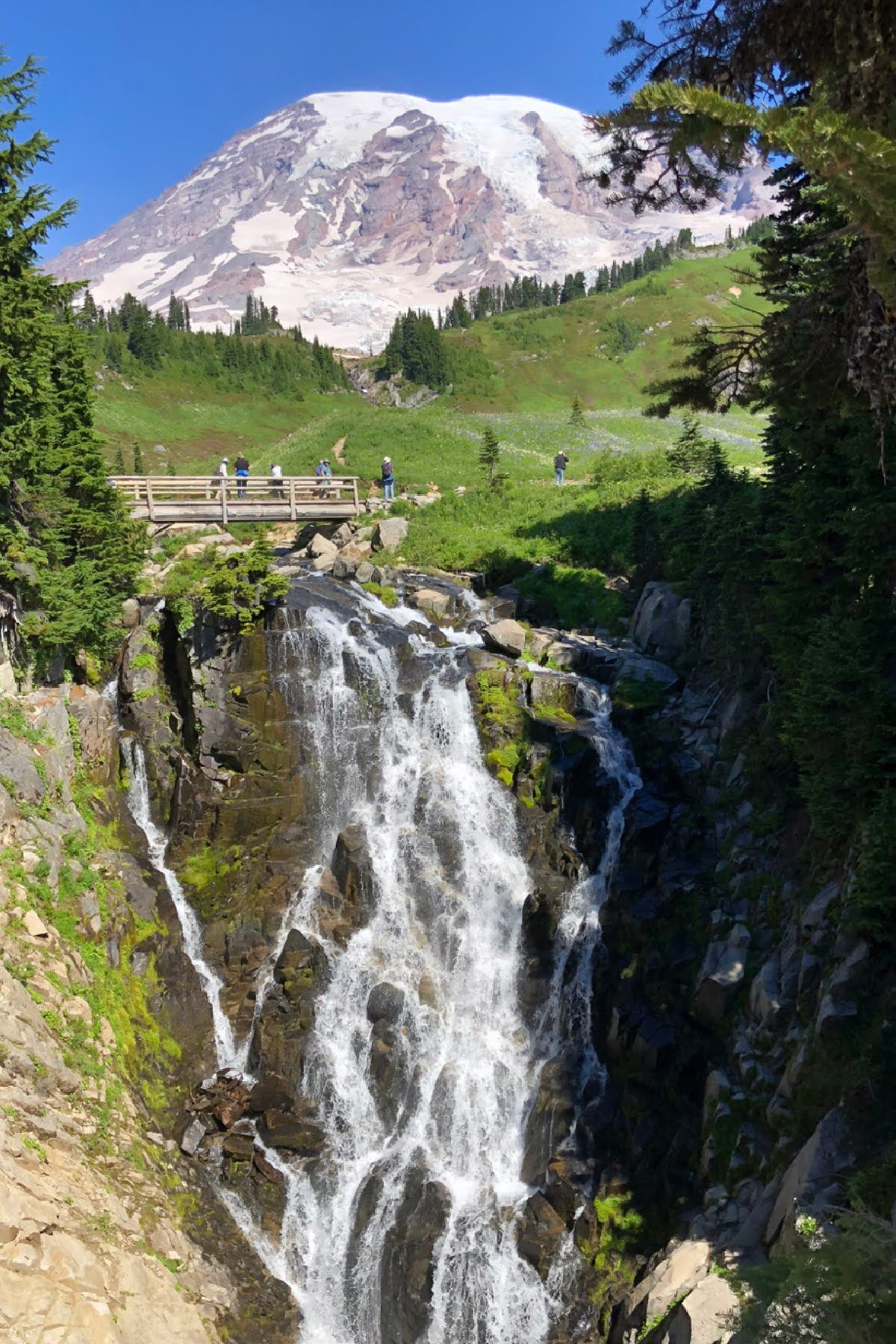
The waterfall drops into a rocky canyon with Mount Rainier towering directly behind it.
Honestly, it feels cinematic.
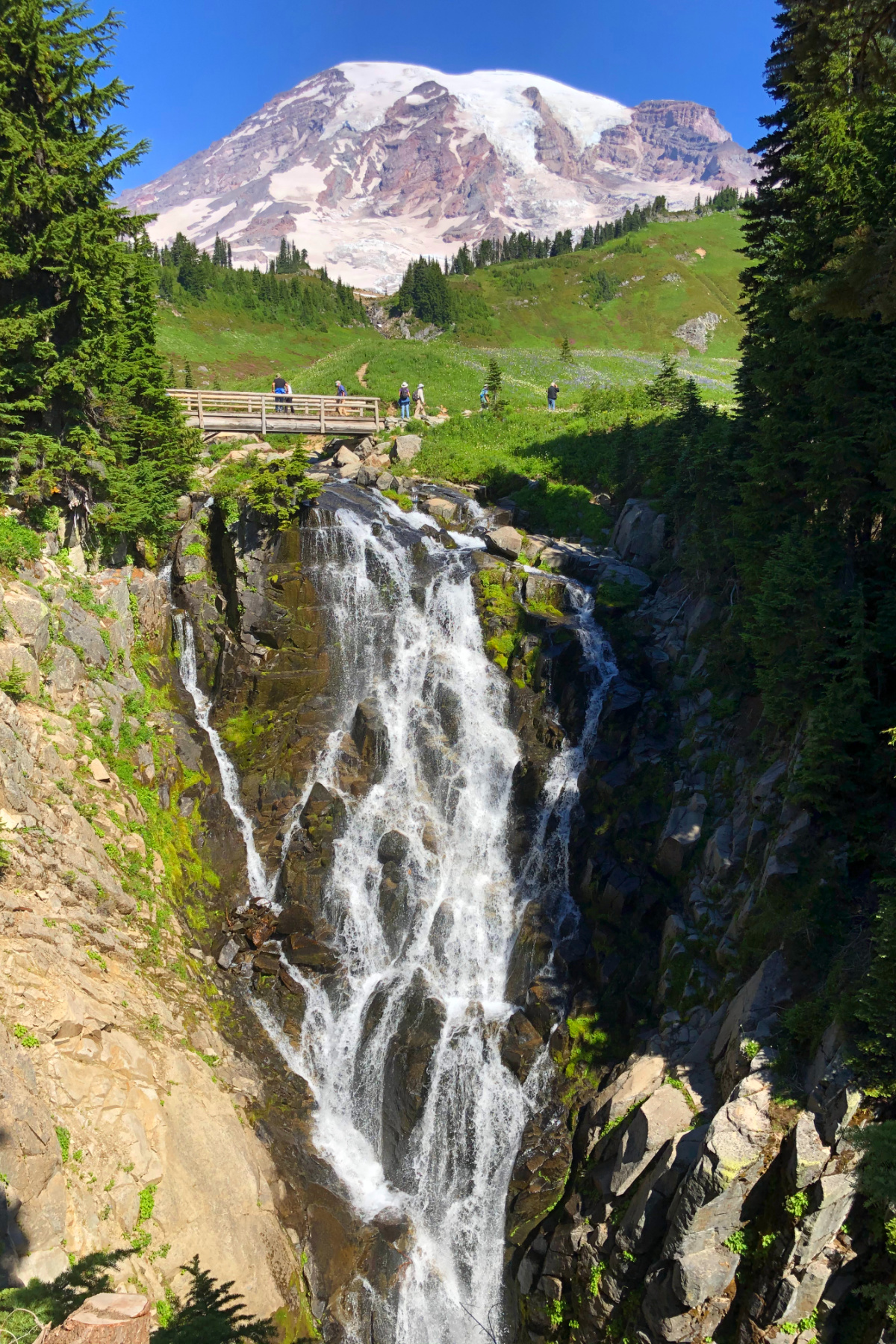
The overlook platform gives you a safe and relatively easy place to enjoy the scenery without scrambling around rocks or steep drop-offs.
This is also where a lot of people stop for photos.
You’ll likely see:
- Families taking portraits
- Photographers with tripods
- Kids leaning over the railing excited about the waterfall
- Hikers continuing onward toward Skyline Trail
Even with other visitors around, the scenery still feels enormous.
The scale of Mount Rainier from this spot is hard to describe until you see it in person.
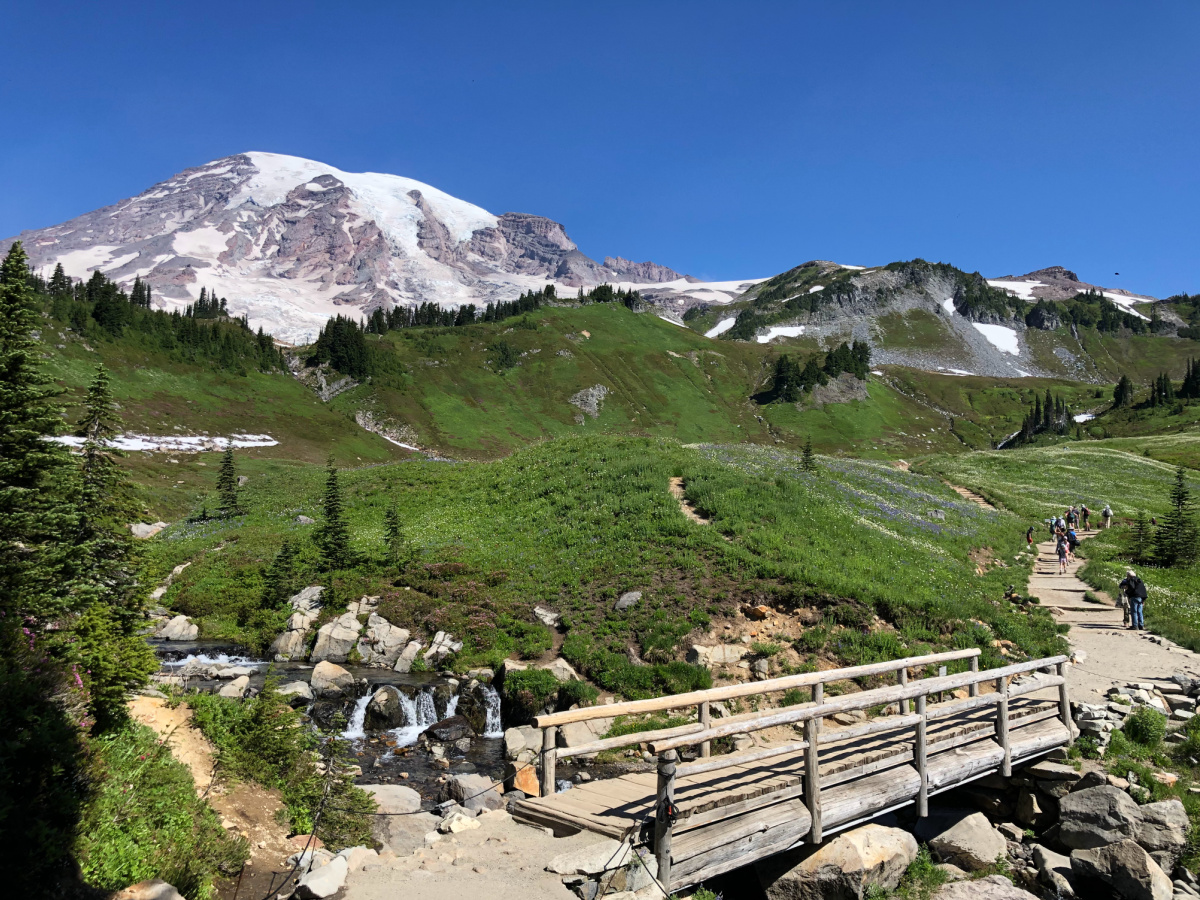
The Bridge Beyond Myrtle Falls
One thing I really loved was continuing just slightly beyond the overlook.
There’s a bridge crossing the river above the falls, and the views there were gorgeous too.
The rushing water.
The alpine meadows.
The mountain framed behind everything.
It felt peaceful in a different way from the overlook itself.
The overlook is dramatic.
The bridge area feels more immersive.
If you have the energy, definitely continue at least this far, even if you aren’t planning to fully continue on Skyline Trail.
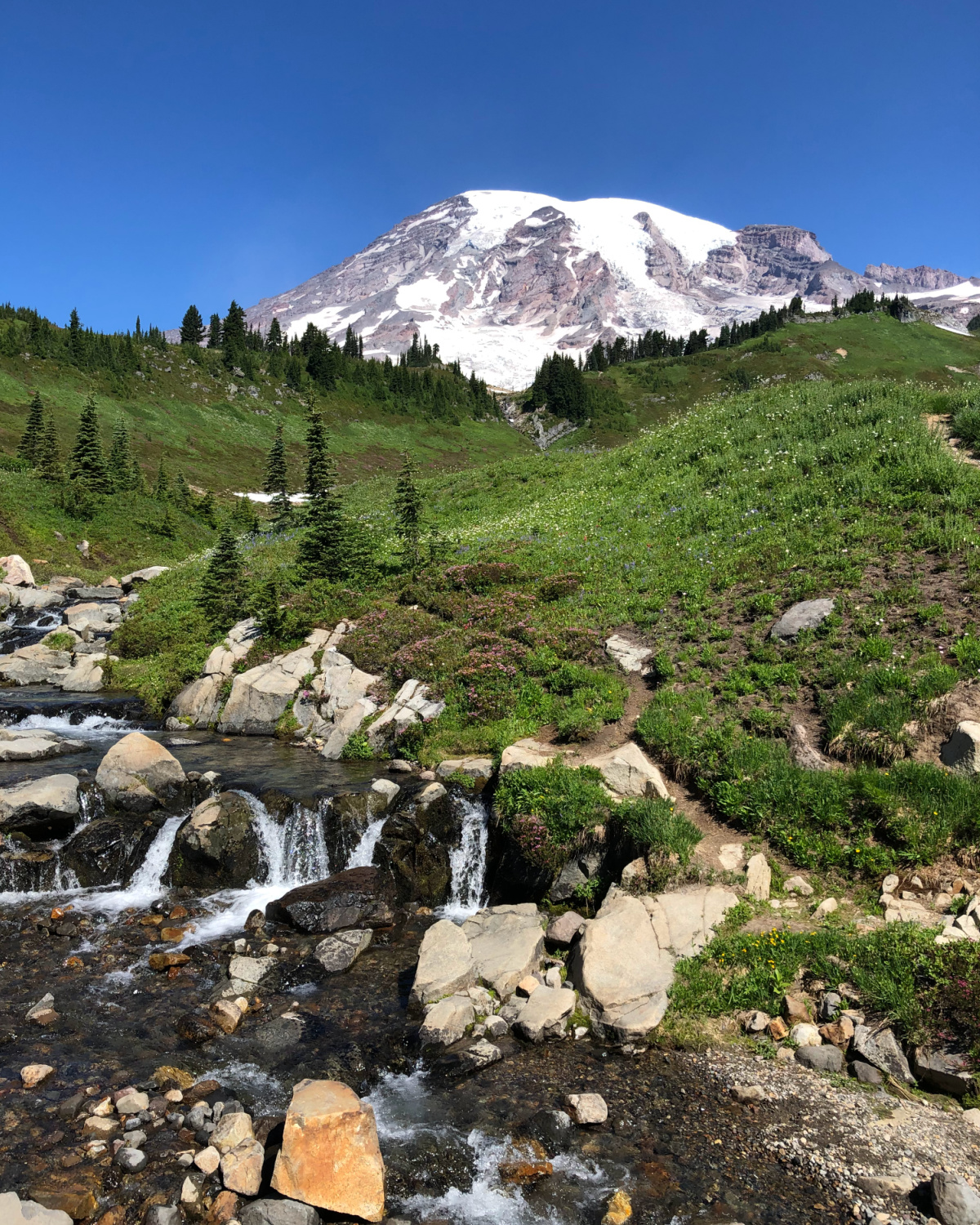
Wildflowers at Myrtle Falls
If you visit during peak wildflower season, this area is honestly magical.
The Paradise area is famous for wildflowers for a reason.
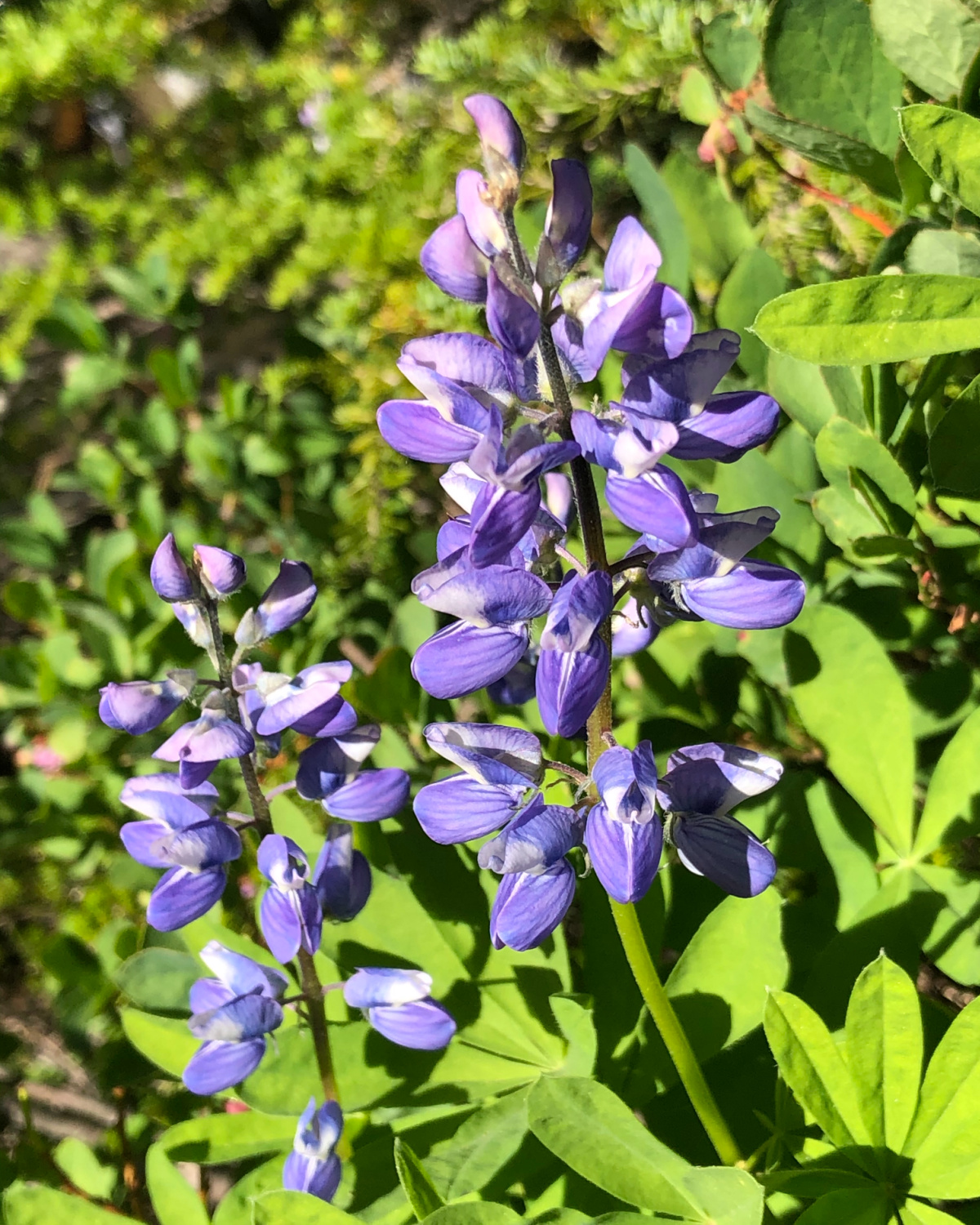
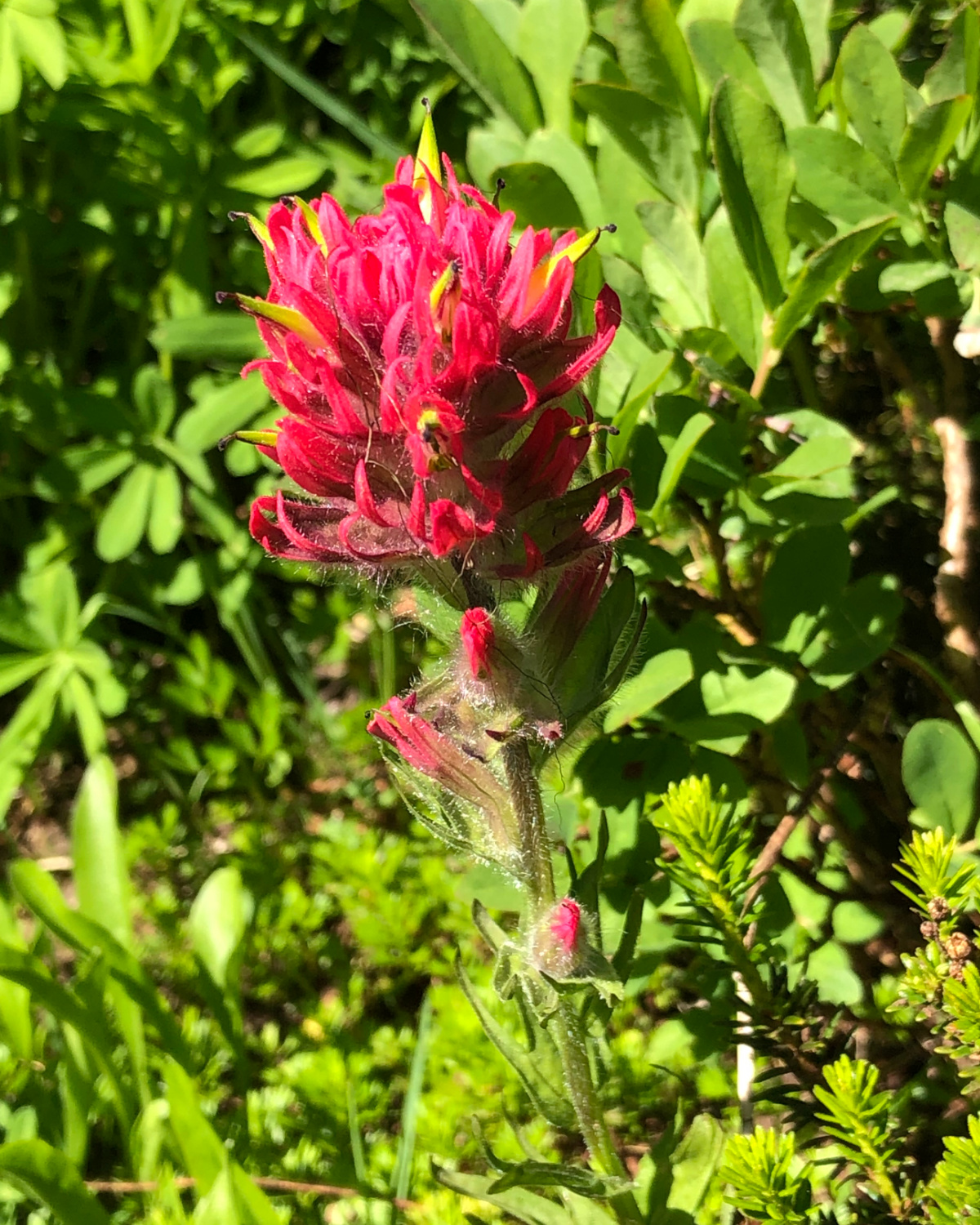
During our August visit we saw:
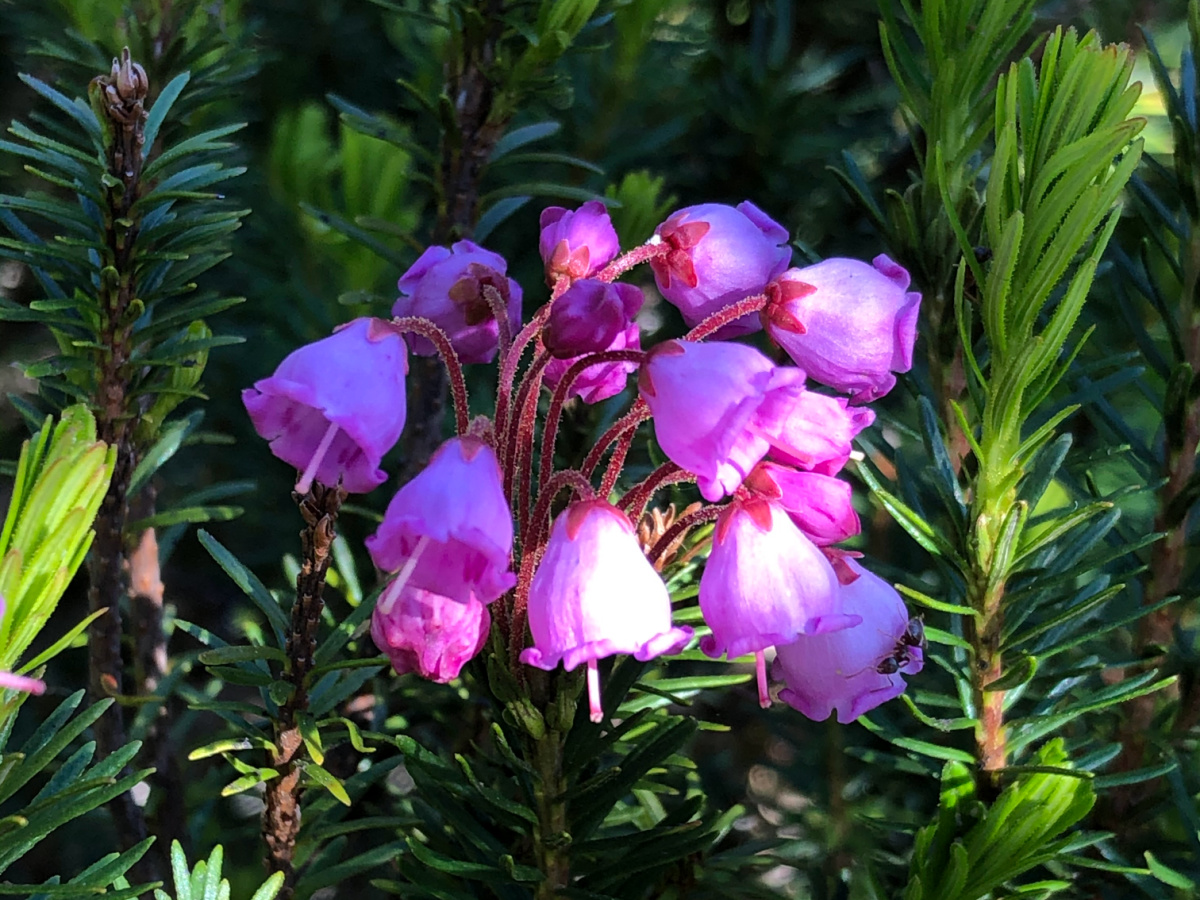
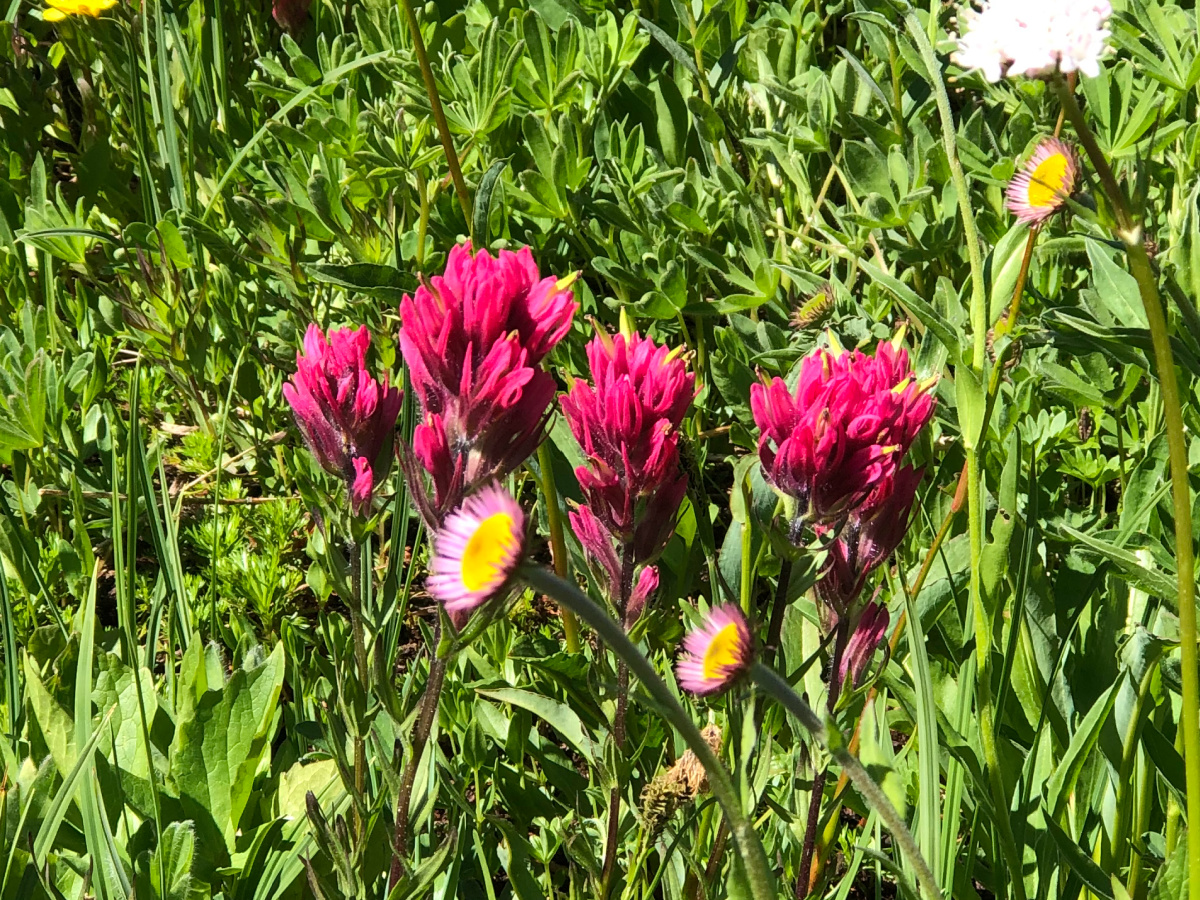
- Lupine
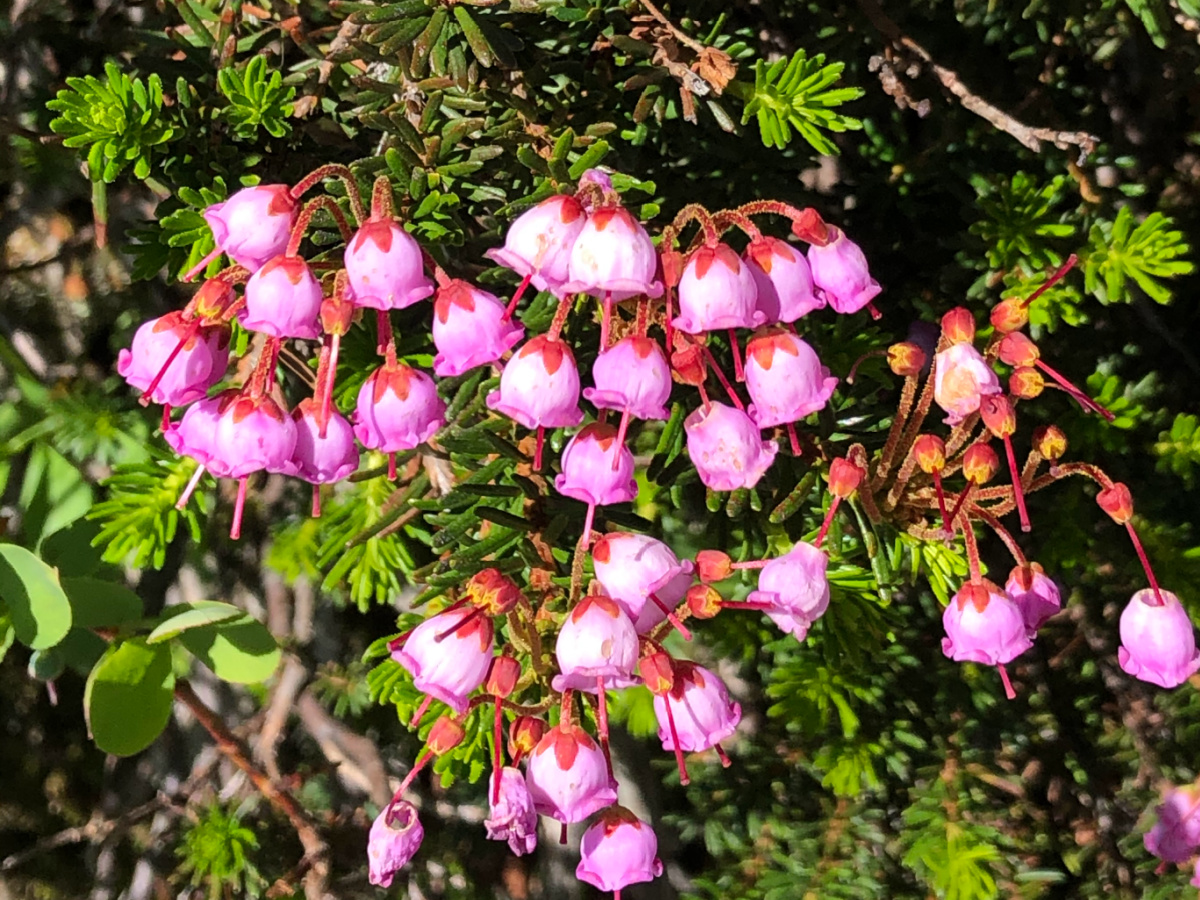
- Pink mountain heather
- Paintbrush
- Avalanche lilies in some areas
- Various alpine meadow flowers covering the hillsides
And the colors against Rainier were stunning.
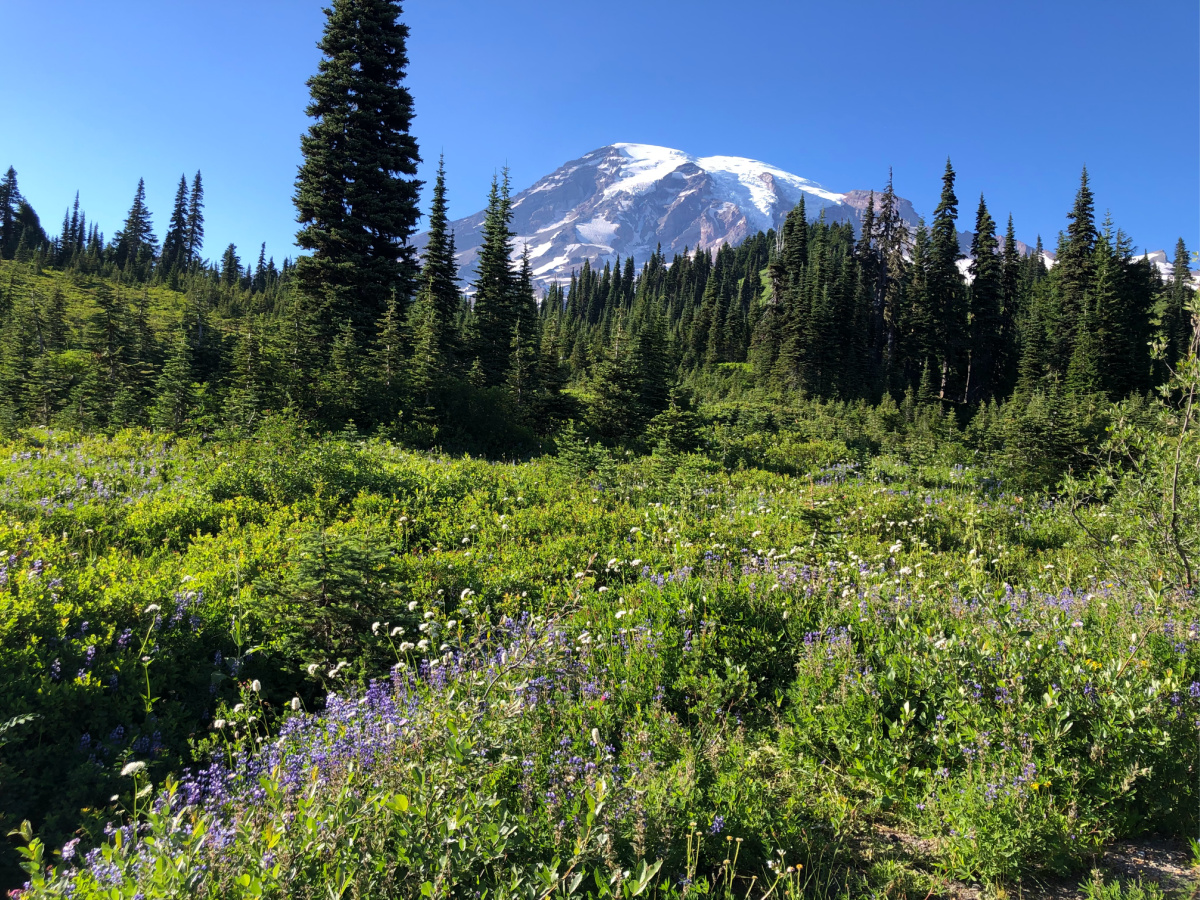
The combination of:
- bright green meadows
- purple flowers
- snow-covered mountain
- deep blue sky
…looked almost unreal.
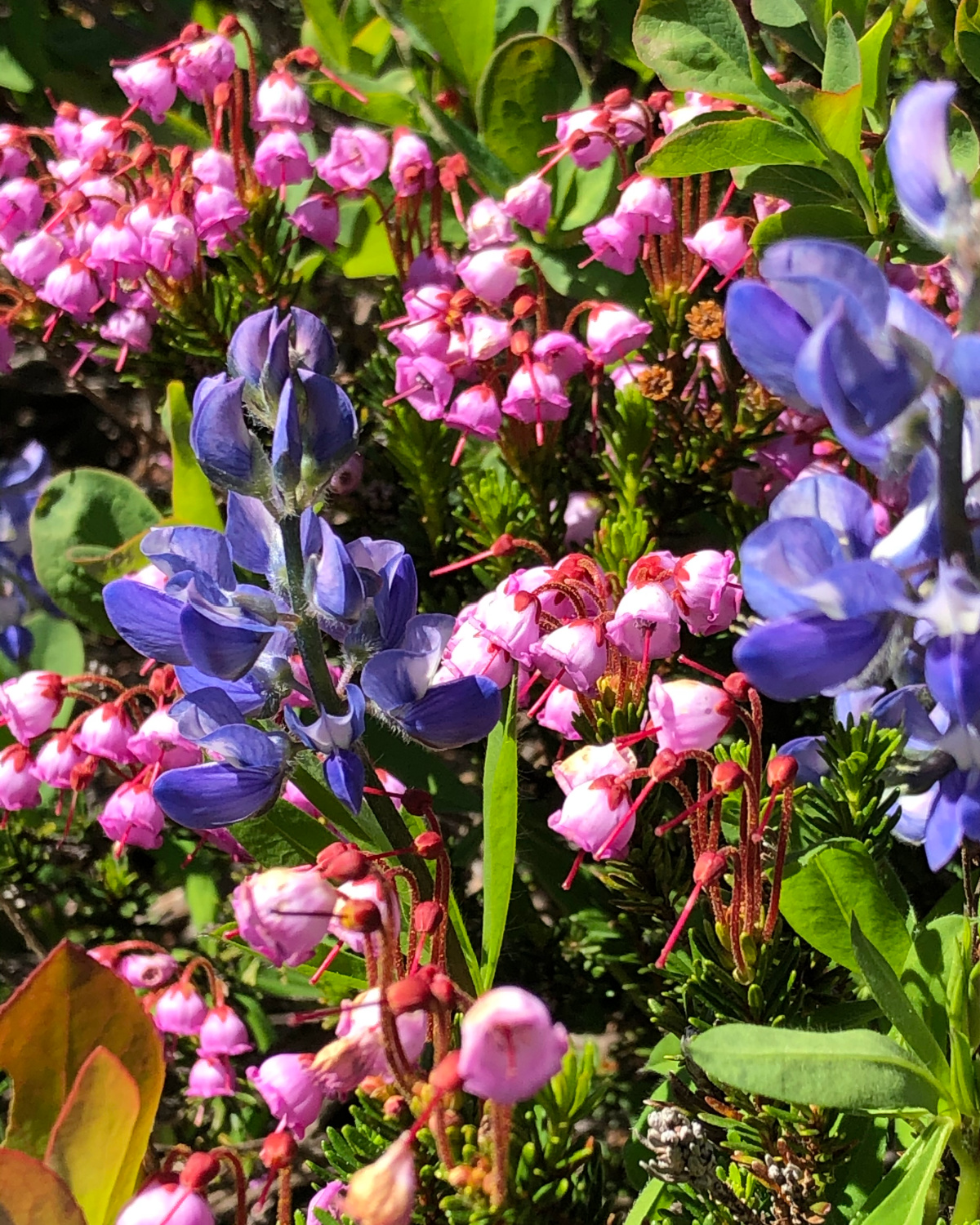
This is one of the reasons late July through mid-August is such a popular time to visit Paradise.
Wildflower timing changes every year depending on snowpack, but August is usually one of the safest bets.
Marmots Near Myrtle Falls
One unexpected highlight for us was the marmots.
They were incredibly playful and surprisingly unconcerned about nearby humans.
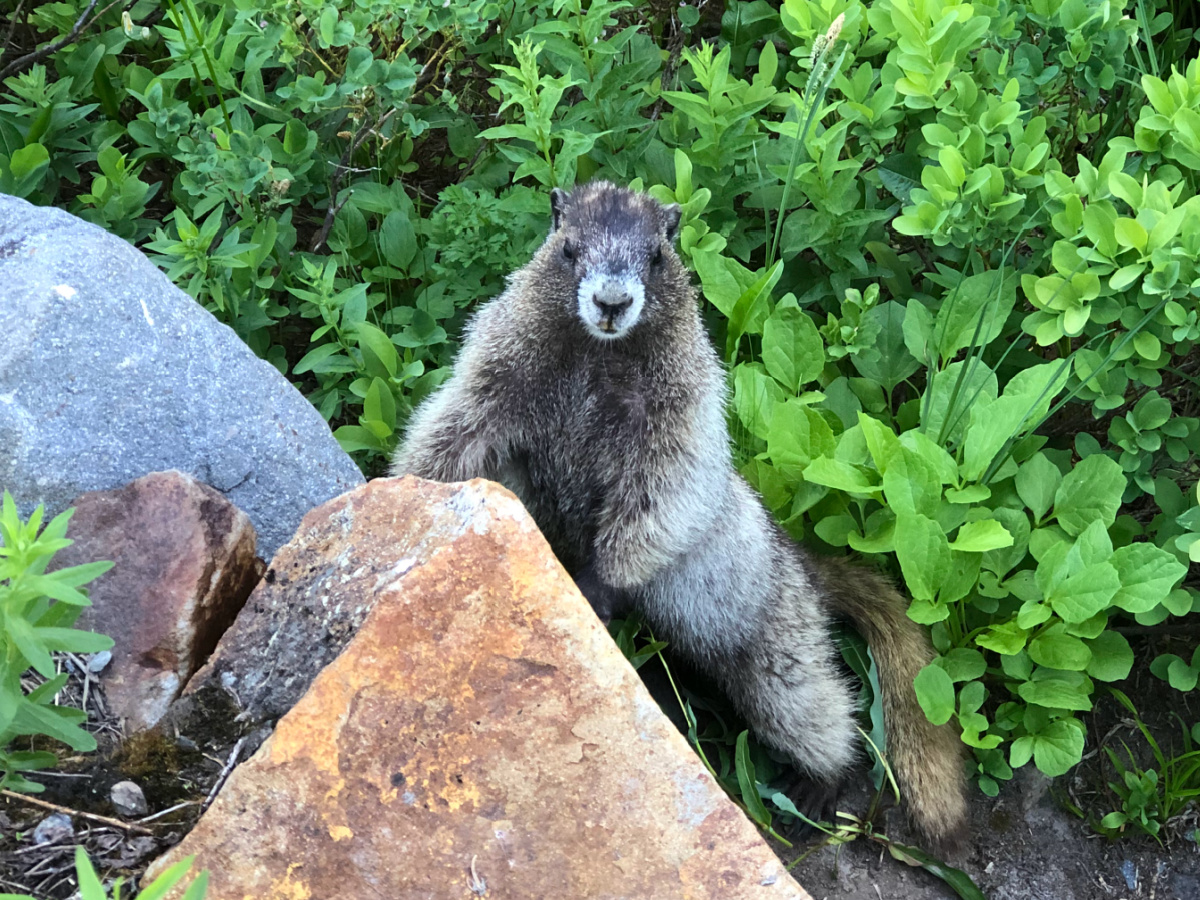
You’ll sometimes see them:
- near rocky areas
- alongside trails
- popping up from burrows
- sunning themselves near the meadows
Kids especially love spotting them.

That said:
- never feed them
- don’t approach too closely
- keep a respectful distance
They’re adorable, but they’re still wild animals.
And honestly, part of the charm is simply watching them behave naturally in this incredible alpine environment.
I will say this little guy we saw was incredibly friendly. We didn’t get close to him… but he tried very hard to get close to us!

If you enjoy scenic, moderate trails with huge mountain payoff views, the Taggart Lake Trail in Grand Teton National Park has a very similar casual-adventure vibe.
Continuing Beyond Myrtle Falls on the Skyline Trail
If you want more adventure, Myrtle Falls becomes the gateway to one of Mount Rainier’s most famous hikes: the Skyline Trail.
Now to be clear — the full Skyline Trail loop is significantly more strenuous than Myrtle Falls alone.
But casual travelers can still enjoy portions of it without committing to the entire loop.
And that’s the sweet spot for a lot of people.
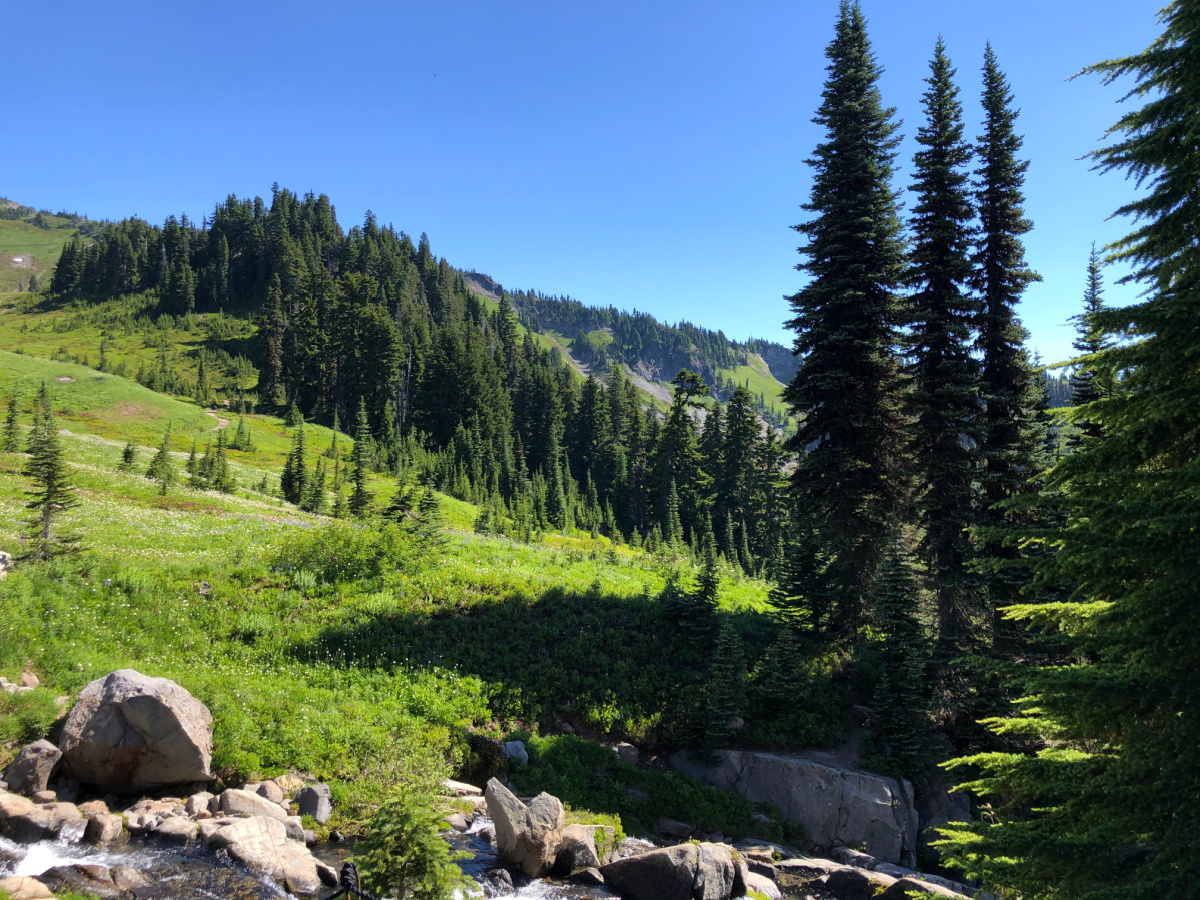
One thing I love about national parks is that you don’t have to be a hardcore hiker to experience incredible scenery, which is exactly why I also created this guide to visiting Utah’s Mighty 5 without hardcore hiking.
Casual-Friendly Skyline Trail Extensions
Continue Into the Meadows
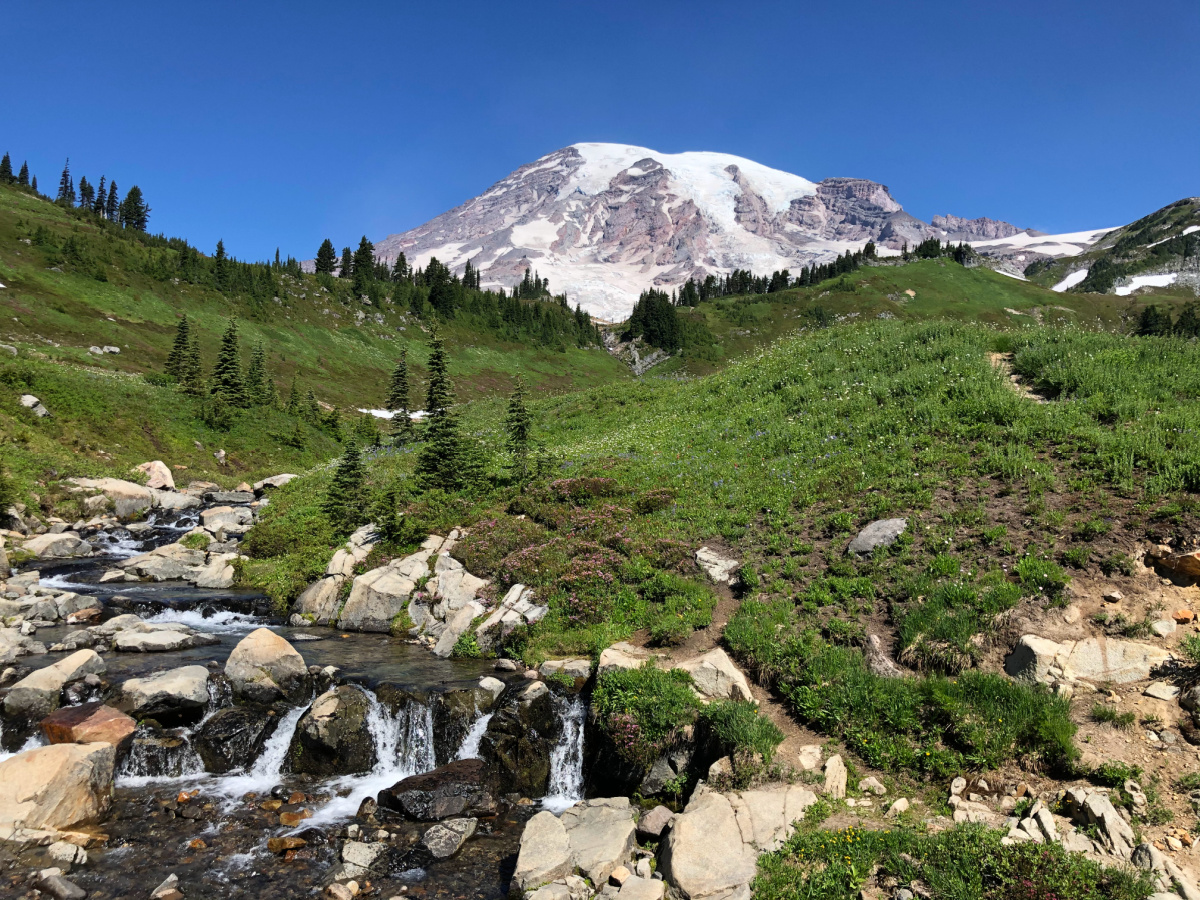
Honestly, even going another quarter to half mile beyond Myrtle Falls is worth it.
You get:
- more wildflowers
- fewer crowds
- wider meadow views
- increasingly dramatic Rainier scenery
This is probably the best option for casual visitors who want “a little more” without turning the day into a hardcore hike.
Panorama Point (Moderate Challenge)
This is where things start getting more serious.
Panorama Point is one of the major Skyline Trail destinations.
You’ll gain significant elevation getting there, but the payoff includes:
- massive mountain views
- glacier scenery
- sweeping alpine landscapes
- occasional views toward Mount Adams and Mount St. Helens on clear days
For reasonably active travelers willing to work harder, this can be an incredible goal.
But I would not describe Panorama Point as casual.
Golden Gate Area
Some visitors continue farther into the Golden Gate portion of the Skyline Trail before turning around.
This can be a good compromise for people wanting:
- bigger scenery
- alpine immersion
- a more adventurous feel
…without necessarily doing the entire loop.
Is Myrtle Falls Worth It If You Don’t Like Hiking?
Absolutely.
Honestly, this is one of the best examples in the national park system of a place where non-hikers can still experience elite scenery.
You do not need to be:
- a backpacker
- a mountaineer
- a hardcore hiker
- super athletic
…to enjoy Myrtle Falls.
That’s part of what makes Mount Rainier so special.
Paradise gives regular travelers access to scenery that normally feels reserved for experienced hikers.
Accessibility Notes
The trail to Myrtle Falls is paved, but there are still important things to know.
Because this is an alpine environment:
- there are inclines
- elevation can affect breathing
- snow patches may linger early season
- pavement can be uneven in spots
Some visitors using wheelchairs or mobility devices may still find portions challenging depending on conditions.
But compared to most iconic national park viewpoints, this is very accessible.
Best Time to Visit Myrtle Falls
Best Overall Months
Late July through early September
This is usually when you’ll get:
- snow-free trails
- peak wildflowers
- best weather
- accessible paths
Early Summer
In heavy snow years, Paradise can still have substantial snow lingering well into July.
That means:
- limited wildflowers
- muddy conditions
- partial snow coverage
But it can still be beautiful in a dramatic alpine way.
Fall
September can be gorgeous with:
- fewer crowds
- crisp weather
- clearer mountain views
Wildflowers fade, but the scenery is still excellent.
Best Time of Day for Myrtle Falls
Early Morning
Best for:
- parking
- softer lighting
- fewer crowds
- clearer mountain visibility
Late Afternoon and Evening
Best for:
- warmer light on Rainier
- photography
- quieter trails
Midday
Still beautiful, but:
- harsh sunlight
- crowded overlooks
- busier parking lots
Photography Tips for Myrtle Falls
This area is incredibly photogenic, but there are definitely ways to improve your shots.
Best Photography Subjects
- Myrtle Falls with Rainier behind it
- Wildflower foreground compositions
- Marmots
- Meadow landscapes
- Streams and bridges
- Trail leading lines
Bring a Wide Lens if Possible
The mountain is huge.
Wide-angle shots work especially well here because they let you include:
- waterfalls
- meadows
- sky
- mountain scale
Use Wildflowers in the Foreground
Some of the best compositions happen when you place:
- lupine
- heather
- paintbrush
…in the foreground with Rainier behind them.
The contrast of color is incredible.
Watch the Light
Bright midday light can create harsh contrast on the snow.
Morning and evening light often produce:
- softer mountain textures
- richer greens
- better sky color
- more dimensional waterfall shots
What to Bring
Even though this is a short trail, Paradise is still a mountain environment.
Bring:
- layers
- sunscreen
- water
- comfortable walking shoes
- sunglasses
- camera or phone with extra storage
- patience for parking
And honestly? Bring time.
This is not the kind of place you want to rush through.
Pro Tips for Visiting Myrtle Falls
Arrive Early
Parking at Paradise fills quickly in summer.
Before 9am is ideal during peak season.
Check Weather Forecasts
Rainier creates its own weather sometimes.
A crystal-clear mountain in the morning can disappear into clouds later.
Don’t Stop Only at the Overlook
Continue across the bridge and wander slightly farther.
Some of the best scenery is just beyond the main overlook.
Look for Marmots Near Rocky Areas
Especially on warm sunny days.
Combine This With Other Paradise Stops
Myrtle Falls pairs perfectly with:
- Paradise Visitor Center
- Skyline Trail
- Reflection Lakes
- Narada Falls
FAQ About Myrtle Falls Trail
How long is the Myrtle Falls Trail?
The paved walk to Myrtle Falls overlook is about 0.8 miles round trip.
Is Myrtle Falls Trail hard?
No. It is considered an easy trail, though the altitude and gradual incline may still feel tiring for some visitors.
Is the trail paved?
Yes, the main trail to the overlook is paved.
Can kids do the Myrtle Falls Trail?
Absolutely. This is one of the best family-friendly walks in Mount Rainier National Park.
Are there bathrooms nearby?
Yes. Restrooms are available near the Paradise Visitor Center.
Can you see Mount Rainier from Myrtle Falls?
Yes — and this is one of the biggest highlights of the trail.
On clear days, the mountain dominates the entire landscape.
Is Myrtle Falls crowded?
It can be very crowded during peak summer afternoons and weekends.
Early mornings are much calmer.
Are dogs allowed?
No. Pets are generally not allowed on trails in Mount Rainier National Park.
Final Thoughts on Myrtle Falls Trail
Myrtle Falls feels like one of those places that captures the entire spirit of Mount Rainier National Park in a single short walk.
You get:
- alpine scenery
- waterfalls
- glaciers
- wildflowers
- wildlife
- huge mountain views
…without needing to commit to an exhausting all-day hike.
And honestly, that matters.
Not everybody visiting national parks wants to summit peaks or backpack for miles. A lot of people simply want to experience beauty, breathe mountain air, take incredible photos, and feel connected to these landscapes.
Myrtle Falls delivers that in a huge way.
Even now, when I think back on Paradise, I remember the sound of the rushing water, the marmots wandering through the meadows, and those endless wildflowers beneath Mount Rainier.
It really is one of the most beautiful easy walks in the Pacific Northwest.