Yellowstone National Park Overview: A First-Timer’s Guide


If you’re planning your very first trip to Yellowstone National Park, chances are you’re a little overwhelmed. And honestly? That’s completely normal. Yellowstone is huge, at over 2.2 million acres. And it’s packed with geysers, waterfalls, mountains, wildlife, and history. Trying to figure out where everything is and what’s actually worth your time can feel like trying to plan a vacation on another planet.
That’s why I created this Yellowstone National Park overview. Think of it as a friendly, big-picture introduction to the park. I’ll walk you through the main regions, what each one is known for, the must-see highlights, and a few helpful tips to get your bearings. By the end, you’ll have a clear idea of how Yellowstone fits together and where you might want to focus when planning your own trip.


🏞 Why Yellowstone Is So Special
Yellowstone isn’t just another national park. It’s the national park. In 1872, it became the world’s first official national park, and it set the standard for every park that came after.
What makes it stand out? A few things:
- Geysers and Hot Springs: Yellowstone is home to over half the world’s geysers, including Old Faithful. The colorful hot springs (like Grand Prismatic Spring) look like something from another world.
- Wildlife: Bison, elk, bears, wolves, moose, and bald eagles. This park is one of the best places in the U.S. to see large wildlife roaming free.
- Scenery: From the deep Grand Canyon of the Yellowstone to the peaceful shores of Yellowstone Lake, every turn on the road reveals a new view.
- History: Native tribes lived in this region for thousands of years before Yellowstone became a park. Later, the early days of the National Park Service were shaped right here.
It’s truly a place where you can stand on a boardwalk watching steaming geysers one hour, then sit quietly in a valley as a herd of bison wanders past the next.


📍 The Five Main Regions of Yellowstone
When you look at a map, Yellowstone is shaped roughly like a giant figure-eight. The main road that loops through the park is called the Grand Loop Road. Along this loop are the five major regions, each with its own highlights.
Mammoth Hot Springs & the North Entrance
- What it’s known for: Terraced hot springs that look like melted wedding cakes, historic Fort Yellowstone buildings, and elk grazing right in town.
- Don’t miss: The boardwalks around the Upper and Lower Terraces, a quick walk through the historic district, and nearby Boiling River (when it’s open for soaking).
This is also where the park headquarters is located. If you’re coming in from Gardiner, Montana, this will likely be your first stop.


Norris Geyser Basin & the Central Area
- What it’s known for: The hottest, most changeable geyser basin in the park. It feels raw and wild.
- Don’t miss: Steamboat Geyser (the tallest active geyser in the world, though unpredictable), Porcelain Basin boardwalks, and the Norris Geyser Basin Museum.
This area is a natural crossroads. Roads from Mammoth, Canyon, and Madison all meet here.


Canyon Village & the Grand Canyon of the Yellowstone
- What it’s known for: The jaw-dropping canyon carved by the Yellowstone River, with its dramatic Lower Falls.
- Don’t miss: Artist Point (the postcard view), Brink of the Lower Falls Trail, and the North and South Rim Drives.
Canyon Village also has a visitor center, general store, and one of the larger lodging areas inside the park.


Yellowstone Lake & West Thumb
- What it’s known for: A massive high-altitude lake. It’s 20 miles across at some points, and the entire lake is surrounded by mountains and forests.
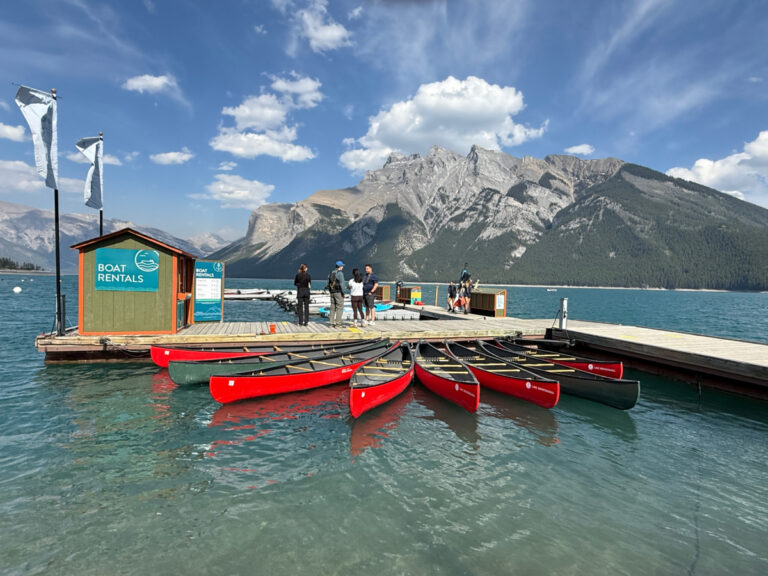
- Don’t miss: West Thumb Geyser Basin (where geysers bubble right along the shoreline), boat rentals or scenic cruises, and the historic Lake Yellowstone Hotel.
If you want a quieter experience away from the busiest geyser basins, this area can feel like a breath of fresh air.


Old Faithful & Upper Geyser Basin
- What it’s known for: The world’s most famous geyser, plus the highest concentration of geysers anywhere.
- Don’t miss: Old Faithful (time your visit with the eruption schedule posted at the visitor center), Morning Glory Pool, and the easy boardwalks connecting dozens of geysers and hot springs.
The Old Faithful Inn is worth stepping inside, even if you’re not staying there. Its towering log lobby feels like stepping back in time.


🐻 Where to See Wildlife
Yellowstone is one of the best wildlife destinations in the U.S., but you’ll want to know where to look:
- Lamar Valley (Northeast): Often called “America’s Serengeti,” this is the best place to see wolves, bears, and large herds of bison.
- Hayden Valley (Central): Another prime spot for bison, plus otters and bald eagles along the river.
- Mammoth Area: Elk love hanging out in the open grassy spaces right by the historic buildings.
💡 Pro Tip: Bring binoculars or a spotting scope if you want to see wolves or bears. Most of the time they’re not close to the road.


🚗 Getting Around the Park
One of the biggest surprises for first-timers is just how long it takes to drive anywhere.
- The Grand Loop Road is about 142 miles. Even without stops, it takes 4–7 hours to drive the full loop.
- Most drives between major areas are 30–60 minutes. And this is without traffic or bison jams.
- Seasonal closures: Some roads (like Dunraven Pass between Tower and Canyon) close in winter and don’t reopen until late May or June.
That’s why planning your Yellowstone trip around regions rather than trying to “see it all” in one day is the way to go.


🏨 Lodging & Food Basics
You’ll have two main options: staying inside the park or in nearby gateway towns.
- Inside the park: Famous lodges like Old Faithful Inn and Lake Yellowstone Hotel book up fast (like, a year in advance). Other options include Canyon Village cabins, Mammoth Hot Springs Hotel, Grant Village, and Roosevelt Lodge cabins.
- Gateway towns:
- West Yellowstone, MT: Closest to Old Faithful and the geyser basins. Tons of restaurants and hotels.
- Gardiner, MT: Right by the North Entrance and Mammoth.
- Cody, WY: A longer drive, but great for combining with rodeo or Wild West attractions.
- Jackson, WY: Upscale, with easy access to Grand Teton National Park.
- West Yellowstone, MT: Closest to Old Faithful and the geyser basins. Tons of restaurants and hotels.
Food inside the park is convenient but basic. Many of the options are cafeteria-style meals and fast service. But there are some very nice sit-down dining options. Always pack snacks, especially for long drives.


⏰ How Much Time Do You Need?
This is one of the most common questions people ask.
- One day: You’ll get a taste and maybe see Old Faithful and the canyon.
- 2–3 days: Enough to see each major region at least briefly.
- 5–7 days: The sweet spot for most families. You’ll have time for hiking, wildlife watching, and less crowded corners of the park.
No matter how long you stay, remember: you won’t see everything. And that’s okay. Yellowstone is the kind of place you can come back to again and again.
Related: Check out our comprehensive 2-4 day itinerary guides!
🌟 Final Tips for First-Time Visitors
Before you head off to plan your dream Yellowstone vacation, here are a few things that will make your life easier:
- Download the NPS app and/or GuideAlong audio guide before you go. Cell service is spotty in the park.
- Stay on the boardwalks. The ground around geysers is fragile and dangerous.
- Be bear aware. Carry bear spray if you plan to hike, and know how to use it.
- Layer up. Weather changes fast. It can be sunny and warm one moment, and chilly with a thunderstorm the next.
- Bring patience. Between traffic, wildlife delays, and crowds, things take longer than you think.
Related: Want more first time tips? Check out this full list of planning tips for Yellowstone!
🗺 Yellowstone Attractions Overview Map
To make things even easier, I created this simple Yellowstone attractions overview map. It highlights the major regions and must-see stops so you can get a sense of how everything connects along the Grand Loop Road. Use it as a quick reference while planning your trip. It really helps to see the park laid out this way before you start building your itinerary.

Ready to Explore Yellowstone?
Hopefully this Yellowstone National Park overview gave you a solid starting point. Once you get a sense of how the park is laid out and what each region offers, planning your itinerary gets much easier. Whether you’re standing in awe at the Grand Canyon of the Yellowstone, waiting for Old Faithful to erupt, or watching a herd of bison cross the road in front of you, one thing’s for sure: Yellowstone will leave you speechless.