The Ultimate 14-Day Yellowstone, Grand Teton & Glacier National Park Family Road Trip


Planning a Yellowstone–Grand Teton–Glacier Road Trip? This 14-day family itinerary covers must-see parks, scenic drives, wildlife stops, and smart pacing tips.
A real-world itinerary for families planning an unforgettable American summer adventure
There are some trips you take for fun… and then there are trips that quietly become part of your family’s story.
A Yellowstone–Grand Teton–Glacier National Park road trip falls squarely into the second category.
This is the kind of vacation where your kids remember spotting their first wild bison, where everyone goes silent when the mountains come into view, and where long car rides turn into inside jokes and shared playlists. It’s not a light weekend getaway — it’s an epic road trip through some of the most iconic landscapes in the United States.
We did this trip as a family, and this itinerary is built from real experience: what worked, what felt rushed, and what we were grateful we slowed down for. If you’re planning this journey for the first time, especially with kids, this guide will help you avoid common mistakes and build a trip that feels adventurous without being exhausting.

Why This 14-Day Route Works for Families
Families often underestimate two things when planning this trip:
- How massive these parks are
- How draining constant driving can be
This itinerary intentionally builds in:
- Enough time in each park to actually enjoy it
- Strategic rest and travel days
- Stops in towns that offer food, pools, and a mental break
- Flexibility for weather, wildlife delays, and road construction
The pacing matters just as much as the destinations.

Why Fly Into Bozeman Instead of Salt Lake City or Jackson
There are several airports people consider for this trip — Salt Lake City, Jackson Hole Airport, even Denver — but after doing it ourselves, Bozeman Yellowstone International Airport stands out as the best option for families.
Here’s why:
- It’s centrally located between the Wyoming parks and Glacier
- Rental cars are easier to secure
- Drive times are more manageable overall
- You avoid backtracking at the end of the trip
- It gives you flexibility if you need to rearrange days
Jackson Hole Airport is convenient for Grand Teton, but it’s less ideal once Glacier enters the picture. Bozeman simply gives you good options in every direction.
Big Picture: 14-Day Itinerary Overview
- Days 1–4: Yellowstone National Park
- Days 5–7: Grand Teton National Park + Jackson
- Days 8–10: Travel north through Montana (Big Sky, Bozeman, Whitefish)
- Days 11–14: Glacier National Park
This route minimizes backtracking and balances full days with recovery time.

Day 1: Arrival in Bozeman → Yellowstone Region
Your first day truly sets the tone for the entire trip — and this is where a lot of families accidentally burn themselves out before the vacation even really starts.
After landing at Bozeman Yellowstone International Airport and picking up your rental cars, it’s tempting to want to “get going” and push straight into Yellowstone, especially if you’re excited and the weather is perfect. But unless you land very early in the day, this is one moment where restraint pays off.
Travel fatigue is real. Kids are overstimulated. Adults are tired from airport logistics. And Yellowstone is not the place you want to arrive late, hungry, and stressed for the first time.
Instead, think of today as a soft landing day.
Drive Time Reality Check
From Bozeman:
- To West Yellowstone: about 1.5 hours
- To Gardiner near the north entrance: about 1.25 hours
That’s without traffic, construction, or wildlife delays. Add at least 30–45 minutes to whatever Google Maps tells you.

Where to Stay the First Night
You don’t need perfection tonight — you need convenience.
Good first-night options include:
- West Yellowstone
This is a great place to land with kids. There are lots of casual restaurants, grocery stores, souvenir shops, and hotels that understand families. You’ll also be positioned well for an early start tomorrow. - Gardiner (near the north entrance)
Smaller and quieter than West Yellowstone, but a good option if you plan to start your Yellowstone days in the Lamar Valley area. - A hotel with a pool
If your kids are already fried, a simple hotel with an indoor pool can be the difference between cranky bedtime and happy exhaustion. This is not the night to be picky.
If you arrive later in the afternoon or early evening, skip sightseeing entirely. Eat, unpack just enough, and get everyone to bed. Tomorrow is a full day, and Yellowstone rewards early mornings.

What to Do If You Arrive Early Afternoon
If your flight lands earlier and everyone’s energy is holding up, this is a great window to do a few low-effort things that make the rest of the trip smoother.
Good options include:
- Grocery stop in Bozeman
Stock up on breakfast items, snacks, drinks, and picnic food. You’ll thank yourself later when you’re hungry and nowhere near services. - Quick town walk or coffee stop
Stretch legs after the flight. Keep it casual. - Museum of the Rockies (optional)
If your kids love dinosaurs and you have time, this can be a fun, air-conditioned stop — but only if everyone’s still in good spirits. - Early dinner
Eat earlier than usual and lean into the time change. Yellowstone days start early, whether you want them to or not.
Think of today as preparation, not performance. The goal is energy conservation.
Days 2–4: Yellowstone National Park (3–4 Days)
Yellowstone isn’t just one park — it’s a massive collection of geyser basins, rivers, canyons, forests, and wildlife corridors stitched together by long, winding roads. You don’t “pop in” to Yellowstone. You settle into it.
Families who enjoy Yellowstone the most are the ones who accept two truths early:
- You cannot see everything.
- That’s okay.
Related: Here is a more detailed 2-4 Day Yellowstone National Park Itinerary
Day 2: Geyser Country & Iconic Yellowstone
This is your “wow” day — the one most people picture when they think of Yellowstone.

Morning: Upper Geyser Basin
Start early. Even if you’re not naturally an early-rising family, this is worth it.
An early morning visit means:
- Cooler temperatures for walking
- Less crowded boardwalks
- Easier parking lot access
- A calmer, more magical first impression

Must-sees in this area:
- Upper Geyser Basin
- An Old Faithful eruption (check times in advance)
- Walking through Old Faithful Inn
Do not skip the Old Faithful Inn. Even if you don’t stay there, walking into that massive log structure feels like stepping back in time. It’s one of Yellowstone’s most iconic historic buildings, and kids are usually impressed by the scale alone.

This entire area is flat and very family-friendly. Boardwalks are wide, stroller-accessible, and easy for younger kids.

Midday: Midway Geyser Basin & Grand Prismatic Spring
This is where expectations meet reality. The Midway Geyser Basin is just utterly phenomenal.
Yes, Grand Prismatic Spring is incredible.
Yes, it’s also one of the busiest places in the park.

A few honest tips:
- Parking can take time — build patience into your schedule
- Midday crowds are normal
- The boardwalk alone is still impressive if energy is low
If everyone’s up for it, the overlook hike gives the classic aerial view. If not, don’t force it. Yellowstone days are long, and it’s okay to choose rest over one more viewpoint.

Late Afternoon: West Thumb Geyser Basin
This is one of my favorite ways to end the day.

West Thumb Geyser Basin sits right along Yellowstone Lake, and it feels noticeably calmer than other geyser areas. There’s often a breeze off the water, fewer crowds, and shorter walks.
It’s a perfect “reset” stop after a busy midday — especially for kids who are starting to hit their limit.

Day 3: Wildlife & Canyon Country
This is your wildlife day — and it’s worth the early alarm.
Early Morning: Lamar Valley
Set alarms. Pack the car the night before. Bring breakfast with you.
Lamar Valley is the best place in the park for wildlife viewing, especially in the early morning hours.
Animals commonly spotted here include:
- Bison
- Black bear
- Grizzly bears
- Bighorn sheep
- Bald eagles


Bring:
- Snacks (this takes time)
- Binoculars
- Layers (mornings are chilly)
- Bear spray (carry it, know how to use it)
Wildlife jams happen here — sometimes for a few minutes, sometimes for an hour. Build extra buffer into your drive time expectations and lean into the experience instead of fighting it.

If you are not a fan of waking up super early, or you would like to see wildlife in a more central location, Hayden Valley is a great option too!

Midday: Canyon Area
After Lamar Valley, head south toward the Grand Canyon of the Yellowstone.
This area is visually stunning but spread out, so expect more driving than walking.

Key stops include:
- Inspiration Point
- Upper and Lower Falls overlooks
- Short walks along the Yellowstone River
The views here feel very different from the geyser basins — deeper, more dramatic, and surprisingly quiet once you step away from the main overlooks.

Related: The Ultimate Guide to Yellowstone National Park’s Geysers and Hot Springs
Day 4: Flex Day or Mammoth Hot Springs
This day is your safety net — and it matters more than you think.
Use it for:
- Mammoth Hot Springs
- Norris Geyser Basin
- Visitor centers
- Short hikes near Canyon Village
- Repeating a favorite spot from earlier days
Related: Where to eat inside Yellowstone National Park


This is also your buffer if:
- Weather shifts unexpectedly
- Roads close
- Road construction causes delays
- A single bison decides to nap in the road for an hour (it happens)

Families who build in an extra day in Yellowstone enjoy it more. There’s less pressure, fewer meltdowns, and more room for serendipity.

Related: 55+ Tips For First Time Visitors to Yellowstone National Park
Day 5: Yellowstone → Grand Teton National Park
This is one of the most beautiful scenic drives of the entire trip — and it deserves to be treated like part of the experience, not just a transfer day.
Leaving Yellowstone through the south entrance, the landscape slowly opens up. Dense forests give way to wide valleys, rivers, and eventually the dramatic rise of the Tetons.

Related: Here is everything you need to know about visiting Grand Teton National Park
Drive Notes
- Stop often — the views improve as you go
- Expect a few hours of driving, even though the distance isn’t huge
- Wildlife sightings are common
- This is not a “rush to destination” day
Plan to arrive in Grand Teton National Park by late afternoon if possible.

As you enter the park and drive along Teton Park Road, pull over at the first scenic viewpoints. That first glimpse of the Tetons rising straight out of the valley floor is unforgettable — one of those moments where the whole car goes quiet.
It’s a powerful transition between parks, and the perfect way to start the next chapter of the trip.
Days 6–7: Grand Teton National Park & Jackson
Grand Teton National Park feels very different from Yellowstone — and that contrast is part of what makes this stretch of the trip so memorable.
After Yellowstone’s constant motion, traffic jams, and geothermal chaos, the Tetons feel calmer and more spacious. The park is more compact, the scenery more immediate, and the pace naturally slows down. Instead of hopping from attraction to attraction, Grand Teton invites you to linger. To sit by the water. To pull over just because the light looks good.
For families, this is where the trip often shifts from “wow, this is amazing” to “this is my favorite place.”

Day 6: Jenny Lake & Classic Teton Views
This is a walking day — but an approachable one, especially compared to the longer and more spread-out days in Yellowstone.
The key here is not overplanning. The Tetons reward families who do fewer things well rather than trying to cram in every trail and viewpoint.

Morning: Jenny Lake Area
Start early if you can. Parking near the Jenny Lake Visitor Center fills quickly in the summer months, and an early arrival makes everything feel easier and more relaxed.
Once you’re parked, you have several excellent options, all with a big payoff for relatively little effort:
- Boat ride across Jenny Lake
This is a fantastic option for families, especially if legs are tired or you’re traveling with younger kids. The boat ride itself is scenic and feels like part of the adventure, not just transportation. It also saves distance and energy for the walk afterward. - Walk to Hidden Falls
This is one of the most popular short hikes in the park — and for good reason. The trail is well-maintained, shaded in spots, and ends at a powerful waterfall that feels earned without being exhausting. - Continue up to Inspiration Point
If everyone’s still feeling good, keep going. The climb is steeper, but the view from the top is one of those moments that sticks with you long after the trip ends.

These stops are some of the best places in the Tetons for families who want a sense of accomplishment without committing to a long or technical hike.
A note from experience: stop when energy dips, not when it crashes. The Tetons are about enjoying the views, not proving anything.

Midday: Slow Down on Purpose
After the Jenny Lake area, resist the urge to immediately move on to the next “must-see.”
This is a great window to:
- Have a picnic lunch
- Sit by the lake
- Let kids skip rocks or explore the shoreline
- Simply enjoy being in the mountains without an agenda
This kind of unstructured time often becomes one of the most remembered parts of the trip — especially for kids who’ve been following a schedule for days.
We really loved slowing down at String Lake. There are great picnic areas here, and if the weather is nice.. everyone will want to take a dip in the lake. It’s really fun and relaxing!

Related: The most iconic photo spots in Grand Teton National Park
Afternoon: Exploring the Rest of the Park
Spend the afternoon drifting through some of the park’s quieter highlights:
- Colter Bay Village
A great place to grab food, use restrooms, browse the small visitor center, or just take a break by the water. It’s low-key and very family-friendly. - Lakeshore areas along Jackson Lake
These spots are perfect for photos, short walks, or just soaking in the view without another hike. - Scenic pullouts along the Snake River
The Snake River is iconic for a reason. Even short stops here feel special, especially as the light changes later in the day.
Avoid cramming in a longer hike unless everyone is genuinely excited about it. Grand Teton isn’t about checking boxes — it’s about letting the scenery do the work.

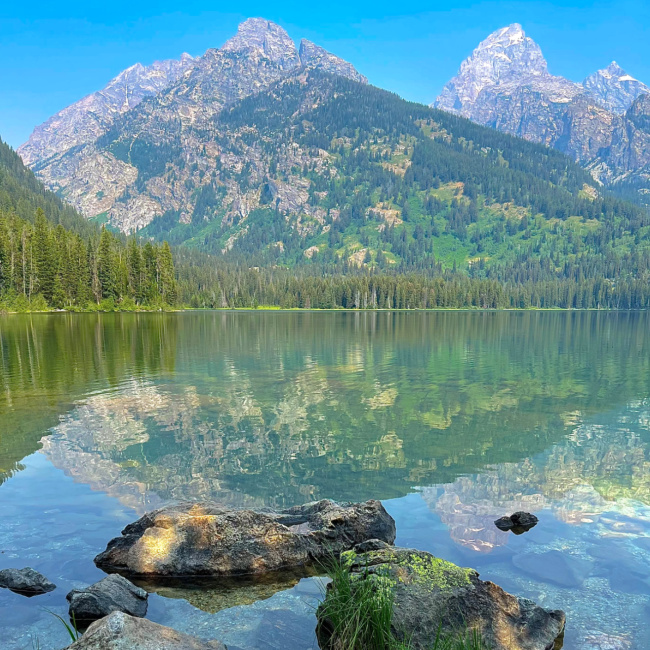
Tip: That being said, even though Jenny Lake is probably the most iconic Grand Teton lake hike to do with kids, my personal favorite is the Taggart Lake hike. It’s hard to describe how incredibly beautiful Taggart Lake is (see the photos below). And this is an excellent add-on or alternative to Jenny Lake.


Day 7: Jackson, Wyoming
This day is intentionally slower — and it’s important.
By this point in the trip, most families need a mental and physical reset. Jackson provides that without feeling like you’re stepping away from the experience entirely.
Morning: Easy Start
Sleep in a bit. Eat a real breakfast. Let everyone move at their own pace.
Jackson mornings feel relaxed compared to park mornings, and that contrast is refreshing.
Exploring the Town of Jackson
Spend the day wandering the town of Jackson at a comfortable pace:
- Walk the town square and see the iconic elk antler arches
- Browse shops without a strict agenda
- Grab lunch that doesn’t come out of a cooler or backpack
- Let kids pick a souvenir they’ll actually remember
Yes, Jackson is touristy — but it’s also clean, walkable, and easy. After several days of trail food, dusty shoes, and early alarms, this feels like a luxury.
If you’re traveling with teens, this day often becomes a favorite. If you’re traveling with younger kids, it’s a chance to reset before another big travel day.
Optional Add-Ons (If Energy Allows)
If your family still has energy, consider:
- A short float trip on the Snake River
- Scenic drives around Jackson Hole
- An early evening meal back in the park for sunset views
But remember — this is your buffer day. It’s okay to do less.
Related: The Bar-T 5 Dinner Show is really a fun option that kids and parents will love!

Day 8: Grand Teton → Montana (Travel Day)
This is one of your longest drive days of the entire itinerary.
Accept that upfront, and the day goes much better.
Rather than treating this as a sightseeing day, think of it as a transition — moving from Wyoming’s dramatic peaks into Montana’s wide-open landscapes.
Breaking Up the Drive
To make the day manageable:
- Plan stops in West Yellowstone for lunch or fuel
- Pack picnic food so you’re not scrambling
- Take advantage of scenic pullouts when someone needs a break
Related: A great stop would be the Grizzly Bear and Wolf Discovery Center in West Yellowstone
This is not a day to chase attractions. It’s a day to keep everyone comfortable and moving steadily north.

Mindset Matters
Some of the most stressful travel days happen when expectations don’t match reality. Today will involve:
- Long stretches of road
- Limited cell service in places
- A few “how much longer?” questions
That’s normal. Lean into music, audiobooks, and snacks.
Day 9: Big Sky or Bozeman (Recovery Day)
This day is not optional — it’s essential.
After several intense park days and a long drive, families need a day that doesn’t involve hiking boots, trailheads, or early alarms.

Good Options for This Day
- Big Sky Resort
Summer activities, chairlift rides, open space, and a hot tub make this a great reset day. Kids can move without hiking, and adults get mountain views without effort. - Bozeman
Visit the Museum of the Rockies, walk downtown, grab good food, and enjoy a town that feels lively but not overwhelming. - A hotel with an indoor pool
Never underestimate the power of a pool day halfway through a big trip. Sometimes this is the difference between burnout and a great time.

This day helps everyone recharge before Glacier — which, while stunning, asks a lot from visitors.

Why This Section of the Trip Matters So Much
These four days — Tetons, Jackson, travel, and recovery — are what make the rest of the trip sustainable.
They:
- Lower stress
- Prevent burnout
- Give kids breathing room
- Make Glacier feel exciting instead of exhausting
Families who skip this slowdown often feel it later. Families who embrace it usually say this stretch is where the trip truly clicks.

Day 10: Bozeman → Whitefish
This is another long drive day, but it feels different from the earlier ones — calmer, somehow. By this point in the trip, everyone knows what to expect. Shoes get kicked off faster. Snacks are passed back without asking. Someone inevitably falls asleep before you’ve even left town.
Montana helps, too. The scenery opens up, the traffic thins out, and the road stops demanding quite so much attention. Even though you’re covering real distance today, it doesn’t feel rushed in the same way those early Yellowstone days did.
From Bozeman to Whitefish, you’ll be on the road for several hours depending on your route and how often you stop. This isn’t a day to chase attractions or squeeze in “just one more thing.” It’s a day for steady progress, small breaks, and arriving with enough energy left to enjoy where you land.

Breaking Up the Drive (Without Overthinking It)
A few intentional pauses go a long way today.
Great Falls makes a natural midpoint if you want a real break. Even a short stop — a walk, lunch, or letting kids move their legs for a bit — can reset the mood in the car. You don’t need to see everything here. You just need to stop long enough that the drive doesn’t blur together.
Food-wise, this is one of those days where planning ahead pays off. Packing picnic lunches or knowing where you’ll stop keeps you out of the “everyone is hungry and nothing sounds good” spiral. Sitting down for a meal — even briefly — feels surprisingly restorative.
And then there are the little stops you don’t plan at all. Montana’s highways are full of moments where you pull over simply because the view asks you to. Take those chances. They’re often the moments people remember most.
If you can swing it, aim to arrive in Whitefish with daylight left. Being able to unpack, walk around, and eat dinner without rushing sets you up beautifully for Glacier.
Why Whitefish Is More Than Just a Place to Sleep
Whitefish doesn’t feel like a box you check on the way to Glacier. It feels like a reward.
It’s a real mountain town with personality — good food, friendly energy, and just enough happening to feel lively without being overwhelming. After a full day on the road, it’s the kind of place where everyone exhales a little.
As a base before Glacier, it works especially well. You’ve got easy access to groceries and restaurants, plenty of lodging options, and a short drive to the park’s west side. More importantly, Whitefish gives you space to reset before diving into one of the most demanding (and rewarding) national parks on the itinerary.
This is where the trip starts to feel wild again — not hectic, not crowded — just open and promising.

Days 11–14: Glacier National Park
Glacier National Park doesn’t feel like Yellowstone or Grand Teton — and that’s not a knock on either of them. It’s just different.
Here, the landscape feels steeper and closer. Roads cling to mountainsides. Trails climb faster than you expect. Weather can change between one pullout and the next. Glacier asks more of you, but it gives a lot back in return.
This is not a park to rush. Families who enjoy Glacier the most are the ones who accept that plans may shift and start times matter more than checklists.

Day 11: West Glacier & Lake McDonald
After the Bozeman-to-Whitefish drive, this day is intentionally gentle.
Entering through West Glacier feels like easing into the park rather than plunging straight into it. The scenery is immediate, but the pace doesn’t have to be.
Lake McDonald Lodge is a perfect first stop, even if you’re not staying there. Walking through the lodge feels like stepping back in time — thick log beams, a massive stone fireplace, and a front porch that practically insists you sit down for a while. It’s one of those places where doing very little somehow feels productive.

From there, keep things simple. Walk along the lakeshore. Let kids skip rocks. Wander without a plan. Lake McDonald’s shoreline is ideal for gentle exploration, especially after a long travel day.
Before you leave the area, swing by the Apgar Visitor Center. This is a good place to ask about trail conditions, check the weather forecast, and get a feel for what the next few days might look like.
Today isn’t about big hikes or must-see moments. It’s about settling in and letting Glacier introduce itself.
Related: The best photo spots in Glacier National Park

Day 12: Going-to-the-Sun Road
This is the day everyone talks about — and for good reason.
Going-to-the-Sun Road is one of the most spectacular drives in the country, but it rewards preparation and patience. Starting early isn’t just helpful here; it changes the entire experience.
Early mornings mean fewer cars, easier parking at pullouts, and a quieter sense of wonder as the road winds higher into the mountains. Even though the drive itself isn’t long in miles, it easily fills an entire day.
As you climb, the views shift constantly. Waterfalls spill down cliffs. Tunnels cut through rock. Every turn seems to demand a stop, even when you hadn’t planned one.


Reaching Logan Pass feels like a small victory. This is where many people spot mountain goats, sometimes wandering right through the parking area, completely unfazed by their audience. Crossing the Continental Divide here doesn’t come with a sign announcing its significance — but it feels important all the same.
Expect slow traffic, frequent pauses, and moments where the car goes quiet because everyone is just staring out the window. That’s not lost time. That’s the point.

Day 13: Hiking & Wildlife (Your Way)
By now, you’ll have a sense of how your family is doing — physically, mentally, and emotionally. This is the day to listen to that.
Some families wake up itching for a hike. Others want something lighter. Glacier accommodates both.
If energy is high, Avalanche Lake is a classic choice. The trail is shaded, the grade is reasonable, and the payoff at the lake feels dramatic without being intimidating. Going early makes a big difference here.

If you drove Going-to-the-Sun Road the day before, spending time near St. Mary Village offers a fresh perspective. The east side of the park often feels quieter and looks completely different depending on weather and light.
And sometimes, the best moments aren’t hikes at all. Slow drives. Pullouts where everyone grabs binoculars. Waiting patiently while wildlife does whatever it’s going to do. Glacier has a way of rewarding unplanned pauses.

Things won’t go exactly as scheduled today. Weather might shift. Traffic might stall. A plan might get scrapped halfway through. That’s not a failure — it’s Glacier being Glacier.
Depending on your timing and energy levels, carving out half a day for the Many Glacier Area or the Two Medicine Area is highly recommended. We booked a boat and hike tour for the Many Glacier area and it was absolutely one of the highlights of our entire vacation!


Day 14: Departure or Heading South
Your final day depends entirely on logistics.
Some families drive back toward Bozeman for flights. Others stay near the airport the night before an early departure. Some continue north toward the Canadian border to extend the adventure.
Whatever you choose, build in more time than you think you need. Glacier drive times are famously unpredictable, thanks to construction, wildlife, and sheer beauty that slows everyone down.
This is not the day to cut things close. Leave buffer time. End the trip gently if you can.
Related: 70+ Tips for First Time Visitors to Glacier National Park
When to Take This Trip
Late June through early September is the most reliable window for this itinerary.
July and August offer the easiest logistics: open roads, stable weather, and long daylight hours that give families flexibility. You’ll also encounter crowds and traffic — that’s the tradeoff — but you’ll see these parks at their most accessible.
For a first visit, it’s a fair exchange.


Final Thoughts
This trip isn’t easy — and that’s part of why it stays with you.
It asks for planning, patience, and flexibility. You will need to adapt when a road closes or a plan changes. And you have to remember snacks, layers, and the ability to laugh when things don’t go perfectly.
But it also gives something rare in return: a shared family experience through landscapes that feel almost unreal. Memories that form not just at famous viewpoints, but in the car, on quiet trails, and during the in-between moments you never could have planned.
If this trip has been sitting on your “someday” list, don’t wait for perfect conditions. Plan it thoughtfully. Take it slowly. Let it become one of those stories your family tells for years.