Planet Word Museum Washington DC Guide: Best Interactive Museum for Kids & Adults

Affiliate Disclosure: This post may contain affiliate links. If you make a purchase or booking through these links, I may earn a commission at no additional cost to you.

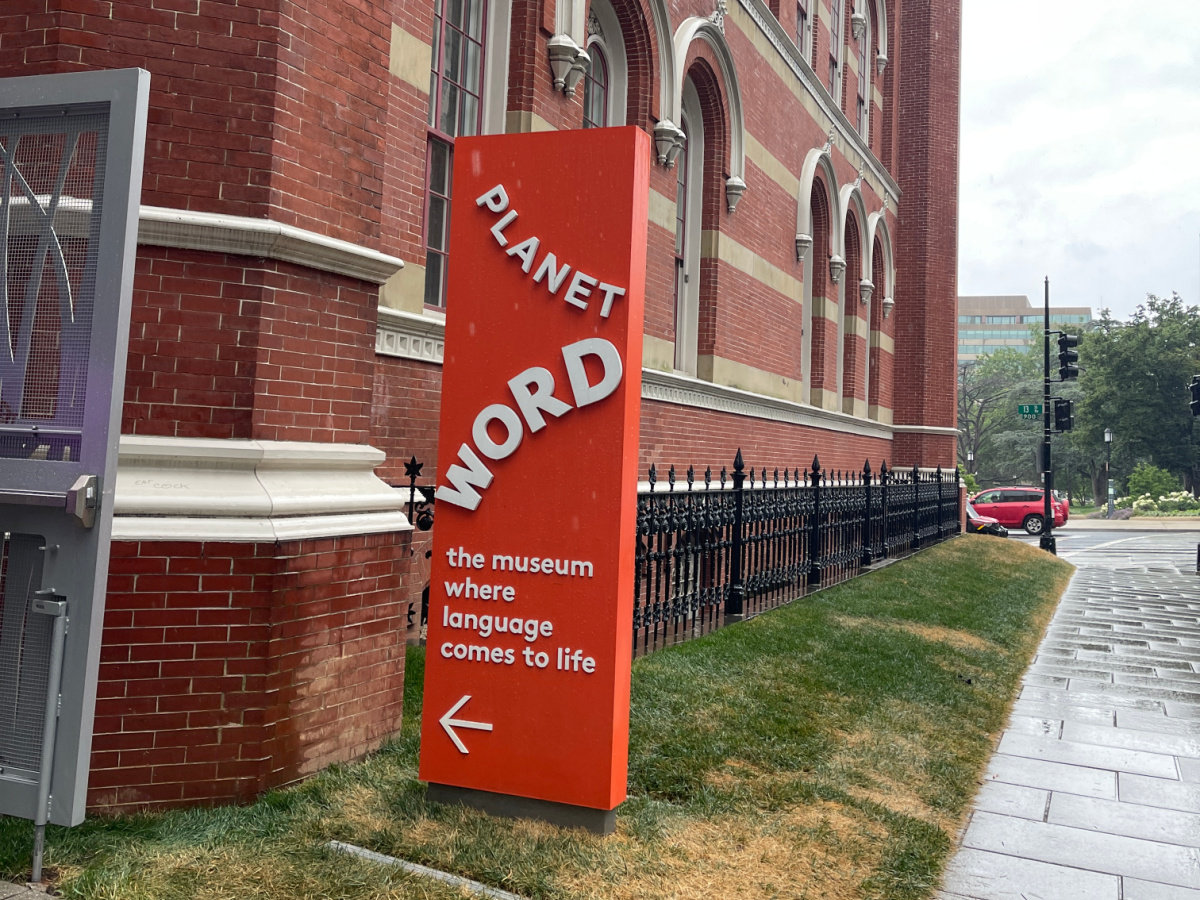
Planet Word Museum in Washington DC is one of the most fun and interactive museums in the city. This free, voice-activated museum is perfect for kids, teens, and adults. Here’s what to expect, top exhibits, and tips for planning your visit.
Estimated reading time: 23 minutes
If you’re visiting Washington, DC and trying to decide which museums are actually worth your time, let me make this one very easy:
Planet Word is one of the most fun, most engaging, and most surprisingly memorable museums in the entire city.
I don’t say that lightly.
This is the world’s first voice-activated museum, and it leans all the way into that concept. You’re not just walking through exhibits—you’re talking, singing, laughing, guessing, performing, and honestly… playing your way through language.
As a former linguist, I walked in expecting to “like” it.
I walked out thinking: this might be one of the best museum experiences in DC for families, teens, and honestly adults too.
If you’re looking for more ideas beyond the National Mall, this list of free things to do in Washington DC with kids is a great place to start.
Quick Snapshot (Who This Is For)
Best for:
- Families with kids (ages 6+)
- Teens (this is a sleeper hit for teens)
- Word nerds and book lovers
- Anyone who wants a break from traditional museums
Location:
- Historic Franklin School, 13th St NW in downtown DC (near K Street)
How to Get There:
- Metro: Red Line (Metro Center is closest)
- Easy walk from National Mall
- Limited street parking nearby
Admission:
- FREE (yes, really)
- Timed entry passes recommended (first-served basis if walk-in)
Hours:
- Typically open Wed–Sun (check current hours before you go)
Time Needed:
- 2–4 hours (you will stay longer than you expect)
Good to Know:
- Elevator access available
- There is a gift shop
- Not a Smithsonian, but just as high quality (arguably more fun)
If you’re planning to visit more traditional museums while you’re in DC, this kid-friendly guide to the National Museum of American History is a great complement to Planet Word’s interactive style.
What to Expect (Real Talk)
This is not a quiet, read-the-placards kind of museum.
This is a:
- talk into a microphone
- sing karaoke
- play word games
- laugh-out-loud
- compete with your kids
- “wait… we’ve been here 3 hours?”
kind of museum.
Every gallery is an immersive language experience. And instead of overwhelming you with dense information, it teaches through interaction—something DC museums don’t always do well.
It’s also housed in the landmark Franklin School, a beautiful national historic landmark building that somehow manages to feel both elegant and playful at the same time.
If your kids enjoy interactive museums like Planet Word, you should also consider visiting the National Building Museum—especially if you’re traveling with younger kids.
What’s Actually Worth Your Time (Highlights)
Let’s be honest—some museums have entire wings you can skip.
This is not one of those places.
That said, here are the sections that absolutely stand out:
- The karaoke/music room (Unlock the Music)
- The Library (this space alone is worth visiting)
- Lend Me Your Ears (public speaking fun)
- Joking Around (humor gallery = big kid hit)
- The interactive word games area
- The persuasion gallery (I’m Sold!)
- The spoken word / language origins exhibits
Also—the photo booth word experience?
Shockingly fun. Way better than it sounds.
If you’re deciding between museums on the National Mall, the Smithsonian Natural History Museum is another top pick—especially if your kids are into dinosaurs, gems, and more traditional exhibits.
What to Skip (Light but Honest)
Honestly… not much.
If anything:
- Some of the deeper language origin content on the 3rd floor might feel a little slower for younger kids
- If your kids don’t like performing, you may not linger as long in the speaking/music areas
But even those spaces are still visually engaging enough to keep moving.
How to Plan Your Visit (Timing + Flow)
Here’s the strategy I recommend:
Start at the top (3rd floor) and work your way down.
Why?
- It naturally flows from “what is language” → “how we use language” → “why language matters”
- The lower floors are more interactive and high-energy (save those for when kids are warmed up)
Ideal flow:
- 3rd Floor (shorter visit, educational foundation)
- 2nd Floor (longest stop—this is where most fun happens)
- 1st Floor (wrap-up with persuasion + big visual exhibits)
Timing tip:
Try to go earlier in the day. Some of the interactive stations (especially karaoke and games) get busier as the day goes on.
If you loved how interactive Planet Word is, the International Spy Museum is another must-do in DC—it’s one of the most immersive museum experiences in the city.
Pro Tips (From Someone Who’s Done It)
- Don’t rush. This is one of those museums where slowing down actually makes it better
- Let your kids lead. They will naturally gravitate to what’s fun
- Do the karaoke room. Even if you think you won’t
- Engage with the exhibits. The more you participate, the better it gets
- Great for mixed ages. Teens, younger kids, and adults all find something to love
- Perfect “break museum.” If you’re burned out on history museums, come here
If You Only Have 2 Hours
- Go straight to the 2nd floor
- Hit:
- The Library
- Lend Me Your Ears
- Unlock the Music
- Joking Around
- Quick walkthrough of 1st floor at the end
Skip most of the 3rd floor unless you’re really interested in language origins.
If You Have 4 Hours (Half Day)
- Do all three floors
- Spend real time in the 2nd floor galleries
- Let kids repeat their favorite activities
- Explore the Library slowly (it’s gorgeous)
- Do the word games + persuasion gallery fully
3rd Floor: Where Words Come From
This floor is more educational—but still interactive.
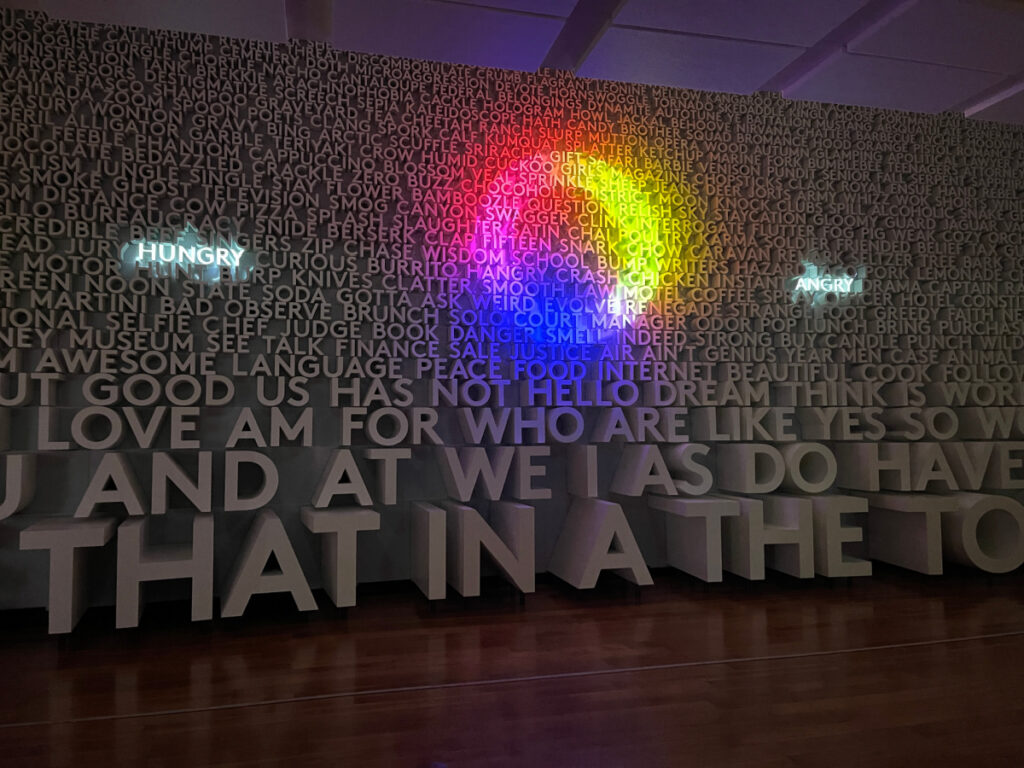
First Words & Language Origins
This section explores:
- how humans developed language
- how different languages evolved
- how communication shaped civilization
It’s surprisingly engaging, especially with the multimedia elements that help explain complex ideas in a simple way.
Spoken Word
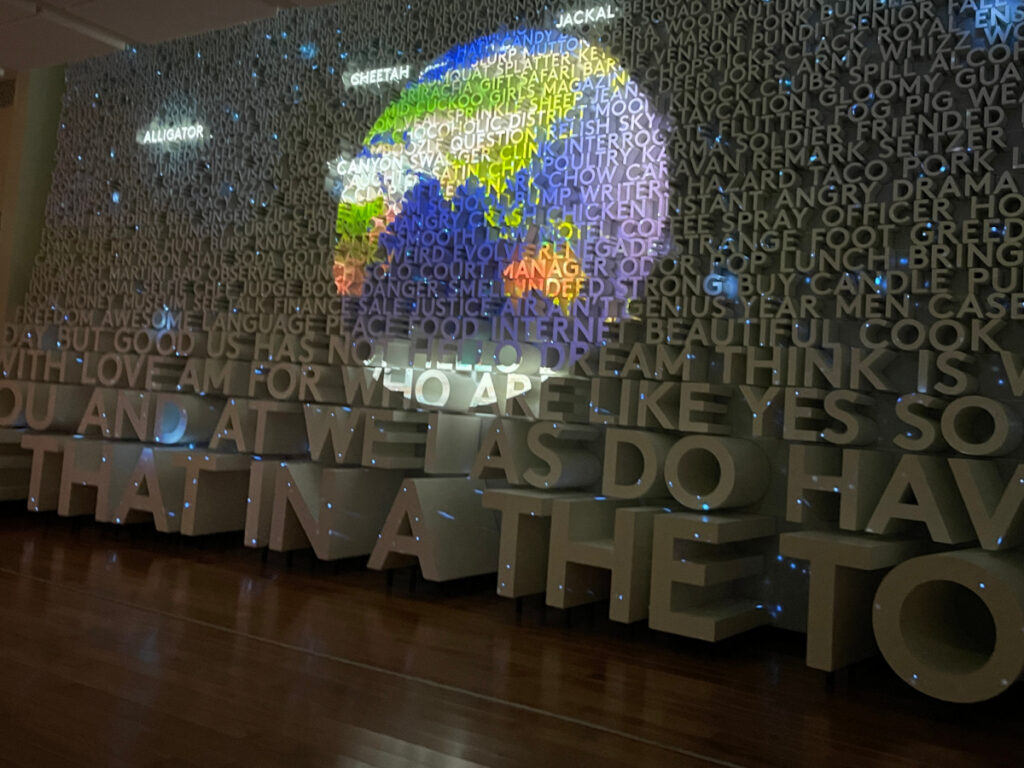
This exhibit focuses on:
- how we speak
- how language sounds
- how tone and delivery matter
It’s a great setup for what you’ll experience on the lower floors.
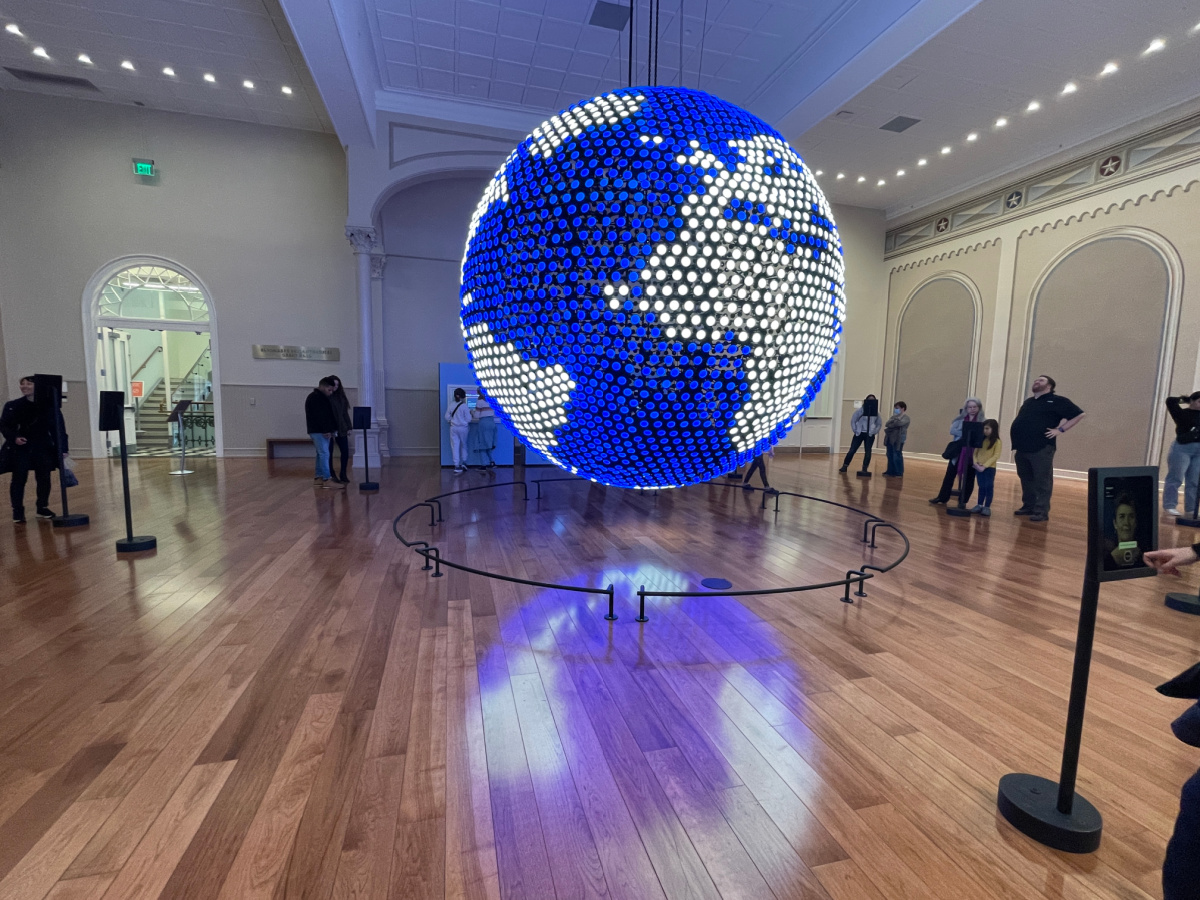
2nd Floor: The Heart of Planet Word
This is where you will spend most of your time.
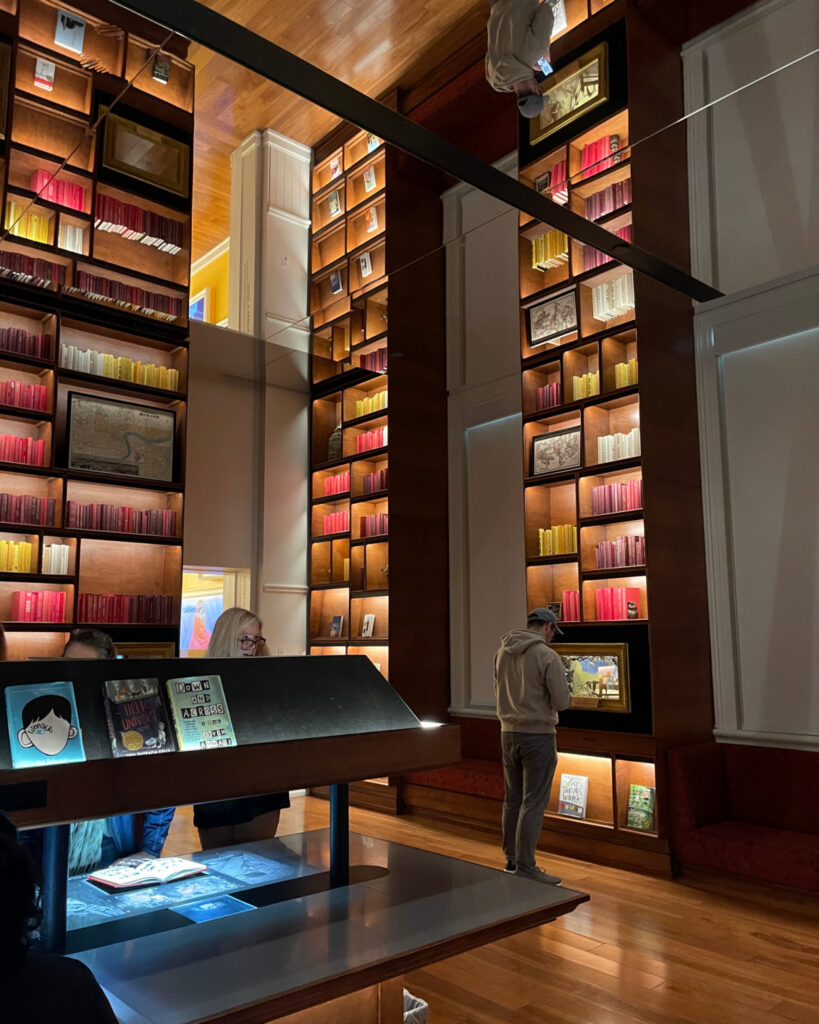
The Library (aka the Magical Library)
This space is stunning.
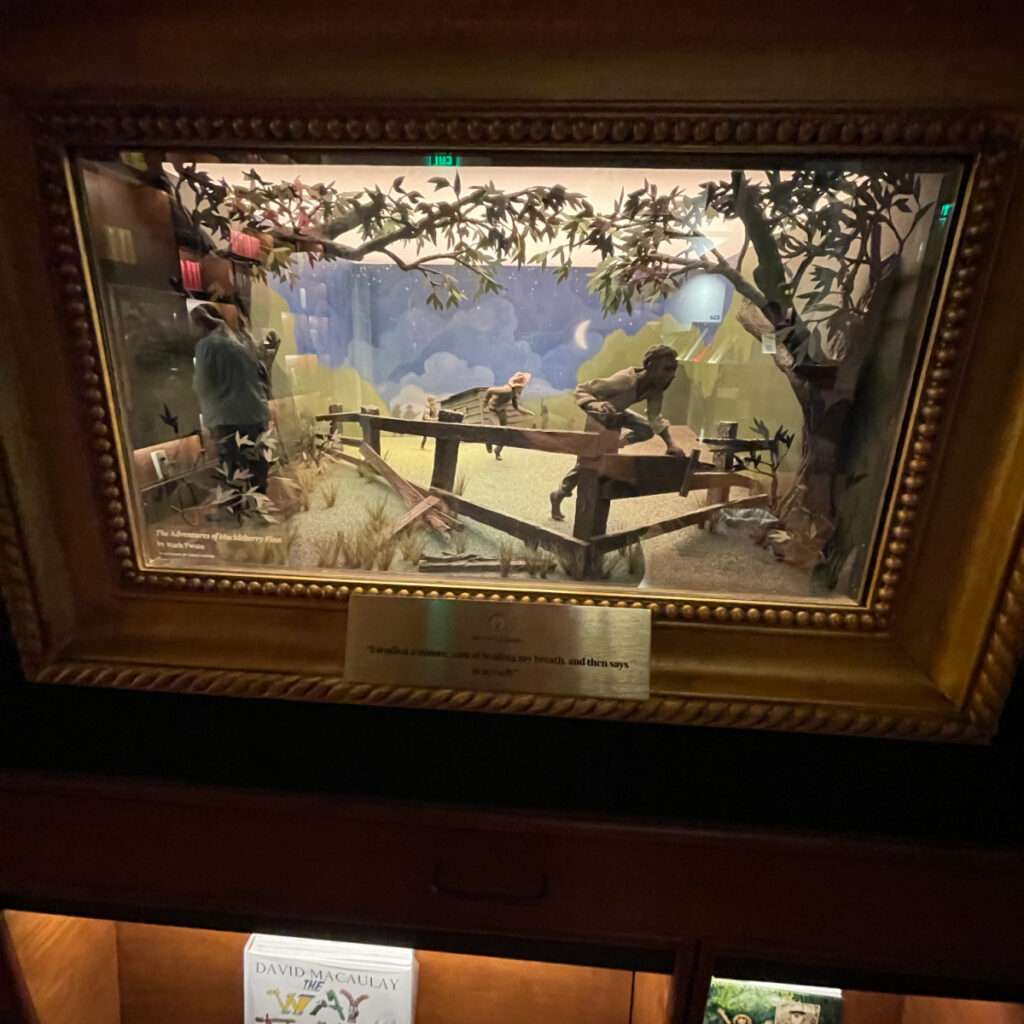
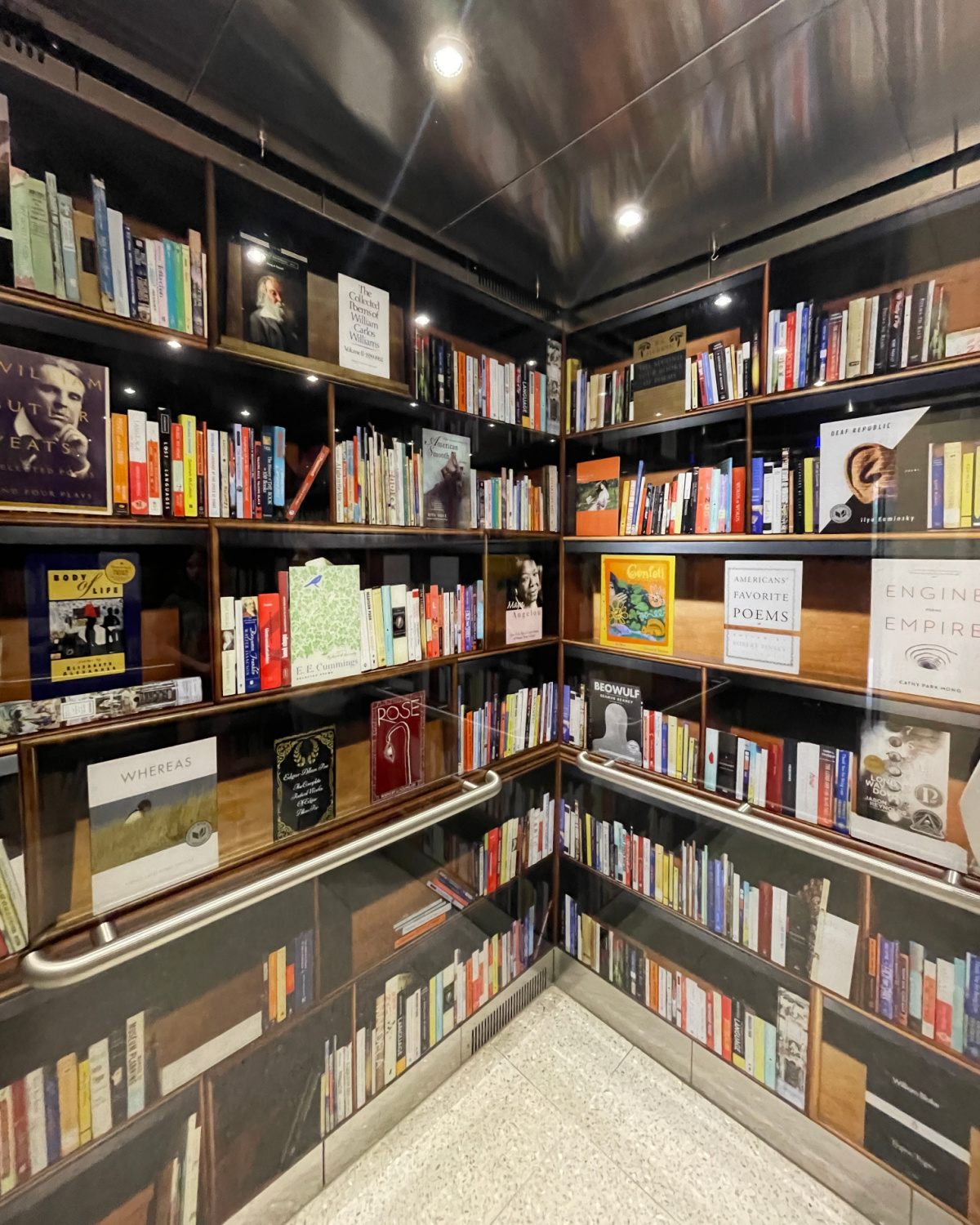
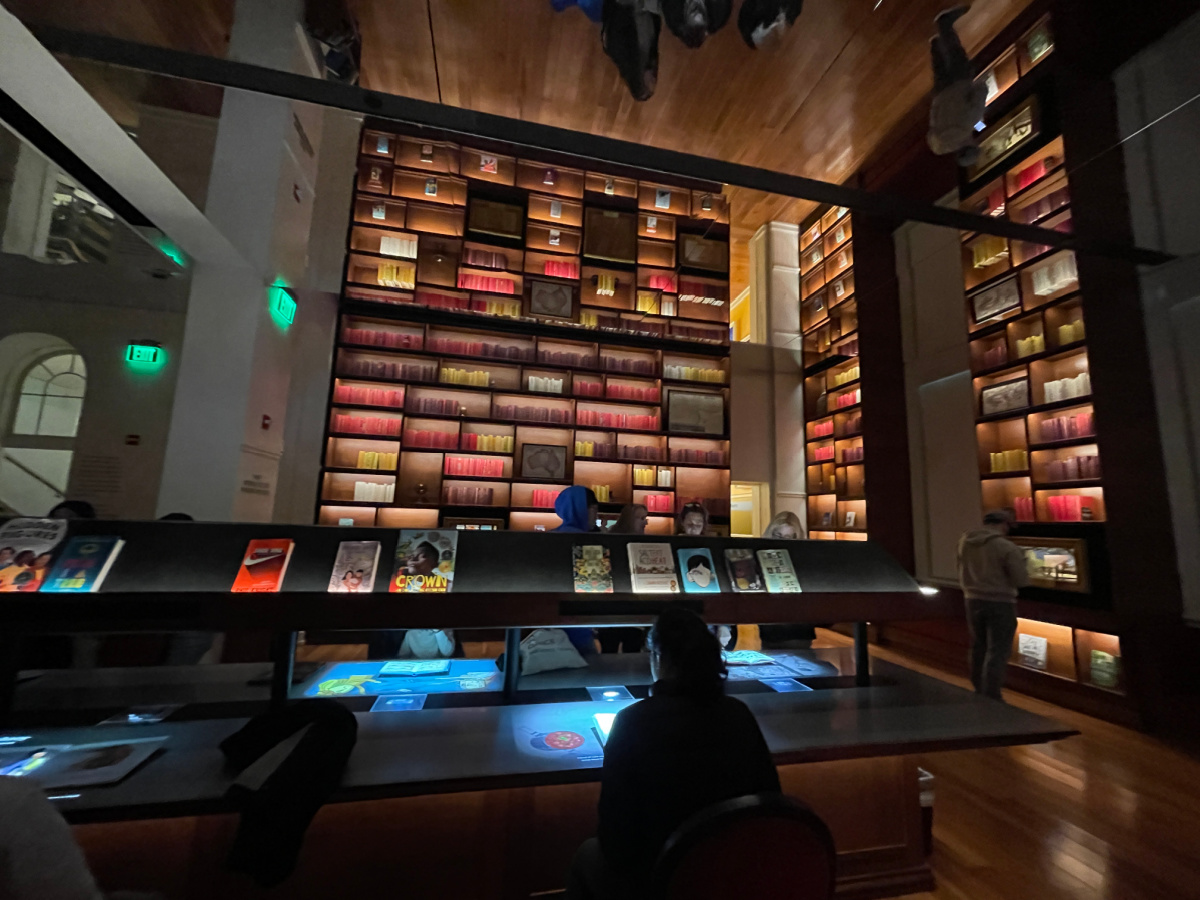
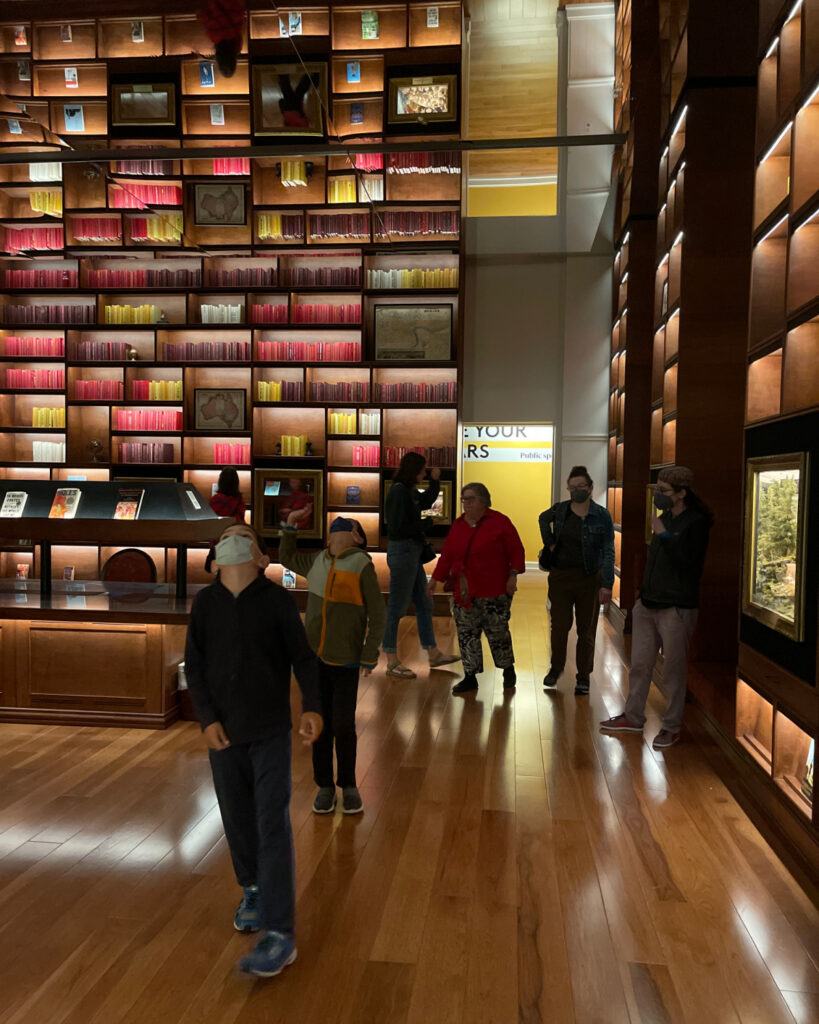
Floor-to-ceiling shelves filled with color-coded books, warm lighting, and a design that feels almost cinematic.
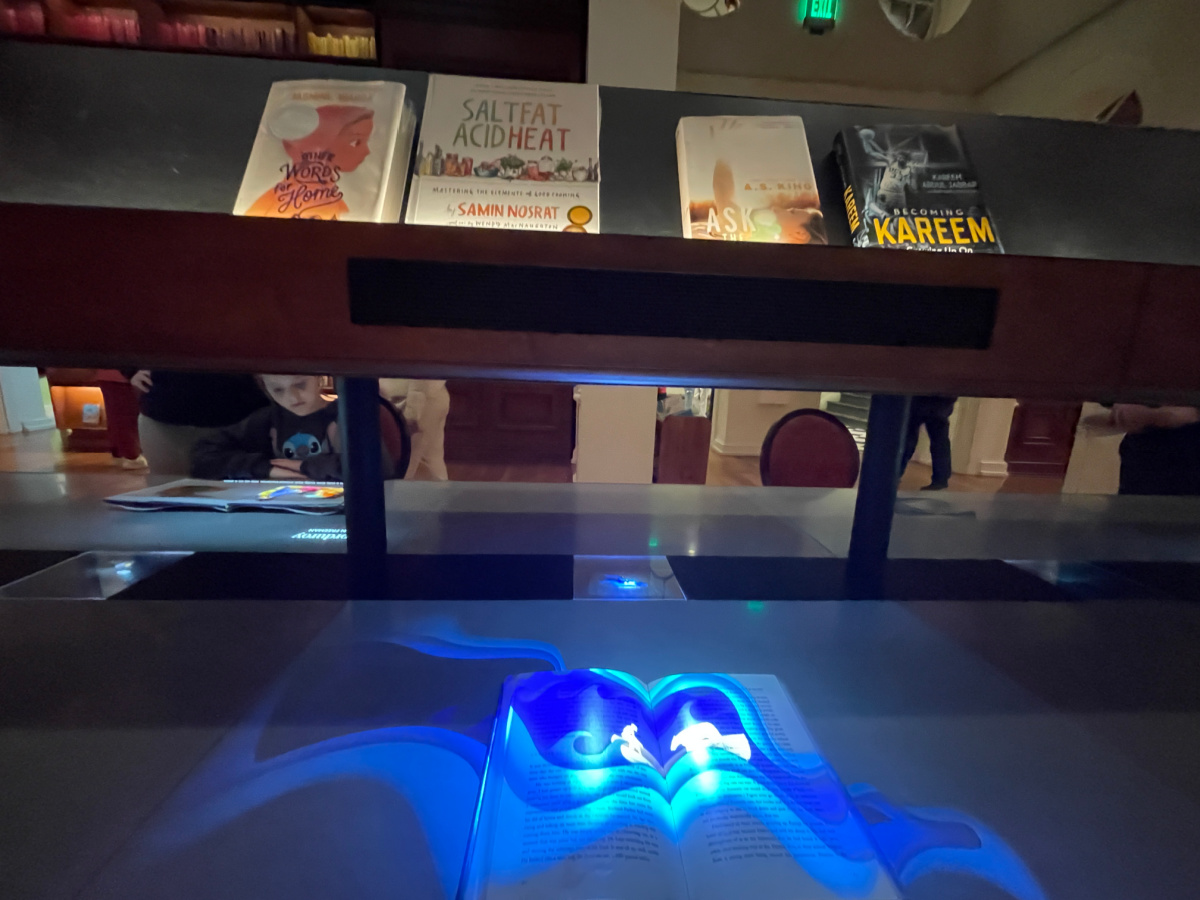
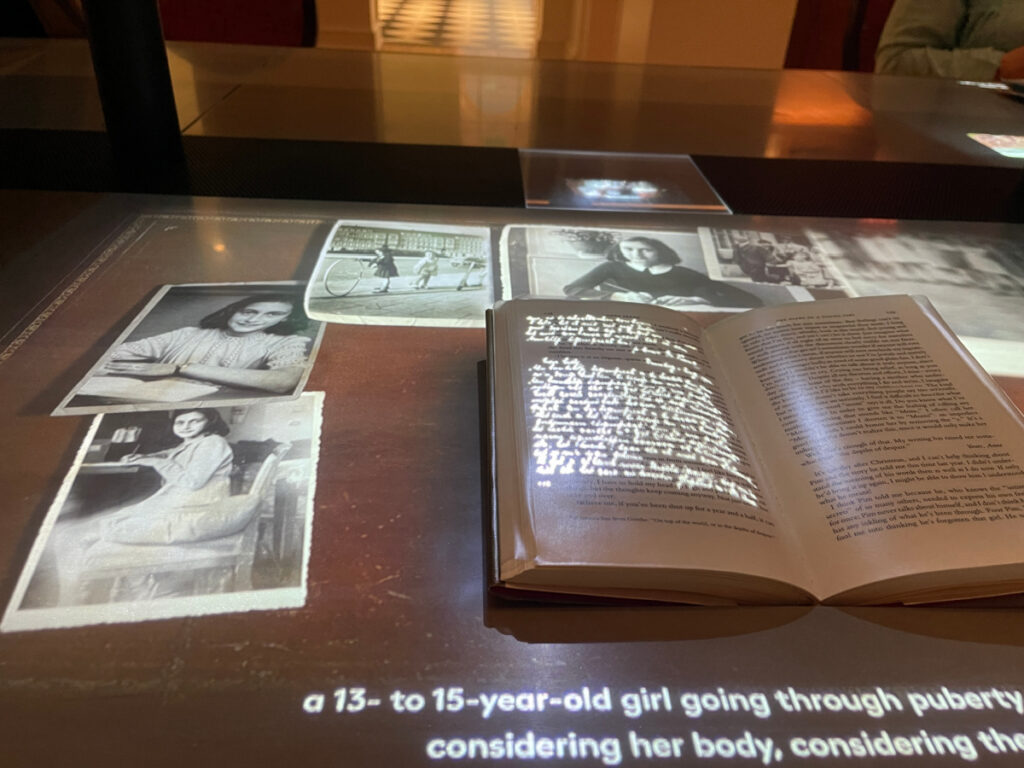
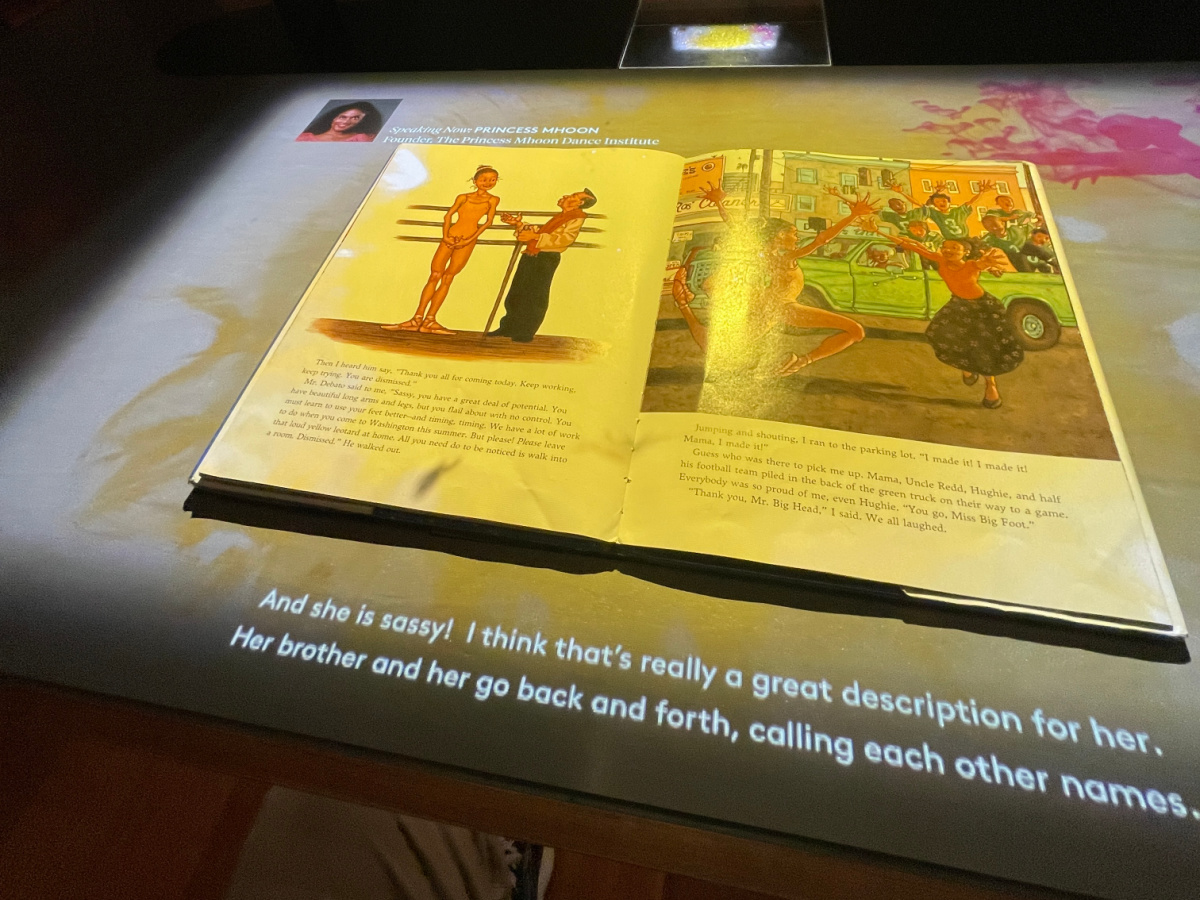
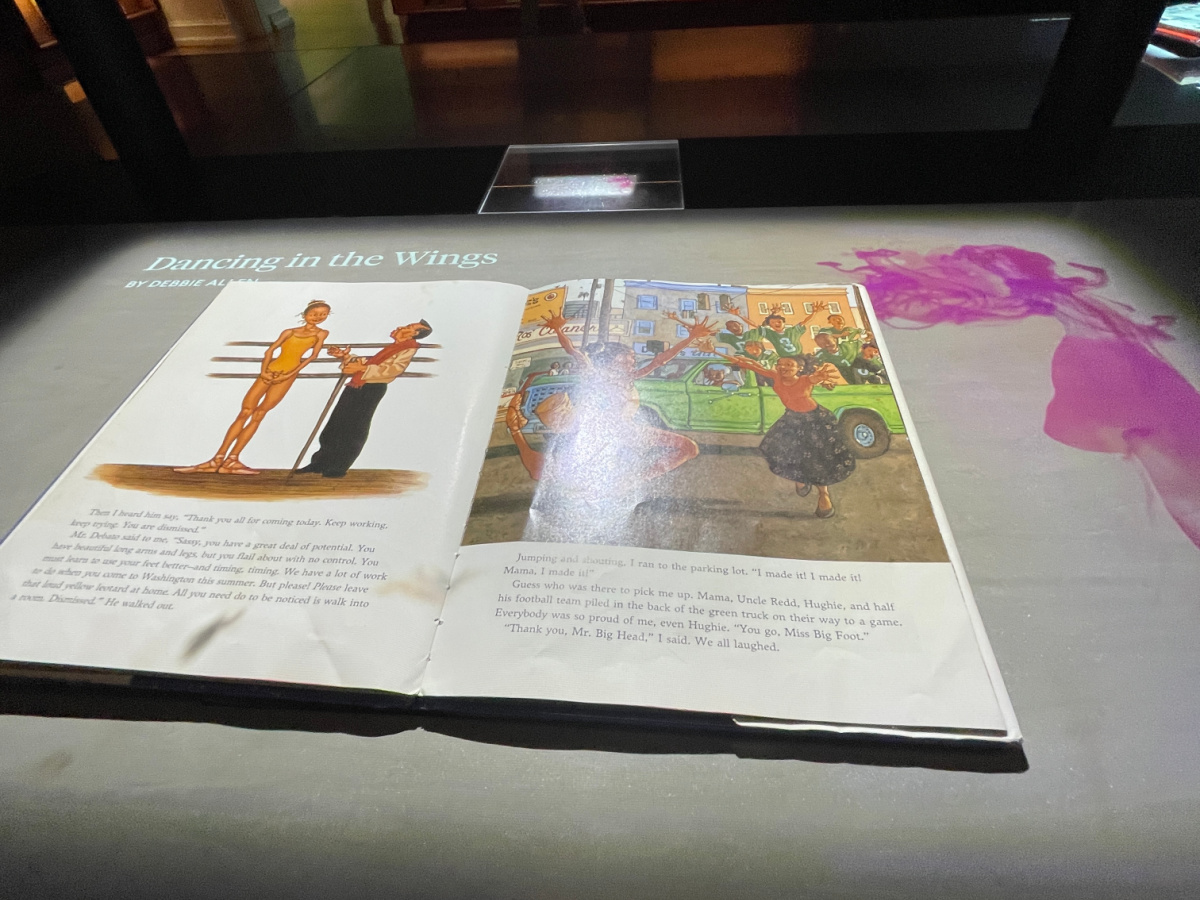
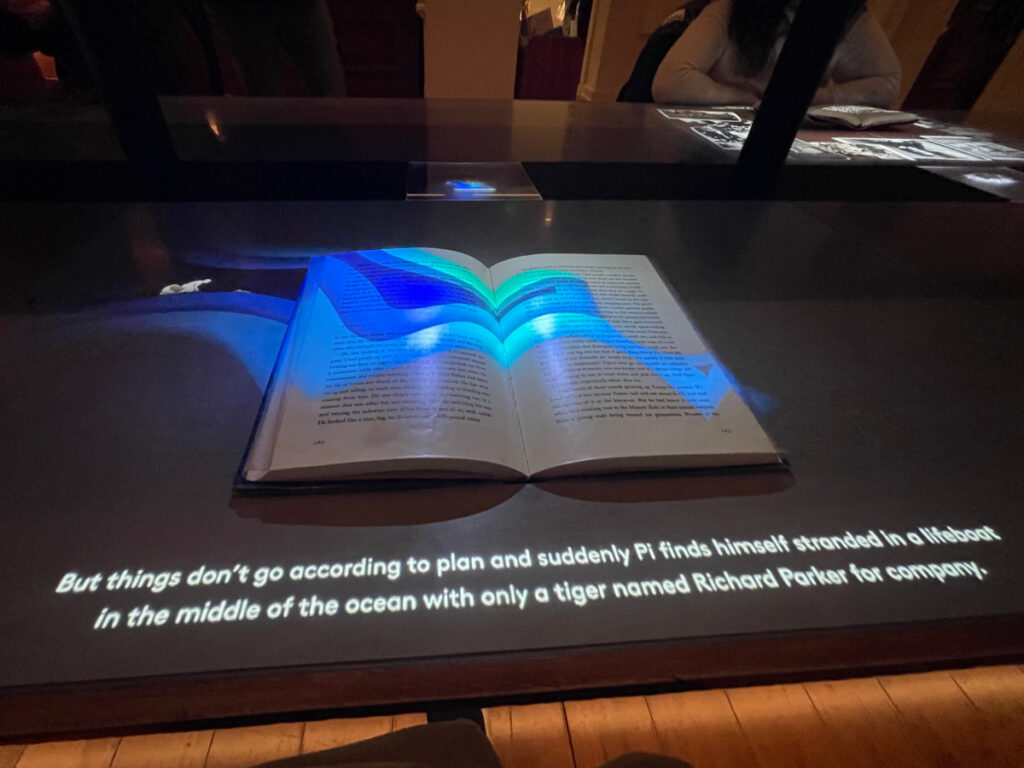
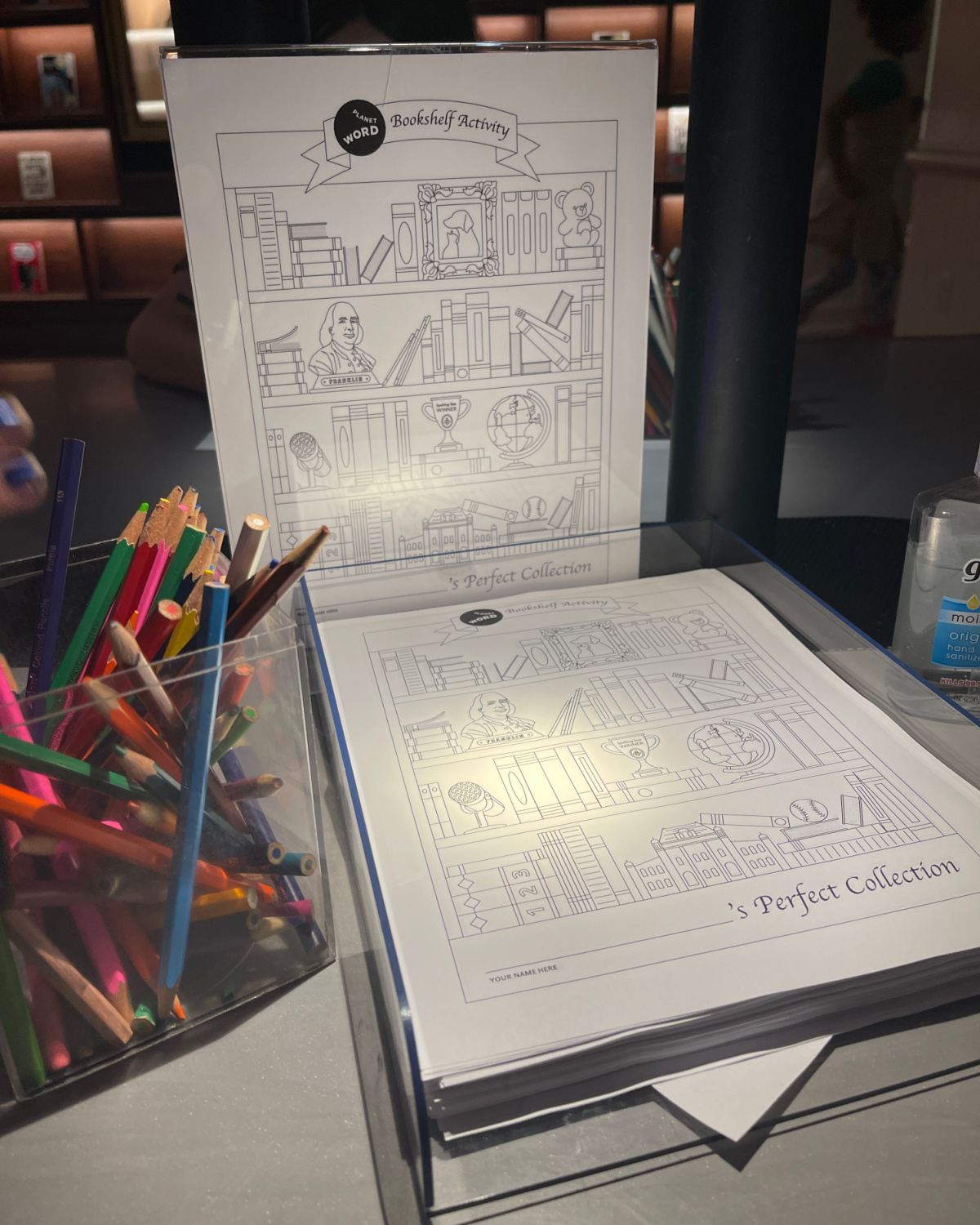
It’s not just a photo spot—it’s interactive, educational, and honestly one of the most beautiful rooms in DC. There are books on the tables that will actually read to you.
Lend Me Your Ears (Public Speaking)
This is where kids (and adults) can:
- give speeches
- perform
- try public speaking in a low-pressure, fun way
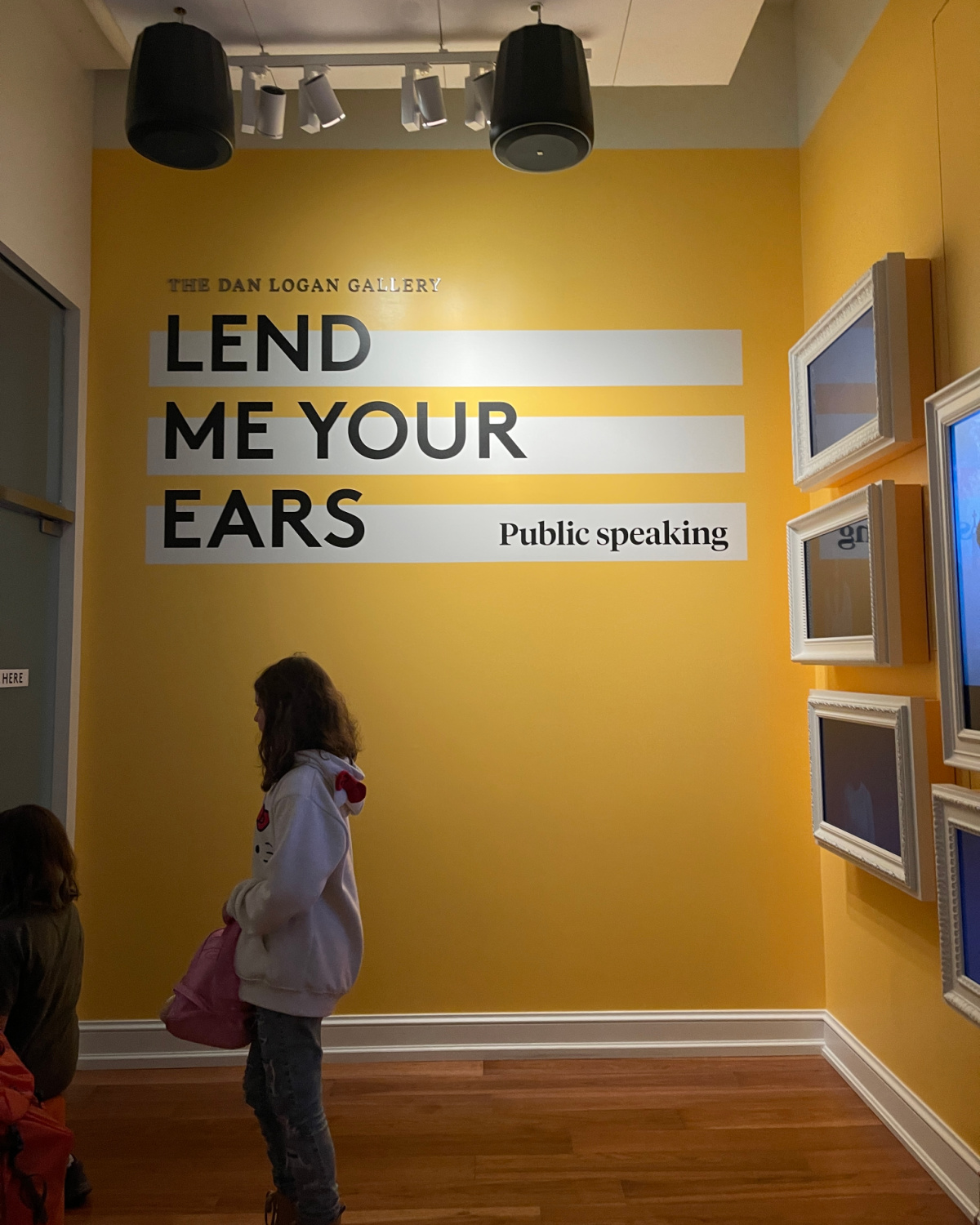
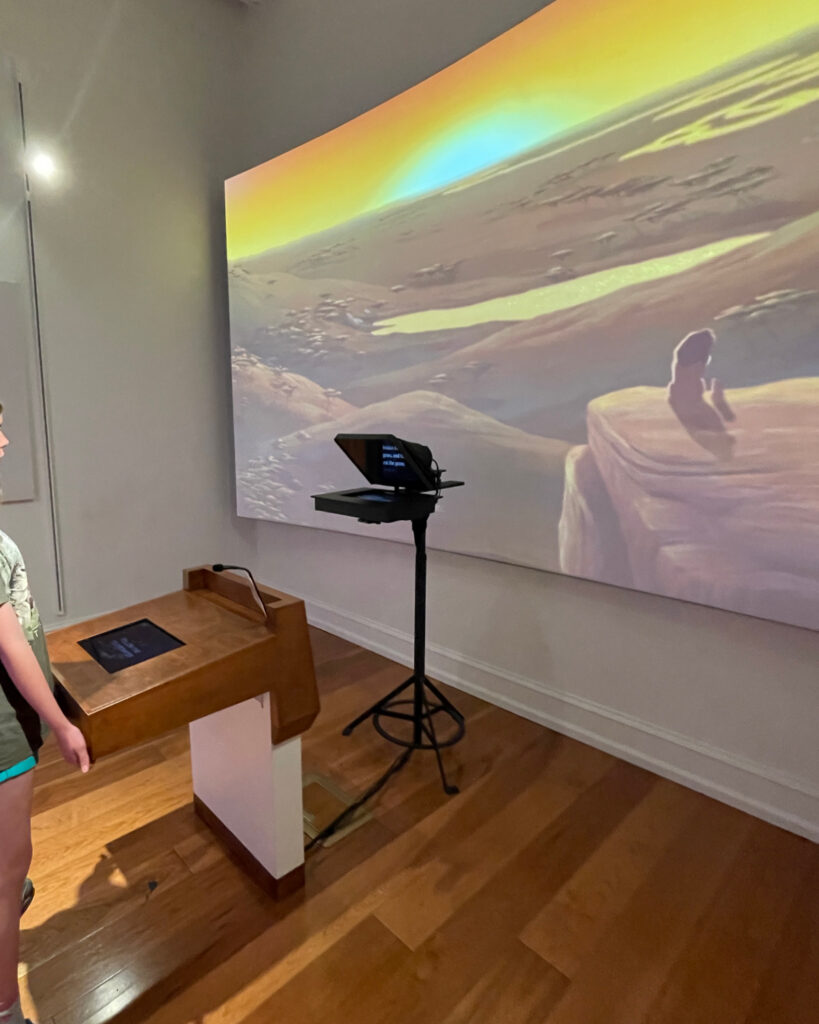
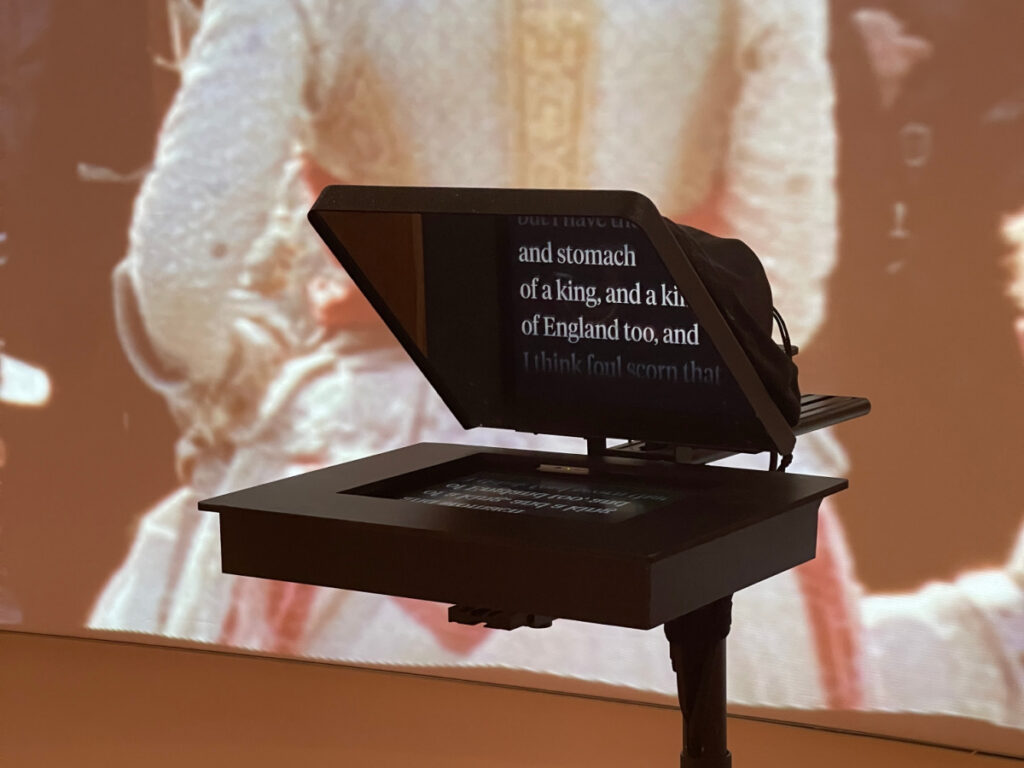
It’s engaging without being intimidating—and surprisingly confidence-building. You basically pick which speech you want to recreate, step inside the studio, and then you get a chance to record yourself giving that speech! Some of the speeches are famous from historical figures. But there is at least one fantastic Lion King speech that is a favorite for sure!
Word Worlds
This area explores:
- how words shape the world around us
- different languages and how they influence culture
It’s interactive in subtle ways, and it connects language to real-life experiences.
Unlock the Music (Fan Favorite)
This is the room where Planet Word goes from “cool museum” to “wait… this is SO much fun.”
And yes—this is the karaoke room. But it’s not just karaoke.
It’s an interactive deep dive into how language and music work together, wrapped in an experience that feels more like a mini performance space than a museum exhibit.
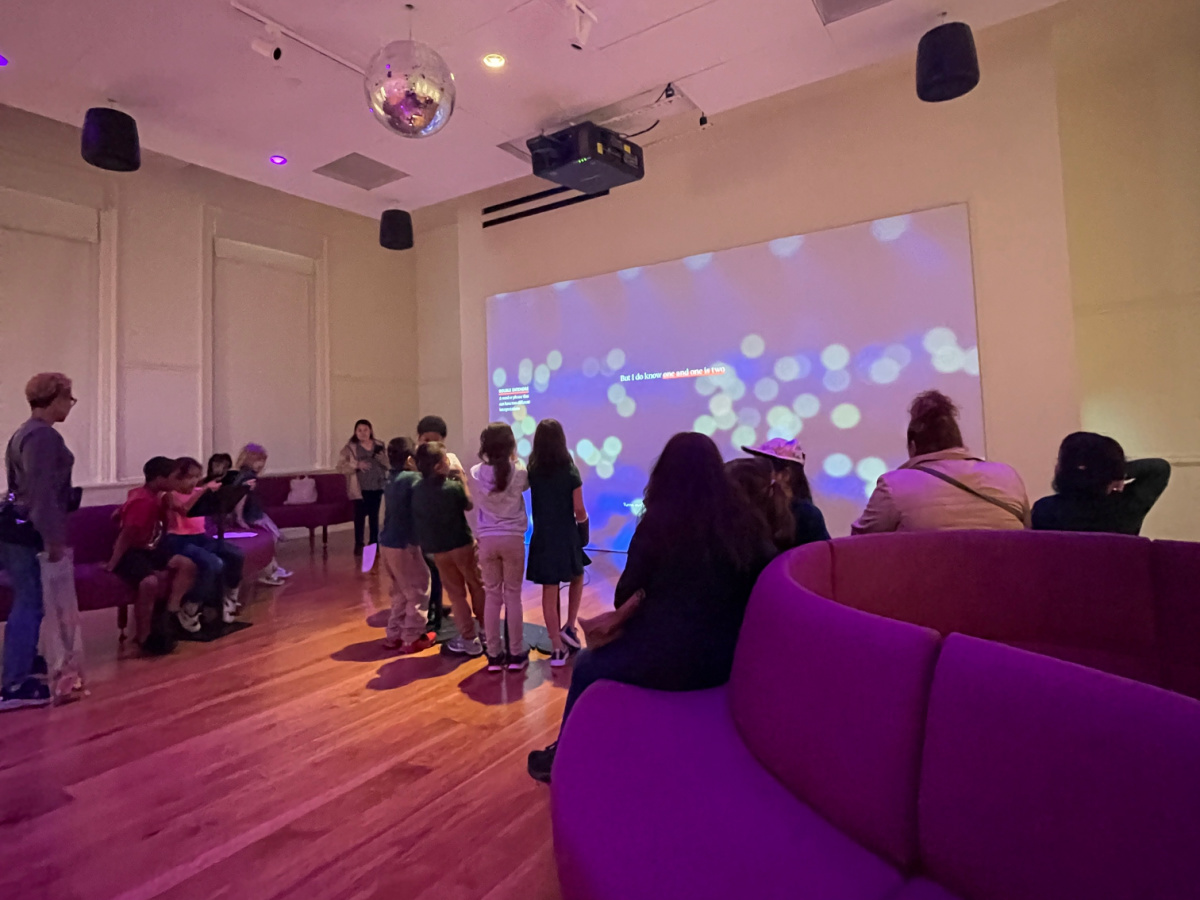
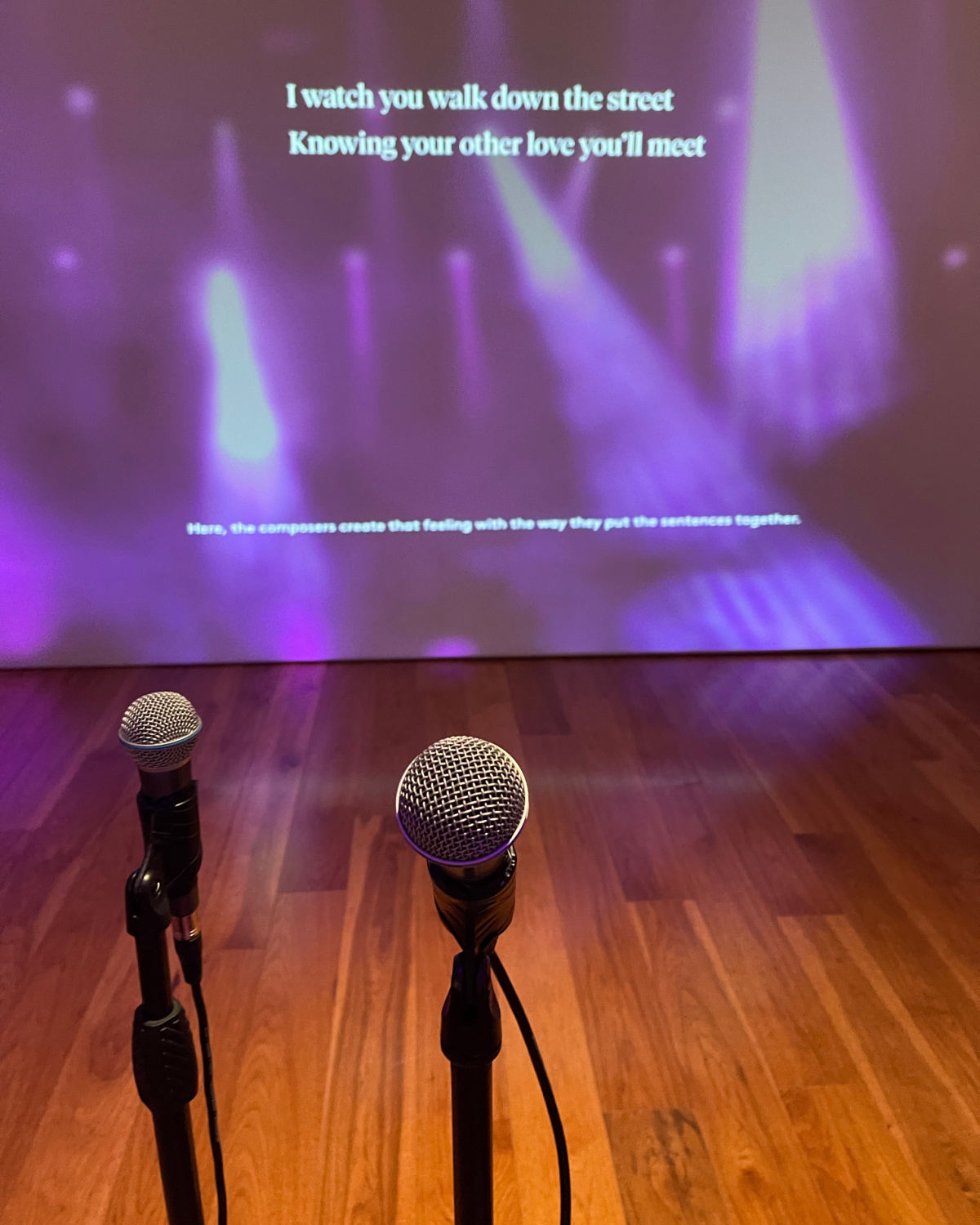
When you walk in, the vibe shifts immediately. The lighting is dim and colorful, there’s a subtle stage feel, and you’ll usually see a mix of kids, teens, and adults either:
- singing into microphones
- watching and laughing from the couches
- or waiting their turn while scrolling through song options
There’s this low-key energy in the room that just pulls you in.
🎤 Pick a Song… and Step Up
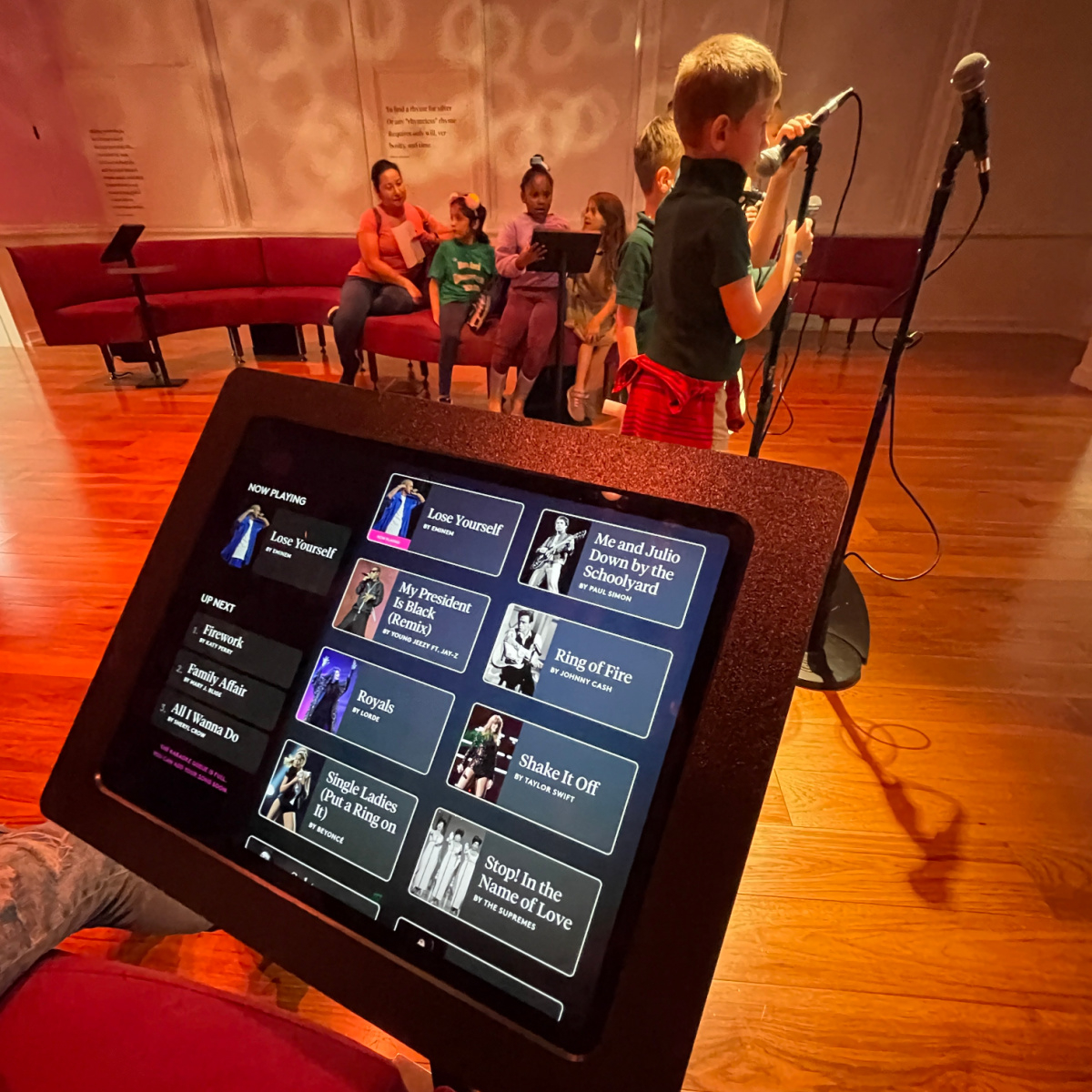
At the center of the experience is a touchscreen where you can choose from a curated list of songs. And it’s not random—it’s a really smart mix that spans generations.
Think:
- Taylor Swift
- Beyoncé
- Johnny Cash
- Paul Simon
- Disney songs
- throwback hits and modern favorites
So whether you’re visiting with younger kids, teens, or grandparents, everyone can find something they recognize.
Once you select your song, you step up to one of the microphones, and the lyrics appear on a massive screen in front of you.
And here’s where it gets interesting…
🎶 It’s Not Just Singing—It’s Understanding Language Through Music
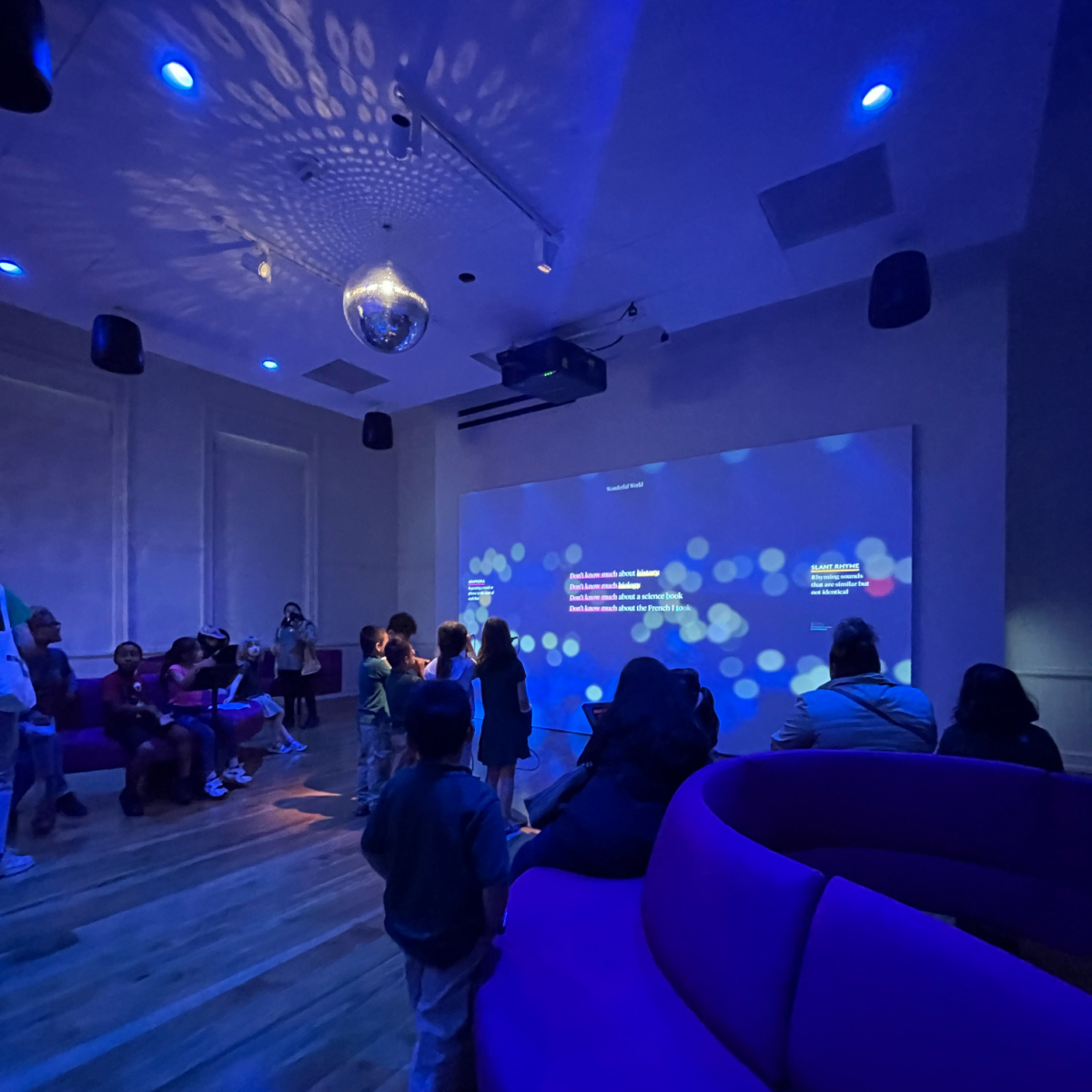
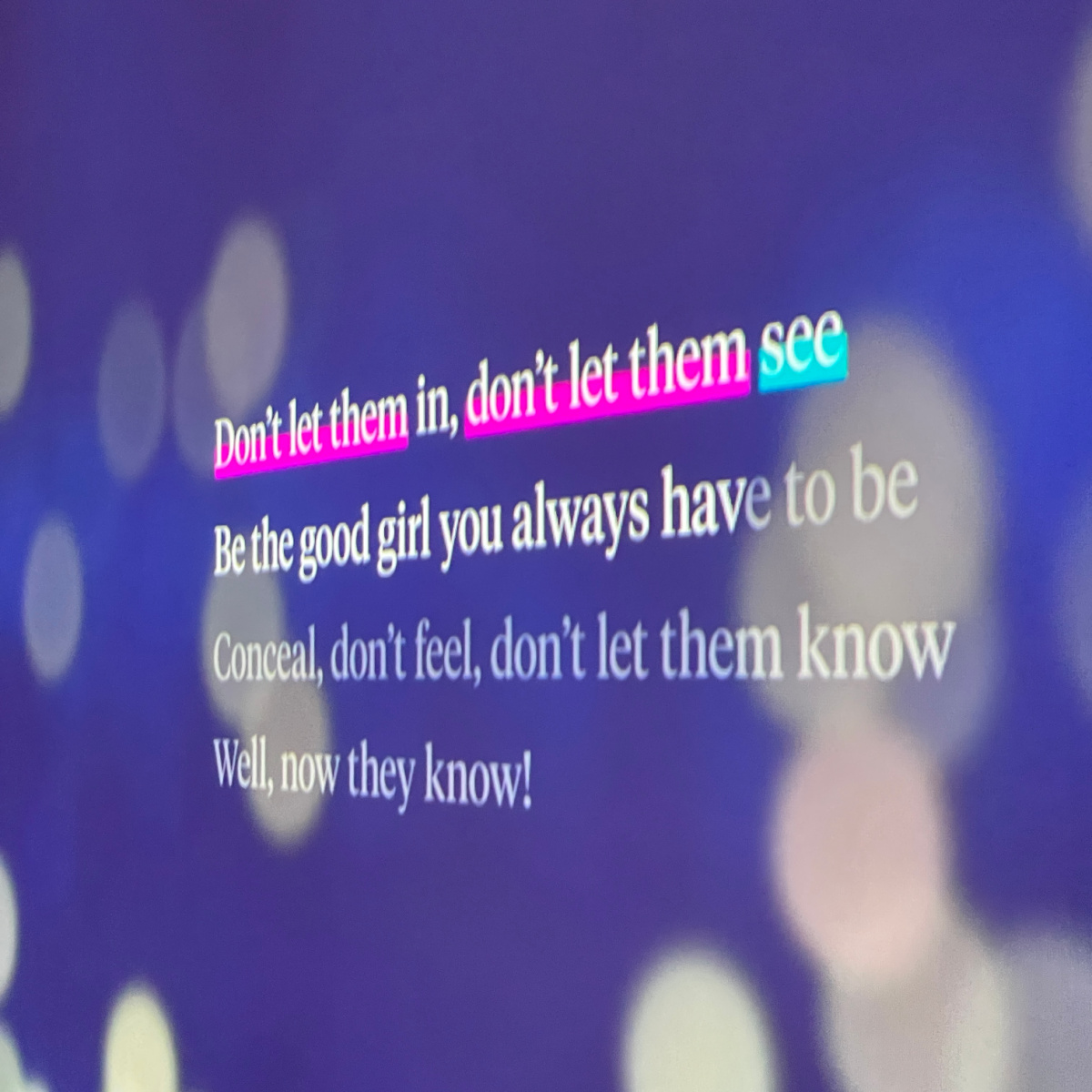
As the lyrics play, the exhibit highlights different elements of language in real time.
You’ll start noticing things like:
- rhyme patterns
- rhythm and cadence
- word emphasis
- repetition and phrasing
Some songs even call out specific techniques like:
- slant rhyme
- internal rhyme
- storytelling structure
And it does this in a way that feels completely natural—not like a lesson.
It’s one of those sneaky “you’re learning but it doesn’t feel like learning” experiences.
👨👩👧👦 Why Kids LOVE This Room
This is easily one of the most popular interactive galleries in the museum—and for good reason.
Kids love it because:
- they get to perform (without pressure)
- they recognize the songs
- it feels like play, not school
- they can move, sing, and be loud
And parents love it because:
- it keeps kids engaged way longer than expected
- it works for a wide age range
- it’s genuinely entertaining to watch
Also—don’t be surprised if your kid wants to do multiple songs.
That happens a lot.
😄 And Yes… Adults End Up Doing It Too
You’ll see it happen.
At first, adults hang back on the couches.
Then they start laughing.
Then they start singing along quietly.
And eventually… someone gets up and grabs the microphone.
It’s that kind of room.
🛋️ The Setup Makes It Work
One of the reasons this exhibit works so well is the layout.
There’s:
- a small performance area with microphones
- a large projection screen with lyrics
- curved seating around the room for spectators
So even if you’re not singing, you’re still part of the experience.
It feels more like a shared activity than a solo exhibit.

⏰ Timing Tip
This room can get busy—especially midday.
If your kids are excited about it, either:
- hit it early in your visit
- or circle back later when it’s less crowded
That said, even when it’s busy, the energy in the room makes it fun.
Bottom Line
If you only do a few exhibits at Planet Word…
Don’t skip this one.
It’s fun, it’s interactive, it works for all ages, and it perfectly captures what makes this museum so unique:
👉 learning through experience
👉 language brought to life
👉 and a whole lot of unexpected joy
Joking Around (Humor Gallery – Surprisingly Clever and Really Fun)
This is one of those areas where you walk in thinking, “Oh, this will be quick…”
…and then somehow you’re still there 20 minutes later.
The Humor Gallery at Planet Word is all about wordplay, jokes, idioms, and visual humor—and it’s incredibly well done. It’s bright, open, and super interactive, with lots of small stations that pull you in from every direction.
And honestly? This is one of the most consistently engaging areas for kids.
😂 The Joke Stations (Simple…but Addictive)
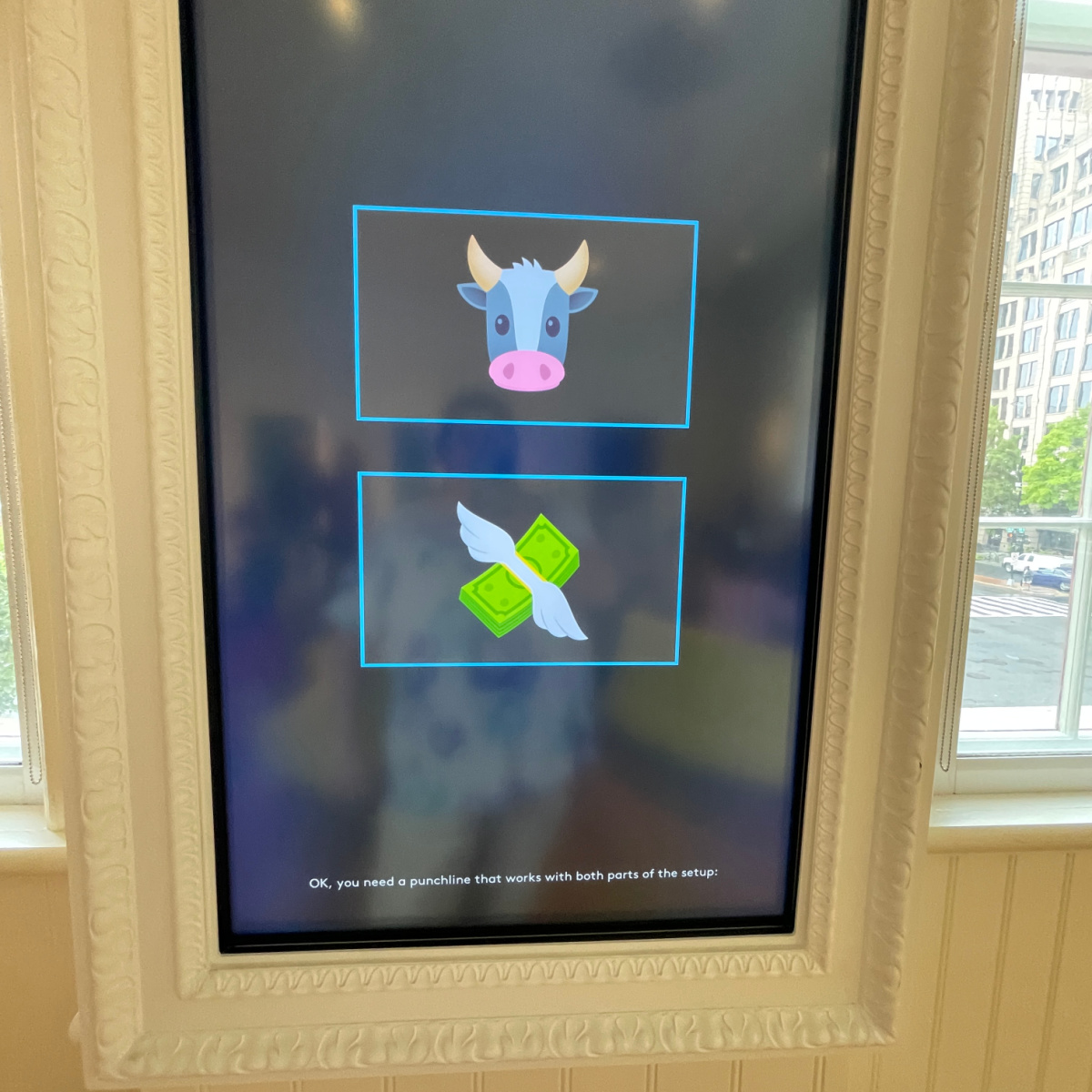
One of the main interactive pieces lets you build or complete jokes using visual prompts.
You’ll see things like:
- a cow 🐄
- money with wings 💸
…and the challenge is to come up with (or choose) a punchline that connects the two.
It sounds simple—but it actually makes you stop and think about:
- double meanings
- puns
- how humor relies on word associations
Kids especially get into this. You’ll see them tapping through options, guessing, laughing, and immediately wanting to try again.

🧠 “Wait… Why Is That Funny?”
What makes this gallery work so well is that it subtly explains humor without feeling like a lesson.
As you move through the exhibits, you start to notice:
- how timing affects a joke
- how expectation vs. surprise creates humor
- why puns are funny (or groan-worthy… depending on your perspective 😄)
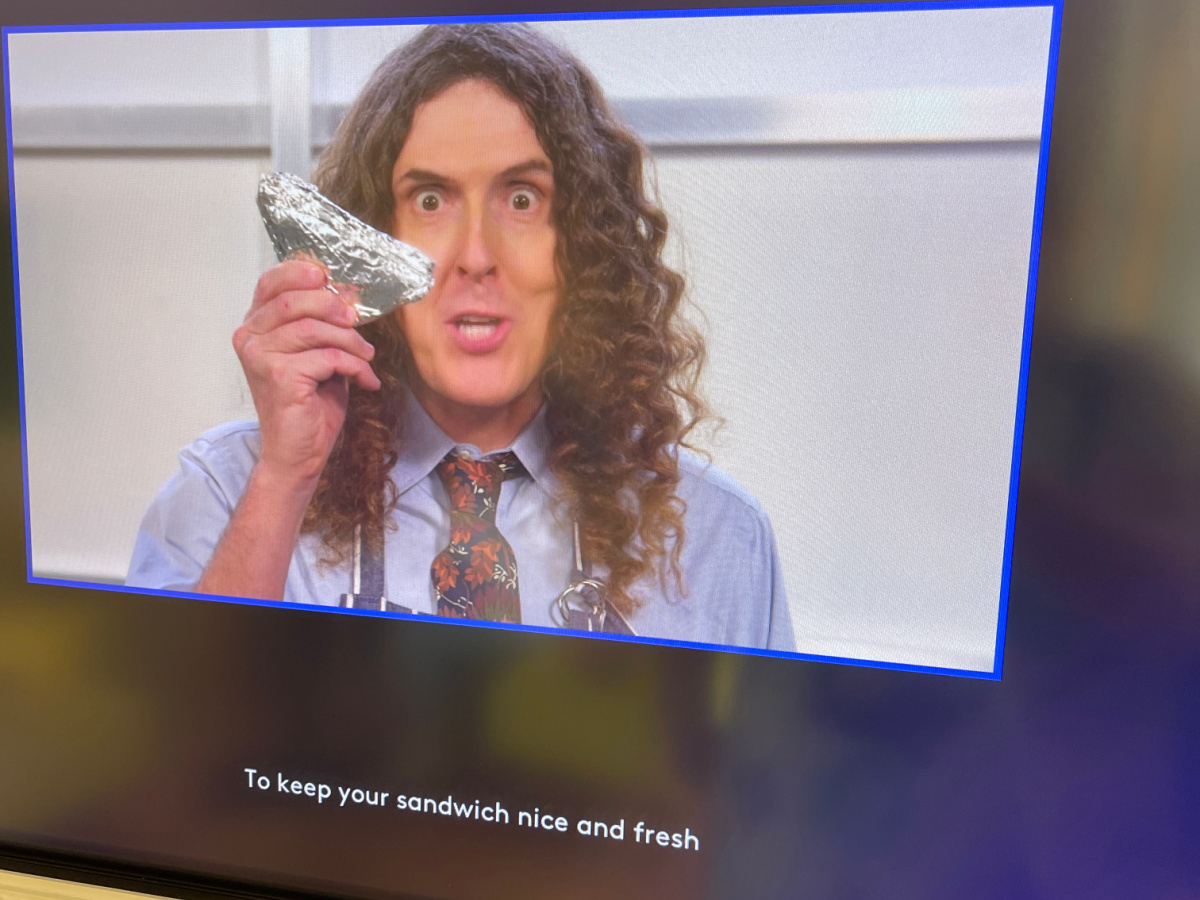
There are also short video clips and examples that break down different types of humor in a really approachable way.
It’s very “aha!” without being academic.
🎭 Physical + Visual Humor (Great for Kids)
This is also one of the more hands-on, movement-friendly areas in the museum.
You’ve got:
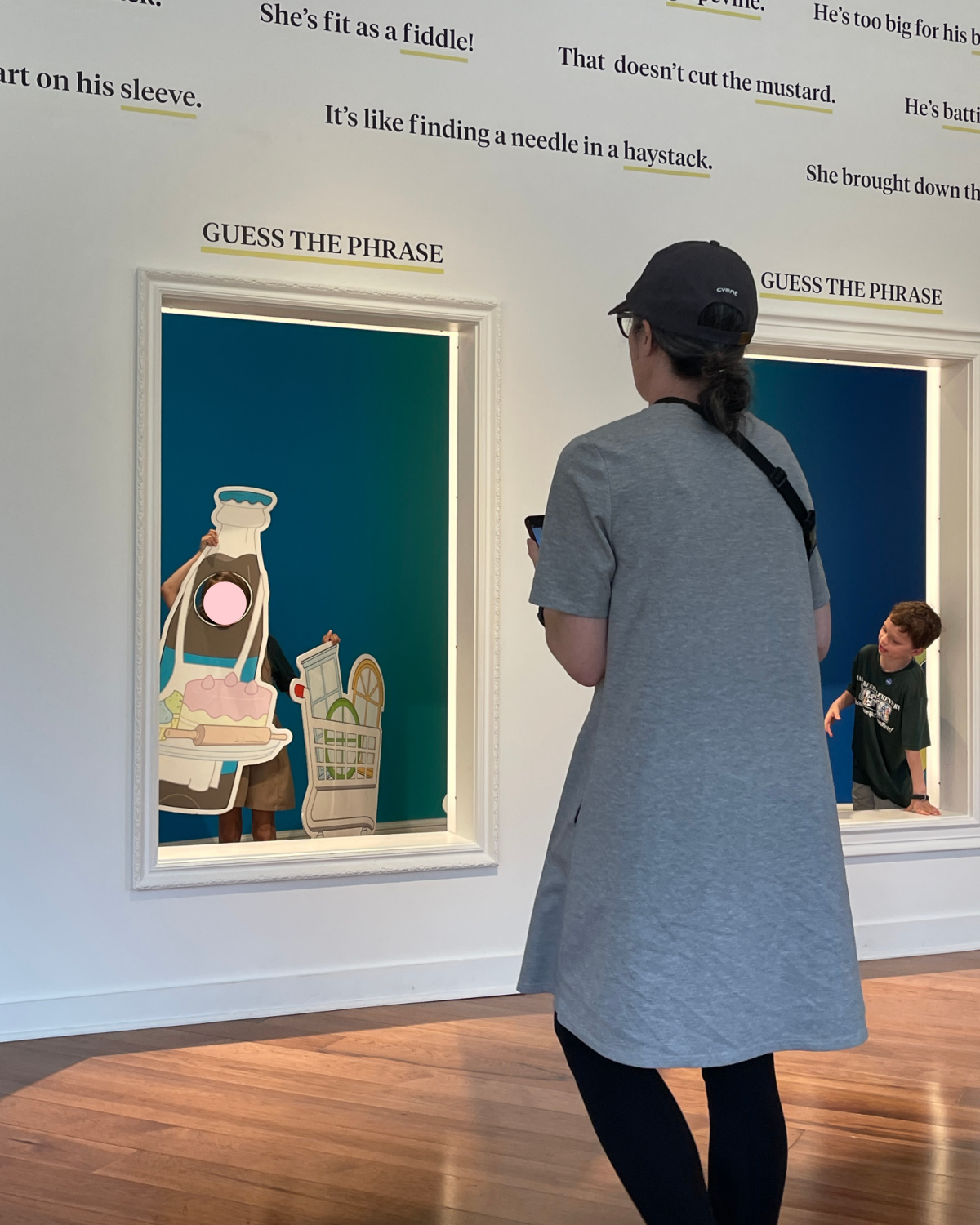
- “Guess the Phrase” windows where kids can act out or pose inside visual scenes
- oversized props and backdrops
- interactive screens where groups can play together
Your photos of the framed “guess the phrase” stations are exactly what kids gravitate toward—they LOVE stepping into the scene and trying to figure it out (or making their own version of the joke).
It turns language into something physical and playful, which is huge for engagement.
🛋️ The Layout Makes It Easy to Linger
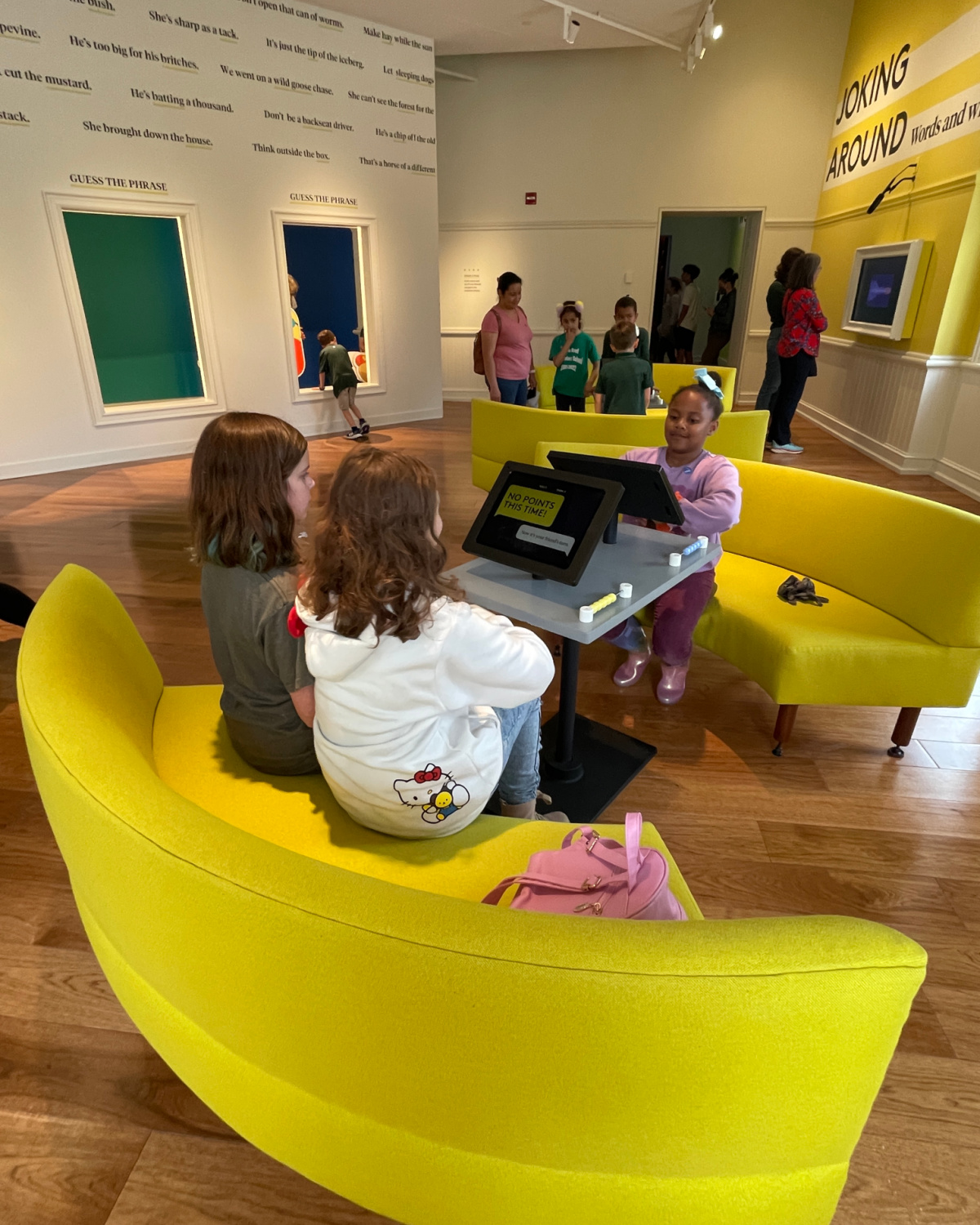
The seating areas (those bright curved couches) are actually part of why this space works so well.
Parents can sit for a minute while kids:
- rotate between stations
- play quick games
- try multiple joke setups
It doesn’t feel rushed, and it doesn’t feel like you need to “get through it.”
You can just hang out and enjoy it.
👨👩👧👦 Why This Is a Hit for Families
This gallery hits a really nice sweet spot:
- younger kids can engage visually and physically
- older kids start to understand the wordplay
- adults appreciate the cleverness (and the occasional eye-roll pun)
And unlike some museum exhibits, there’s no “wrong way” to do it.
You can spend:
- 5 minutes hitting a couple stations
- or 20+ minutes trying everything
Both feel totally fine.
😄 A Small Detail I Loved
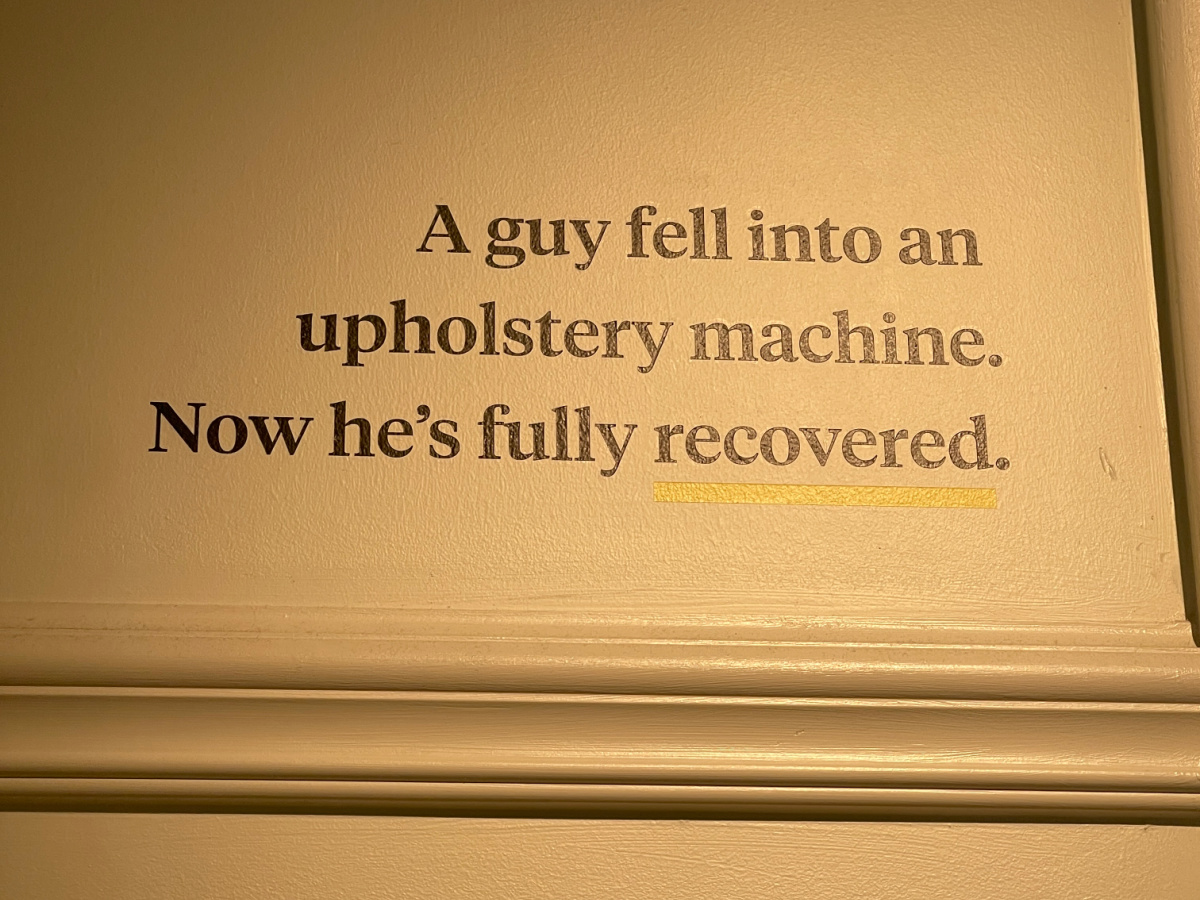
There are little touches throughout—like classic jokes and one-liners on the walls—that reward you for slowing down.
That upholstery joke you photographed?
That’s exactly the kind of humor sprinkled throughout the space—quick, clever, and just a little bit groan-worthy in the best way.
Bottom Line
The Humor Gallery might not sound like a “must-do” on paper…
…but in reality, it’s one of the most consistently fun and interactive sections in the museum.
It’s easy, it’s playful, and it gives kids a chance to:
👉 move
👉 laugh
👉 and engage with language in a totally different way
And honestly, after some of the more structured exhibits, this is a really nice place to just relax and have fun for a bit.
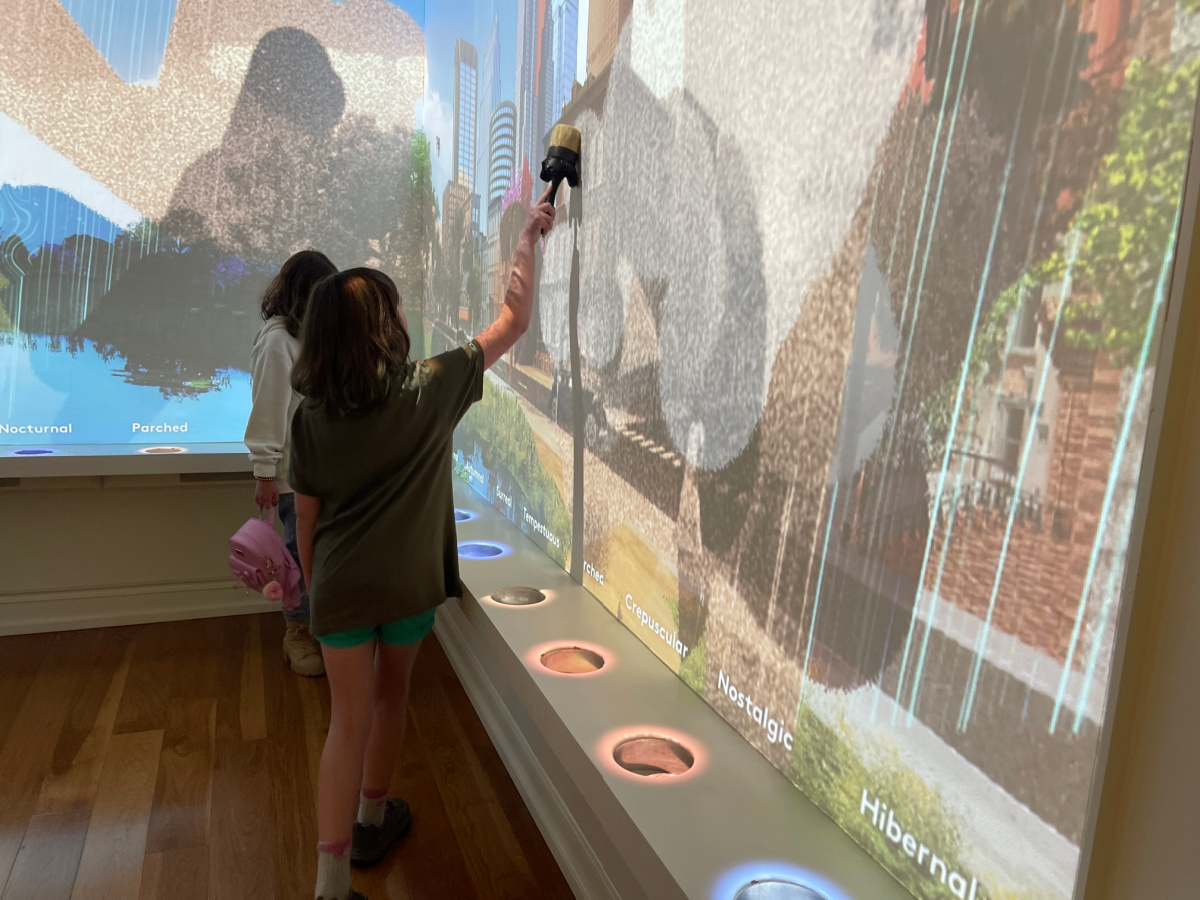
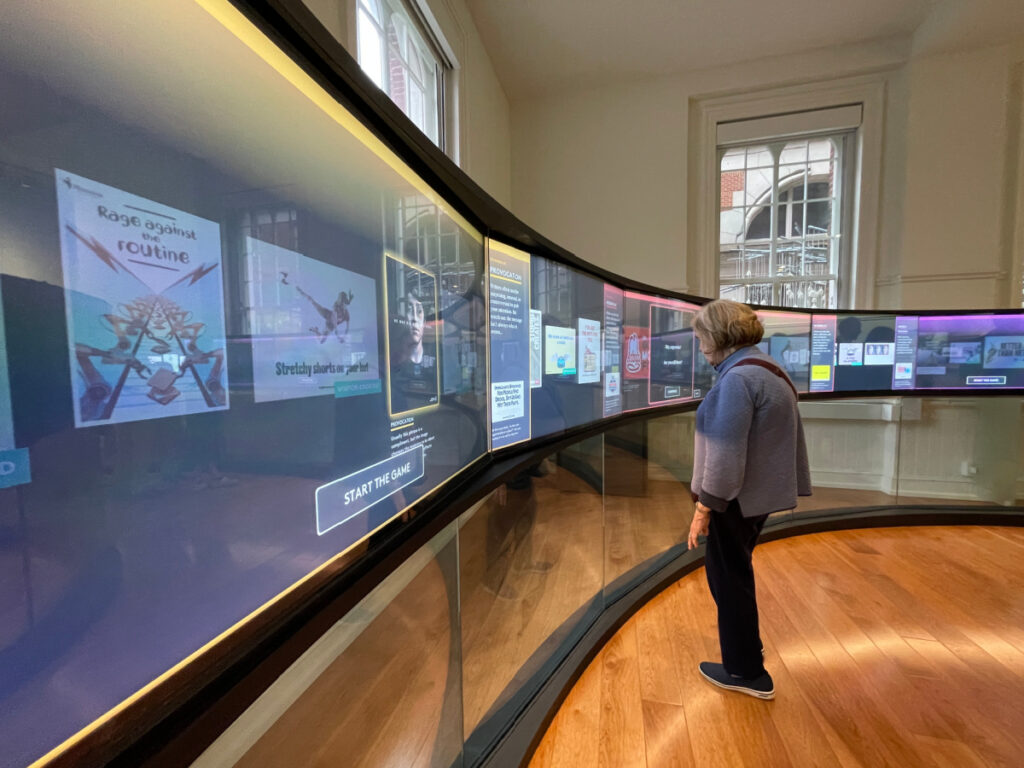
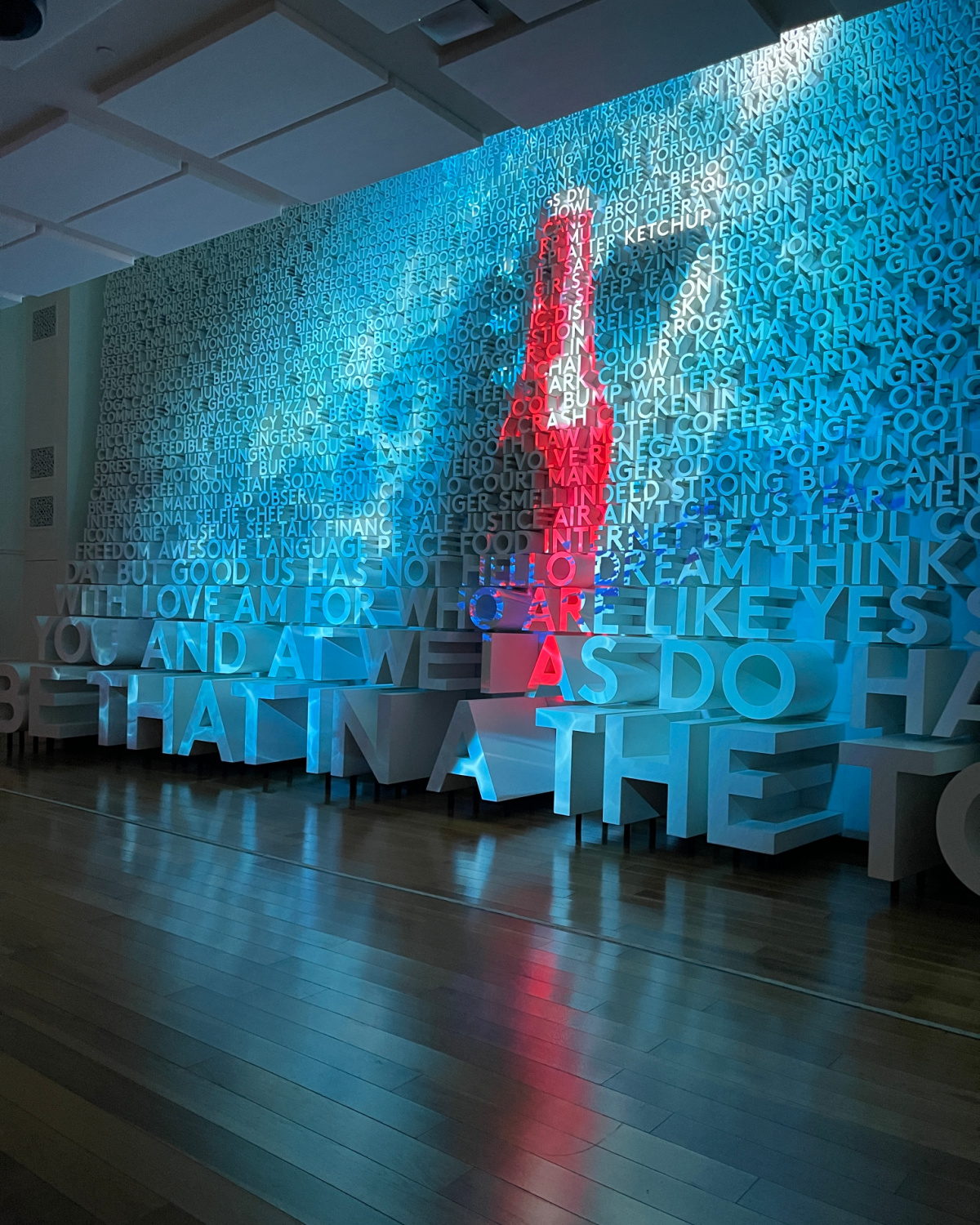
Right next to the Humor Gallery is another interactive area where words come to life in a completely different way. Instead of jokes, this exhibit focuses on mood and meaning—step on different descriptive words like “nocturnal” or “nostalgic,” and the entire wall transforms to match that feeling. Kids can even use a digital brush to interact with the scene, which turns abstract vocabulary into something visual and surprisingly intuitive.
Word Games Area
Think:
- trivia
- guessing games
- interactive challenges
It’s simple, but incredibly effective—and kids will want to stay here longer than you expect.
1st Floor: Words Matter
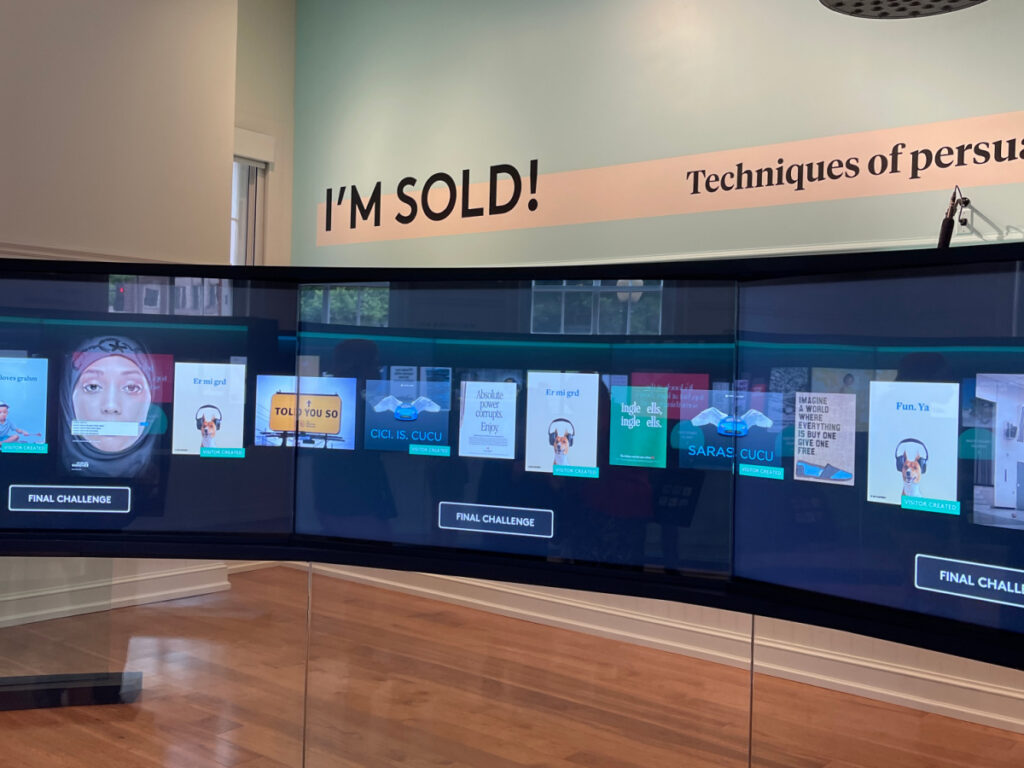
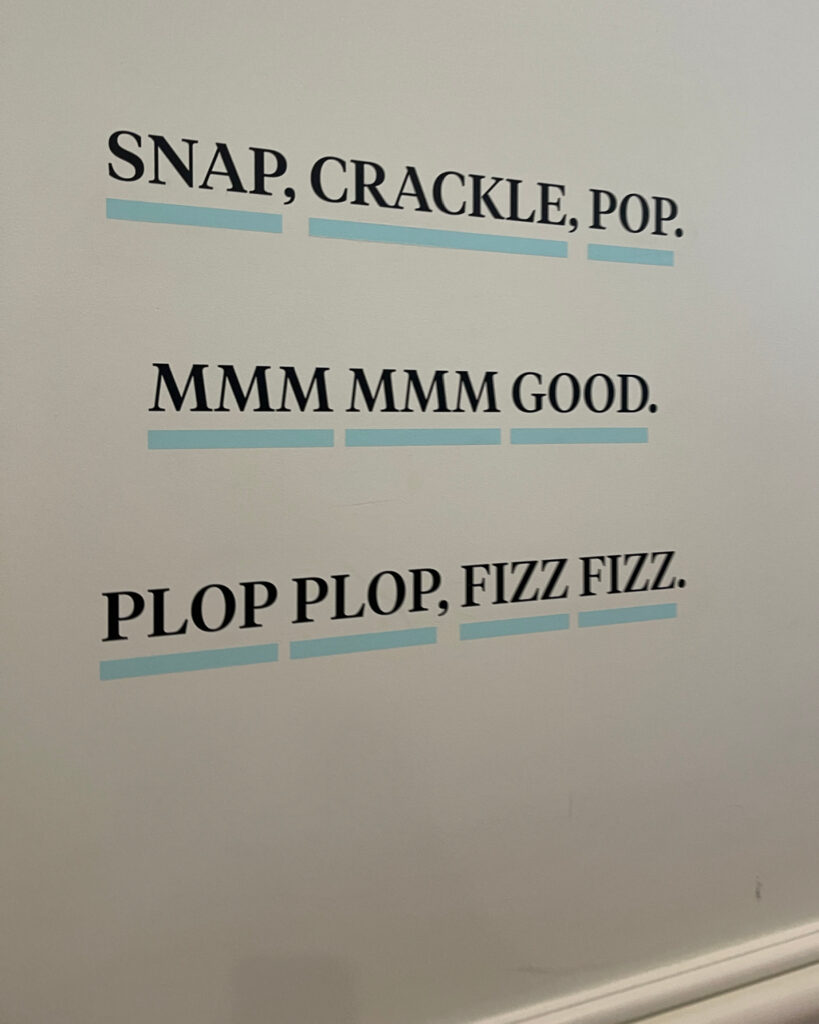
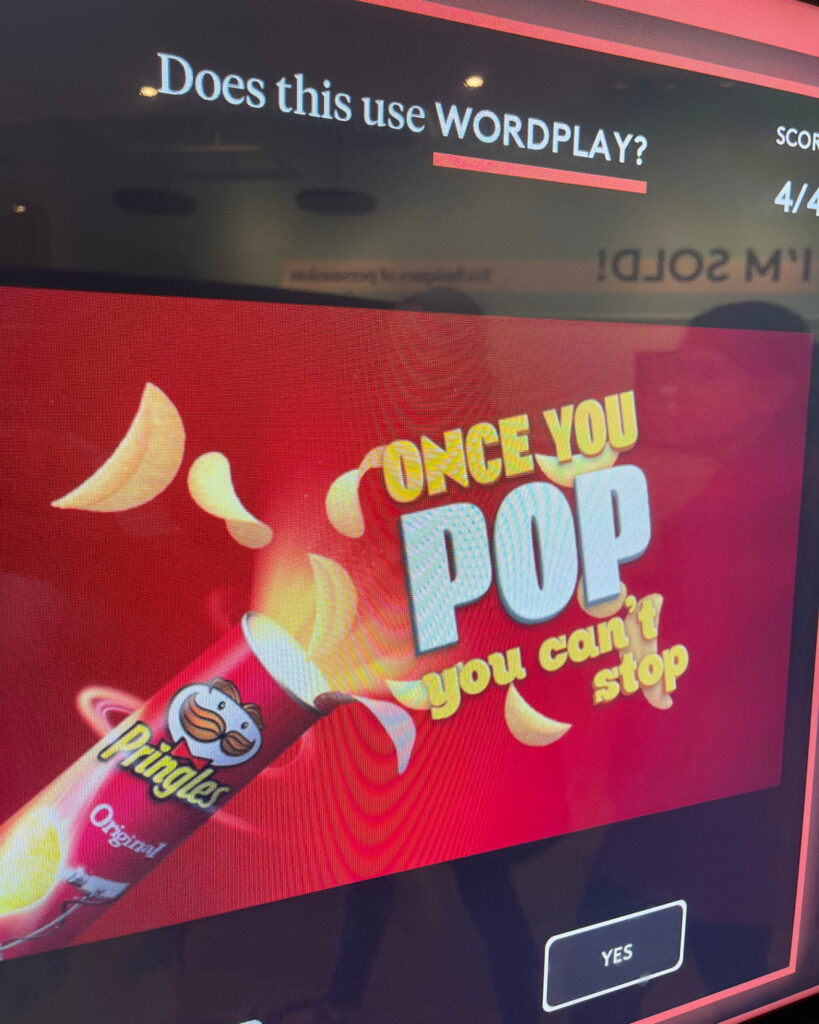
I’m Sold! (Techniques of Persuasion)
This exhibit explores:
- advertising
- persuasion
- how language influences decisions
It’s surprisingly relevant—and honestly, really interesting for both teens and adults.
Words Matter
This section dives into:
- the power of language
- how words shape identity, culture, and society
It’s a thoughtful way to end your visit and ties everything together.
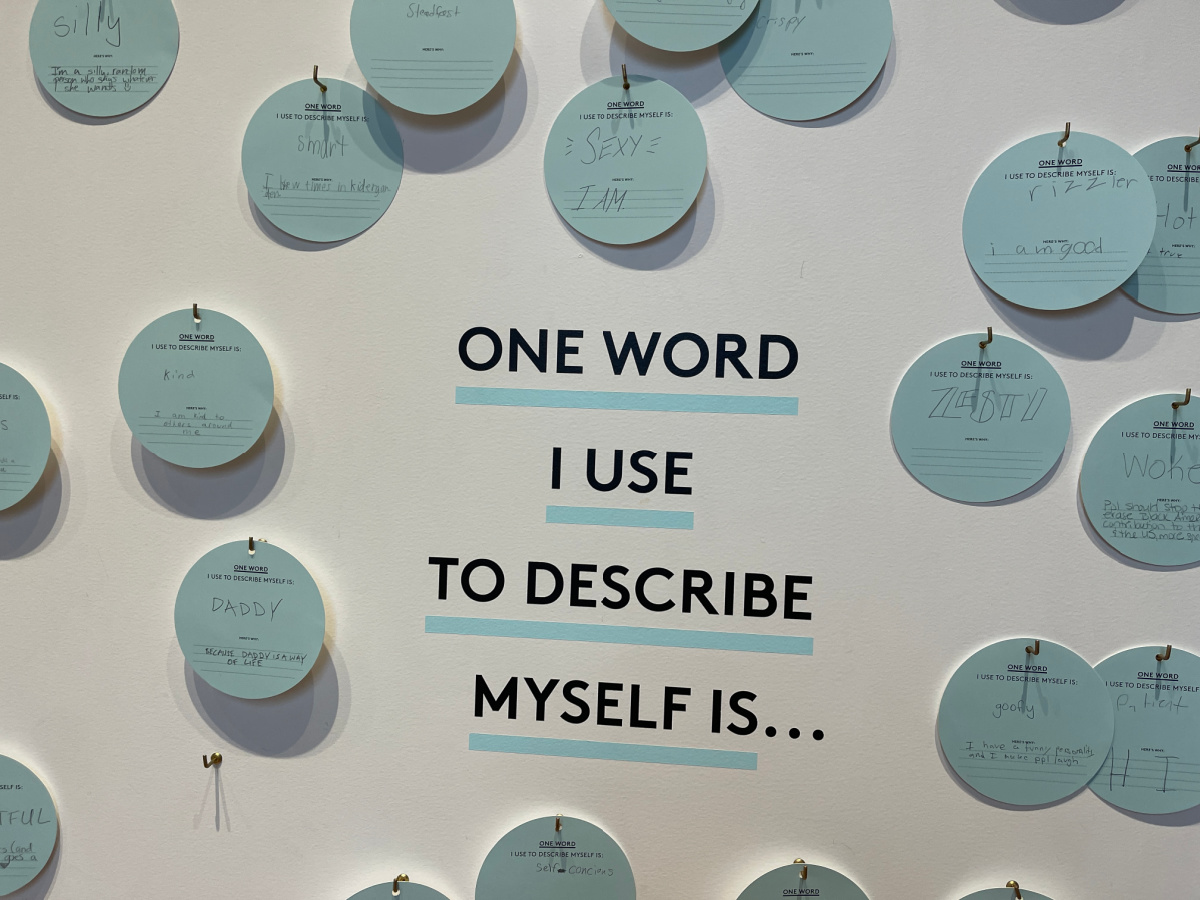
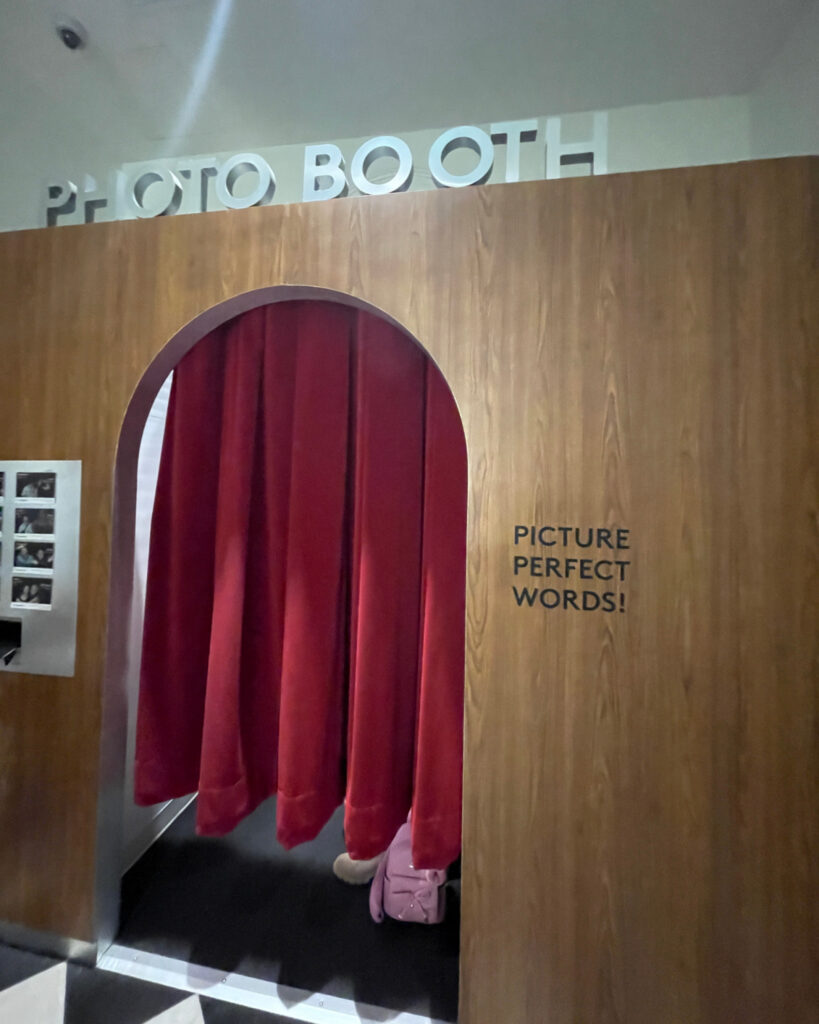
The Photo Booth Experience
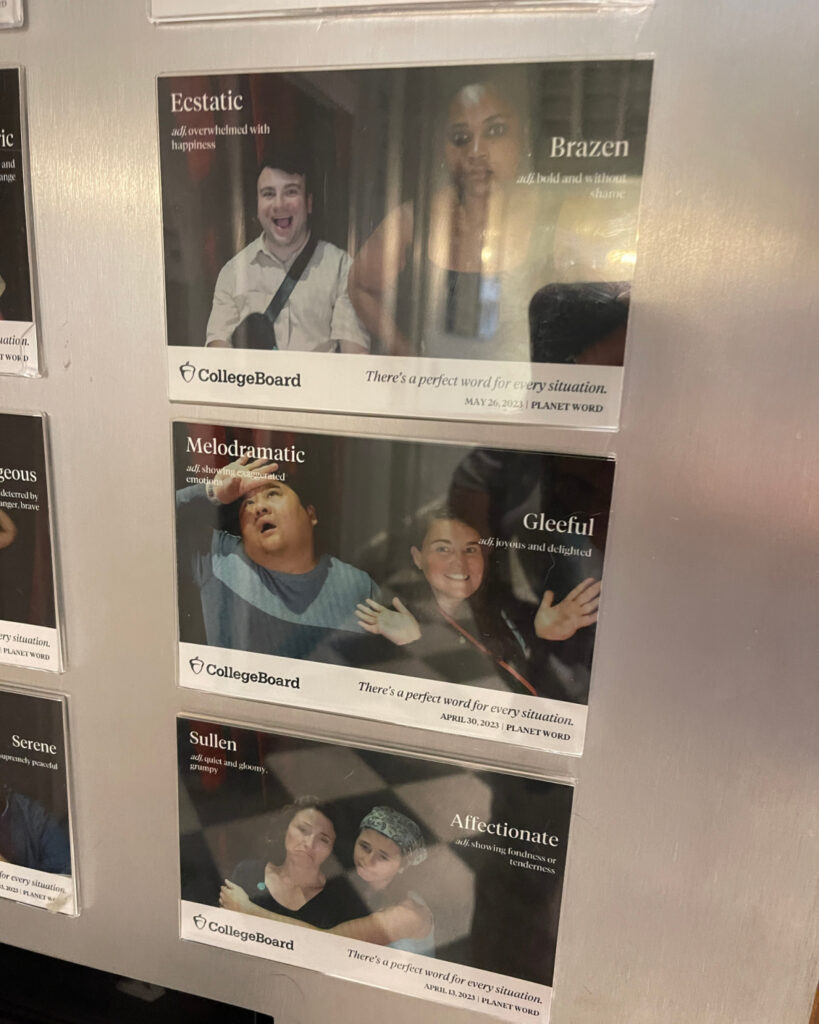
I have to call this out because it’s way more fun than it sounds.
You’re given a word (like “ecstatic” or “melodramatic”) and you pose accordingly. The result is a printed photo that’s both hilarious and memorable.
Kids love it. Adults secretly love it too.
Don’t Skip the Museum Store (It’s Actually Really Fun)
I know… museum gift shops can be hit or miss.
But this one? It’s genuinely worth a few minutes.
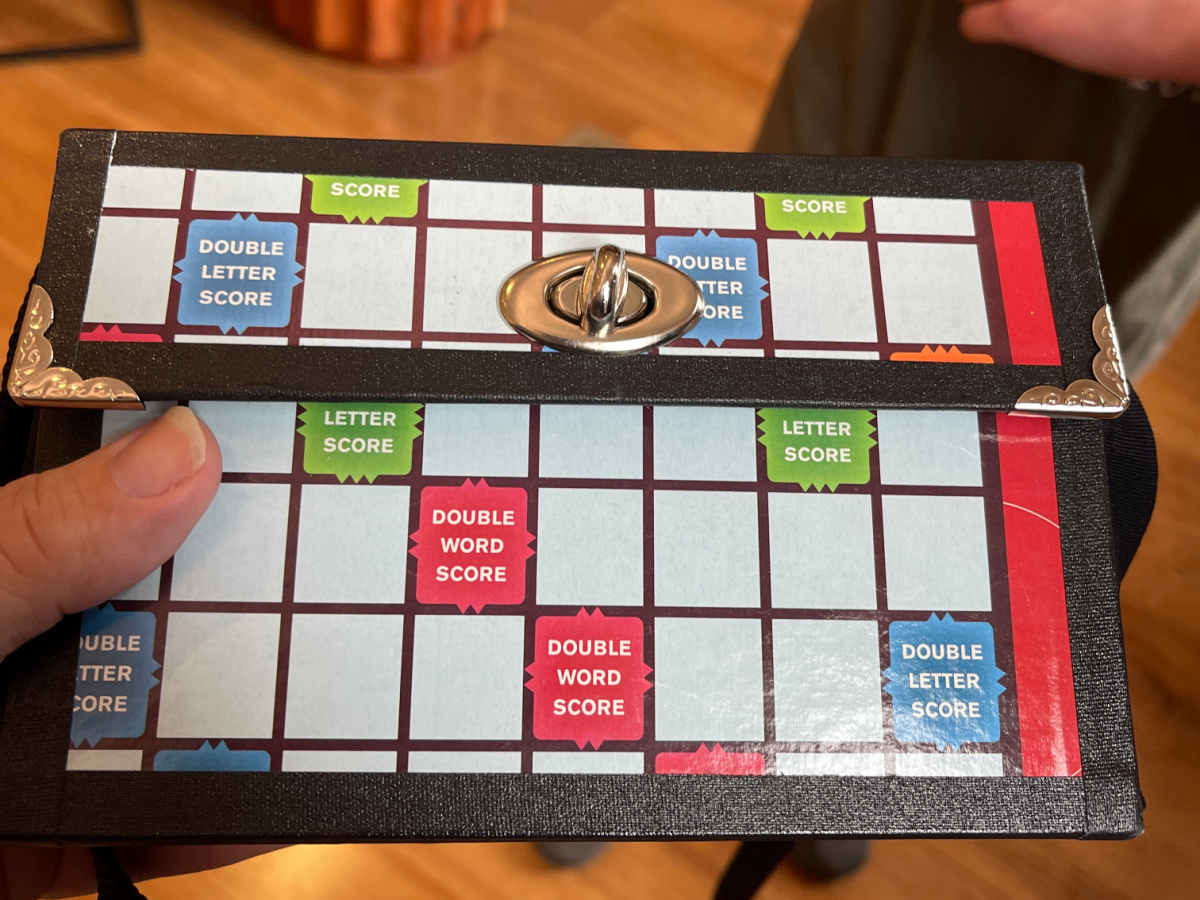
The Planet Word store leans all the way into the theme of language, so instead of random souvenirs, you’ll find things like:
- clever word games and puzzles
- books for all ages (including some really fun kid-friendly picks)
- punny gifts and language-themed merch
- creative writing and storytelling kits
It feels more like a curated little bookstore + game shop than a typical museum exit.
FAQ
Is Planet Word really free?
Yes! Admission is completely free, though timed entry tickets are recommended.
How long should I plan to spend here?
2–4 hours depending on how much you engage with the exhibits.
Is it good for kids?
Absolutely. This is one of the best museums in DC for kids—especially ages 6 and up.
Is it good for teens?
Yes—and this is one of those rare museums teens actually enjoy.
Is it crowded?
It can be, especially later in the day. Go early if you can.
Do I need a guided tour?
Not at all. The museum is designed to be self-guided and intuitive.
Where is it located?
In the historic Franklin School on 13th Street NW in downtown DC.
More Helpful Washington DC Trip Planning Guides
- How to Spend 3 Days in Washington DC Without Feeling Rushed
- 5 Days in Washington DC: The Ultimate Longer Itinerary
- Smithsonian Museums Guide for First-Time Visitors
- National Mall Guide: What to Know Before You Visit
- The Best Museums in Washington DC (and Which Ones to Skip)
- Washington DC First-Time Visitor Tips, Mistakes, and Planning Advice
- Washington DC Monuments Guide: Memorials, Walking Routes, and Night Touring Tips
- Washington DC for Teens: Museums, Food, and Attractions Teens Actually Enjoy
- Where to Eat on the National Mall: Best Museum Cafes, Food Courts, and Quick Meals
Final Thoughts
If you’re building out your Washington DC itinerary and trying to balance:
- history
- education
- fun
- and not totally overwhelming your kids
Planet Word is one of the smartest choices you can make.
It’s different from everything else on the National Mall. It’s lighter, more interactive, and honestly more memorable than a lot of traditional museums.
And in a city full of incredible museums, that’s saying something.
If you’re planning your trip, this pairs perfectly with your broader DC itinerary planning resources like your National Mall overview or your 4th of July planning guide—you can slot this in as a “reset” museum that keeps everyone engaged.
And if you’ve got a kid (or adult) who loves words, books, music, or just doing something hands-on…
This one’s not optional.
It’s a must-do.