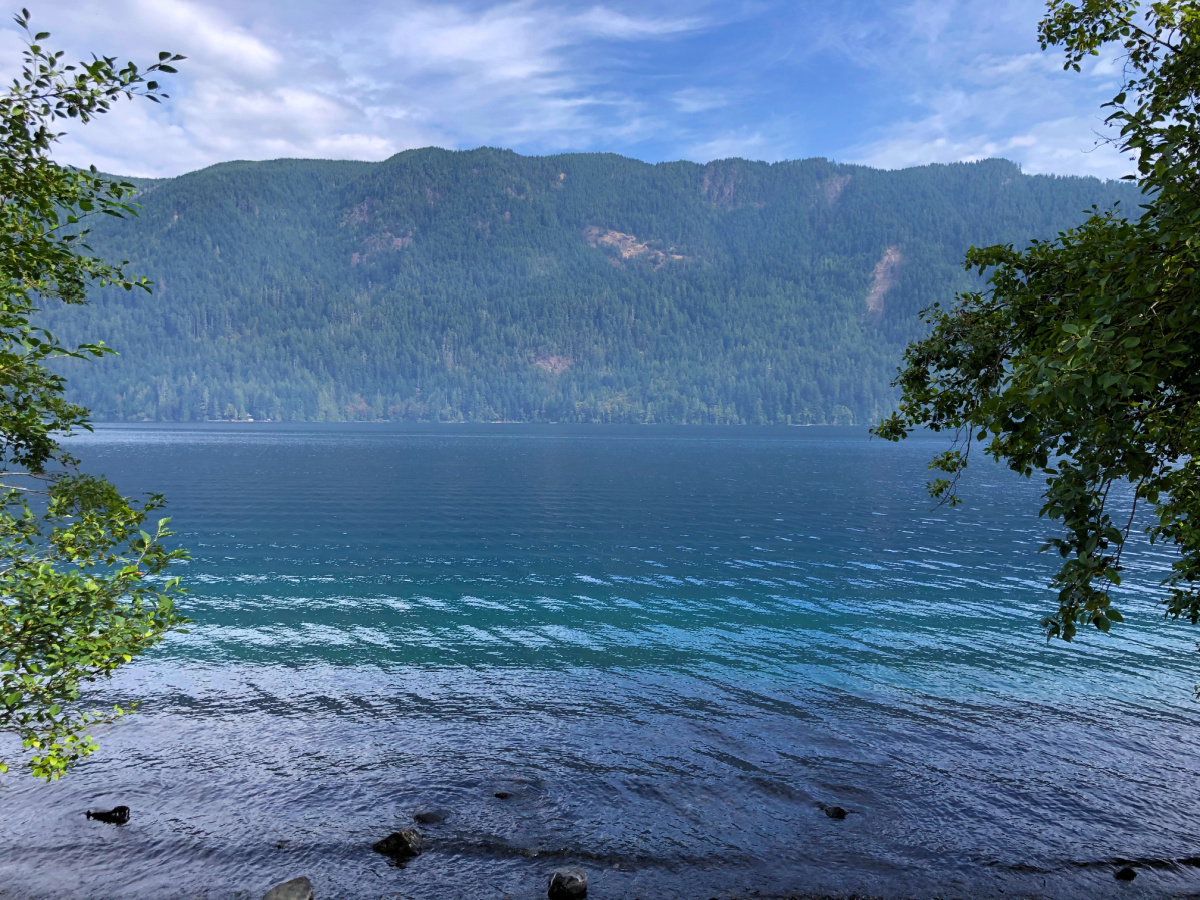
Marymere Falls Trail Guide: Easy Waterfall Hike Near Lake Crescent

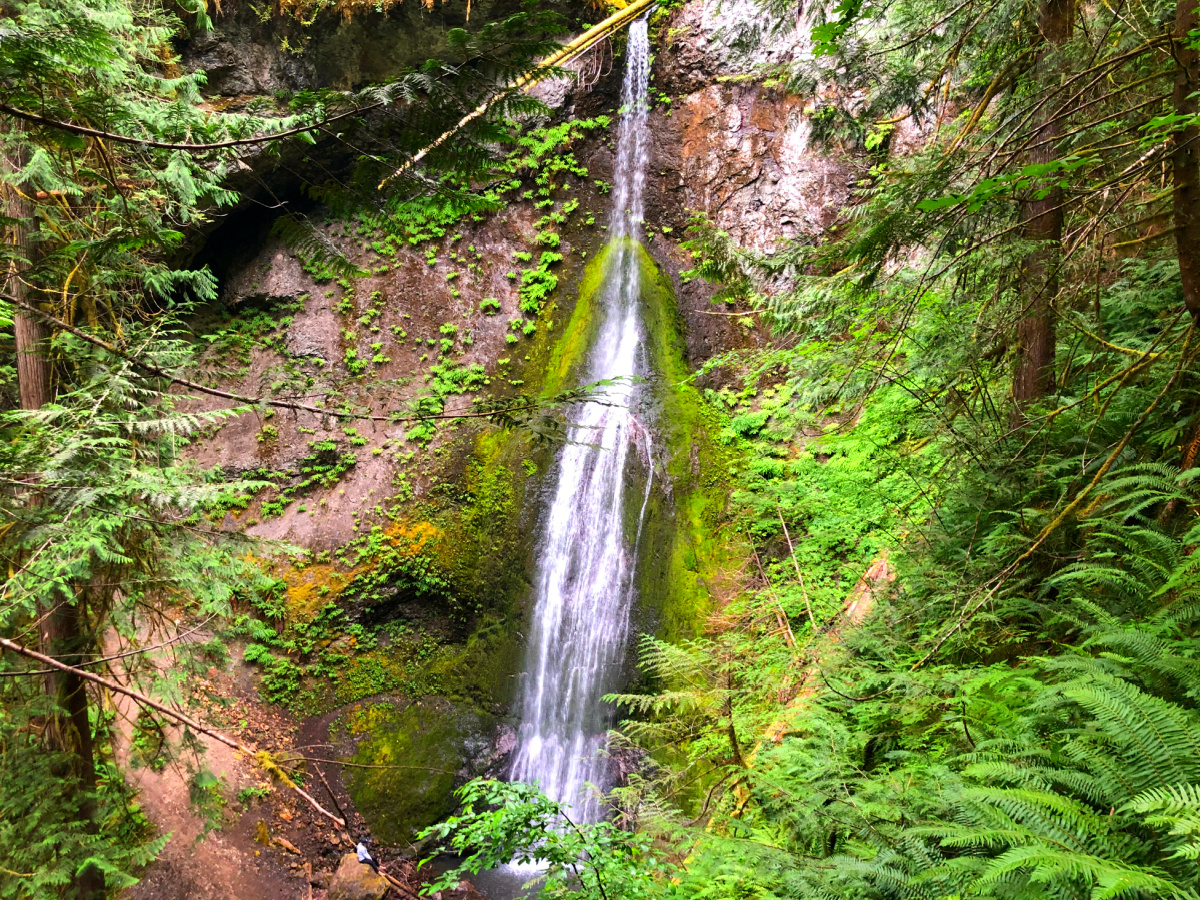
Planning to hike Marymere Falls in Olympic National Park? This easy trail near Lake Crescent features mossy forests, footbridges, giant trees, and a beautiful waterfall perfect for families and casual hikers.
Estimated reading time: 14 minutes
There are some hikes in Olympic National Park that feel dramatic and wild right from the first step. Marymere Falls is not really that kind of trail.
Instead, this is the kind of hike that slowly pulls you in.
You start near gorgeous Lake Crescent, cross a couple peaceful forest bridges, wander through moss-covered trees that look straight out of a fantasy movie, and then eventually arrive at a tall, elegant waterfall tucked into the forest. It’s not the loudest or most powerful waterfall in Olympic National Park, but honestly? That almost feels like part of the charm.
Marymere Falls feels calm.
It feels approachable.
And for travelers who want beautiful scenery without committing to an exhausting all-day trek, this is one of the best easy hikes in Olympic National Park.
We visited during summer, and what stood out to me most wasn’t even just the waterfall itself. It was the entire atmosphere of the trail. The giant trees. The soft forest light. The streams. The bridges. The moss hanging from branches everywhere. It almost feels like the trail is showing off long before you ever reach the falls.
And while there are some fairly steep stairs near the end, the overall hike is still very manageable for most families, casual hikers, middle-aged travelers, and retirees who want a memorable Olympic National Park experience without doing anything too intense.
If you’re already visiting Lake Crescent, this hike is an easy addition to your day.
Honestly, I’d even call it one of the best “low effort, high reward” hikes in the park.
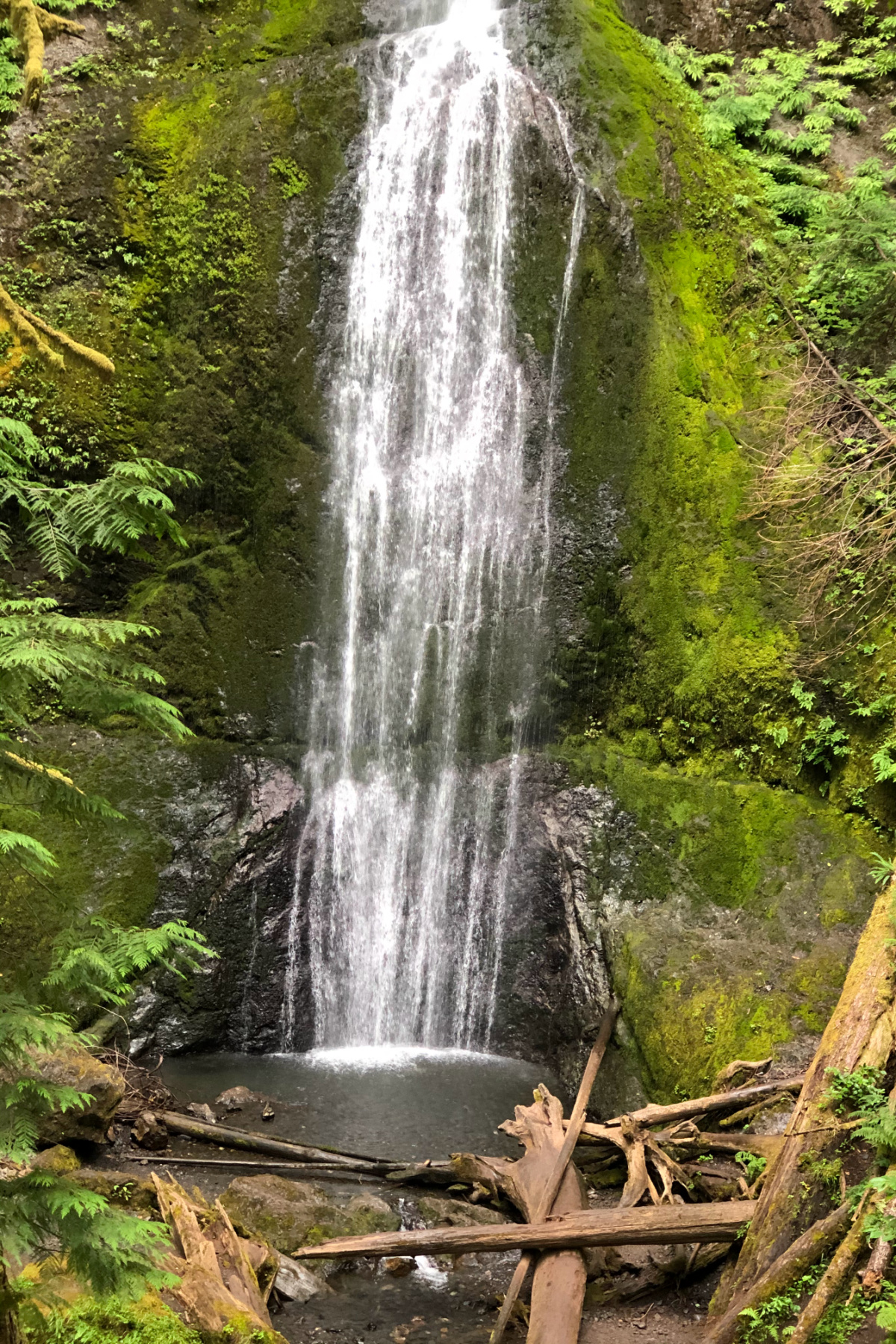
If you enjoy easy-to-moderate waterfall hikes like Marymere Falls, you should absolutely make time for the Sol Duc Falls trail too. The waterfall there is much more dramatic, with rushing water squeezing through a narrow canyon surrounded by lush forest.
Marymere Falls Quick Snapshot
Distance
About 1.7–1.8 miles round trip
Difficulty
Easy to moderate
Elevation Gain
Around 300 feet total
Time Needed
1–2 hours
Best For
Families, casual hikers, first-time Olympic visitors, retirees, photographers, and anyone wanting a classic Pacific Northwest forest experience
Main Highlights
- Beautiful forest scenery
- Moss-covered trees
- Creek crossings and bridges
- Tall waterfall
- Easy access near Lake Crescent
- Mostly gentle trail until the final staircase section
Biggest Surprise
The forest scenery along the trail is almost as memorable as the waterfall itself.
The forest along the Marymere Falls trail gives you a small taste of Olympic’s rainforest scenery, but the Hoh Rainforest takes that experience to another level with enormous moss-covered trees and some of the lushest scenery in the park.
Where Is Marymere Falls?
Marymere Falls is located near Lake Crescent in the northern section of Olympic National Park.
The trailhead sits right near the Lake Crescent Lodge area, making this one of the most accessible waterfall hikes in the park. If you’re already driving Highway 101 through Olympic National Park, it’s an extremely easy stop to add.
That convenience is honestly part of what makes this hike so appealing.
Some Olympic hikes require long drives down remote roads or complicated logistics. Marymere Falls is refreshingly simple.
Park.
Walk.
Enter magical forest.
Reach waterfall.
That’s basically the experience.
And if you’re staying near Port Angeles or doing a northern Olympic National Park road trip, this hike fits naturally into the day.
If you love the peaceful forest atmosphere around Marymere Falls, the Quinault Rainforest is another beautiful area filled with giant trees, waterfalls, mossy trails, and far fewer crowds than some of Olympic’s more famous destinations.
What the Marymere Falls Trail Is Actually Like
One thing I appreciated about this trail is that it starts gently almost immediately.
You don’t spend the first half mile wondering if you made a terrible life decision.
The trail begins wide and easy, winding through lush forest near Barnes Creek. Within minutes, you’re surrounded by towering trees, ferns, moss, and that unmistakable Olympic National Park atmosphere that somehow feels ancient and alive at the same time.
The first section honestly feels more like a nature walk than a hike.
And for many visitors, that’s perfect.
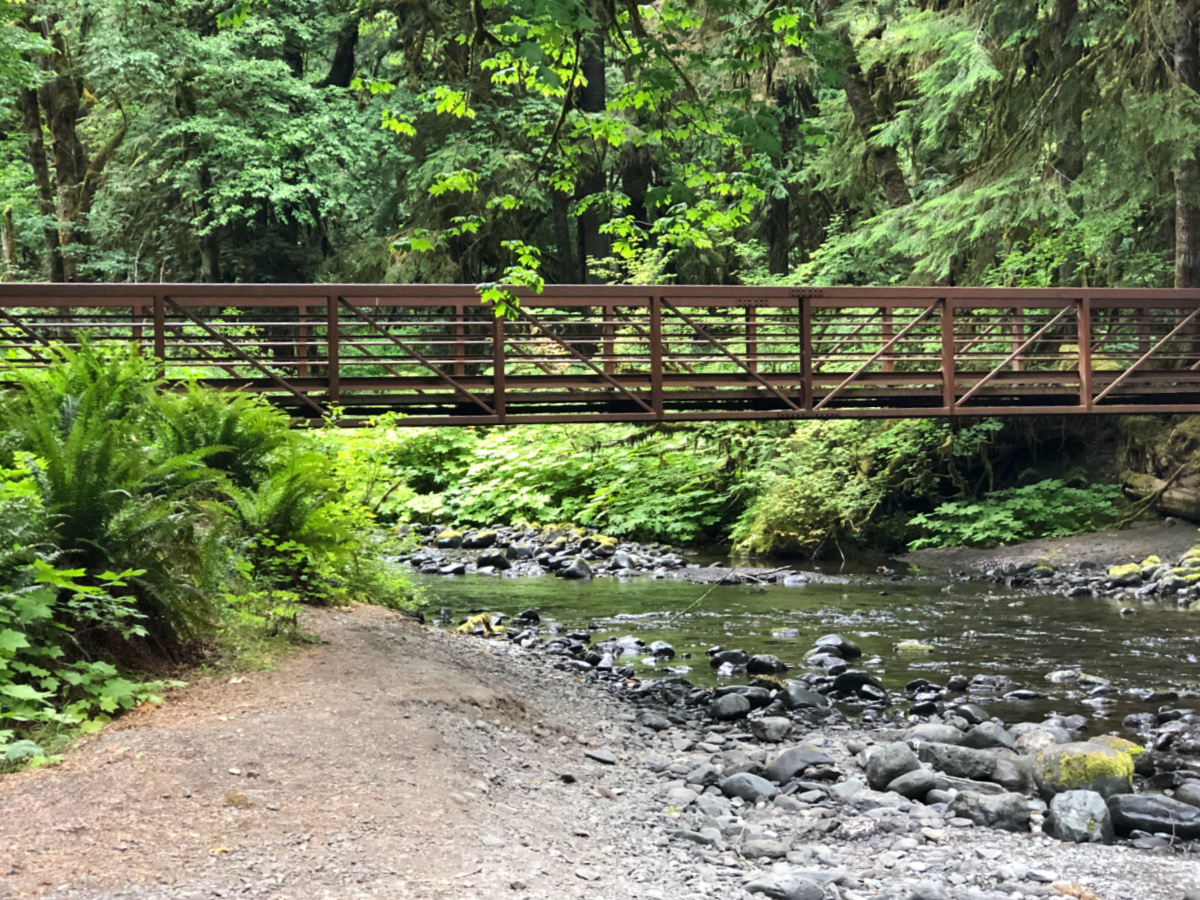
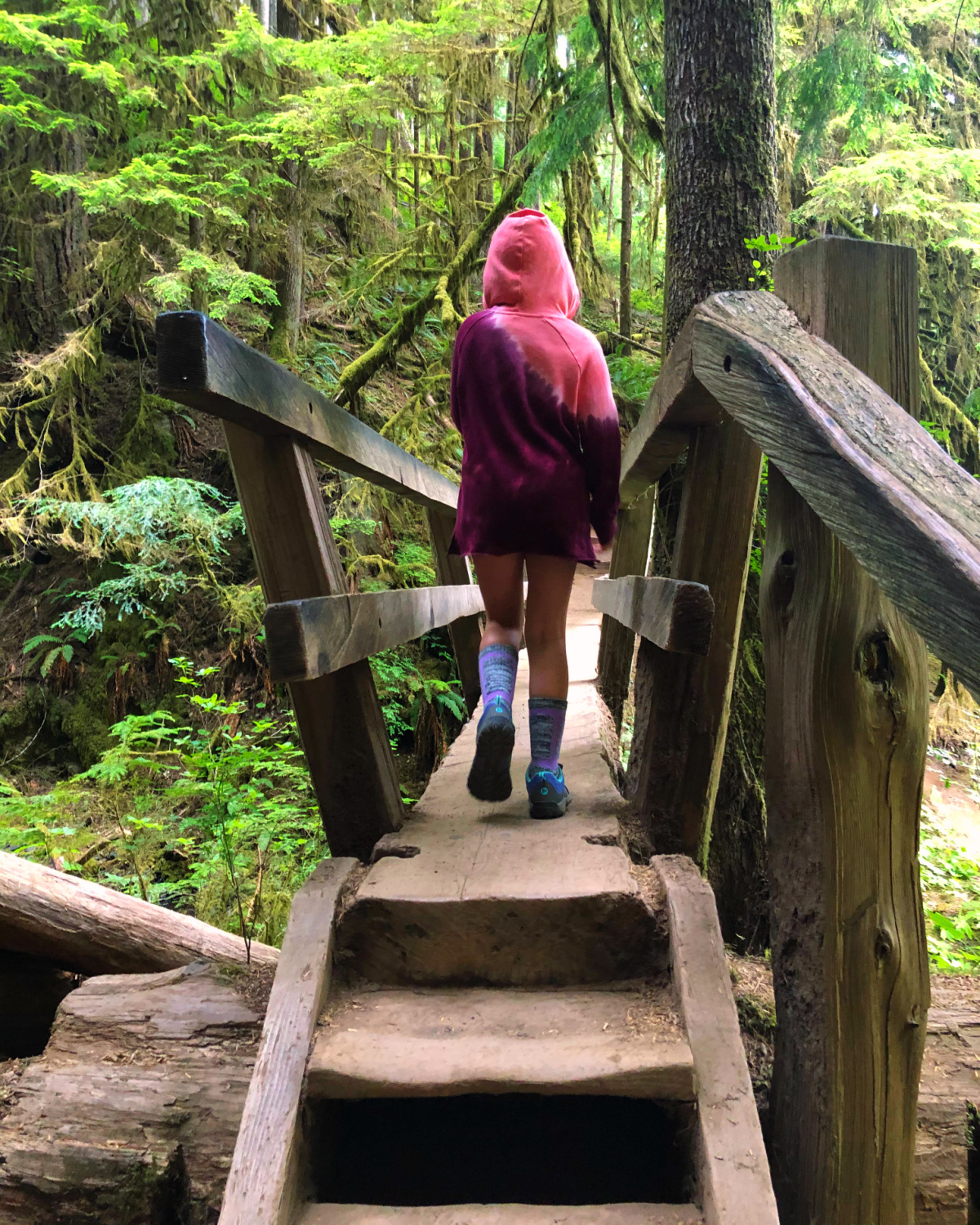
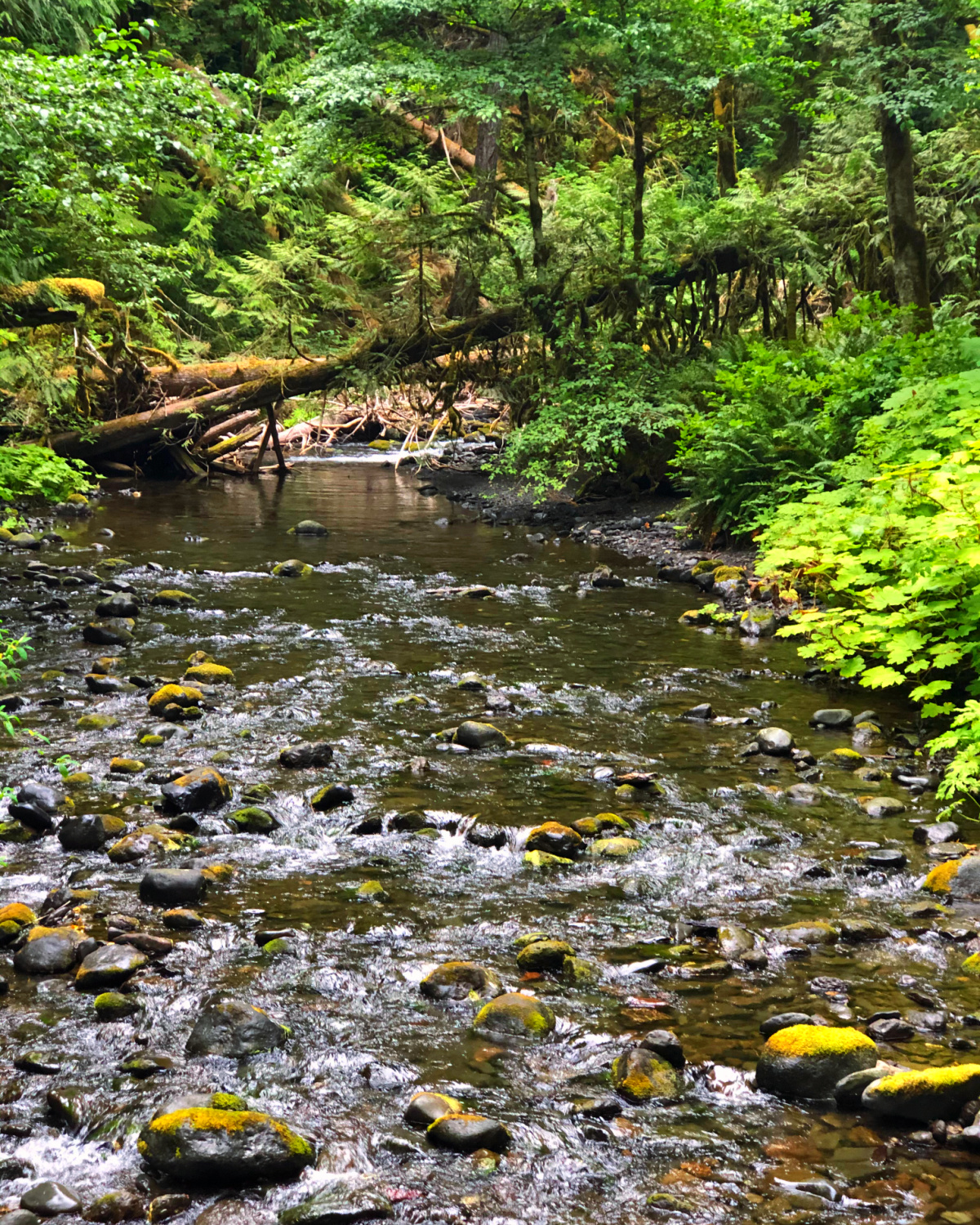
You cross a beautiful bridge over the creek fairly early in the hike, and this area alone is worth slowing down for. The creek is gorgeous, especially with all the mossy rocks and fallen logs scattered through the water.
It’s one of those places where you keep stopping to say:
“Wait. Hold on. I need another picture.”
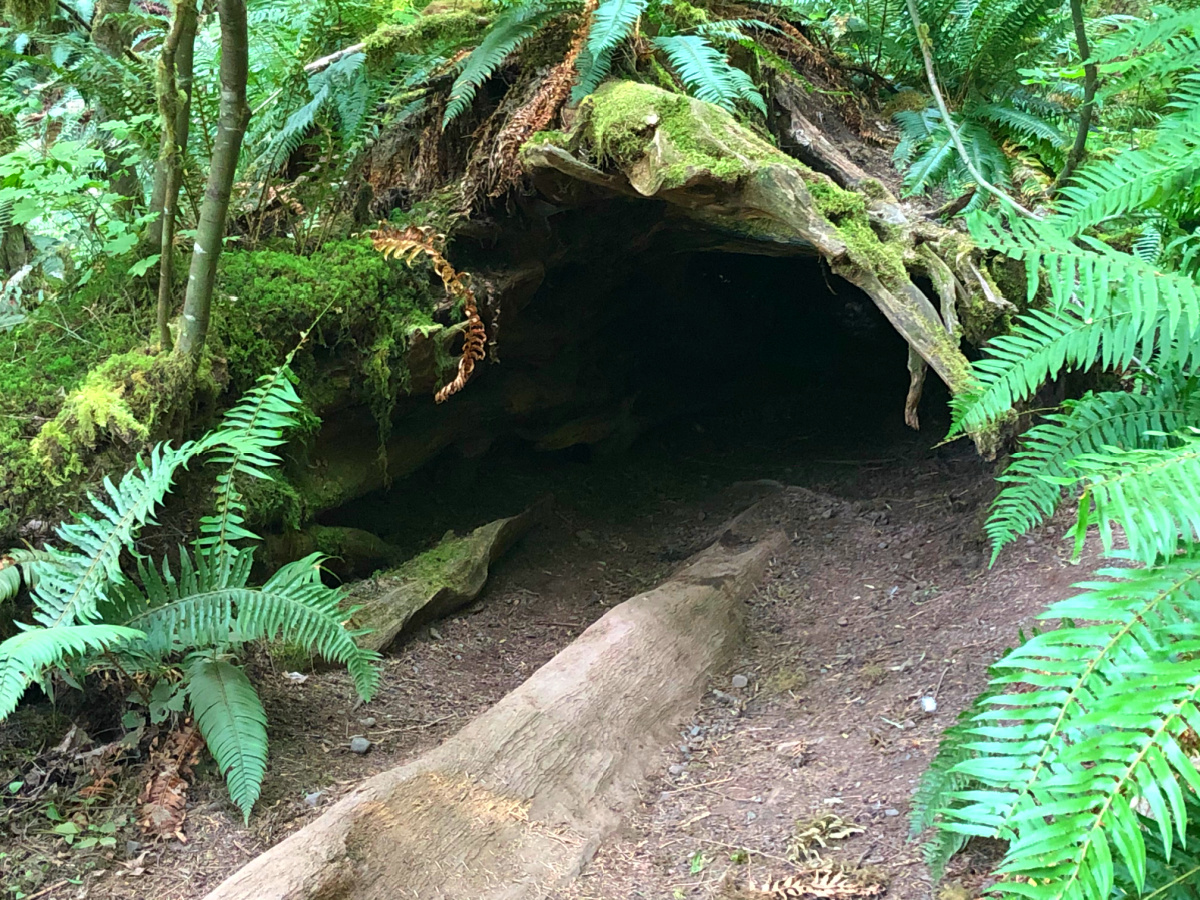
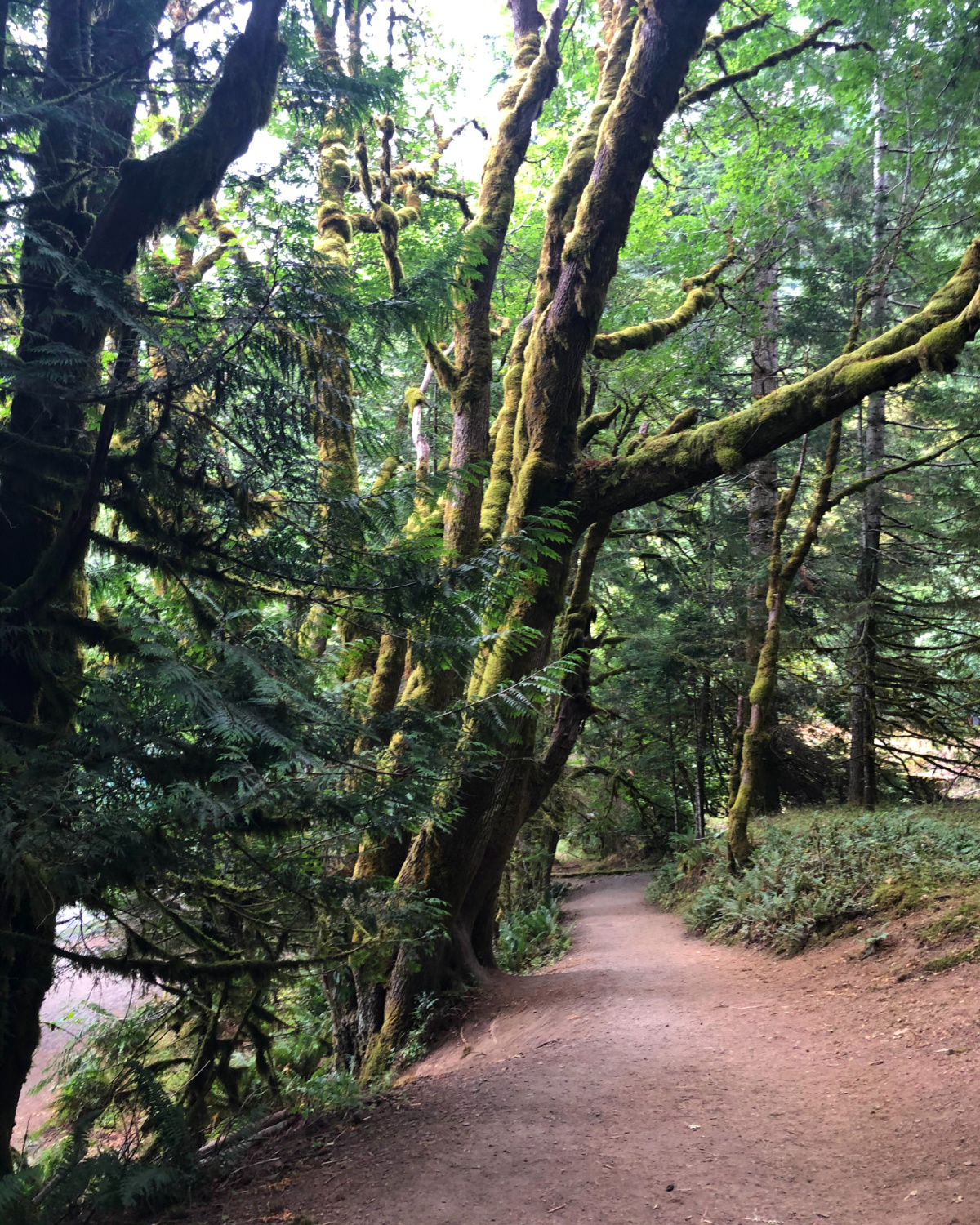
Even the smaller details along the trail are interesting. Massive tree roots twist through the forest floor. Moss hangs from branches like velvet. Tiny side streams cut through the woods.
At several points, the trail almost feels like something out of a fairy tale.
One of the things that makes Olympic National Park so special is the incredible diversity of its rainforest ecosystems. If you want to explore beyond Marymere Falls, check out my full guide to the best Olympic National Park Rainforests, including Hoh, Quinault, and other lush forest areas throughout the park.
The Forest Is the Real Star of This Hike
I know the waterfall is technically the destination.
But honestly? The forest might be the best part.
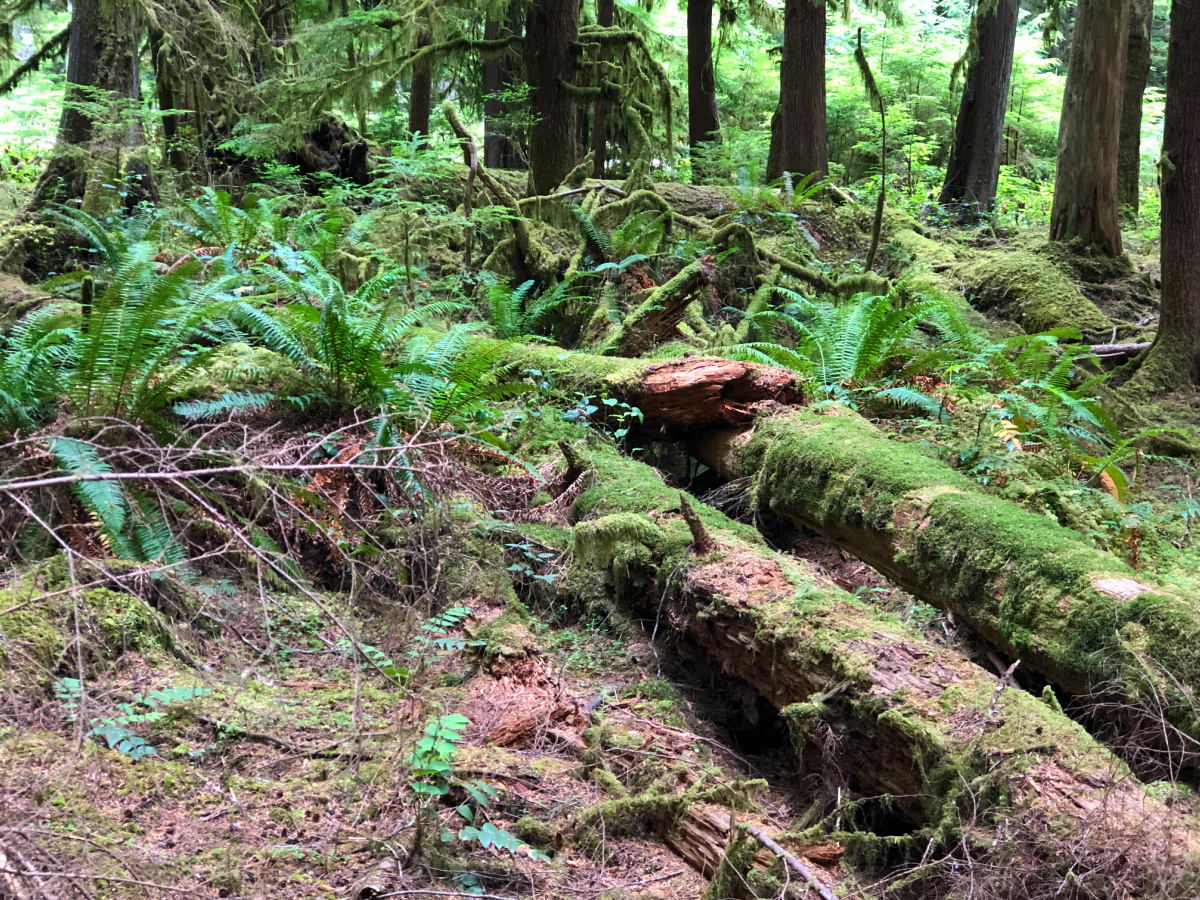
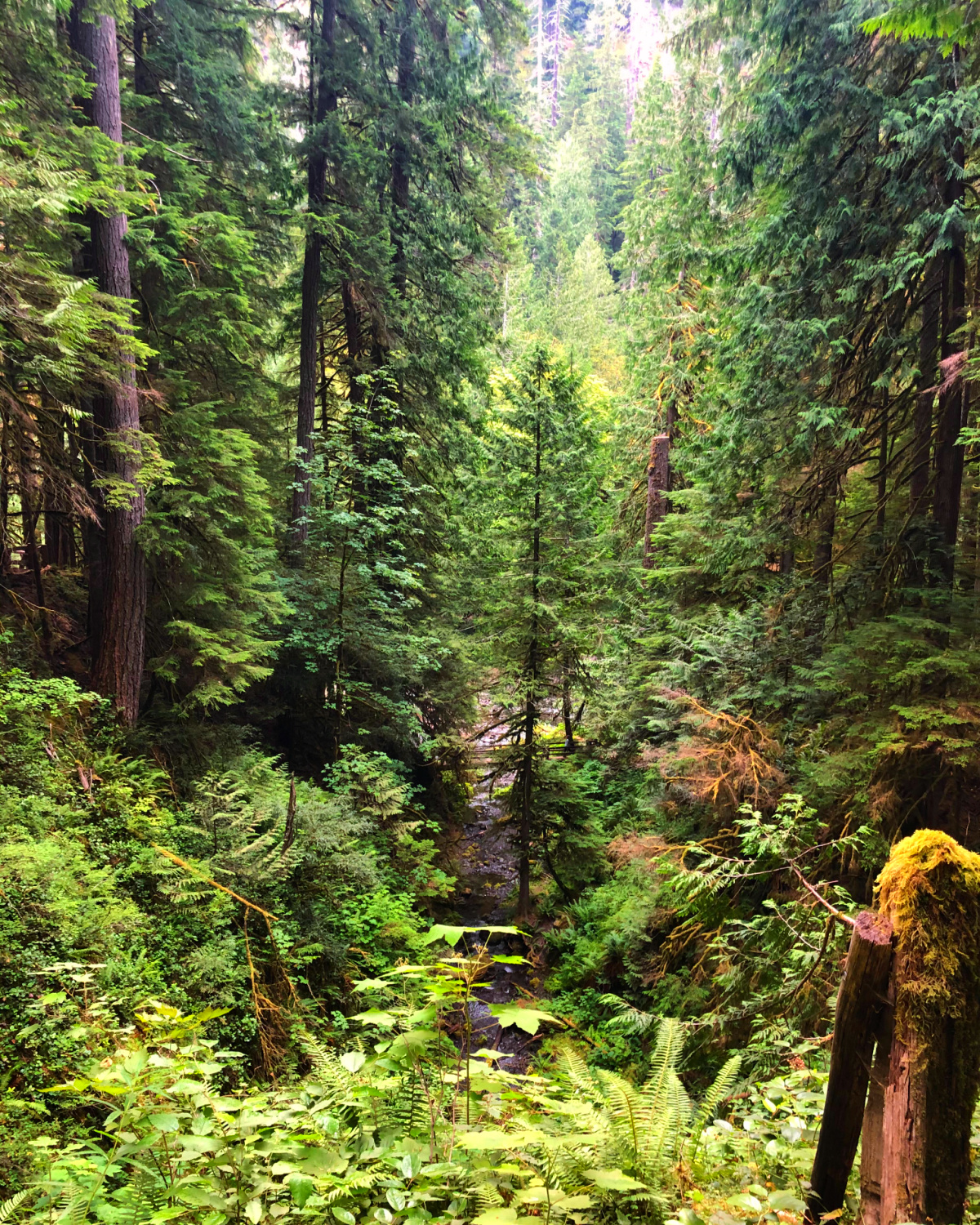
The entire trail has that classic Pacific Northwest look that people imagine when they think about Olympic National Park. Giant evergreens tower overhead while layers of green cover almost every surface.
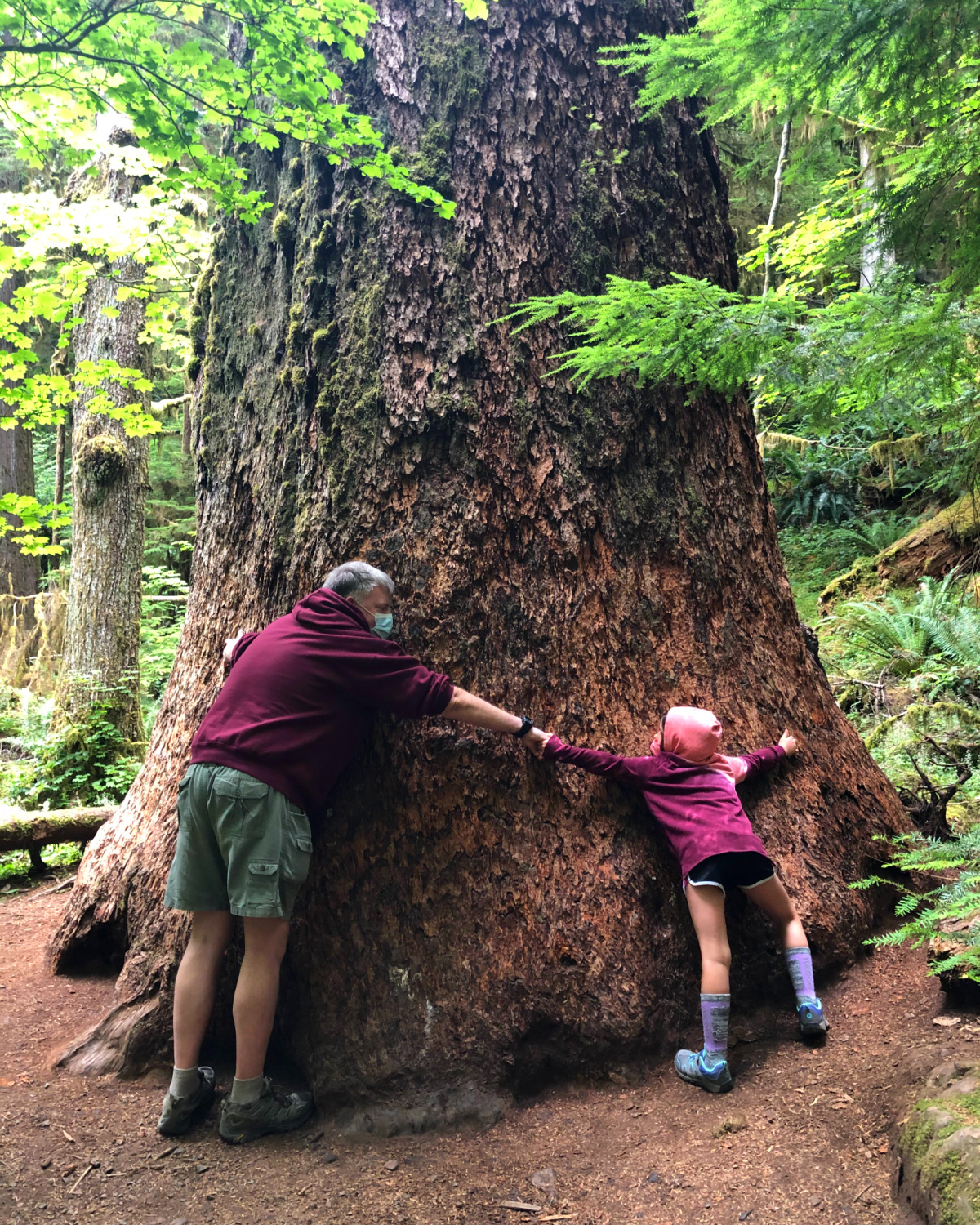
Some sections of the trail feel almost prehistoric.
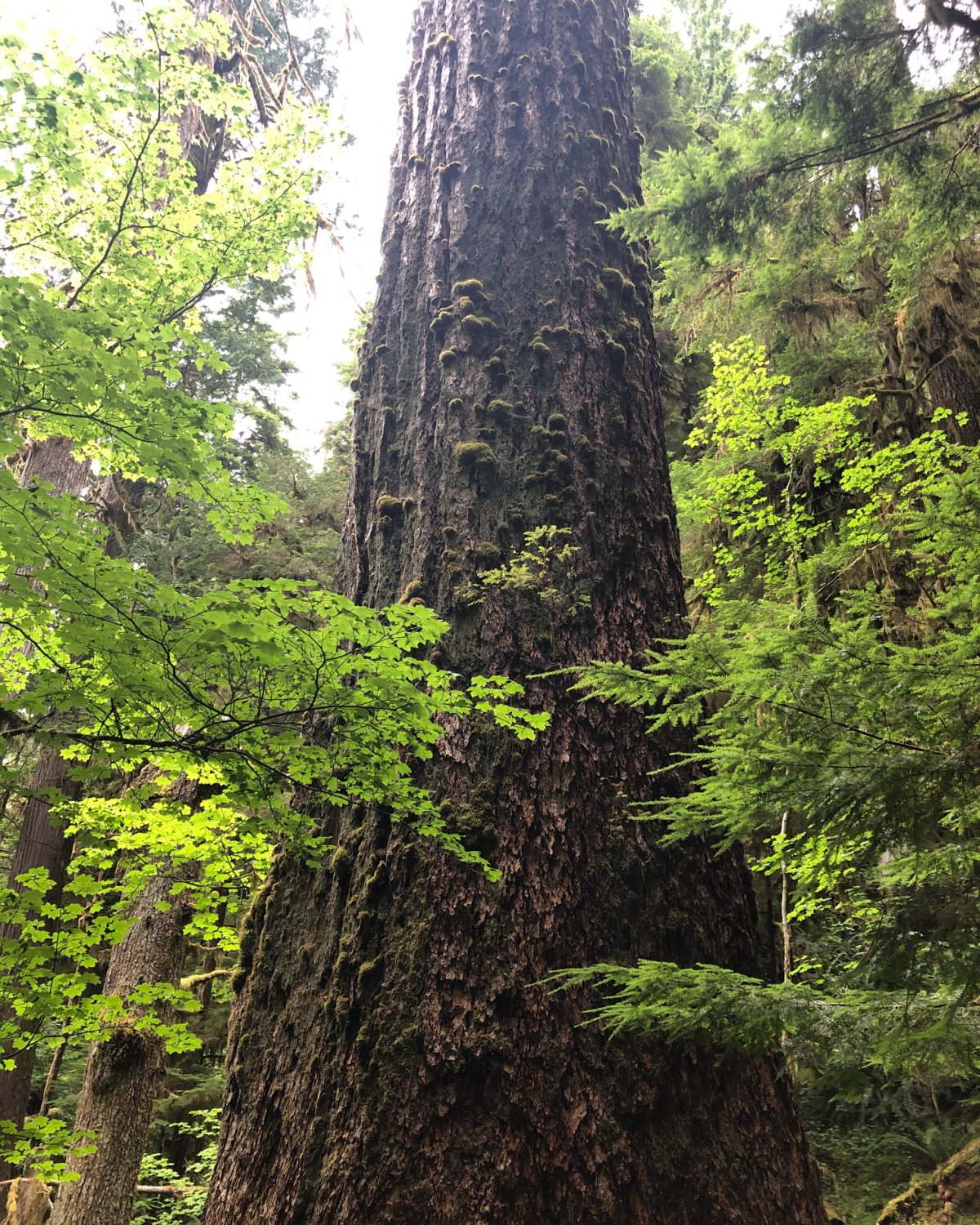
The huge trees especially stood out to us. There were several that made us stop just to appreciate the scale. In one spot, my husband and daughter tried wrapping their arms around one of the trunks and barely made a dent.
That moment actually became one of my favorite memories from the hike.
Not because it was dramatic.
Just because it captured how small you feel in these forests.
And honestly, Olympic National Park does that better than almost anywhere else I’ve visited.
After hiking through Olympic’s mossy forests, it’s worth spending some time exploring the rugged coastline too. These Olympic National Park Beaches are completely different from the Lake Crescent area but just as unforgettable.
The Final Climb to the Falls
Now for the important part.
Yes, there are stairs.
And yes, they are noticeably steeper than the rest of the hike.
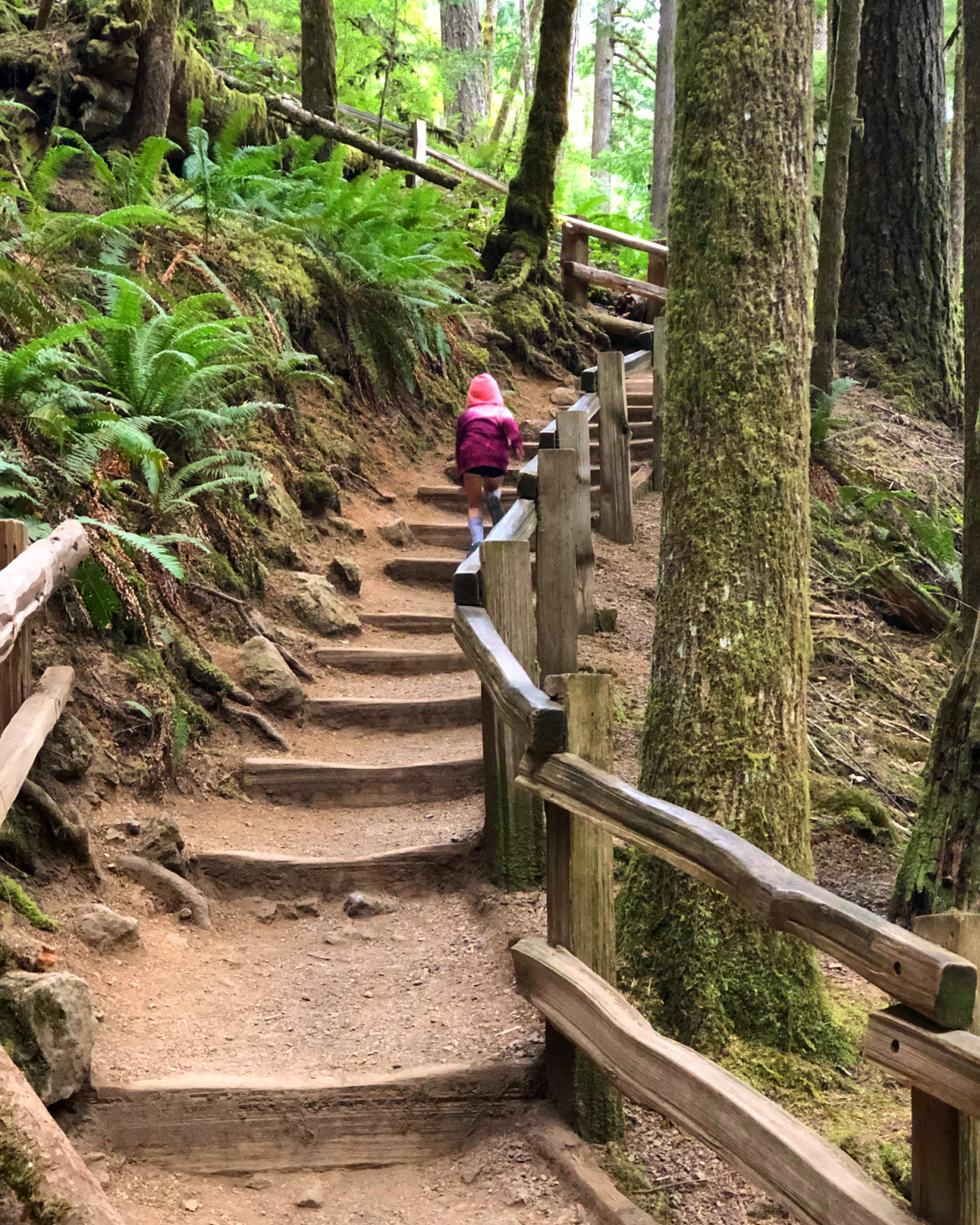
The trail stays relatively easy until the final approach to the waterfall. Near the end, you’ll start climbing a series of switchbacks and wooden stair sections leading up to the viewing area.
If you’re in decent shape, it’s very manageable.
But if you have significant mobility issues, bad knees, or struggle with stairs, this is probably the only section that may feel challenging.
The good news is that it’s fairly short.
You’re not climbing endlessly for miles. It’s more of a concentrated uphill push near the end.
And the payoff comes quickly.
If you want dramatic sea stacks, giant driftwood piles, and one of the most iconic coastal views in Olympic National Park, don’t miss Rialto Beach. It has a totally different feel from the peaceful forests around Marymere Falls.
Is Marymere Falls Worth It?
Absolutely.
Especially if you fall into the category of traveler who wants beautiful scenery without hardcore hiking.
Now, if you compare it directly to Sol Duc Falls, I do think Sol Duc is more dramatic and impressive overall. The waterfall itself is more powerful, and the viewing area feels more iconic.
But Marymere Falls has a completely different personality.
It feels quieter.
Softer.
More peaceful.
And honestly, the journey to the falls is arguably prettier than the destination itself.
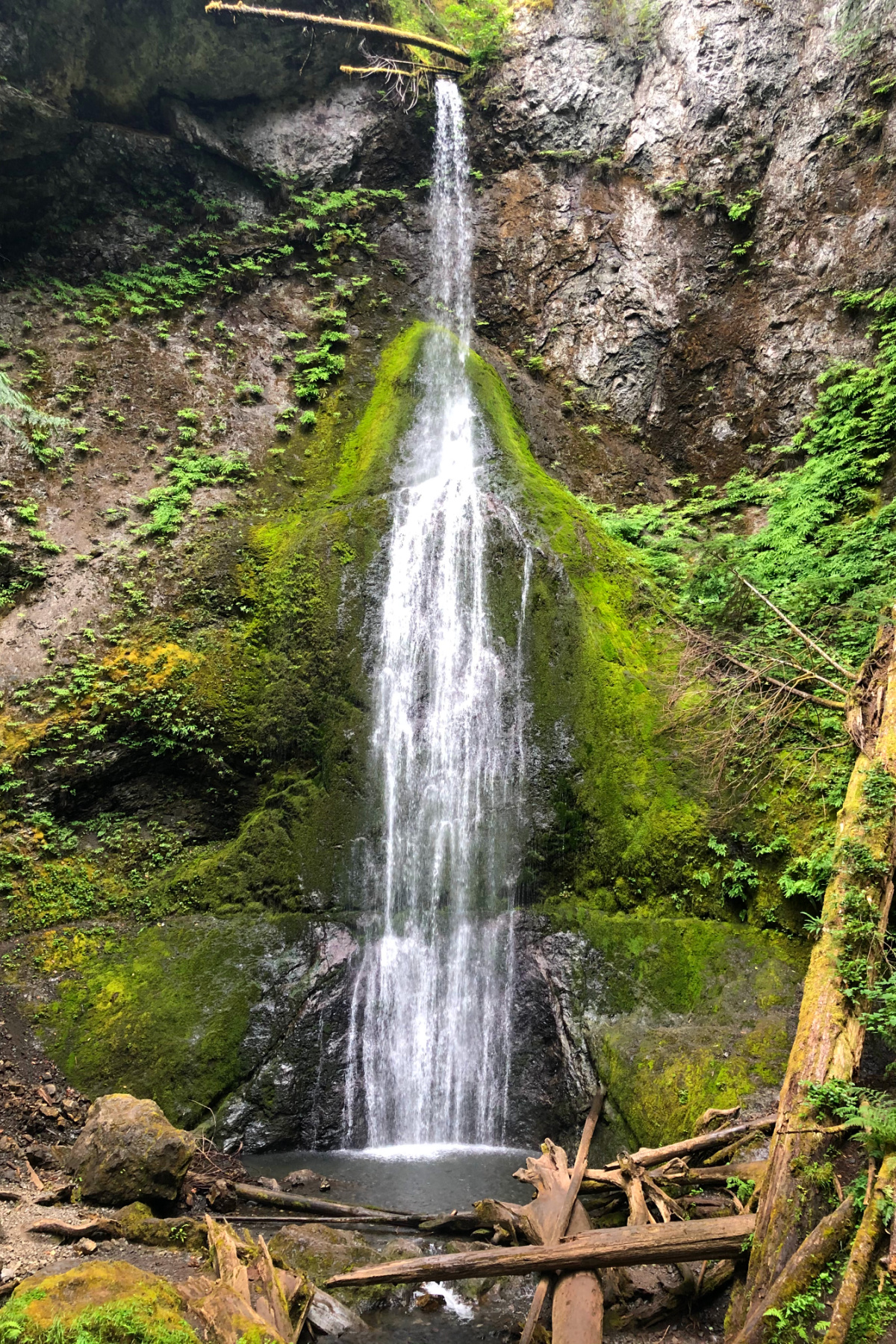
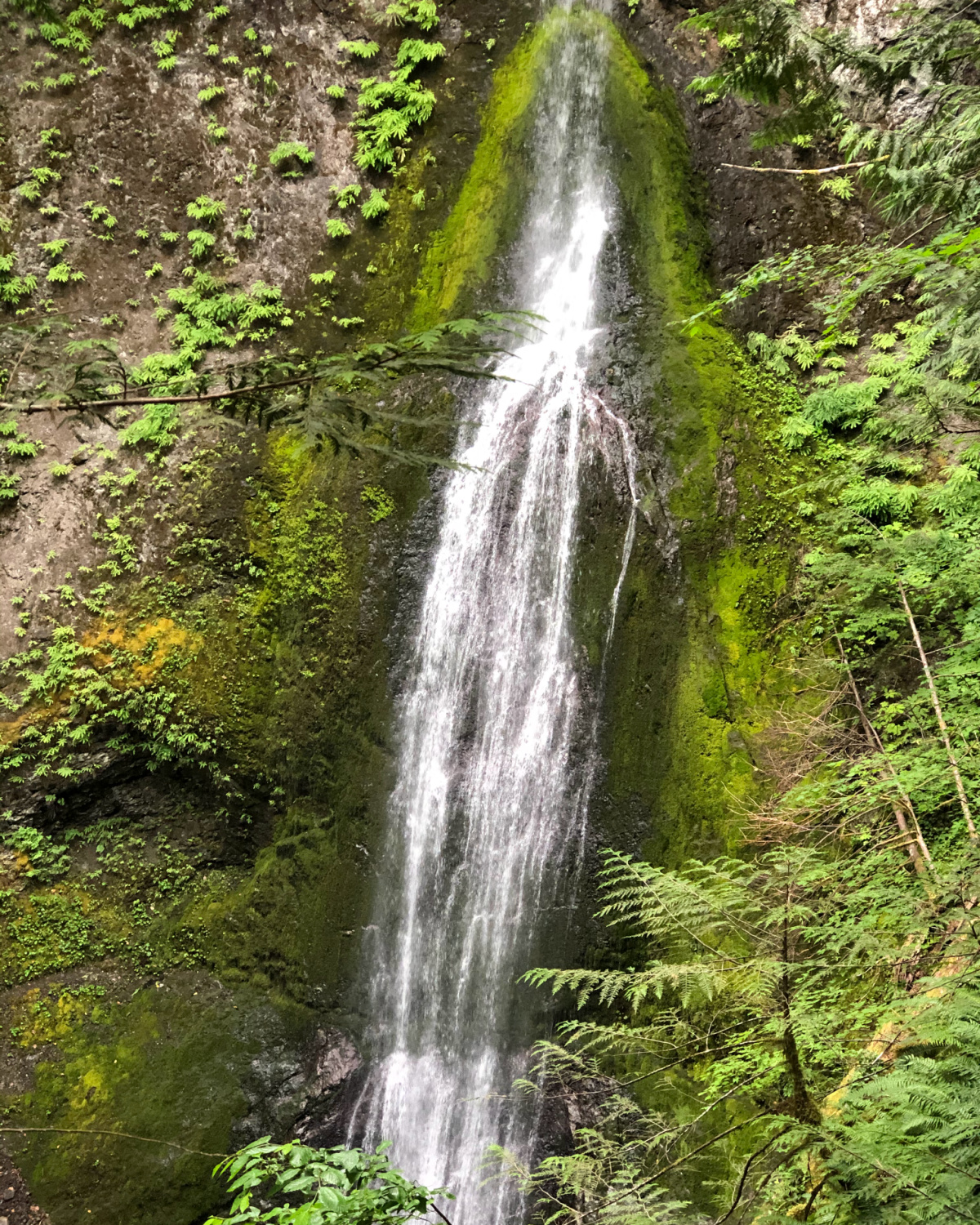
The waterfall is tall and elegant rather than thunderous. Water spills down a mossy rock face into a small pool below, surrounded by dense forest walls.
It’s beautiful in a very Pacific Northwest kind of way.
Not flashy.
Just serene.
For another classic Olympic National Park experience, head to Ruby Beach, where sea stacks, driftwood, tide pools, and moody coastal scenery create one of the most photographed spots in the park.
Visiting Marymere Falls with Kids
This is one of the better family-friendly hikes in Olympic National Park.
The distance is manageable for most kids, and there’s enough variety along the trail to keep them interested. Bridges, streams, giant trees, moss-covered logs, little forest details — it all helps break up the walk naturally.
Our daughter especially loved the bridges and staircase sections.
And honestly, this trail feels more interactive than some easy hikes because the environment changes constantly around you.
That said, parents should know:
- The final staircase area requires supervision for younger children
- Some sections can be muddy
- The viewing area near the waterfall can get slippery
But overall, this is very doable for most families.
If your family enjoys tidepooling, Beach 4 is one of the best places in Olympic National Park to search for sea stars, anemones, and other marine life during low tide.
Best Time to Visit Marymere Falls
Summer is definitely the easiest and most reliable season for this hike.
Trail conditions are usually dry, temperatures are comfortable, and access is simple.
That said, spring is incredibly beautiful here too.
We’ve visited Olympic National Park both during summer and around spring break timing, and honestly the forest almost feels even greener and moodier in spring. Waterfalls also tend to flow stronger earlier in the season.
The tradeoff is more rain and muddier trails.
Fall can also be lovely if you catch decent weather, especially with lighter crowds.
Winter is a little less predictable because of rain and storm conditions, but this area remains accessible far more often than the high mountain sections of Olympic National Park.
The area around Kalaloch Beach offers beautiful coastal scenery, easy beach access, and the famous Tree of Life balancing dramatically above the eroding shoreline.
Pro Tips for Hiking Marymere Falls
Go Early If Possible
Parking near Lake Crescent can fill up during busy summer afternoons.
Morning visits are quieter and feel especially peaceful.
Pair This with Lake Crescent
This is not really an all-day hike by itself for most visitors.
Instead, combine it with:
- Lake Crescent Lodge
- Moments along the shoreline
- Scenic pullouts nearby
- A relaxed lunch or picnic
That combination makes for a fantastic half-day.
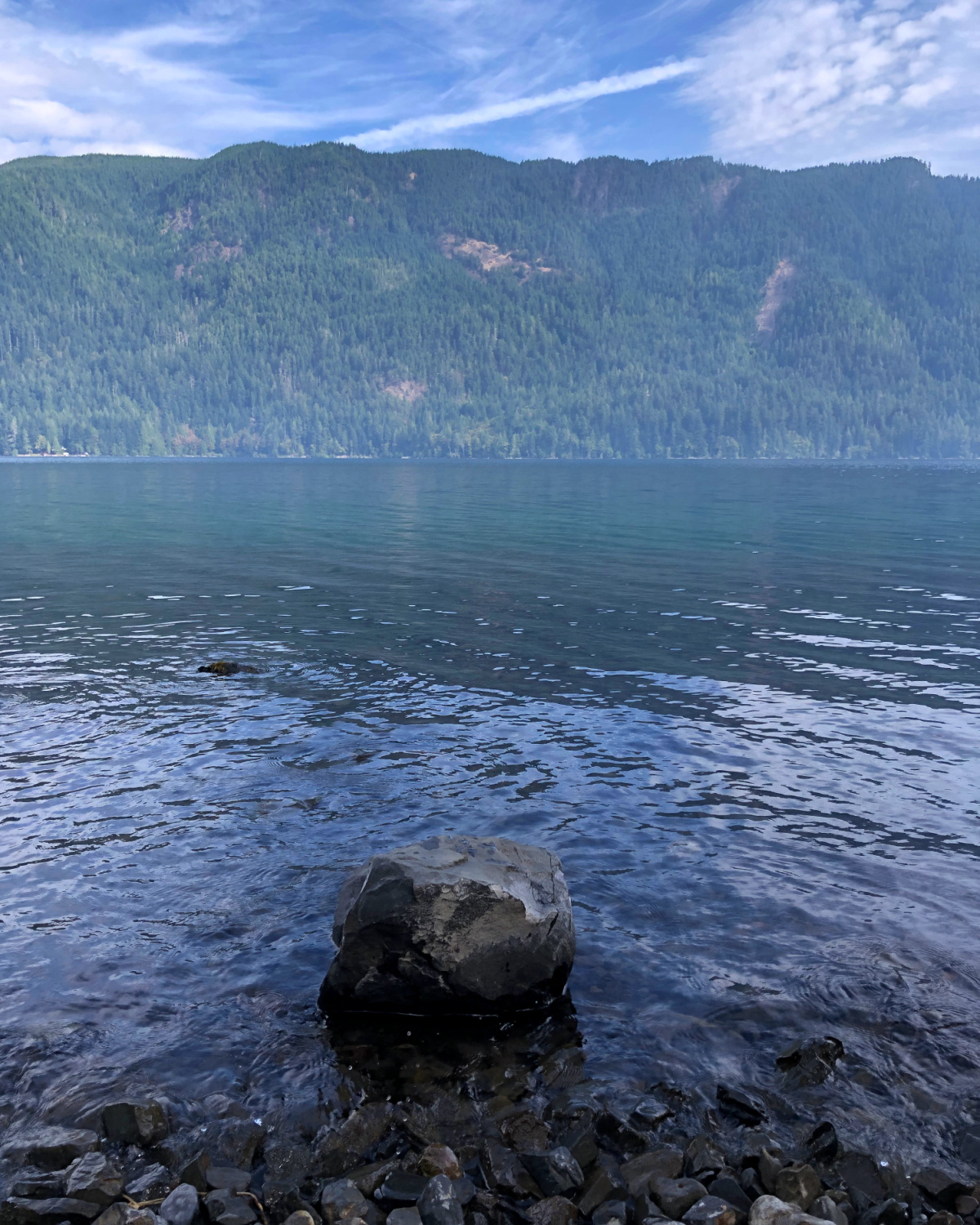
One of our favorite Olympic National Park experiences was exploring the tide pools along the coast. Before you go, read my guide to Tidepooling in Olympic National Park for tips on tides, safety, and where to find the best marine life.
Wear Real Shoes
Most of the trail is easy, but sections can still be muddy or slippery.
You do not need hardcore hiking boots.
But flip flops are probably not the move.
Don’t Rush the Forest
The best parts of this hike are often between the trailhead and the waterfall.
Slow down.
Look around.
The mossy forest scenery is honestly incredible.
The Stairs Feel Harder on the Way Back
Because you descend them first and then climb back out later, save a little energy.
Especially if stairs are not your favorite thing.
Accessibility Notes
The beginning portion of the trail is relatively accessible and flat.
However, the full trail to the waterfall is not wheelchair accessible due to:
- Dirt trail surfaces
- Roots and uneven ground
- Bridges
- Staircases near the waterfall
Visitors with limited mobility may still enjoy portions of the trail near the beginning forest and creek areas.
FAQ About Marymere Falls
How long is the Marymere Falls hike?
The hike is roughly 1.7–1.8 miles round trip.
Is Marymere Falls hard?
Not really. Most of the trail is easy. The only challenging part is the staircase section near the waterfall.
Can kids do this hike?
Yes. This is one of the better family-friendly hikes in Olympic National Park.
Is Marymere Falls worth visiting?
Definitely, especially for casual visitors who want a beautiful forest hike without a major physical challenge.
Which is better: Marymere Falls or Sol Duc Falls?
If you only have time for one, I’d personally choose Sol Duc Falls because it’s more dramatic.
But Marymere Falls is easier to combine with Lake Crescent and offers absolutely gorgeous forest scenery.
Can you swim at Marymere Falls?
Not really. The waterfall area is more of a viewing spot than a swimming destination.
How much time should I plan?
Most visitors will spend about 1–2 hours total.
Final Thoughts on Marymere Falls
Marymere Falls may not be the biggest or most famous waterfall in Olympic National Park, but it’s still one of those hikes that sticks with you afterward.
Partly because it’s beautiful.
Partly because it’s easy enough that almost anyone can experience it.
And partly because the entire trail feels so quintessentially Olympic National Park.
The giant mossy trees.
The quiet creek crossings.
The damp forest smell.
The soft green light filtering through the canopy.
Even now, when I think back on this hike, I remember the atmosphere just as much as the waterfall itself.
And honestly, that’s probably the highest compliment I can give it.
If you’re the kind of traveler who loves national parks but prefers memorable scenery over grueling hikes, Marymere Falls deserves a spot on your Olympic National Park itinerary.