Olympic National Park Rainforests: The Wild, Mossy Heart of the Olympic Peninsula

Affiliate Disclosure: This post may contain affiliate links. If you make a purchase or booking through these links, I may earn a commission at no additional cost to you.
Planning a visit to the Olympic National Park rainforests? Discover the Hoh Rainforest, Quinault Rainforest, best hikes, wildlife, tips, and what makes these lush Pacific Northwest forests so magical.
Estimated reading time: 16 minutes
I expected Olympic National Park to be beautiful.
I mean… everyone says that.
People talk about the beaches. The sea stacks. Hurricane Ridge. The mountain views. The waterfalls. The giant trees. The moody Pacific Northwest weather.
So yes, I expected “beautiful.”
What I didn’t expect was how weirdly emotional the rainforests would feel.
Not emotional in some dramatic life-changing way.
More like… deeply calming.
The kind of place where you suddenly realize you haven’t checked your phone in an hour because your brain got distracted by moss hanging off a tree branch.
Which sounds ridiculous until you visit.
The first rainforest we visited in Olympic National Park was the Hoh Rainforest, and within about five minutes I realized this was not going to feel like any other forest I’d been in before.
Everything looked oversized.
The trees were massive.
The ferns were massive.
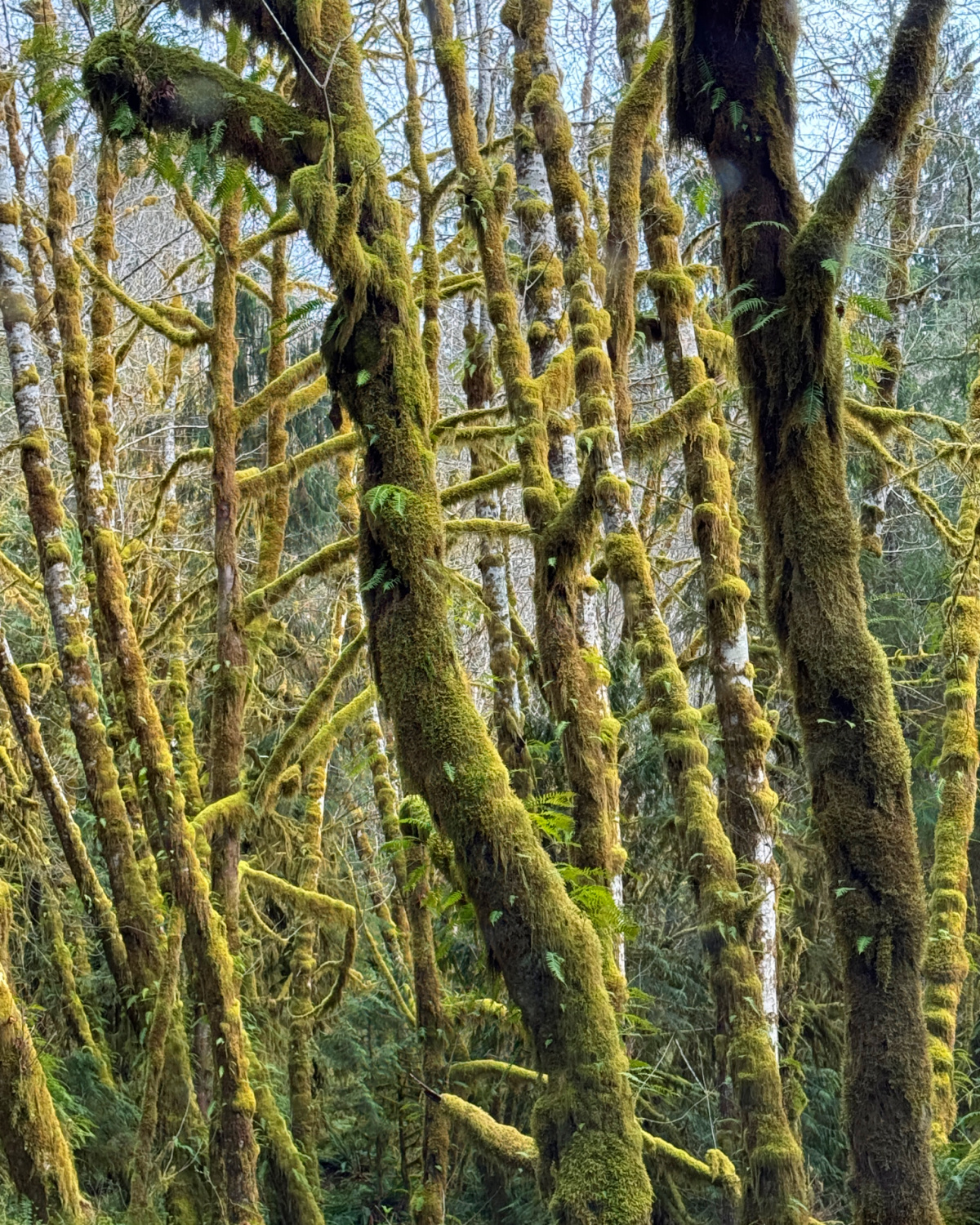
Even the moss looked aggressive somehow.
And the green colors didn’t even seem real at first. It genuinely looked like somebody turned the saturation all the way up.
My daughter kept stopping every few minutes just to point at random things.
“Mom… LOOK at THIS tree.”
“Mom… why is there moss on THAT tree too?”
“Mom… why does this feel like Jurassic Park?”
Honestly? Fair questions.
Because the Olympic National Park rainforests really do feel prehistoric in places.
Not tropical rainforest prehistoric.
Pacific Northwest prehistoric.
Which is somehow its own category entirely.
One of the best things about visiting the Olympic Peninsula is that you can easily combine the rainforests with some of the most beautiful coastal scenery in Washington State, so don’t miss my full guide to the best Olympic National Park beaches while planning your trip.
Wait… There Are Rainforests in Washington State?
Apparently this surprises a lot of people.
It definitely surprised me the first time I learned about it.
When most of us hear the words “rain forest,” we picture tropical rainforests somewhere near the equator. Costa Rica. Brazil. Maybe Hawaii.
Not Washington State.
But Olympic National Park contains some of the largest temperate rainforests in North America, and they’re completely different from tropical rainforests.
Cooler temperatures.
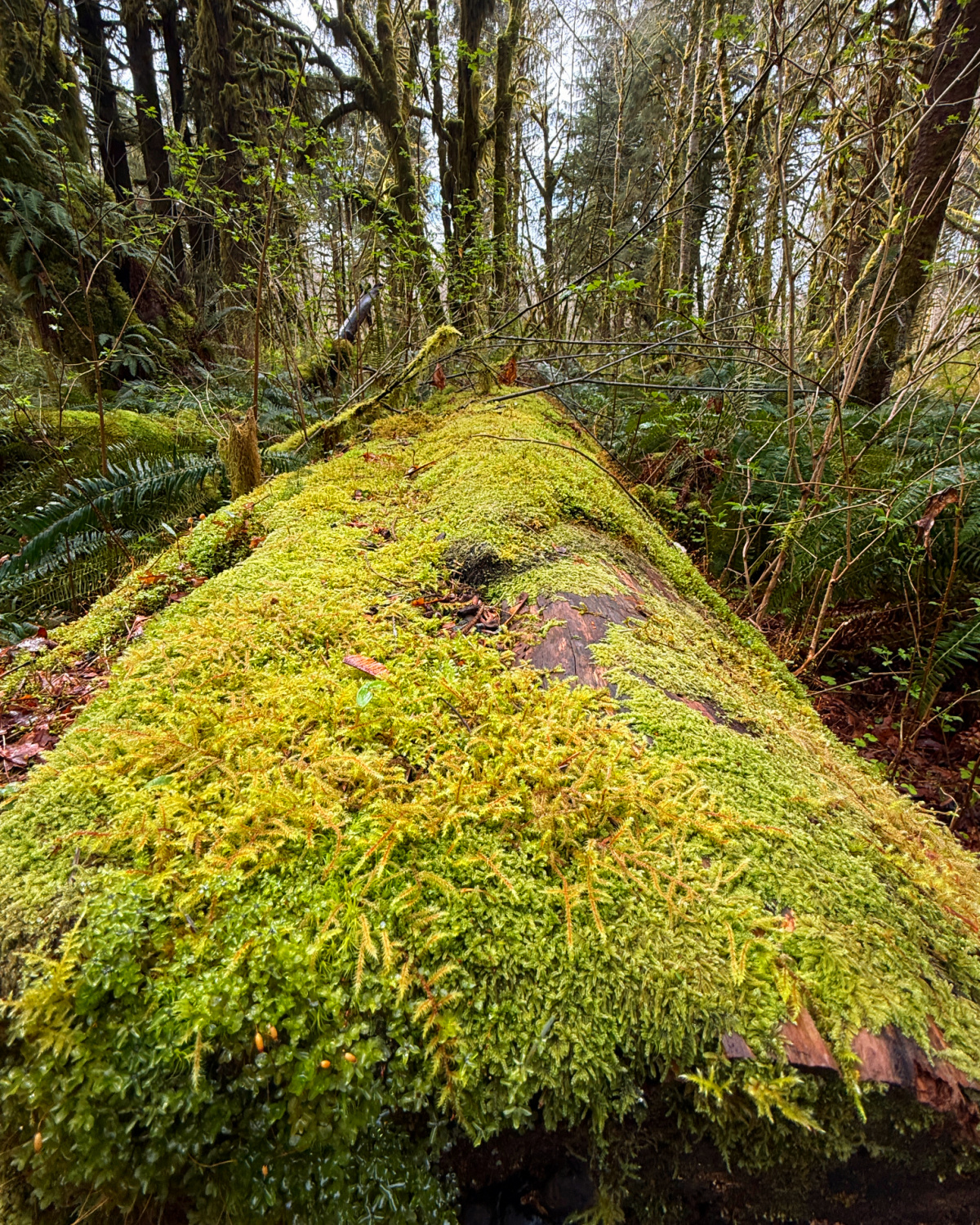
Huge evergreen trees instead of palms.
Moss instead of vines.
Fern-covered forest floors instead of jungle plants.
And honestly? The moodiness makes them even prettier.
At least in my opinion.
There’s something about walking through dense forests while mist hangs in the air that just feels magical.
Even if your hair completely gives up within thirty minutes.
If you want dramatic sea stacks, massive driftwood beaches, and one of the most iconic coastal views in Olympic National Park, make sure to read my complete guide to Rialto Beach before you go.
Why Is Olympic National Park So Green?
The short explanation is basically this:
The Pacific Ocean throws moisture at the Olympic Mountains nonstop.
The mountains stop the moisture.
Then the rain falls on the western side of the Olympic Peninsula over and over and over again.
Some parts of the park get more than 140 inches of rain every year.
Which honestly sounds fake when you first hear it.
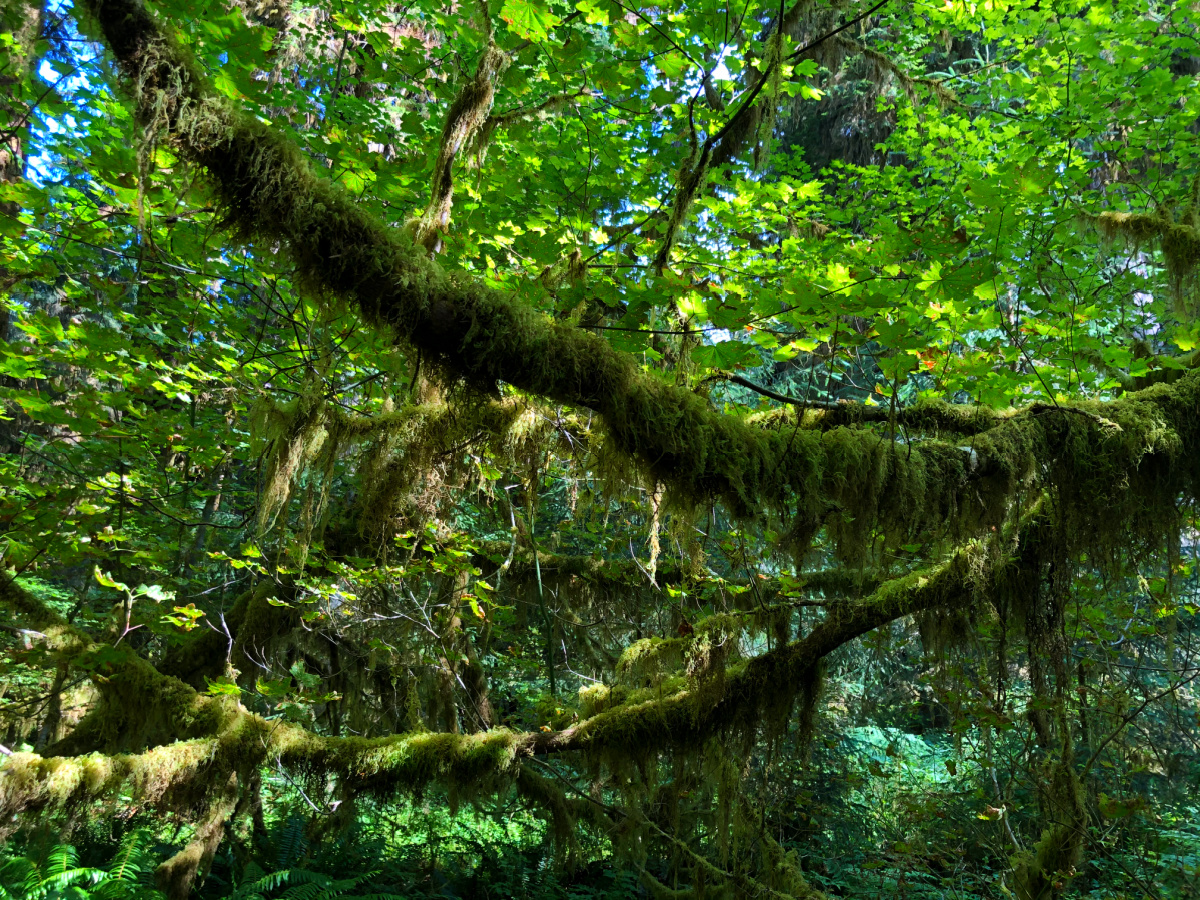
But once you stand in the Hoh Rainforest surrounded by dripping moss and giant trees, suddenly that statistic feels extremely believable.
The wild part is how quickly conditions change around the park.
Near the western coast, everything feels wet and lush and intensely green.
But areas closer to Port Angeles and the Strait of Juan de Fuca are actually much drier because they sit in the Olympic Mountains rain shadow.
That’s part of what makes Olympic National Park so unique compared to many other national parks in the United States.
You can literally go from alpine scenery at Hurricane Ridge to tide pools along the Pacific coast to temperate rainforests in the same day.
And somehow none of it feels repetitive.
Ruby Beach ended up being one of my favorite spots along the Pacific coast, especially at low tide when tide pools, sea stacks, and reflections completely transform the landscape.
The Hoh Rainforest Is Famous for a Reason
The Hoh Rainforest gets most of the attention when people talk about Olympic National Park rainforests.
And yes — it deserves it.
The Hoh Rain Forest feels like somebody took every Pacific Northwest stereotype and turned it up to maximum intensity.
Massive old-growth forests?
Check.
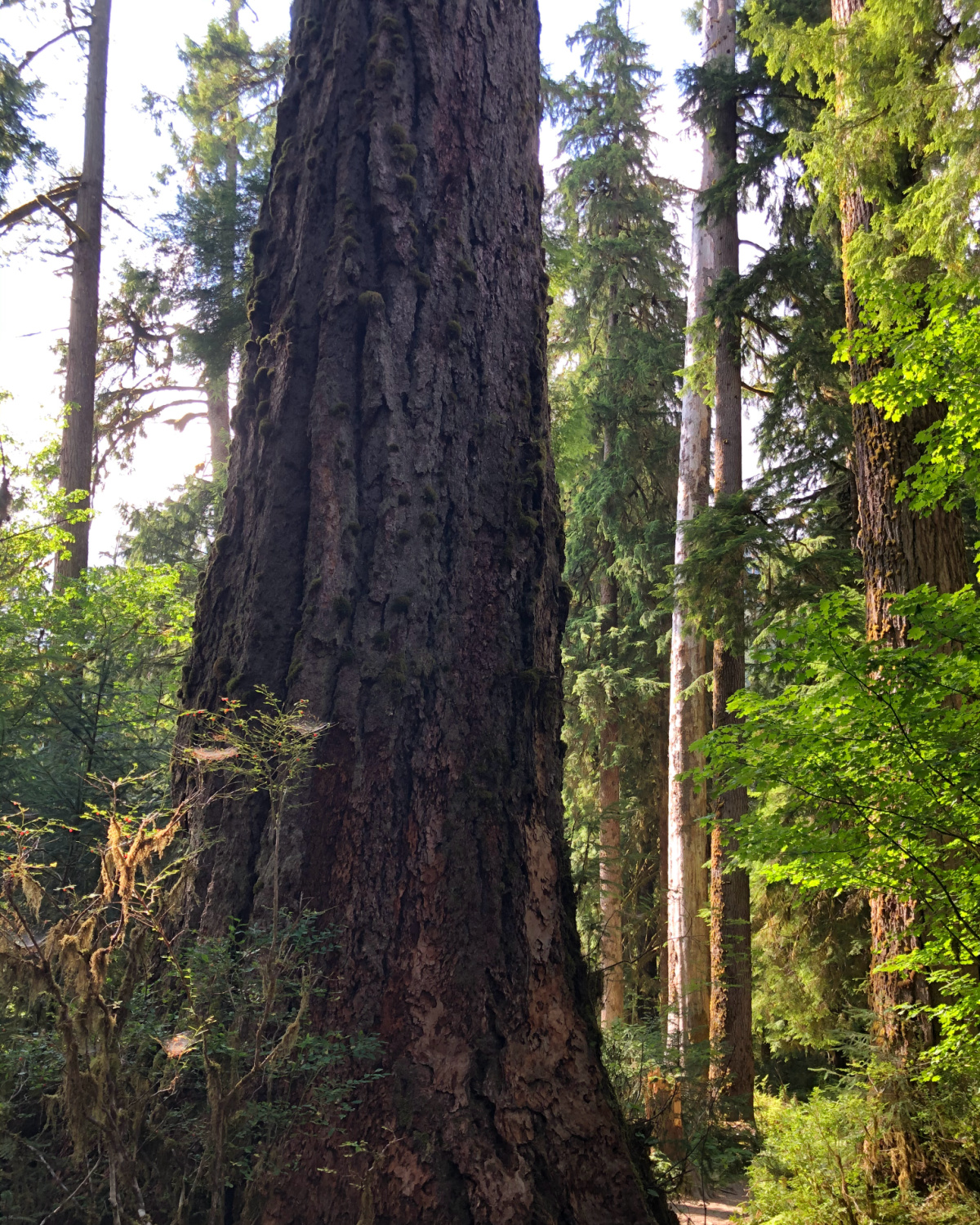
Trees covered in moss?
Everywhere.
Fog drifting through the forest?
Probably.
Roosevelt elk wandering around casually like they own the place?
Also yes.
It’s beautiful in a way that almost doesn’t feel real.
And one of the biggest surprises for me was how accessible it is.
For some reason, I had this idea in my head that seeing the rainforest would require some giant wilderness expedition.
But some of the best things to do in the Hoh Rainforest are actually very easy.
That’s one reason I think Olympic National Park works so well for families and casual travelers. You don’t have to be an intense hiker to experience incredible scenery here.
Kalaloch Beach offers a totally different vibe from the La Push beaches, with wider coastal scenery, beautiful sunset views, and easy access from Kalaloch Lodge.
Hall of Mosses Trail
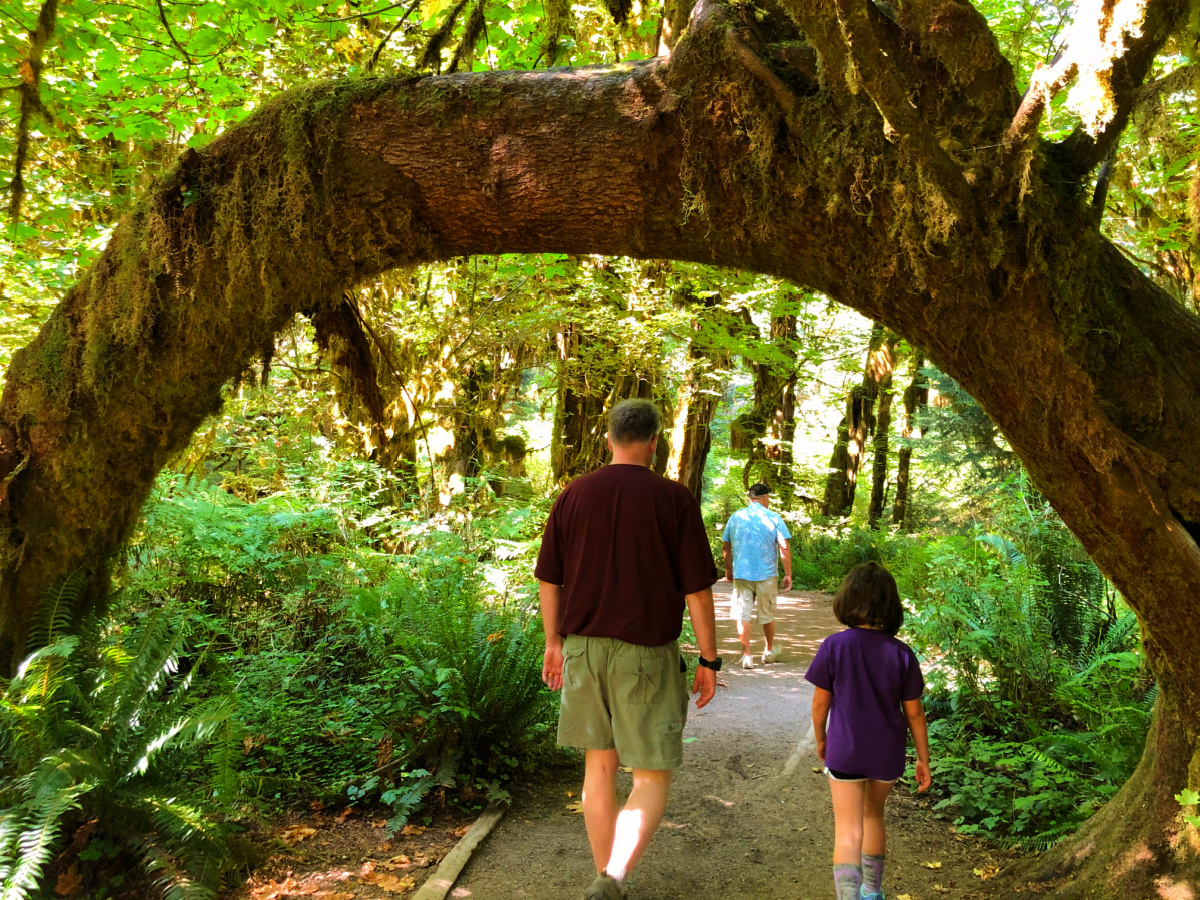
The Hall of Mosses Trail is the iconic hike everybody photographs.
And before visiting, I worried it might feel overhyped.
It didn’t.
It’s gorgeous.
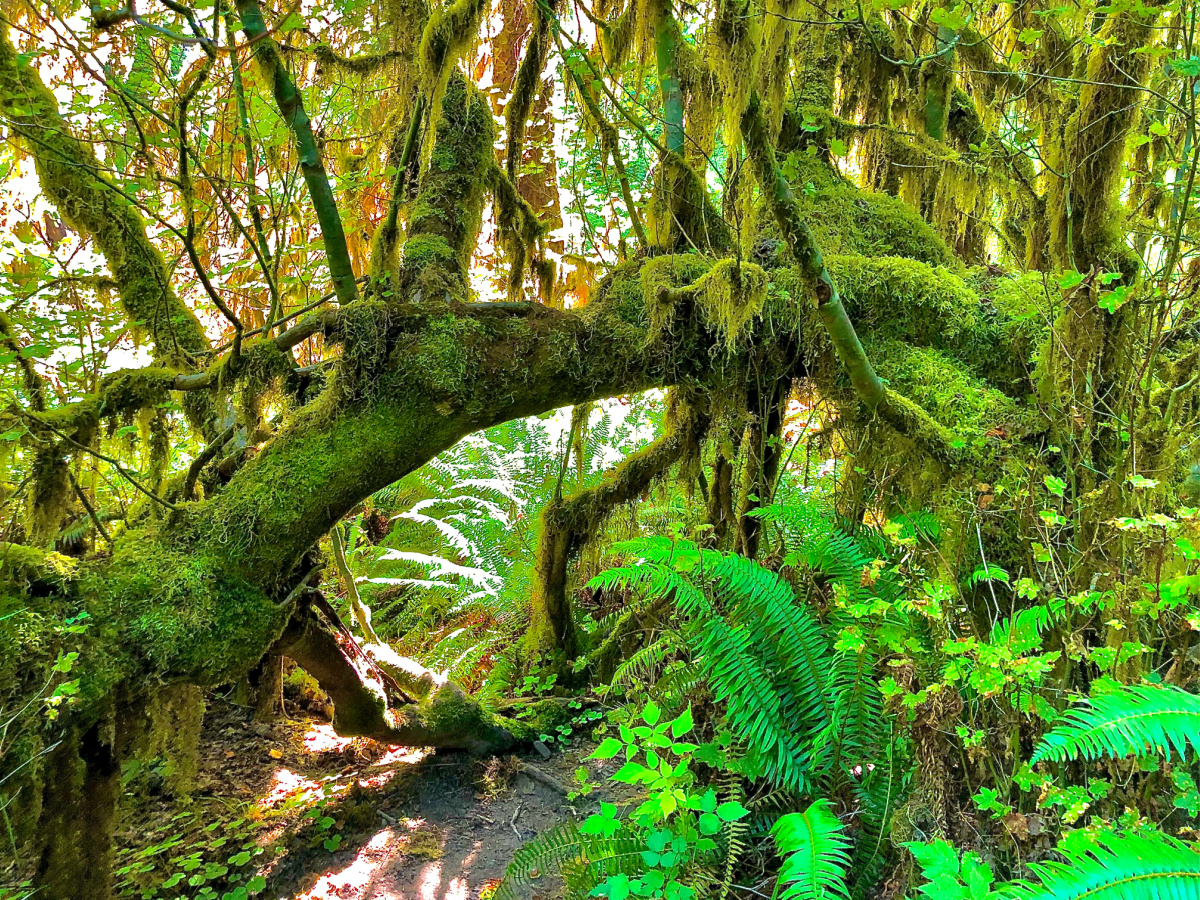
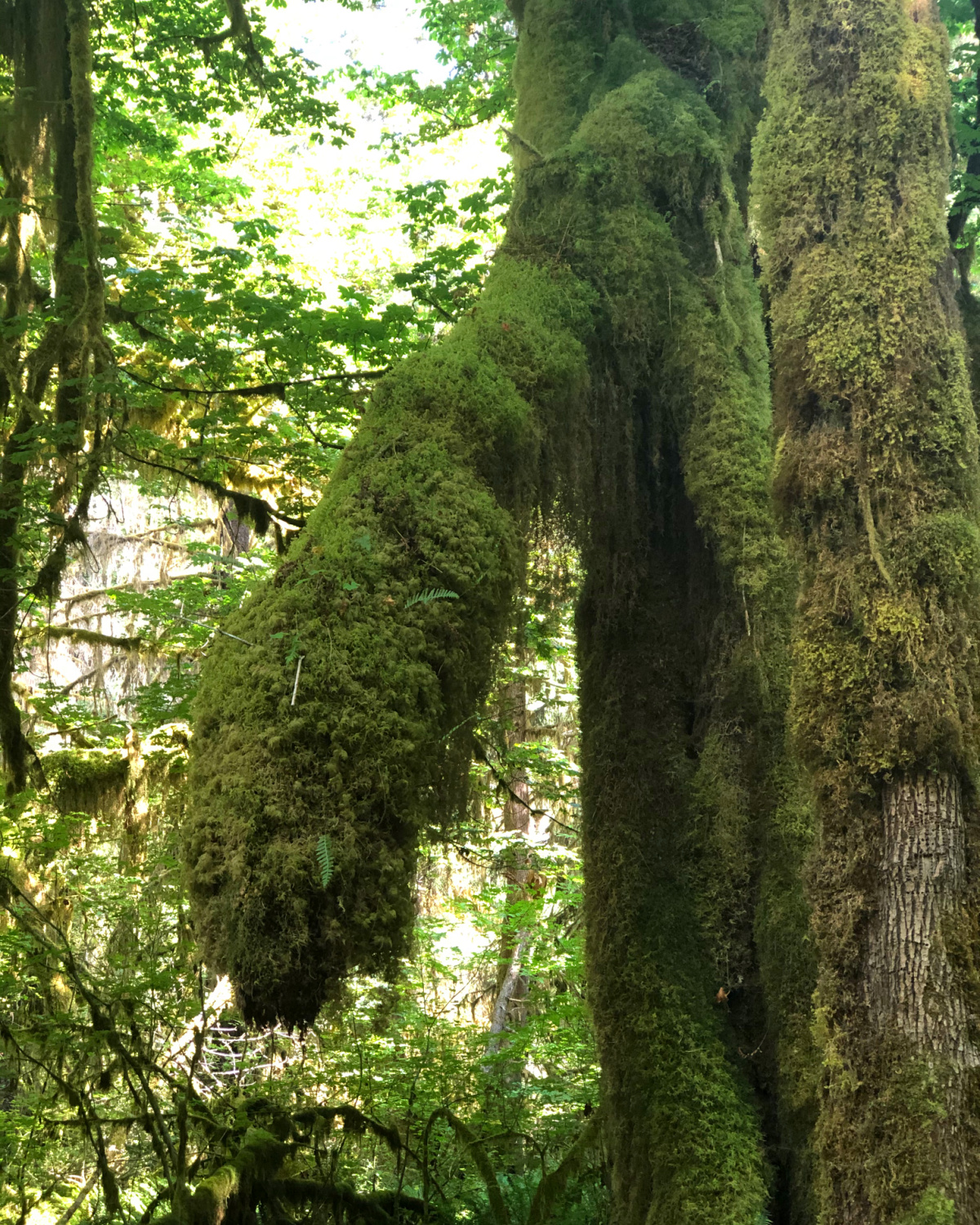
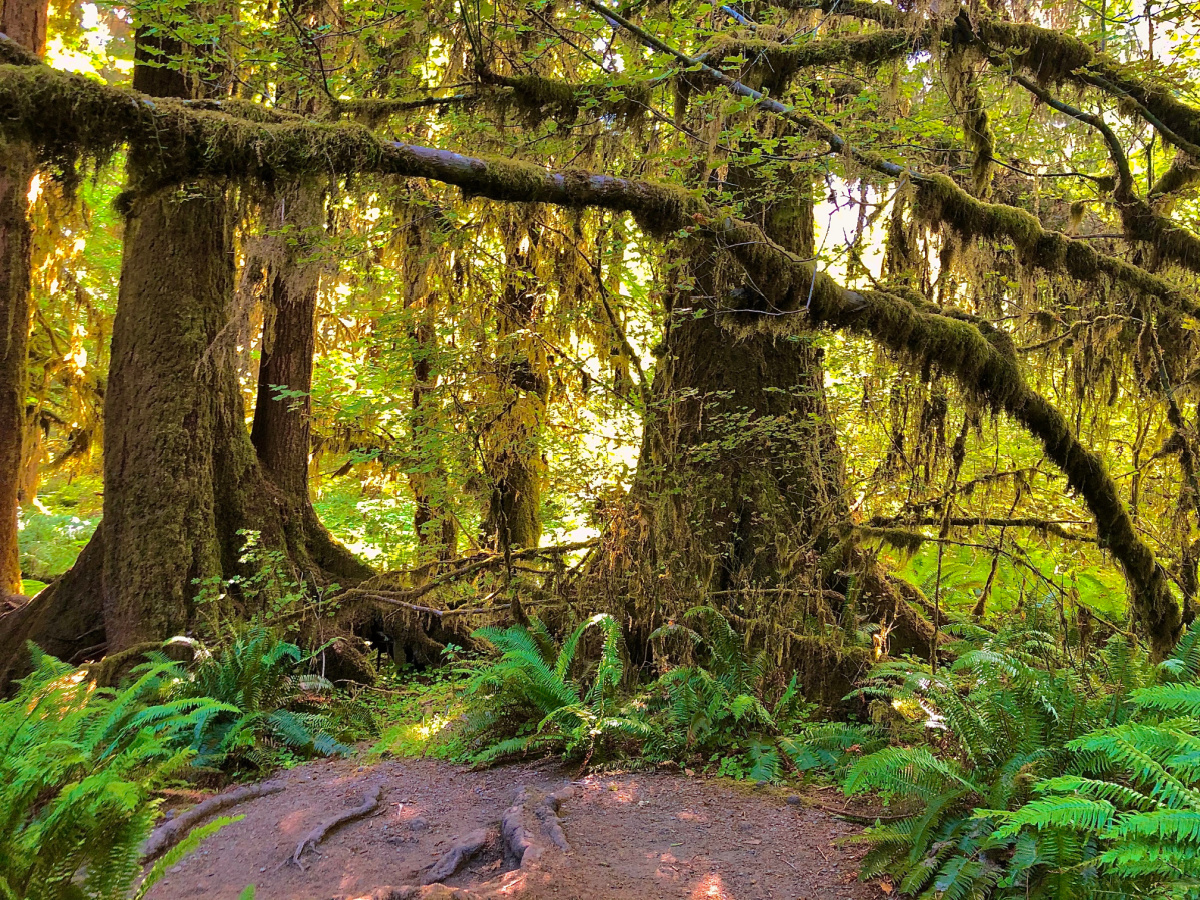
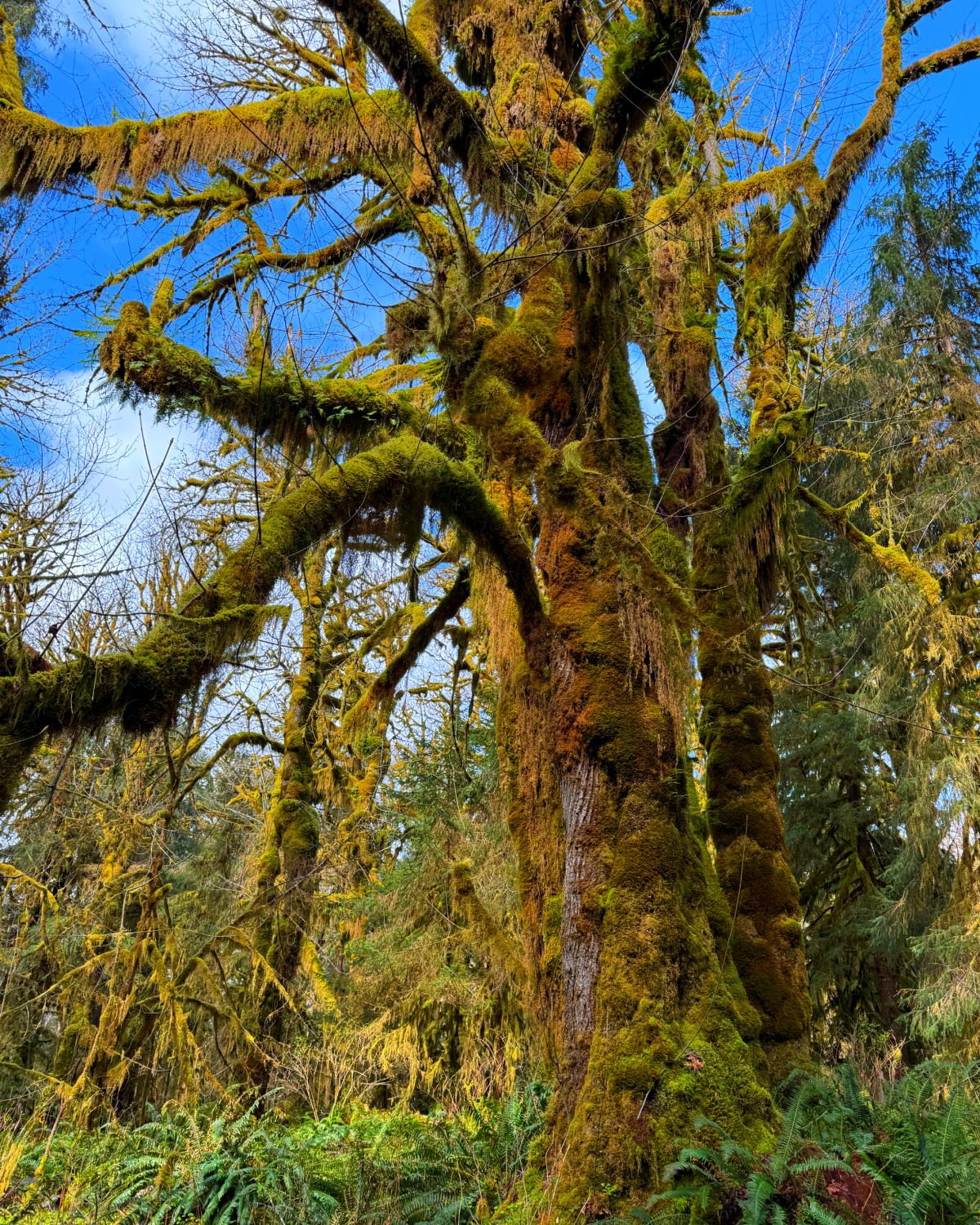
The trail itself is short and relatively easy, but the scenery feels almost absurdly beautiful at times. Huge maple trees stretch across the path while layers of moss hang down from nearly every branch.
And the moss isn’t just “a little moss.”
It’s everywhere.
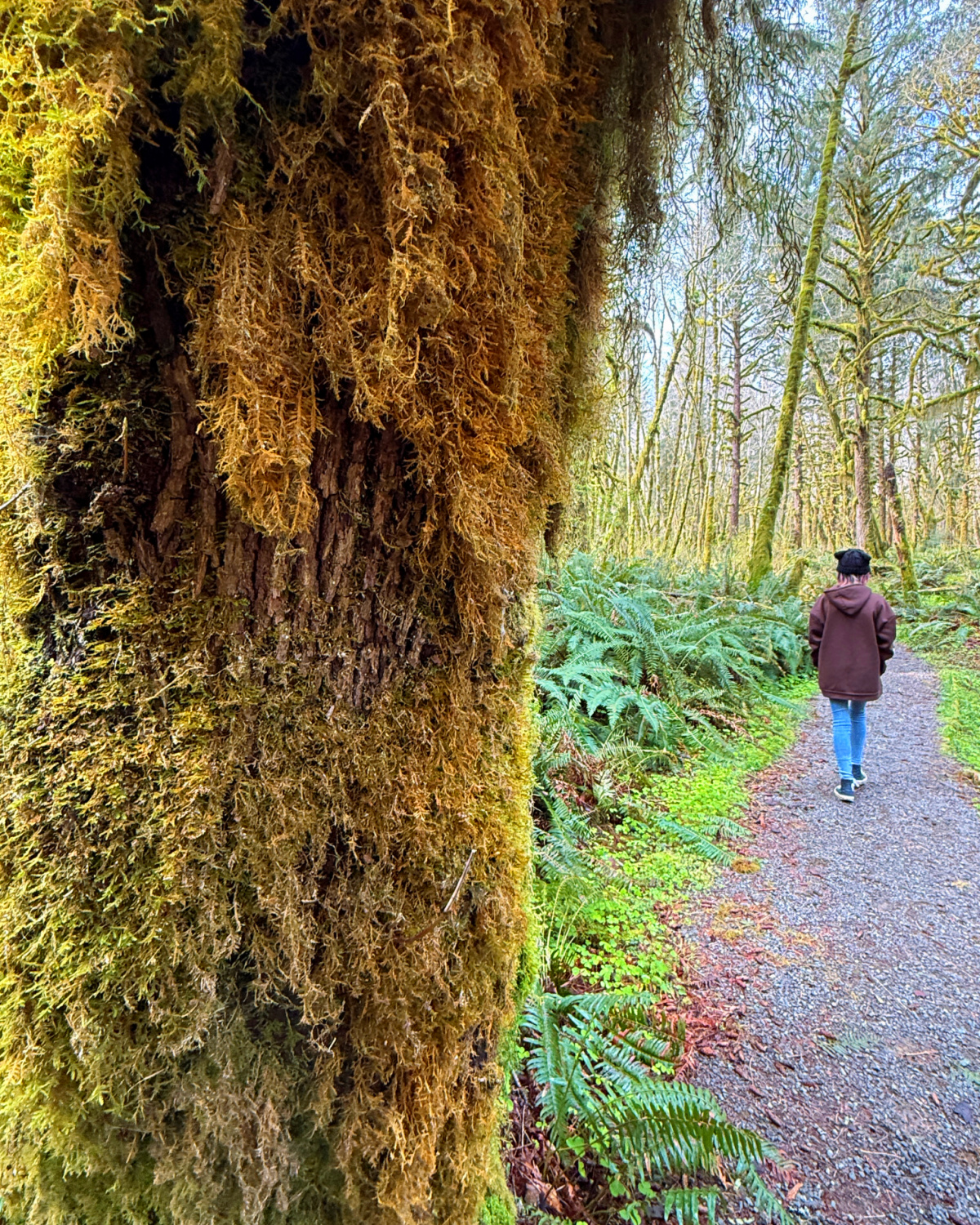
The trees look fuzzy.
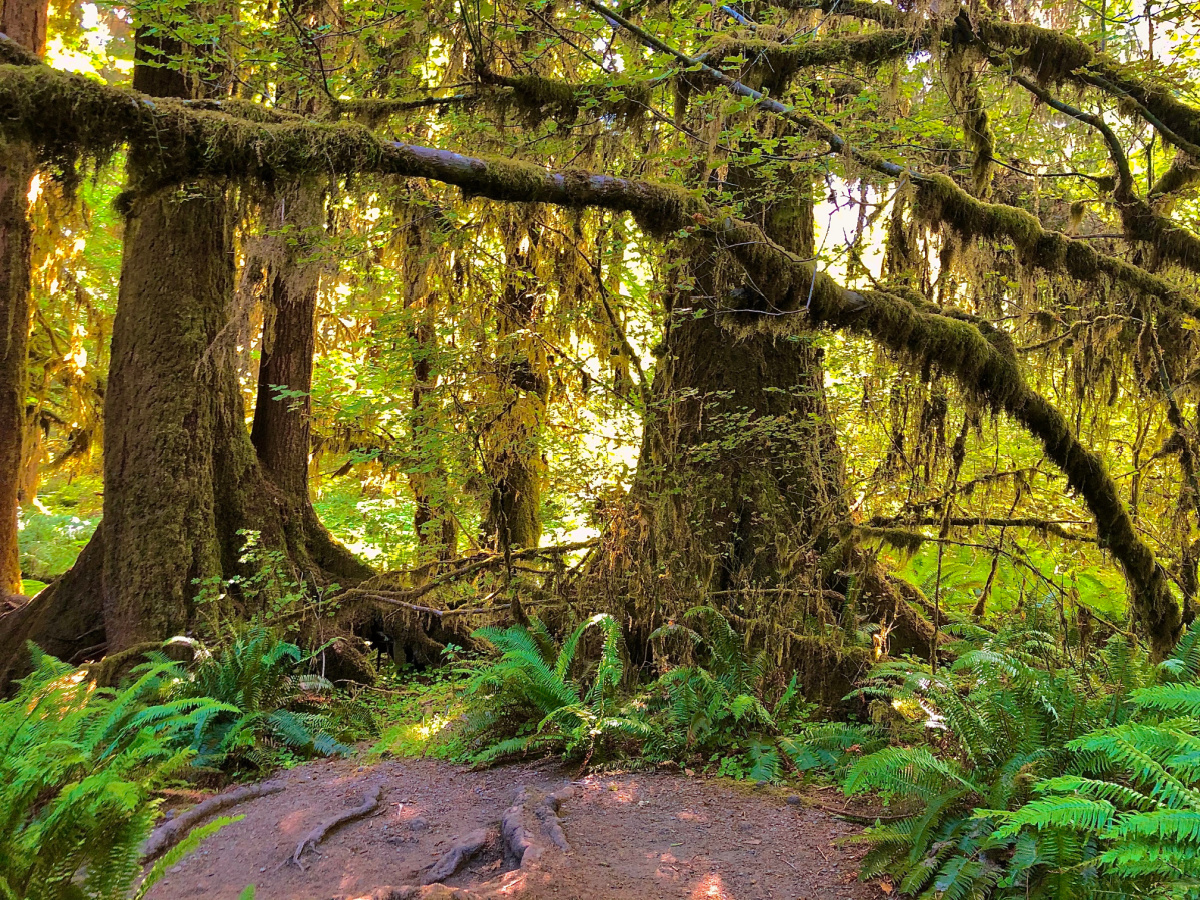
That’s honestly the best description I can give.
The entire forest looks fuzzy.
One thing I noticed immediately was how quiet everything felt.
Not silent exactly.
You still hear birds and dripping water and distant conversations.
But compared to everyday life, the rainforest feels unbelievably calm.
I think that’s part of why people connect with this place so strongly.
It forces you to slow down a little.
You stop rushing.
You start noticing details.
The shape of a tree trunk. The texture of the moss. Tiny streams cutting through the forest floor.
It’s one of those places where wandering slowly somehow feels more rewarding than trying to cover miles quickly.
Beach 4 is one of the best places in Olympic National Park for beginner-friendly tidepooling, especially if you visit during a good low tide window.
The Spruce Nature Trail Ended Up Being My Favorite
This might be an unpopular opinion, but I think I actually preferred the Spruce Nature Trail over Hall of Mosses.
Not because it’s more dramatic.
Hall of Mosses is probably prettier overall.
But the Spruce Nature Trail felt calmer.
Less crowded.
A little less “main character Instagram location.”
Once you move farther away from the parking lot, the rainforest starts feeling more immersive.
And this trail gives you a better sense of the scale of the forest.
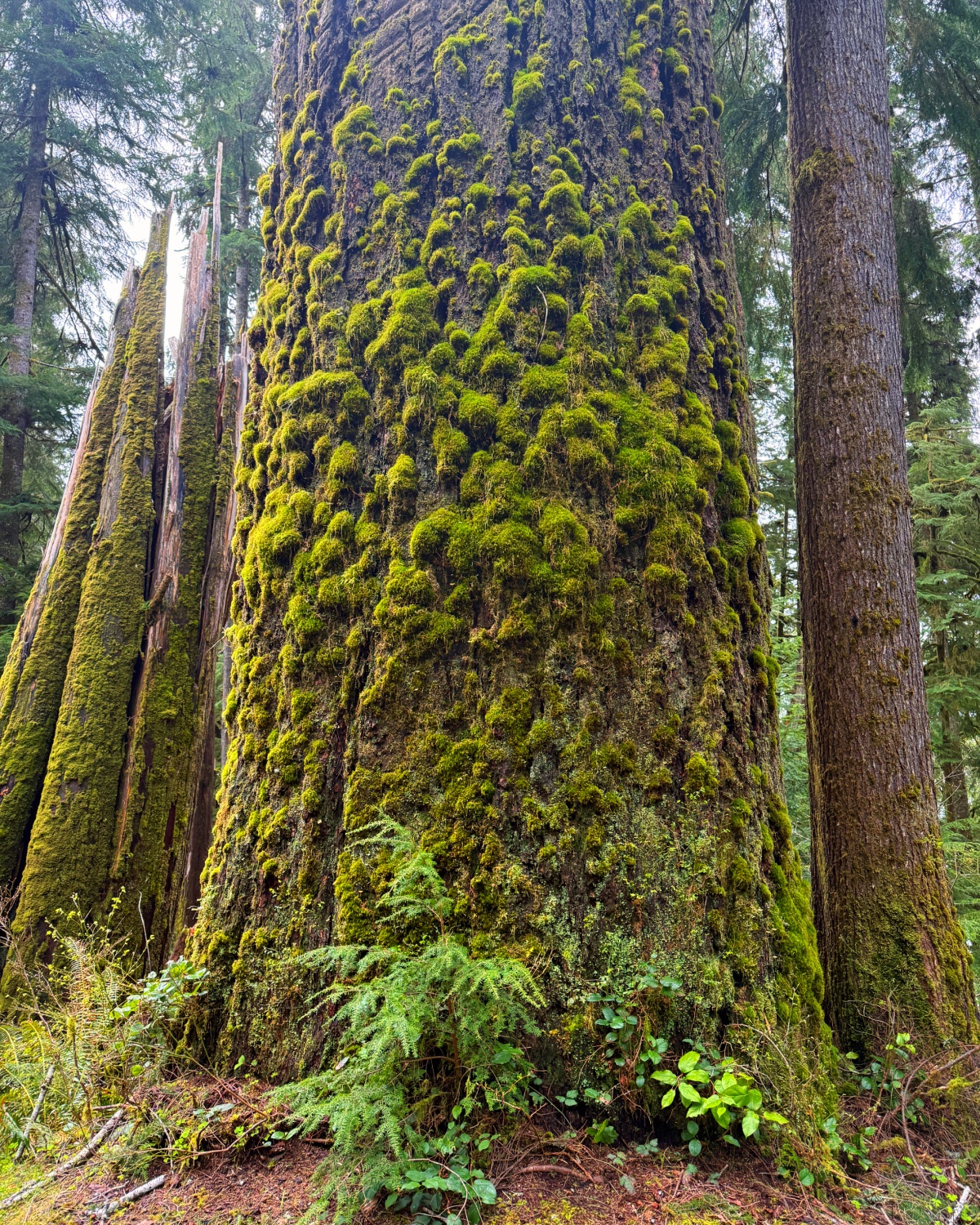
The sitka spruce trees here are enormous.
Like… genuinely enormous.
Not “wow that’s a big tree.”
More like:
“How old IS this thing?”
Some of these trees have been standing here for centuries, and you can feel it.
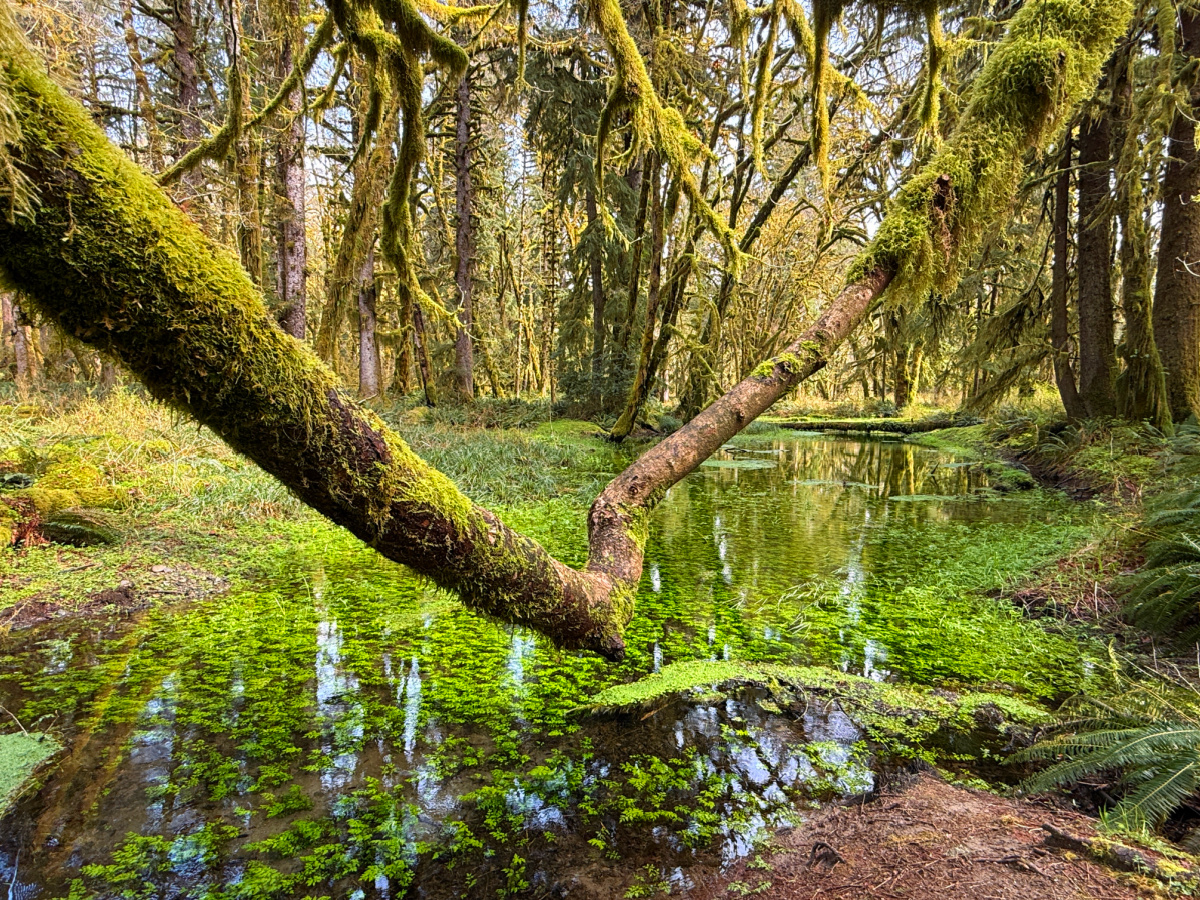
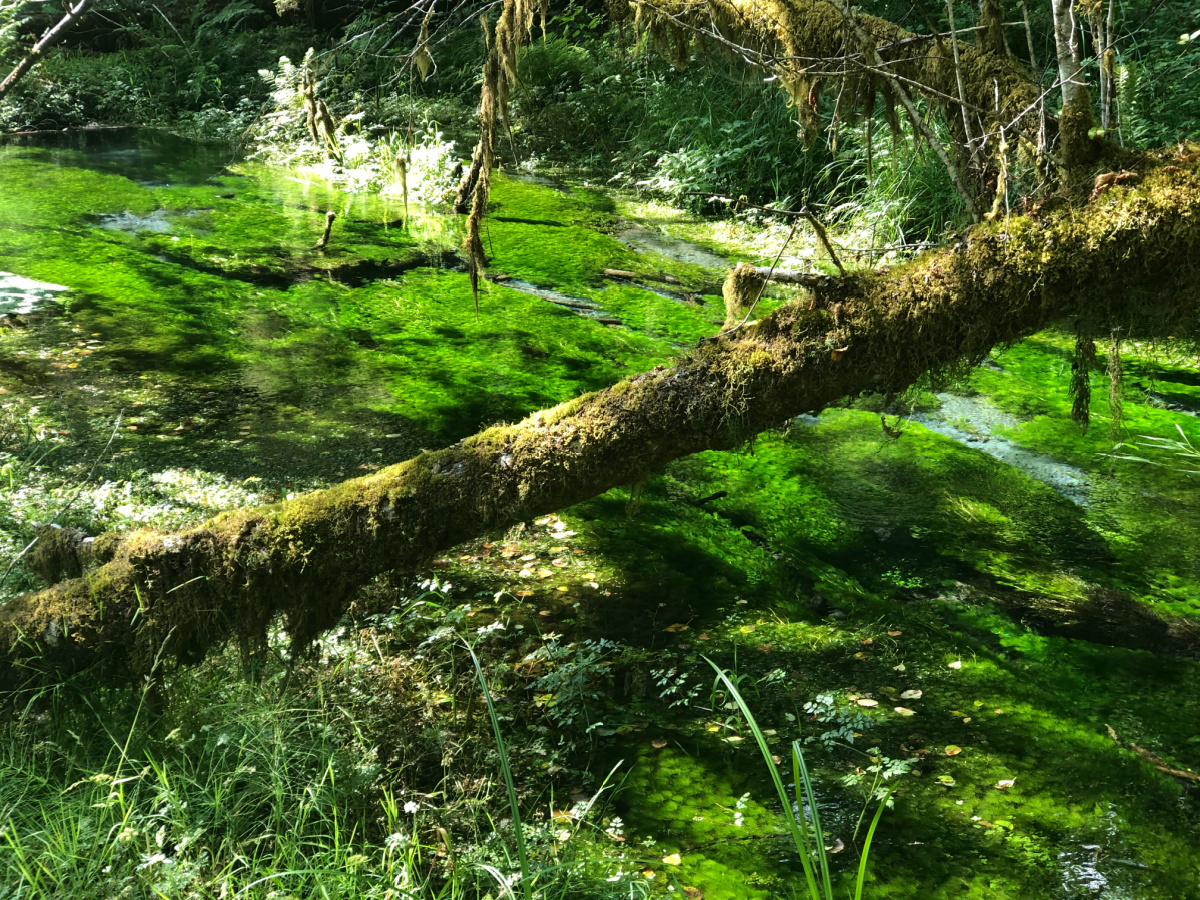
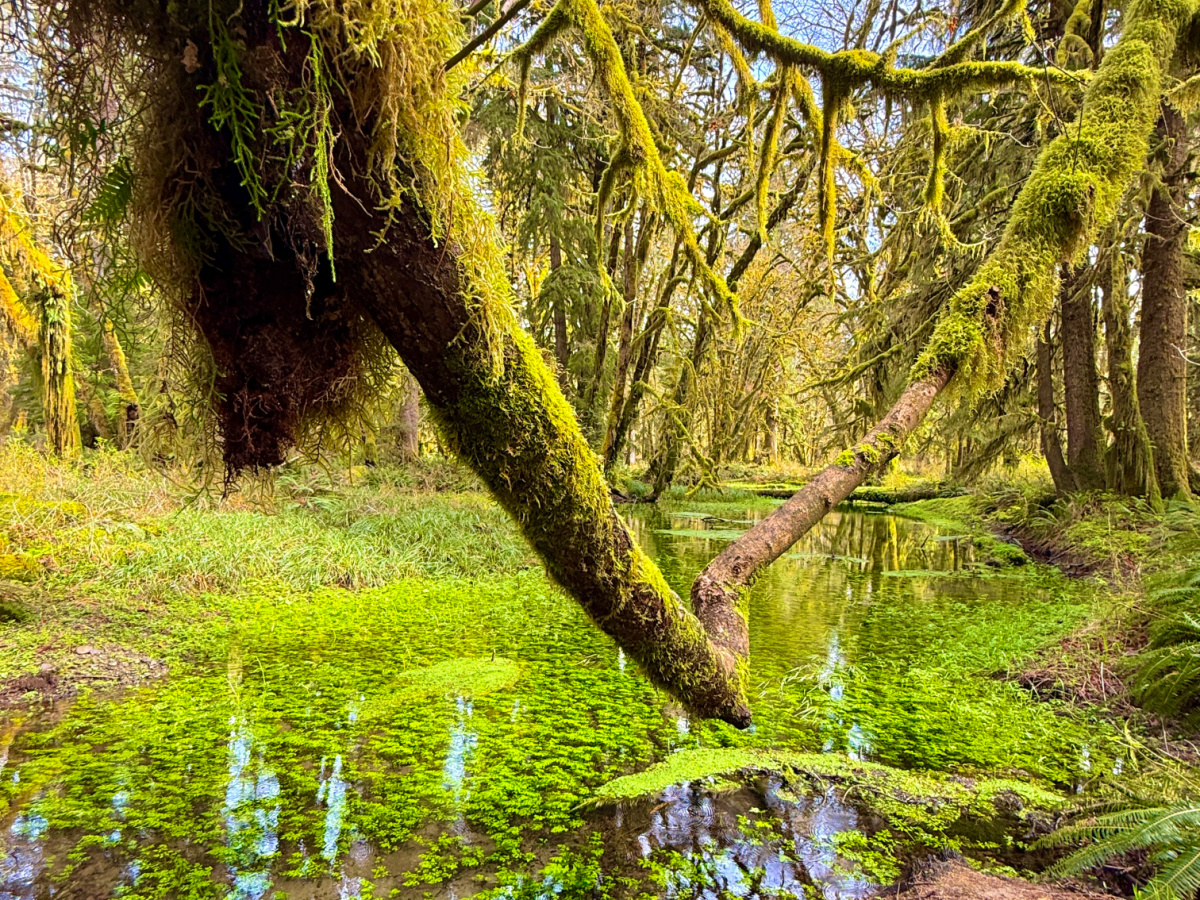
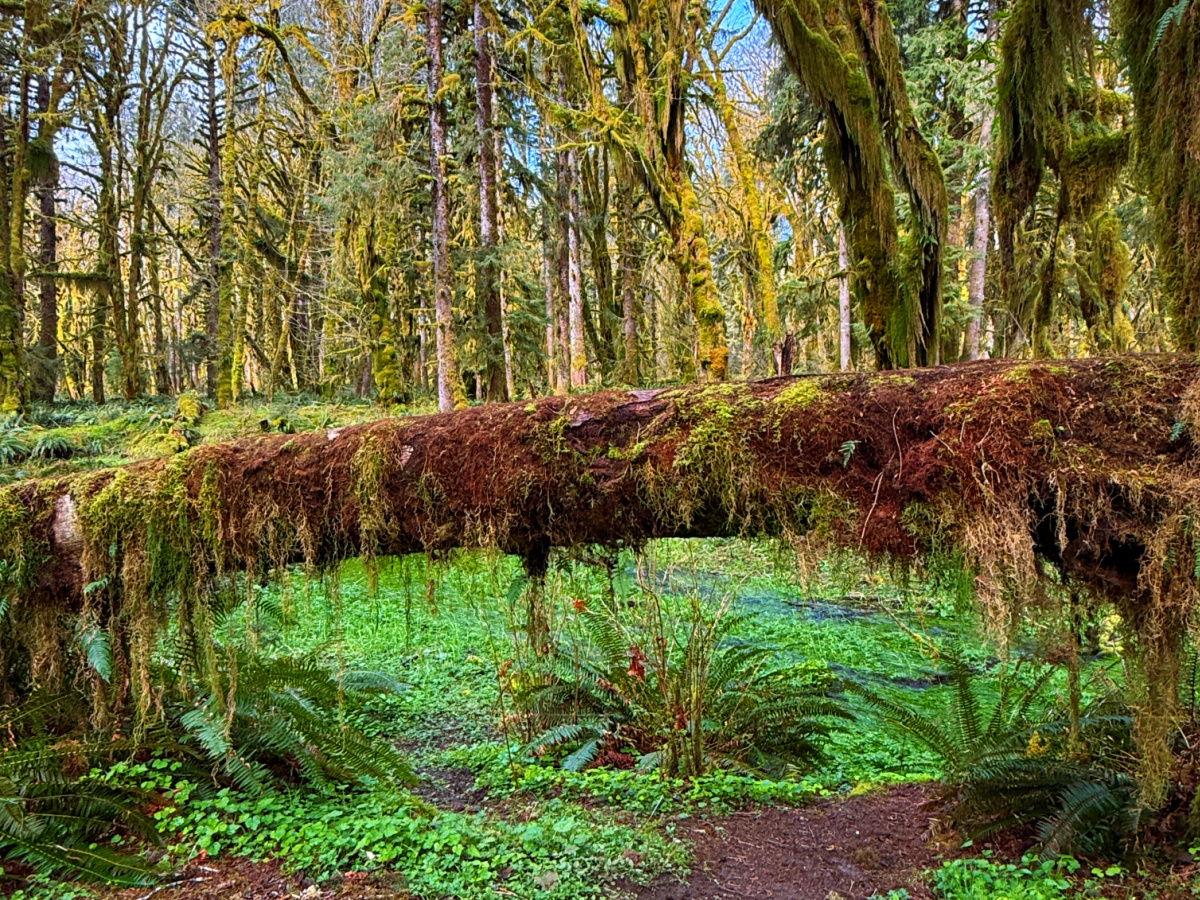
The forest has this layered look that’s hard to explain until you see it yourself. Ferns cover the ground. Moss wraps around branches. Fallen trees become nurse logs that support entirely new ecosystems growing on top of them.
Everywhere you look, something is growing on something else.
The entire rainforest feels alive.
If you’re hoping to spot sea stars, anemones, crabs, and other marine life, definitely check tide charts ahead of time and read my full guide to tidepooling in Olympic National Park before your visit.
The Hoh River Adds So Much to the Landscape
One thing I didn’t fully appreciate before visiting was how important the rivers are to the rainforest ecosystem.
The Hoh River cuts through the valley in this wide, rocky braid that feels completely different from the dense forest surrounding it.
And somehow that contrast makes the rainforest even prettier.
You walk through thick green forest for a while and then suddenly reach this open river landscape with mountain views in the distance.
It almost resets your brain visually.
The longer Hoh River Trail continues deep into Olympic National Park wilderness areas all the way toward Mount Olympus and Blue Glacier.
We didn’t hike nearly that far.
Honestly, most visitors don’t.
But even walking a small section gives you a better appreciation for how massive and untouched parts of Olympic National Park still feel.
Quinault Rainforest Feels Different
The Quinault Rainforest surprised me.
Not because it wasn’t beautiful.
Because it was beautiful in a completely different way than I expected.
The Hoh Rainforest feels dramatic.
Quinault feels peaceful.
That’s the simplest way I can explain it.
The entire Lake Quinault area has this quieter atmosphere that immediately made me want to slow down.
Less traffic.
Fewer crowds.
Less pressure to “see everything.”
And maybe this sounds strange, but it felt more lived-in somehow.
Like the kind of place where people disappear for a long weekend just to breathe for a while.
Olympic National Park honestly reminded me a little of Yosemite in April — both parks have that same combination of dramatic scenery, waterfalls, changing weather, and quieter shoulder-season magic that makes you want to slow down and just soak everything in.
Lake Quinault at Sunset Was Ridiculously Pretty
I took so many photos around Lake Quinault that it honestly became a running joke.
But LOOK AT IT.
Especially at sunset.
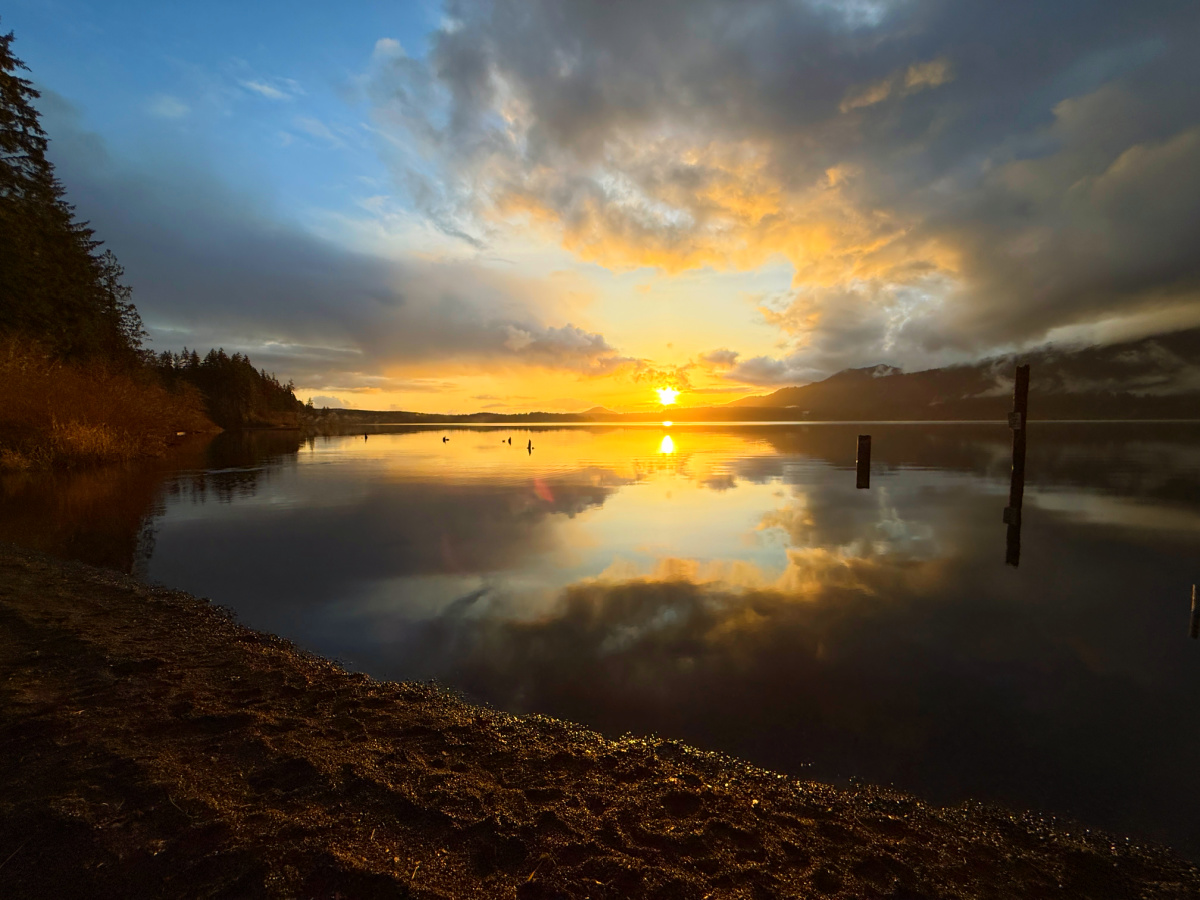
The water becomes perfectly still while the surrounding forests reflect across the lake. Everything turns soft and quiet and misty.
And the craziest part?
These photos have not been edited.. this is actually how it looked!
Olympic National Park just does that naturally sometimes.
The Quinault Rain Forest area also has several beautiful waterfalls, giant trees, and scenic drives that work really well for travelers who don’t necessarily want long hikes.
Which honestly describes a lot of people visiting national parks these days.
Not everybody wants to do a 14-mile hike with 3,000 feet of elevation gain.
Sometimes people just want beautiful scenery without needing ibuprofen afterward.
And Olympic National Park is actually fantastic for that kind of travel.
Roosevelt Elk Are Massive
I knew Roosevelt elk were bigger than regular elk.
I did not fully appreciate HOW much bigger until we saw them in person.
These things are enormous.
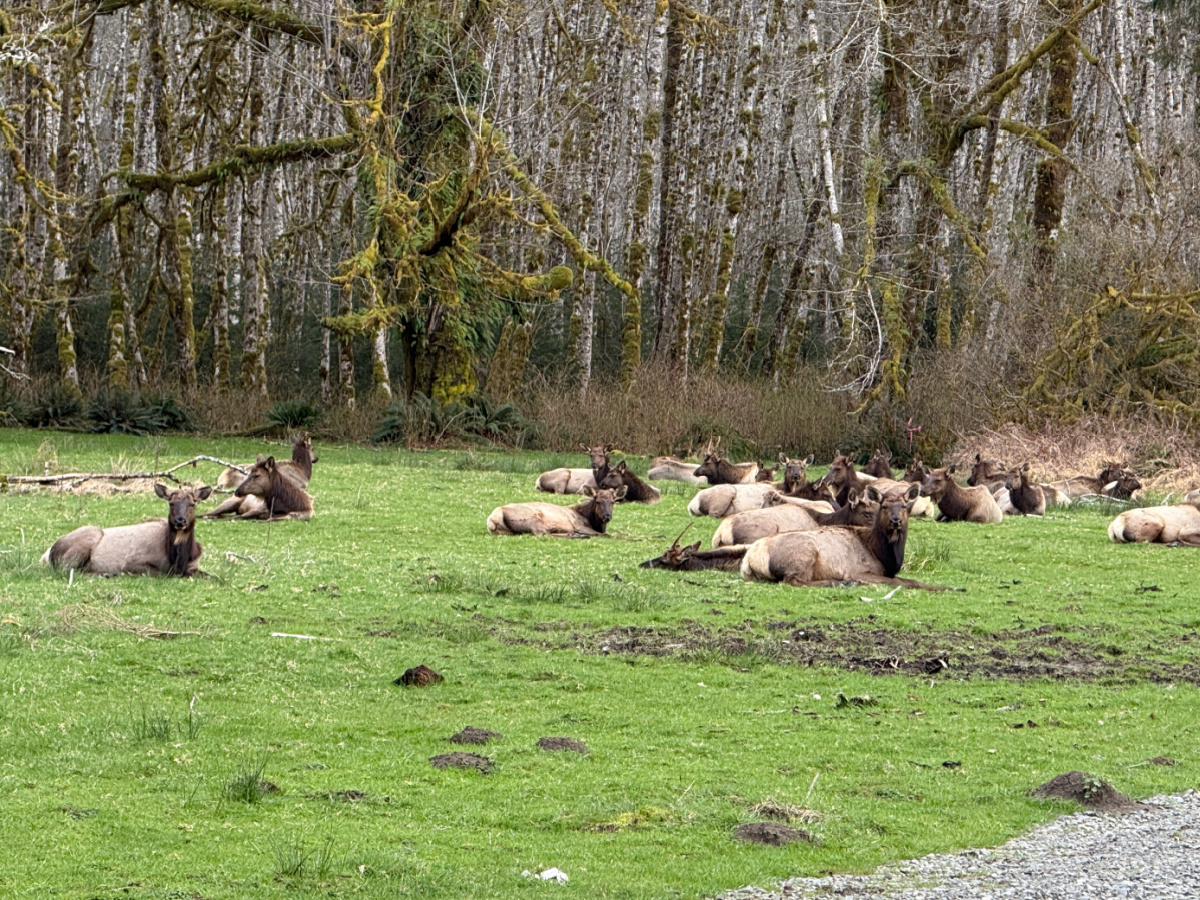
And somehow seeing giant elk wandering through misty rainforest landscapes just feels extremely Olympic National Park.
We saw elk several times throughout the Olympic Peninsula, especially near river valleys and rainforest areas.
The rainforests are also home to:
- black bears
- banana slugs
- bald eagles
- river otters
- mountain lions
- sea otters near the Pacific coast
- mountain goats in higher elevations
Although honestly, the banana slugs may end up being the wildlife your kids talk about most afterward.
They’re unforgettable.
Mostly because they look fake.
Other Rainforest Areas in Olympic National Park
While the Hoh Rainforest and Quinault Rainforest are the two rainforest areas most visitors focus on, they aren’t the only lush lowland forests within Olympic National Park.
The western side of the Olympic Peninsula contains several temperate rainforest ecosystems, including the Queets and Bogachiel areas.
Queets Rain Forest
The Queets Rain Forest is one of the more remote rainforest areas in Olympic National Park and is known for offering a quieter, more isolated wilderness experience compared to the Hoh Rainforest.
Because of its more remote location, it tends to receive fewer visitors than the park’s more famous rainforest areas.
The Queets region still features the classic temperate rainforest characteristics the Olympic Peninsula is known for, including old-growth forests, moss-covered trees, and lush vegetation.
Bogachiel Rain Forest
The Bogachiel Rain Forest is located near Forks and is another rainforest ecosystem within Olympic National Park.
This area is often less crowded than the Hoh Rainforest while offering similar dense forest scenery typical of the Olympic Peninsula’s western lowlands.
Some backcountry trail systems in the Bogachiel area eventually connect toward the Hoh River region for experienced hikers and backpackers.
A Few Things I’d Do Differently Next Time
Honestly?
I’d slow down more.
Olympic National Park is huge, and I think a lot of first-time visitors underestimate drive times around the Olympic Peninsula.
You can technically cram a lot into one trip.
But the rainforest areas especially feel better when you leave room to wander a little.
Just stop, sit quietly by the river for a few minutes… and notice details.
This isn’t really a park that rewards rushing.
And I think that’s why so many people fall in love with it.
Best Time to Visit the Olympic National Park Rainforests
One of the interesting things about visiting the Olympic National Park rainforests is that the weather almost becomes part of the experience.
These forests are supposed to feel damp and mossy and a little mysterious. Honestly, a perfectly sunny bluebird day almost feels slightly wrong here.
I’ve visited the Olympic Peninsula in both late March and mid-August, and the rainforest experience felt very different each time.
Visiting in Summer
Mid-August brought the easiest weather overall.
Trails were in good condition, daylight lasted forever, and it was much easier to combine rainforest stops with beaches, Hurricane Ridge, and other areas around Olympic National Park in the same trip.
The downside, of course, is crowds.
The Hoh Rainforest especially gets busy during summer months, and parking backups near the entrance can become a real thing during peak times.
If you visit in summer, I’d strongly recommend getting to the Hoh Rain Forest early in the morning if possible.
That said, summer is also probably the easiest season for first-time visitors, especially families trying to balance multiple areas of the park in one vacation.
Visiting in Spring
Late March felt completely different.
It was quieter. Much moodier, and much wetter.
And honestly? The rainforest atmosphere was incredible.
Everything looked intensely green, the moss seemed even more dramatic, and fog drifting through the trees somehow made the forests feel even more magical.
The tradeoff is that spring weather around the Olympic Peninsula can be unpredictable. You need to expect rain, muddy trails, and cooler temperatures.
But if you don’t mind dressing for wet weather, spring can be an amazing time to experience the rainforests without peak summer crowds.
Honestly, There Probably Isn’t a “Bad” Time
I think the rainforests are one of those rare places where different weather conditions just create different experiences rather than ruining the trip.
Sunny weather makes the forests feel vibrant and accessible.
Fog and drizzle make them feel atmospheric and almost prehistoric.
Either way, they’re beautiful.
Just bring waterproof shoes. Trust me on that one.
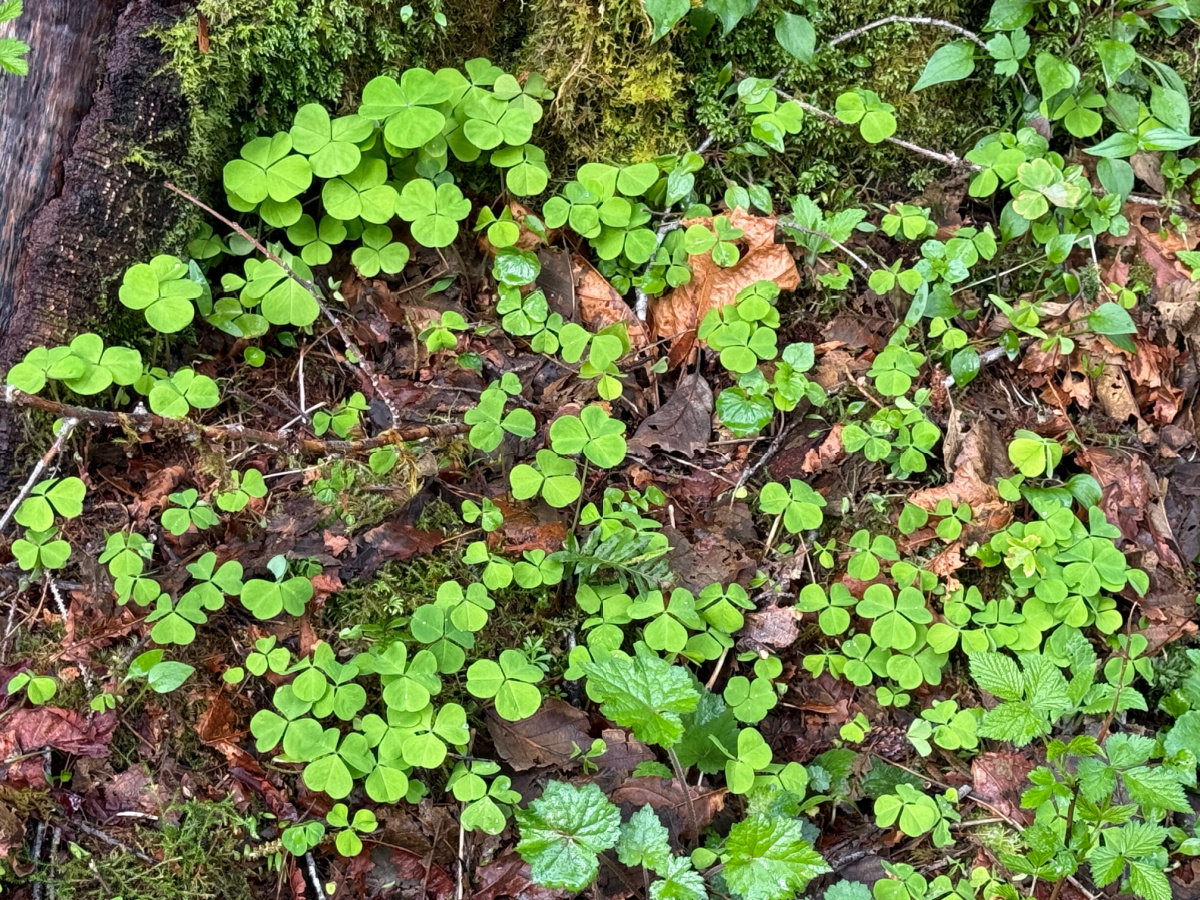
Final Thoughts on the Olympic National Park Rainforests
Before this trip, I thought the beaches would end up being my favorite part of Olympic National Park.
And don’t get me wrong — I loved the beaches.
But the rainforests stayed with me more afterward.
There’s just something about them.
The silence.
The scale.
The feeling that nature has completely taken over.
It feels ancient and peaceful and wild all at once.
And even now, when I look back through my Olympic National Park photos, the rainforest images are the ones I keep stopping on the longest.