Exploratorium San Francisco: One of the Best Hands-On Science Museums for Families

Planning a visit to the Exploratorium San Francisco? See the best hands-on exhibits, how long to spend, tips for kids and teens, CityPASS info, Tactile Dome details, and more.
Estimated reading time: 31 minutes
I have been to a lot of science museums over the years, and the Exploratorium in San Francisco is still one of my absolute favorites.
That is a pretty high bar.
I love a good science museum, but the Exploratorium is not set up like most science museums I have visited. Instead of walking through a handful of large, traditional exhibits, you move through a huge collection of smaller hands-on experiments. Everywhere you turn, there is something else to touch, test, manipulate, listen to, look through, build, spin, balance, or figure out.
And that is what makes this place so much fun.
We visited when our daughter was six, and she could participate in almost everything we encountered. But this is not remotely a museum that only works for younger kids. I would happily go back without a child. I would go on a date. I would go with friends. I would go by myself.
It is simply a really fun museum.
The Exploratorium currently has hundreds of interactive exhibits spread throughout several major galleries, so there is no way one article could cover everything you might see. The exhibits also change over time.
What I am sharing here are some of the highlights from our visit and the kinds of experiences you can expect when you go.
And if your family loves hands-on science, give yourself plenty of time. You could easily spend five or six hours here, and I honestly think a serious science-museum fan could spend most of the day.

What Makes the Exploratorium Different?
The easiest way to explain the Exploratorium is that you do not just look at science here.
You do science.
You might spend a few minutes experimenting with colored light, walk a few steps and test how your eyes focus, then head to another station where you can play with sound, magnets, bubbles, balance, or motion.
That layout also makes the museum easier to enjoy when it is busy.
If several people are crowded around one experiment, you usually do not have to stand there and wait. Just move on. There is almost always another station nearby that looks equally interesting.
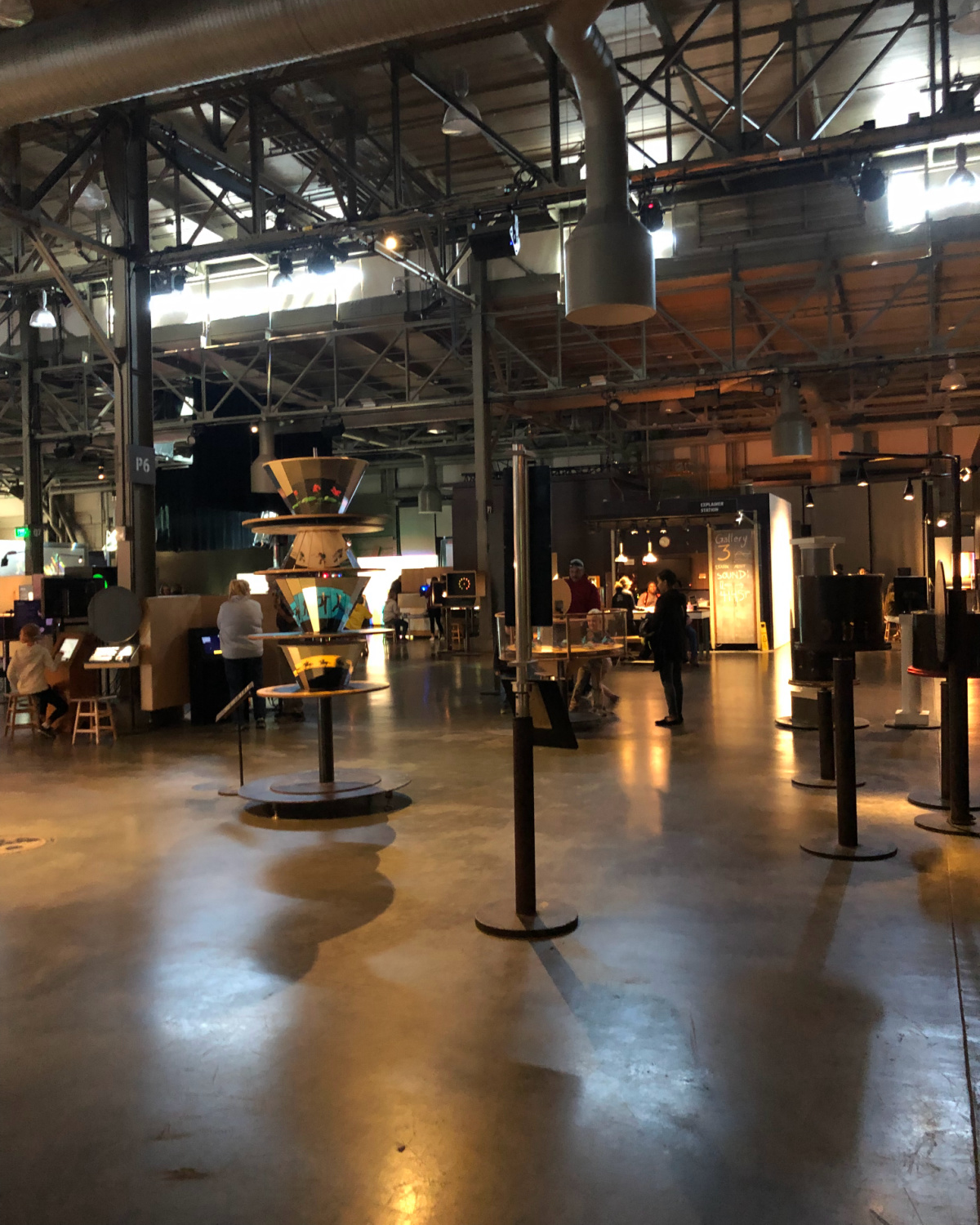
The museum is organized into broad galleries focused on things like human behavior, tinkering, perception, living systems, and the natural world. But within those galleries, the experience still feels very exploratory.
You wander. You notice something weird. You stop and try it.
That is basically the Exploratorium.

Light, Color, and How Your Brain Sees the World
Some of our favorite exhibits involved light, color, vision, and perception.
This is one area where the Exploratorium really shines because so many of the experiments are immediately understandable, even for younger kids. You can see something happening right in front of you and then start figuring out why.
Dance With Colored Shadows
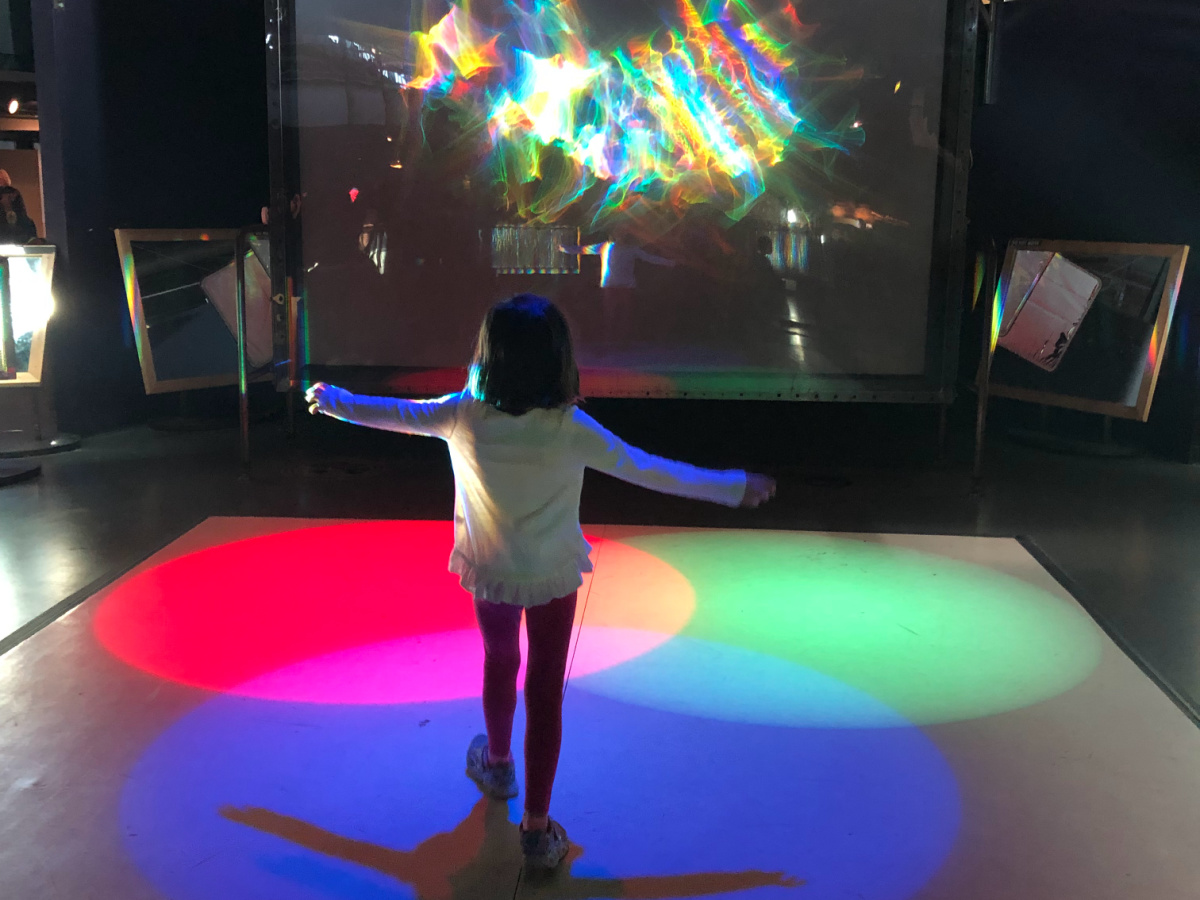
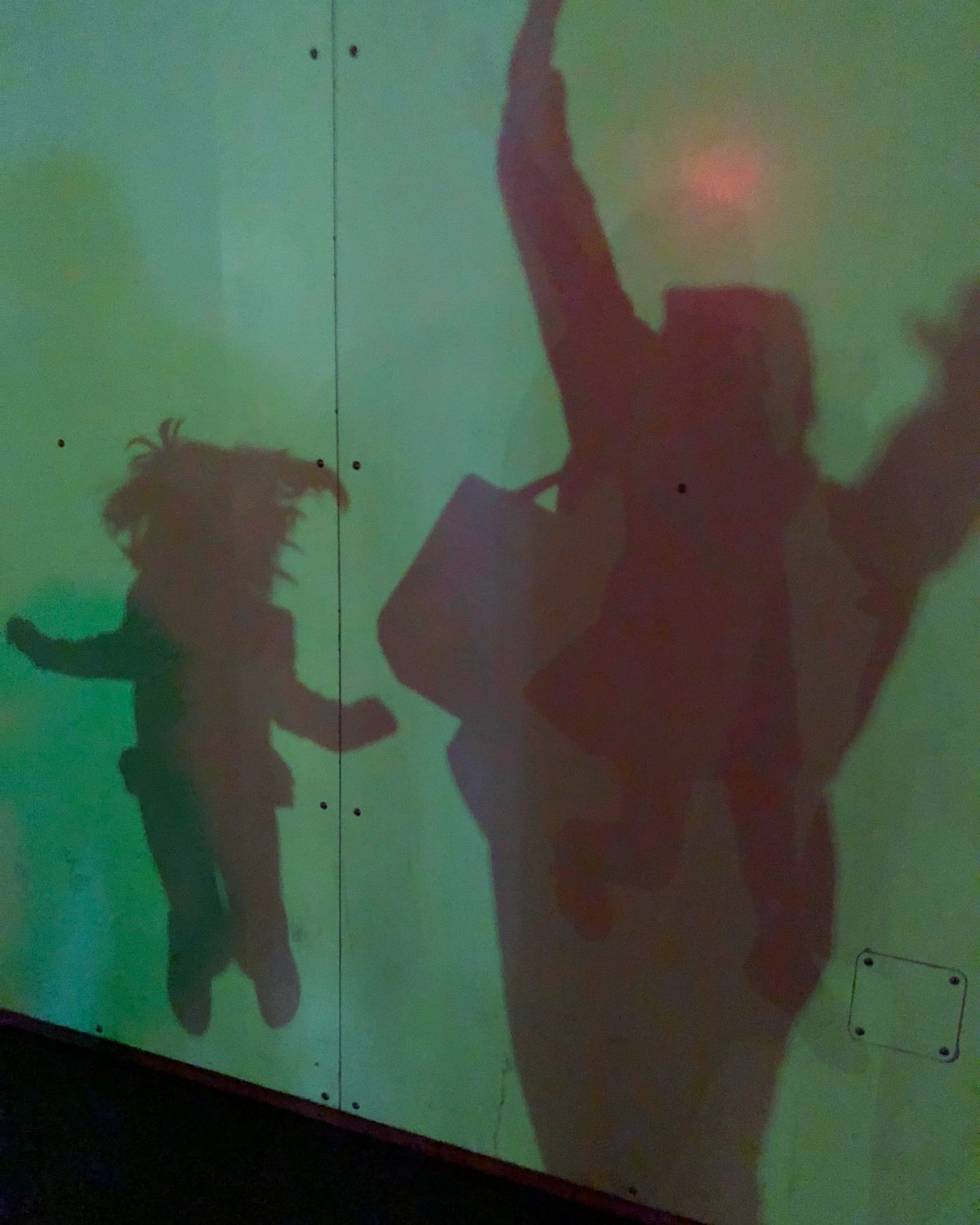
One of the most memorable exhibits for our daughter involved standing in overlapping pools of colored light and watching multiple colored shadows appear behind her.
Naturally, she started dancing.

The more she moved, the more the shadows shifted and separated across the wall. It was one of those perfect Exploratorium moments where a child thinks she is just playing, but she is also experimenting with how different colors of light interact.
And honestly, it was fun just to watch.
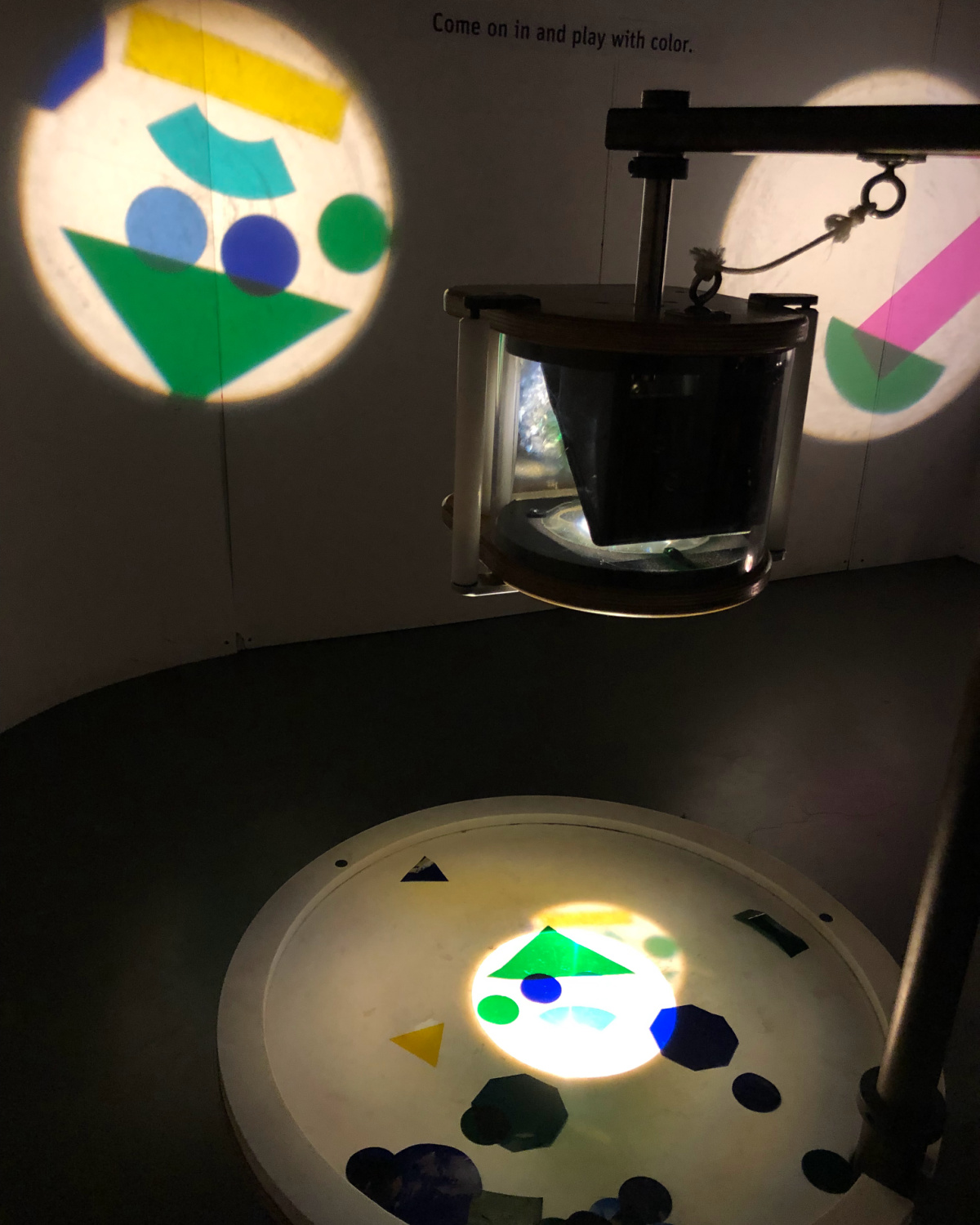
Experiment With Color Mixing
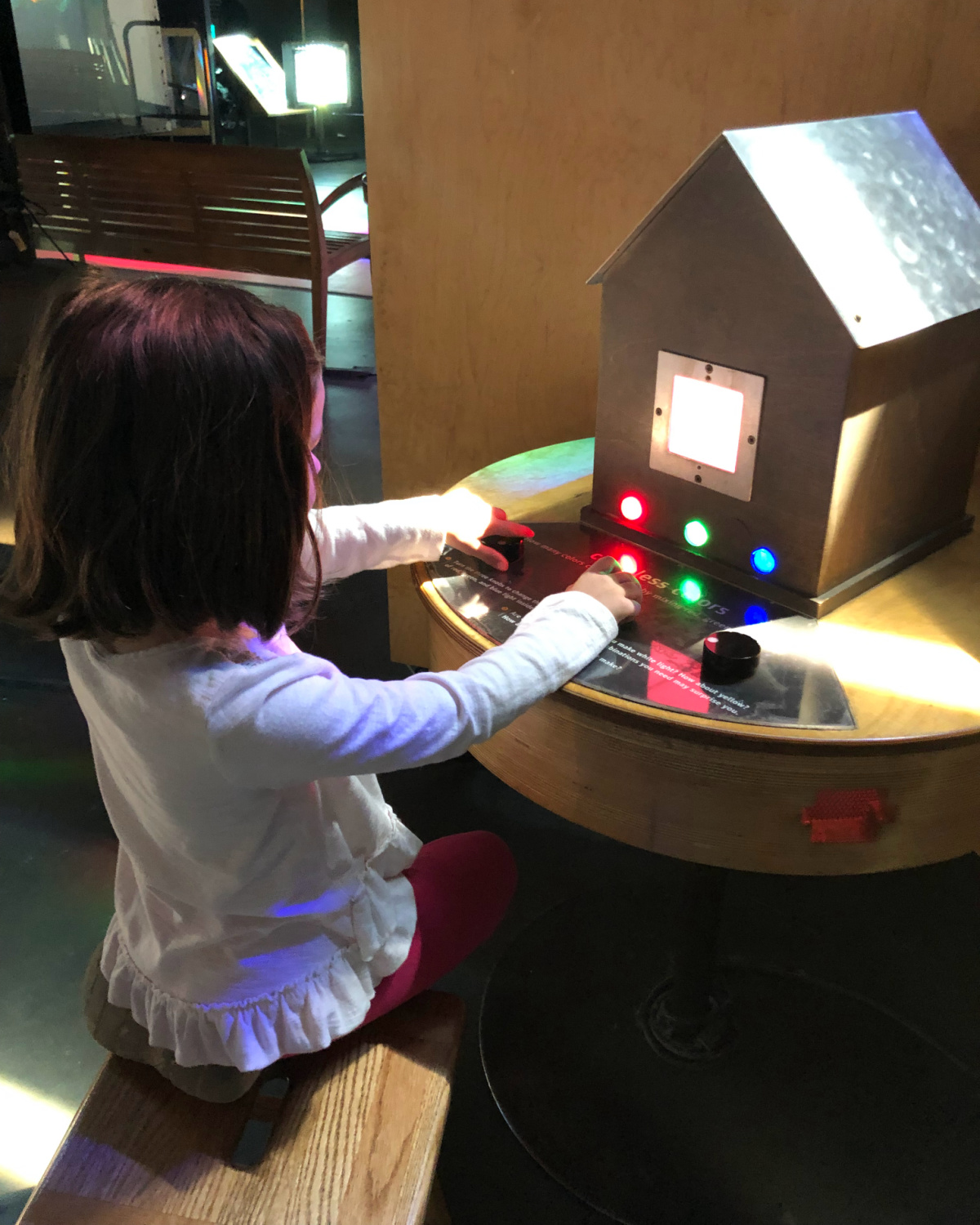
There were several different stations where you could experiment with color.
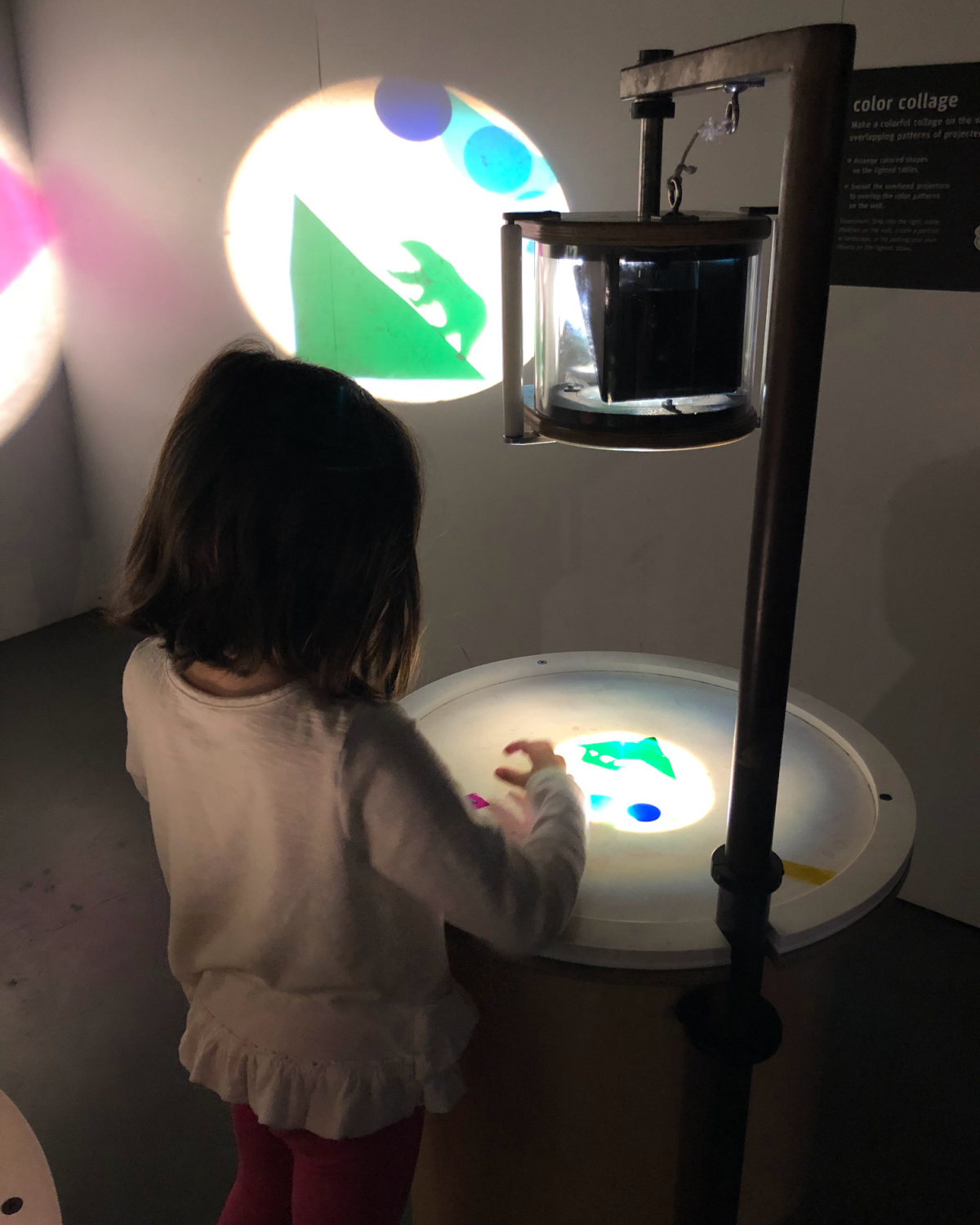
At one, our daughter used controls to manipulate colored light. At another, she could arrange translucent colored shapes and see the overlapping patterns projected onto the wall.
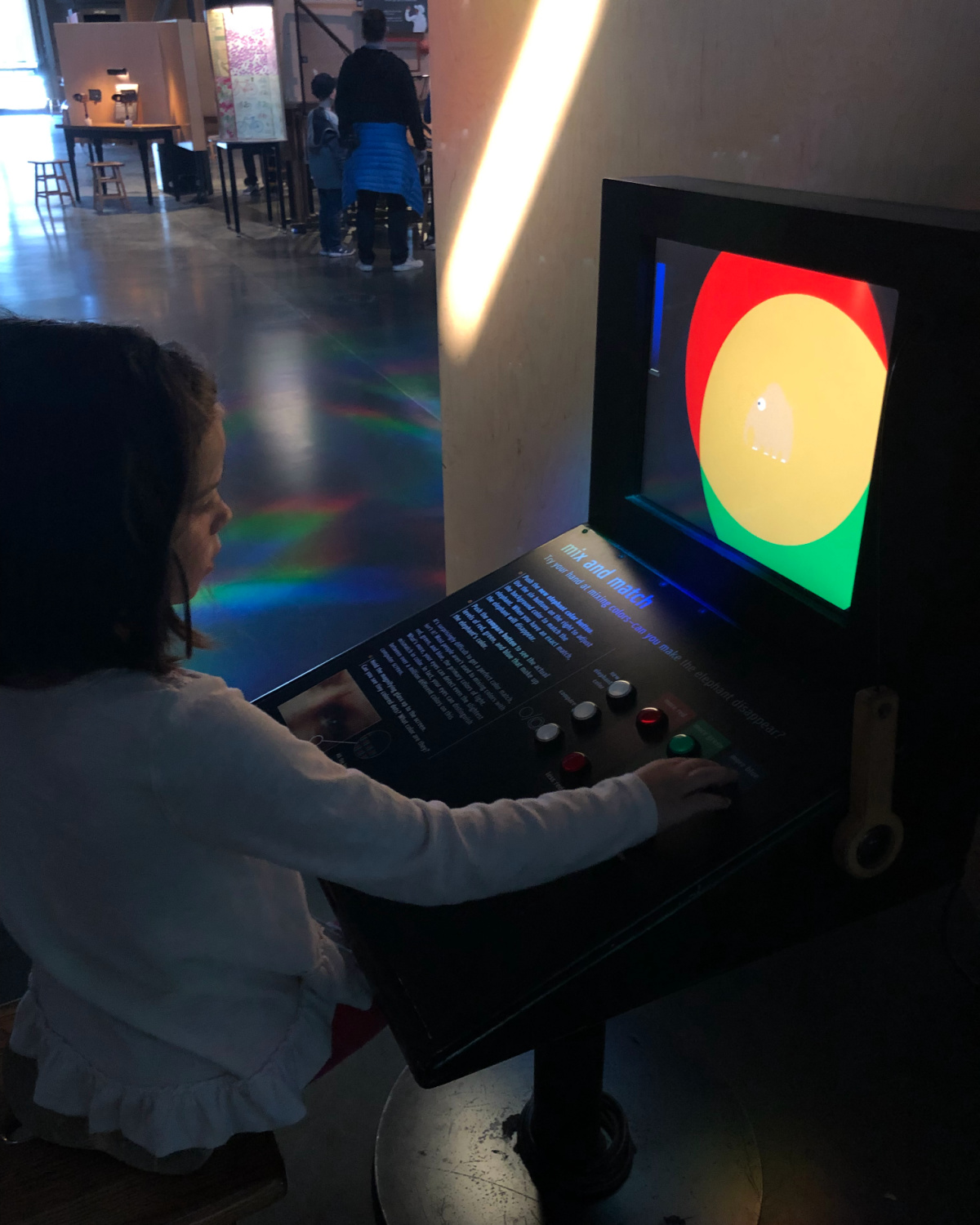
The science is about light and color mixing, but it also feels creative.
You are making something while you experiment.
That combination of art and science shows up throughout the Exploratorium and is one of the reasons the museum feels so different from a more traditional science center.
Step Into the Monochromatic Room
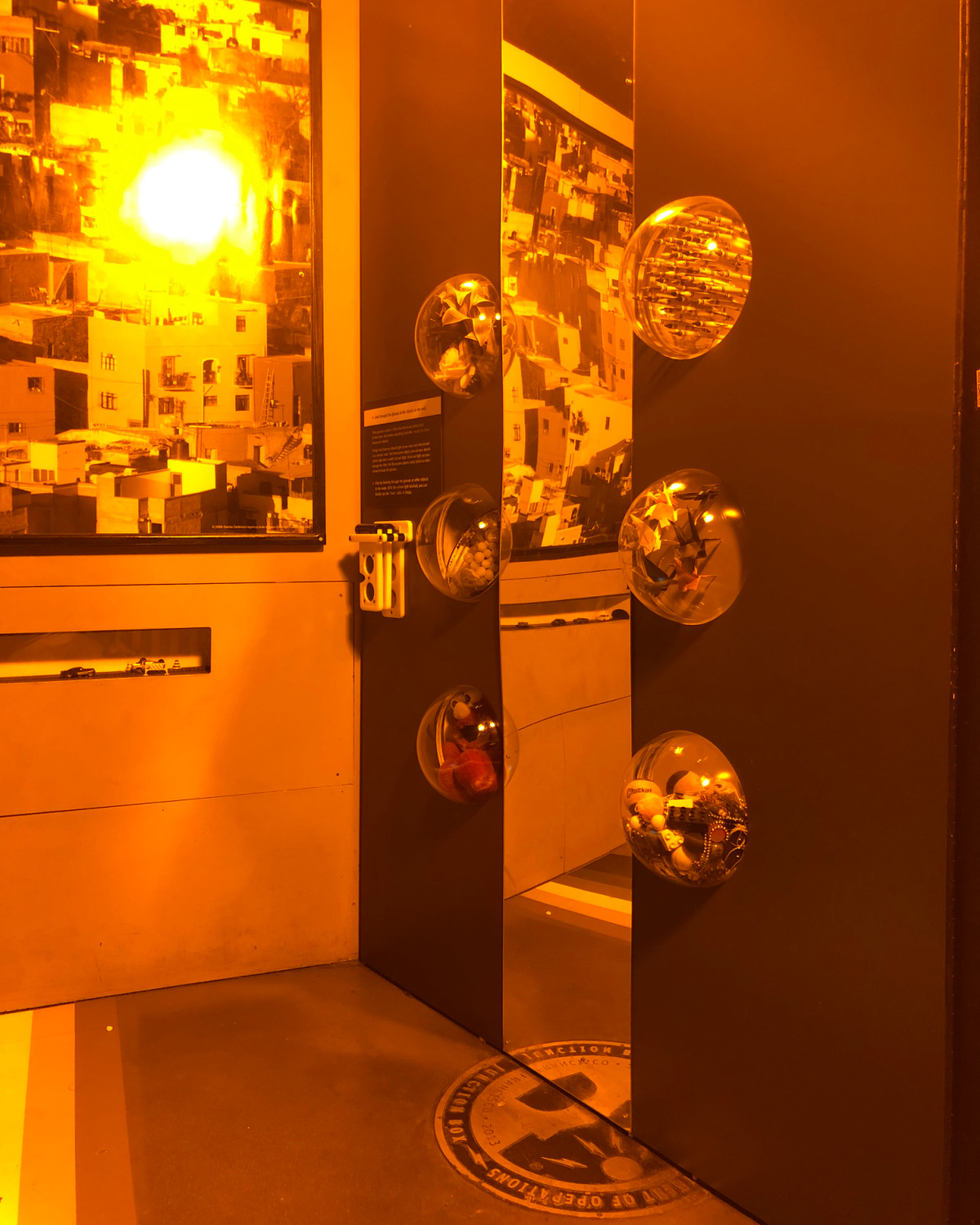
One of the strangest color experiences during our visit was the Monochromatic Room.
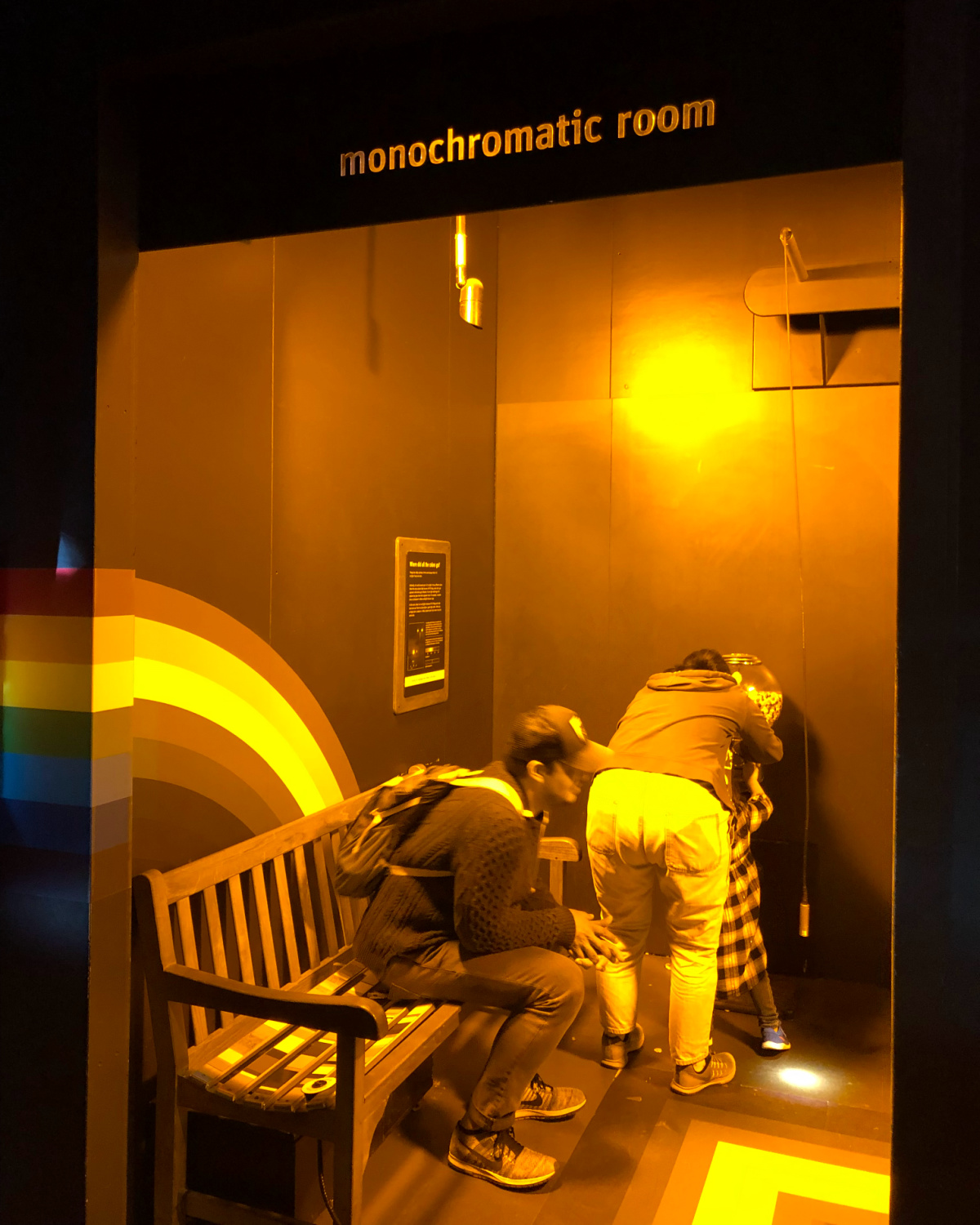
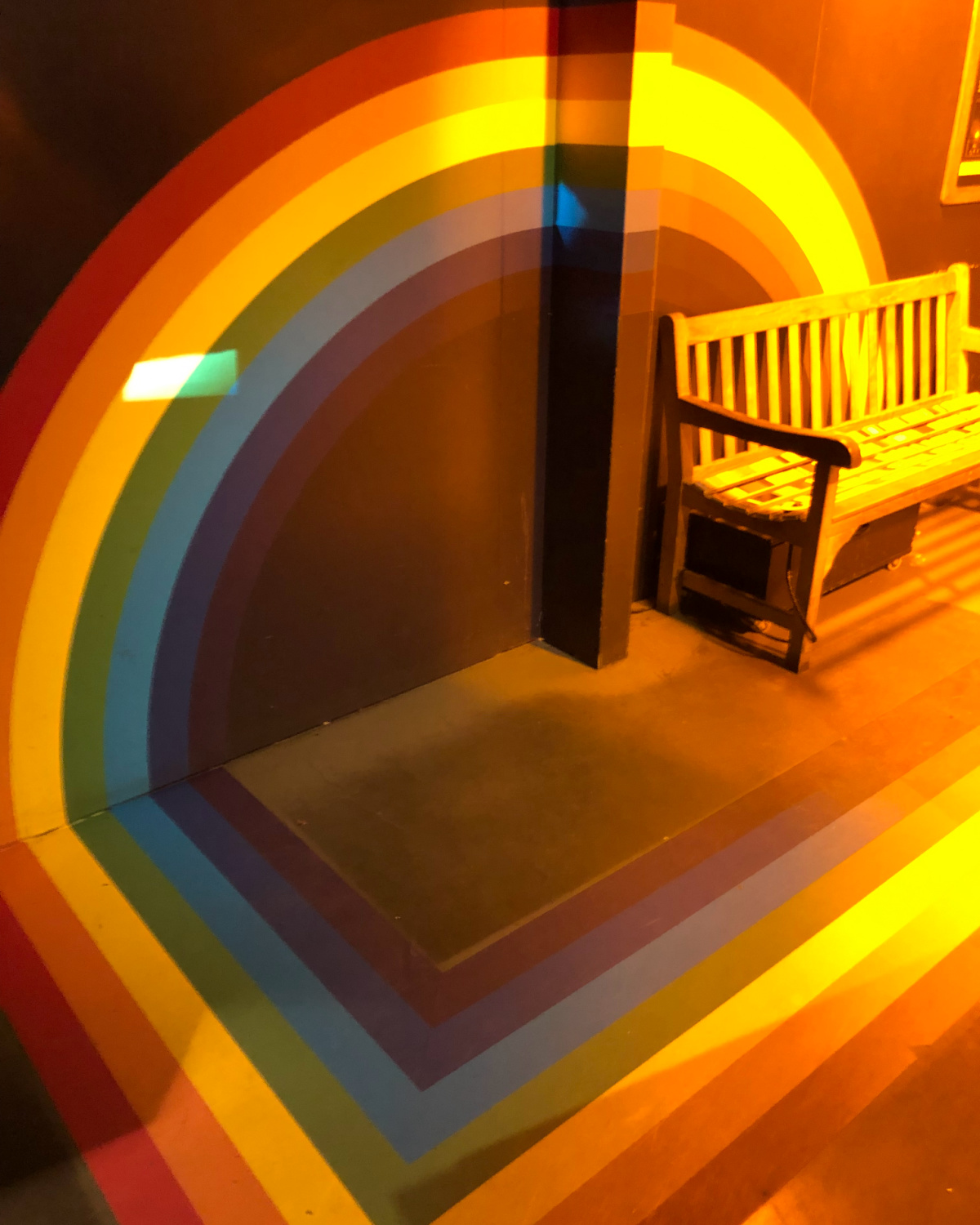
The entire room was illuminated in a yellow-orange light that distorted the way everything looked. Even a rainbow painted on the wall appeared dramatically different because your eyes were not receiving the full range of colors you normally see.
Then there was a button that temporarily turned on white light.
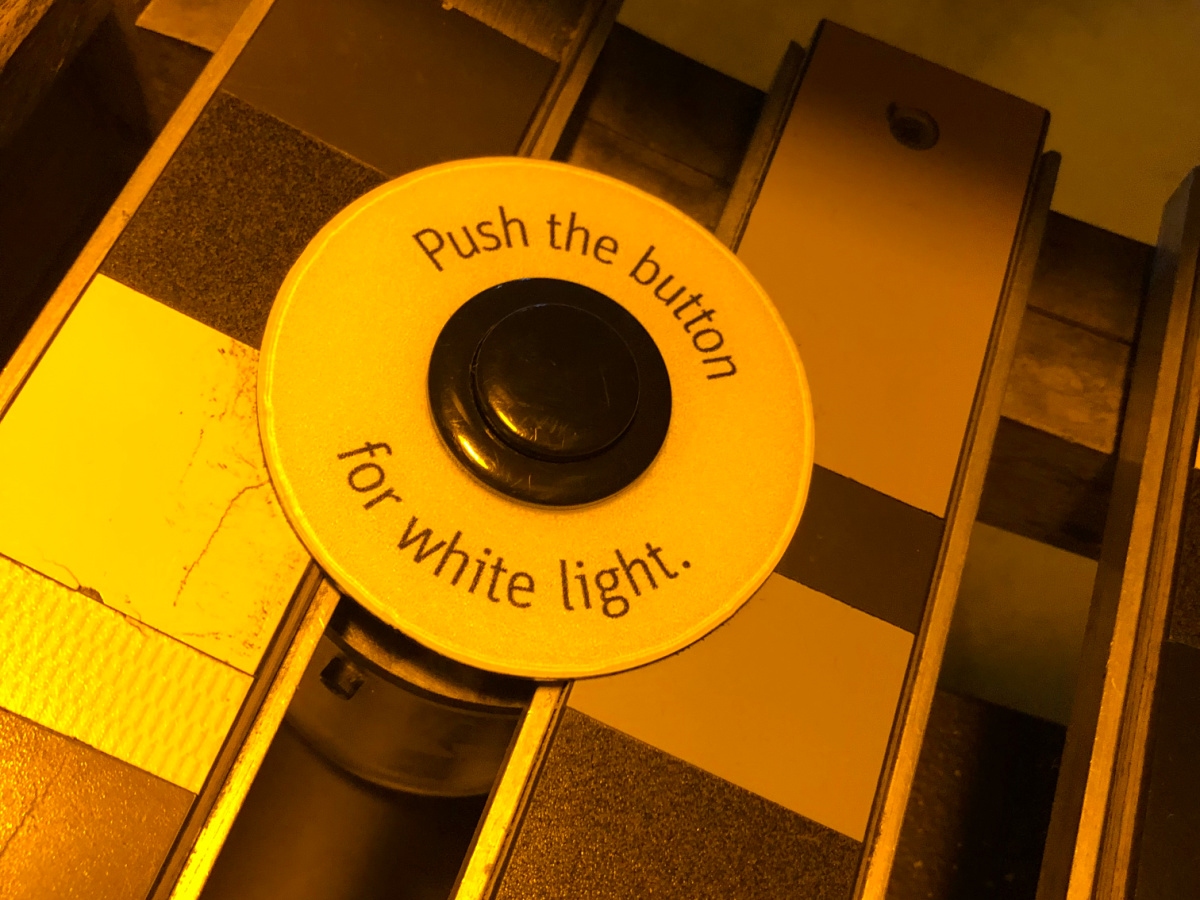
Suddenly, everything looked normal again.
That simple switch made the whole experiment click. You did not need a long explanation to understand that the light itself was changing how your brain interpreted the colors around you.
Test How Your Eyes Focus
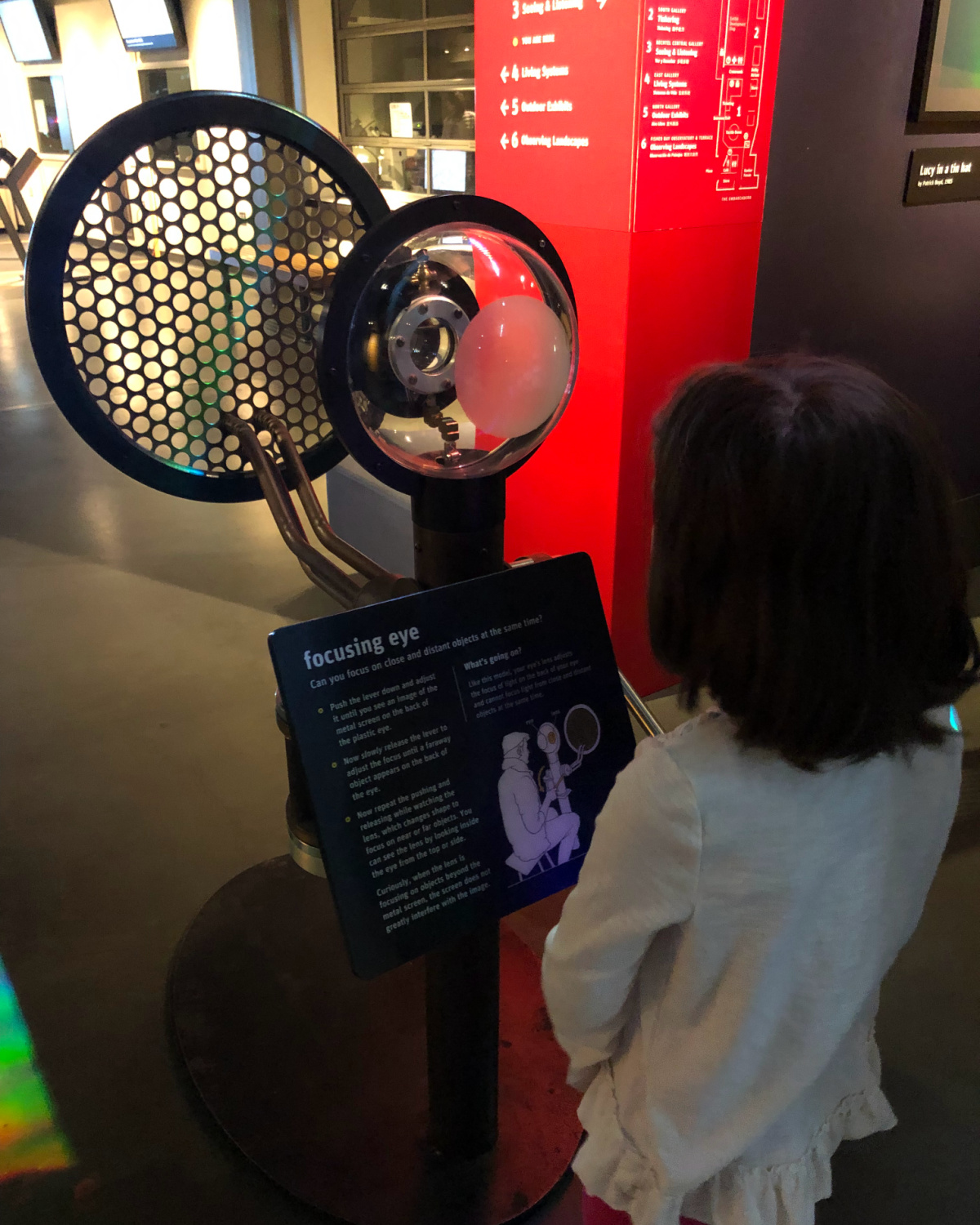
Another small exhibit let our daughter experiment with how the eye focuses on objects at different distances.
That is another thing I loved about the Exploratorium.
Some of these experiments are tiny.
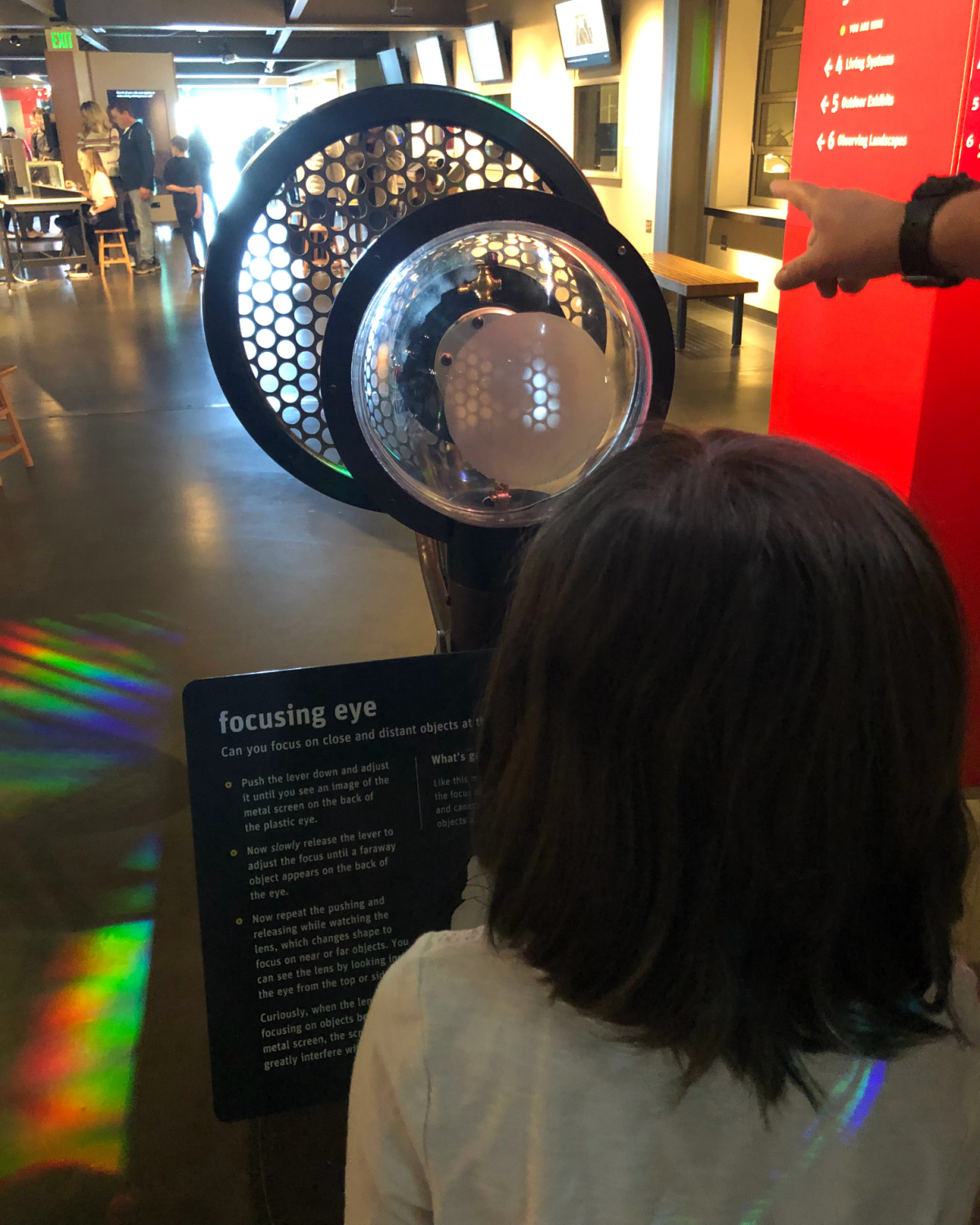
You spend two or three minutes at them.
But each one teaches you something about the way the world works, and then you are immediately off to discover something else.
Play With Optical Illusions
There were plenty of opportunities to make your eyes and brain disagree with each other.
Some exhibits played with visual perception. Others used mirrors, shifting colors, light, or movement to create effects that looked completely different from what was actually happening.
You could easily spend a big chunk of your visit just exploring the perception exhibits.
Sound, Motion, Physics, and Engineering
Once you move beyond light and color, the Exploratorium keeps going.
There are experiments involving movement, sound, force, balance, engineering, and vibration.
Again, the appeal is that you get to participate.
You are not standing behind a rope reading about physics.
You are doing the physics.
Hear Sound Through Your Body
One of the coolest demonstrations we saw involved a tuning fork.
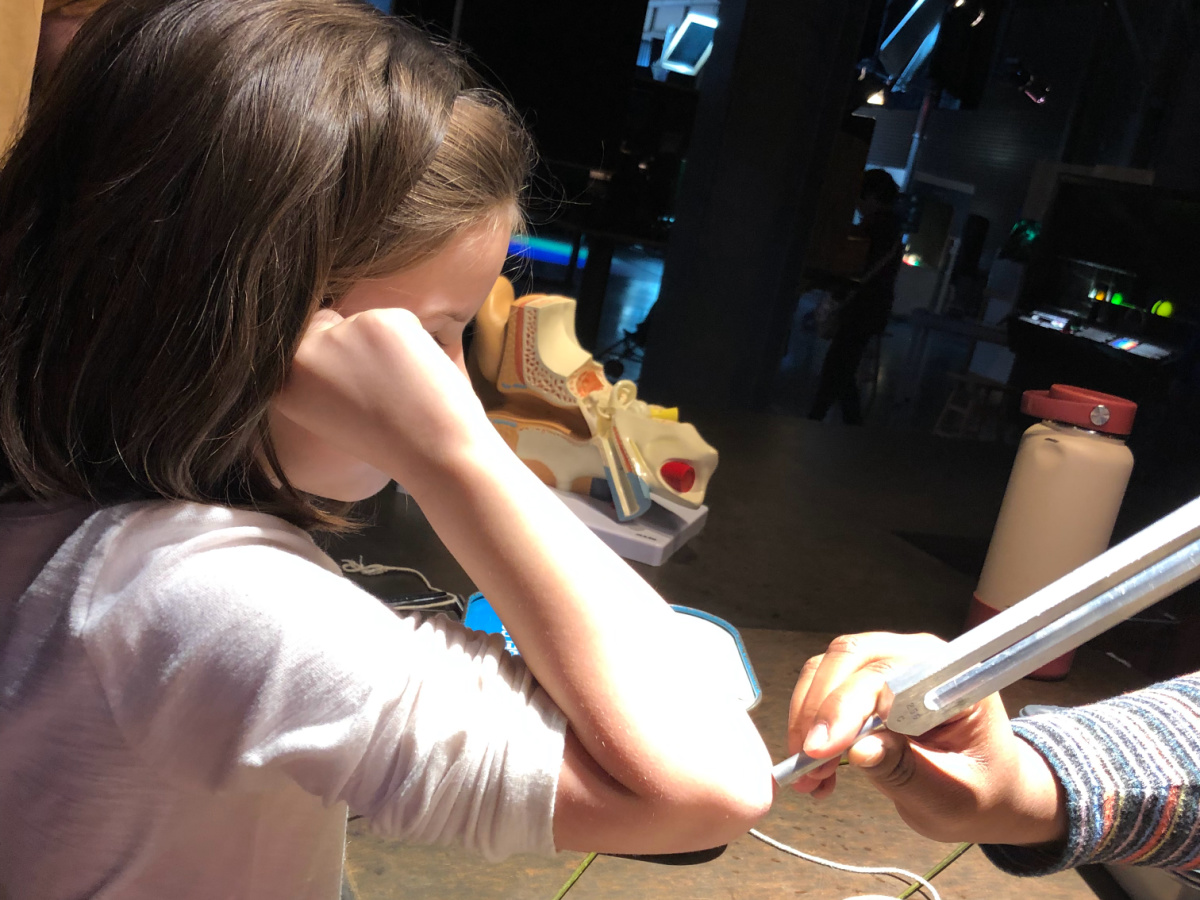
A museum educator showed us how vibrations could travel through the body by placing a vibrating tuning fork against the elbow while listening through the hand near the ear.
It was fascinating.

This was also a good reminder that not every experience at the Exploratorium is completely self-guided. We encountered staff-led demonstrations along the way too, and those added another layer to the visit.
Send a Slinky Down the Ramp
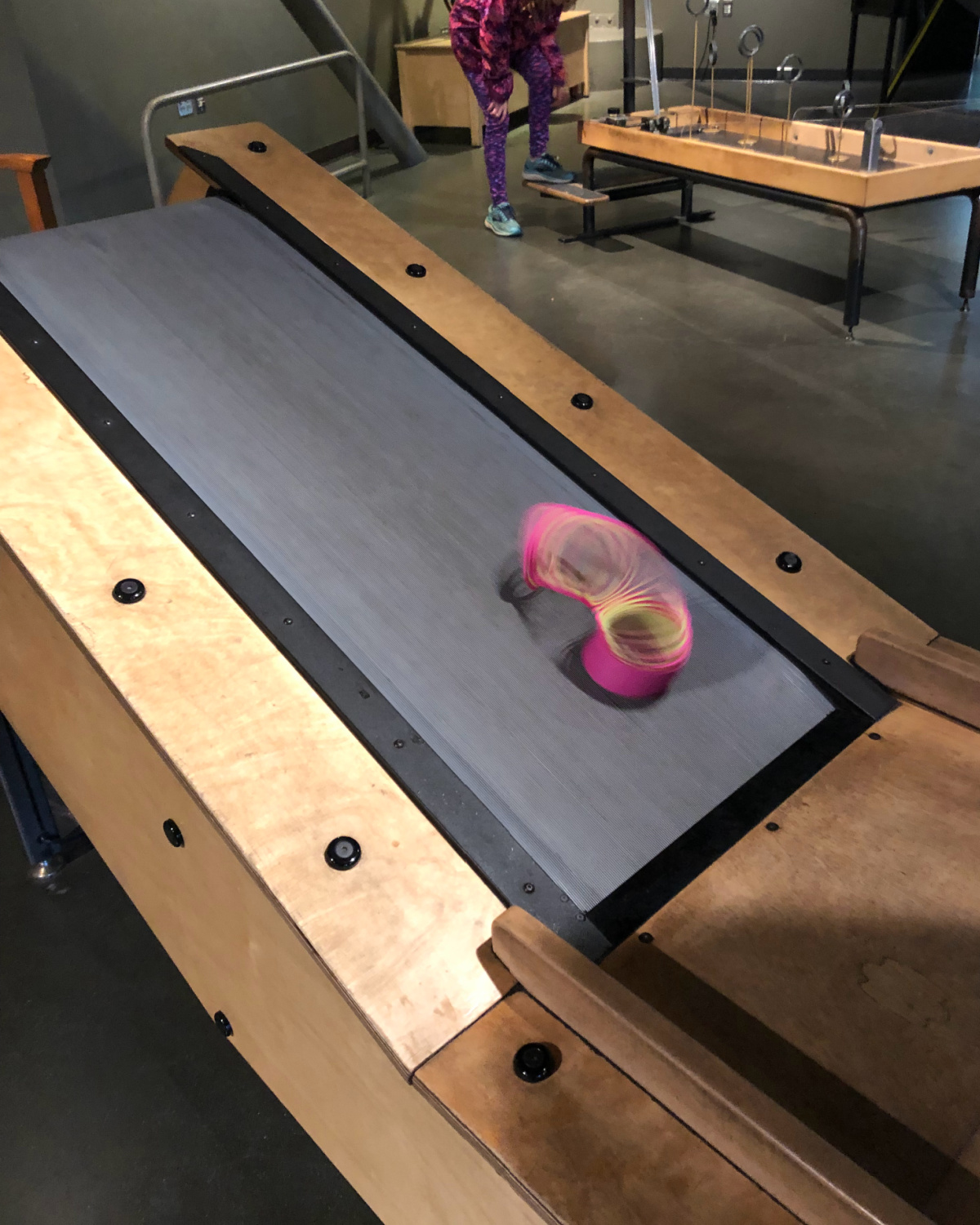
Yes, there was an entire experiment involving a Slinky.
You could place it on an inclined surface and watch the motion as it worked its way along.
Simple?
Absolutely.
But that is part of the brilliance of the Exploratorium.
It takes familiar objects and turns them into experiments.
Build on the Unstable Table
Another station challenged visitors to build on a table that was deliberately difficult to balance.
You had to place blocks on the surface while adjusting the weight at the center to keep everything from tipping.
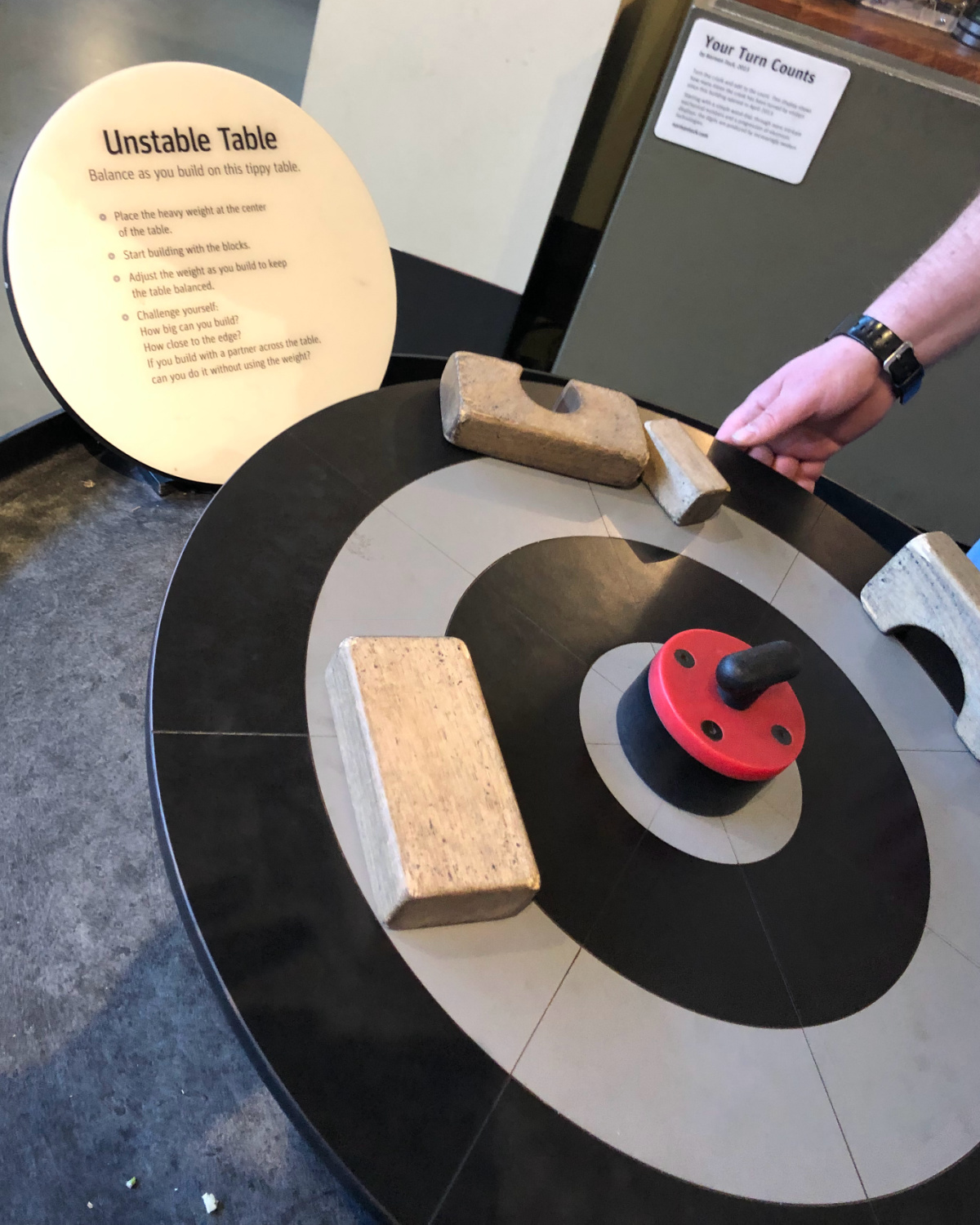
It turns balance and center of gravity into a game.
And because you are physically moving the pieces yourself, the concept becomes much easier to understand.
Make Giant Bubbles
We also found a large bubble experiment where you could use a long soap film and create bubbles by blowing across it.
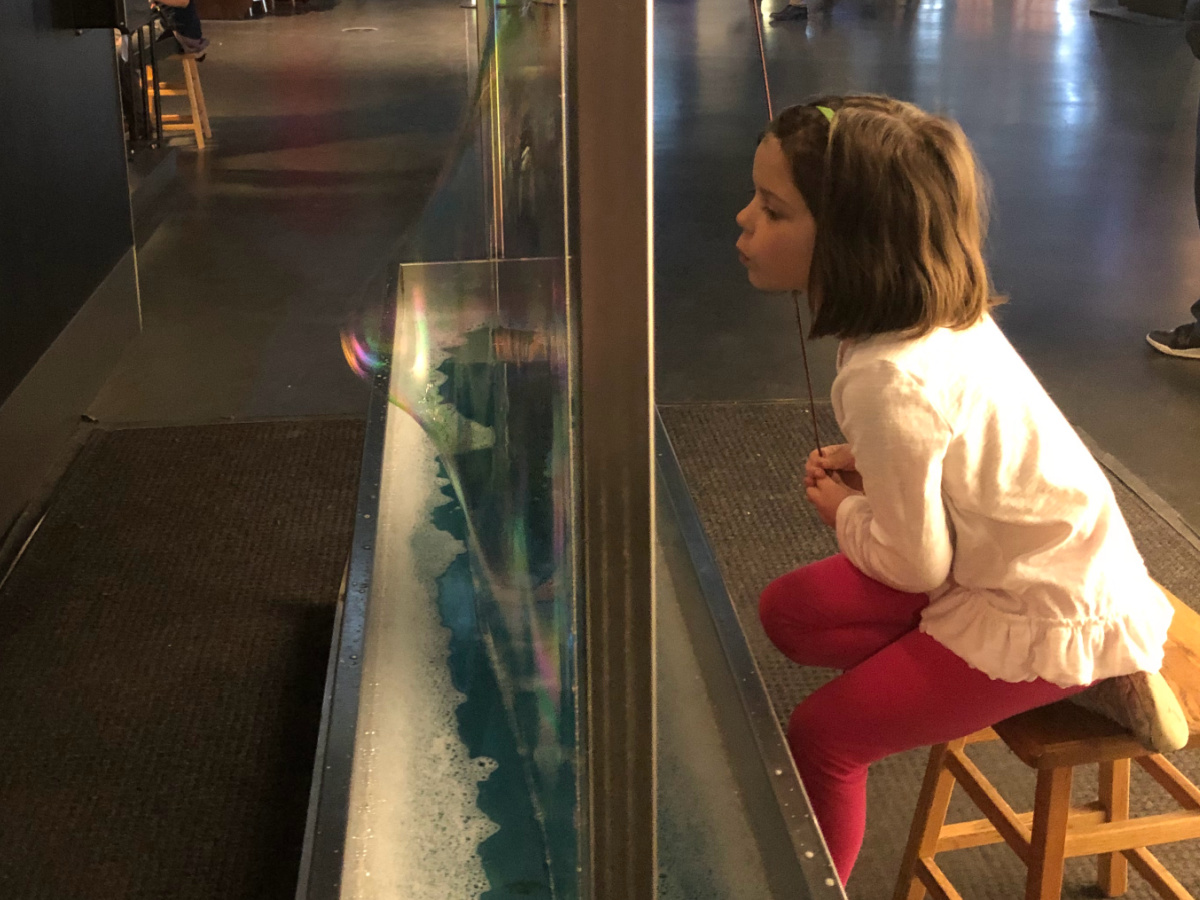
This was obviously a hit with a six-year-old.
But like so many things here, it works on two levels.
Kids get bubbles.
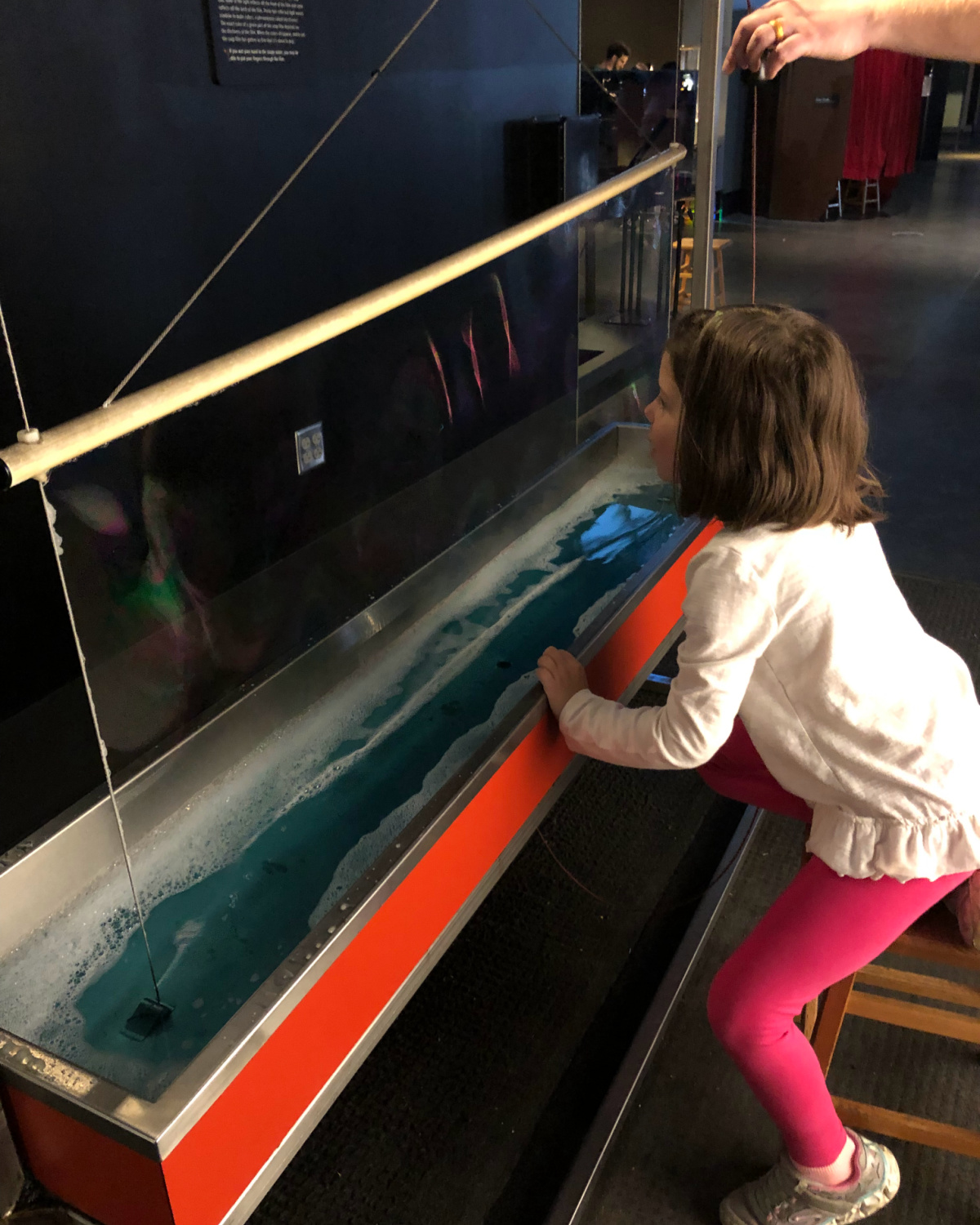
Adults get surface tension and physics.
Everybody wins.
Play With Magnetism
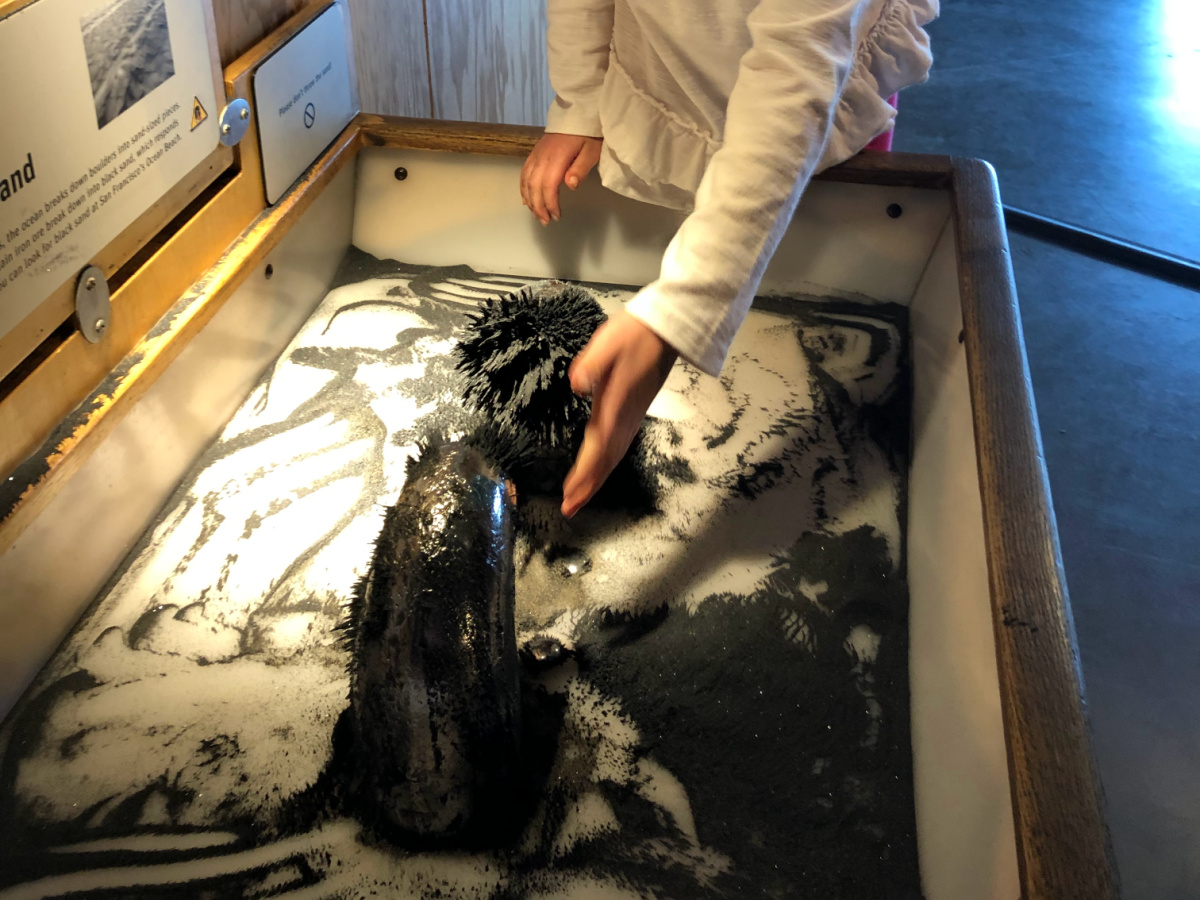
One of the most visually striking experiments involved magnetic material that formed dramatic spikes around magnets.
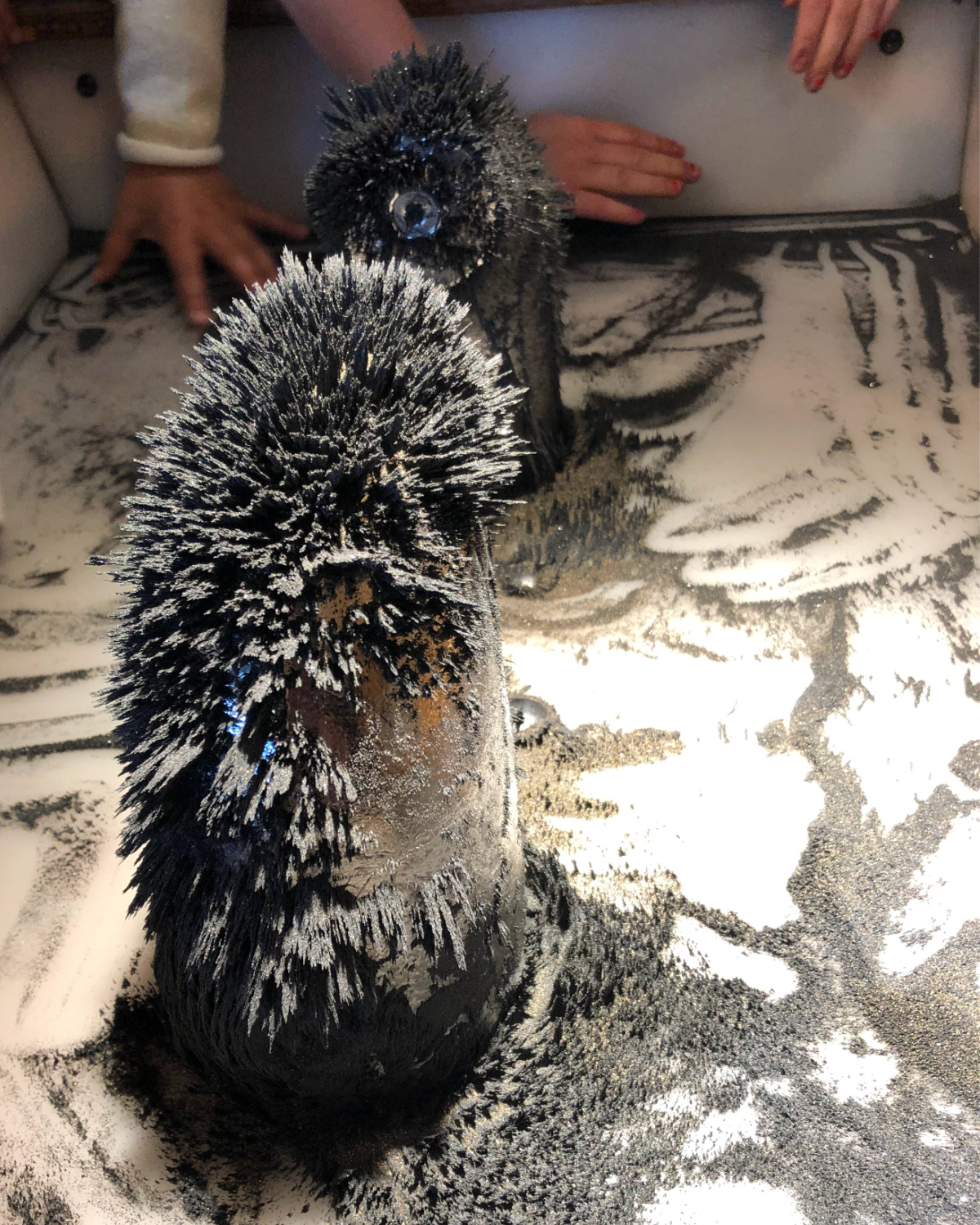
You could move the magnets and watch the material respond immediately.
It made an invisible magnetic field suddenly visible.
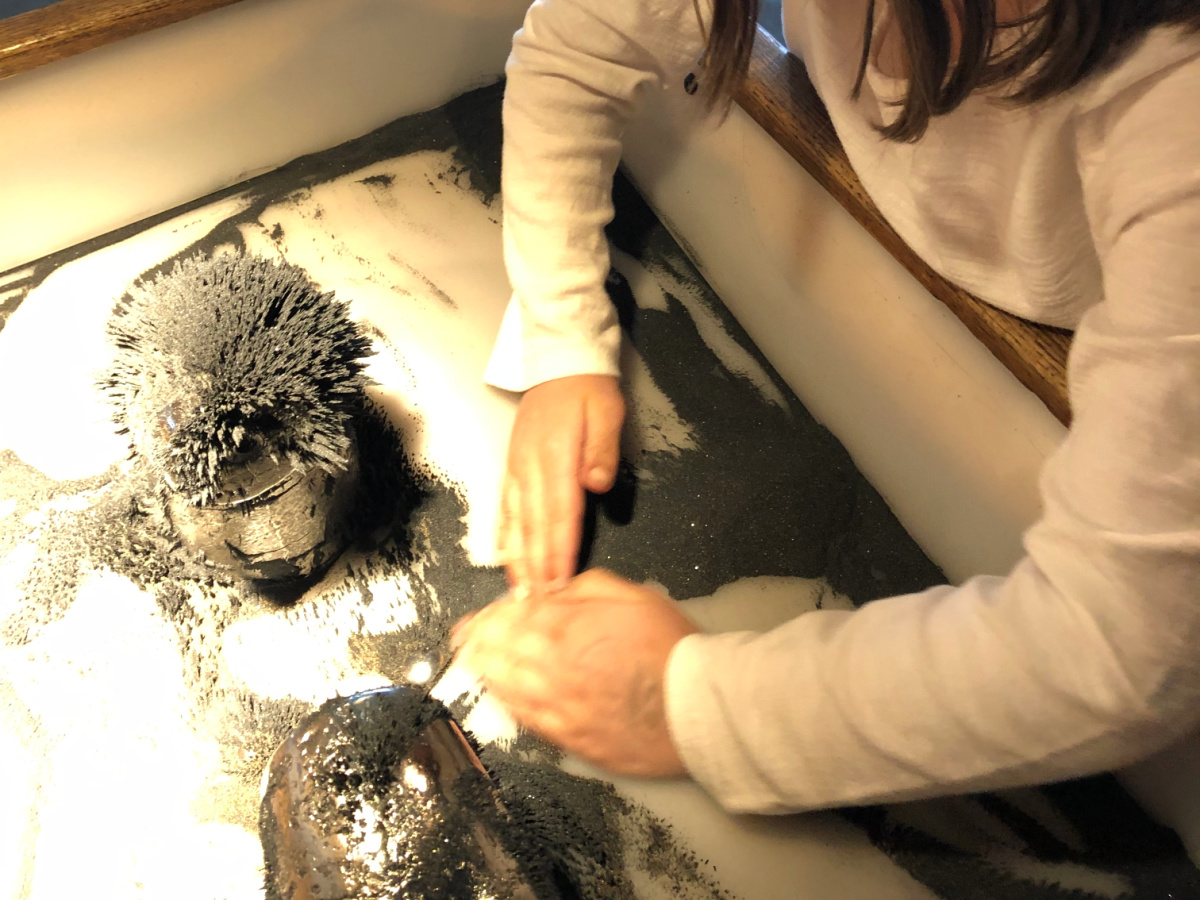
This is exactly the kind of thing the Exploratorium does well.
Instead of simply telling you what a magnetic field is, it gives you a way to see what that force is doing.
Tinkering and Hands-On Engineering
The Exploratorium also has an entire tinkering side to its personality.
Some activities involve building. Others involve manipulating mechanical systems, testing movement, or figuring out how a device works.
One of the exhibits we tried used a rope and wheel system that required you to manipulate the mechanism and see what happened.
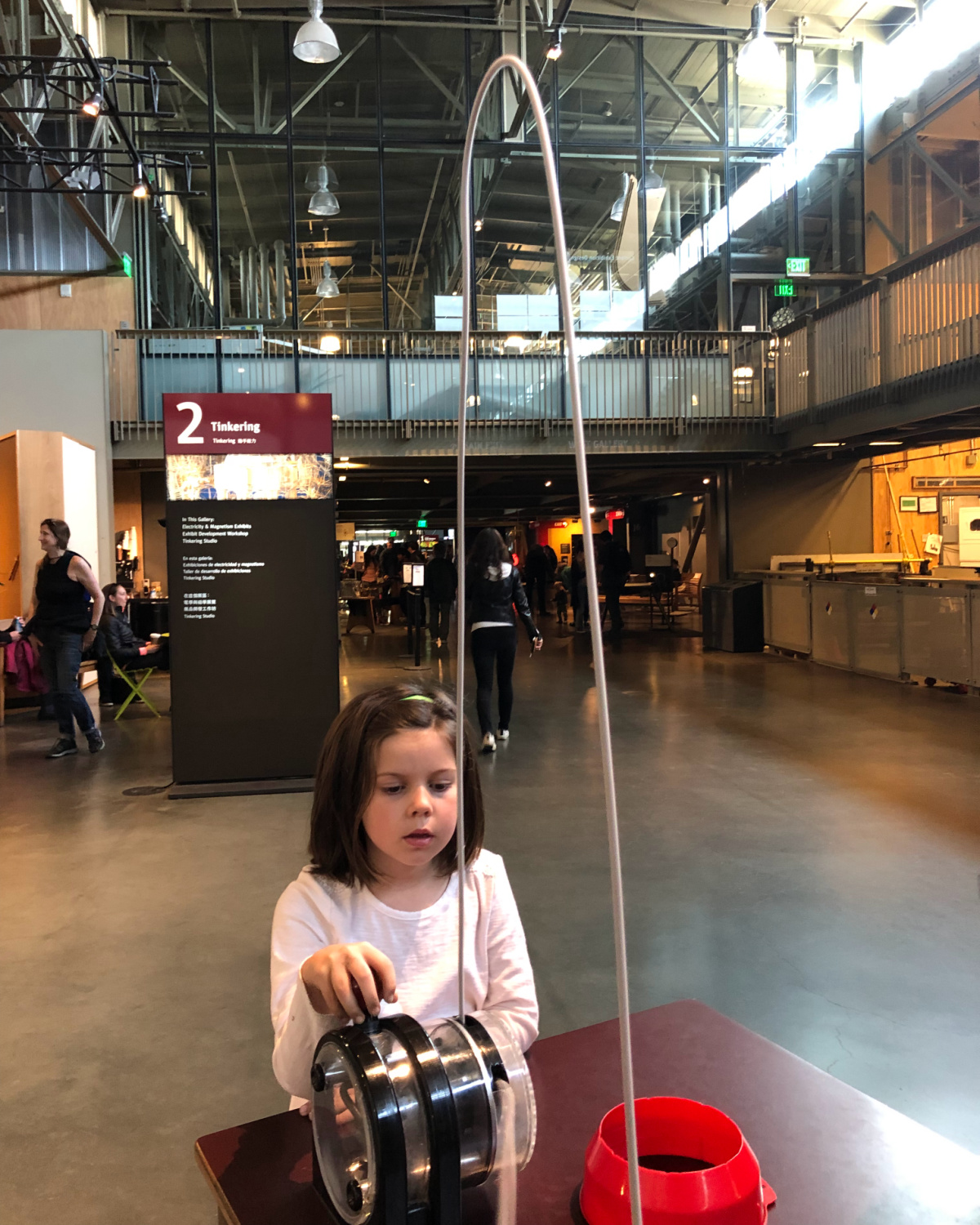
I wish I had better photos of the movement because that one was especially fun.
But that is another recurring theme here.
A still picture often cannot fully capture the exhibit because the point is the motion, the interaction, or the result of what you are doing.
And that is exactly why this museum works so well in person.
Biology, the Human Body, and Living Systems
The Exploratorium does not stop with physics and engineering.
There are also plenty of exhibits focused on biology, the human body, living organisms, and the natural world.
And once again, the museum makes these topics interactive instead of turning them into something you simply read about on a wall.
Find Out How Much Blood Is in Your Body
One exhibit let our daughter estimate the number of red blood cells in her body.
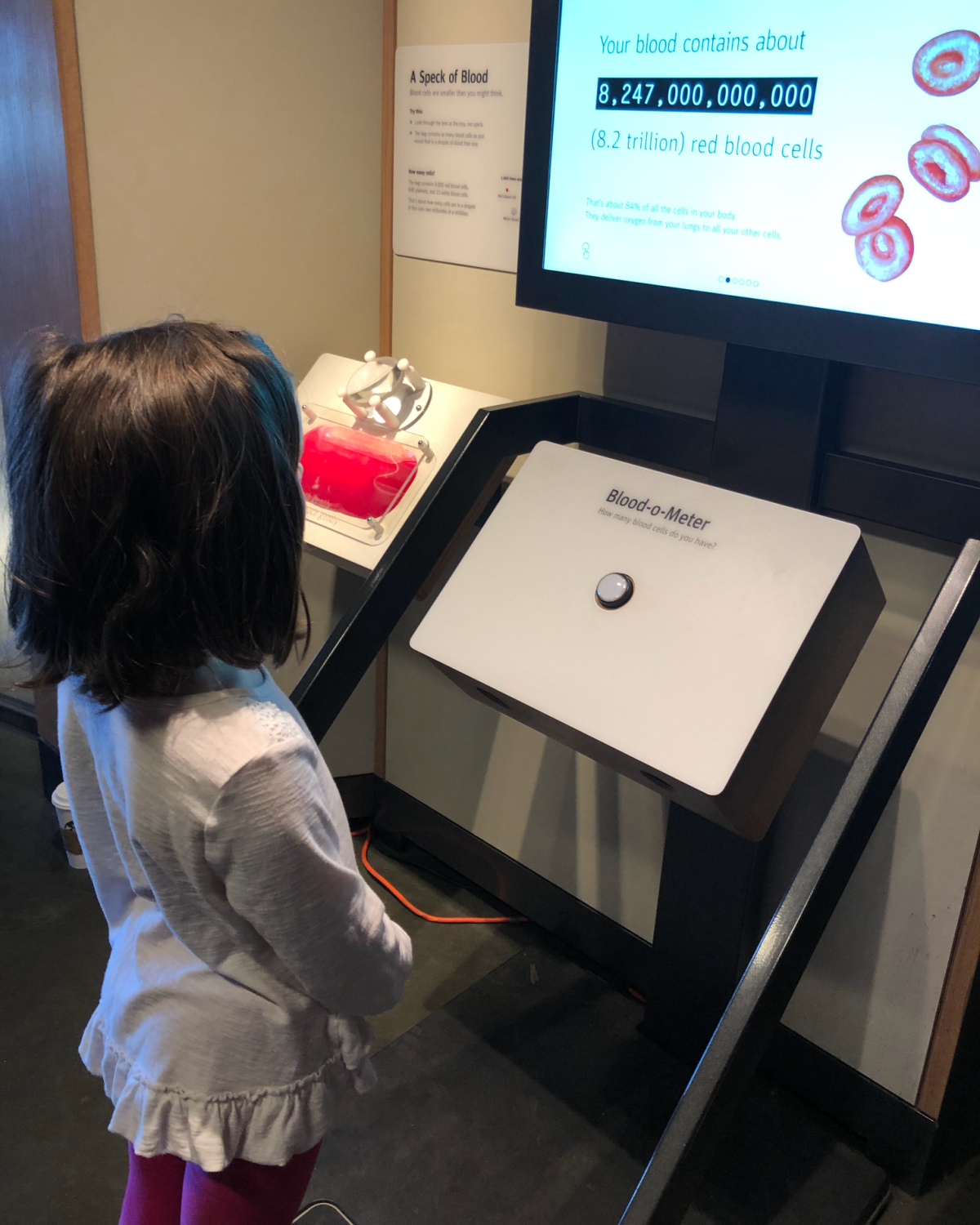
The display walked visitors through just how many red blood cells are circulating through the human body at any given time.
For a six-year-old, the number itself was almost comically huge.
But that was part of the fun.
It took something microscopic and invisible and made it feel real.
Watch Developing Chick Embryos
Another exhibit focused on developing chicken embryos.
Visitors could look closely at different stages of development and see how quickly a chick changes over just a few days.
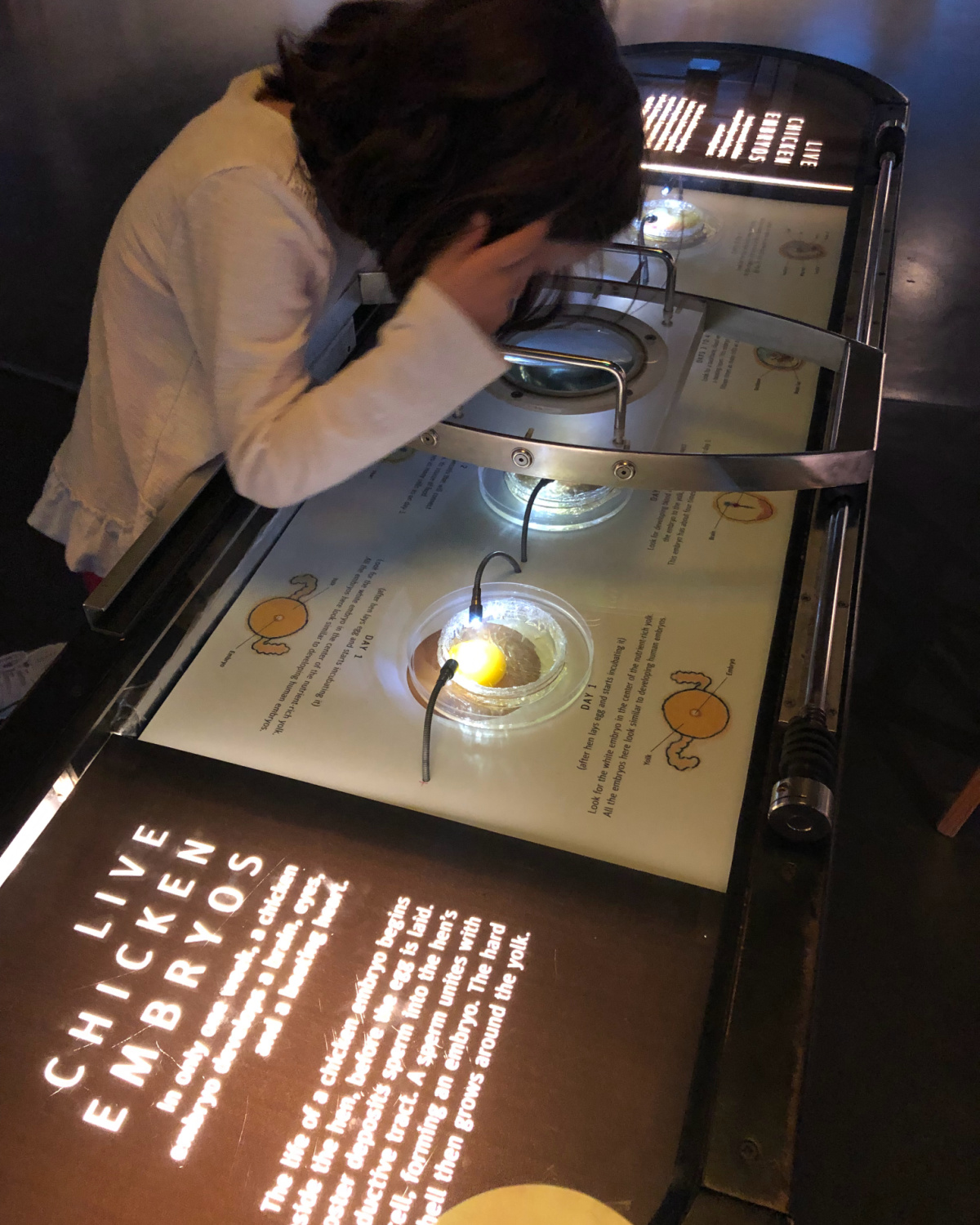
This was one of those exhibits that pulled you in because it was genuinely fascinating to look at.
It also showed how broad the Exploratorium really is.
One minute you are experimenting with color.
The next minute you are studying embryonic development.
See Your Body in Thermal Imaging
We also found a thermal imaging camera that showed our family in infrared.
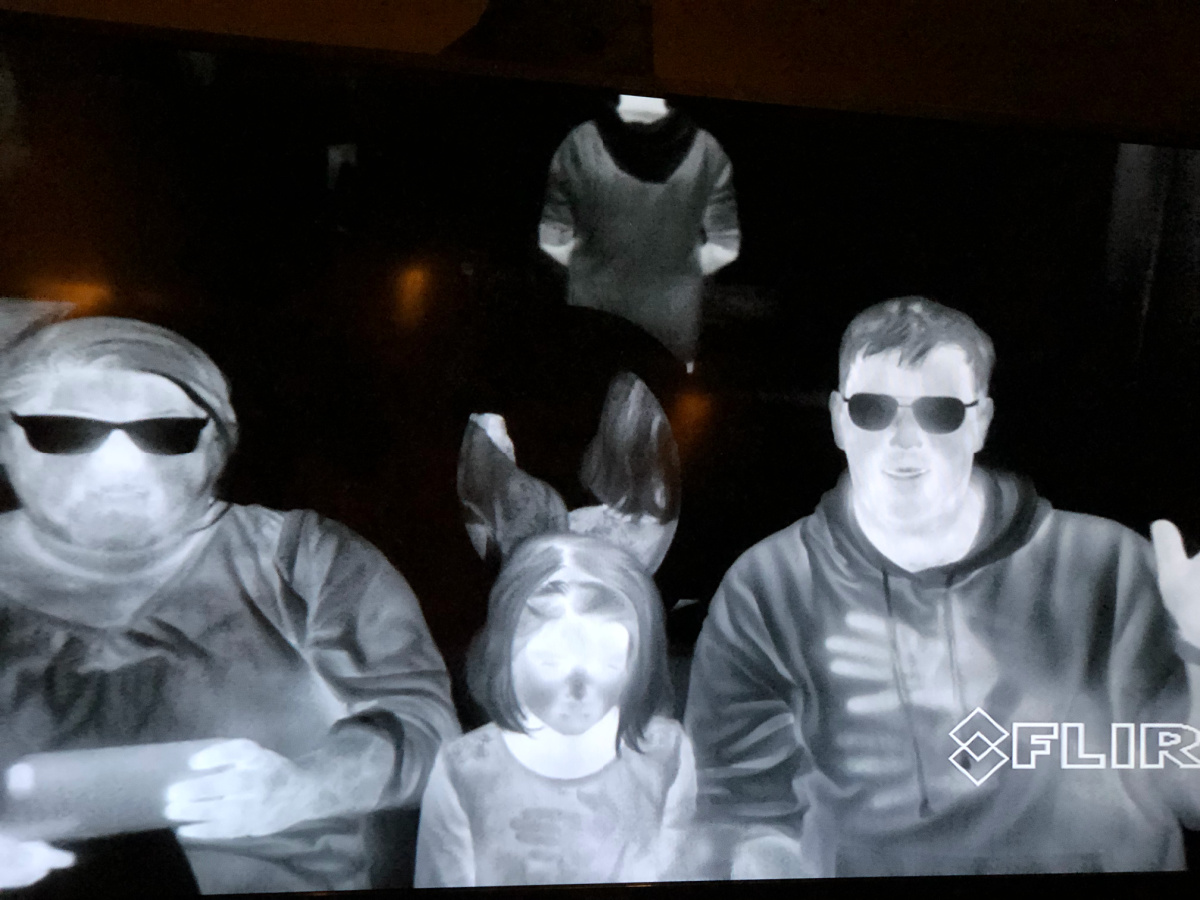
That was especially fun because everyone looked completely different depending on body temperature.
Instead of a regular photograph, the camera translated heat into an image.
It was another great example of a technology that kids might otherwise only hear about suddenly becoming something they could experience themselves.
Explore Trees, Redwood Roots, and the Natural World
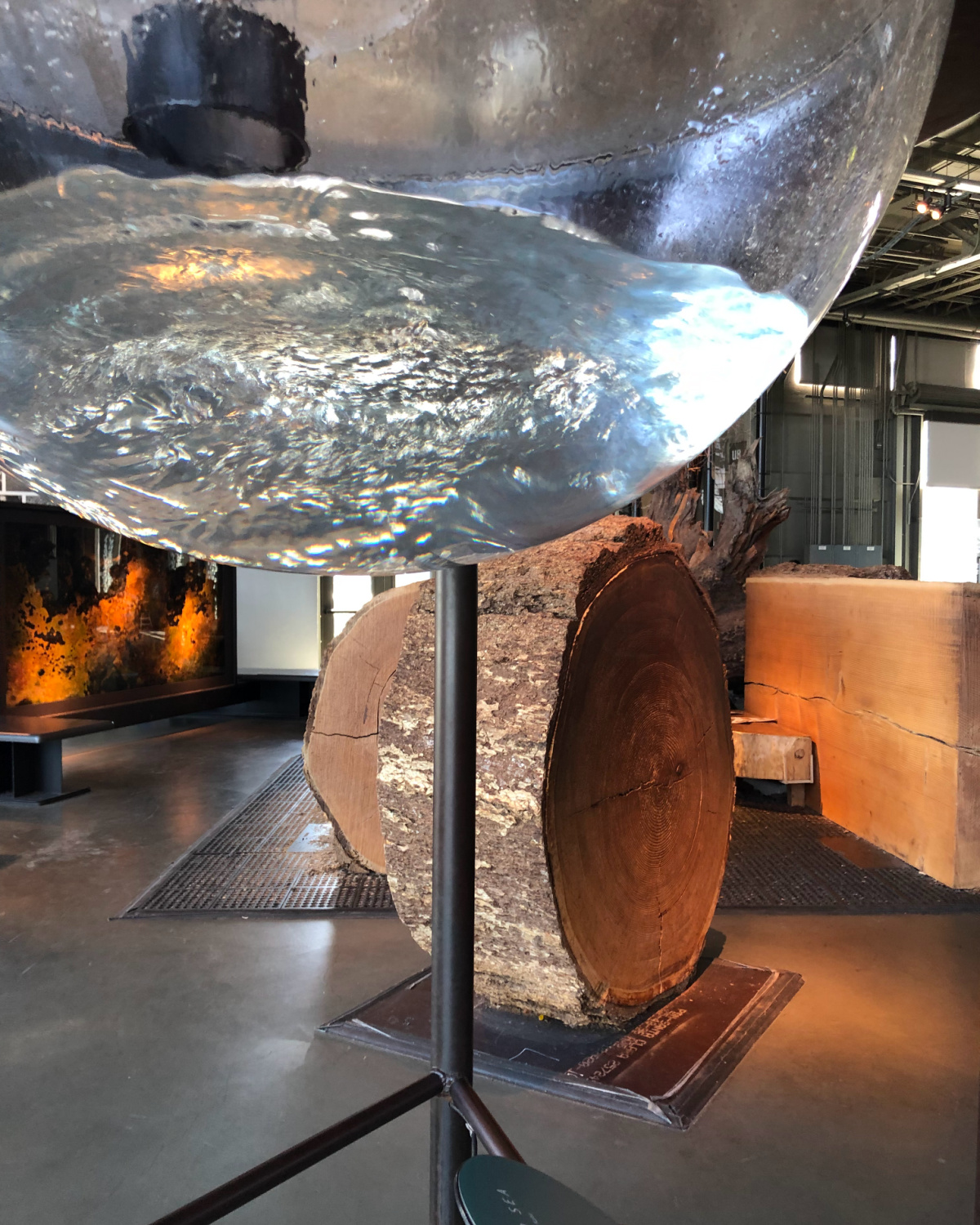
One of the most striking natural-history displays during our visit involved enormous sections of trees and massive root structures.
The sheer size of them made an impression.
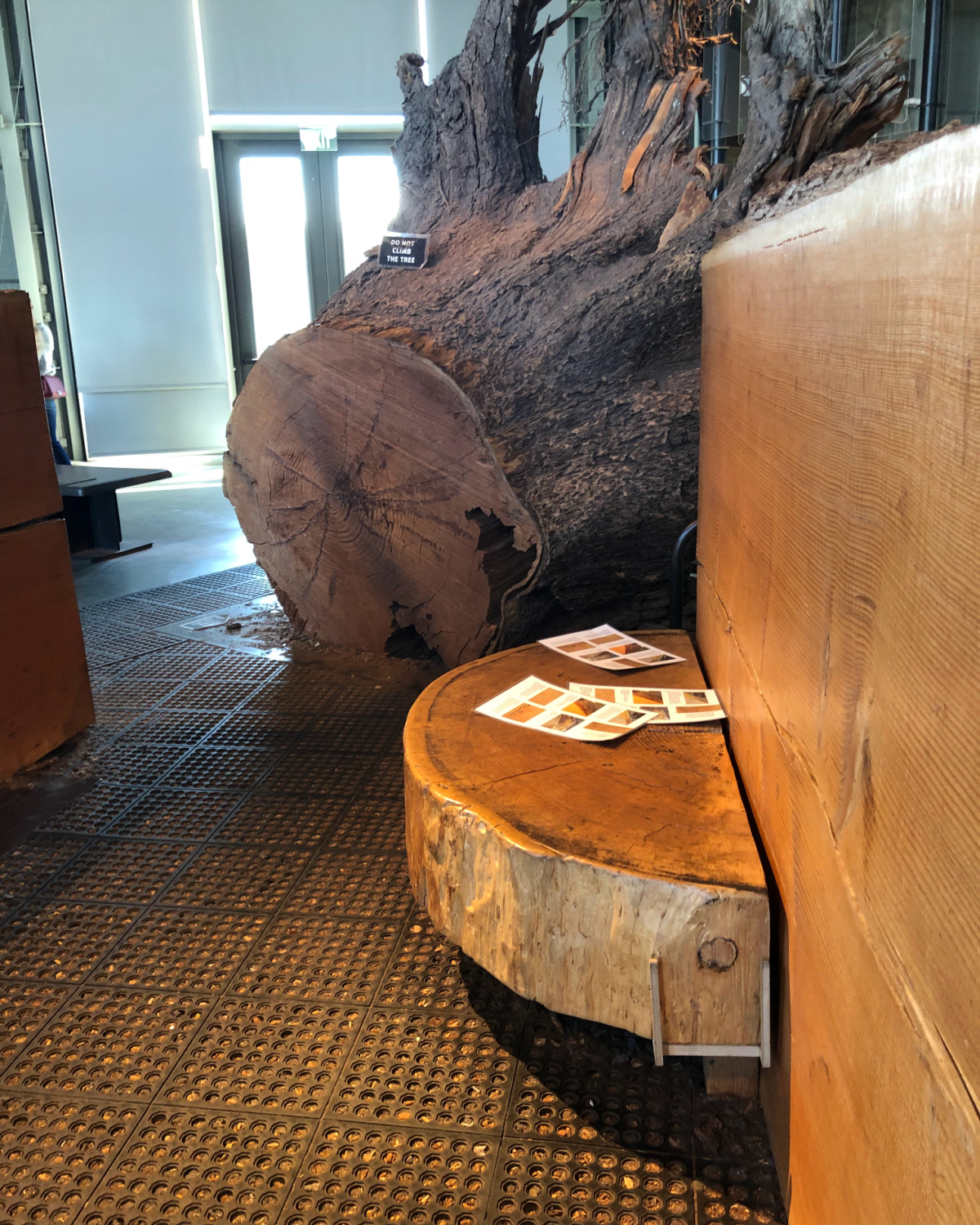
You could get close enough to study growth rings, bark, and the way the wood was structured.
For a museum in San Francisco, it also felt very fitting to see exhibits connecting visitors to California’s forests and giant trees.

The Exploratorium may be famous for physics and perception, but the museum also does a wonderful job showing how science connects to the environment around us.
Psychology, Sociology, and Human Behavior
This was one of the biggest surprises for me.
The Exploratorium had an entire set of exhibits focused on people.
Not anatomy.
Behavior.
Visitors could participate in experiments involving cooperation, decision-making, trust, social behavior, and the way people respond to one another.
I have been to a lot of science museums, and this is not something I see nearly as often.
Would You Give Your Partner a Sip or a Squirt?
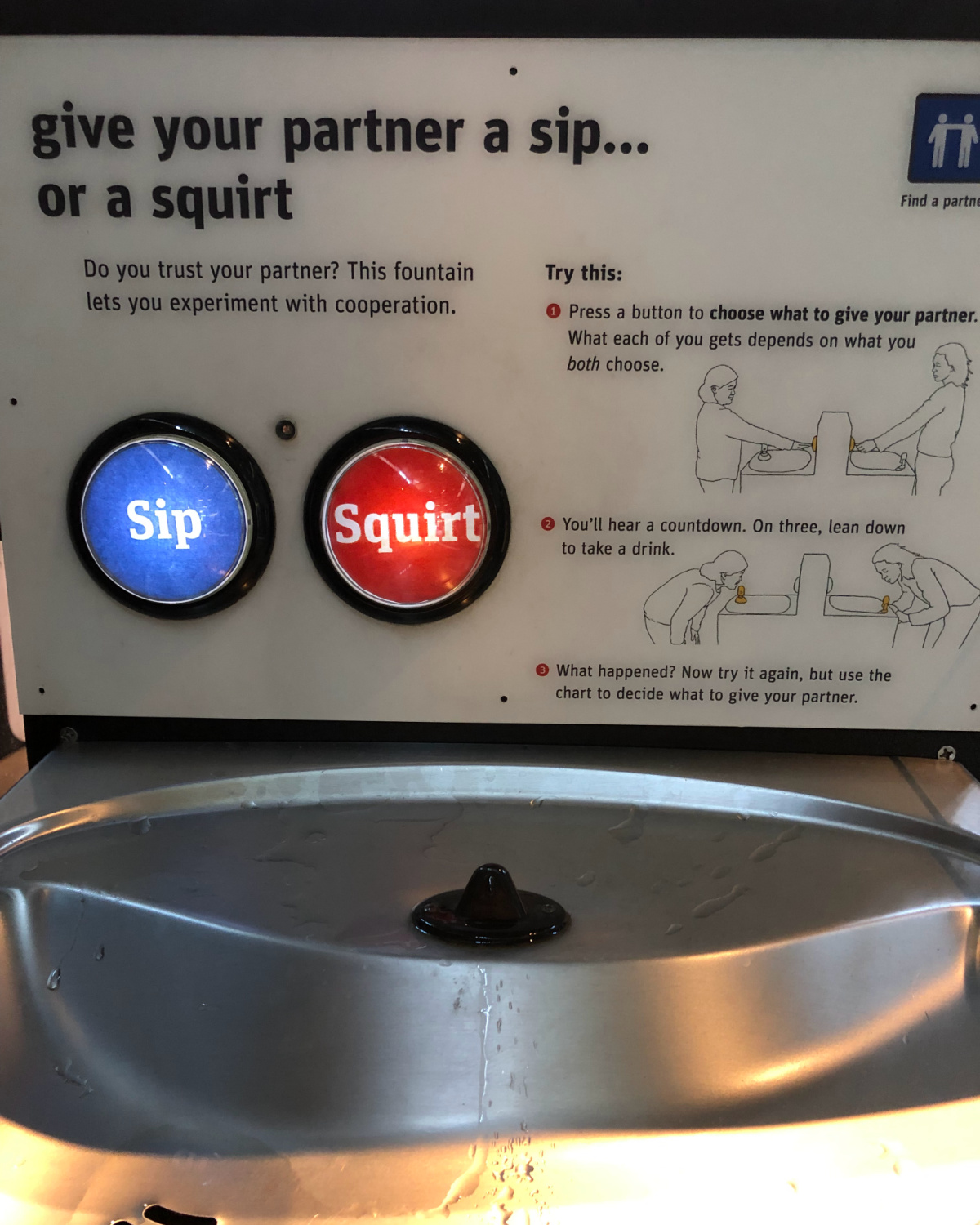
One of the funniest exhibits involved two people standing across from each other at a fountain.
Each person had to secretly choose whether to give the other person a sip of water or a squirt.
Then you both leaned in to see what happened.
It was essentially a cooperation experiment disguised as a ridiculous drinking fountain.
And that is exactly the sort of thing the Exploratorium does so well.
The science is real.
But the experience is funny enough that people actually want to participate.
Play the Freeloader Game
Another interactive exhibit explored whether people would act for themselves or for the benefit of a group.
Visitors made choices as part of a multiplayer game, and the outcome depended on what everyone decided to do.
It felt almost like a game show.
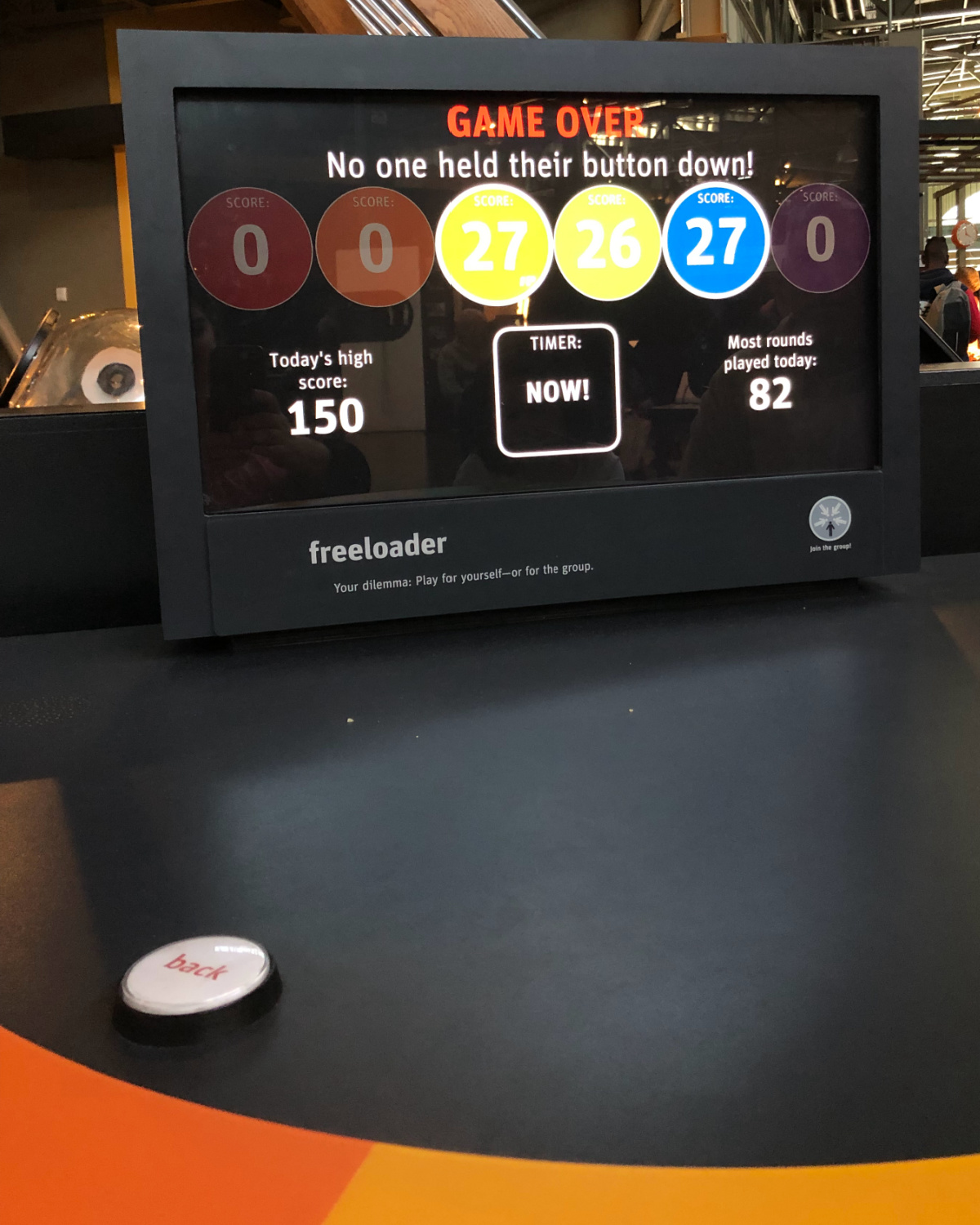
But underneath the game was a real question about group behavior, cooperation, and self-interest.
That made this section especially interesting for adults.
A younger child can still push buttons and participate, but older kids, teens, and adults can also start thinking about why people behave the way they do.
Explore How People Cooperate Around the World
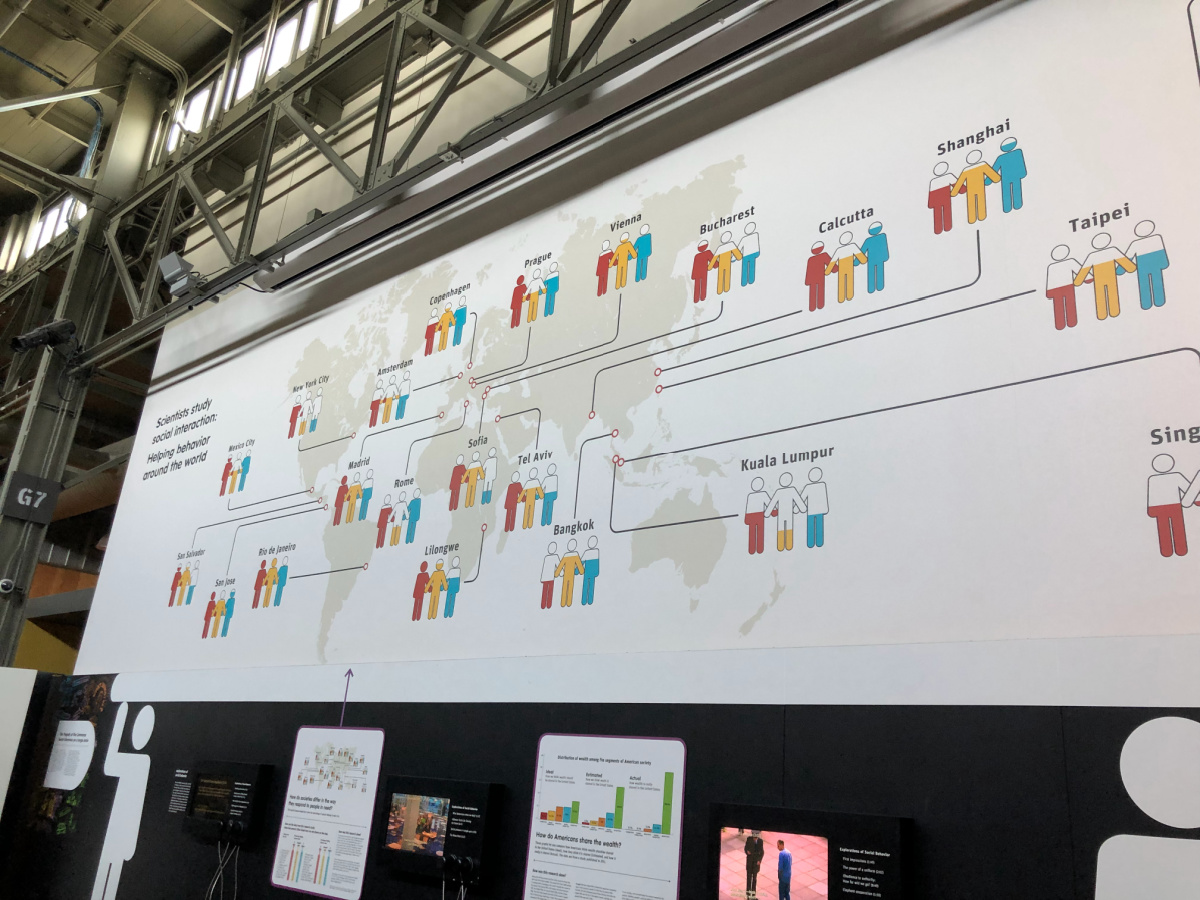
There were also exhibits looking at social behavior in different cities and cultures.
One display compared research on helping behavior around the world.
Again, this is not the kind of thing I expected when we walked into a science museum.
But it fit perfectly with the Exploratorium’s broader approach.
Science is not just chemistry, biology, and physics.
People can be studied too.
More Weird and Wonderful Experiments
There are so many smaller exhibits throughout the museum that some of my favorites do not fit neatly into one category.
That is part of the charm.
You are constantly stumbling across something strange.
Play With a Spinning Sand Table
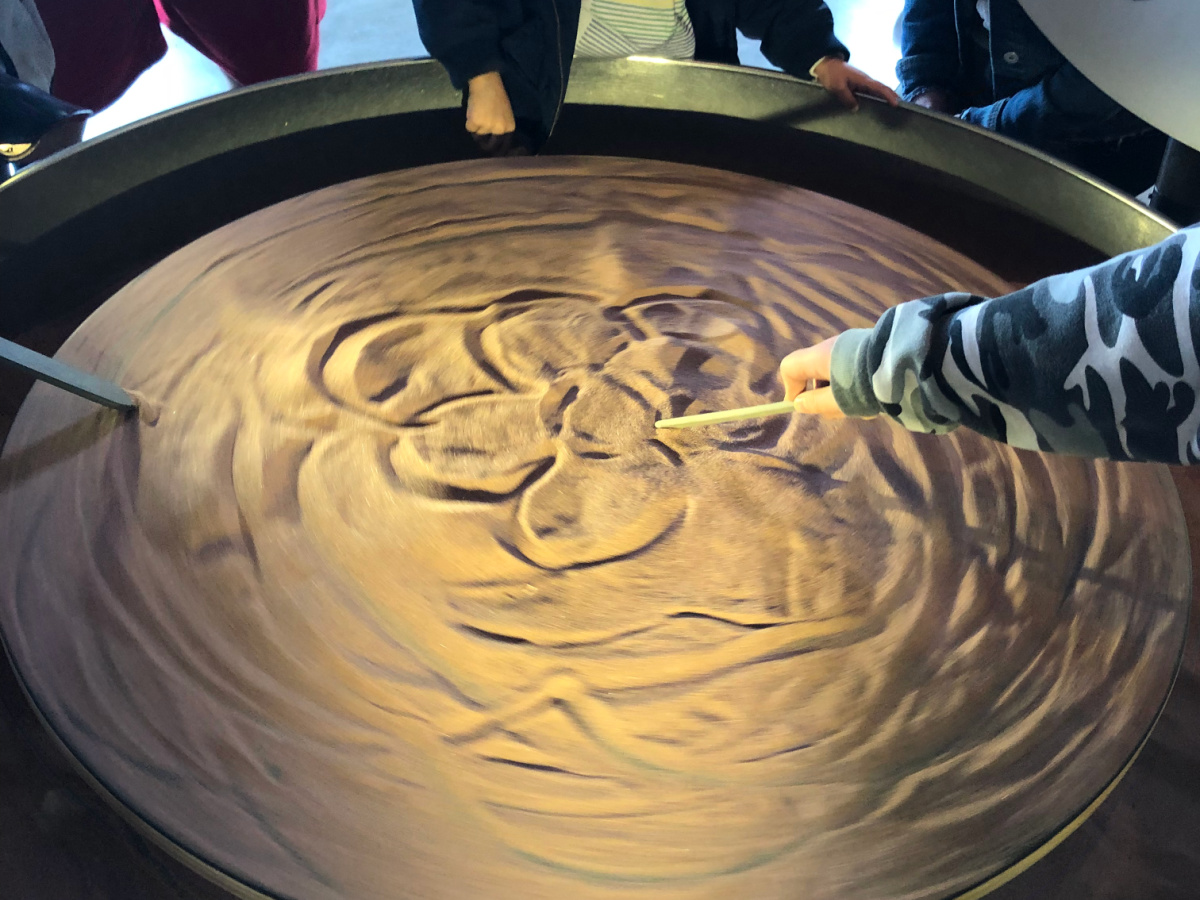
One station had a large rotating table covered in sand.
You could move a tool through the sand as the surface spun beneath it and watch different patterns form.
The final design depended on both the movement of your hand and the movement of the table.
It was hypnotic.
Dance With Your Own Silhouette
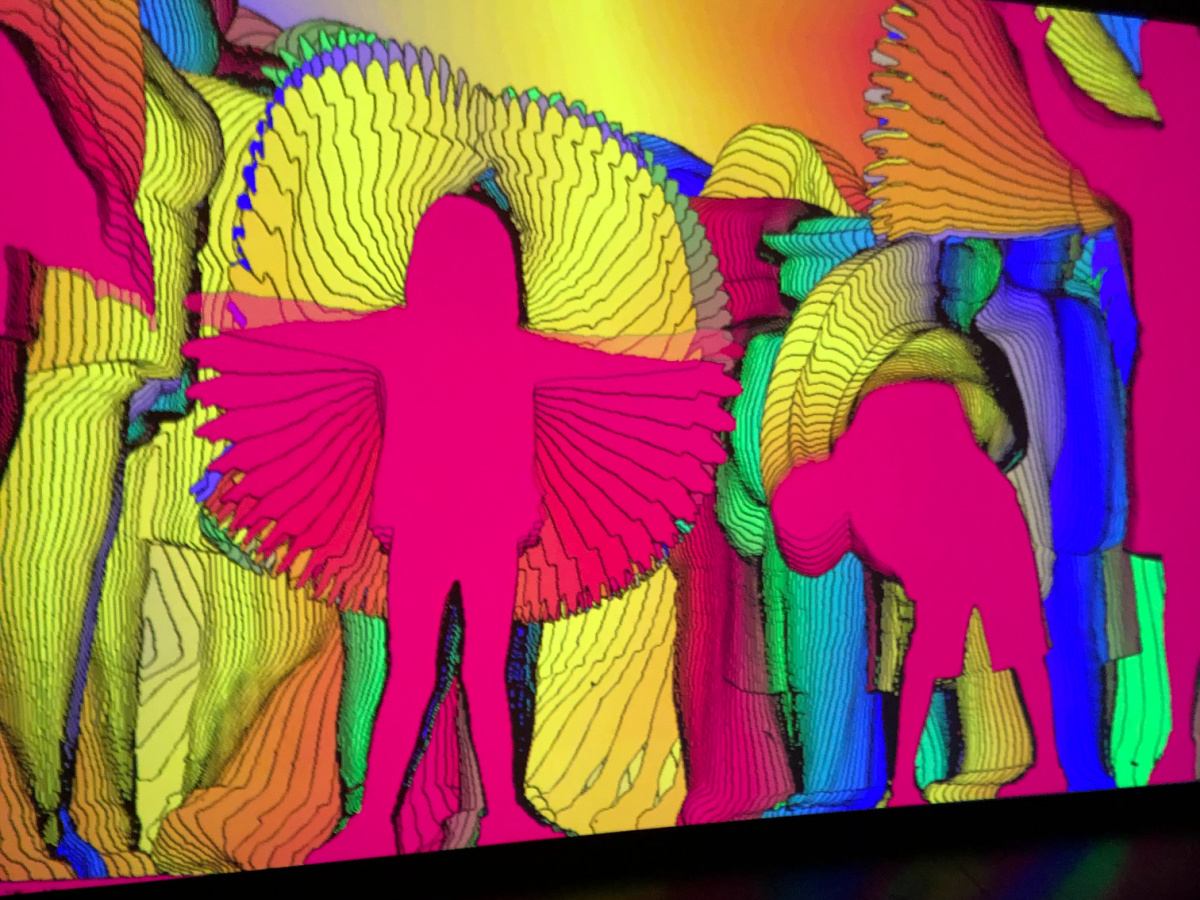
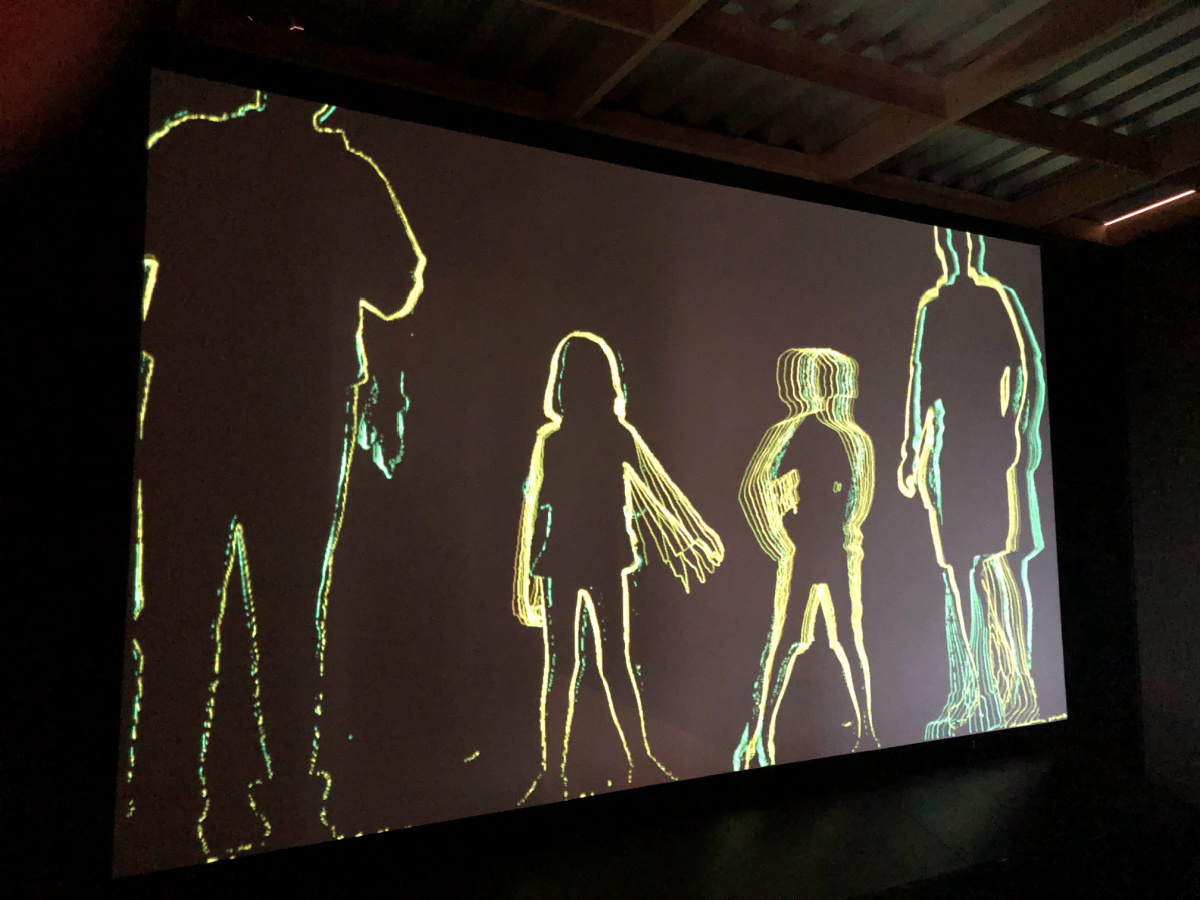
At another exhibit, our daughter could move in front of a screen and see her shape transformed into colorful repeated silhouettes.
She immediately started dancing.
Of course she did.
That kind of exhibit is especially fun because kids do not need instructions to understand what to do.
They just start moving.
Stick Your Head Inside a Giant Light
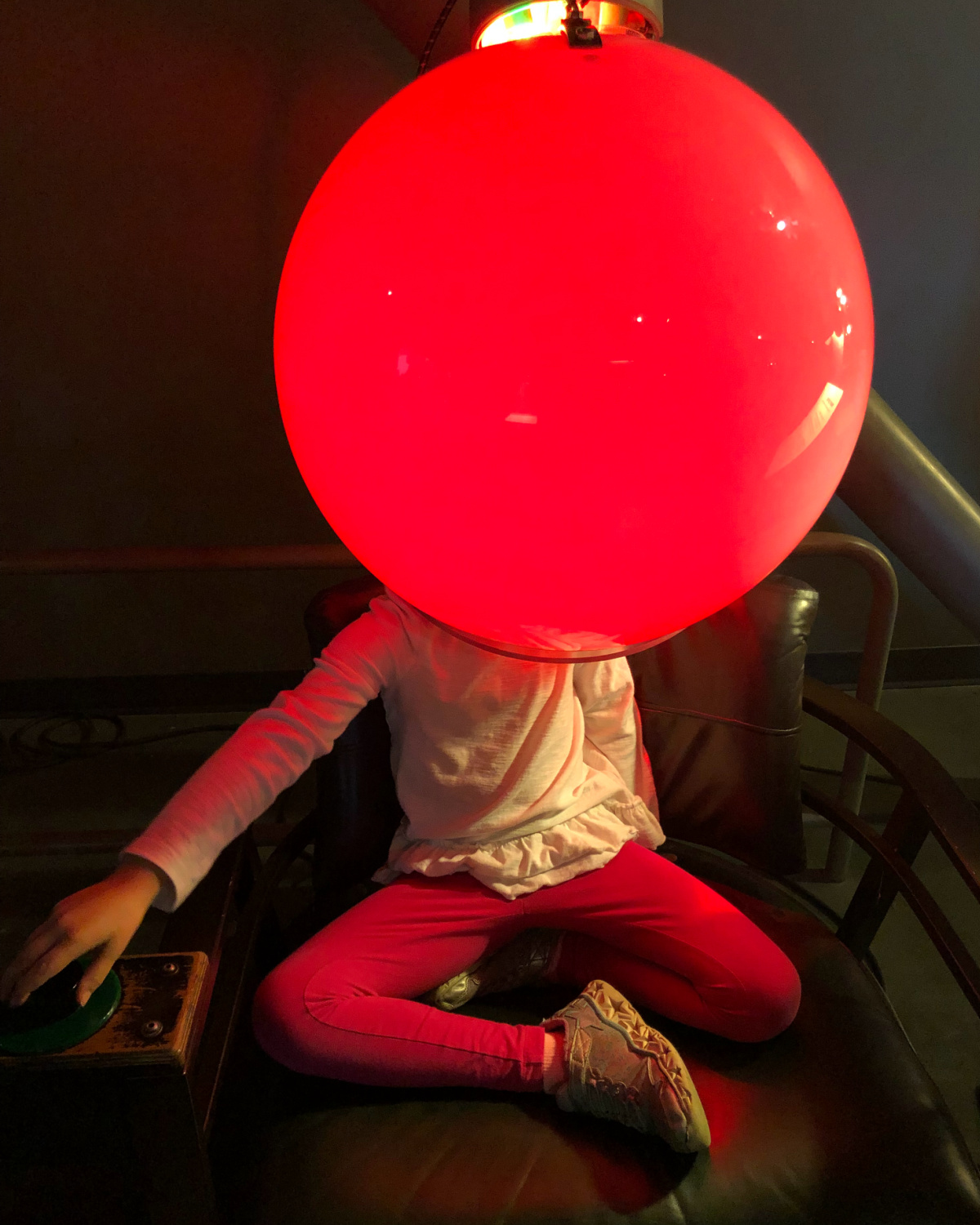
There was also an exhibit where our daughter sat beneath a huge glowing sphere that made it look as though she had an enormous illuminated head.

I am not even sure how else to describe that one.
It was weird.
It was funny.
It was exactly the kind of thing you expect to find at the Exploratorium after you have been there for a few hours.
The Tactile Dome
One experience we did not do was the Tactile Dome.
The Tactile Dome is a completely dark, immersive experience where visitors navigate through a series of spaces using touch instead of sight.
You crawl, climb, feel your way around, and rely on your other senses because you cannot see where you are going.
I would have loved to try it.
But we had our six-year-old with us, and there was also a wait, so we decided to skip it.
If the Tactile Dome is high on your list, do not treat it as something you will necessarily just squeeze in whenever you happen to walk by.
Check the current requirements and reservation process before your visit and plan around it.
Is the Exploratorium Good for Kids?
Absolutely.
We visited with our daughter when she was six, and she could participate in almost everything we encountered.
That is one of the things that impressed me most.
The museum does not have to dumb down the science to make it accessible to younger kids.
Instead, the exhibits let kids learn by doing.
A six-year-old may not understand every scientific principle behind an experiment.
But she can still make a giant bubble.
She can move magnets.
She can create colored shadows.
She can balance blocks.
She can watch a Slinky move.
She can test how her eyes work.
And she can have a fantastic time doing all of it.
That said, I would not describe the Exploratorium as a children’s museum.
Not even close.

The Exploratorium Is Fantastic for Teens and Adults Too
I would go back to the Exploratorium without kids in a heartbeat.
I would go on a date.
I would go with girlfriends.
I would go by myself.
The psychology exhibits alone are interesting enough for adults, and the perception, engineering, light, sound, and physics stations are not designed only for children.
In fact, some of the experiments become even more interesting when you are old enough to understand the science behind what you are seeing.
That makes the Exploratorium a particularly good option for families with a wide age range.
You are not dragging a teenager through a museum designed for preschoolers.
And adults are not simply standing around while the kids play.
Everyone gets to participate.
How Long Should You Spend at the Exploratorium?
Give yourself at least half a day.
I would personally plan on five or six hours if your family enjoys hands-on museums.
You can certainly move through more quickly.
But I would not.
There are simply too many things to try.
And because the museum is made up of so many smaller interactive stations, it is very easy to lose track of time.
You think you are going to spend five minutes in one area.
Then somebody notices another experiment.
Then another.
Then another.
Before you know it, you have been there for hours.
If you genuinely love science museums, I think you could spend most of the day here and still enjoy yourself.
Eating at the Exploratorium
Plan on getting hungry.
If you are spending four, five, or six hours at the museum, you are almost certainly going to want food at some point.
During our visit, there was a casual food counter inside the museum with burgers, sandwiches, fries, salads, and ice cream.

The dining options can change, so check the current choices before your visit.
But I would definitely build food into your schedule instead of assuming you will race through the museum and eat afterward.
This is not a two-hour attraction for most families.
Planning Your Visit to the Exploratorium
The Exploratorium is located at Pier 15 along San Francisco’s waterfront.
The location is part of the experience.
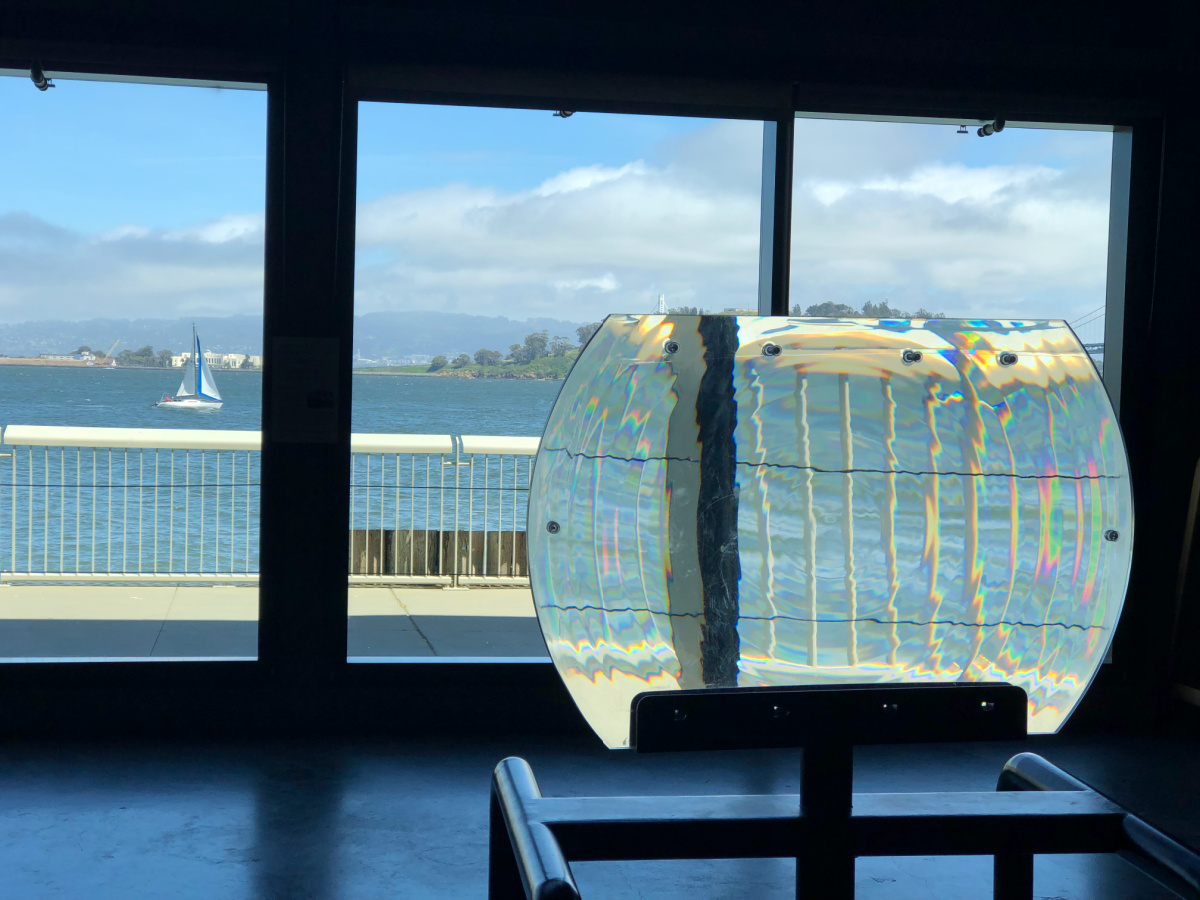
There are large windows looking out over the bay, and some exhibits connect directly to the surrounding environment.
Before you go, check current operating hours, ticket prices, special programs, and whether any experiences require separate reservations.
The Exploratorium also participates in San Francisco CityPASS.
We used CityPASS during our visit, and for us, it was absolutely worth it because we were visiting multiple major San Francisco attractions.
If you are planning to visit the Exploratorium along with several other popular attractions, compare the CityPASS price with what you would pay buying everything separately.
Tips for Visiting the Exploratorium
The biggest tip I can give you is simple:
Do not try to do everything in order.
That is not how this museum works best.
Wander.
If an exhibit is crowded, move on.
If something catches your eye, stop and try it.
If your kids want to spend ten minutes playing with colored shadows, let them.
There will always be another experiment waiting around the corner.
And do not underestimate how long you will want to stay.
This is one of those museums where “just one more thing” can easily turn into another hour.

Is the Exploratorium Worth It?
Yes.
Completely.
This is one of my favorite science museums I have ever visited, and I do not say that lightly.
The Exploratorium takes complicated ideas and turns them into things you can touch, test, manipulate, and experience for yourself.
That makes it fantastic for kids.
But it also makes it genuinely fun for teenagers and adults.
If your family enjoys interactive museums, science, engineering, optical illusions, tinkering, or just experimenting with weird things, put the Exploratorium high on your San Francisco list.

Current Exploratorium Hours
The Exploratorium is currently open during the day Tuesday through Saturday from 10 a.m. to 5 p.m.
On Sundays, the museum opens from 10 a.m. to noon for members and donors, with general public admission from noon to 5 p.m.
The museum is normally closed on Mondays, although holiday schedules can vary.
There is also an adults-only After Dark program on Thursday evenings from 6 p.m. to 10 p.m.
If I lived in the Bay Area, I would absolutely want to try After Dark at least once.
The Exploratorium is already fun for adults during a regular daytime visit, so having the museum open specifically for adults in the evening sounds like a fantastic date night or friends’ night out.
Exploratorium Admission
Current general admission is:
- Adults: $39.95
- Ages 4–17: $29.95
- Ages 3 and younger: free
Prices and operating schedules can change, so I always recommend checking the Exploratorium before your visit.
And honestly, this is one attraction where I would not look at the admission price and think, “That’s a lot for a couple of hours.”
You can spend a long time here.
If you stay five or six hours and actually work your way through dozens of interactive exhibits, you are getting a very substantial museum experience.
Should You Use San Francisco CityPASS for the Exploratorium?
We visited the Exploratorium using San Francisco CityPASS, and it was absolutely worth it for our trip.
The Exploratorium is still included as one of the attraction choices available through San Francisco CityPASS.
The regular San Francisco CityPASS currently lets you visit four attractions, while the C3 option lets you choose three.
That can be a particularly good deal if you are already planning to visit several of San Francisco’s major family attractions.
For our trip, CITYPASS made sense because the Exploratorium was not the only big-ticket attraction on our itinerary.
If you are only visiting one or two paid attractions, compare the individual admission prices first.
But if you are building a full San Francisco sightseeing itinerary, it is definitely worth running the numbers.
Do You Need Reservations for the Exploratorium?
It is a good idea to plan your visit in advance, especially during busy travel periods.
If you are using CITYPASS, the Exploratorium currently requires a reservation through the CITYPASS system.
And if you want to experience the Tactile Dome, that requires even more planning.
What Is the Tactile Dome?
The Tactile Dome is one of the Exploratorium’s signature experiences.
You make your way through a completely dark environment by crawling, sliding, climbing, and feeling your way forward.
You cannot rely on your eyes.
You have to navigate by touch.
I desperately wanted to do this.
We did not.
Our daughter was six at the time, and there was also a wait involved. We decided that waiting around for an additional experience with a six-year-old was probably not the best use of our day.
But if I went back now, I would absolutely put the Tactile Dome on my list.
Reservations are required, so if this is important to you, do not wait until you arrive at the museum and hope there will be space.
Check the current participation requirements and reserve it ahead of time.
Getting to the Exploratorium
The Exploratorium is located at Pier 15 on the Embarcadero.
That is a great location for a San Francisco sightseeing day because you are right on the waterfront and relatively close to several other major attractions.
Public transportation is a particularly convenient option.
The museum is accessible by Muni, and the Embarcadero BART station is within walking distance.
There are also paid parking options in the surrounding area, but the Exploratorium does not have a large dedicated museum parking lot.
If you are driving, I would research parking before you arrive rather than circling the Embarcadero hoping to stumble across a space.
Is the Exploratorium Stroller Friendly?
For families with younger children, the Exploratorium is generally an easy museum to navigate.
Most of the main museum experience is spread across large, open gallery spaces, and the wide layout makes it much easier to move around than some older museums with narrow hallways and small rooms.
That said, this is a museum where kids are constantly moving from station to station.
If your child is old enough to comfortably walk for several hours, you may find yourself using the stroller less than you expect simply because they want to keep jumping out to try the next experiment.
What Ages Are Best for the Exploratorium?
One of my favorite things about the Exploratorium is that there really is not one perfect age.
Our daughter was six, and she had a fantastic time.
Elementary-age kids are probably in the sweet spot where they are old enough to try a huge number of exhibits but young enough to be completely delighted by giant bubbles, colorful shadows, magnets, and weird visual effects.
But I would absolutely bring teenagers here too.
In fact, some of the psychology, perception, engineering, and social-science exhibits may be even more interesting once kids are old enough to understand the bigger ideas behind them.
And adults?
Also yes.
Very much yes.
This is one of the rare family attractions where I do not think the adults are sacrificing anything by going somewhere the kids will enjoy.
Is the Exploratorium Good for a Rainy Day?
Absolutely.
If the San Francisco weather turns cold, foggy, windy, or wet, the Exploratorium is a fantastic place to spend several hours indoors.
And because it can legitimately fill half a day or more, it is also a good attraction to keep in mind when the weather ruins more outdoor-focused plans.
There are outdoor elements and waterfront views, but the bulk of what makes the museum special is inside.
Exploratorium FAQs
How much time do you need at the Exploratorium?
I would allow at least four hours.
Five or six hours would be even better if your family enjoys science museums and wants to actually stop and experiment instead of racing through.
You could spend most of a day here if this kind of museum is really your thing.
Is the Exploratorium just for kids?
No.
This is not a children’s museum.
Kids absolutely love it, but the exhibits are designed around real scientific ideas and human behavior.
Adults and teenagers can get just as much out of the experience.
I would happily visit without kids.
Is the Exploratorium worth visiting with a six-year-old?
Based on our experience, yes.
Our daughter was six when we visited and could participate in almost everything we encountered.
She did not have to fully understand the scientific explanation behind every experiment to enjoy trying it.
Is the Exploratorium good for teenagers?
Yes.
Actually, I think this may be one of the better San Francisco museums for families traveling with teenagers.
There are so many things to manipulate and experiment with that teens are not just walking through galleries looking at displays.
The psychology, engineering, perception, light, and social-behavior exhibits also give older kids plenty to think about.
Can adults visit the Exploratorium without children?
Absolutely.
I would.
The museum even offers its adults-only After Dark program on Thursday evenings.
This would be a really fun San Francisco date night.
Is the Tactile Dome included with regular admission?
Treat the Tactile Dome as a separate special experience rather than assuming you can simply walk into it with general admission.
Reservations are required, and participation requirements can change.
If you really want to do it, check the current details before your visit.
Is the Exploratorium included with San Francisco CityPASS?
Yes.
The Exploratorium is currently one of the attraction choices available with both the regular San Francisco CityPASS and the C3 pass.
We used CITYPASS during our own visit.
Can you eat at the Exploratorium?
Yes.
There are food options available at the museum, and I would definitely plan for a meal or substantial snack if you expect to stay for several hours.
Dining offerings can change, so check the current options before your trip.
Final Thoughts on Visiting the Exploratorium
I love this museum.
I loved it when our daughter was six, and I think I might actually love it even more now that she is older.
The Exploratorium manages to make science playful without making it childish.
You can create giant bubbles, manipulate magnetic fields, experiment with light, test your own senses, learn about living things, challenge yourself with engineering problems, and even explore why people behave the way they do.
And you get to actually do all of it.
That is what stayed with me most.
The Exploratorium does not ask you to walk quietly from display to display and absorb information.
It asks you to experiment.
Touch things.
Move things.
Try something weird.
See what happens.
For me, that makes it one of the best science museums we have visited anywhere.
And considering how much I love a good science museum, that is saying something.
More Bay Area and Northern California Family Adventures
Planning more time in the Bay Area or Northern California? These guides can help you build out the rest of your trip:
- California Academy of Sciences — Explore the aquarium, rainforest, planetarium, and natural history exhibits in Golden Gate Park.
- Golden Gate Bridge — Plan the best viewpoints and stops for seeing one of San Francisco’s most iconic landmarks.
- Bay Area Discovery Museum — A fantastic hands-on museum for younger kids in a beautiful waterfront setting.
- Muir Woods National Monument — Walk among towering coastal redwoods just north of San Francisco.
- Muir Woods and Sausalito Day Trip — Combine the redwoods with an afternoon exploring Sausalito.
- 3 Days in Yosemite National Park — Add one of California’s most spectacular national parks to a longer Northern California trip.
More Hands-On Science Museums to Explore
If your family loves the Exploratorium, these are two more excellent science museums to add to your list:
- The Franklin Institute — A classic Philadelphia science museum packed with interactive exhibits.
- Maryland Science Center — A hands-on Baltimore science museum with plenty for kids and families to explore.