Goblin Valley State Park Guide (A Weird, Easy Stop You Shouldn’t Skip)

Goblin Valley State Park is one of Utah’s most unique and family-friendly stops. Learn what to expect, best things to do, safety tips, and why it’s worth adding to your Utah road trip.
Goblin Valley State Park is one of those places I almost talked myself out of.
It felt a little out of the way. Not a national park. Not one of the “must-do” stops you see everywhere.
And then we went—and it ended up being one of the most fun, low-effort stops on the entire trip.
Not in a dramatic, jaw-dropping canyon kind of way.
More like…this is just really cool and unexpectedly fun.
Once you see the hoodoos, you instantly know why this is one of Utah’s most popular state parks.
If you’re mapping out your full route, this stop fits perfectly into a larger Utah loop—here’s how we structured our entire trip in this Utah Mighty 5 itinerary.
First Impression (Because This Is Where It Clicks)
You pull into the parking lot, walk toward the overlook, and for a second it doesn’t feel like much.
Then you look out.
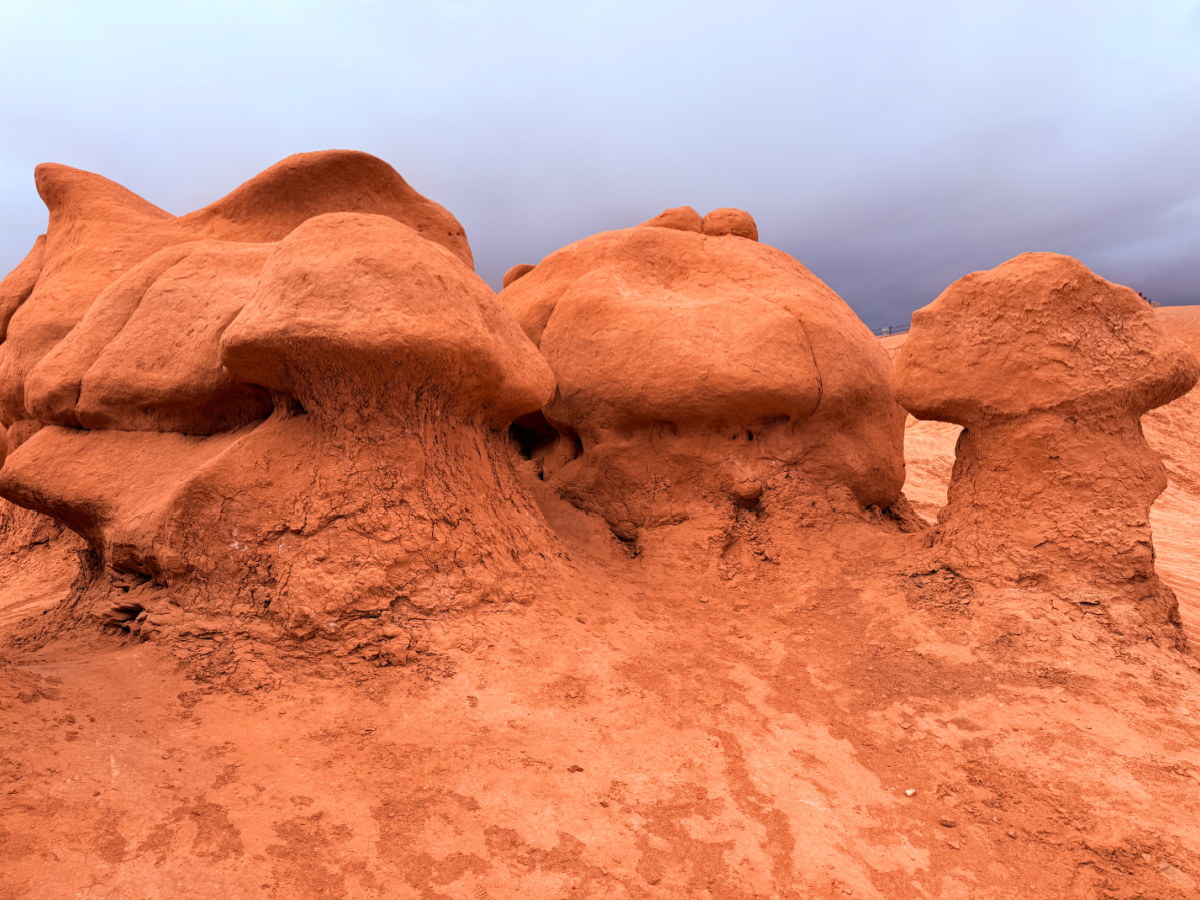
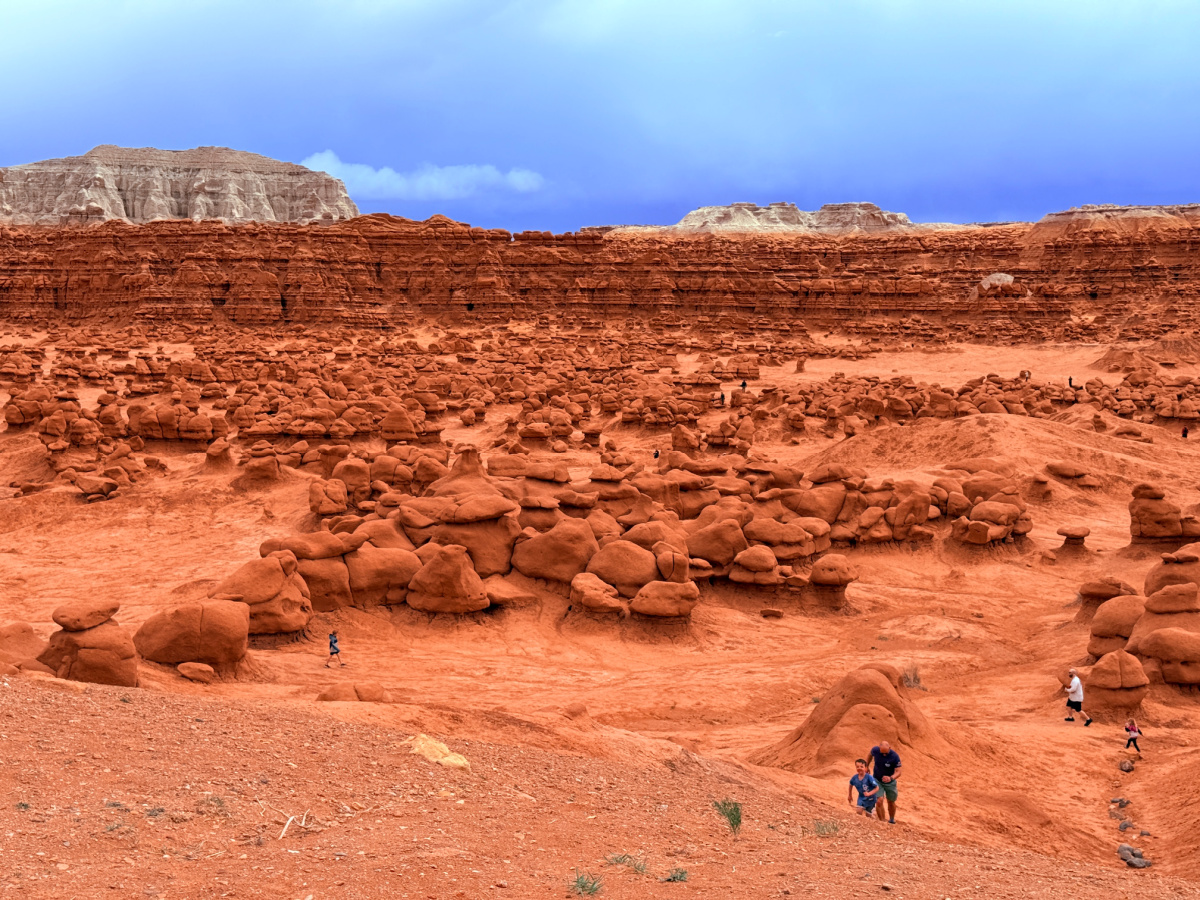
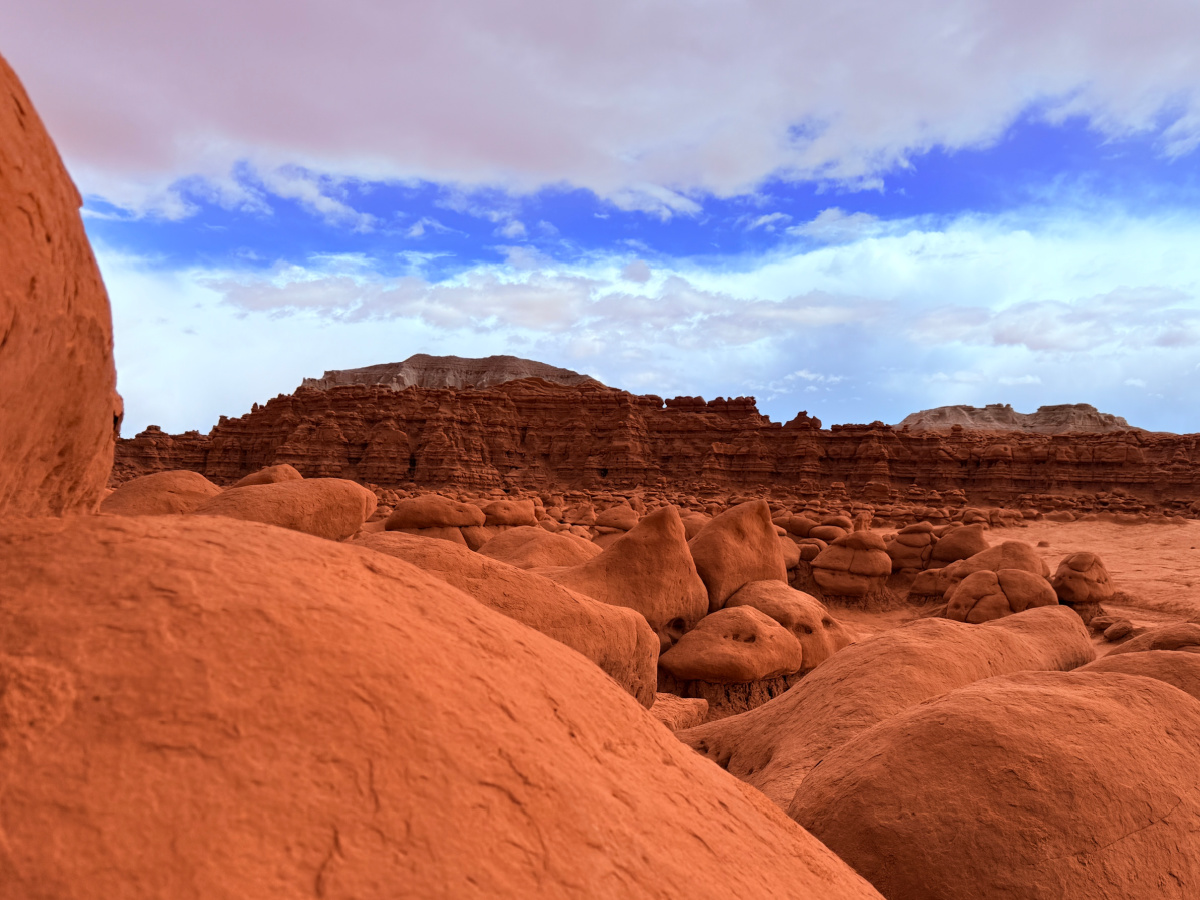
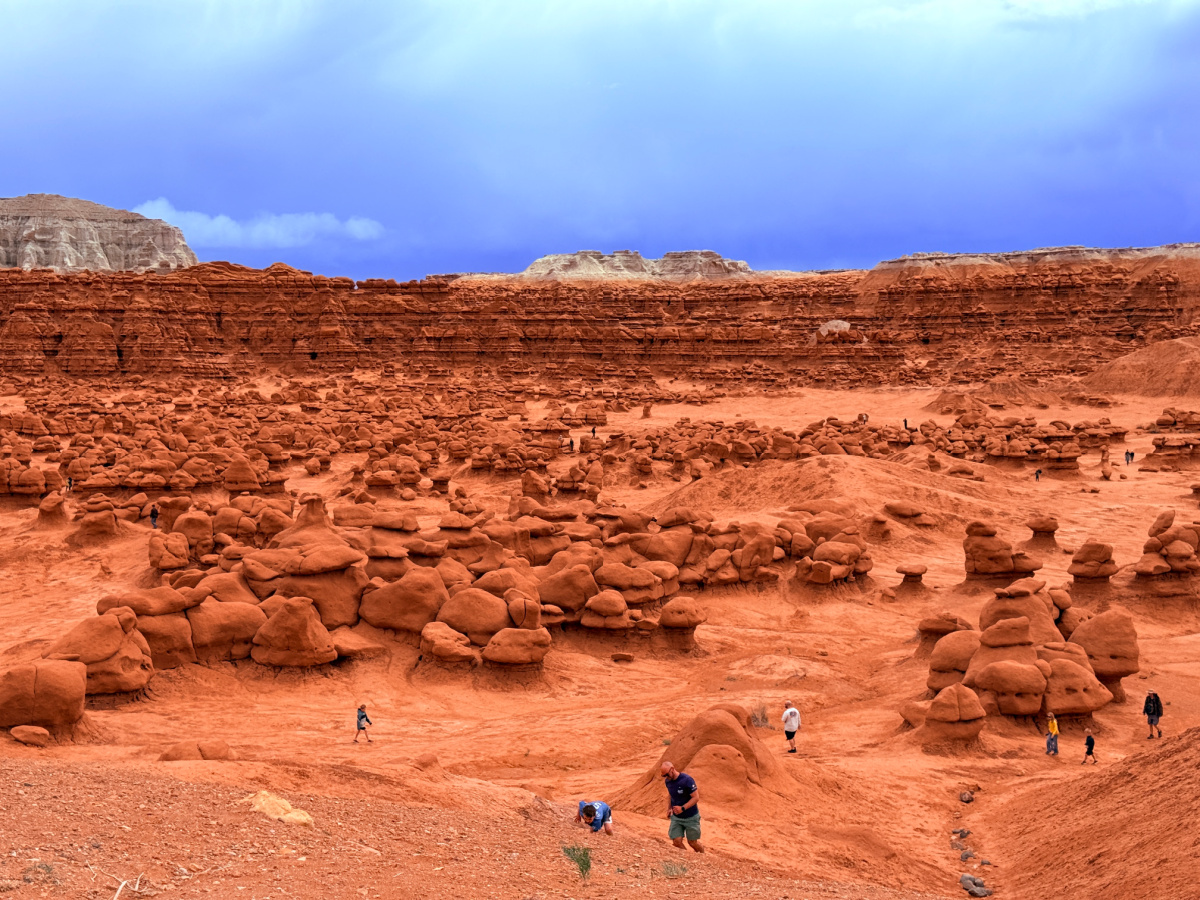
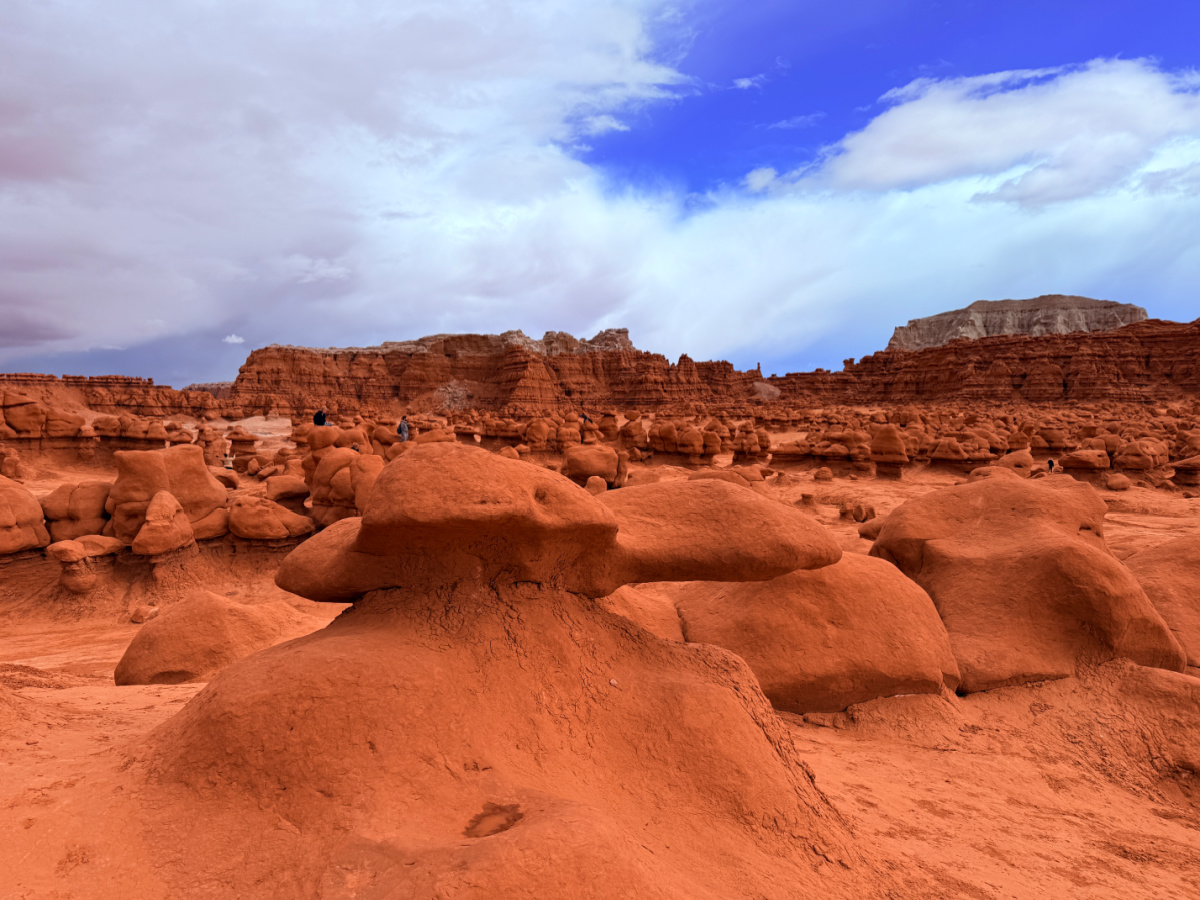
And it’s just…a huge valley filled with these weird, rounded, almost cartoon-looking rock formations. Thousands of them.
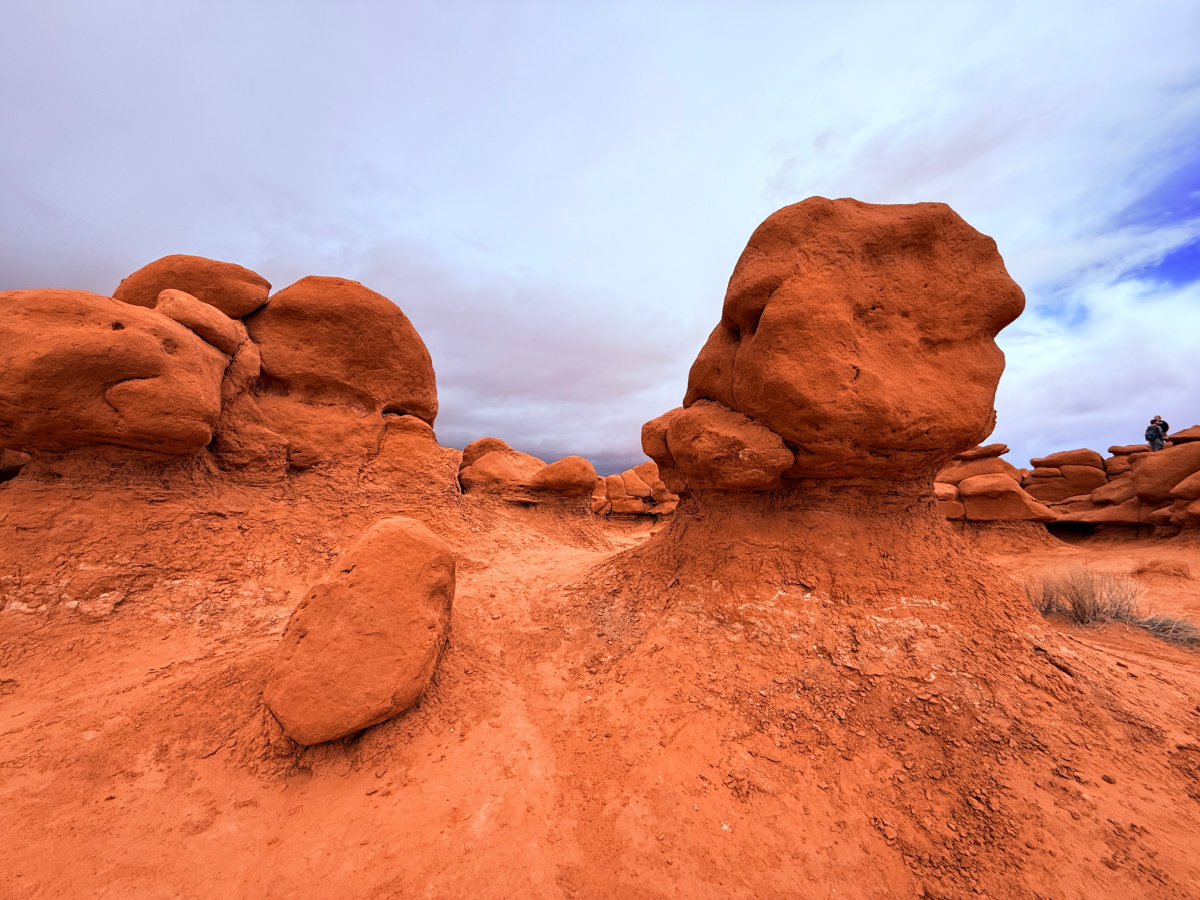
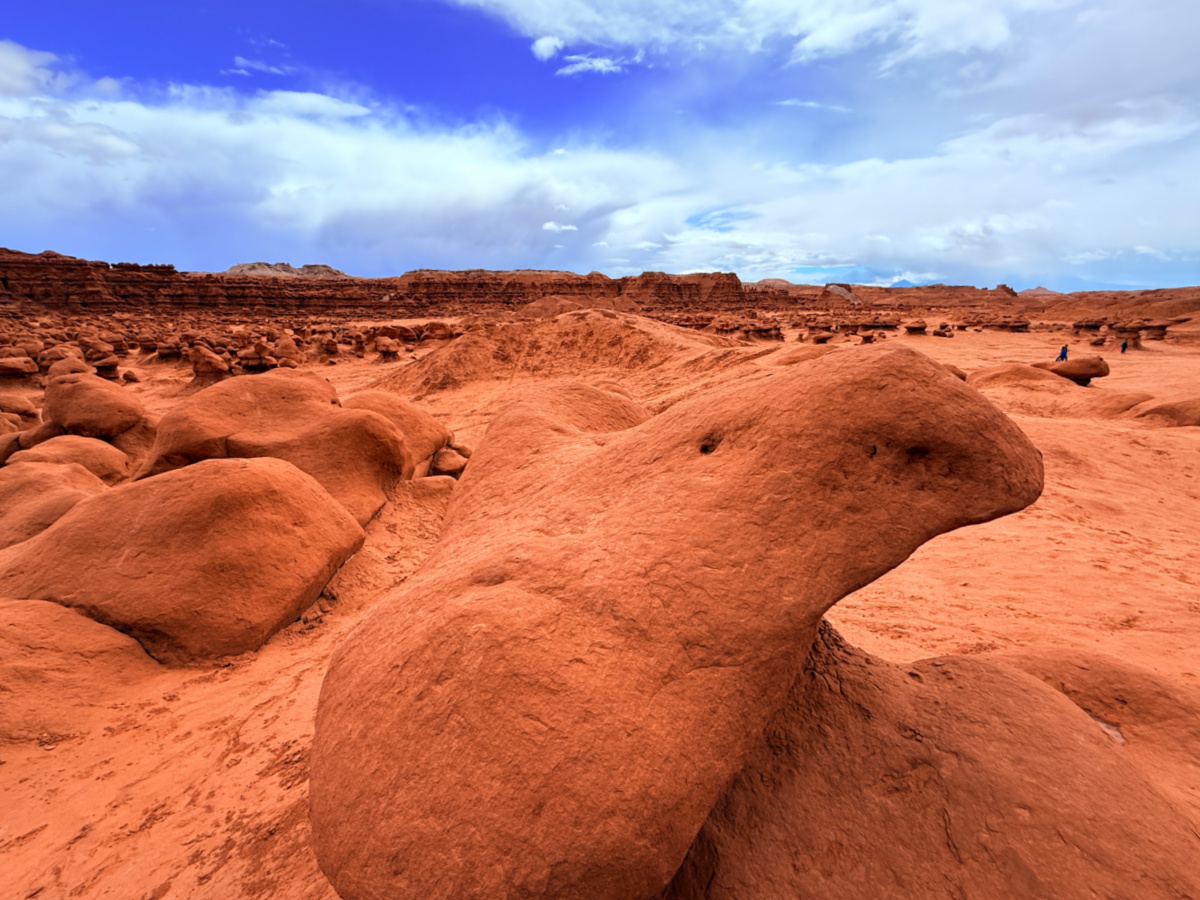
Some are tiny. Some are waist-high. Some are taller than you. A few look like they’re about to tip over but somehow don’t.
They’re called hoodoos, but honestly they look like little goblins—so the name fits.
And instead of looking at them from a distance, you can just walk right down into it.
No real plan required. Just start climbing and exploring this totally unique landscape.
Why This Works So Well on a Utah Road Trip
If you’re driving between Capitol Reef National Park and Moab, this is such an easy stop.
Not “easy” like a quick pull-off.
But easy in the sense that:
- you don’t need to plan ahead
- you don’t need a big time block
- you don’t need to convince anyone to do a hike
After a few days of national parks—where everything takes more time than you expect—this feels…lighter.
We were in and out pretty quickly (not entirely by choice—more on that in a minute), and it still felt worth it.
We visited Goblin Valley right after exploring Capitol Reef National Park, and it’s a really nice change of pace from scenic drives and short hikes.
Where It Is (And Why It Feels So Remote)
Goblin Valley sits out in the middle of the San Rafael Swell, which basically feels like a whole lot of nothing in the best way.
- About 50 minutes from Green River
- Around 1.5 hours from Capitol Reef
- Roughly 2 hours from Moab
Once you turn off the main road, it gets quiet fast. Fewer cars. More open space.
It’s part of what makes the place feel a little different from the bigger parks.
The Only Logistics You Really Need
I’m not going to overcomplicate this part, because you don’t need a lot of prep here.
- Entrance fee is about $20 per private vehicle
- It’s open year-round
- There’s a small visitor center (bathrooms + gift shop)
- A few picnic tables if you want to stop for food
There is a main campground and even yurts if you want to stay overnight—but most people don’t.
This is more of a “stop, explore, move on” kind of place.
If you’re heading toward Moab, this makes a great transition day before diving into our full Arches National Park itinerary.
The Valley of the Goblins (The Whole Point)
Everything revolves around this one area. The Valley of Goblins is what makes this park so much fun!
You walk down from the parking lot and suddenly you’re surrounded by these formations in every direction.
No clear path. No obvious route.
Which, at first, feels a little strange.
And then it doesn’t.
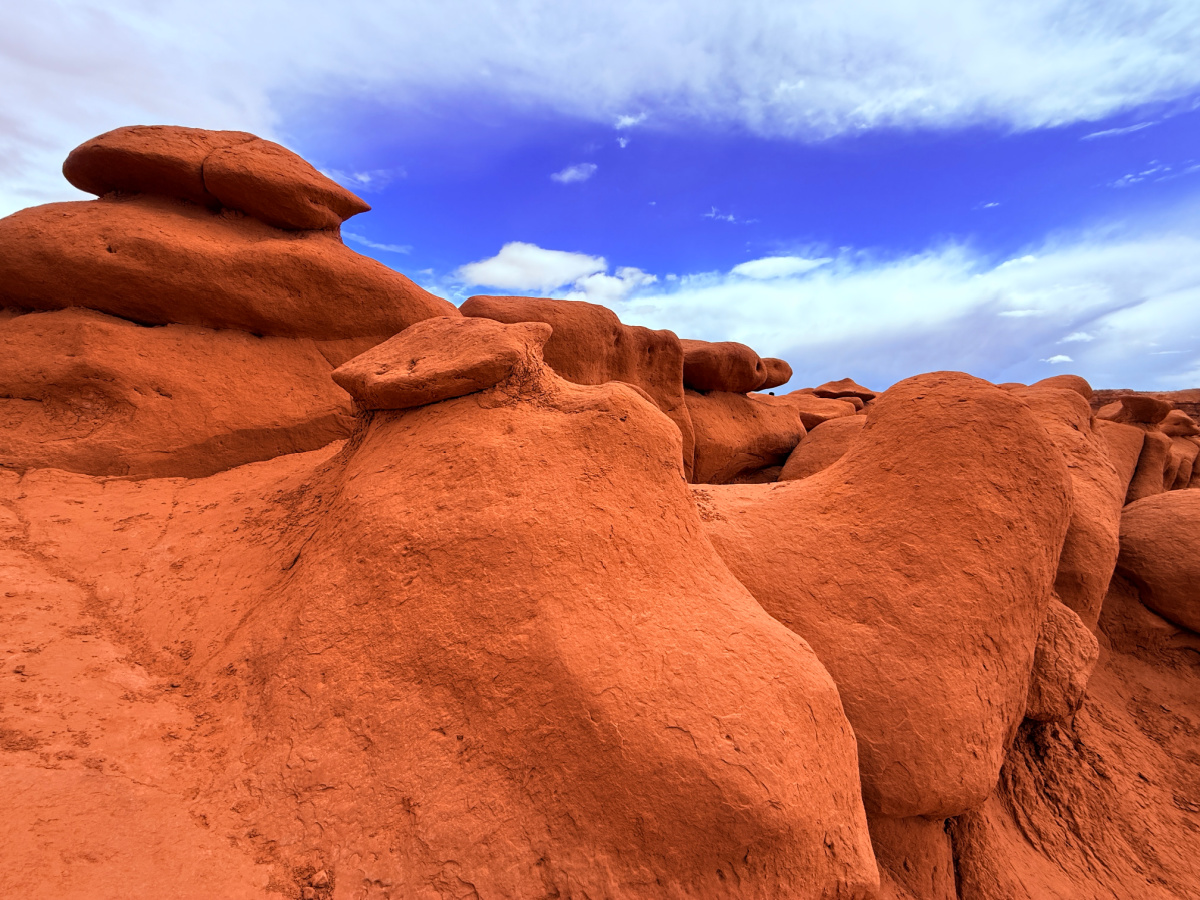
You just start wandering among these fascinating formations.
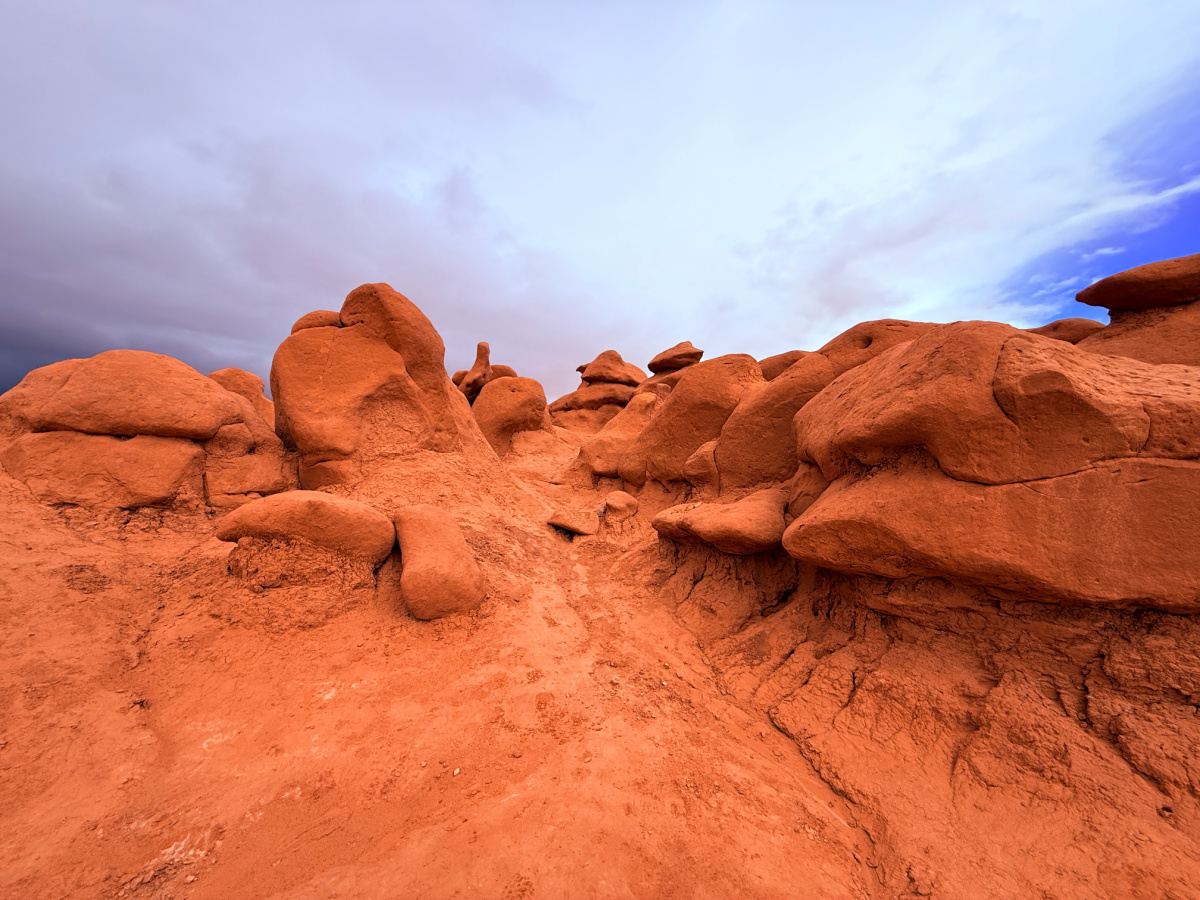
Climbing over one formation, weaving around another, spotting shapes that almost look familiar and then realizing they’re not.
It’s kind of like being in a giant natural playground.
Actually…that’s exactly what it is.
And if you’re continuing on to Canyonlands, this stop pairs well with a shorter visit—especially if you’re following a quick Canyonlands itinerary like we did.
You Don’t Have to Hike (Which Is Kind of the Magic)
There are hiking trails in the park—Carmel Canyon Loop, Entrada Canyon, a few others—but most people don’t bother.
Because you don’t need to.
You’re not chasing a viewpoint or a destination. You’re already in it.
No mileage to track. No elevation gain to worry about. No “end of the trail.”
And after doing places like Zion or Bryce Canyon, that feels like a relief.
If you’re trying to keep your trip low-key and avoid long hikes, this is one of the easiest wins—along with several other stops I share in this Utah Mighty 5 without hardcore hiking guide.
Our Experience (And Why I’d Watch the Weather)
We planned to spend about an hour here since it was our first time and we were on the way to the next national park.
We made it maybe 30 minutes.
At first everything felt fine. A little cloudy, but nothing concerning.
Then the wind picked up.
Then the sky shifted.
And then it just started dumping rain.
Not a slow build. Not a drizzle. Just—suddenly—rain.
We ended up heading back toward the car pretty quickly, and I remember thinking how fast the ground changed. Dry one minute, slick the next. I read the next day that the park rangers had to rescue hikers from the park due to flash flooding.
It wasn’t dangerous for us in that moment, but it made one thing very clear:
This place can turn fast.
A Few Safety Things (Worth Saying Out Loud)
This is a super fun stop, but it’s still desert… and it’s still in a relatively remote location.
A couple things I wouldn’t ignore:
- Flash floods are real — especially if you’re exploring nearby slot canyon areas like Little Wild Horse Canyon
- Bring plenty of water — even if you’re only planning a short visit
- Summer temperatures get intense — think 90–100+ degrees Fahrenheit
- It’s remote — don’t assume you’ll find anything nearby
Nothing complicated. Just worth being aware of.
Coming from Bryce? This works surprisingly well as a break in the drive after a more structured day exploring viewpoints and trails in Bryce Canyon National Park.
What You Actually Do Here
This is where the guide gets simple.
You don’t need a checklist.
But if you want one anyway:
- Walk into the valley
- Wander without a plan
- Climb on a few formations (you’ll want to)
- Let your kids run around a bit
- Take way too many photos
That’s basically it.
And somehow…it’s enough.
Actually it’s more than enough. This is one of the best places for unstructured play for your kids on the entire road trip! And it’s really just such a cool place.
If You Have More Time
If you’re not in a rush, there are a few extras nearby:
- Little Wild Horse Canyon (a popular slot canyon hike)
- Goblin’s Lair (more adventurous)
- A few quieter back trails in the area
But if you skip all of that and just do the valley, you’re not missing the main experience.
If you want this kind of stop already mapped out (plus driving times, pacing, and realistic daily plans), I put everything into my Utah Mighty 5 travel planner so you don’t have to piece it together yourself.
Best Time to Go (Quick Thoughts)
Spring and fall are the easiest—comfortable temperatures, better light.
Summer months can be really hot, so earlier or later in the day is better.
Winter is quieter. A little colder, obviously, but not a bad option if you don’t mind that.
FAQ (Real Questions You’re Probably Already Wondering)
Is Goblin Valley State Park worth it?
Yes—especially if you’re already driving through this part of southern Utah. It’s quick, different, and a nice break from the bigger national parks.
How much time do you need?
Most people spend about 1–2 hours here. You could stay longer, but you don’t need a full day.
Do you have to hike?
No. That’s kind of the whole point. You can explore the Valley of the Goblins without following any designated trails.
What’s the entrance fee?
About $20 per private vehicle for day-use fees (Utah State Parks).
Is it good for kids?
Yes—this might actually be one of the most kid-friendly stops on a Utah road trip. Lots of space to explore and climb.
Are flash floods a concern?
They can be, especially in nearby slot canyon areas. Always check weather conditions before you go.
Can you camp here?
Yes. There’s a main campground, group sites, and yurts for overnight visitors.
When is the best time to visit?
Spring and fall are ideal. Summer is hot, winter is quieter.
Final Thought
Goblin Valley isn’t trying to be one of the big, dramatic national parks.
And that’s probably why it works so well.
It’s easy. A little weird. Really fun.
And if you’re already driving between Capitol Reef National Park and Moab, it’s one of those stops you’ll be glad you didn’t skip.
This ended up being one of our favorite state park stops on our Utah road trip—not because it’s the biggest or most famous, but because it’s just plain fun.
If you liked the “run around and play” vibe here, you’ll probably also love our experience at Coral Pink Sand Dunes State Park, which is another super fun, hands-on stop for families.