Bay Area Discovery Museum Review: One of the Best Things to Do Near San Francisco With Kids

Planning a visit to the Bay Area Discovery Museum? Read our firsthand review of the art, STEM activities, outdoor play, kid-friendly cafe, and Golden Gate Bridge views.
Estimated reading time: 24 minutes
If you are visiting San Francisco with younger kids, the Bay Area Discovery Museum is one of those places that is very easy to underestimate.
At first glance, it sounds like another children’s museum.
It is not.
We visited the Bay Area Discovery Museum in 2019 when our daughter was six years old, and it ended up being one of the most memorable kid-focused attractions from our entire California trip. We spent hours climbing, building, painting, experimenting, digging, creating, and generally bouncing from one incredibly fun activity to the next.
And even years later, I still remember this place as one of the best children’s museums we have ever visited.
There is one important thing to know before I get into the details. Children’s museums evolve constantly, and our visit was several years ago and before the pandemic. Some of the specific exhibits in our photos may no longer exist exactly as we experienced them.
That does not really change my recommendation.
The Bay Area Discovery Museum is still built around the same basic ideas that made it so much fun for us: outdoor play, creative art, engineering and STEM activities, sensory exploration, and the freedom for kids to get completely absorbed in whatever interests them.
So consider this partly a review of our own visit and partly a look at the kind of experience families can still expect today.
And there is one bonus reason to visit that has almost nothing to do with the museum itself.
This is also one of my favorite places in the Bay Area to photograph the Golden Gate Bridge.
More on that later.
What Is the Bay Area Discovery Museum?
The Bay Area Discovery Museum is a hands-on children’s museum in Sausalito, located at historic Fort Baker just north of the Golden Gate Bridge.
The museum is designed primarily for kids ages 0–8, and that age range feels exactly right. Current exhibits still emphasize active play, creative exploration, tinkering, sensory experiences, and indoor-outdoor discovery.
Our daughter was seven during our visit, and she was in the sweet spot.
She was old enough to really engage with the engineering and building activities, but still young enough to absolutely love the imaginative play areas, messy art, climbing structures, and sensory exhibits.
One thing I appreciated immediately was that this did not feel like a museum where children were expected to quietly move from exhibit to exhibit.
Almost everything invited participation.
Kids could build something.
Climb something.
Paint something.
Take something apart.
Experiment with motion.
Play in sand.
Dig in dirt.
Create elaborate imaginary worlds.
It was much closer to an enormous creativity laboratory than a traditional museum.
The Museum Is Inside Historic Fort Baker
The location is part of what makes the Bay Area Discovery Museum so distinctive.
The museum occupies several historic buildings at Fort Baker, a former U.S. Army post located immediately north of the Golden Gate Bridge. The National Park Service describes Fort Baker as a former 1905 Army post with dozens of historic military buildings, and several of those buildings are now used by the Bay Area Discovery Museum.
If the museum buildings remind you of old military buildings, that is because they are.
There is something wonderfully unexpected about walking between these historic structures and discovering children painting, building, experimenting, and playing inside them.
The setting also means that the museum feels much more spread out than many urban children’s museums. You are moving between indoor exhibits, outdoor play spaces, gardens, and large open-air activity areas.
That indoor-outdoor combination was one of my favorite things about it.
On a beautiful Northern California day, you do not feel like you have sacrificed an entire afternoon indoors just because you chose a museum.
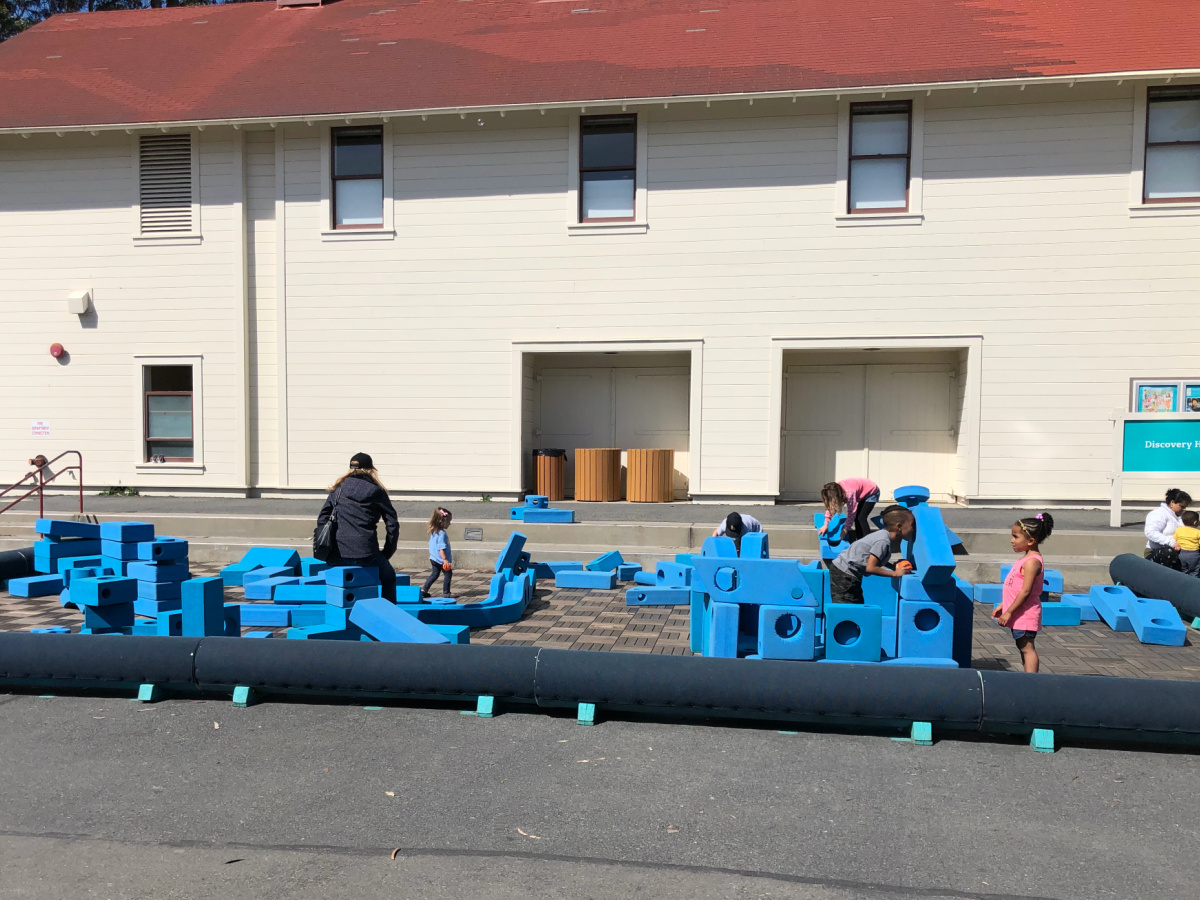
Outdoor Play at the Bay Area Discovery Museum
The outdoor areas were some of the first things that made us realize this museum was going to be different.
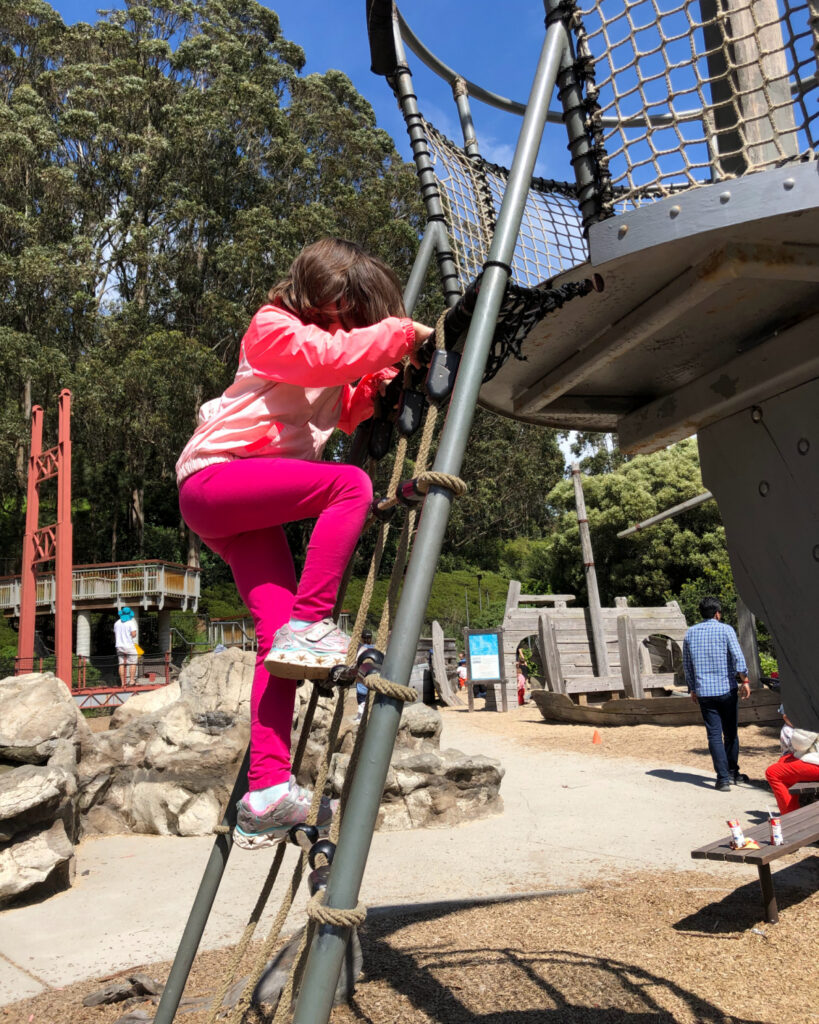
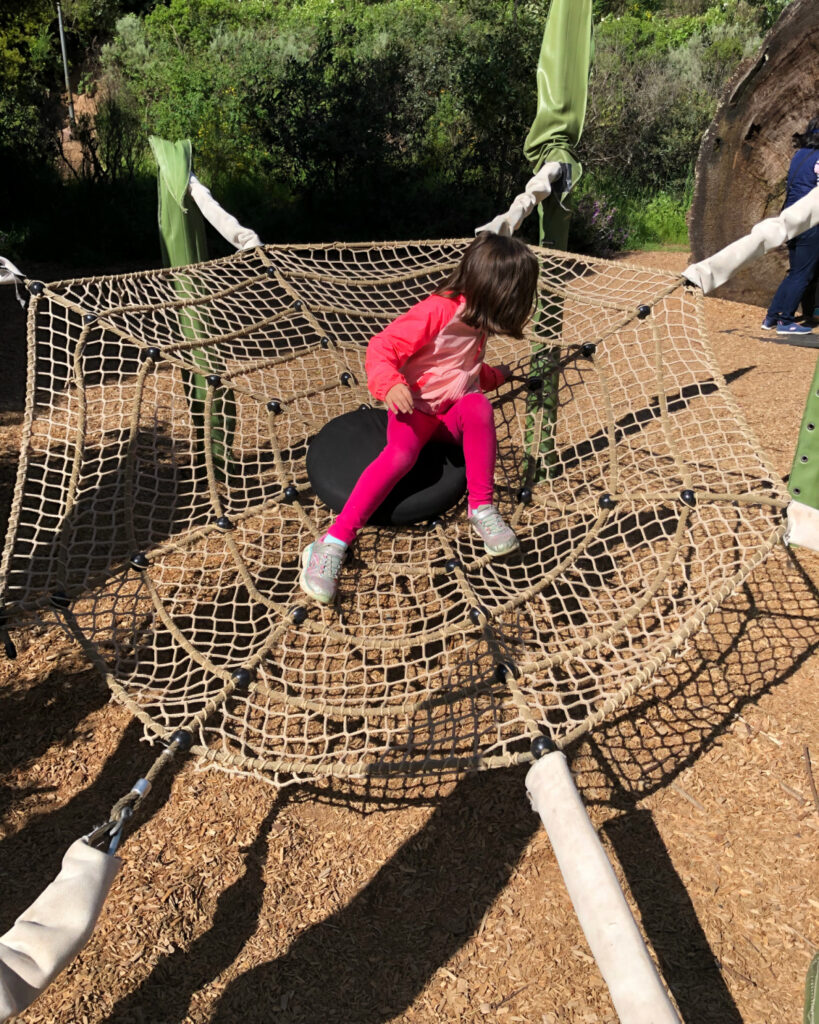
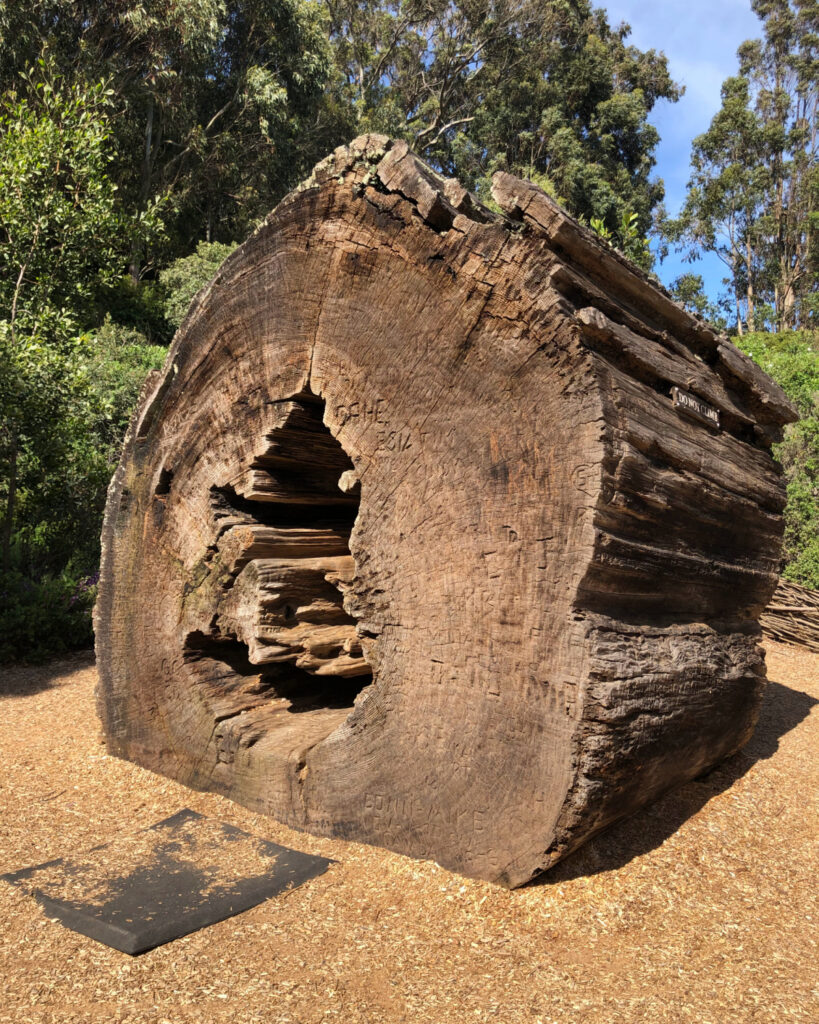
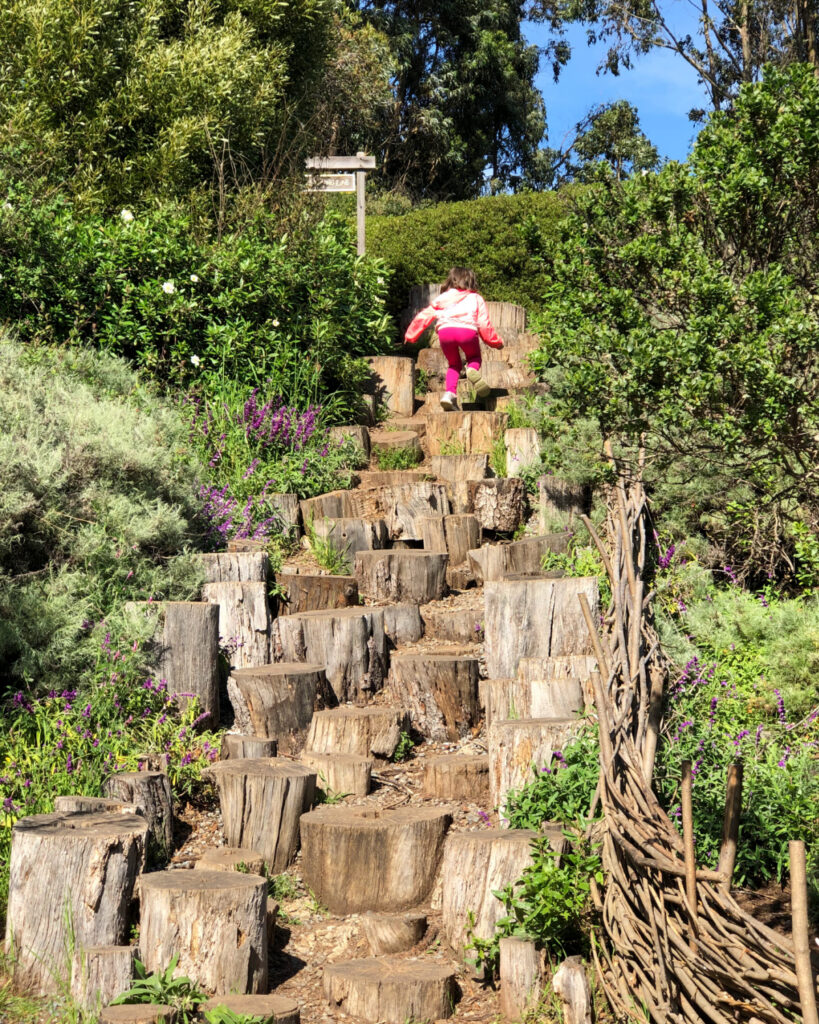
Our daughter climbed across huge pieces of wood, scrambled through rope structures, explored giant tree trunks, wandered through woven-branch tunnels, and tackled all kinds of nature-inspired obstacles.
Some of the play areas felt almost like a cross between a playground and an outdoor adventure course.
There were logs to balance on, nets to climb, elevated platforms, rocky areas to explore, and plenty of opportunities for kids to test what their bodies could do.
Nothing felt particularly polished or theme-park perfect.
And I mean that as a compliment.
The outdoor spaces felt tactile and organic. Wood looked like wood. Rocks looked like rocks. Kids could climb, touch, dig, and experiment without everything being overly structured.
Current museum offerings still include major outdoor play experiences, including climbing, water and sand play, and active adventure zones, so this part of the museum’s identity has clearly remained intact.
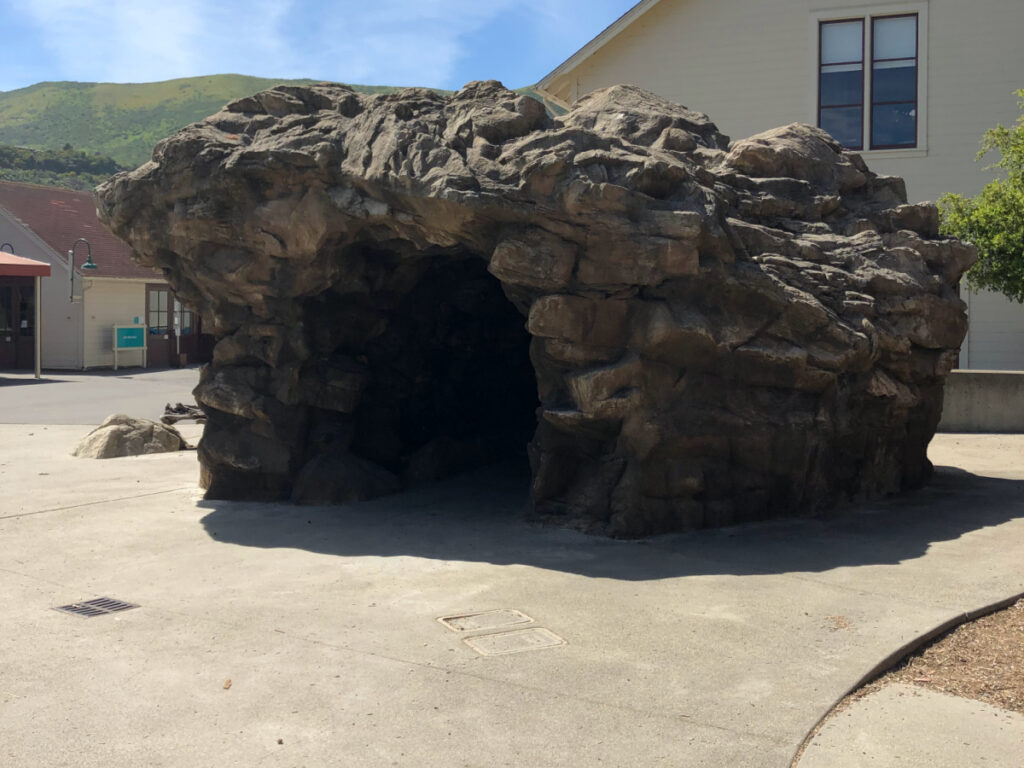
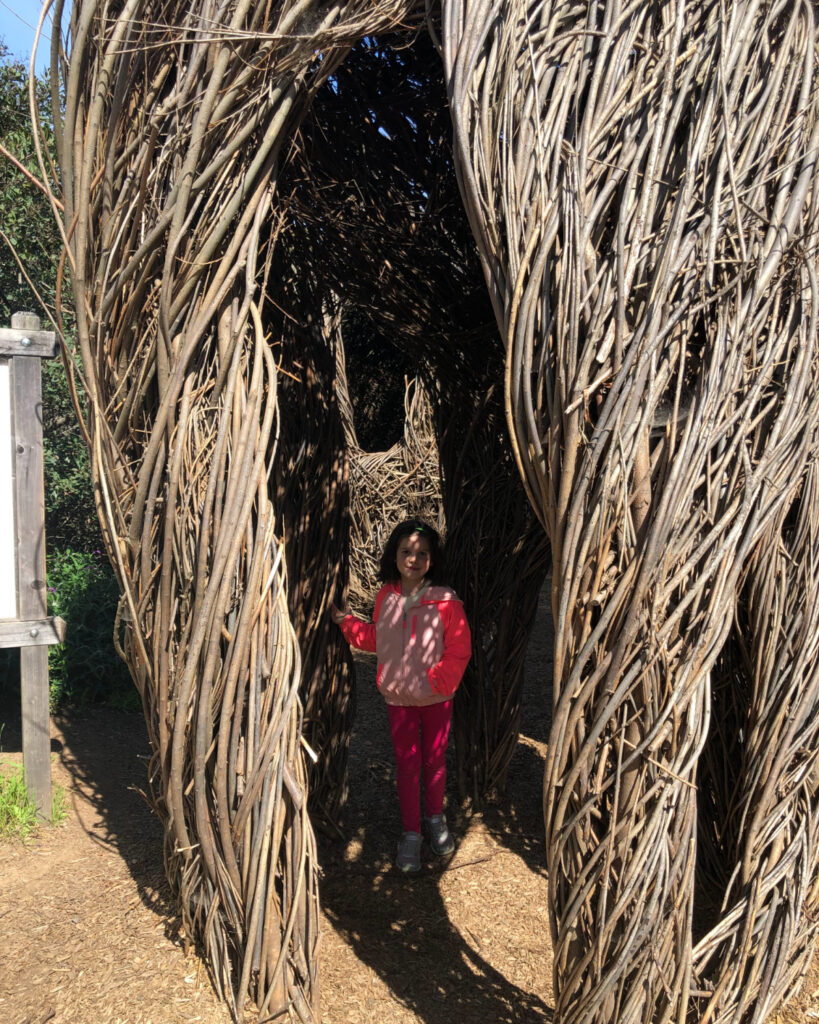
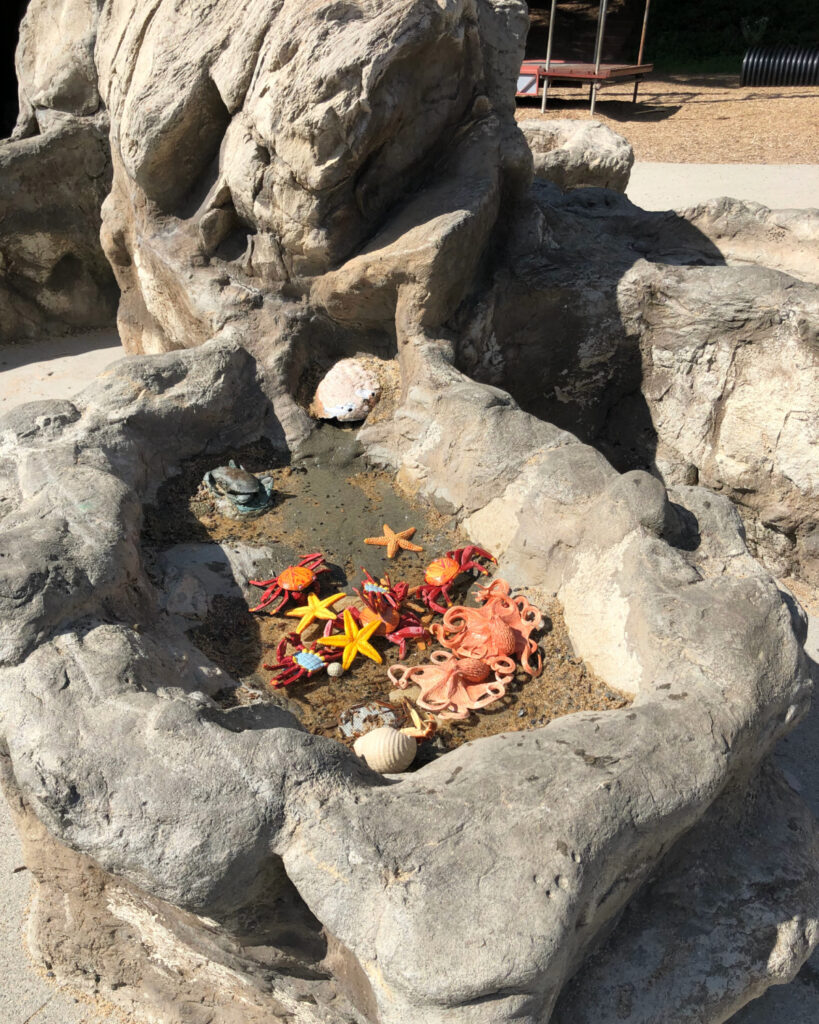
Pirate Ships, Rocks, and Imaginative Play
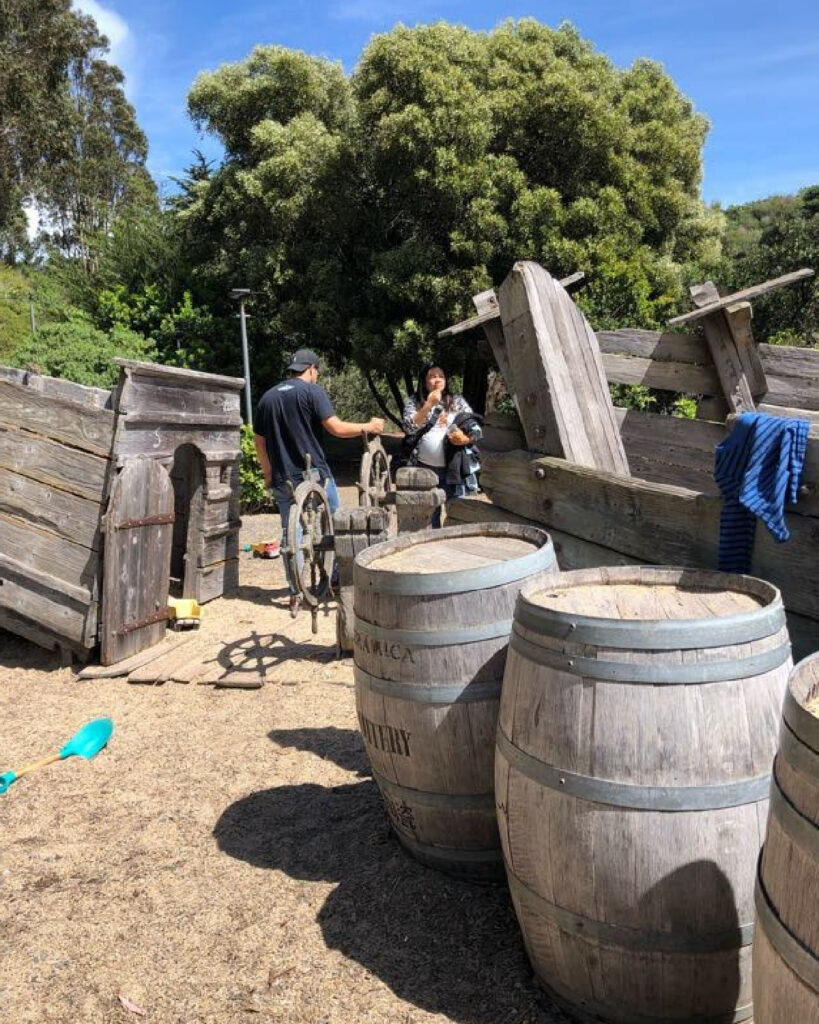
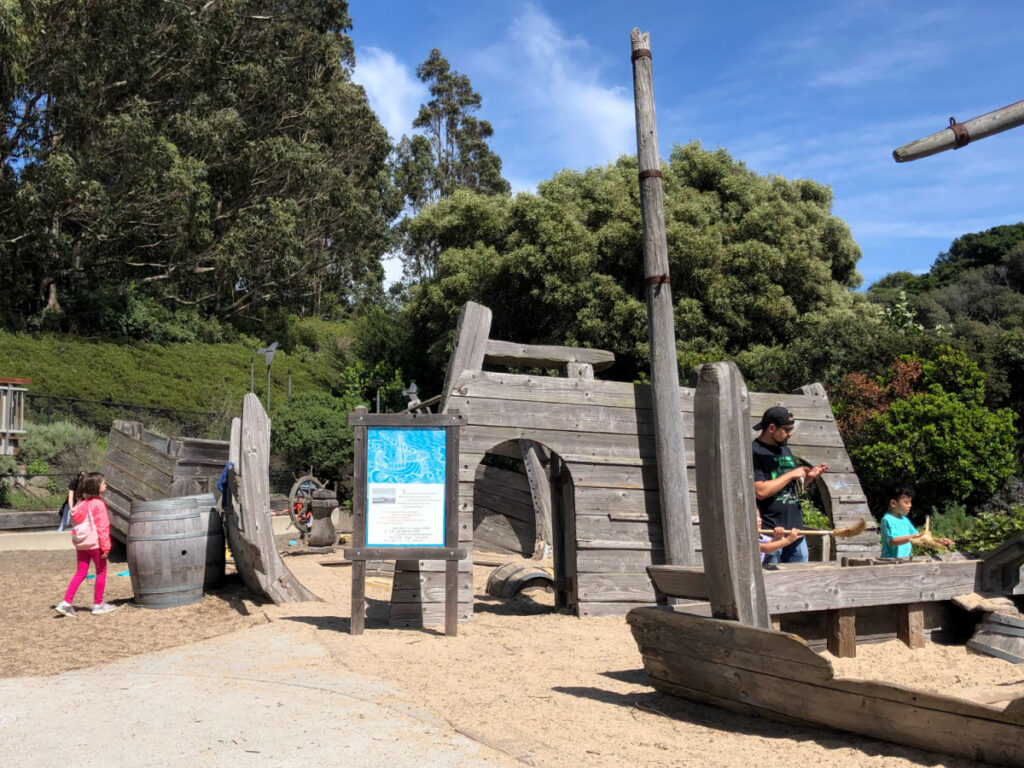
One of the outdoor areas during our visit had a wonderfully ramshackle pirate theme.
There were wooden ship structures, barrels, wheels, sand, climbing elements, and all sorts of spaces that encouraged kids to invent their own adventures.
Our daughter could move from climbing aboard a ship to exploring rocky areas to digging through sand without anyone telling her exactly what she was supposed to be doing.
That open-ended quality matters.
Some children’s attractions are technically interactive, but every activity still has one correct outcome.
This museum gave kids room to make things up.
A pile of sand could become a treasure hunt.
A wooden structure could become a pirate ship.
A woven tunnel could become a hideout.
A hollow tree trunk could become something entirely different five minutes later.
That kind of imaginative freedom was built into almost everything we saw.
Sensory Play That Kids Can Actually Get Messy With
The museum also had plenty of sensory experiences.
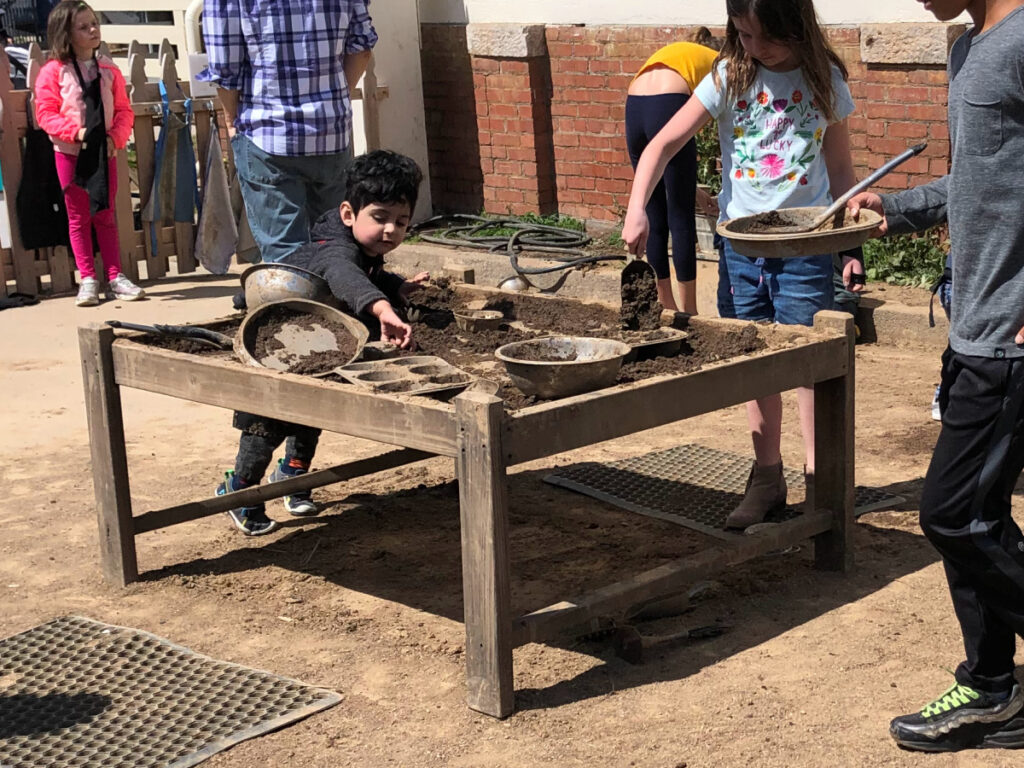
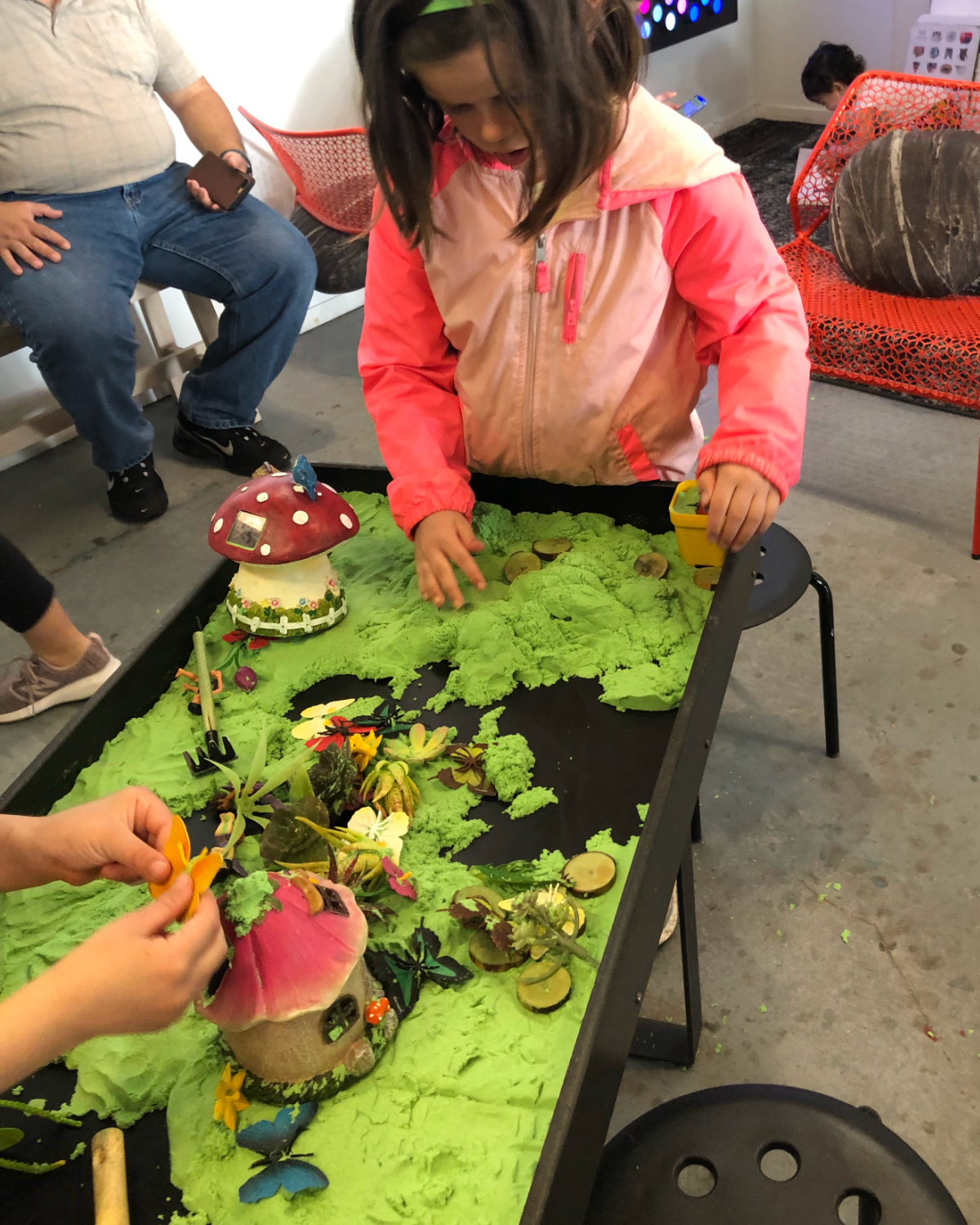
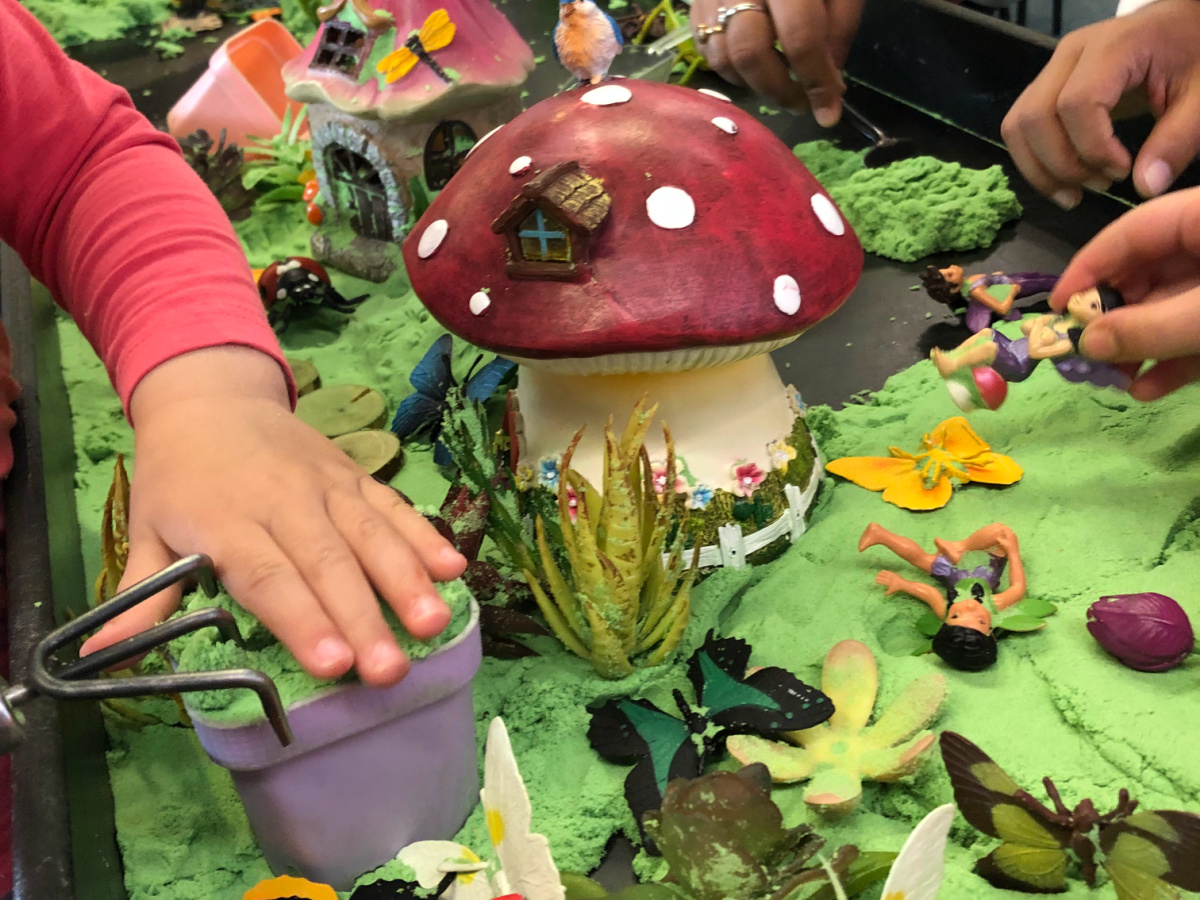
We saw kids playing with sand, water, dirt, kinetic materials, and small-world setups where they could create scenes with tiny houses, plants, figures, and loose parts.
There was even an outdoor mud area where kids could scoop, sift, and make an impressive mess.
If you have a child who likes to touch everything, this is their place.
I would definitely dress kids accordingly.
This is not the day for the cute outfit you are hoping to keep pristine.
Let them wear something comfortable that can survive paint, dirt, sand, and whatever else they manage to discover.
Why the Outdoor Areas Worked So Well
What impressed me most was how well the museum balanced physical play with creativity.
A child could burn off energy climbing a net or scrambling over rocks and then immediately move into something quieter like painting, building, or creating.
That variety helps make the museum work for a surprisingly long visit.
We never felt like we were doing the same kind of thing over and over again.
And that was only the beginning.
Because as fun as the outdoor spaces were, some of our absolute favorite experiences happened inside — especially the art areas and one spectacular painting gallery that I still wish every children’s museum had.
The Painting Gallery Was the Standout for Me
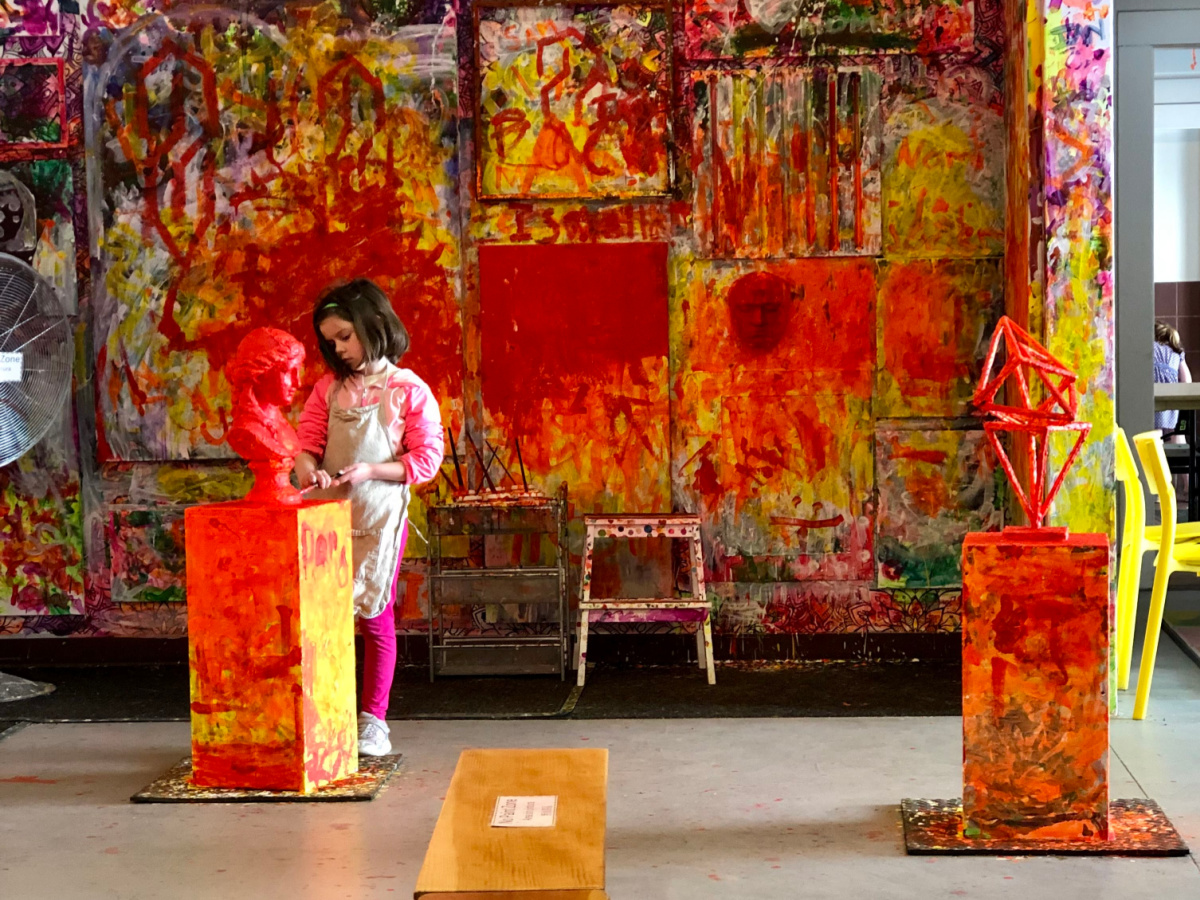
The Painting Gallery is probably the thing I remember most from our visit, because I had never seen anything quite like it before.
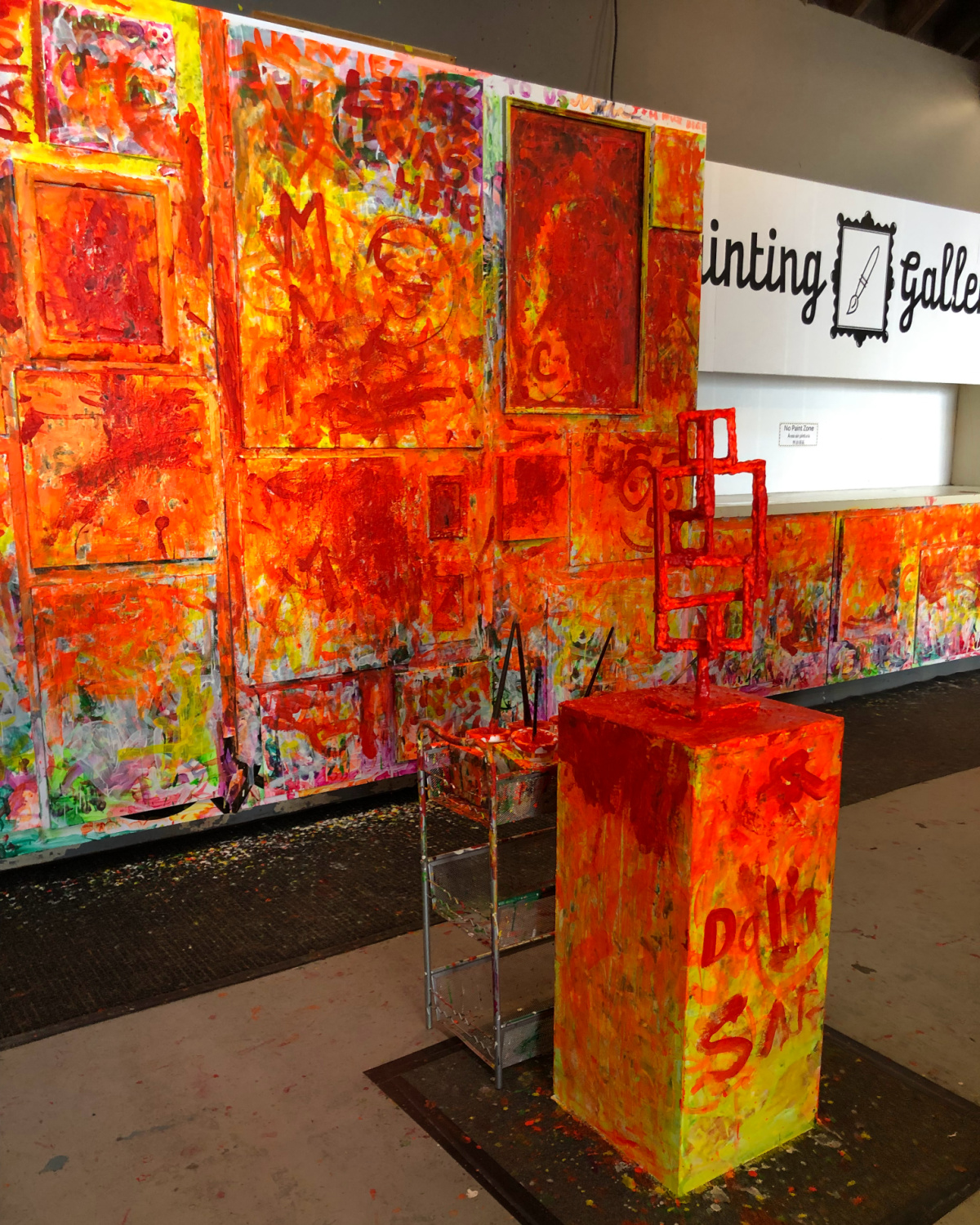
Every day, the museum picked one paint color. That was it. One color.
The day we visited, the color was orange.
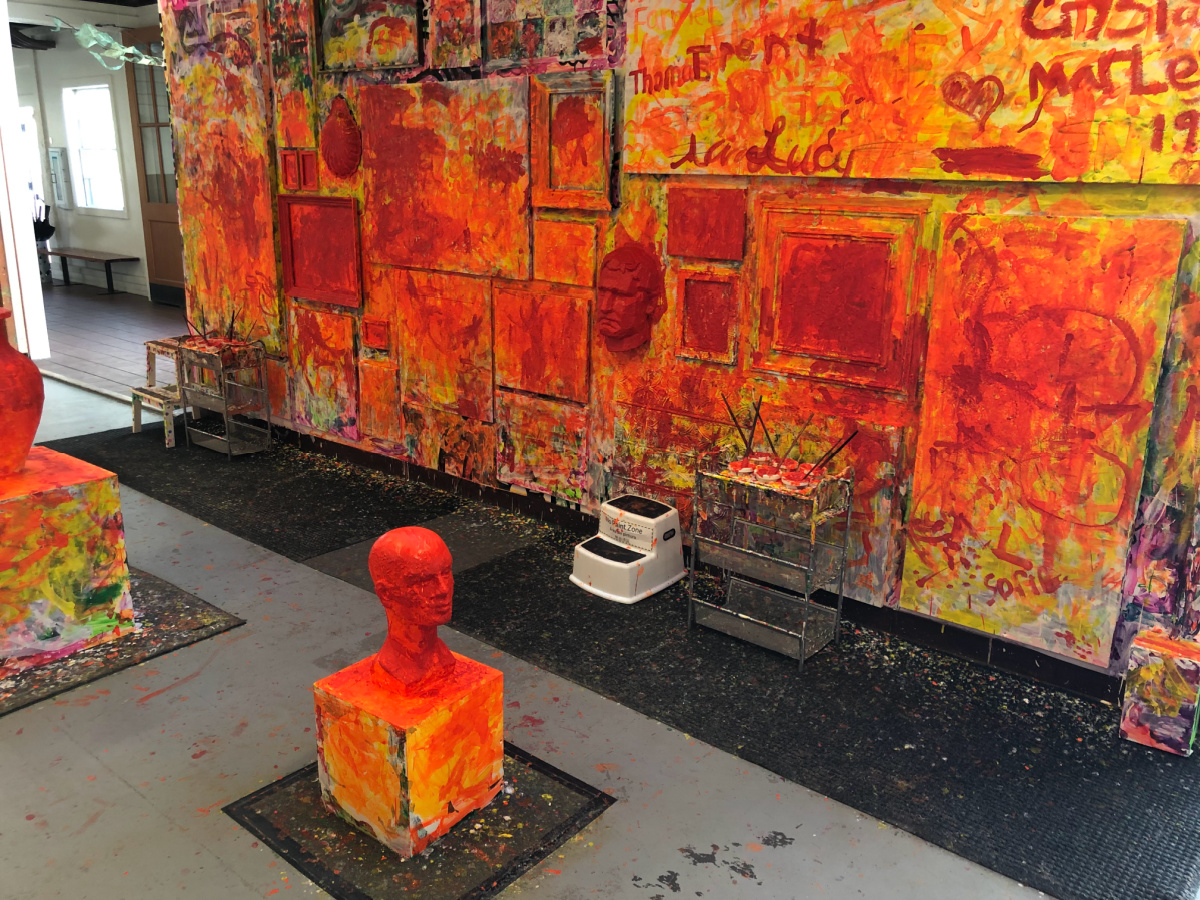
You put on a smock, grabbed a paintbrush, and painted whatever was in the room. There were sculptures, frames, walls, furniture, pedestals, all kinds of random things, and the entire point was just to keep adding paint.
The next day, maybe the color was blue or purple or green, and the whole process started over again.
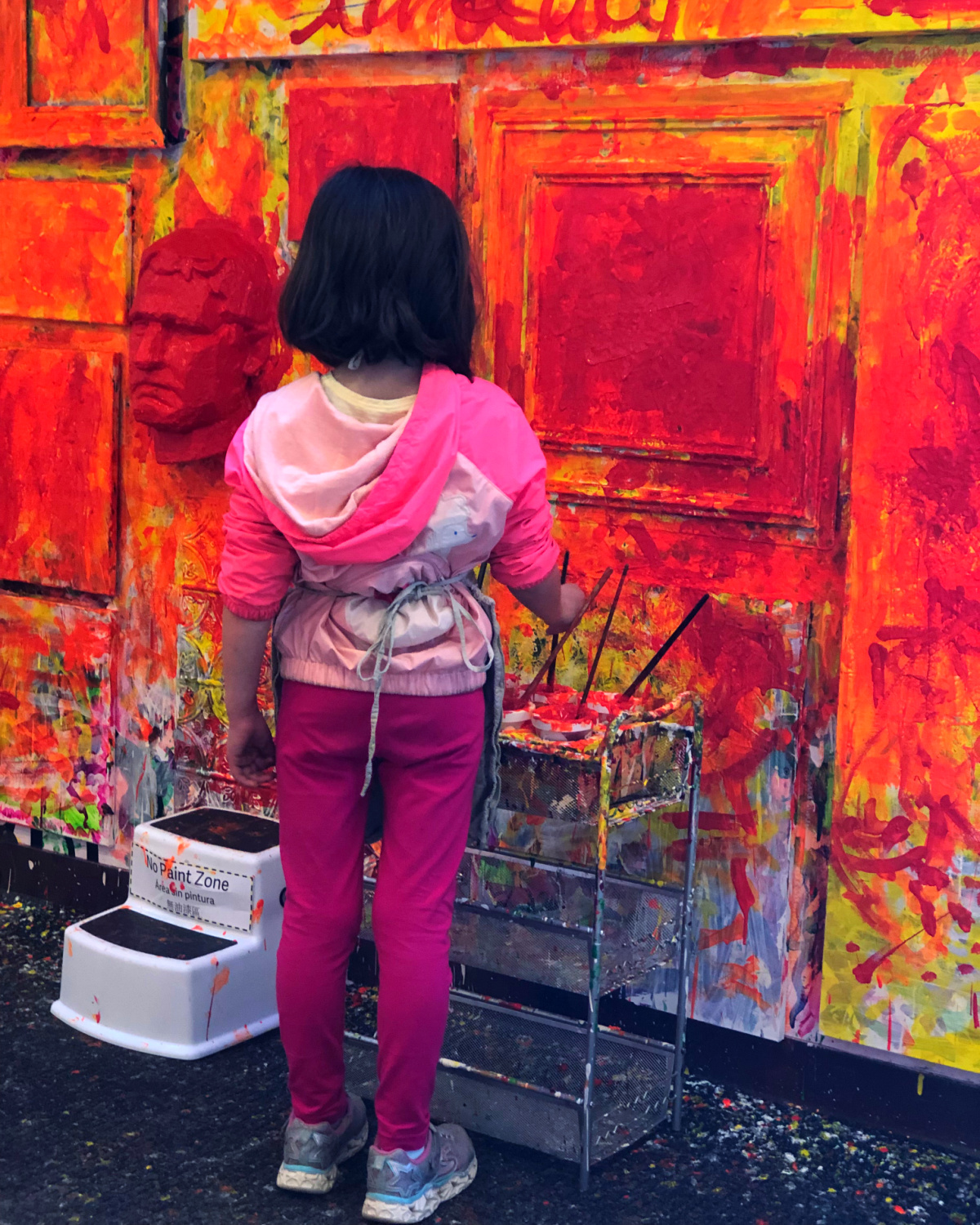
It sounds almost too simple, but that was exactly why it worked so well.
There was no project to complete and no picture you were supposed to make. You did not have to think about whether you were artistic or whether your painting looked good. You just picked a spot and started slapping paint on it.
Honestly, I thought it was incredibly therapeutic.
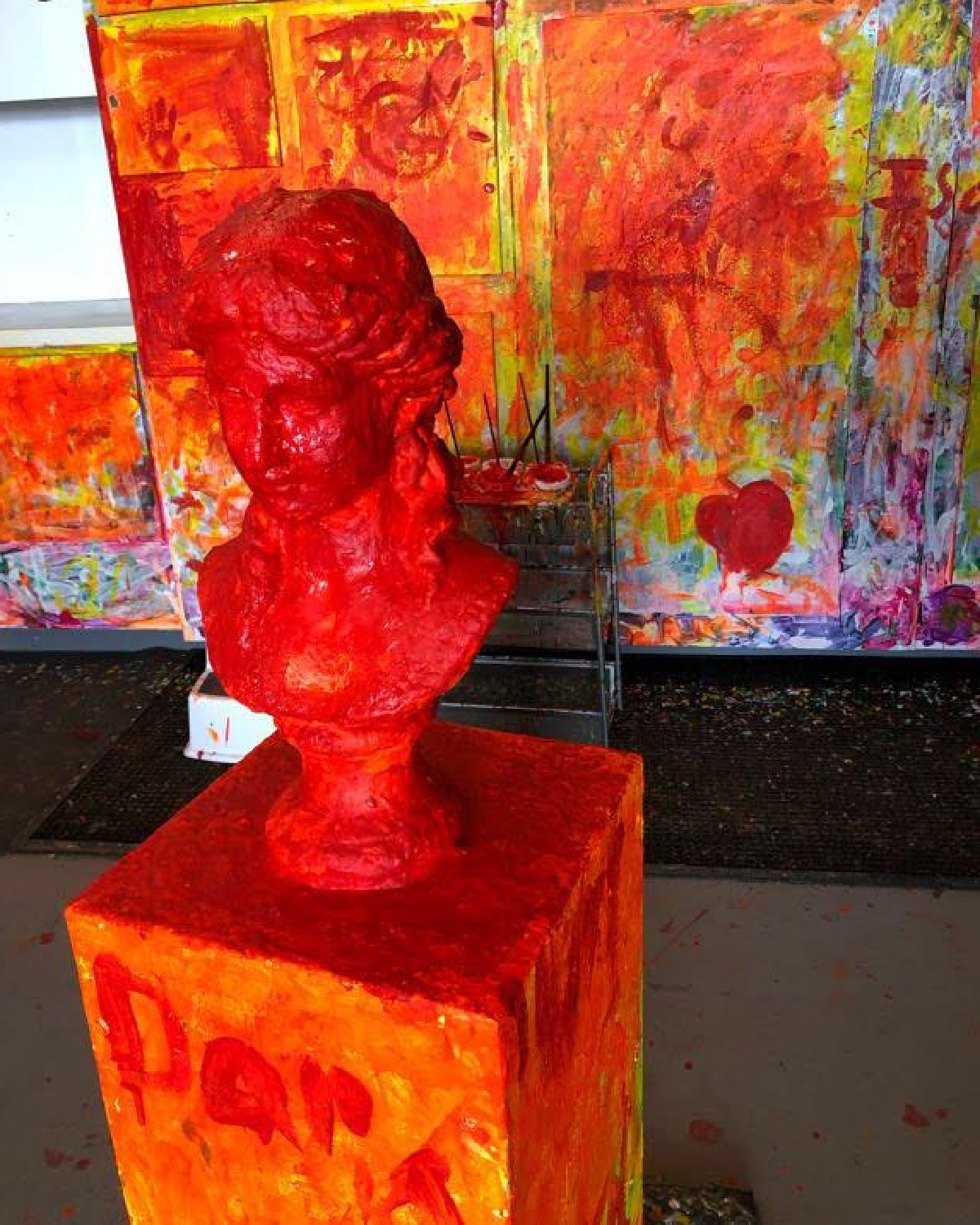
Our daughter had a blast, but I completely understood the appeal myself. There was something very satisfying about not having to make anything in particular. You were just adding another layer to this strange, constantly changing room that hundreds of other kids had painted before you.
I still think about that exhibit.
We visited in 2019, so I have no idea whether the Painting Gallery still exists exactly the way we experienced it. But even if it has changed, this is one of the best examples of what I loved about the Bay Area Discovery Museum. The activities were creative without being fussy.
There Was Art Everywhere
The Painting Gallery was the big one for me, but there were lots of smaller art experiences too.
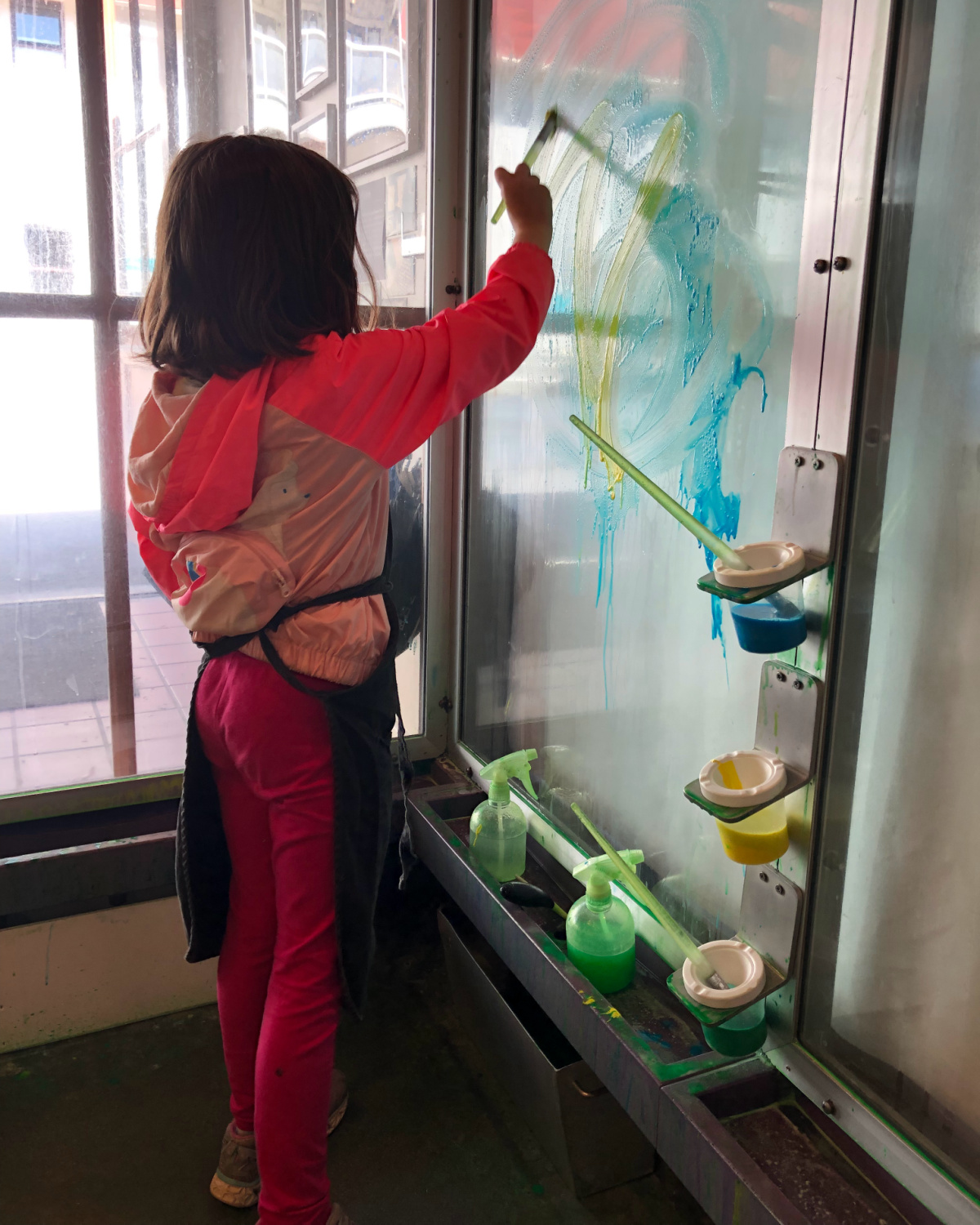
Our daughter painted on a large clear vertical panel, which was fun partly because it did not feel like regular painting. She could paint directly on the surface, layer colors, wipe things away, and keep going.
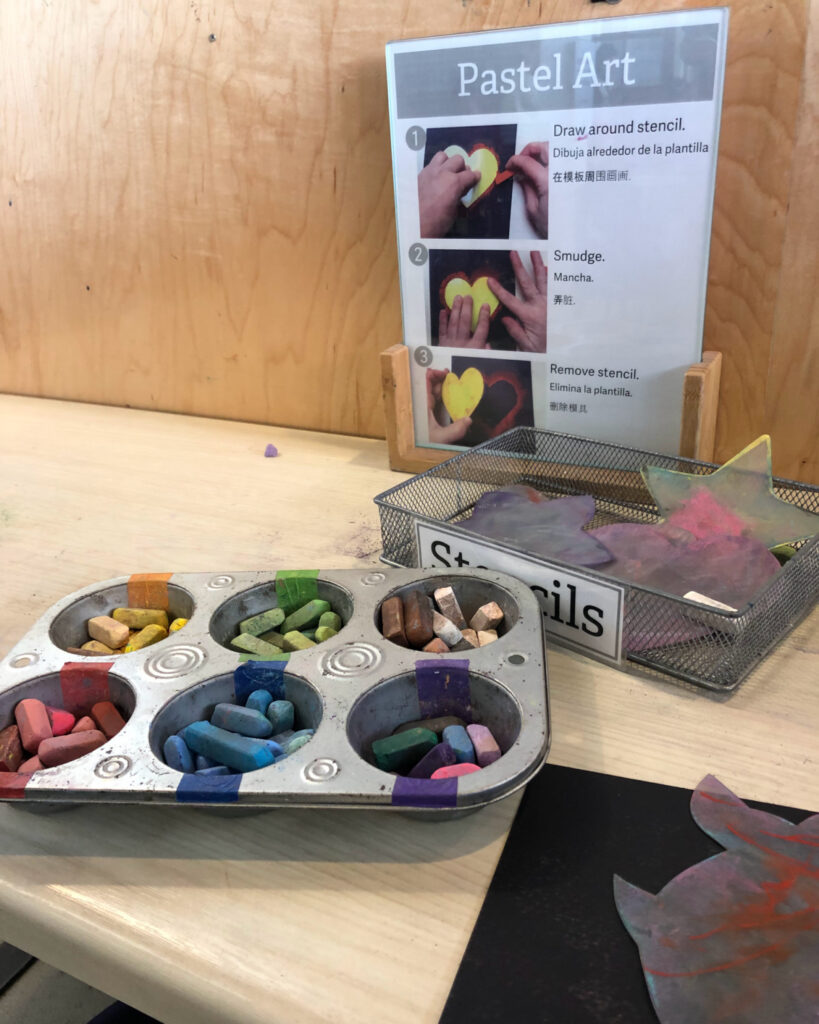
There were also quieter art stations. In one, she used pastels and a stencil on dark paper to make a colorful design. It was not complicated, but she enjoyed it, and it gave her something completely different to do after some of the bigger, messier activities.

That variety was one of the nicest things about the museum.
Not every activity needed to be a huge production.
Sometimes kids want to climb all over something.
Sometimes they want to sit at a table for ten minutes and make something.
This place had both.
Sensory Play Was Mixed In Everywhere
There were also a lot of exhibits that were somewhere between art, sensory play, and imaginative play.
One setup had bright green sensory material with little houses, flowers, insects, figures, and other tiny pieces that kids could move around however they wanted.
Our daughter could make a little scene, rearrange the whole thing, knock it apart, and start over.
There were also translucent magnetic pieces on a lighted surface, which added another kind of building experience.
Nothing about these exhibits felt overly complicated.
That was part of the appeal.
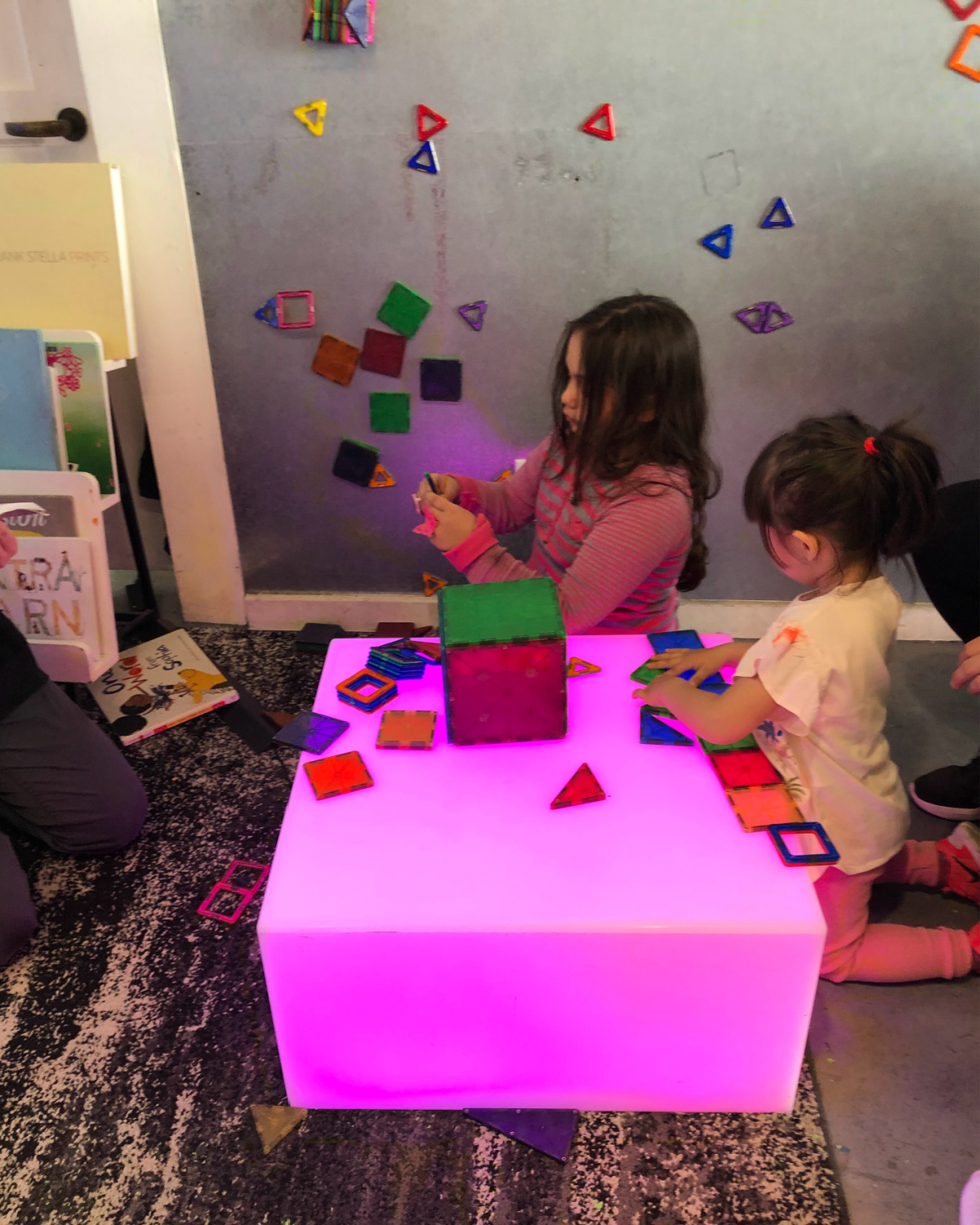
Kids could usually walk up, look at what was in front of them, and immediately understand that they were supposed to touch it, move it, build something, or make a mess.
Then We Got to the Engineering Stuff
The engineering areas were another favorite, and there was a lot more to them than I expected.
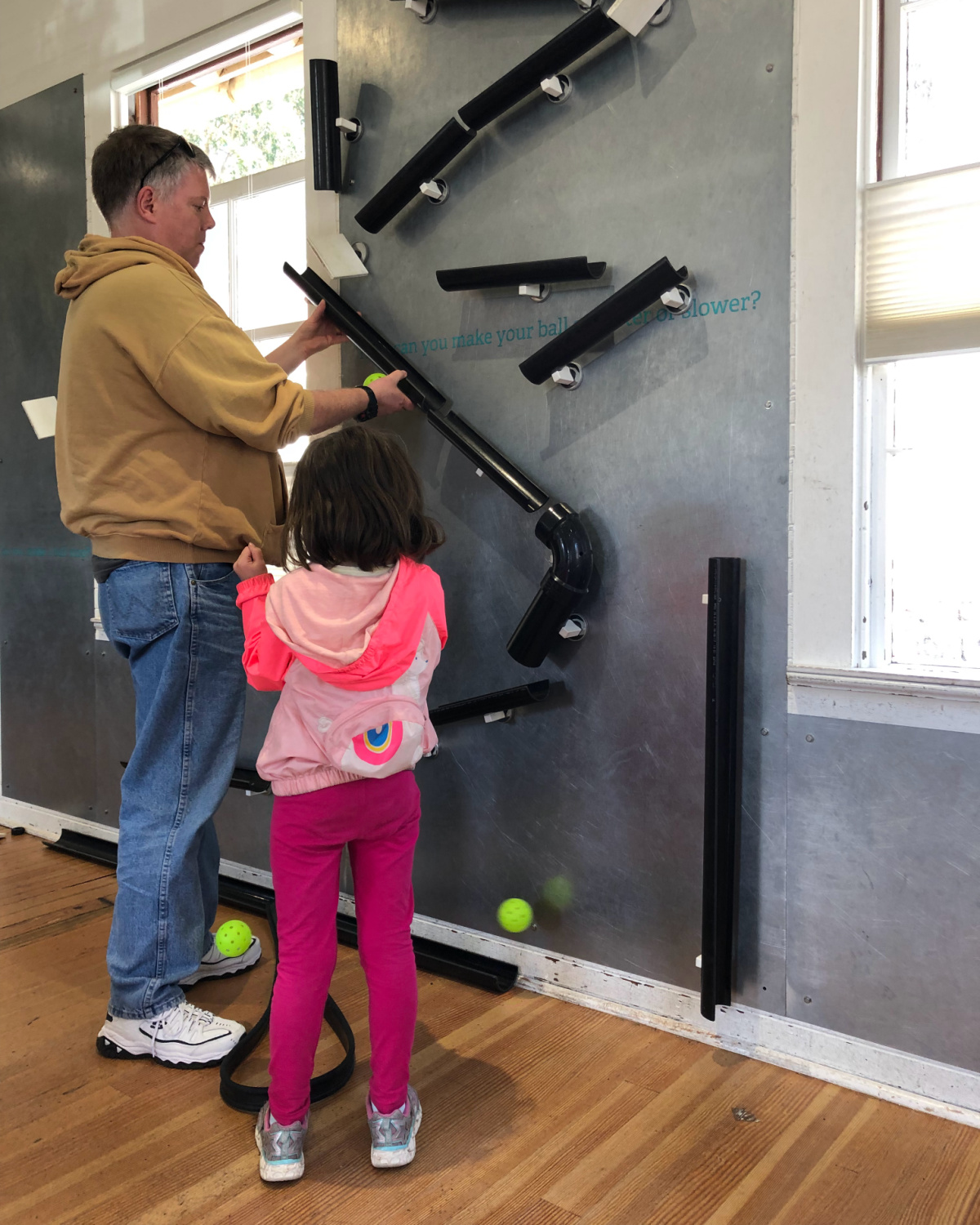
One of the biggest activities involved long tracks where kids could send balls racing through curves and drops.
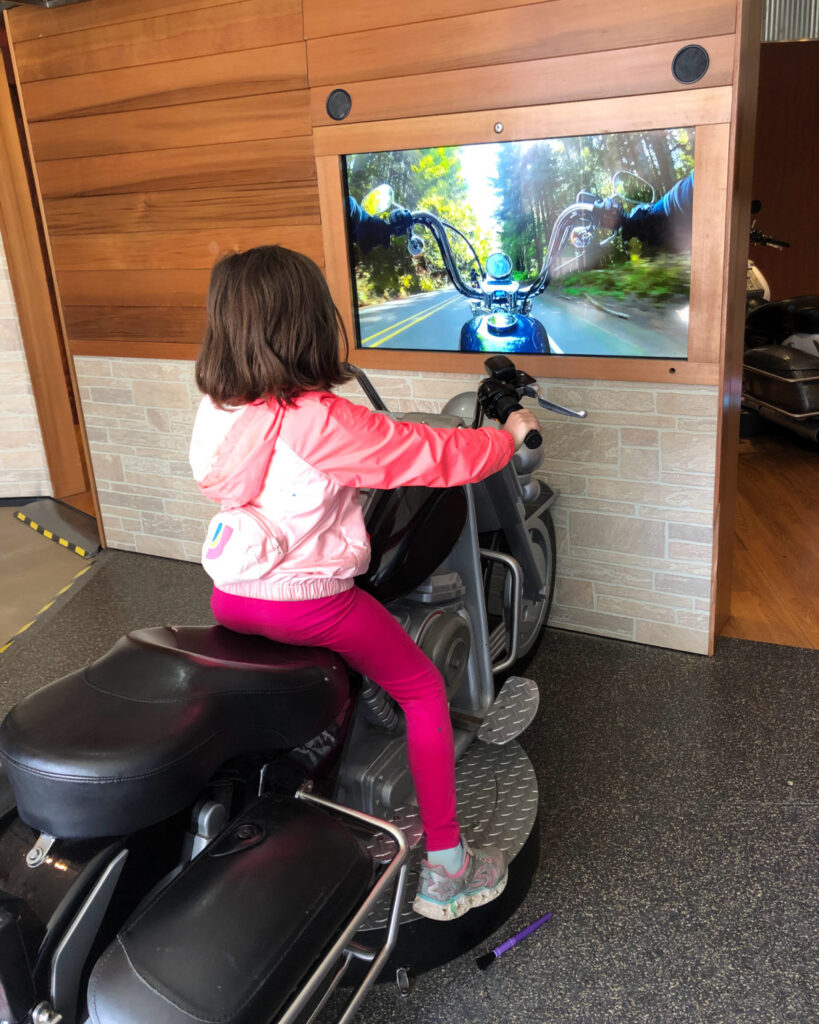
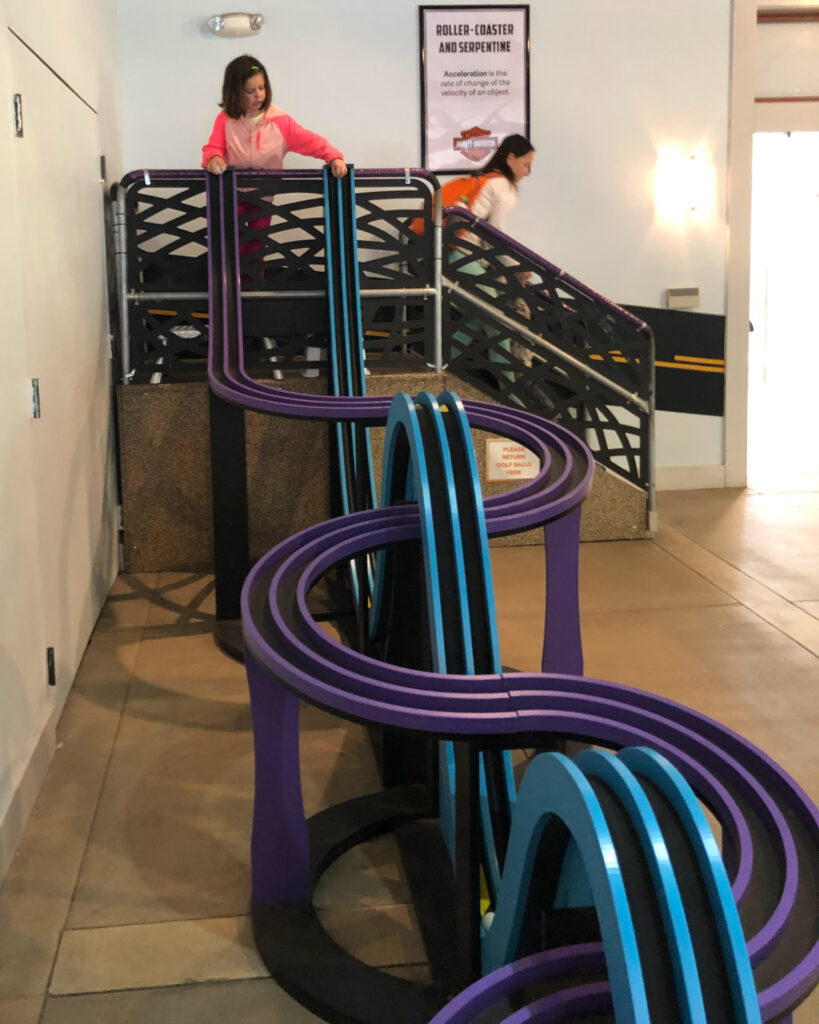
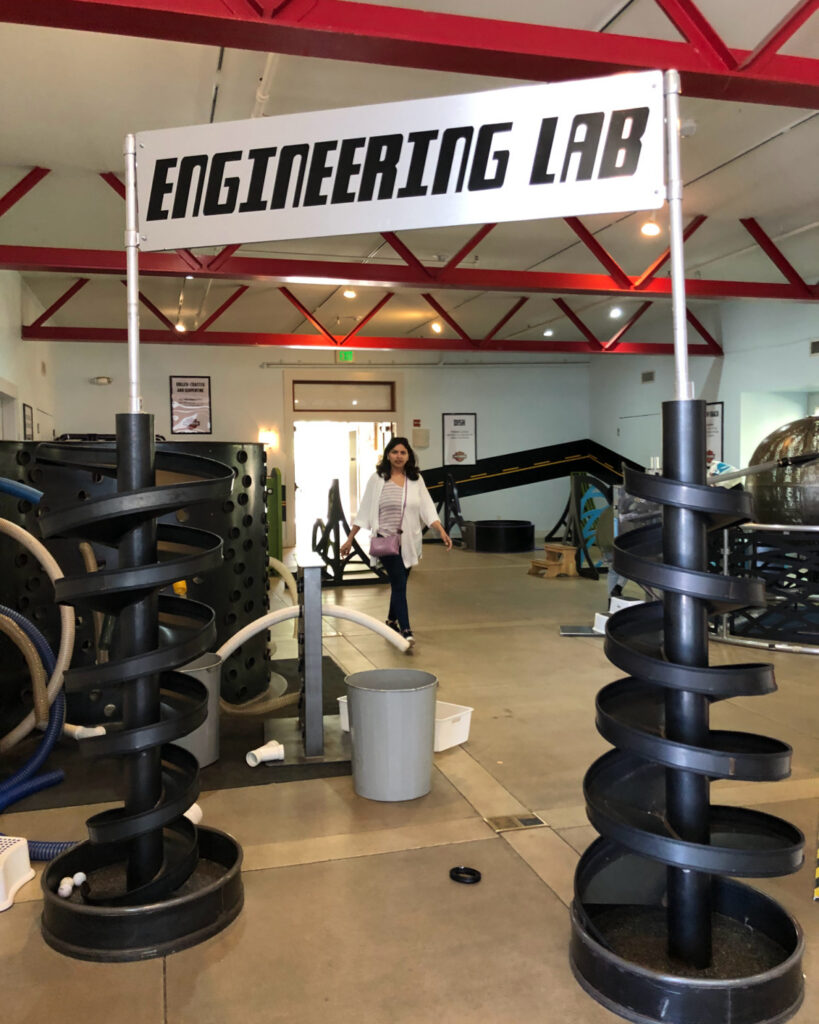
There was also a wall where you could rearrange pieces and make your own ball run.
Sometimes the ball went exactly where you wanted it to.
Sometimes it did not even come close.
Then you moved something and tried again.
That is the kind of thing our daughter could have done over and over, because it did not feel like a lesson. It was just fun to see if you could make it work.
Fab Lab A Was Very Cool
Another room, Fab Lab A, had these big wooden pieces that kids could connect in different ways.
There were planks, wheels, curved pieces, and all kinds of hardware.
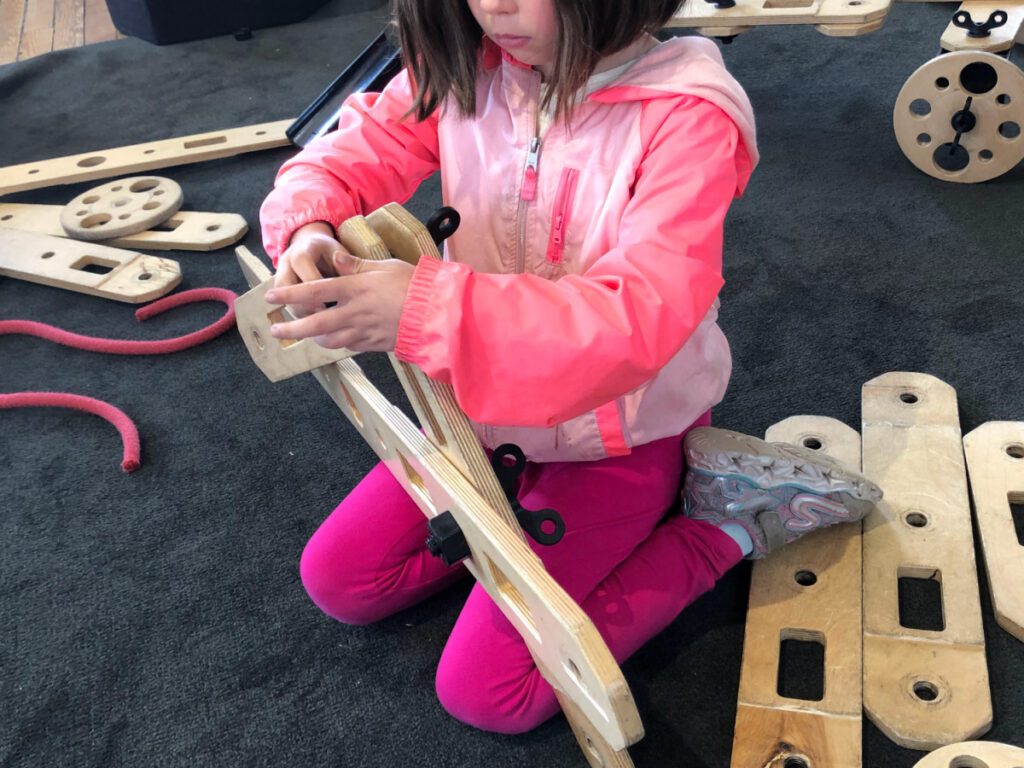

Looking back at the photos, our daughter was really focused in here.
She was not following instructions or trying to recreate something that was already built. She was just messing around with the pieces and figuring out what worked.
I liked that a lot.
The museum did not constantly tell kids what the finished product was supposed to be.
A lot of the time, they just gave them the materials and let them see what happened.
The Motorized Drawing Machine Was Such a Fun Idea
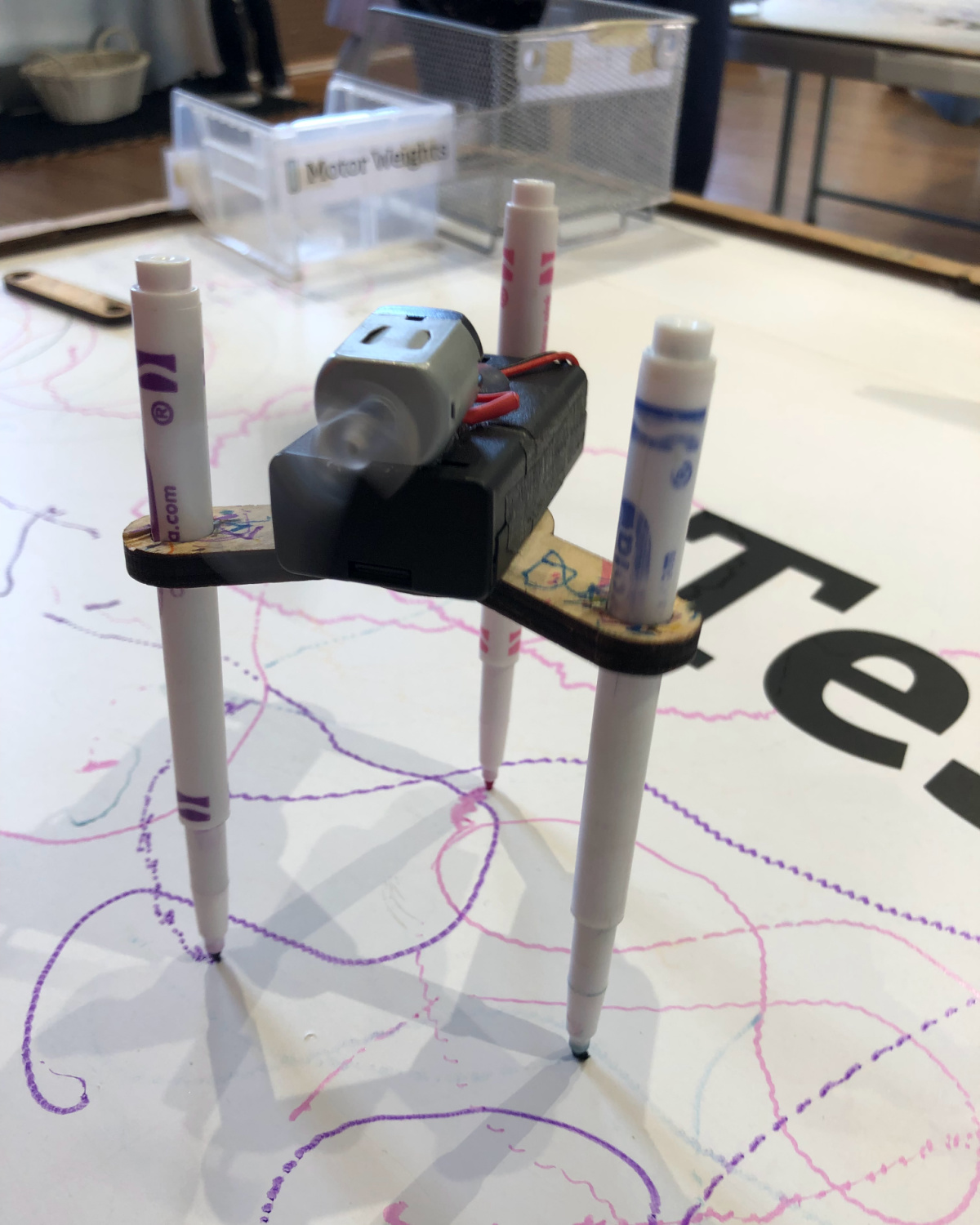
One of the engineering activities that I remember best involved building a little motorized drawing machine.
You put together a contraption with a motor and markers, turned it on, and let it wobble around on the paper.
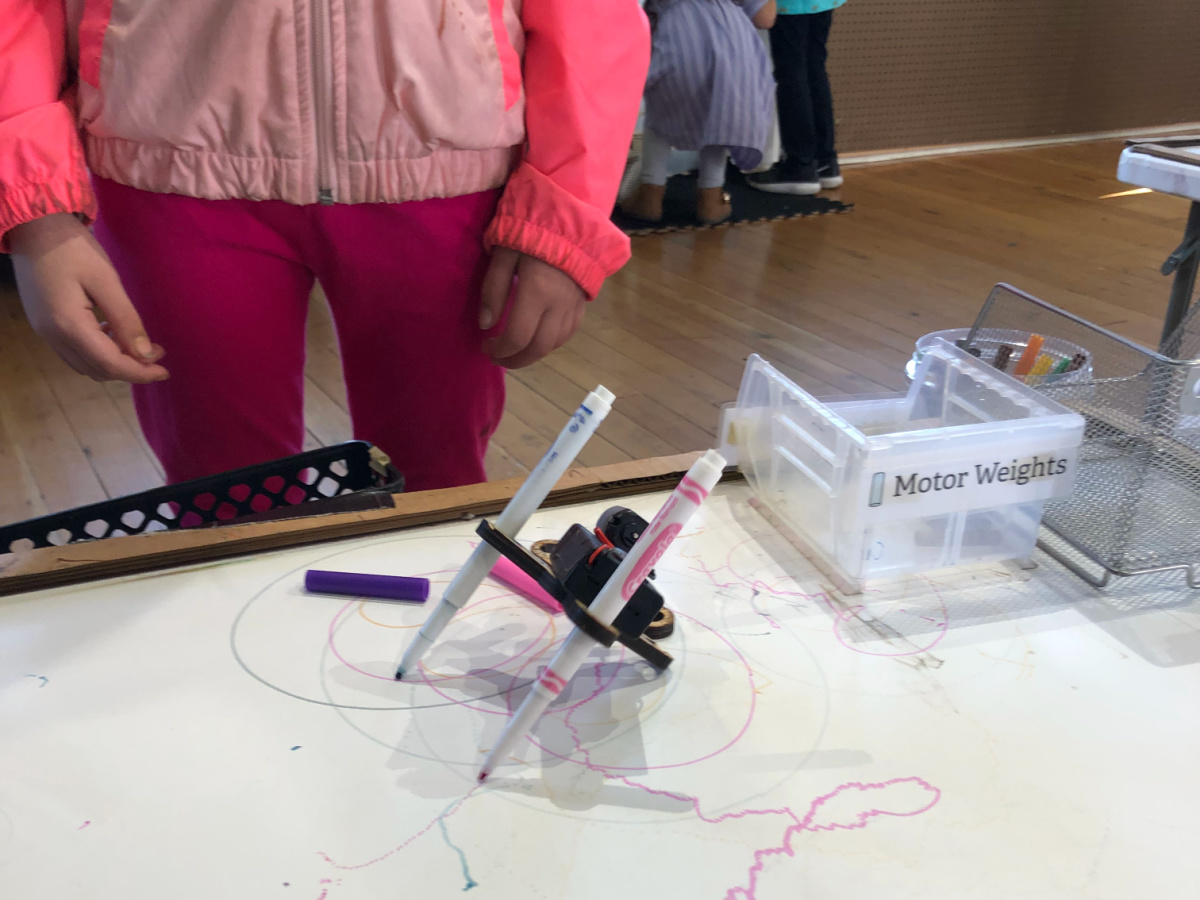
The markers made these looping, slightly chaotic designs as the whole thing moved.
It was really fun to watch.
And because you could change the setup, the patterns changed too.
This is one of those activities that is hard to categorize, which is probably why I liked it.
Was it art?
Engineering?
Was it a science experiment?
Kind of all three.
A lot of the museum was like that.
Building the Bay
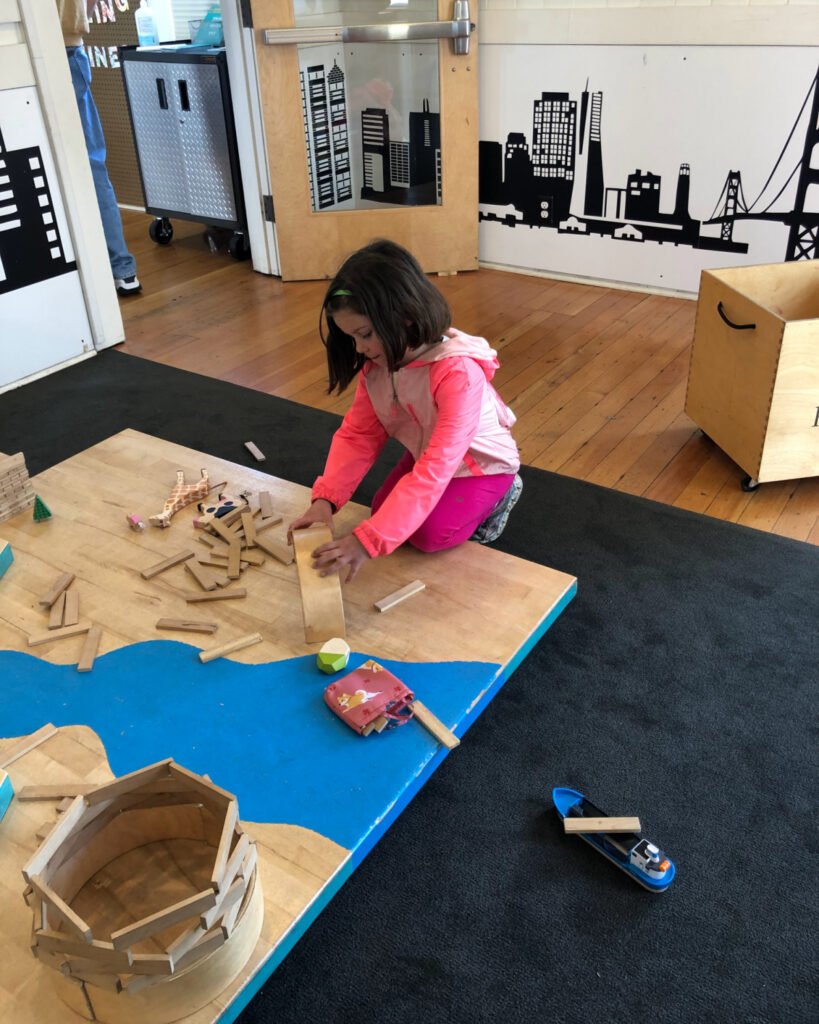
There was also an area where kids could build with wooden blocks and other loose pieces on a large table themed around San Francisco Bay.
Our daughter built little structures and moved boats around while the San Francisco skyline stretched across the wall behind her.
It was another fairly simple setup, but she spent a lot of time there.
And that kept happening throughout the museum.
Some of the exhibits were elaborate, but some of our daughter’s favorite things were basically just good materials arranged in a way that made kids want to sit down and play.
Why We Liked This Museum So Much
By this point, she had already climbed outside, explored the pirate-themed areas, played in sand and sensory materials, painted, built ball tracks, experimented with giant wooden pieces, and made a motorized drawing machine.
That is a lot of different kinds of play in one place.
And I think that is why I still remember the Bay Area Discovery Museum so fondly.
It never felt like there was one “main thing” you were supposed to do.
Kids could bounce around depending on what interested them.
Our daughter was seven when we visited, and she was at that age where she wanted to try everything, so this place was kind of perfect for her.
And then, eventually, we got hungry.
Which was when we discovered that even the café was unusually kid-friendly.
Bean Sprouts Café Was Such a Fun Surprise
By the time we were ready to eat, I was expecting typical museum food.
Maybe pizza or,chicken tenders.
Maybe something that would technically feed a kid, but nobody would be particularly excited about it.
Instead, we found Bean Sprouts Café.
And this place was adorable.
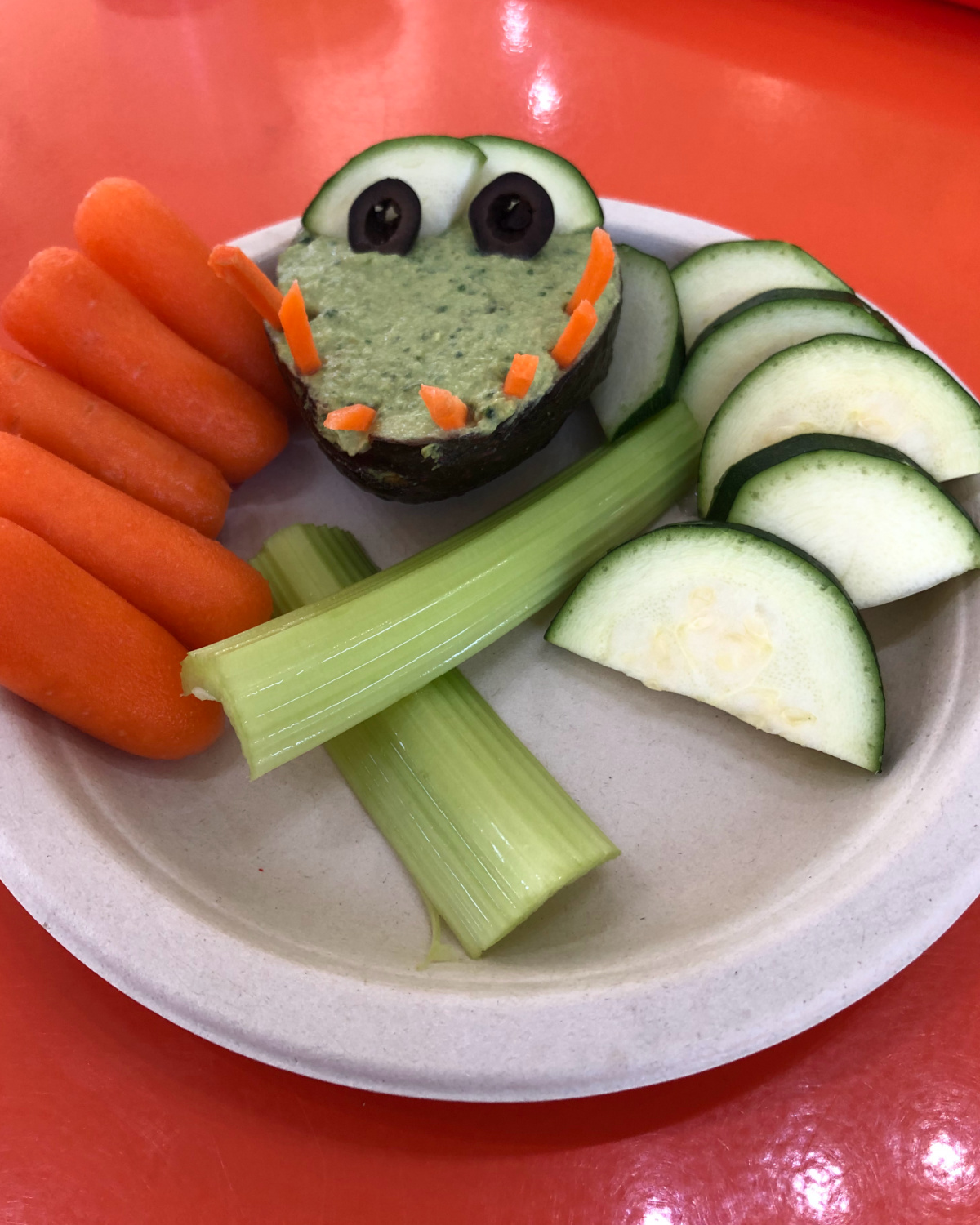
The food was clearly designed for kids, but not in a lazy way. It was playful.
Our daughter had a sandwich that came decorated with cucumber and olive eyes, and another meal was turned into an alligator using avocado and carrot slices.

It was the kind of food presentation that makes kids stop and actually look at what is on the plate before they start eating it.
I loved that.
The meals were fun without feeling like they were just dumping sugar and fried food in front of children, and it fit perfectly with the rest of the museum.
Even lunch felt creative.
And the really good news is that Bean Sprouts Café is still there.
The museum currently lists Bean Sprouts as its onsite café, and outside food and drinks are allowed too.
That gives families some flexibility. You can plan on eating at the museum, pack food for picky eaters, or do a combination of both.
For us, though, the café was part of the experience.
Don’t Miss the Golden Gate Bridge View
This is probably my sneakiest tip for visiting the Bay Area Discovery Museum.
When you leave the museum, do not immediately get in your car.
Look around.
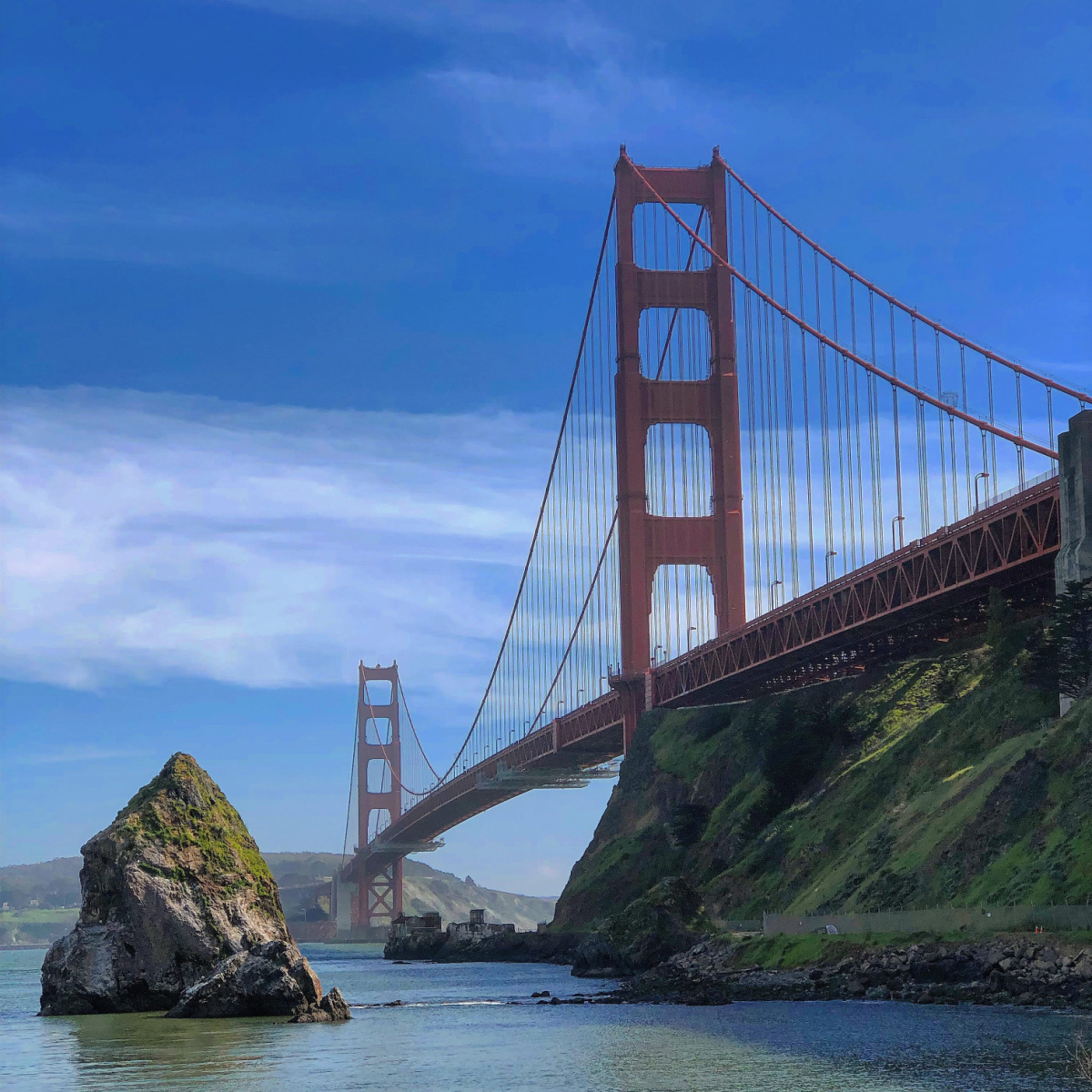
Fort Baker has spectacular views of the Golden Gate Bridge, and one of my favorite photographs from our entire California trip was taken right near the museum parking area.
You get this beautiful view looking across the water toward the bridge, without having to fight the crowds at some of the more famous Golden Gate viewpoints.
The bridge fills the background, the water is right in front of you, and the whole scene feels surprisingly peaceful considering how close you are to one of the most photographed landmarks in the country.
Fort Baker is officially recognized by the National Park Service as a scenic viewpoint, and there are waterfront areas throughout the park with excellent views of the bridge and San Francisco Bay.
So even if you are coming primarily for the museum, bring your camera.
This is absolutely worth five extra minutes.
How Long Should You Spend at the Bay Area Discovery Museum?
I would plan on at least a few hours.
This is not a museum I would squeeze into a tiny window between other attractions.
There is simply too much for younger kids to do.
Current visitors still describe spending multiple hours here, and that tracks with our experience. The museum has indoor exhibits, outdoor play areas, art spaces, engineering activities, food, and plenty of places where kids can get completely absorbed in what they are doing.
For most families, I think a half day makes sense.
You could easily stay longer if your child is the kind of kid who settles into an activity and does not want to leave.
What Ages Is the Bay Area Discovery Museum Best For?
The museum is designed for children ages 0–8.
That feels right to me.
Our daughter was seven when we visited, and I thought she was at a fantastic age for it because she could enjoy both the imaginative play and the more involved engineering activities.
Toddlers and preschoolers have plenty to do too, especially in the sensory, climbing, and imaginative play spaces.
Once kids get much older than eight, I think it becomes more dependent on the child.
A kid who loves building, engineering, art, and tinkering may still enjoy parts of it, but I would consider this primarily an attraction for families with younger children.
Practical Tips for Visiting
The museum is located at 557 McReynolds Road in Sausalito, inside Fort Baker.
Parking is free in lots next to the museum, which is a wonderful thing to hear anywhere near San Francisco.
The operating schedule changes seasonally, so I would check the museum website before your visit rather than relying on old hours. The museum currently closes on certain weekdays depending on the time of year, and there are also a handful of annual closure dates.
A few things I would bring:
- Comfortable clothes that can get dirty
- A light jacket, because Bay Area weather can change quickly
- Sunscreen for the outdoor play areas
- A change of clothes for younger kids if they are likely to get wet or muddy
- Your camera for the Golden Gate Bridge view
And I would absolutely let your kids wear something you do not care about ruining.
Between paint, dirt, sand, water, and general enthusiastic play, this is not really a pristine-outfit kind of museum.
Pair the Bay Area Discovery Museum With Muir Woods
If you are looking for an especially good family day trip from San Francisco, I think Muir Woods and the Bay Area Discovery Museum make an almost perfect combination.
Do Muir Woods in the morning.
Let the kids walk among the giant redwoods, explore the trails, and enjoy being outside in one of the most beautiful places in the Bay Area.
Then head to the Bay Area Discovery Museum for the afternoon.
The two experiences are completely different, which is exactly why they work so well together.
At Muir Woods, kids are walking, observing, and taking in the forest.
At the museum, they can climb, build, paint, dig, experiment, and get messy.
You are not asking them to spend an entire day quietly sightseeing.
And because both attractions are north of the Golden Gate Bridge, the combination makes geographic sense too.
For families with younger children, this would be one of my favorite ways to spend a day in the Bay Area.
Is the Bay Area Discovery Museum Worth Visiting?
For us, absolutely.
We visited in 2019, and I am still talking about the Painting Gallery years later.
That probably tells you everything.
Our daughter had such a good time because the museum let her do things instead of simply showing her things.
She climbed, painted, and built things.
She experimented.
And she made things that worked and things that did not.
Then she ate an avocado alligator for lunch.
It was just a really fun day.
The exact exhibits will continue to change, and honestly, I think that is part of what a good children’s museum should do.
What matters more is the kind of experience the Bay Area Discovery Museum creates.
It is hands-on, imaginative, creative, active, and just a little bit messy.
That was true when we visited, and looking at what the museum offers now, that spirit is clearly still there.
And as a bonus, when you are done, you can walk back toward the parking lot and take one of the best Golden Gate Bridge photos of your trip.
More Bay Area Family Travel Ideas
If you’re planning a family trip to the Bay Area, these guides can help you build out the rest of your itinerary:
- Muir Woods National Monument Guide — everything you need to know to plan a visit, including parking, reservations, trails, and what to expect.
- Muir Woods With Kids — a more family-specific guide focused on what works best for younger children and how to make the visit easy and enjoyable.
- Golden Gate Bridge Guide — coming soon
- Perfect Bay Area Family Day Trip: Muir Woods, Bay Area Discovery Museum, and the Golden Gate Bridge — coming soon
More Great Museums for Kids
If your family loves hands-on museums, interactive exhibits, and places where kids are encouraged to touch, build, create, and explore, here are a few more family favorites:
- Please Touch Museum — Philadelphia’s classic hands-on children’s museum, with imaginative play spaces and interactive exhibits designed for younger kids.
- Port Discovery Children’s Museum — one of our favorite kid-focused museums in Baltimore, with plenty of climbing, imaginative play, and hands-on learning.