Best Grand Canyon Viewpoints Without Hardcore Hiking

Affiliate Disclosure: This post may contain affiliate links. If you make a purchase or booking through these links, I may earn a commission at no additional cost to you.
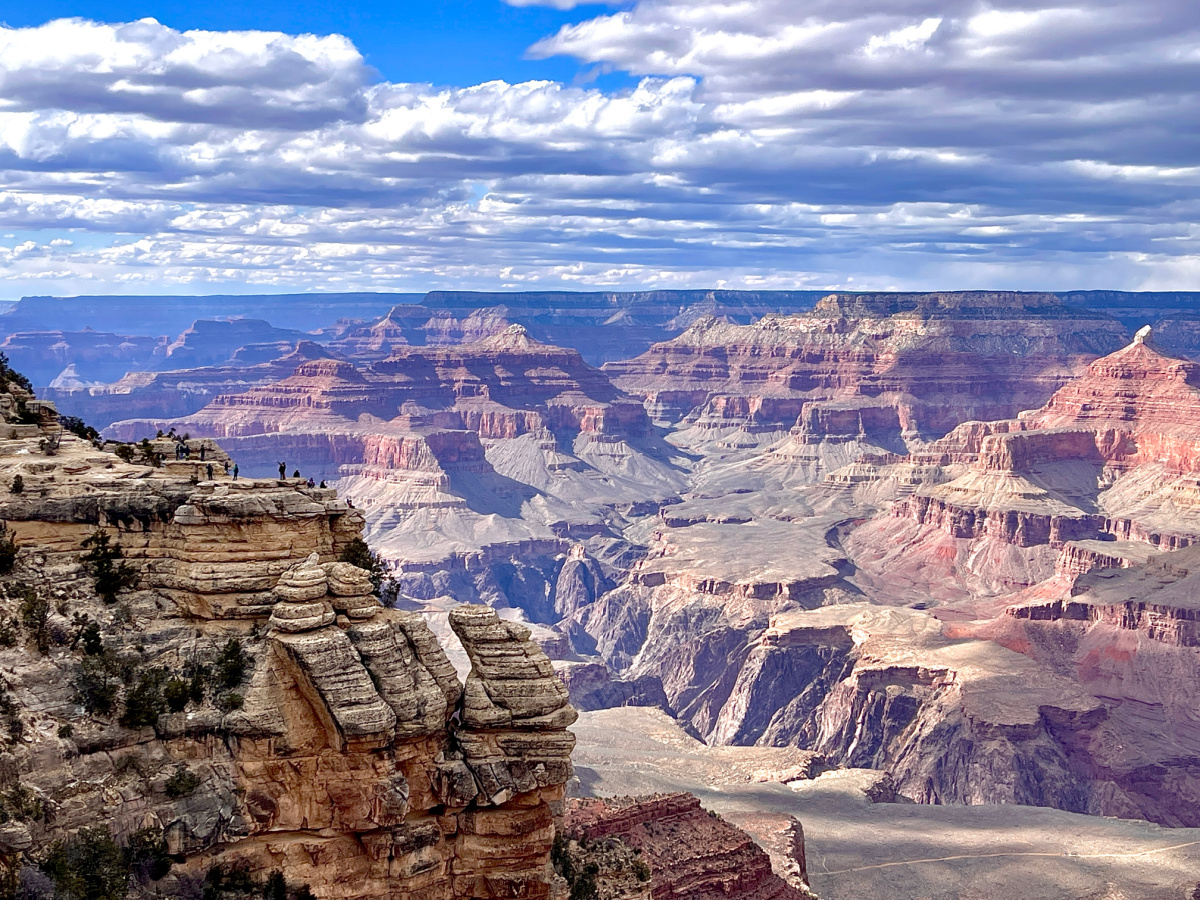
Discover the best Grand Canyon viewpoints without hardcore hiking, including Mather Point, Hermit Road, Desert View Drive, Yaki Point, and easy Rim Trail walks.
Estimated reading time: 46 minutes
Here is something I think people sometimes get wrong about the Grand Canyon: you do not have to be a serious hiker to really experience it.
I have visited the South Rim of the Grand Canyon twice, more than 20 years apart, and neither visit involved anything remotely resembling hardcore hiking.
The first time, the Grand Canyon was basically a road trip stop. My husband and I were driving through the Southwest in 2003, and we made the detour because, well, if you are anywhere remotely near the Grand Canyon, you kind of have to see the Grand Canyon.
We stopped. Walked up to the rim. We said all the appropriate versions of “wow” and “that is enormous.” We took pictures. And then we continued on our way.
And honestly? That counts.
But when we returned during Spring Break in 2024 and actually stayed at the South Rim, I realized how much more there is to seeing the Grand Canyon than simply walking up to one overlook.
You could absolutely arrive at Mather Point, look over the edge, take your pictures, and leave an hour later. You have technically seen the Grand Canyon.
But there is a huge middle ground between spending 45 minutes at an overlook and backpacking for days below the rim.
That middle ground is what this guide is about.
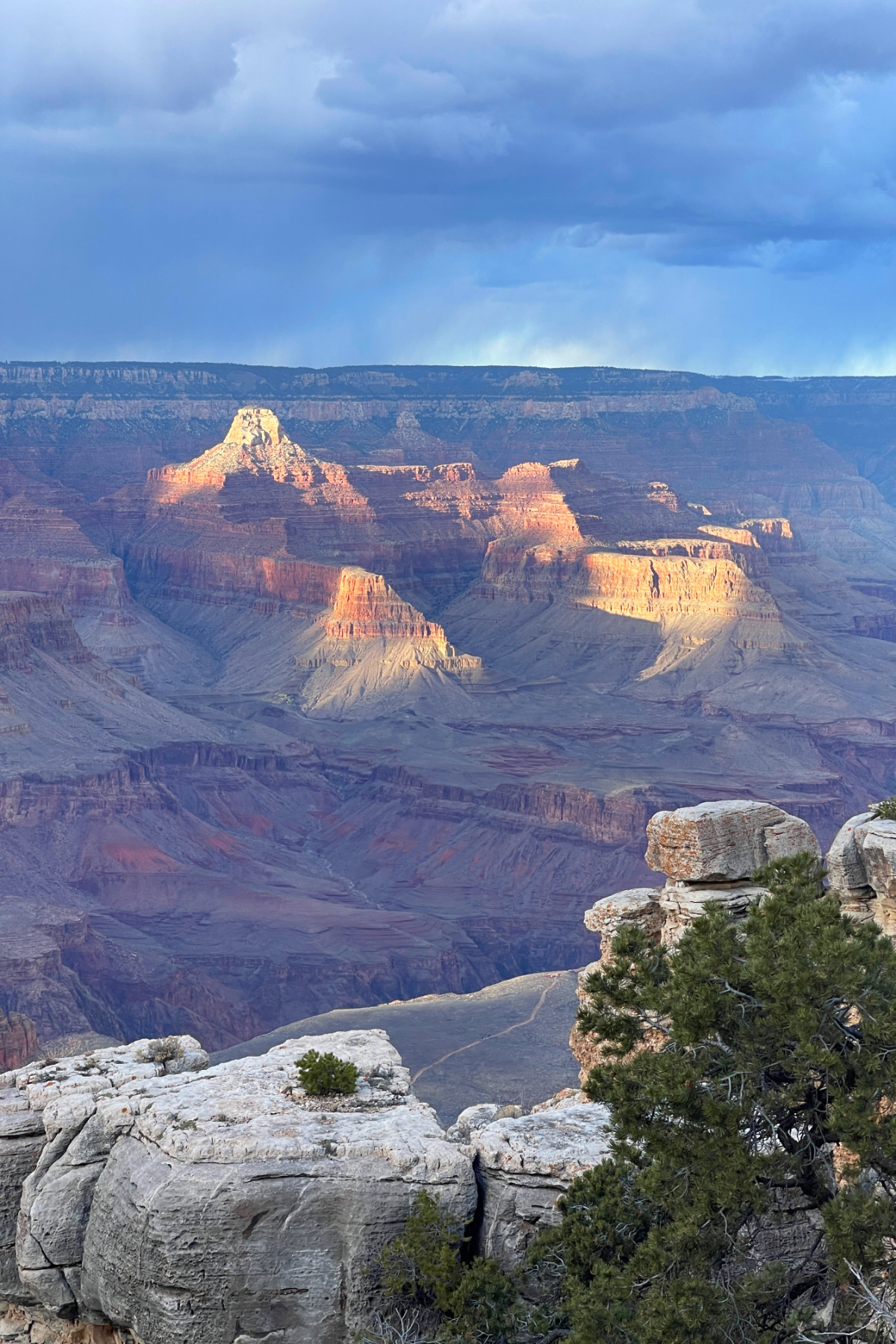
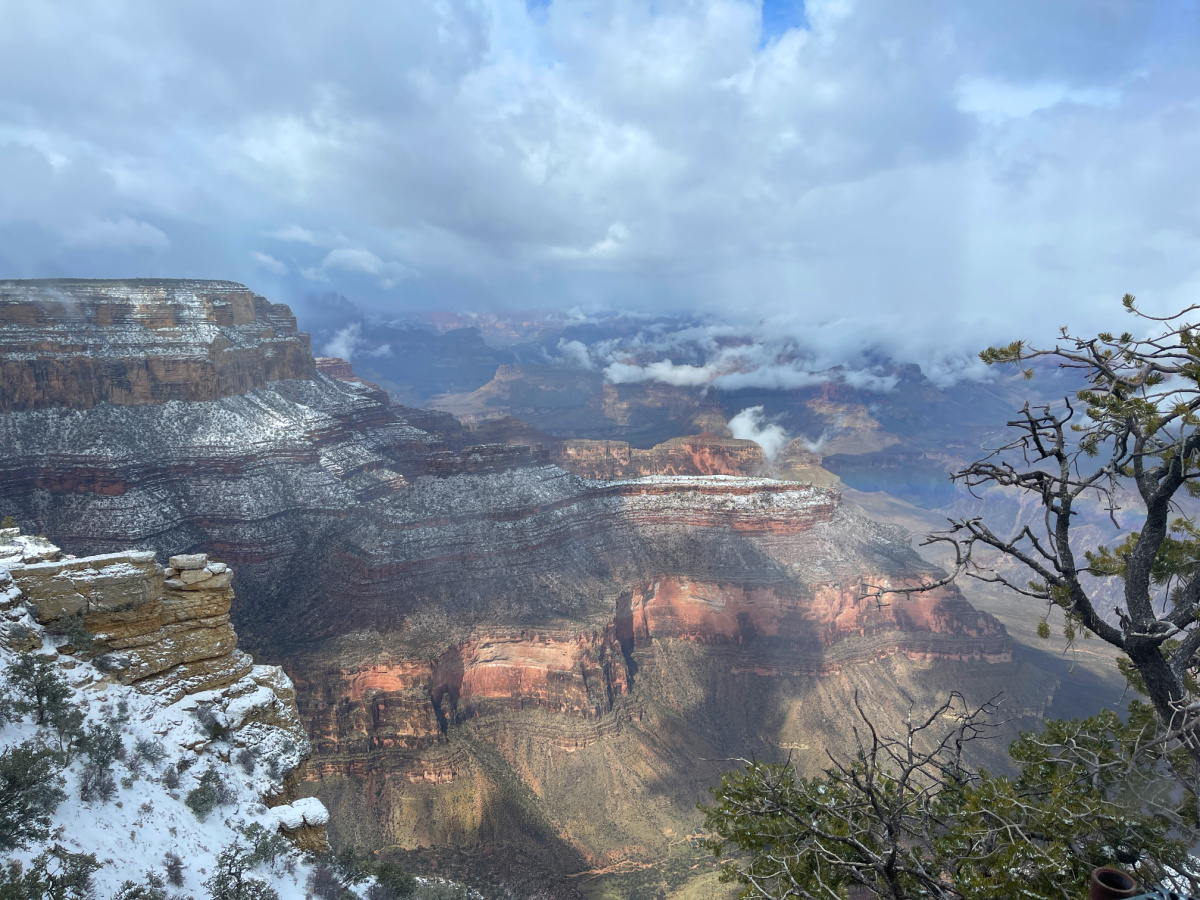
Because the Grand Canyon changes depending on where you stand. It changes depending on the time of day. It changes when the clouds roll in, when snow dusts the canyon walls, when the late-afternoon sun catches one layer of rock but leaves another in shadow.
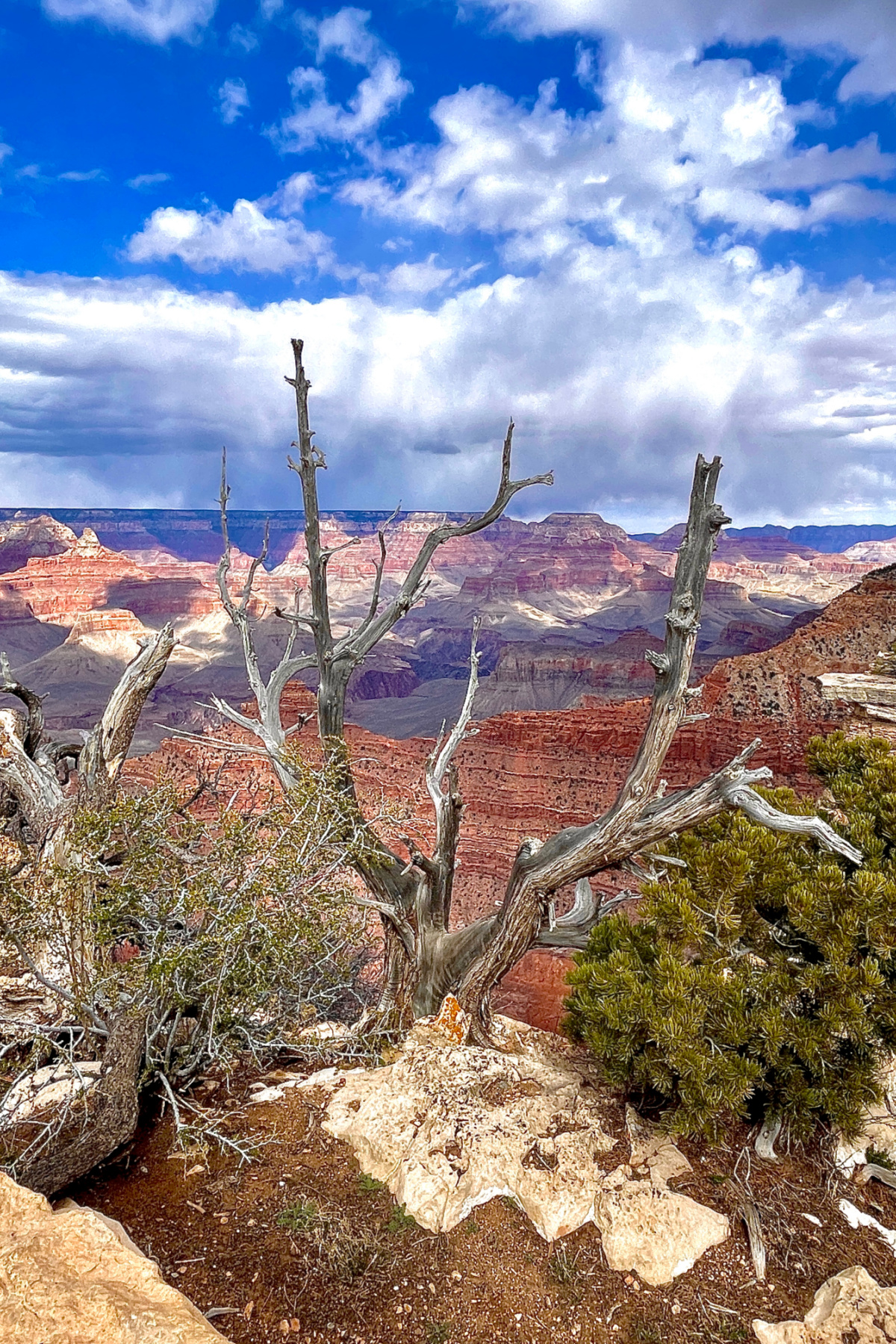
The view from Mather Point is different from the view along Hermit Road. Desert View feels different again. Sometimes you can see the Colorado River. At points, the canyon seems impossibly wide. Sometimes you are looking almost straight down into layers and layers of rock.
It is still the same giant canyon.
But it never really looks exactly the same.
And the best part is that you can see an enormous amount of it without doing a major hike.
Can You Really See the Grand Canyon Without Hiking?
Yes. Absolutely.
In fact, many of the best-known viewpoints along the South Rim require very little walking at all.
Some are a short walk from a parking lot. Others are accessible by the park shuttle. You can explore parts of the Rim Trail without committing to a long hike. You can ride the shuttle along Hermit Road and hop off at scenic overlooks.
And if you want to do just a little more, you can walk a short distance below the rim on trails like Bright Angel or South Kaibab without hiking miles into the canyon.
You do not have to reach a major destination.
And you do not have to hike all the way to Ooh Aah Point.
You certainly do not have to hike to the Colorado River.
You can walk down a few switchbacks, get a taste of what it feels like to actually step into the canyon, and turn around whenever you are ready.
The important thing to remember is that every step down means a step back up. Hiking into the Grand Canyon is deceptive because the easy part comes first. The return trip is uphill, and elevation, weather, heat, ice, and your own energy level all matter.
So I would never call these walks effortless.
But there is a big difference between walking a short distance down the South Kaibab Trail and committing to an all-day canyon hike.
For most casual visitors, there are basically three ways to experience the South Rim:
No hiking required: Ride a shuttle or park near an overlook and walk a short distance to the view.
Easy scenic walking: Explore sections of the Rim Trail or walk between nearby viewpoints.
Optional moderate hiking: Walk a short distance below the rim on Bright Angel or South Kaibab and turn around when you have had enough.
You can mix and match all three depending on your time, ability level, weather, and how much you really want to stare at a very large hole in the ground.
And I say that affectionately.
Because it really is one spectacular hole in the ground.
If You Already Drove All the Way to the Grand Canyon, Give It More Than 45 Minutes
The South Rim is not something you casually stumble across while driving down the interstate.
From Flagstaff, you are looking at roughly 80 miles of driving just to reach the park. If you are coming from Phoenix, Las Vegas, Page, Sedona, or one of the Utah national parks, visiting the Grand Canyon requires at least some planning.
So once you have made the effort to get there, I think it is worth giving yourself enough time to see more than one viewpoint.
That does not mean everyone needs three days at the Grand Canyon.
If you have two hours, you can have a wonderful visit.
If you have half a day, you can see quite a bit.
With a full day, you can start combining different parts of the South Rim.
And if you have two or three days, you can slow down enough to experience the canyon at sunrise, sunset, midday, and maybe under completely different weather conditions.
That is when the Grand Canyon starts becoming more interesting than simply checking off a bucket-list landmark.
Understanding the South Rim Before You Start
One reason the Grand Canyon can initially feel confusing is that there is not just one place where everyone stands and looks at the canyon.
The South Rim stretches for miles, and the main sightseeing areas are spread out.
For the purposes of this guide, I think it helps to divide the South Rim into five general areas.
Visitor Center, Mather Point and Yavapai
This is the easiest place to start, especially if it is your first visit.
Mather Point is close to the Grand Canyon Visitor Center and gives you that classic first look over the rim.
Yavapai Point and the Yavapai Geology Museum are nearby, and the paved Rim Trail connects much of this area.
If you only have a very short visit, this is probably where you will spend most of your time.
Grand Canyon Village and the Historic District
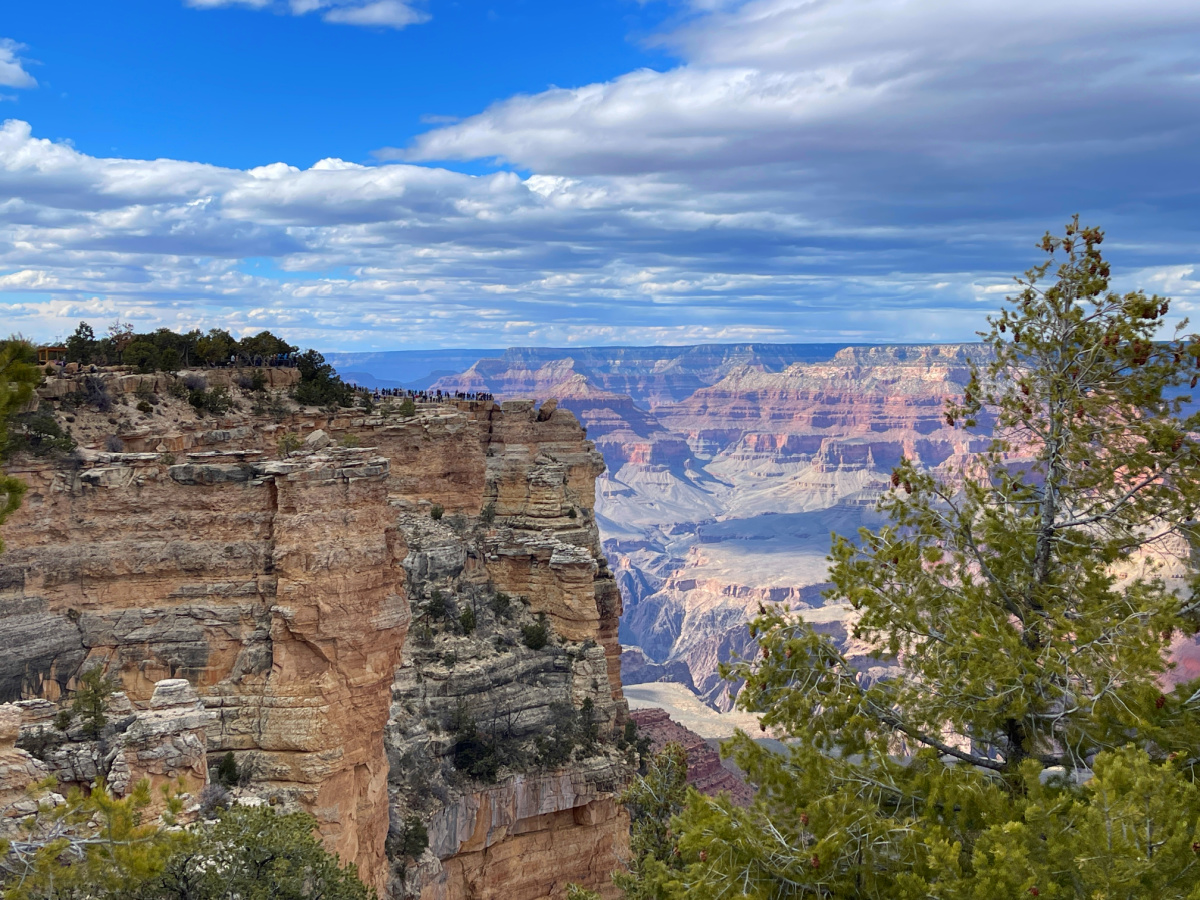
This is the area around El Tovar, Bright Angel Lodge, Lookout Studio, Kolb Studio and the Bright Angel Trailhead.
It feels completely different from the Visitor Center area.
Instead of a large modern visitor complex, you have historic lodges, old stone buildings and places where you can wander along the rim with the canyon right beside you.
Even if you are not staying inside the park, I think this area is absolutely worth seeing.
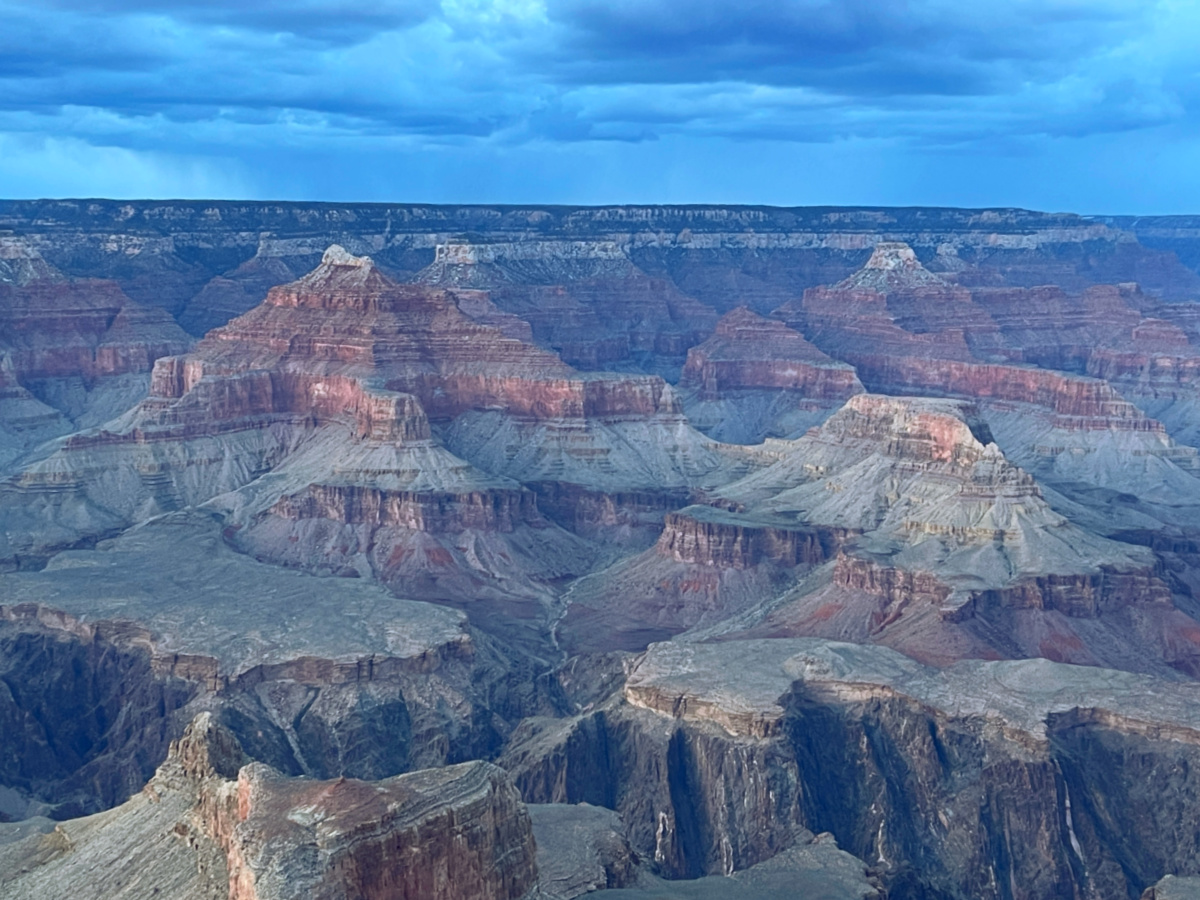
Hermit Road
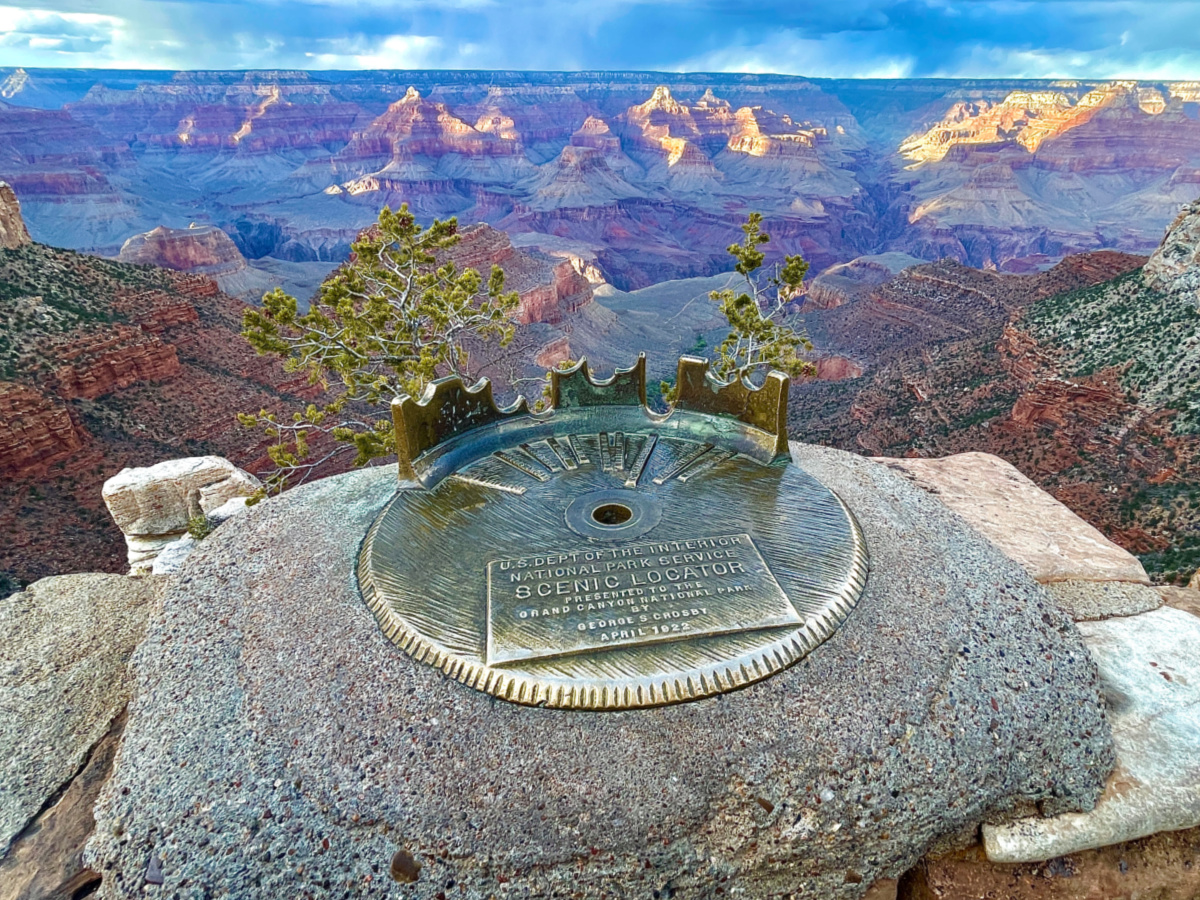
Hermit Road stretches west from Grand Canyon Village and is lined with scenic overlooks.
For much of the year, private vehicles are restricted and visitors use the park shuttle instead.
This makes sightseeing incredibly easy.
You can ride out toward Hermits Rest, get off at different viewpoints, walk portions of the Rim Trail if you want, and then get back on the bus.
Hopi Point is one of the best-known stops along this route, especially around sunset.
The Kaibab Rim Area
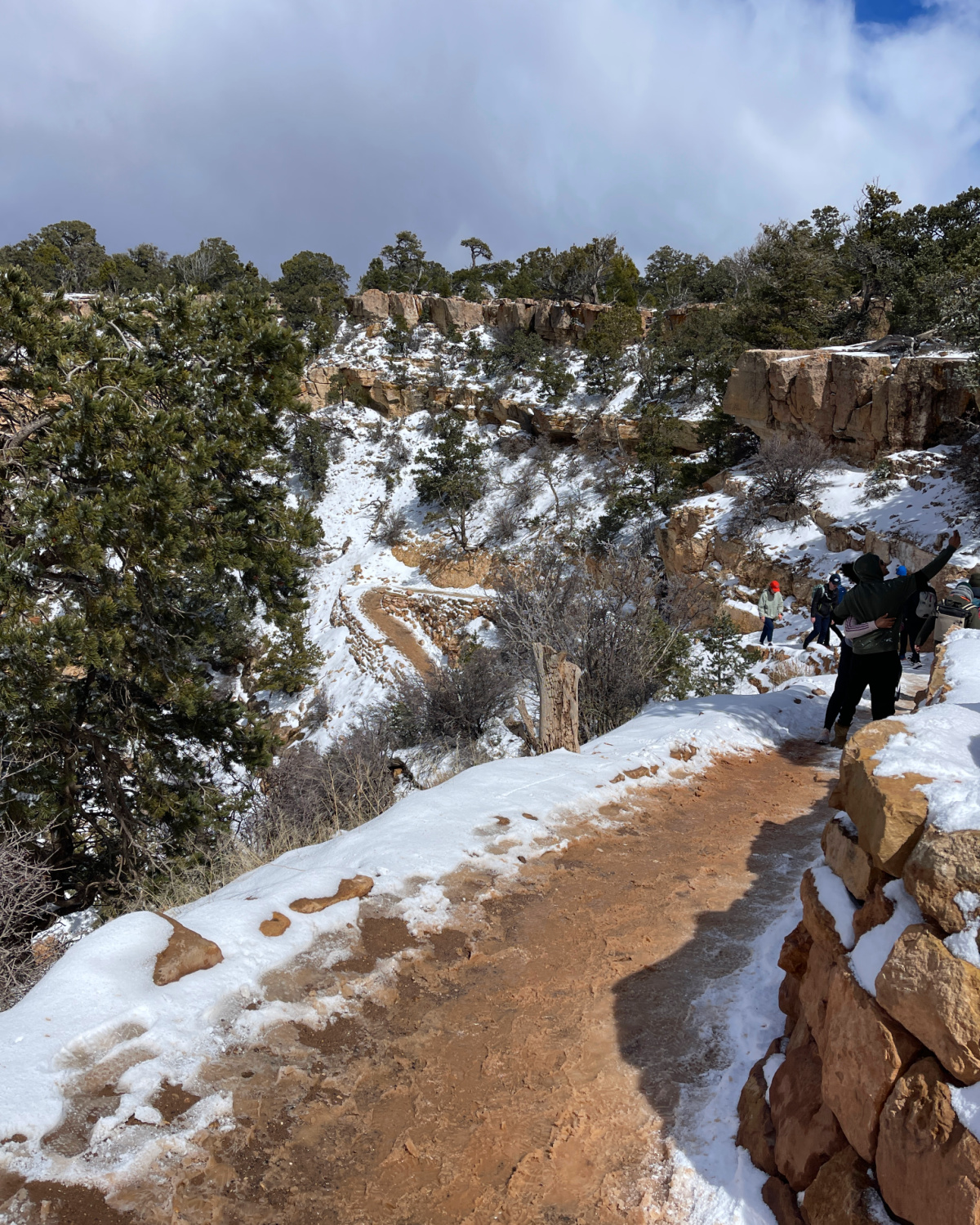
East of the main Visitor Center area, the Orange shuttle provides access to places including Yaki Point, Pipe Creek Vista and the South Kaibab Trailhead.
This is also where you can add an optional walk down the South Kaibab Trail.
Ooh Aah Point is the best-known destination, but you absolutely do not have to hike that far.
You can walk down a few switchbacks, enjoy the feeling of being below the rim, and turn around.
Desert View Drive
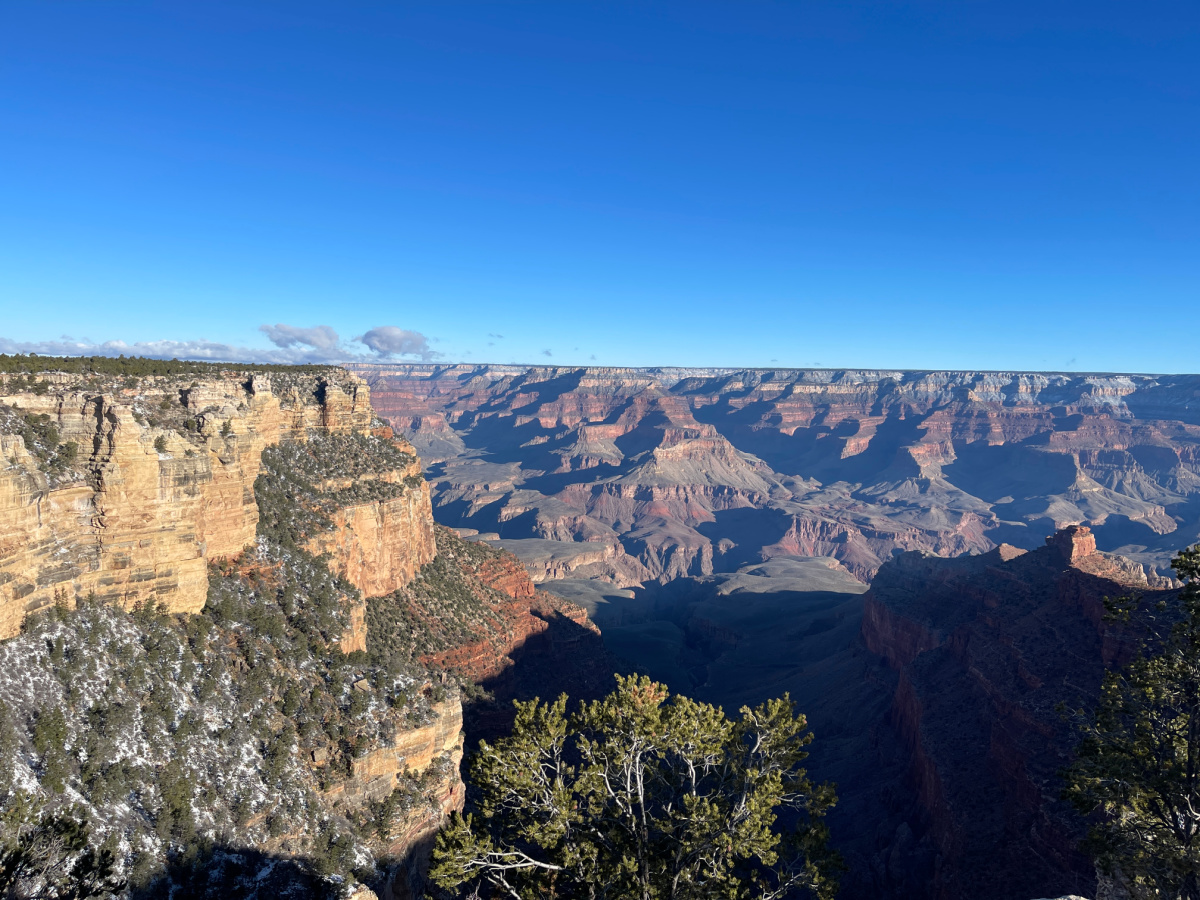
Desert View Drive heads east for more than 20 miles toward the park’s East Entrance.
Unlike Hermit Road, this is primarily a driving route.
There are multiple viewpoints along the way, and eventually you reach Desert View and the iconic Desert View Watchtower.
This part of the park feels more spread out and much more like a scenic road trip.
It also gives you a completely different perspective on the canyon.
How the Grand Canyon Shuttle Buses Work
If you look at a South Rim map for the first time, the shuttle system can look more complicated than it actually is.
Once you understand the different routes, it starts making a lot more sense.
And the shuttles are one of the reasons the Grand Canyon is so easy to enjoy without hiking.
You can park your car and let someone else do most of the driving.
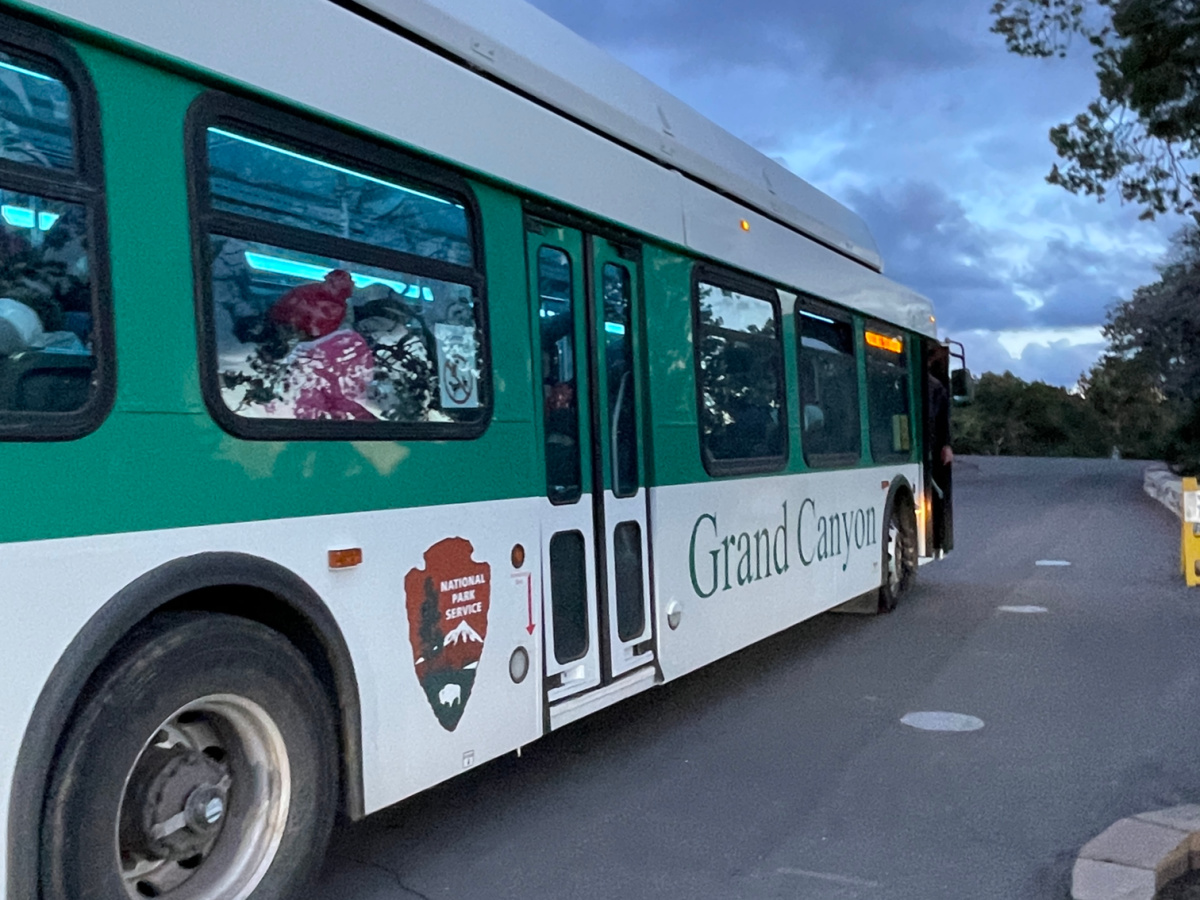
The Blue Route: Grand Canyon Village
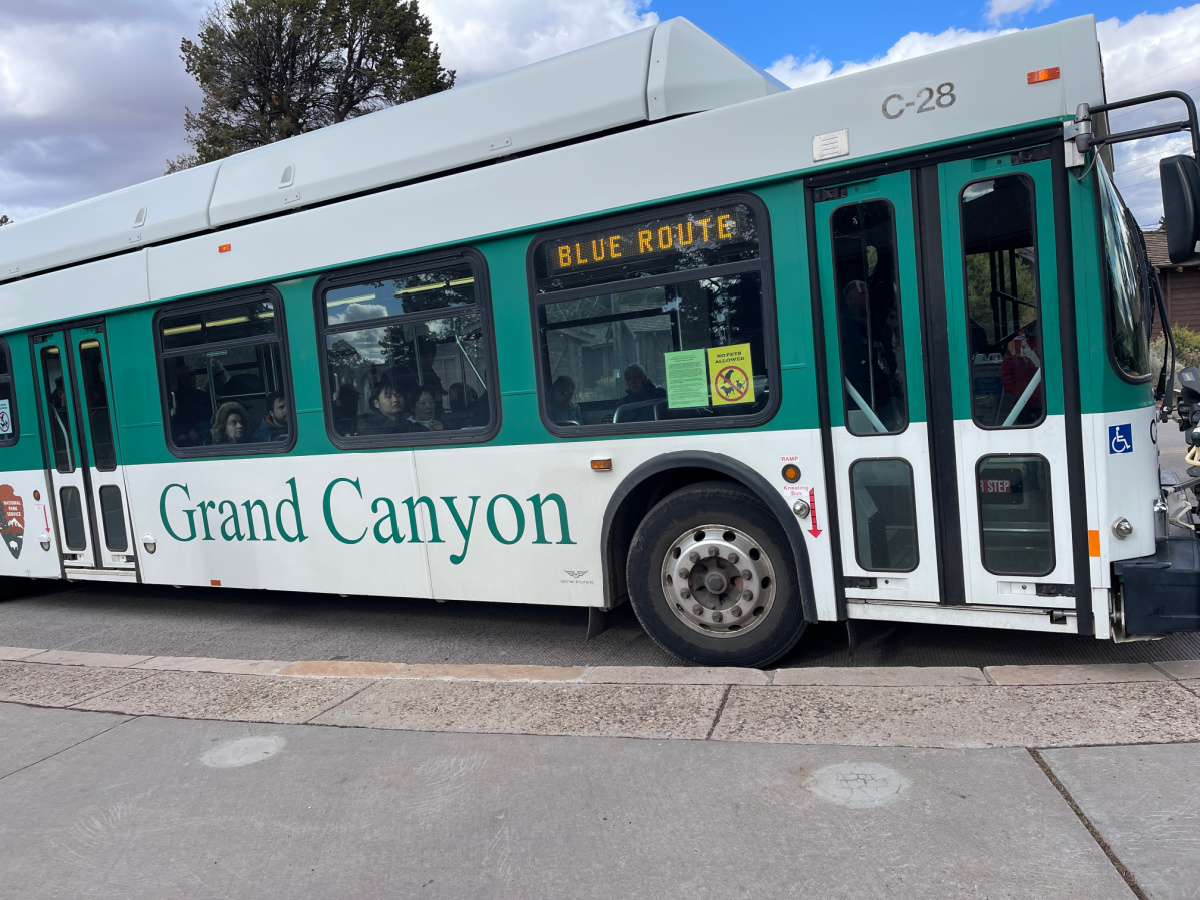
The Blue Route connects the Visitor Center area with Grand Canyon Village.
This is the route you will use if you want to get between places like the Visitor Center, El Tovar, Bright Angel Lodge and the historic district without moving your car.
It is also useful for connecting with the Hermit Road shuttle.
The Orange Route: Kaibab Rim
The Orange Route serves the eastern side of the central South Rim area.
This is the shuttle you use for places like Yaki Point and the South Kaibab Trailhead.
It also connects with the Visitor Center and several viewpoints along the rim.
If you want to visit Yaki Point or walk down part of the South Kaibab Trail, this is the route you will probably use.
The Red Route: Hermit Road
The Red Route is the sightseeing shuttle.
It travels along Hermit Road from Grand Canyon Village toward Hermits Rest and stops at scenic overlooks along the way.
This is one of the easiest ways to see multiple Grand Canyon viewpoints without hiking.
Just remember that the shuttle does not stop at every viewpoint on the return trip, so pay attention to which direction you are traveling before you hop off.
And if you decide to walk a section of the Rim Trail between viewpoints, you can simply catch another shuttle farther down the road.
The Purple Route: Tusayan
The Purple Route is seasonal and connects the community of Tusayan with the Grand Canyon Visitor Center.
This can be helpful during busy periods if you are staying outside the park and would rather leave your car in Tusayan.
It is not the route you will use for sightseeing once you are inside the park, but it can make getting into the South Rim easier during peak season.
One Important Exception: Desert View Drive
The shuttle buses do not take you out to all of the major viewpoints along Desert View Drive.
For this part of the South Rim, having your own vehicle is extremely helpful.
You drive east from Grand Canyon Village, stop at the viewpoints you are interested in, and continue toward Desert View and the Watchtower.
This means your Grand Canyon sightseeing strategy will probably involve a combination of driving and shuttle buses.
And once you understand that, the entire park starts feeling much less overwhelming.
You really do not need to conquer the Grand Canyon.
You just need to know where to stand.
Best Grand Canyon Viewpoints Near the Visitor Center
If this is your first trip to the Grand Canyon, chances are pretty good that Mather Point will be your first real look at it.
And there is absolutely nothing wrong with that.
Sometimes popular places are popular for a reason.
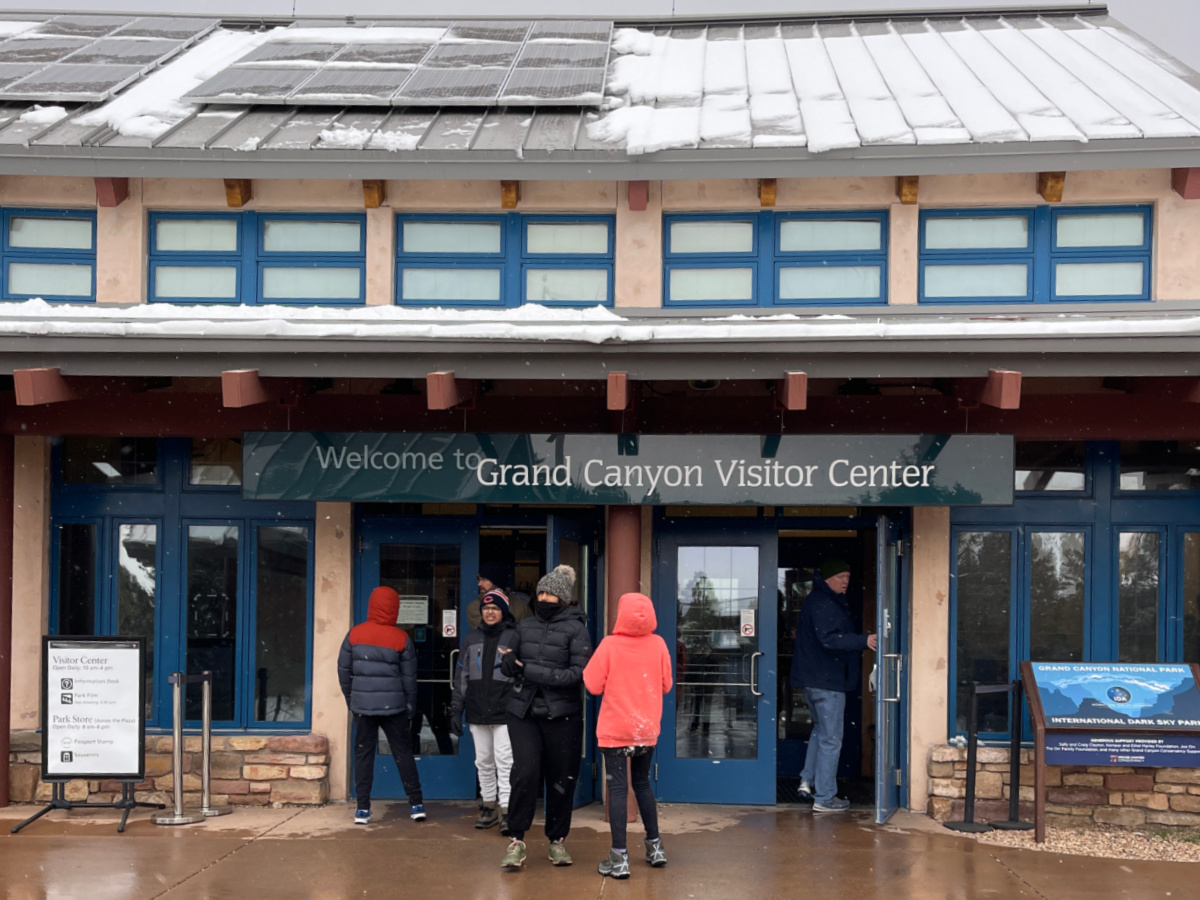
The Grand Canyon Visitor Center is one of the main arrival points on the South Rim, with parking, shuttle connections and easy access to the Rim Trail. From here, you can walk to Mather Point or use the Orange shuttle to explore several other viewpoints in this part of the park.
This is also probably the easiest area to explore if you have limited time or mobility concerns because you can see an enormous amount of scenery without committing to a long walk.
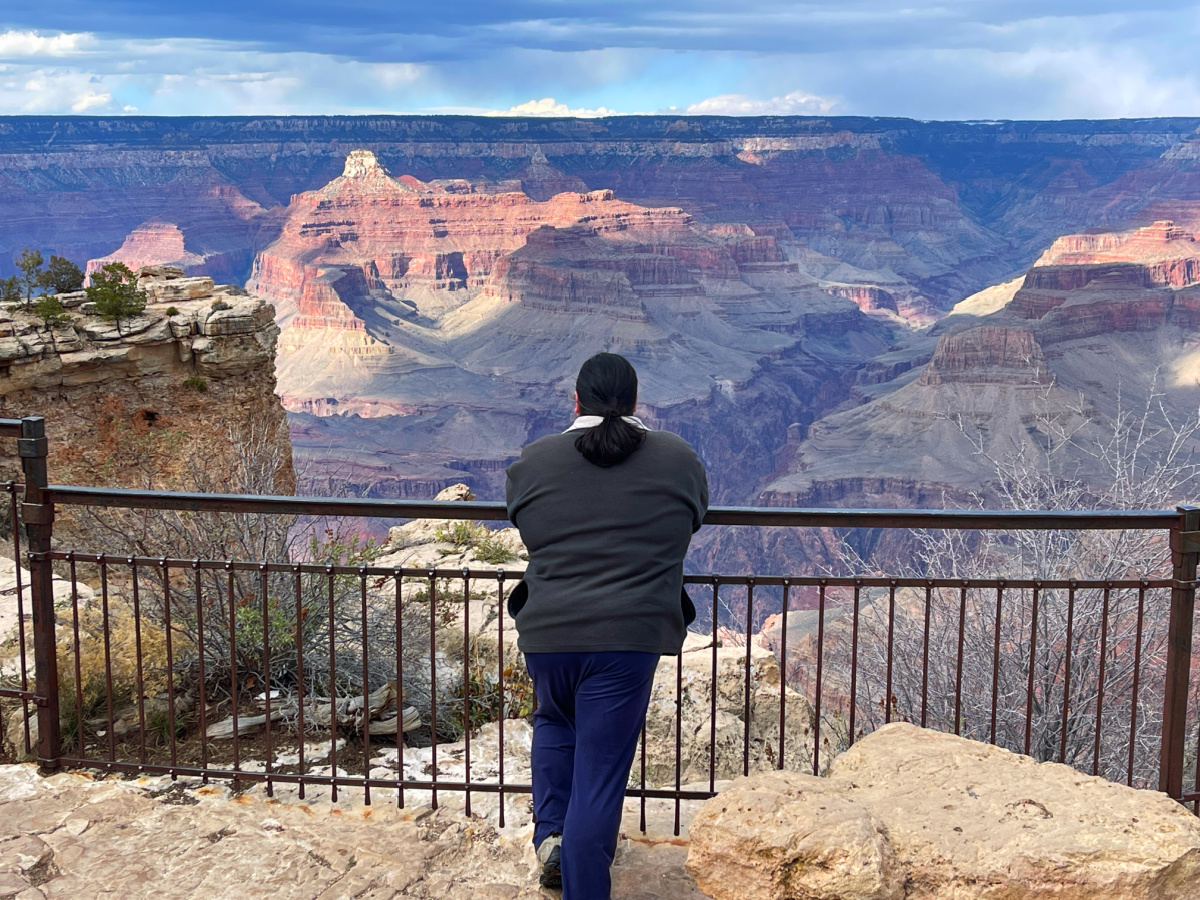
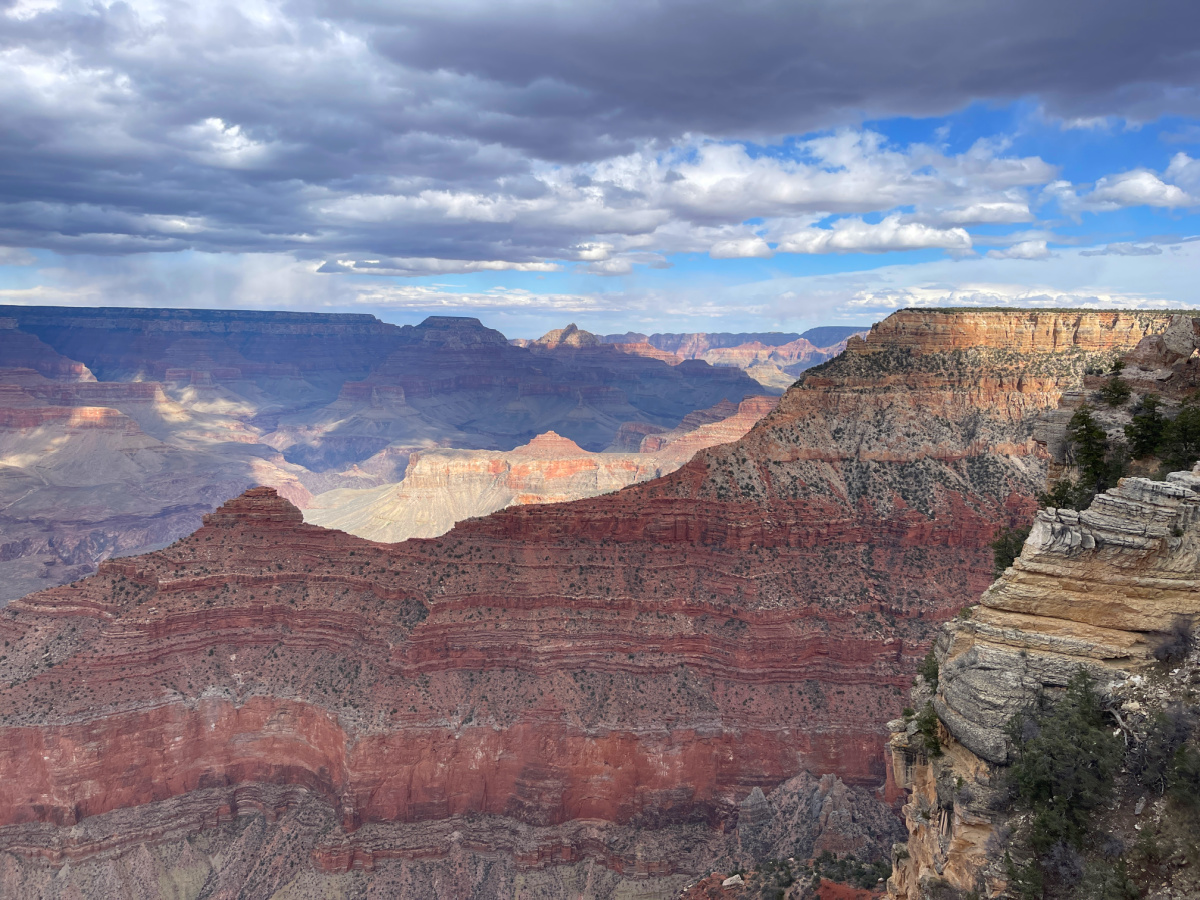
Mather Point: The Classic First Look at the Grand Canyon
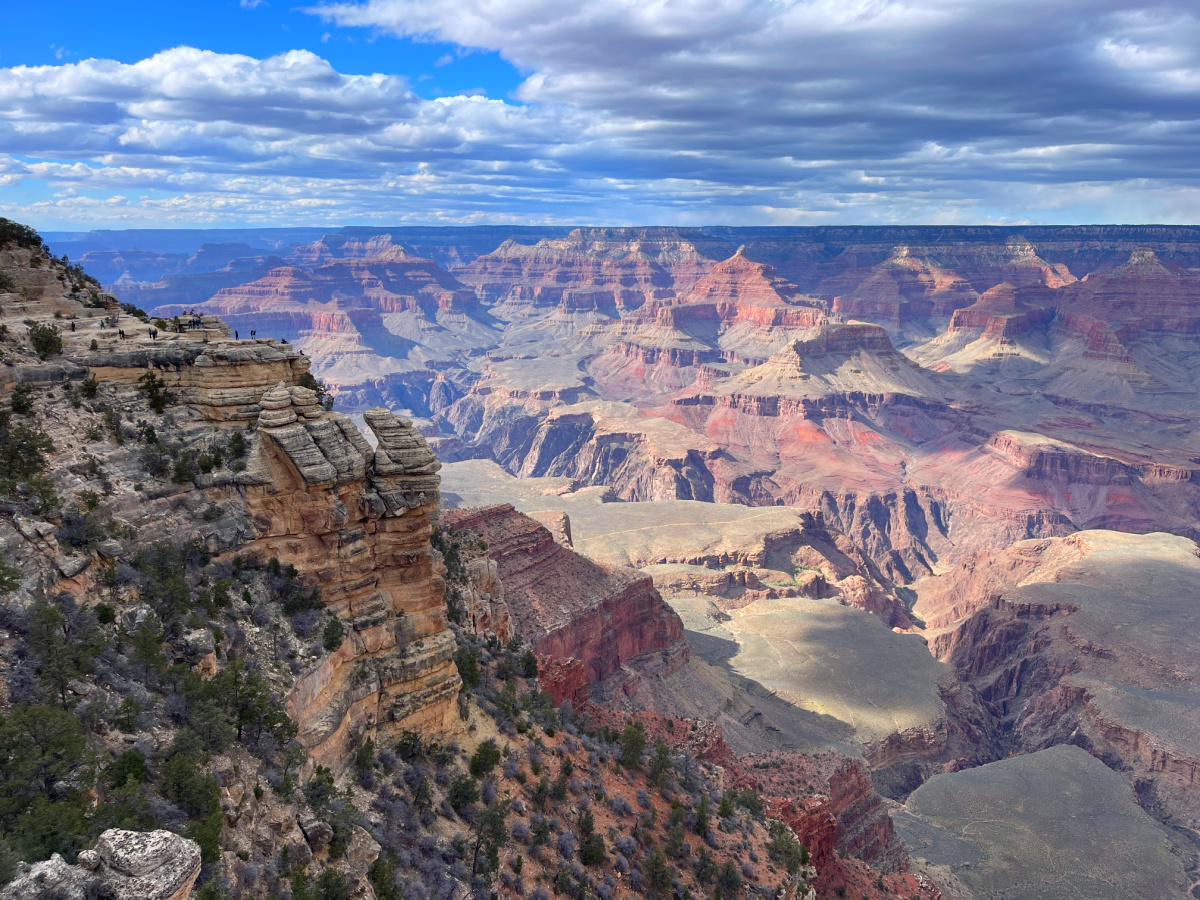
Mather Point is probably what most people imagine when they picture arriving at the Grand Canyon for the first time.
You walk toward the rim, the trees start opening up, and suddenly there it is.
The scale is almost ridiculous.
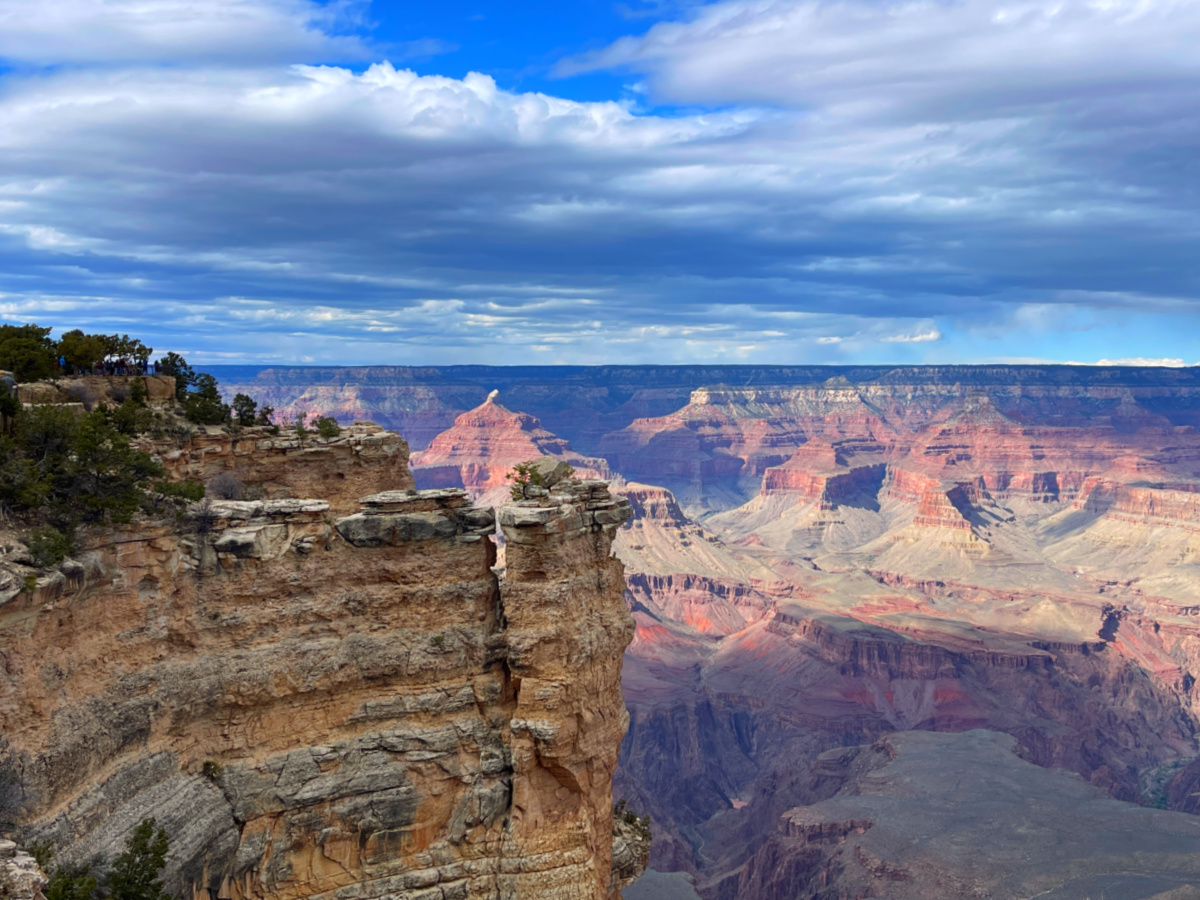
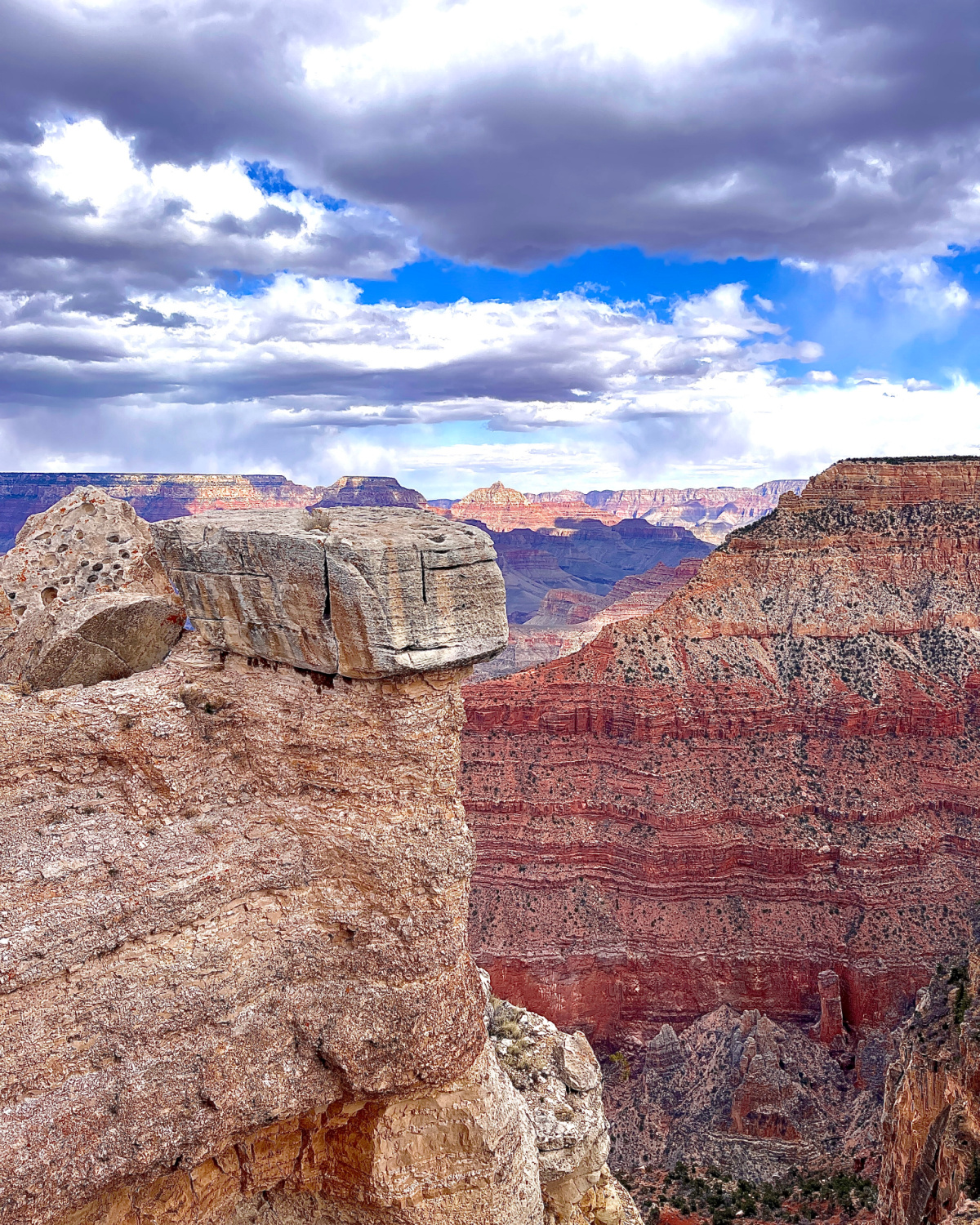
Photographs really do not prepare you for how far the canyon stretches or how many different layers you can see at once. Even if you have seen hundreds of pictures of the Grand Canyon, standing there is different.
This is one of the easiest overlooks to reach from the Grand Canyon Visitor Center. It is also one of the busiest, particularly in the middle of the day.
But I would not skip Mather Point just because it is popular.
If this is your first visit, I think you should see it.
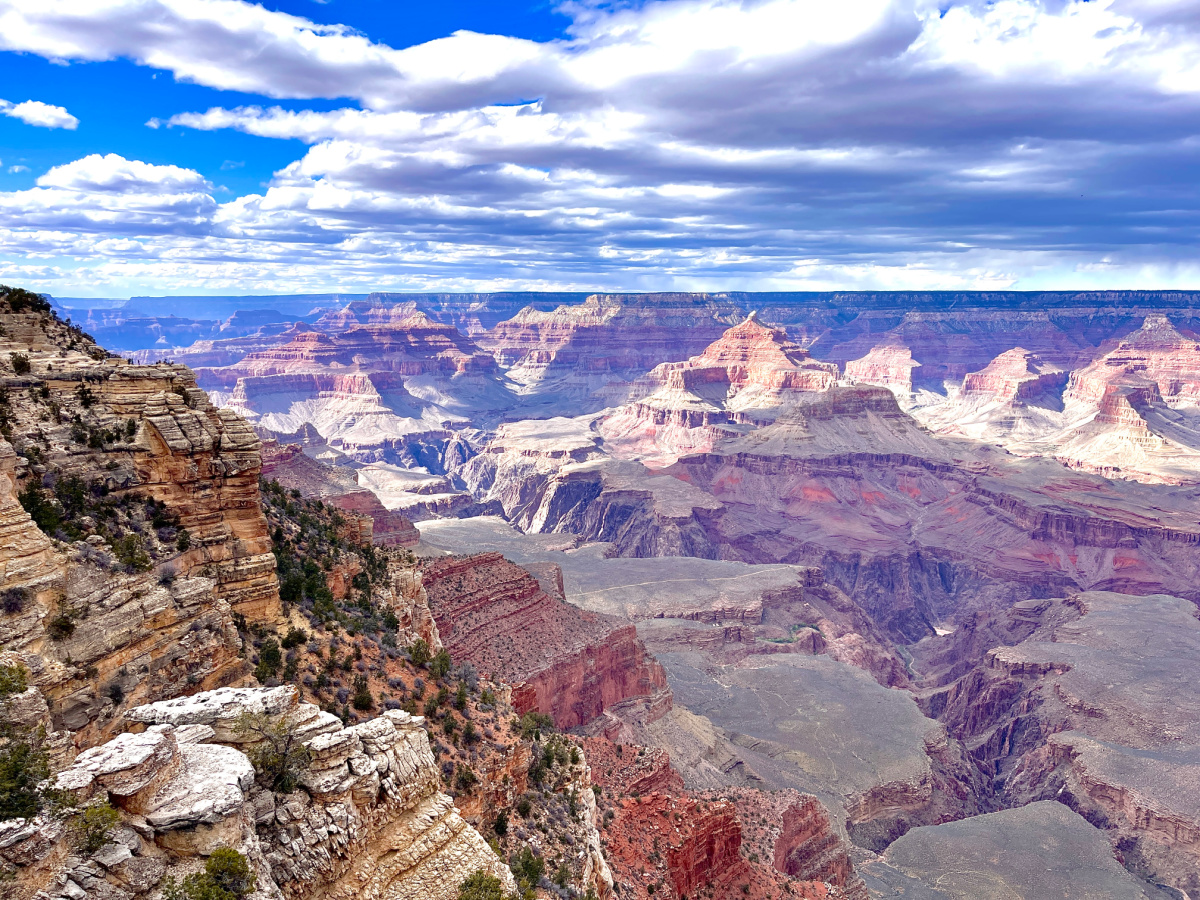
There are multiple viewing areas around Mather Point, so you do not necessarily have to take one picture from the first railing you encounter and leave. Walk around a little. Look in different directions. Give yourself a few minutes for your brain to catch up with what your eyes are seeing.
And if you happen to return later in the day, it may look completely different.
That is going to become a recurring theme in this guide.
One of the things I love about the Grand Canyon is that the view is never really static. Shadows shift across the canyon walls. Colors become stronger or softer. Clouds can make entire formations disappear and then suddenly light them up again.
So yes, Mather Point is the obvious viewpoint.
It is still worth seeing.
Walk the Rim Trail Between Mather Point and Yavapai Point
This is one of my favorite recommendations for people who want to do a little walking without doing an actual Grand Canyon hike.
Instead of simply seeing Mather Point and getting back on the shuttle, walk the Rim Trail toward Yavapai Point.
The section between Mather Point and Yavapai Geology Museum is about 0.7 mile one way. It is paved, and you get almost constant canyon views along the way.
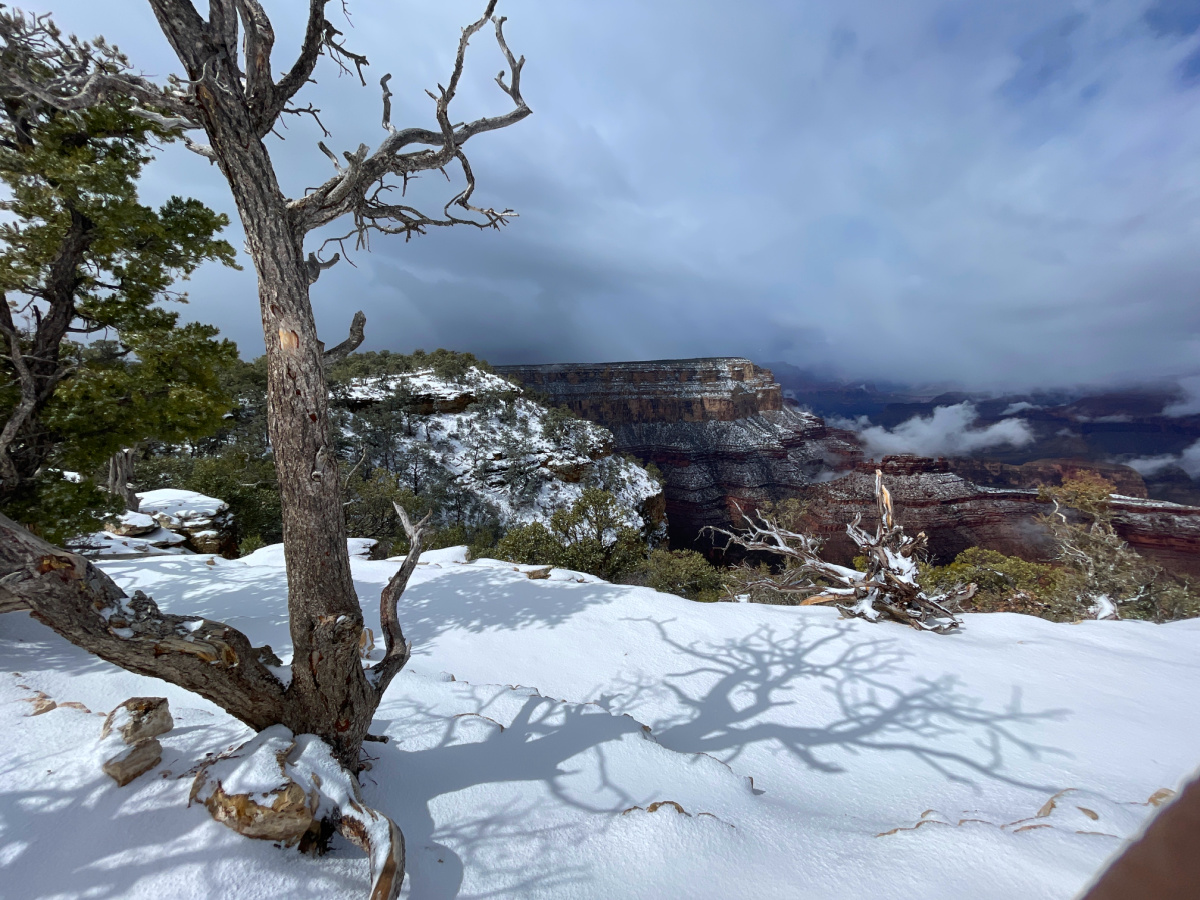
And this is exactly what I mean when I say that you do not have to be a hiker to experience the Grand Canyon.
This does not feel like embarking on an expedition.
You are simply walking along the rim.
Stop when you want to stop.
Take pictures.
Sit on a bench.
Look into the canyon.
Keep walking.
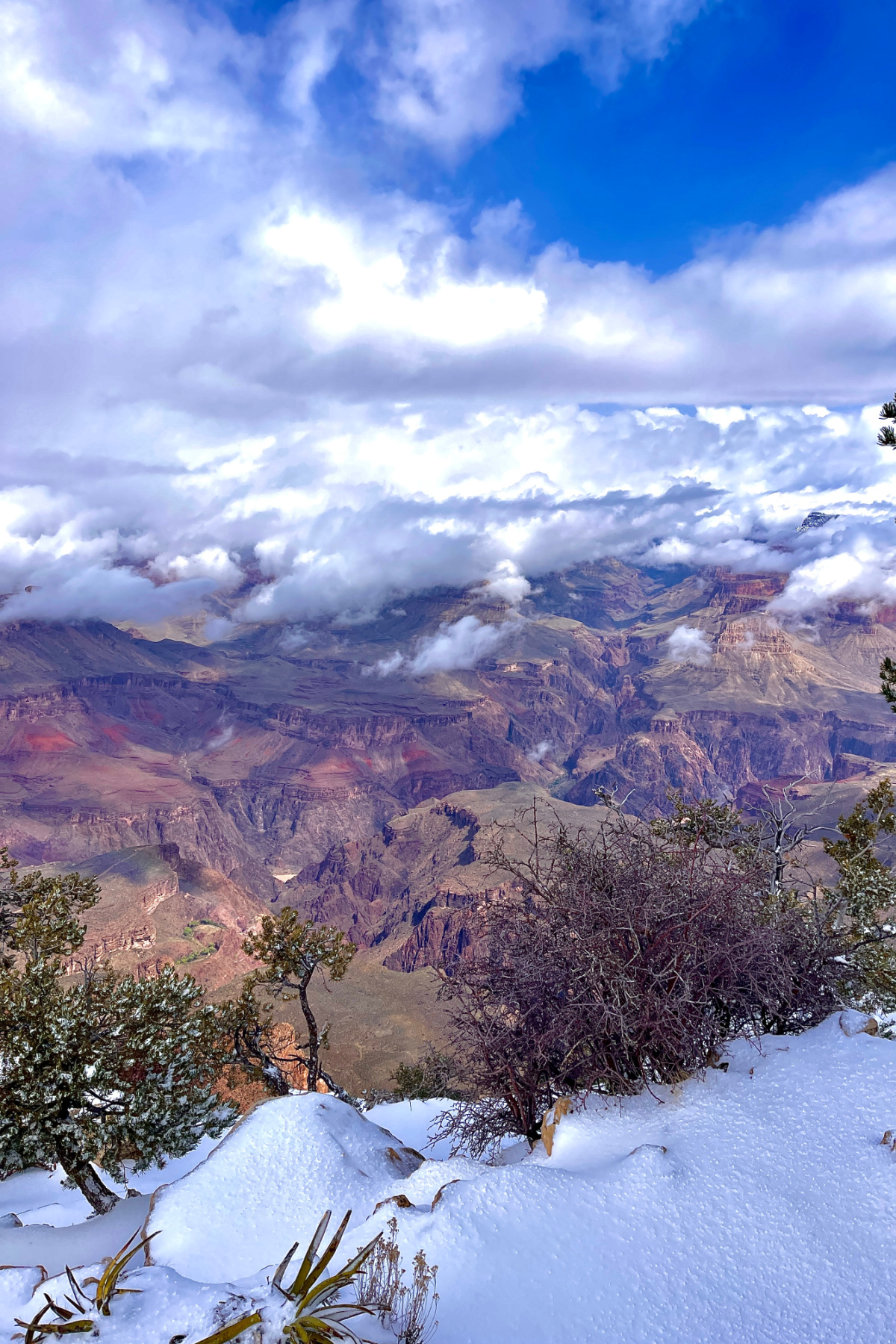
The other nice thing about this section is that you do not necessarily have to walk back. When the Orange shuttle is operating between these locations, you can walk one direction and use the shuttle for the return.
That gives you a very easy way to combine a little movement with sightseeing without worrying that you have accidentally committed yourself to a five-mile hike.
And honestly, I think walking even a small section of the Rim Trail changes the Grand Canyon experience.
When you only visit overlooks, you tend to arrive, look, take pictures and leave.
When you walk along the rim, the canyon stays beside you.
You start noticing how the formations change as you move. There are quieter spots between the major viewpoints. You may find a view you like better than the official overlook.
There is something really nice about letting the Grand Canyon unfold slowly instead of treating every viewpoint like another attraction to check off a list.
Yavapai Point and the Yavapai Geology Museum
If Mather Point is where you first say, “Wow, that is huge,” Yavapai is where you can start understanding what you are actually looking at.
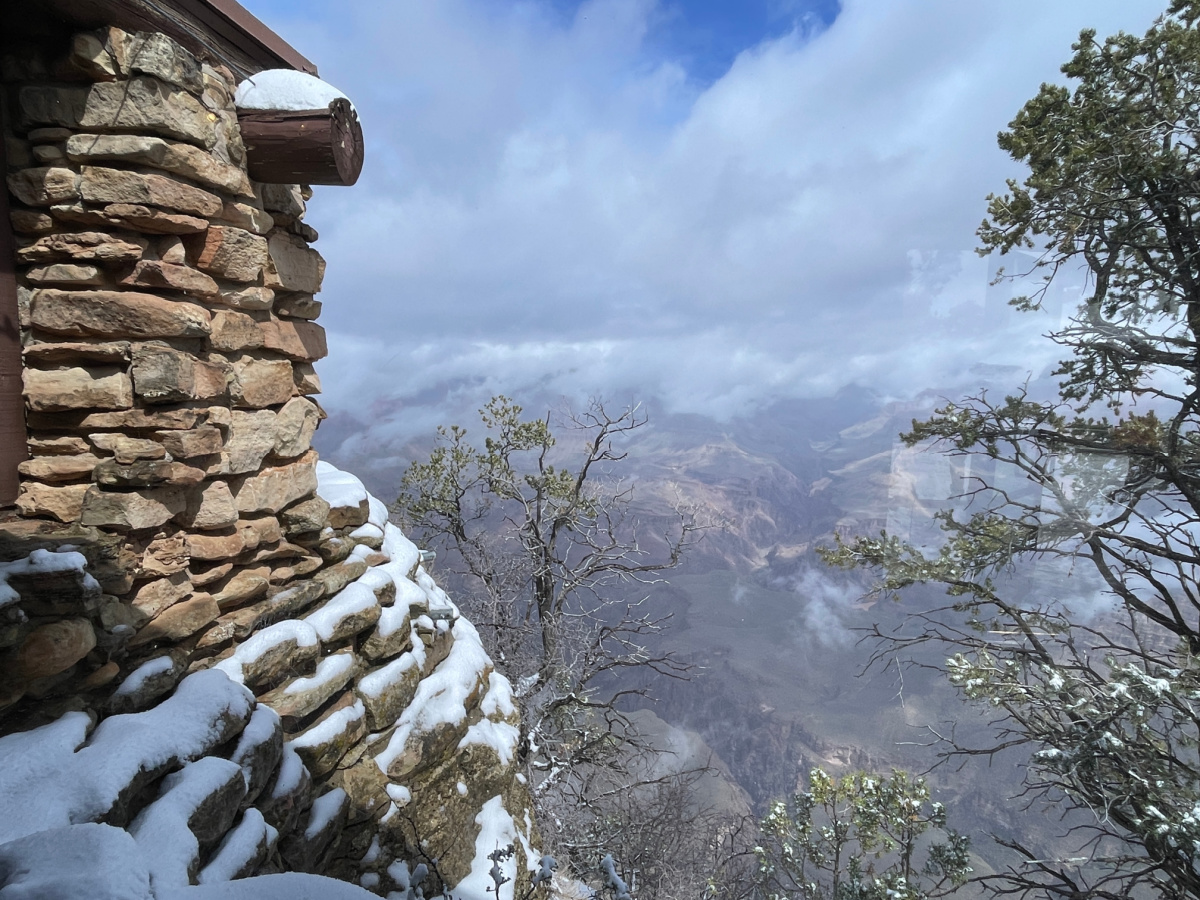
The Yavapai Geology Museum sits right on the rim and has large windows overlooking the canyon, along with exhibits explaining the geology and formations visible from this part of the South Rim.
I think this is particularly helpful for families.
Because after you have been looking at the Grand Canyon for a while, eventually somebody is going to ask some version of:
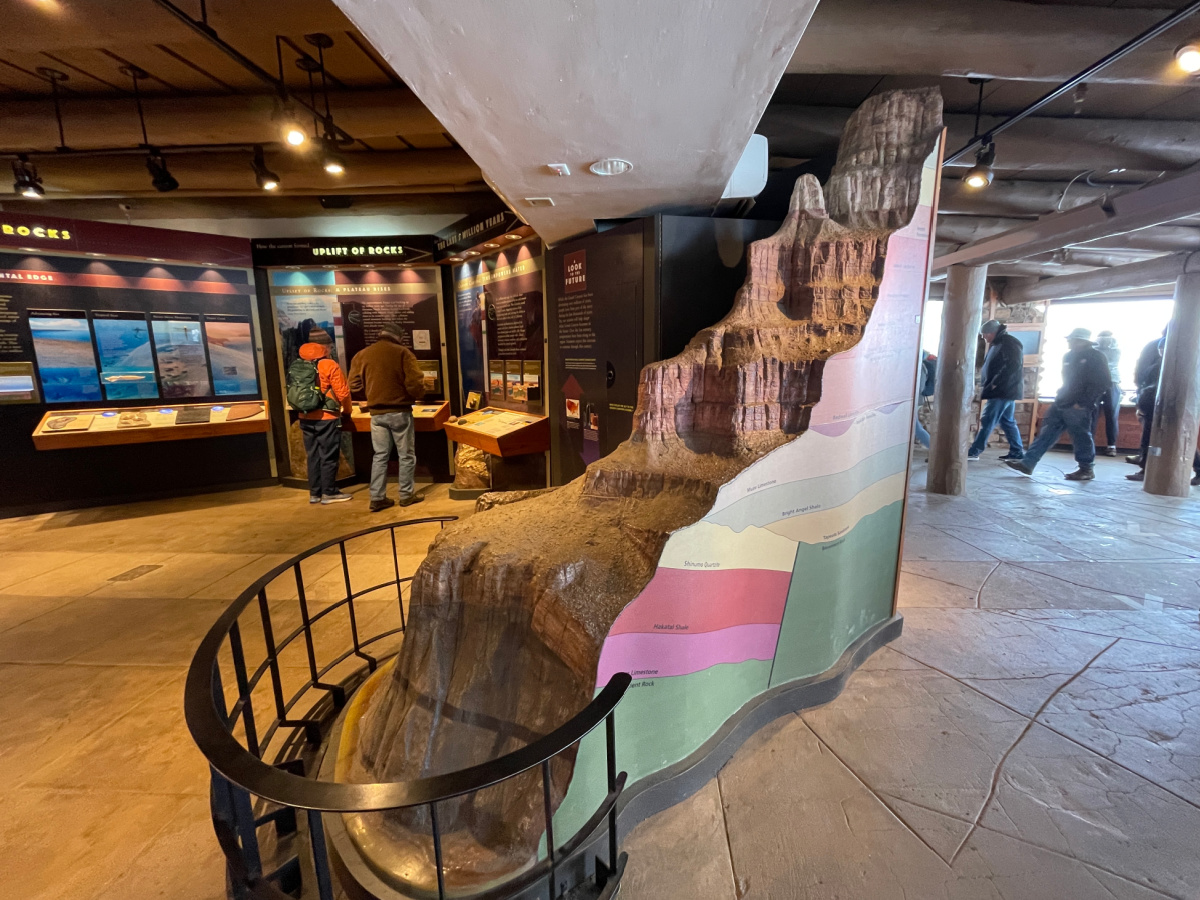
“So…how did this actually happen?”
And the answer is a little more complicated than “the river made it.”
The geology museum gives some context to all those enormous layers of rock you have been staring at.
But even if you have absolutely no interest in geology, the viewpoint itself is worth visiting.
This area gives you another sweeping central-canyon view, and you can sometimes catch a glimpse of the Colorado River far below. The Rim Trail continues in both directions, so Yavapai also works nicely as either a destination or a starting point for a longer walk.
If you are only spending a few hours at the South Rim, combining Mather Point, the short Rim Trail walk and Yavapai Point gives you an excellent introduction to the Grand Canyon without requiring much physical effort at all.
The Kaibab Rim: Yaki Point and Pipe Creek Vista
The Orange shuttle also heads in the opposite direction from the Visitor Center toward the South Kaibab Trailhead, Yaki Point and Pipe Creek Vista.
This is an area I think some casual visitors can easily overlook because you cannot simply drive your car to Yaki Point.
The road to Yaki Point and the South Kaibab Trailhead is closed to private vehicles. You generally reach them by park shuttle, walking or bicycle.
That might sound inconvenient.
It really isn’t.
This is exactly what the shuttle system is designed for.
Park your car, get on the Orange bus and let the park do the driving.
Yaki Point: A Quieter View Away From the Main Visitor Center
Yaki Point is one of the viewpoints I especially like for people who want to get away from the immediate Mather Point crowds without doing a hike.
Because private cars cannot simply pull into a parking lot here, getting to Yaki Point feels a little more intentional.
You take the shuttle out, get off, walk toward the rim and suddenly you are standing at another enormous Grand Canyon overlook.
And you still haven’t done any real hiking.
This is one of the things that makes the South Rim so accessible for casual travelers. There are places that feel farther removed from the busiest visitor areas, but you do not necessarily have to walk several miles to reach them.
The Orange shuttle does the work for you.
Yaki Point also puts you near the South Kaibab Trailhead, which gives you another option if you decide you want to do something slightly more adventurous.
More on that in a minute.
Pipe Creek Vista: An Easy Bonus Stop
Pipe Creek Vista sits between the South Kaibab/Yaki Point area and Mather Point.
I would think of this as more of a bonus viewpoint than a must-do destination.
If you are riding the Orange shuttle through this area anyway, though, it is an easy place to add another look at the canyon.
And it is another example of how flexible sightseeing can be here.
You could get off the shuttle at Pipe Creek Vista, look at the view and get back on another bus.
Or you could walk from here along the paved Rim Trail toward Mather Point.
The National Park Service specifically recommends this as an easy sightseeing option: ride the shuttle to Yaki Point and Pipe Creek Vista, then walk roughly 1.3 miles from Pipe Creek Vista toward Mather Point and the Visitor Center.
Again, you can decide how much walking you actually want.
That is what I love about this entire area.
It is very customizable.
The Rim Trail Is One of the Best Ways to Experience the Grand Canyon Without Hiking Into It
I know calling something a “trail” makes it sound like hiking.
But the Rim Trail deserves its own explanation because this is not the same experience as descending into the canyon.
The Rim Trail stretches for miles along the South Rim. Much of it is paved, although some sections—particularly farther west along Hermit Road—are unpaved.
And you absolutely do not have to walk the entire thing.
I wouldn’t even suggest trying unless walking the Rim Trail is specifically what you came to do.
Instead, think of it as a menu.
Walk 10 minutes.
Or half a mile.
Walk between two shuttle stops.
Or until you find a bench with a view that makes you want to sit there for a while.
Then stop.
Some of the easiest sections are around Mather Point and Yavapai, where the trail is paved and shuttle stops make it easy to create one-way walks.
If you want something longer, you can continue from Yavapai toward Grand Canyon Village.
The section between Yavapai Geology Museum and the historic village also contains the Trail of Time, where the distance you walk corresponds to the geologic history of the Grand Canyon. The approximately 1.3-mile route helps put the age of the rocks into a scale that is slightly easier for the human brain to comprehend.
“Slightly” being the key word there.
Because we are still talking about rocks that are incomprehensibly old.
But this is another great option if you want your Grand Canyon experience to involve more than hopping from overlook to overlook.
Bonus: Walk a Little Way Into the Grand Canyon
Now we get to the category that I would call:
Not hardcore hiking, but definitely hiking.
If you want to experience what it feels like to actually walk below the rim, the South Kaibab Trail gives you that opportunity.
The Orange shuttle takes you directly to the South Kaibab Trailhead.
From there, the trail immediately starts descending into the canyon.
And here is the important part:
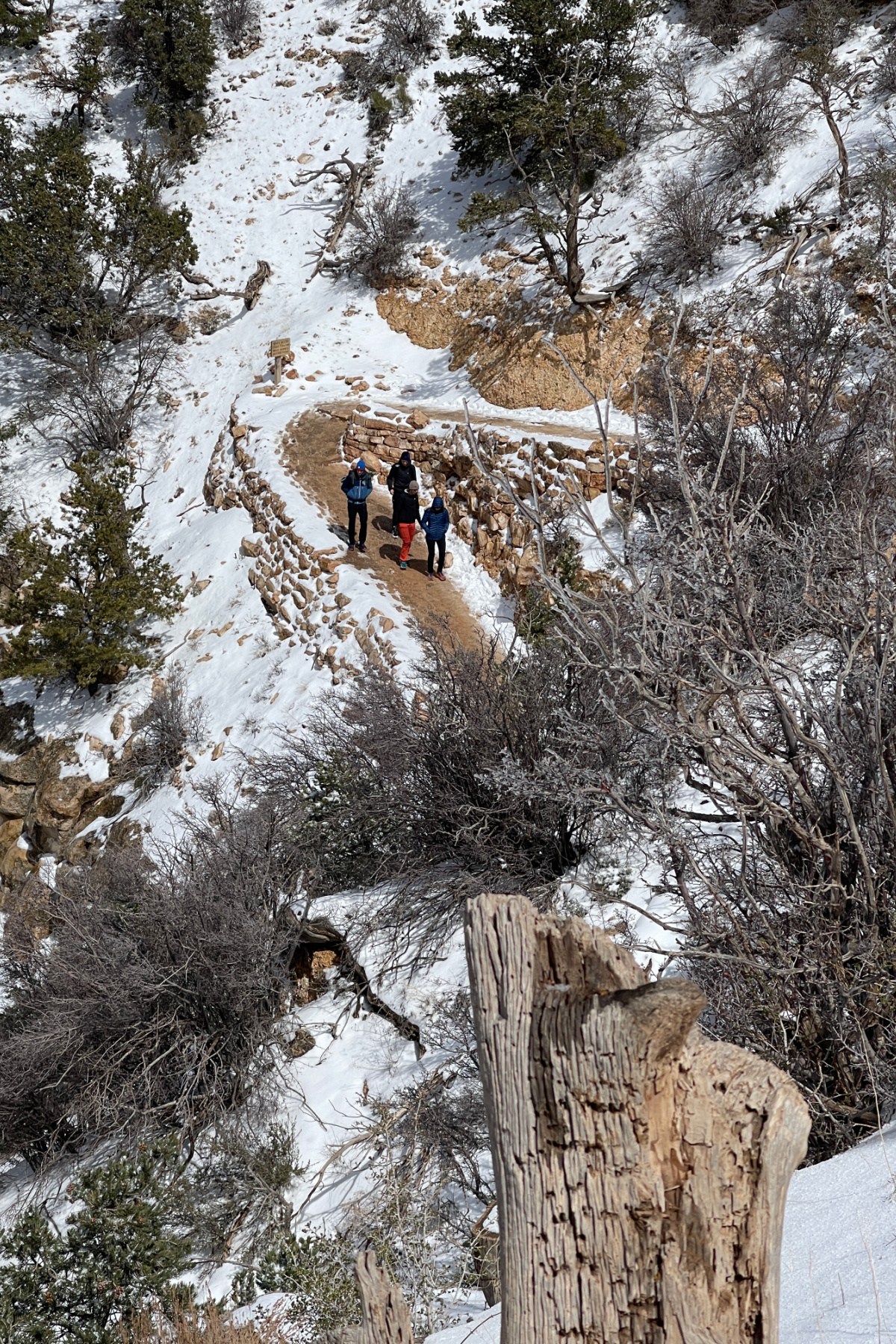
You do not have to hike all the way to Ooh Aah Point.
Ooh Aah Point is a popular turnaround point and a great goal if you are prepared for the approximately 1.8-mile round-trip hike.
But reaching Ooh Aah Point is not some requirement for experiencing the South Kaibab Trail.
You can walk down partway.
Take a few switchbacks.
Look back up toward the rim.
Look farther down into the canyon.
And then turn around.
There isn’t a rule saying you have to reach a named destination before your hike “counts.”
For casual visitors, even walking a short distance below the rim can provide a completely different perspective.
Up on the rim, you are looking at the Grand Canyon.
Once you start descending, even a little bit, you begin to feel like you are inside it.
The scale changes.
The rim starts rising above you.
The trail becomes visible below you.
And suddenly the canyon feels less like a spectacular panorama and more like an actual landscape.
But there is one very important catch.
Going down is the easy part.
You have to climb every single step back out again.
This is why I would be very conservative about how far you descend if you are not accustomed to hiking, particularly in hot weather, icy winter conditions or at the South Rim’s elevation.
Do not keep walking downhill simply because you still feel great.
Of course you feel great.
You are going downhill.
Save plenty of energy for the return.
And if all you want is 10 or 15 minutes of walking below the rim before turning around?
That is completely fine.
What I Would Do With Just a Few Hours in This Area
If you are starting at the Grand Canyon Visitor Center and only have a few hours, I would not try to see everything.
I would start at Mather Point.
Then I would walk at least part of the Rim Trail toward Yavapai Point.
Explore the Yavapai Geology Museum.
And if you still have time, take the Orange shuttle toward Yaki Point.
That gives you several different canyon views, a little bit of easy walking, some context about what you are looking at, and a chance to experience the shuttle system.
If you are feeling adventurous and conditions are good, you could substitute a brief walk down the South Kaibab Trail.
And that is already a much richer Grand Canyon experience than walking up to one overlook, taking a selfie and getting back in the car.
You haven’t done anything hardcore.
You haven’t spent six hours hiking or hauled your backpack into the canyon.
But you have actually spent some time getting to know the Grand Canyon.
And we haven’t even made it to Grand Canyon Village yet.
Grand Canyon Village: Historic Buildings and Easy Rim Views
Grand Canyon Village is one of my favorite parts of the South Rim because it feels completely different from the Visitor Center area.
This is where you find El Tovar, Bright Angel Lodge, Lookout Studio, Kolb Studio, the Bright Angel Trailhead and some of the most iconic historic buildings in the park.
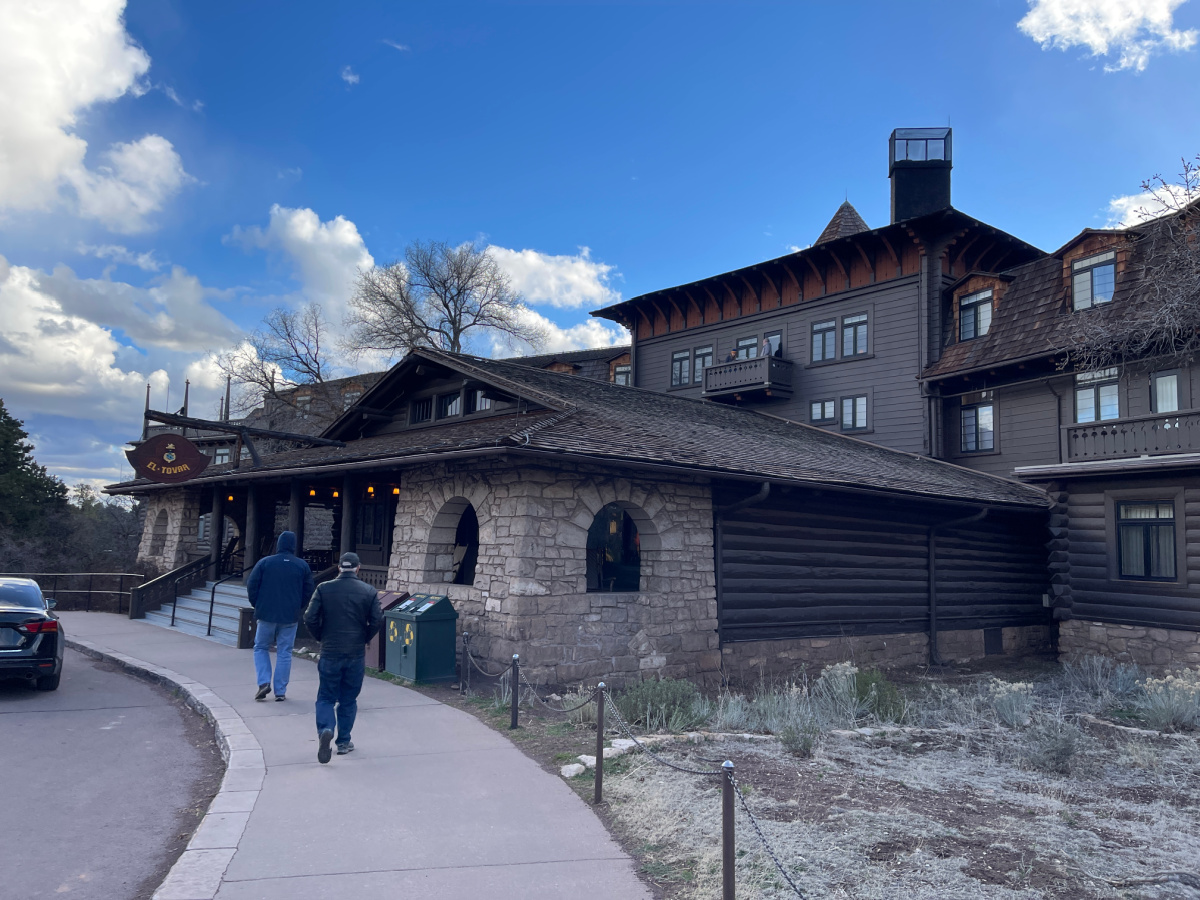
And the whole time, the Grand Canyon is right there beside you.
You do not have to choose between sightseeing and scenery here. You can wander around the historic district, stop for food, browse a gift shop, sit on a bench, and then walk a few steps back toward the rim.
It is a very easy place to slow down.
And I think slowing down is one of the best things you can do at the Grand Canyon.
El Tovar and the Rim Around the Historic Village
Even if you are not staying at El Tovar, I think it is worth walking through this part of the village.
The hotel is one of the most recognizable historic buildings on the South Rim, and the setting could not be more dramatic.
You are not tucked away from the canyon.
You are right next to it.
The Rim Trail runs through this area, and there are plenty of places where you can stop and look out over the canyon without going anywhere near a steep trail.
This is also one of those places where the atmosphere matters almost as much as the individual viewpoint.
You have historic architecture, people strolling along the rim, people sitting outside with coffee or food, and this enormous canyon stretching out beyond everything.
It feels more like a destination than a quick overlook.
Lookout Studio
Lookout Studio is one of the places that really emphasizes the relationship between the historic village and the canyon.
The stone building sits right at the edge of the rim and was designed to blend into the landscape.
Even if you only stop briefly, it is worth walking over here for the views.
You are not looking at the canyon from one isolated platform.
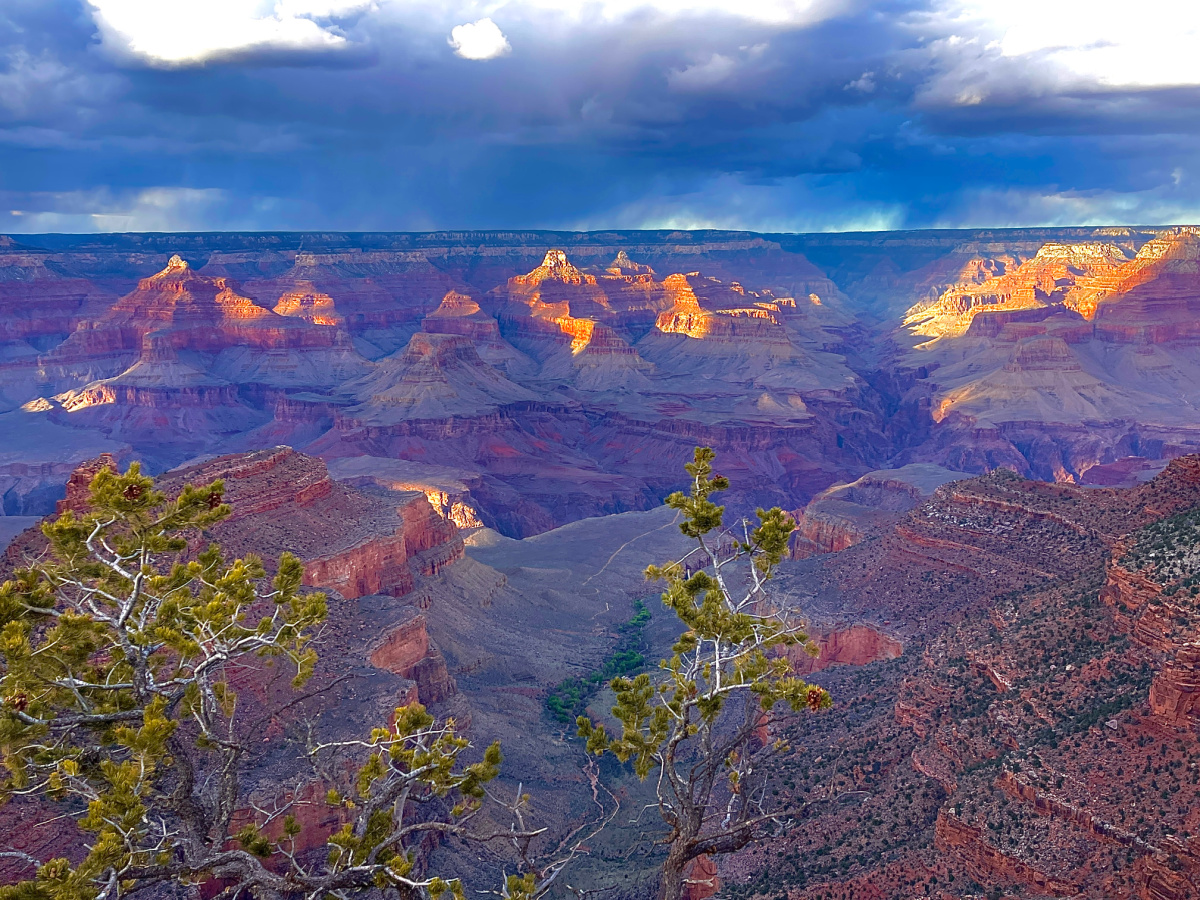
You are moving through a historic area where the canyon is constantly appearing between buildings and along the walkway.
That is one reason I like this section so much for casual visitors.
You can cover a surprising amount of ground without feeling like you are hiking.
Kolb Studio
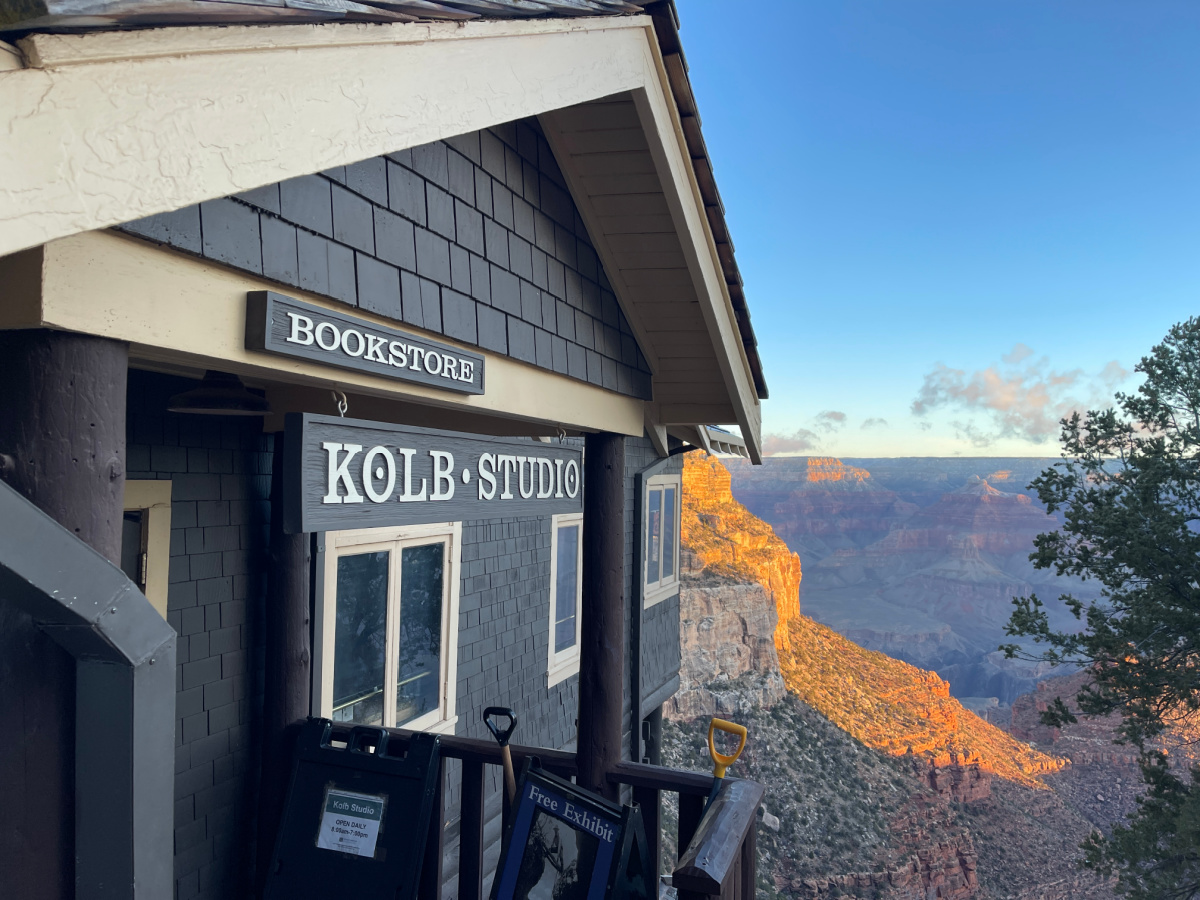
Kolb Studio is another historic building perched right on the rim.
It is also very close to the Bright Angel Trailhead, so this part of the village tends to feel a little more active.
You will see hikers getting ready to head down into the canyon, hikers coming back up, and plenty of people who are simply wandering around and taking in the view.
And that contrast is kind of fun.
You can stand there watching people prepare for an all-day hike while knowing that your own Grand Canyon adventure might involve walking 200 feet and buying a snack.
Both are valid.
Bright Angel Trailhead: You Can Walk Down a Little Without Doing a Major Hike
The Bright Angel Trail is one of the most famous trails in the Grand Canyon.
It is also a serious hiking route.
That does not mean you have to hike the whole thing.
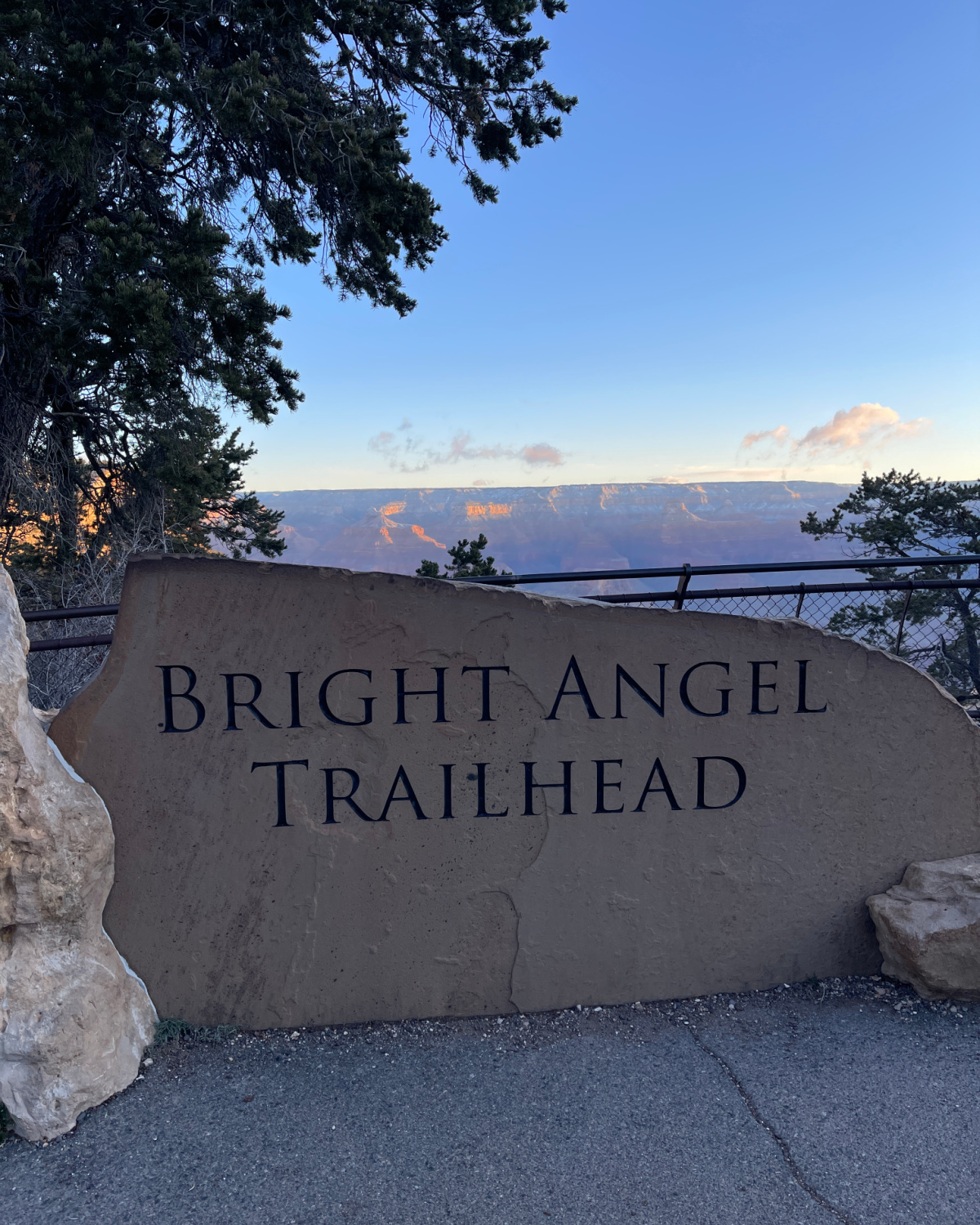
Just like with the South Kaibab Trail, you can walk down a short distance, get the experience of being below the rim, and turn around.
And if you only want to go down far enough to see what the trail feels like?
That is perfectly reasonable.
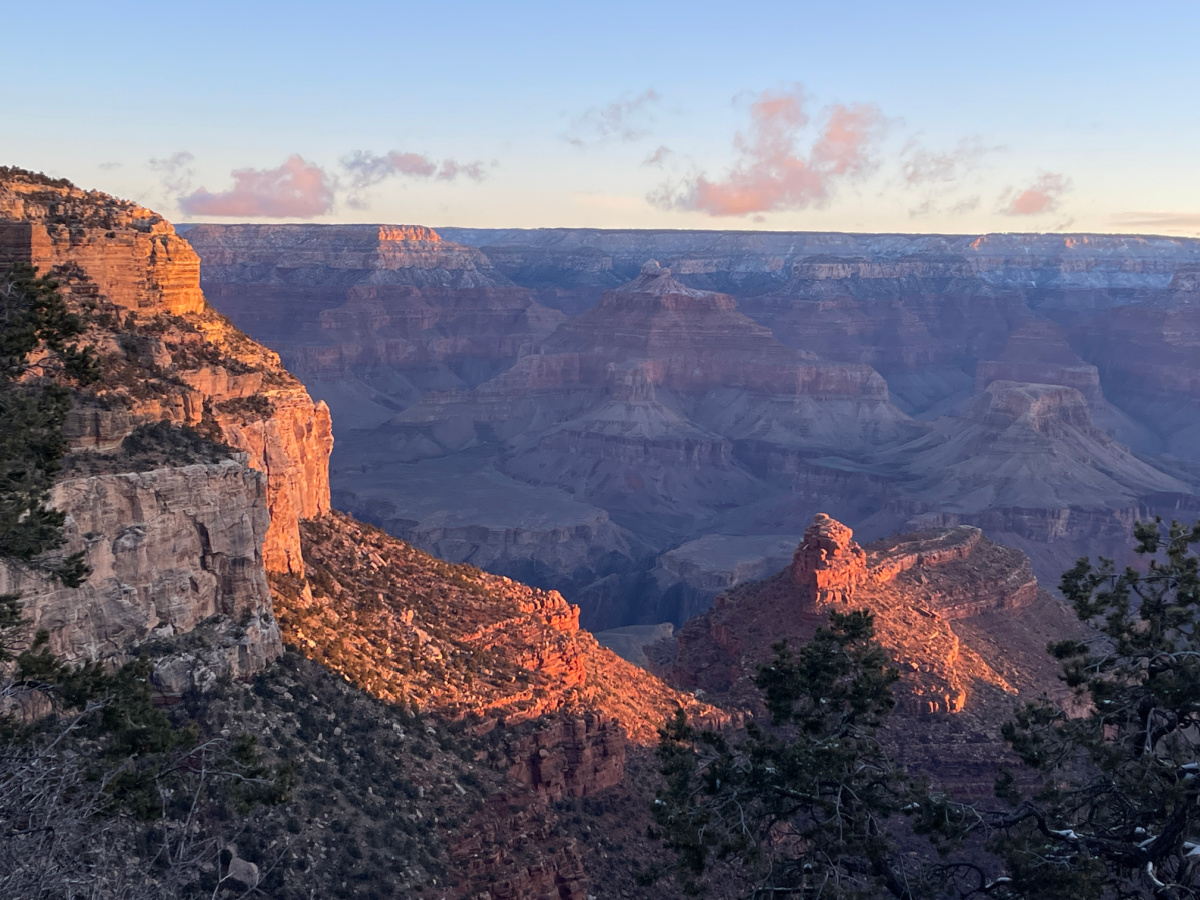
The trail starts right in Grand Canyon Village, which makes it one of the easiest places to sample a below-the-rim experience.
You can walk down a few switchbacks, enjoy the different perspective, and head back up before you have committed yourself to anything major.
But the same warning applies here as everywhere else in the canyon.
Going down is the easy part.
Coming back up is the part that counts.
The Grand Canyon is not a place where I would ever recommend pushing yourself just because you want to reach a named point on a map.
If your goal is simply to experience the canyon from below the rim for a few minutes, that is enough.
You do not have to prove anything.
Walking the Rim Trail Through Grand Canyon Village
One of the nicest things about Grand Canyon Village is that you can combine the historic buildings with sections of the Rim Trail.
You can walk past El Tovar, Bright Angel Lodge, Lookout Studio and Kolb Studio while staying very close to the canyon.
This is not a long wilderness hike.
It is more like a scenic walking route through one of the most historic parts of the park.
And if you get tired, hungry or cold, there are actual buildings nearby.
That matters.
Especially if you are visiting with kids, older relatives or anyone who likes the idea of national parks more than the idea of roughing it.
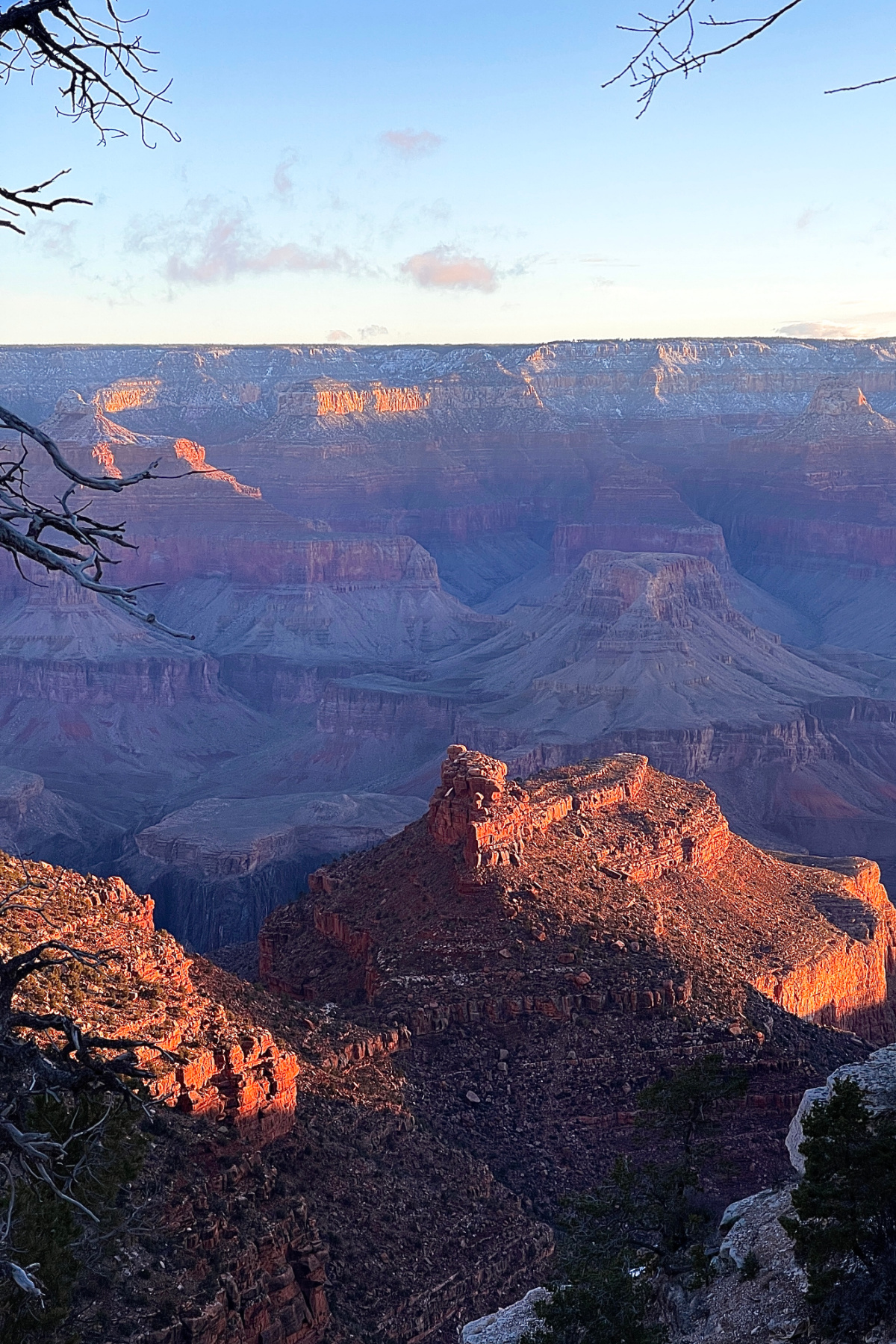
Hermit Road: One of the Best Grand Canyon Experiences Without Hiking
If I had to pick one part of the South Rim that really proves you do not have to be a hiker to experience the Grand Canyon, Hermit Road might be it.
For most of the year, private vehicles are restricted on this road, so visitors use the park shuttle.
And honestly, that makes the whole experience easier.
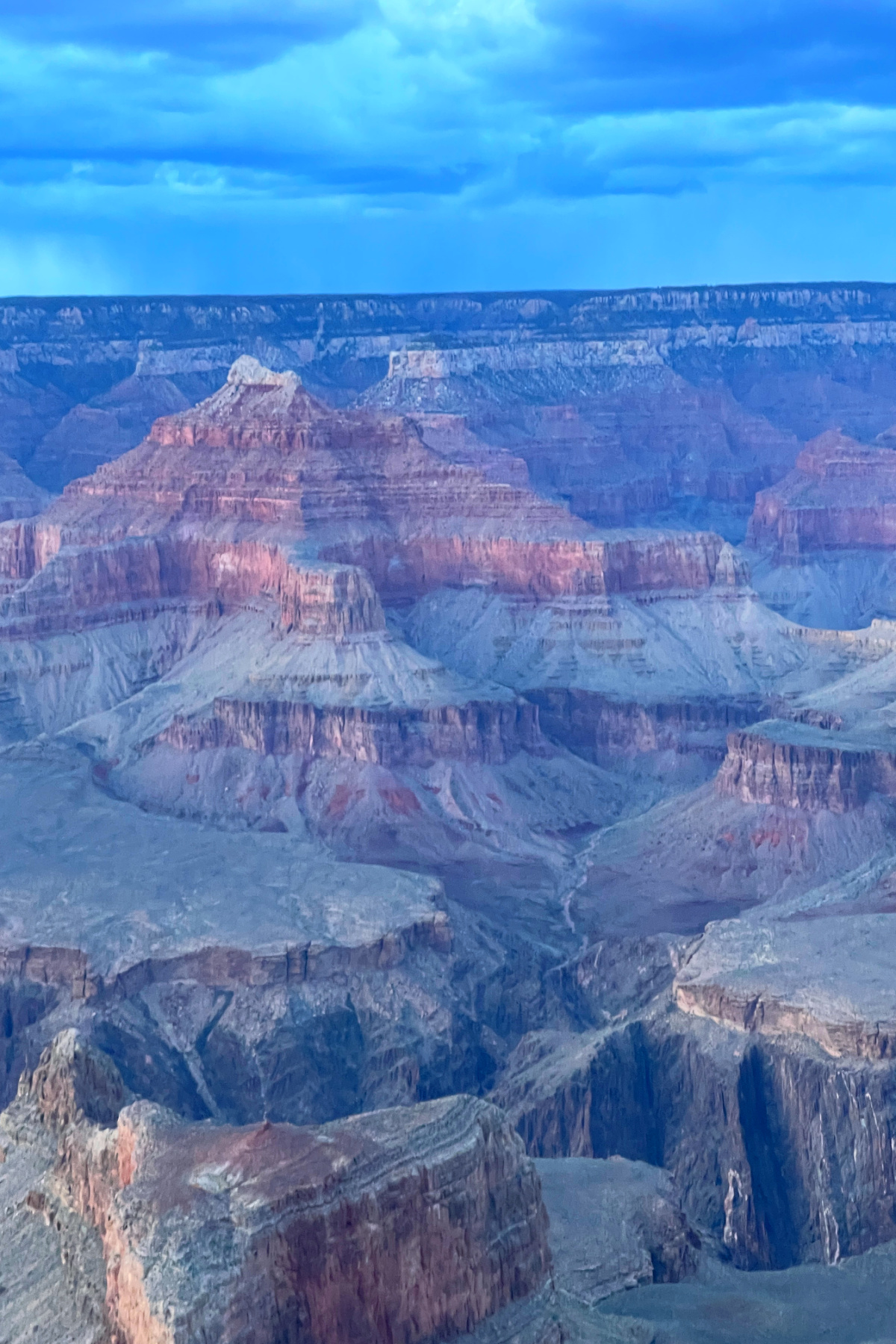
You ride the bus.
Get off at a viewpoint.
Look at the canyon.
Get back on.
Then you do it again.
There are multiple overlooks along the route, and each one gives you a slightly different view.
Some are better for seeing the Colorado River.
Others give you huge sweeping panoramas.
And some are especially popular around sunset.
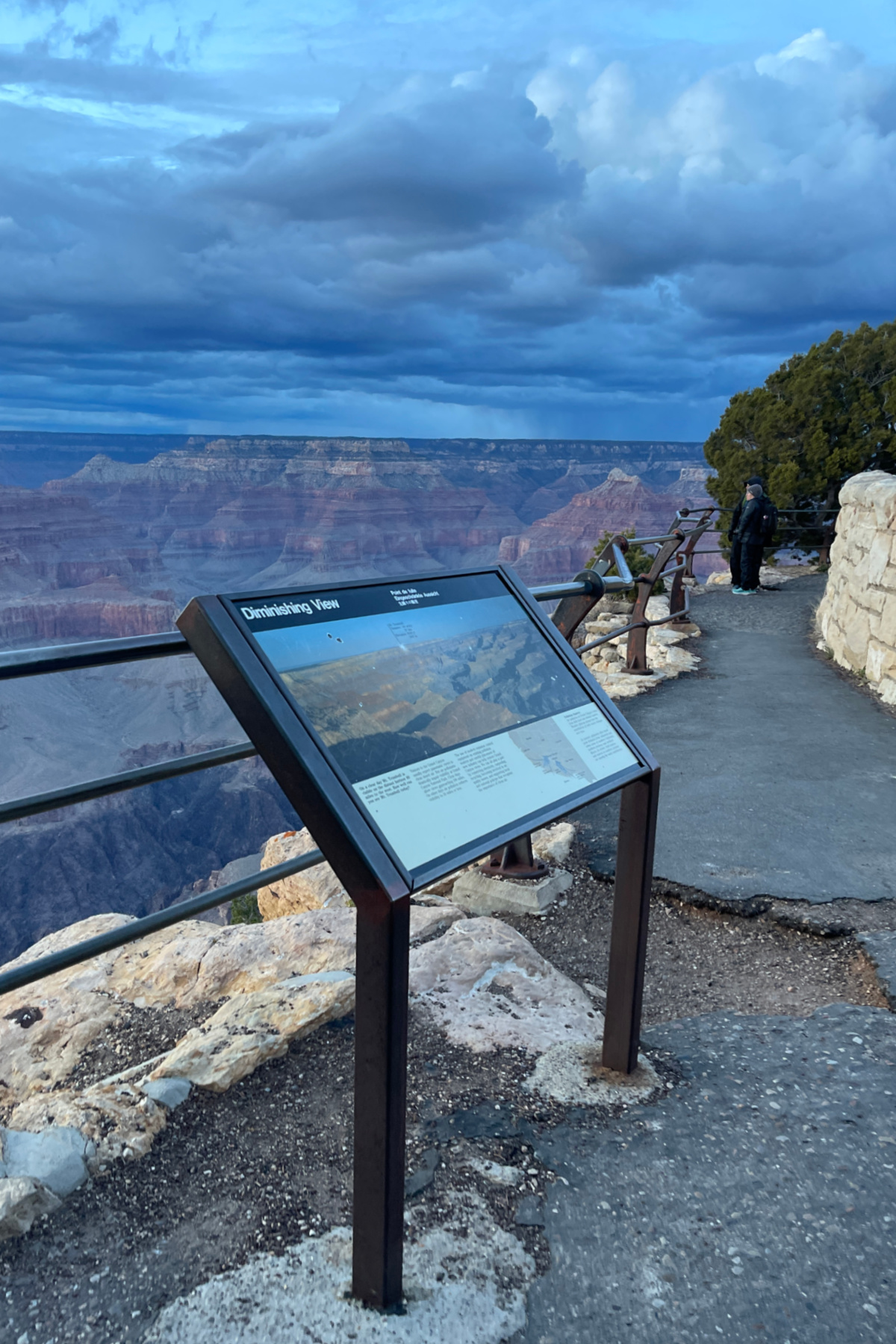
And if you want to walk part of the Rim Trail between stops, you can do that too.
This is probably the closest thing the Grand Canyon has to a sightseeing loop designed for people who want maximum scenery with minimum physical effort.
Hopi Point
Hopi Point is one of the best-known viewpoints along Hermit Road, and it is especially popular around sunset.
It gives you a wide, open view of the canyon, and because of the way the viewpoint extends outward, you can see a lot in multiple directions.
This is one of those places where the light can become the whole experience.
Late in the day, the shadows deepen, the rock layers become more dramatic, and the canyon can change color almost minute by minute.
If you are staying at the South Rim overnight, I would absolutely try to see at least one sunset from somewhere along Hermit Road.
You do not necessarily have to choose Hopi Point.
But Hopi is popular for a reason.
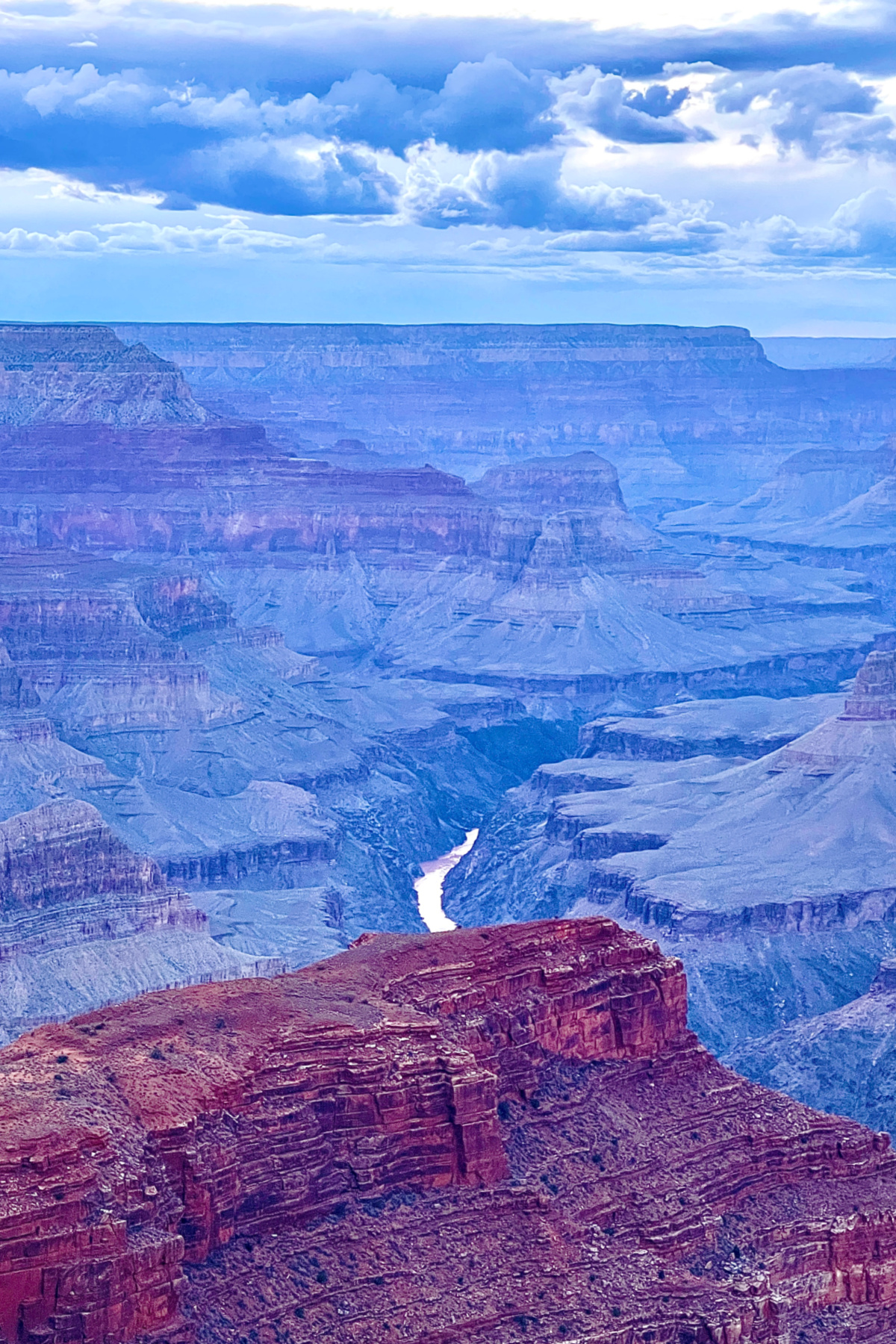
Mohave Point
Mohave Point is another excellent stop if you are riding the Hermit Road shuttle.
One of the biggest differences here is that you can get a stronger sense of the Colorado River below.
And I think that matters.
At some viewpoints, the canyon feels almost abstract because it is so huge.
You see layers and cliffs and shadows, but it can be hard to connect all of that to the river that helped carve it.
When you can actually see sections of the Colorado far below, the landscape starts making a little more sense.
The canyon suddenly feels less like a giant hole and more like a living geographic system.
Pima Point
Pima Point is another worthwhile stop, especially if you are continuing farther west toward Hermits Rest.
The view opens up dramatically here, and you can often see stretches of the Colorado River below.
This part of Hermit Road feels more removed from the busiest areas around Grand Canyon Village.
And that is one of the things I like about it.
You are still using a shuttle.
You are still not hiking.
But the experience can feel much quieter.
Hermits Rest
Hermits Rest is the end of the road.
Literally.
This is where the Hermit Road shuttle route finishes before turning back toward Grand Canyon Village.
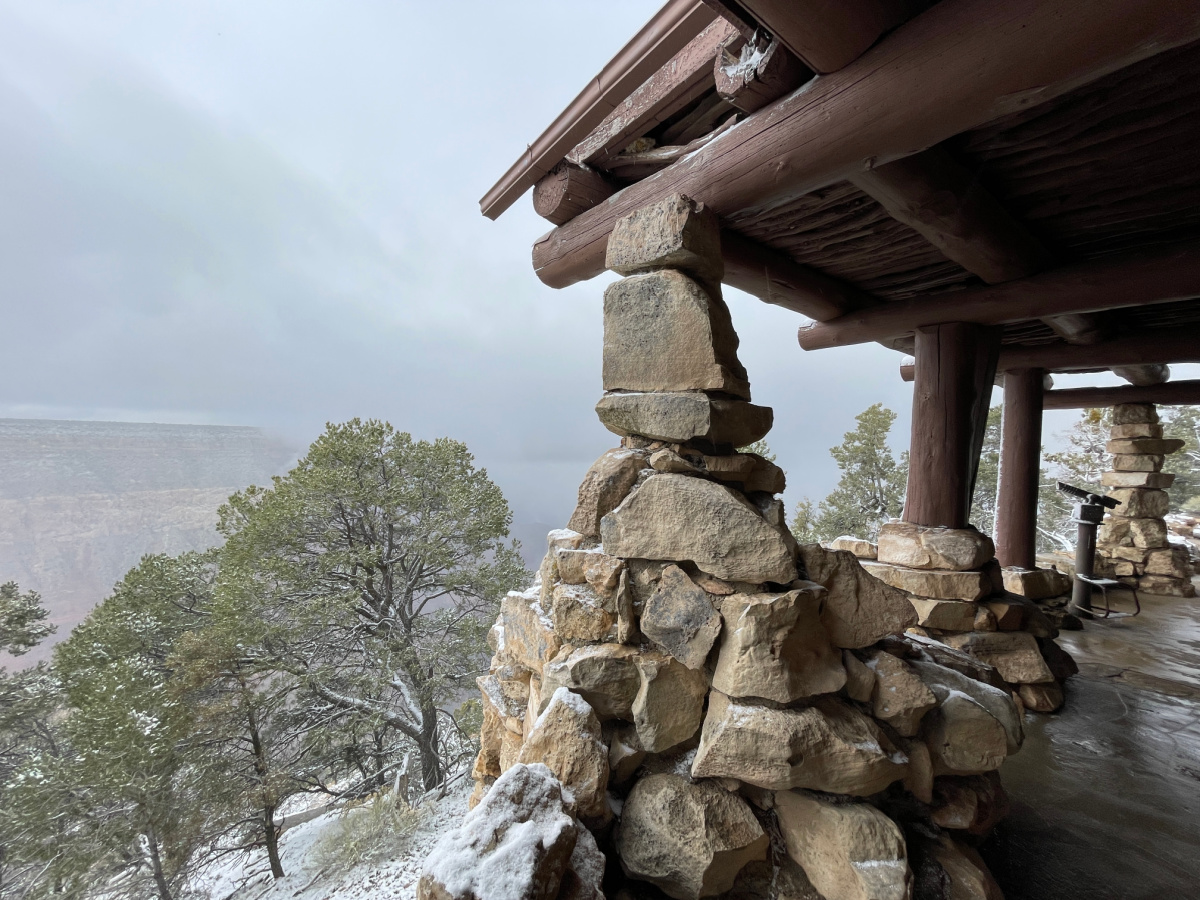
The historic structure was designed by Mary Colter and has that wonderfully rustic Grand Canyon feel.
There is a gift shop and snack area, which makes this a nice place to stop before heading back.
And after hopping on and off the shuttle for several viewpoints, it feels like a natural endpoint.
You can look around, take a break, and then ride back toward the village.
Do You Need to Stop at Every Hermit Road Viewpoint?
No.
Definitely not.
There are nine designated overlooks along Hermit Road, and unless you have a lot of time, I would not feel obligated to stop at all of them.
This is another place where I think people can accidentally turn sightseeing into homework.
You do not get bonus points for checking every overlook off a list.
Choose a few.
Stay longer at the ones you like.
Skip one if you are tired.
If the weather is bad, adjust.
If you arrive at one viewpoint and the light is incredible, stay there.
The Grand Canyon is not going anywhere.
For most casual visitors, I would prioritize a few of the stronger stops like Hopi Point, Mohave Point, Pima Point and Hermits Rest.
And if you are there near sunset, I would absolutely leave some flexibility in your schedule.
Because the best viewpoint might end up being the one where the light is doing something amazing when you happen to arrive.
Walk Between Hermit Road Viewpoints If You Want More Than a Shuttle Ride
Hermit Road is also a great place to combine shuttle sightseeing with short sections of the Rim Trail.
You do not have to walk the whole route.
You can ride the shuttle to one viewpoint, walk to the next, and then get back on the bus.
This gives you the same advantage we talked about near Mather Point.
You get the experience of walking along the canyon without committing to a long out-and-back hike.
And because the shuttle stops are spaced along the road, you have multiple opportunities to change your mind.
Walk farther if you feel good.
Stop early if you do not.
Take the bus if the weather changes.
This kind of flexibility is one of the biggest reasons the South Rim works so well for casual travelers.
If You Only Have Time for One Hermit Road Experience
If you are short on time, I would not try to ride the entire route and stop everywhere.
Pick one or two major viewpoints.
Hopi Point is an obvious choice, especially later in the day.
Then continue out toward Hermits Rest if you have time.
That gives you one dramatic overlook plus the historic endpoint of the road.
If you have more time, add Mohave or Pima.
And if you have half a day, then you can slow down and treat Hermit Road as an experience in itself.
That is where this part of the Grand Canyon really shines.
You are not rushing from attraction to attraction.
You are watching the canyon change as you move west.
Different angles, light, and views of the river.
Different shadows.
Same Grand Canyon.
Completely different experience.
Desert View Drive: One of the Best Scenic Drives on the South Rim
Desert View Drive is probably the easiest part of the South Rim to explore if you prefer driving to taking the shuttle.
The road stretches for about 23 miles between Grand Canyon Village and Desert View, near the park’s East Entrance. Unlike Hermit Road, you can drive your own vehicle here throughout the year unless weather temporarily closes the road. There are six developed canyon viewpoints along the route, plus several additional pullouts.
And I think this part of the park deserves more attention than simply driving straight to the Watchtower.
Quick Reality Check: What happened on our trip
One important thing to know about Desert View Drive is that weather can completely change your plans. We had intended to leave the Grand Canyon by driving east along Desert View Drive, stopping at the viewpoints along the way before continuing on to Page.
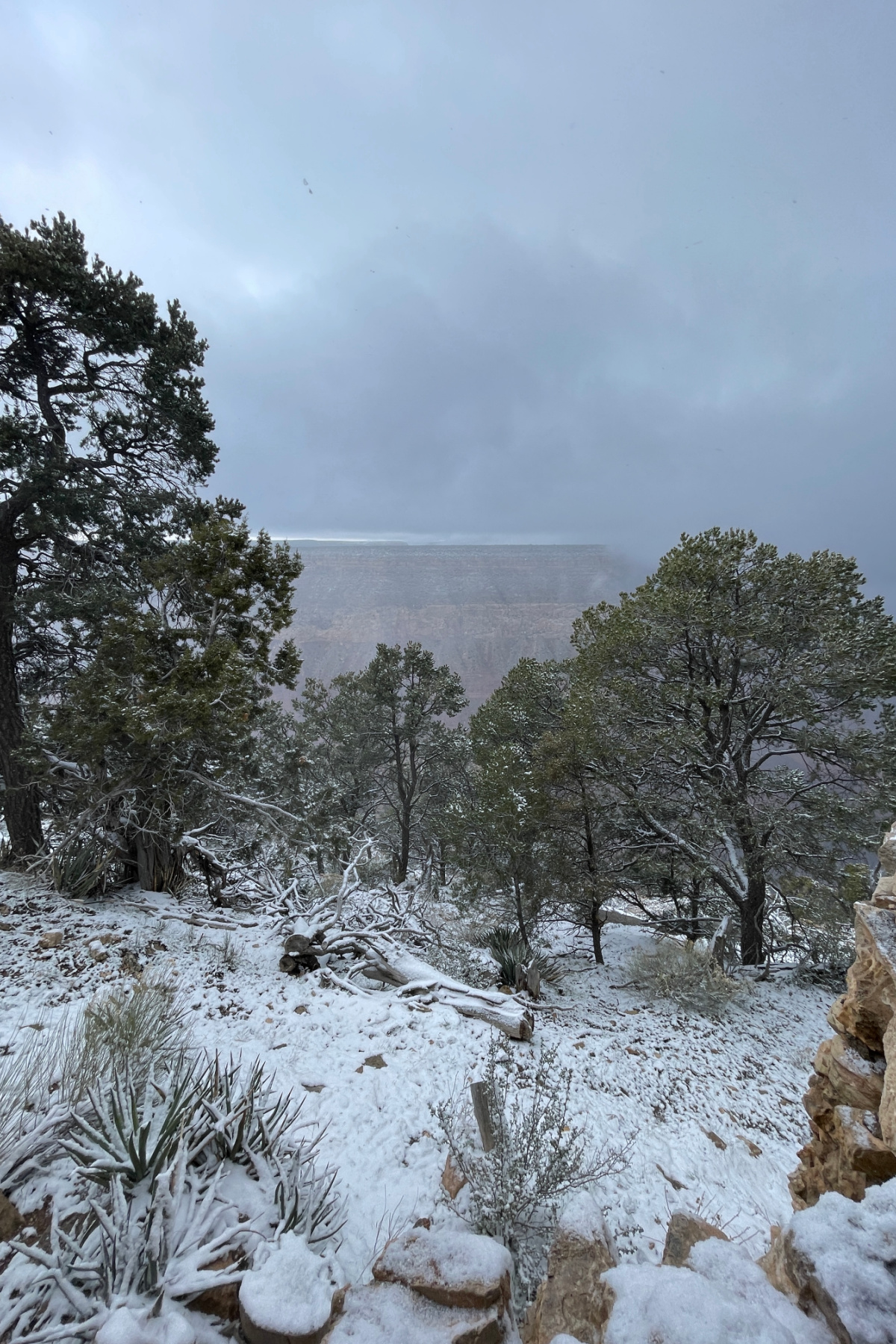
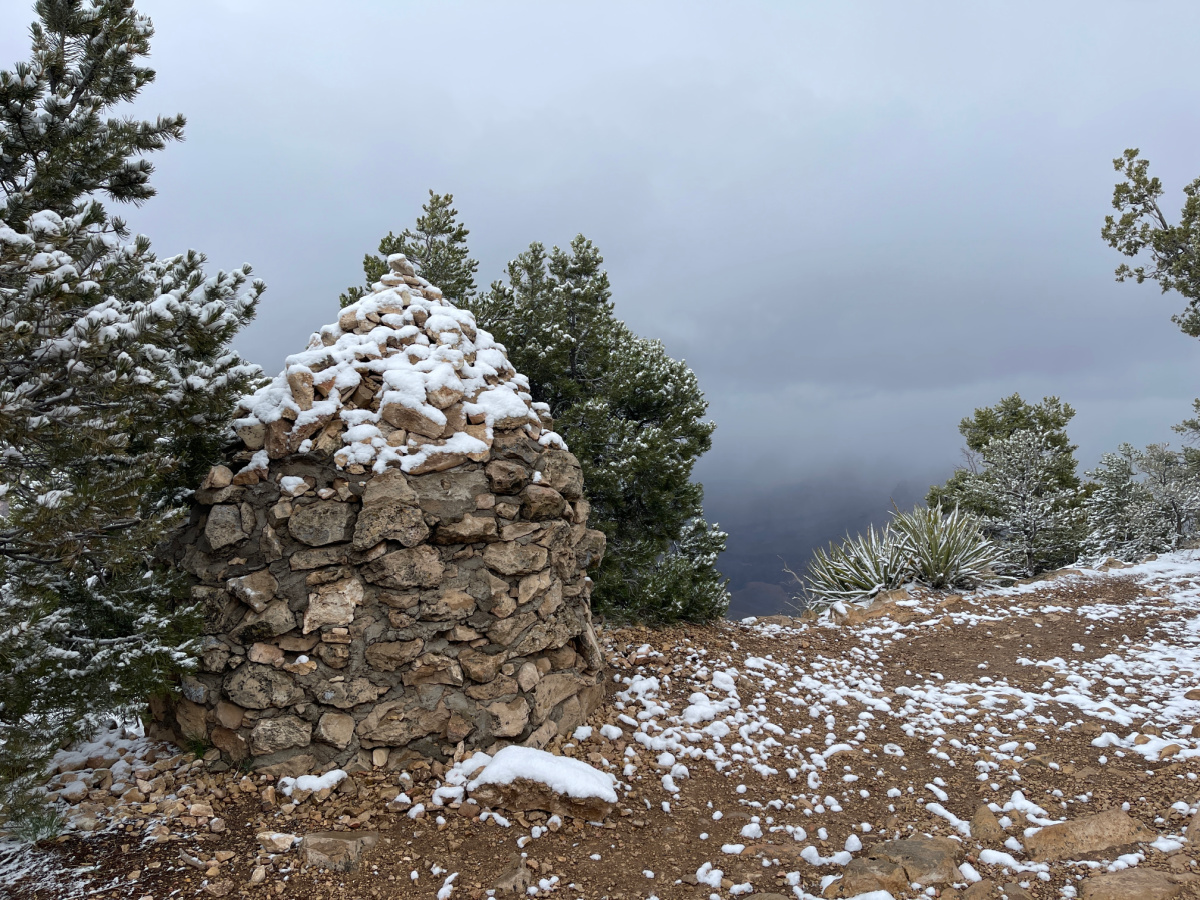
But a spring snowstorm closed the road, so we had to turn around and head back toward Flagstaff instead. It completely changed our day, and we never made it to Desert View at all. The upside is that even when weather limits what you can see, the Grand Canyon is still absolutely worth the trip. You may not get every viewpoint you planned for, but you will still get plenty of incredible scenery.
The farther east you go, the more the canyon changes.
You start getting better views of the Colorado River. The landscape opens up toward the Painted Desert. Some of the formations look completely different from what you see around Mather Point or Grand Canyon Village.
So even though this is still the Grand Canyon, it does not feel like you are stopping at the same overlook over and over again.
Grandview Point
Grandview Point is one of the first major overlooks you reach as you drive east from Grand Canyon Village.
And the name is pretty accurate.
From here, you get a very broad view across the canyon, including several bends in the Colorado River toward the east.
There is also a trailhead here, but you certainly do not have to hike the Grandview Trail to enjoy the viewpoint.
For most casual visitors, this is a simple park-the-car-and-look stop.
And after spending time around the main Visitor Center area, Grandview Point is a good introduction to how different the eastern side of the South Rim can look.
Moran Point
Moran Point is another easy stop along Desert View Drive.
This is one of those viewpoints where I think the geology becomes especially interesting because you can see so many different rock layers and formations at once.
Even if you do not know the names of all the formations, the colors and textures are noticeable.
The canyon can look almost striped in places.
This is also the kind of viewpoint where I would spend a few minutes walking around instead of taking one picture and immediately getting back in the car.
Sometimes moving only a short distance along the rim gives you a completely different composition.
Lipan Point
Lipan Point is one of the viewpoints I would absolutely put on your list if you are driving Desert View Road.
This is one of the best places on the South Rim for seeing a long stretch of the Colorado River.
You can also see the Unkar Delta and several prominent rock formations from here.
And I think seeing the river this clearly changes the way you experience the canyon.
At some viewpoints, you mostly see cliffs, ridges and enormous empty space.
At Lipan Point, the river becomes much more obvious.
You can trace it through the canyon and start to understand how all of this enormous scenery fits together.
If you only have time for a few stops along Desert View Drive, Lipan Point would be high on my list.
Navajo Point
Navajo Point is only a short distance from Desert View and gives you another expansive view of the eastern canyon.
It is also the highest overlook along the South Rim road system, at more than 7,400 feet in elevation.
One of the fun things about Navajo Point is that you can see the Desert View Watchtower from here.
That makes it feel a little different from the other overlooks because you suddenly have this recognizable landmark sitting on the canyon rim in the distance.
You can also look north toward the Colorado River.
If you are already heading all the way to Desert View, this is an easy stop to add.
Desert View and the Watchtower
Desert View is the big finale of the drive.
This is where you will find the historic Desert View Watchtower, one of the most recognizable buildings at the Grand Canyon.
The tower was designed by Mary Colter and completed in the 1930s. It was inspired by ancestral Puebloan architecture of the Southwest.
And honestly, even if you have already seen a dozen canyon viewpoints by the time you get here, Desert View still feels worth it.
The view is different.
You are looking toward the eastern end of the Grand Canyon, where the landscape begins opening toward the Painted Desert.
The Colorado River is much more visible from this part of the park too, including a large bend in the river below Desert View.
There is about a quarter-mile walk from the parking area to the rim and the Watchtower, so this is still a very easy stop for most visitors.
Go Inside the Desert View Watchtower
If the Watchtower is open when you visit, definitely go inside.
The interior is just as interesting as the outside.
The building was designed to look old, but the details inside were carefully planned, including artwork and designs inspired by Indigenous cultures of the Southwest.
Depending on staffing, the upper floors may also be open.
Even if you do not climb very high, it is worth stepping inside and looking around.
This is not just a tower that happens to sit beside the Grand Canyon.
It is part of the history of the South Rim.
And because so many Grand Canyon visits focus almost entirely on scenery, I think places like the Watchtower help make the visit feel a little more complete.
Don’t Rush Desert View
Desert View also has restrooms, a market and deli, a trading post, gas and other visitor services.
So this is a good place to take an actual break.
After driving the length of Desert View Drive and stopping at several overlooks, you may be ready to sit down for a bit.
And that is another reason I would not treat this area as a quick turnaround point.
Walk to the rim.
Explore the Watchtower.
Look at the Colorado River.
Grab something to eat or drink.
Then decide what comes next.
If you are leaving the Grand Canyon through the East Entrance, you can simply continue toward Cameron and Page.
If you are staying in Grand Canyon Village, you will drive back the way you came.
Either way, Desert View works very well as the endpoint of this part of your South Rim sightseeing.
Desert View Drive Is Also Great for a Road Trip
This is especially useful if the Grand Canyon is only one stop on a larger Southwest road trip.
You do not necessarily have to enter and exit through the same gate.
If you are coming from Page, Monument Valley or other destinations northeast of the Grand Canyon, you can enter through the East Entrance near Desert View and work your way west toward Grand Canyon Village.
Or you can do the reverse.
That turns Desert View Drive into part of your travel route instead of requiring you to drive 23 miles out and then retrace your route immediately.
And if you are heading toward Page afterward, this is a particularly logical way to see the eastern viewpoints before leaving the park.
Which Desert View Drive Stops Should You Prioritize?
If you have plenty of time, stop wherever something catches your attention.
That is one of the nice things about having your own car.
But if you are trying to narrow things down, I would focus on a handful of major viewpoints rather than trying to stop everywhere.
Grandview Point gives you a beautiful introduction to the eastern side of the canyon.
Lipan Point is especially good for seeing the Colorado River.
Navajo Point gives you a great view toward the Watchtower.
And Desert View itself is absolutely worth reaching.
You could easily spend several hours driving this road if you stop frequently.
Or you could choose two or three overlooks and still have a very satisfying experience.
How Much Time Do You Really Need at the Grand Canyon?
This is probably the question that causes people the most trouble.
And I do not think there is one correct answer.
You can absolutely see the Grand Canyon in a couple of hours.
If that is all the time you have, go.
Do not skip the Grand Canyon because somebody told you that you need three days.
But if you have more time, use it.
If You Have About Two Hours
Start around the Visitor Center.
Go to Mather Point.
Walk a little of the Rim Trail.
Visit Yavapai Point if time allows.
That gives you a classic Grand Canyon experience without spending half your visit worrying about transportation.
If You Have Half a Day
You have more choices.
You could explore Mather Point and Yavapai, then head into Grand Canyon Village.
Or you could spend your time riding the Hermit Road shuttle and stopping at a few western viewpoints.
Or you could drive part of Desert View Drive.
I would not try to do all three.
Pick an area and enjoy it.
If You Have One Full Day
Now you can start combining sections of the South Rim.
Visit Mather Point and Yavapai in the morning.
Explore Grand Canyon Village.
Ride part of Hermit Road.
Or drive Desert View Drive later in the day.
You still probably will not see everything, but you can see quite a bit without feeling rushed.
If You Have Two or Three Days
This is when the Grand Canyon starts becoming a completely different kind of trip.
You have time for sunrise.
… and time for sunset.
You can ride the full Hermit Road route.
Drive all the way to Desert View.
You can spend more time walking the Rim Trail.
And if you want to walk a short distance below the rim on Bright Angel or South Kaibab, you can fit that in too.
You also have something else that you cannot schedule.
Weather.
Maybe one day is perfectly clear.
But another day has clouds moving through the canyon.
Maybe there is snow.
Or the sunset is disappointing one evening and spectacular the next.
That is where having more time becomes valuable.
You are not simply adding more attractions.
You are giving yourself more chances to see the Grand Canyon under different conditions.
Don’t Skip Sunrise or Sunset If You Are Staying Overnight
If you are spending the night at the South Rim, try to see at least one sunrise or sunset.
Preferably both.
The middle of the day is when most people see the Grand Canyon.
And it is beautiful.
But early and late light can completely change the landscape.
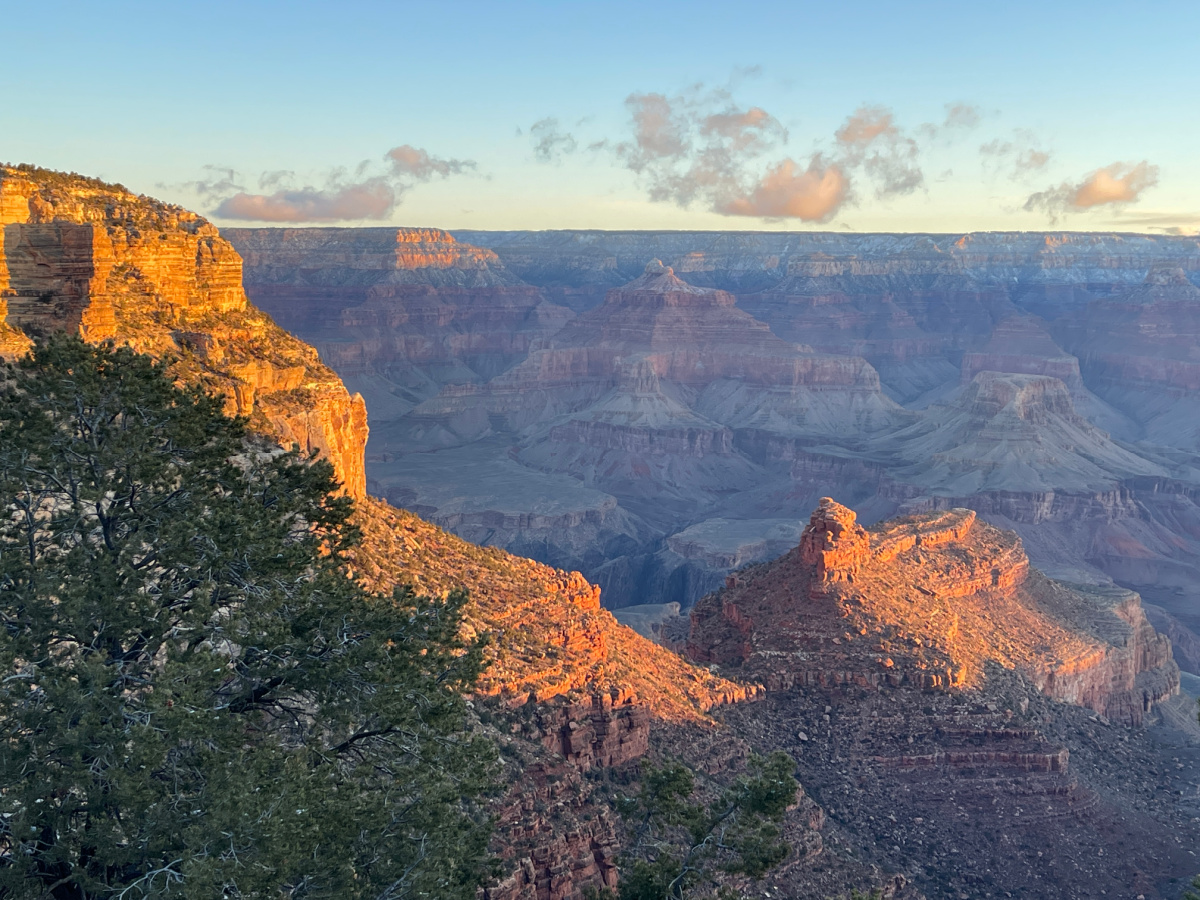
The shadows become longer.
The colors get warmer.
Individual rock formations stand out more clearly.
And depending on the clouds, the canyon can change from one minute to the next.
There is not one single perfect place for sunrise or sunset.
Mather Point and Yaki Point are both popular for sunrise.
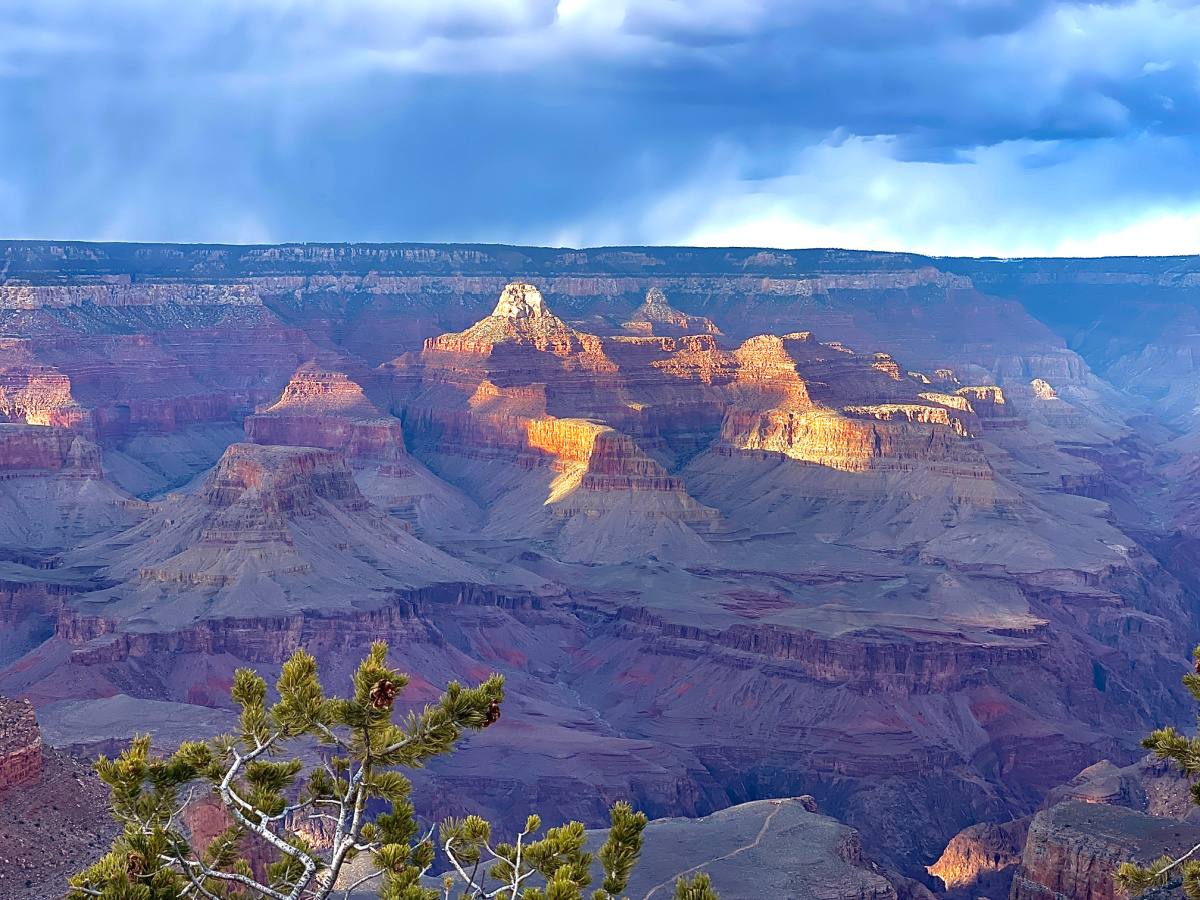
Hopi Point is especially popular for sunset, while Mohave and Pima can offer beautiful evening views with fewer crowds. Desert View and Navajo Point also give you broad views in both directions.
The National Park Service recommends arriving well before sunrise or sunset rather than showing up at the exact moment listed on your weather app.
I agree.
Part of the fun is watching the light change.
You Do Not Have to Hike the Grand Canyon to Experience It
There are plenty of incredible hikes at the Grand Canyon.
And if hiking into the canyon is your thing, you could plan an entire trip around the trails.
But that is not the only way to experience this park.
You can stand at Mather Point.
Walk along the Rim Trail.
Ride the shuttle to Hopi Point.
Explore Grand Canyon Village.
Drive Desert View Road.
Watch the Colorado River from Lipan Point.
See the canyon at sunset.
Come back the next morning and watch it change all over again.
And maybe, if you feel like it, walk a few switchbacks below the rim before turning around.
That is still a real Grand Canyon trip.
The canyon is enormous enough that there is no single way to see it.
And for most casual travelers, I think the best approach is simply to give yourself enough time to see more than one version of it.
More National Parks Without Hardcore Hiking
If you love spectacular national park scenery but do not necessarily want every vacation to involve a strenuous hike, you are definitely not alone.
Some of my favorite national park trips have involved easy walks, scenic drives, overlooks, waterfalls and short trails rather than major backcountry adventures.
Here are a few more guides that can help you plan that kind of trip:
- Grand Canyon South Rim Guide — Start here if you are planning your first Grand Canyon trip, including where to stay, how to get around and how much time to spend at the South Rim.
- Yosemite National Park Without Hardcore Hiking — See waterfalls, granite cliffs and some of Yosemite’s most famous scenery without tackling the park’s hardest trails.
- Canadian Rockies Without Hardcore Hiking — Explore Banff, Lake Louise, Yoho and the Icefields Parkway with scenic drives, easy walks and incredible viewpoints.
- Mount Rainier National Park Without Hardcore Hiking — Enjoy wildflowers, waterfalls, mountain views and some of the best scenery around Paradise and Sunrise without a difficult hike.
- North Cascades National Park Without Hardcore Hiking — Find beautiful overlooks, lakes and scenic stops throughout one of Washington’s wildest national parks.
- Olympic National Park Without Hardcore Hiking — Experience beaches, rainforest, waterfalls, lakes and mountain scenery with plenty of easy options.
- Best Easy Hikes in Zion National Park — You do not have to hike Angels Landing or The Narrows to have an amazing trip to Zion.
- Utah’s Mighty Five Without Hardcore Hiking — See the highlights of Zion, Bryce Canyon, Capitol Reef, Arches and Canyonlands with scenic drives, overlooks and easier trails.
You can absolutely love national parks without being a hardcore hiker.
Sometimes the best trip is the one where you spend less time worrying about mileage and more time actually looking around.