Grand Canyon South Rim Guide: Best Viewpoints, Easy Walks, and Practical Tips

Affiliate Disclosure: This post may contain affiliate links. If you make a purchase or booking through these links, I may earn a commission at no additional cost to you.
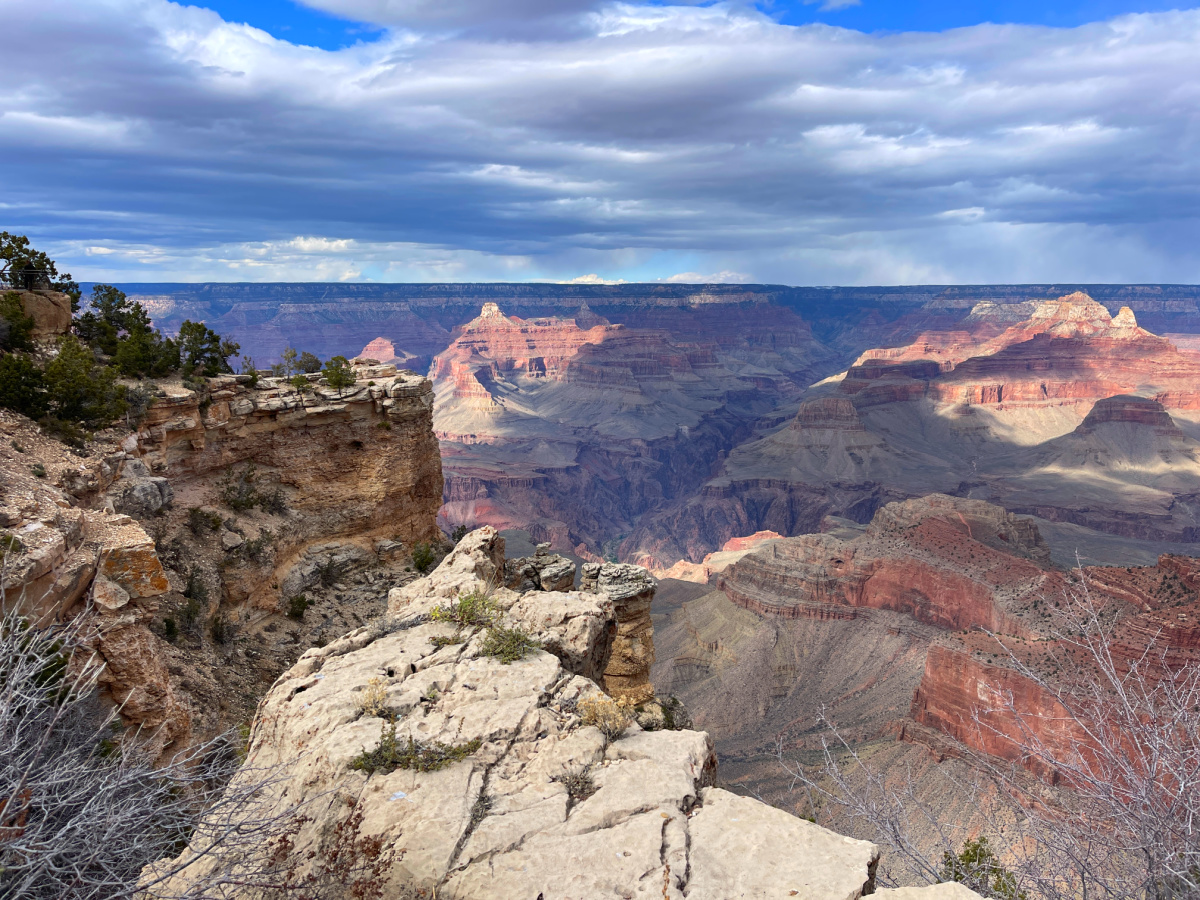
Plan your Grand Canyon South Rim visit with the best viewpoints, easy walks, shuttle tips, lodging advice, sunrise, sunset, and more.
Estimated reading time: 41 minutes
I don’t think my daughter had any idea how big the Grand Canyon was until she actually saw it.
Of course, she’d seen pictures. We all have. But standing on the edge of the canyon, looking out at layer after layer of cliffs, mesas, and rock formations stretching into the distance? That’s something else entirely.
She was absolutely mesmerized. We all were.
Which is kind of funny, because when you think about it, the Grand Canyon is basically a gigantic hole in the ground. You might imagine that after looking at it for an hour or so, you’d be ready to move on.
Maybe if you’re particularly jaded. Ha!
But there is a lot more nuance to the Grand Canyon than that.
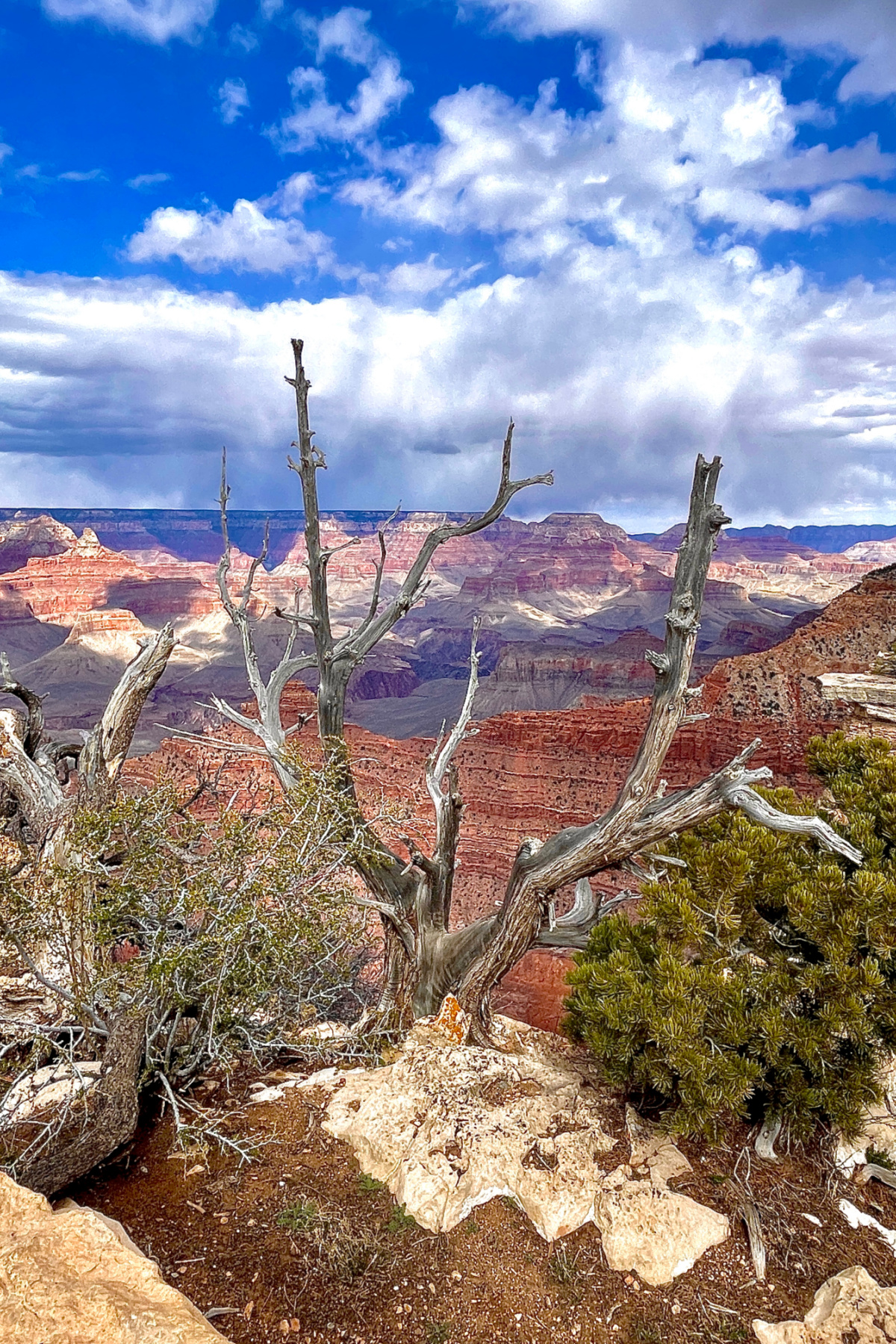
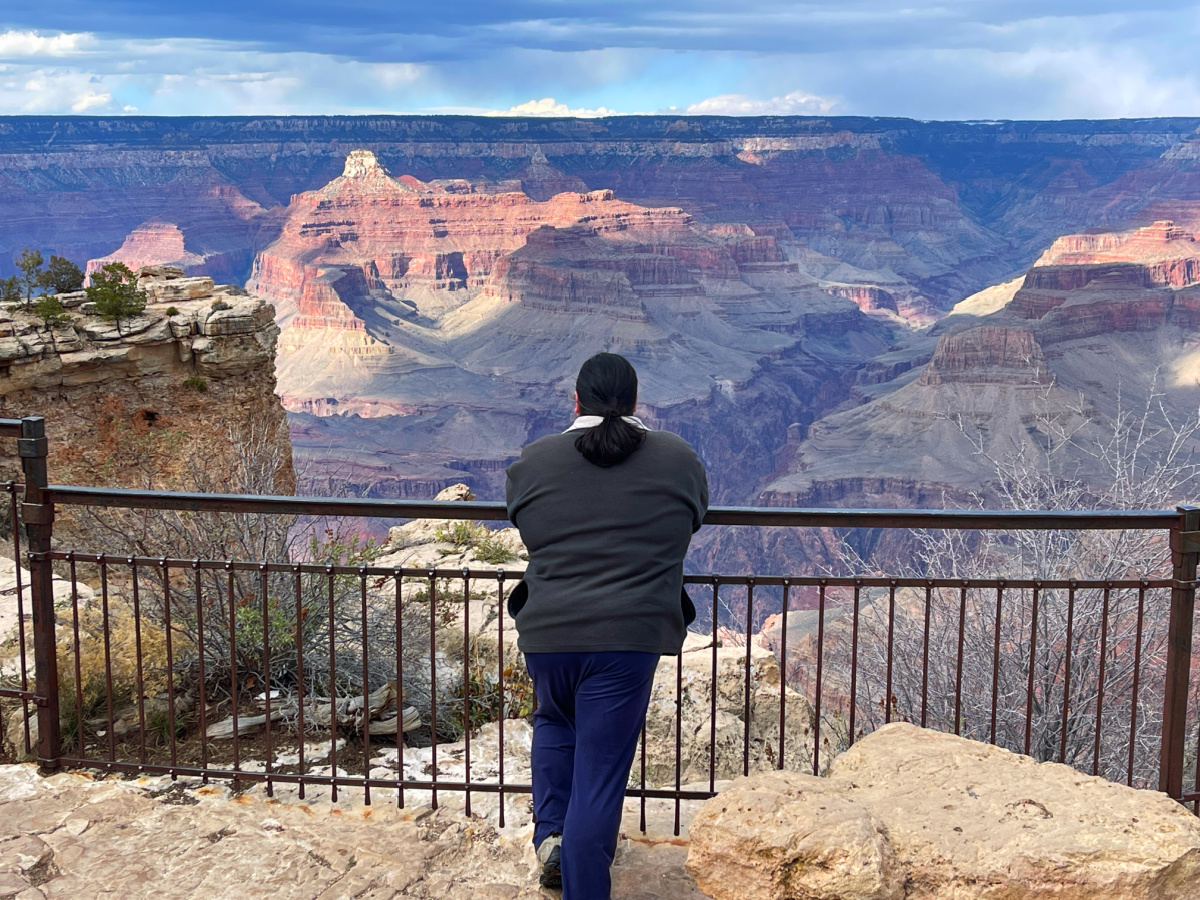
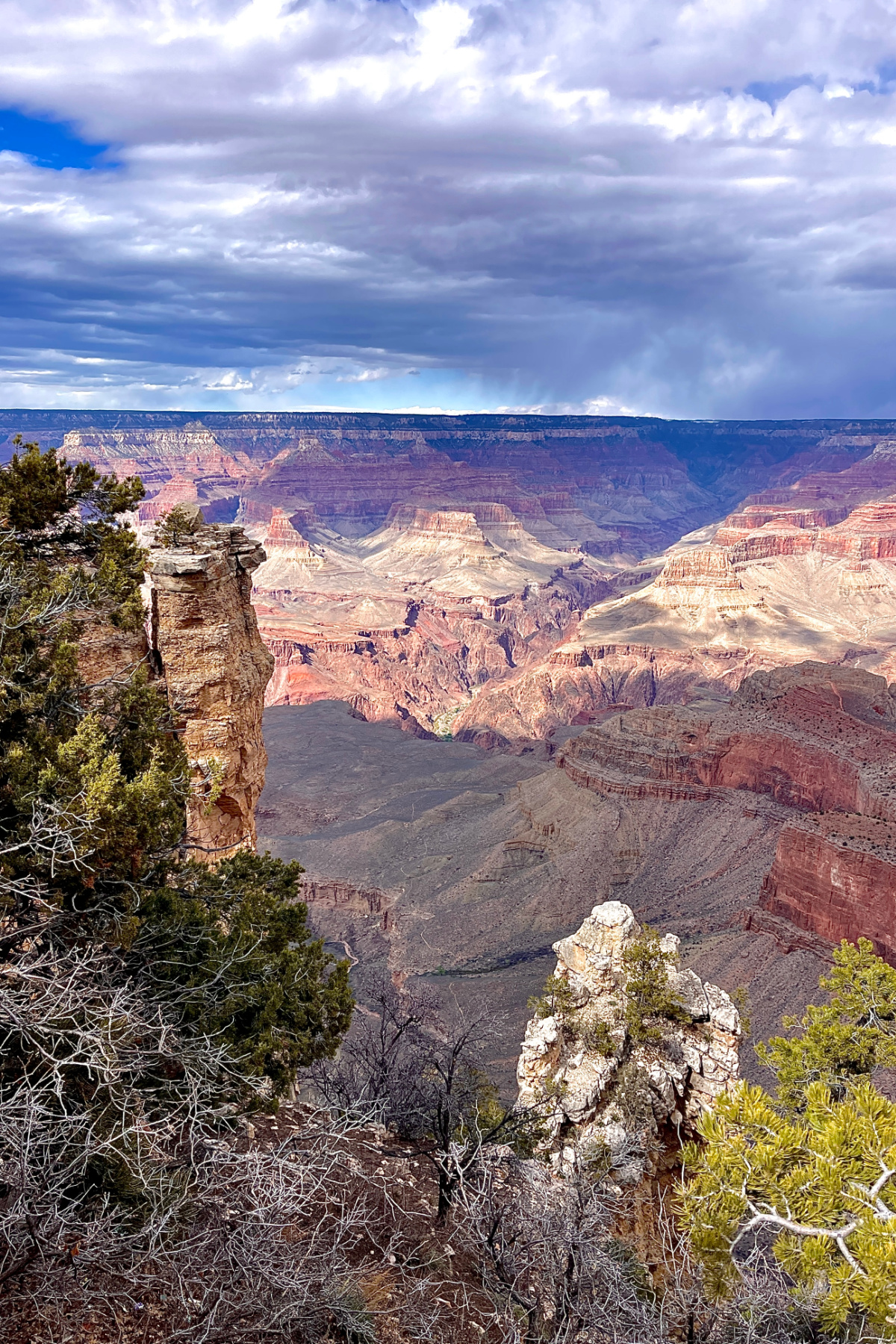
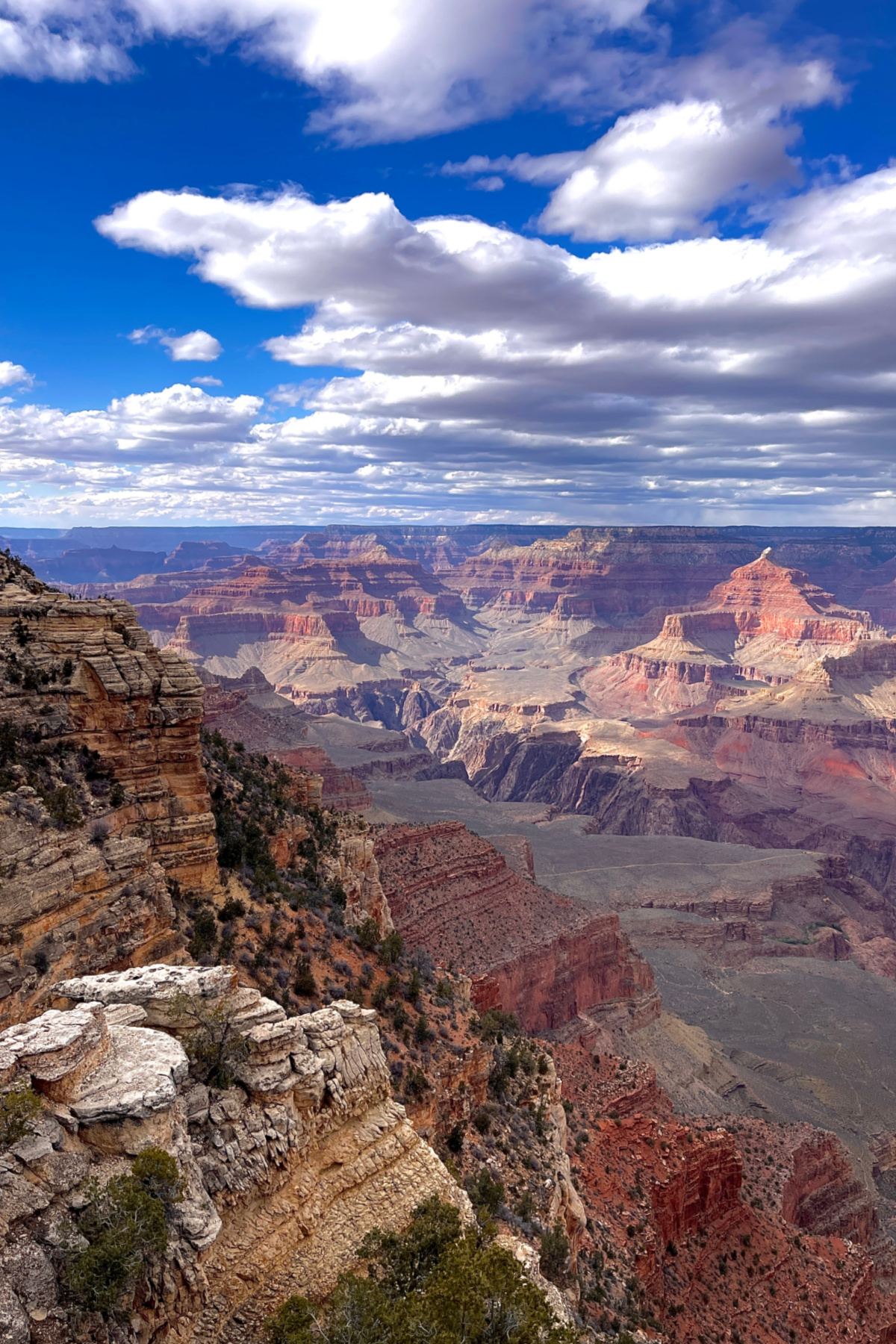
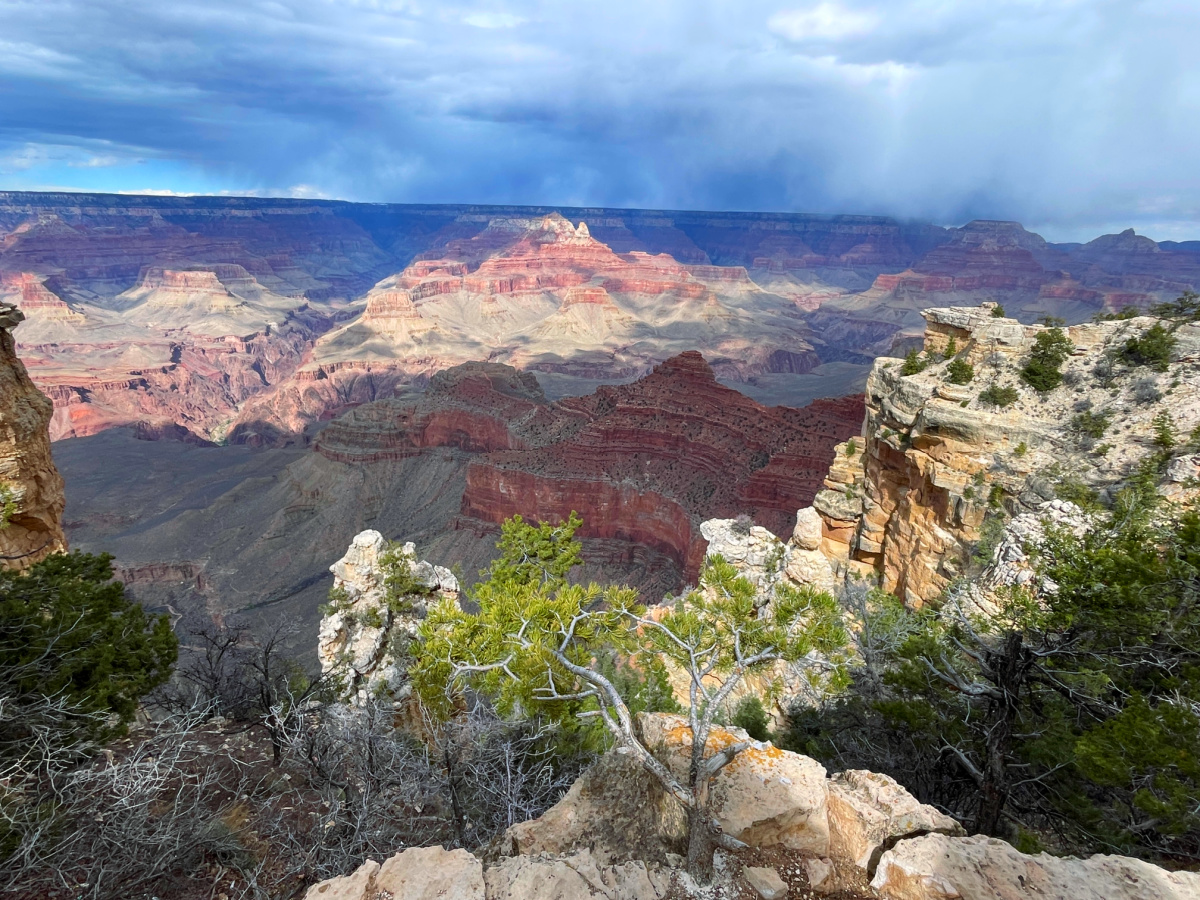
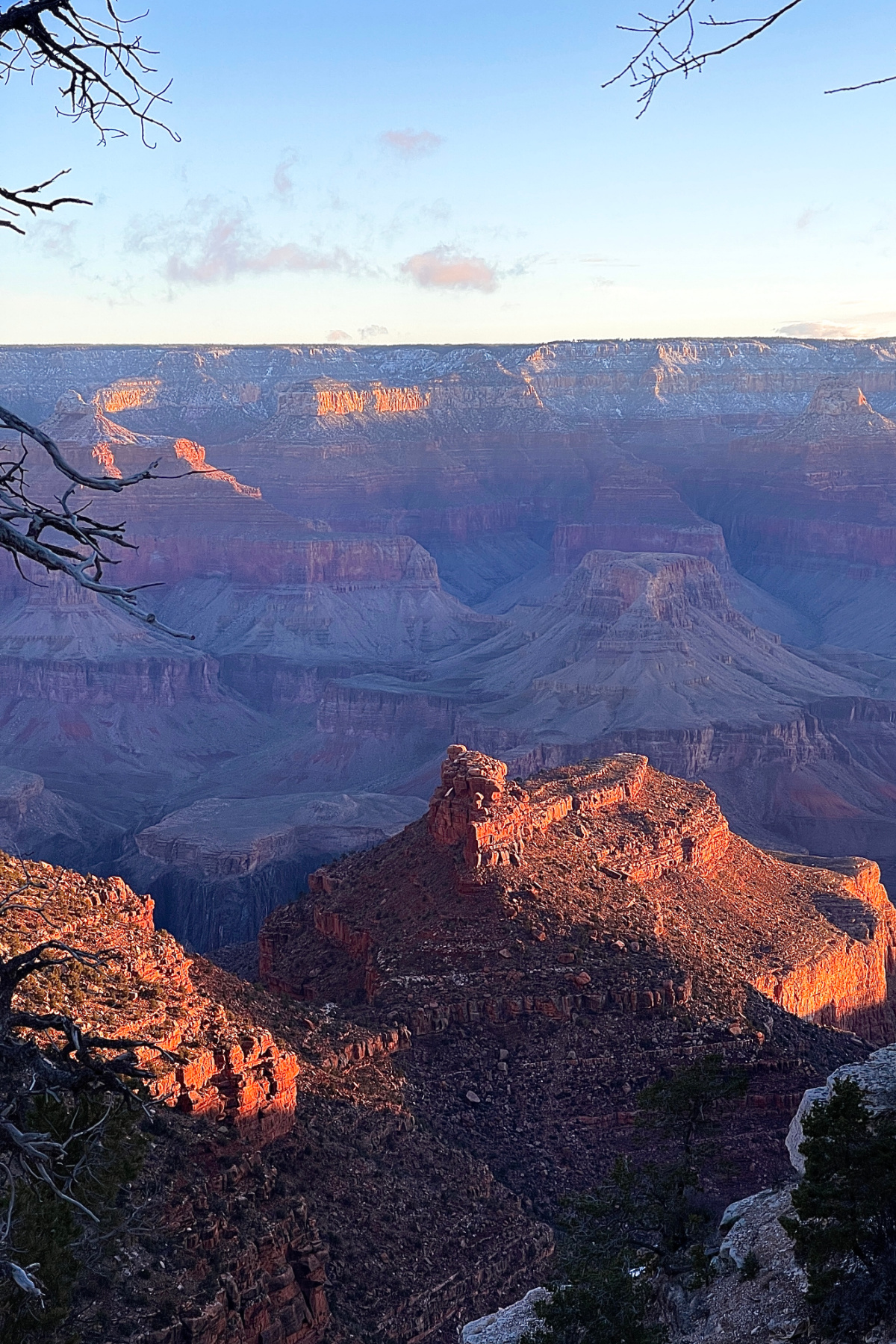
The canyon never seems to look quite the same twice. During our visit, we watched sunlight break through thick clouds and illuminate individual rock formations while everything around them remained in shadow. One minute the cliffs were brilliant shades of orange and red. A few minutes later, the light shifted, and the same formations looked completely different.
And that was before the snow showed up.
Our Very Unpredictable Spring Break Visit
We visited Grand Canyon National Park during spring break in March 2024, and the weather was all over the place.
When we first arrived, clouds were already rolling in. The canyon looked moody and dramatic, with patches of sunlight breaking through and lighting up random sections of the cliffs. We were able to enjoy the late afternoon and sunset before the weather really deteriorated.
Then we woke up to snow.
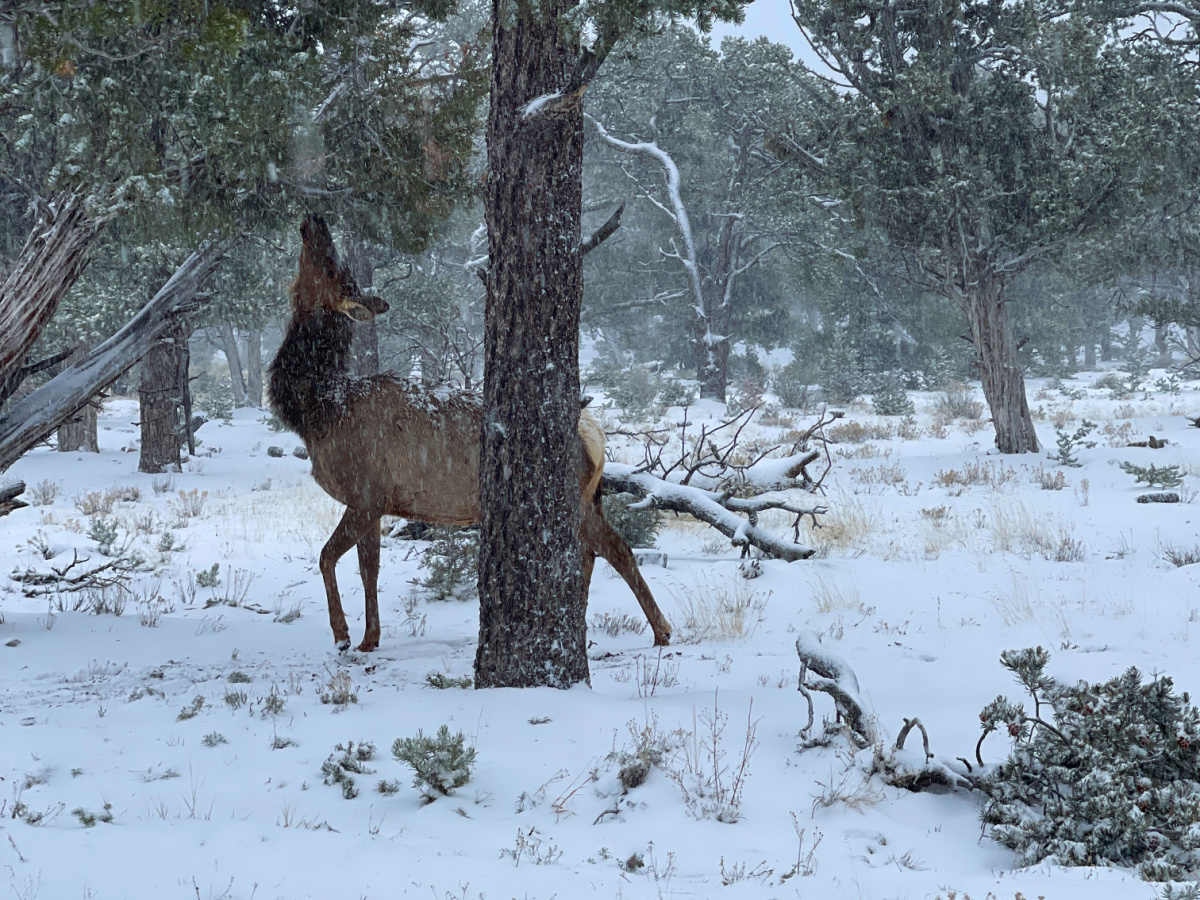
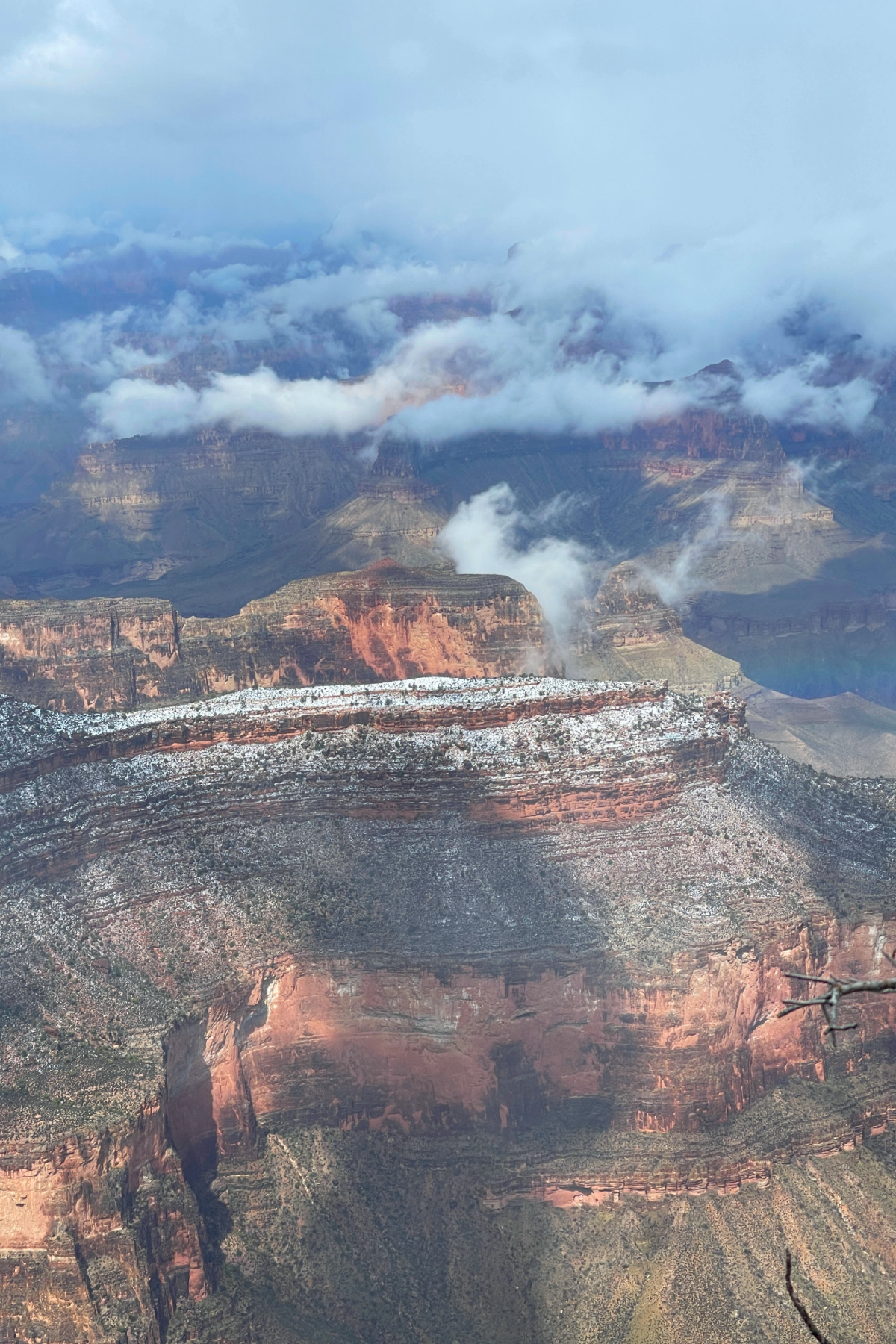
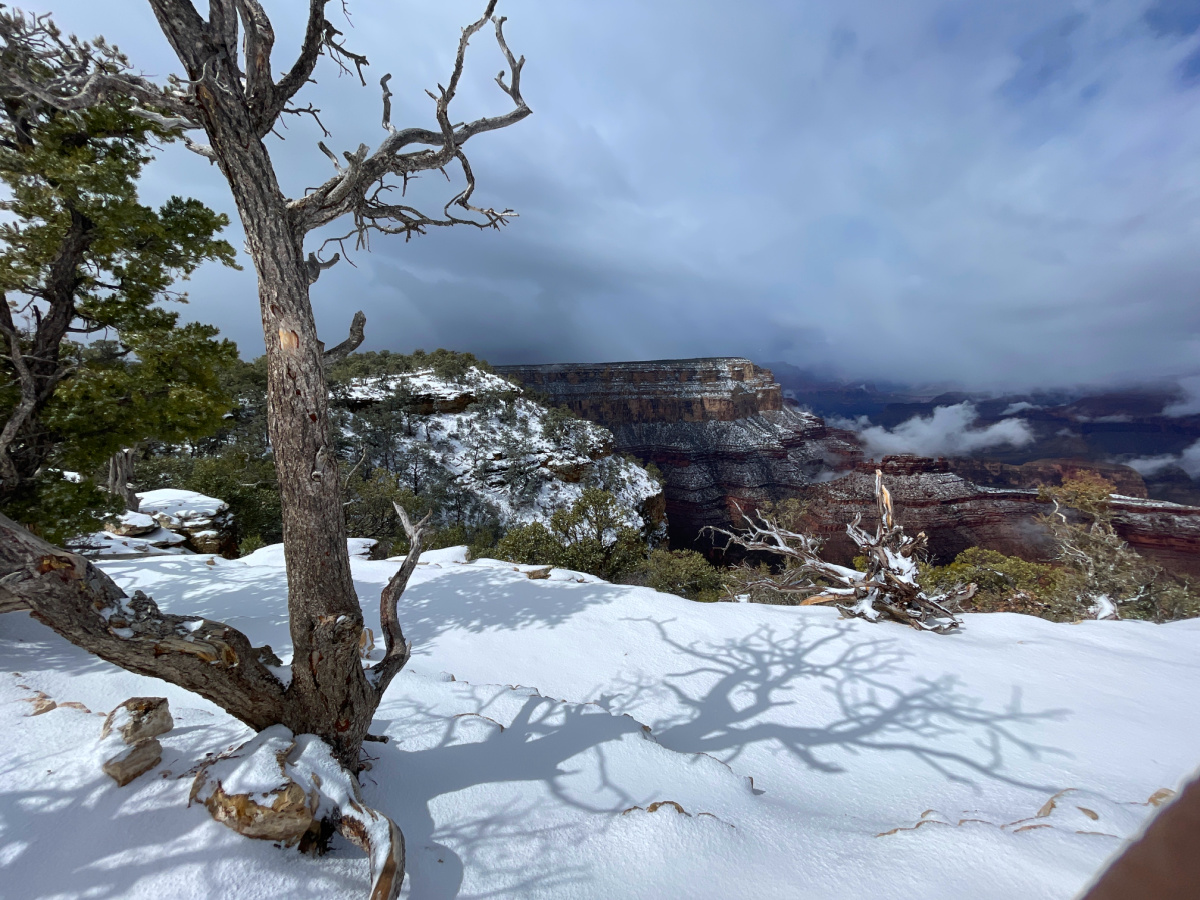
And not just a couple of random flakes. The rim, trees, walking paths, and rock ledges were covered.
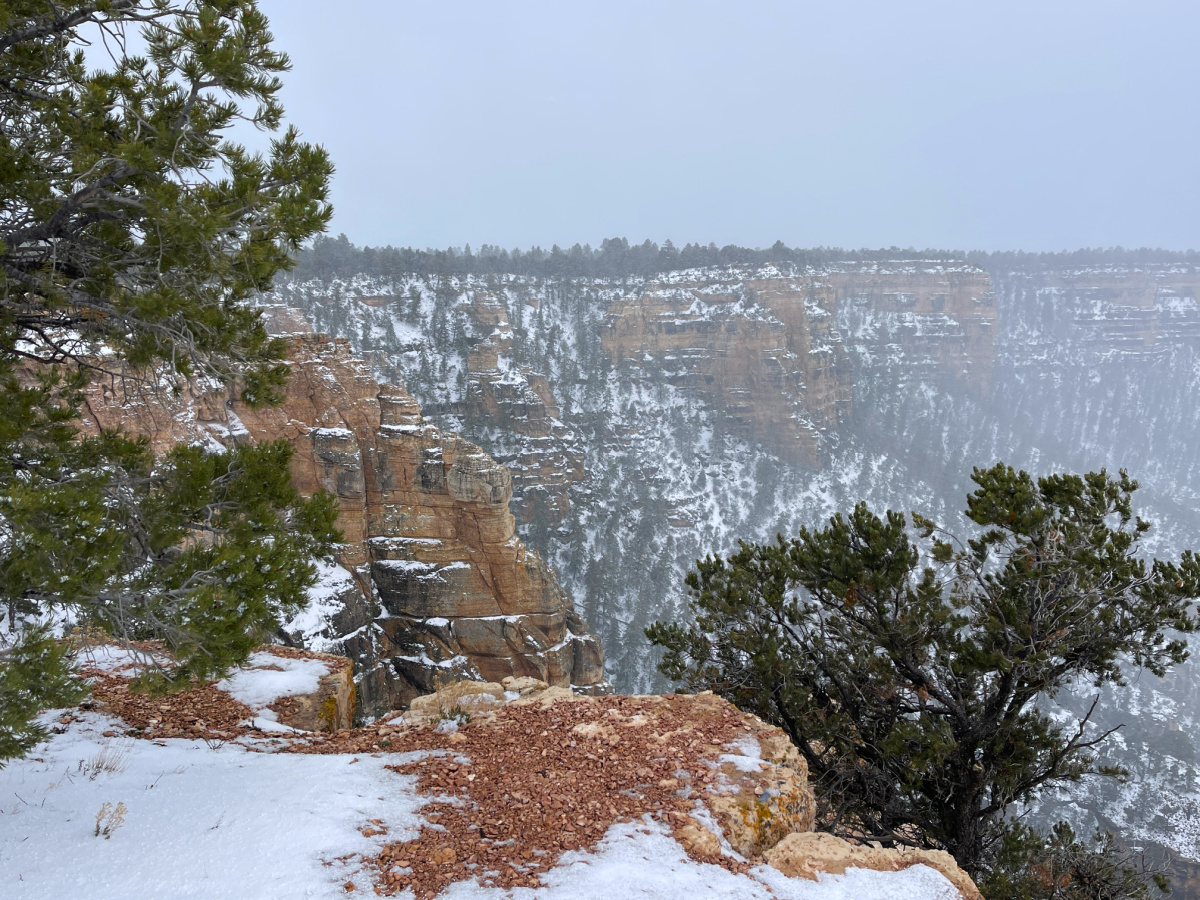
At times, the clouds were so thick that we could barely see across the canyon. Then they would start to lift, and enormous formations would appear out of the mist, with snow clinging to the rocks.
Honestly? It was pretty cool.
Inconvenient, yes. But beautiful.
The snowstorm canceled our scheduled helicopter tour. We didn’t get to explore as much of Desert View Drive as we’d planned. And the hike toward Ooh Aah Point was very much not happening.
But the weather definitely didn’t ruin our trip.
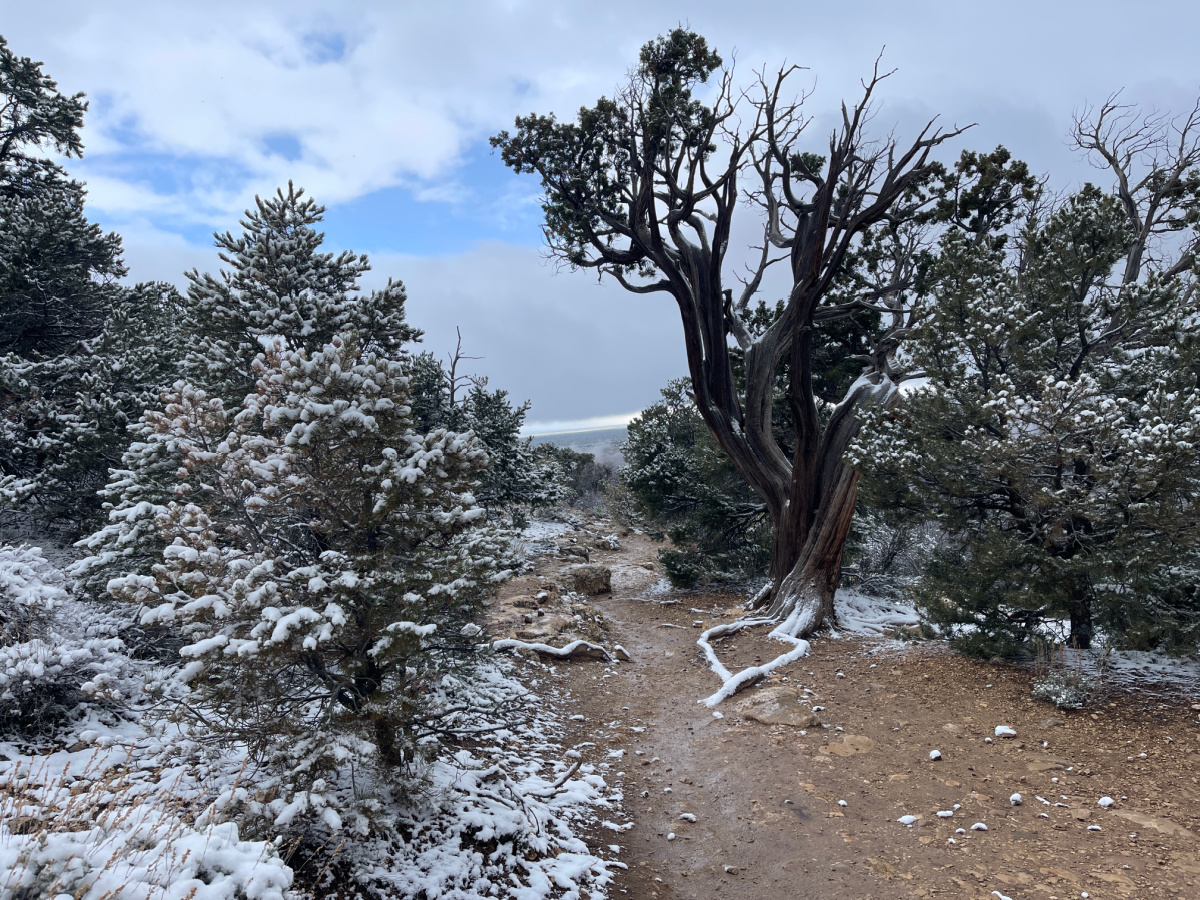
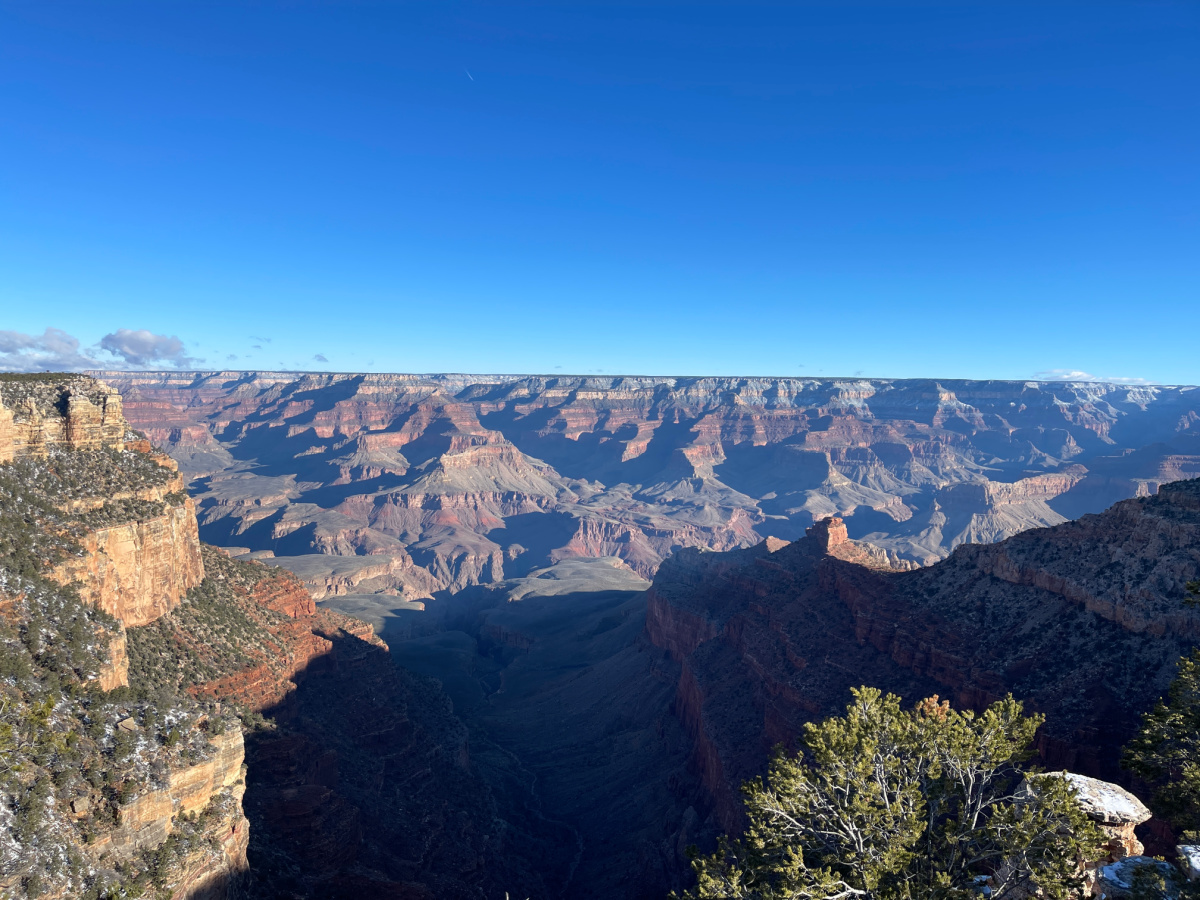
By the following day, the storm had moved out and we had sunshine and clear skies. Looking through my photographs now, you’d almost think we’d visited during completely different seasons.
Cloudy and dramatic one afternoon. Snowy the next day. Brilliant sunshine after that.
And each version of the canyon looked different.
How Much Time Do You Really Need at the Grand Canyon?
This is where I think there’s an interesting balance.
The Grand Canyon absolutely deserves time. But I also don’t think a casual visitor necessarily needs three or four full days here, particularly if you’re not planning to do serious hiking.
You can see a tremendous amount in one really good day.
Even better, I think an afternoon arrival followed by most of the next day gives you a great introduction to the South Rim.
You could arrive in the afternoon and explore the central part of the park around Mather Point and Grand Canyon Village. Have a nice dinner. Stay for sunset.
Then spend the night inside the park if you can.
Get up the next morning for sunrise, have breakfast, and head out toward Hermit Road. Spend a few hours exploring the western viewpoints before returning to the main part of the park.
From there, you have choices.
You could visit the Grand Canyon Visitor Center and Yavapai Geology Museum. You could take a helicopter tour. Or, if you’re feeling more energetic, you could hike down the South Kaibab Trail toward Ooh Aah Point and back.
Then, if your road trip is continuing toward Page or northeastern Arizona, you could leave through the East Entrance and stop at some of the viewpoints along Desert View Drive on your way out.
That’s a pretty fantastic Grand Canyon experience in roughly a day and a half.
And if you have more time? Great. Slow down. Add another scenic walk. Spend longer at the viewpoints. Enjoy another sunrise or sunset.
But I don’t think you need to turn the Grand Canyon into an endurance event to feel like you’ve experienced it.
Grand Canyon South Rim: What to Know Before You Go
The South Rim is the most developed part of Grand Canyon National Park and the area most first-time visitors choose.
It’s located in northern Arizona, about 90 minutes from Flagstaff and roughly four hours from Phoenix. Most visitors enter through the South Entrance near Tusayan, although there’s also an East Entrance near Desert View.
The South Rim is open year-round, unlike the North Rim, which has a more limited operating season.
A few practical things to know before your trip:
- How long should you stay? Half a day is enough to see a few major viewpoints. One full day is much better. Personally, I think an overnight stay with an afternoon and most of the following day is a sweet spot for casual visitors.
- Do you need reservations? You don’t need a timed-entry reservation to visit the South Rim. If you want to stay inside the park, however, I’d book your hotel as early as possible.
- How much does it cost? The standard entrance fee is $35 per private vehicle for seven days.
- Can you visit without hiking? Absolutely. Many overlooks are close to parking areas or shuttle stops, and there are easy sections of the Rim Trail.
- Do you need a car? Not for everything. Free shuttle buses connect many of the main areas. You’ll generally want your own vehicle for Desert View Drive.
And don’t forget that the South Rim sits at approximately 7,000 feet above sea level.
That matters more than you might think.
Yes, It Can Snow at the Grand Canyon
Arizona does not automatically equal warm weather.
Especially not at 7,000 feet.
We obviously learned that lesson during our March trip, but even outside the winter months, temperatures at the South Rim can be considerably cooler than they are in places like Phoenix.
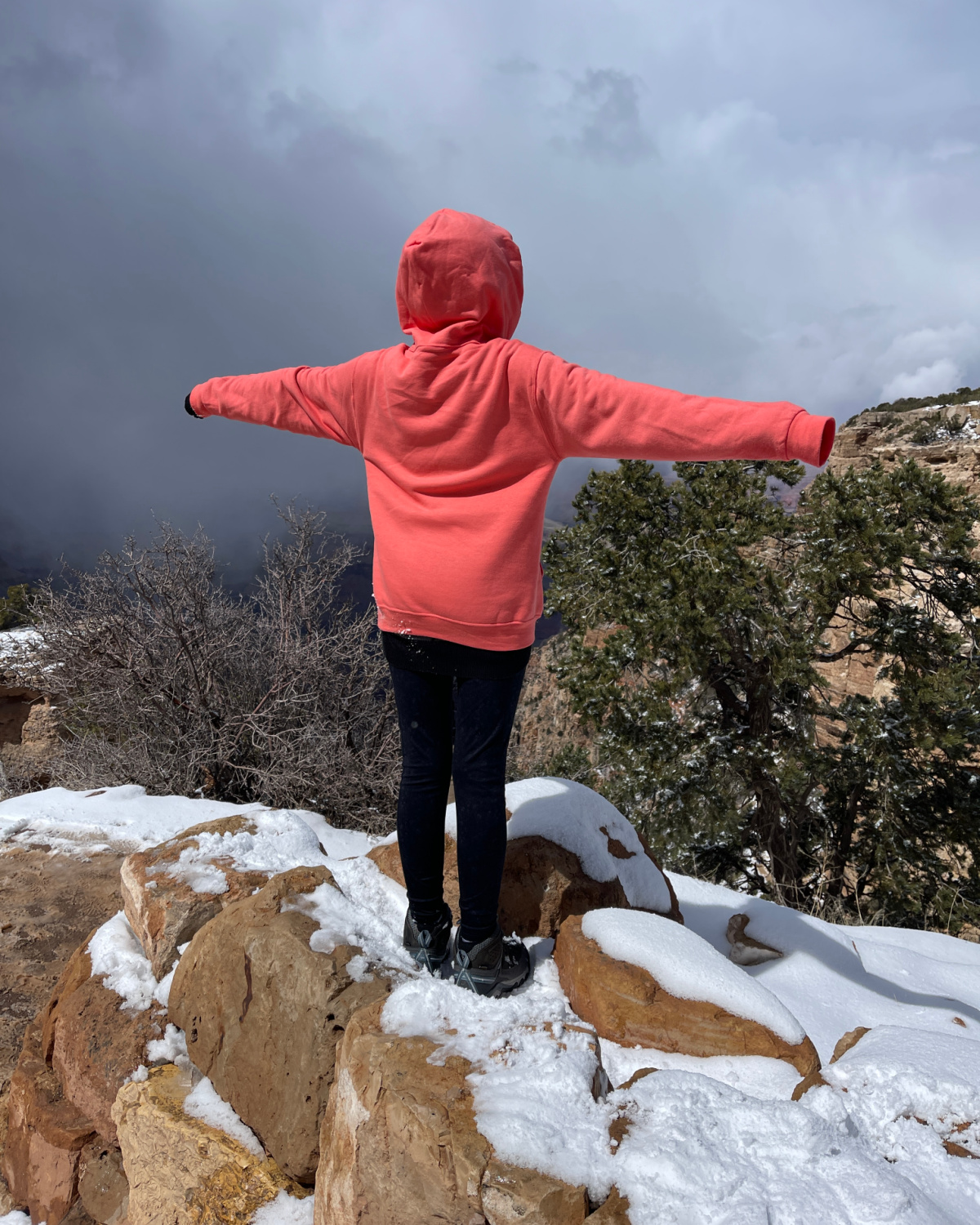
Bring layers. Pay attention to the forecast. And if you’re visiting in winter or early spring, keep an eye on road conditions.
Snow and ice can affect roads, trails, and walking paths around the rim.
The elevation can also make ordinary walking feel a little more strenuous. You don’t necessarily have to be hiking to notice it.
Take your time, drink water, and don’t feel like you need to race from viewpoint to viewpoint.
Honestly, racing around would defeat part of the purpose anyway.
Understanding the Grand Canyon South Rim
One of the more confusing parts of planning a Grand Canyon trip is figuring out where everything actually is.
The South Rim isn’t one compact visitor area.
There are viewpoints scattered for miles along the canyon. There are historic buildings, visitor centers, museums, hotels, and two major scenic corridors. Some places are easy to reach by car. Others are primarily accessed by shuttle bus.
For planning purposes, I think it helps to divide the South Rim into four main areas:
- Grand Canyon Visitor Center, Mather Point, and Yavapai Point
- Grand Canyon Village and the historic district
- Hermit Road and the western viewpoints
- Desert View Drive and the eastern viewpoints
Once you understand those four areas, the park starts making a lot more sense.
Grand Canyon Visitor Center, Mather Point, and Yavapai Point
For most first-time visitors, this is the obvious place to start.
The Grand Canyon Visitor Center has several large parking lots nearby, along with restrooms, park information, and shuttle stops. Mather Point is just a short walk away.
And what an introduction.
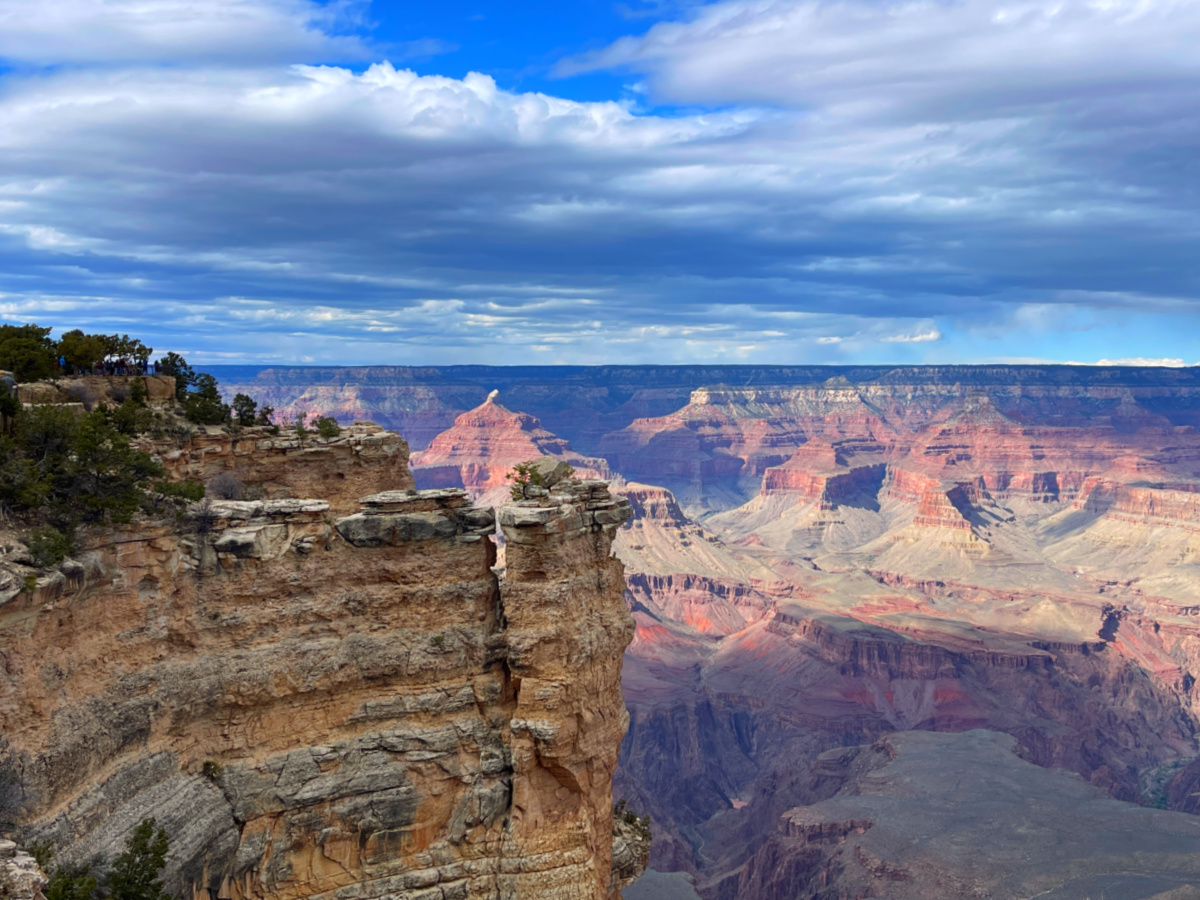
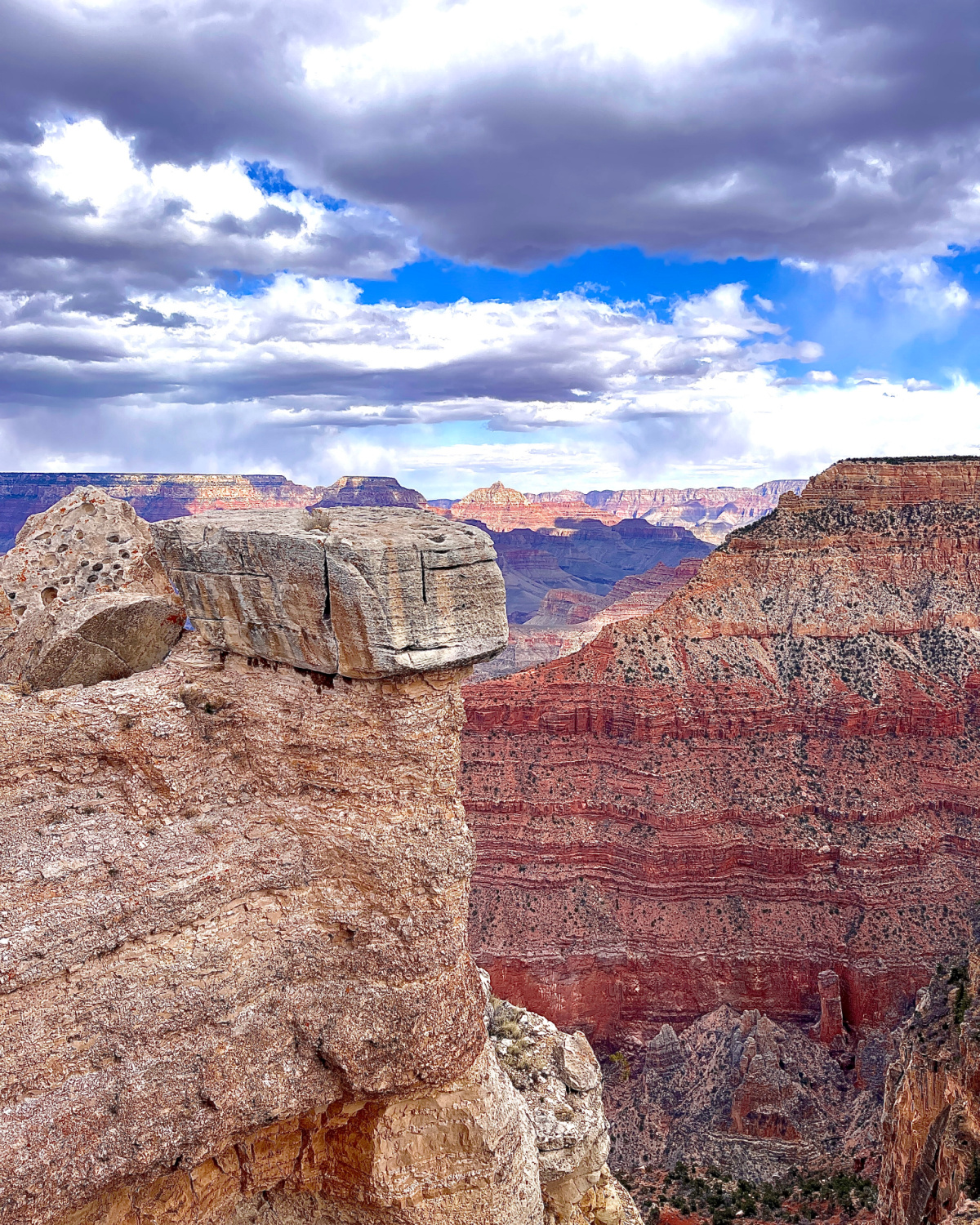
The thing I notice most when I look back at our photographs is how many layers there are. Huge cliffs in the foreground. Flat-topped mesas farther away. Narrow ridges, deep side canyons, and rock formations piled behind other rock formations.
And then more canyon behind all of that.
In several photographs, you can see people standing at viewpoints in the distance. They’re absolutely tiny.
That gives you a better sense of scale than almost anything else.
Mather Point is popular, obviously, but I wouldn’t simply walk out, snap a picture, and leave.
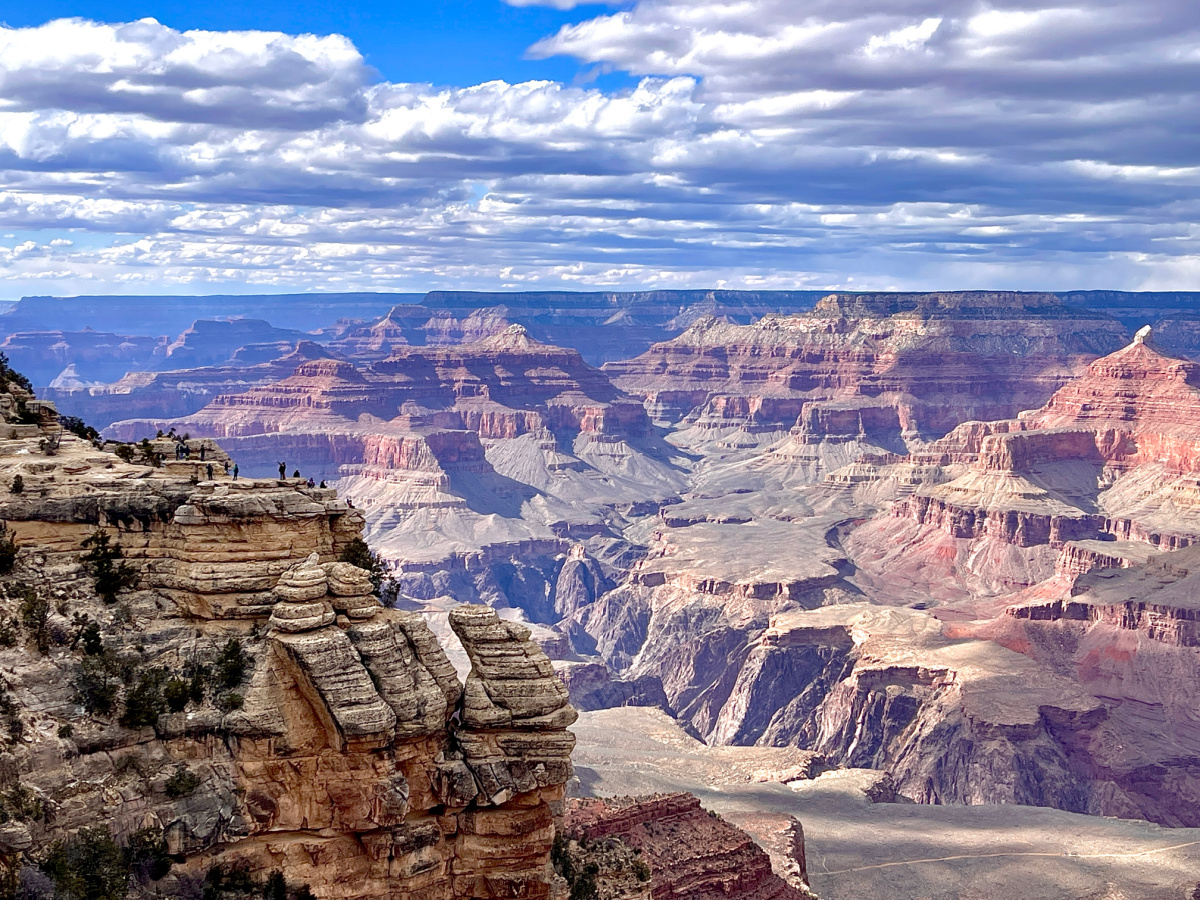
You can continue along the Rim Trail toward Yavapai Point and get slightly different views without taking on anything remotely resembling a serious hike.
Make Time for Yavapai Geology Museum
I would also stop at Yavapai Geology Museum while you’re in this part of the park.
We spent some time looking through the exhibits, including a large three-dimensional model of the canyon and its geological layers.
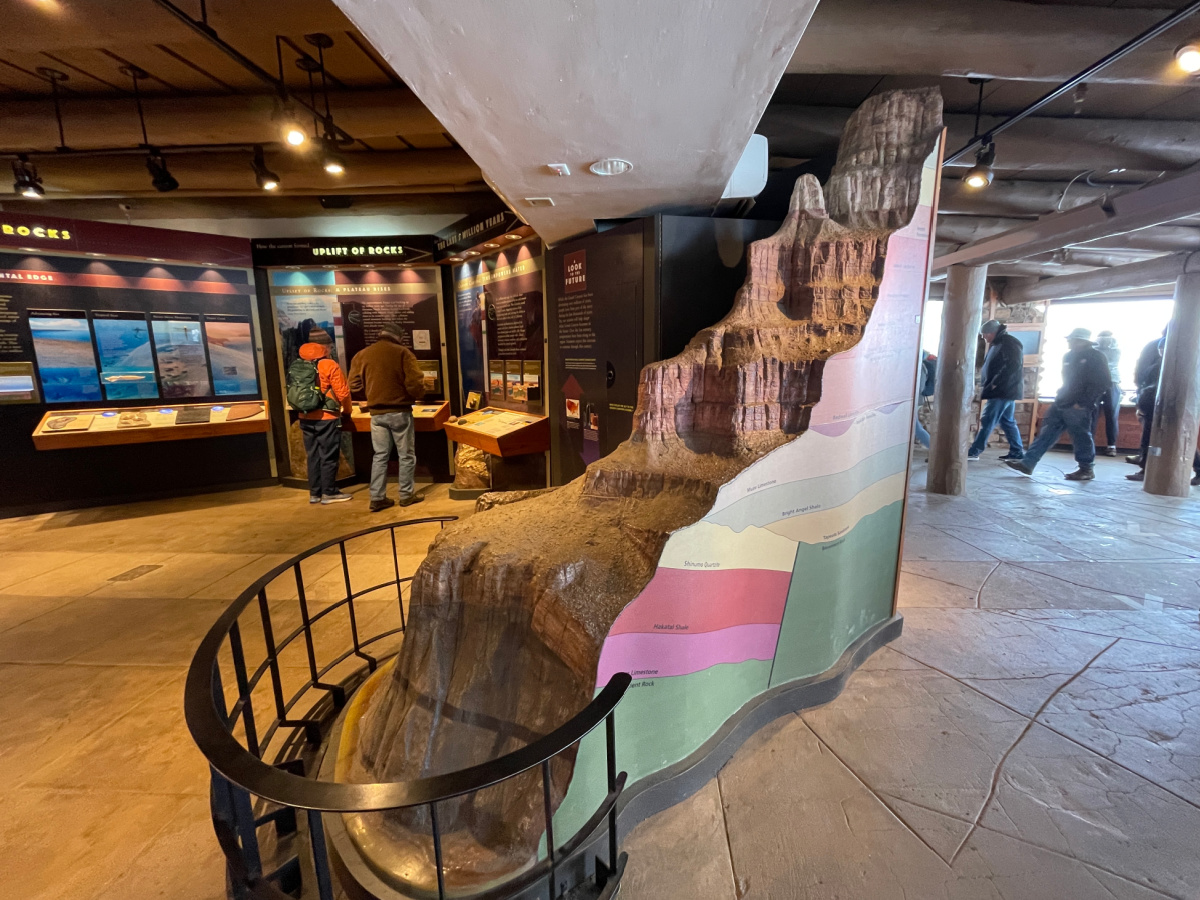
It’s one thing to look at all those reds, oranges, browns, and creams from the rim. It’s another to start understanding just how old the different layers are and how the canyon came together.
The museum isn’t huge, so this doesn’t need to be a major time commitment.
And if the weather is cold, windy, rainy, or snowy?
Even better. Go inside for a while.
I’d also check the schedule for ranger programs. We saw information about geology talks and other activities during our visit, and those can be an easy way to add something educational without devoting half your day to it.
For visitors with only a few hours at the Grand Canyon, the Mather Point/Yavapai area would be one of my top priorities.
Grand Canyon Village and the Historic District
Grand Canyon Village feels completely different from the main visitor center area.
This is the historic heart of the South Rim, with hotels, restaurants, shops, the Bright Angel Trailhead, and some wonderful old buildings.
And I love historic national park buildings.
El Tovar Hotel is probably the most famous. It opened in 1905 and sits right along the rim.
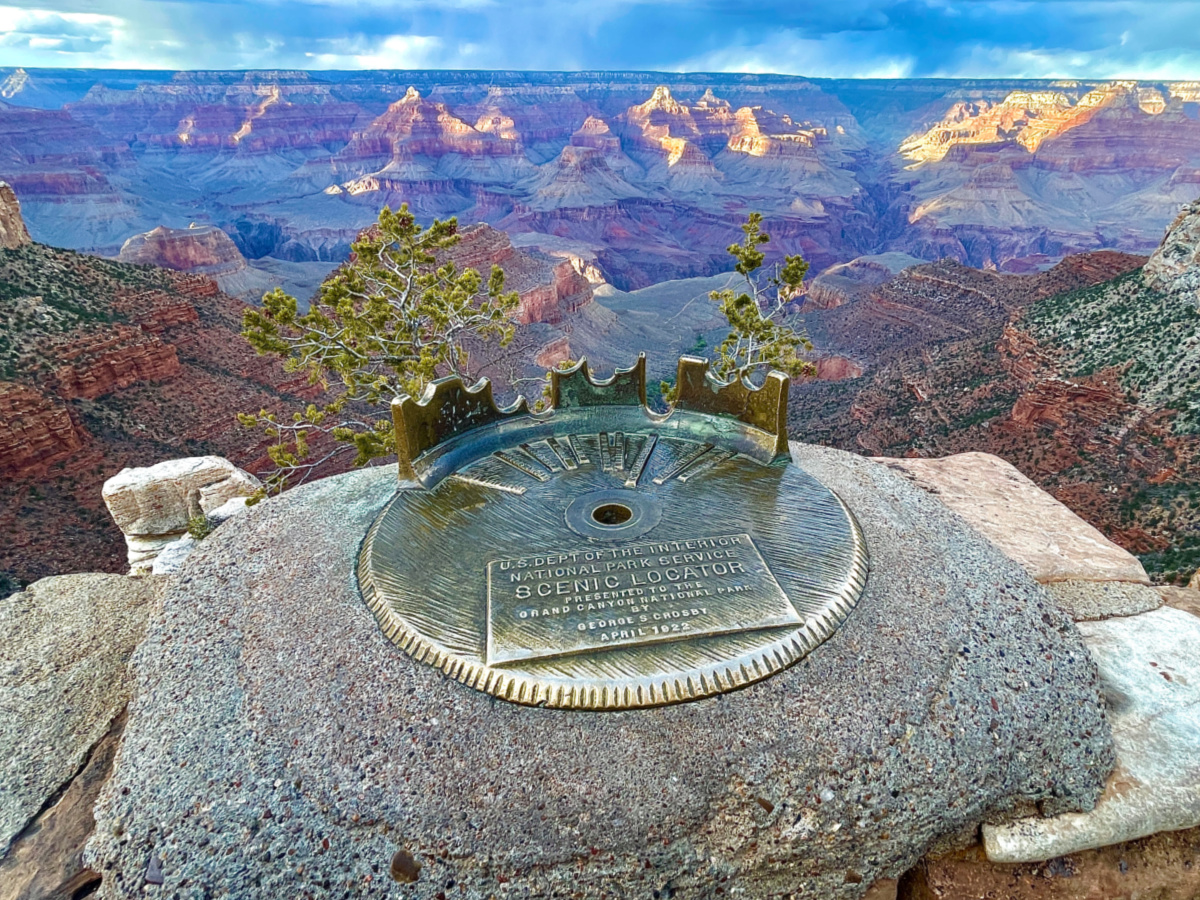
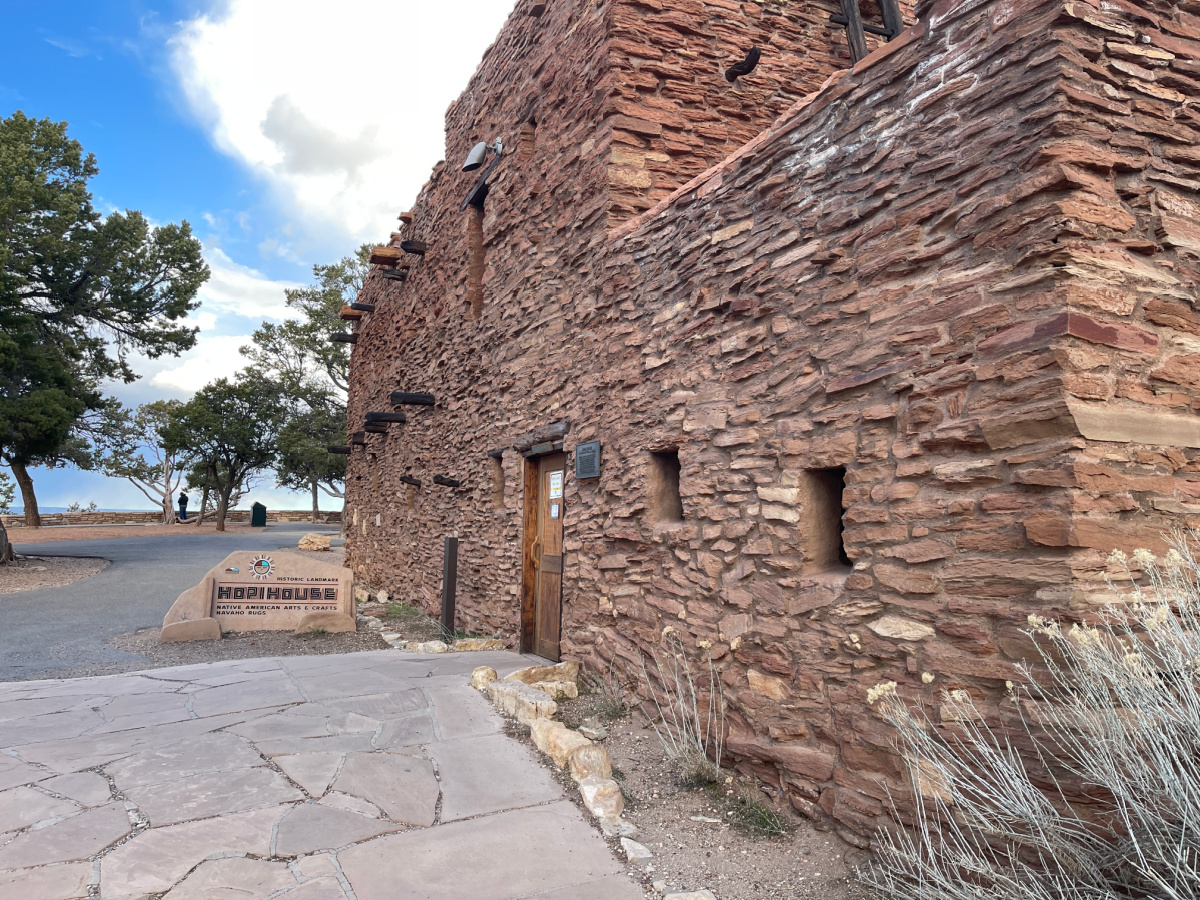
Nearby you’ll find Bright Angel Lodge, Hopi House, and Lookout Studio. Several of the buildings in this part of the park are associated with architect Mary Colter, whose work you’ll see in multiple places around the Grand Canyon.
The stonework, heavy timbers, and rustic architecture just fit here.
Even if you’re not spending the night, Grand Canyon Village is worth wandering around for a while.
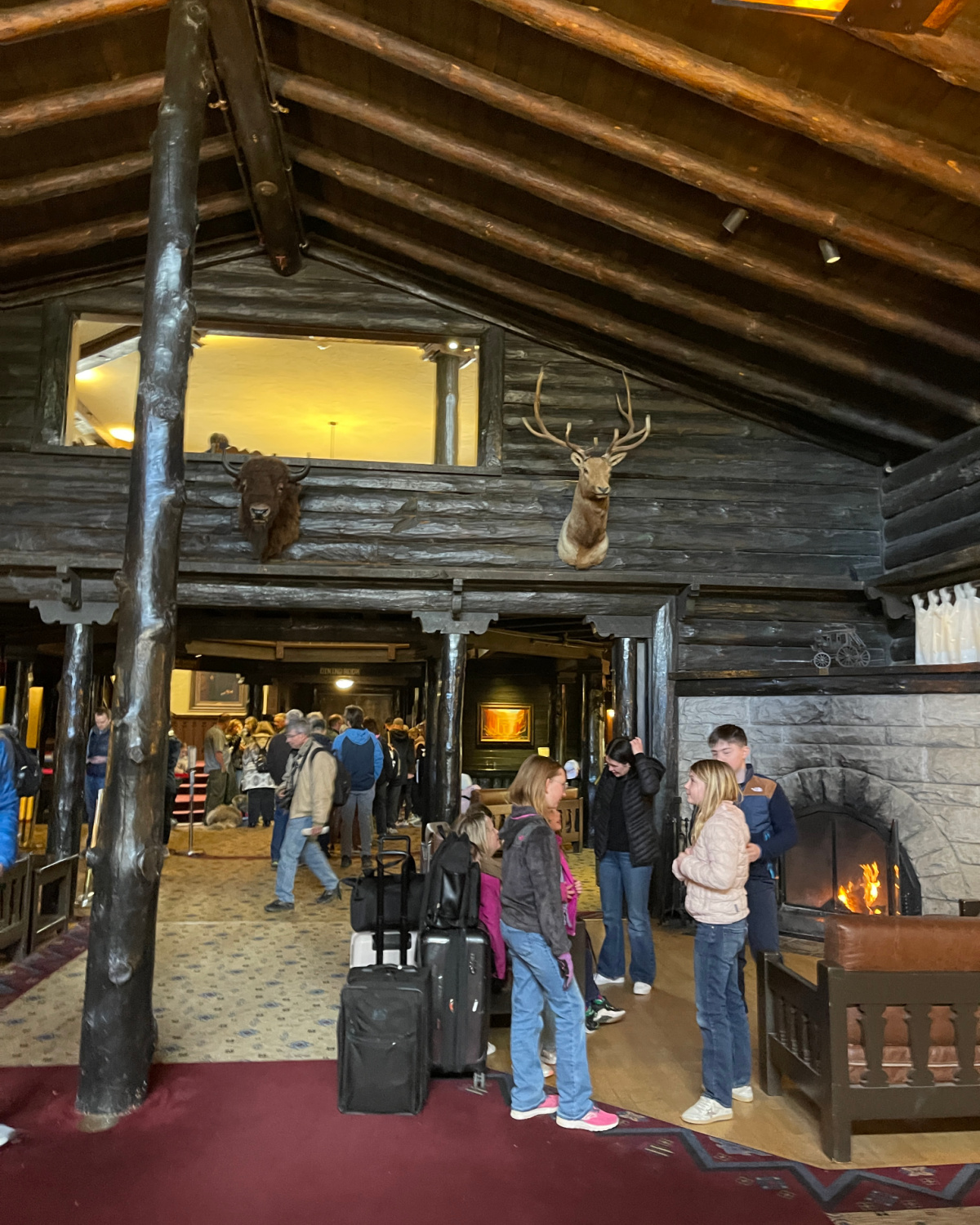
Grab something to eat. Look inside the historic buildings. Browse the shops. Walk along the rim.
You can also stop by the Bright Angel Trailhead and see where one of the most famous Grand Canyon trails begins without having any intention whatsoever of hiking down it.
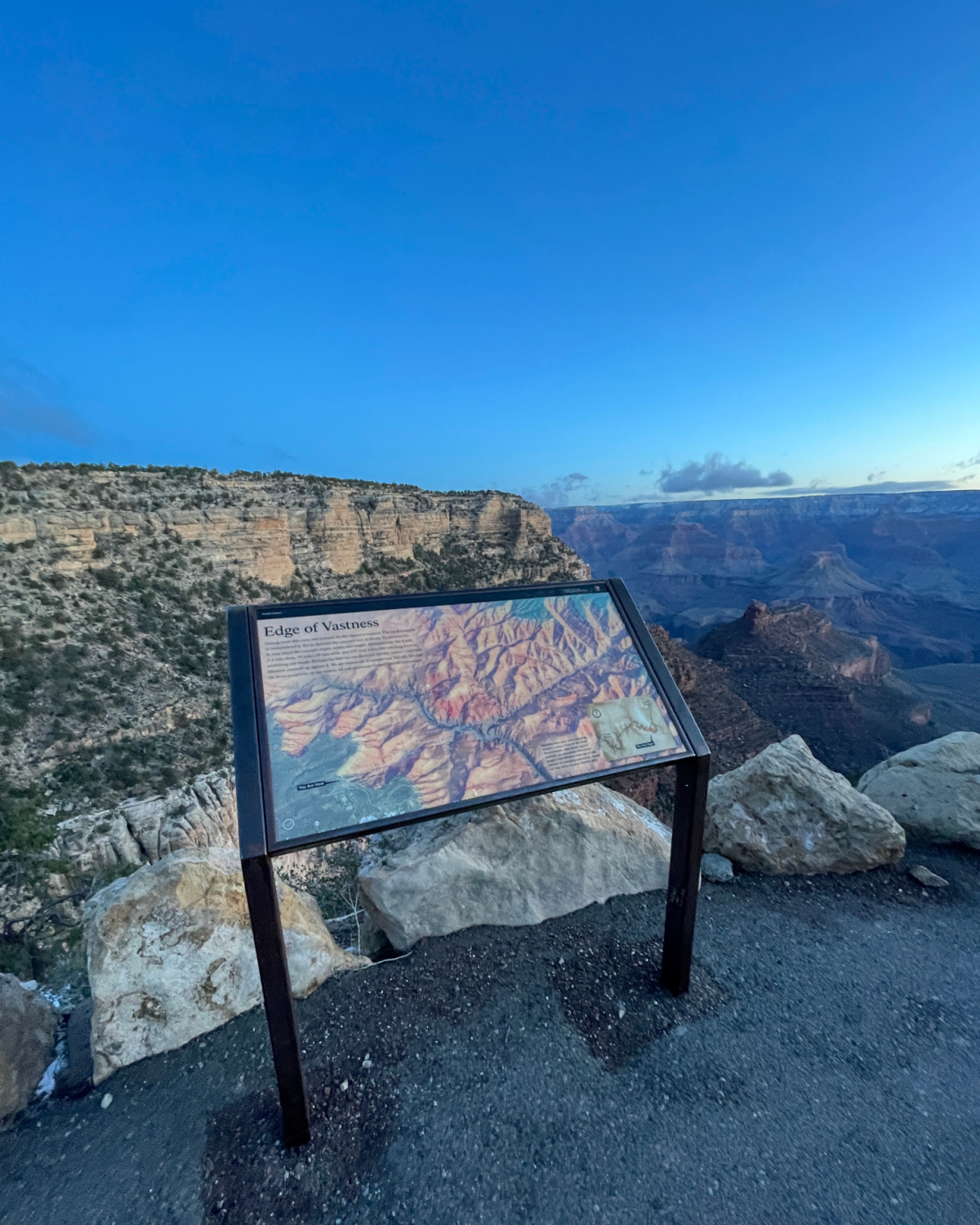
Why Staying Inside the Park Is Worth Considering
We stayed at Maswik Lodge, which is within walking distance of the main village area.
I was already happy with that choice before the snowstorm.
After the snowstorm arrived? I was really happy with that choice.
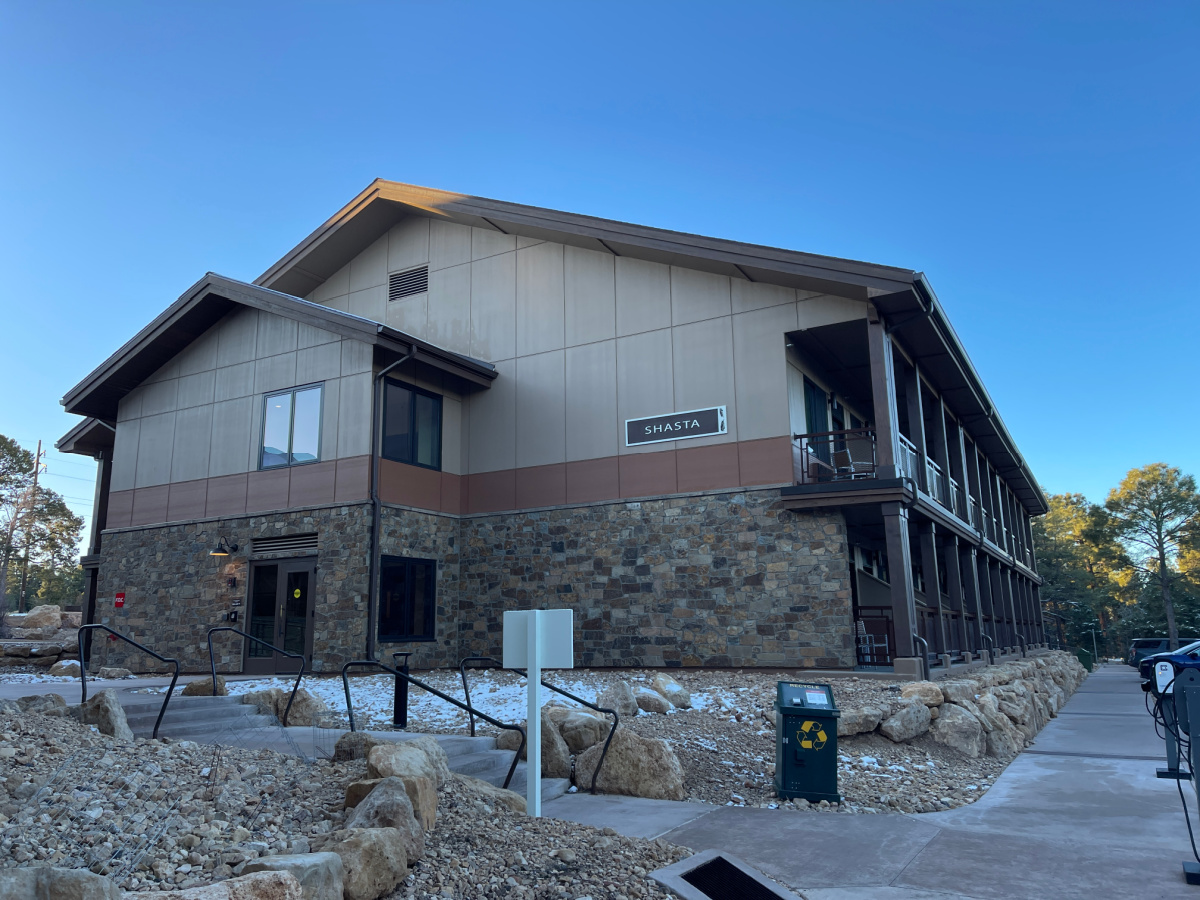
We didn’t have to drive back and forth to Tusayan every time we wanted to go somewhere. If the weather got nasty, we could head back to our room. When conditions improved, we could go back out again.
And staying inside the park made getting up for sunrise much easier.
That alone is a pretty compelling reason to stay here if your budget allows.
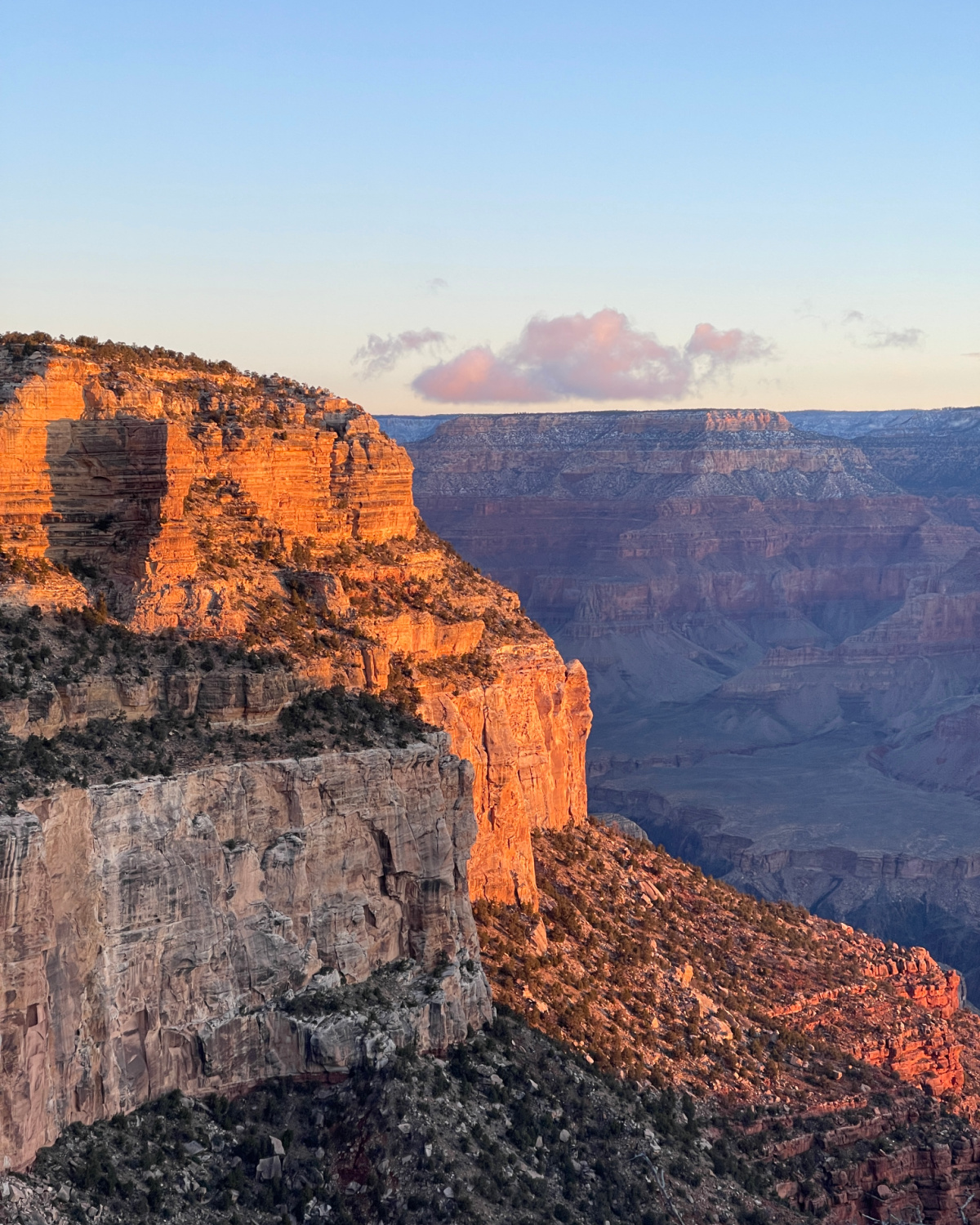
I’ll cover Maswik Lodge and the other lodging options separately, but for a relatively short Grand Canyon visit, location really does matter.
You Can Even Arrive at the Grand Canyon by Train
Grand Canyon Village is also home to the historic Grand Canyon Railway Depot.
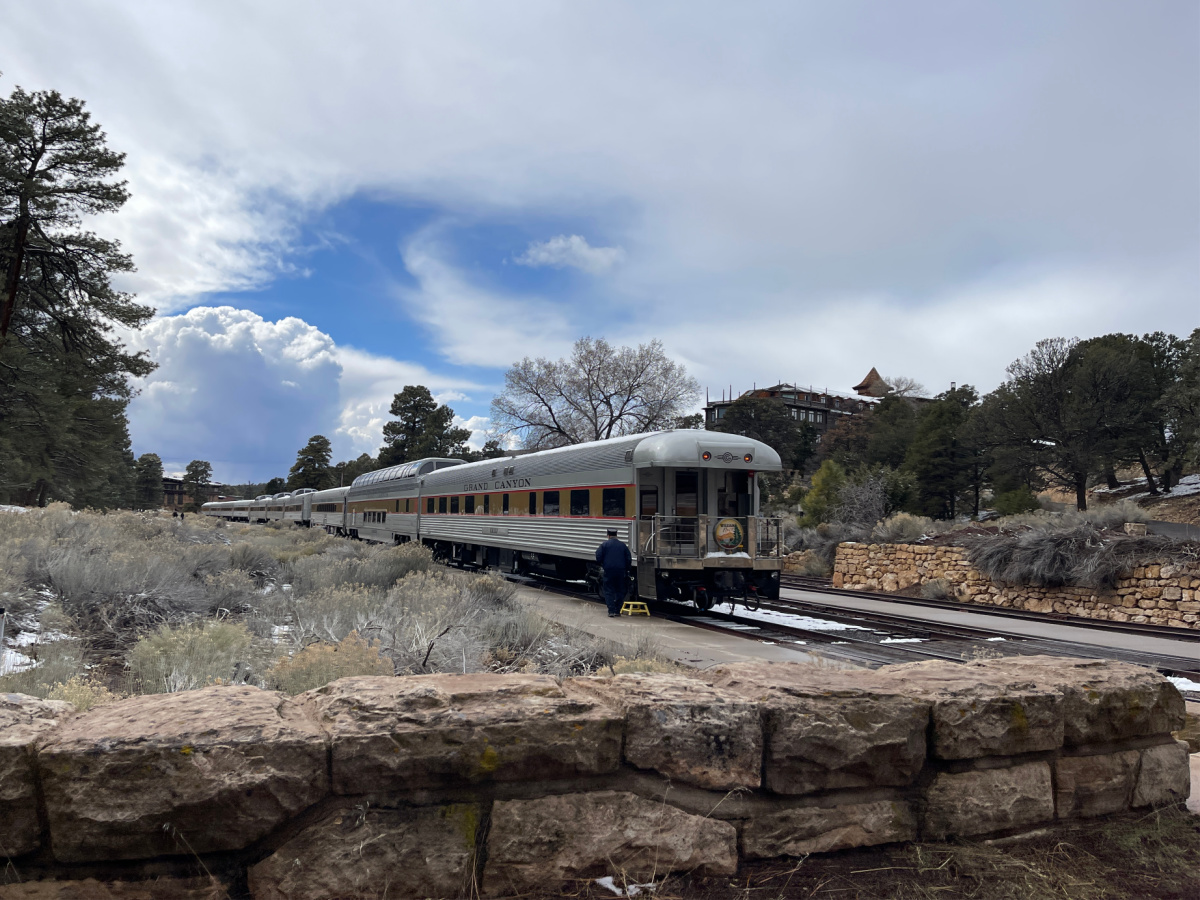
We didn’t take the train, but we did see it during our visit. I have a photograph of the long silver passenger cars sitting along the tracks, which is pretty fun.
The Grand Canyon Railway runs between Williams and Grand Canyon Village.
For some travelers, particularly families or anyone who doesn’t want to deal with driving into the park, arriving by train could be a great part of the experience.
It’s not something you need to do to enjoy the Grand Canyon, obviously. But it’s another example of how much more there is here than simply pulling up to an overlook.
Hermit Road and the Western Viewpoints
Hermit Road begins west of Grand Canyon Village and follows the rim for approximately seven miles before reaching Hermits Rest.
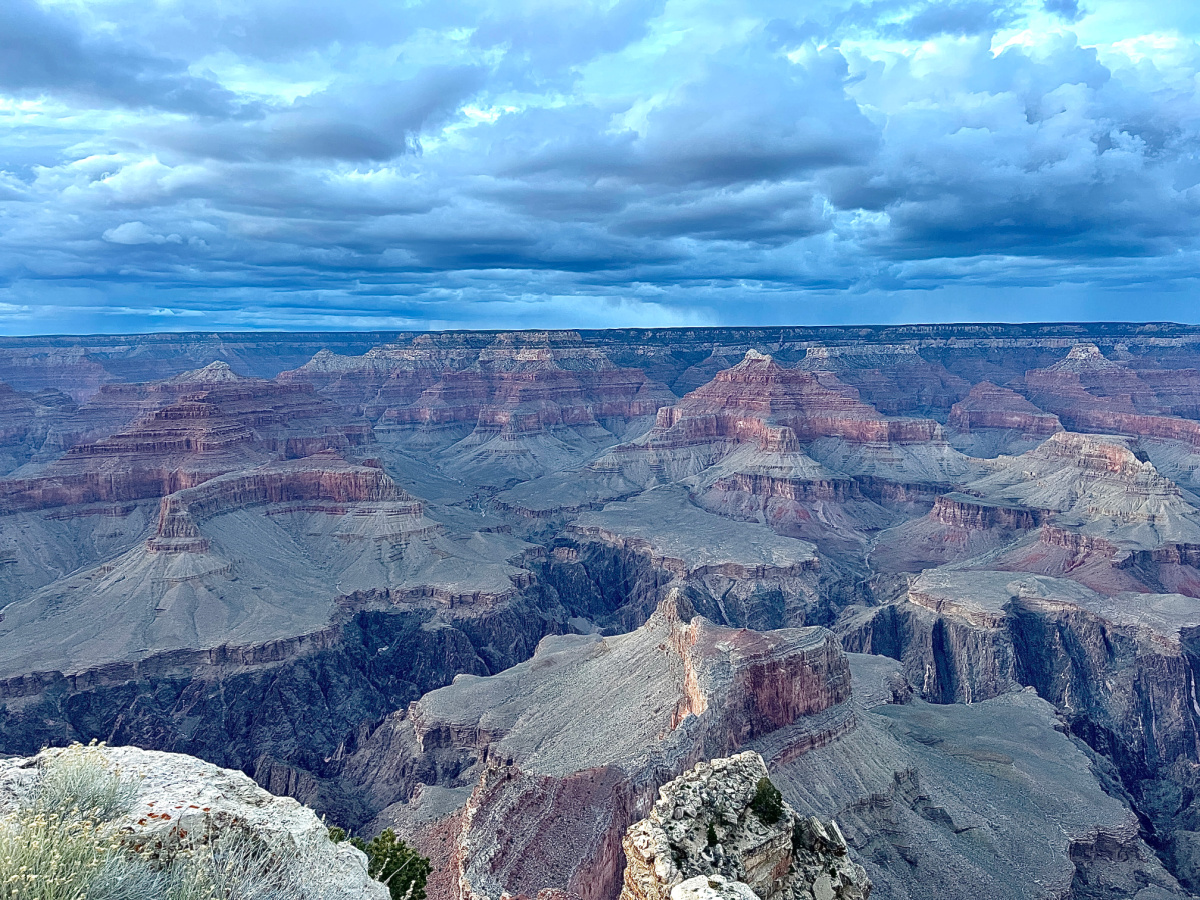
Along the way are several scenic overlooks, including Hopi Point, Mohave Point, and Pima Point.
This is where the changing perspective of the Grand Canyon becomes really obvious.
You might think one overlook would start looking pretty much like another.
Not really.
At one viewpoint, you may be looking across a huge open expanse filled with flat-topped formations. Somewhere else, the cliffs feel closer and steeper.
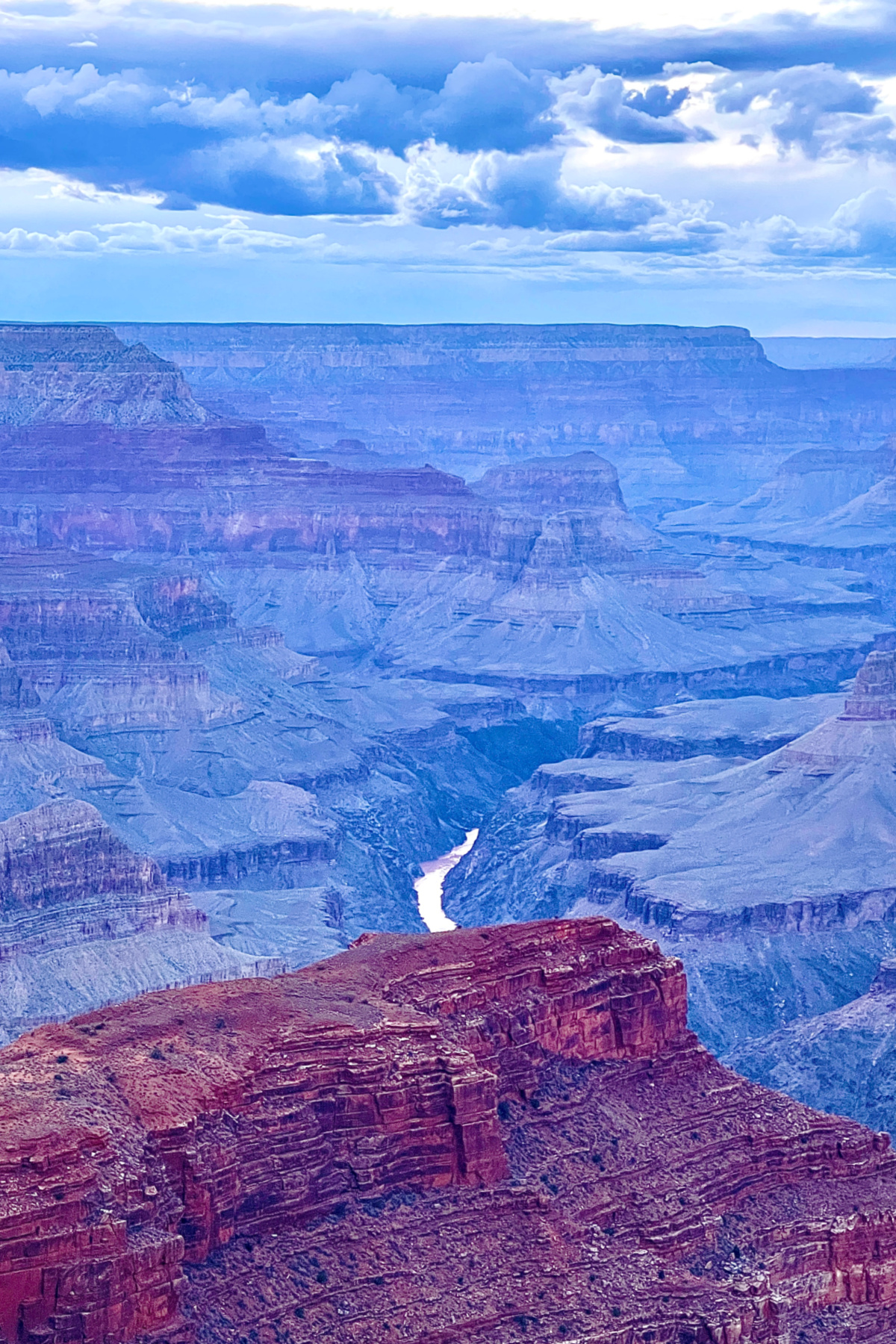
At certain viewpoints, you can even see the Colorado River far below.
And that’s surprisingly exciting, because the river can be pretty elusive from the rim.
How Hermit Road Works
For much of the year, you can’t drive your own vehicle along Hermit Road.
From March through November, visitors generally use the free Red Route shuttle.
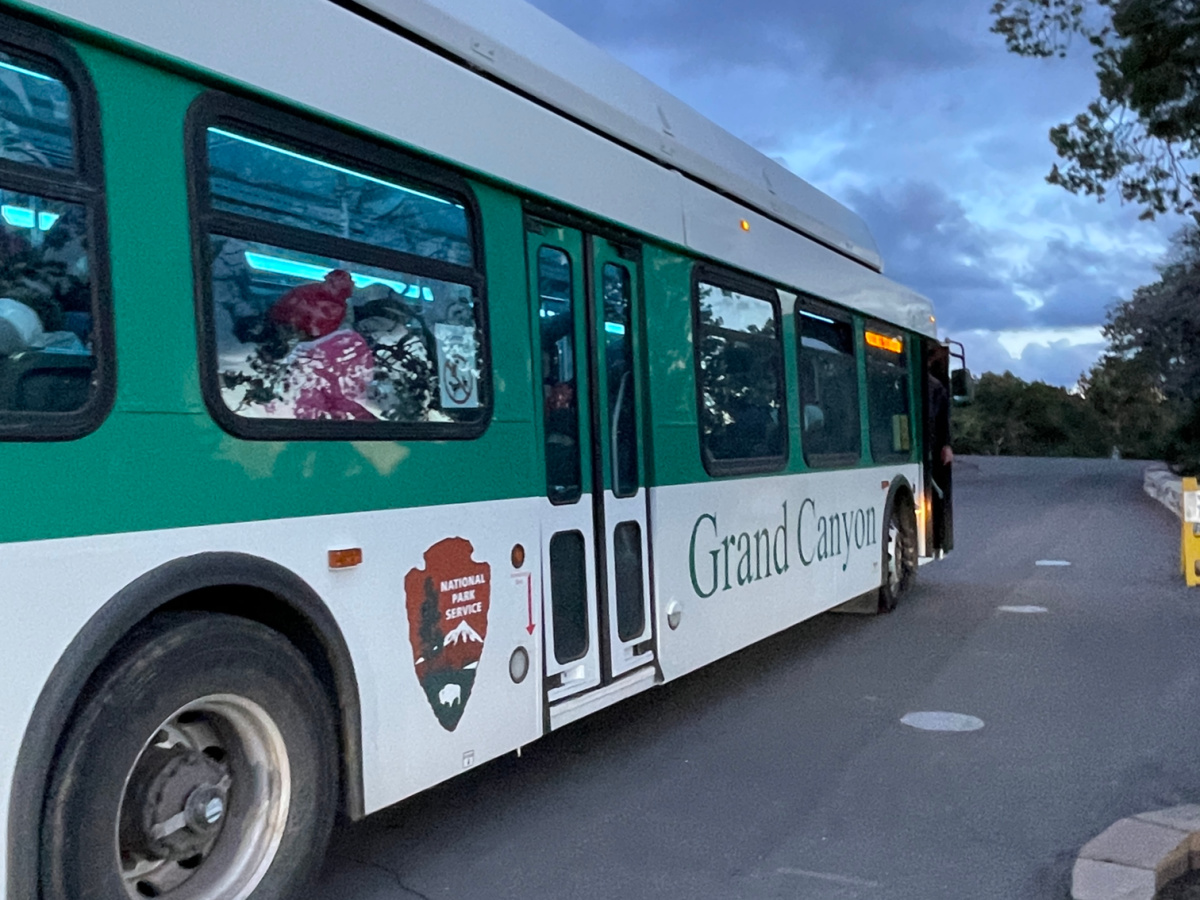
The basic idea is simple: ride the bus, get off at whichever overlooks interest you, enjoy the scenery, and catch another shuttle when you’re ready to move on.
You can also walk between certain viewpoints along sections of the Rim Trail.
I wouldn’t feel obligated to stop at every single overlook.
Pick several that interest you and spend enough time at each one to actually enjoy it.
The shuttle ride itself takes roughly 80 minutes round trip without getting off, so Hermit Road can easily take up a good portion of a morning or afternoon.
Hermits Rest
At the western end of Hermit Road is Hermits Rest, another Mary Colter-designed building.
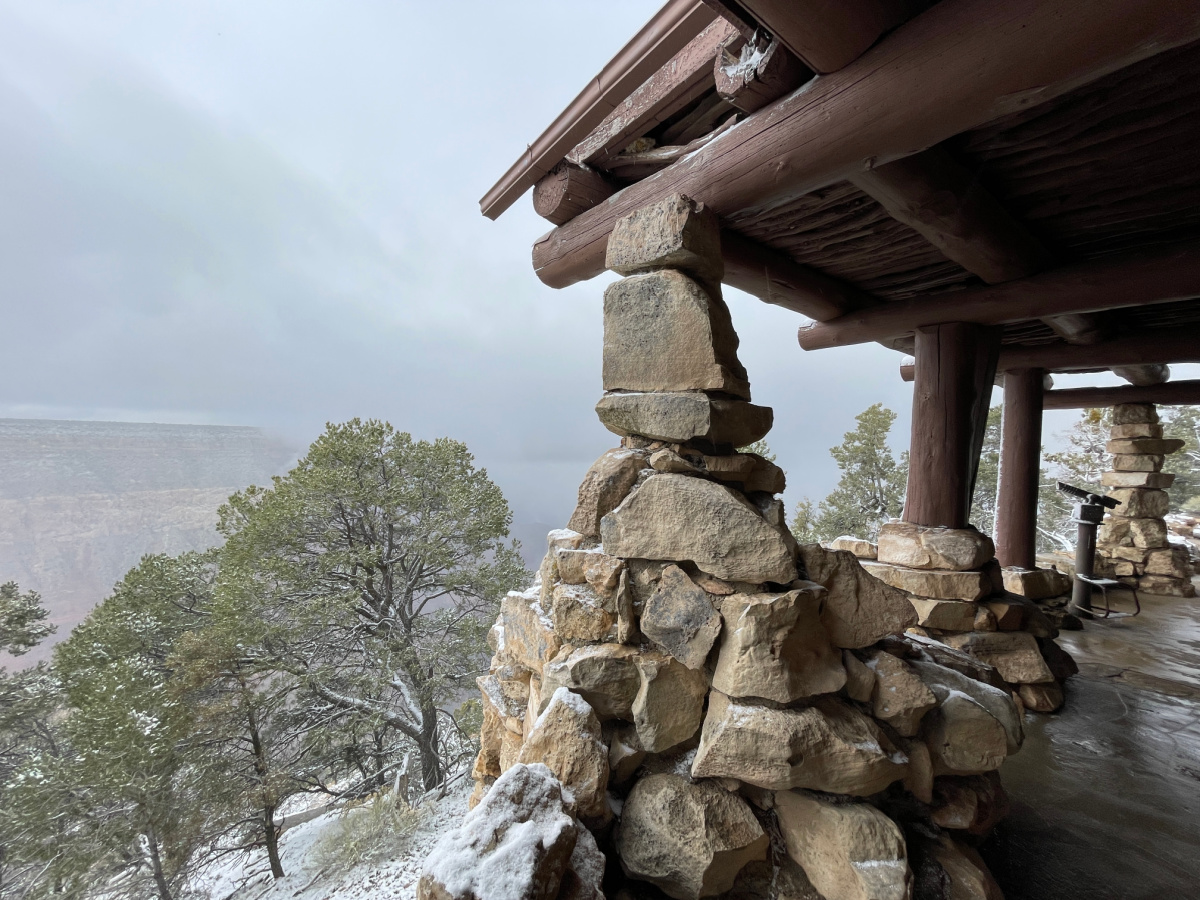
We visited during the snowstorm, and the entire area looked completely different from the Arizona landscape most people probably picture.
Snow covered the surrounding pine trees, stone walls, and walking paths. Clouds obscured much of the canyon beyond the building.
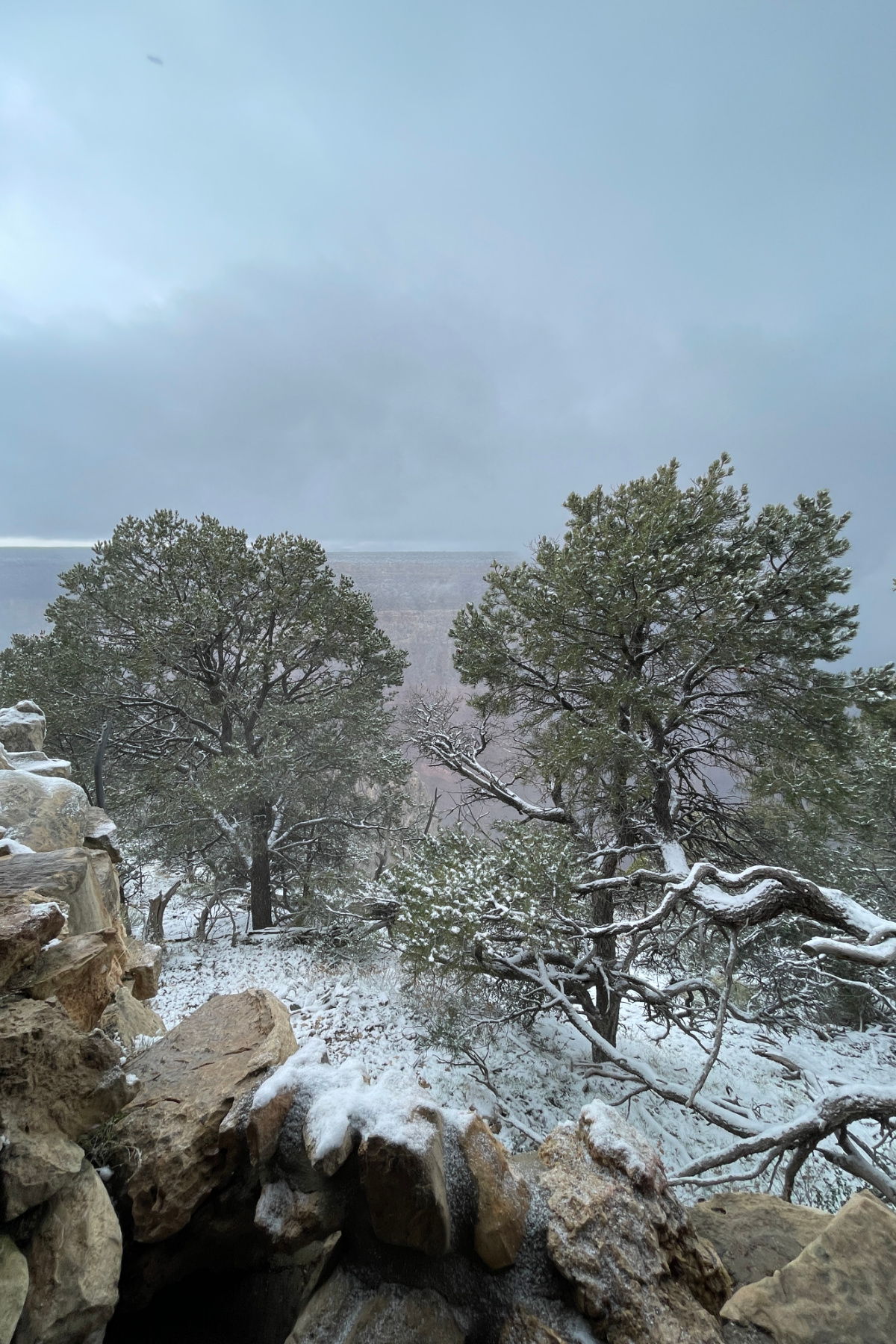
I loved the architecture here. Hermits Rest has enormous stone supports, heavy wooden beams, and a deliberately rustic look that makes it seem much older than it actually is.
For this guide, just know that if you’re already taking the shuttle along Hermit Road, I think it’s worth going all the way to the end.
Desert View Drive and the Eastern Viewpoints
Desert View Drive heads in the opposite direction, east from Grand Canyon Village toward the East Entrance.
The road stretches approximately 23 miles and passes several overlooks, including Grandview Point, Moran Point, Lipan Point, and Navajo Point.
At the far end is Desert View Watchtower.
Unlike Hermit Road during its shuttle-only season, you can generally drive your own vehicle along Desert View Drive.
That gives you a lot more flexibility.
Stop at a viewpoint because the light looks amazing? Great.
Skip one because everyone is tired and hungry? Also fine.
Unfortunately, the snowstorm kept us from exploring as much of this area as we’d planned.
And I was disappointed about that.
But if you’re traveling toward Page, Antelope Canyon, or Horseshoe Bend after visiting the Grand Canyon, leaving through the East Entrance makes a lot of sense.
Just don’t treat Desert View Drive as nothing more than your exit route.
Give yourself enough time to actually stop.
How to Get Around the Grand Canyon South Rim
You don’t have to drive everywhere at the Grand Canyon, which is a good thing because there are parts of the South Rim where you can’t.
The free shuttle system does quite a bit of the work for you.
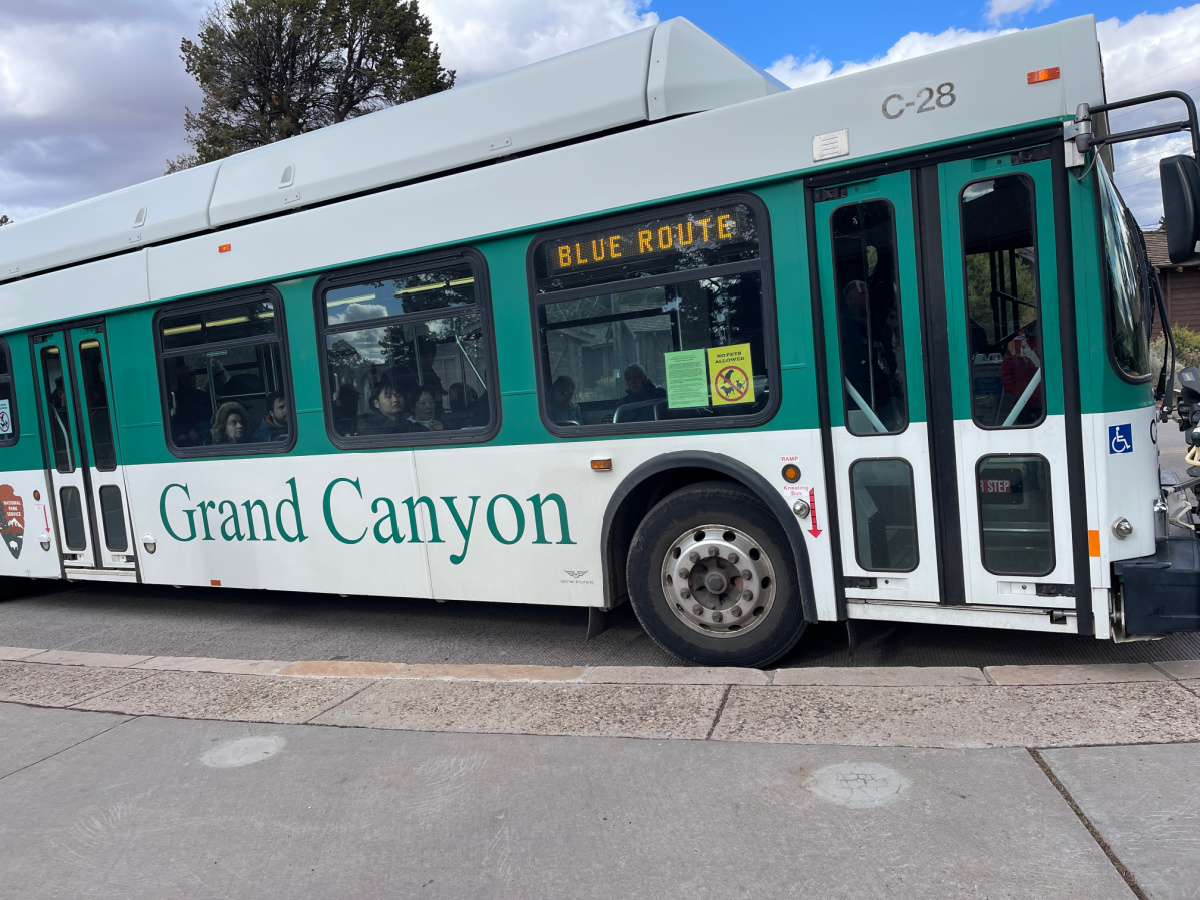
There are three routes most visitors will want to know about:
- Blue Route (Village Route): Connects the Grand Canyon Visitor Center with Grand Canyon Village, hotels, and visitor services.
- Orange Route (Kaibab Rim Route): Serves areas around Yavapai Geology Museum, Yaki Point, and the South Kaibab Trailhead.
- Red Route (Hermit Road Route): Travels along Hermit Road to the western viewpoints and Hermits Rest during the shuttle-only season.
There’s also a seasonal shuttle between Tusayan and the South Rim.
The routes and schedules can change seasonally, so check the current information before your trip.
Should You Drive or Take the Shuttle?
I’d use both.
If you’re staying inside the park, leave your car at the hotel when it makes sense and walk or use the shuttle.
If you’re visiting for the day, parking near the Grand Canyon Visitor Center and using the buses can save you from constantly moving your car.
Then use your own vehicle for Desert View Drive.
Also, don’t assume the shuttle will always be faster.
You still have to wait for buses, ride between stops, and occasionally deal with crowds.
The bigger thing is simply to organize your day geographically.
Explore the Mather Point and Yavapai area together. Spend another chunk of time in Grand Canyon Village. Treat Hermit Road as its own excursion.
And if you’re continuing east after your visit, save Desert View Drive for your departure.
That’s much easier than zigzagging around the South Rim all day.
And honestly, you don’t need to see every single viewpoint.
Part of what made our trip memorable was simply stopping long enough to watch the canyon change.
Clouds rolled in. Clouds disappeared. Snow covered the rim. Sunlight hit one canyon wall and skipped another.
Sometimes we could see forever.
Sometimes we couldn’t see much of anything.
And somehow, it was all pretty spectacular.
Easy Walks and Short Hikes on the South Rim
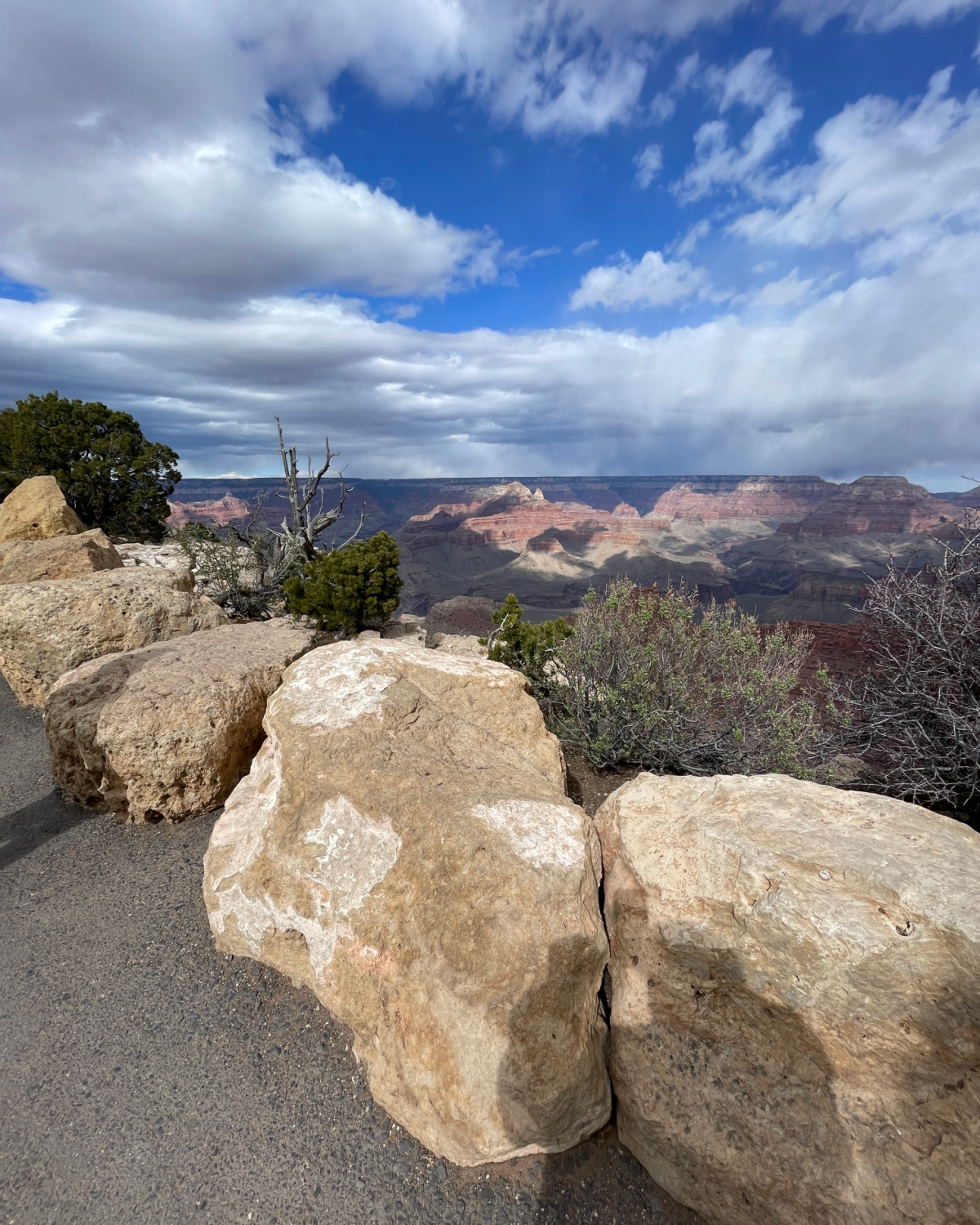
One of the best things about the Grand Canyon is that you don’t have to hike very far to get incredible views.
Honestly, you don’t have to hike at all.
But if you want to stretch your legs, there are several easy walks along the rim that give you a little more than the standard pull-up-to-an-overlook experience.
Walk Part of the Rim Trail
The Rim Trail is probably the easiest recommendation for casual visitors.
It follows the South Rim for miles, but there is absolutely no reason you need to walk the entire thing. Pick a section that fits your schedule and energy level.
The area around Mather Point and Yavapai Point is particularly easy to add to a first visit. You’re still getting those huge canyon views, but walking even a relatively short distance gives you slightly different angles than you’d see from the main overlooks.
And that’s something I think is worth doing.
The canyon changes enough from one viewpoint to another that you really don’t have to walk far before something catches your eye.
Maybe it’s a rock formation you couldn’t see before. Maybe you finally get a glimpse deeper into one of the side canyons. Or maybe the light has shifted and suddenly a section that was completely in shadow ten minutes earlier is glowing orange.
That’s the nice thing about the Rim Trail. There’s no real agenda.
Walk for 15 minutes. Walk for an hour. Turn around whenever you’ve had enough.
The Trail of Time
If you want your walk to include a little geology, the Trail of Time is a great option.
This section of the Rim Trail connects the Yavapai Geology Museum area with Grand Canyon Village and uses markers and rock samples to help explain the age of the canyon.
The scale is the fascinating part.
Along the main timeline, each meter represents one million years.
Which is kind of mind-boggling when you’re walking along at a normal pace.
I think this would be especially fun with older kids who enjoy science, rocks, or geology. But honestly, adults might appreciate it even more because the numbers involved are so ridiculous that it’s difficult to wrap your brain around them.
You don’t have to complete the entire walk to get something out of it, either.
If you’re short on time, walk a portion and then continue with the rest of your sightseeing.
Should You Hike to Ooh Aah Point?
Now we’re moving out of the “easy stroll along the rim” category.
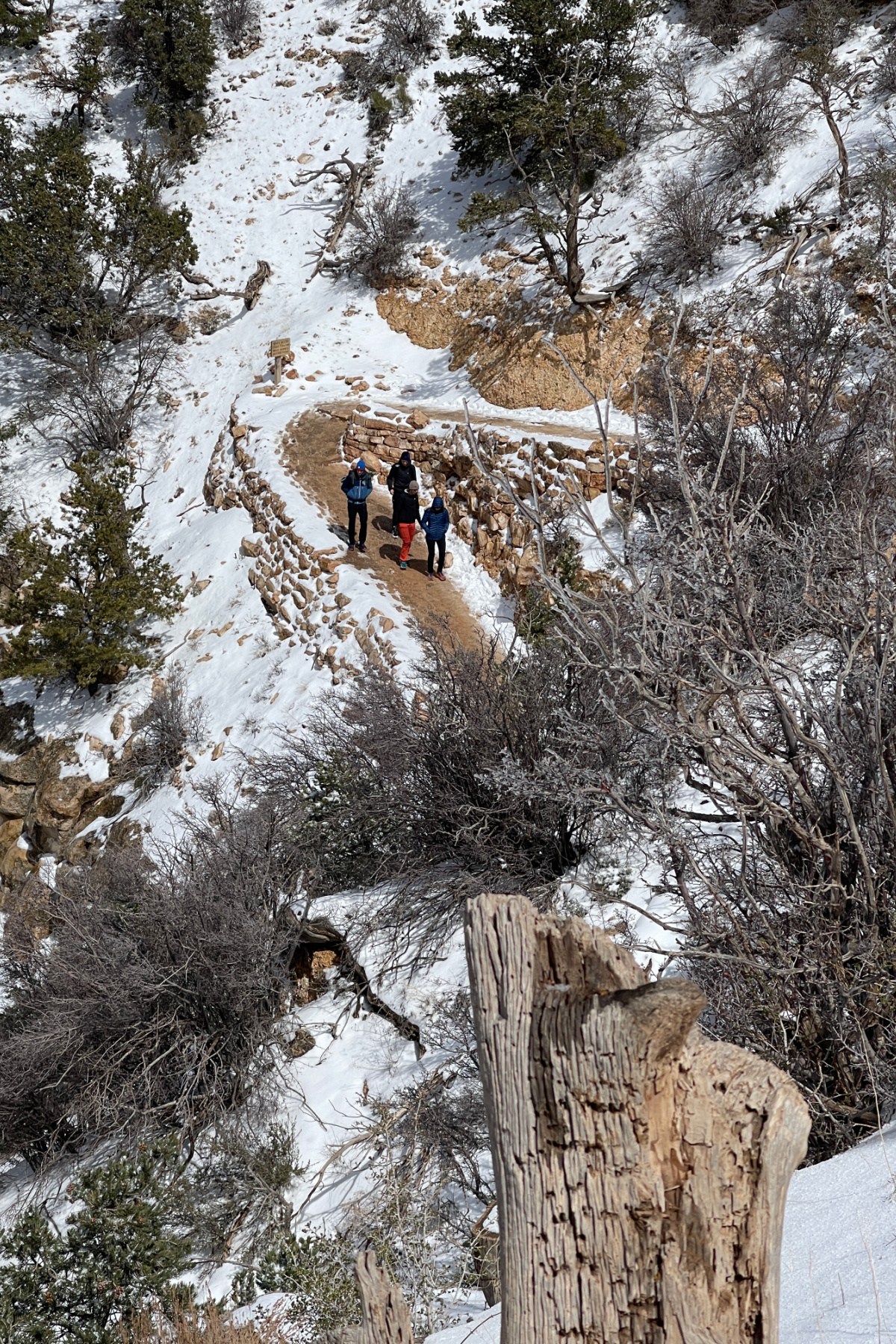
Ooh Aah Point is located along the South Kaibab Trail, and this was one of the hikes we had planned for our 2024 trip before the snowstorm changed our plans.
It’s a relatively short hike compared with many Grand Canyon trails, but don’t let the mileage fool you.
The problem with hiking into the Grand Canyon is that the easy part comes first.
You go down.
And then you have to turn around and climb all the way back up.
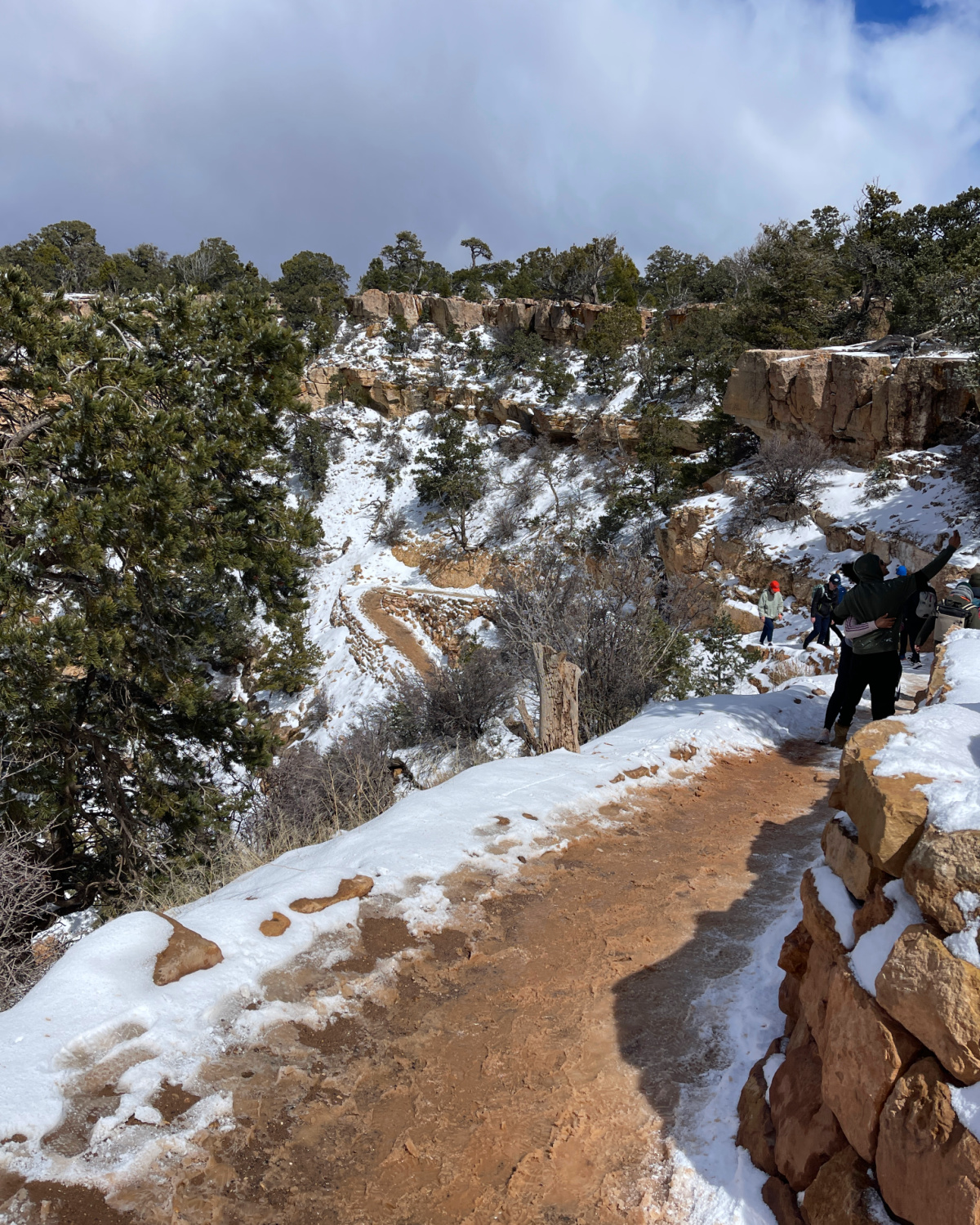
The hike to Ooh Aah Point is about 1.8 miles round trip with roughly 790 feet of elevation change. That’s completely reasonable for many reasonably fit visitors, but it’s considerably more strenuous than a two-mile walk on level ground.
There are switchbacks. There’s very little shade. And you’re already starting at about 7,000 feet of elevation.
So I wouldn’t lump this in with the easy Rim Trail walks.
But if you’re comfortable with moderate hiking and want to experience what it feels like to actually descend below the rim, Ooh Aah Point is a great option.
And I would love to try it on a future visit.
Just remember the Grand Canyon hiking rule: however easy the hike down feels, you still have to climb back out.
Is a Grand Canyon Helicopter Tour Worth It?
Yes.
Next question. Ha!
Seriously, though, if you’re looking for one big splurge at the Grand Canyon, this would be mine.
I took a helicopter tour during my first visit in 2002, and more than twenty years later, I still remember how incredible it was.
The Grand Canyon is so enormous that it’s difficult to understand its scale from the rim alone.
You can stand at an overlook and see miles into the distance, but you’re still looking at the canyon from one edge.
From the air, you start to understand how everything fits together.
You see the side canyons. The massive plateaus. The Colorado River winding far below. The layers and layers of terrain that you simply can’t see from one viewpoint.
And for visitors who aren’t planning to hike deep into the canyon, I think a helicopter tour is an especially worthwhile way to experience a completely different perspective.
We had actually booked another helicopter tour during our 2024 trip.
Then the snowstorm arrived.
Tour canceled.
Obviously, I was disappointed. But I’m also glad they aren’t messing around when the weather is questionable.
That’s something I would keep in mind when scheduling a flight. If a helicopter tour is really important to you, try not to book it at the absolute last possible moment of your visit. Weather happens.
If your schedule has a little flexibility, you have a better chance of being able to reschedule.
Sunrise at the Grand Canyon Is Worth the Early Wake-Up
I am going to write an entire post about sunrise at the Grand Canyon, so I won’t go into all the details here.
But yes. Get up.
Especially if you’re already staying inside the national park.
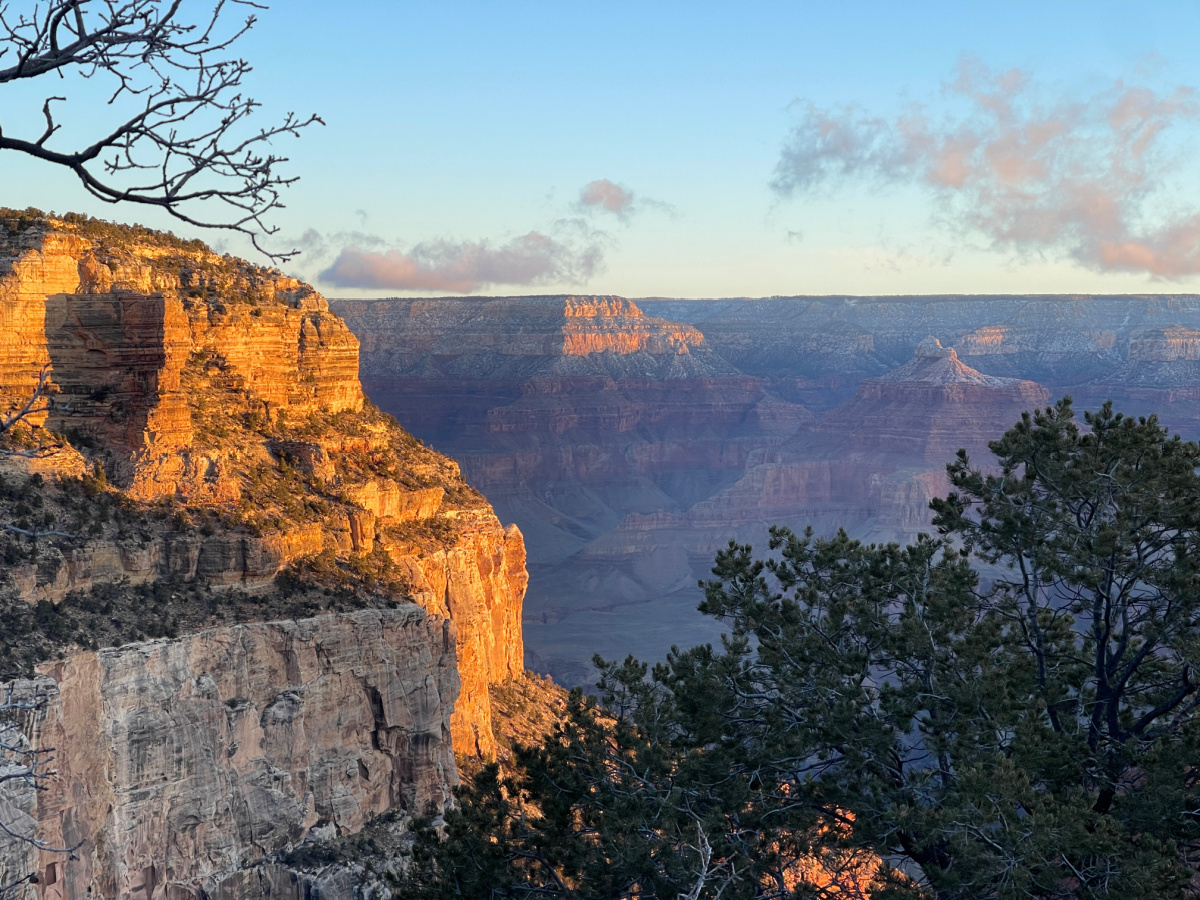
I’m not going to pretend that waking up before sunrise is always pleasant. Depending on the time of year, that alarm can be painful.
But watching the first light hit the canyon is pretty special.
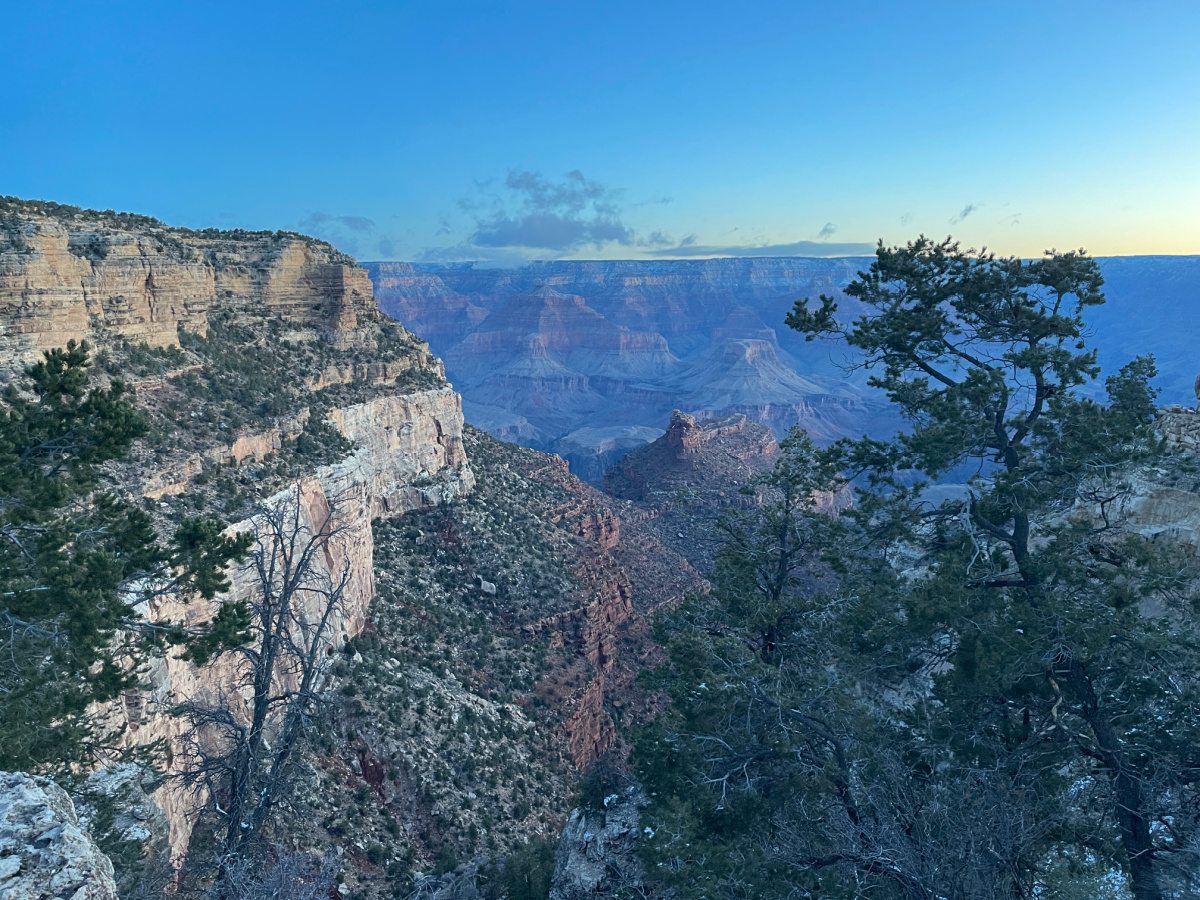
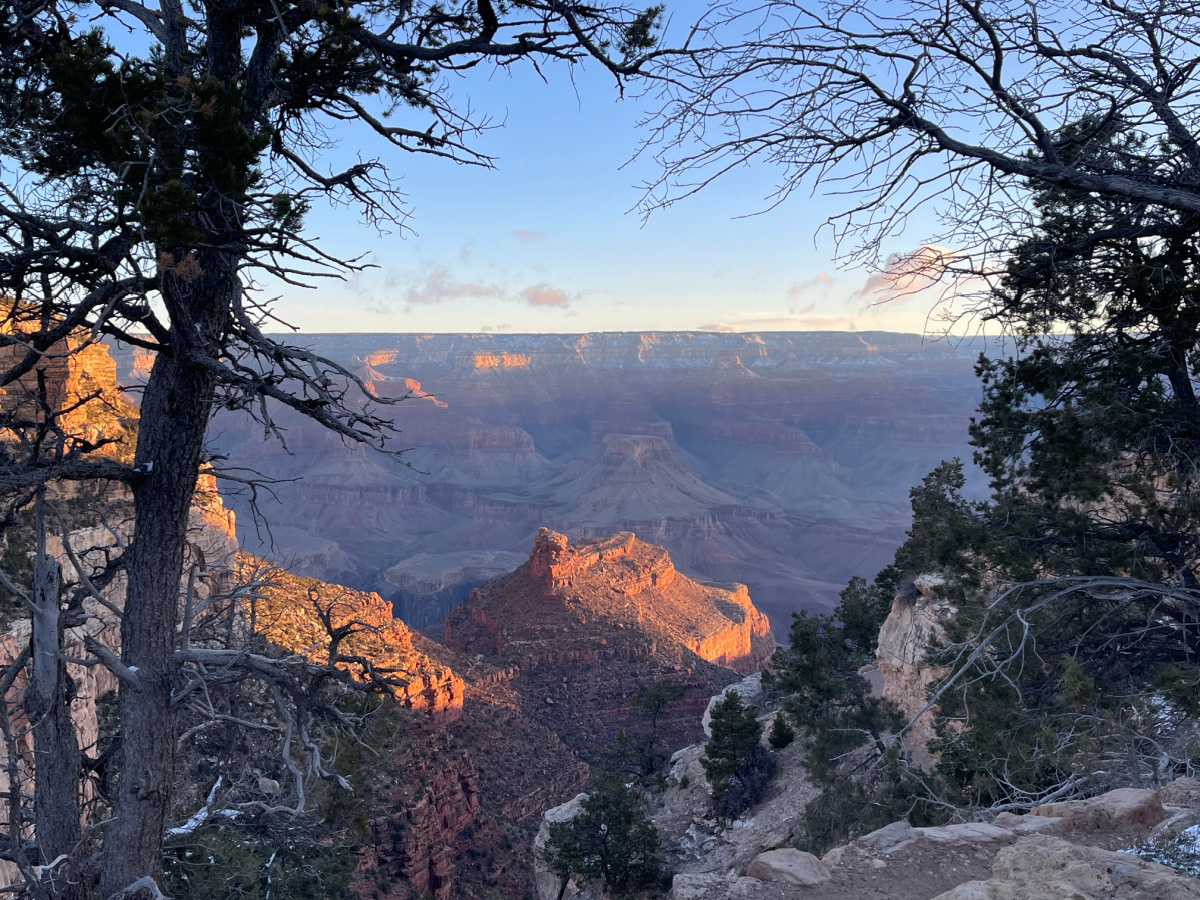
The sunlight doesn’t illuminate everything at once. It catches individual formations first, creating these brilliant patches of orange and red while much of the canyon is still sitting in blue and purple shadow.
Some of my favorite photographs from our trip are from sunrise.
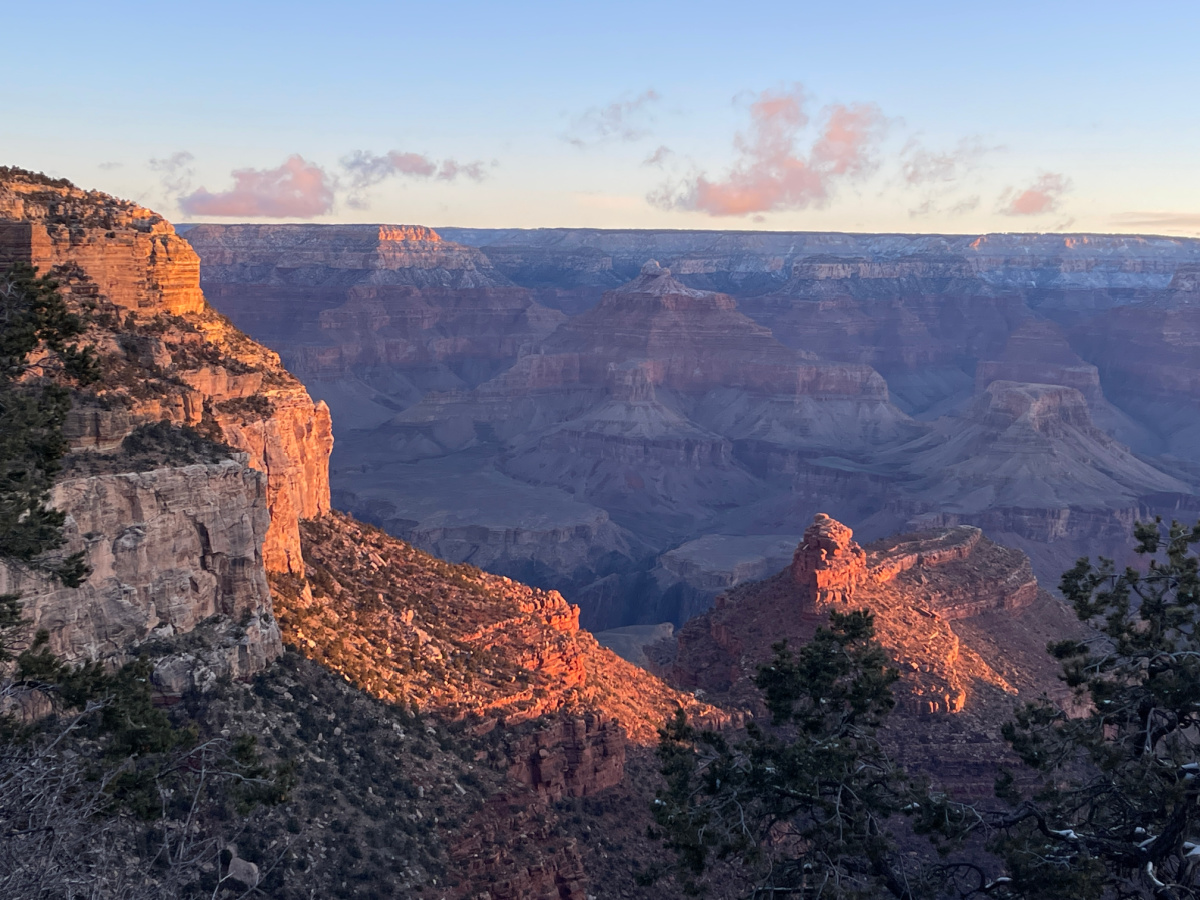
And because the light changes so quickly, the view you see when you first arrive can look noticeably different 15 or 20 minutes later.
If you’re staying inside the park, sunrise is also considerably easier logistically. You don’t have to get up quite as early to drive in from Tusayan, find parking, and make your way to an overlook in the dark.
That’s another reason I like the idea of spending at least one night at the South Rim.
And Don’t Skip Sunset Either
Sunset is a completely different experience.
We watched the canyon as clouds were moving in ahead of the snowstorm, so ours wasn’t exactly the classic perfectly clear sunset.
But I actually loved it.
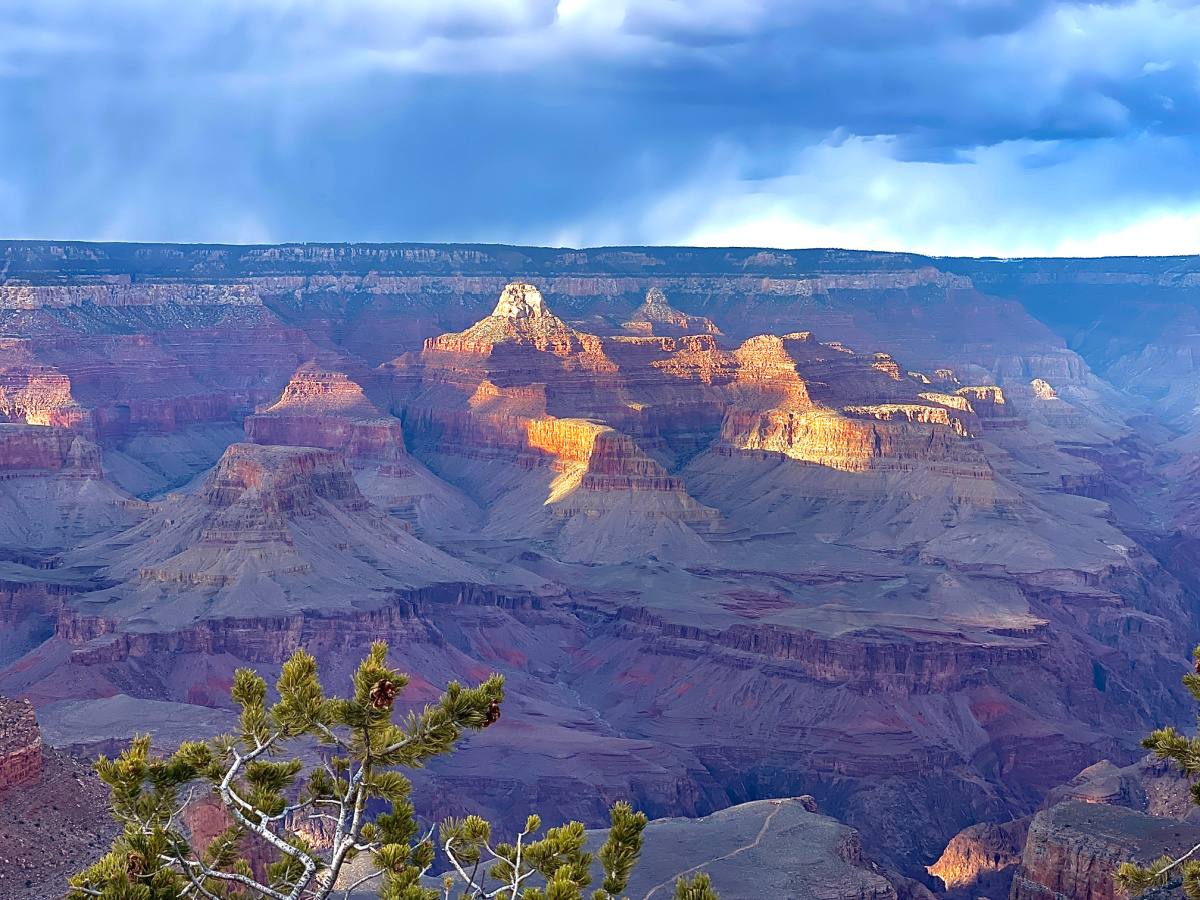
The clouds made the light more dramatic. Some sections of the canyon were completely dark while others caught little bursts of sunlight.
And once again, the view kept changing.
That’s something I wouldn’t have appreciated nearly as much if we’d simply stopped at the Grand Canyon in the middle of the day, looked around for an hour, and left.
If you can arrange your visit so you experience both sunset and sunrise, I think you get a much better sense of how different the canyon can look throughout the day.
And if you can only choose one?
Honestly, I think either is worthwhile.
Sunrise tends to be quieter and feels a little more special because you had to work for it. Sunset is easier for most people to fit into their day.
Do whichever one works.
But try to do at least one.
Where to Eat at the Grand Canyon South Rim
You’re not going to starve at the Grand Canyon.

There are several places to eat inside the park, ranging from quick-service options to sit-down restaurants.
And if you’re spending a full day sightseeing, it’s nice not to have to leave the park just to find lunch or dinner.
We ate at several locations during our visit, including the El Tovar Dining Room, and I have enough to say about the food that I’ll cover Grand Canyon dining in a separate post.
For this guide, I would just keep a few things in mind.

First, don’t assume you’ll be able to walk into every sit-down restaurant at the exact time you want to eat. If there’s somewhere particular you want to try, check whether reservations are available.
Second, build meals into your geographic plans.
If you’re already spending time in Grand Canyon Village, that’s an obvious time to grab lunch or dinner rather than riding a shuttle somewhere else and then coming back.
And third, carry snacks.
Even if you’re not hiking, there’s a good chance you’ll spend more time at a viewpoint or along a scenic road than you expected.
Having something in your bag is never a bad idea.
Should You Stay Inside Grand Canyon National Park?
If your budget allows it, I would.
Not because the accommodations are necessarily the fanciest hotels you’ll ever stay in.
Location is the reason.
We stayed at Maswik Lodge, and being inside the park made our visit much easier.
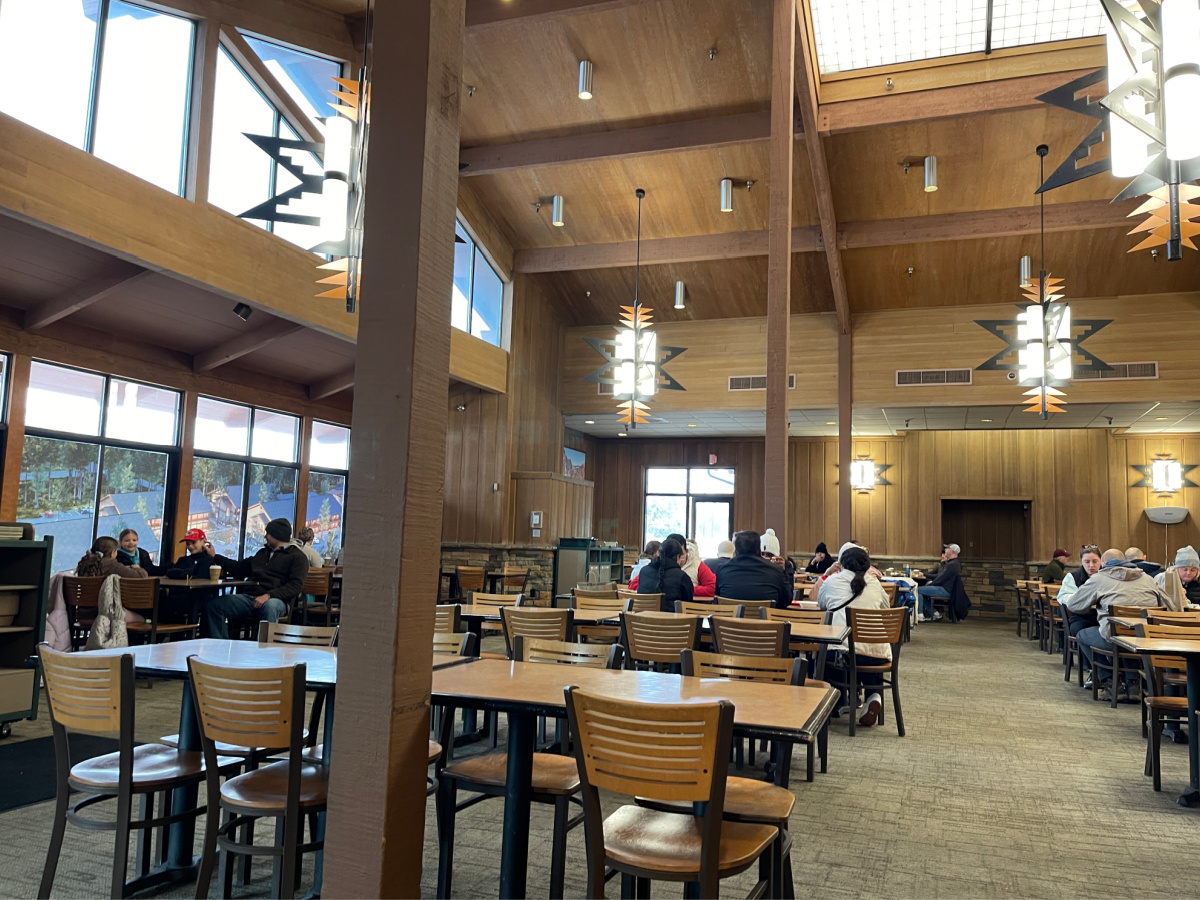
We could walk into Grand Canyon Village. We didn’t have to drive through the entrance every morning. We could head back to our room when the weather turned nasty.
And when we wanted to get up for sunrise, we were already there.
That’s a much bigger advantage than it might sound when you’re planning the trip from home.
If you’re only visiting for a few hours in the middle of the day, staying outside the park isn’t a big deal.
But if you want to experience sunset, sunrise, and an early start the next morning, staying inside the park can save quite a bit of time.
And there is something pretty cool about going to sleep knowing the Grand Canyon is basically right outside.
I’ll have a separate Maswik Lodge review, so I won’t get into room details here.
What If You Stay in Tusayan?
Tusayan is the closest community outside the South Entrance, and it’s a perfectly reasonable alternative if you can’t find a room inside the park or don’t want to pay national park lodging prices.
You’ll find hotels, restaurants, and other visitor services there.
The main trade-off is convenience.
You’ll have to drive into the park or use the seasonal shuttle when it’s operating, and that adds another step to your day.
For a longer visit, that might not bother you at all.
For a short visit where you’re trying to squeeze sunset, sunrise, and a full morning of sightseeing into roughly a day and a half, I’d personally rather stay inside the park.
How I Would Plan a Short Grand Canyon South Rim Visit
If I weren’t doing a major hike and wanted to see the Grand Canyon as part of a larger Southwest road trip, I don’t think I’d automatically schedule three full days here.
I’d probably do something closer to a day and a half.
Afternoon Arrival
Arrive sometime in the afternoon and get settled.
Then explore the central South Rim.
Depending on where you’re staying, you could visit Mather Point and Yavapai Point or spend time exploring Grand Canyon Village.
Walk a little of the Rim Trail. Check out the historic buildings. Have dinner.
Then find a good place along the rim for sunset.
That’s already a pretty satisfying first day.
The Next Morning
Get up for sunrise.
Have breakfast.
Then I’d probably spend the morning exploring Hermit Road, stopping at a few viewpoints and continuing out to Hermits Rest.
You don’t have to visit every overlook. Pick several and enjoy them.
Once you return, you could visit anything you missed around the main visitor center or village area.
Pick One Bigger Experience
For the afternoon, I’d choose one larger activity.
Either take a helicopter tour or, if you’re comfortable with moderate hiking, hike down to Ooh Aah Point.
I wouldn’t necessarily try to do both unless you have an additional day.
And if neither interests you? That’s fine, too.
Spend more time walking along the rim. Visit another viewpoint. Have a leisurely lunch.
There is no prize for exhausting yourself at a national park.
Leave Through Desert View
If your trip continues toward Page, Monument Valley, or another destination east of the Grand Canyon, I’d leave through the East Entrance.
That gives you the opportunity to drive Desert View Road and stop at some of the eastern overlooks before continuing your trip.
And suddenly you’ve seen the central South Rim, sunset, sunrise, Hermit Road, and at least part of Desert View Drive in roughly a day and a half.
For a casual visitor?
I think that’s pretty fantastic.
Don’t Try to See Every Grand Canyon Viewpoint
I know this is difficult for people who like to maximize their vacation time.
I understand. I’m one of those people.
But you don’t need to visit every overlook.
Honestly, after a certain point, the goal shouldn’t be collecting viewpoints.
Pick several good ones in different sections of the South Rim and actually spend some time there.
Watch the light.
Look for the Colorado River.
Notice how the canyon walls change from reds and oranges to blues and purples depending on the clouds.
And if the weather changes, don’t automatically assume your day is ruined.
Some of my favorite photographs from our trip are the ones where the clouds are moving through the canyon or snow is covering the rim.
Would I have preferred that our helicopter tour not get canceled?
Absolutely.
But seeing the Grand Canyon covered in snow was pretty special too.
Sometimes you just take whatever version of the canyon you get.
Practical Tips for Visiting the Grand Canyon South Rim
The Grand Canyon isn’t a particularly difficult national park to visit, especially if you’re sticking to the South Rim.
But there are a few things I would keep in mind.
Get an Early Start
This is probably the easiest tip.
The earlier you start, the easier everything tends to be.
Parking is easier. The shuttle buses are less crowded. The temperatures may be more comfortable. And if you’re interested in sunrise, you’re already ahead of the game.
I’m not saying you need to wake up at 4:30 every morning of your vacation.
But if you’re spending one full day at the Grand Canyon, I wouldn’t sleep until 10 AM and then expect to squeeze everything in.
Especially if you want to explore Hermit Road.
Bring Layers
Even if you’re visiting in a warmer month, bring something extra.
The South Rim is high enough that temperatures can change quite a bit between morning, afternoon, and evening.
And if you’re visiting in spring or fall, I would absolutely expect some temperature swings.
Our March trip obviously took that to an extreme, but the lesson still applies.
Sunny at one viewpoint does not necessarily mean sunny an hour later.
And once the wind picks up along the rim? You’ll be happy you brought a jacket.
Wear Good Shoes
You do not need hiking boots just to visit the viewpoints.
But I would wear comfortable shoes with decent traction.
Even casual sightseeing can involve quite a bit of walking, especially if you’re exploring Grand Canyon Village, walking part of the Rim Trail, or hopping on and off shuttles.
And if there’s snow or ice?
This becomes much more important.
Carry Water
This sounds obvious, but the elevation and dry climate can sneak up on you.
Even if you’re not hiking, you’re still outside for much of the day.
Bring water and actually drink it.
And if you are hiking below the rim, take hydration much more seriously.
Don’t Get Too Close to the Edge
This probably sounds ridiculous to even say.
But there are places along the Grand Canyon where there isn’t a railing between you and a very long drop.
And people do some incredibly dumb things for pictures.
You really don’t need to.
There are plenty of safe places to get beautiful photographs without standing two inches from the edge of a cliff.
This is especially important if you’re traveling with children.
My daughter was old enough during our trip that I wasn’t worried about her randomly bolting toward the canyon, but with younger kids? I would keep them close.
The views are spectacular.
They’re not worth risking your life over.
What About Accessibility?
The South Rim is one of the easier national park destinations for visitors who have limited mobility.
Many of the major overlooks, visitor areas, and paved sections of the Rim Trail can be reached without strenuous hiking.
The shuttle buses also make it possible to see quite a bit without repeatedly getting in and out of your own car.
That said, accessibility varies depending on exactly where you’re going.
Some trails are paved. Others aren’t.
Some overlooks have relatively level approaches. Others involve slopes, uneven ground, or snow and ice during colder months.
If accessibility is an important part of your planning, I would check the current park information for specific viewpoints before your trip rather than assuming every stop will work equally well.
And again, weather can change things.
A paved path isn’t nearly as accessible when it’s covered in ice.
Can You Visit the Grand Canyon With Kids?
Absolutely.
In fact, I think the South Rim is a great national park for families because you can adjust the trip so easily.
You don’t have to commit to a six-mile hike just to see something worthwhile.
If your kids are younger, you can visit Mather Point, take a short walk along the Rim Trail, explore the geology museum, ride the shuttle bus, and check out some of the historic buildings.
If they’re older and more active, you could add a moderate hike like Ooh Aah Point.
And don’t forget about ranger programs and the Junior Ranger program.
My daughter was a teenager during our trip, and what struck me most was how much the canyon itself held her attention.
I don’t think she needed a constant stream of activities.
Sometimes the view really is enough.
And that’s saying something when you’re traveling with a teenager. Ha!
Can Older Adults Enjoy the Grand Canyon Without Hiking?
Definitely.
I actually think this is one of the strengths of the South Rim.
You can build a really satisfying visit around scenic overlooks, shuttle buses, easy walks, museums, historic buildings, and meals without doing anything particularly strenuous.
You don’t even have to walk the entire Rim Trail.
Visit a viewpoint. Take the shuttle to another one. Sit for a while.
There’s no rule saying you have to turn a national park visit into an athletic event.
And if you want one big experience that doesn’t involve hiking, that’s another reason I think a helicopter tour can be such a great splurge.
What Is the Best Time of Year to Visit the Grand Canyon South Rim?
There really isn’t one perfect answer.
Summer gives you long daylight hours and generally avoids the winter road issues, but it’s also the busiest season.
Spring and fall can be wonderful, with cooler temperatures and potentially smaller crowds.
But as our March trip demonstrated, spring weather can be unpredictable.
Very unpredictable.
Winter offers a completely different experience. Snow on the canyon is beautiful, and crowds can be lighter, but you’ll have to deal with colder temperatures, possible ice, and weather-related disruptions.
Personally, I wouldn’t avoid the Grand Canyon just because the forecast isn’t perfectly sunny.
Clouds can make the scenery much more dramatic.
Some of my favorite images from our trip have clouds moving through the canyon, with sunlight breaking through in random places.
The light almost acts like a spotlight.
One formation is glowing orange while the rest of the canyon is sitting in shadow.
You can’t really plan for that.
You just get lucky.
Is the Grand Canyon Worth Visiting If You Don’t Hike?
One hundred percent.
And honestly, this entire guide could probably be summed up by that answer.
You can have a fantastic Grand Canyon experience without hiking below the rim.
Walk part of the Rim Trail.
Visit Mather Point and Yavapai Point.
Ride the shuttle along Hermit Road.
Explore Grand Canyon Village.
Watch the sunset.
Get up for sunrise.
Take a helicopter tour if your budget allows.
Drive Desert View Road.
Have dinner at El Tovar.
That’s already a pretty great trip.
Hiking into the canyon adds another dimension to the experience, but it isn’t a requirement.
Can You See the Grand Canyon in One Day?
Yes.
If that’s all the time you have, go.
Don’t skip the Grand Canyon because someone told you that you need three days to “do it properly.”
You can see plenty in one day.
I’d concentrate on the central South Rim, Grand Canyon Village, and either Hermit Road or Desert View Drive.
If you can arrange an overnight stay, though, I think that’s considerably better.
Arrive in the afternoon, enjoy sunset, spend the night, see sunrise, and then use the next morning to explore more of the park.
For a casual traveler, that’s probably my favorite version of a short Grand Canyon trip.
Can You Visit the Grand Canyon Without a Car?
Yes, although your options are a little more limited.
You can take the Grand Canyon Railway from Williams into Grand Canyon Village and use the park shuttle system to explore much of the central South Rim and Hermit Road.
Once you’re inside the park, you can also walk between quite a few attractions.
The biggest limitation is Desert View Drive.
The regular park shuttle system doesn’t provide sightseeing transportation all the way out toward Desert View Watchtower, so having a vehicle gives you considerably more flexibility in that direction.
Still, if you absolutely don’t want to drive, you can have a very satisfying Grand Canyon visit without a car.
Is a Grand Canyon Helicopter Tour Worth the Money?
For me, yes.
I took one during my 2002 visit, and more than twenty years later, I still remember it.
The canyon is so big that seeing it from above gives you a completely different perspective.
If you’re choosing between several expensive activities on an Arizona vacation, I would seriously consider making this your splurge.
Especially if you aren’t planning to do a major hike below the rim.
Just remember the weather factor.
We learned that lesson when our 2024 flight was canceled because of the snowstorm.
Do You Really Need to See Sunrise or Sunset?
Need?
No.
Would I strongly recommend at least one of them?
Absolutely.
If you’re already staying overnight, it seems almost criminal not to.
The canyon changes so much when the sun is low.
The shadows become deeper, the colors get warmer, and individual formations suddenly stand out in ways they don’t during the middle of the day.
Our sunset was cloudy.
Our sunrise had much better visibility.
Both were memorable for completely different reasons.
And if you can see both? Even better.
My Biggest Advice for Visiting the Grand Canyon
Don’t overthink it.
Really.
It’s easy to start planning a Grand Canyon trip and convince yourself that you need to visit twelve viewpoints, hike three trails, watch sunrise and sunset from precisely the right locations, eat at the correct restaurant, and somehow fit a helicopter tour into the middle of everything.
You don’t.
Pick a few things that sound interesting.
Understand how the park is laid out.
Give yourself enough time that you’re not racing from place to place.
And then look around.
That’s really what you’re here for.
The Grand Canyon doesn’t need much help being impressive.
We saw it underneath dramatic clouds. We watched sunlight move across the canyon walls. We saw snow covering the rim. And then we saw it again under bright blue skies.
Every version was a little different.
Maybe that’s why staring at a gigantic hole in the ground never really got old.
Final Thoughts on Visiting the Grand Canyon South Rim
I went into our 2024 trip already knowing that I loved the Grand Canyon.
I’d visited before. I’d flown over it in a helicopter. I knew what it looked like.
Or at least I thought I did.
But seeing my daughter react to it for the first time reminded me how extraordinary this place really is.
She couldn’t quite comprehend the scale until she was standing there.
Honestly, neither could I.
And that’s probably the biggest thing I would tell someone planning their first trip.
Pictures are great.
But they don’t prepare you for the real thing.
You don’t have to hike to the bottom.
You don’t have to stay for a week.
You don’t even have to have perfect weather.
Give yourself a little time. Explore more than one viewpoint. Watch how the light changes. Stay for sunset if you can.
And then just stand there for a while.
It’s pretty grand.
Planning a Bigger Southwest Road Trip?
If your Grand Canyon trip is part of a larger Southwest adventure, Utah’s Mighty Five national parks are a natural next step.
Zion and Bryce Canyon are especially easy to pair with the Grand Canyon, but if you have more time, you can continue deeper into Utah and build an entire national parks road trip around the region.
Here are a few guides that can help:
- Utah Mighty 5 Road Trip Itinerary
- Utah Mighty 5 Without Hardcore Hiking
- Zion National Park 1-Day Itinerary
- Bryce Canyon National Park 1-Day Itinerary
- Capitol Reef National Park in One Day
If you’re traveling with kids, older adults, or anyone who doesn’t want to spend the entire trip doing strenuous hikes, I’d especially look at the Mighty Five without hardcore hiking guide. There is so much to see in these parks from scenic drives, overlooks, and shorter trails that you can build an incredible Southwest itinerary without turning it into an endurance test.