Monterey Bay Aquarium: Why This Is One of the Best Aquariums in the Country

Planning a visit to Monterey Bay Aquarium? See the best exhibits, sea otters, Kelp Forest, touch pools, kid activities, and tips for a full-day visit.
Estimated reading time: 31 minutes
There are some attractions that you visit once, enjoy, and check off your list.
The Monterey Bay Aquarium is not one of them.
I’ve been to the Monterey Bay Aquarium numerous times over the years, beginning when I was stationed in Monterey with the Army in the late 1990s. I went again when my husband and I were dating, and years later we brought our daughter when she was six.
And I would happily go again tomorrow.
There is just something special about this aquarium. Part of it is the sheer scale. There are massive tanks filled with schools of fish, sharks, sea turtles, and swaying kelp. There are sea otters, jellyfish, penguins, tide pools, tropical reefs, and more hands-on exhibits than I could possibly keep track of.
But the biggest thing that sets the Monterey Bay Aquarium apart is its connection to the ocean immediately outside its doors.
This doesn’t feel like an aquarium that happens to be located near the water. Monterey Bay is part of the entire experience.
You can walk outside onto observation decks overlooking the real bay, watch waves crash against the rocky shoreline, and then head back inside to see exhibits devoted to many of the same habitats and animals.
It is easily one of the best aquariums in the United States, and if you are visiting Monterey with kids, I would plan an entire day around it.
Is the Monterey Bay Aquarium Worth Visiting?
Absolutely.
The Monterey Bay Aquarium is expensive enough that families understandably want to know whether it really deserves the hype.
In my opinion, it does.
I’ve visited a lot of aquariums, science museums, and family attractions over the years, and Monterey Bay Aquarium is one of the rare places where both the quantity and quality of the exhibits are exceptional.
There are the huge showstopper exhibits you would expect from a world-class aquarium. But there are also smaller galleries, interactive displays, touch pools, animal demonstrations, play areas, and little surprises tucked throughout the building.
It works especially well for families because kids aren’t expected to simply walk from tank to tank looking through glass all day.
They can touch, explore, climb, investigate, get splashed, talk with volunteers, and crawl into special viewing areas.
And there is plenty here for adults, too.
Even after multiple visits, I still find myself stopping to stare at the Kelp Forest or watching jellyfish drift through the water far longer than I intended.
This is not an aquarium I would squeeze into a two-hour opening in your itinerary.
Give it the day.
First Impressions at the Monterey Bay Aquarium
One of the funny things about walking into the Monterey Bay Aquarium is that you immediately have to make a decision.
Left or right?
I almost always go right.
I’m not even sure I could tell you why, other than the fact that there are some pretty spectacular things waiting in that direction.
One of the first major attractions is the sea otter exhibit, which is always a favorite.
Sea otters are ridiculously entertaining to watch. They float on their backs, dive, wrestle, eat, and generally manage to look adorable while doing almost anything.
They are also an important part of the aquarium’s larger conservation story, so this is much more than simply a cute animal exhibit.
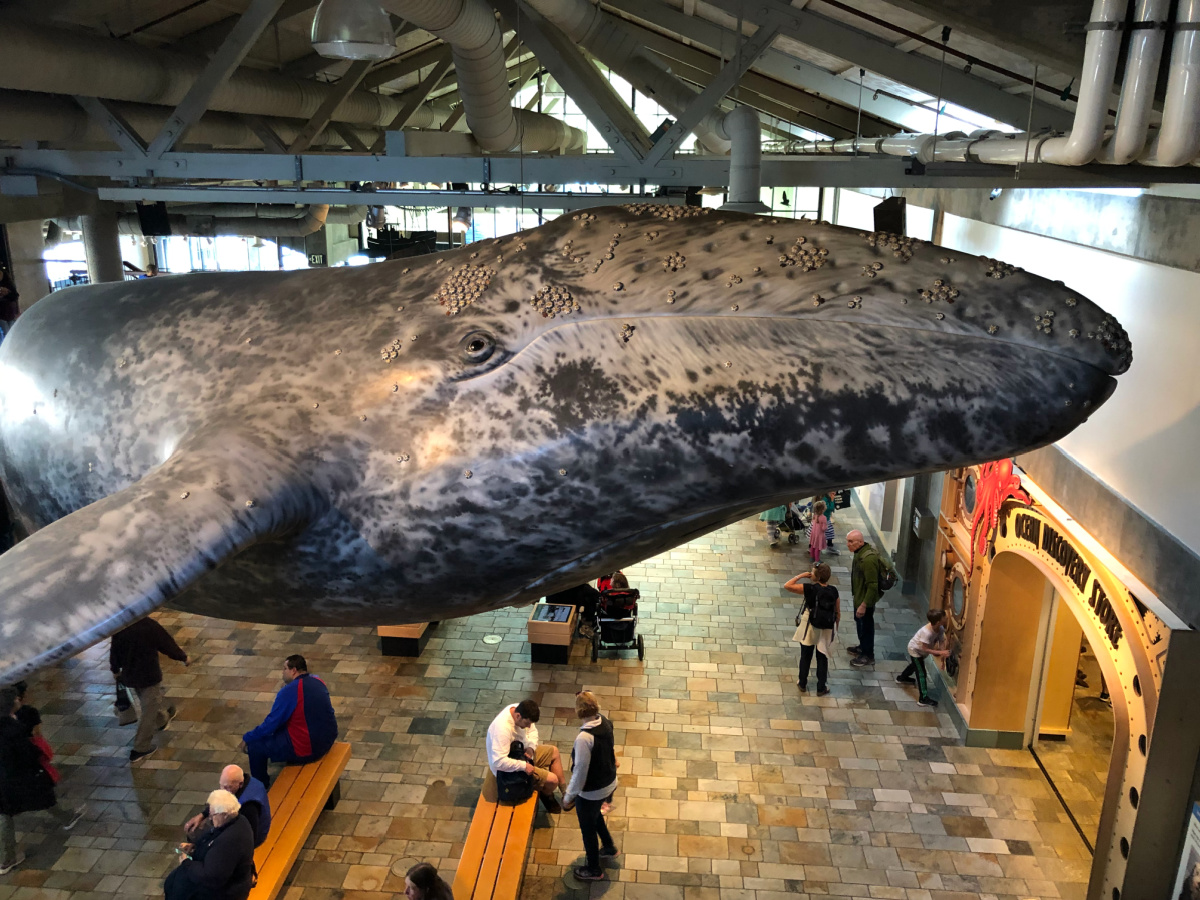
Nearby, enormous whale models hang dramatically above the main gallery.
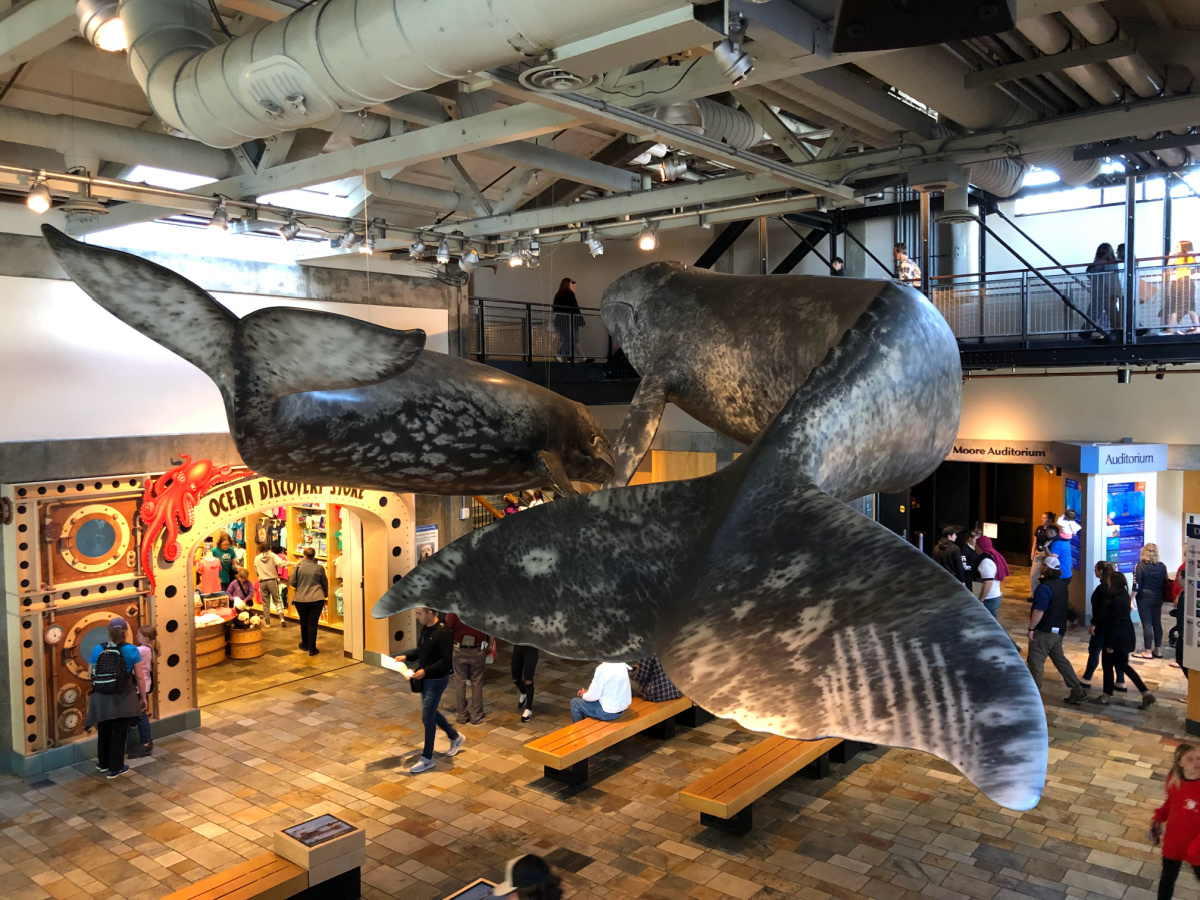
They immediately give you a sense that this is going to be something much bigger than your average aquarium.
And that impression is correct.
Don’t Miss the Sea Otters
If you are visiting Monterey Bay Aquarium with kids, the sea otters are probably going to be one of your first big hits.
Honestly, they are one of mine too.
The exhibit gives you a chance to watch the otters both above and below the water as they swim, play, eat, and interact.
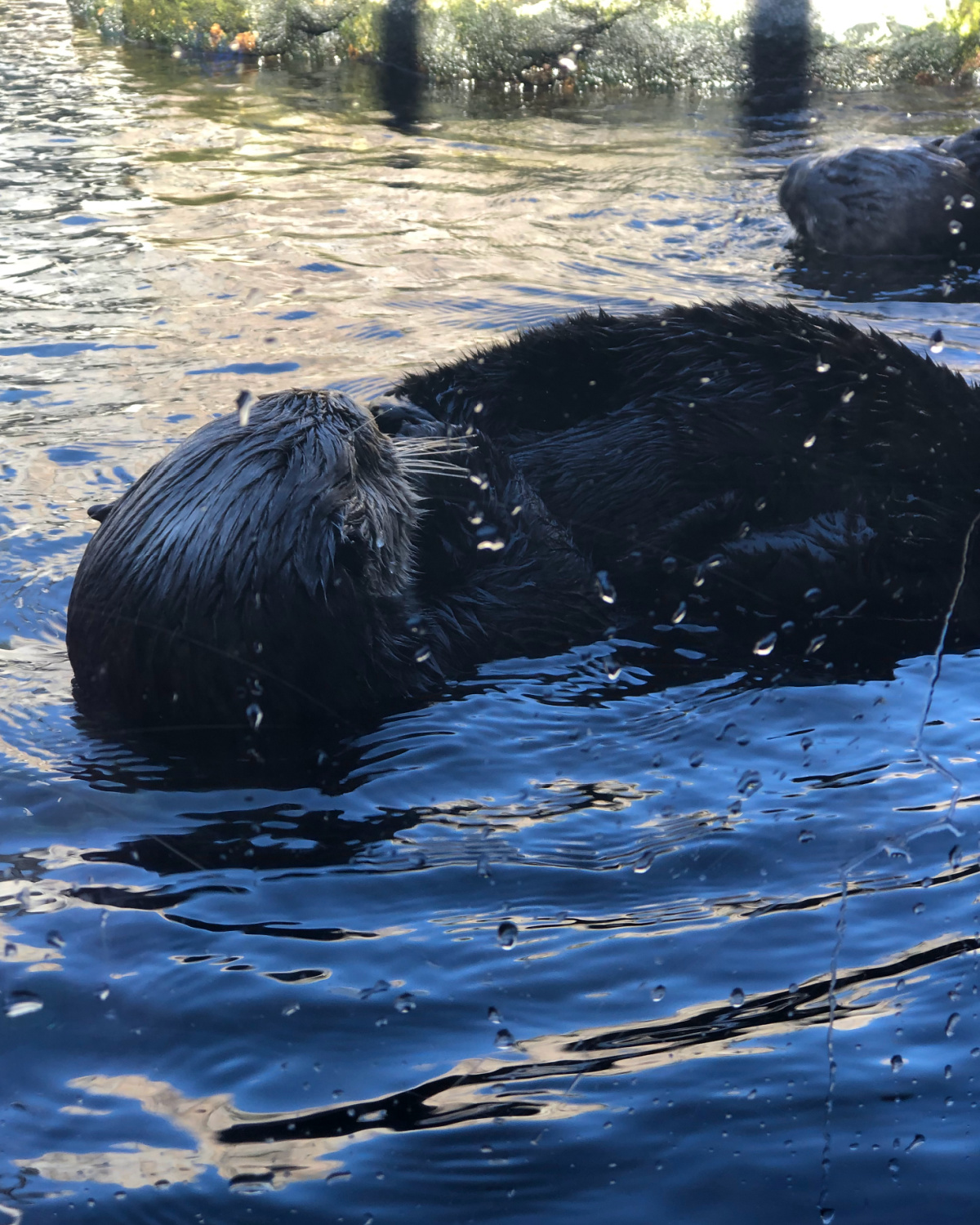
Depending on when you visit, you may also be able to catch one of the aquarium’s scheduled sea otter programs.
It is worth checking the daily schedule when you arrive because the animal presentations and feeding programs can add a lot to your visit.
And even if you don’t catch a program, spend some time here.
This is not a walk-by exhibit.
The Jellyfish Galleries Are Mesmerizing
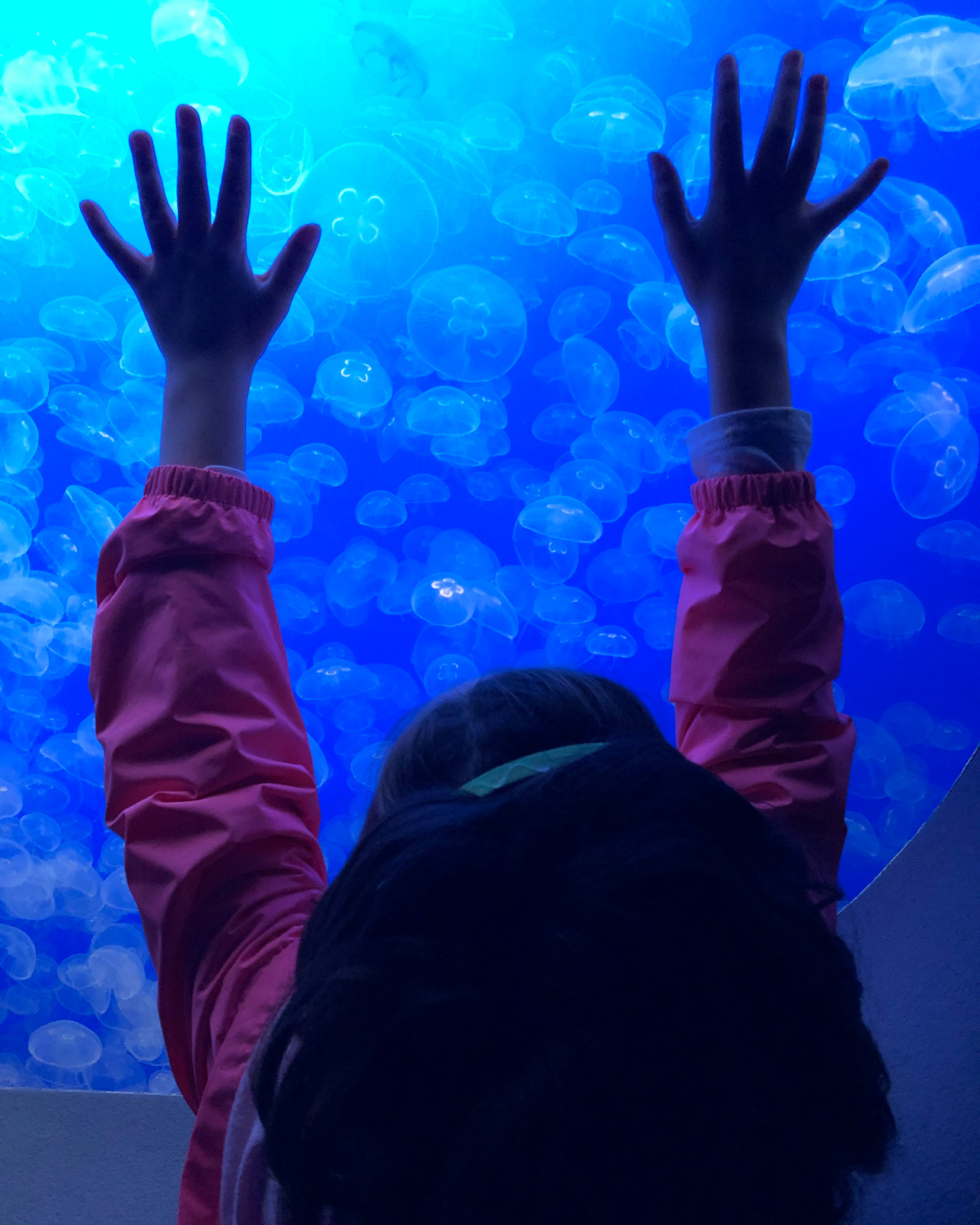
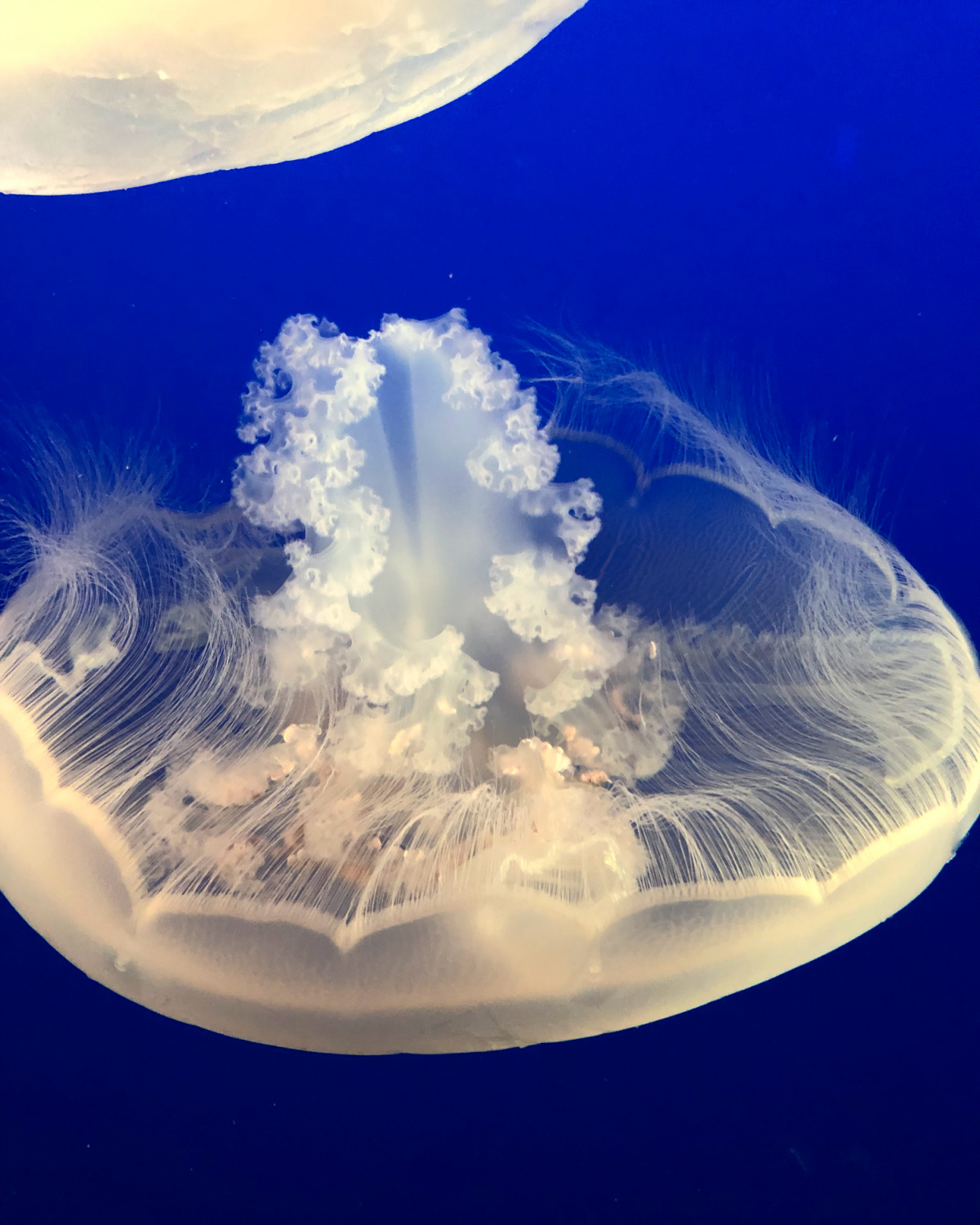
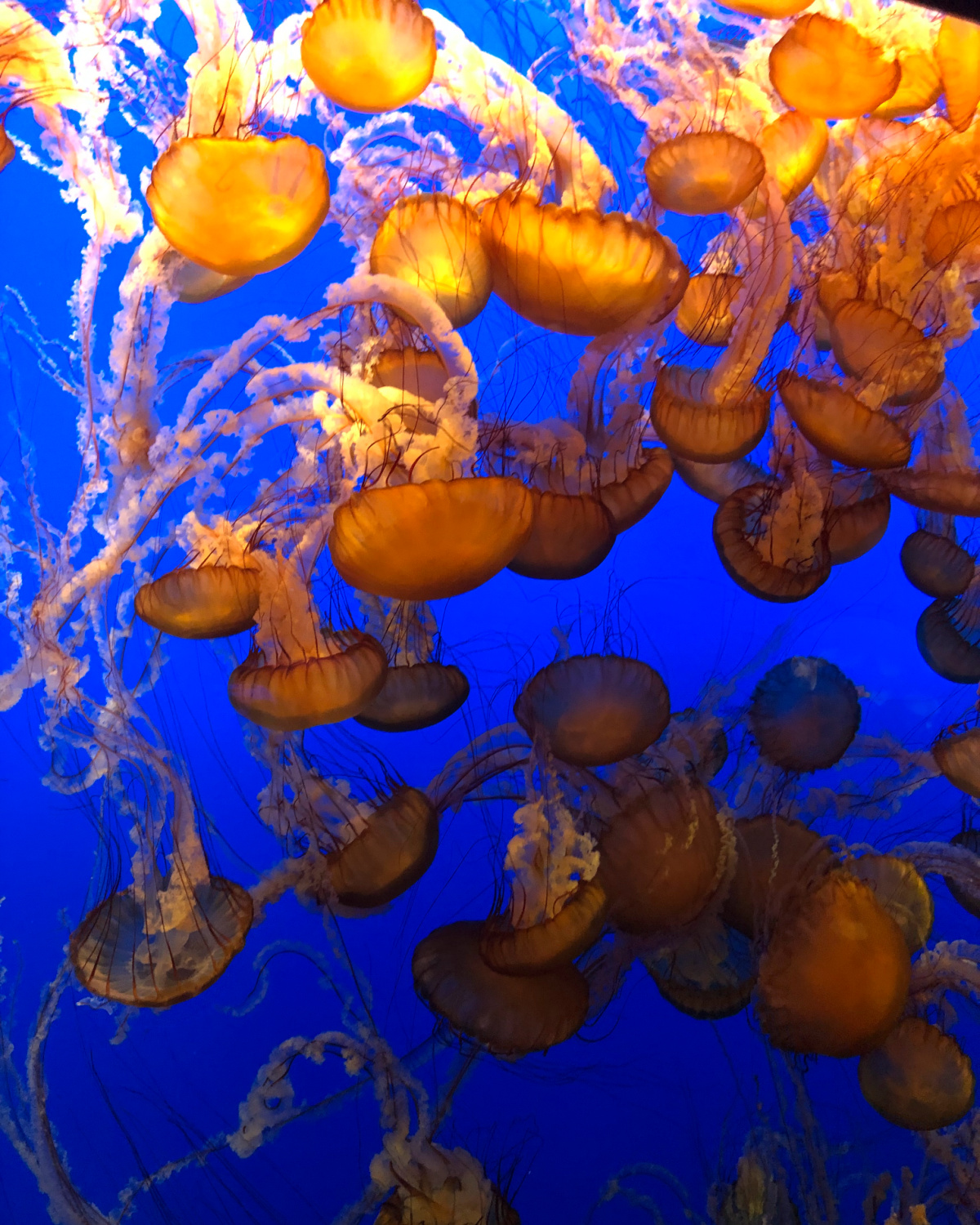
The jellyfish exhibits are another place where you may unexpectedly lose a lot of time.
There is something incredibly calming about watching jellyfish drift through the water.
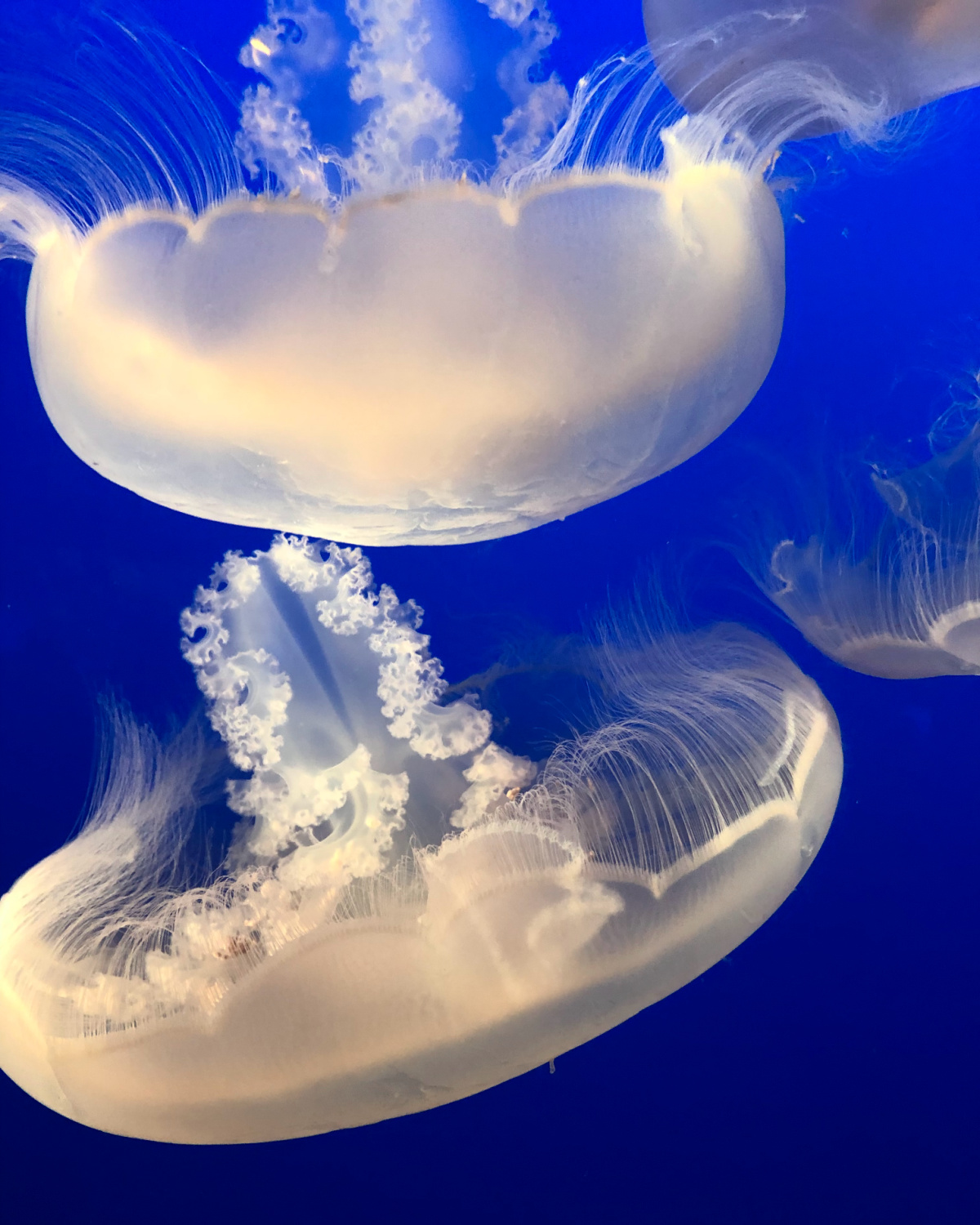
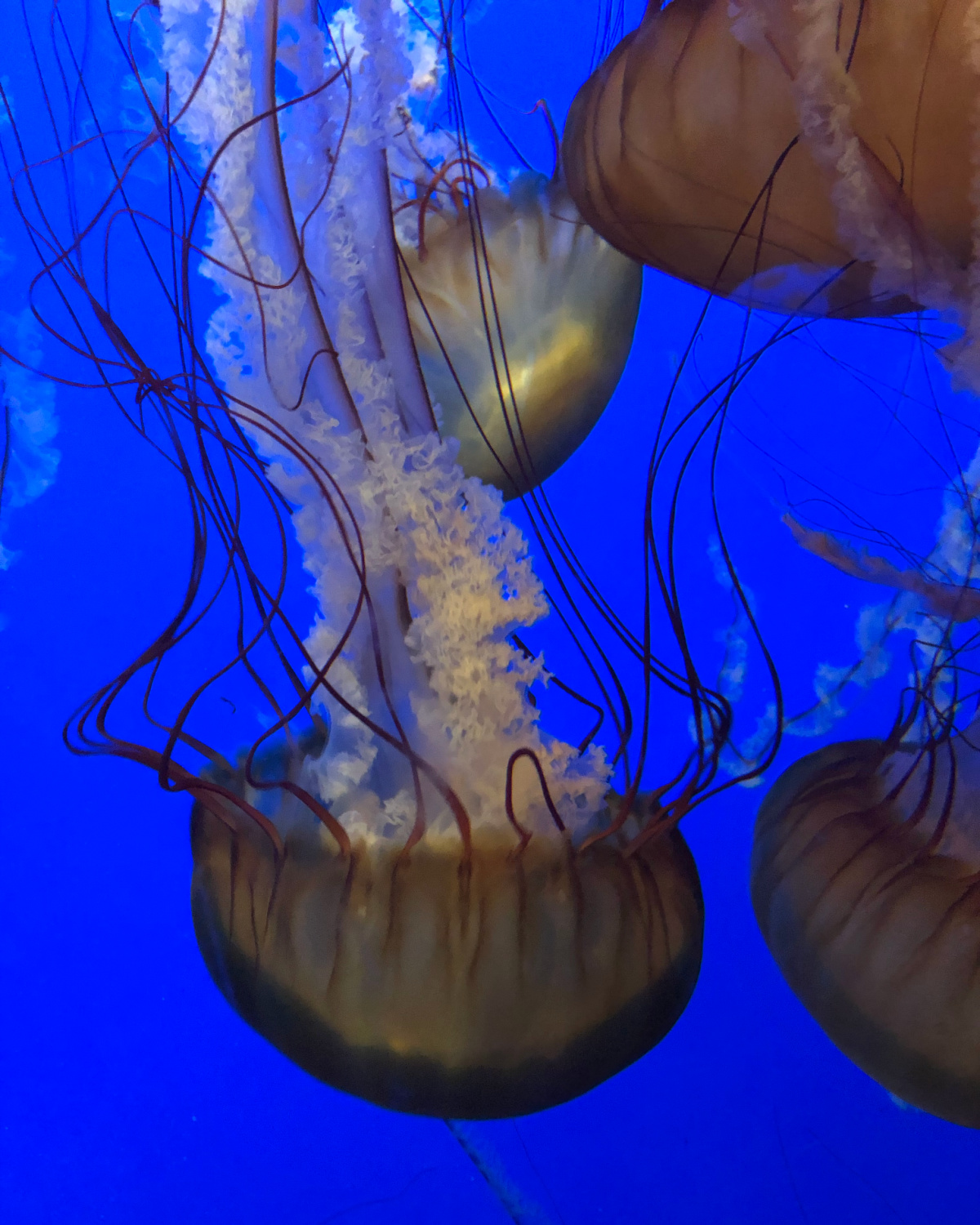
Some glow almost ghostly white against deep blue backgrounds. Others are brilliant shades of orange and gold, with tentacles trailing behind them.
When our daughter was six, she was completely fascinated.
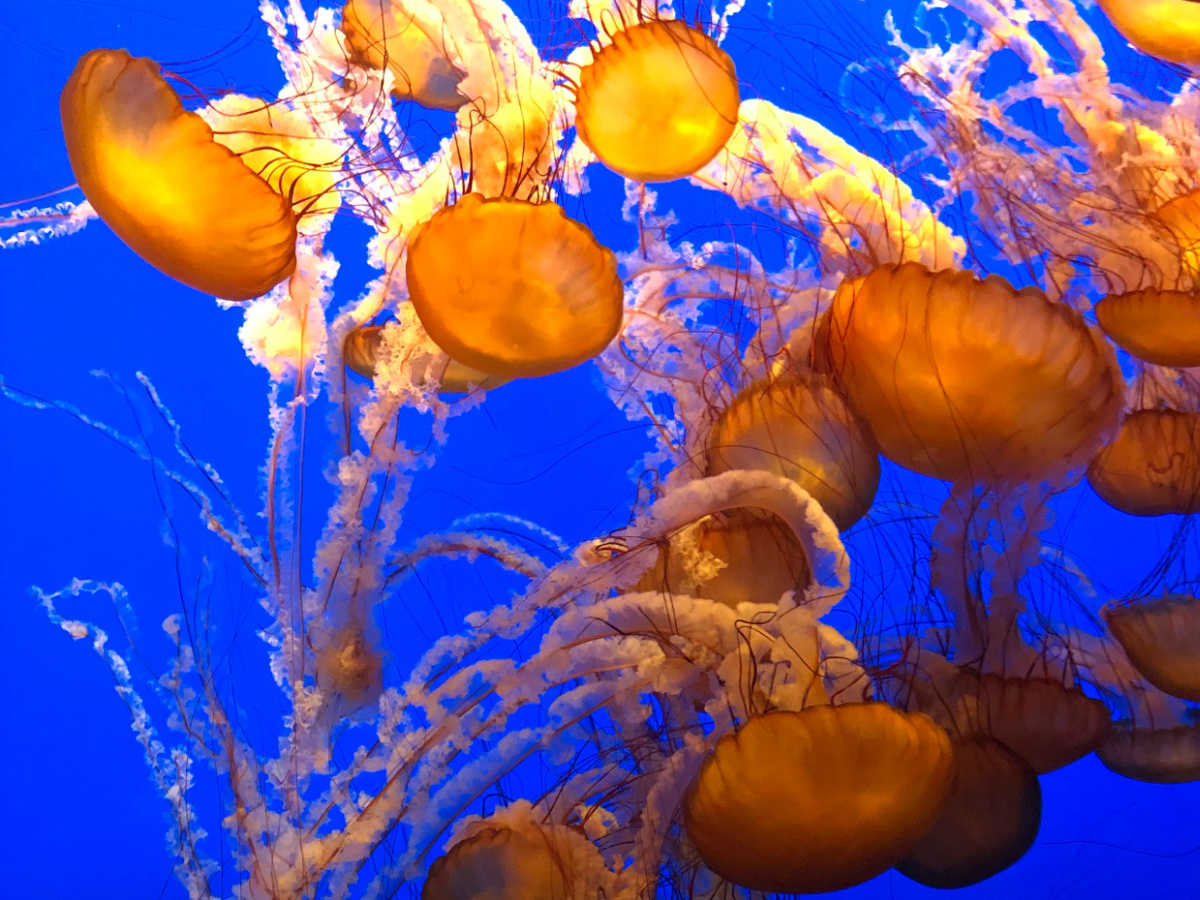
I have a photo of her standing in front of one of the glowing jellyfish exhibits with both hands stretched toward the glass, and it perfectly captures what this aquarium does so well.
The exhibits feel immersive.
You aren’t just looking at a tank.
For a few minutes, it feels like you have stepped into another world.
The Kelp Forest Is One of the Aquarium’s Signature Exhibits
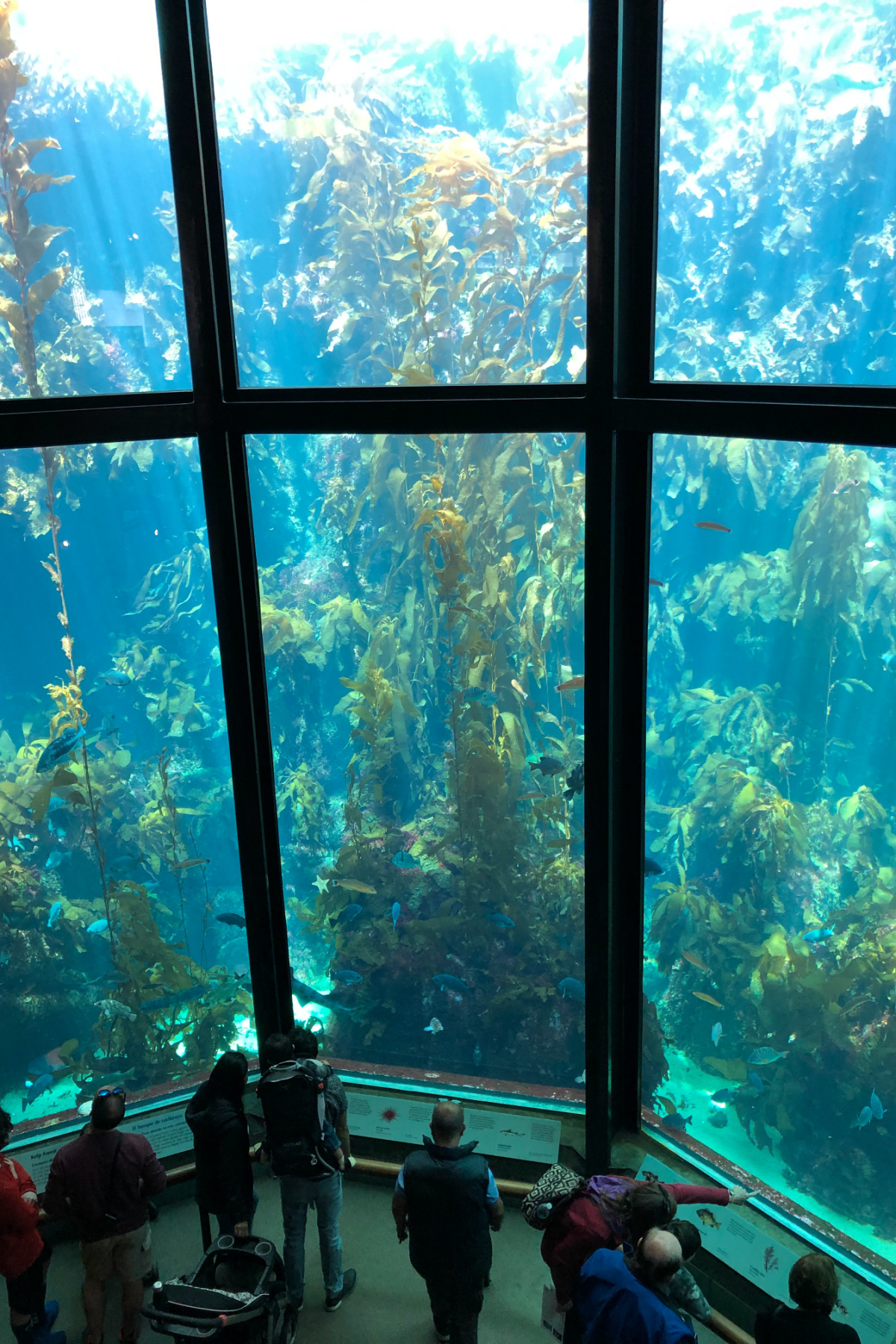
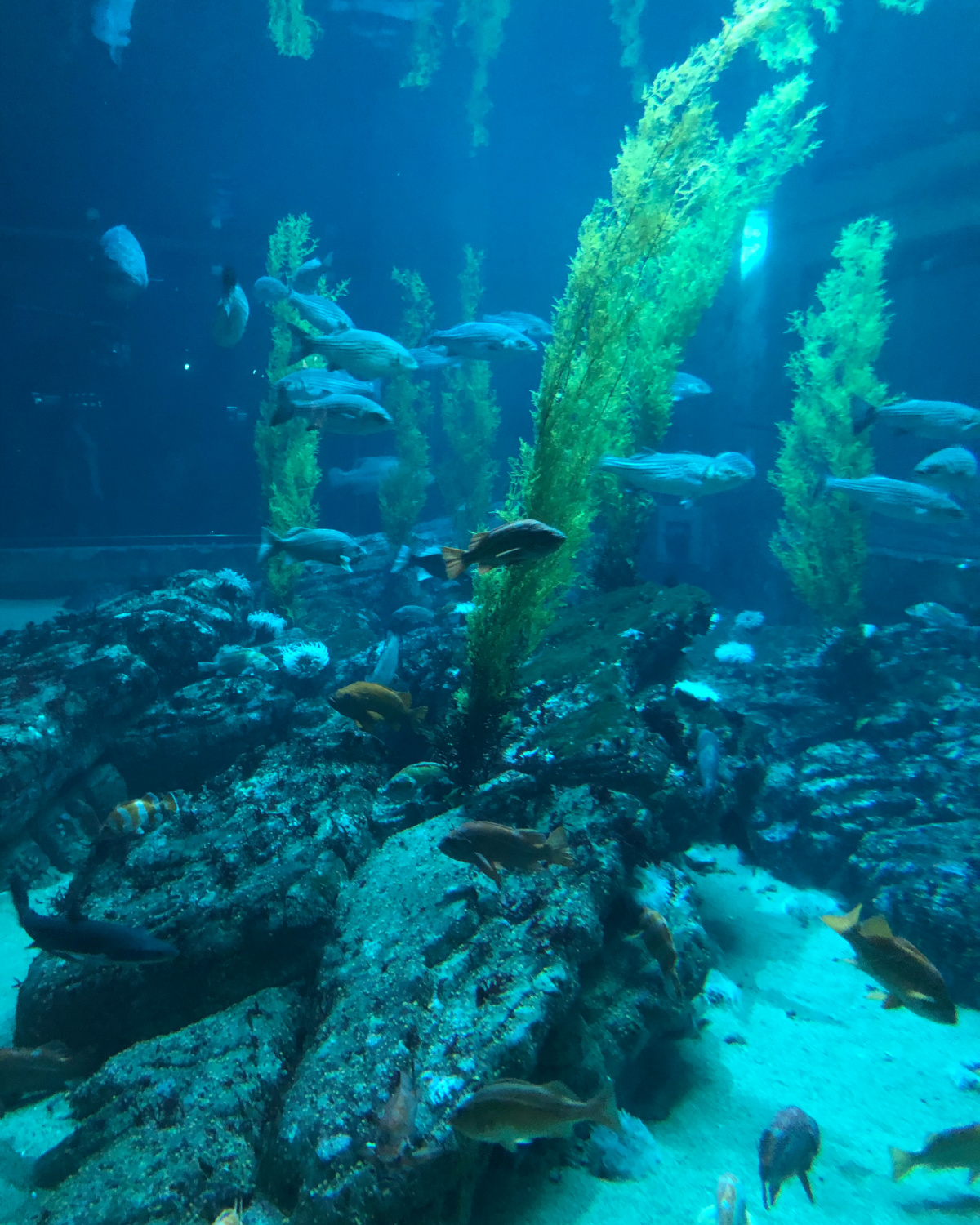
If there is one exhibit that really captures the spirit of Monterey Bay Aquarium, it might be the Kelp Forest.
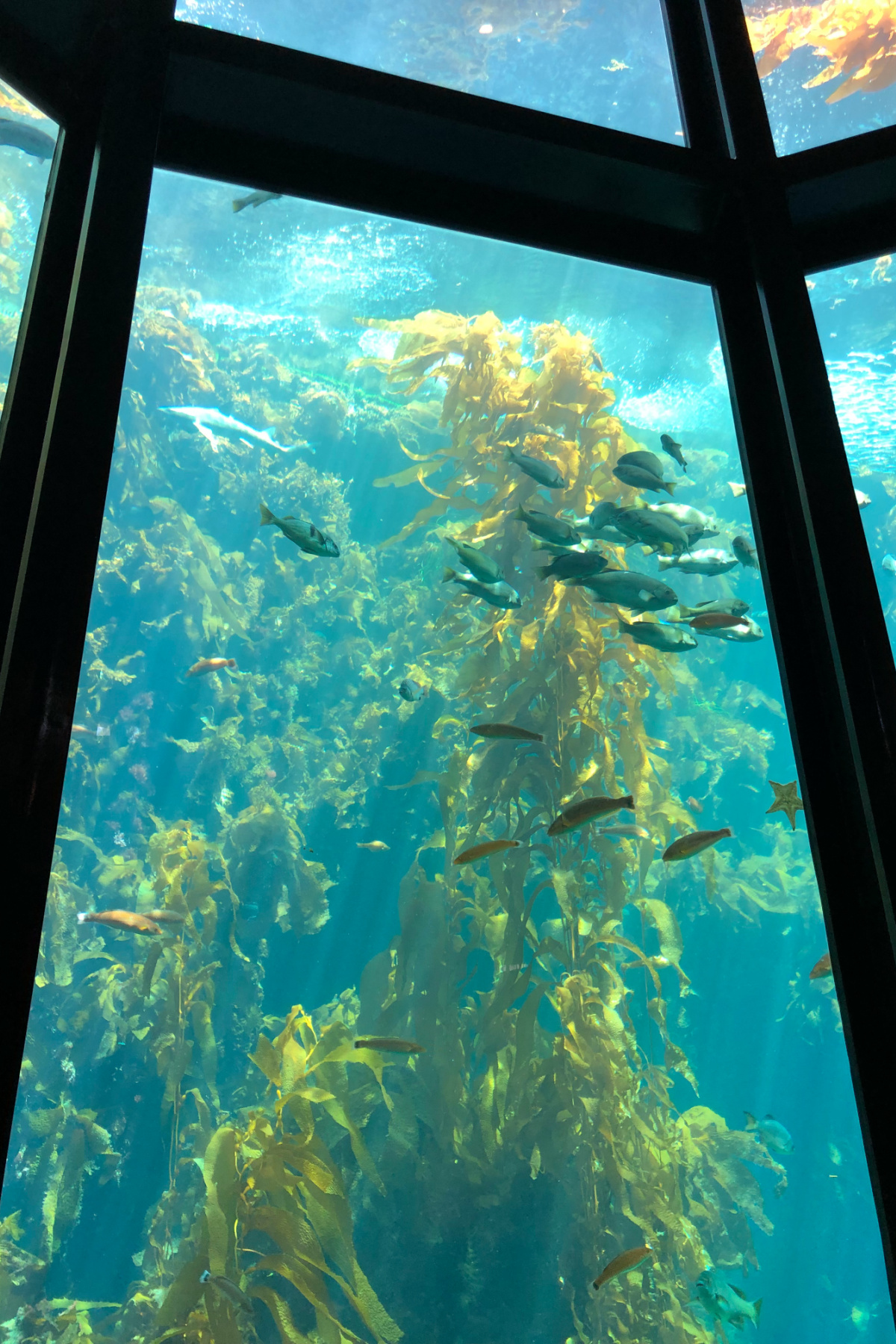
This thing is enormous. (the vertical shot image is above)
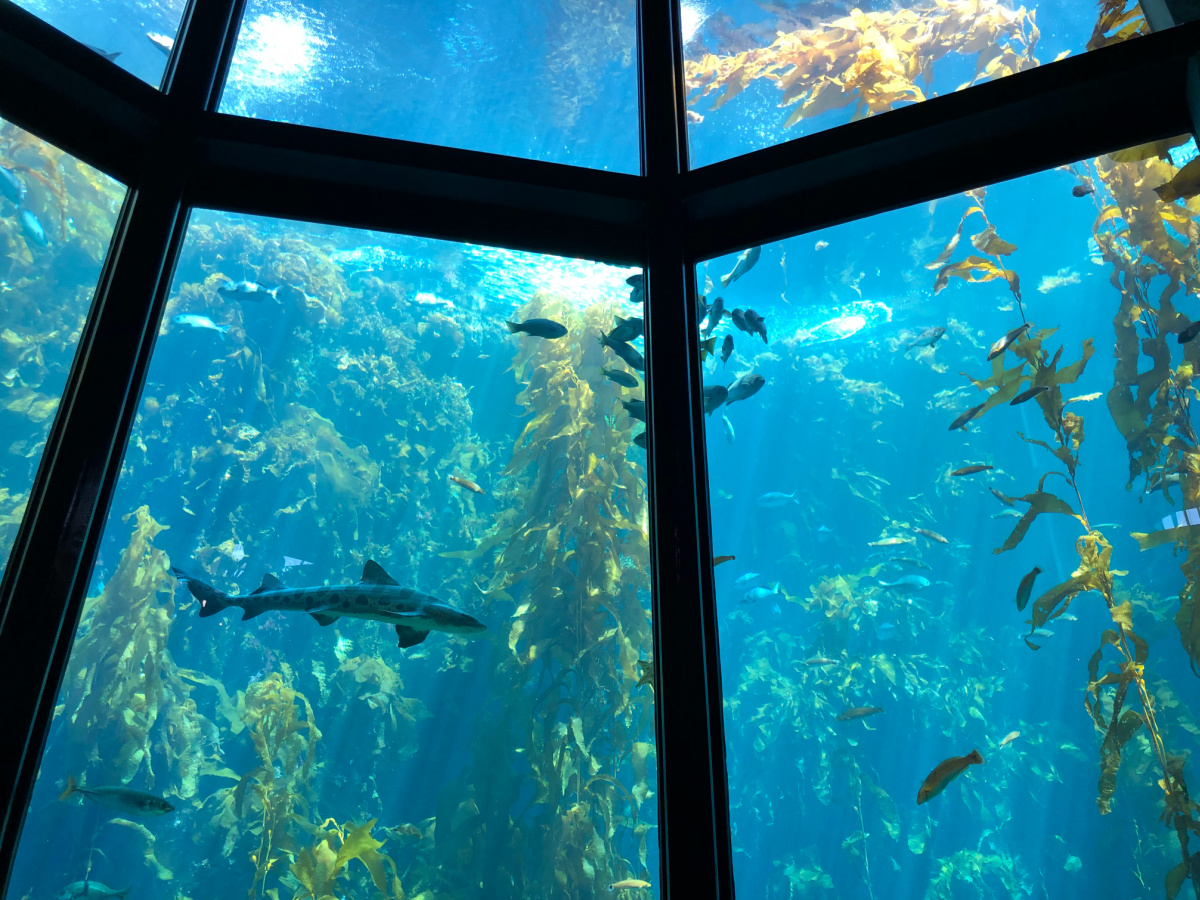
The exhibit rises through multiple stories of the aquarium, filled with towering strands of kelp and schools of fish weaving through them.
The first time you see it, you almost have to stop and figure out exactly what you are looking at because the scale is so much larger than a typical aquarium tank.
And don’t just look at it from one level.
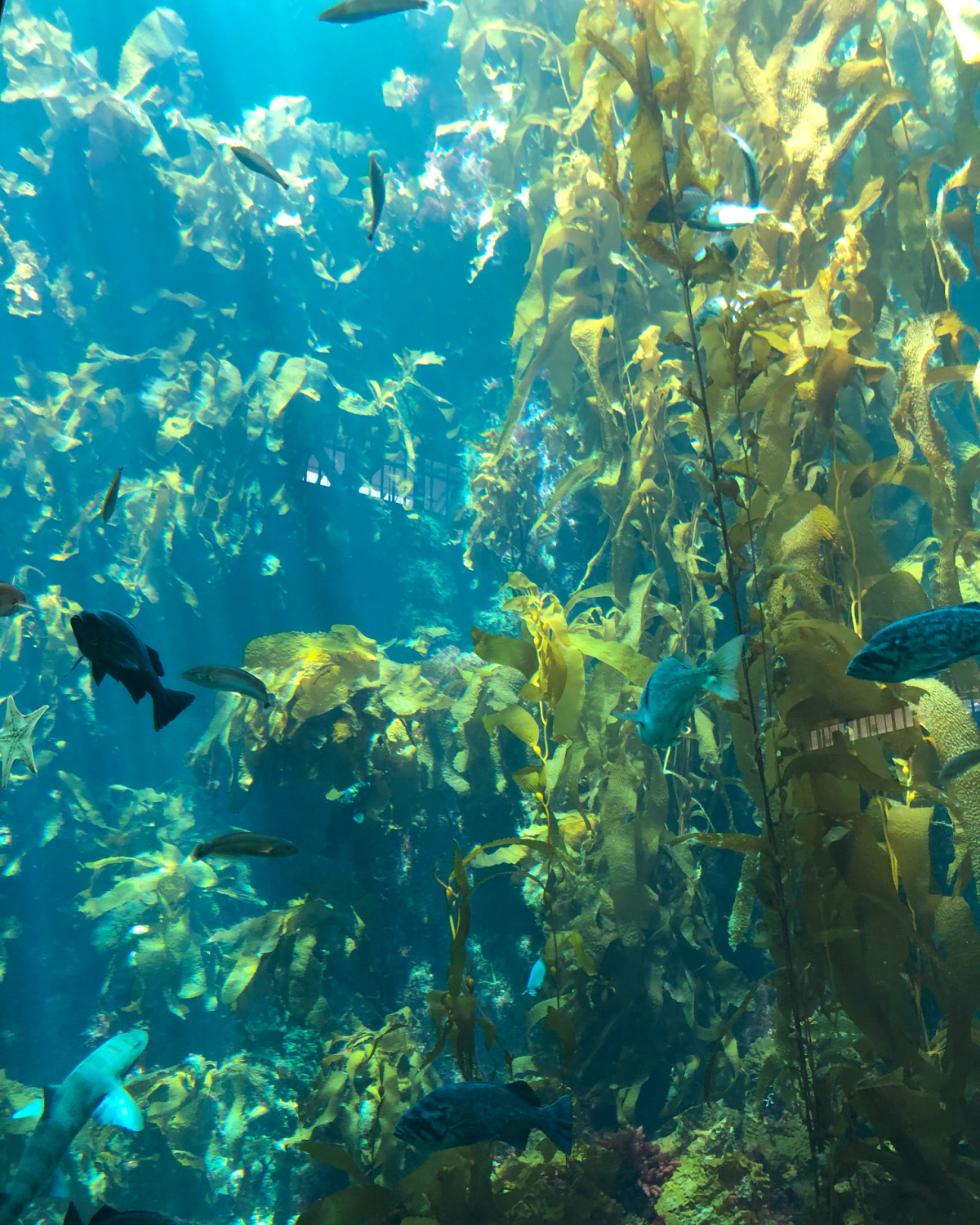
One of the coolest things about the Kelp Forest is being able to see it from different perspectives as you move through the aquarium.
From one viewing area, you might be looking straight into the forest of kelp.
From another, you can really appreciate the height of the exhibit and watch fish moving at completely different depths.
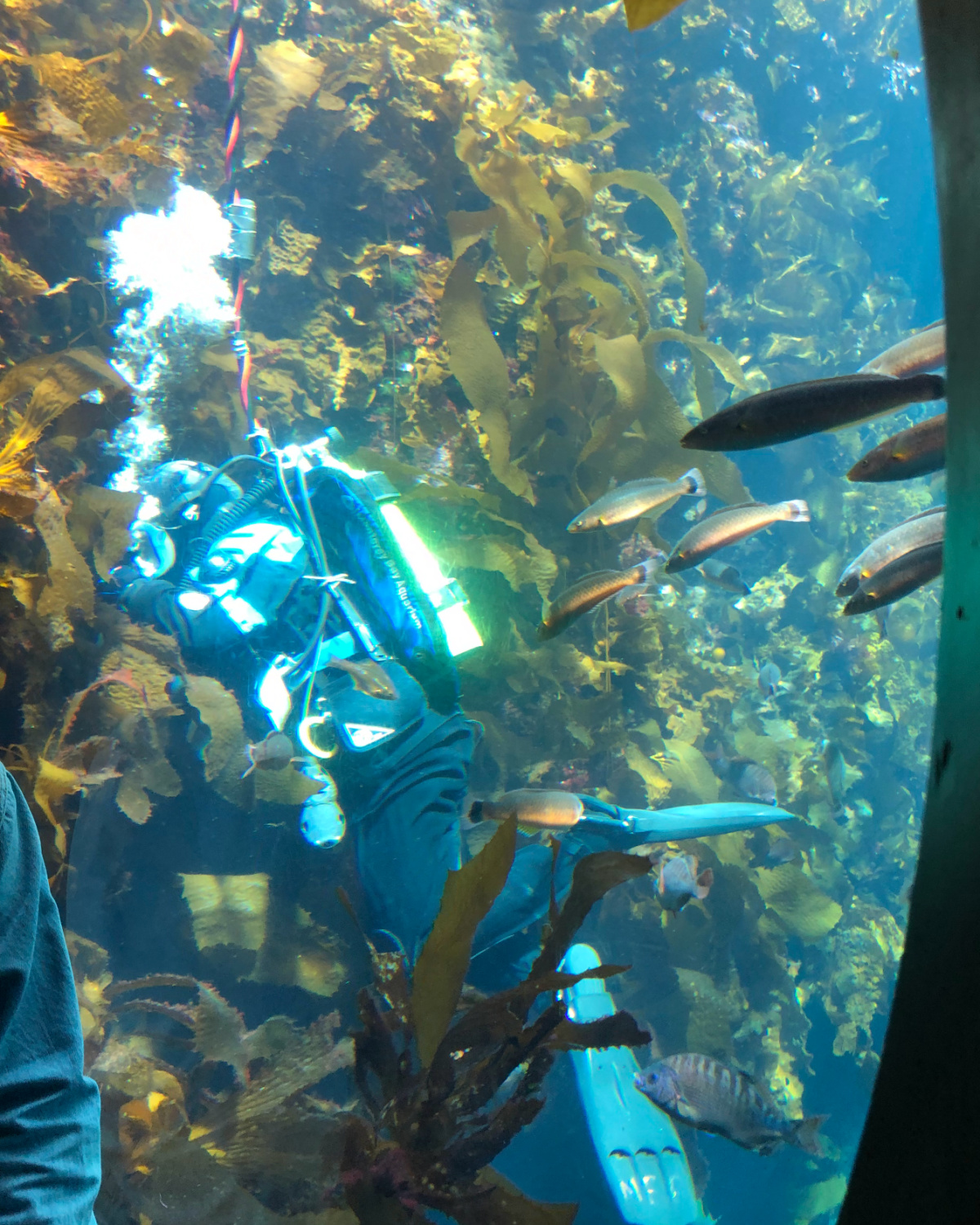
We also happened to see a diver inside the exhibit during one of our visits, which made the scale even more obvious.
Suddenly there was a human being swimming among the fish, and everything looked even bigger.
The Kelp Forest is designed to recreate one of the most important habitats found right outside the aquarium in Monterey Bay.
That connection between the exhibits and the actual ocean becomes a recurring theme throughout your visit.
The Open Sea Exhibit Is Absolutely Massive
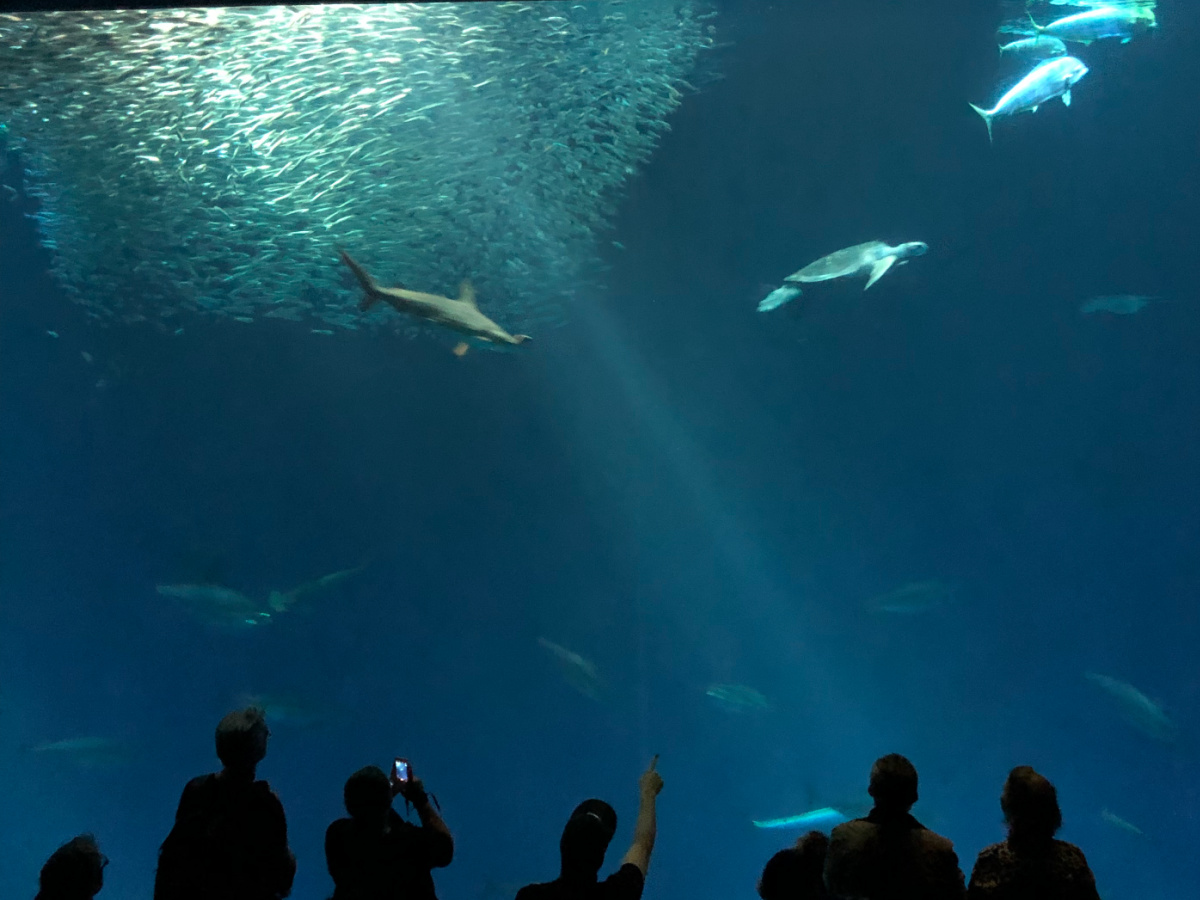
And then there is the Open Sea.
This is another one of those exhibits where photographs barely convey how enormous it feels in person.
The viewing window is huge, and the tank seems to disappear into darkness behind the animals.
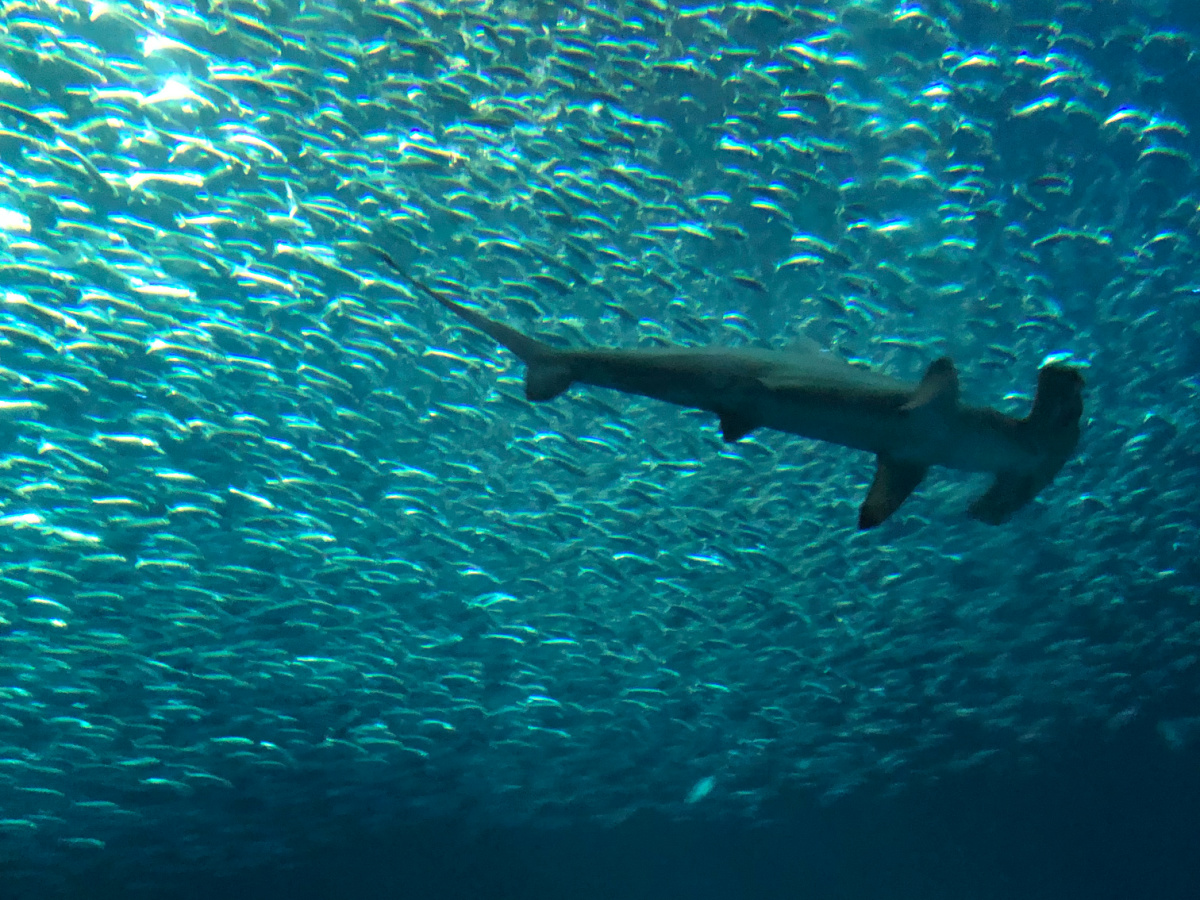
You might see sharks gliding through schools of fish, sea turtles swimming across the tank, and thousands of smaller fish moving together like one enormous living cloud.
This is the kind of exhibit where everyone ends up standing quietly for a few minutes.
Adults.
Kids.
Everybody.
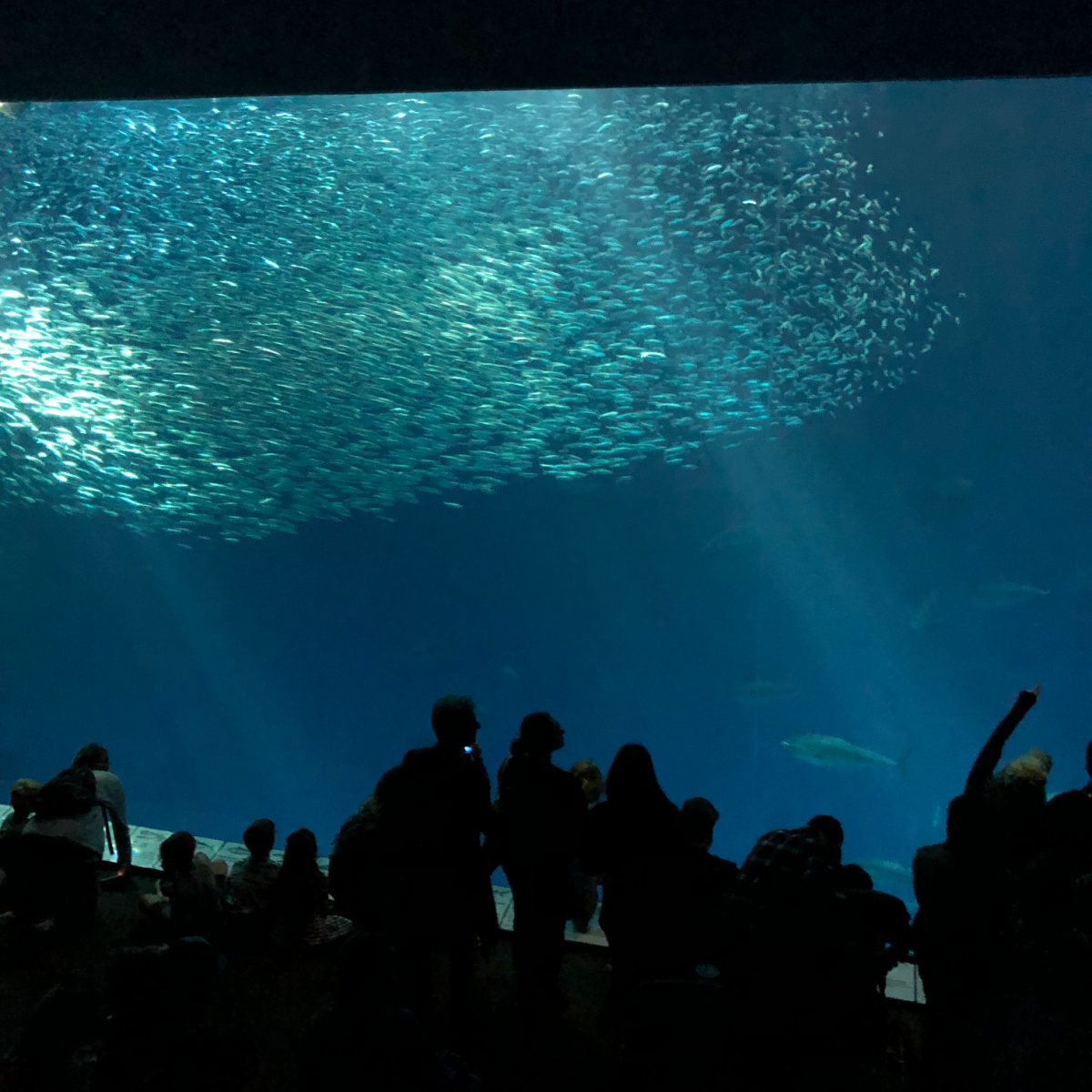
One of my favorite photographs from our visit shows visitors silhouetted along the bottom of the massive viewing window while marine life moves above them.
It gives you a much better idea of the scale than a close-up photograph ever could.
If you only had time for a handful of exhibits at Monterey Bay Aquarium, the Kelp Forest and Open Sea would both belong near the top of the list.
Monterey Bay Aquarium Is Much More Hands-On Than You Might Expect
One of the things I appreciate most about Monterey Bay Aquarium is how interactive it is.
A lot of aquariums have a touch pool.
Maybe two.
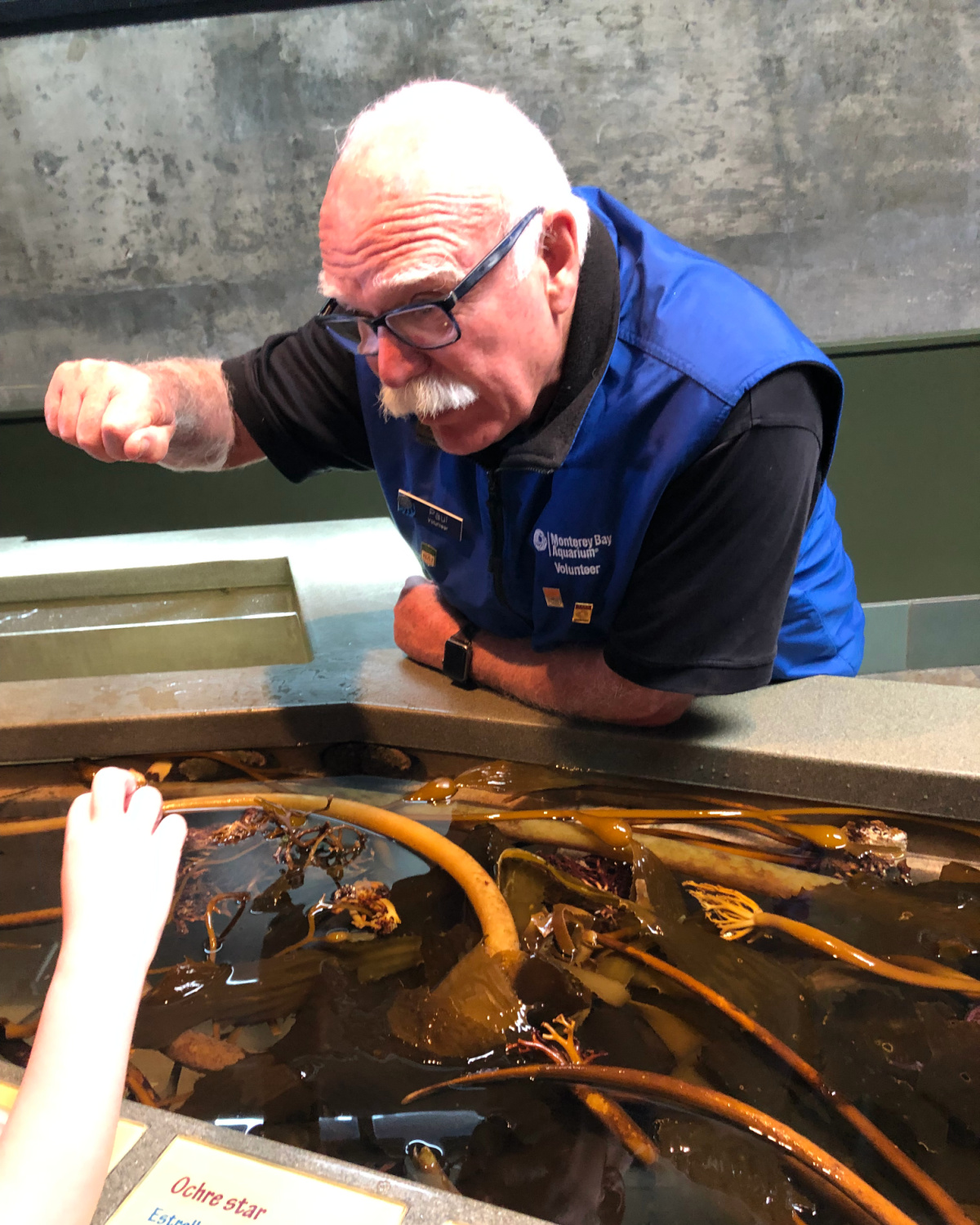
Monterey Bay Aquarium seems to keep giving you another opportunity to interact with the exhibits.
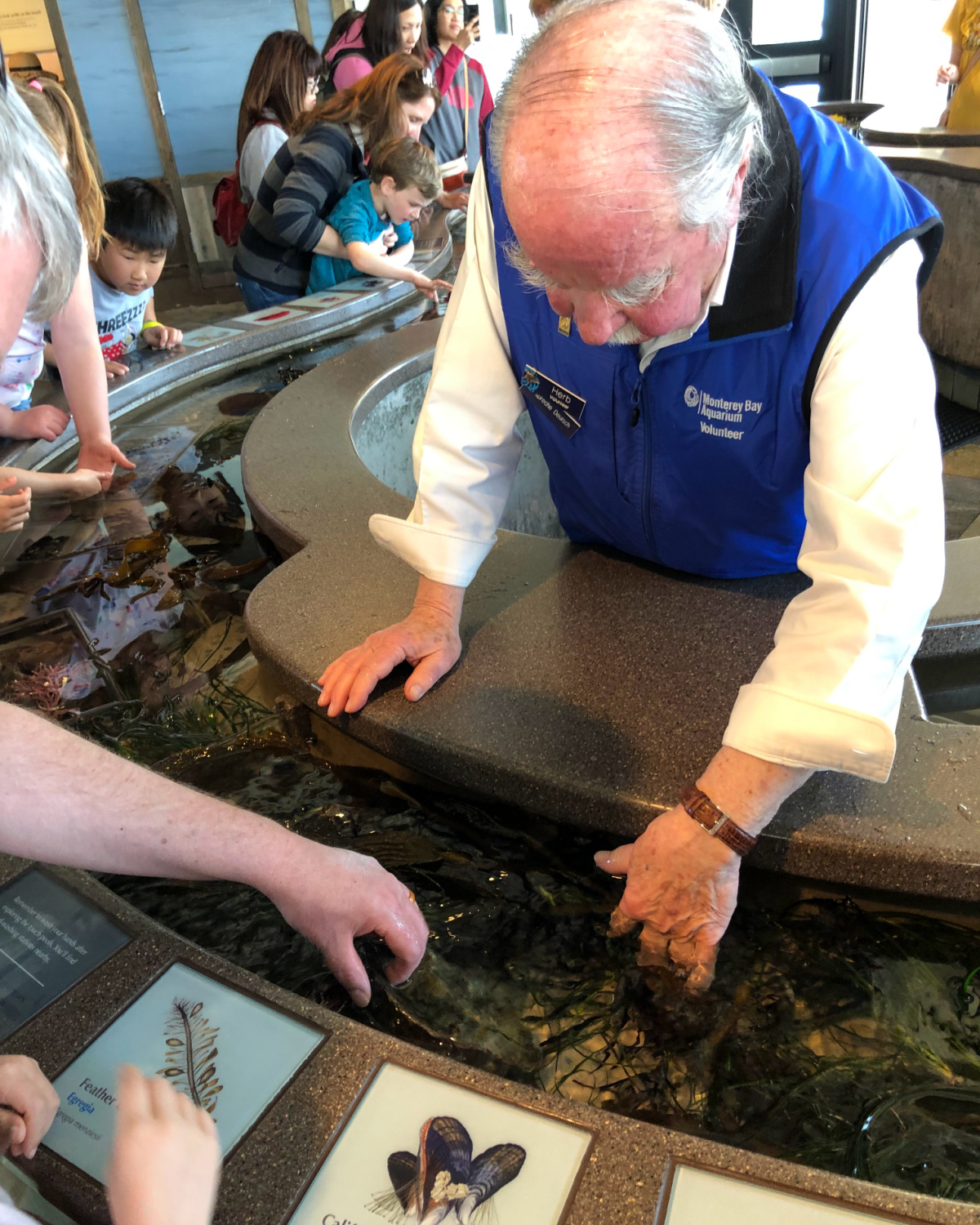
We encountered multiple areas where visitors could touch or closely investigate tide pool animals, often with aquarium volunteers nearby to answer questions and explain what everyone was seeing.
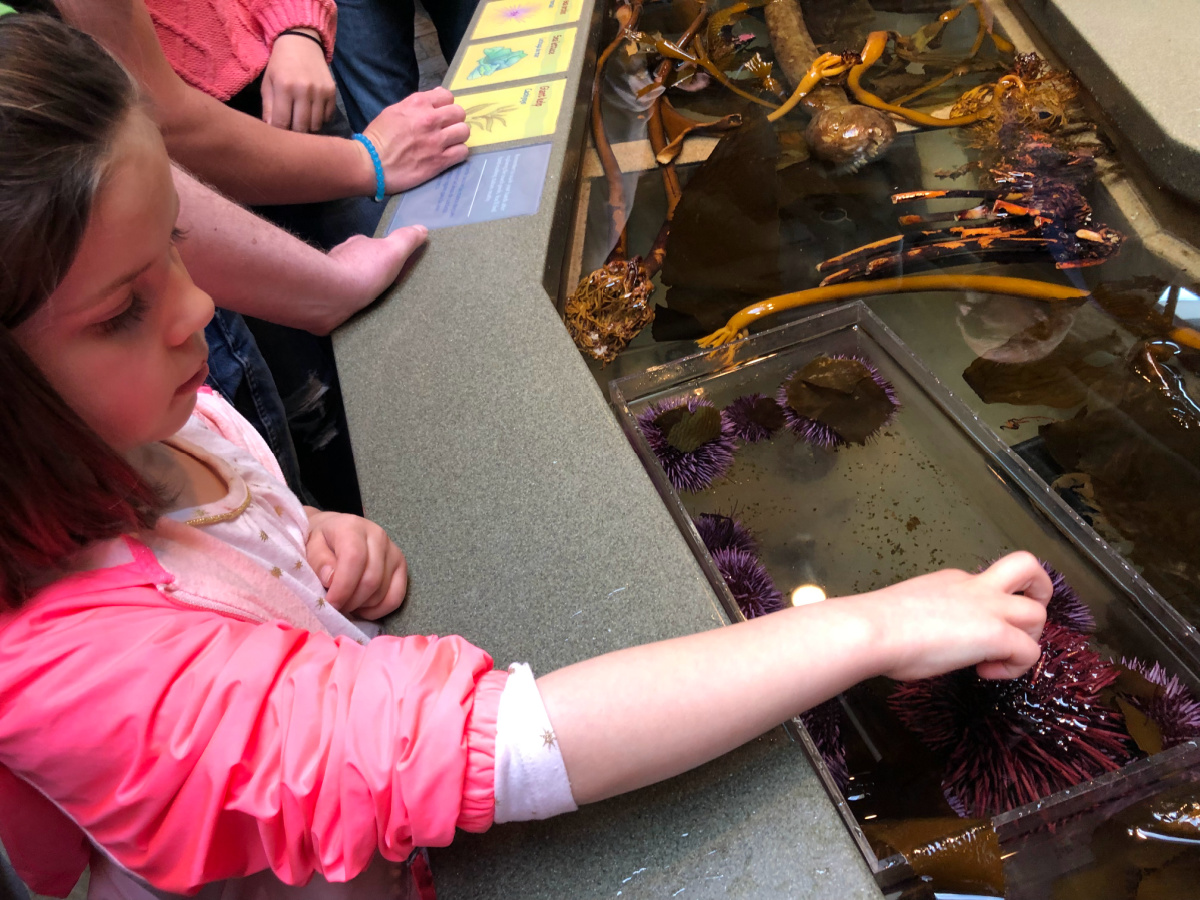
Our daughter touched sea urchins, explored kelp and tide pool habitats, and participated in several other hands-on activities during our visit.
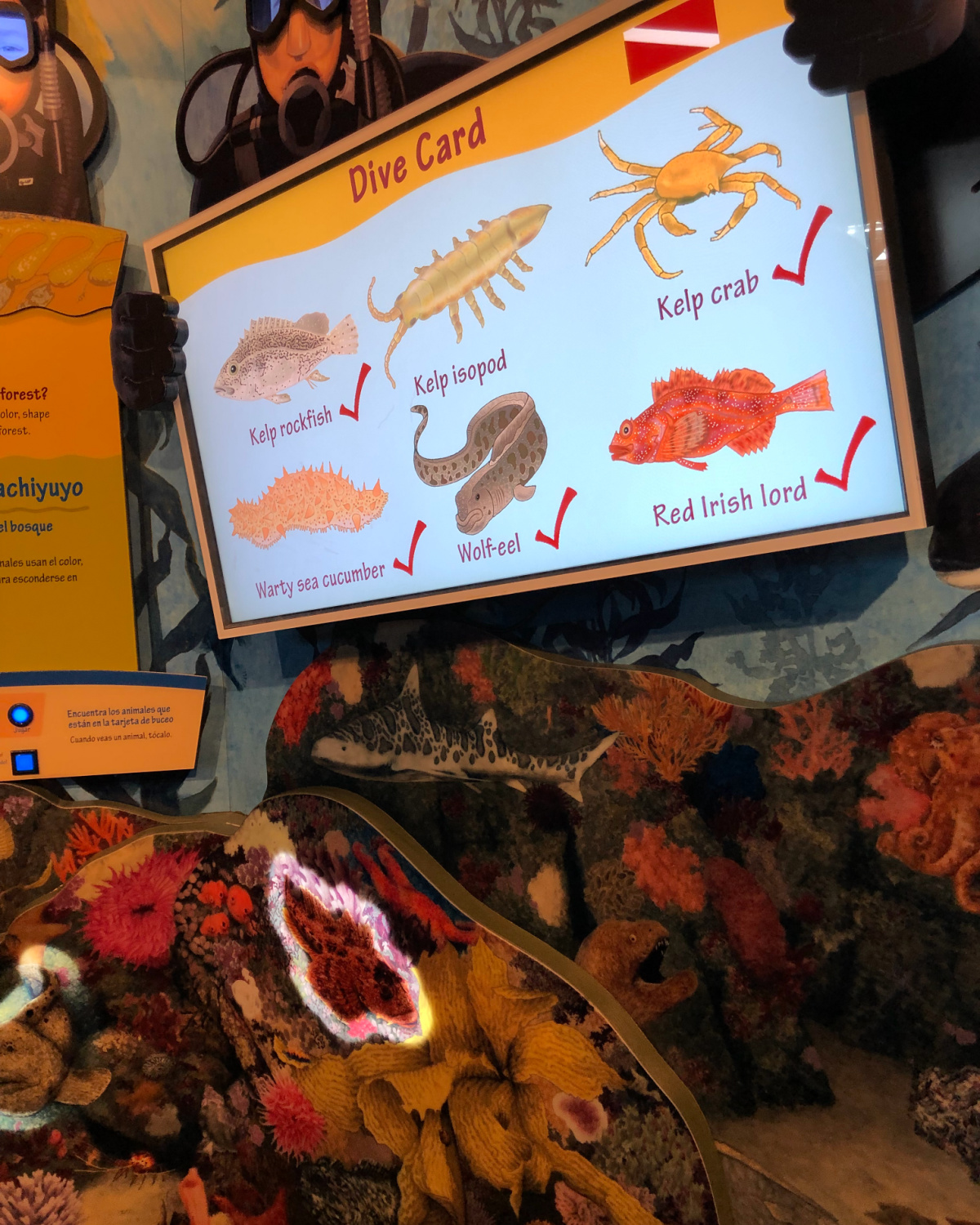
And the volunteers make a huge difference.
Instead of simply placing animals in a shallow pool and letting children reach in, there is often someone nearby helping kids understand what they are touching.
That turns the experience from entertainment into actual marine science education.
And the hands-on elements aren’t limited to living animals.
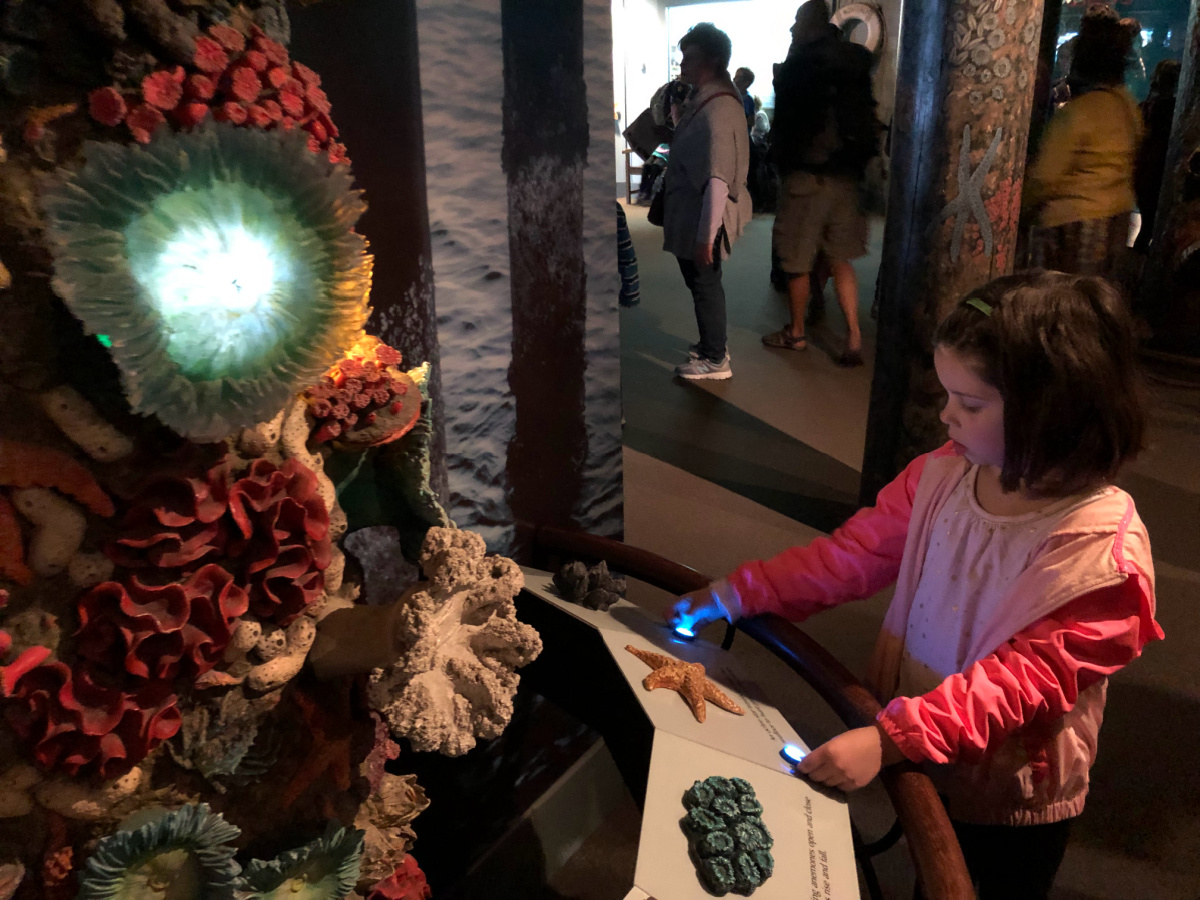
Throughout the aquarium, kids can experiment with interactive displays, investigate marine life, and explore exhibits designed specifically around how children learn.
That is one of the reasons I would recommend Monterey Bay Aquarium so strongly for elementary-age kids.
There is always something else to do.
Experience the Power of the Ocean at the Wave Crash Exhibit
One of our daughter’s favorite experiences had nothing to do with an animal.
It was a wave.
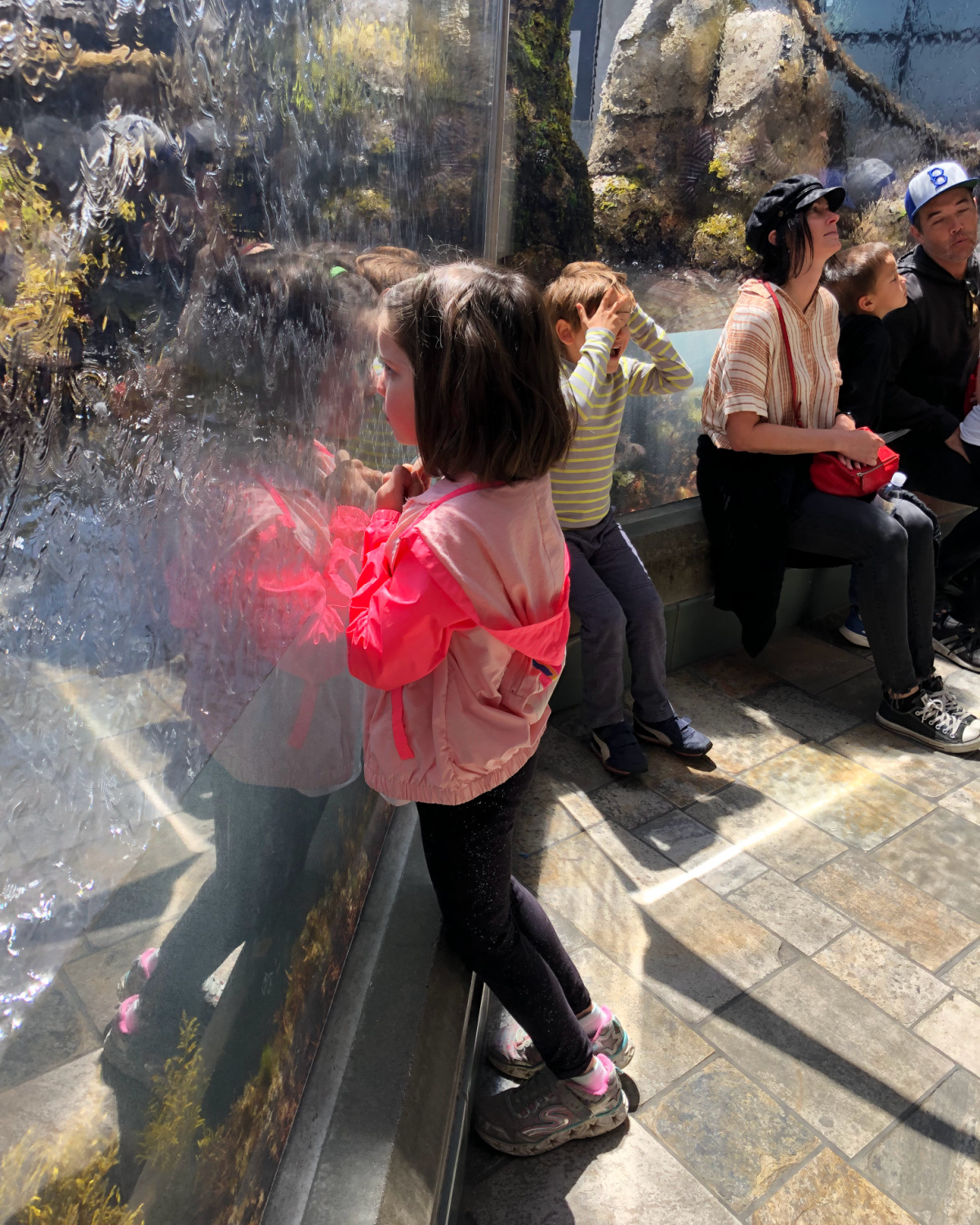
The Wave Crash exhibit allows visitors to stand behind a large viewing window while water surges over the glass, recreating the feeling of waves crashing against Monterey’s rocky shoreline.
Kids absolutely love this.
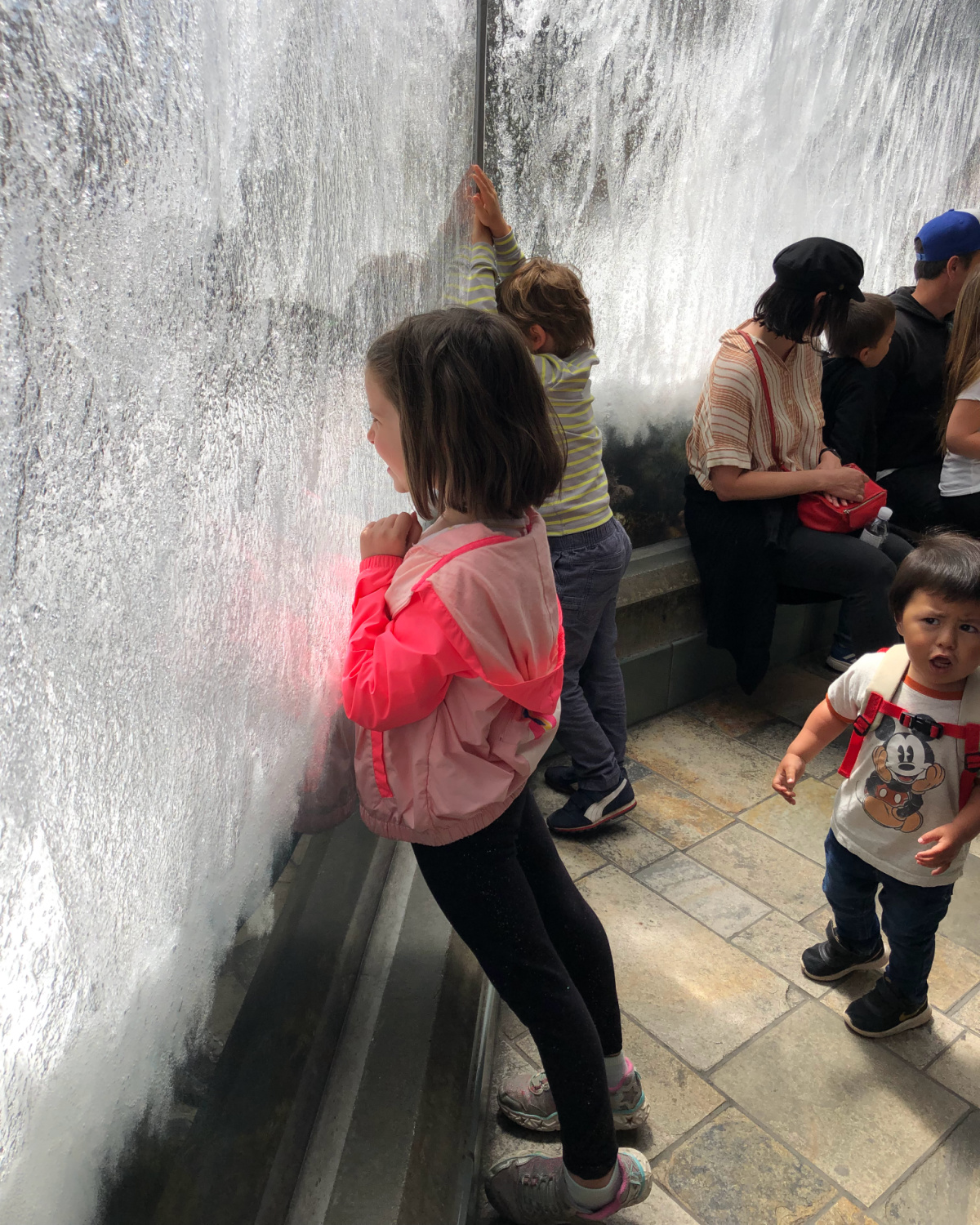
They gather around the glass waiting for the next wave, knowing perfectly well that they are not going to get wet but reacting as if the Pacific Ocean is about to crash directly into the room anyway.
It’s loud.
It’s dramatic.
And it’s another great example of how Monterey Bay Aquarium turns ocean science into something children can actually experience.
Rather than simply explaining the power of waves, the aquarium lets you feel it.
And after you have watched simulated waves crash against the glass inside, you can walk outside and see the real Monterey Bay doing exactly the same thing.
That connection is part of what makes this aquarium extraordinary.
Step Outside and Look at the Actual Monterey Bay
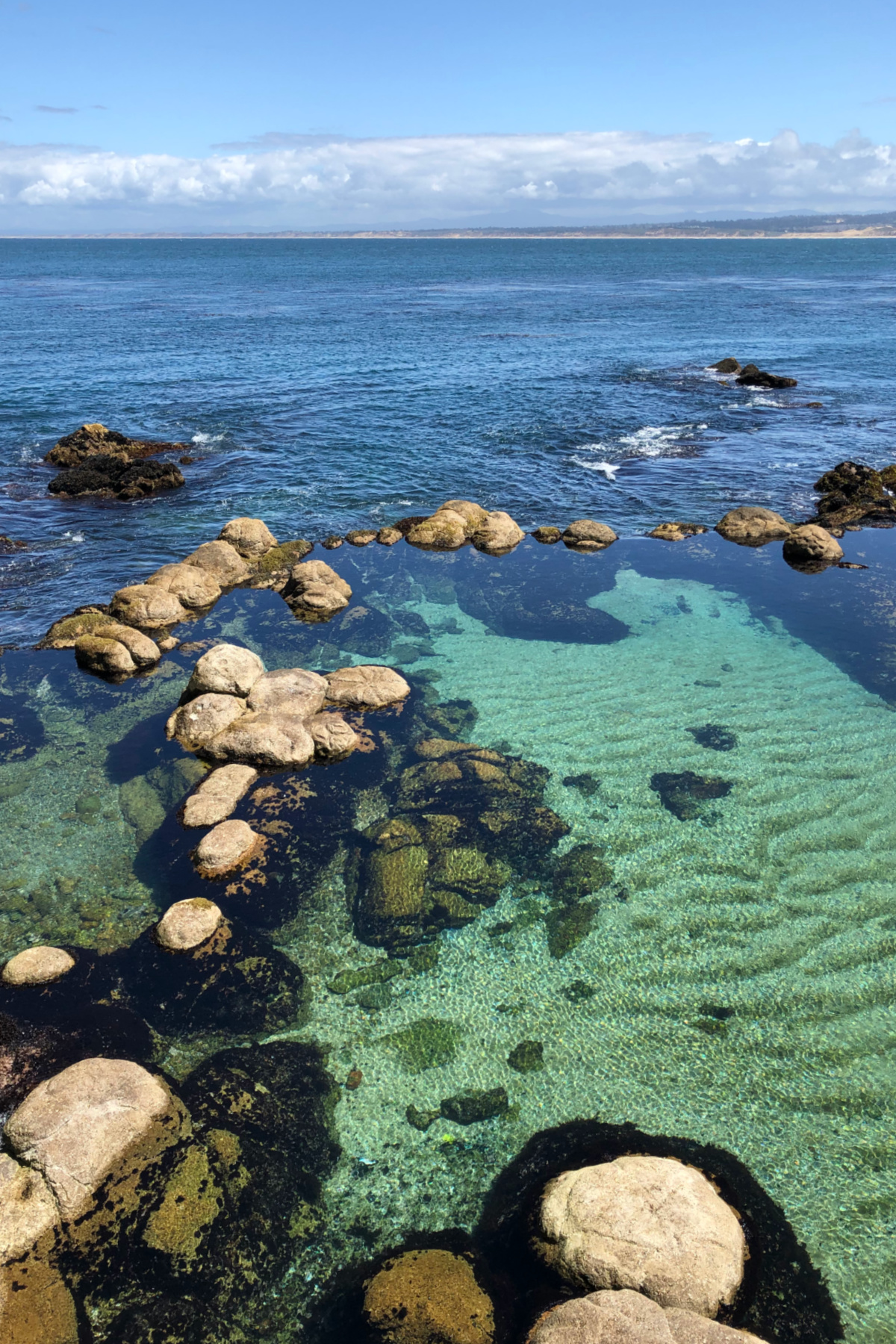
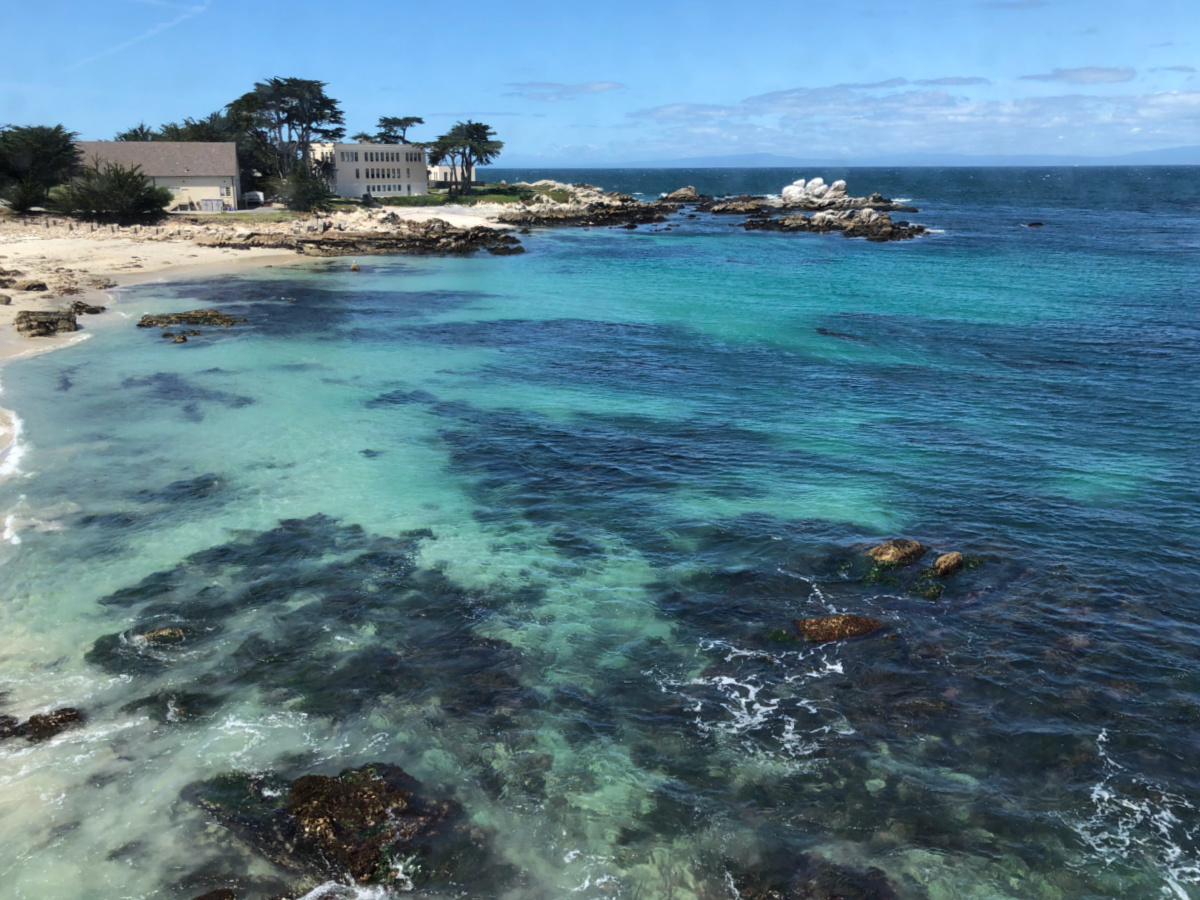
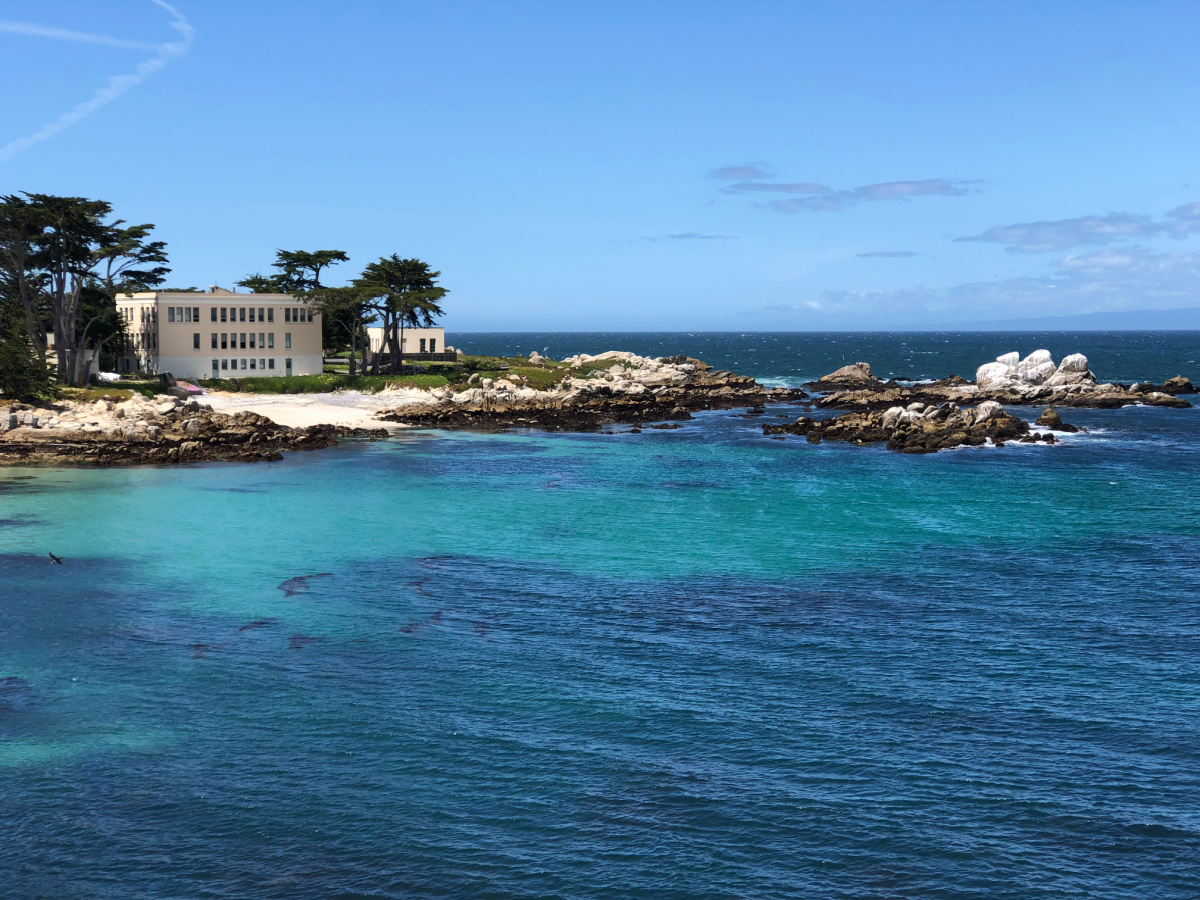
One of the best things about the Monterey Bay Aquarium is that every so often you get this reminder that the real ocean is right outside.
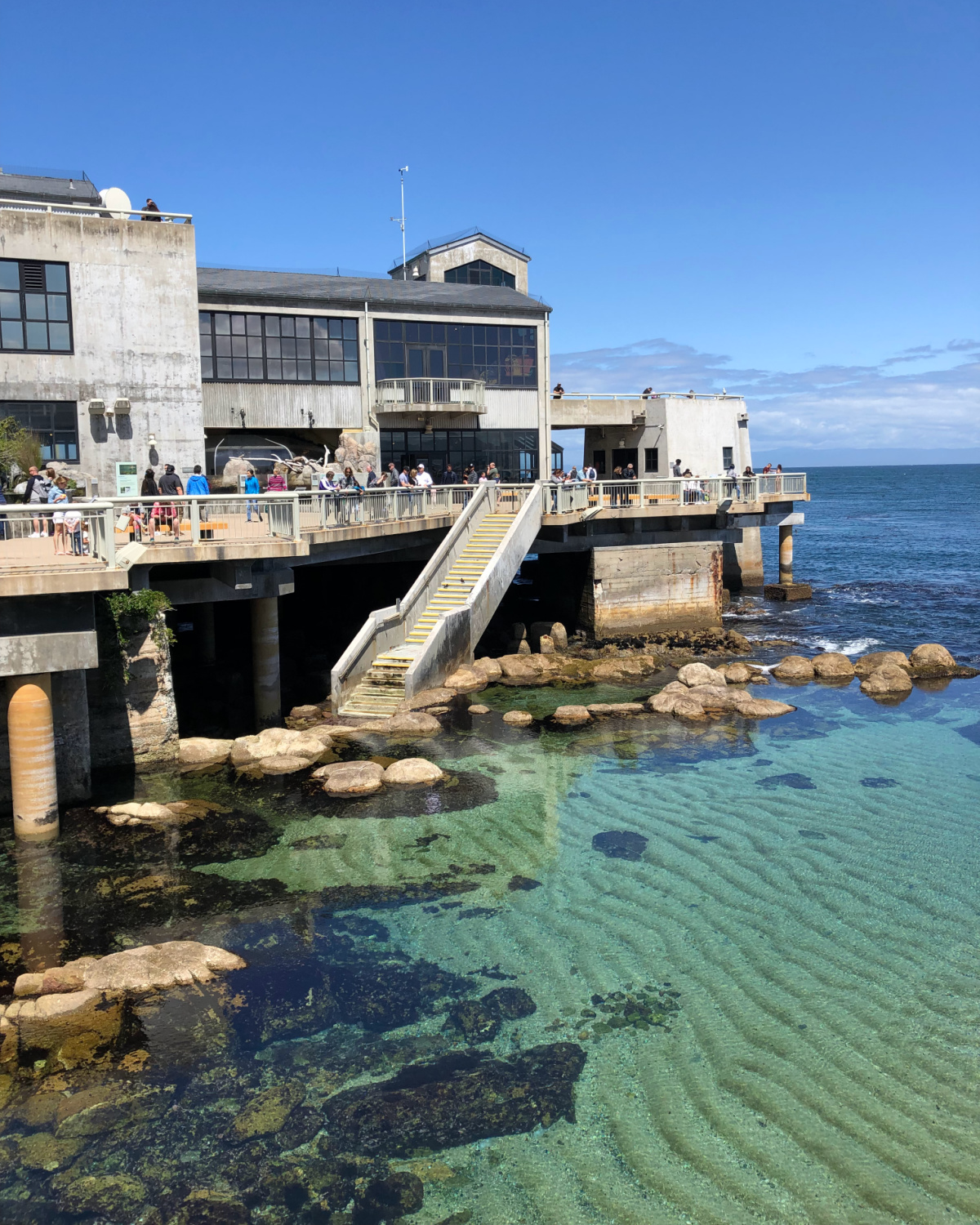
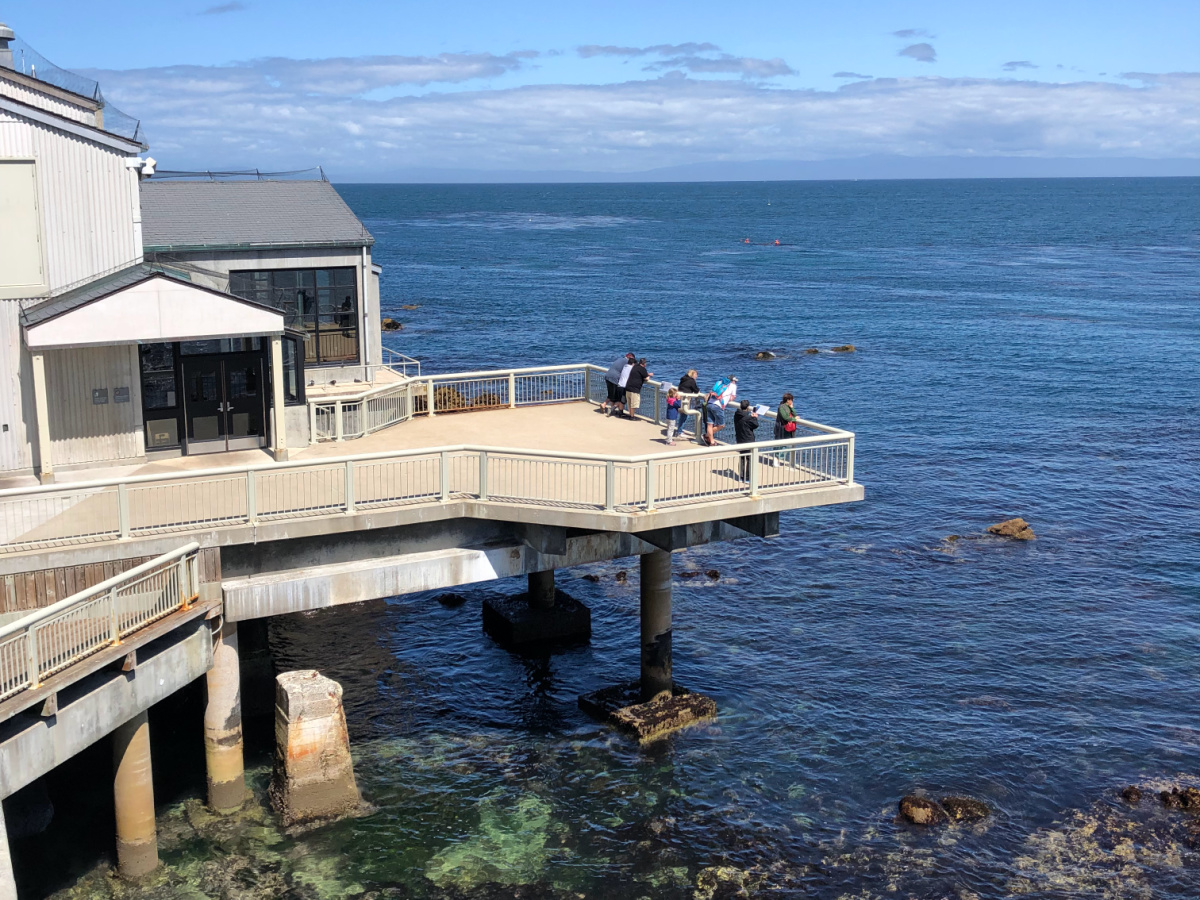
There are outdoor decks where you can step out, get some fresh air, and look straight across Monterey Bay. The water is gorgeous, especially on a sunny day, and you can see the rocks, the kelp, and the coastline stretching away from the aquarium.
I really like this part of the visit because it gives you a break from being inside without actually leaving the aquarium.
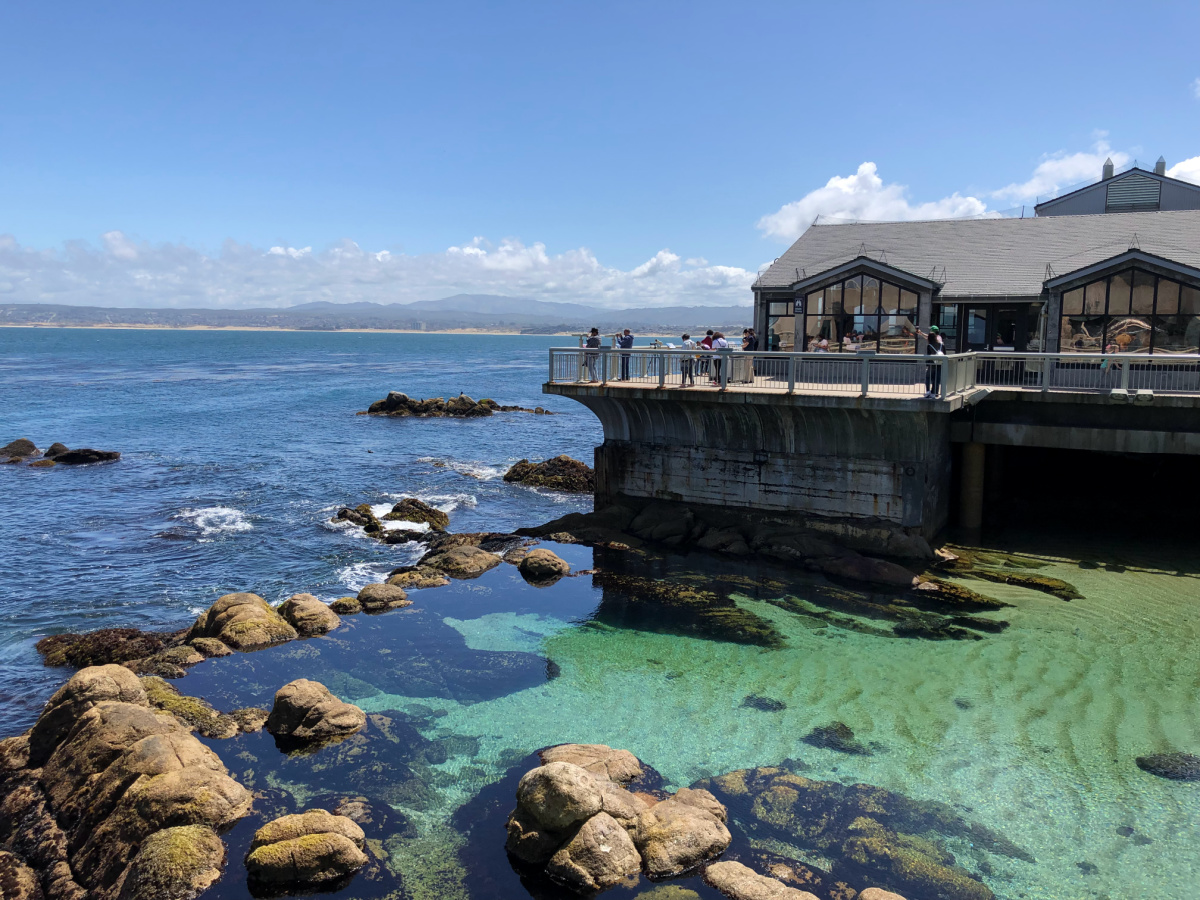
And honestly, after you have spent a couple of hours looking at exhibits about kelp forests, tide pools, sea otters, and all the other marine life in Monterey Bay, it is pretty cool to walk outside and realize that the real thing is sitting right there.
If you are visiting with kids, this is also a good reset spot. The aquarium is huge and there is a lot going on. Sometimes everyone just needs ten minutes of ocean and sunshine.
The Shorebird Aviary Is Easy to Miss, But Don’t
The aquarium isn’t only about fish and marine mammals.
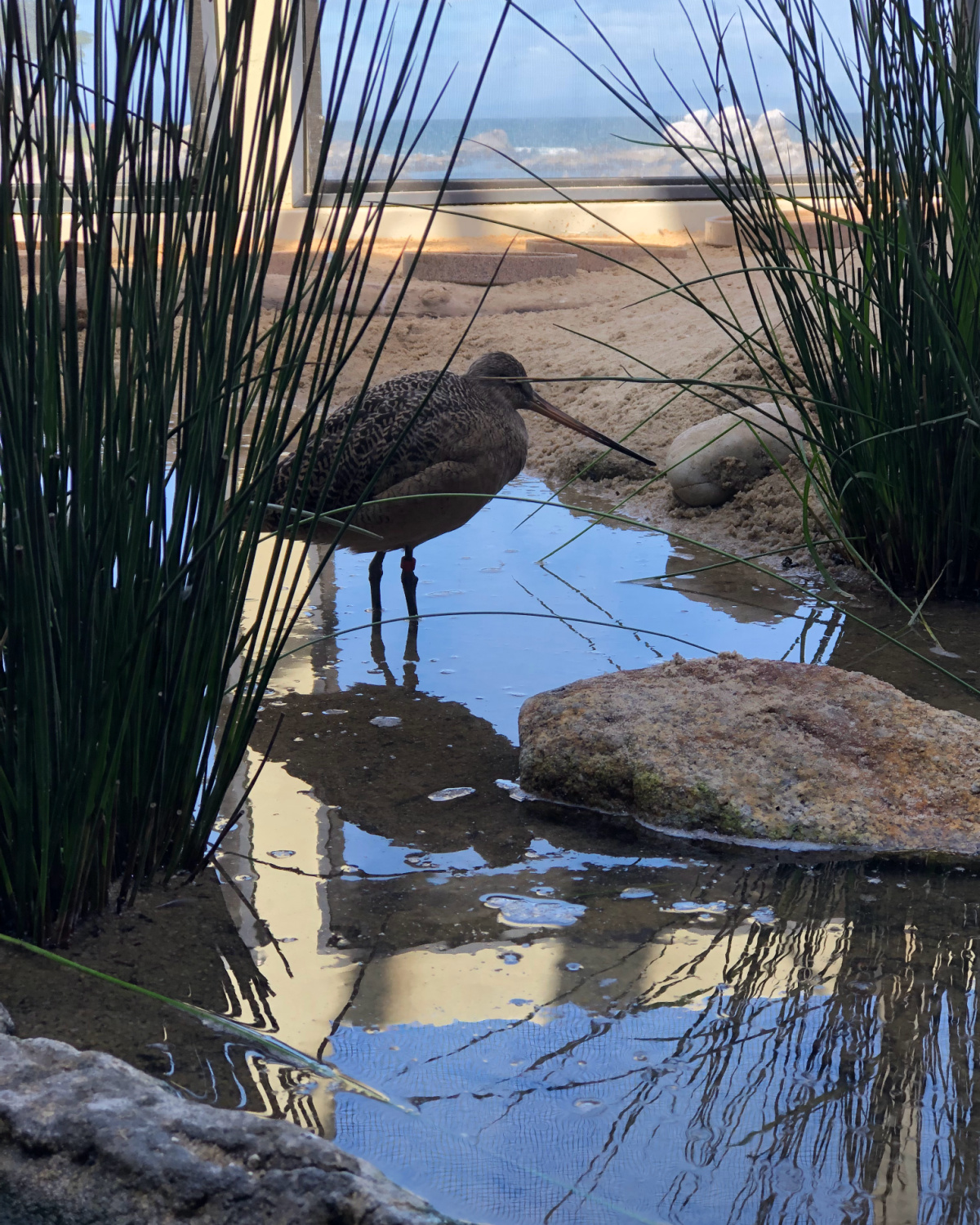
There is also a shorebird area with shallow water, sand, marsh grasses, and birds wandering around the habitat.
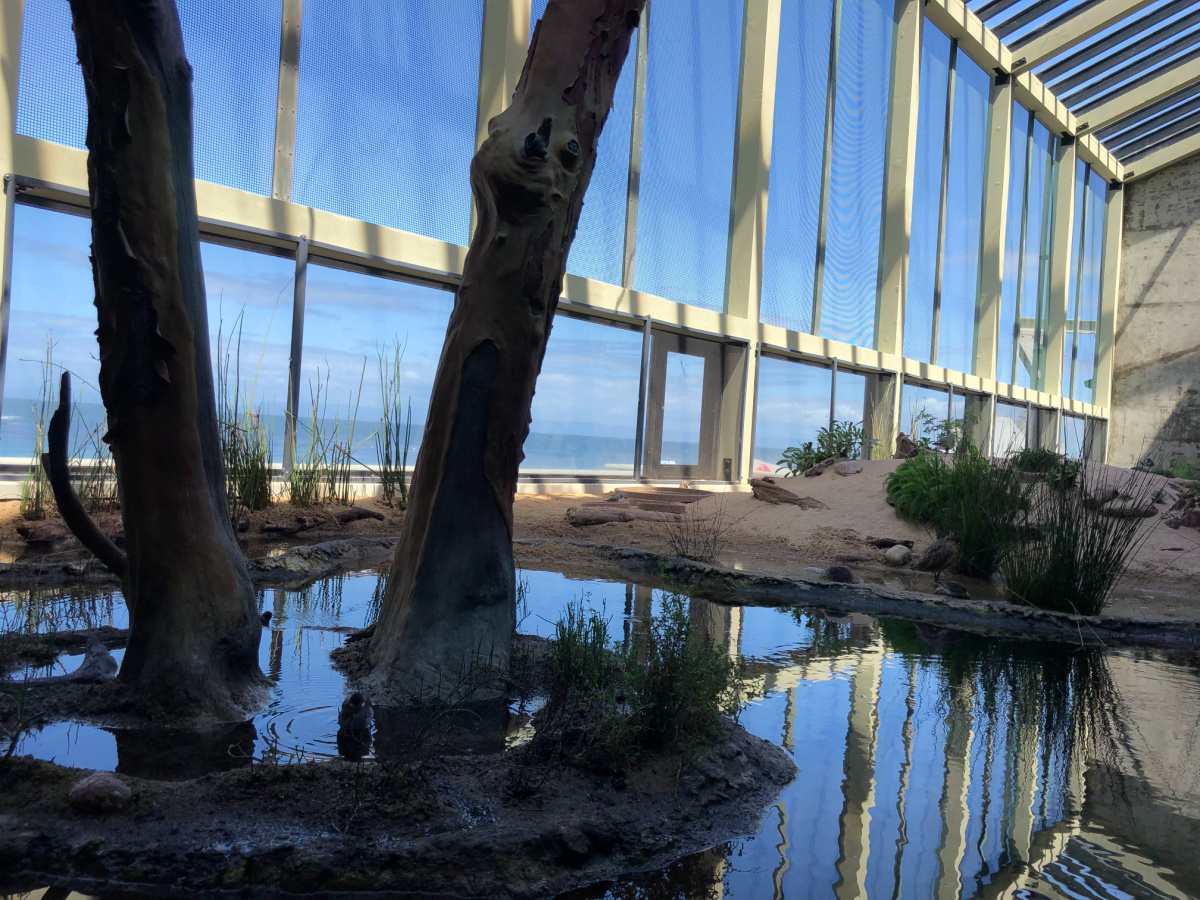
I remember really liking this section because it felt quieter than some of the bigger galleries.
You can stop and watch the birds poke around in the water, and in some places you can see Monterey Bay outside behind them, which makes the whole thing feel less like a separate exhibit and more like an extension of the coast.
That is something the aquarium does really well over and over again.
It keeps connecting you back to where you actually are.
And Yes, There Are Penguins
The penguins are another fun stop, especially if you have younger kids.
During our visit there were places where kids could get closer to eye level with them, which made the experience much more interesting for our daughter.
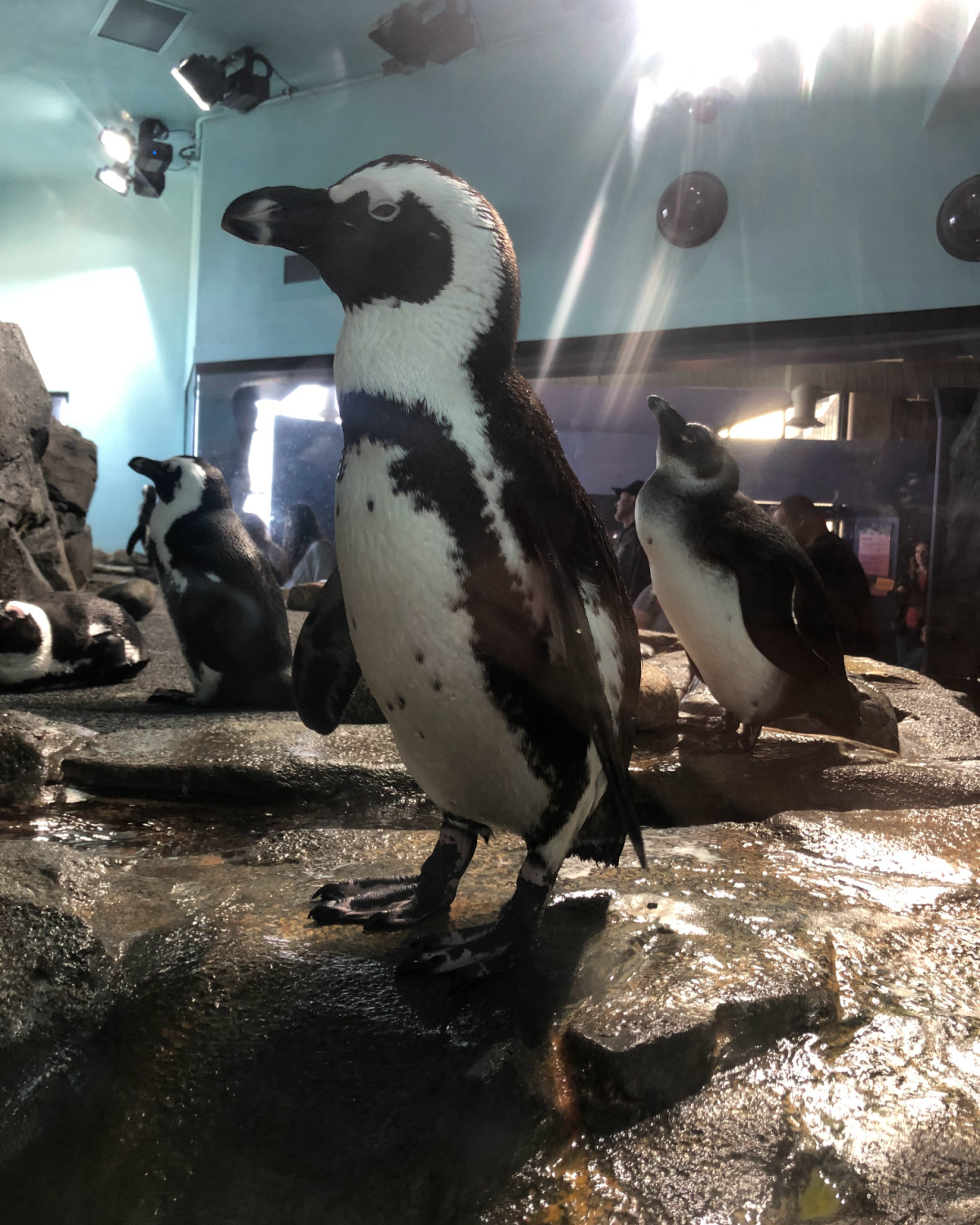
There is something funny about watching penguins in person.
They are kind of awkward on land and then suddenly look completely different once they get into the water.
I would definitely stop here, but I would not treat it as one of those exhibits where you need to stand around for half an hour unless the penguins happen to be doing something especially entertaining.
There is still a lot of aquarium left.
The Tropical Fish Area Is Gorgeous
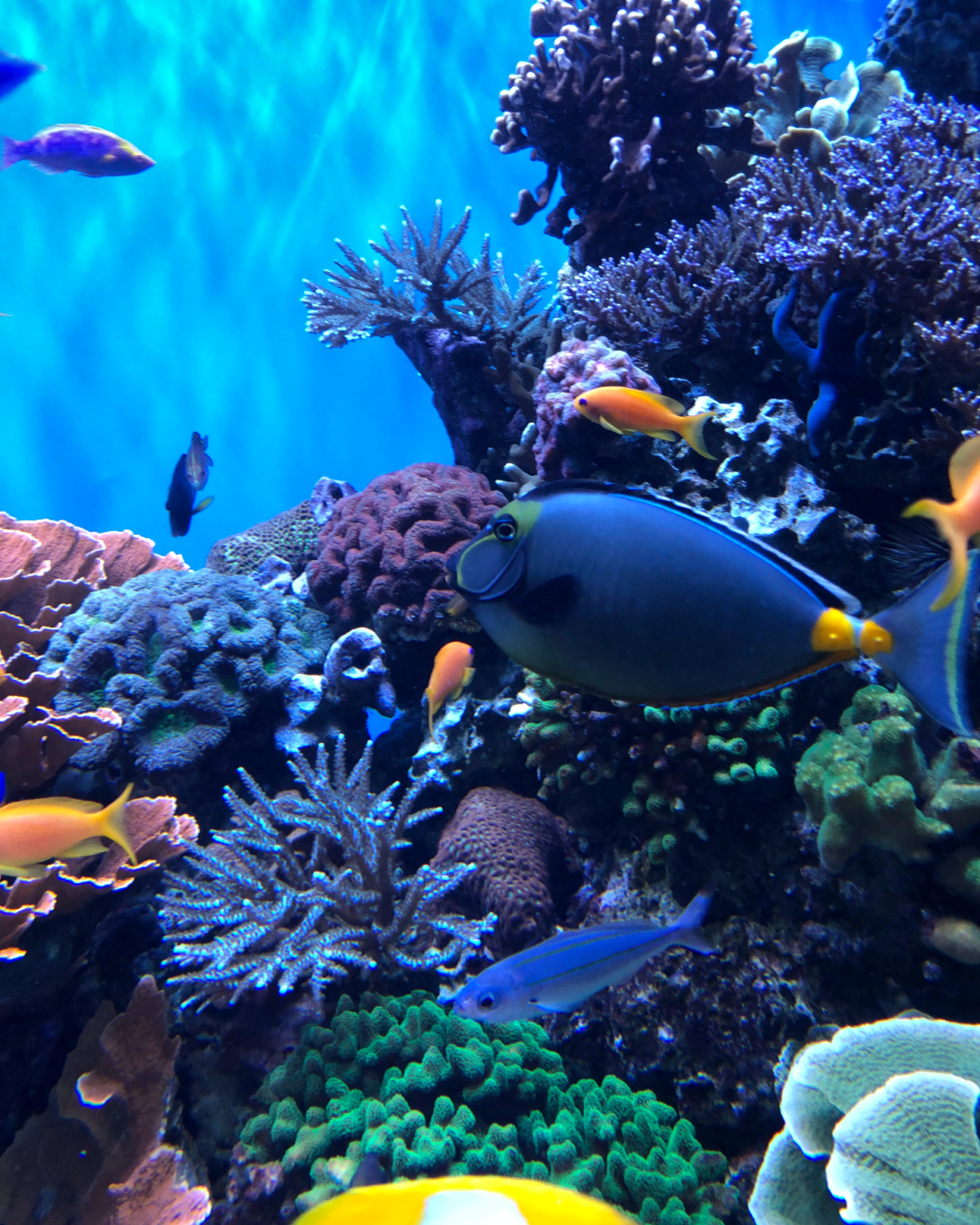
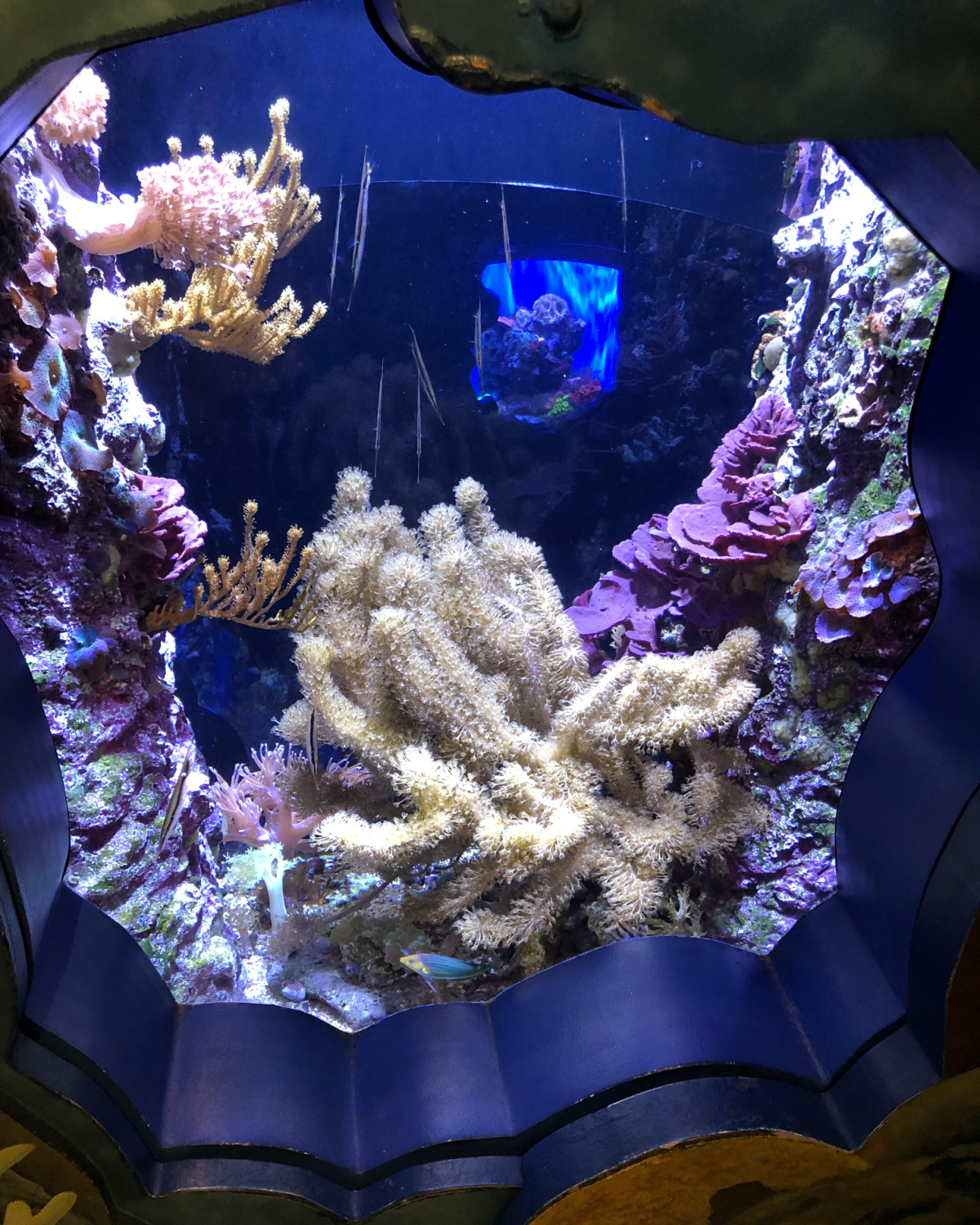
One thing I had forgotten until looking back through my photos is just how colorful some of the tropical exhibits are.
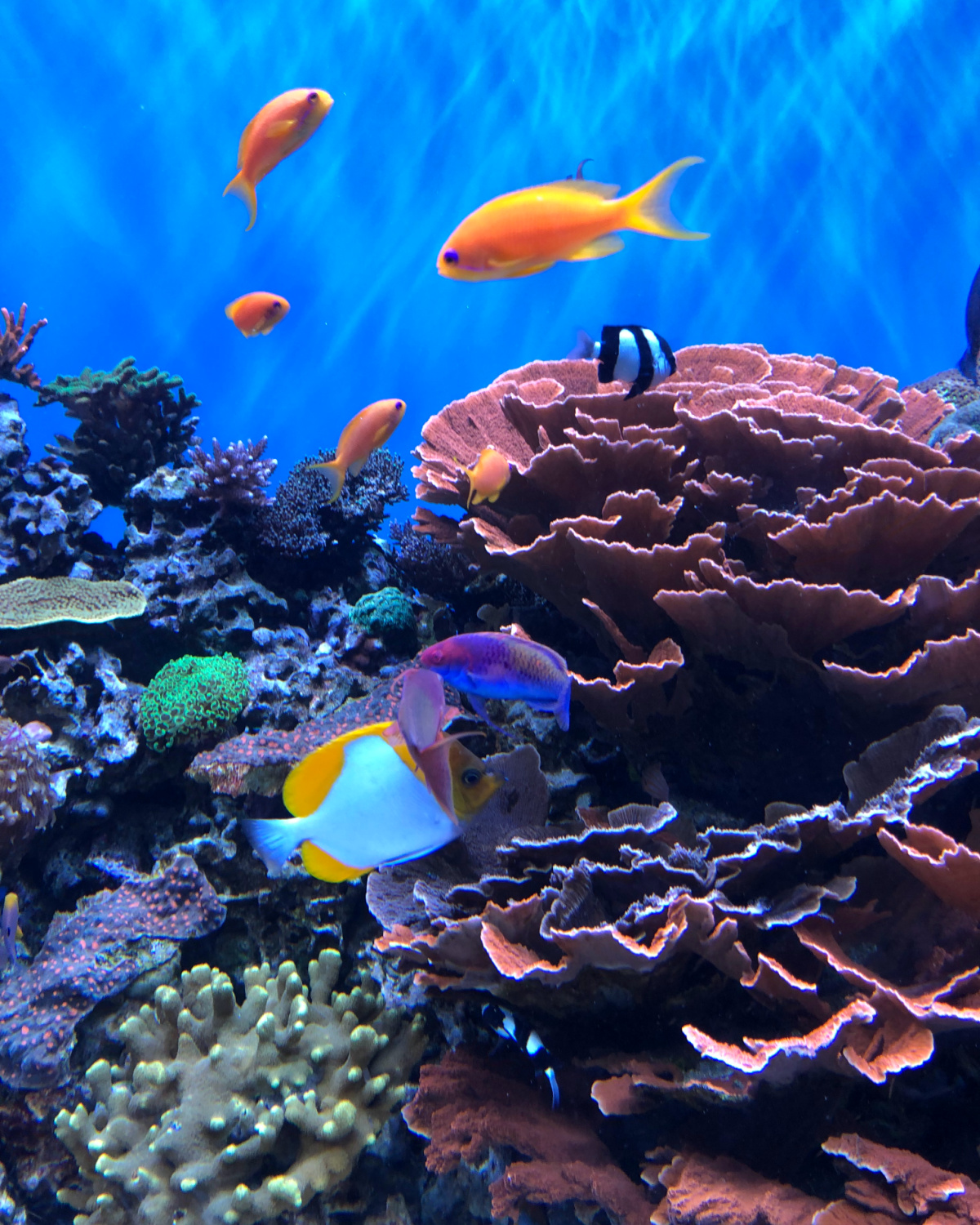
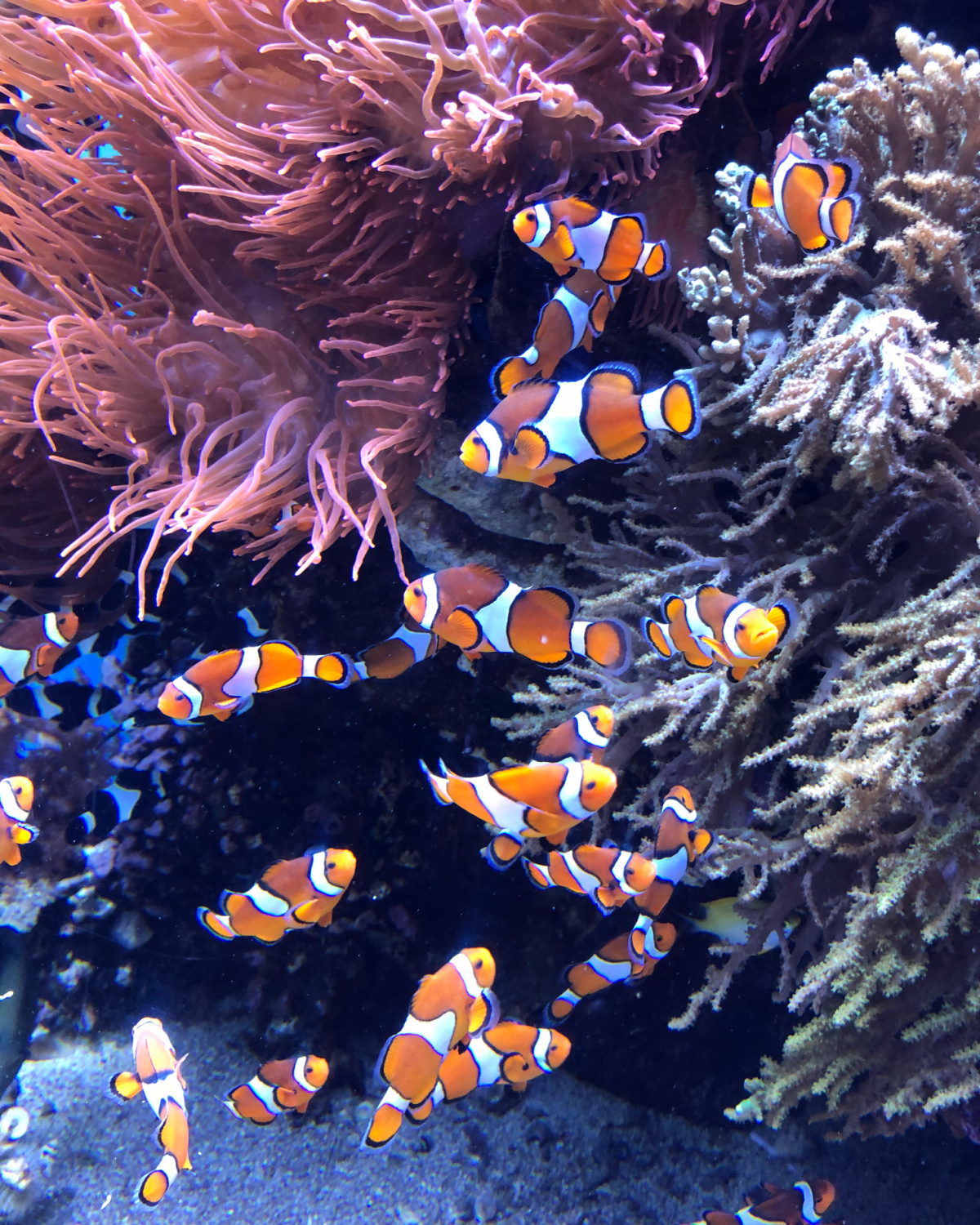
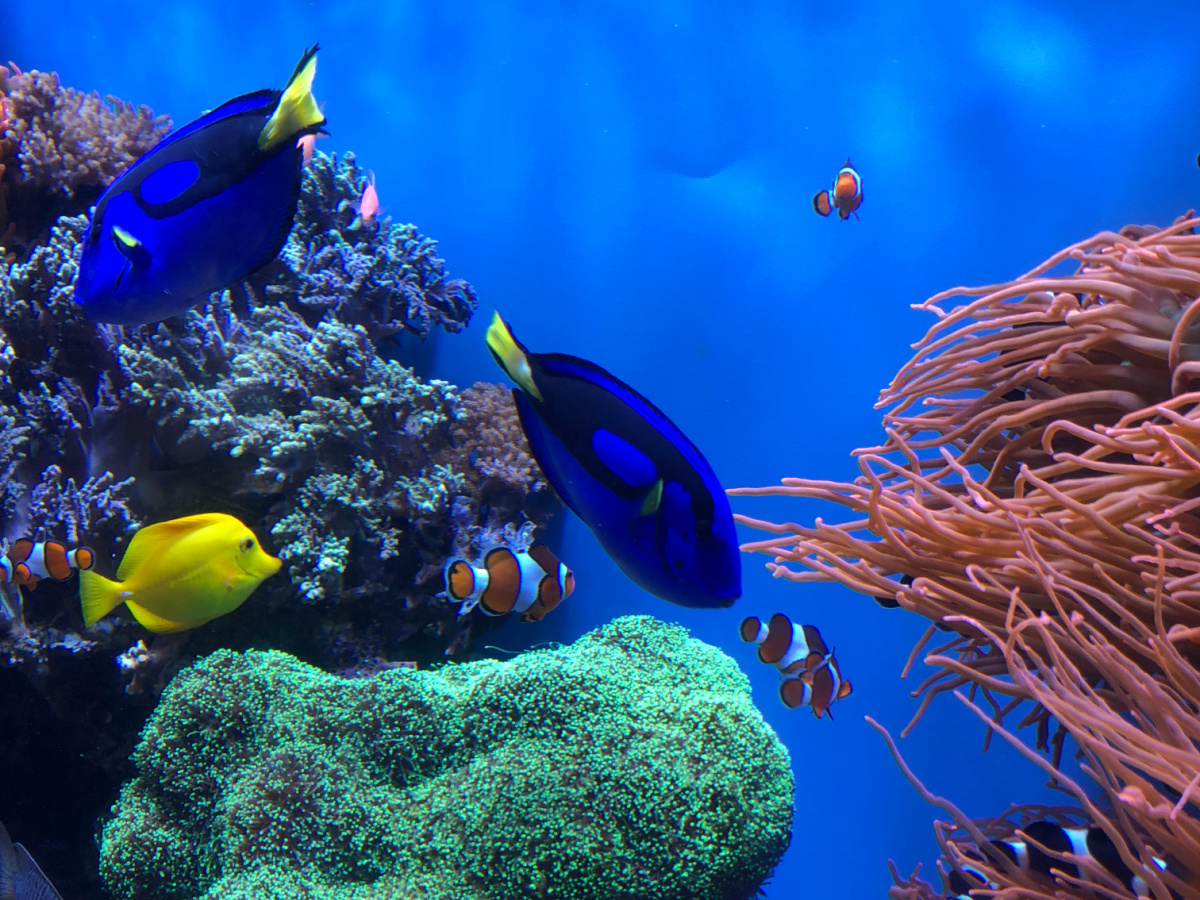
You go from the cool greens and blues of the kelp forest into tanks filled with bright coral, anemones, clownfish, blue tangs, and all kinds of tropical fish.
And yes, if you are there with little kids, somebody is probably going to yell “Nemo” and “Dory.”
That absolutely happened with us.
But this isn’t just a section for kids who recognize movie fish.
The tanks are beautiful.
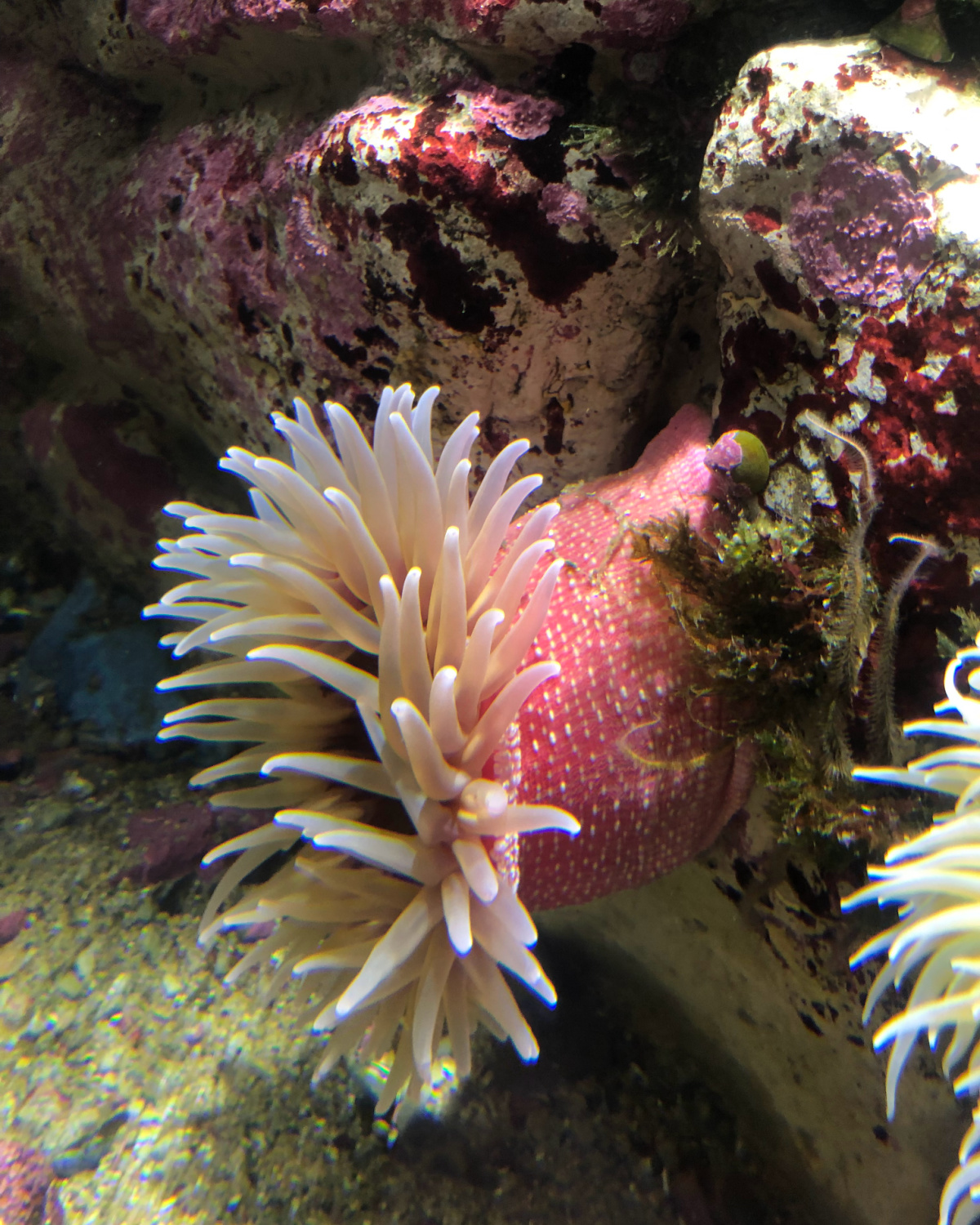
Some of the coral displays are almost ridiculous in how colorful they are, and I remember stopping to look at the anemones and clownfish for much longer than I expected.
It is a nice change of pace from the colder, darker Monterey Bay exhibits.
The Kids’ Areas Are Actually Worth Visiting
This is another thing Monterey Bay Aquarium does better than a lot of aquariums.
The children’s areas don’t feel like somebody shoved a playground into a corner and called it good.
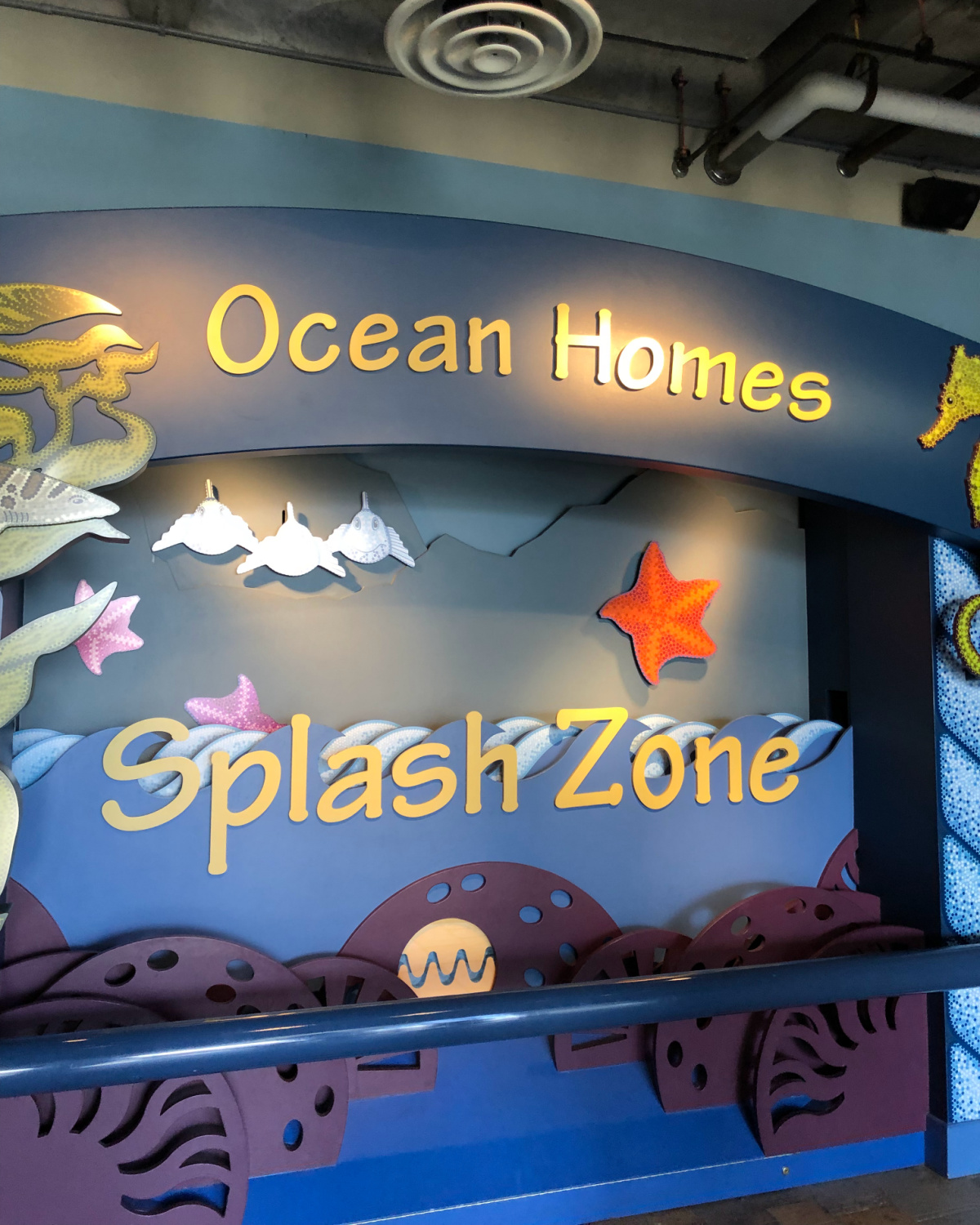
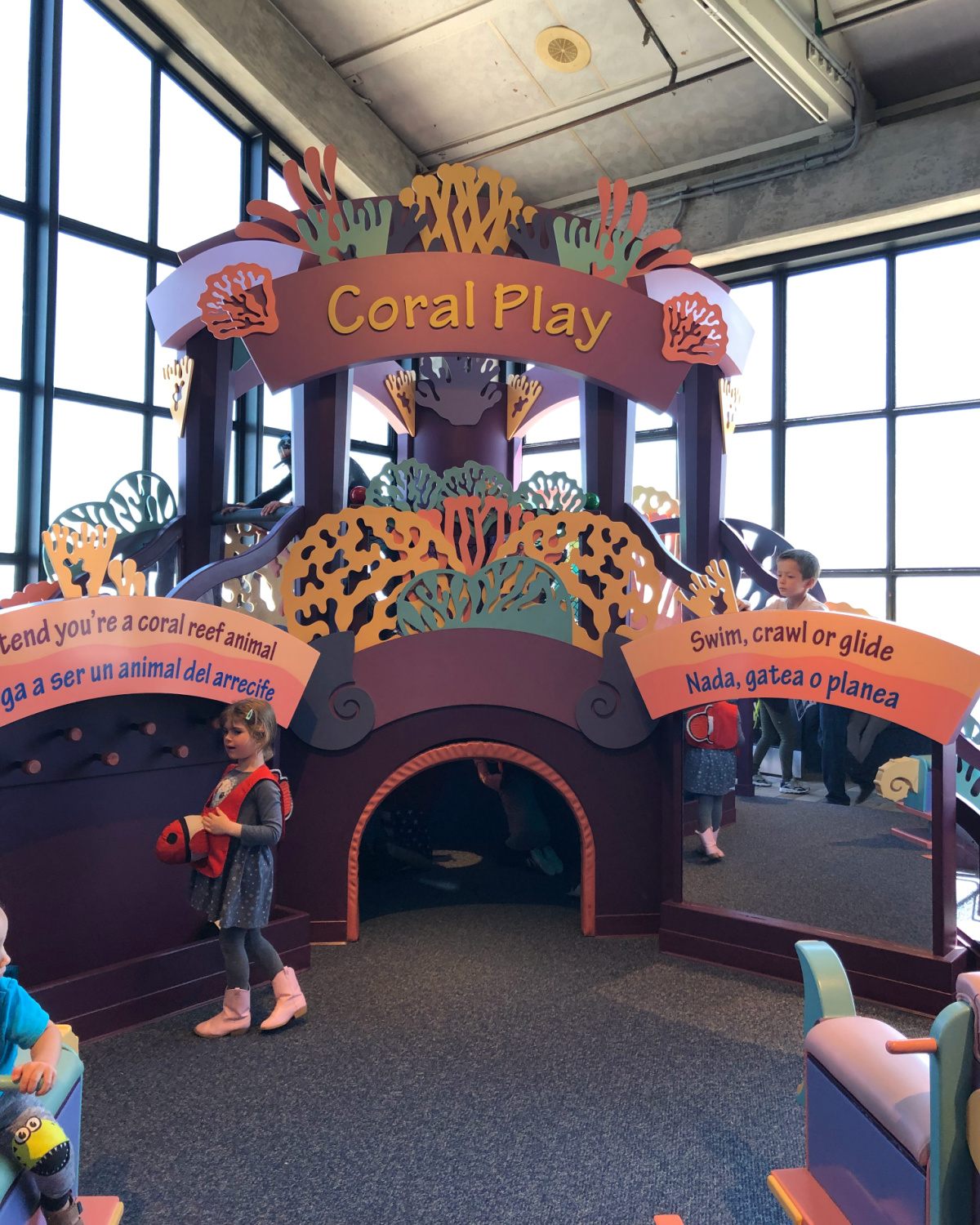
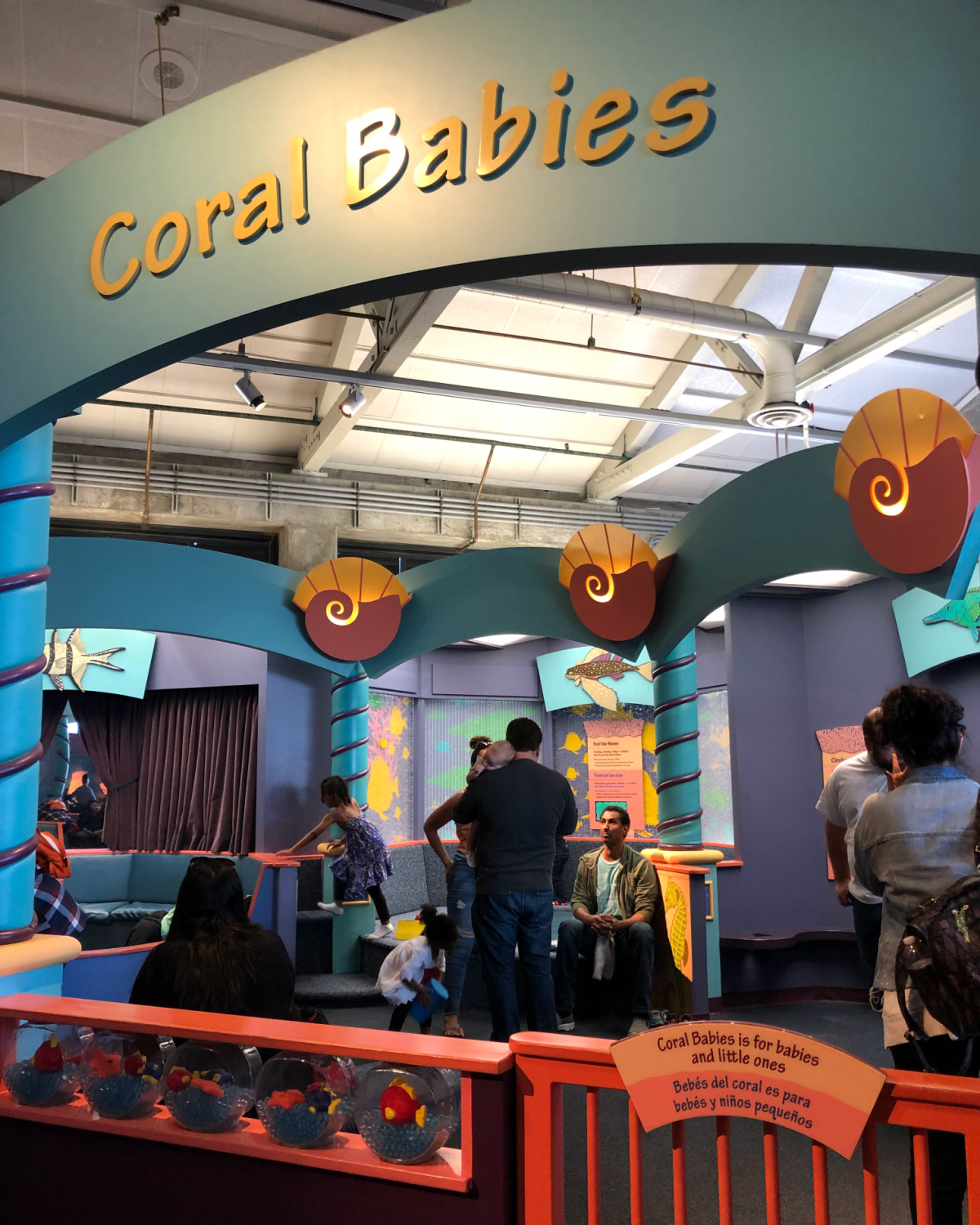
When we visited, the Ocean Homes area had a Coral Play section where kids could crawl, climb, and pretend they were moving through a reef environment.
Our daughter loved it.
And I know there is always a temptation as an adult to see the words “play area” and think, okay, this is where I sit down while the kids burn off some energy.
Which, to be fair, is also useful.
But don’t completely tune out.
There were still aquarium exhibits and colorful tropical fish around the play areas, so adults had plenty to look at while the kids explored.
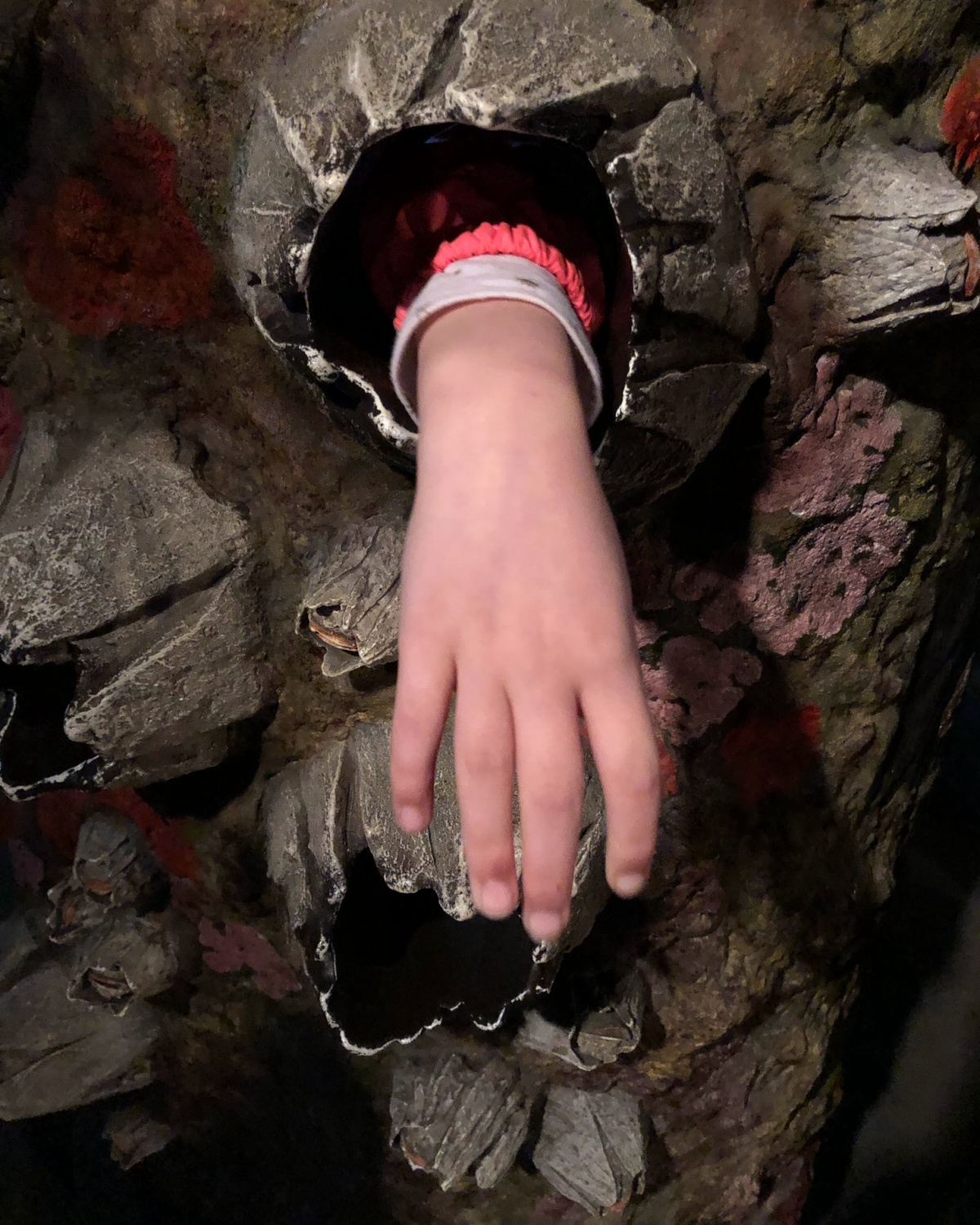
For a place that can easily take most of a day, having places where younger kids can move around instead of quietly staring through glass is a huge advantage.
There Is So Much Hands-On Stuff Here
Looking back through our photos, this may actually be one of the things that surprised me most.
There were interactive areas everywhere.
Not just one touch pool.
Not just one kid zone.
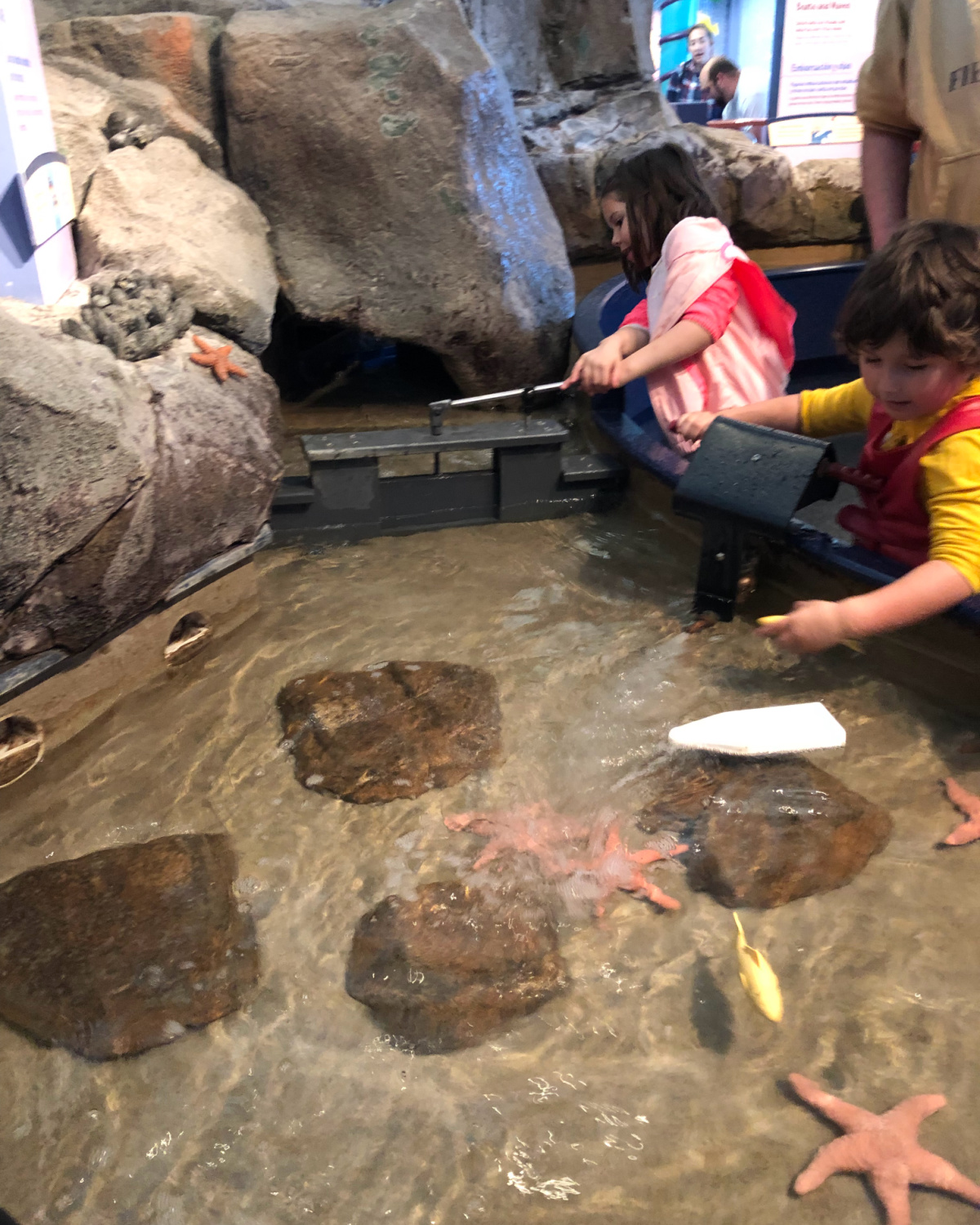
We kept finding another place where our daughter could touch something, investigate something, pull or push something, use a light, look through an opening, or talk to a volunteer.
That made a big difference at age six.
She wasn’t just following us around while we looked at fish.
She was actively doing things.
And I think that is part of why Monterey Bay Aquarium works so well for families.
There is enough variety that kids don’t have to experience the entire place the same way.
Sometimes you are standing in front of a giant tank.
Sometimes you are touching a sea urchin.
Sometimes you are getting splashed by the wave exhibit.
Sometimes you are crawling through a play area.
Sometimes you are just staring at a jellyfish because it looks cool.
That mix keeps the day moving.
Don’t Forget the Smaller Exhibits
The giant tanks obviously get most of the attention.
They deserve it.
But there are a lot of smaller exhibits that are worth slowing down for too.
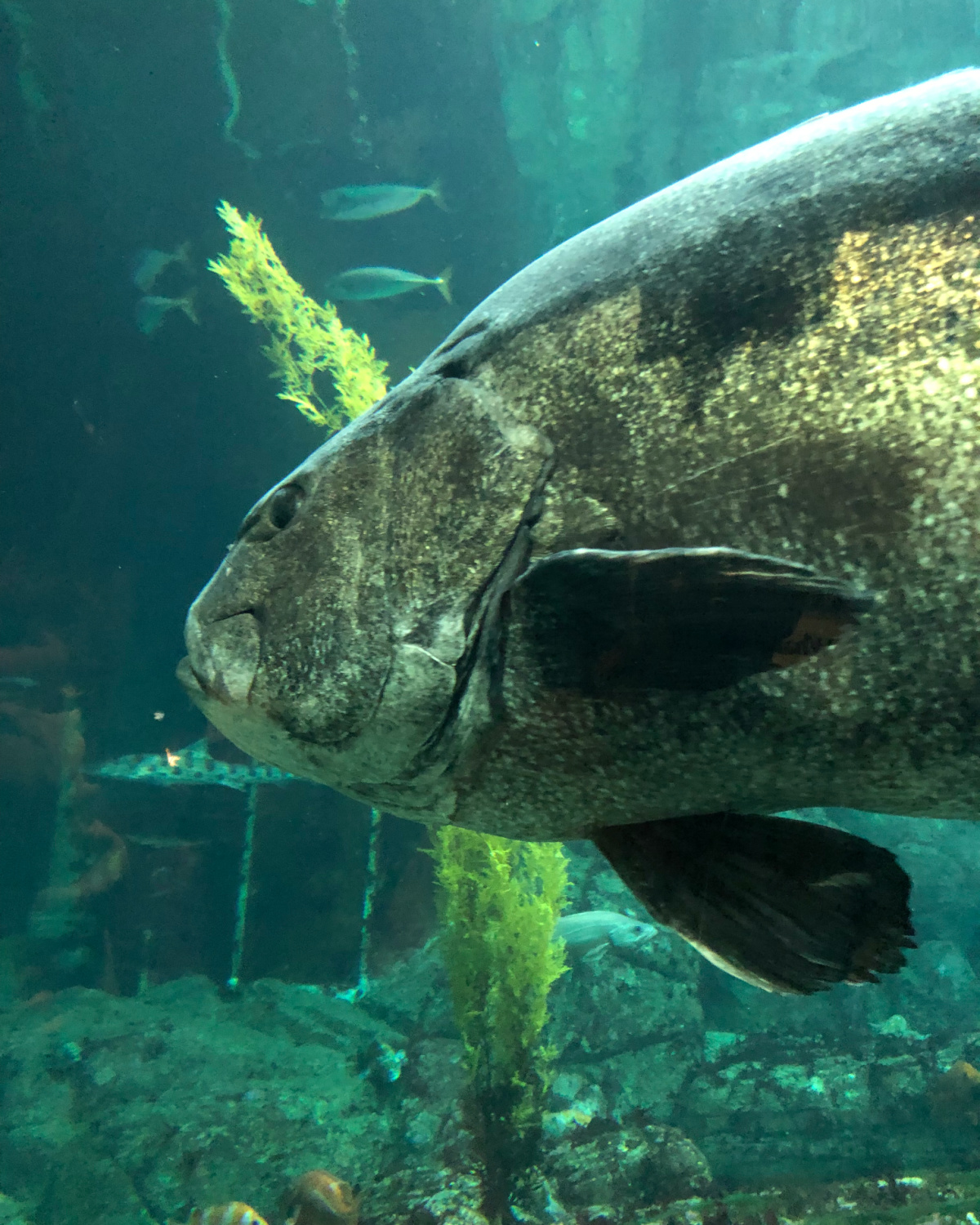
This is where you get those close-up moments with anemones, unusual fish, tide pool animals, and all kinds of smaller marine life.
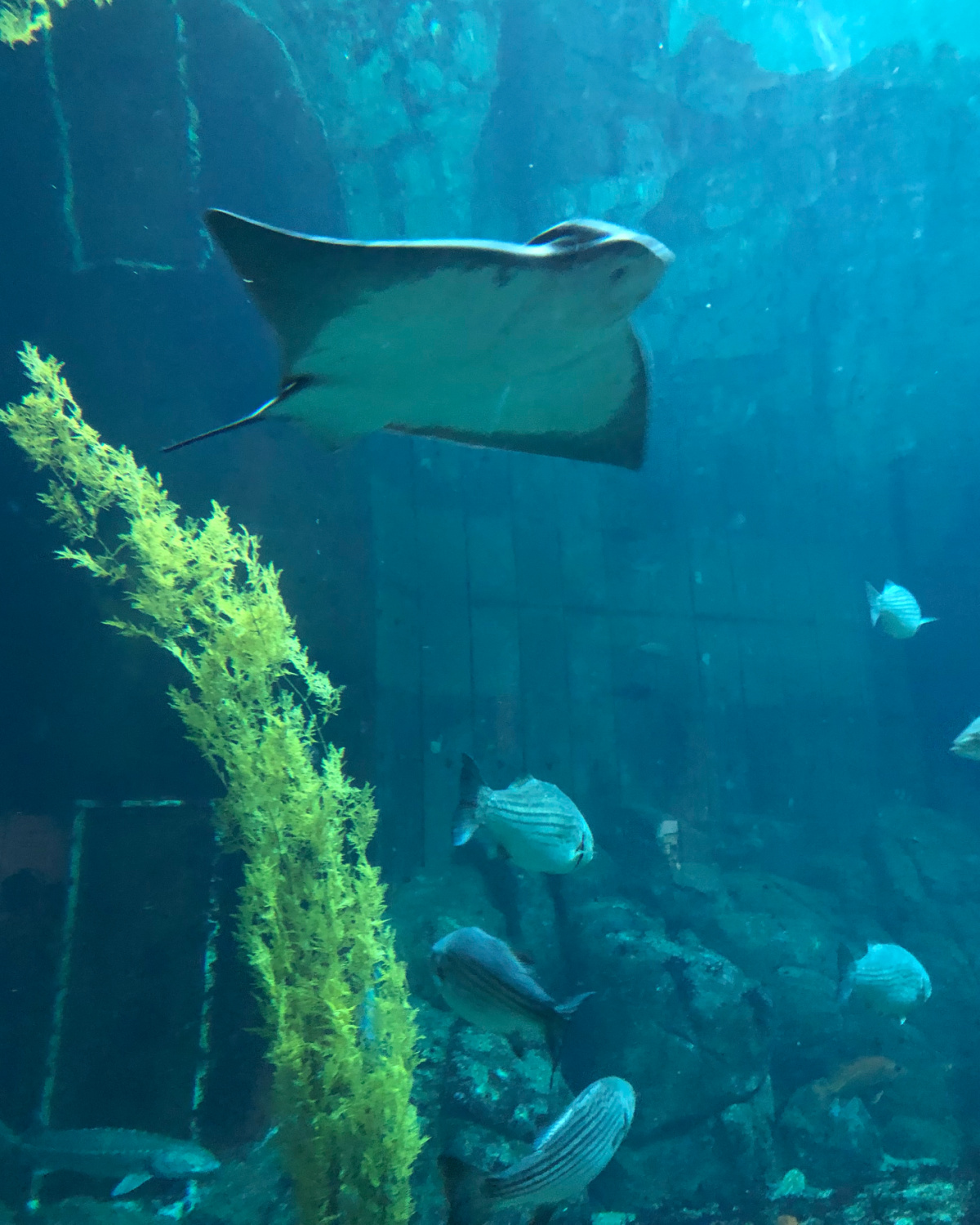
I have one photo of a huge fish coming right past the glass, and it is one of those moments that reminds you how different seeing an animal in person is from looking at a picture of it.
You notice the size.
The texture.
The way it moves.
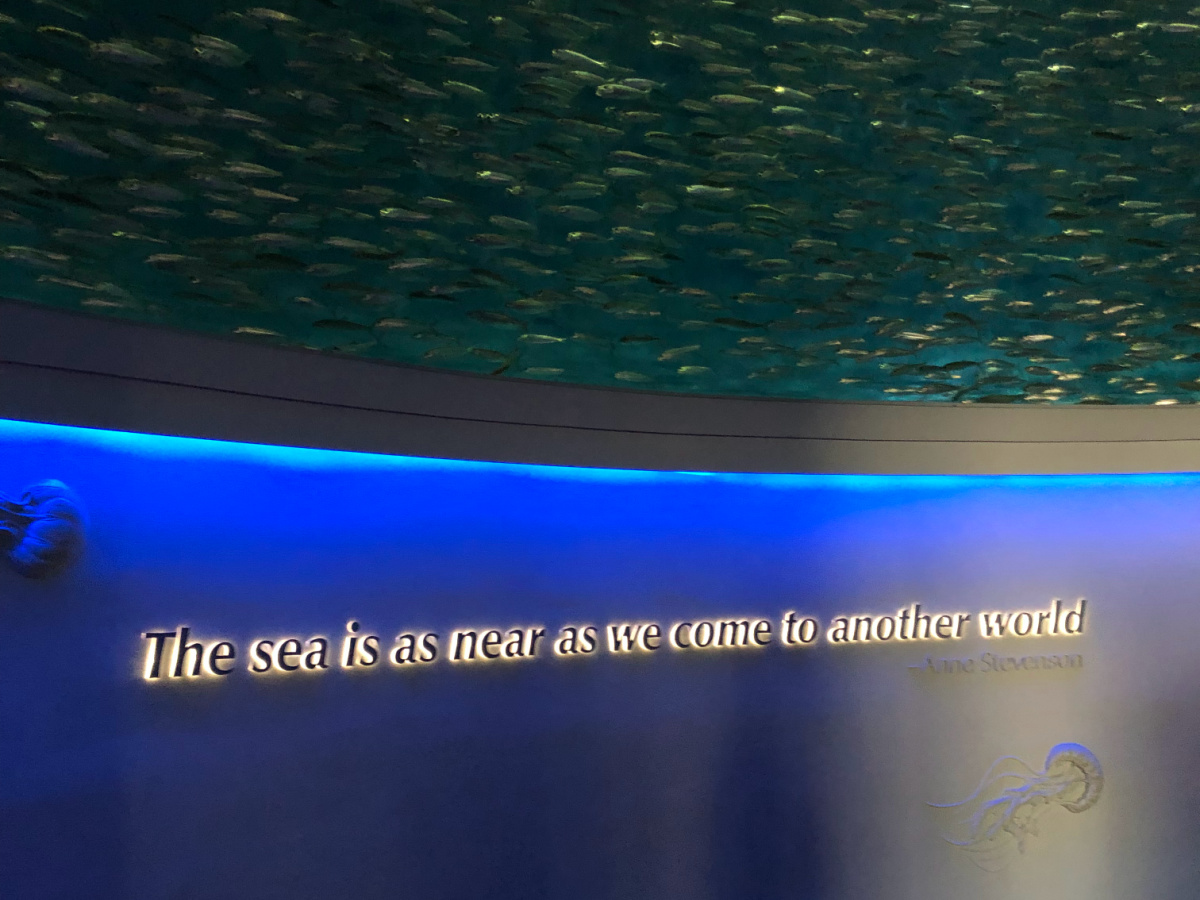
And because there are so many exhibits packed into this aquarium, you can easily walk by something fascinating if you are too focused on getting to the next major attraction.
So don’t rush.
Go Back and Look at the Kelp Forest Again
Seriously.
Look at it from more than one level.
The first time you see the kelp forest, you are probably focused on how big it is.
But once you start seeing it from different spots in the aquarium, you notice how much is going on inside it.
Fish are swimming at different depths.
The kelp is moving constantly.
Light filters down through the water.
You can see animals tucked into places you did not notice the first time.
That is probably one reason this exhibit sticks with me so much.
It feels alive in a way that a typical aquarium tank does not.
It really does feel like an underwater forest.
The Open Sea Is the Opposite Experience
Then you get to the Open Sea exhibit and everything feels completely different.
Instead of dense kelp and fish moving through layers of vegetation, you get this enormous wall of blue water.
There is space.
A lot of space.
And then something swims through it.
A shark.
A sea turtle.
A school of fish.
Sometimes the best thing to do here is stop moving.
We spent time just standing in front of the window watching everything pass by.
No interactive button.
No exhibit to read.
No rush to the next room.
Just this enormous tank and whatever happened to swim past.
And that is one of the things I love most about Monterey Bay Aquarium.
It gives kids plenty to do, but it also gives everyone reasons to slow down and just watch.
Why Monterey Bay Aquarium Is Such a Big Deal
The more aquariums you visit, the more you realize that Monterey Bay Aquarium is doing something a little different.
Yes, it has the big tanks.
Yes, it has the otters and penguins and jellyfish and all of the things you would expect from a really good aquarium.
But Monterey itself is part of the story.
The aquarium sits right on Monterey Bay, which is an incredibly rich marine environment. Just offshore, Monterey Canyon plunges thousands of feet beneath the surface. That deep water is one of the reasons this part of the California coast supports such an amazing variety of marine life.
And the aquarium doesn’t treat that as background information.
It is woven through the entire place.
You see the kelp forest inside and then walk outside and see kelp floating in the bay.
You learn about tide pools and then look down at the rocky shoreline.
You watch sea otters inside and realize wild otters live along this same stretch of coast.
It makes the aquarium feel rooted in its location in a way that a lot of aquariums don’t.
There Is Serious Marine Science Happening Here Too
This is another reason I think Monterey Bay Aquarium deserves its reputation.
The aquarium is closely connected to marine conservation and research, and that work goes far beyond what visitors see in the galleries.
The Monterey Bay Aquarium Research Institute, or MBARI, conducts ocean research nearby, including exploration of the deep sea.
That is especially fascinating when you consider what is sitting just offshore.
Monterey Canyon reaches into extremely deep water surprisingly close to the coast, giving researchers access to parts of the ocean most of us will never see.
So while your kids may be thinking about jellyfish and penguins, there is a much bigger scientific story happening here too.
This is not simply a place displaying marine life.
There is research, conservation, rescue work, and education happening behind the scenes.
And I think knowing that makes the visit even better.
How Long Should You Spend at Monterey Bay Aquarium?
I would give it most of the day.
Could you see the highlights in three or four hours?
Sure.
But I wouldn’t recommend planning it that way unless you truly have no other choice.
There is simply too much here.
The big exhibits alone can take a while if you actually stop and watch them. Then add the touch pools, penguins, jellyfish, kids’ areas, outdoor decks, smaller galleries, interactive exhibits, and whatever animal programs are happening that day.
You also need some time to just sit down occasionally.
This is a lot of aquarium.
For families with younger children, I would be especially careful about overscheduling the rest of your day.
You don’t want to spend several hours here and then announce that everyone has to immediately hustle through five more Monterey attractions.
The aquarium can be the attraction.
Everything else can fit around it.
Check the Daily Schedule When You Arrive
One thing I would do near the beginning of your visit is check the day’s schedule.
Animal feedings, talks, and presentations can change the rhythm of your day, and it is worth knowing what is happening before you get too far into the aquarium.
If there is something your family particularly wants to see, make a mental note of the time and work around it.
Otherwise, I would not obsess over creating a perfect route.
Go left.
Go right.
Follow whatever looks interesting.
You are going to end up seeing a lot either way.
That is pretty much how I have always approached this aquarium.
Should You Visit Monterey Bay Aquarium With Young Kids?
Yes.
Definitely.
Our daughter was six on our family visit, and I thought that was a fantastic age for it.
She was old enough to be interested in the animals and understand some of what she was seeing, but young enough to be completely delighted by the touch pools, playground areas, penguins, jellyfish, and wave exhibit.
That said, I would take younger kids too.
There are enough hands-on activities and opportunities to move around that this does not feel like a place where parents spend six hours telling toddlers not to touch anything.
And older kids and teenagers have plenty to keep them interested because the aquarium isn’t designed only around little-kid entertainment.
The exhibits are genuinely impressive.
Honestly, adults could come here without children and have a great day.
I did.
Long before I ever brought a child here.
Wear Comfortable Shoes
This sounds obvious, but I’m saying it anyway.
You are going to walk.
A lot.
You are moving between multiple floors, large galleries, viewing areas, outdoor spaces, and exhibits that seem to keep going.
Comfortable shoes win.
I would also dress in layers.
You are right on the California coast, and Monterey can be cool even when the rest of California is warm. Then you will move between indoor galleries and outdoor observation areas throughout the day.
Basically, don’t assume “California” automatically means shorts and a T-shirt.
Monterey has opinions about that.

Build in Time for Cannery Row
The aquarium sits right on Cannery Row, so it is easy to pair your visit with lunch or dinner nearby.
I wouldn’t necessarily give up aquarium time for a long, elaborate meal in the middle of the day, especially if this is your first visit.
But once you are finished, Cannery Row gives you plenty of options for grabbing something to eat before continuing along the waterfront.
And that leads to one of my favorite things to do in Monterey.
Walk.
Walk the Monterey Bay Coastal Recreation Trail
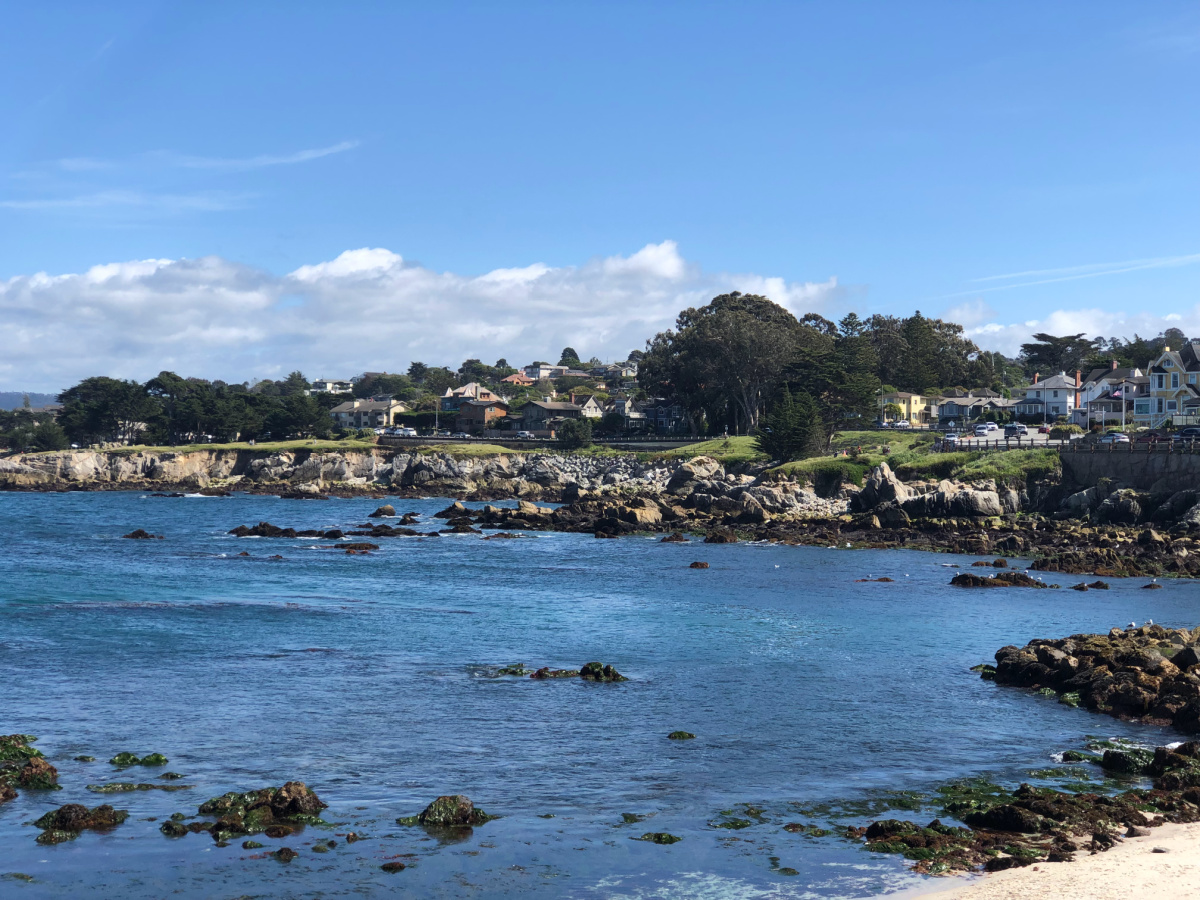
After spending hours inside the aquarium, go outside and walk along the coast.
The Monterey Bay Coastal Recreation Trail runs right through this area and continues toward Pacific Grove.
Along this stretch, it is an easy, paved walk with beautiful views over the bay.
You don’t need an agenda.
You don’t need to hike five miles.
Just start walking.
There are places to sit, places to stop and look at the water, and plenty of opportunities to watch for wildlife.
It is one of those simple experiences that doesn’t sound nearly as impressive on paper as it feels when you are actually there.
And after a full day at the aquarium, it is a perfect way to decompress.
A Little Army Memory
I have a slightly different relationship with this stretch of Monterey than most tourists.
I was stationed here twice when I was in the Army, so I have plenty of memories tied to this coastline.
Some of those memories involve morning PT.
And running.
So much running.
Including runs toward the Monterey Bay Aquarium.
I can safely say that these days I would prefer a leisurely walk along the waterfront.
But Monterey Bay Aquarium?
I’ll gladly run there.
It’s that good.
Is Monterey Bay Aquarium One of the Best Aquariums in the United States?
I think so.
There are other aquariums in the country that are bigger in certain ways or famous for different things. Georgia Aquarium immediately comes to mind.
But Monterey Bay Aquarium belongs in that top tier.
For me, what pushes it there isn’t one single exhibit.
It’s the combination.
You have the enormous Kelp Forest.
Open Sea.
Sea otters.
Jellyfish.
Penguins.
Tropical reefs.
Touch pools.
Hands-on science.
Outdoor decks.
And then the actual Monterey Bay sitting right outside the windows.
It is impressive without feeling like it is trying too hard to impress you.
And it works whether you are six years old, visiting as a couple, or coming back decades after your first visit.
I’ve experienced it during all three of those stages of life.
I still love it.
Final Thoughts on Visiting Monterey Bay Aquarium
If you are planning a trip to Monterey, this is the attraction I would build the day around.
Not squeeze in.
Not rush through.
Build around.
Give yourself time to watch the otters.
Stand in front of the Kelp Forest for a while.
Let your kids stick their hands in the touch pools.
Wait for the wave to crash.
Go outside and look at Monterey Bay.
And when you are finally ready to leave, grab something to eat on Cannery Row and take a walk along the coast.
There are very few attractions I have visited again and again over decades and still feel excited about returning to.
Monterey Bay Aquarium is one of them.
More California Adventures
If you are planning a larger California trip, these guides can help you connect Monterey with some of the best destinations in the region.
- 3 Days in San Francisco: The Perfect Family Itinerary — A great companion to Monterey if you are building a Bay Area road trip.
- 3 Days in Yosemite National Park — If you are extending your California trip inland, Yosemite is an easy choice for a completely different kind of adventure.
- Muir Woods National Monument and Sausalito Day Trip — A beautiful waterfront escape that pairs especially well with a San Francisco itinerary.
More Aquariums to Visit
If your family loves aquariums, these are a few more worth adding to your list.
- National Aquarium in Baltimore — One of the best-known aquariums on the East Coast, with immersive exhibits and a very different feel from Monterey.
- California Academy of Sciences — Its Steinhart Aquarium makes this another strong pick for families who love marine life and hands-on science.