Red Heritage Navajo Dinner Show in Page, Arizona: Our Honest Review

Affiliate Disclosure: This post may contain affiliate links. If you make a purchase or booking through these links, I may earn a commission at no additional cost to you.
Wondering if the Red Heritage Navajo Dinner Show in Page is worth it? Here’s our review of the food, dancing, live music, weaving, and cultural presentation.
Estimated reading time: 15 minutes
I cannot recommend the Navajo dinner show at Red Heritage enough.
This was such a cool experience.
And I think what surprised me most was that everything about it was good.
The food was good. The cultural presentation was really interesting. The dancing was fantastic. And it was just a really enjoyable way to spend an evening in Page.
Honestly, I wasn’t quite sure what to expect when I booked this.
I knew it was a dinner show. I knew there would be Navajo dancers. And obviously I figured there would be some kind of cultural component to it.
But this was not some Medieval Times kind of thing where you eat dinner while people perform around you.
It was much more interesting than that.
Everyone involved in the presentation was from the Navajo Nation, and throughout the evening they talked about what we were actually seeing.
They explained the different dances. They talked about the clothing the dancers were wearing. There was drumming and singing. Throughout the presentation area, there were displays that featured weaving. There were Navajo rugs and other pieces displayed throughout the room.
So yes, it was entertaining.
But we learned quite a bit too.
And that felt especially appropriate in Page.
So many of the places people come here to see are connected to the Navajo Nation. We had already visited Antelope Canyon. We were exploring this entire northern Arizona and southern Utah area where Navajo land and Navajo culture are very much part of the experience.
Doing something that actually introduced us to a little bit of that culture made a lot of sense.
And thankfully, it was also just plain fun.
What the Red Heritage Dinner Show Is Actually Like
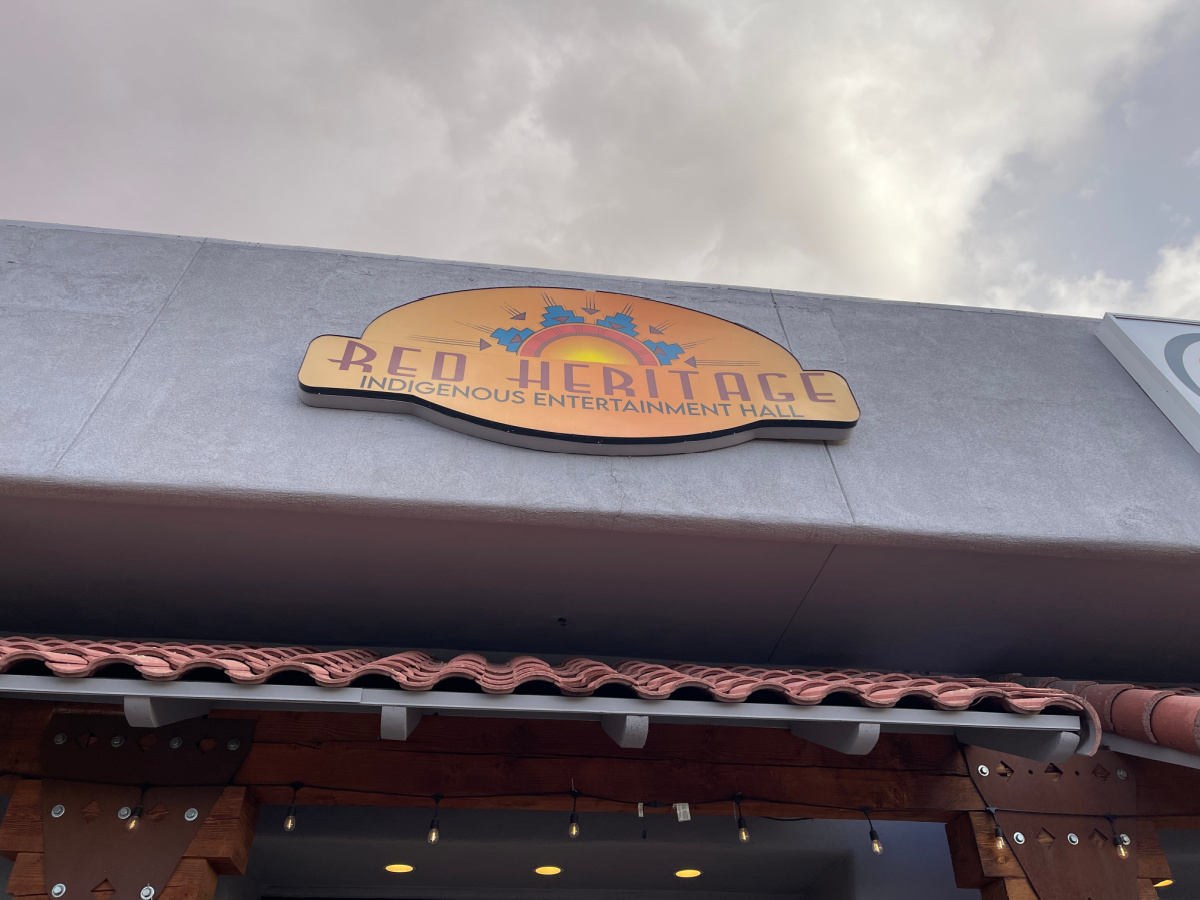
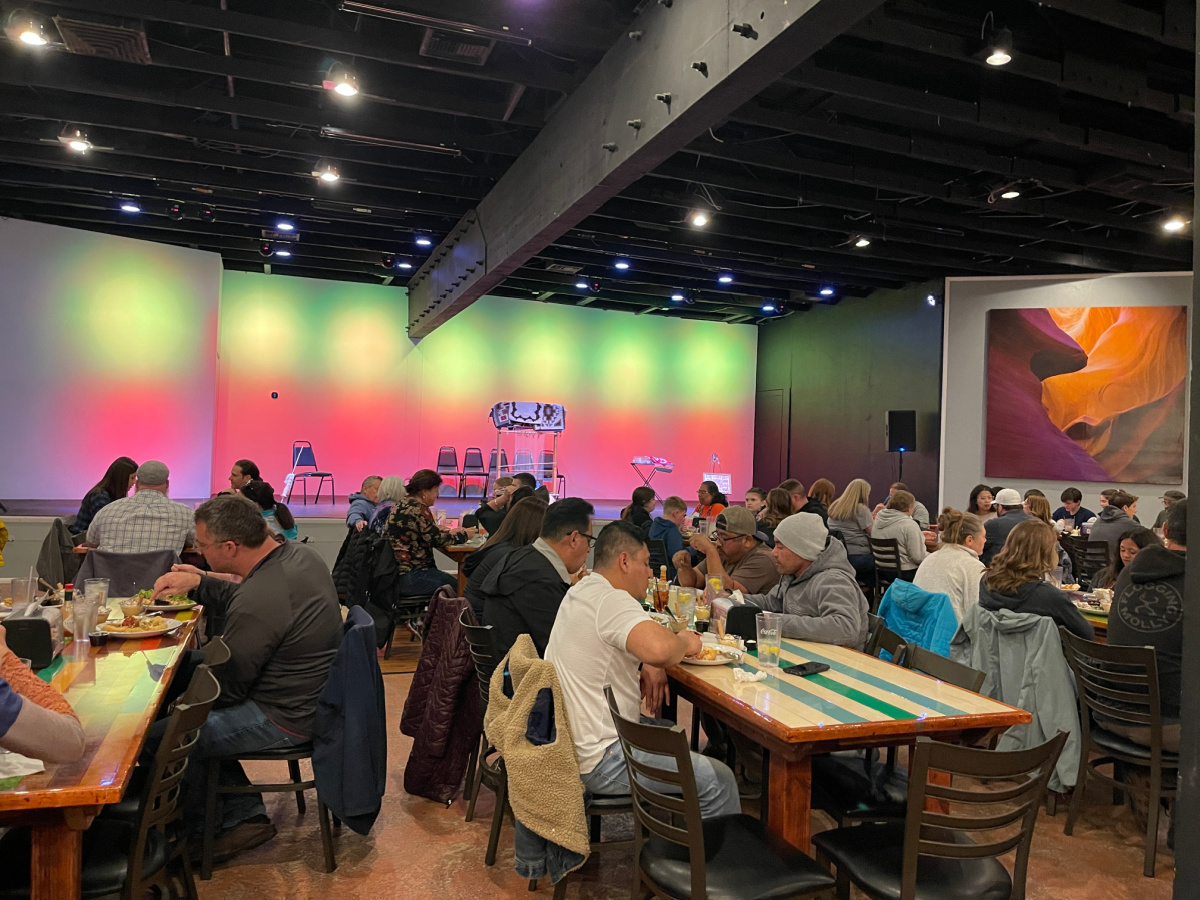
The Red Heritage Indigenous Entertainment Hall is set up as an actual dinner theater.
There are tables throughout the room with a stage at one end, and when we were there, the place was pretty full.
You eat first.
Then the main cultural presentation takes place on the stage.
I liked this setup because you’re not trying to eat a giant Navajo taco while also craning your neck to see what’s happening.
And I do mean giant Navajo taco.
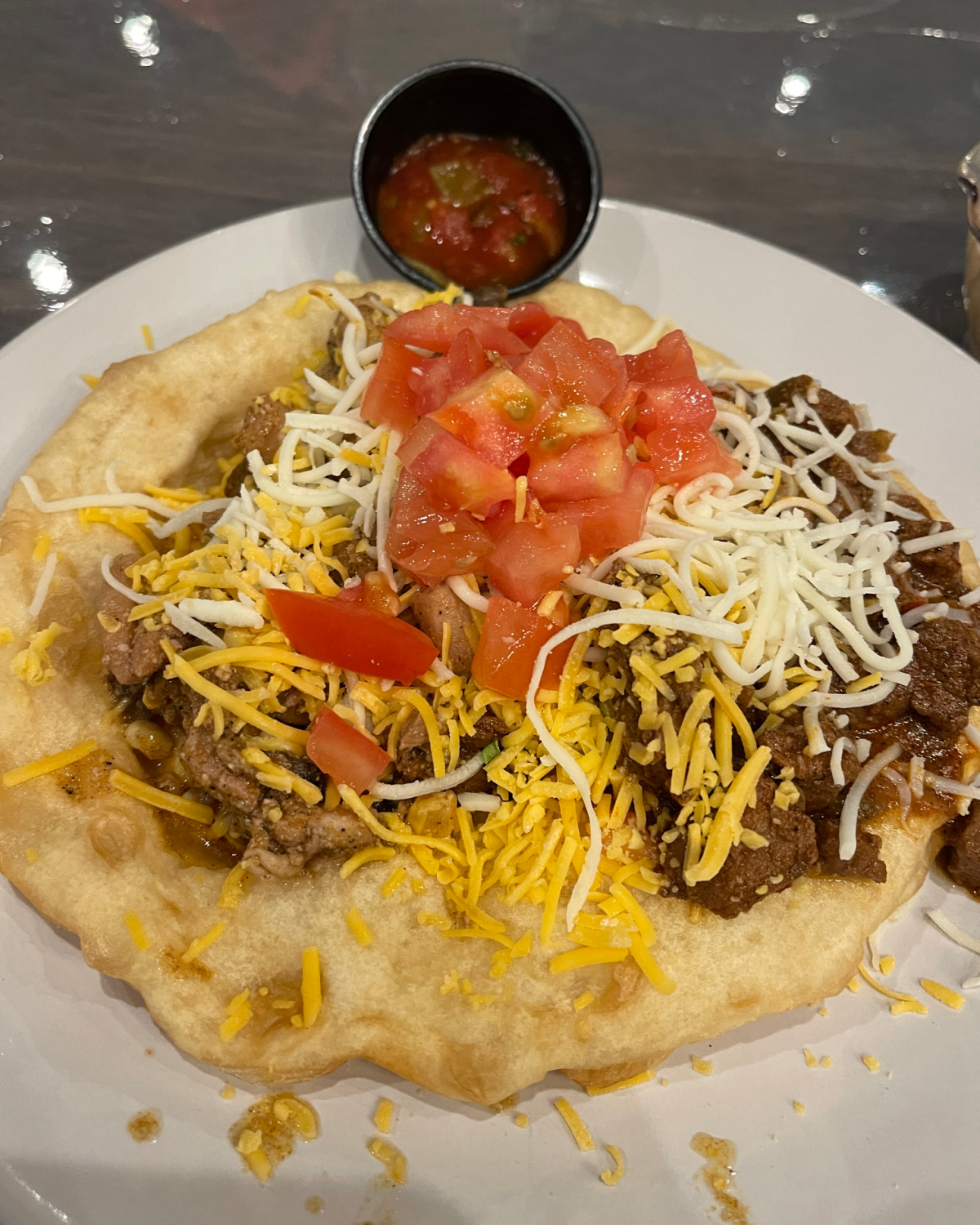
The food was one of the first things that won me over.
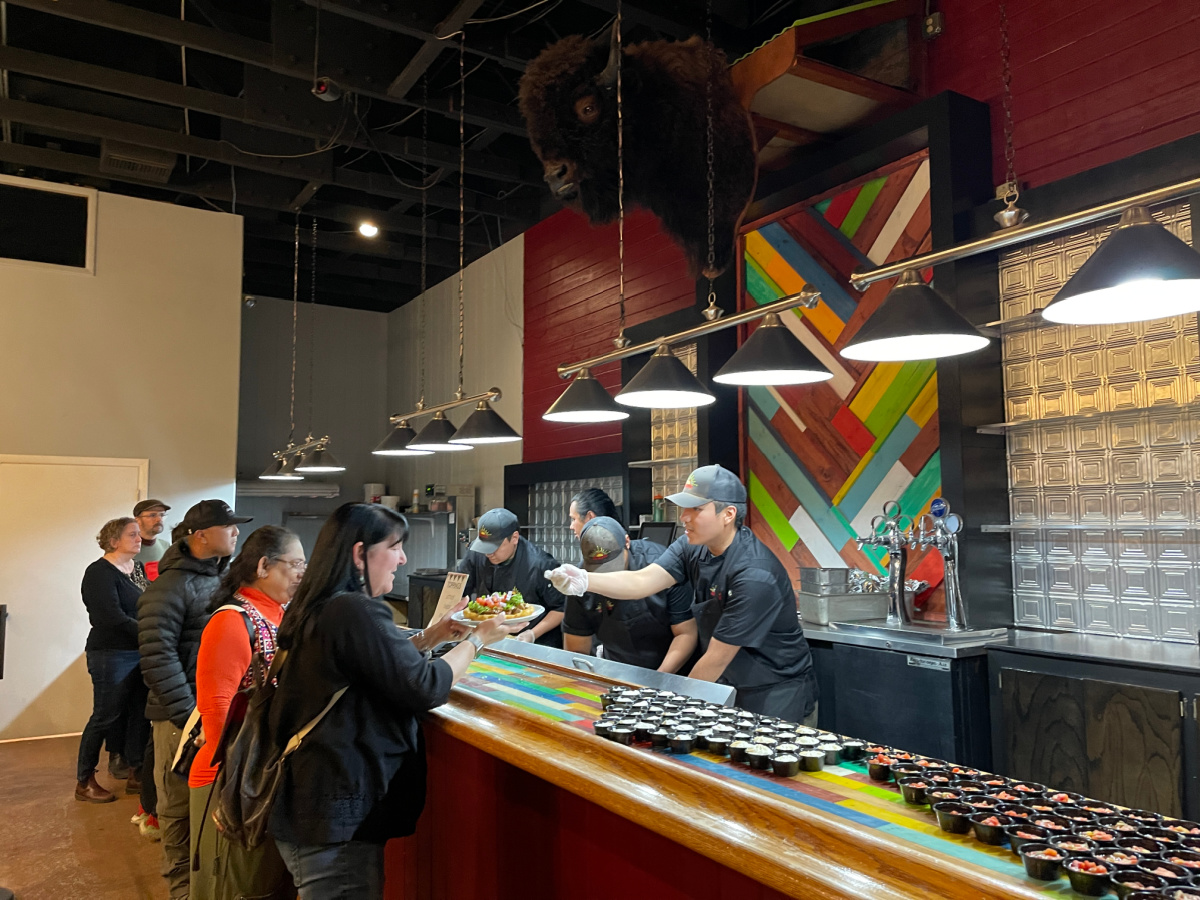
You go through the food line and get fry bread topped with meat, cheese, tomatoes and the other taco toppings.
It wasn’t complicated food.
But it was really, really good.
The fry bread was huge and basically took up the entire plate. Then they piled everything else on top of it.
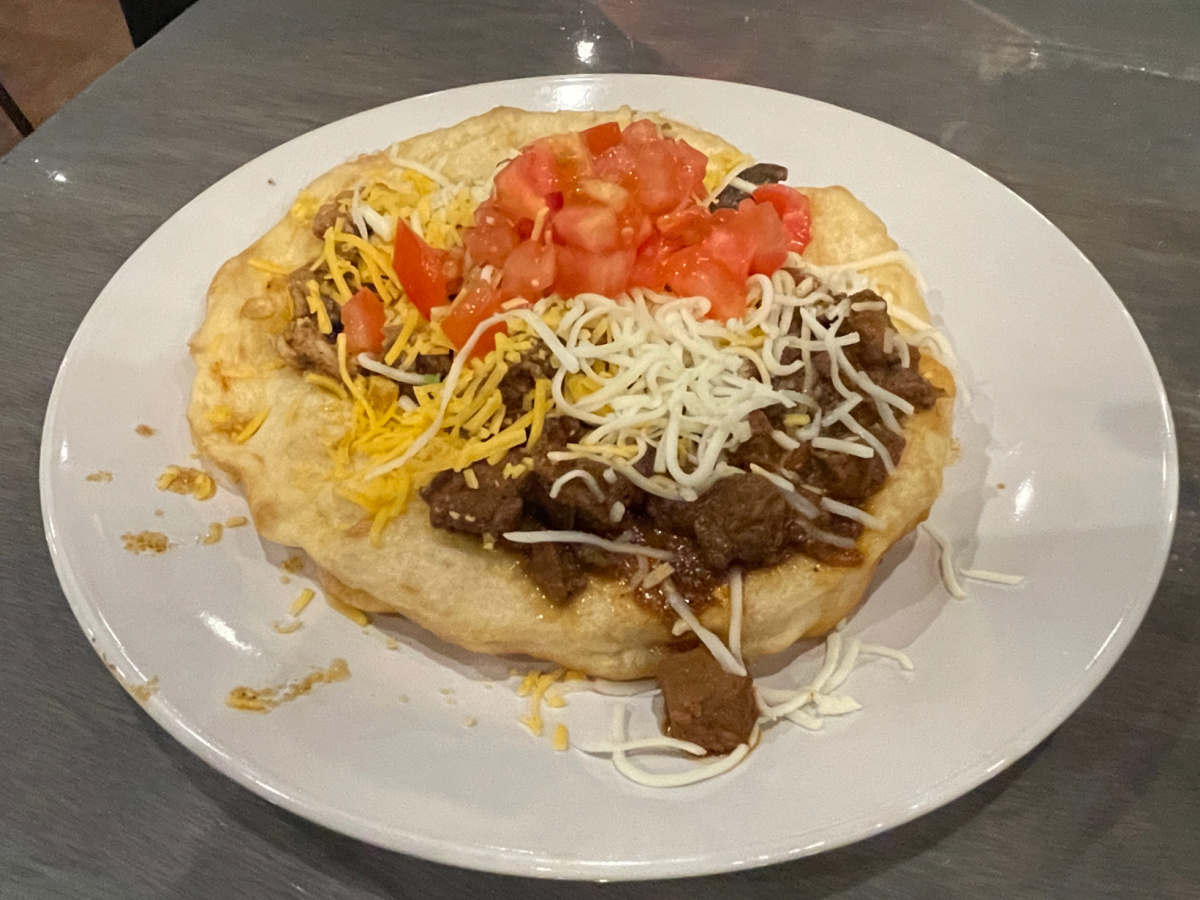
I apparently thought this was important enough to photograph several times because I have multiple pictures of essentially the same Navajo taco.
But in my defense, it was a very photogenic Navajo taco.
And we all liked it.
A lot.
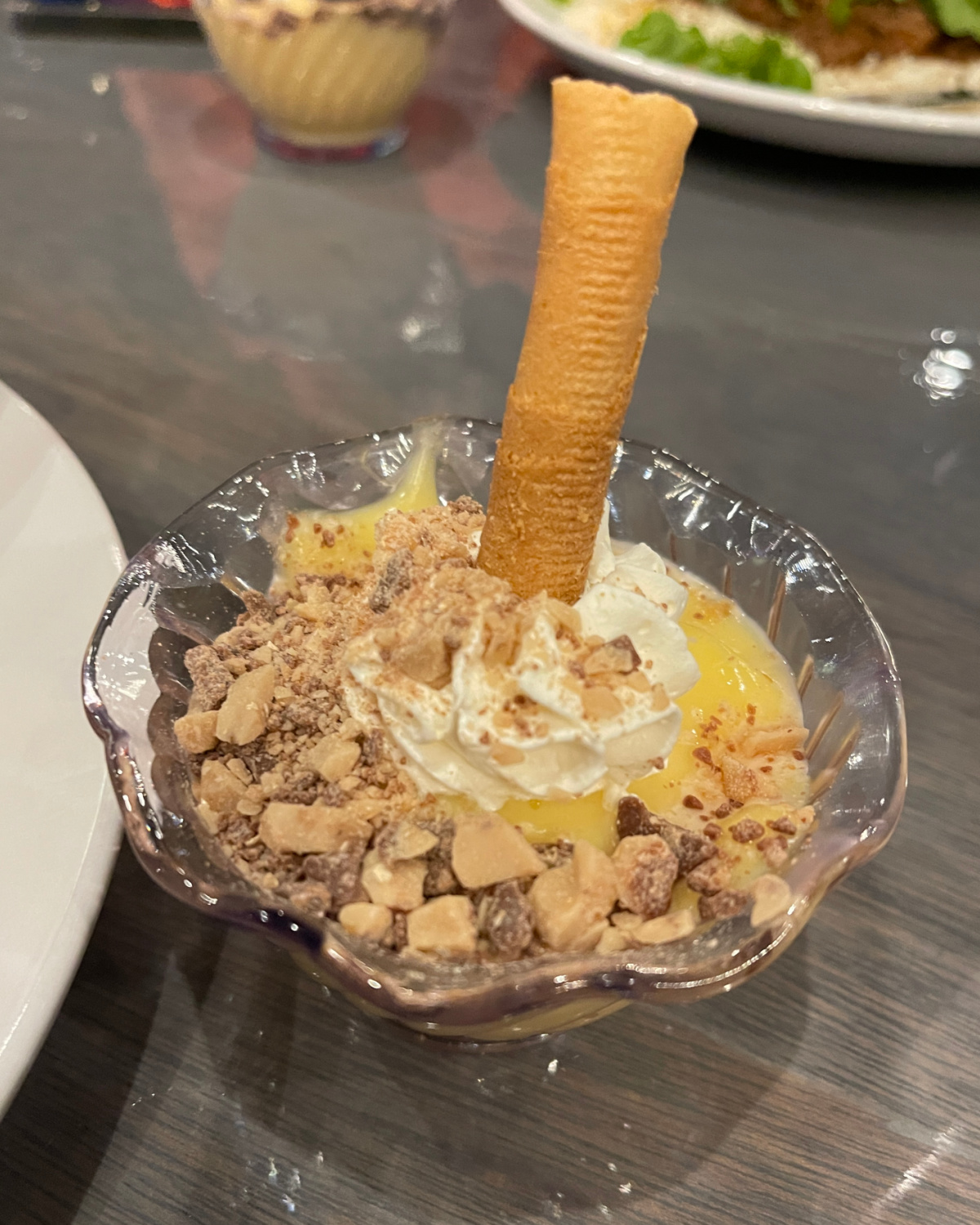
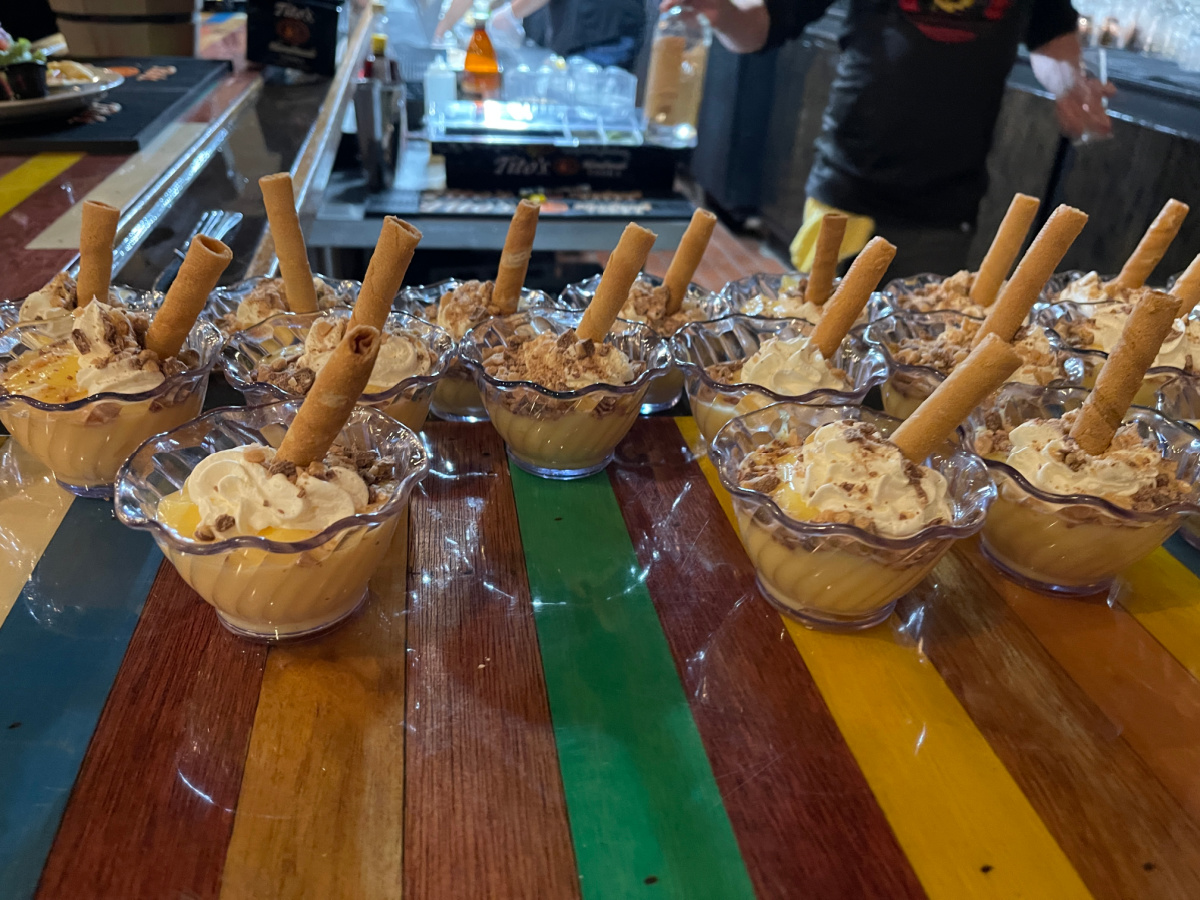
There was dessert too — a little creamy dessert topped with whipped cream, crunchy candy or nuts and one of those rolled wafer cookies.
Again, nothing super fancy.
Just good.
And honestly, that describes the dinner pretty well.
It wasn’t trying to be some elaborate fine-dining experience. It was tasty, filling, and exactly the kind of meal that worked after a day of sightseeing around Page.
There Is a Lot to Look at Before the Show Even Starts
One of the things I really liked was that the cultural part didn’t begin the second someone walked onto the stage.
It was already around you.
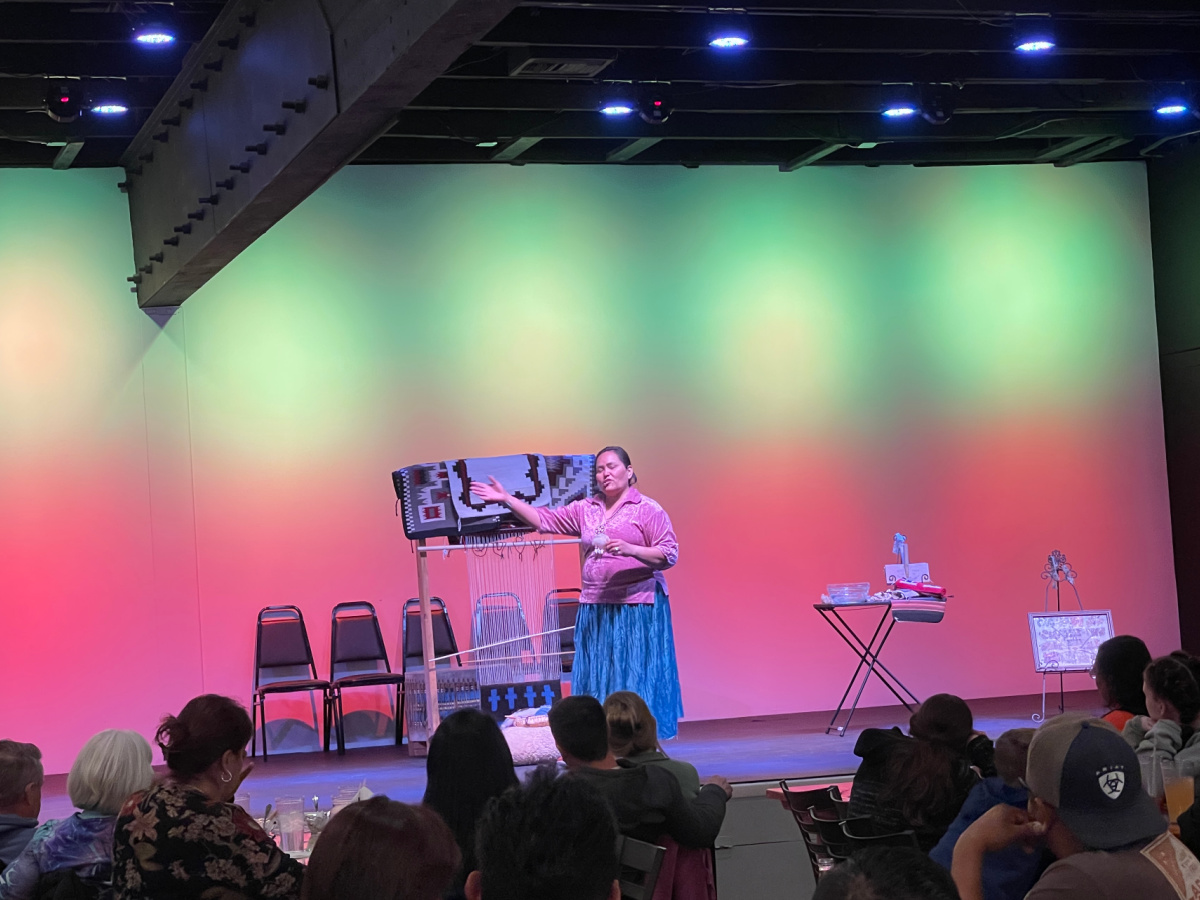
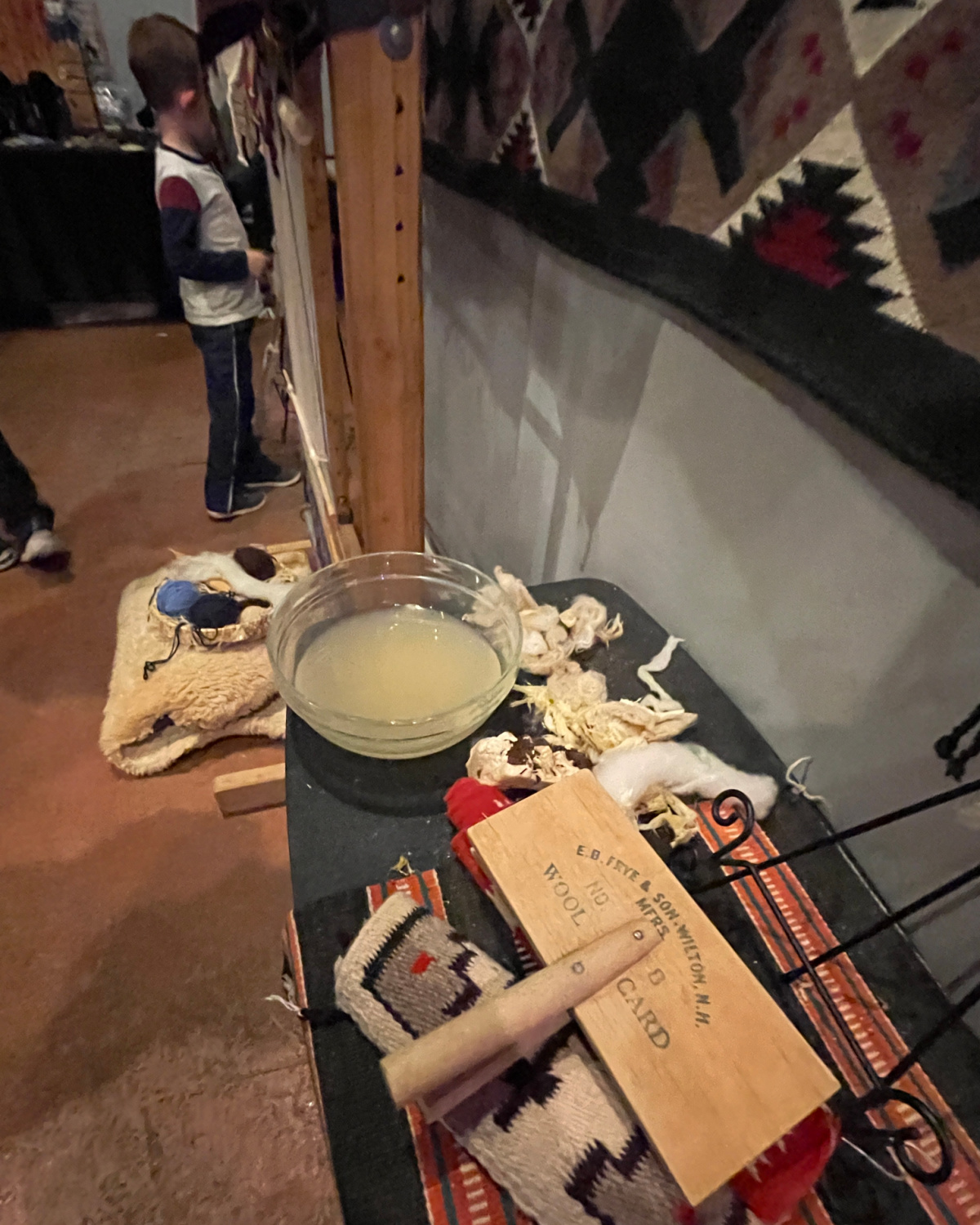
There were large Navajo rugs hanging in the room, along with a loom and other weaving materials.
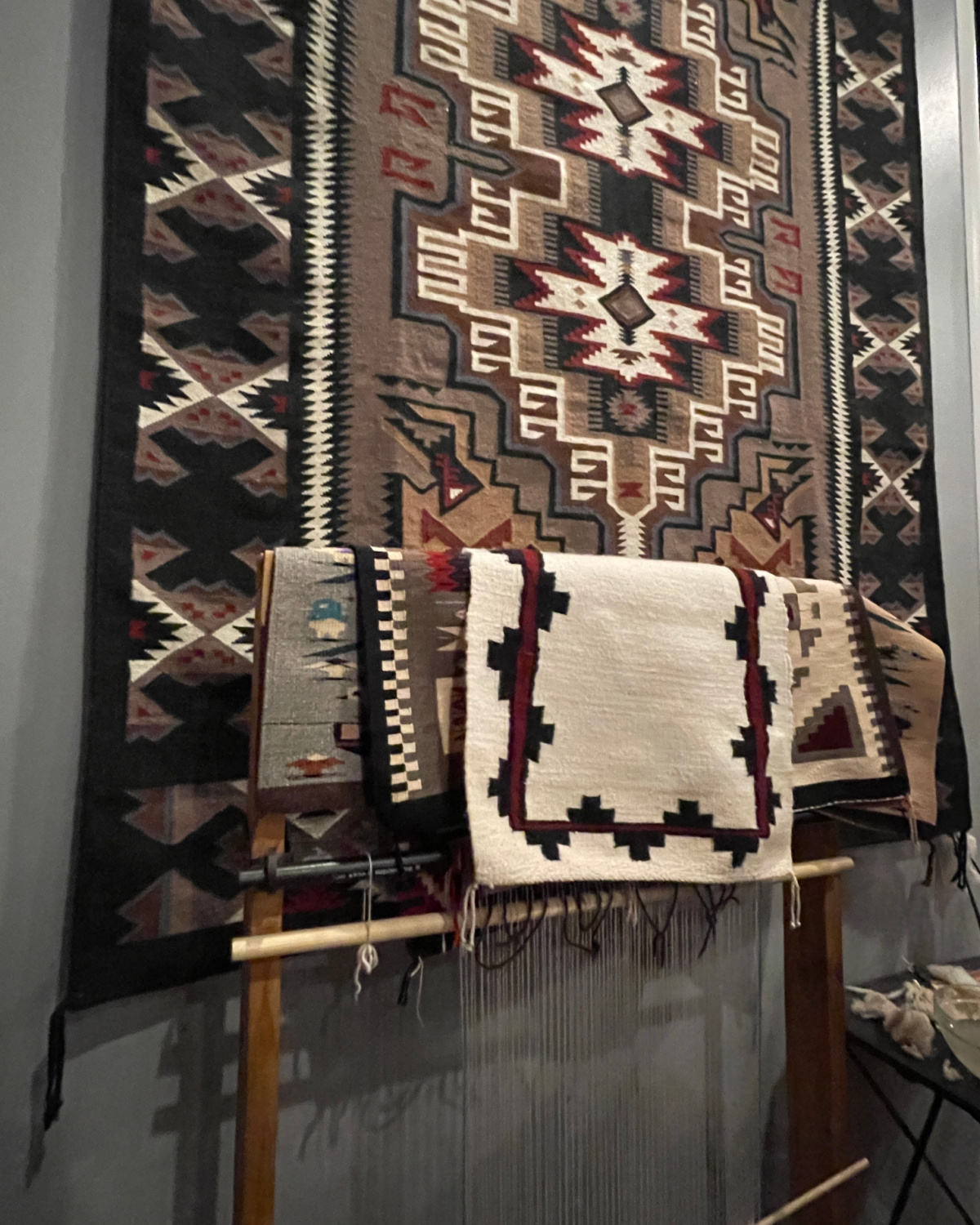
And because we were able to walk around and look at everything fairly closely, you could actually see some of the details.
The wool.
The loom.
The designs in the rugs.
The different stages of the weaving.
Then later, during the presentation, they explained some of what we had been looking at.
I thought that was fascinating.
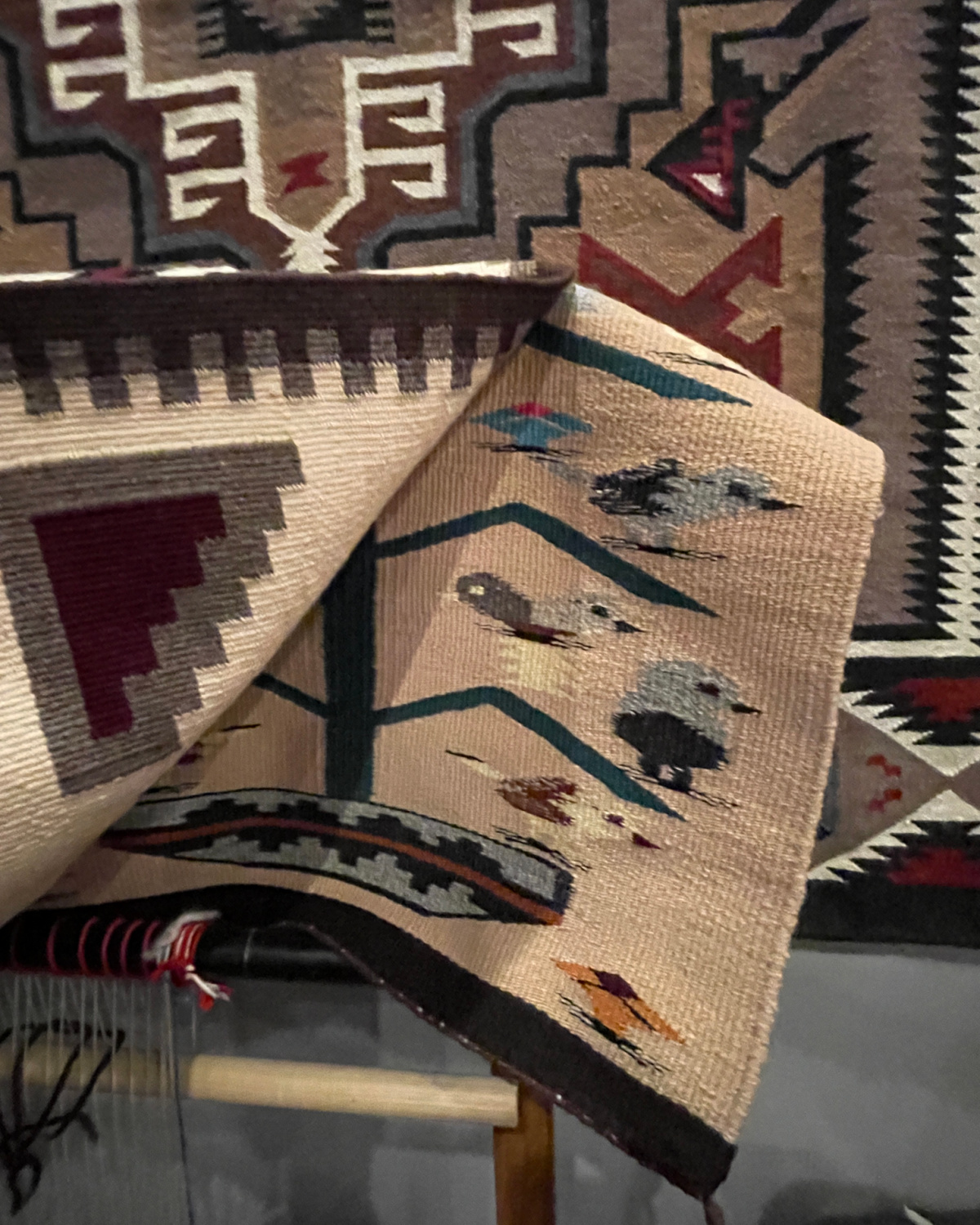
I’ve seen Navajo rugs before. You see them in museums and visitor centers all over this part of the Southwest.
But seeing the loom sitting there, with the weaving still attached to it, made it much easier to appreciate how much work actually goes into making one.
And that was basically the tone of the entire evening.
You weren’t sitting through a lecture.
You were eating dinner and watching a really entertaining show.
But while you were doing that, you were also learning why some of these traditions matter.
And once the dancing started, the evening got even better.
The Cultural Presentation
The show itself was probably my favorite part of the evening.
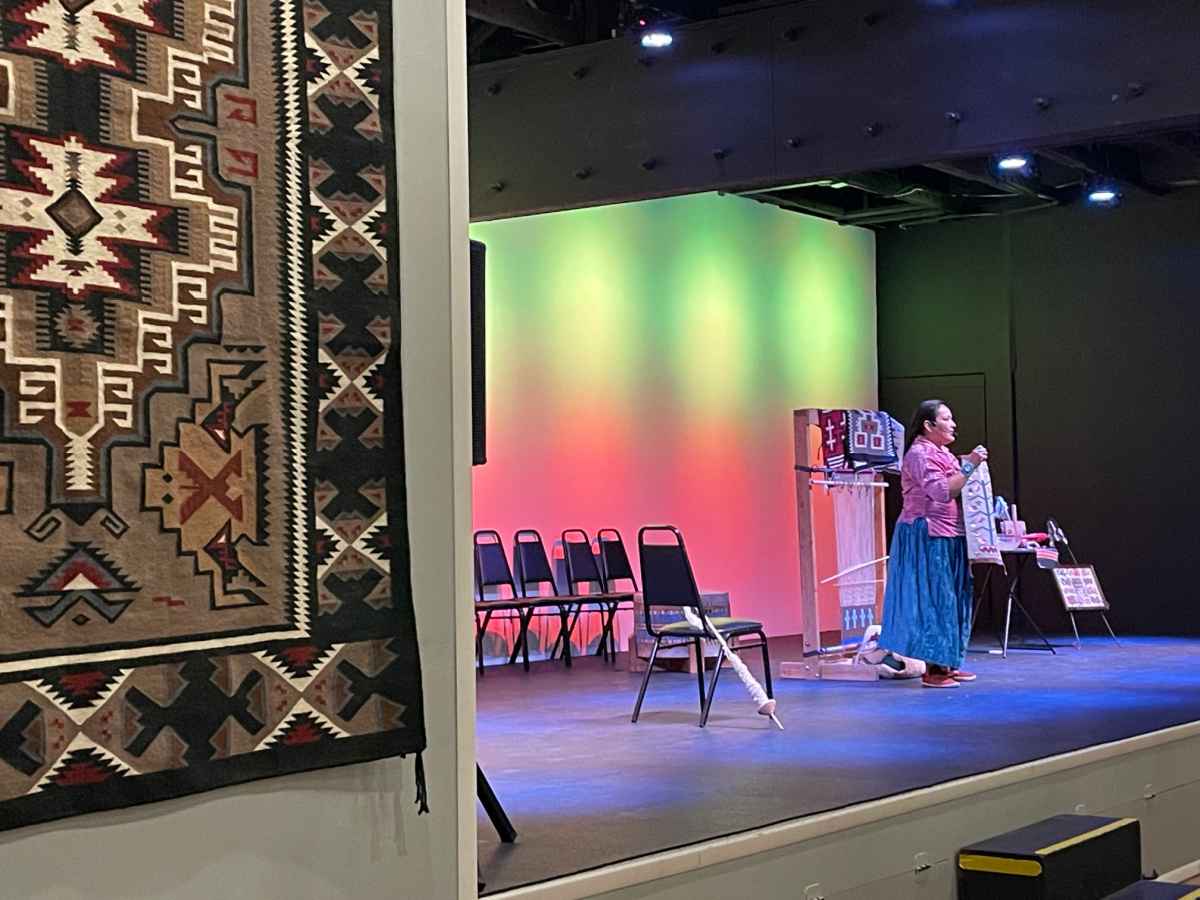
What made it work so well was that they didn’t just bring dancers onto the stage and leave you to figure out what you were watching. Someone would explain the dance first — what it represented, what was significant about the clothing, or whatever else we needed to know — and then the performers would come out and actually do it.
That made a huge difference.
Because otherwise I would have been sitting there thinking, wow, that outfit is beautiful and wow, these people can dance.
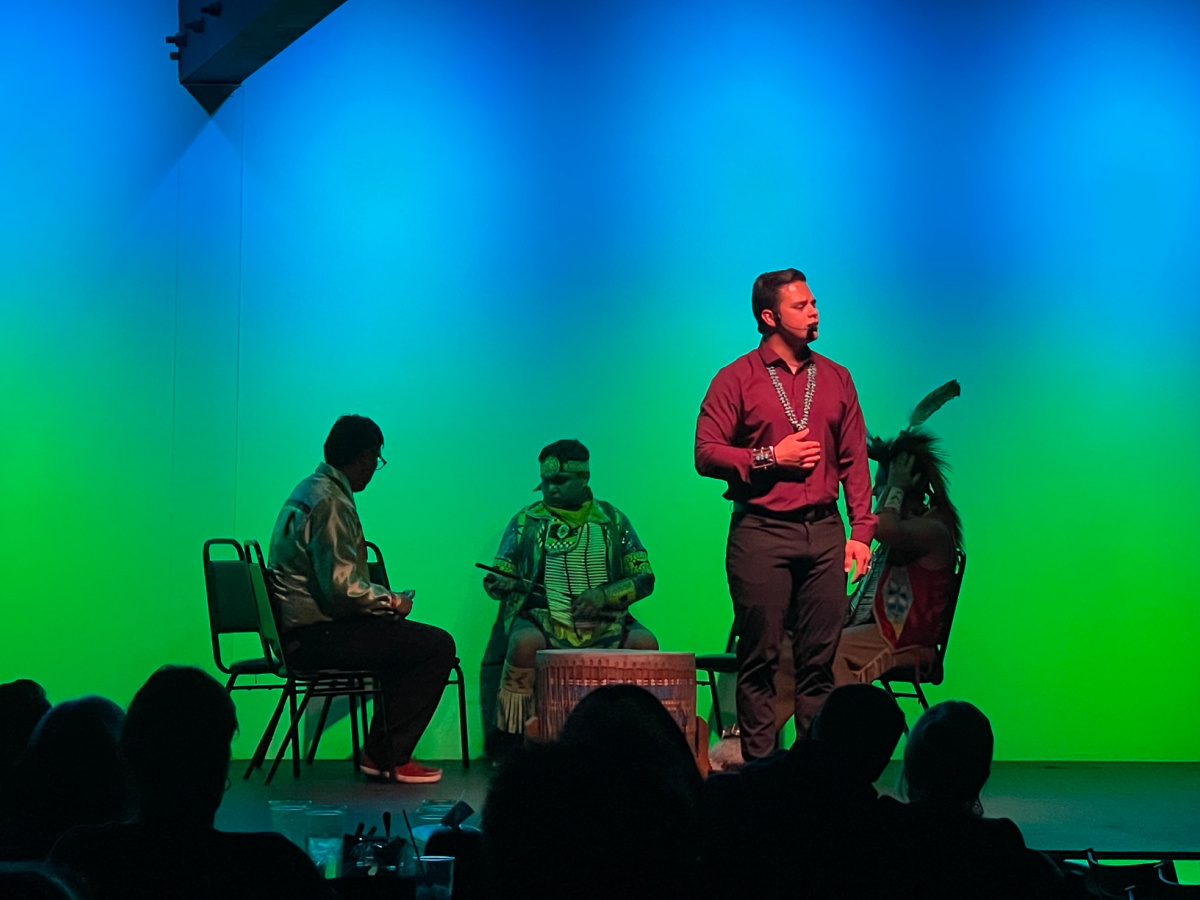
Which, to be fair, I was still thinking.
But at least now I also had some idea of what I was looking at.
And the dancers were incredibly talented. Sometimes it was adults. Sometimes kids came out. A lot of the performers actually compete in traditional dance competitions, and several of them had won major awards or championships.
That was one of those little details that made me sit up and pay more attention.
These weren’t people who had learned a few routines for tourists.
They were serious dancers.
And once they started performing, that was pretty obvious.
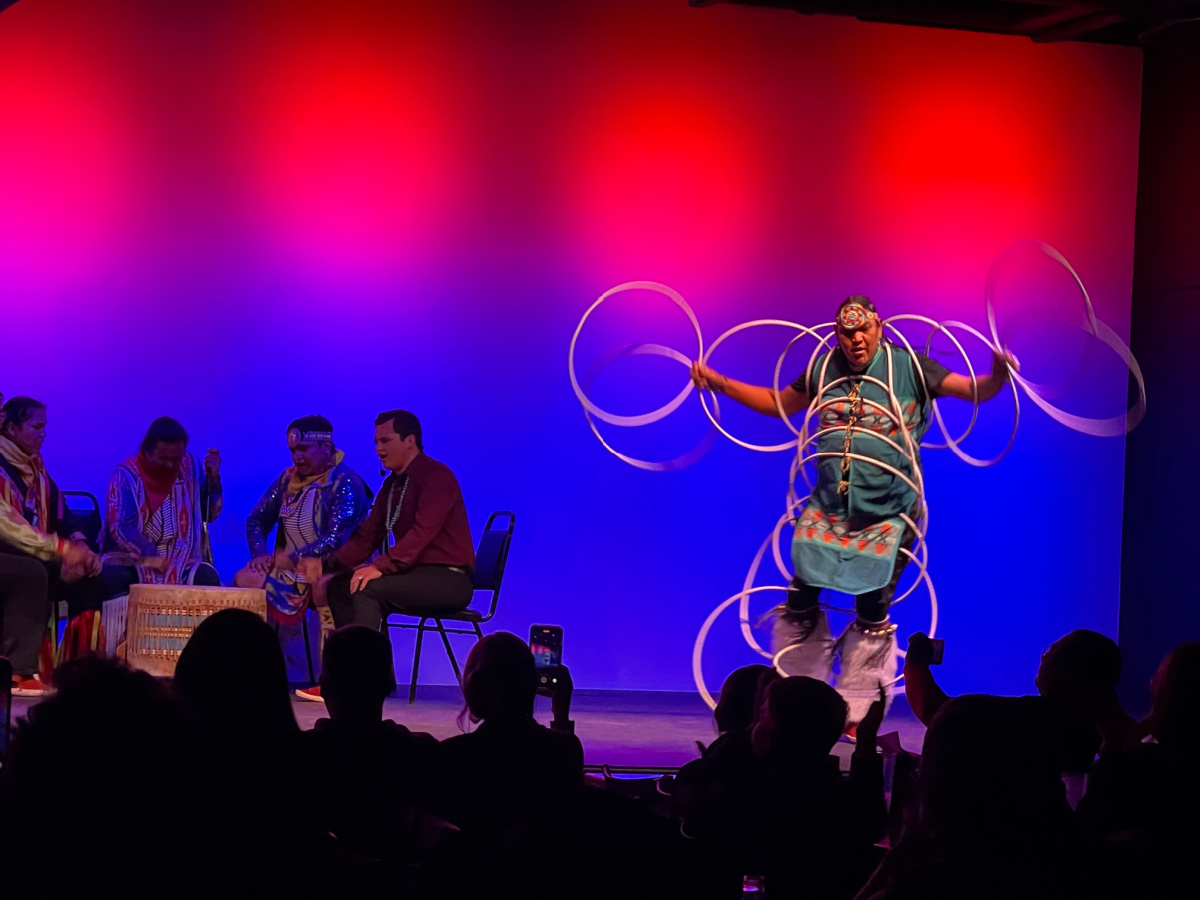
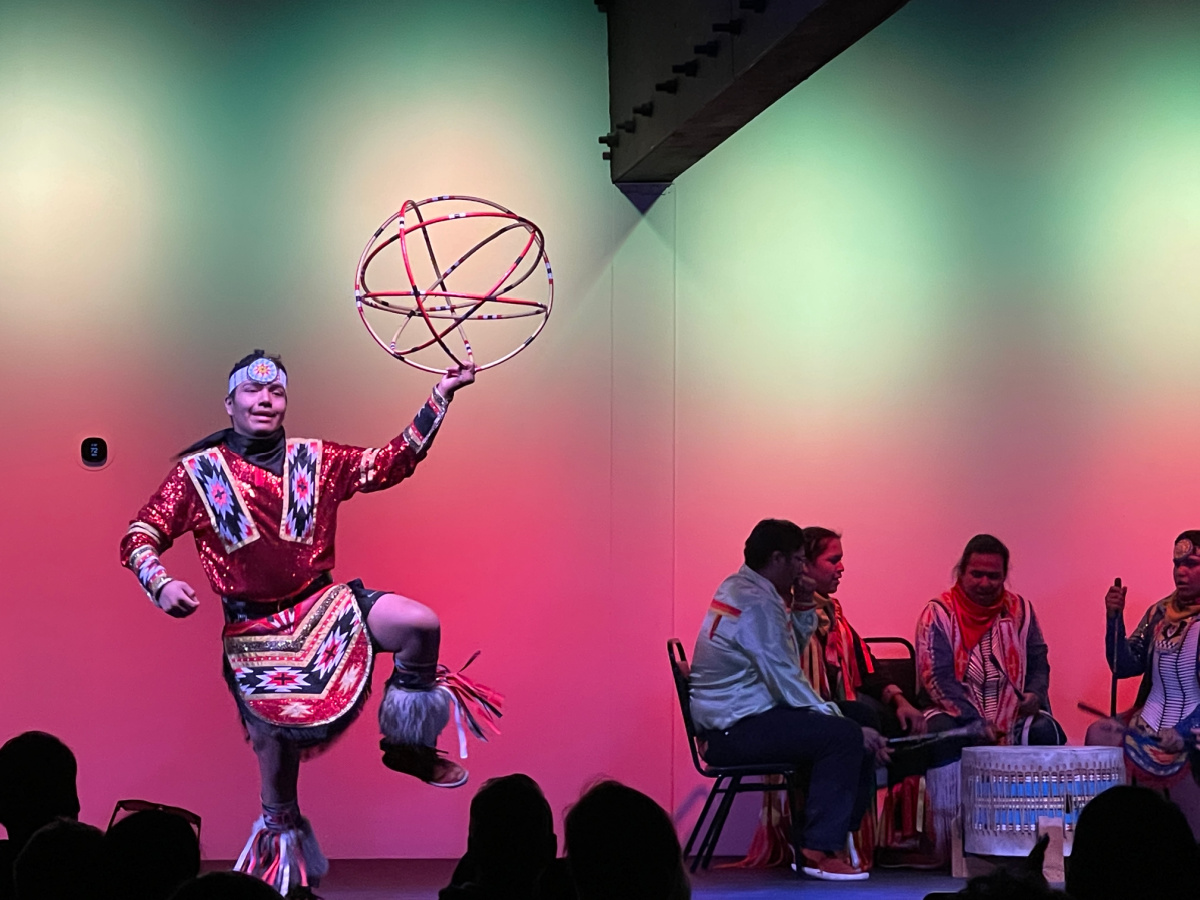
The hoop dancing was especially amazing.
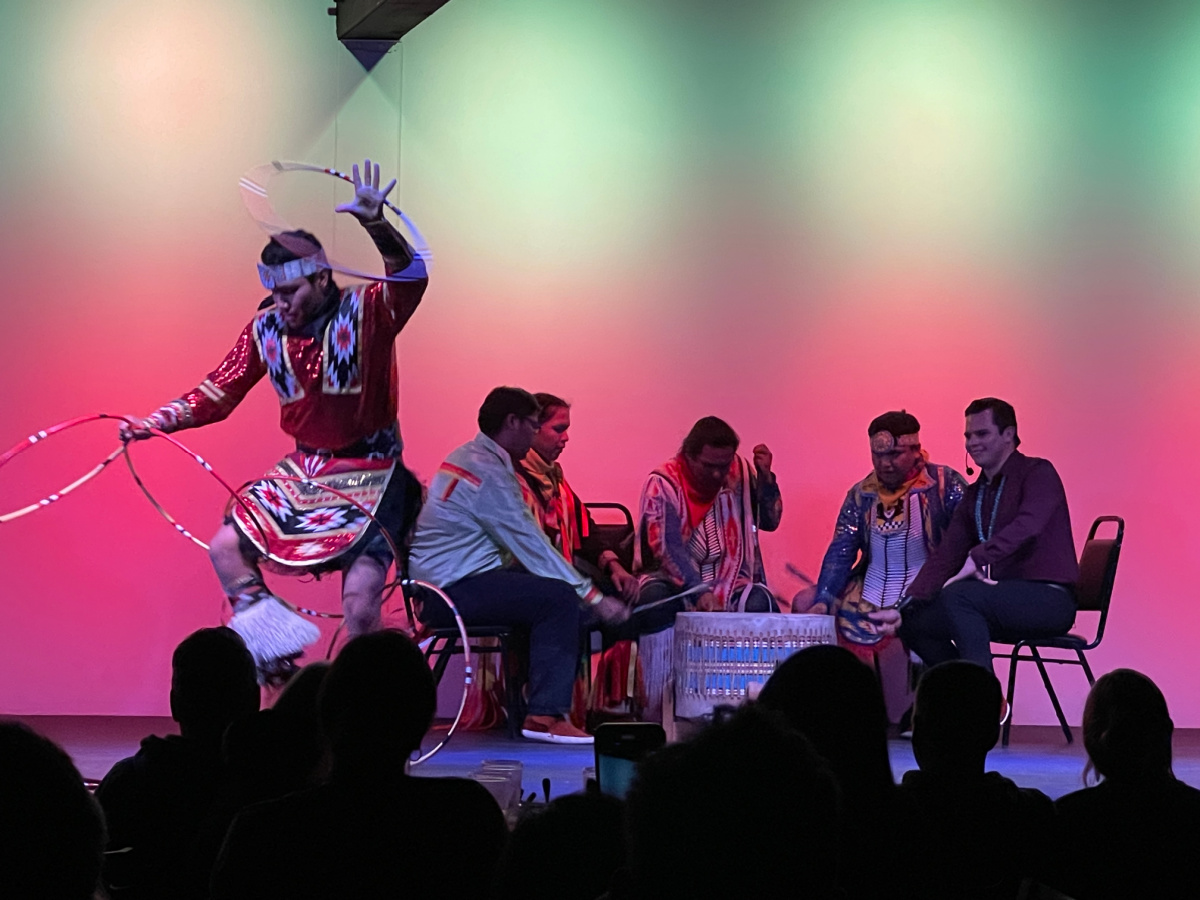
I have a ridiculous number of photos from that part of the night because every time I thought the dancer had reached the maximum possible number of hoops, apparently he had not.
There would be hoops around his waist, hoops in his hands, hoops extending out from both sides, and somehow he was still moving through the whole thing.
At one point it looked less like dancing and more like he had somehow turned himself into a giant moving sculpture.
And then five seconds later the entire shape would change.
That was so much fun to watch.
The live music made it even better.
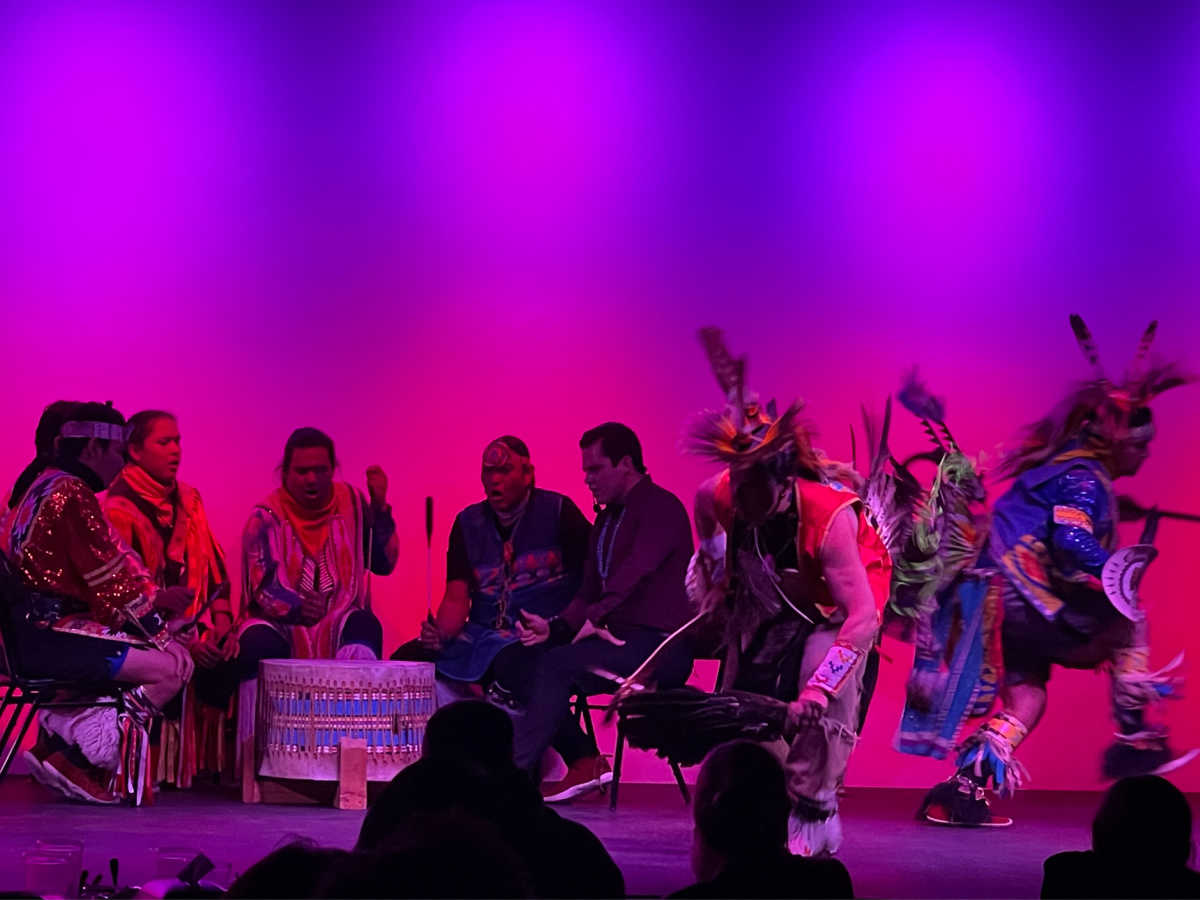
There were Navajo men sitting behind the dancers singing and drumming during the performances, so the dancers weren’t moving to a recording. The drumming and singing were happening right there in the room with us.
I really liked that.
You could hear the rhythm change and then watch the dancers respond to it, and the whole thing felt much more alive than it would have with recorded music playing through speakers.
The clothing was beautiful too.
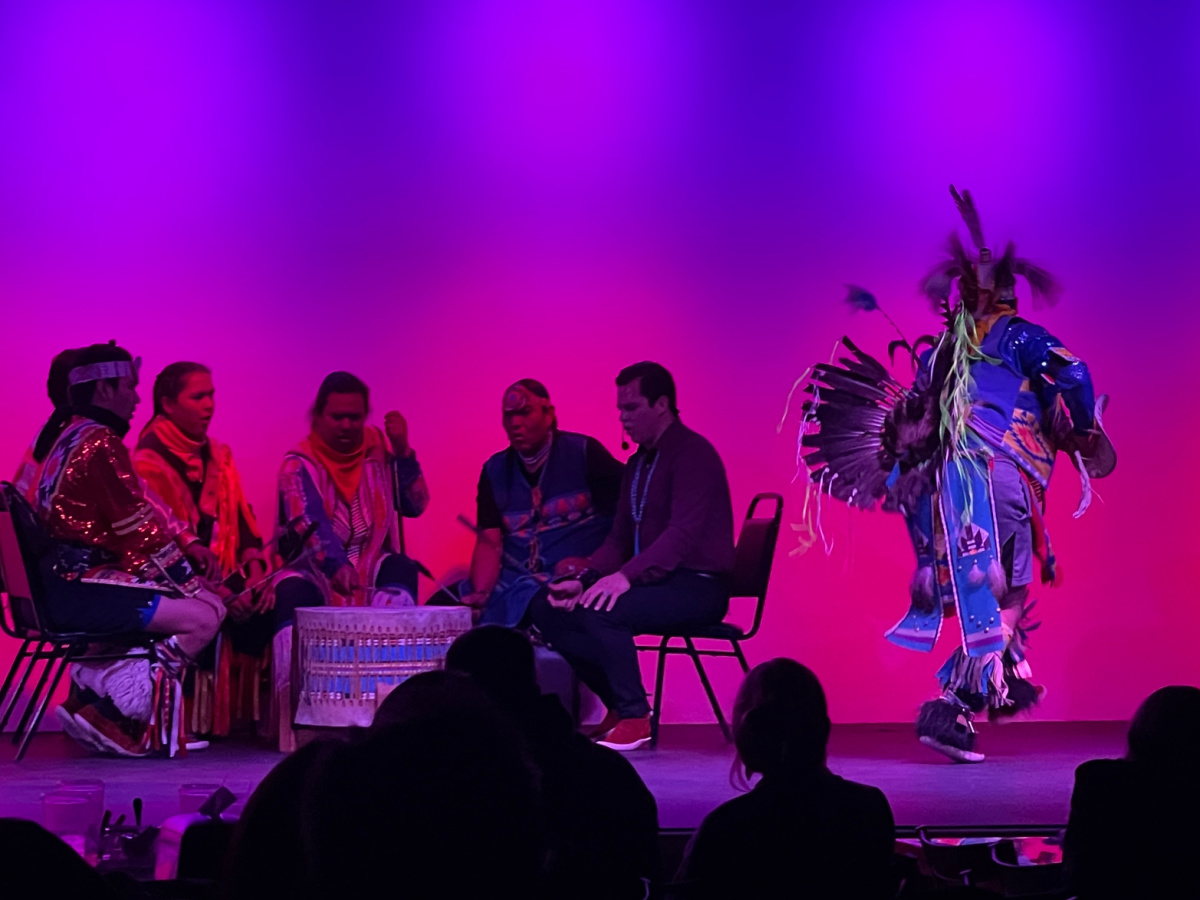
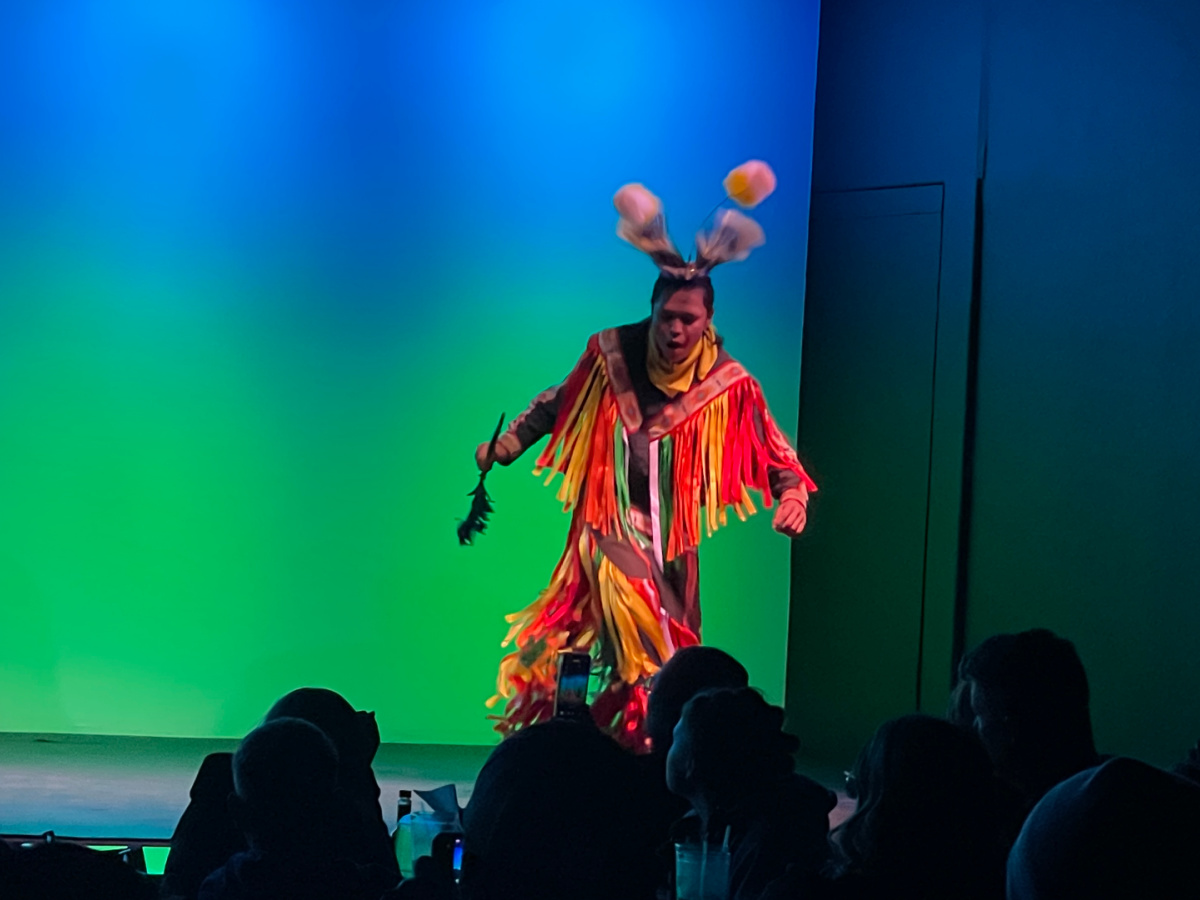
Some of the dancers had long fringe that moved everywhere when they danced. Others had feathers and really intricate pieces that were just gorgeous up close. And because we weren’t sitting in some giant theater, you could actually see a lot of those details.
The stage lighting changed throughout the night too, which I apparently thought was fabulous because I have photos of the same stage glowing green, blue, purple and red.
So yes, I took a lot of pictures.
But there was a lot to photograph.
I also really enjoyed the parts of the presentation that had nothing to do with dancing.
The weaving demonstration was probably the best example.
There was an actual loom set up in the room with a piece still being woven, plus finished rugs, wool and other materials nearby.
And seeing that was completely different from looking at a finished Navajo rug hanging on a wall.
You could see the individual threads and how the design was coming together.
Clearly there was an enormous amount of handiwork involved.
There was one rug with animals woven into the pattern that I kept going back to because the detail was incredible.
That was the part of the evening where I thought, okay, I have seen Navajo rugs before, but I don’t think I have ever really thought about how somebody actually makes one.
Now I had at least a little better idea.
And that was really the best part of the whole presentation.
It wasn’t just dancing.
It wasn’t just music.
Is the Red Heritage Dinner Show Worth It?
For me, absolutely.
I would do this again without hesitation.
It was one of those activities that ended up being way more memorable than I expected, partly because it was so different from everything else we were doing in Page.
Most of our time in the area was spent outside.
Antelope Canyon.
Horseshoe Bend.
Glen Canyon.
All of these huge landscapes and viewpoints and places where you are walking around taking pictures.
And then this was something completely different.
We sat down.
Ate.
Watched the show.
We learned things.
And it was just a really enjoyable evening.
That was nice.
Especially after a full day of sightseeing.
How Long Does It Take?
I would allow around two to two and a half hours for the whole experience.
That includes dinner and the show.
It did not feel long to me at all.
There was enough going on that I never really found myself wondering when it was going to end.
You would eat for a while, then the presentation would start, then you would have the different dances and demonstrations.
It moved pretty naturally.
And honestly, by the time it was over, I felt like the evening had gone by pretty quickly.
I would still check the current schedule before you go, because obviously times and availability can change depending on the season.
Who Is This Good For?
I think this works for a lot of different people.
Families would be fine.
Couples would enjoy it.
I would do it solo.
And I definitely think kids would like the dancing, especially the hoop dancers.
There is a lot happening visually.
The colors.
The movement.
The live drumming.
The singing.
It is not one of those cultural programs where everyone is expected to sit perfectly still and listen to someone talk for two hours.
That would not have been nearly as much fun.
This was much more active than that.
A Few Things I Would Know Before You Go
I would make a reservation.
I would come hungry.
And I would actually take a few minutes to look around the room instead of just sitting down and waiting for dinner.
There is more to see than you might realize at first.
The weaving.
The rugs.
The pottery.
The other displays.
Some of those details ended up being part of what I remembered most.
And I would also go in expecting a casual meal.
The food was delicious, but this is not some fancy dinner theater with elaborate plated courses.
That is not the point.
You are there for Navajo food and the cultural show.
And honestly, that worked perfectly for me.
Would I Recommend It?
Very much so.
Especially if you are already visiting places connected to the Navajo Nation.
That was probably the part I appreciated most in hindsight.
We were spending all this time exploring the area, but this gave us a chance to understand a little more about the people who actually live here.
Not in some heavy, academic way.
Just enough to make the trip feel richer.
And it was fun.
That matters too.
I don’t want every travel experience to feel educational.
Sometimes I just want to have a good time.
This managed to be both.
So yes, if you have an evening in Page, I would absolutely put Red Heritage on the list.
More Things to Do in Page, Arizona
If you are planning a trip to Page, there are several other experiences I would absolutely add to your itinerary.
Start with Upper Antelope Canyon, which is one of the most spectacular places we visited in the area. It is completely different from the Red Heritage dinner show, obviously, but together the two experiences give you a much broader appreciation for this part of Navajo Nation.
Horseshoe Bend is another easy addition. The walk out to the overlook is relatively short, and the view is absolutely worth it.
I also highly recommend visiting the Glen Canyon Dam Visitor Center. Even if you are not particularly interested in engineering, the dam itself is incredibly impressive.
And don’t skip the Glen Canyon Overlook nearby. It is a short walk from the parking area with several beautiful views looking down into the canyon and back toward the dam.
More Southwest Adventures Near Page
Page also works really well as part of a larger northern Arizona and southern Utah road trip.
Just over the Utah border, Kanab has some fantastic experiences of its own. Our Peekaboo slot canyon tour was another great way to explore this landscape without taking on a hardcore hike, and Coral Pink Sand Dunes State Park is such a fun change of scenery.
And if you are continuing south, the Grand Canyon South Rim is an obvious next stop.
My Grand Canyon South Rim guide covers the basics of planning a visit, while my one-day Grand Canyon itinerary is especially helpful if you are trying to fit the South Rim into a larger Southwest road trip.
Together, Page, Kanab, and the Grand Canyon make an incredible Southwest itinerary with a really nice mix of scenery, cultural experiences, short walks, and bucket-list views.