Pima Air & Space Museum: Why This Tucson Aviation Museum Is Worth the Stop

Affiliate Disclosure: This post may contain affiliate links. If you make a purchase or booking through these links, I may earn a commission at no additional cost to you.
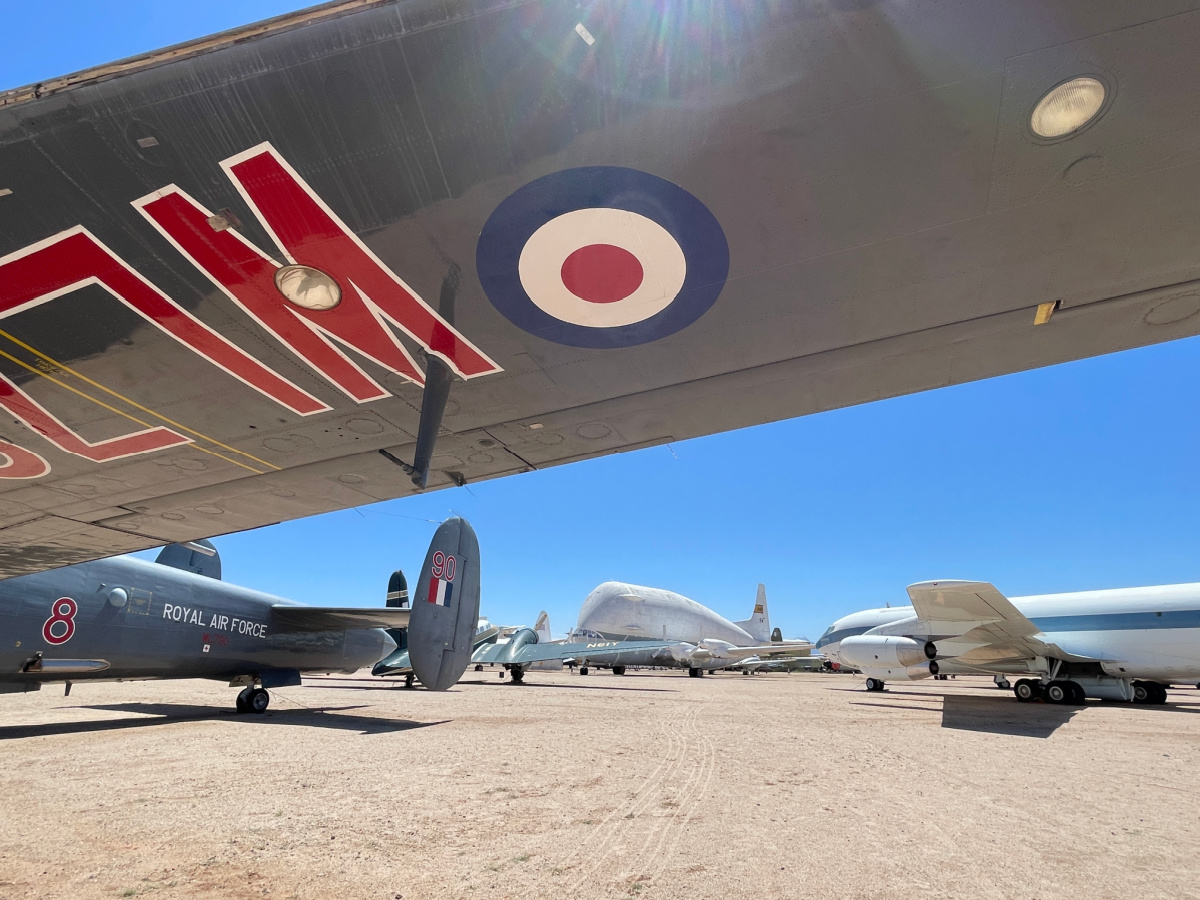
Planning a visit to Pima Air & Space Museum in Tucson? See what to expect, must-see aircraft, outdoor displays, family tips, food, and how long to spend.
Estimated reading time: 35 minutes
I have now been to the Pima Air & Space Museum twice, almost 20 years apart, and both times I walked away thinking the same thing: this place is seriously impressive.
The first time my husband and I visited was sometime around 2006 or 2007, before our daughter was born. Then we came back in 2024 as part of an Arizona road trip.
Now, full disclosure, my husband is an aerospace engineer and a huge military vehicle nerd. Airplanes, tanks, missiles, military history… this is absolutely his kind of place.
Me? Not so much.
And I still loved it.
Our daughter thought it was really cool too, which honestly says a lot because this is not a museum that has to rely on flashy kid exhibits to keep everyone interested. There is just so much to see.
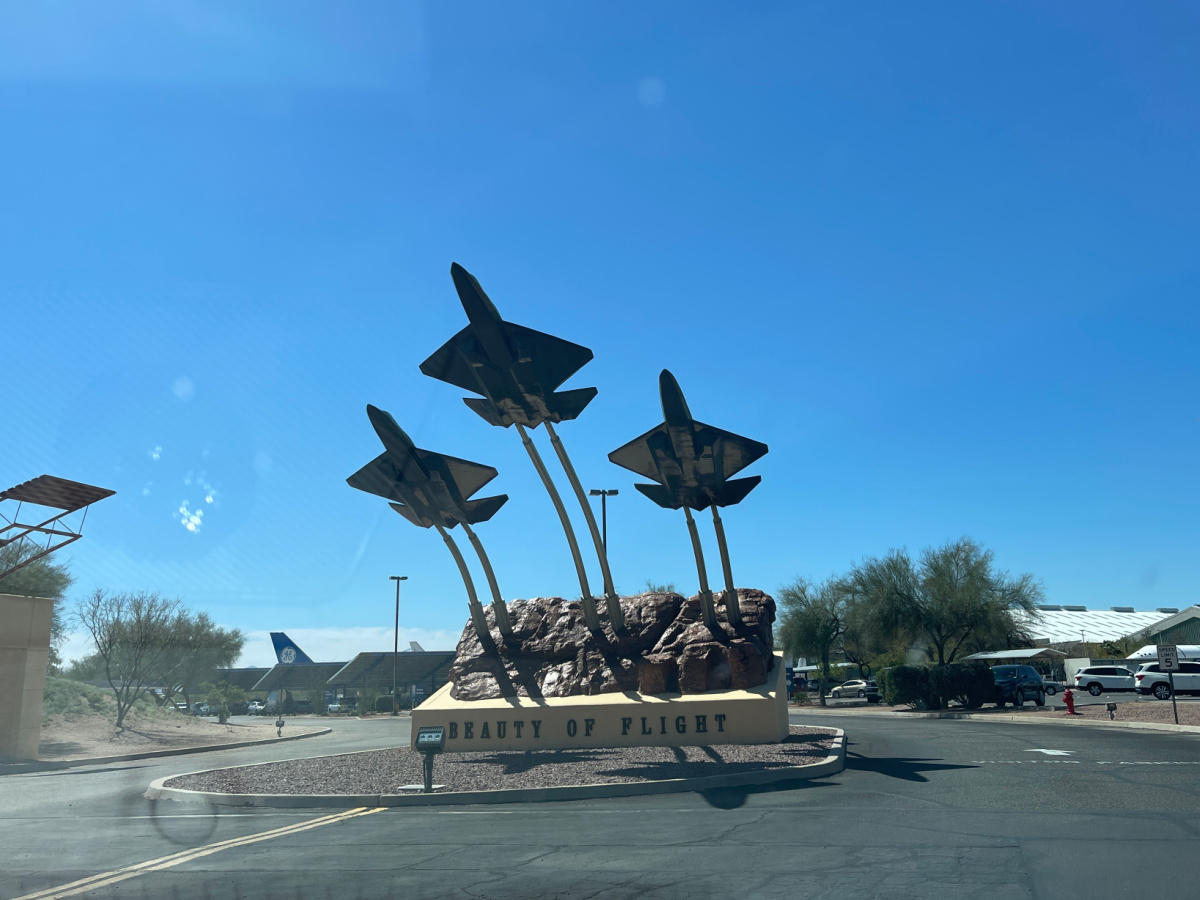
This Is Not Just an Airplane Graveyard
One thing I want to clear up right away is that the Pima Air & Space Museum is not the “airplane graveyard.”
You may have heard people use that term when talking about Tucson because there is a huge aircraft storage area nearby at Davis-Monthan Air Force Base. You can see row after row of retired military aircraft out there, which is probably why the whole area gets mentally lumped together.
But Pima is a completely separate museum.
And calling it a graveyard really undersells it.
This is a full-blown aviation museum with multiple hangars, enormous outdoor aircraft displays, exhibits covering different eras of flight, military aircraft, experimental aircraft, helicopters, bombers, fighters and some truly massive planes that are hard to appreciate until you are standing next to them.

The museum feels very Arizona too. You have airplanes everywhere, giant saguaros outside and that ridiculously blue desert sky.
It is a pretty great combination.
Pima Air & Space Museum Is Huge
This is not a quick little roadside stop.
Could you move through it quickly? Sure.
If you were determined, you could probably walk through some of the buildings, glance at the outdoor planes and be back in your car in a couple of hours.
But that would kind of defeat the purpose.
If you actually want to stop, read things, look at the airplanes and wander through the different hangars, I would plan on at least half a day.
And if you have a serious aviation fan with you?
You may be here awhile.
My husband was basically in heaven.
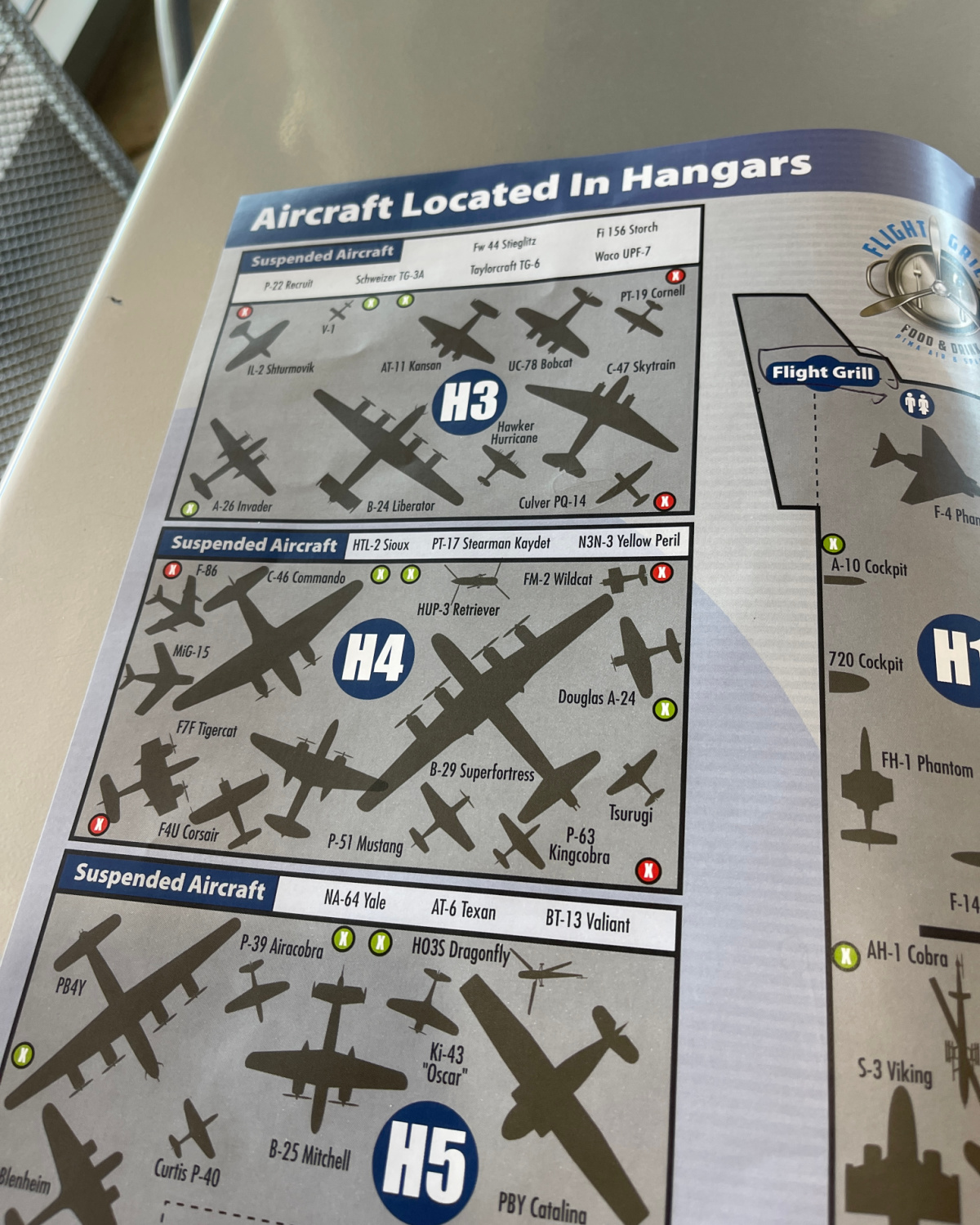
That map gives you a pretty good idea of what you are dealing with.
There are airplanes everywhere.
And what I really liked is that the museum does not feel like one giant warehouse with random planes shoved inside. The hangars are broken up in a way that makes sense, with different eras and types of aviation represented throughout the museum.
You might be looking at World War II aircraft in one area and then walk into another hangar and suddenly find yourself standing next to something from the Cold War.
Outside, the scale gets even crazier.
You Do Not Have to Be an Airplane Person to Enjoy This Museum
This is probably the biggest reason I recommend Pima.
If you already love airplanes, you do not need me to convince you.
Go.
You are going to have a fantastic time.
But I think Pima is much more interesting than people who are not already aviation fans might expect.
I am not someone who can identify an airplane by looking at the wing shape or engine configuration. Half the time I needed the signs to tell me what I was looking at.
But there is something really fascinating about seeing the evolution of aircraft laid out in front of you.
Some of the earliest planes look impossibly fragile.
Then you move into World War II aircraft.
Then bombers.
Then jets.
Then you are standing underneath something that looks like it belongs in a spy movie.
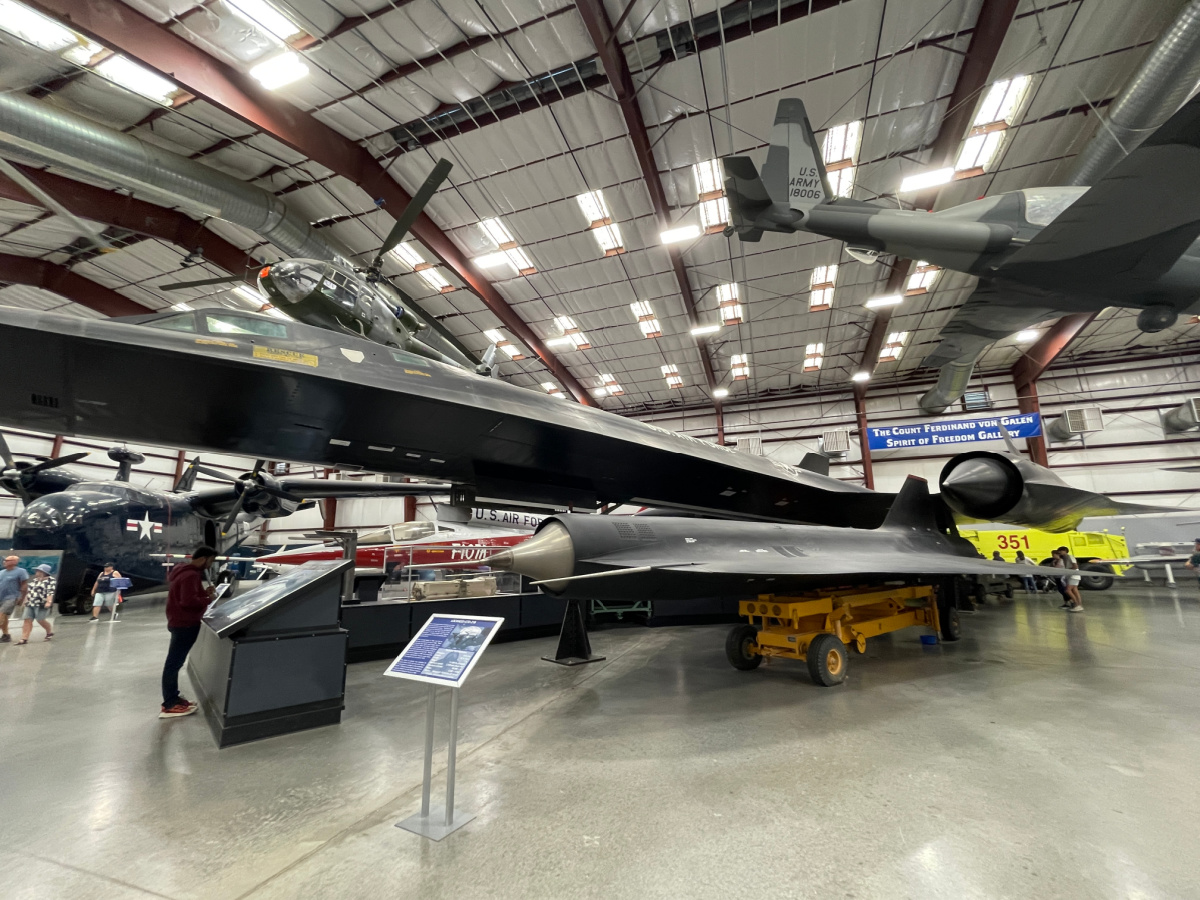
The SR-71 Blackbird is one of those aircraft that stops you even if you know absolutely nothing about aviation.
It just looks cool.
And that is kind of the theme of this museum.
There are plenty of places where the aviation nerd in your family can geek out over the details while everyone else just stands there going, “Okay, that is awesome.”
If You Like the Smithsonian Air and Space Museum, You Will Probably Like Pima
The easiest comparison I can make is the Smithsonian National Air and Space Museum in Washington, D.C.
Pima has a very different feel, but if you enjoy seeing historic aircraft and learning how aviation developed over time, I think you will really enjoy this museum.
And one big advantage Pima has is space.
A lot of space.
These aircraft are not tiny.
Some of them are enormous.
The outdoor portion of the museum lets you walk around them and actually understand how big they are in a way that is difficult to do inside a traditional museum.
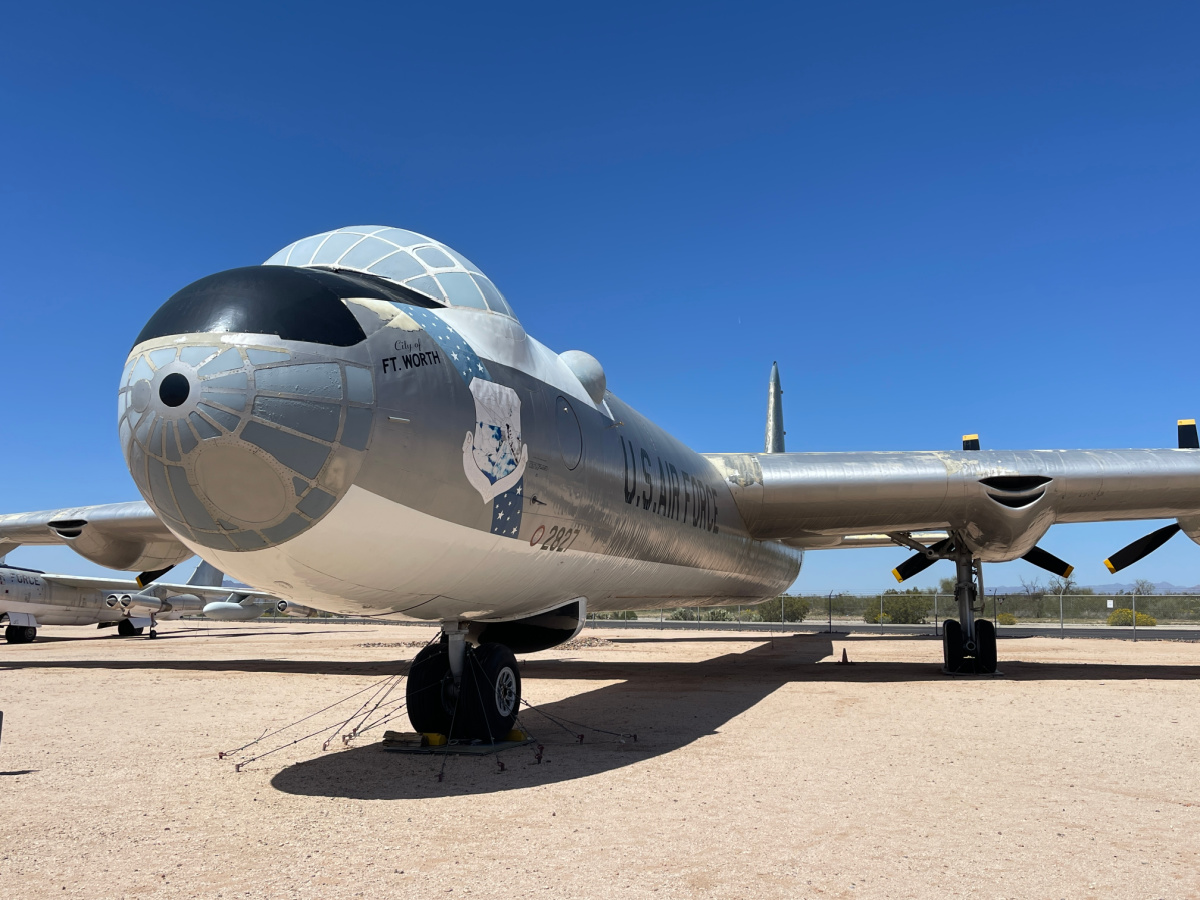
This is also one of those places where having people in the photo actually helps because otherwise it is hard to understand the scale.
Some of these planes are enormous.
Is Pima Air & Space Museum Worth the Drive?
I think that depends on where you are coming from.
If you are already visiting Tucson, absolutely.
If you are staying in Phoenix and want a good day trip, I think this is a very easy recommendation, especially if you combine Pima with the Titan Missile Museum.
That would make a fantastic aviation and Cold War history day.
I would probably do Pima first thing in the morning and save the Titan Missile Museum for later in the day.
Why?
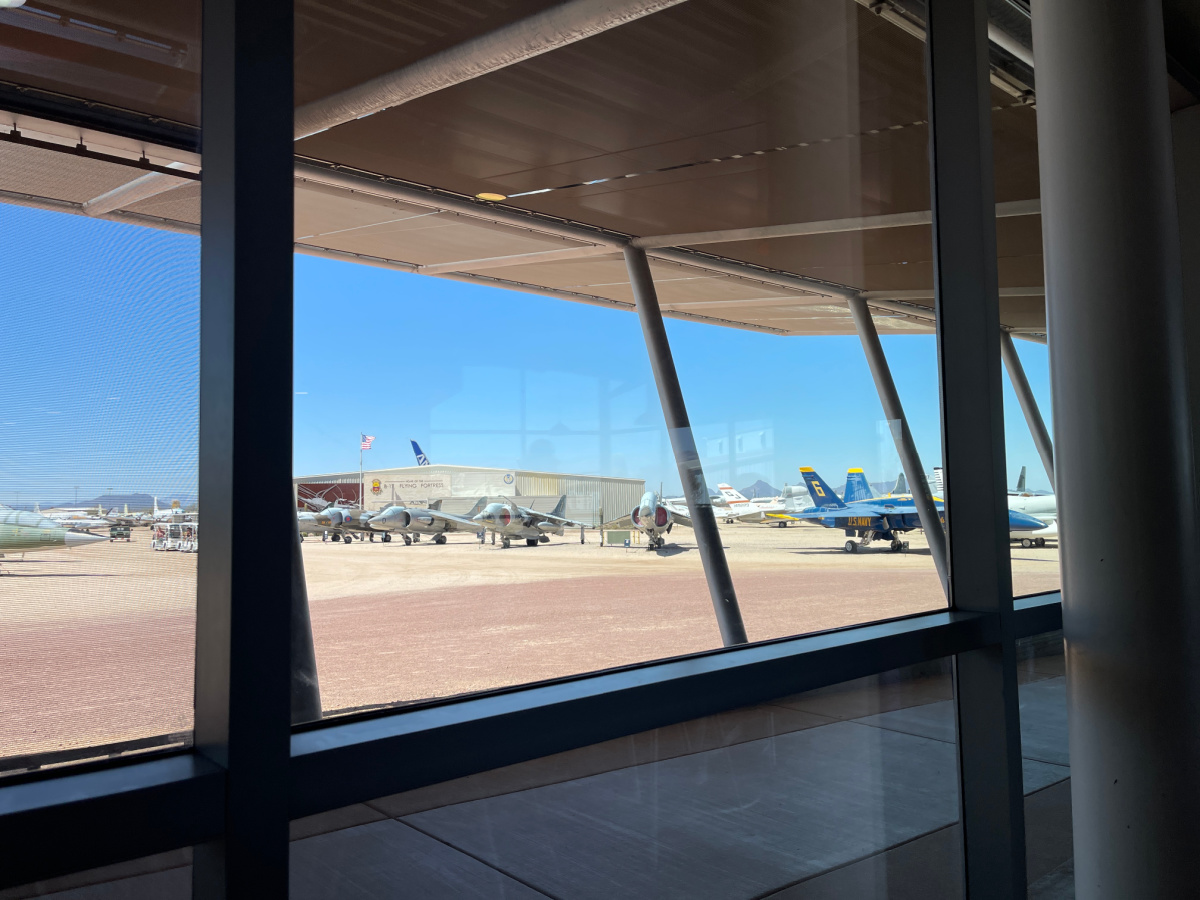
Because a large portion of Pima is outside.
And this is Arizona.
You do not want to be wandering around a huge outdoor aircraft collection in the middle of a scorching summer afternoon if you can avoid it.
We visited in March, and the weather was basically perfect. We never had to think about the heat.
During warmer months, though, I would absolutely bring water, sunscreen and a hat.
If you are visiting northern Arizona, I would look at the drive a little differently.
We came down from the Sedona area, and it was a substantial drive.
Was it worth it for us?
Yes.
But we also had an aerospace engineer in the car.
If you are doing a Grand Canyon and Sedona trip and nobody in your family particularly cares about aviation, I probably would not tack Tucson onto the itinerary just for this museum.
If you have an aircraft lover?
That changes the equation.
This is absolutely the kind of museum someone would happily drive several hours to visit.
My Overall First Impression
Pima Air & Space Museum is one of the best aviation museums we have visited.
And we have visited quite a few.
What makes it work is the combination of really significant aircraft, huge outdoor displays, well-organized indoor exhibits and enough variety that the museum stays interesting even when you are not the aviation expert in the family.
My husband could have spent forever here.
Our daughter enjoyed it.
I enjoyed it.
That is a pretty good endorsement.
And once you start walking through the hangars, you quickly realize just how much there is to see.
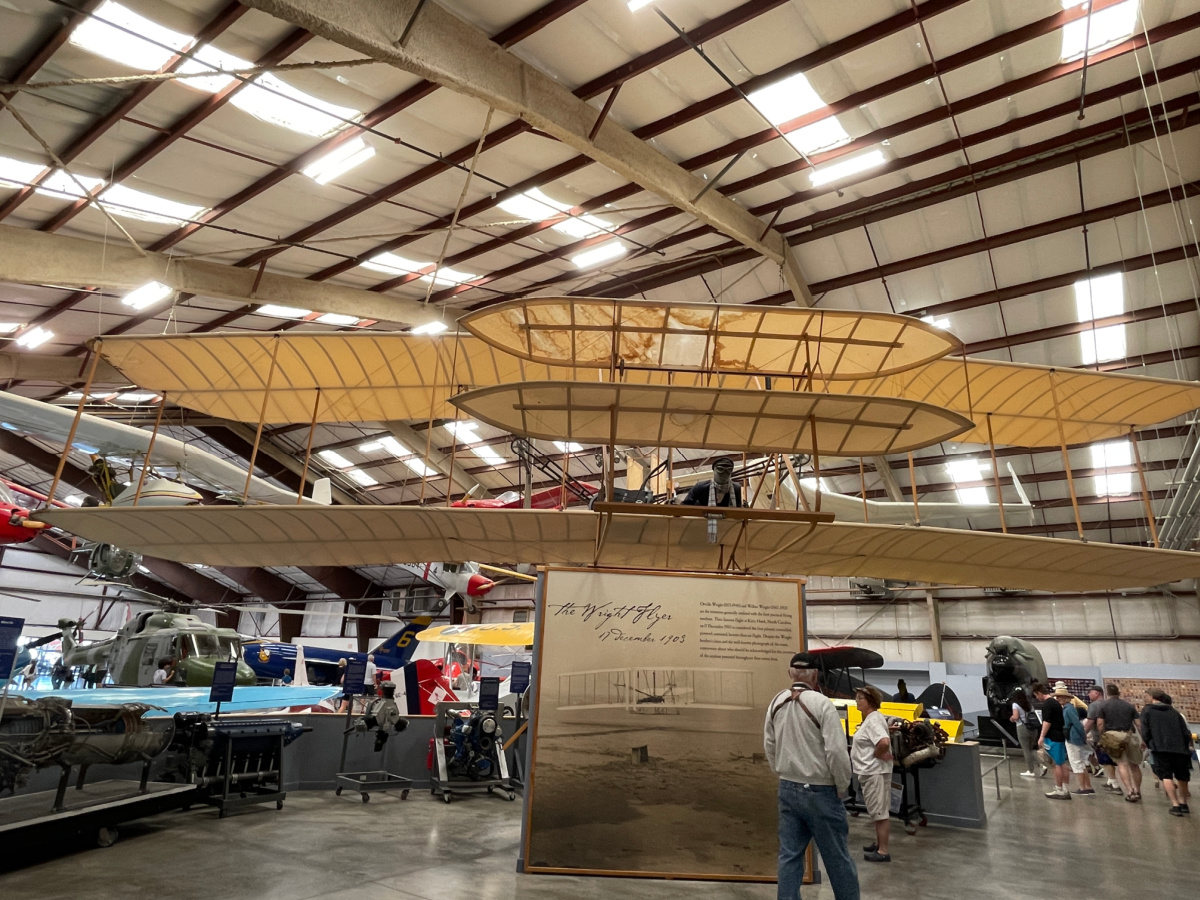
From the earliest days of flight to some of the most famous military aircraft ever built, Pima gives you a chance to see an enormous chunk of aviation history in one place.
And next, I want to take you through some of the aircraft and exhibits we thought were especially interesting.
Exploring the Hangars at Pima Air & Space Museum
One of the things I really appreciated about Pima is that they do not just have hundreds of airplanes sitting around with little signs in front of them.
There is some organization to the madness.
And I say madness affectionately because there are seriously airplanes everywhere.
Some are sitting on the floor. Some are hanging from the ceiling. Sometimes you are looking at one airplane and realize there are three more above your head.
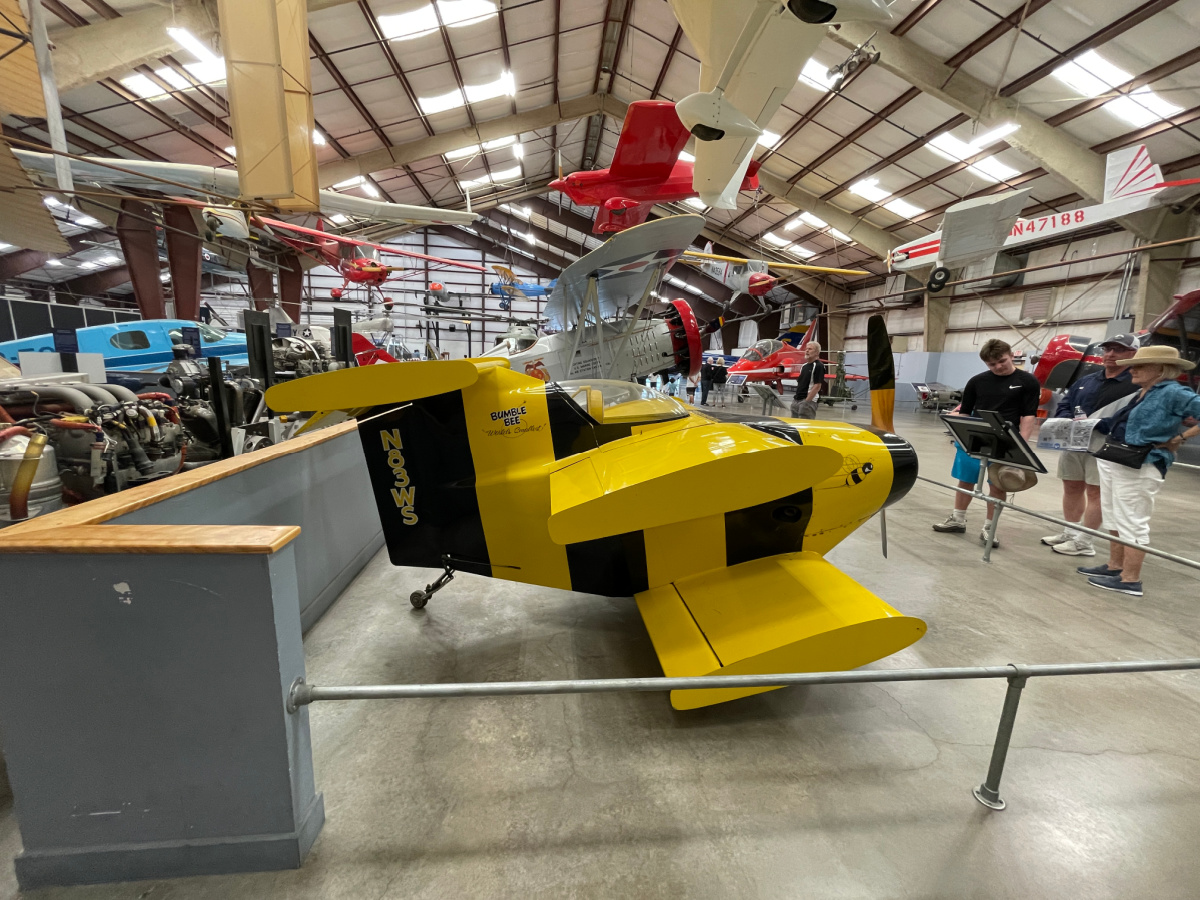
That is part of what makes wandering through the museum so much fun.
You do not necessarily have to know what you are looking for.
You just start walking.
Start With the Earliest Days of Flight
One of my favorite things about aviation museums is seeing just how far airplanes have come in a relatively short amount of time.
Because when you look at something like the Wright Flyer and then remember that eventually humans built the SR-71 Blackbird, the progression is kind of insane.
Pima has a Wright Flyer replica that immediately gives you that perspective.
Look at that thing.
It basically looks like fabric, sticks and optimism.
And people flew it.
The early aviation exhibits are especially fun because some of the airplanes barely resemble what we think of as an airplane today.
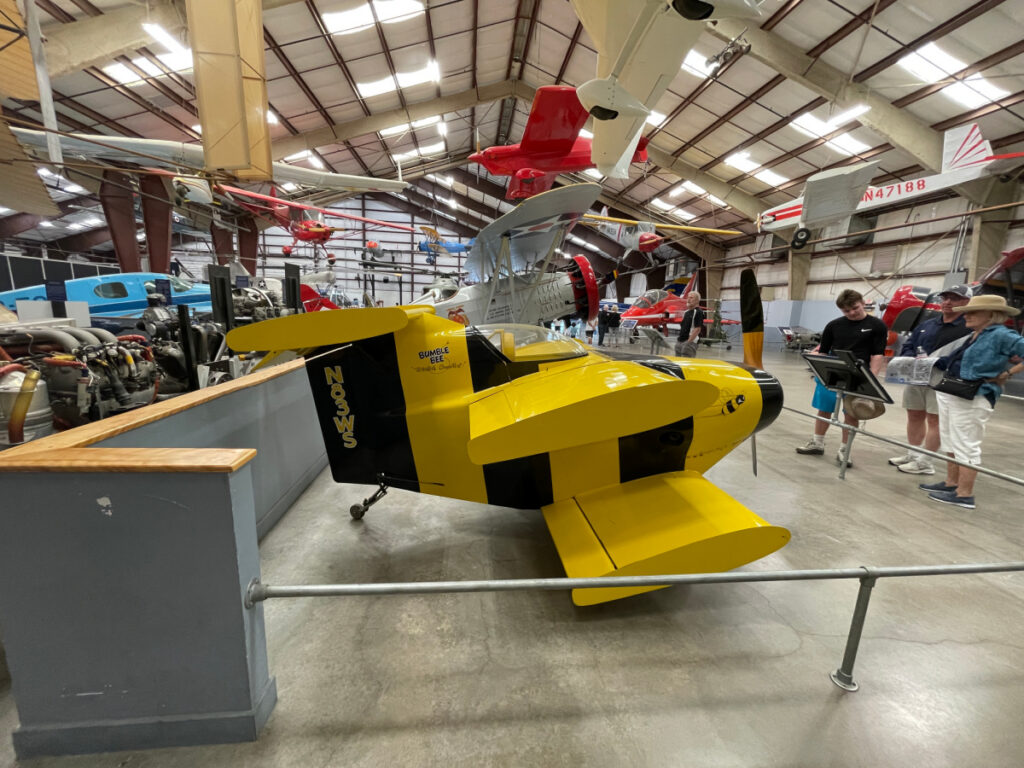
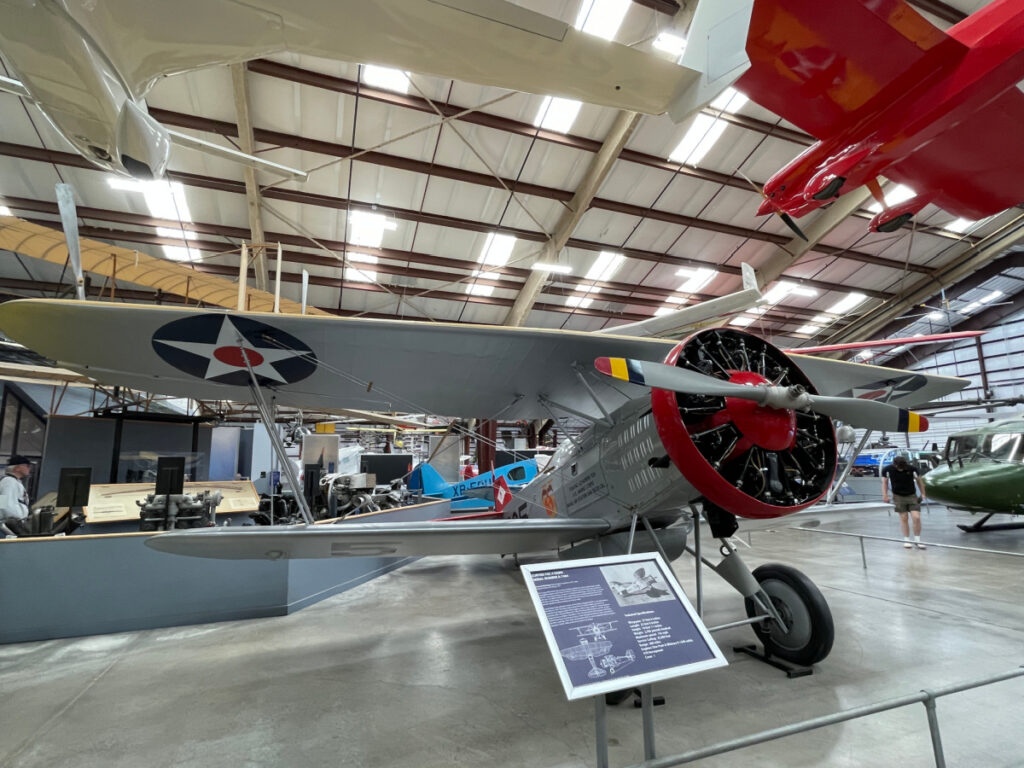
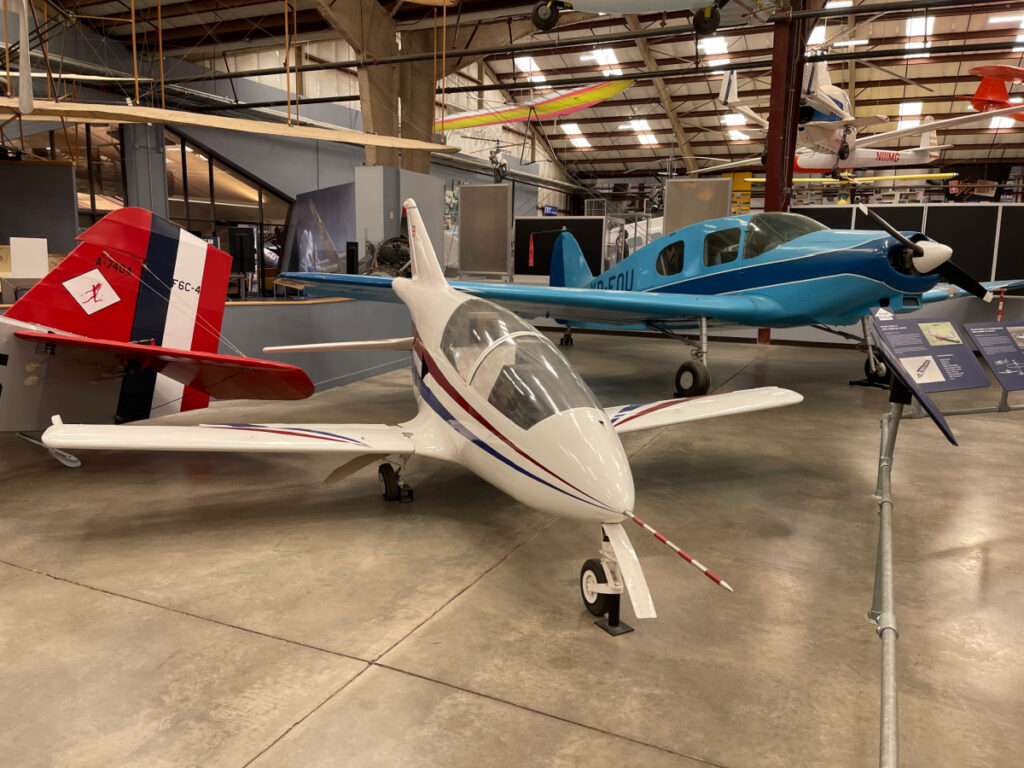
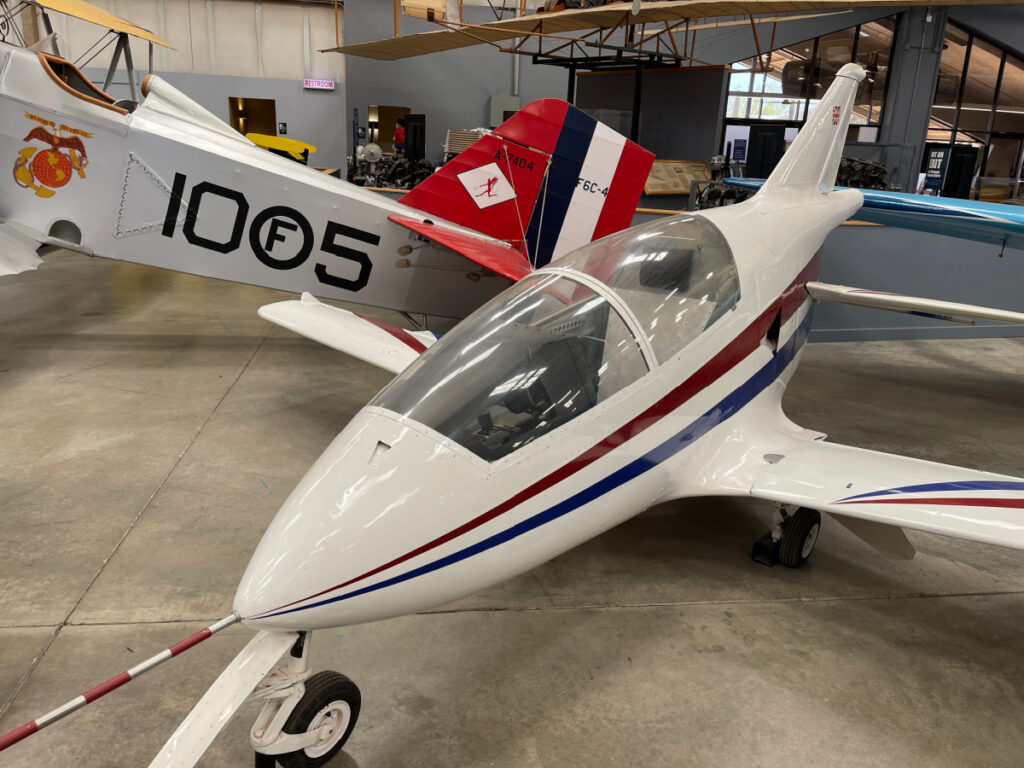
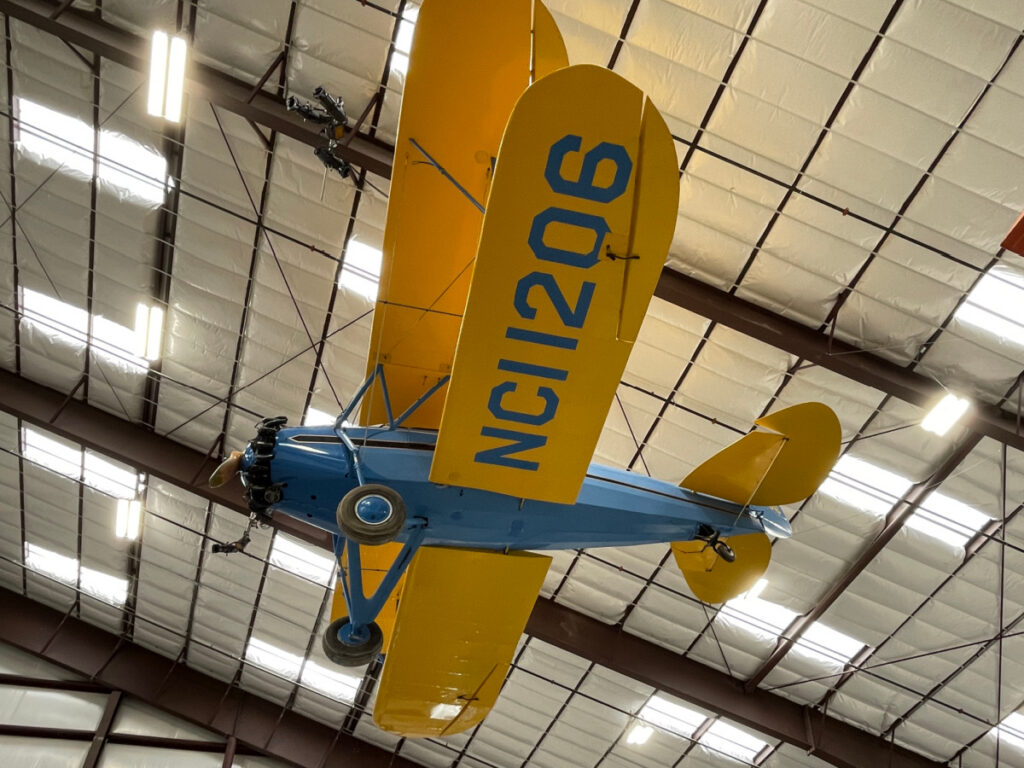
This is also where Pima becomes really interesting even if you are not an aviation person.
You can physically see how airplane design changed.
Things get bigger.
Engines get more powerful.
Cockpits change.
Military needs change everything.
And eventually you go from airplanes that look like somebody built them in a barn to machines that look like they came from another planet.
The World War II Aircraft Are Some of the Best Displays
If I had to pick one era that Pima does especially well, it would probably be World War II.
There is a lot here.
And because so much of it is indoors, you can actually slow down and look at the airplanes instead of just walking past them in the Arizona sun.
One of the major exhibits centers around the B-17 Flying Fortress.
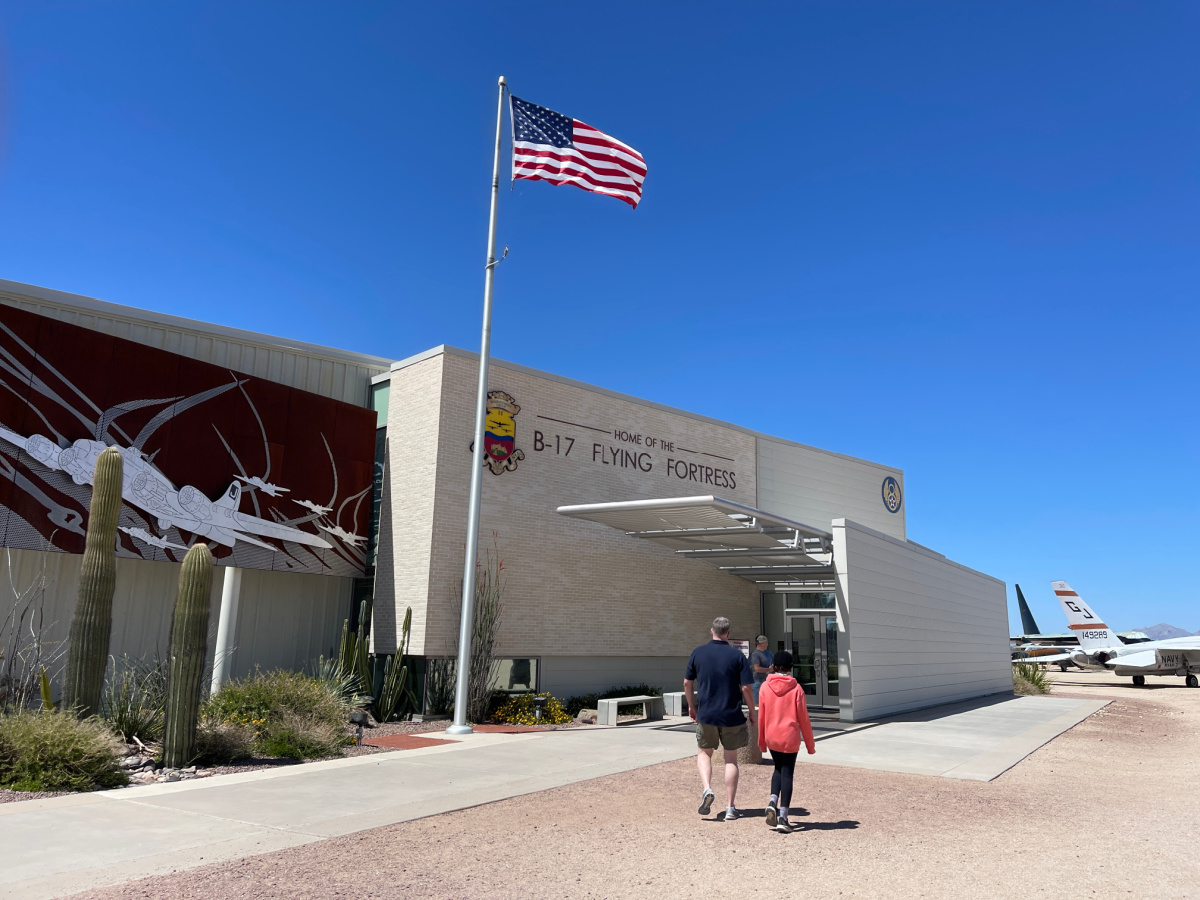
Inside, you get much closer to the aircraft than I expected.
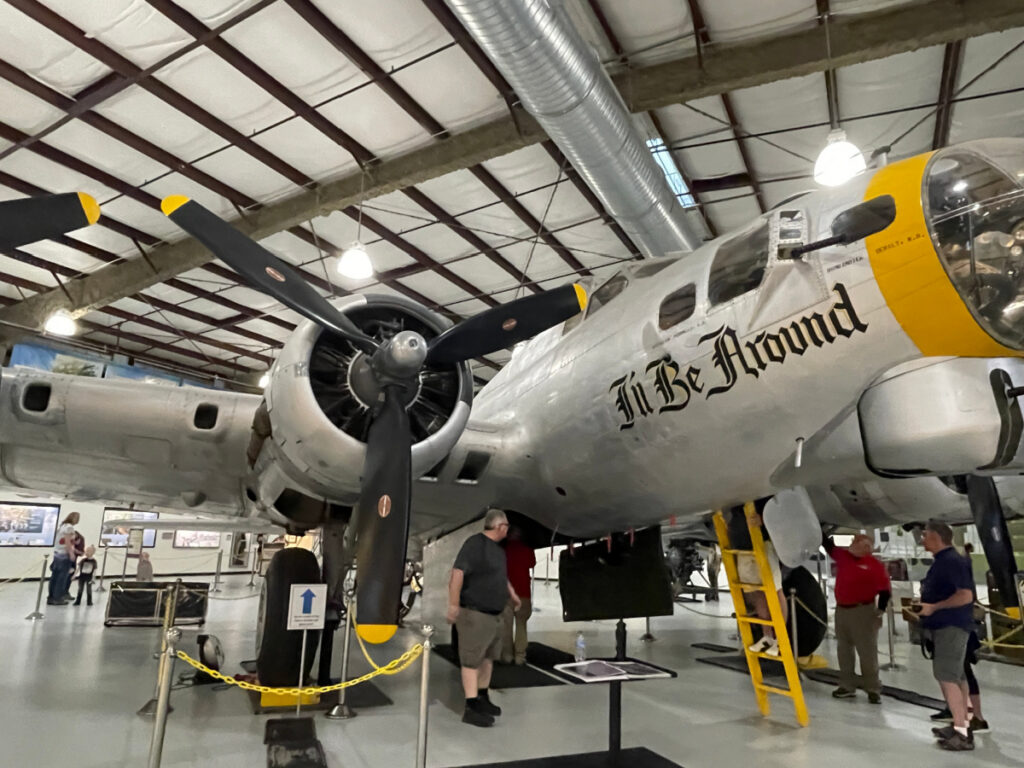
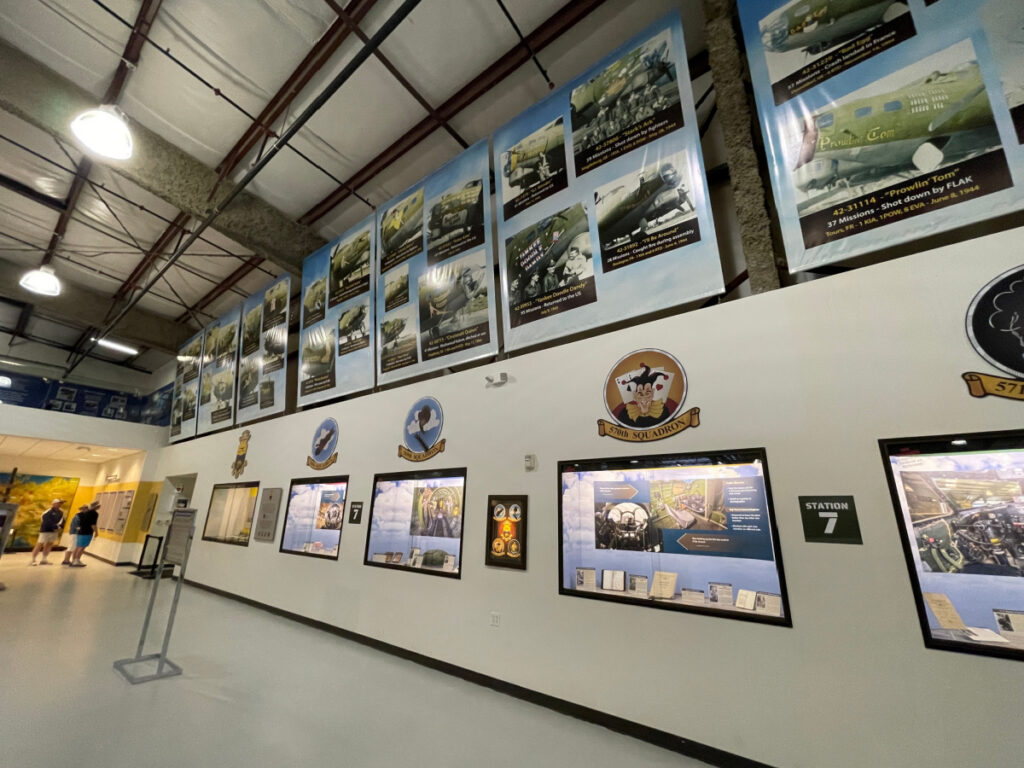
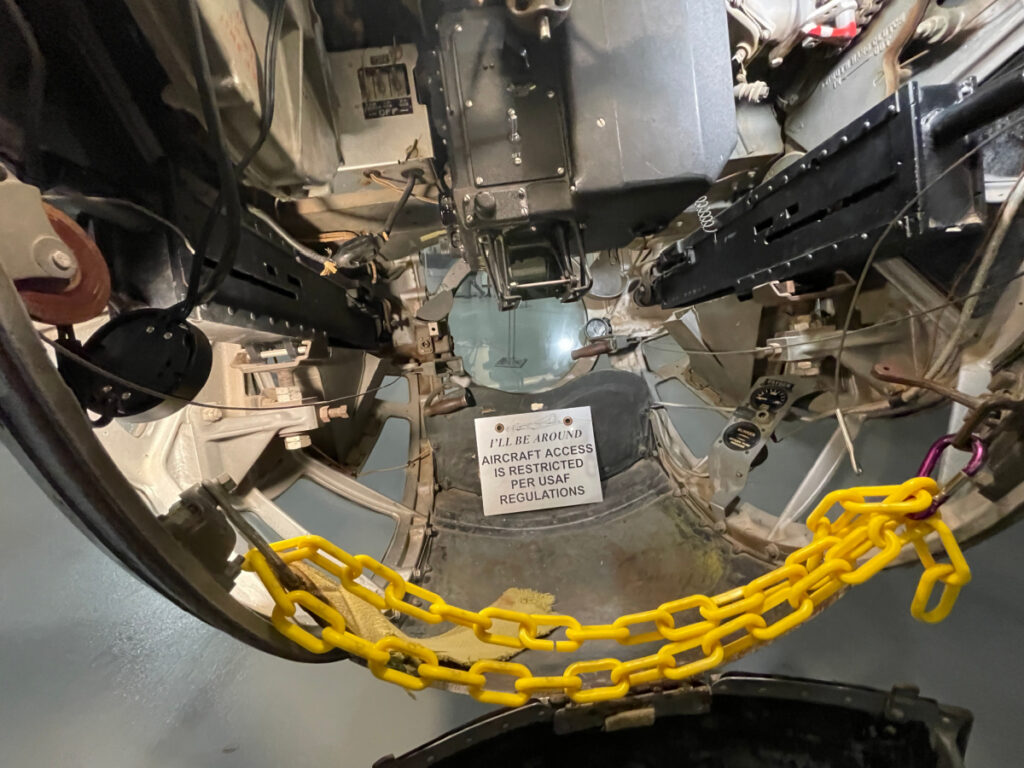
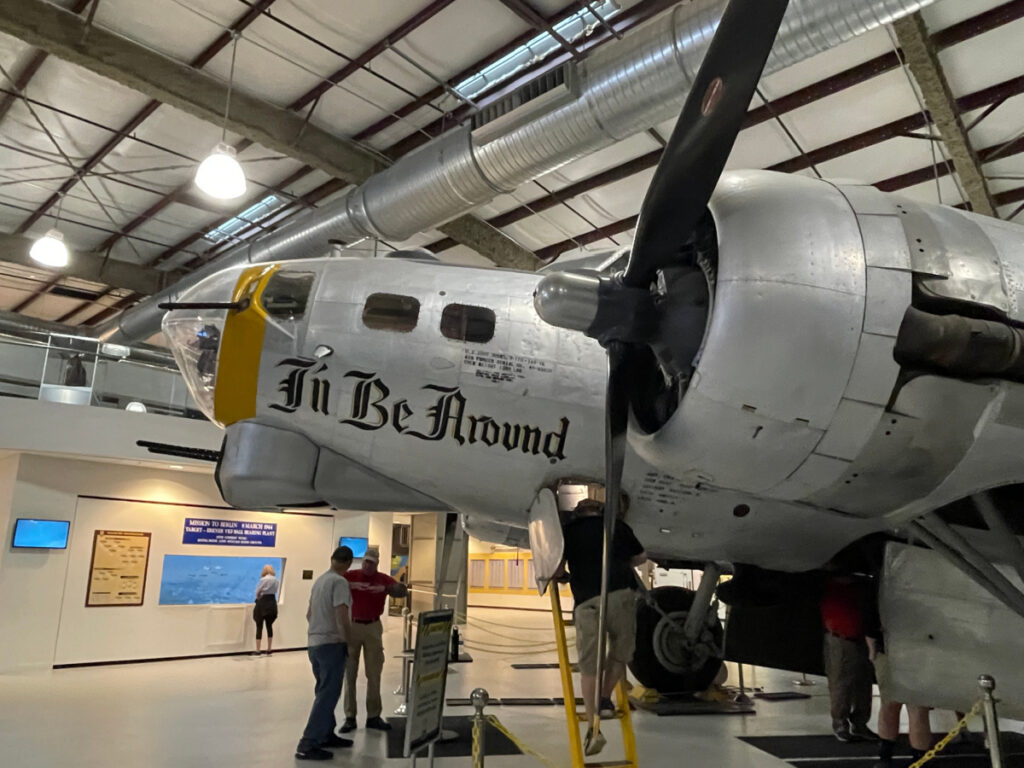
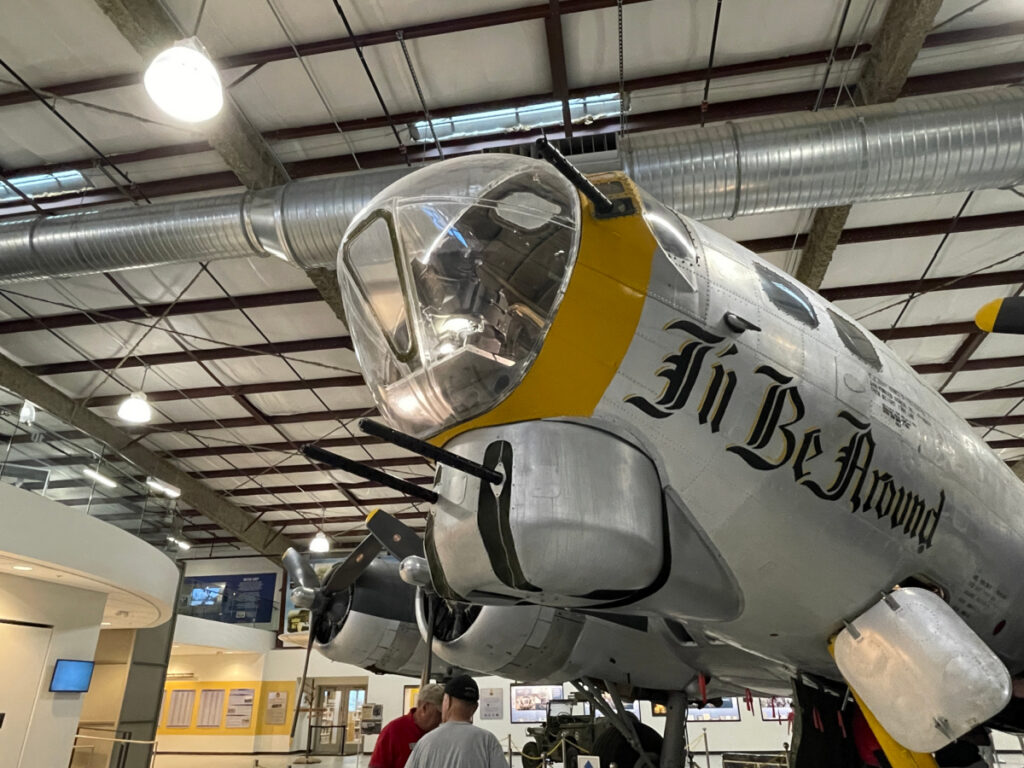
This is where the museum becomes more than just “look at the cool airplane.”
You start thinking about the people who were actually inside these things.
The spaces were tight.
The machinery was everywhere.
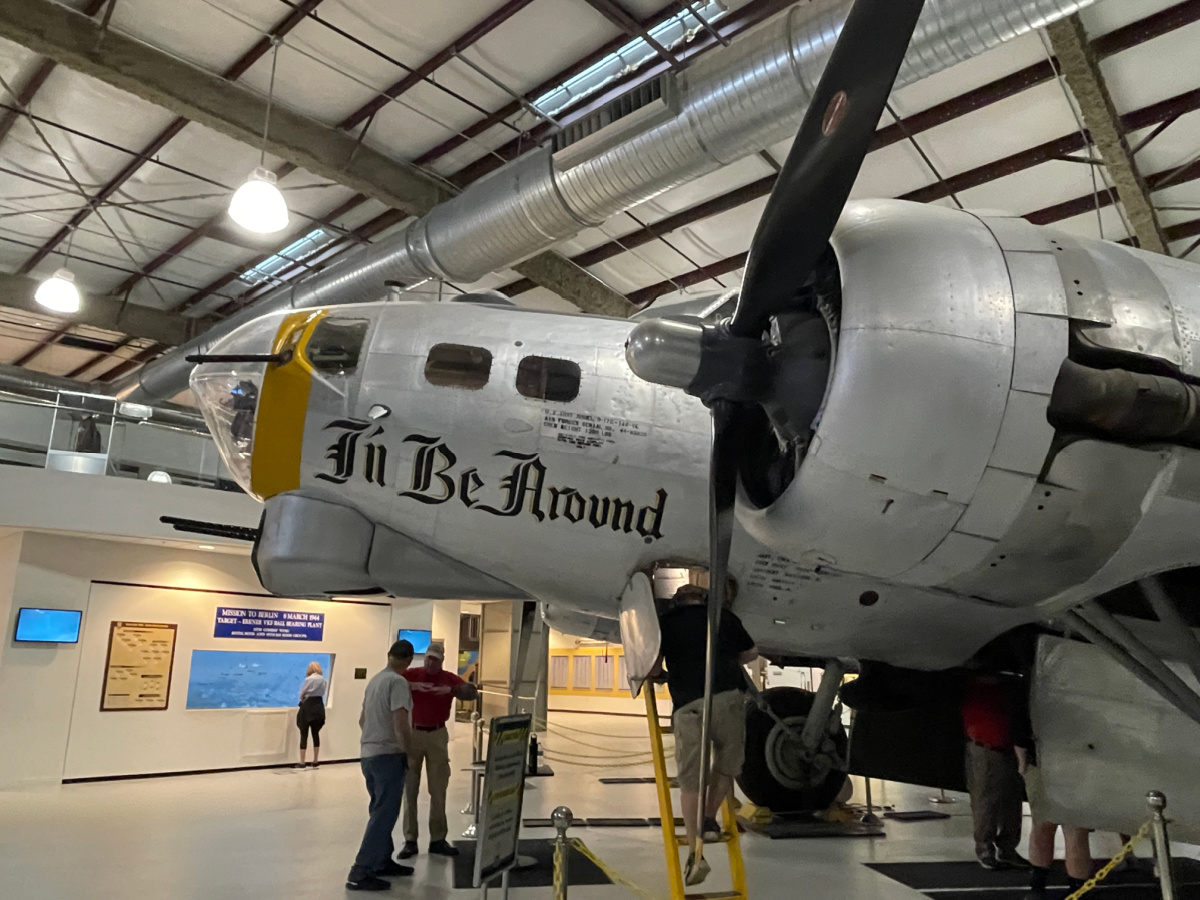
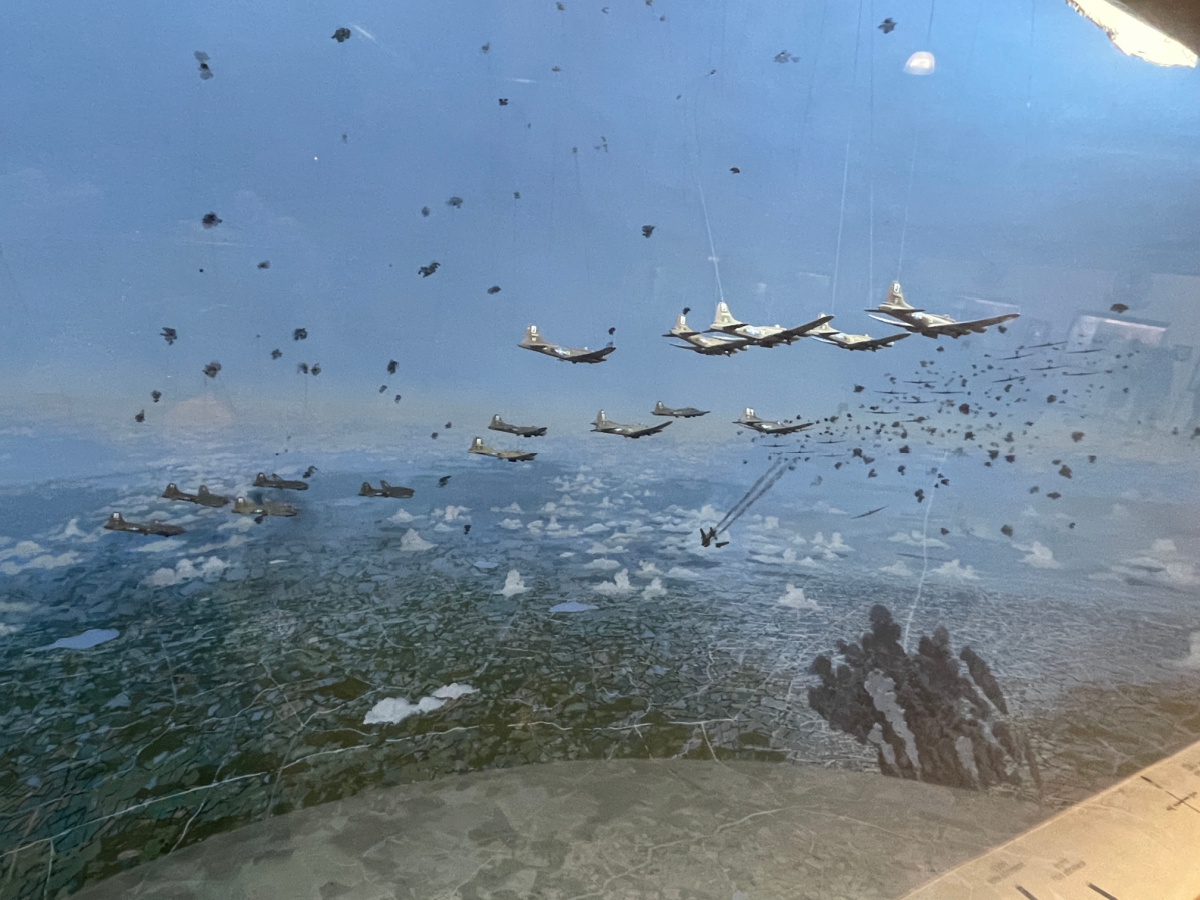
And when you look at the cutaway displays and then look at the real aircraft sitting above you, it gives you a much better idea of what flying in one of these bombers must have been like.
There are also some reconstructed wartime displays mixed in.
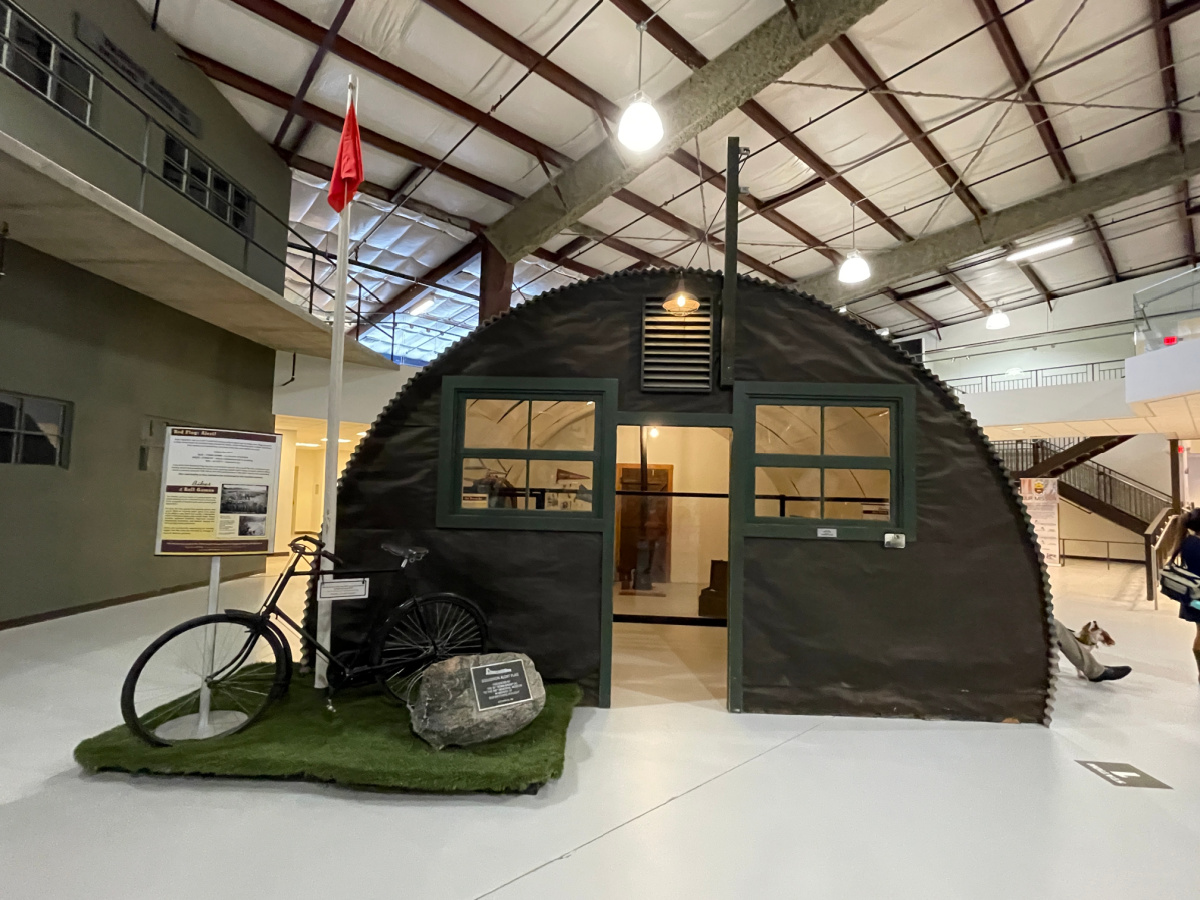
I liked those little touches because they break up the airplanes and give the exhibits more context.
The B-29 Superfortress Is Enormous
Then there is the B-29.
And this is another airplane where photographs really do not communicate the size.
You have to stand underneath it.
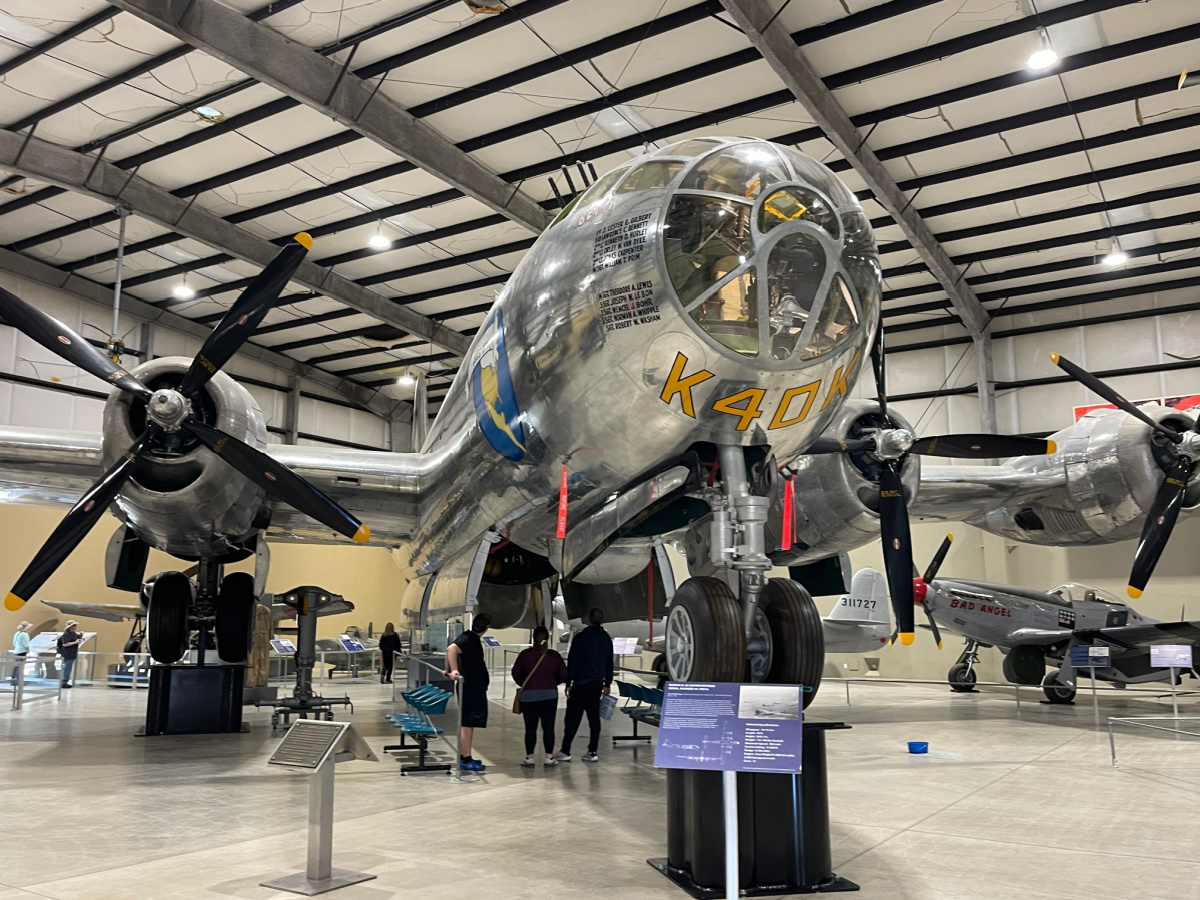
This was one of those exhibits where my husband could have happily spent another 45 minutes reading every sign.
I was more in the “wow, that thing is gigantic” camp.
Both approaches are valid.
😂
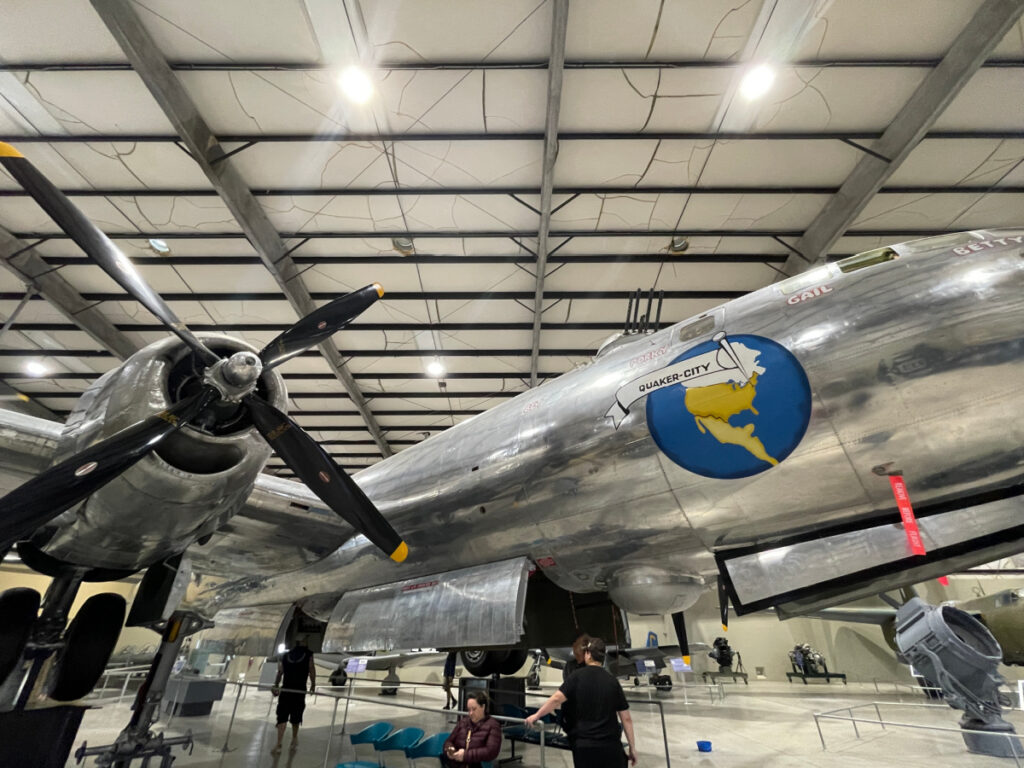
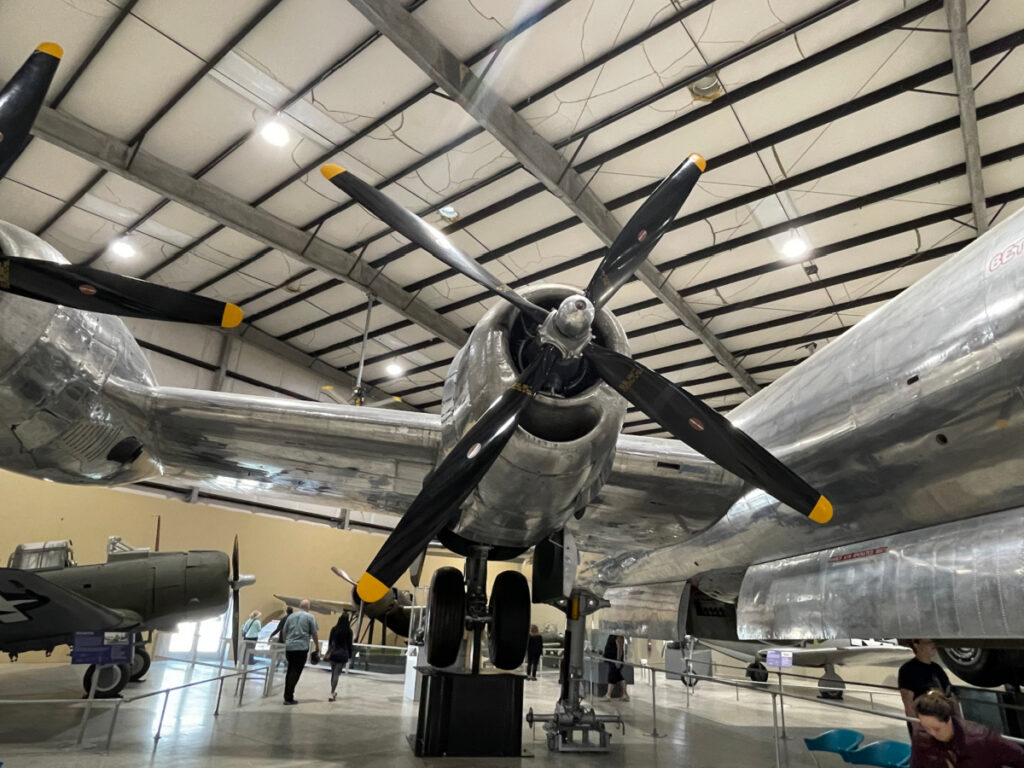
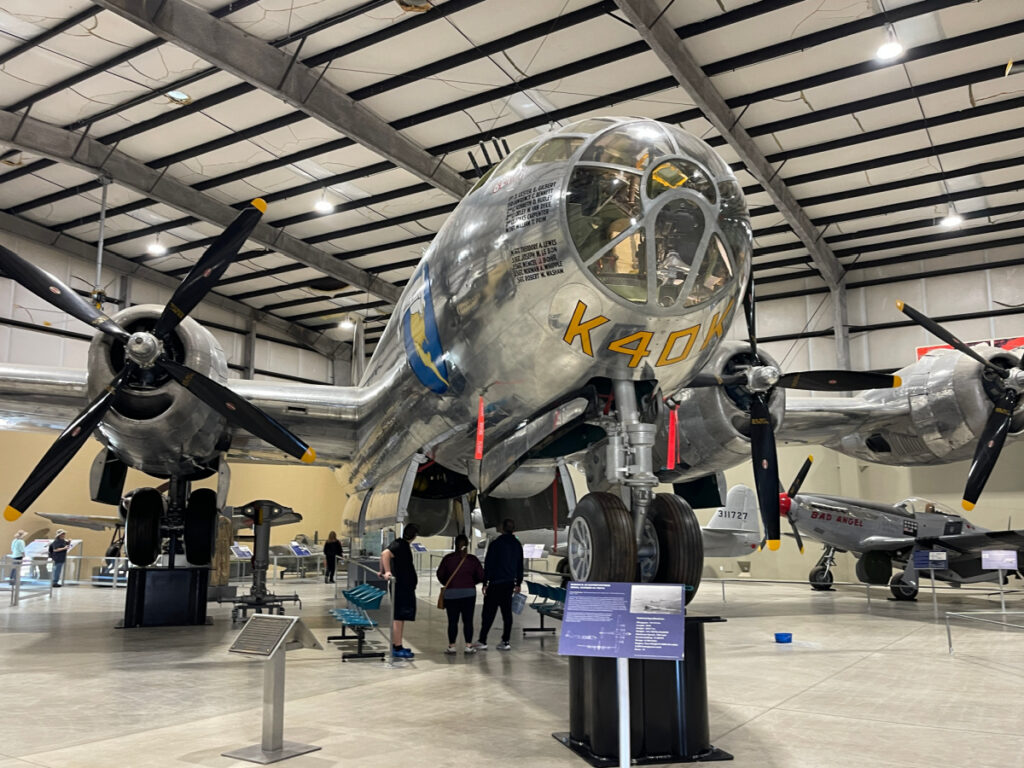
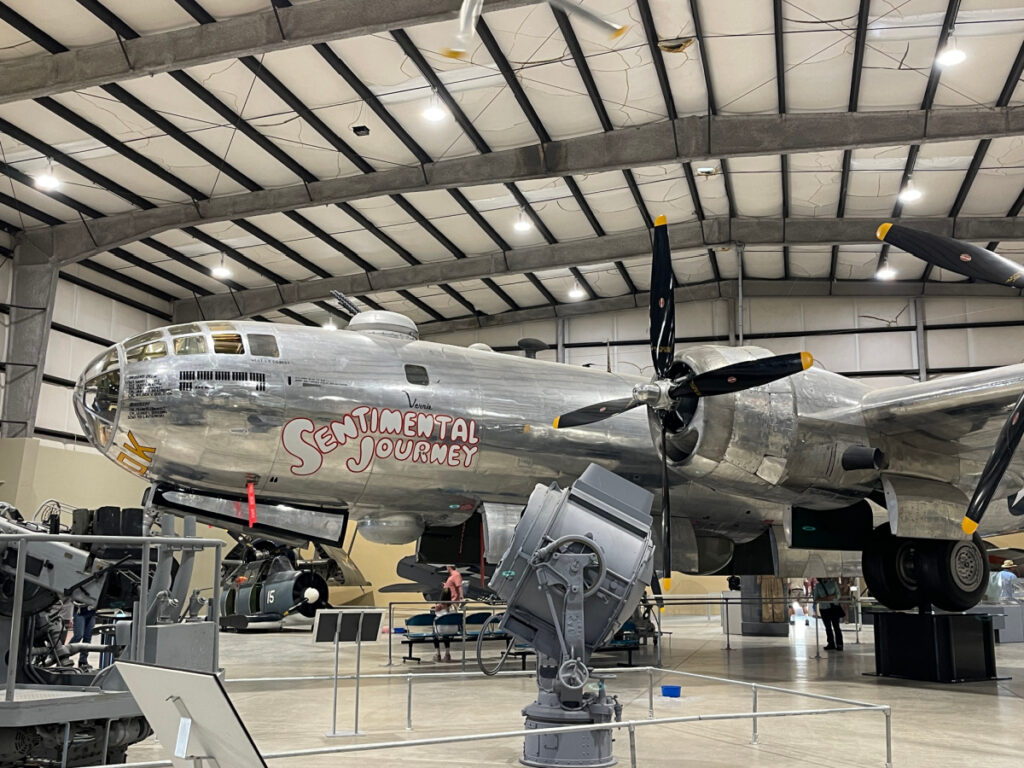
And this is one reason I would not rush through Pima.
The big aircraft deserve a little time.
If you just walk past them, they are big airplanes.
If you stop and look at the crew areas, the engines, the bomb bays and all the weird little details, they become much more interesting.
Fighters, Nose Art and More World War II Aircraft
There are also a ton of smaller military aircraft mixed into these hangars.
Some have fantastic nose art.
Some look surprisingly small compared with the bombers.
And some are just plain cool.
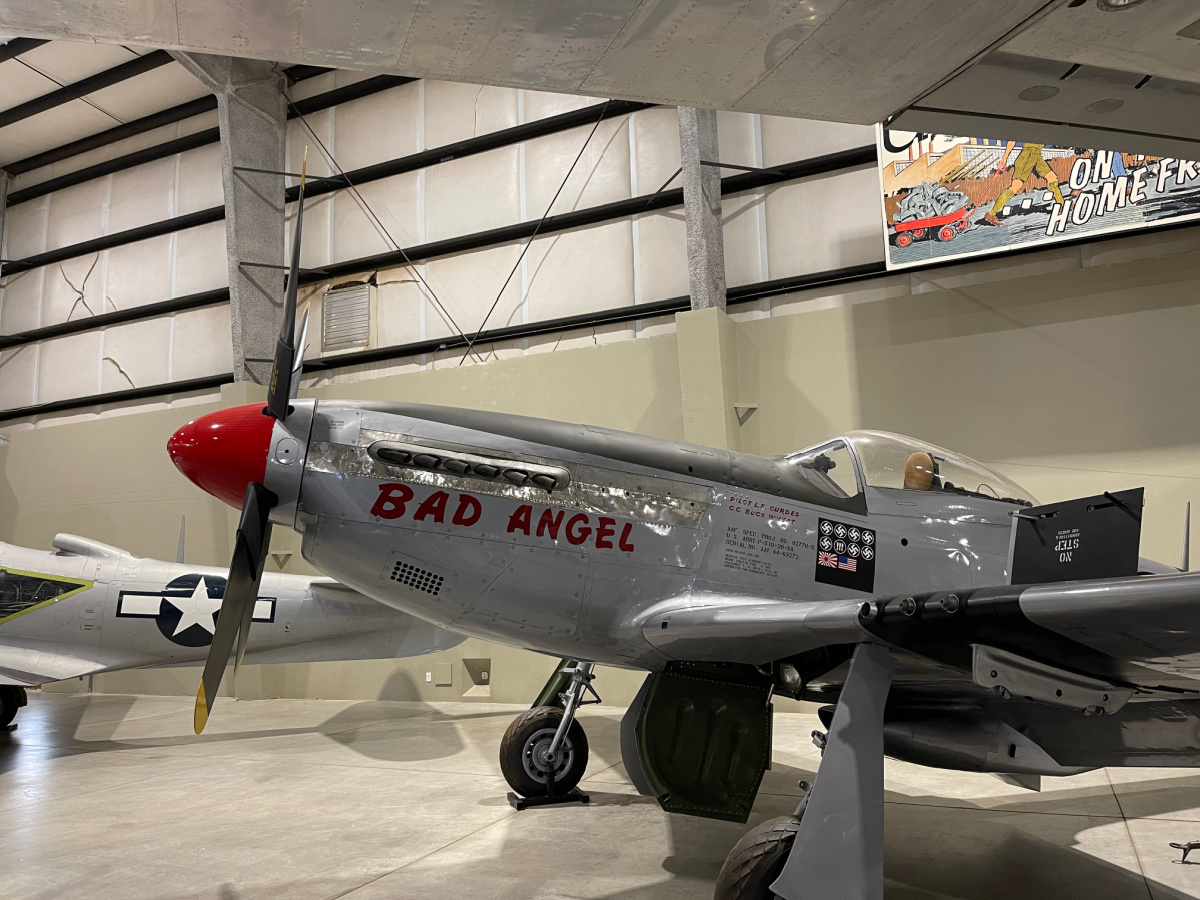
World War II-era aircraft inside the hangar
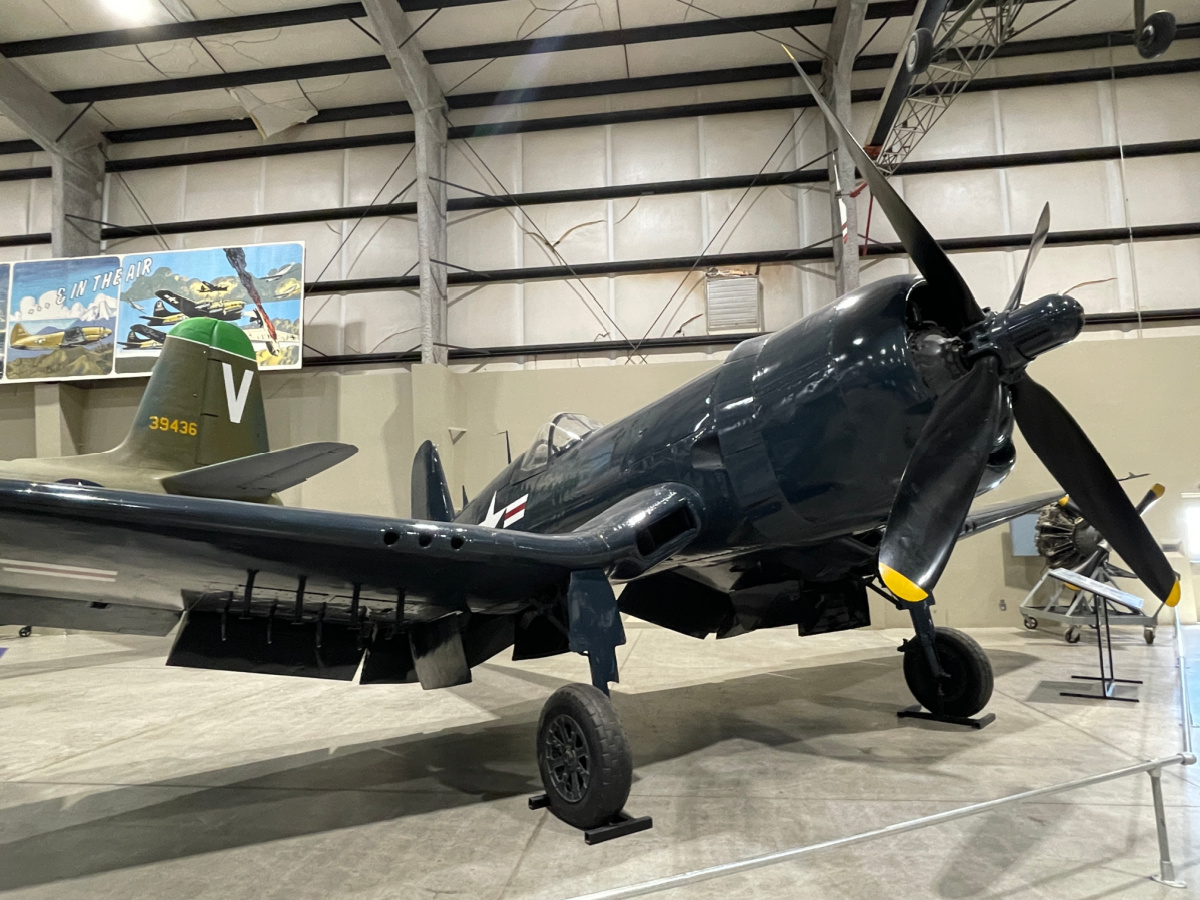
Historic fighter aircraft
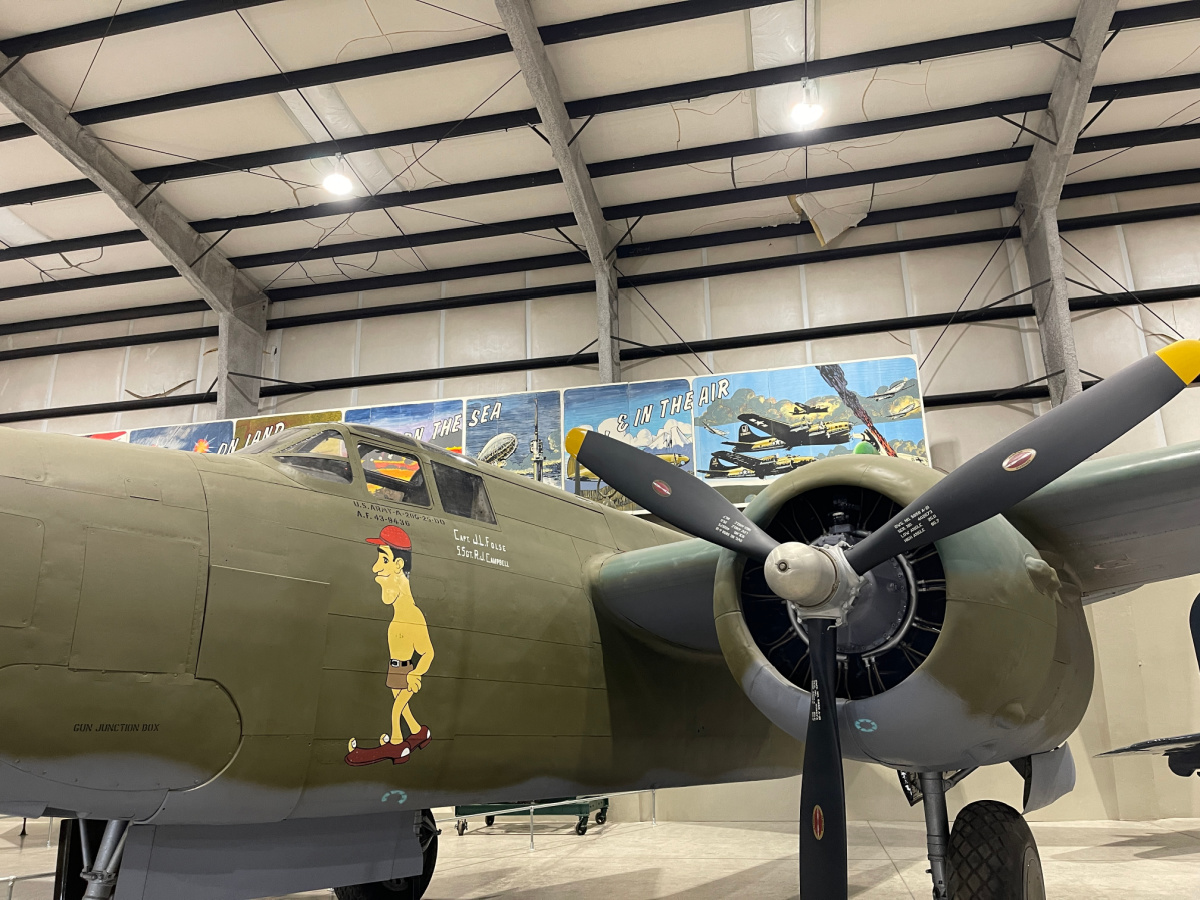
Military aircraft with painted nose art
One of the things that kept our daughter interested was that the aircraft do not all look alike.
There are bright colors.
Shark mouths.
Cartoon characters.
Old squadron markings.
Planes hanging from the ceiling.
There is always something new to look at.
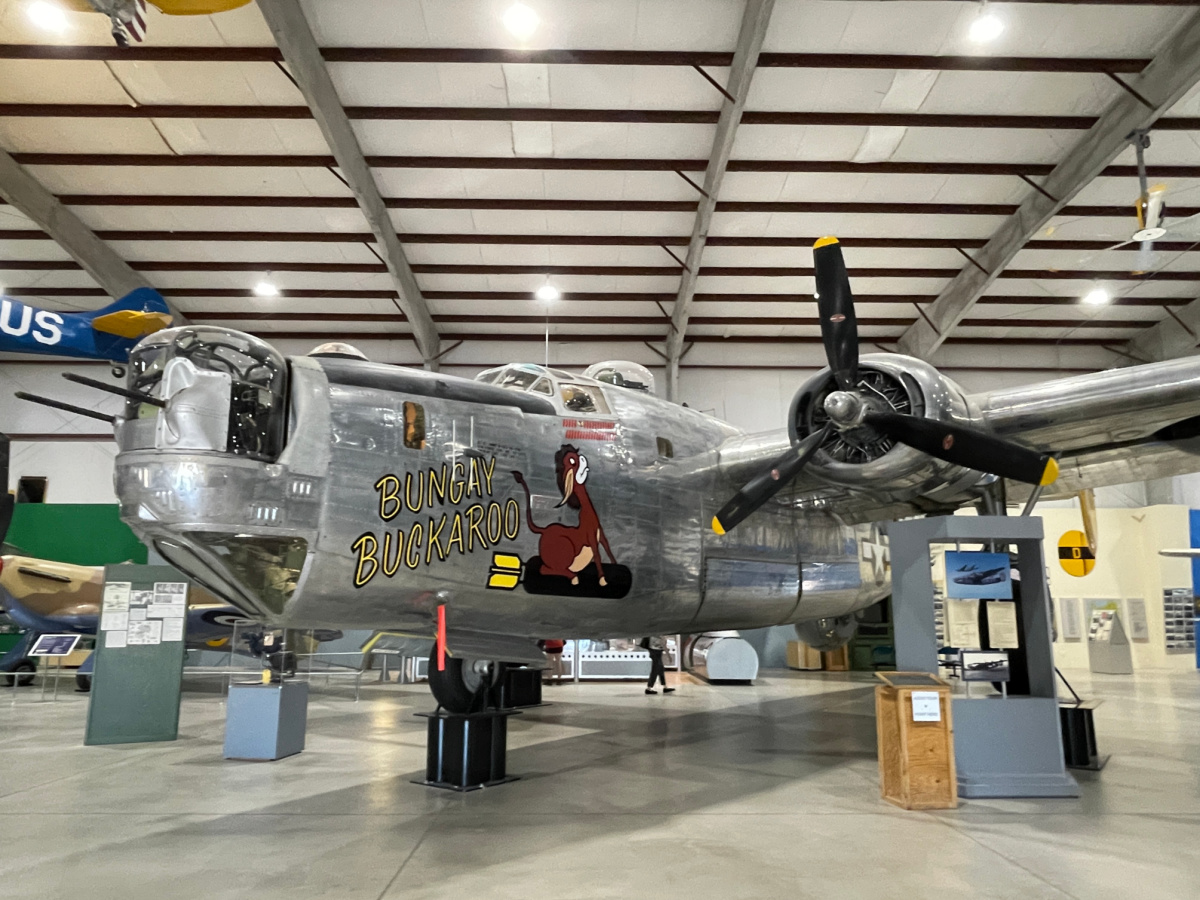
That one is basically impossible to walk past without looking at it.
Pima Also Covers Aviation From Other Countries
Another thing I liked is that this is not purely a museum of American aircraft.
There are airplanes and exhibits representing aviation from other countries and different sides of military conflicts.
That makes the World War II areas much more interesting.
Japanese aircraft and Kamikaze Special Attack Units exhibit:
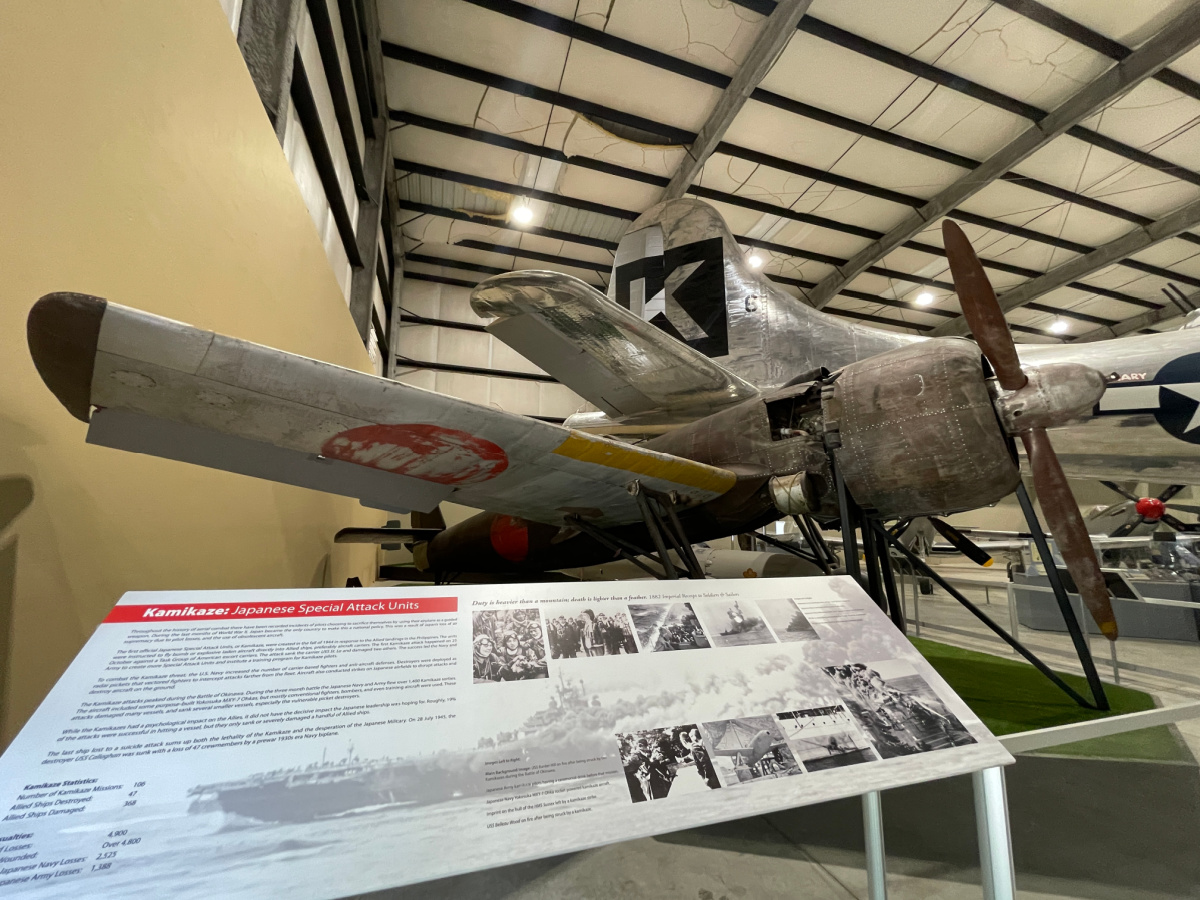
Japanese aircraft on display:
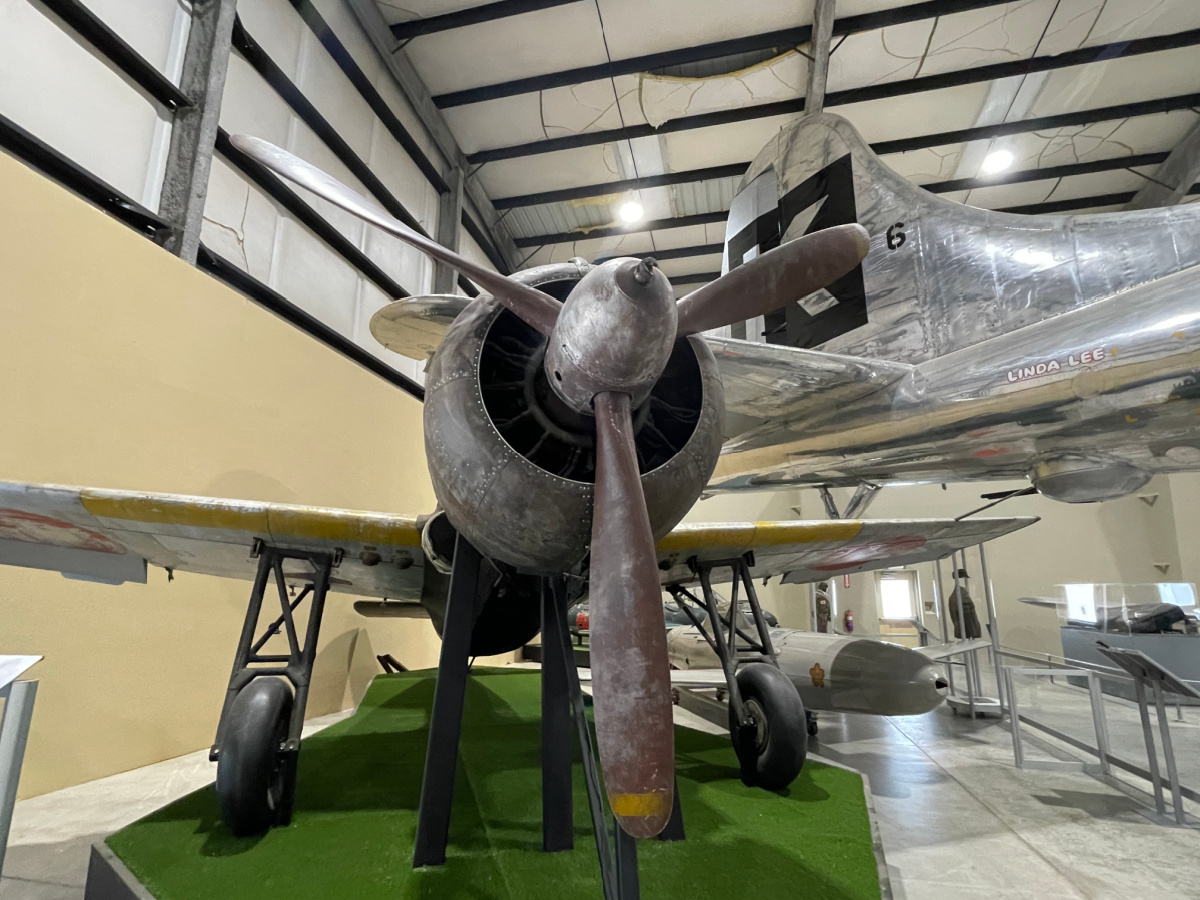
German aircraft suspended above the exhibit:
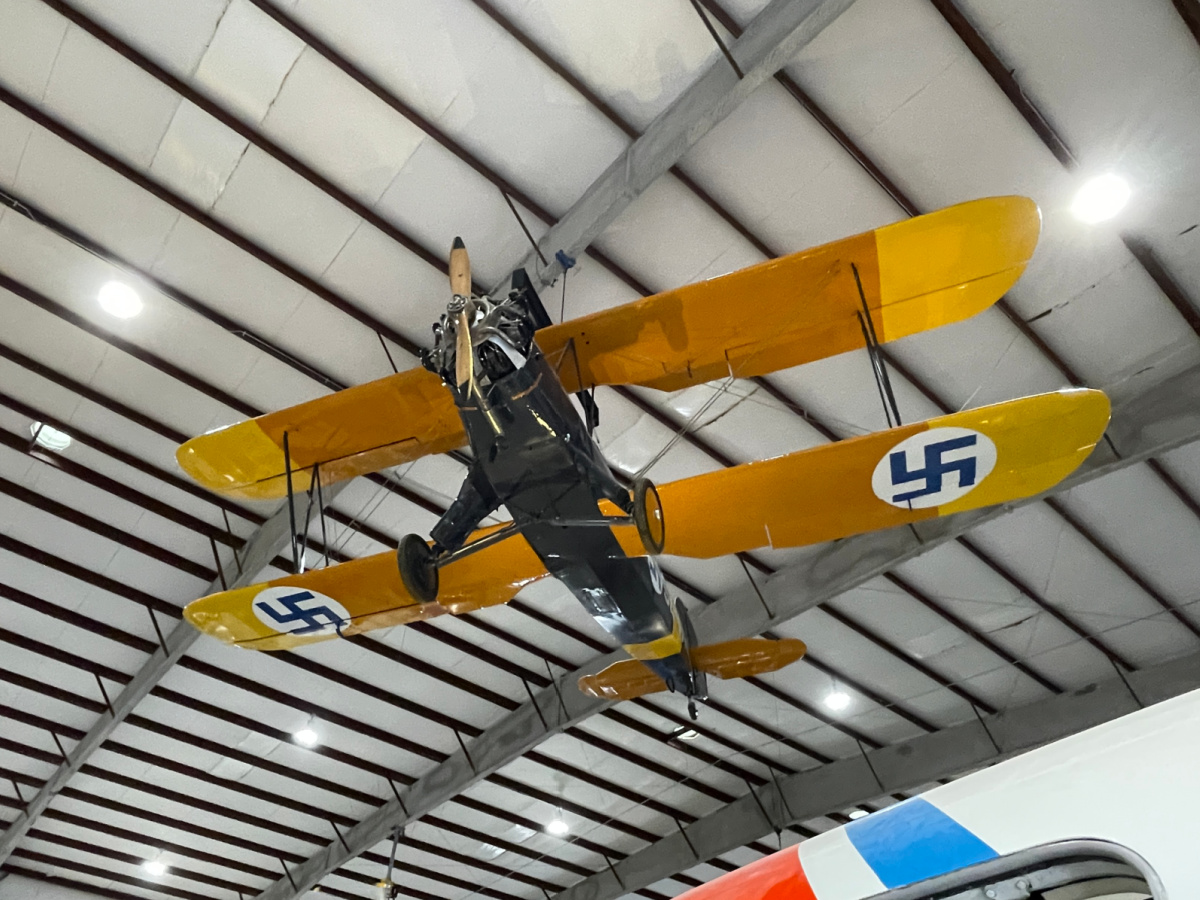
There is also German technology from World War II, including a V-1 flying bomb.
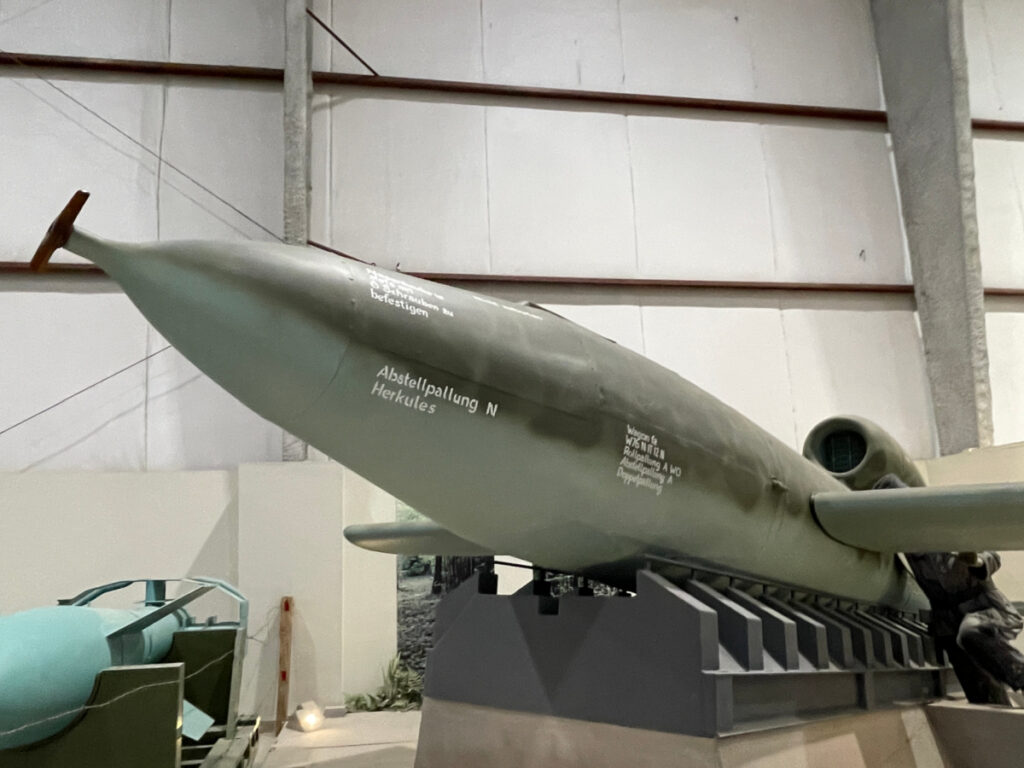
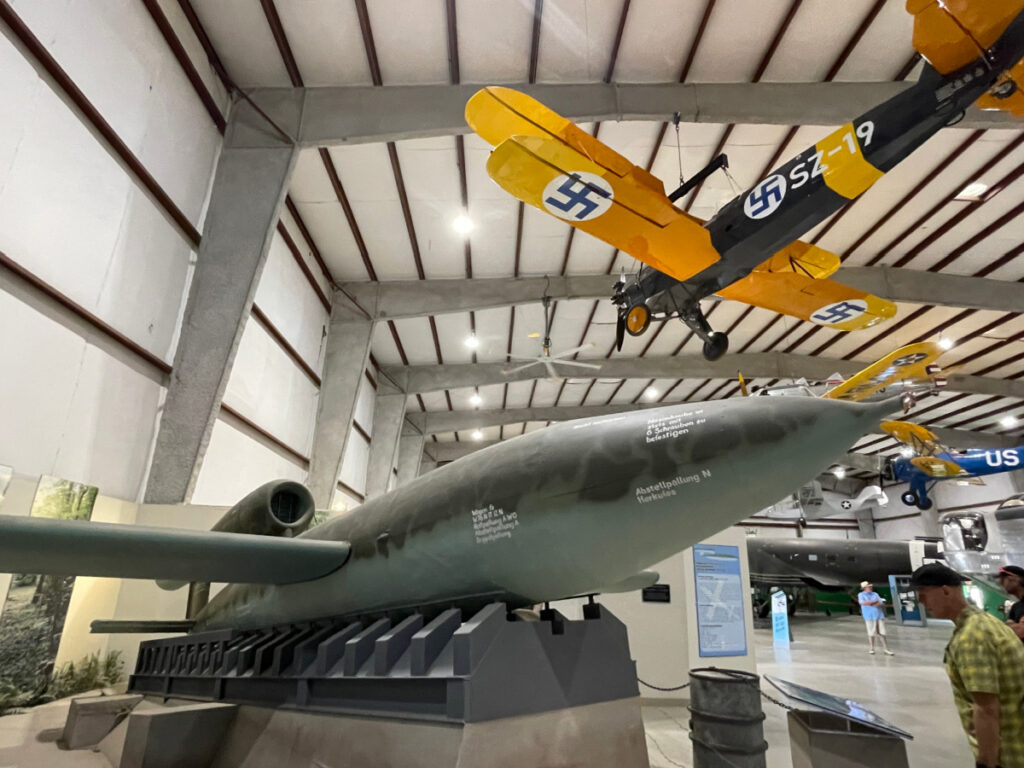
Again, I am not going to pretend I walked through this museum knowing the technical specifications of every airplane.
I did not.
But it was interesting seeing how many different countries were experimenting with aviation technology at the same time.
You Can Get Surprisingly Close to Some of the Aircraft
This is something else I really liked about Pima.
You are not always looking at airplanes from 50 feet away.
In several places you can get close enough to see the cockpit, controls and interior details.
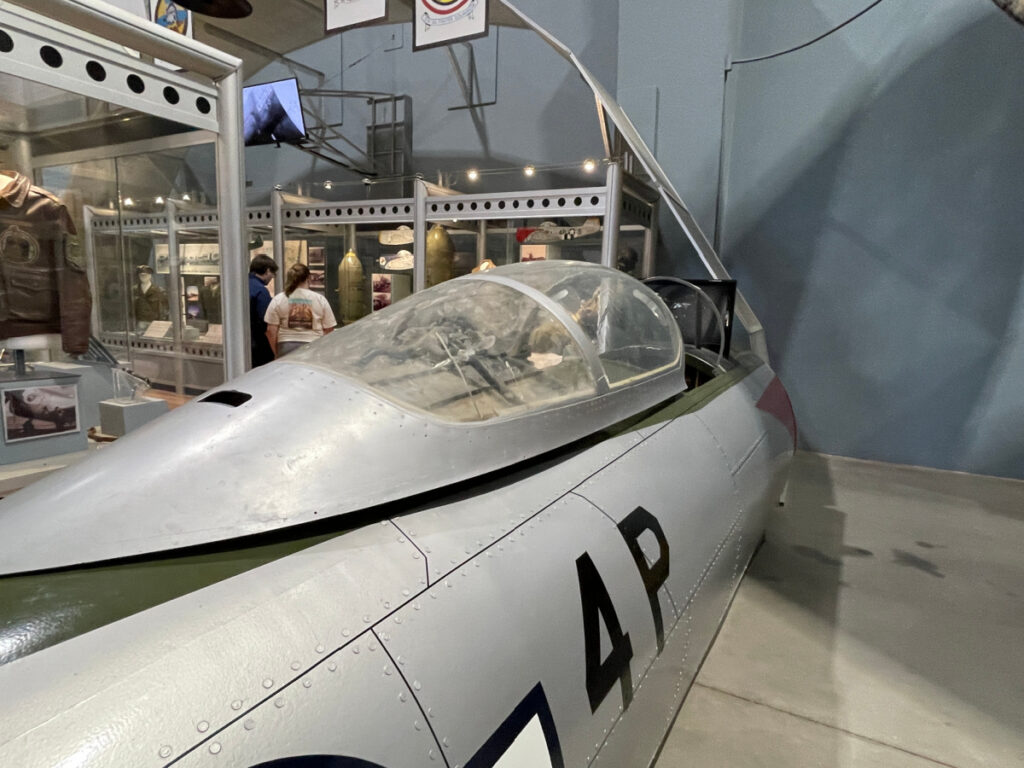
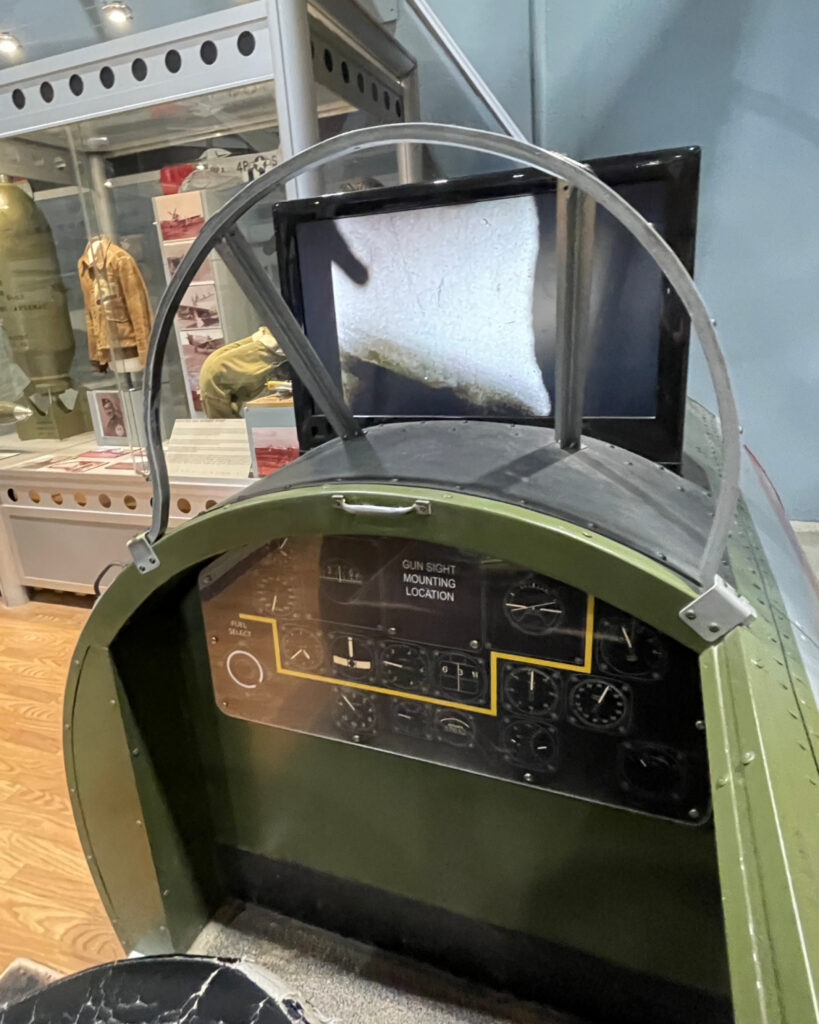
And sometimes you can see portions of the aircraft that you normally would never notice.
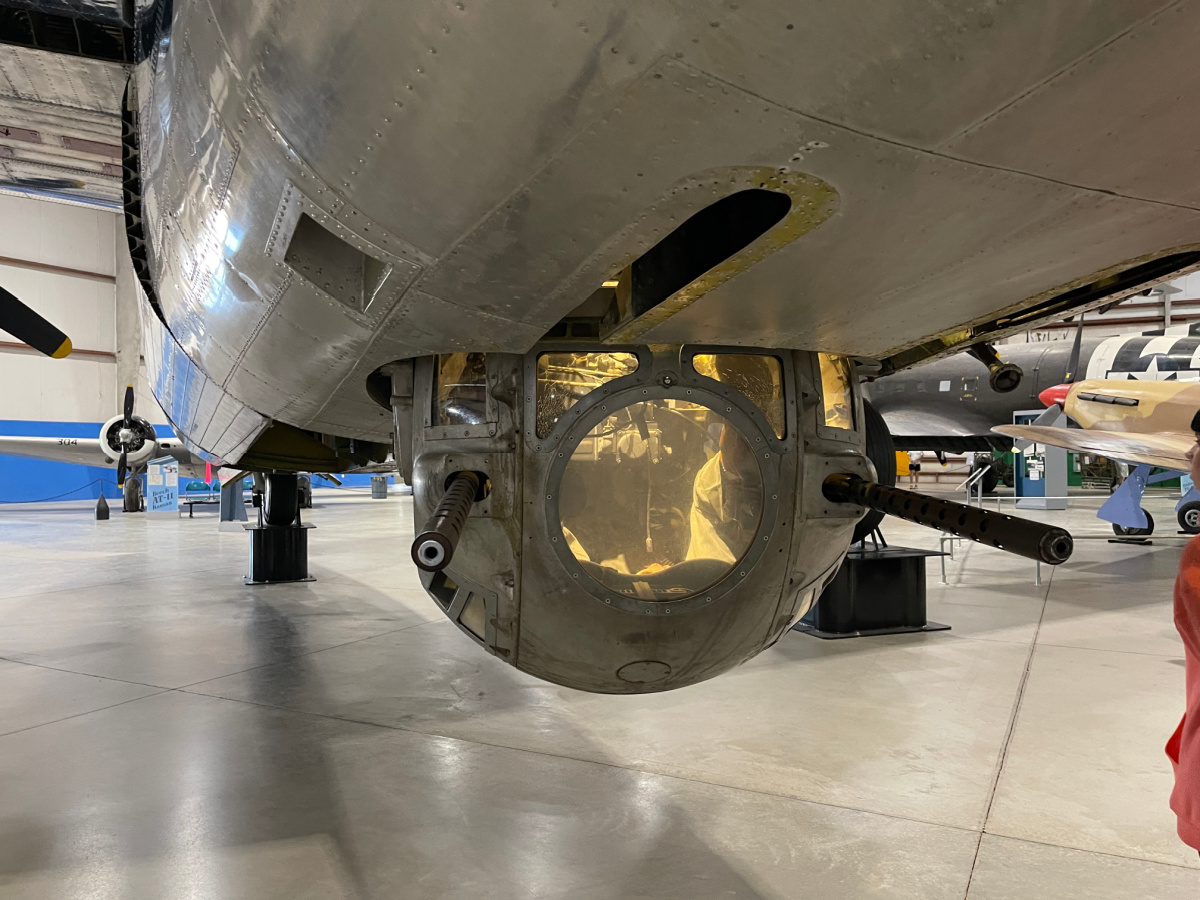
That was one of those exhibits that made me stop.
It is one thing to read about people sitting in tiny gun turrets inside World War II bombers.
It is another thing to actually look inside one.
No thank you.
I would like my personal space, please.
Then You Get to the SR-71 Blackbird
And eventually you encounter one of the coolest airplanes in the museum.
The SR-71 Blackbird.
Even I knew what this one was.
😂
It is sleek, enormous and completely different from almost everything around it.
There is something about standing next to an SR-71 that makes you understand why people get obsessed with airplanes.
It looks fast sitting still.
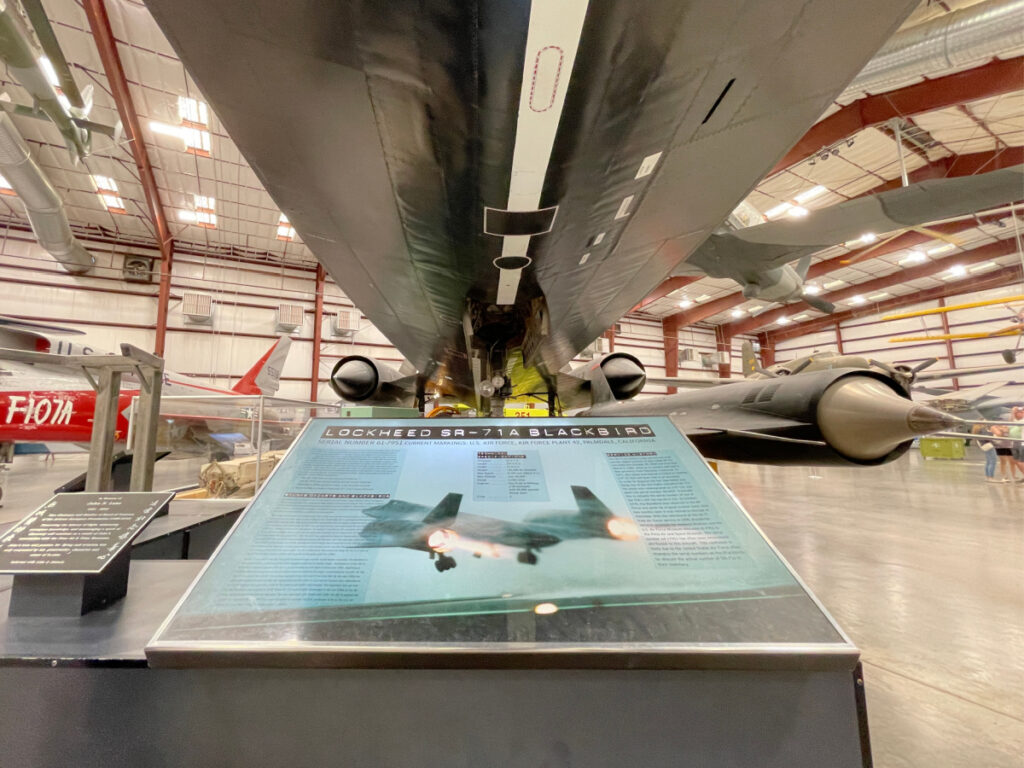
This is absolutely one of the aircraft I would make a point to find even if you are trying to move through the museum quickly.
Modern Military Aircraft Are Everywhere Too
Once you move beyond the World War II displays, you start getting into aircraft that feel much more familiar.
Jets.
Fighters.
Helicopters.
Cold War-era aircraft.
Aircraft carrier planes.
There is a lot.
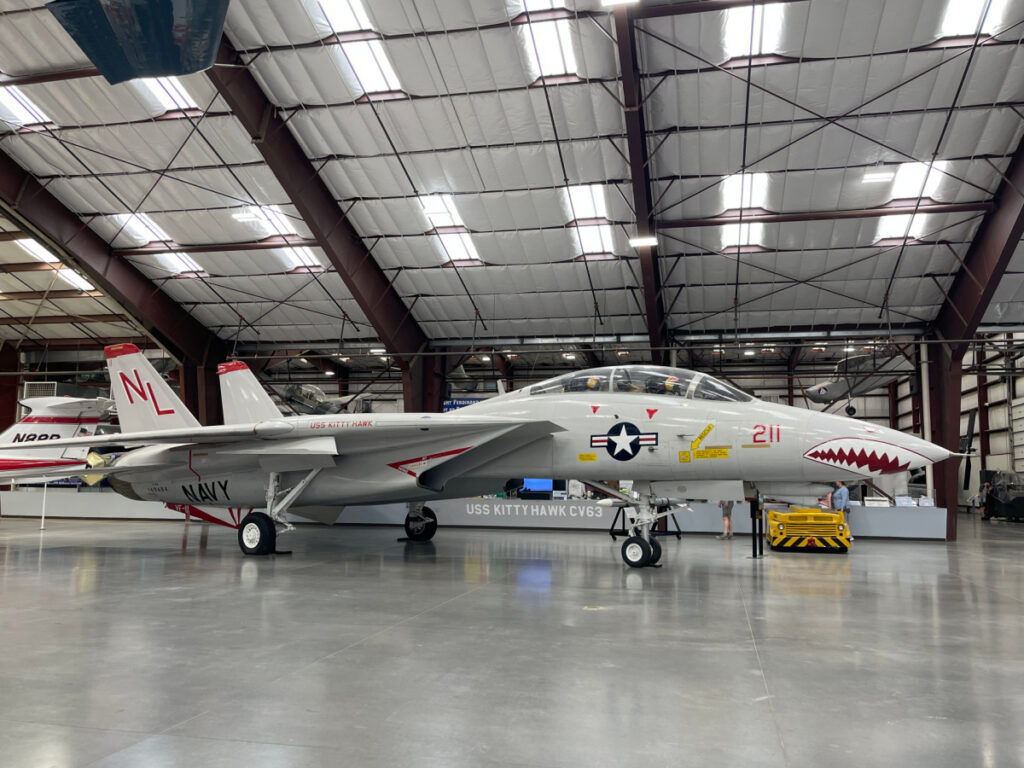
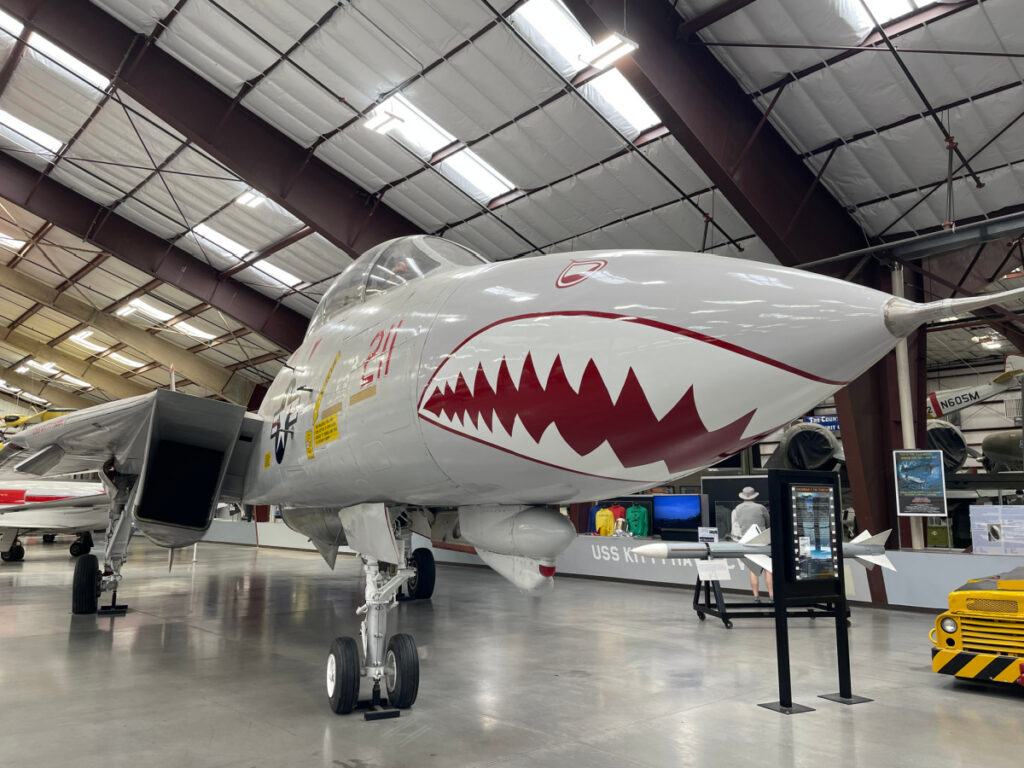
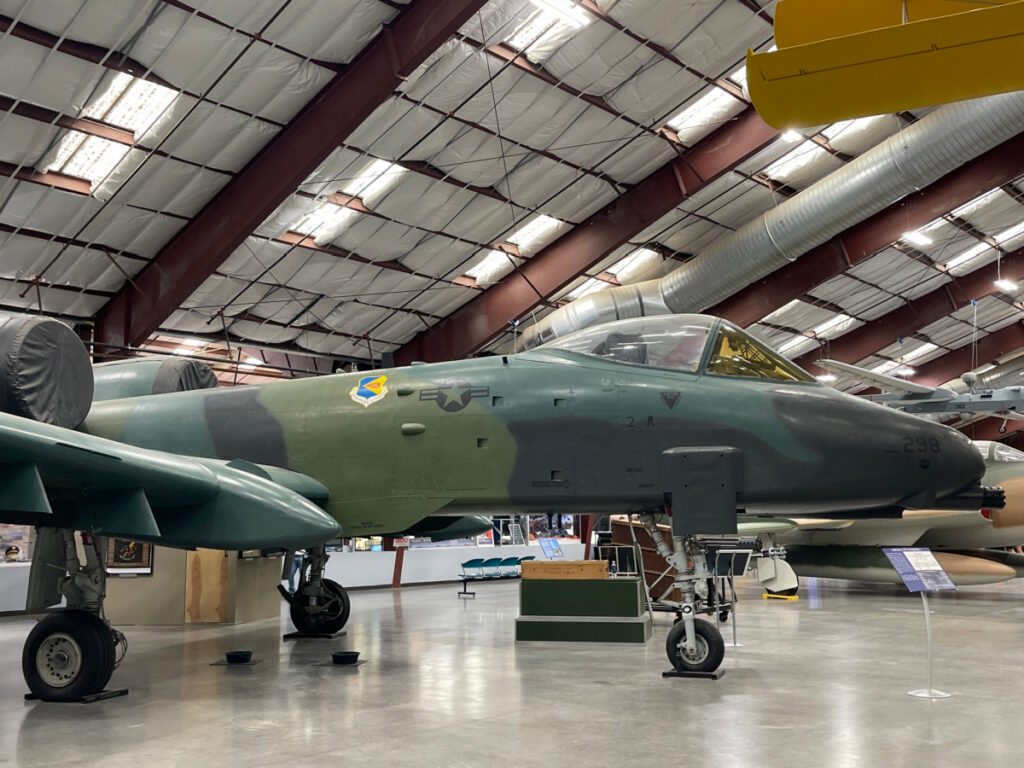
And again, this is where somebody who really knows aviation is going to have a very different experience than I did.
My husband knew what he was looking at.
I mostly knew whether I thought something looked cool.
Fortunately, there is room for both kinds of visitors here.
Do Not Ignore the Helicopters
There are helicopters scattered throughout the museum too.
And because some of them are positioned right in the middle of hangars filled with airplanes, the whole thing starts to feel almost like organized chaos.
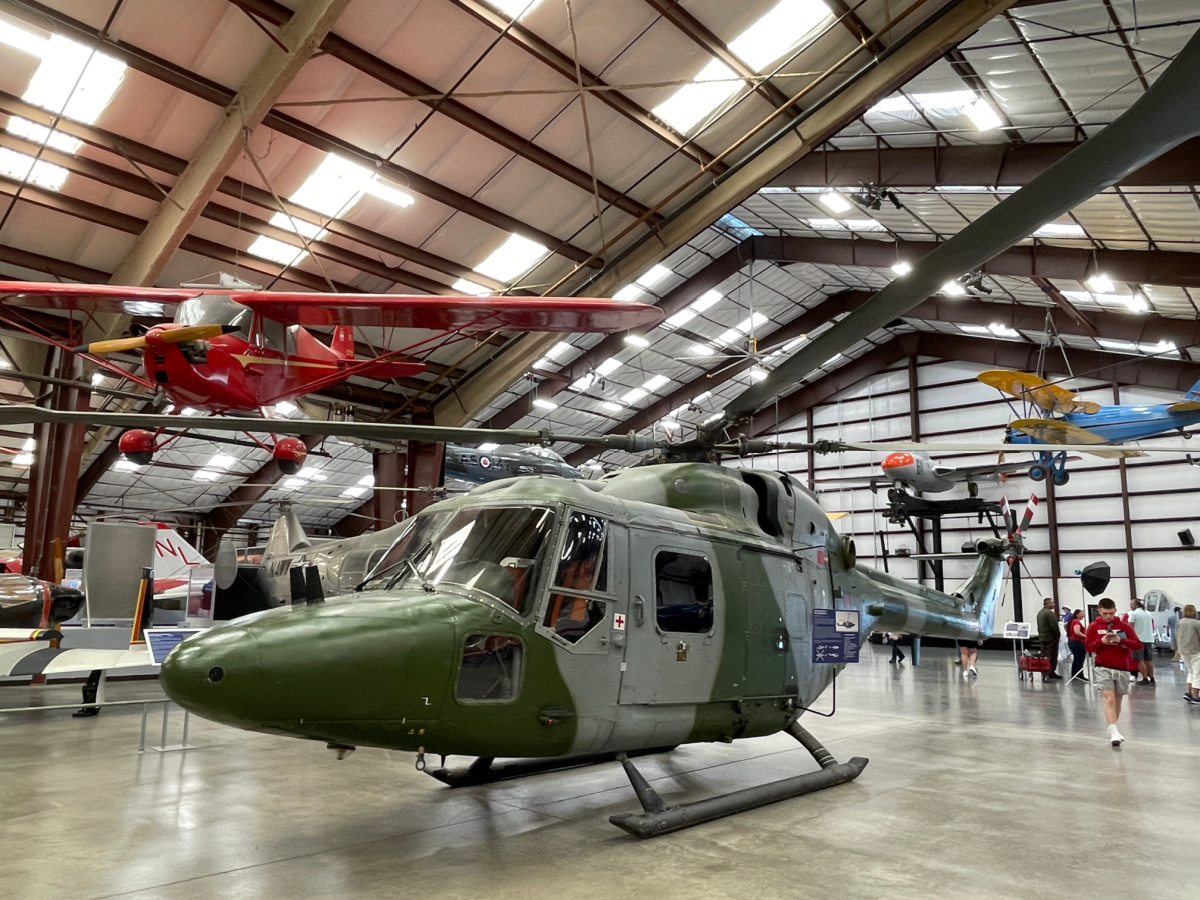
Look at that photo.
There are airplanes on the ground.
Airplanes hanging from the ceiling.
A helicopter in the middle.
And probably three more airplanes just outside the frame.
That is Pima.
There Are Some Fun Interactive Touches Too
The museum is not a children’s museum, but they have done a good job adding a few things that break up the historical exhibits.
There were aviation-themed arcade games and simulators when we visited.
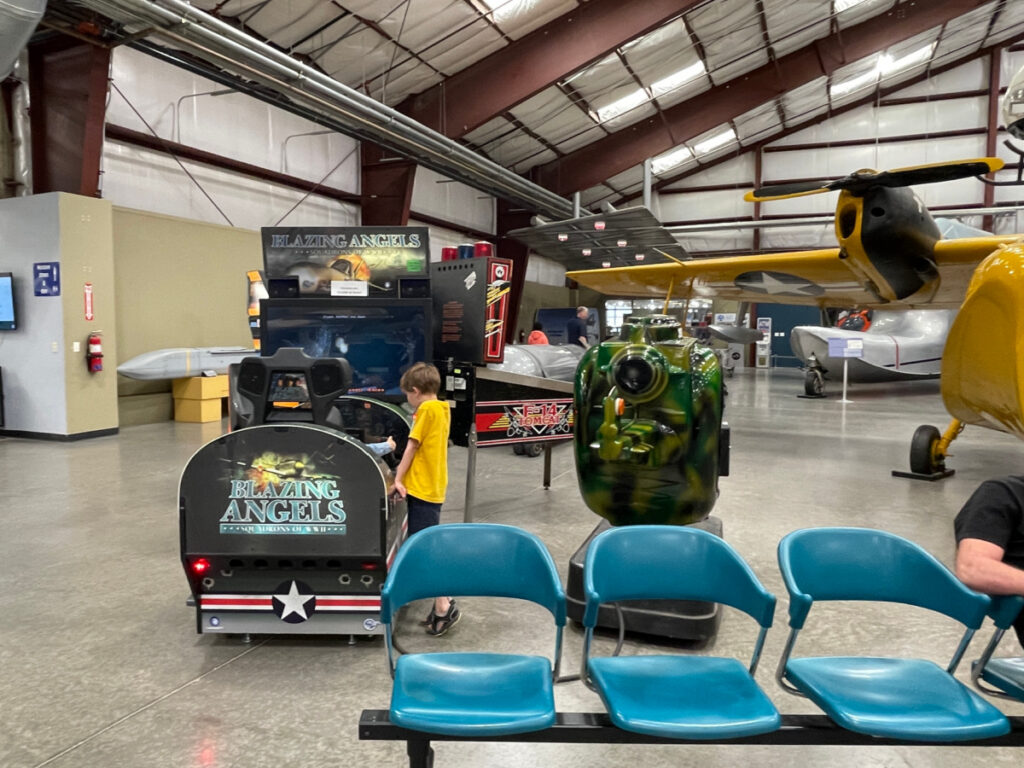
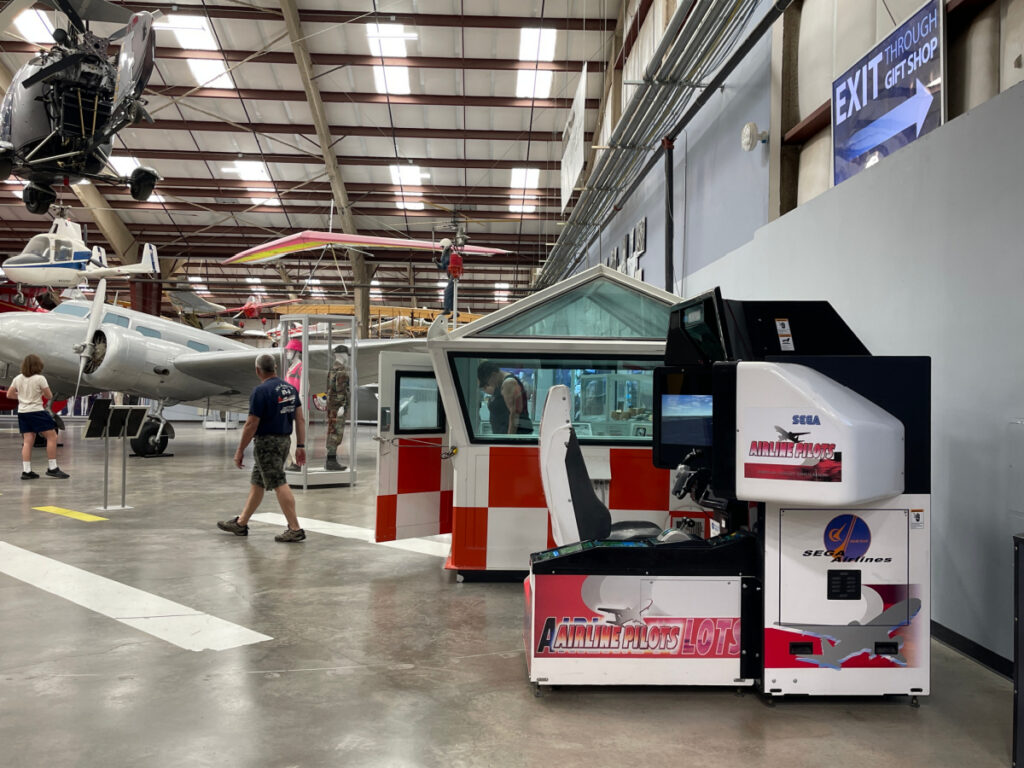
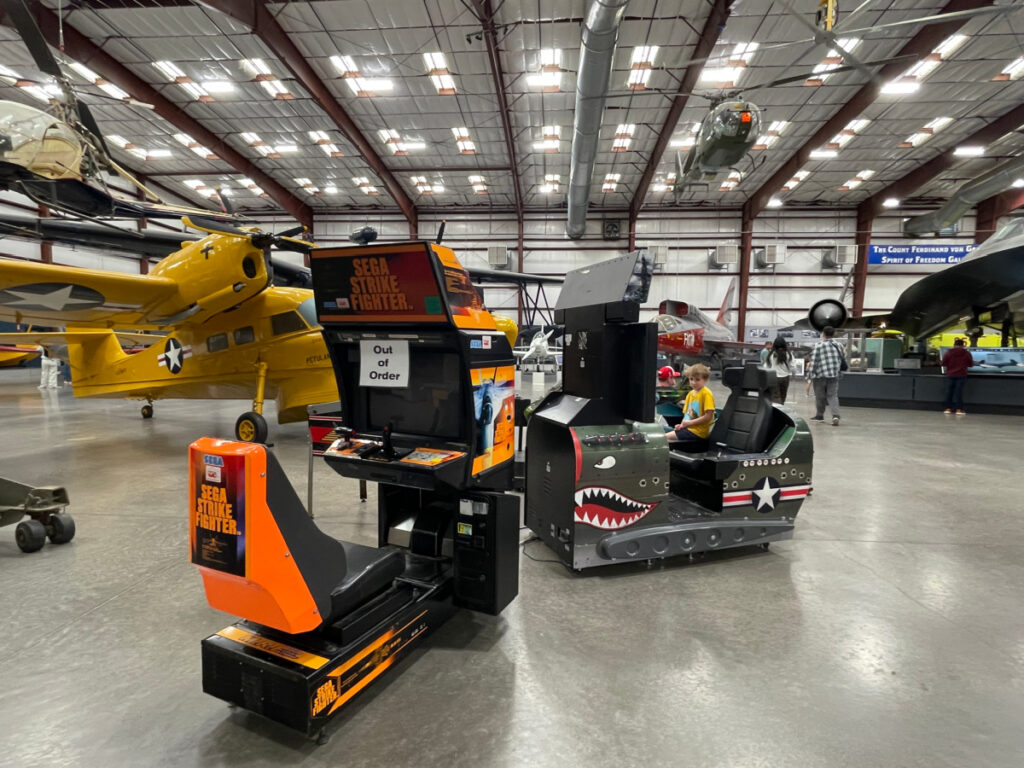
Our daughter was older when we visited, but I could see these being a welcome diversion for younger kids who have reached their airplane saturation point.
There is also an outdoor playground.
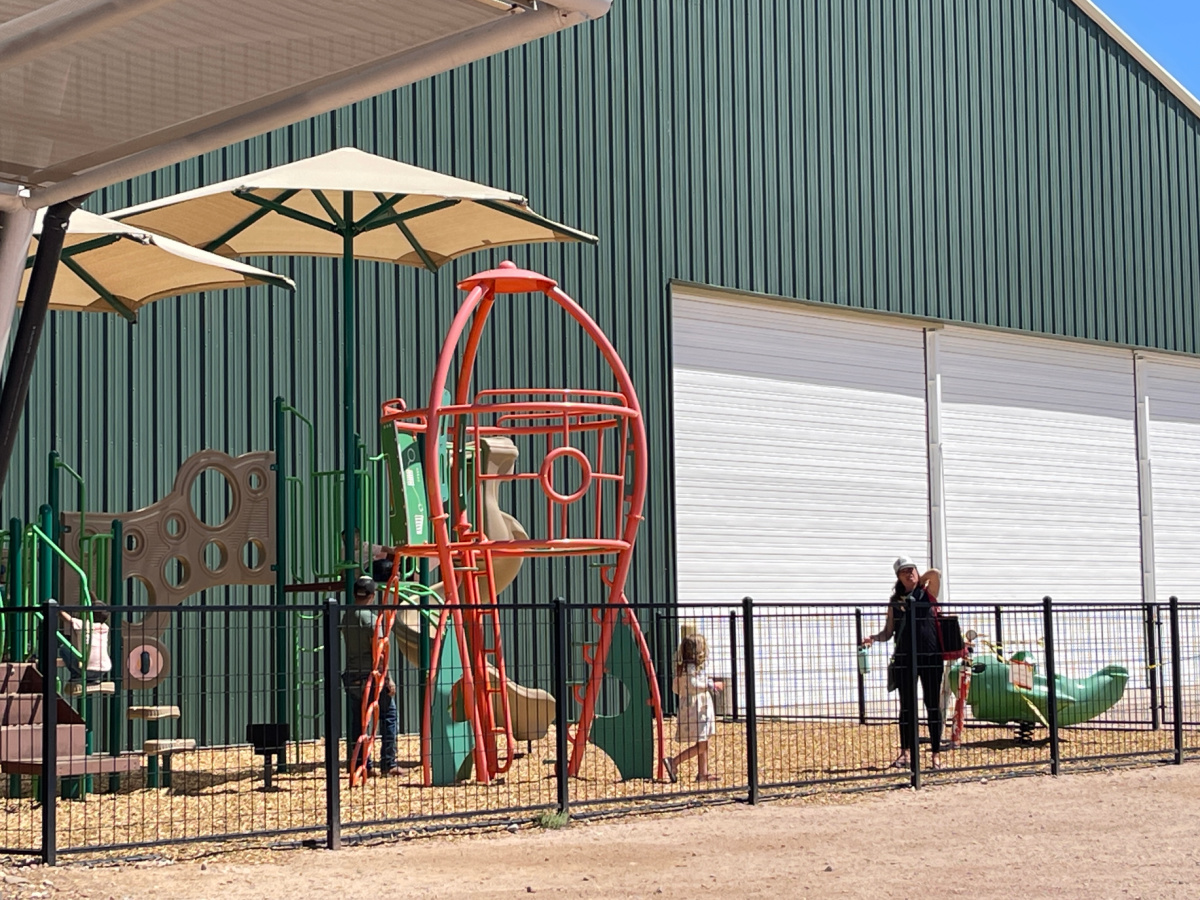
So no, I would not call Pima a kid-focused attraction.
But I do think they have made an effort to make it easier to visit as a family.
And This Is Still Only the Indoor Portion
That is the crazy part.
By the time you have wandered through the hangars, seen the bombers, looked at the World War II exhibits, found the Blackbird and stopped for all the airplanes that catch your eye along the way, you feel like you have seen a lot.
And then you walk outside.
And realize there is basically an entire second museum waiting for you.
That outdoor collection ended up being one of my favorite parts of Pima.
And it is where you really start to understand just how enormous this museum is.
The Outdoor Aircraft Collection Is Where Pima Really Gets Wild
The indoor hangars are impressive.
Then you go outside.
And suddenly there are airplanes everywhere.
Big ones.
Small ones.
Bombers.
Fighters.
Military aircraft from different countries.
Planes painted in colors you can spot from across the property.
And because everything is spread out across the desert, you finally get a sense of just how huge some of these aircraft really are.
This is also the part of the museum where I would pay the most attention to the weather.
We visited in March, and it was great.
But in the summer?
I would absolutely do the outdoor section early.
Bring water.
Wear sunscreen.
Wear a hat.
And do not underestimate how much walking is involved.
Some of the Outdoor Bombers Are Absolutely Massive
There are several aircraft outside that make everything around them look tiny.
The B-52 is one of them.
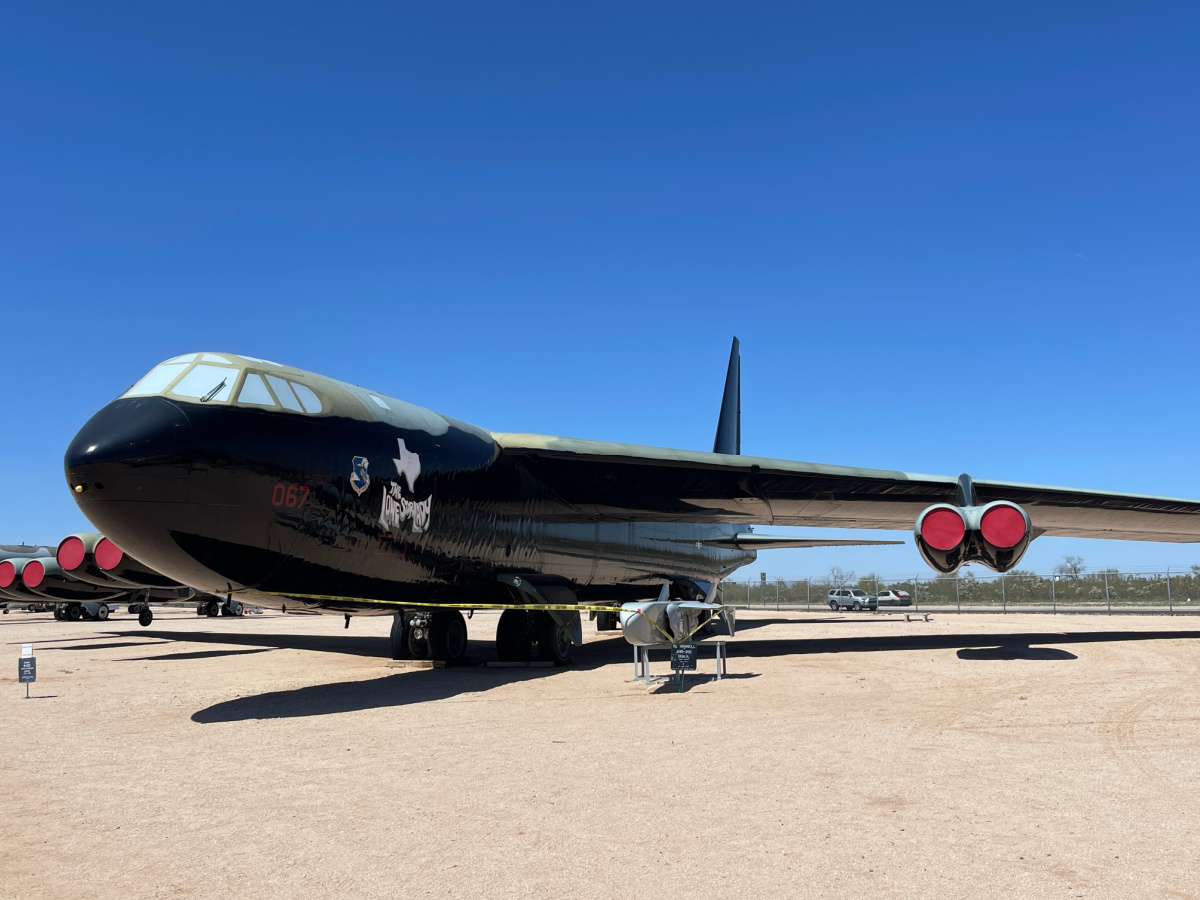
This thing is enormous.
Even if you do not know much about military aircraft, it is hard not to stop and stare at it.
The engines alone are impressive.
And then you step back and realize just how much airplane is sitting in front of you.
Large U.S. Air Force bomber in the outdoor collection:
Another massive bomber in the outdoor collection:
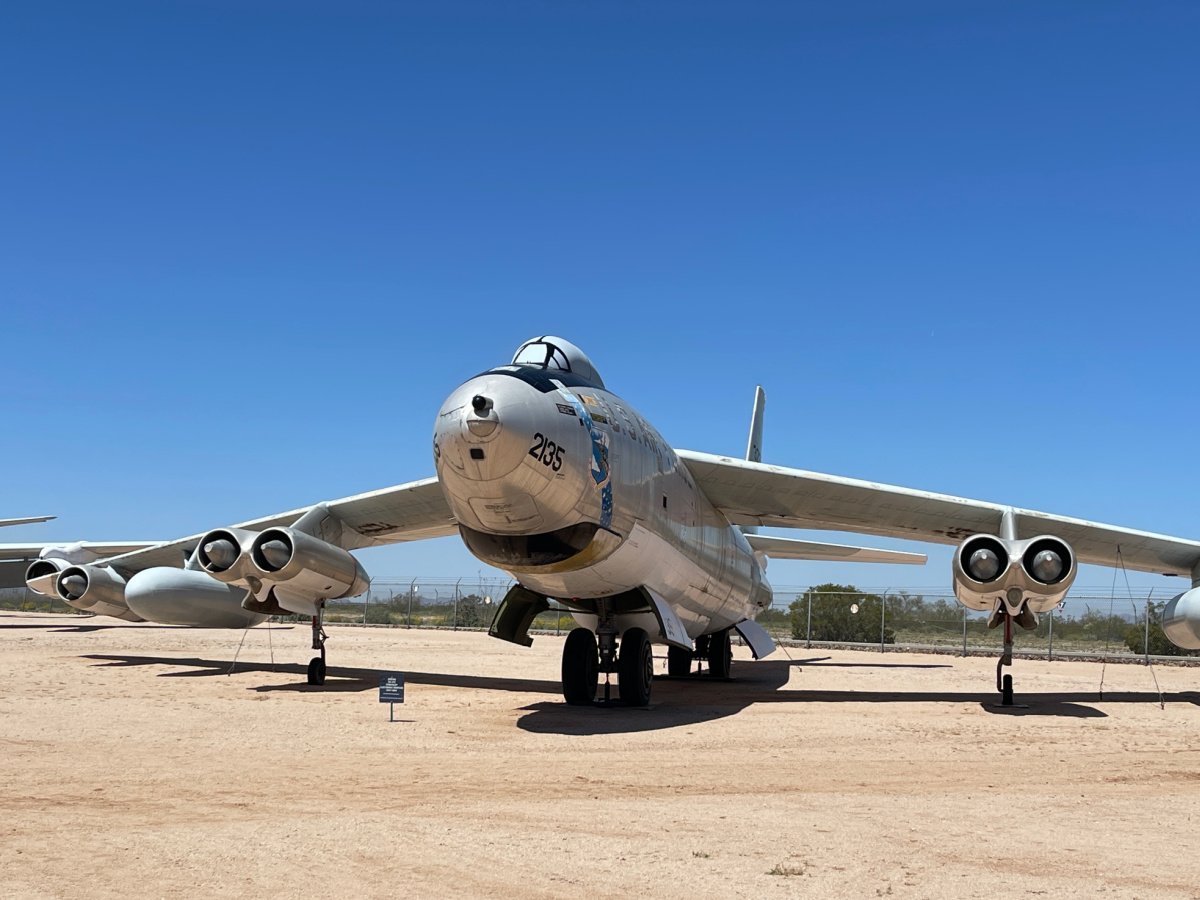
These are the kinds of aircraft that really make the outdoor section worth the walk.
You can see them from a distance.
Then you keep walking.
And walking.
And somehow they keep getting bigger.
The B-58 Hustler Is Another One That Stands Out
The B-58 has one of those shapes that immediately catches your eye.
Long.
Sharp.
Fast-looking.
Very Cold War.
Convair B-58A Hustler:
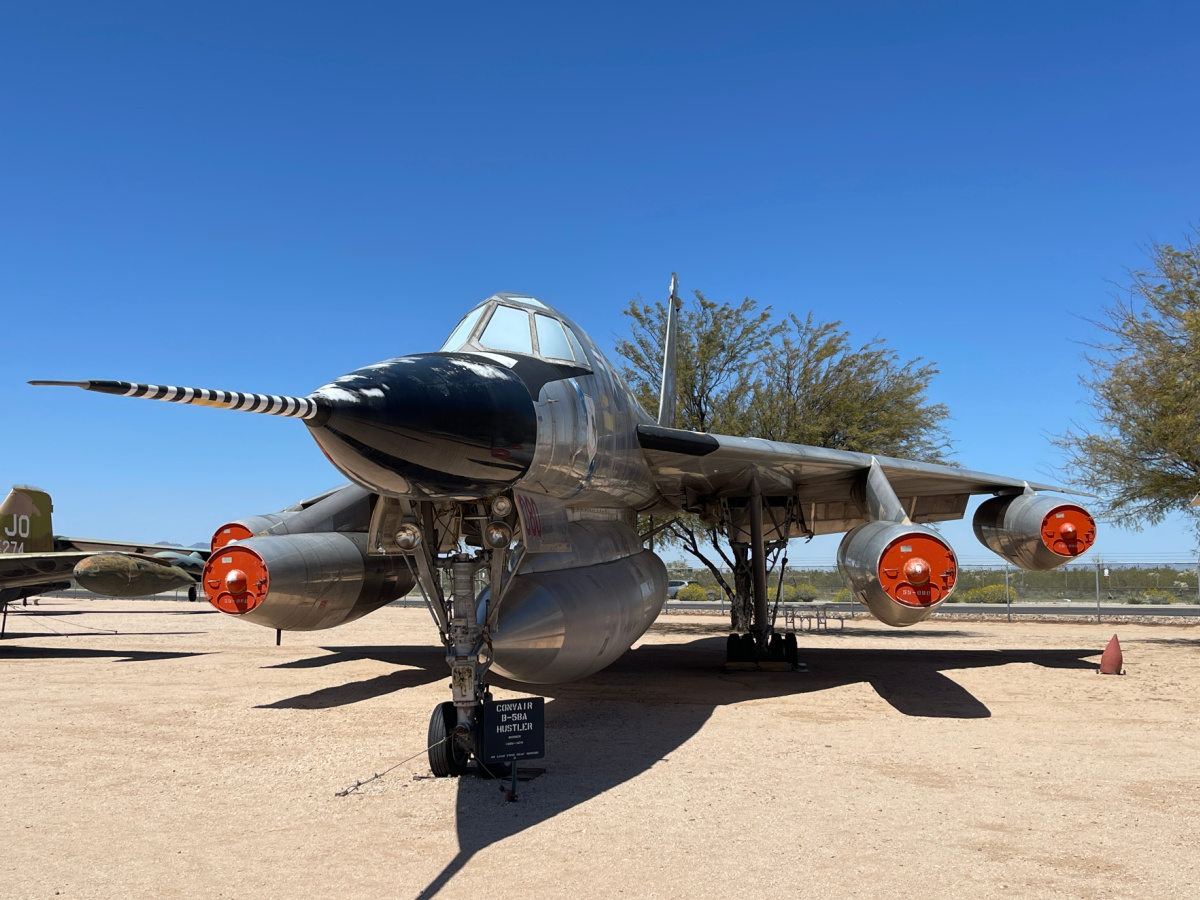
I liked seeing aircraft like this outside because there is enough room to actually appreciate the entire shape of the airplane.
Inside a hangar, sometimes you are looking at a wing.
Outside, you can stand back and see the whole thing.
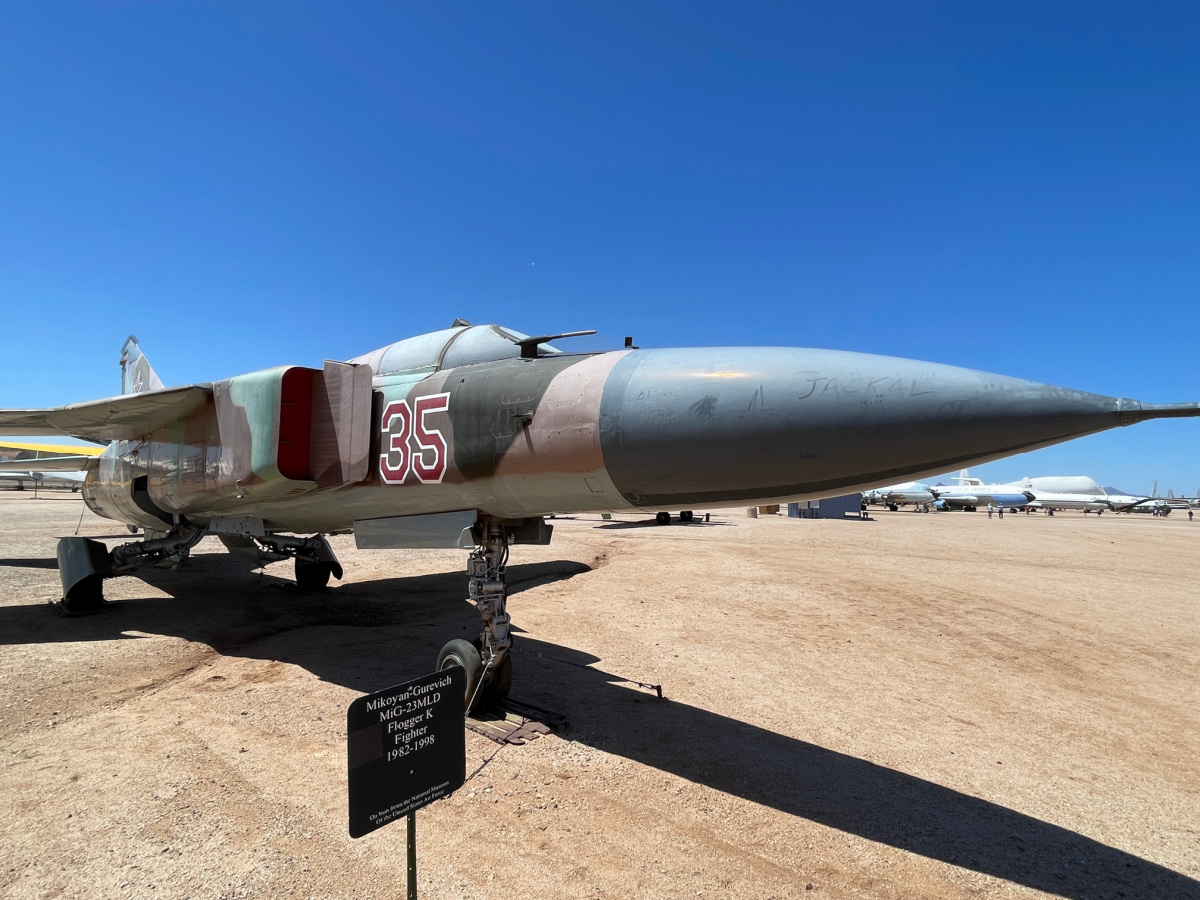
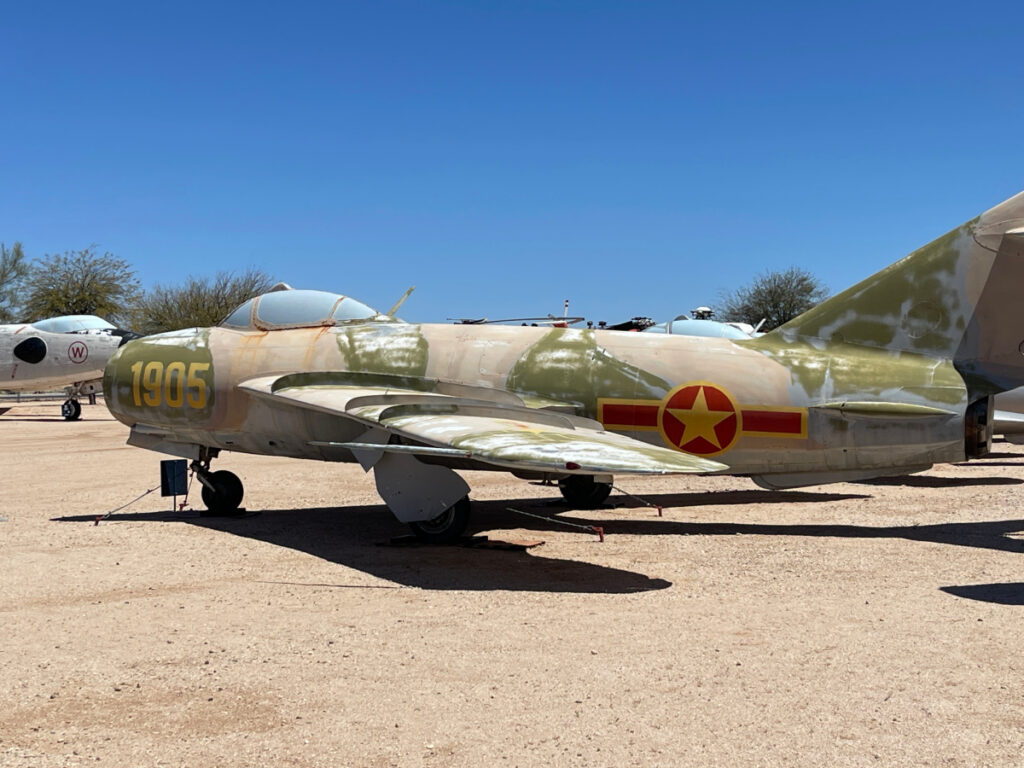
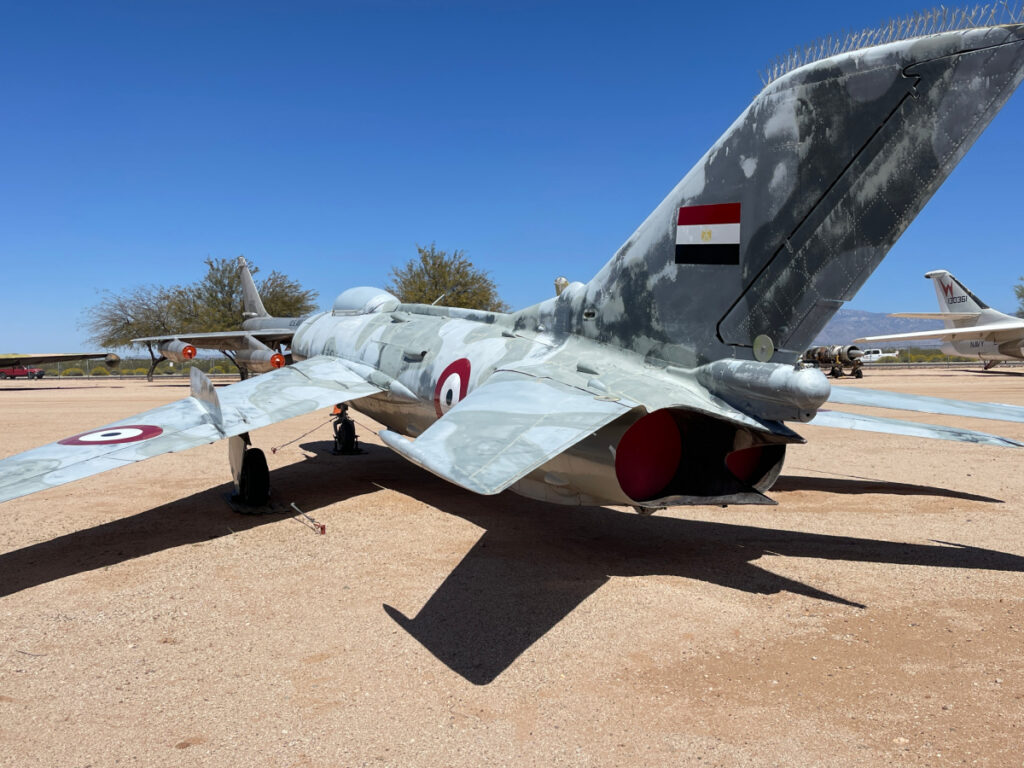
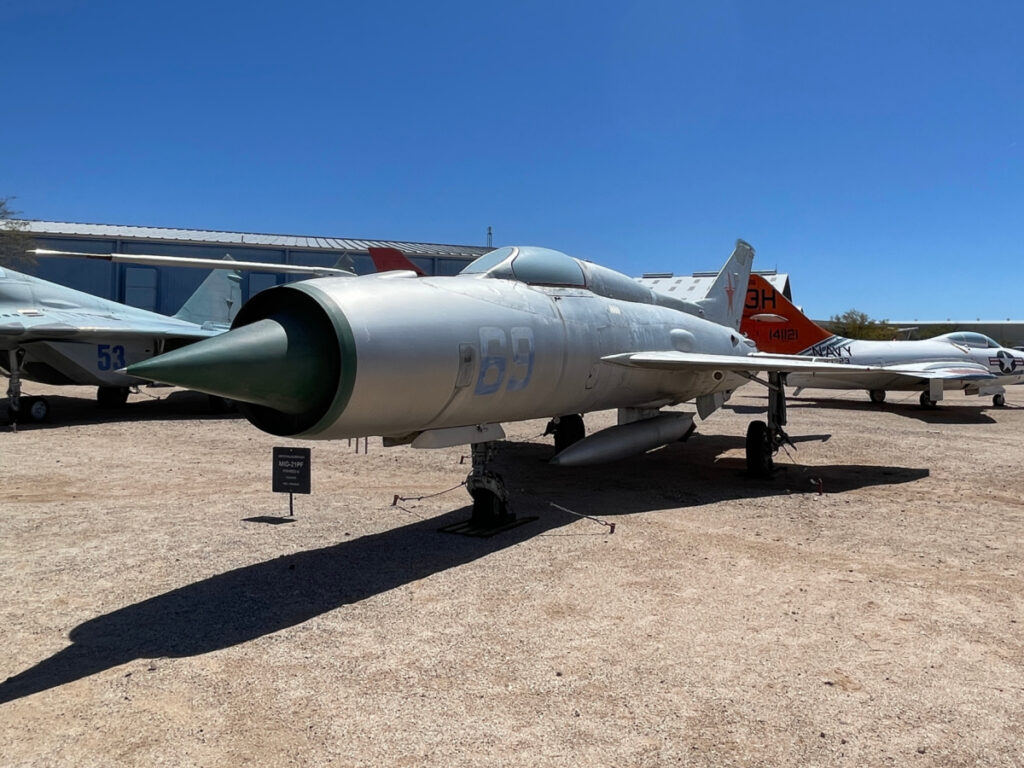
You Will Also See Aircraft From Around the World
The outdoor collection is not just American military aircraft.
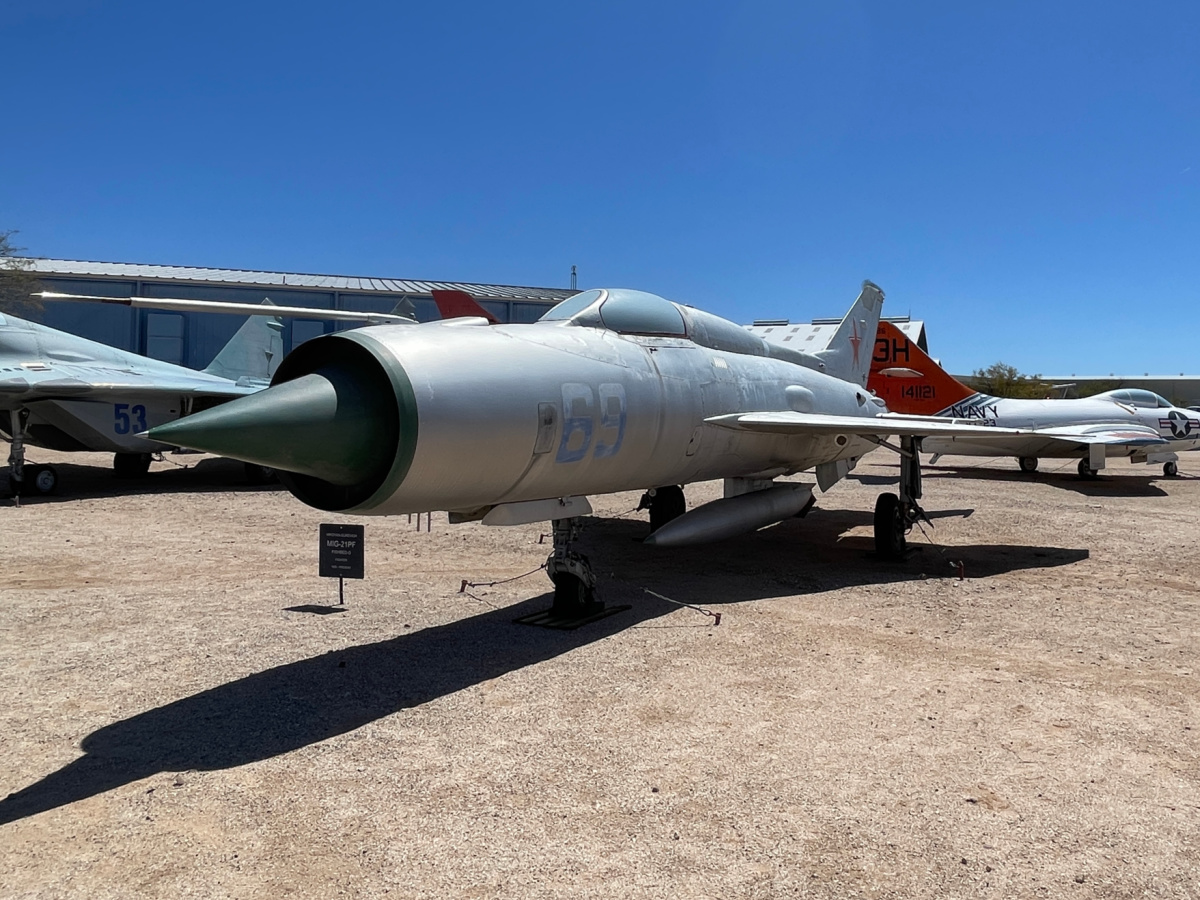
There are planes from different countries and different eras, which makes wandering through the collection a lot more interesting.
Soviet MiG-21PF fighter:
Soviet MiG-23MLD fighter and identification sign:
There are also aircraft with Egyptian markings.
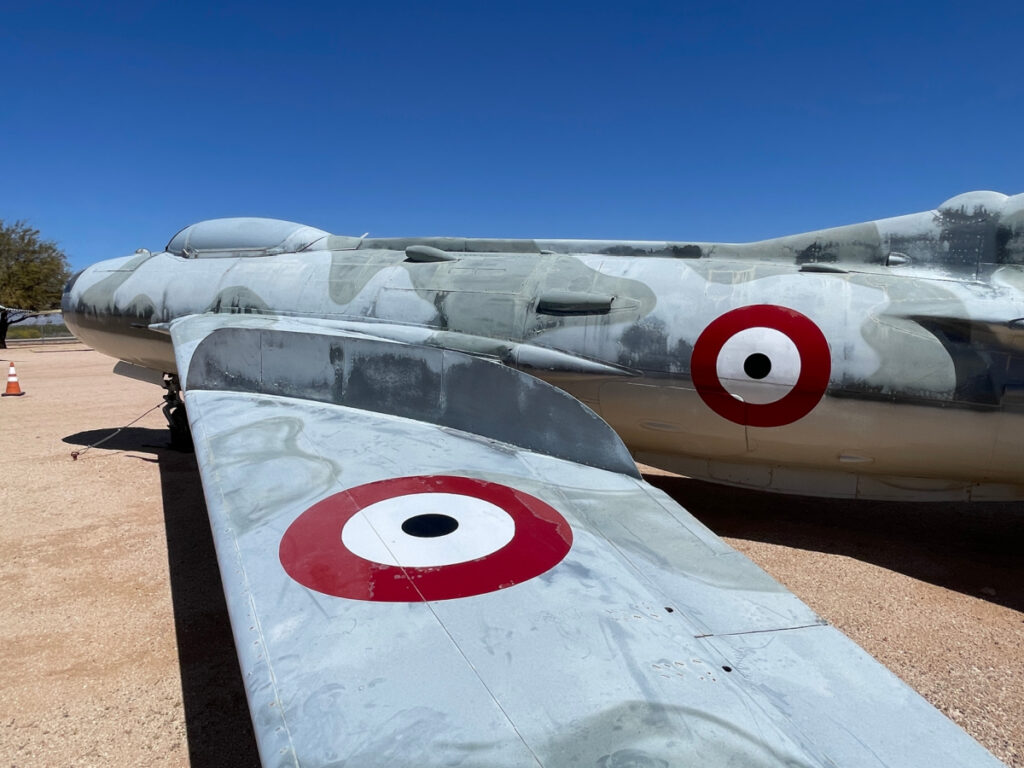
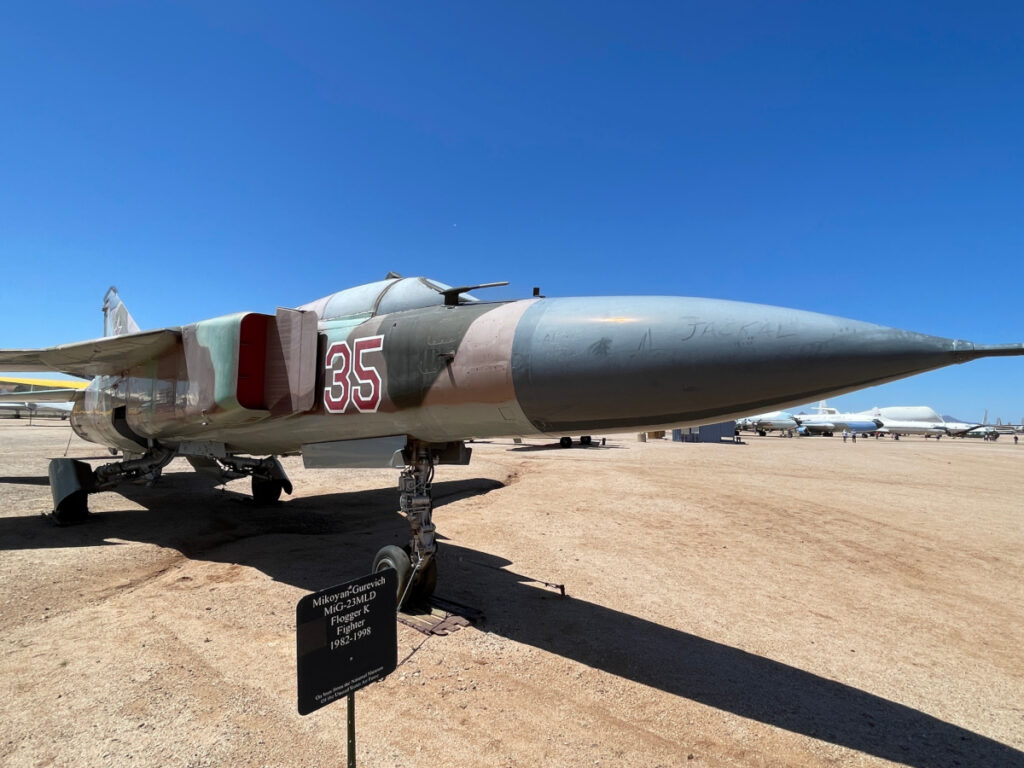
Again, I am not going to pretend I knew what all of these were while we were walking around.
I did not.
But that almost made it more fun because there was always another sign to read and another completely different airplane to look at.
The Blue Angels Aircraft Is Hard to Miss
Then you get to the Blue Angels plane.
Bright blue.
Yellow lettering.
Basically impossible to overlook.
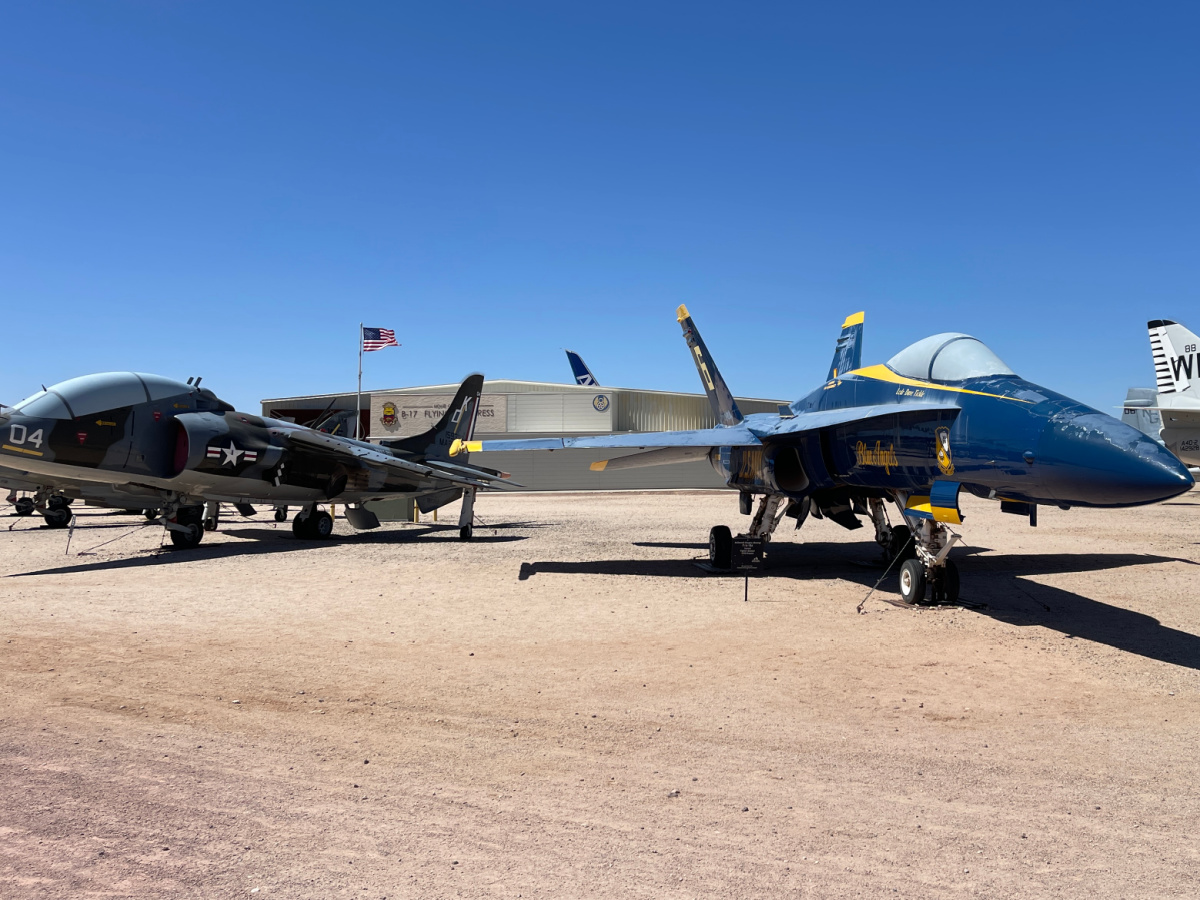
This was one of my favorite outdoor planes simply because it photographs so well.
It is also one of those aircraft that even people who are not aviation experts may recognize immediately.
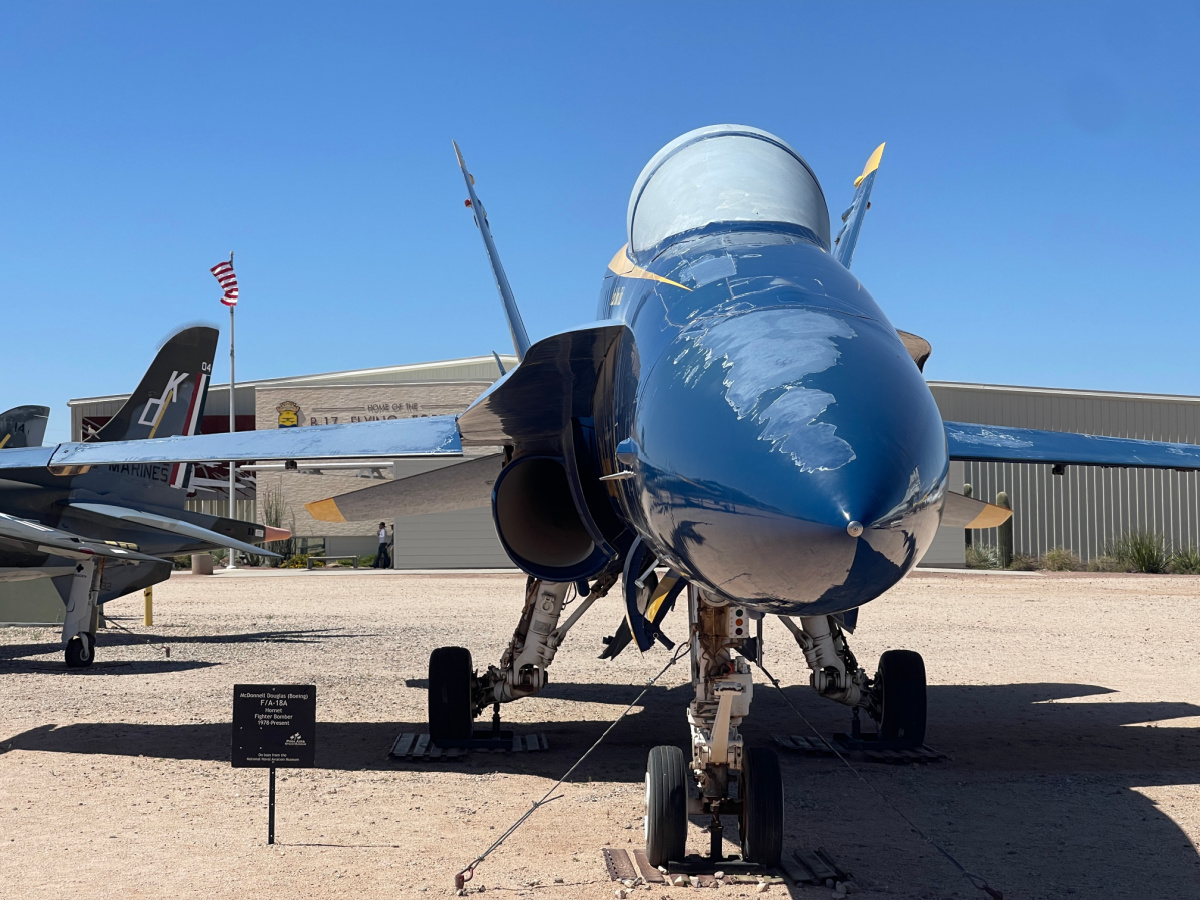
This is another good example of why Pima works for families.
Not every airplane is gray.
Not every exhibit looks the same.
There are enough visually different aircraft that you keep finding something new.
There Are Tons of Navy and Marine Corps Aircraft Too
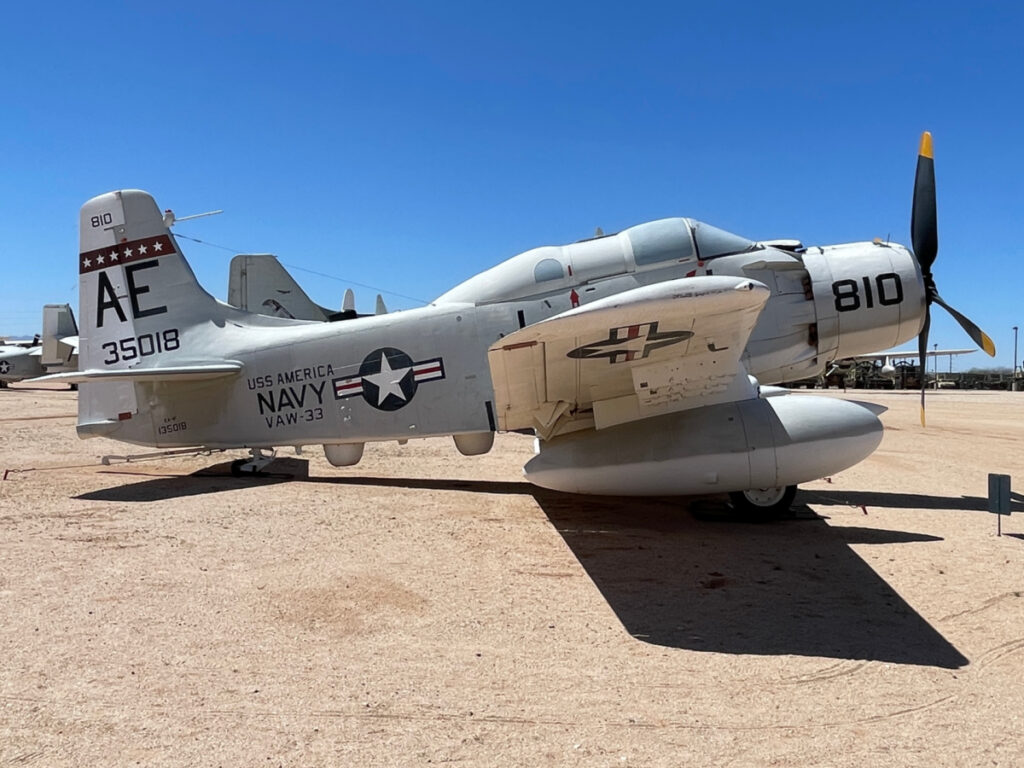
The outdoor collection also includes plenty of Navy and Marine Corps aircraft.
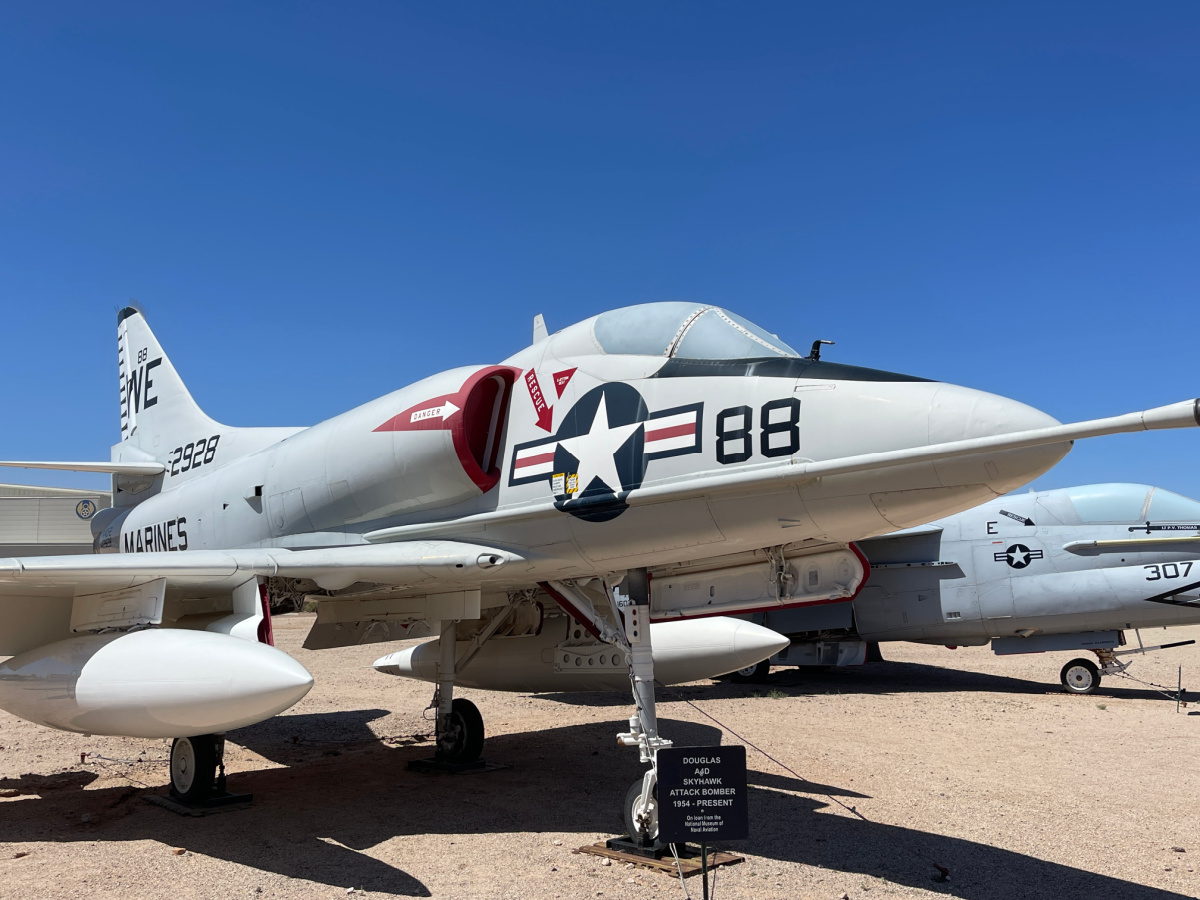
The shark-mouth aircraft was obviously one of my favorites.
Because if you are going to paint a face on an airplane, you may as well commit.
😂
Then There Are Aircraft You Do Not Expect to See
This is another thing I liked about Pima.
It is not only fighters and bombers.
There are all kinds of oddball aircraft mixed in… like Air Force One!
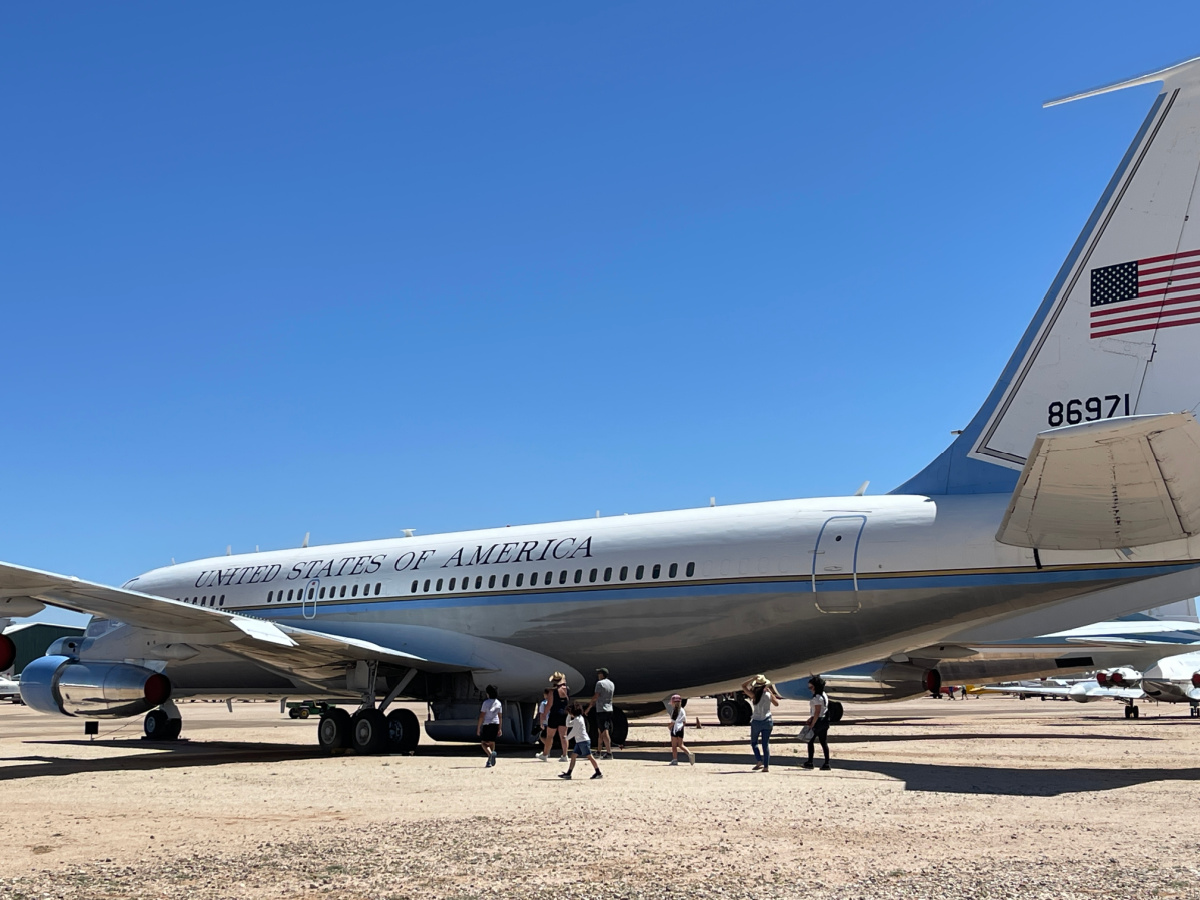
That was a fun surprise.
And then you keep walking and find another airplane that looks completely different from the last one.
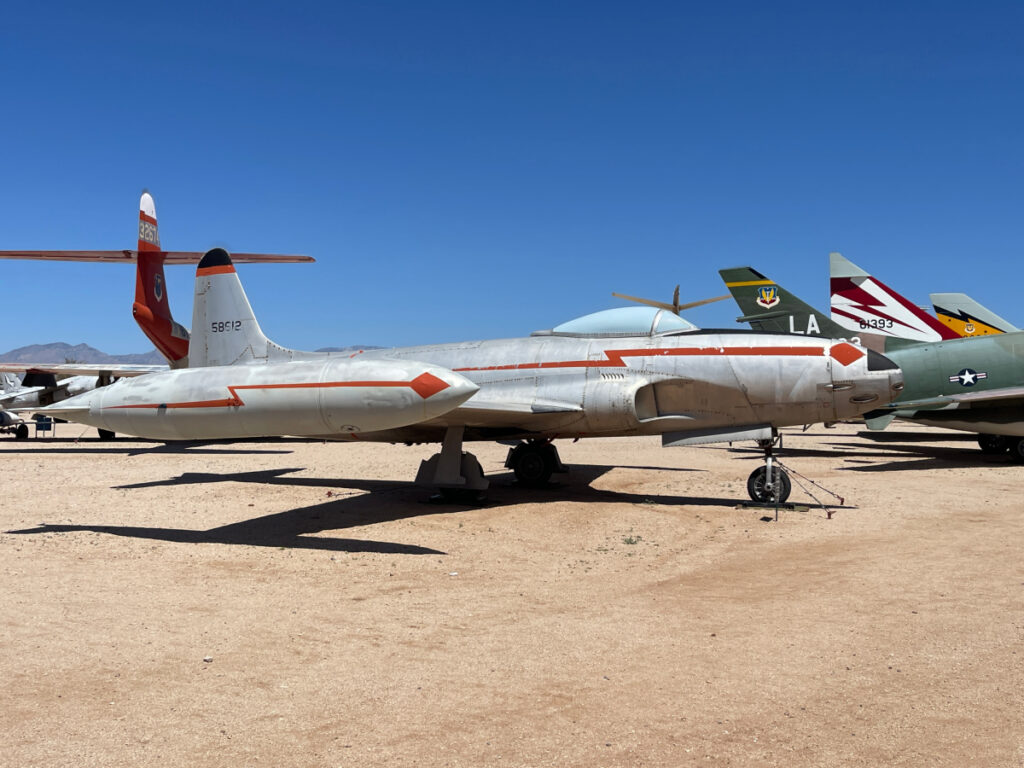
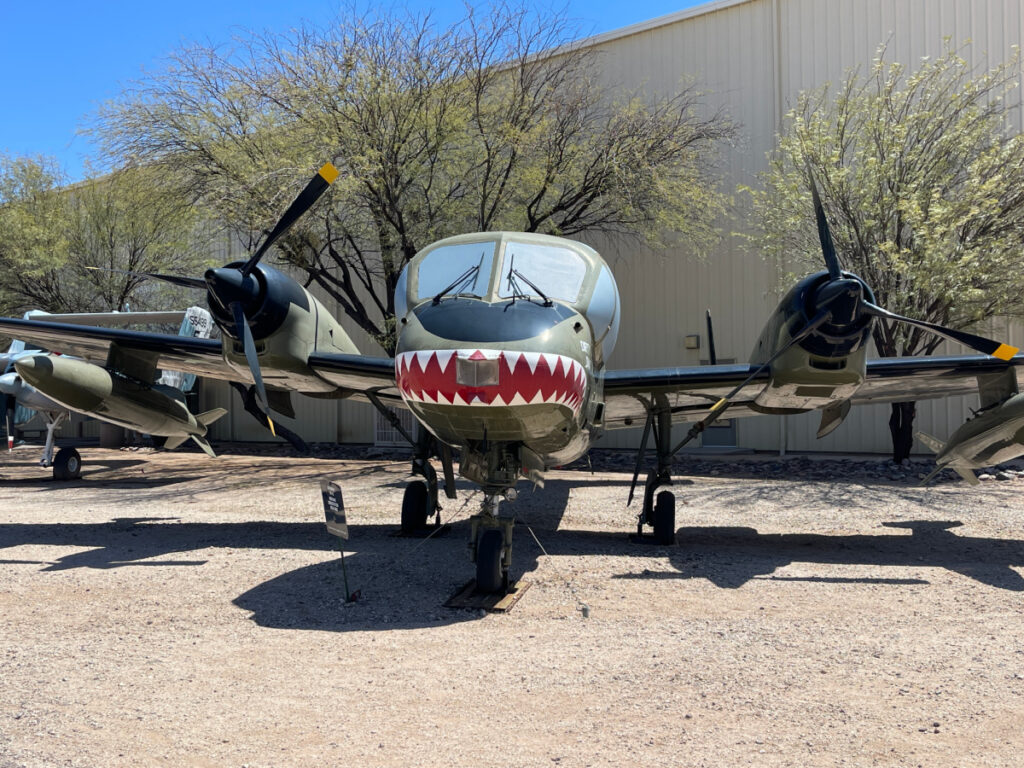
This is why I would not try to create some rigid checklist of “must-see” aircraft unless there are specific planes you already care about.
Half the fun is discovering things as you walk.
There Is a Lot More Outside Than You Think
This is one of those museums where photographs can be misleading.
You look at one photo and think, “Okay, there are some airplanes outside.”
No.
There are a LOT of airplanes outside.
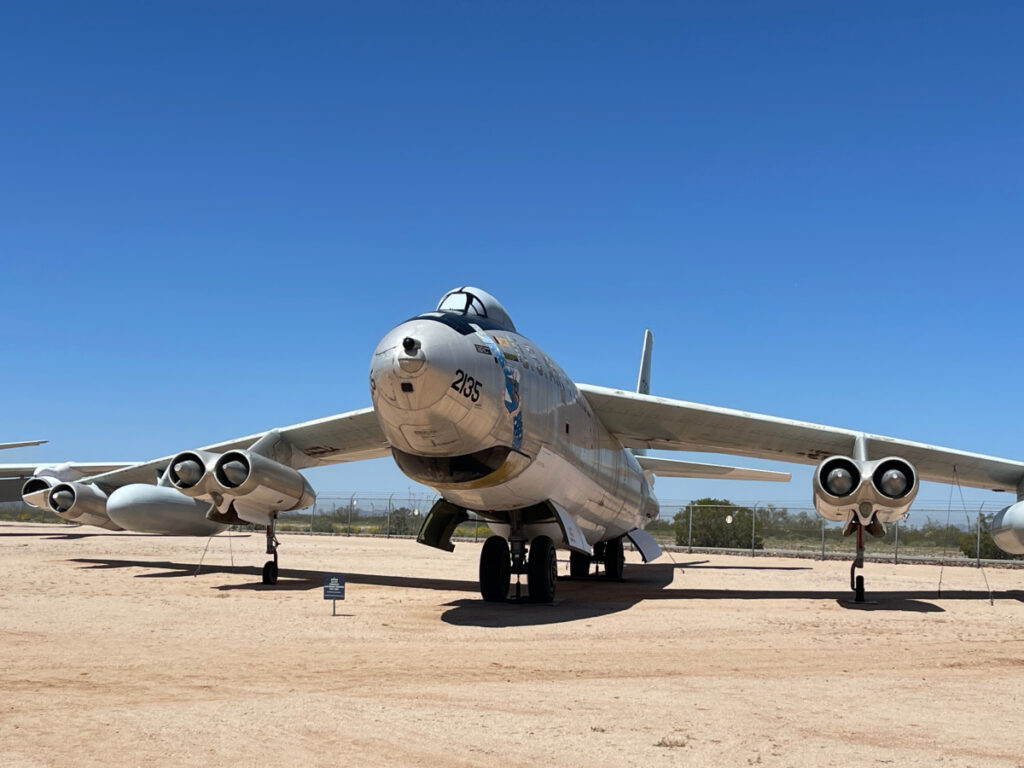
And this is where the walking starts adding up.
If mobility is an issue, or if you are visiting during very hot weather, I would seriously consider the tram tour.
Even if you are perfectly happy walking, it can still be a nice way to see more of the collection without wearing yourself out.
Do Not Skip the Flight Grill
Eventually, after walking around all those airplanes, you may want food.
We did.
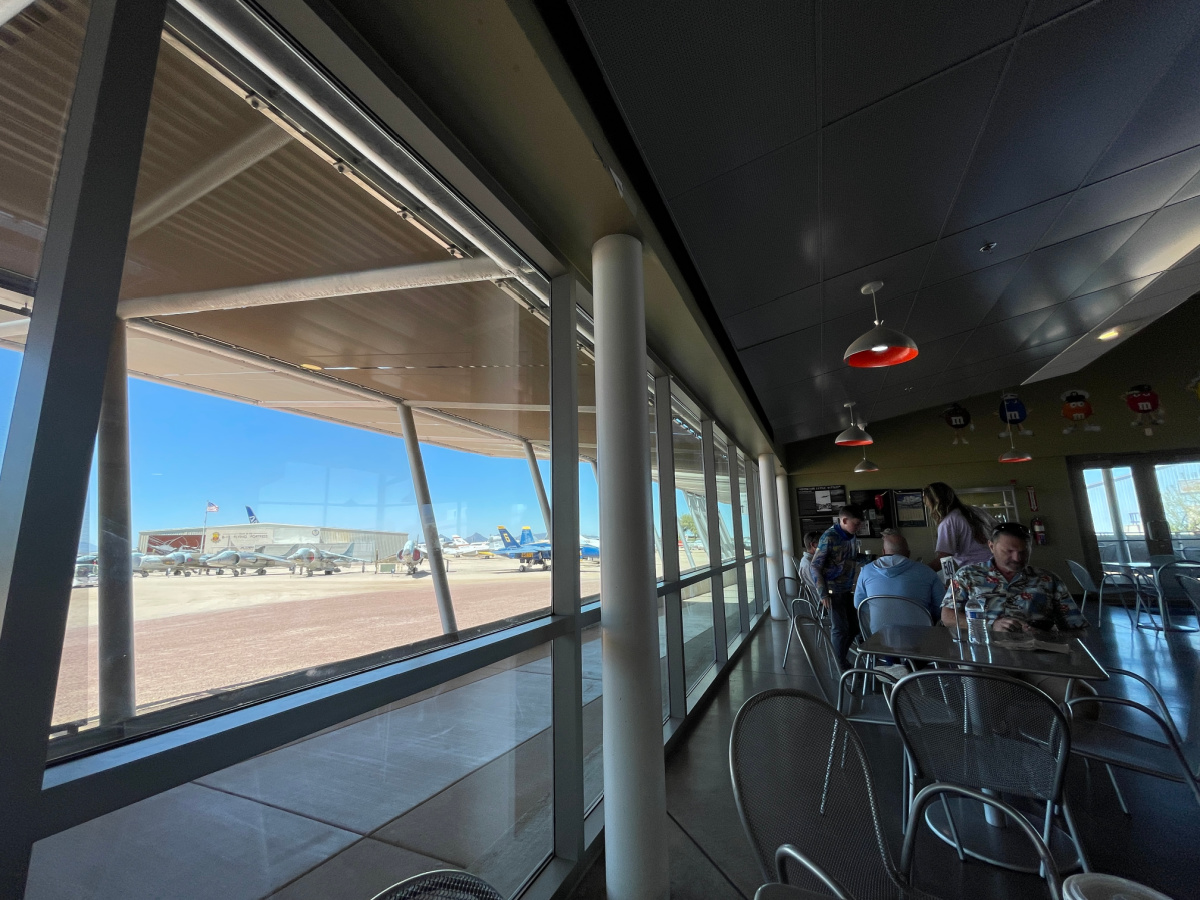
The museum has the Flight Grill, and I actually really liked the space.
The big windows are the best part.
You can sit inside in the air conditioning and still look out at the airplanes.
That is a pretty ideal museum lunch setup.

I do not remember this being some destination meal.
But it was perfectly fine.
And when you have been wandering around a giant aviation museum for hours, grilled cheese works.
The Gift Shop Is Worth a Look Too
There is also a gift shop with plenty of aviation-themed stuff.

If you have an airplane kid, military history fan or aerospace engineer with you, you may want to budget some extra time here.
Ask me how I know.
Visiting Pima Air & Space Museum With Kids
I think Pima is a really solid family attraction, especially if you have kids who like airplanes, engineering, military history or just really big machines.
But I would not oversell it as a children’s museum.
It is still an aviation museum.
The kid-friendly pieces are bonuses.
There are simulators.
There are arcade-style aviation games.
There is a playground.
There is plenty of space to walk around.
And the sheer variety of aircraft helps keep things interesting.
Our daughter enjoyed the museum.
And I think that matters because she was not there because she had some deep personal interest in military aviation.
She just thought the airplanes were cool.
That is probably the best case you can make for bringing kids here.
How Long Should You Spend at Pima Air & Space Museum?
I would plan on at least half a day.
Could you spend less?
Sure.
But I do not think you would really see the museum.
There are too many hangars.
Too many outdoor aircraft.
Too many little exhibits where you stop because something catches your eye.
If you have someone in your family who really loves aviation, I would give yourself even more time.
This is one of those places where the difference between two hours and four hours is probably pretty significant.
My Best Tips for Visiting Pima
The biggest thing is to plan around the weather.
If you are visiting during a hot month, get there early.
Do the outdoor aircraft before the heat gets brutal.
Save more of the indoor hangars for later.
Bring water.
Bring sunscreen.
Wear a hat.
And wear comfortable shoes.
Also, do not assume this is a quick stop just because it is a museum.
It is huge.
If you are pairing Pima with the Titan Missile Museum, I think that makes a fantastic full day.
I would do Pima in the morning.
Take your time.
Grab lunch.
Then head down toward the Titan Missile Museum for the afternoon.
That gives you two very different aviation and Cold War experiences in one day without feeling like you are repeating the same attraction twice.
Is Pima Air & Space Museum Worth It?
Absolutely.
Especially if you have anyone in your family who loves aviation.
But I would also recommend it to people who just enjoy really good museums.
You do not need to know the difference between a MiG and a B-52 before you arrive.
You do not need to understand engines.
You do not need to know military aviation history.
You can just walk around and be impressed.
That is basically what I did.
😂
My husband got the technical side.
I got the “holy cow, that airplane is huge” side.
Our daughter got a mix of both.
And all three of us had a really good time.
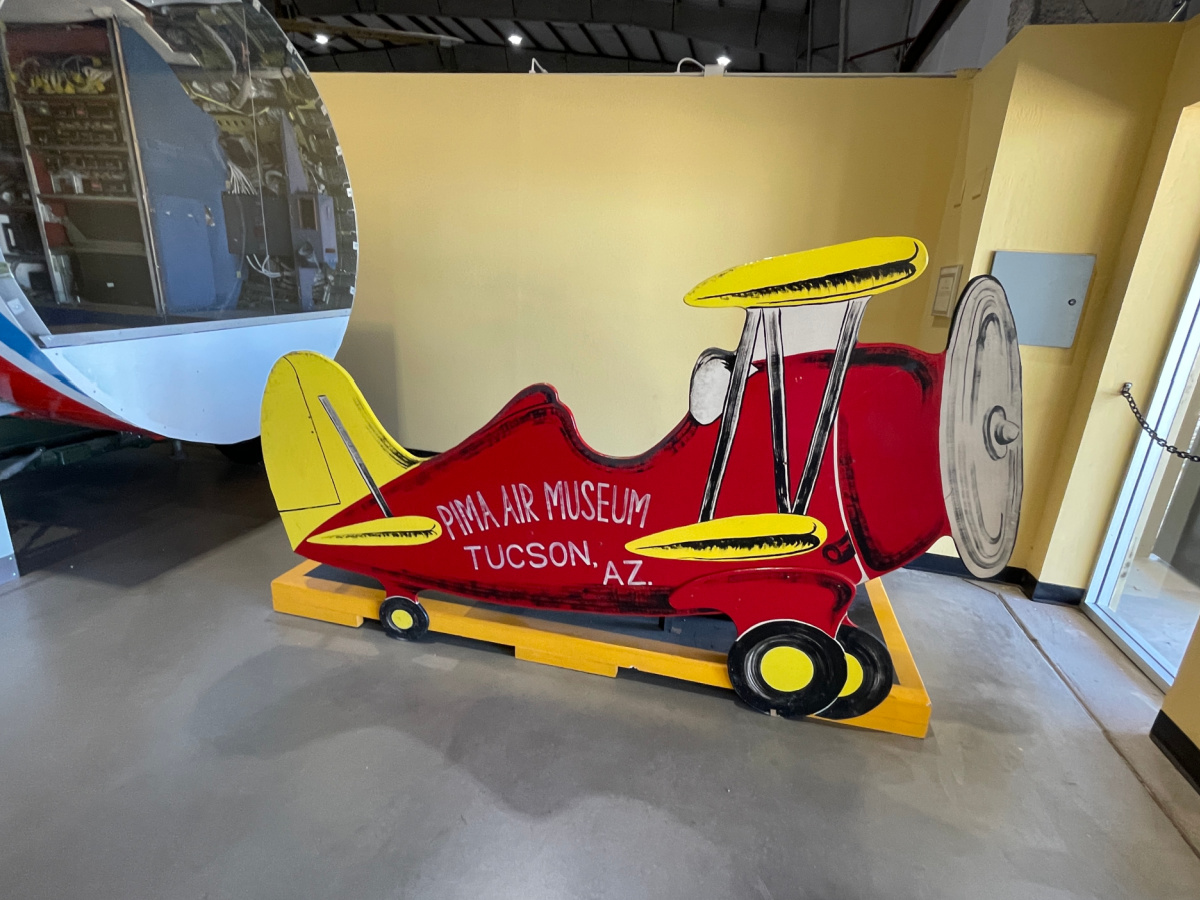
If you are road-tripping through southern Arizona, visiting Tucson, or looking for a really strong day trip from Phoenix, I would absolutely put Pima Air & Space Museum on your list.
And if you are traveling with an aerospace fan?
Move it way up the list.
More Arizona Road Trip Ideas
If you are planning a bigger Arizona trip, you may also enjoy:
- Titan Missile Museum — An excellent companion to Pima, especially if you like military and Cold War history.
- Meteor Crater — A fun and surprisingly fascinating stop for a northern Arizona road trip.
- Grand Canyon South Rim — One of the obvious must-do attractions in Arizona.
- Verde Canyon Railroad — A scenic train ride through beautiful canyon country.
- Things to Do in Page, Arizona — Antelope Canyon, Horseshoe Bend, Lake Powell and more.
More Air and Space Museums
If Pima is your kind of museum, check out these too:
- National Air and Space Museum — Washington, D.C.
- College Park Aviation Museum — College Park, Maryland.
- Patuxent River Naval Air Museum — Lexington Park, Maryland.